Category: NEWS

  • Fevikwik gel launches quirky campaign

    Pidilite Industries Limited has announced the launch of a new campaign ‘Galti Sudharne ka Mauka De’, for its latest variant Fevikwik Gel.

    Says Manish Dubey, Chief Marketing Officer, Pidilite Industries Ltd: “Fevikwik dominates the instant repair category to the extent that it is the only brand people think of when it comes to repairing broken items. However, we recognised that in some cases, repairers need a few more seconds to readjust the pieces for a perfect outcome. This realisation prompted the development of Fevikwik Gel. Our new Fevikwik Gel represents a significant advancement in the instant repair category. The campaign, employing trademark Pidilite humour and real-world situation, illustrates how Fevikwik Gel streamlines the repair process by facilitating swift corrections and enables users to approach any repair or adhesion task with ease and confidence.”

    Added Piyush Pandey, Chief Advisor, Ogilvy India: “Pidilite is a forever innovative company. This time the innovation is with Fevikwik Gel. The Gel gives you that little extra time that you require for adjusting before permanently fixing. The Fevikwik team at Ogilvy & Pidilite found it to be another great opportunity to communicate product benefits in Pidilite style which leaves a smile on your face.”

  • Swiggy Dineout unveils ‘Sharma Ji Ki Beti’ campaign

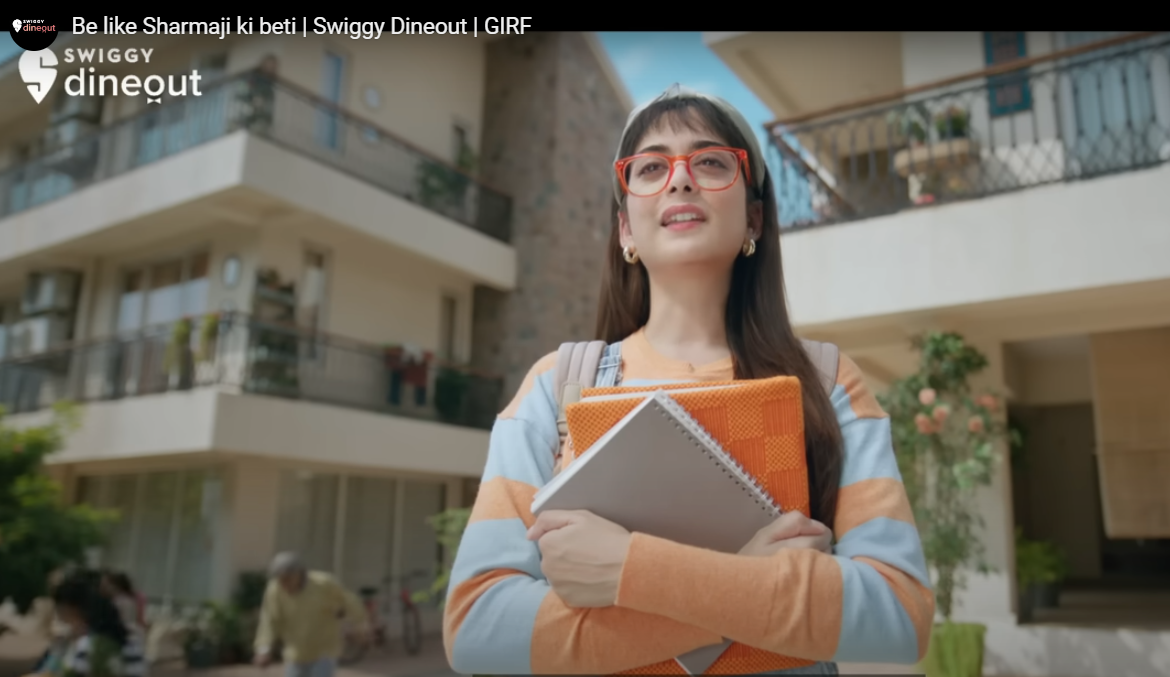
    Swiggy Dineout recently launched its latest campaign, Sharma Ji Ki Beti, aimed at “revolutionizing” the dining out experience for Indian consumers. The campaign was conceptualised by Toaster India.

    Said Aparna Giridhar, VP, Marketing, Swiggy: “This creative route plays up a new social validation of using Swiggy Dineout before stepping out as the right way to eat out, especially during our biggest annual festival. By humorously portraying this, we encourage users to emulate ‘Sharma ji ki Beti’ for seeking the best dining benefits in town. Building on our core mission of providing unparalleled convenience to consumers, this campaign highlights Swiggy Dineout’s proposition of seamless & joyful dining with maximum savings.”

    Added Ira G Chief Creative Officer, Toaster India: “Swiggy Dineout is a dream client for any creative team and we’re so kicked we got to collaborate and create a campaign with them. Humour and a strong insight are given with a brief like this and we hope to do a lot more with Sharmaji ki beti as a character.”

  • Yashwant Deshmukh highlights ISEC role in digital world

    At the IAMAI’s India Digital Summit 2024 held earlier this week in Mumbai, the Indian Socio-Economic Classification (ISEC) was much discussed. Central to this initiative is the COTN survey by senior researcher and founder-CEO/Editor of CVoter, Yashwant Deshmukh who is CEO, Dataeye Asia aimed at tracking consumer sentiments across the nation especially in digital consumption. To be conducted year-round in 11 Indian languages and commissioned by a leading media house.

    The survey helps CMOs with two essential batteries: the COTN Economic Battery and the COTN Product Battery. The first COTN survey report is scheduled to be released this month (March 2024). Additionally, this will be the first ISEC-aligned initiative, the survey will introduce a media consumption tracker. More details on what COTN is all about is awaited, and this report will be updated thereafter.

    The conversation led by Yashwant underscored the imperative for CMOs to embrace the transformative power of data analytics and new segmentation in navigating India’s dynamic media landscape. As evidenced by the early adoption of digital media in regions like Bihar and Uttar Pradesh, traditional media consumption patterns are in the midst of transformation.  Deciphering and understanding India’s growth in the digital space requires advanced survey methods due to the complexity and dynamism of the Indian consumer landscape.

    The summit highlighted ISEC’s potential with the debut of this study.

  • A Tale of Two Mergers, and the Future that Beckons

    A Tale of Two Mergers, and the Future that Beckons

    Shailesh KapoorIt was in December 2021 that we first heard an official announcement of the Sony-Zee merger. It took a little more than two years for that merger to be finally called off, unless we have another surprise in the offing. Since last year, there has been buzz about the Reliance-Disney deal. Earlier this week, there has been a formal announcement, leading to the creation of an Indian media behemoth, if there ever was one.

    Whenever someone has asked me this week what I think of the merger, my first response is that I’m glad it’s finally done. For more than two years, the news on these mergers have dominated attention, and now, we can move on. To more interesting things like content, marketing, technology, monetisation, the works.

    It’s largely speculative to predict how a merger of the nature of the Reliance-Disney one will impact the future of the industry. From the consumer side, there is unlikely to be any impact in the short term. Audiences eventually respond to content, marketing, and pricing, and it’s not currently clear how any of that is likely to be impacted. The first impact is felt at the level of the teams, as restructuring exercises are a natural outcome. Implementation of product and brand strategies can take their time, sometimes years.

    The Indian television industry is in the middle of a tough period. From single-digit percentage growth scenarios, it is now looking at potential degrowth in the coming year or two, however notional, in both revenues and subscribers. Of course, all the talk of young people not watching TV at all is highly exaggerated, and comes from a place of privilege. But there is no escaping the fact that linear television is no longer the first-choice destination of a section of audiences in India.

    But it’s not as if streaming is thriving. We are well past the pandemic-induced honeymoon period, and the reality that the Indian consumer is not willing to shell out the bucks for paid subscriptions is now upon us.

    The leadership team at Reliance-Disney has its task cut out, as do other major players in the category, including Sony and Zee. The next two-three years are going to see potential trend creation, across domains, ranging from streaming to linear TV to theatrical to news to sports. New rules will be written, and technology could play a decisive role. How exactly though? No one knows for sure. Technology giants Google and Meta are going to be very much at the centre of it all, enabling and influencing content and monetization decisions more than ever before.

    Successfully or not, the mergers are done with. The real excitement starts now.

  • Dentsu Creative bags Popeyes mandate

    Dentsu Creative India has won the integrated creative mandate for the American fried chicken restaurant chain – Popeyes. The account was won following a multi-agency pitch and will be serviced from the agency’s Gurugram office. The restaurant chain has 33 stores in 11 Indian cities so far.

    Ujjwal Anand
    Ujjwal Anand

    Said Ujjwal Anand, Managing Partner – North, Dentsu Creative India: “Popeyes has a cult status in the world, and we’re excited to partner with them in their journey in India. We hope to build on the brand’s legacy and of course, the crazy love.”

    Gaurav Pande
    Gaurav Pande

    Added Gaurav Pande, Executive Vice President and Business Head, Popeyes India: “We were impressed by Dentsu Creative’s strategic vision and creative acumen during the pitch process. Their understanding of our brand ethos, the Indian culture and their ability to translate it into share-worthy campaigns stood out. We are confident this collaboration will bring a fresh perspective to our marketing efforts in India.”

    Joy Mohanty
    Joy Mohanty

    Said Joy Mohanty, Chief Creative Officer – North, Dentsu Creative India: “Winning the pitch is great, but winning the hearts and minds of Indian foodies is going to take some work. And we’re ready for it! The possibilities to embed Popeyes in desi pop culture already have us pumped. So, it’s only going to get more interesting from here.”

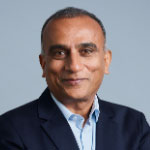
  • Sudhanshu Vats is MD-designation at Pidilite

    Sudhanshu Vats
    Sudhanshu Vats
    Kavinder Singh
    Kavinder Singh

    In many ways, if Viacom18 is flying high today, it owes its current status to a fair extent to former CEO, Sudhanshu Vats.

    Vats name, as per the Board of Directors of Pidilite Industries Limited, has been approved as Managing Director Designate. The Board also approved the appointment of  Kavinder Singh as Executive Director and Joint Managing Director Designate. 
They will take charge as Managing Director and Joint Managing Director, from April 2025, after the completion of term  of the current Managing Director, Mr. Bharat Puri. Note, you read it right. It’s 2025, not 2024.

    Commenting on the announcement,  M B Parekh, Executive Chairman of Pidilite Industries, said “The appointments of Sudhanshu and Kavinder will reflect the next phase of the Pidilite leadership journey.”

    Vats is currently Deputy Managing Director of Pidilite Industries. Singh is currently Managing Director and CEO of Mahindra Holidays and Resorts.

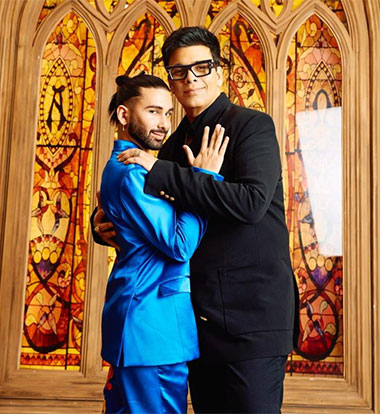
  • Uff! Karan Johar’s Dharma Cornerstone signs Orry

    Dharma Cornerstone Agency (DCA), a joint collaboration between Karan Johar and Bunty Sajdeh, announced the signing of social media personality Orhan Awatramani popularly known as Orry. The partnership will strengthen the influencer marketing portfolio of DCA, notes a comadding to the existing bouquet of services of the brand.

    Said Kim Sharma, EVP – New Media, DCA shared her excitement: “Orry represents the epitome of the modern-day influencer dynamic with his creativity and forward-thinking. We are delighted to welcome him to our family at DCA. This association not only strengthens our presence in influencer marketing but also fosters trust in us.”

  • Moment Marketing: The Mega Mandir Monday


    By Shailesh Kapoor


    Shailesh KapoorThe big day is knocking on the door, on the other side of this weekend. Monday, January 22, is the day of the ‘Pran Pratishtha’ at the Ram Mandir at Ayodhya. But far from being just a religious event, it’s shaped up to be the mega marketing event of the year. We are only in January, but it is safe to say that anything else this year will struggle to match this event on its hype and buzz. Not even the election results this summer, I’d say.


    Traditionally, brands avoid being associated with religion. It’s a sensitive topic, and more brand playbooks are not designed to handle religion as a domain, especially in a plural and complex country like India. But that rule (“don’t touch religion even with a bargepole”) will take a backseat this Monday, when brands queue up to cash in on the moment. It’s for days like this that you feel the term ‘moment marketing’ was coined!


    The event itself is certain to have huge celebrity presence, from all walks of life. Of course, the Prime Minister will be the face of it, but there is wide spectrum of eminent personalities from non-political fields attending the event too. Travel, fashion, food… nothing will be off-topic on the day. It’s a news event, but there the strong pop culture significance is hard to miss.


    The mass inclusion of religion in India’s pop culture has been a slow and steady process over the last decade. The song ‘Mere Bharat ka bachcha-bachcha, Jai Sri Ram bolega’ seemed controversial till a few years ago. But it’s now an omnipresent celebration song, playing at cricket stadia, Navratri functions, weddings, new year parties, the works. It’s now an unofficial anthem that doesn’t need any formal recognition. It’s also a song that will play through the day this Monday.


    The challenge for news channels on a day of this nature is to differentiate. Live feed is largely the same across networks, and it is only natural that viewers will watch the channel their daily-habit channel on the day. What can the second line of channels do to make their presence felt? Monday may give us some answers, including some rather comical attempts to break the clutter.


    The event would also mark the unofficial start to an election campaign, which will then go on for 3-4 months, depending on the poll dates. Even as winters begin to ease up just a bit in North India, political temperatures will continue to rise.


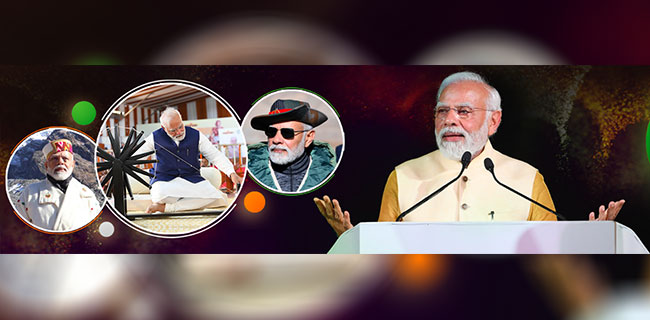
  • It’s never too much in the Modi Era


    By Shailesh Kapoor


    Shailesh KapoorIf you haven’t realised it by now, the first half of 2024 is the perfect time to do so. That there is no such thing as ‘Too much Modi’. We are into the second week of the new year, and the Prime Minister has been in the news every single day.


    It started off with his Lakshadweep snorkeling adventure, which stirred up an unexpected, somewhat silly, controversy. Maldives found itself at the receiving end, though they have their own politicians to blame for saying the wrong things, and choosing the worst possible timing to say them too!


    This week, the Prime Minister is on a development tour of sorts. After a well-marketed Gujarat tour, where Mukesh Ambani showered praises on the Prime Minister, Modi is in Mumbai today to inaugurate the Atal Setu, India’s longest sea bridge.


    Next week, the focus will shift to the mega event on January 22 in Ayodhya, where the Ram Mandir will be inaugurated. The guest list (or the absence of names from it) has been making headlines anyway, and we can expect Mon, Jan 22 to be one of the biggest news days in modern Indian history.


    We are already in the pre-election season, and post Ayodhya, the campaign trails and the rhetoric will gain momentum, and we can expect another 4-5 months of headlines dominated by politics, and indeed by its favorite face.


    That Prime Minister Modi has been the mass media’s favorite is well-known by now. But in recent weeks, even the digital media platforms, which have often been critical of the Modi government, have found it hard to resist covering him on almost a daily basis.


    One of the offshoots of the Prime Minister’s media coverage is that it has made news more inclusive for female audiences and the youth. For many years, older men (30+ years) were seen as the core TG of political news in India. However, PM Modi brings with him a ‘fan base’, much like a film or a series franchise would. ‘What did Modi say today?’ is often a topic of discussion in recent years between housewives in small-town India. No surprise, then, that our ratings-hungry news channels cannot stop talking about him.


    Many political experts believe that barring a last-minute surprise, PM Modi is all set to come back for a third term. Modern India hasn’t seen a national leader of such longevity. There has been no Prime Minister to hold the office for 15 years at a stretch since Jawaharlal Nehru (1947-1964). Not even Indira Gandhi.


    We are already in the ‘Modi era’, and a win later this year will extend it by at least another five years. An era that’s defined by a personality, and also by the media’s whole-hearted endorsement of it.


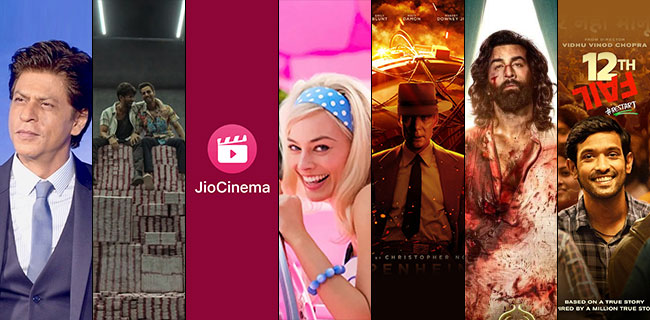
  • From SRK to Animal: Success Stories of 2023


    By Shailesh Kapoor


    Shailesh KapoorThe year 2023 had its fair share of success stories, across cinema and OTT at least. Here’s my pick of the five most significant landmarks of the year (in chronological order), which could, in turn, shape how Indian entertainment pans out in the next half decade at least.


    The return of SRK, and the old guard in general

    January saw Shah Rukh Khan mark a box-office comeback with Pathaan. It had been a decade since he had a bona fide hit (Chennai Express). But with Pathaan, he announced his return, in an innings that’s already seeming a lot of fun. Pathaan was followed in September by Jawan, which went on to become an even bigger success. SRK’s December release Dunki has received mixed response, and significantly lower collections. But with SRK, and with Sunny Deol in Gadar 2, it seems like we are back in the ’90s. Superstars from that era are showing the young guys how it’s done!


    Farzi: The Real Thing

    In what was not the best year for OTT (curtailed subscriber growth, very few breakout properties), one show stood out as an outright blockbuster: Raj-DK’s Farzi, on Prime Video, starring Shahid Kapoor and Vijay Sethupathi, became the most-watched Indian SVOD show of all time, with an estimated 37 Million (Ormax Media estimates) Indians having watched at least one episode. Coming after the immensely successful and appreciated The Family Man, Farzi established Raj-DK as one of the most powerful names in the Indian streaming space. Their next venture Guns & Gulaabs (Netflix) fell short of achieving the same heights. But Farzi’s success confirmed that mass entertainers, rather than urban-centric understated content, is likely to be the way ahead for web-series in India.


    JioCinema: A ‘free’ ride

    The arrival of JioCinema, with an IPL edition that was free to stream, brought in a sea change in the Indian OTT landscape in March 2023. The platform made some of the global giants relook at their India strategy. Disney+ Hotstar offered the Cricket World Cup free later in the year. JioCinema backed the IPL season with a plethora of launches, most notably Asur 2 and Taali. But over the last four-five months, they have gone easy on things, and relied more on non-fiction properties, especially Bigg Boss. Perhaps IPL 2024 is when we will see more activity around the platform.


    Barbenheimer

    Who would have thought that a Hollywood film clash will make headlines in India? The Barbie vs. Oppenheimer weekend in August 2023 brought in about Rs. 100 Cr (gross) worth of box office in India, which was also one of the few countries where Oppenheimer was ahead of Barbie at the box office. Hollywood has not had its best year in India, with the Marvel Cinematic Universe, Hollywood’s mainstay in the Indian market, being on some sort of a downtrend. But with Oppenheimer, we saw audiences flocking theatres in the service of a director urban India has come to love: Christopher Nolan.


    Animal instincts

    December 2023 saw the release of director Sandeep Reddy Vanga’s Animal, a film that polarised critics, but was largely embraced by the audiences, going on to become one of the most significant success stories of the year, especially because it’s headlined by a younger star (not from the ‘old guard’). After Atlee’s Jawan, Vanga’s Animal established the firm hold directors from South India are beginning to have on Hindi audience’s imagination, through their distinctive style of storytelling. Everything about Animal, right from its trailer to the choreography and background music of its action set-pieces, broke conventional rules of mass Indian cinema. And it was very heartening that another film (12th Fail) that came just a month before Animal, and broke a few rules of cinema too, also got immense audience love, especially for its scale, cast and budget. That Animal and 12th Fail can co-exist augurs well for Hindi cinema, which had its best-ever year by some margin.


  • All eyes on the franchise


    By Shailesh Kapoor


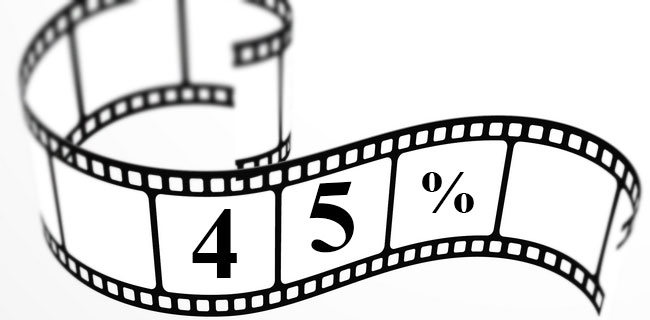
    Shailesh KapoorIn context of a report Ormax Media is publishing next week, a staggering data point was brought to my attention. Forty-five per cent of Hindi theatrical business in 2023 till the weekend of December 3 has come from franchise films, i.e., films that were already a part of a franchise or a franchise universe at the time of their release.


    With Animal and Dunki being non-franchise films, and Salaar: Part 1 being the first of its franchise, this proportion will drop to 35-40% by the end of the year. But the staggering-ness is not in the 45% itself. It’s in the year-on-year comparison.


    Proportion of Hindi box-office from franchise films was only 19% in 2019, and increased to 31% in 2022 (the interim years were pandemic-disrupted). Within two full years, the contribution of franchise films to the Hindi box-office has doubled.


    The equivalent number in Hollywood has been in the high 70s or 80s for a while now, depending on the year we look at. Clearly, Hindi cinema is moving in that direction. It could be a matter of another couple of years that we hit 60%, if not even higher.


    Even on OTT, franchises are beginning to dominate, now that the category is somewhat settled in India. Amazon Prime Video has done a particularly good job of building strong franchises, none less than The Family Man and Panchayat. The latter is produced by TVF, which is a franchise factory of sorts, with a long list of illustrious web original franchises, such as Kota Factory, Gullak, Aspirants, Permanent Roommates, Pitchers, Hostel Daze, etc.


    Linear television’s attempts with franchise creation have been less emphatic, but that’s only because the approach to having seasons does not exist, and it’s impossible to do a Season 2 if Season 1 is the ever-running season anyway. Yet, Zee TV has managed to create some sort of a quasi-franchise, which some young audiences even have a name for: The Bhagya Universe. It has three largely-unconnected shows in it: Kumkum Bhagya (2014), Kundali Bhagya (2017) and Bhagya Lakshmi (2021), all three produced by Balaji Telefilms.


    The rise of franchise content is an interesting phenomenon. At one end, audiences crave for new stories and characters, because fresh and imaginative ideas is generally a strong driver of content consumption. But at the other end is the comfort in watching something familiar. This continuum of original to familiar is a compelling one, because both ends of it are strong on intrinsic benefits related to why content is watched to begin with.


    There are franchise films and shows that manage to re-imagine their world, and provide freshness within the familiar. Some of the early Marvel films, leading up to Avengers: Endgame, managed to do this very well. But those are far and few in between, and in general, franchise content willingly lets go of new imagination, and focuses on the familiarity factor.


    So, if franchise content is becoming stronger than before, does it mean that audiences prefer comfort of the familiar to the excitement of something original and imaginative? That’s not an evident piece of truth. The real difference lies in the differing risk levels. Franchise properties are significantly safer than non-franchise ones. The latter must get the idea, however original it maybe, right. In the former, that’s already been tested.


    But we need a healthy mix, because if franchises begin to dominate to the extent of 70-80%, which is a real possibility soon, the originality will get sucked out of the content ecosystem, leading to a decline in business at some stage in the cycle.


    Be that as it may, in the short-term future, we can expect franchises to dominate Hindi cinema and OTT categories, in a way India may have never seen before.
     

  • One-worded Box-office Beasts


    By Shailesh Kapoor


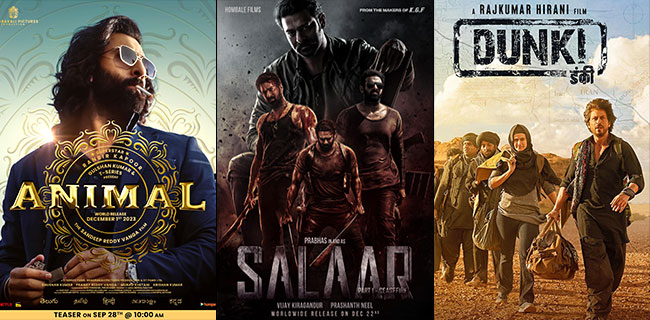
    Shailesh KapoorIt’s a huge Friday at the box office today. Ranbir Kapoor starrer Animal, directed by Sandeep Reddy Vanga, releases today, and is set to witness one of the highest openings in Hindi cinema, with even a shot at the 50 Cr first-day box-office, a mark that only four Hindi films have ever achieved.


    2023 has been an interesting year at the Indian box-office. A series of non-performing films have been punctuated by mammoth blockbusters. In the Hindi language, it started with Pathaan in Jaunary, post which we saw a long period of flops, with an occasional hit like Rocky Aur Rani Kii Prem Kahaani. August saw positive momentum shift, with Gadar 2 emerging as a huge blockbuster. And then, Jawan followed it up early September, recording the highest-ever lifetime box-office for a Hindi film at the domestic box-office.


    In the Tamil market too, Jailer (Rajinikanth) and Leo (Vijay) have done great numbers, and are a part of the list of top 5 grossers of the year, after Jawan, Pathaan and Gadar 2. Animal would be challenging to enter this list, as will Dunki, the third Shah Rukh Khan release this year.


    What’s with film with one-word names, most of which are names or descriptors of their lead characters, doing well? Perhaps there’s more than a coincidence at play here. It could be a sign that audiences are gravitating towards superstardom and larger-than-life hero characters again. While this factor always existed, the pre-pandemic period in Hindi cinema saw a slew of thematic and genre-led films do very well. With OTT around, theatre-going is about scale today, more than ever before. But it need not be the conventional definition of “scale”, which comes with elements like large sets (Bhansali) or VFX (Marvel). It’s about bold-stroke, larger-than-life storytelling too, led by protagonists with an unmistakable swagger.


    If the three big films of December (Animal, Salaar and Dunki) live up to their expectations, 2023 has more than a real chance of becoming the best-ever year at the India box-office, with a gross business of 12,000 Cr in India.


    Animal, however, won’t be the only media highlight of this weekend. We have important elections results coming up this Sunday, when votes for legislative elections in five states will be counted. These results can have a significant influence on how the national politics will look like in 2024, in the lead up to the General Elections.


    Irrespective of how the film fares or what the election results are, one thing is certain: There won’t be a dull moment for media & entertainment observers this weekend.