Category: NEWS

  • End of a World Cup… and a Format

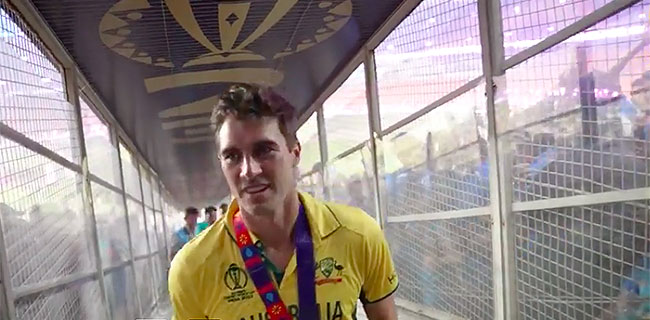
    Australia men’s cricket captain Pat Cummins walking back to the dressing room with the Men’s Cricket World Cup 2023 trophy. Photograph courtesy screengrab from video on ICC-cricket.com


    By Shailesh Kapoor


    Shailesh KapoorFinally, it’s done. The six-week long Cricket World Cup culminated last Sunday, with an imperfect finale from an Indian perspective. Forty-eight games of potentially 100 overs played out over this period. In the age of instant gratification, where “short” is the way to go for most things, cricket administrators seem to have their own unique ideas, some of which seem rooted in another era.


    Last night, India played a T20 game against Australia. It’s the first of the five T20s in a low-key bilateral series. Both sides are resting their star players. Yet, the game had a packed crowd at Vizag. It went to the last ball, something that none of the 48 ODI World Cup games can boast of.


    Cricket has even made it to the 2028 Los Angeles Olympics, on the strength of the T20 format. These are just some of the signs on how the future of the sport lies in this format, and the leagues built around it. Test cricket is there to indulge the connoisseurs. But it’s T20 that will expand the sport, taking it to newer audiences and geographies.


    ICC may be reluctant to end the format altogether, but it’s happening organically anyway. Over the next 12 months, the major cricketing nations are playing less than 20 ODIs put together. The number of T20s are at least twice that number, and that’s not counting the T20 World Cup scheduled for early 2024.


    The World Cup itself had its share of controversies, mostly administrative in nature, ranging from scheduling to the choice of pitches for the knockout games. The crowds in India, especially outside the major centers, can be very ‘un-sporting’, and this became painfully evident in the final, and the prize distribution ceremony that followed. As long as India is winning, all is good. But when we don’t, the picture looks embarrassing from a sporting perspective. It’s perhaps the nature of the hyper-nationalistic times we live in.


    Right out of the World Cup, we jump into the elections season. Next Sunday (Dec 3) is the big counting day for legislative assembly elections in five states, which are a lead-up to the big General Elections next year. Just from a thrills perspective, one hopes there are closer finishes in at least a couple of those, compared to the largely one-sided World Cup we witnessed.


    On the theatrical front, there are three big movies lined up in December: Animal, Dunki and Salaar. The year is well-positioned to be the highest-grossing year at the Indian box office ever. But that’s another story for another day.


    Shailesh Kapoor is Founder and CEO of Ormax Media. He writes on MxMIndia on Fridays. His views here are personal.

     

  • The Games Take Over


    By Shailesh Kapoor


    Shailesh KapoorThe Cricket World Cup has taken off to a good start. As good as the World Cup for an eight-hour format can be, in today’s age of instant gratification. Why does the 50-over format still exist is a larger question, whose answer is purely commercial in nature. Many experts have raised doubts over the purpose this format is serving, but who needs to disrupt a cash-generating machine, in India at least?


    So, the current World Cup will put that question aside for a few weeks, even months. The 2027 World Cup, by the way, is already planned to be held in South Africa, Zimbabwe, and Namibia, though four years is a long time away, and a rethink is not entirely ruled out in the coming year or two. On the format itself, not on the venue.


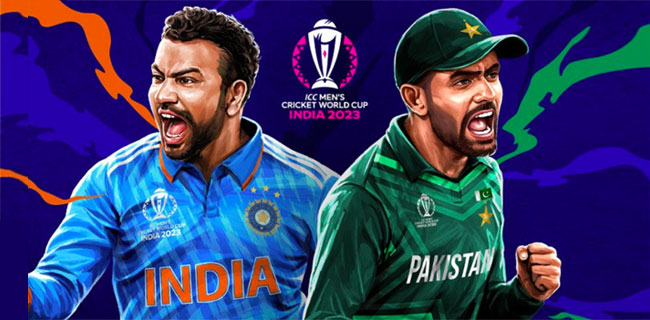
    But let’s come back to the World Cup that is currently underway. By and large, on-field action has taken large share of the attention in the last one week, and India’s two wins have given an initial sense of comfort to the fans. All eyes are currently on the big India-Pakistan clash tomorrow. India’s record against Pakistan in the 50-over World Cup remains unblemished, with a 7-0 lead. We could see both television and online records for live sports being rewritten tomorrow.


    The only major off-field controversy over the last week is not a frivolous one. It’s to do with mismanagement of tickets. The opening game between 2019 finalists England and New Zealand had thousands of empty seats visible on camera, even as the tickets showed largely sold out on online platforms (Imagine that happening with ad inventory during a World Cup game!). BCCI’s handling of scheduling and ticketing of this event has been unprofessional, even incompetent. The advantage of a long tournament is that you can learn on the job, and one hopes corrective action is already being taken.


    The broadcast of the World Cup is strictly on expected lines, and I say that in a good way. BCCI and Disney-Star have kept it simple, focusing on first principles, than offering too many distractions via meaningless innovations. Commentary in nine languages is impressive, though the absence of Bhojpuri (JioCinema’s cute contribution to sports broadcast) takes a bit of the fun factor away.


    The World Cup ends in the week after Diwali, and shortly after, we will be entering the elections season. Our news channels have enough fodder to keep themselves busy till mid-2024 at least. Which is not such a bad thing at all, because at least they will not have too much time to conjure up bizarre stories to keep the ratings going.


  • The Health of our News


    By Shailesh Kapoor


    Shailesh KapoorPolitics is in the air (though that may be true for any given day of the year). We are in election season again, and the build-up to the 2024 General Elections has well and truly started, even though there remains speculation on the dates, even the possibility of an early election, before the stipulated May timeline.


    It’s only natural then that the media scene heats up too. Last month, the I.N.D.I.A alliance announced a ‘boycott’ of 14 news anchors across channels. The news has met with various reactions, depending on which side of the political spectrum one is aligned to. Some have called it a violation of press freedom, while others have endorsed the move as a message against hate speech and biased media coverage.


    The decision to not engage with certain sections of the media is an age-old tactic followed by politicians and celebrities frequently, and to call it a violation of freedom of press is quite a stretch. It’s not so much the move that has caused the debate, but the public announcement of it. If I.N.D.I.A would have silently decided to not send their spokespersons to the shows hosted by the said anchors, no one would have cared much. But by making their decision very public, they have stirred up a hornet’s nest.


    The decision itself carries limited practical value. Many of the anchors listed don’t even have programs that have spokespersons on them. In any case, debate shows on Indian news channels do not need official spokespersons. There is a long list of unofficial supporters and sympathizers who are willing to come on debate shows on short notice. Many even get paid for it, from what one gathers.


    The only pertinent question that is more important than the short-term controversy is: How did we reach here? The Indian media and polity were in a symbiotic relationship for decades, and incidents of friction, some dating back to the times of Indira Gandhi, if not earlier, were more aberrations than norm. But over the last few years, there has been a gradual decline in the health of this relationship. It is no secret that the current Government at the Centre does not give press the kind of access earlier Governments did. Cabinet reshuffles, for example, are rarely known to the media till they are formally announced. This seems a part of a well-considered media strategy, where engaging with the voters directly, via social media for example, is a preferred option.


    But there has also been a gradual decline in the quality of political representation on news channels. Till about a decade ago, it would not be unusual to see faces like Arun Jaitley, Sushma Swaraj, Jairam Ramesh, Ravi Shankar Prasad, et al on various TV news debates, often every night. That is almost unthinkable today. People of stature and experience do not want to be associated with the cacophonic mess TV debates have degenerated into, over the years. They would rather give one-on-ones when they something specific to say.


    But these occasional one-on-ones cannot fuel four hours of prime-time programming every night. So, news channels must manufacture topics, and ‘spokespersons’, to keep their ship running. The viewer may see it as news or entertainment, but that’s not something anyone is losing sleep over. Not anymore.


    The ‘fourth estate’ role of the media seems like an age-old idea in today’s Indian context. Boycott or no boycott, the Hindu-Muslim debates and the thin-on-facts coverage will continue. Because if there are eyeballs, no one is really complaining.


  • The Box-office Boom: Gadar 2 & Co


    By Shailesh Kapoor


    Shailesh KapoorThe Indian box-office is minting money. After an extended lull that stretched 3.5 years, punctuated by an odd film here and there, like RRR, K.G.F: Chapter and Pathaan, there is an unmistakable buzz at the ticket windows. The weekend of August 11-13 grossed nearly Rs 400 crore at the domestic box-office. To put this number in perspective, films releasing across the entire month of February 2023 grossed a similar amount (Rs 396 cr). August 2023 is in the reckoning to become the first-ever month ever to achieve the Rs 2,000 crore gross mark. It’s a long shot, but not out of bounds as of today.


    The boom has been ably supported by Rajinikanth’s Jailer, and the franchise social comedy OMG 2. But it’s Gadar 2, a sequel to the blockbuster 2001 film Gadar: Ek Prem Katha, that is headlining the windfall. The film is on its way to challenging Pathaan, released just earlier this year, to become the highest-grossing Hindi film of all time at the domestic box office.


    In September, Shah Rukh Khan will have a shot at breaking his own record, and Gadar 2’s, with Jawan. Later that month, Prabhas’ pan-India film Salaar – Part 1: The Ceasefire releases, and is expected to gross 100+ cr all India on its first day itself. 2023 is now well on course to become the highest-grossing year of all time, at the Indian box-office.


    It’s a narrative Indian cinema needed desperately. Knives have been out, targeting the cinema medium and its relevance in today’s streaming-centric entertainment ecosystem, since the pandemic set in, in the first half of 2020. Lack of solid films from the Hindi film industry, barring the odd one every 4-5 months, have not helped matters. But all that is a thing of the past, with Gadar 2, OMG 2, and Rocky Aur Rani Kii Prem Kahaani delivering within two weeks of each other, after the Hollywood-led boost in the Barbenheimer week.


    Outdoor entertainment options are scant in India, and movie-going remains the only inclusive one. It takes a film like Gadar 2 for the inclusivity to realise its true potential. The contrast between the urban, multiplex-centric audience profile of Oppenheimer and Rocky Aur Rani Kii Prem Kahaani, and the wide, all-in audience profile of Gadar 2 is a healthy sign for the medium, and its robust growth in the coming years.


    The success of Gadar 2 is also a validation that the star system has been re-imagined. In Pathaan or Jailer, we see conventional stardom at work, in its full glory. In Oppenheimer, it’s a director’s fan base at work. In Gadar 2, it’s the enormous equity of the original film and its characters, rather than that of its lead star, who hasn’t exactly been active or successful in recent years. This multiplicity of factors that can take audiences to the theatre allow for different types of content models to co-exist, and for the cinema medium to prosper.


    For all the naysayers of the cinema medium, who were eager to record its obituary in 2020/21, it’s time to wake up and smell the popcorn.


  • India-Pakistan Cricket: Bigger than the Best


    By Shailesh Kapoor


    Shailesh KapoorA high-decibel cricket season is round the corner. The ICC Men’s World Cup kicks off two months from today, on October 5, in India. There’s also the Asia Cup from the end of this month, as the lead-in to the World Cup. BCCI has taken its time to release the World Cup schedule, and are still tinkering with it.


    In a cricket crazy nation like ours, a World Cup in the thick of the festive season is an irresistible proposition, and the delay in scheduling, or the dwindling fortunes of the 50-overs format for that matter, are unlikely to keep viewers or advertisers away from this mega event. The last time the 50-overs World Cup was held in India, the home team emerged victorious. A repeat this year is what many will be hoping for, including Star Sports and Disney+ Hotstar, who have a lot riding on this event.


    But the really big cricket story of the year is… India-Pakistan. There are at least two ODI contests lined up: Sep 2 at Pallekele (Sri Lanka) for the Asia Cup, and Oct 14 at Ahmedabad in the World Cup. A second Asia Cup encounter is almost a certainty, given the Super Fours format. And a clash in the final is not ruled out. That could mean potentially four India-Pakistan games in six weeks. When did that last happen? In 2012-13.


    India-Pakistan games transcend the sport, and can even make the World Cup setting look like mere scenery. Having closely followed the exciting Ashes series that concluded earlier this week in England, one would be tempted to compare the India-Pakistan cricket rivalry to that between England and Australia. But there’s a crucial difference. The Ashes rivalry is cricketing in nature. It largely plays out on the ground, in the stadia, or in press conferences leading up to a match. But India-Pakistan cricket matches come with their share of politics and diplomacy, and the aura around them is never quite limited to just the cricket itself.


    The Indian team is currently on a dreary tour in the West Indies, where even the T20s feature scant crowds, and not just because they must be held during the day to match broadcast timings in India. As we gear up for an intense cricket season after the West Indies humdrum, this article titled ‘Can Indian fans ever expect a pleasant stadium experience?’ by Sidharth Monga (ESPNcricinfo), resonated with me immensely. I have now traveled to watch cricket in England and Australia on three occasions, including the recent WTC Final at the Oval. And it’s fair to say that the in-stadia experience in India is not even in the same vicinity. For a board that’s got all the money, there just doesn’t seem enough will to fix this broken piece. Because in a country of 1.4 Billion, it’s easy to fill in the stands anyway.


    If one looks at this issue at a more macro level, in India, cricket matches are still seen as forms of video entertainment, whose real potential is realized on TV and streaming. The crowds at the stadia are merely seen as tools to create the atmospherics that make the telecast look good. This mindset is an outcome of the absence of a sporting culture in India, at large.


    So, as one prepares to watch the games at home, one hopes the commentary lives up to the standards a World Cup deserves. Of late, that’s been a growing concern for those who prefer English commentary. But that’s another grouse, for another day.


  • ‘Cinema is Dead’. Really?


    By Shailesh Kapoor


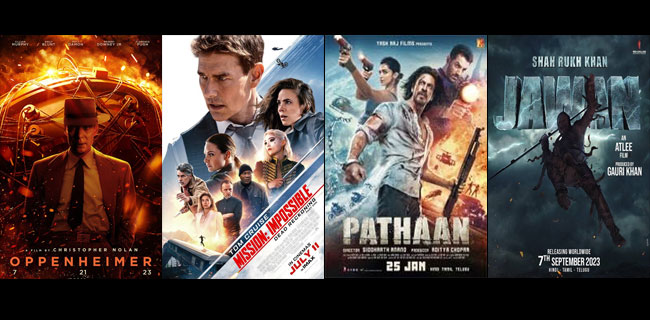
    Shailesh KapoorEven as I write this Friday morning, Christopher Nolan’s Oppenheimer, which released today, is running to packed houses in late night and early morning shows in India. Thus far, Hollywood box-office in India has with the action/ superhero genre. But here, we have a biographical period drama, which is likely to challenge the opening of last week’s Mission: Impossible film, singularly on the strength of its director’s equity among the urban youth in the big cities. The film, incidentally, releases along with Barbie, a ‘franchise’ film like no other. Unlike the West, Barbie will trail Oppenheimer at the India box-office, but is still expected to gross respectable numbers.


    And yet, there continues to be incessant talk about how the theatrical medium is in danger. This narrative, that started during the pandemic, when streaming took over as the only medium of premium video entertainment worldwide, continues to find traction in sections of the industry and the media, but is fast becoming facetious, with no facts supporting it.


    In May this year, I co-authored this report on the Ormax Media website, which explains how ‘big-ness’, whether it comes from the genre, or the franchise, or the director (as is the case with Oppenheimer), is the dominant expectation from the theatrical experience in India, which is why smaller films will struggle, even as the bigger ones continue to get bigger.


    The first half of 2023 grossed 15% less at the India box-office compared to the same period in 2022. But this is certain to be compensated to a large extent, if not entirely, by the second half, which has a stronger line-up of big-ticket releases. 2022 itself was the second-best year at the Indian box-office, being just a notch behind 2019. Yet, some people would like us to believe that cinema is in danger.


    I suspect this narrative is driven by Hindi cinema, or Bollywood as it’s called (and now pejoratively so), not being able to live up to the changing audience expectations from the medium. While Pathaan is by far the biggest Indian film of the year so far, and Jawan, another Shah Rukh Khan film, looks equally promising from a box-office perspective, the in-betweens are where the problem lies. Only five Hindi films have managed to cross the 100 Crore (nett box-office) mark this year in six-and-a-half months. 16 films managed that across the 12 months in 2019.


    That’s the real source of the faulty perception that cinema is struggling. The frequency of high-grossing films created a positive perception about Hindi cinema in the last decade. Post-pandemic, it’s been more about the tentpoles. The lull periods punctuating the tentpoles can make the theatres look woefully short of content.


    But as long as the tickets are being sold, there should be little cause of concern. One would even argue that a tentpole-driven category is less risk-prone, because even in the worst-case scenario, at least 50% of the tentpoles will emerge as blockbusters, something that cannot be said about mid-range cinema, where even 20% is a healthy hit rate.


    Tentpoles also go well with marketing-friendly concepts such as ‘event films’ and ‘theatrical experience’. They allow advertisers to plan a more concerted campaign, than spread themselves too thin across a long-list of films that are uncertain to deliver.


    As we approach the peak festive season in India, be prepared for a lot of buzz around the movies. But I’m not betting on the ‘cinema is dead’ debate dying down anytime soon. But it will begin to make even lesser sense with time.


  • Almost the End of the Road for Appointment Viewing


    By Shailesh Kapoor


    Shailesh KapoorIf you entered the Indian television industry about two-three decades ago, the two words that would be drilled into your sub-conscious within a week were: Appointment Viewing (or Appointment Viewership, in a later variant). Appointment was the Holy Grail of television. It was the ability of a TV show to get a certain guaranteed mass of audience every day or week, depending on its telecast frequency.


    Everyone wanted their channels to be watched by appointment. Even movie channels and niche channels, which had no intrinsic merit to demand appointment from their audience, chased the idea. What else explains an assembly line of “DDT” (Day-Date-Time) promos for movie re-reruns, at all the major movie channels?


    Even at a channel like Zoom, for which I headed the marketing function in its launch period, there was significant on-air inventory spent on getting viewers to watch by appointment. In hindsight, one was chasing the unattainable, but such was the buzz value of the term back then, that it even found a mention in KRAs (even though there is no evident way of measuring what proportion of a show’s viewership is by appointment).


    The term Appointment has lost some of that buzz value in the last decade. “Habit” is what is understood to drive non-GEC consumption in primetime, and all consumption in non-prime time. The habit of watching news at 10pm, for example. Or the habit of turning on a kids channel to watch a cartoon programme after coming back from school. Habit is a less ambitious variant of appointment, and does not have the brand loyalty aspect attached to it. Watching a movie on TV every evening for an hour (habit) is different from watching a particular movie channel every evening for an hour (appointment).


    With the advent of OTT platforms, appointment has become increasingly elusive, especially for men, and younger (unmarried) women. Being pinned down at a particular time for a particular show is no longer required, because catch-up television is available. That not too many TV shows are appointment-worthy to begin with doesn’t help matters.


    Except marquee sports events and a select few TV serials for married women, rest of Indian television viewing is now functioning on habit. Watching Star Plus from 8-10pm could be a daily habit for a family, but it doesn’t carry the same stakes as appointment. They would gladly trade it off for an IPL game, a new show like KBC, or some important news on a particular day. Stories of wars over the remote control in Indian families are things of the past, because Appointment Viewing is a thing of the past too.


    The habit of watching TV makes the medium secure, because this habit is linked to the grand Indian institution: Family. But in the absence of appointment, it makes channel brands and shows vulnerable, and their success more fickle, less enduring.


    Studying habit, instead of chasing appointment, should then be the new mantra for the many, many television executives who have viewership KRAs.


  • The League of Extraordinary Gentlemen

    Courtesy: iplt20.com


    By Shailesh Kapoor


    Shailesh KapoorThe 16th edition of Indian Premier League is in its last leg now. The 2023 edition has been the most closely-fought of the 16, and by some margin. At the time of writing this, five games are left in the league stage, and yet, only one team (2022 winners Gujarat Titans) have qualified for the playoffs. Seven of the remaining nine are in the reckoning for the remaining three spots, though two of them have only an outside mathematical chance.


    How IPL manages to grow in stature year-on-year is quite extraordinary. And it’s not just growth in commercial stature (viewership, revenue, etc.). The impact of IPL in shaping Indian and international cricket is unmistakable. The meteoric rise of Yashasvi Jaiswal in the last six weeks is a topical example. Jaiswal’s humble background makes for a great underdog or rags-to-riches story. He’s almost certain to earn an India cap this year itself. But it’s difficult to imagine how that would have happened if there was no IPL.


    From a media perspective, IPL pretty much stands at the last marquee media event standing in India. The clutter of infinite options has fragmented audience consumption over the last decade, and it seems that days of a hit show that will unify the entire country (or even the Hindi markets) are long gone. But IPL bucks that trend. To borrow a term from the theatrical business, it’s the biggest ‘pan India’ property in business today.


    By offering IPL free to stream, JioCinema has managed to add to the property’s stature, by giving it recognition as a brand of the ‘masses’. Premium properties can be mass too, and IPL is a fine example of that. One hopes that JioCinema doesn’t relook at this proposition next year, now that the platform has entered the SVOD business.


    There’s another big-ticket cricket event later this year, the ODI World Cup in India. The ODI format is in a bit of a no-man’s-land, sandwiched between the popular entertainment offering of T20 and the connoisseur-backed Test cricket format. ICC is not the most nimble-footed organisation, which is why the ODI format continues to drag on. In the process, it’s damaging the global prospects of the sport of cricket irrevocably. Logically, this should be the last ODI World Cup. It’s only imminent that curtains are drawn on this format sooner than later.


    But nevertheless, the 2023 ODI World Cup will be a commercial success, especially because it’s being held in India, which opens up a wide array of advertising and association options for Indian brands, that are not available in an overseas tournament.


    But even as its best, a World Cup (ODI or T20) cannot match the brand power of IPL, an idea that continues to grow bigger with time.


    This column is taking a summer break, and restart from Friday, June 16, 2023


  • The Saffron Cinema Movement


    By Shailesh Kapoor


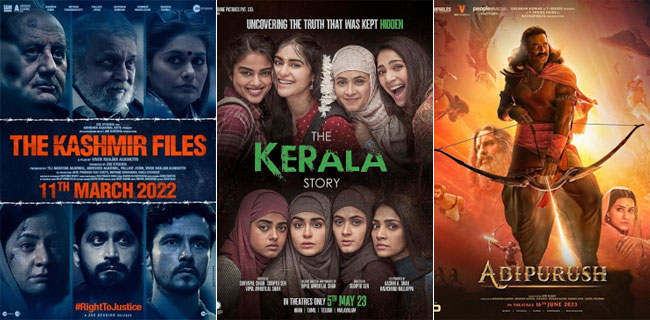
    Shailesh KapoorMarch 2022 saw the release of The Kashmir Files, a film whose box-office performance was unlike any other Hindi film before it. The film had no cast or credentials of note, but went on to gross almost Rs 300 crore at the Indian box-office, aided by inorganic methods, such as corporate bookings and political push. The film features in the list of Top 20 grossing Hindi films of all time. In this article, I wrote about how the film is an outlier, if there ever was one.


    In May this year, there was a sense of déjà vu with The Kerala Story, a similarly-titled film that relies on the same premise – religious polarisation to entice the Hindu majority to watch the film – to get audience attention. The political support to The Kerala Story was less overt, but the film has managed to do almost as well as The Kashmir Files, grossing about Rs 265 crore over its extended run at the cinemas in India.


    While the initial business of The Kashmir Files was inorganic, it is impossible to gross such huge numbers for films of this scale, unless they appeal to a wider audience base. Clearly, both The Kashmir Files and The Kerala Story managed to do that. Entertainment, which is often cited as the primary, if not the only, reason to watch movies, was not the driver though. The films were watched because they represent an ideology, which a large section of the audience, espouse. An ideology that is also reflective in their political choices: Both films have performed better in states where Hindutva is a core component of the political narrative.


    Today sees the release of the Ramayan-inspired pan-India film Adipurush. Unlike the other two films, this one is not communal in its content, as it does not have a community (read Muslims) being shown in a negative light. However, the resonance with the film’s theme is unmistakably religious and cultural. The film has songs titled Jai Shri Ram and Ram Siya Ram, both of which are trending on top of the music charts. Marketing of the film is relying on distinctly religious elements, such as a seat being left unoccupied in each cinema hall, for Lord Hanuman to watch the film!


    Headlined by Prabhas, who is the No 1 star in Telugu cinema, the film will be driven by his stardom in his core market (AP-Telangana), but by its thematic resonance in the Hindi markets. It is expected to gross Rs 90-100 cr across India on its first day alone, aided to the extent of 15-20% by corporate block bookings. Political support is certain to follow, and unless the content is too weak to sustain, Adipurush can be expected to be one of the Top 10 grossers of all time in Indian cinema.


    Last year’s major Hindi release Brahmastra also grossed big numbers, registered the best opening day for an original Hindi language film since the re-opening of theatres post the pandemic (Pathaan now holds that distinction). While Brahamstra has more ‘modern’ elements like a young lead starcast, superhero genre and visual effects, its core theme relies heavily on Hindu mythology too.


    Clearly, we are seeing a sort of trend emerging here. One could look at these films as being either ‘propaganda’-driven (The Kashmir Files or The Kerala Story), or propaganda-free content that relies on cultural and religious resonance (Adipurush). But together, they represent an emerging genre of cinema that digs into Hindu faith and mythology, and its political extension Hindutva, to appeal to its target audience.


    It’s almost certain that many such scripts are being penned even as you read this, and 2024-25 may see a lot more films of this nature being released. What started off as an outlier phenomenon has now gained mainstream significance. Whether it’s a good thing for our cinema, and for the society at large, is another topic for another day.


    The debate on whether cinema shapes society, or society influences cinema, is a complex one. But in the current times, Hindi cinema seems to be clearly witnessing the latter. The Saffron Cinema Movement is here. And it’s just a start!


    Shailesh Kapoor is Founder and CEO, Ormax Media. He writes on MxMIndia on Fridays. His views here are personal.

     

  • New TVC launched for Pass Pass Pulse

    DS Group has launched a new TVC for Pass Pass Pulse, the hard-boiled candy. The brand’s foundational message, ‘Pran Jaaye Par Pulse Na Jaaye’, is echoed once again in the film, where Saurabh Shukla and Abhishek Banerjee take centerstage. It is conceptualised by VML (earlier Wunderman Thompson (Delhi)).

    Commenting on the occasion, Arvind Kumar, General Manager, Marketing, DS Foods, DS Group, said: “DS Group’s Pulse is all about a great tasting candy that you would never share with anyone. Our campaign line ‘Pran Jaaye Par Pulse Na Jaaye’ talks about this in a simple yet creative manner. This latest TVC brings this to life with yet another hilarious story that showcases people going to any extent when it comes to procuring/hiding their Pulse candy.”

    Ådded VML’s Sundeep Sehgal: “Pran Jaaye Par Pulse Na Jaaye is a promising idea that we have built over the years. To take things a notch higher, we developed yet another ad that showcases unique ways people adopt to hide their Pulse candy. We had a lot of fun making it and we are sure that the audiences will find it super entertaining.”

  • Air India launches new brand track: ‘India Takes Flight’

    Air India unveiled a signature track defining its sonic identity, ‘India Takes Flight’, reflecting, as it calls it, the “sound of a bold, vibrant, and confident India”.

    Air India’s new sonic identity is a jugalbandi (musical collaboration) featuring recent Grammy awardee and acclaimed musician Shankar Mahadevan, renowned percussionist and composer Taufiq Qureshi, celebrated lyricist and writer Prasoon Joshi, and London’s revered Royal Philharmonic Orchestra.

    Said Sunil Suresh, Head, Marketing, Air India: “We wanted to create a melody that embodied the Indian spirit. We also wanted to capture a universality that brings people together. This musical odyssey accomplishes it expertly, and as the country’s flag-bearer, we are proud to carry this to the world.”

    Added Prasoon Joshi, Chairman McCann Worldgroup Asia Pacific, CEO & CCO McCann Worldgroup India: “I am incredibly honoured to be a part of this collaboration that embodies Air India’s new global brand identity. Air India always had a sense of rooted cultural ethos. This ethos is not inward looking but connects and welcomes the world. This track signifies Air India the brand on the ascent, one that emanates from the roots but goes on to embrace the skies.”

  • Pepsi refreshes look at the Gateway


    View this post on Instagram


    A post shared by Pepsi India (@pepsiindia)

    Pepsi took over the Gateway of India in Mumbai to unveil its new look as it rolled out its first visual identity change in 14 years. The carbonated soft drink took over the monument with a digital artwork that showcased the reveal of new Pepsi visual identity in an inflatable installation.

    Sharing her excitement, Shailja Joshi, Category Lead, Pepsi Cola, PepsiCo India, said: “We are thrilled to reveal Pepsi’s refreshed visual identity and new logo, embodying unapologetic modernity and the iconic status of Pepsi. The fresh design language reflects the invigorating spirit of Indian youth and their boundless pursuit of possibilities. The unveiling of Pepsi’s updated visual identity at the iconic Gateway of India, through a unique installation, signifies our celebration of an exciting new chapter. We’re delighted to bring the new logo to India and are positive that Pepsi enthusiasts nationwide will embrace and connect with the bold new era of the brand in 2024.”