
Category: NEWS

  • Hindi Hinterland: Happenin’ & How!


    By Ritu Midha


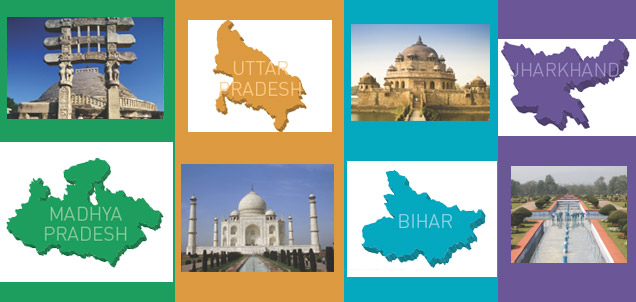
    The four key Hindi Hinterland states – Uttar Pradesh, Madhya Pradesh,Biharand Jharkhand, till less than a decade ago were considered to be sluggish in their outlook. That’s because consumers there were not really top-of-mind for marketers and if at all they became part of a media plan, especially television, it was done so by default, as Hindi television that catered to metros was available in the hinterlands too, and there was not much effort made to engage consumers there. If one looks at a broader picture, a similar tale rang true for most states across India, perhaps a decade-and-a-half ago.


    Cut to the present day, where India is the second-fastest growing market in the world, its middle class is the favoured target group of most marketers (both national and multinational), and in most global consumer surveys Indian consumers emerge to be the most gung-ho among the lot. Of the several states showing signs of speedy growth, the four states that are set for a big leap include:


    • Bihar, which is the second fastest growing economy in the country
    • Uttar Pradesh, which is the second largest contributor to the country’s GDP and also has the second largest urban populace in the country
    • Madhya Pradesh, which is touted as being an upcoming economic power centre and a major tourist destination
    • Jharkhand, which has always been an industrial hub


    One often reads of Indians leaving their cushy jobs overseas and returning to their roots to contribute to, and be a part of, the India growth story. In fact, stories of residents of Hindi Hinterland moving back home from metros too are not uncommon.


    Evolution of the Hindi Hinterland consumer

    Mayank Shah

    Consumers in these states are evolving rapidly and much of the credit for their evolution could be attributed to access to information and awareness boom. Mayank Shah, Group Product Manager, Parle Products reflects on the consumer psyche: “If you look at aspirations, there is no significant difference in Hindi Hinterland and metros. However, the urge to excel is far greater as they come from a modest background and the readiness to put in effort is definitely there. Even in semi-urban and rural areas, aspirations have grown – they are ready to consume CPG (consumer packaged groups), which is similar to their urban counterparts.”


    The increased awareness and steady GSDP enhancement has made the consumer ‘consumerist’, whereby it’s not only low-ticket items that are catching the consumer’s attention, the high-ticket ones are doing it in a big way too.


    Kamal Nandi, VP – Marketing & Sales, Godrej Appliances asserts: “Hindi hinterland is becoming an important market for consumption of durable goods. Consumer affordability has gone up, leading to a shift in lifestyle and consumers becoming more urban in their approach. Also, their top priorities are convenience and comfort.”


    Sushil Bajpai, President, Ghari Detergent, too, is of the view that it is no longer the market to be targeted sometime in future. For Mr Bajpai, the time is now: “There is excellent scope for marketers. Industries too are finding it attractive now. Consumerism is growing at a fast pace, and urban markets in Hindi heartland are no different from metros. The need right now is to understand the consumer mindset.”


    Krishna Mohan

    While the big cities in the region are getting ready to rub shoulders with metros, the semi-urban and rural areas too are getting out of dark areas. States Krishna Mohan, CEO, Sales, Emami Limited: “The great rural-urban divide in household consumption patterns has reduced drastically. Bharat is indeed keeping pace with India when it comes to spending on most fast-moving consumer goods. Rural sales contribute more than 40-50 per cent of total sales in various categories for Emami. We have increased emphasis on engaging rural consumers. The market is huge with a lot of potential.”


    Youth – Change drivers

    The change, as is expected, is being driven by the youth who are more adaptable and are akin to the youth from the metro – at least in urban areas. Having said that, awareness and information in semi-urban and rural areas is also growing and so are the aspirations.


    Somprabh Singh

    States Somprabh Singh, Head Marketing, Titan: “In attitude, they are not very different. They are independent, very ambitious and well informed. The only difference is that their exposure to many international brands is lower but that’s the function of the retail environment, which will change in sometime.” And, true to his vision, a change is currently underway across these cities.


    Harish Bijoor, CEO, Harish Bijoor Consults, believes that the booming Hindi Hinterland is the right place for marketers to be, more so for those catering to the youth. He exhorts: “The robust growth numbers in the education sector is proof enough. Add to it the entertainment market, the market for mobile phones, gadgets of every kind, clothes and accessories, cosmetics, shoes, exercise oriented products, and you have a solid market of the future emerging. There is spurring consumption of not only functional products, but products of cosmetic value as well. Products that relate to health, well-being and proactive health care, rather than just reactive care, are being craved for as well.”

     

    Harish Bijoor

    As per Mr Bijoor, there is a definite opportunity waiting, especially for brands meant for the youth, and the marketers need to make the most of it. He asserts: “The youth in these towns have a far bigger hunger quotient than the privileged youth in the bigger cities. I would segment this territory into urban, rurban and rural. The hunger deepens as you go from urban to rurban to rural. The opportunity for marketers, therefore, deepens as one penetrates down this strata.”


    Interestingly, while the debate between urban and rural might take some time to die down, it is the semi-urban areas that are attracting a lot of attention. Interestingly, the leap is expected to be bigger there, as they are keen to catch up with their urban counterparts, who themselves are always in a moving state.


    States Lloyd Mathias, the marketing honcho with experience around industries: “Youth in the urban areas of these states are quite close to metros in their awareness and aspirations, more so in case of bigger cities likeIndore,Lucknow,Bhopal,PatnaandRanchi. Though the semi-urban youth might be a little behind, they are catching up, what with the inroads being made by social media. Moreover, the influencers are the same, which are rapidly dissolving the differences.”


    Consumption pattern

    While rising aspirations is one part of the story, these regions are seeing an increase in activity by discerning marketers who are becoming more conscious of the finer nuances of the region, and are staying away from the one-size-fits-all approach.


    Explaining the phenomenon, Mr Nandi says: “While we have seen growth in double door refrigerator model in urban markets, in semi-urban markets it is the single door model that works.” However, it has not stopped Godrej from providing the entry-level consumer best value for money. He adds: “Even an entry-level consumer looks for high-end product features. A few years back, toughened glass shelves were there only in high-end model, today they are there in entry-level models as well. Brands have to seek to fulfil aspirations.” The company has also developed a refrigerator with a ‘Stay cool’ feature – powering cooling at the same temperature for 24 hours even after a power-cut.


    Coming back to the India analogy, the Indian consumer is perhaps one of the most price-conscious in the world. For him, value for money seems to be the mantra, but the consumers’ buying capacity is no longer questioned – the global marketers are tailoring India specific strategies, and the same is true of Hindi Heartland as well.


    Affirms Mayank Shah: “Instances and opportunities of buying premium products might still be less but they buy if the right quality is delivered at the right price. For example, premium biscuits like Hide and Seek cookies were rare in Hindi heartland, apart from cities likeLucknow,BhopalandAllahabad. However, now it has changed; we made it available in smaller packs, which has definitely led to sales enhancement.”


    The growth is not being noticed in purchase of a few specific product categories but across the board – a clear indication that the consumer is not seeking to fill just the need gaps, but is also looking for comfort, convenience and a bit of pampering.


    States Lloyd Mathias: “There is dramatic growth in categories like wireless broadband, consumer soft goods, mobiles and more; the consumption pattern is similar to other parts of the country. It is the sheer numbers that make it more lucrative.” He adds: “There is a homogeneity in these markets – the same is not true of any other part of the country, be it South, West or East.”


    Mr Krishna Mohan suggests that marketers look at a closer interaction with the consumer to understand him, and also to make him understand the brand. He asserts: “The way forward is to help consumers, especially in the rural areas, to make the switch from loose to branded or aid new consumption habits, either with novel products or new formats. For us, the categories of cool oil, cool talcs and fairness creams are doing extremely well with double-digit growth.”


    At this juncture, the Ghari Detergent success story can be an inspiration for many. With its origins inKanpur, it is the largest selling detergent brand in the country today. And a major focus on Hindi Hinterland has definitely propelled growth for the brand. Sushil Bajpai states: “Hindi hinterland is the biggest market for us; the brand name on our packs is prominently written in Hindi, and then in regional language. RoI in Hindi Hinterland is not lesser than other parts of the country; the key is to convey the right message accurately.”


    Key challenges

    Having assessed the scope that these markets present, one can safely assert that Hindi Hinterlands have come of age. And the marketers, of course, are in no mood to miss the bus. Thus, as per Somprabh Singh, it is important to “Act fast and act now, else be left behind. This is in terms of creating exciting products and new channels that will help reach them.”


    As per Mr Nandi, it is not just about being there; the key is to be relevant and to belong. He says: “You have a winning story in hand if you are able to provide relevant technology and play a role in them (consumers) fulfilling their aspirations.”


    Mr Bijoor agrees that relevance and market-specific approach is mandatory to be successful in these markets: “Marketers need to tailor-make themselves to the market, rather than take their tailor-made solutions to the market. Bottom-up marketing is the mantra to adopt.”


    Emerging markets indeed

    So while there exists an array of products that are being tailored to these markets, there is keen interest in interacting with the consumer there and understanding him and there definitely is an increase in the consumer spends. Are these markets ready for all the attention they are getting or would it be a case of yet another opportunity going bust?


    Laughing off the suggestion, Mr Bijoor states: “Hindi heartland is the new market that is just about emerging. What was derogatorily called the “cow belt” and the “Bimaru states” in the past, is a market that is coming to roost in the future. These states have become very progressive in their development indices. They boast of a GDP growth rate that is, at times, even more robust than the national numbers. This clearly means that these markets will see faster consumer growth in terms of demand and in terms of volumes, value and innovation.”


    Interestingly, the consumers staying in these markets are a very large demography, accounting for 20 per cent of the country’s population. And there has been a dramatic improvement in the standard of living in these states too. As these markets poise for the next big leap, it’s time the true potential of these markets is understood, and the consumer is serviced to the optimum.


    Click here for larger

    This article is part of ‘High on Hinterland’,  a special volume presented by Big Magic and produced by MxMIndia. If you wish to have  a copy of the volume, please email subscribe@mxmindia.com with your name, company details and address. We’ll courier you a copy within a week. Since we have limited stocks, we will mail a PDF to those who we are unable to send a printed copy.


  • MxM Exclusive: Satyamev Jayate impacts govt. Women & Child Dev Minister Krishna Tirath promises action, commends Aamir

    By Karuna Madan


    Union Minister of State (Independent Charge) for  Women and Child Development Krishna Tirath has appreciated Star Plus’s multi-channel Satyamev Jayate describing it as a commendable effort.


    “Satyamev Jayate is a commendable effort by Aamir Khan and it deserves appreciation. We have taken note of the issue of female foeticide raised in the first episode,” Ms Tirath told MxMIndia in an exclusive chat.


    “The ministry is very serious about the whole issue of female foeticide and infanticide, and I can promise that suitable action will be taken against the culprits who indulge in such malpractices,” the minister stated, adding: “we will rectify any lacuna in the laws to check the menace in the country. There are a number of legislations already to curb this practice. But any lacuna, if found, will be rectified.”


    The Minister said that such practices can be stopped through mass awareness campaigns.


    “We can stop the cases of female foeticide by educating the masses and we are taking necessary steps in that direction. The government is already working on better policies in collaboration with other public and private institutions,” she averred.


    Raising concerns over declining sex ratio in the country, Ms Tirath called for greater public participation and awareness to prevent the issues related with girl child and women.


    Foeticide is punishable under Section 315 of Indian Penal Code (IPC), with imprisonment of either description for a term which may extend to ten years, or with fine, or with both.


    “The high number of incidences of female foeticide are due to the deep rooted traditional preference for a son. We are aware of this and have adopted a multi-pronged strategy which includes legislative measures, advocacy, awareness generation and programmes for socio-economic empowerment of women,” Ms Tirath said.


    Under the Pre-Conception and Pre-Natal Diagnostic Technique (Prohibition of Sex Selection) Act, 1994, sex selective abortions have been made punishable.  The Ministry of Health and Family Welfare is responsible for administration of this Act and its implementation is the responsibility of the State Governments/Union Territory Administrations.


    MxMIndia newsdesk adds: Ms Krishna Tirath would’ve made for an ideal guest on the Star Plus show. An MP from New Delhi and a resident of Karol Bagh in the capital, Ms Tirath, 57, is a mother of three daughters, as per Lok Sabha records. She’s been in active politics for a few decades, having been member of the Delhi legislative assembly for four terms starting 1985.  She’s  much into sports having participated at Inter-Univ and national level volleyball and athletics. Given her personal and professional credentials, there’s more reason than one, why she should be championing what Aamir Khan did on SMJ’s Episode #1.


    Editor’s Note: Although interviewing ministers is not part of MxMIndia’s regular activity, given the huge effect that Satyamev Jayate has had – especially in many sections of our intelligentsia, we thought it would be a good idea to commission a seasoned political journalist to interview the Women and Child Development minister and check if the show has had any effect at all on the government. It evidently has. Since the eventual objective of SMJ is to cleanse Indian society and stir the public and the Establishment into action, more than ratings (some of which will be out tomorrow), we believe it’s vital to check the impact on the government and the public.


    Karuna Madan (@KarunaMadan) is a senior journalist based in New Delhi


    Photograph: Fotocorp


  • Satyamev Jayate has started the debate again: Meena Sharma

    A foggy video, shot with the help of a hidden camera, shows a doctor telling how they can “get rid of” the girl foetus for just Rs2,000.
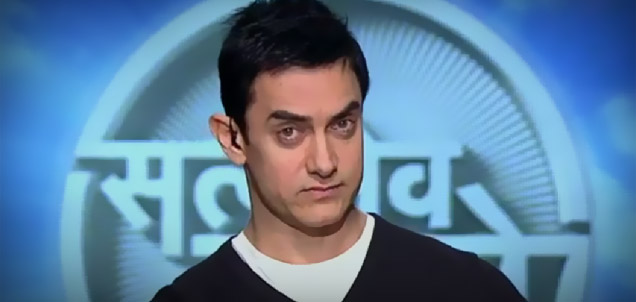


     

    This was the sting operation carried out by Sahara Samay journalists Shripal Shaktawat and Meena Sharma in 2005 which was highlighted by Satyamev Jayate -Star Plus’s newest show.


    A large number of doctors were also caught on camera expecting money to perform the “operation” for people who didn’t want a girl child.


    Enough and more has been written and talked about how Aamir Khan has taken a bold step by bringing this social issue to the forefront. However, there are many who have been trying to do so for years now. But they’ve failed to generate the same amount of debate and horror as the show’s first episode has.


    MxMIndia’s Meghna Sharma spoke to Meena Sharma, now bureau chief with the same news channel, about how the show could bring about a change. Excerpts:


    You did the sting operation a few years ago, but no action was taken against the culprits…

    Yes, it’s been almost seven years and the culprits still continue to practice. You do feel hurt when you realise that all your hard work has failed to bring crooks to book. We still think ‘why those involved – doctors and families – in such heinous crimes still walk freely?’


    The tape of your sting operation was shown on Satyamev Jayate. Will things change now?

    The show was watched by almost everyone in the country. It could be out of curiosity or because of the actor. But the issue was once again brought out in the open and people were shocked to see how female foeticide is still very much prevalent in our country. Everyone is talking about it now. So we are grateful that the tape was shown. At least, something might be done now.


    What are your expectations?

    Now that the debate has been reopened, I hope a follow-up is done because one episode isn’t enough to bring about change. People might talk about it till the next issue is discussed on the show. We have to stand together to make sure people are punished. The government might be convinced to do something if the whole nation stands together.


  • Dream start for Satyamev Jayate


    By Meghna Sharma


    On World Laughter Day, Aamir Khan was able to achieve just the opposite – make Indians wake up to the social evils we only talk about in hushed tones and cry while consuming  the harsh reality we all run away from. The much-awaited Satyamev Jayate premiered yesterday (Sunday, May 6) morning after a well-orchestrated marketing campaign. As expected, the show was a hit among the masses and media personalities. MxMIndia spoke to a cross-section of mediapersons and experts for their reactions to the show – and to know if the show will be able to sustain the hype and curiosity it has generated.


    Anita Nayyar

    TRPs, no problem

    Most media planners are happy with the show – personally as well as professionally. They feel that the show was able to generate enough curiosity by making people switch on their television sets on a Sunday morning and will continue to do so.


    “The show had a huge amount of emotional quotient, but the way the issue was dealt in the episode will be able to impact people and many of them will wait for the next episodes too. The way everyone is talking about it, I’m sure that the channel will be able to get its TRPs. Apart from the Aamir factor, the issues being discussed on the mass-reach channel will also help it,” said Anita Nayyar, director (customer strategy), BCCL.


    Mediaah! Thank you, Star Plus. Thank you, Aamir Khan

    Anil Thakraney: Oprah Khan

    Agreeing with Ms Nayyar, another senior media planner felt that that the show has the potential of becoming the highest TRP generator in the morning slot. “It’s an episodic show, so a lot depends on how each episode is produced. The show, though a little over dramatic at certain portions, will catch people’s attention,” said the media planner, requesting anonymity.


    The show was telecast on nine channels – of Star the network, Doordarshan and ETV Telugu  and was also dubbed and had subtitles to reach out to various parts of the country.


    Chandradeep Mitra, managing partner, Anvention and who is now based in Kolkata, liked the show and felt that even though it is not pure entertainment and deals with uncomfortable topic, it will be a hit among the masses. “The show was telecast with subtitles in Bengali on Star Jalsa, which helped it retain its genuineness. People here are comfortable with Hindi, so language won’t be a problem. After the initial hype, a lot will depend on how it is written and talked about on the social and mass media. Also, the topics will show how the show will do in the future. For instance, the first episode would have an impact on the Hindi-speaking belt,” he said.


    Anil Sathiraju

    Another media planner who saw the show on Star Plus and a regional channel, Star Vijay, felt that only Aamir Khan will be able to catch people’s attention down south. “It might not catch people’s attention as everyone is expecting, but it’s unpredictable.  Although, one look at the show and one can see that the actor and his team have done their homework well,” said Anil Sathiraju, head – south, Mudra Max Media.


    Many also felt that it’s a bold step by an entertainment channel to deal with such a topic and to such an extent. The money spent on the show is no secret. “Aamir is a popular actor, but I don’t think the show will be able to garner the same kind of popularity and following like other weekday prime time shows on similar channels. But hats off to the channel and the actor for taking up such a bold step and deal with social issues no one wants to talk about,” said Sundeep Nagpal, founder director, Stratagem Media.


    Marketers’ paradise?

    The 10-second advertisement slots for the show were said to have been sold at thrice the usual rates. The main sponsors have already paid a huge sum to be associated with the show. According to the marketers, the tear-jerker has the mass-appeal and the pull.


    Lloyd Mathias

    The show has been ‘trending’ on Twitter the whole of Sunday and has an ever-increasing number of followers on Facebook too. So, on the popularity front, the show has been able to reach out to its target audience. At least the socially networked intelligentsia for sure.


    Former CMO, Tata Teleservices, Lloyd Mathias said that the show is a huge marketing property. “The hype created before and after the show, is a clear signal about the impact it has created. Apart from the Aamir Khan factor, even the issues bieng dealt with have created uniqueness and curiosity.  So, every marketer will be glad to be associated with the show.”


    Sanjay Tripathy

    Even Sanjay Tripathy, executive vice president – Marketing & Direct Channels, HDFC Life, felt that marketers would be glad to jump onto the bandwagon: “Every show has a certain TG and marketers advertise with them according to their TG. Satyamev Jayate is a show which has appeal across sections – class, age, region and religion. So, even though the show is not at a prime time slot and not a pure entertainer, people will watch it. So, why wouldn’t any advertiser want to be part of it?


    More than a tear-jerker

    The first episode dealt with the issue of female foeticide – not something people aren’t aware of. Sociologist, human right activists and media commentators are glad that someone is talking about such taboo topics on such a platform. And since, an actor of certain credibility and reputation is bringing it to the masses, there might be some change in the society.


    “The portrayal of the issue was sensible and the personal experiences of the three women on the show were heart wrenching. Till now, such topics were only debated by academicians and activists. But now it’s in the public domain. And it has shaken up the people. However, now the concern is, will it be able to find a solution for such highly-prevalent evils of our society? A follow-up is needed so that the show doesn’t just become another tear-jerker,” said Sarla Bijapurkar, sociologist.


    Ranjona Banerji
    Ayaz Memon

    Ranjona Banerji, senior journalist and contributing editor, MxMIndia, felt that sustainability is a challenge now. “A lot of times, after a hard-hitting start, many shows tend to bend towards populist themes. So, I hope the show doesn’t do that or run behind TRPs. The show will have the similar constituency of followers like Anna Hazare. Thus, change in a society might happen, but a lot will depend on how the show progresses from here.”


    Agreeing with her is Ayaz Memon, veteran journalist and editor, who too believes that sustainability is a challenge the show will face if it wants to be different: “Very rarely do people want to watch ‘reality’, but the show was able to catch almost everyone’s attention on Sunday. Apart from sustainability, another challenge the show will have to overcome is how quickly it is able to capture the youth’s attention, because one doesn’t know what will happen after three weeks.”


    If that’s not enough, Teesta Setalvad, journalist and activist feels that the show was great, but there were loopholes in it too. “For instance, in the show Aamir Khan said that he will write a letter to the CM, but in reality he can’t do much about it. It’s the chief justice who can make a difference and take action. Also it didn’t tell people where to go when such issues happen, no matter how weak the organization might be. Apart from that, the show was excellent and a good start in creating awareness.”


    Photograph: Video grab from SatyamevJayate.in


    > The Importance of Being Aamir Khan

    > Why SJ will rule weekends; Stratagem analysis: Weekday Show #23 > Weekend Show #1

    > SJ is Aamir’s baby, completely: Satyajit Bhatkal (director of the show)

    > High EQ at Aamir Khan talk show Satyameva Jayate

    > Airtel slashes SMS rates for Satyamev Jayate

    > Anil Thakraney: Aamir wants to play God


  • Airtel slashes SMS rates for Satyamev Jayate

    As the country eagerly awaits Aamir Khan’s debut show on television – Satyamev Jayate to take off, one brand that is ready to make the most from the association is Airtel.


    Echoing the sentiments derived from partnering with such a show, Bharat Bambawale, Director – Global Brand, Bharti Airtel, said, “As a brand for the masses, Airtel has always taken the lead in associating with events, shows and initiatives that resonate well with the preferences of today’s India. With connecting with people spread across India as a common focus area for both Satyamev Jayate and brand Airtel – we are excited to be associated with this show and look forward to the role it will play in entertaining the masses while bringing inspiring stories to the fore.”


    As a gesture towards supporting the cause, the telecom brand has even reduced the cost of SMSes to the show from Rs 3 to Re 1. The revenue collected via SMS will be donated by the company towards charity. As part of this integration, brand Airtel will be associated with the show via integrations like Airtel 3G video calls to participants, exclusive availability of Satyamev Jayate title track on Hello Tunes for Airtel customers, transfer of donation amount to NGOs through Airtel Money etc.


    The show which aims to tackle burning social issues and will feature the stories of real people, will be aired in over 8 languages across Star TV network channels and others at 11 am, every Sunday starting May 6.


  • Why SJ will rule weekends; Stratagem analysis: Weekday Show #23 > Weekend Show #1

    By A Correspondent


    The only way the ratings graph can go with Satyamev Jayate is up. Guess that’s the one-line message that comes from the detailed analyses that Mumbai-based Stratagem Media has conducted for MxMIndia on the eve of the launch of Aamir Khan’s megashow.


    The statistics underscore what’s always been known but never possibly said. So concentrated is the emphasis on the weekday primetime and weekend blockbusters or award shows that the Sunday morning primetime has been ignored. Stratagem founder and CEO Sundeep Nagpal recounts how Sunday mornings would see 80 per cent viewership for Ramanand Sagar’s Ramayan and BR Chopra’s Mahabharat. That of course was another era with just one channel dominating the airwaves.


    The charts presented by the Stratagem team offer interesting insights (please click on links to view tables):


    1. Programme #1 on weekends gets ratings which equals that of Programme #24 on weekday primetime


    2. It is observed that Share and Average time spends of Star Plus is better whereas for Weekend the Share and Average Time spends of Sony is better


    3. It is observed that the programmes on Sunday-11:00 – 12:00 Hrs timeband are repeats telecast and ratings of these is naturally low


    Stratagem also looked specifically at Sunday programming.


    1. It is observed that the programmes on Sunday-11:00 – 12:00 Hrs timeband are repeats and hence ratings are low


    2 .It is observed that Share and Average timespends differs in different quarters of the year


    3. The GRP are comparatively low for Sunday 11:00 – 12:00 Hrs timeband


  • The Importance of Being Aamir Khan


    By Biswadeep Ghosh


    Do you know anyone who hasn’t heard of Satyamev Jayate, a Sunday show with which Aamir Khan will make his debut on the small screen? Impossible, unless your reclusive acquaintance inhabits a cocoon and has no access to the television, newspapers and the internet. The most intelligent strategist in the Hindi film industry, Aamir has emerged from behind an impenetrable veil to discuss the show with the media. He has discarded his aura of exclusivity that makes him unreachable so often, the result being that journalists are relishing each and every moment in the company of the superstar. They are reporting on his first ever serial faithfully, making Satyamev Jayate, a forthcoming Aamir Khan event many Indians are waiting for.


    Those who have followed Aamir’s career with detached objectivity know a few things about the man. He has manufactured an image of being ‘serious about what he does’, as if his counterparts in the entertainment industry are a bunch of flippant characters for whom life is one big joke that never ends. As part of his image-building exercise, he has highlighted his social activism, a quality he seemed to have developed after being in the industry for a long time. He is his own USP, using the power of which he is giving veiled hints about what Satyamev Jayate will offer to the viewer.


    A ‘thinking man’s actor’ and a ‘perfectionist’, Aamir has given countless interviews while humming a tune of mystery-heightening ambiguity. ‘It’s about connecting people, touching human hearts. It’s about human stories, coming to understand what life is like. For me, the show has been a kind of a personal journey,” he told the Indian Express. Please read the excerpt again. What exactly is he saying? Actually, very little, but that is the idea anyway. He has been categorically clear that he doesn’t want to discuss the specifics. It is as if Satyamev Jayate is an Alfred Hitchcock thriller whose plot will give the criminal away before the film begins.

     

    The show that has been dubbed in many languages will be telecast on the Star network and Doordarshan. The Star-Doordarshan tie-up will ensure viewers everywhere, whether they live in a Vasant Vihar mansion in New Delhi or in a village named Hatgamariya in Jharkhand. That it is being shown on an early morning Sunday slot implies that everyone, right from hardcore Aamir Khan fans to reluctant TV watchers, will be tempted to check it out. Cricket being the only area in which satellite television channels have shared network space with Doordarshan in the past, Satyamev Jayate will inevitably get the maximum number of viewers of a non-cricket show in the initial stages at least.


    Not that promotion of films or television serials is a new phenomenon. In today’s times when nobody can ensure a film’s success, even Salman Khan who hardly ever promoted his films till recently has changed gears to talk about his releases before they hit the marquee. The strategy has worked. Always the most active channel-hopper, Shah Rukh Khan’s marketing of Ra.One redefined the way in which a film is being sold by the Hindi film industry. Of course, Ra.One did not succeed the way it was expected to. But SRK tried.


    The master strategist, however, isn’t SRK: and certainly not Salman. It is Aamir. While both SRK and Salman have had their share of flops, facts prove that Aamir has had the least number of failures at the box-office. Even a mediocre film like Ghajini rocked, its success story partly written by viewers who went to watch Aamir’s eight packs: a fact that was marketed very smartly through his interviews and other promotional campaigns. When he produced Delhi Belly, he went all out to discuss the film’s ‘language’: one big reason why many viewers hit the halls to watch it.


    The big satya is that Aamir is better at the game that everyone plays. Not that his approach makes the success of Satyamev Jayate, a hundred percent certainty. Major film stars have hosted hyped shows, many of which have flopped. Amitabh Bachchan created history with the success of the first edition of Kaun Banega Crorepati, but Shah Rukh Khan failed to make the sort of impact his diehard fans believed he would. SRK did experience some success as the host of KBC’s third edition, but his decisions to host Kya Aap Paanchvi Pass Se Tezz Hain? and Zor Ka Jhatka: Total Wipeout had disastrous consequences. Govinda as the host of Jeeto Chappar Phaad Ke made zero impact. The Salman Khan-steered show Dus Ka Dum started off really well. By the time the second season came to an end, however, its popularity had withered away. Akshay Kumar experienced success with Fear Factor: Khatron Ke Khiladi. Yet, few bothered to see him in MasterChef India: Season 1.


    Aamir’s well-disguised expressions have spun a lot of curiosity about Satyamev Jayate. The show’s reach is far wider than that of others hosted by film stars so far. If it succeeds, it will write an extraordinarily significant chapter in the history of Indian television. If not, the story of its failure will be discussed for a long time: more so, because it has been made by a man who owns a magic wand which nobody else does.


    The star is at the centre of a shrewdly developed promotional campaign. But once Satyamev Jayate hits the small screen, it won’t be long before hype gets jettisoned by the people’s acceptance or rejection of the real thing. The suspense around the show will guarantee a full house on the opening day inside each household. Having been there, done that, Aamir surely knows that is not enough.


  • High EQ at Aamir Khan talk show Satyameva Jayate

    By A Correspondent


    From Lagaan to Rang de Basanti to 3 Idiots and the hard-hitting Peepli Live which dealt unabashedly with home truths – for Aamir Khan, the next logical step seemed to be tackling real life itself, live.


    His no-holds-barred talk show Satyameva Jayate has already garnered praise from industrywallahs – singer Sukhwinder Singh is gaga about it, for one – and, from all accounts, promises to be an eye-opener.


    Shooting for the episodes has begun and is said to be proceeding as per schedule.


    Besides the guests on the show, the live TV audiences have also been moved by the issues tackled on the show. While the mood is not always sombre to begin with, as the issues get revealed and the guests share their touching stories, it is often Mr Khan himself who is seen to have tears in his eyes. The actor with a heart does succeed in getting the guests to talk about the most difficult times in their lives, but not without also extracting mugfuls of tears from practically everyone, according to eyewitnesses.


    “I will put it this way, that the ‘EQ’ or emotional quotient is very high on this show,” said a participant who attended one of the studio shoots. “Aamir Khan is really dedicated and really cares about the people and their problems that are being discussed. He’s wonderful. We came because we are Aamir fans, but then we just forgot that he is a star actor,” she added.


    After heavy doses of manufactured reality programmes, the Star offering seems to be a breath of genuine fresh air, as the show sets out to reveal the India that lives in far-flung villages and only sometimes breaks out in the form of a headline.


  • Ogilvy CEO Miles Young to be new chairman

    By Amit Bapna


    There is a change of guard at WPP’s star agency, Ogilvy. At a recent board meeting in Sao Paulo it was announced that Ogilvy CEO Miles Young would take on the role of chairman effective July 1. This comes in the wake of the long time Ogilvy & Mather Chairman Shelly Lazarus deciding to step down and move into the role of chairman emeritus.


    Ms Lazarus has had a very successful stint at Ogilvy & Mather, having spent 40 years in the agency – beginning her career in account-management roles on brands like American Express and Unilever, before becoming general manager of Ogilvy & Mather Direct in the US. She was named CEO in 1996, and became the chairman in 1997. Now she has passed the baton to Miles Young who had taken over the role of the CEO in January 2009.


    On being asked what would be his top priorities as he takes full charge at the WPP agency, Mr Young shared in an exclusive email reply to The Economic Times: “A key priority for me will be to push our digital leadership even further. I see an inflexion point where the pure play offer has failed to satisfy clients. Our scale and 360 degrees approach to digital offers much deeper solutions.”


    Specifically about India he said: “Growing digital in India will be a critical priority for me.” To further acknowledge the importance of India, he intends to hold “the first Board meeting of my Chairmanship in India early in the New Year.”


    Source: The Economic Times
    Copyright © 2012, Bennett, Coleman & Co. Ltd. All Rights Reserved

  • Dutch retailer Spar to end ties with Max

    By A Correspondent


    Dutch retailer Spar International and Dubai-based Landmark Group’s Max Hypermarkets have decided to part ways in India by the end of this year after the two developed differences over expansion strategy.


    While Spar was keen on partnering multiple national and regional retailers to expand in the country, Max Hypermarkets wanted a strategic investor for the business, Dr Gordon Campbell, managing director of the 31-billion euro (approx Rs2 lakh crore) Spar International said. The companies will now pursue separate growth plans in the country, they said in a joint statement. The two have decided not to renew the licence after it expires in December.


    Max Hypermarkets operates 13 Spar Hypermarkets across Karnataka,

    Maharashtra, Andhra Pradesh, New Delhi and the national capital region under a licence agreement signed in 2007.


    Viney Singh, MD of Max Hypermarkets India, said the company will rebrand its hypermarkets (large-format food & grocery stores that also stock general merchandise, electronics and apparel) once it decides on its future course. “We believe that it is good to have, in the long term, strategic investor partners to run the hypermarket business in India,” he said.


    Spar, which has 12,000 stores across 35 countries, does not financially invest in any market, but signs license agreements with independent retailers in different markets to use the Spar brand name.


    It also provides technical know-how and expertise for the front-end and supply chain for its partners. In fact, it had first entered the Indian market with Mumbai-based  Radhakrishna Foodland in 2004.


    Spar is now looking for multiple partners in India. “Given our experience now, we believe we have the opportunity for other partners to develop it (stores) at a quicker speed. We would be interested in tying up with 4-5 partners for different regions,” said Mr Campbell, on a call from Amsterdam.


    He said Spar has established contact with a few partners across regions, but refused to clarify whether they were corporates or standalone chains. Mr Campbell said Spar is willing to open supermarkets in India. The size of its supermarkets are around 1,000-2,000 square metres, while hypermarkets are above 4,000 sqm.


    Spar aims to finalise new relationships quickly so that its brand does not have to wind down. Campbell said this would be possible if new partners have operational stores that can be converted into Spar.


    Analysts say there is limited risk to brand Spar if it is absent from the Indian market for a few months because its footprint is limited. “Food and grocery is bought within a limited radius. As long as the brand’s reappearance is handled well, there is no real damage expected,” said Devangshu Dutta, chief executive of retail and consumer goods consultancy Third Eyesight.


    He added that it would not be difficult for Max Hypermarket to find a foreign partner, given Landmark Group’s presence in India and international retailer interest in the market. Landmark Group operates department store Lifestyle International in India.


    “They could also come up with their own brand and partner a financial investor as they would have the operational expertise now,” said Mr Dutta.


    The $12-billion organized food and grocery retail market that is projected to grow at a compounded rate of 30 per cent over next five years, according to estimates by Technopak Advisors.


    Source: The Economic Times
    Copyright © 2012, Bennett, Coleman & Co. Ltd. All Rights Reserved


  • Divya Bhaskar celebrates spirit of Gujarat enterprise with ‘Young Turks’

    By A Correspondent


    Divya Bhaskar celebrated the efforts of the young entrepreneurs of Gujarat with the release of a coffee table book – Young Turks – acknowledging the efforts of emerging entrepreneurs in Gujarat. The book aims to motivate audience with the success stories of these entrepreneurs and their never say die attitude, which has helped them to overcome the hurdles and achieve their goals. ‘Young Turks’ is a salute to the young achievers.


    Young Turks showcases 24 young entrepreneurs who have made a mark in the society with their innovative thinking and entrepreneurial spirit across fields like Animation, Real estate, Training, Information Technology and so on. The book encapsulates the journey of an entrepreneur. It salutes their indomitable spirit and vision for sustained growth which has contributed to progress of Gujarat’s redefining industry.


    Commenting on the release Mr Saras Sethi, State CEO said: “It is aimed to motivate the emerging entrepreneurs with examples of success. Most of these emerging entrepreneurs defy the age factor and have made their mark at very young age with hard work and innovative thinking.”


  • Differentiation & Innovation key to success, says Harshad Jain

    As Business Head – Radio and Entertainment of HT Media, a role he assumed last year, Harshad Jain has his role tailormade for excitement. The FM Radio market may be small when compared to television or print, but given the nature of competition is a challenging play. In conversation with MxMIndia’s Robin Thomas, Mr Jain spoke about Fever 104 FM’s radio play – Gandhi, the consistency of the FM station’s leadership position in Delhi, Phase III plans and much more. Prior to joining Fever 104 FM, Mr Jain worked with companies like Pepsico, Worldspace and Airtel to name a few.


    Fever 104 FM recently launched radio play – Gandhi… What is the kind of response you have been receiving?

    The radio play, Gandhi, has done extremely well. It is currently aired at three different day time slots, and we have extremely good sponsors – Maruti Suzuki, Union Bank of India and Tata chemicals. We have been inundated with thousands of SMSes and calls, along with over 3,000 plus responses on Facebook wherein people have appreciated our initiative. And I do believe this has been one of the finest innovations in the radio industry.


    Do radio plays still strike a chord with listeners?

    Absolutely, because it drives a lot of appointment listenership. Today, the issue with the radio industry is the fact that it is tough to create differentiation. A radio drama like Gandhi or Ramayan is a high end production which drives appointment listening and, it is very relevant for any target group.


    According to RAM, Fever 104 FM Delhi consistently claimed the No 1 spot… What, would you say, are the factors that led to this success?

    Today, we are the single largest radio station in Delhi, not only among the private FM radio stations, but we have managed to go ahead of AIR FM Gold – we are the undisputed number one FM radio station in Delhi. The key reason for our success in Delhi is because we are a station which is very much integrated in Delhi. We believe that we have got a differentiated product offering in Delhi, we do a very high level of innovation and we’ve got an extremely strong local connect which makes us very powerful competition.


    IRS, on the other hand, seems to have a different story to tell… What would you say are the takeaways from IRS Q4 numbers?

    IRS is a readership survey; it is not a survey for radio. Radio Audience Measurement (RAM) on the other hand is an exclusive survey only for Radio. Second, IRS is a quarterly survey whereas RAM is a weekly survey. Third, the detailing in terms of RAM is excruciating as it provides time-band listenership, number of listeners by show, cumulative listenership, time-spent listening, therefore RAM is a measurement system meant to track a certain kind of medium. IRS is principally a tool for print media, it is about readership survey and a readership survey cannot do justice to a listenership survey.


    What, according to you, worked in Delhi but did not work in Kolkata and Bengaluru? What is the learning from Delhi for the remaining markets?

    The learning from Delhi comes from the fact that we need to be high on innovation, we need to have a differentiated product, and a very strong local connect.


    How has the Fever 104 FM Digisound impacted listenership?
    We used to be a distant number five in Mumbai, now we are a dominant number three player in the city. This proves that the strategy has worked positively for the station.


    What are your FM Phase III plans? Do you plan to expand to newer markets? Any specific cities or towns you are eyeing?

    We will participate in FM Phase III, we are still strategizing and only after thought through consideration, will we do what is required. We do have our expansions plans as to which markets we need to expand and depending on the how the viability and economic model works, we will expand.


    How active is you online presence – your website, Facebook and Twitter? How do you engage listeners off air?

    We do a lot of activities online, a lot of our RJ promotions and other engagement activities are done online. Digital is, therefore, a key part of our strategic mix in terms of reaching out to a larger audience, and we use it very effectively.


    How has the year been so far for Fever? And what would you say are the challenges and concerns facing the radio industry today?
    It has been a good year for us so far. We have entered the year very well, and we are looking at very strong sustained growth. As far as the challenges are concerned, there are couple of challenges – lack of differentiation in content is one of them. Second, the size of the advertising category is relatively small which needs to grow dramatically in the next couple of years, and third, the licence fees needs to be reduced.