MCCS will be relaunching news channels Star News as ABP News  in Hindi, Star Ananda as ABP Ananda in Bengali and Star Majha as ABP Majha in Marathi on June 1.
The relaunch process begins today with a massive communication campaign developed by Lowe Mumbai. The media buying plan has been formulated by Mindshare.
The campaign would be, over the next 8 weeks, aggressively communicating the change, using a combination of TV, Print, Radio, Outdoor and Internet, to all the viewers and stakeholders about the new name and logo.
The three news channels have helped MCCS evolve as a strong and respected broadcast news company. The theme of communication is simple and to the point: Our Stars don’t change, our News does not change, only our name changes.
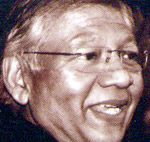
Title Waves, the new bookstore at Bandra, Mumbai was teeming with several old-timers who are associated in some way or the other with Sujit Sanyal, a former advertising veteran who worked with Clarion Advertising in old Calcutta. The occasion was the launch of Mr Sanyal’s debut book – Life In A Rectangle, The World Around 55BMirza Ghalib Street.
The launch was made special by the presence of Madhukar Kamath of DDB Mudra – an ex-Clarionite himself who was among the four individuals with an MBA qualification to have joined the agency when it was at the zenith of its success – who unveiled the book to the gathering.
Published by Fingerprint, Life In A Rectangle is a candid memoir where adman Sujit Sanyal narrates some revealing, some intriguing and other whacky stories about the advertising world from his Clarion days, his first agency, which he joined as a trainee and whose Kolkata branch he later went on to lead.
When asked on the factors that led him to script a book on his days at Clarion, Mr Sanyal said: “Life in a Rectangle happened while I was toying with the idea of writing a book on my formative days in advertising. The book is a fun reading piece that chronicles the advertising era of the 70s and 80s in Calcutta.”
On the choice for the name of the book, Mr Sanyal said that “the name for the book came from my mentor who said that all advertising that you see today are flashed on screens that are rectangle in shape, be it television, computer, mobile, magazine, i-Pad, etc.”
According to Mr Sanyal, what made him even more convinced to write a book on the agency with a glorious past is because at one point in time, Clarion Advertising was India’s No 2 agency after HTA (now JWT). “That was around mid-70s to early 80s. In the early 80s, it started falling apart due to differences between theUnion, the Management and the Board. In fact, the agency had seen downfall on many occasions and I, myself, was there during a couple of occasions. Once when I was a newbie and the second time when I was heading Clarion’s profit-sharing centre from Calcutta and I saw the fall from a much closer distance. So since I was writing the book, I said to myself why not add these bits of information too.”
Mr Sanyal added that there are just 2-3 people whom he has slam-banged, but the others have been given due credit for playing an influential role in his life. Highlighting the era of advertising that existed in those days also served as an inspiration for him to pen down his thoughts: “In those days, a man was judged by the way he used to hold his drink. But all that has changed today. I am not at all in favour of the pub-going trends of today where it is about ‘wham bam thank you ma’am’; holding your drink in a particular fashion was an art in those days. Also, we were unofficially trained on how to be a bartender. So if there was a client who came and he was drinking whiskey with water, it was our job to see that he kept getting his refills and not asking him on what else would you have. It was all great fun and at the same time you had to work too. The days of yesteryears were so much more exciting.”
Admitting the factors that have led the industry to undergo a sea-change, Mr Sanyal stated: “The advent of technology has made things a bit easier for everyone in advertising. The times have really changed today. Anyone who has a mobile and a laptop becomes a filmmaker and can do his own work at his own pace. But this has also led to things becoming more clinical; everything now has got into a box including media plans that are largely TRP-driven.”
Being direct, Mr Sanyal didn’t hesitate when asked on his views on the state of the advertising industry today: “The advertising industry today is all about business. There are a few legends who still are wowing the industry with their work but they will all go away. At the end of the day what are you doing in advertising – you are playing with human emotions. Also, what is happening is that I may have a relative who is the boss of a big client company but he cannot give me the business because the diktats are decided by people who sit across the transatlantic ocean. In a nutshell, globalisation is taking its toll on the industry. They are not allowing the Indian agencies to grow.”
Still basking in the accolades that are coming his way from friends and family over the first book, Mr Sanyal is already tempted into writing a second book that may see the light of the day soon. If he were to go by suggestions thrown up by his friends at the venue, it would well be a book on his first job at Junior Statesman (JS, as it was popularly known), a magazine that was far ahead of its time.
Life in a Rectangle: The world around 55B, Mirza Ghalib street; published by Fingerprint Publishing; price Rs 395/-
moneycontrol.com has launched an online investor camp starting at 8am on May 8. The day-long event will include a host of investment experts who will answer queries from investors all over India.
Master Your Money brings a unique opportunity to investors in India to go online and connect with leading experts, and get answers to their investment queries online. It provides a resource to millions of investors currently confronted by falling stock markets, high rates of inflation, skyrocketing real estate prices and the exploding value of gold.
Master Your Money is open to all kinds of investors, from buyers of fixed deposits, government bonds and insurance, HNI stock and mutual fund investors, individual traders and corporate finance professionals. The unique online event covers stocks, bonds, insurance, gold and real estate. Master your Money is sponsored by Principal Mutual Funds (sponsor – Mutual Fund section), L&T Insurance (sponsor – Insurance section) and Aditya Trading (sponsor – Stocks section)
“As a leading national portal dedicated to serving investors in India, we conceptualized Master Your Money to provide knowledge to the entire community of Indian investors,” said Joyson Thomas, COO, Web 18. Mr Thomas added that this is the fourth edition of Master Your Money and the first event which has attracted investors from all over the country.
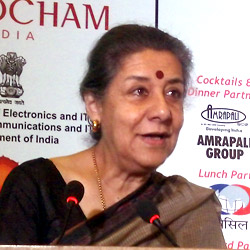
High drama ensued at the Assocham event inNew Delhias local cable operators (LCOs) flagged black ribbons at the Minister for Information and Broadcasting, Mrs Ambika Soni. The Minister was attending the 6th Annual Summit on Entertainment and Media organized by Assocham, Focus 2012: Digitization for Inclusive Growth. As the theme suggests, one of the primary issues discussed at the event was Digitization of Cable television.
The LCOs were protesting against the recent tariff order issued by the Telecom Regulatory Authority of India (TRAI), which they claim is an unfair order against all small operators. Following the heated arguments between cable operators present at the event venue and the Minister, one of the cable operators, Sandeep Mcgee who is based inEast Delhithreatened to commit suicide in front of the Minister. Mrs Soni, however, tried to pacify the operators’ fraternity and asked them to file a formal letter with all their grievances against the tariff order and the regulator. She also promised to address their concerns and, if need be, raise the same with the regulator.
Addressing the concerns of broadcasters on the carriage fee mentioned in the same order, Mrs Soni said that the government will consult all stakeholders before taking a final call on the regulations decided by TRAI under which the Multi System Operators (MSOs) are allowed to charge a carriage fee from broadcasters.
Earlier, in her inaugural address, the Minister emphasized the importance of digitization for the entire industry and all stakeholders: “Digitization is going to be the biggest reform in broadcast sector and enable operators to expand their revenue sources by providing more choice and variety to customers. Digitization is imperative to tabulate subscriber base and reduce carriage fee. Digitization will also help reduce all human error in the process.â€
Defending the tariff order issued by TRAI recently, she said that the government indulged in exhaustive consultations with all stakeholders on all issues including the carriage fee, and the main aim of the new regulations had been to benefit the consumer. Mrs Soni said: “The TRAI tariff order makes the viewer the most important beneficiary; the choice will be with the viewer.†As for the broadcasters, she said digitization would help reduce the dependence on TRPs and bring in transparency where every broadcaster would be in a position to identify exactly how many people are subscribing to the channel.
On the issue of media regulation, Mrs Soni said: “Let’s not condemn self-regulation per se because even though self regulation is a slower way of correcting things, it is still a surer way as it involves converting minds and hearts in the process.â€Â She added that in the whole race to growth, the provisions of the Cable Television Regulatory Act were overlooked and it was a fault in the functioning of the government that the act had been ignored.
On the issue of Paid News, she said that while it was the worst phenomenon that existed, it’s not as easy to detect paid news. She was responding to scathing criticism of the media by the Chairman of Press Council of India, Justice Markandey Katju in his keynote address at the same event.
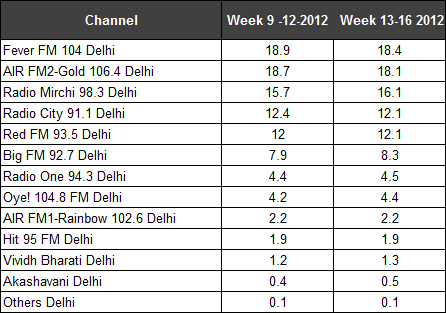
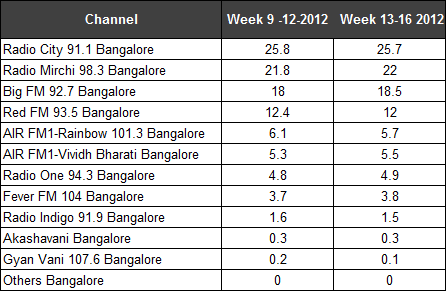
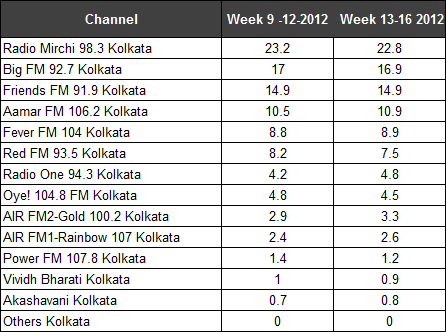
TAM Media’s Radio Audience Measurement (RAM) – which covers four key metros, Mumbai, Delhi, Kolkata and Bengaluru – released its latest radio listenership figures for wk 13 to wk 16, 2012 (Last week of March to first three weeks of April, 2012). According to the latest RAM data, for listeners of 12 years of age and above, all places of listening, and according to radio channel shares, RadioCity, Radio Mirchi, Fever FM, Big FM, Red FM, Radio One, Oye! FM continue to be the top FM stations in the big four metros.
Mumbai:
Radio Mirchi emerges as the number one FM station in Mumbai with a market share of 15.3 per cent, followed closely byRadioCityat 15.2 per cent. The two FM stations are closely competing for the top spot, but what remains to be seen is which of these two FM stations retains the top spot. AIR FM2 Gold, Fever FM and Big FM make the top five FM stations in Mumbai. The other FM stations in the Mumbai market include Red FM, Radio One, Oye! FM, AIR FM1 Rainbow, Vividh Bharati and Akashavani.
Delhi:
Fever FM continues to be the most popular FM station in Delhi with a market share of 18.4 per cent, its nearest rival is the AIR FM2 Gold which is comfortably placed at number two with 18.1 per cent market share. Ranked three is Radio Mirchi followed by RadioCity which is ranked four and Red FM as ranked five in theDelhimarket. The rest of the FM stations in Delhi include Big FM, Radio One, Oye! FM, Hit FM, AIR FM1 Rainbow, Akashavani and Vividh Bharati.
Bengaluru:
RadioCity continues to maintain its leadership position in the city. RadioCity, Radio Mirchi and Big FM are the top three most popular FM stations in Bengaluru. RadioCity received a market share of 25.7 per cent whereas Radio Mirchi and Big FM received a market share of 22 per cent and 18.5 per cent respectively. Ranked four is Red FM with 12 per cent and the fifth most popular FM station is AIR FM1 Rainbow with 5.7 per cent. The other FM stations in Bengaluru include AIR FM1 Vividh Bharati, Radio One, Fever FM, Radio Indigo, Akashavani and Gyan Vani.
Kolkata:
Radio Mirchi is the clear winner in Kolkata with a market share of 22.8 per cent. The top three FM stations in Kolkata haven’t changed as Radio Mirchi continues to be the number one FM station of the city followed by Big FM with a share of 16.9 per cent and at the number three FM station of Kolkata, Friends FM received a share of 14.9 per cent of the share. Ranked four and five are Aamar FM and Fever FM with a share of 10.9 per cent and 8.9 per cent respectively. The other FM stations in the city are Red FM, Radio One, Oye! FM, Power FM, AIR FM1 Rainbow, AIR FM2 Gold, Vividh Bharati and Akashavani.
With less than 60 days to go for the switch from analog to digital distribution, different stakeholders of the broadcast and cable industry are battling out their respective concerns with the government and the regulatory authority. Following the Tariff Order and Interconnection Regulations for the Digital Addressable Cable TV Systems issued by Telecom Regulatory Authority of India (TRAI), a lot of stakeholders have raised issues that will affect their business in which they deem the order to be unfair.
While the News Broadcasters Association (NBA) protested against the carriage fee mentioned in the order, local cable operators (LCOs) carried out a black flag protest during the recent Assocham event attended by the Minister for Information and Broadcasting, Ms Ambika Soni. The LCOs have objected to the revenue share prescribed by the regulator and the Multi System Operators (MSOs) have expressed concern over the increased number of ‘must carry’ channels mandated by TRAI.
MxMIndia spoke to a few representatives of the industry to understand their concerns in the run up to digitization.
Ashok Mansukhani, President, MSO Alliance
What’s your first response to the Tariff Order?
The Tariff order has a mixture of good and bad. Fundamentally, it lays out the path for digitization but there are certain issues which worry us like the mandatory ‘must carry’ channels. We don’t think that’s a fair thing to do, if the broadcasters have the right to decide how many channels to bring to India or create within India, we should have the right to decide what should be the capacity, obviously the capacity is much larger in a big city than a small city. Apart from that, there are some issues on revenue share, which is based on a formula which is pending in the Supreme Court. Our worry is that if the Supreme Court decides otherwise, the whole business model would break down. These are the main two concerns.
News broadcasters are objecting to the carriage fee mentioned in the order issued by TRAI, what’s your view on it?
Now everything will be transparent. What is possibly going to happen is that carriage fee, which is creating such a big hoo-ha today, will get replaced by genuine pay channel ecosystem but that is about five years away. In the current process, we have to digitize about a 100 million homes and enormous sums of money are required but no fiscal incentive or tax incentive or infrastructure incentive has been given by the government. I think in the run up to digitization, the broadcaster should not derail the process; rather they should sit down with the cables operators and the MSOs and work packages with attractive content and at compelling rates to attract consumers. I think that’s really what they should be doing instead of writing editorials about carriage fees.
Do you think the sunset date of June 30 is achievable?
No, it’s not achievable. There are just 60 days left. The negotiations with broadcasters have not begun. The revenue shares are default revenue shares but no discussions with operators have taken place. No agreements are in place. Out of 10 million boxes, only 2 million boxes have been installed. Many of those boxes don’t have smartcards, in other words, they don’t have the conditional access system, and they are vanilla digital set top boxes. I think it’s high time for the government to carry out a reality check. I am sure this will be discussed in the next task force and I am sure government will fix a new date.
Jehangir Pocha, CEO, INX News
What’s your first response to the Tariff Order?
The TRAI order has been a disappointment to news broadcasters because we were repeatedly told that there would be no carriage fee. We were repeatedly told that there would a mandated EPG or menu system, which has not been delivered. These two things add up to a huge financial burden on broadcasters, especially news broadcasters, an industry that is, contrary to public assumption, not doing at all well, that is facing huge financial burdens and many channels have gone bankrupt.
Apart from carriage, do you see any other issues in the run up to digitization?
I think the other issues are really about the willingness and commitment with which the policy can be rolled out because this is going to disrupt some vested interests, it’s going to disrupt a regular way of doing business and therefore, there is going to be a natural push back. But the concept of digitization is superb, it’s wonderful that the government and the regulator have pushed for it, but there have been some imperfections in what they have presented. Another thing that doesn’t make enough economic common sense to me is how the price was set so low for free channels and pay channels because the entire industry’s problems stem from the fact that the consumer is literally being subsidized by paying such low price for content, which in every other country, costs so much more. How this price has been set, by whom and who’s paying for the inherent subsidy in this, there hasn’t been enough transparency on this.
Both NBA and the IBF have expressed disconcert at the carriage fee in the order issued by TRAI, but the TRAI maintains that there is no cause for dissatisfaction on carriage fee. As a news broadcaster, what will be your next step?
I think we will have to explain to TRAI and the ministry just what the imperfections in this otherwise very positive bill are, and how they will create a huge financial burden for news broadcasters, how it will push us towards bankruptcy, how it will stop us from being able to create quality content and how it will, in fact, stop us from growing. If the government is interested in inclusive growth, news broadcasters play a very valuable role in this industry and in this nation. And our financial concerns should be addressed in some manner both by TRAI and the government.
Do you think the sunset date of June 30 is achievable?
Everything is achievable if the intent is there. There may be some practical concerns but let’s be realistic, while the policy is being presented now, we knew for 6 to 7 months that it was going to happen and I’m not sure if MSOs and LCOs spent adequate amounts of money, time and effort on preparing for this day, which they knew was coming. Now they are saying, this day has come and we need more time. We have seen consistent attempts to delay digitization, and I think we should have very little patience with more delays.
Pulak Bagchi, VP, Star India
What’s your first response to the Tariff Order?
It’s a step towards the right direction and I think it will be path breaking in terms of the reforms it triggers in the cable space.
What’s your view on the concerns being raised by news broadcasters over carriage fee?
Carriage is a phenomenon which is certainly not new – it’s been around since the inception of the industry. What TRAI has done is only put a method into the madness, which should be commended. Earlier, there was no transparency in the payments that were being made, now atleast you’ll be having a foothold into the figures. You’ll also be able to determine whether they are reasonable or not. TRAI has also said that they will be intervening in cases of arbitrary levels. So there’s really no cause for concern. I think we should not be pressing the panic button; it has taken so many years for the government and the regulator to come up with these formulations. It’s important that we live up to the mandate and we must also give regard to the expectations of the people of this country. Given that digitization is a reality today, the sooner we embrace it, the better.
Do you think the sunset date of June 30 is achievable?
It is, because it’s targeted towards four major cities where it’s not an alien concept. Perhaps there will be some incremental approaches that will be taken in those respective areas and I’m sure that the deadline could be met. There’s no difficulty in abiding by the timelines.
Are there any marketing initiatives or consumer awareness campaigns that you are undertaking in the run up to digitization?
Star and IBF have made it mandatory for all members to spread awareness in their respective channels. We are carrying out marketing campaigns, we are also doing citizen focused awareness programmes where people can be brought up to speed with what digitization is all about. And we are also trying to infuse in the public sensibilities as to why it is good for them.
Roop Sharma, President, Cable Operators Federation of India (COFI)
What’s your first response to the Tariff Order?
It’s very bad from LCO’s perspective. Since there is a vertical monopoly and no cross media holding, none of the MSOs will be negotiating with the cable operator and if they don’t negotiate with the cable operator, the latter will end up taking only a Rs45 share, with which the business becomes unviable and the LCO will be unable to give better quality service to the consumer. Even the set top boxes, which are going to be put, are of vanilla quality, they are very primitive boxes. Consumer will not be able to get internet, broadband or other services on the same box. Cable operator has to spend so much money in upgrading and the government has just mandated a technology. We are even ready to upgrade, but we must get a proper share. The regulator wants to be the controller of the business. As a result, lot of cable operators will be forced to sell off their network or the network will die its own death. There will be a lot of unemployment generated in the market.
Do you think the sunset date of June 30 is achievable?
No, the timeline is very short. First is the procurement of boxes – in Chennai none of the MSOs have given any orders for boxes. Even in Kolkata, we are hearing that the state government was not consulted.
World’s third-largest consumer goods firm Unilever has set up a Customer Insight and Innovation Centre in Mumbai to study how consumers shop FMCG products – its first such hub in India and seventh in the world.
The centre at Hindustan Unilever’s headquarter at Andheri will be used by several group companies in developing and emerging markets to understand how people shop in both neighbourhood stores as well as modern trade. This is the first such centre that provides shopper insight for both general stores as well as retail chains.
“The learning will go typically in developing and emerging markets where traditional trade is big,” said Punit Misra, vice-president, customer development, at Hindustan Unilever. “We have been doing consumer marketing forever where the basic premise is consumers are truly the same,” he added.
The insight centre will simulate the retail environment of any supermarket or neighbourhood store and then invite consumers to shop the virtual store. A device will scan their retina to track the movement of the eye, and then a map will display the spot that catches the consumers’ attention.
Simply put, the centre will help the Anglo-Saxon consumer goods maker advice grocers on how category growth, profit per sq ft and availability can be improved using virtual reality tools.
The company will use the data and insights from the centre to plan packaging design for future products. It will also test new product through virtual reality platform and use the facility for their promotions. So far, the company has engaged grocer outlets with promotions, display materials and margins. The development is seen as a part of Hindustan Unilever’s efforts to increase its sales and widen lead over rivals such as Procter & Gamble, ITC and Godrej Consumer.
Analysts say the company wants to connect more with the trade at a time when millions of kirana stores it sells products to are being increasingly covered by its rivals too. While Hindustan Unilever still enjoys the country’s largest retail network of over 7.2 million outlets as per Nielsen estimates, its closest rival Procter & Gamble now reaches around 5.6 million outlets.
“This means the company wants to come as close to the customer as it can get,” said Anand Mour, senior FMCG analyst at brokerage Ambit Capital. “It will not only increase the category but also help in getting more sales of its products since HUL is present in most FMCG categories,” he added.
But getting millions of kirana stores to sport a look that HUL advises is a challenge. Mr Misra knows that, and feels that the company is ready to overcome that problem. “Modern trade is simpler. General trade is a bit tricky on how do you disseminate a repeatable model to five lakh family grocers,” said Mr Misra. “So we do the creation, the testing, the learning and the models, and then our execution teams on the field convert them into ready-to-use kits which they can take to the retailers,” he added.
The maker of Lux soaps and Pond’s cream has been taking several initiatives to increase its sales and consumer base in the country. One of the recent such projects was Mission Bushfire – an employee-led market execution and customer interaction exercise initiated in 2010 to get the home and personal care giant to connect with the market place in order to increase product visibility.
Bush Fire resulted in over 40 per cent spike in sales in store wherever the initiative were implemented, according to internal company estimates. Recently, a company official on condition of anonymity told ET that Hindustan Unilever has set a target to more than double its turnover to Rs50,000 crore by 2015 in a plan christened ’50 by 15′.
Cholamandalam Finance, the financial services arm of the Murugappa Group on Thursday announced the appointment of Aegis Media’s VizeumIndiaas its media AOR.
Commenting on the win,S Yesudas, Managing Director – Indian Subcontinent, Vizeum said: “This win makes us very proud. The fact that our contributions to other clients from the Murugappa group also paved the way for this is the most compelling credential for Vizeum. We are really excited about the opportunity to work with Cholamandalam Finance in creating and delivering consumer engagement solutions to the drive their business ahead. We are extremely thankful to the client management for considering us worthy to partner them. This business will be handled out of our Chennai Office.â€
Vizeum successfully operates in 55 countries with a philosophy of in-depth understanding of the co existence of lives, brands and media in the actual world, through its process – motivation to media.
Cholamandalam Finance, a comprehensive financial services solution provider offers vehicle finance, business finance, home equity loans, stock broking and distribution of financial products.
It’s been a modest start for Bite Communications that completed a year of operations inIndiarecently. Still a newbie in the trade, the agency expects to widen its strides as it prepares to take on larger challenges in the communications space. Confident of putting up a stellar show going forward, Clive Armitage, Co-founder & CEO of Bite Communications says that India will emerge one of the hottest growth engine markets for the agency given the unlimited scope it throws up for agencies.
In conversation with Johnson Napier of MxMIndia, Armitage delves on his agency’s performance in the past year inIndia, highlights a few markets that would help bring growth to the agency and maps out new avenues that would put the agency on a higher pedestal in the months to come. Excerpts:
It’s been a year of existence for Bite Communications in India. As you look back, how would you analyse your journey thus far?
There are different ways in which you can measure the growth of an agency – on a financial basis, on a reputational basis or on a service basis. The most important thing that you do when you start an agency is make sure that you start it with a good foundation because it’s the foundation that will decide how your agency will grow or sustain itself in the future. When we came intoIndia, we weren’t sitting here saying that the most important thing for us is to grow very quickly and earn lots of money but what we wanted to do was come into the market and establish a strong team doing really good work. The assumption was that if we do that, it will lead to a good performance on the financial front as well. I think after a year we have done exactly that. We have a good team out here who are working with clients that have a great calibre in the industry.
Are you content with the way the Indian team has gone about establishing the network in India, especially the manner in which they have attracted clients onboard ?
What we wanted to do when we started was be relatively selective around the clients that we work with. What we don’t want to be is an agency which is just the arms and legs to a client. We want to be a strategic partner to help the client achieve their goals. All of the client engagements that we have now got, we have been fortunate enough to establish that kind of a relationship. There have been moments when we have turned the client away because they didn’t want to work with us as they weren’t willing to consider digital solutions and other such things. From that standpoint, we have been able to meet our stated objective. The other thing to be stated here is that it is a pretty simple business model: if you hire a bunch of people and you want them to be really motivated and stick around, you have to give them a chance to work around big clients. If they get to work on clients who are just doing low profile jobs the best thing to do is leave. The thing about our team here is that we allow them to do big work with our clients. Obviously, every client is different and you do get challenging clients that are demanding, and we’ve had a fair share of those, but I think the current client base is what we are happy with and are seeing them grow very well. So we have seen a great start but it is just an introductory chapter to the book; there are many more chapters to write and much more work to be done.
Despite India being a relatively nascent market, how do you see it shaping up as a market of choice for Bite Communications?
The thing is that we have around 14 offices around the world. So when we have clients elsewhere and when we refer it to newer offices we are always nervous on how that relationship is going to go. The teams have to be strong and reliable enough that whenever we come across an opportunity to expand our relationship with our clients, we have tremendous confidence that we can suggestIndiaas an option and know that the work gets done and the result is going to be superb.
How do the offices in Asia Pacific and around the globe stack up against each other?
We have our office inHong Kongthat employs around 40 people. We also have offices inBeijing,Shanghai,SingaporeandSydney. Across the region we have around 100 people andIndiais our newest and favourite child. If I look around the business on a global basis, I have to look at where the growth potential is. Personally for me, the three markets that have the biggest growth potential include North America,ChinaandIndia. North America is a fairly established market already and there is more scope for growth but inChinawhere we have about 40 people and about 8-10 inIndia, we’ve got plenty of potential for rapid growth. That’s how I look atIndiaas a market – it’s one of the engines for the next 5-10 years for the growth of the business. Engine by the following aspects: one, by the sheer headcount and revenues and two, by innovation. Historically, we have a heavy focus on technology and as marketing gradually starts to evolve I seeIndiahaving a great advantage in terms of innovation and starting to deliver on some of the products that we can further use on a global basis.
While you’re ideally tagged a small agency given the staff headcount, how would you associate Bite Communications as an emerging agency in India?
We are 250-people strong agency across the 14 offices that we have our presence in. I would define us as being a small global network. Our objective is to be in a business that has a higher headcount across the offices that we are present in. I do not believe in the model whereby you have to have a dot on the map of every city. The challenge to that is you end up losing your overall proposition if you have a network that’s very huge. For us, we have around 14-15 offices that are strong and large enough that they can serve the needs of the clients at strategic locations around the world. Probably the countries where we need to make ourselves felt isBrazilandRussiawhere we work on partnerships and are not present there yet. So the next two years or so would be about those two locations and looking at ways to get into them and also growing smaller and younger offices likeIndiavery quickly.
What is the role you see digital taking up for you in India?
We are ambitious about the future and think about digital as once-in-a-lifetime opportunity for the PR industry to get out of the PR silo and get into large and marquee budgets – that’s what we are hungry for. We feel digital will help us become a much larger and bigger agency much quicker than the others.
The Indian PR market is a cluttered one with more than 2000-odd agencies fighting it out to grab the mindshare of clients. What is the future you foresee for the PR space in India?
I think there is plenty of scope for growth for PR agencies inIndia. I think it’s a reflection of how clients have become more mature and are ultimately left thinking and have started to fuel the need for working with specialist agencies inIndia. The space has become very competitive right now and it wasn’t the case around 8-10 years ago. I think the agencies that have a clear proposition and remain differentiated will manage to win the trust of their clients. We are not afraid of competition; we welcome it. It only inspires us to be more different and creative than most.
As you move forward, what is the goalpost that you’ve set for the agency?
The goalpost for me is not financial, it is going to be based around the type of work we do – increasingly doing more and more integrated communication campaigns. We still are a traditional agency but we want to be winning more awards for our integrated work which demonstrate we can take great content from client’s point of view in the marketplace and then deliver that to a commercial benefit via a host of different channels be it traditional media or digital media. The challenge for the team here is demonstrate that you can do that for the outside market place to gain a reputation – do that and all the financial success and growth will follow.
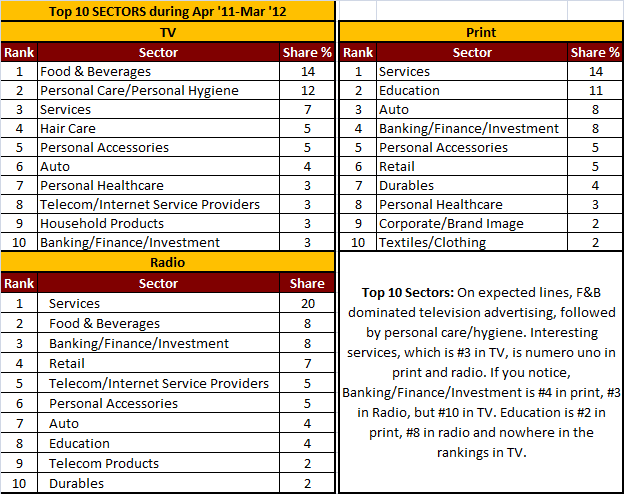
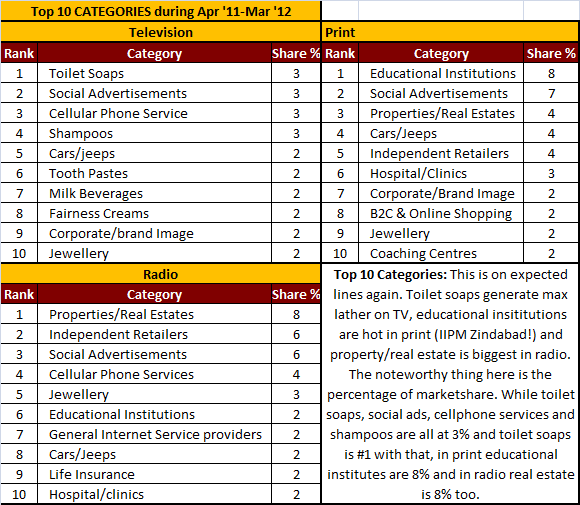
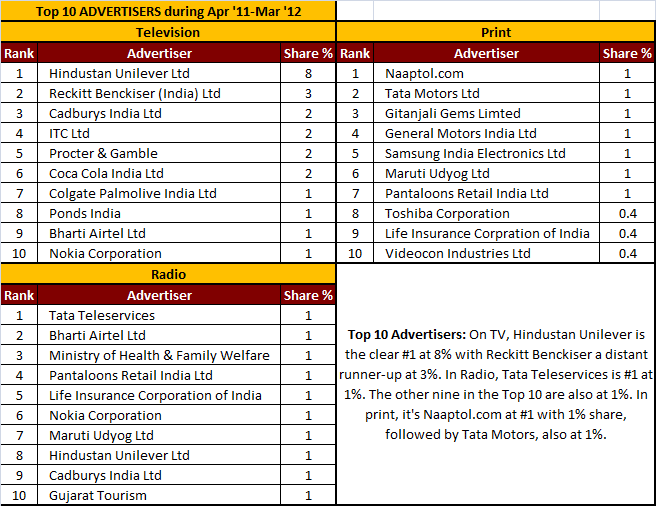
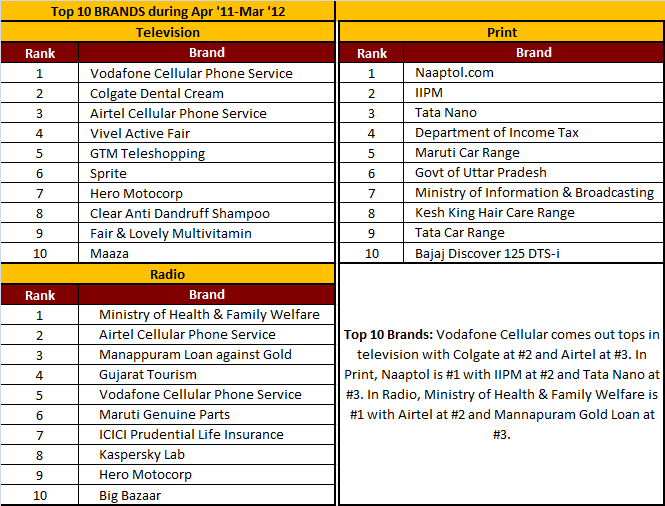
This is perhaps the shortest Big Story you’ve read in the eight-month existence of MxMIndia. But then more than words, it’s numbers that have got to do to the talking.
MxMIndia requested TAM Media Research which painstakingly computes data for ad volumes for the television, print and radio sectors. The growth figures are indicative of how these are doing: print isn’t down and out yet with 14%, TV is growing but it’s not as dramatic as we thought it would and Radio hasn’t degrown. In fact we must urge radio practitioners to interpret the 0% in a positive way because there were enough naysayers willing to rubbish the potential of the business.
Note: the analysis is based on ad , that is duration in seconds/CCMs and excludes promos.
The Cable Television Networks (Regulation) Amendment Act, 2011 has made it mandatory for switch-over of the existing analogue Cable TV networks to Digital Addressable System (DAS) by December 2014, in a phased manner. In respect of four metros of Delhi, Mumbai, Kolkata and Chennai, the digital switch-over is to be completed by June 30.
The ministry is very closely monitoring all the activities for the timely implementation and the quality of the Digital Cable TV service. During the high level review meetings by the Ministry, it was revealed that in the case of Kolkata, out of total requirement of about 35 lakhs STBs, over 5 lakhs STBs have already been installed, about 4 lakhs STBs are available in the stock which are being installed and the orders have already been issued for the balance requirements of STBs.
Further it came to the notice that all the MSOs already have digital head ends and the existing channel capacity in each of the case is over 200, which is the mandatory requirement as per the Telecommunication (Broadcasting and Cable Services) Interconnection Regulation, 2012. The channel capacity is being augmented by the MSOs.
Edelman has named Cornelia Kunze vice chairman, Edelman Asia Pacific. In her new position, Ms Kunze, presently CEO of Edelman Germany, will support David Brain, President and CEO, Asia Pacific, and the regional team in building Edelman’s fastest growing region. She will be based in Mumbai and report to Mr Brain.
Ms Kunze will have a particular remit to help develop the consumer and brand planning offer. She will also further develop Edelman’s current stable of German clients in the region which includes BMW, Osram, BASF and TUV SUD. In India, Ms Kunze will support Robert Holdheim, Managing Director of Edelman India, with the rapid development expansion of that business in the wake of the Tata win by Rediffusion/ Edelman.
Ms Kunze’s placement in Mumbai is a reflection of the growing importance of India in the region for Edelman. Asia Pacific markets are emerging at unprecedented rates and India marks a significant point of growth for the entire region.
“Cornelia brings with her the understanding that smart companies recognize the need for competitive advantage by being more strategic in their public relations approach. I worked with Cornelia for seven years in EMEA during which time she took our business in Germany from $6 Mio to $18 Mio (2012) and leaves us now with, by far, the most awarded marketing PR offer in that country,” said David Brain.
“Over the past few years, Cornelia has transformed our offering in Germany into what is arguably the most sophisticated of its kind in the market” said Robert Holdheim. “One piece of this was the acquisition and integration of digital firm GoSub. That experience will be invaluable as we look to continue our development in the Indian market.”
“Whilst I will miss my fabulous German colleagues and clients, I am really looking forward to this new challenge in Asia and to being based in India, a market I experienced for six weeks last year,” said Ms Kunze.
A new CEO for Edelman Germany will be announced later this month.
Edelman is the world’s largest public relations firm, with 63 offices and more than 4,200 employees worldwide, as well as affiliates in more than 30 cities. Edelman India Pvt. Ltd. is part of the global Edelman network with a team of more than 250 professionals across an eleven city network. Edelman India offers Indian and global clients strategic communications and media relations support, as well as Digital Communications, Public Affairs, Health, Technology, CSR and Sustainability communications.
 By A Correspondent
 By A Correspondent
 Published by Fingerprint, Life In A Rectangle is a candid memoir where adman Sujit Sanyal narrates some revealing, some intriguing and other whacky stories about the advertising world from his Clarion days, his first agency, which he joined as a trainee and whose Kolkata branch he later went on to lead.
 By Shruti Pushkarna
 It’s been a modest start for Bite Communications that completed a year of operations inIndiarecently. Still a newbie in the trade, the agency expects to widen its strides as it prepares to take on larger challenges in the communications space. Confident of putting up a stellar show going forward, Clive Armitage, Co-founder & CEO of Bite Communications says that India will emerge one of the hottest growth engine markets for the agency given the unlimited scope it throws up for agencies.