Category: NEWS

  • It’s not about co-creation, but increation: Boschma

    The “youth” of today have been touted as being the marketer’s favourite TG for some time now but it’s not just about catering to their apparent behavioural habits. The effort by marketers has to be able to reach out to the subliminal preferences of the youth that are redefining the way they communicate with a brand. Having studied their behavioural patterns and preferences from early 2000, the one person who has seen this group evolve over the years rapidly is well-known international author and speaker, Jeroen Boschma.


    In India to launch his book ‘Generation Einstein’, that has been co-authored by UTV Bindass, MxM India got Boschma to delve on the emergence of the youth of today, why brands and marketers should be wary of this TG, and what are the learnings that could be picked up from this book by those interested in catering to the highly volatile TG. Excerpts:


    After having vowed the world, your book Generation Einstein finally makes its debut in India. What are your first thoughts on the book seeing the light of the day in India?

    The book is about the first global generation from around the world – even the Indian youth is not Indian but is really a part of the global youth. The book delves into the behavioural aspects of the youth, their habits, preferences, and so on. Of course, the behavioural background of Indians is different from those of the generational background of youth fromHolland, where the book was first launched. It also provides an insight and a view to everybody that wants to communicate to youngsters – not only marketers and brand managers but I think even school teachers, professors and others. Basically, it is aimed at those seeking to make an impact on the youth of today.


    Could you delve on the thought process behind narrowcasting the next generation youngsters as your core TG towards writing the book?

    It took me five years to write the first version of the book. The way I approached it is I made notes of my learnings, which at the end totalled in excess of 400 pages. There was also a heavy amount of research that was done and then all the elements were brought together to be edited and written in a proper way. I am grateful to the help from my Indian colleagues who helped me in putting together this book so as to reflect the findings and tastes of the Indian youth of today.


    How different are the three versions of the book from each other?

    The first edition was published when Facebook didn’t even exist. So the other two editions had to be rewritten to accommodate learnings and findings from the social media space as well.


    What are some of the trends you came across while you got down to analyse the youth of today?

    The fact is that the youth of today do care of the world and they want to associate brands with respect to nature and for the sake of humanity. Another big trend is that the youth of today are very entrepreneurial and start their start-ups at a very young age. I have seen so many new ventures set up by young people inIndiaand they have been performing phenomenally well. I would say that is one of the big trends transpiring around the world today.


    You have pioneered the term Increation. Could you throw more light on the significance of the term?

    Increation is the process of coming up with marketing campaigns that work. We have been working on it for five years and now we have a firm grip on the way it needs to function. It provides a learning experience to ad agencies and brands to source their creation. It’s different from co-creation which doesn’t work; Increation works.


    How would you rate your experiences of co-authoring this book to suit the tastes of the youth of India?

    It’s been a long process putting this book together for the Indian audiences. It’s not easy as constructing a house; it’s about putting together thoughts together and creating an environment that the youth of today are familiar with.


    What is the lesson that Generation Einstein throws up for marketers and brands of today?

    What I have observed with Generation Einstein inIndiais that it is getting more extreme; we really do not have a choice – we have to change. We all are trying to keep the old world alive but the old world doesn’t exist anymore. It’s about the new generation and their understanding of the trends of today. The marketers and brands of today have to unlearn everything they know about the old world and channelize their focus on the youth of today.


    What are your plans for the future?

    The plan next is to organise a full-day Generation Einstein conference to get into the depth and help marketers come up with solutions to cater to the youth of today. I am also in the process of writing another book which I plan to launch internationally very soon. It still is in the early stages and the full context will only be known later.
     

  • Sharon Aneja & Gautham Pingali join SMG Digi

    By A Correspondent


    In two major appointments, SMG Digital – Starcom MediaVest Group’s digital arm – appointed Sharon Aneja as Director, Earned Innovation & Business Head West and Gautham Pingali as Director, Digital Improvisation. While Sharon Aneja will be based out of Mumbai, Gautham Pingali will be working from the Bangalore office. Both will be reporting to Arnab Mitra, National Director, SMG Digital.


    Confirming the appointments, Arnab Mitra, National Director, SMG Digital said: “We are thrilled to have Sharon and Gautham on board. While Sharon has huge global exposure and a very solid creative experience in her kitty, Gautham has a sharp inclination towards business development and strategy. I am sure both will immensely contribute to the success of SMG Digital.”


    SMG Digital is the digital offering of the Starcom MediaVest Group. It was formed in recognition of how Search, Social, Mobile and Display play a role in the rapidly changing landscape of Marketing, Communications & Media.


    With the social media reach scaling up and earned media gaining a strong ground with big advertisers, Sharon Aneja’s appointment is in sync with SMG Digital’s focus in investing on people, processes and technology to boost client visibility and engaging consumers on an interactive platform.


    Sharon Aneja recently shifted to India after working in London for the last 12 years. Prior to joining SMG Digital she was working with UKTV (the commercial arm of the BBC) as the Head of Digital Entertainment, where she was primarily responsible for developing a creative and commercially focused multiplatform vision for the company’s core entertainment brands. She has a longstanding experience advising the business on key online and social media trends.


    She began her career in 1991 with Conde Nast and has since then held important positions with organizations like Virgin Media, National Geographic, and Sky. She completed her education from the Queen Mary University of London.


    Commenting on her move, Sharon Aneja said, “While moving to India I was keen on moving to an organisation that had Digital as one of its core functions and was future focused. I am thrilled to be a part of SMG Digital as it is an extremely future focused and strategic pillar of SMG.”


    SMG also continued to strengthen its South operations where it has a substantial client base. With the appointment of Gautham Ram Pingali, SMG added to its talent pool in the South after several recent appointments. This move denotes the high interest levels in Digital in the southern markets as well.


    Gautham Ram Pingali has over 6 years of experience in multiple verticals across industries. He joins SMG Digital after a 3 year stint with Havas Media. He initially started off with the group’s centre of excellence to drive operational efficiency and organizational growth and quickly moved into managing projects for global and regional clients. He was last working as Associate Director Strategy & Business Development with Havas Digital India where he also managed the businesses in North. Gautham started his career in 2004 with AIESEC Hyderabad and has since then led teams at Myrmidon Consulting and ABN AMRO Central Enterprise Services. He is a B Tech graduate from the Jawaharlal Nehru Technology University in Hyderabad.


    Gautham Pingali, confirming his move, said, “I am thoroughly excited to work with SMG Digital as they have some unique methods a great team and a very strong vision, with this ability  they are in the forefront of creating a new dimension to the marketing & communication space by leveraging the Digital platform.”


    Starcom MediaVest Group is one of the youngest, largest and most diversified media networks in the country. It has over 250 human experience strategists and activators across its four full service offices. It prides itself on its ‘people first’ approach at workplace and is known in the industry and in campuses as one of the best places to work in. In addition to communication strategy development through its two networks Starcom Worldwide and MediaVest Worldwide, the group offers solutions in the area of ‘any screen content’ LiquidThread.


  • Address consumer complaints within 8 hrs: TRAI

    By A Correspondent


    The Telecom Regulatory Authority of India (TRAI) issued the Regulations on the Quality of Service and Consumer Complaint Redressal Mechanism for the Digital Addressable Cable TV Systems (DAS) on May 14.


    Under the new order, every multi-system operator (MSO) or his linked local cable operator (LCO) will have to establish a complaint centre in his service area, for redressal of complaints and for addressing service requests of his consumers before providing the digital addressable cable TV services.


    Every complaint centre will be accessible to the consumers from 8am in the morning to midnight on all days of the week. The complaint centre will have facilities for the local language of the area in addition to Hindi and English. Every MSO or his linked LCO will deploy sufficient number of employees at his complaint centre to meet the Quality of Service (QoS) parameters, as may be specified by the Authority from time to time.


    The MSO or linked LCO will have to ensure that the complaints centre is accessible and has a toll-free number which will be widely publicized. In the new regulations, TRAI has also issued details of how an Interactive Voice Response System (IVRS) should function, and how consumers should be made aware of the existence of the centre.


    Every MSO or linked LCO will have to establish a web-based complaint monitoring system to enable the consumers to monitor the status of their complaints. Every MSO or his linked LCO will also have to designate a one or more nodal officers in every state in which it is providing its services. In case the consumer is not satisfied with the redressal of his complaints through Complaints Centre, he can approach the nodal officer of the operator.


    MSOs or their linked LCOs have to publish a consumer’s charter for DAS providing all necessary details with respect to the services being provided by them.


    Under the Quality of Service (QoS) Regulations, a standard application form will be devised giving all details to be used for providing services such as connection, disconnection, shifting and return of set top box (STB).


    The consumer will have to be given a prior notice of a minimum of 15 days for disconnection of services. Similarly, the consumer will have to give a prior notice of minimum 15 days for making a request for disconnection.


    No charges other than rentals for STB will be charged in case the connection is suspended on the request of the consumer for a period of minimum one month to maximum three months.


    Operators will publish a manual of practice and provide it to the consumer at the time of enrolment. The manual of practice, apart from Hindi and English, should be in the language of the state where the cable services are provided.


    Every MSO will offer cable TV services on both pre-paid and post-paid payment options to the subscriber and will be responsible for generation of bills for the subscribers. It will be open to the subscriber to choose either the pre-paid or post-paid option.


    Operators will have to offer three schemes for STBs to the consumers, and these are outright purchase, hire purchase and rental. Operators will have to provide a minimum warranty of one year for STBs acquired by the consumer under outright purchase scheme.


    The security deposit of the STBs has to be refunded within seven days of surrender of the STB by the consumer.


    All MSOs and cable TV operators will conduct public awareness campaign about the salient provisions of these regulations.


    Meanwhile, TRAI has issued amendments to the Interconnection Regulations issued on April 30 under which the MSOs have been barred from charging any placement fee from broadcasters.


    Giving in to a collective demand of broadcasters, the Telecom Regulatory Authority of India (TRAI) has barred Multi System Operators from charging a placement fee from channels in lieu of placing them in select slots.


    TRAI has issued amendments to the Interconnection Regulations which were earlier issued on April 30. The interconnection regulations are applicable to all digital addressable cable TV systems (DAS).


    As per the amendments, TRAI states, “Multi System Operators are not to demand any placement fee from broadcaster.” In a move to make the system more transparent, TRAI has specified, “Tthe Reference Interconnect Offer of a multi-system operator submitted to the Authority to contain the basis on which the carriage fee payable by the broadcaster has been determined.”


    TRAI also mandates every MSO to display in his Electronic Programme Guide, all the channels offered by him, in the same genre in which a particular channel has been indicated by the broadcaster and one channel shall appear in only one genre.


    Under the new regulations, broadcasters will also have to declare the genre of their channels which may be either News and Current Affairs or Infotainment or Sports or Kids or Music or Lifestyle or Movies or religious/Devotional pr General Entertainment (Hindi) or General Entertainment (English) or General Entertainment (regional language).


  • Understanding young minds with ‘Generation Einstein’

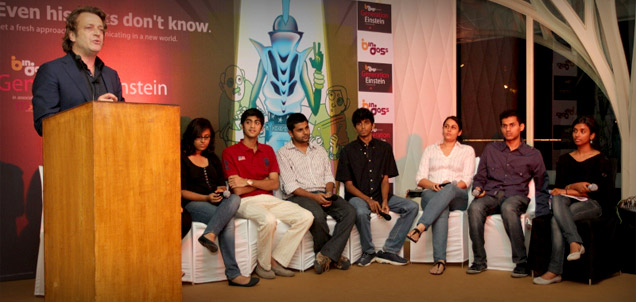
    Jeroen Boschma with young minds on the panel ahead of the release of ‘Generation Einstein’


    By A Correspondent


    It was youth power in all earnest as Bindass launched the India edition of ‘Generation Einstein’ on Monday evening at Mumbai’s tony Tote on the Turf. The book is co-authored by Bindass along with well-known international author and speaker Jeroen Boschma.


    The book describes the new generation, ‘Generation Einstein’ that was born during the last decade of the previous century. It also stresses upon the significance of the youth as an important part of the market and how fast the new generation understands the world better than anyone else. The book attempts to decode this generation and help marketers reach out to them.


    At the event, Mr Boschma spoke about how today’s generation is completely different from the previous generations. He was of the view that unlike the youth of previous generations which lived in a world of their own, the youth of this generation are very much in this world as they understand brands and marketers better: “Strong brands worldwide are brands that believe in what they do and youngsters who connect with these brands are madly in love with them.” (see interview: It’s not about co-creation, but increation: Boschma)


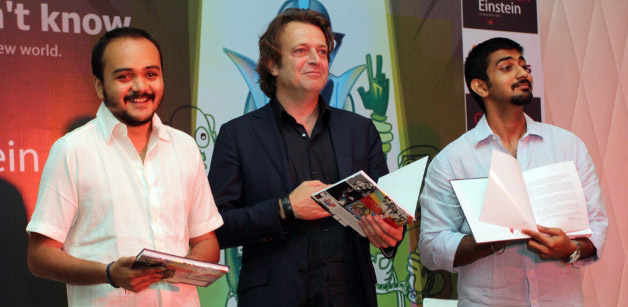
    Jeroen Boschma (centre) with Samyak Chakrabarty (to his right) and Arjun Paul Vednayagam


    The Indian edition of Generation Einstein is authored by Samyak Chakrabarty and Arjun Paul Vednayagam. “The aim of the book is to open the mind of brand managers, and to stop defining the youth, as it is not possible to define them. It is all about making interesting campaigns and allowing the youth to decide the fate of the brand,” said Mr Chakrabarty.


    The objective of the study conducted for the book is said to be about understanding the thought process of a young consumer, the factors that influence the youth to build their brand preferences, how they come to their final choice, and then using this knowledge to effectively engage the youth.


    “Every brand today has fanatic fans. Marketing is nothing like what it was before. If you want to communicate with this generation, forget what you have learnt. This generation understands that advertising is about lying. Generation Einstein says that the future of marketing is to find the purpose of their life and we need to find out how to be part of their life,” Mr Boschma added.


    In a panel discussion, moderated by Mr Boschma, the panellists, including college going teens, spoke about their favourite brands and the factors that influenced their buying decisions.


    Mudit Ganguli, a student from JaiHind College, Mumbai said that his favourite brand is Blackberry because it is cheap and convenient to use, it has versatile features, helps him get regular updates and allows him to communicate easily. Another reason why he preferred a Blackberry is because of good advertisement.


    Mohini Mukherjee, also a Jai Hind student said her favourite brand is ‘Bingo Chips’, primarily because of good advertisements, but also due to no celebrity involvement, funny advertisements, and good quantity of chips.


    Another student said that Twitter was her favourite brand because it helps her express her feelings, provides instant updates, and allows her to follow her favourite celebrities.


    One of the students talked about the reasons he trusted ‘Nike’ as a brand – good advertisements, the quality the brand offers, and the ‘Just do it attitude’ that it displays. He also spoke about how the brand is empowering the youth. He said that brands need to go back to delivering quality products and not try to create a product for everyone and eventually reaching no one.


    In conversation with MxMIndia, Samyak Chakrabarty spoke about his marketing plans for the India Edition of ‘Generation Einstein and his learnings from the study: “We would like to put this into the curriculum of mass media courses where the next generation marketers can learn about how to engage the youth. We plan to take Jeroen Boschma to colleges and deliver lectures and, of course, the book is available online for Rs200. The biggest learning we have had is that in order to understand and engage the youth, one has to keep his mind open and the fact that brands cannot define or assume or presume about the youth today.”


    The event was organized in association with MxMIndia.


    Photograph: Fotocorp

  • UPA tenure sees surge in attempts on media curbs

    By A Correspondent


    Last month, Congress MP Meenakshi Natarajan, reportedly close to Rahul Gandhi, the party’s general secretary, proposed a legislation that sought to regulate the media. The private member’s bill, subsequently disowned by the ruling Congress after uproar, sought to empower the government to ban coverage of an event that may pose a threat to national security. The bill also prescribes detailed ‘standards’ that the media should follow.


    Late last year, communications and IT minister Kapil Sibal famously sought to regulate the social media. The itch to regulate the media is not new but ever since the United Progressive Alliance (UPA) returned to power in 2009, attempts to do so have become alarmingly frequent.


    “The problem started when media organisations across the country began reporting on political issues aggressively,” said IBN7 managing editor Ashutosh. This was in late 2009 and 2010, when a series of scams were exposed by different sections of the media, including the alleged 2G spectrum scam in which former minister A Raja and a clutch of bureaucrats and industrialists are on trial.


    When questioned, political parties and media groups across the board agree that the government should stay away from media regulation, but that has not stopped the government from trying at various levels.


    During the time Anna Hazare’s campaign was gathering steam last year, there were reports of impending curbs on the social media, which was being used to garner support by the Anna camp. “At some stage we were told that the mainstream media was instructed not to report on the Anna Hazare campaign,” said former top-cop Kiran Bedi, who is also a member of India Against Corruption. “People voice their opinions through the media and the moment government gags that, you are abusing people’s vote,” she added. However, no such curbs were eventually imposed.


    For a country that prides itself on its status as the world’s largest democracy, the years under the UPA government, which came to power in 2004, have seen an alarming slippage in press freedom. This is ironical, political observers say, as the Congress-led UPA had benefited from the media’s aggressive exposure of scams during the NDA era. The media’s extensive, and overwhelmingly negative coverage of the Gujarat riots had also helped turn public opinion.


    The 2011-2012 Press Freedom Index compiled by Reporters Without Borders shows that India has dropped on the index from the 80th position held in 2002 to the 131st position in 2011-12 among 179 countries.


    “There is a complete absence of confidence and lot of insecurity among the elected representatives today, which is adding to the problem,” said Abraham Koshy, professor of marketing at IIM, Ahmedabad.


    In recent years, a number of politicians have invested in media businesses across the country, which some say, is another way to restrict the media.


    “The politician-corporate nexus too has grown further over the years and that is also impacting freedom of the media as some of these corporate own parts of the media. The government should not try to impose restrictions on the media,” said Nilotpal Basu, central committee member of the Communist Party of India (Marxist).


    There is a school of thought that politicians and political parties should not be allowed to own media companies under the law as that could lead to media being used as a tool for propaganda.


    “TV channels and newspapers are watchdogs of the government but if they are owned by the politicians themselves, there is a conflict of interest and that is what should be regulated,” said an editor of a news channel, who did not wish to be named. “We must sit down and discuss these issues,” said Vinod Mehta, former editor-in-chief of Outlook India. While most of those quoted in this story are also concerned about the quality of reporting in the country, which needs to be improved, most prefer self-regulation.


    Mr Ashutosh said: “Self-regulation within the media is working. Media needs to improve the same way the functioning of the Parliament, the judiciary and the executive need to improve in the country.”


    Ms Bedi said the media needs to be more independent and non-partisan but it is a fact that “media plays the roles of a visual and verbal Lokpal. Without media exposing the scams, India would have been a Banana Republic.”


    Source: The Economic Times
    Copyright © 2012, Bennett, Coleman & Co. Ltd. All Rights Reserved


  • Govt says RIL has no shareholding in media firms as of March 31

    By A Correpondent


    We reproduce a Press Information Bureau communique, without comment:

    “As per the Investments Schedule of Balance Sheet of M/s. Reliance Industries Limited (RIL), as on 31/3/2011, there is no direct holding of RIL in media houses/companies (listed and unlisted) print/broadcast/production. However, company’s consolidated Balance Sheet as on 31/03/2011 discloses that it holds 100% in Reliance Digital Media Limited (RDML) through Reliance Retail Limited (RRL), its subsidiary company.


    “The Investment of M/s. Reliance Industries Limited in M/s Reliance Digital Media Limited through M/s Reliance Retail Limited does not violate the provisions of the Companies Act, 1956.


    “This information was given by the Minister of State in the Ministry of Corporate Affairs Shri R.P.N. Singh in the Rajya Sabha today in reply to a written question.”


  • MEC turns 10!

    By A Correspondent


    Leading media agency MEC is completing a decade of existence. Created in 2002 from the first ever merger in ad conglomerate WPP’s history, two innovative independent businesses, The Media Edge in North America and CIA in Europe, came together to become MEC.


    Named by RECMA as the fastest growing global media network of the decade, MEC was the first media agency to create a specialist digital operation, Outrider, as early as in 1995 and by 2003, these services were fully integrated within the agency, enabling it to offer a seamless Paid Owned and Earned product to clients.


    As a founding partner of GroupM in 2003, MEC pioneered the concept of group trading and GroupM remains a unique and groundbreaking concept in the industry.


    In their very first decade, the agency has racked up some remarkable achievements.

    • The first media agency to win a Cannes Media Lion
    • The only agency to win Advertising Age’s Global Media Agency of the Year twice in consecutive years
    • The only agency to win Adweek’s Global Media Agency of the Year twice in consecutive years
    • 53 Media Agency of the Year awards in local markets around the world


    Today, MEC has over 150 offices in 84 countries and employs over 4,000 people. In India, MEC was launched in 2004 and has full-service offices in Mumbai,Delhi, Chennai and Bengaluru. Both their specialist divisions – MEC Interaction (digital services) and MEC Access (entertainment, sports and partnerships) – were launched in 2008.  Interestingly, this anniversary year has brought much cheer for MEC India.  Not only did the agency win most golds at Goafest 2012, they were adjudged winner at Festival of Media Global for creative of media.


    Says Shubha George, Chief Operating Officer, South Asia MEC, “I am delighted to be part of MEC’s journey in India.  And, I am proud that the fledgling agency that we were has blossomed into a super successful organisation that brings on board the best mix of strategic thought, innovative action and analytical measurement. MEC’s culture is unique and infectious and I thank all my colleagues – current and those who have helped build the agency in the past – and wish us an even more successful decade to come.”


    Speaking on the occasion, T Gangadhar, Managing Director, MEC India says: “I am proud to be a part of MEC, a global network that is an exciting combination of strategic communications planning  and an idea-centric culture. While we will continue to take inspiration from our prolific past, this occasion is apt time to renew our vows to our clients, staff and associates.”


  • DNA scores high in Brand Trust report

    By A Correspondent


    The Brand Trust report 2012 has mapped trust scores on the basis of 61 primary components & has ranked brands accordingly. The 2,718 respondents to this survey were influencers of society, all SEC AB, proficient in English and salaried. Besides trust scores, these influencers ranked the media that influenced them.


    On the basis of these factors, DNA has been ranked India’s second most informative newspaper, India’s second most read newspaper and third most trusted newspaper brand.


    Gautam Dalal, VP, Marketing, DNA said: “A lot has happened in the last year, leading to these trust scores. The Mumbai edition has ramped up to 6 lakh copies a day, ensuirng reader-centricity by quality journalism, path breaking engagement initiatives. The survey has ranked us well and placed us on a national pedestal.”


    “At the core of every brand lies trust. A seasoned marketer would agree that increased trust in a media brand leads to growing readership/viewership and eventually high response. Advertisers in DNA over the last year have experienced this already,” he added.


    According to the report, DNA was present in just 6 of the 15 cities surveyed, yet it managed to overtake some of oldest regional and national players. In an overall ranking of 17,000 brands, DNA was India’s 3rd most trusted newspaper brand.


    “Principles always came first to DNA. Under the platform of ‘Principles First’, DNA has recently published its journalistic code of ethics, followed shortly by its business principles. The trust scores are really an echo of the brand’s principles,” said Mr Dalal.


    The Brand Trust report survey is conducted by the Trust Research Advisory. The data was analysed by the Indian Statistical Institute, a government body founded in 1931.


  • A Comms creates a new ‘reality’ for Max New York Life insurance


    By A Correspondent


    The retail media network, Aurora Comms, has pushed its innovation bar even higher with its latest campaign for Max New York Life. Taking the leading insurance provider’s recently launched TV campaign forward into the urban outdoor space, A Comms has created yet another installation that hits the sweet spot.


    Taking over the prime ground floor area of InOrbit Mall, one of Mumbai’s most popular shopping destinations, A Comms brought to the fore some ‘augmented reality’ to create a buzz. The same was also executed at DLF Promenade in Delhi – Bringing to life the ‘devil and the insurance agent’, virtual characters from MNYL’s TV commercial, it created a square, inviting the mall’s many visitors to step into a new experience.


    Once someone is in the square, the devil and the agent would appear in front, thanks to cutting-edge technology. There on, the person would be prompted to punch and destroy the devil in many ways, with the agent interacting and advising too. Coupled with an exciting background score and a reality that dissolves into a virtual world, this became an engaging experience for the participant and the hundreds of onlookers.


    The fact that the ‘insurance company’s advisors are known for giving the right advice’ was to be communicated to the right audiences and A Comms chose a never-tried-before approach that created a dynamic, sharp and credible image of the client. Also, the activity being scheduled at major Indian metros and B towns in-sync with the TV commercial being on air means that this campaign is helping to reach out to thousands of targeted customers.


    On using this medium to communicate, Anisha Motwani, Director and Chief Marketing Officer said: “Max New York Life has always thought of communicating to its audience in an effective and innovative medium. The AR initiative is an extension of our new brand campaign ‘Aapke Sachche Advisor’.”


    Vishakha Singh, Executive Director from A Comms added: “Augmented reality has the capability to engage audience in real size yet virtual world and this is what we designed for Max New York Life consumers. We’re glad this campaign is delivering the communication to the consumers.”


    A Comms and MNYL have planned this activity across metros.


    Aurora Comms, or popularly, ‘A Comms’, isIndia’s largest retail-media network that offers shopper marketing and branding solutions at consumer touchpoints. It works closely with retail stores of all format- lifestyle, food & provisions, electronics, books, entertainment, health & fitness, eateries, multiplexes, spread over more than 300 towns. A Comms pioneered the use of LCD branding at electronic stores in metros and non metros, thereby adding a new dimension to the country’s OOH media spectrum.

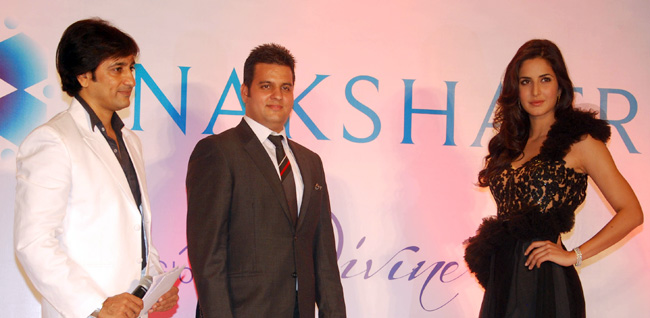
  • Katrina Kaif unveils new Nakshatra logo and new brand campaign


    By A Correspondent


    Katrina Kaif, brand ambassador of Nakshatra, the diamond jewellery brand, on Tuesday, unveiled the brand’s new logo and its latest brand campaign – Glow Divine, in a glittering ceremony at the Grand Hyatt. Also present on this occasion were Mehul Choski, CMD, Gitanjali Group, Shardah Uniyal, VP – Marketing, and Sushil Sharma, VP, International Brands, Gitanjali Group.


    The unveiling was a spectacular ceremony, accompanied by a soul stirring performance by singer Kavita Seth, followed by unveiling of the latest Nakshatra jewellery collection by Katrina Kaif and Mehul Choksi.


    Speaking on the occasion, Katrina Kaif said: “As the brand ambassador for Nakshatra, it gives me immense pleasure to be a part of this momentous occasion. The introduction of a new brand identity and logo simply enhances the divinity and immortality that Nakshatra represents; making each woman feel special and divine – almost like a Goddess. I look forward to a continued great association with Nakshatra and continue to wish the brand all the very best”


    Enhancing the existing and emerging personality of the brand, the new campaign and identity aims to recreate the heavenly hues and the divine glow connecting the brand with the inner beauty that every woman radiates. ‘Divine Force’ is one of the key attributes of the new campaign – a fresh rendition of the “Divine Luck” philosophy associated with the brand, whereby every piece of Nakshatra jewellery carries with it an exquisite beauty that can only be described as preciously divine.


    The new look, feel and thought of the campaign is inspired by the perfection and inner fire that each precious piece of Nakshatra jewellery exudes. The campaign is an expression of this ethereal, goddess like divinity – a divine energy that is sparkling, precious, mesmerizing.


    Commenting on this rebranding initiative, Shardah Uniyal said, “It is a very proud moment for us at Gitanjali, and especially for Nakshatra. The new ethereal identity and logo lends a new dynamic and divine personality to the brand. It not only reflects but profoundly enhances the brands core values and the new avenues that we intend to venture into.”


    The new brand tagline, ‘Glow Divine’, is in keeping with the inner radiance that a diamond emits whilst complimenting the inner beauty that every woman radiates. Keeping in with the philosophy of “Glow Divine” the new brand logo is inspired by the popular floral Indian motif and exhibits eternal beauty and brilliance of constellation in a graphically depicted diamond cluster. The look and feel of the brand logo represents the ethereal beauty of Goddess of divine energy.


    Mehul Choksi, CMD, Gitanjali Group said: “The new logo and identity is yet another remarkable milestone on Nakshatra’s journey in symbolizing jewellery that is beautiful, divine and ethereal, exuding divine energy of perfect creations. It reflects all the values that have been at the core of our brand philosophy as well the vision and direction in which we aim to grow.”


    Nakshatra, one of the most respected jewellery brands inIndia, epitomizes jewellery that is ethereal, infinite, immortal, beautiful and radiant. The pieces are crafted around a unique set of floral designs, using the traditional seven stone cluster. First launched in 2000, as a flagship of the Diamond Trading Corporation (DTC), it was subsequently taken over by the Gitanjali Group, and has been awarded Superbrand status since 2008.

  • OLX India releases its universal iOS Application for iPad and iPhone

    By A Correspondent


    OLX.in, the online free local classified site, has launched iPad and iPhone application (http://bit.ly/olxiosapp) to cater to the rapidly emerging internet population in India, a large portion of which are going to be mobile internet users who will access Internet on their GPRS-enabled phones and Tablets.


    OLX has been the pioneer in mobile classifieds space and has focused on mobile very early with the mobile OLX site available as early as 2008 and OLX mobile apps since 2009. With a growing market of over 55 million iPads globally, 60 per cent market share in Tablets and growth rates of over 150 per cent over last year, it becomes absolutely essential to provide the OLX users an app optimized for their iPads.


    Tapping this expanding segment of Tablets, OLX has innovated further and strengthened its online presence further with the launch of its new app in the Apple Store now optimized for the iPad, the first for any online classifieds site in India.


    iPad users can now download the OLX App in the Apple Store for free and enjoy premium browsing experience and all features of OLX on their iPads.


    “We are excited to release this new universal app to address the booming iPad market. iPad owners have now a great free app to buy and sell everything with OLX,” said Simon Berger-Perrin, VP Mobile at OLX. The new app for iPad is even compliant with the iPad with retina display which makes viewing images of products posted on OLX absolutely clear and with no blurs or distortions.


    Amarjit Batra, Country Manager, OLX India, elated with the launch of this app, said: “Indiais poised to become a large mobile internet market with smartphones and tablets driving the next wave of growth in Internet consumption. OLX.in is already having apps on all smart phone Operating Systems and the launch of the iPad app is a demonstration of our focus on providing Indian internet users the best classifieds experience anytime and anywhere.”


    With increasingMobiletransactions, it becomes important that the buyers have the option of meeting the sellers via a mobile device and vice versa. Being a Universal app, users only need to download one app and it works on both devices; iPhone or iPad. The advantage for the users who own an iPhone and an iPad is that they do not need to download 2 different apps. Even the updates for both iPhone and iPad apps happen at the same time which makes it a very convenient option for mobile users.


    For users wanting to experience OLX on other phones, there are also options to download the OLX Mobile app on Android, Windows, Blackberry and Nokia mobile operating systems.


    OLX.in, the Indian arm of OLX Inc, is the next generation of Online Free Classifieds which serves as a platform to connect buyers and sellers who wish to buy, sell, exchange or trade used goods and services, by simply posting a Free Ad on the website. OLX is present in more than 96 countries and 40 languages across the world and is available in500 cities acrossIndiawith five different languages English, Hindi, Tamil, Telugu and Marathi.

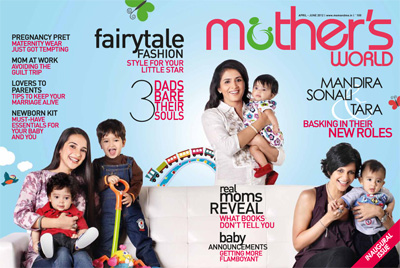
  • Mahindra Retail launches ‘Mother’s World’

    By A Correspondent


    Taking another step in cementing their philosophy of striking innovations that enrich communities and enable people to rise, Mom & Me, the flagship brand of Mahindra Retail is introducing its first ever publishing initiative with the launch of a maternity magazine titled ‘Mother’s World’. This new consumer-centric initiative is an extension to their commitment to provide relevant information, assistance, tips and guidance to the world of early parenthood.


    After their very successful venture into retail with Mom & Me, Mahindra Retail will now focus on providing expecting and new mothers with world class services to care for their bodies and souls during the fragile and overwhelming beginning to motherhood.


    Commenting on the launch of Mother’s World magazine, K Venkatraman, CEO, Mahindra Retail said: “Today’s mothers are highly involved decision-makers and look deeply into every aspect of their babies’ well being. The launch of the magazine marks our commitment to consumer-centric initiatives, and we hope this magazine will be a perfect companion for parents.”


    The inaugural issue offers readers a host of stories, features, tips and advice. It also speaks to three celebrity moms – Sonali Kulkarni, Tara Sharma and Mandira Bedi and their experiences of motherhood.


    Mother’s World magazine serves as an extensive and comprehensive guide for young parents to deal with parenthood and its challenges. With this subscription based magazine for parents-to-be, Mahindra Retail aims to provide insightful information, carefully researched articles and quotes from real parents who share their experiences, besides tips on fashion trends in maternity wear.


    The magazine has been divided into relevant sections covering all aspects of parenthood: conception, infancy, toddler hood and relationships, with all the information verified by in-house experts.


    While Mother’s World magazine adopts a serious approach to parenting, it does have a light-hearted side to it as well with lots of tips, tweets and fun facts about pregnancy on almost every page. It also features a host of relevant products, all easily available to the reader at Mom & Me stores. What also sets the magazine apart is its take on lifestyle and fashion. From maternity fashion to toddler fashion – beautifully taken, theme-based shots give the magazine that classy edge. Occasional celebrity covers, photographs and interviews set Mother’s World distinctly apart from other parenting magazines inIndia.


    Mother’s World quarterly issue will be available on stands across the country from May 14, at a cost of Rs100.


    Mahindra Retail is an extension of the $14.4 billion Mahindra Group’s trading foray in the domesticIndiamarket. The Group believes that this is the favourable time to extend its distribution business into direct retailing, when the organized retail market is expanding inIndia.