
Category: MxM JOURNALISM REVIEW

  • Ranjona Banerji: Tedious TV discussions

    By Ranjona Banerji


    I usually dislike Piers Morgan on CNN. He seems Uriah Heepish in his manner as he sucks up to Americans and doubly so if his guests happen to be celebrities. He also has a tendency to try and be American and during elections will say “us” and “we” to his guests. But after the Oregon mall shooting and then the massacre at Sandy Hook Elementary, Morgan found that “us” and “we” didn’t quite work for him any more and his discourse became about “you” and “me’. He even went to the extent of telling one gun-happy guest that this was his show and the guest had better stop speaking!


    He has fought bitterly with gun lobbies and berated America for its need to bear arms as well as trotted out stats about how the rest of the world – including his native Britain – managed without nine guns in every household. If Morgan was tough after Oregon, he was absolutely furious after Connecticut.


    Of course, one can understand Morgan’s disgust and it is quite incredible how the American media has also sidestepped around this gun control issue in spite of the heart-breaking regularity of gun-related violence in that country.


    **


    The terrible incident this week in Delhi where a girl was gang-raped on a bus and she and her boyfriend beaten up, stripped and thrown off the bus, has filled the whole nation with despair. However it is difficult to see how TV debates on this subject are necessary. What can anyone possibly say that it is not anodyne, platitudinous, outraged or has not been said before? Little fruitful is gained from these discussions and if guests shout over each other – which is common – it trivialises the incident.


    It perhaps makes more sense for TV anchors to interview those in charge and those who can shed some further light on the issue. For instance, talk to the police over slow and shoddy investigations, lawyers over the slow legal system and sociologists on how to improve gender relations and activists on their experiences.


    Also, the formula of “one BJP, one Congress, two lawyers” for every single subject of discussion is getting tedious. One understands that India is short of experts – and years of working on edit pages of newspapers has hardened this viewpoint – but all that means is that a little more hard work is required to dig up fresh, informed voices.


    **


    The prank call by two radio jockeys in Australia which led to the suicide of an Indian nurse in the UK raises several questions for the media. Yes, pranks are fun and yes, a sense of humour is an excellent way to get through life without taking it too seriously. But this prank – the two RJs mimicked Queen Elizabeth and Prince Charles to get information on Kate nee Middleton now Duchess of Cornwall’s condition after she was admitted to hospital after complaining of morning sickness.


    The nurse, Jacintha Saldanha, took the first call and passed it on to the nurse on duty who gave out the details. In her suicide notes, Saldanha blamed both the RJs and the hospital authorities.


    The trouble is that pranks usually work when they target someone famous and when they do not divulge too deep into personal details. This prank failed on both counts. The RJs could not have foreseen Saldanha’s suicide but the radio station could have foreseen that such a call would put the jobs of those who spoke to them at risk. Had they called Queen Elizabeth and made fun of her that would have been another matter. But it should have been clear that the only victims here would be the nurses.


    One can only advise senior editors to frown upon schoolboy pranks masquerading as journalism. The BBC incident springs to mind here.  Comedian Russell Brand and TV host Jonathan Ross called character actor Andrew Sachs (best known for playing Manuel in the comedy series Fawlty Towers) and told him how Brand had slept with his granddaughter. Needless, insulting and not really that funny at all and certainly Ross paid the price for it.


    eom


  • Ranjona Banerji: Headlines Today tops Modi discussions while Arnab Goswami tires us

    By Ranjona Banerji


    To my absolute surprise (I can be charged with “misunderestimating” here), the better discussions on the assembly election results on Thursday evening happened on Headlines Today – barring of course Rajya Sabha TV which lives up to its reputation of being above the rest. Between Shiv Vishwanathan, Mani Shankar Aiyar, Seshadri Chari, Ashok Malik and Vir Sanghvi, moderated by Rahul Shiv Shankar, you had a lively and sometimes funny discussion on Narendra Modi’s third term, with some insights as well.


    Arnab Goswami’s excitement and his various poses of offence and defence are starting to get very tired now. His ruse of taking a position and then manipulating or browbeating everyone else around him is so transparent as to be ineffective. His political sense is not as finely honed as his finger on the pulse of how to save the nation and this means Times Now suffers when the subject is politics. Put Goswami at the helm of a discussion about gang-rape and he is bound to win because you feel his pain and feel that he articulates your anger. If the subject is politics itself however and the lack of depth is evident – much as understanding politics requires any depth at all, perhaps all you need is a feel for the iniquity of human character!


    On NDTV, there was Barkha Dutt in a pink top in the morning and Barkha Dutt in a green top in the evening. Prannoy Roy, who invented election results broadcasting as far as India is concerned (introduced us to the word ‘psephology’) was nowhere to be seen. Why a channel should hide its trump card is inexplicable.


    CNNIBN was its solid self – neither terrible nor extraordinary. This may be all right in normal conditions but election results require a little more fire perhaps.


    Hardly anyone, it must be admitted, focused much on how the exit polls went a bit wonky – as they always do. (Although on Friday morning, Hindustan Times had a story on that.)


    **


    Together with Narendra Modi’s hat-trick in Gujarat, TV channels did not forget the gang-rape victims and gave us occasional updates. However the fracas in the Lok Sabha over the quota promotions bill with the House being adjourned many times seemed to be forgotten.


    TV’s recurring problem is lack of depth. Every time some BJP leader said that Modi’s hat-trick was historic as being the first ever in human history, no anchor or reporter managed to correct them. Even Rajdeep Sardesai of CNNIBN almost made the same mistake but then quickly changed his sentence. His channel through the day told us that Modi first came to power in Gujarat in 1998, when it was in fact in October 2001 (sent to replace Keshubhai Patel after debacle over earthquake rehab), won a by-poll in February 2002 and the assembly elections in 2002. One has to thank The Times of India for giving us a box on all the chief ministers who have managed more than three terms throughout human history. It’s a long list as it happens and Jyoti Basu of West Bengal tops it with five terms!


    What did get forgotten more or less was Himachal Pradesh as Modi towered over the news and the discussions all day and night on TV. Perhaps there was nothing to say?


    **


    In their editorials, The Times of India, Hindu and Hindustan Times all dealt with Modi’s victory. TOI pointed out that his Hindutva image would be a problem for his all India ambitions even if his achievements in Gujarat are formidable. The Hindu did not focus on Hindutva so much as on how Modi’s authoritarianism alienates many within his party and its larger family and polarises his voters. Hindustan Times focused on how the Congress did not put up a leader to combat Modi’s enormous presence.


    **


    Since I have managed to write this, I can only assume the world has not ended yet or that December 21 2012 was not so much the end of the world for the Mayans but one more Mayajal!


  • Reviewing the Reviews: Dabangg 2

    Dabangg 2

    Key Cast: Salman Khan, Sonakshi Sinha

    Written By: Dileep Shukla, Abhinav Kashyap

    Directed By: Abhinav Kashyap

    Produced By: Arbaaz Khan, Malaika Arora Khan, Dhillin Mehta


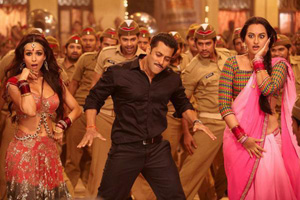
    A certain weariness crept into the reviews of Dabangg 2. The first film was crassly commercial but entertaining. Since it wasn’t highly original to begin with, the sequel that faithfully follows the template seems like a repeat and not half as enjoyable. Still, Salman Khan is on a roll, and the film was expected to get a huge opening. But even by the lowering of standards that critics do for Bollywood masala films, this one just about made the cut. Mostly 2 or 2.5 stars, some 3, but the tone, mostly disappointed.


    Karan Anshuman of Mumbai Mirror spoke for a lot of moviegoers: “Dabangg 2 is nothing but an amalgamation of its predecessor and its offspring, and only more of the same: slow-mo foot stomp splintering the earth, an opening scene warehouse fight, and the belt now dancing on its own. Still, it is slightly less jarring than the original but that’s mostly because there’s absolutely no attempt at a story this time….On a more serious note, I have to ask – aren’t we tired of watching the same film in its various avatars over and over again? It’s the same gimmicky action sequences, same item numbers, with the same actors telling us the same unoriginal story. When will we realize that somewhere along the way it became about stars and filmmakers having a blast at our expense rather than them being responsible for entertaining us?”


    Srijana Mitra Das of the Times of India tried to be upbeat. “Arbaaz Khan’s direction is commendable – he maximises his main star, maintains balance and keeps the movie tight. There are some loose strands – an SP eating ‘pisa’ becomes annoyingly heavy, Sonakshi’s acting stays lean, some jokes are saccharine-like – but at the end, Salman’s shirt comes off, so it’s all cool. Taking this franchise forward, Dabangg 2 presents a sewaiyyan Western where hot-cop Chulbul is cowboy and stud. If you’re up for fun that’s purely tongue-in-cheek, this will give you bangs for your buck.”


    Saibal Chatterjee of NDTV gave it a reluctant thumbs up.”The obvious question: is Dabangg 2 really twice as nice as the original action flick that made giant waves in 2010? Well, for one, the follow-up has been mounted on a far more lavish scale: its budget is nearly double that of the precursor. This film might also end up raking in a much larger box office booty than Dabangg did. But assessed strictly as a pure entertainer designed for instant mass gratification, it isn’t half as successful. But make no mistake. Dabangg 2 is every inch of the way the critic-proof film that it is meant to be. No matter how many holes you might spot in its uncomplicated, wafer-thin narrative edifice, Bollywood’s most bankable megastar’s onscreen deeds, at a bit of a stretch, would serve to paper over all of them.”


    Anupama Chopra of the Hindustan Times was just a little disappointed. “There wasn’t one line that stayed with me after the film. But what remains consistent is the sheer fun of watching Robin Hood Pandey solve the many problems of the world by breaking necks. I think complicated times call for uncomplicated heroes and Chulbul Pandey fits the bill perfectly. My review of Dabangg ended with a plea for a better story for Chulbul. Like so much else in Dabangg 2, that too remains the same. Can someone please write a terrific plot for this terrific character?”


    Rajeev Masand of IBNLive commented, “Expectedly Dabangg 2’s only strength is Salman Khan himself, who is the glue that holds together this slipshod film. He’s charming in his romantic, cheeky scenes with Sonakshi Sinha, he’s mischievous and endearing while teasing his father, and plain hilarious in his interactions with his sidekick cops. Sadly, Chulbul Pandey is an extraordinary man trapped in an ordinary, unexciting world in Dabangg 2.”


    Sukanya Verma of rediff.com was nostalgic for the original. “Dabangg 2 serves primarily as a reminder of what this Rs 100 crore addiction is doing to the art of entertainment. Entertainment, not filmmaking, mind you. Even escapism deserves to be treated with boundless imagination. And so I’ll take Salman Khan stopping a moving tram with nothing but a blazer over the same old Matrix-era maneuvers. Now THAT was quite a kamaal, Pandeyji.”


    Shubhra Gupta of The Indian Express ranted, “The whole film revolves around Chulbul. What else can it do, poor thing? His chulbuli, played by Sinha through the film in the same curvaceous-cum-coquettish manner, the same sideways come-hither glances, stays in the kitchen, occasionally straying to the bedroom, and getting to leave the house only a couple of times. Clearly, if you want to be a 100 crore club mascot, that’s all you can aspire to.”


  • Ranjona Banerji: Big Brother I&B

    By Ranjona Banerji


    The Information and Broadcasting ministry has started behaving like the Ministry of Magic under the influence of Voldemort. In a note to TV channels, the ministry has said that some channels have not been showing “due responsibility and maturity” in covering the post gang-rape protests in New Delhi and that “this telecast is likely to cause deterioration in the law & order situation, hindering the efforts of the law enforcing authorities”.


    We all know that TV channels sometimes display signs of immaturity or that coverage can get skewed or events magnified. But that is hardly the government’s problem. Of course, all that happened in the non-stop coverage of the Delhi protests for five days was that the ruling government’s ineptitude was exposed. Sheila Dixit, chief minister of Delhi, may belong to the Congress but she was quick to shift the blame for the police’s behaviour to the lieutenant-governor of Delhi and by implication to the Centre.


    The Delhi protests and the excessive force used by the police have turned out to be a public relations disaster for the UPA. It is telling that one of its responses has been to issue a warning to TV channels to behave better. How TV channels behave and do not behave is a subject for the viewer to deal with and for any transgressions of perceived behaviour, there is the National Broadcasters’ Association and other such bodies. The government does itself no favours by behaving like Big Brother. It is interesting that this note comes after Delhi police commissioner Neeraj Kumar blamed the way the media had handled the protests to Rajdeep Sardesai on CNN-IBN.


    This is not the first time that the UPA government has tried to muzzle dissent or disagreement. It is a testament to the power of television that the government finds its criticism so unpalatable. What seems incredible is that once more it has succumbed to knee-jerk tactics which can only come back to bite it in the posterior. Revealing its insecurities in this manner only make it easy fodder for the media as the ruling coalition approaches the next general elections.


    And as for the media, how did it indeed cover these protests? Did it go overboard? Possibly. Did it forget all about news in general as it concentrated on one event? Yes. Did studio discussions descend into incomprehensible chatter as they progressed? So what’s new about that?


    Those problems remain with TV coverage. Headlines Today this time decided to be with the “people” and display all the immaturity available to it. “Where is Rahul Gandhi” and “Why is the moon waxing” were questions which were a diversion from the very serious issue of rape, male attitudes and policing. NDTV tried to be balanced but Barkha Dutt as usual used the emotional route. Arnab Goswami seemed to be missing in action so Times Now did not thunder and declaim as usual. CNN-IBN was sometimes balanced, sometimes carried away by the crowd dynamics.


    It is also true however that so many things were happening at the protests and around the riots that what to focus on would have been a very tough choice. Was it rape itself, was the public anger, was it the government’s bizarre responses, was it the Delhi police’s self-congratulatory stance, was it about punishment or the judicial system? In all these questions, by reacting as events progressed rather than working out a strategy, TV channels did seem a little confused. But TV in India is not a medium which makes for meaningful discussion and we all know that. Little that happened seemed to justify a finger-wagging note from the Information and Broadcasting minister.


    **


    The funniest tweet going around was that Sachin Tendulkar announced his retirement from ODIs to deflect attention from the Delhi protests. As conspiracy theories go this was out there and if true, it didn’t work!


    **


    Some newspaper articles stood out. Anup Surendranath wrote in the Hindu on how castration as a punishment for rape will not work: http://www.thehindu.com/opinion/lead/castration-is-not-the-right-legal-response/article4232547.ece?homepage=true

    Salil Tripathi had a very moving piece in Mint on men and rape: http://www.livemint.com/Opinion/zuZTj0Tz2F02tFsRznUn4H/Delhi-outrage-We-are-the-enemy.html

    Flavia Agnes looked at how the police and judicial system deal with rape in Asian Age: http://www.asianage.com/columnists/rape-death-349

    And Ayaz Memon put the Delhi rape and the government response succinctly and insightfully in the Mumbai context for his weekly column in the Mumbai edition of Hindustan Times: http://www.hindustantimes.com/India-news/Mumbai/Women-unsafe-We-are-all-to-blame/Article1-979988.aspx


    Ranjona Banerji is Contributing Editor, MxMIndia and a senior journalist and commentator. The views expressed here are her own


  • Ranjona Banerji: All Hail Arnab Goswami, the Dragon Slayer!

    By Ranjona Banerji


    The media behaves like a doggie when it gets a subject that it can really get its little teeth into. You know (or perhaps you don’t) the routine: dog finds scrap of paper, a sock, your homework, the dining table and decides it belongs to him or her. It then throws it about, growls at it, drools all over it, picks it up again, rips it a bit and then hides it in a secret place. Sometimes, if the object is a bone, the doggie will gnaw at for days and woebetide anyone who tries to take it away.


    That is how the media behaved with Abhijit Mukherjee, Congress MP and son of the President of India Pranab Mukherjee for his astonishingly sexist remarks about the female protestors that gathered in Delhi after that terrible gang rape of December 16. Once the clip of Mukherjee’s “highly dented and painted” phrase went viral on Youtube and social media on Thursday morning, could the TV channels be far behind? Here it is, in Bengali however: http://www.youtube.com/watch?v=Fmw0XBvTW78


    Mukherjee initially put up some resistance but that only made it worse and it was quite funny listening to him trying to answer Arnab Goswami’s question about whether beautiful women should not be allowed to protest or students should not wear make-up.


    By the evening however, Headlines Today told us that Mukherjee had got a rap on the knuckles from daddy and his sister was breathing fire at her brother’s foolishness anyway. So now Mukherjee was all contrite and woebegone as all he would say is that he was very sorry and he withdrew his remarks. Nidhi Razdan’s face as she tried to figure out what “dented and painted” meant was a scream. For the record, it is an expression commonly used by car workshops to advertise their services: They repair dents in cars and paint them. I have never, I confess, used it to describe women before.


    But it was on the Newshour that male chauvinism got its finest vanquisher. I have seen Goswami on women’s rights before and he is intractable and brooks no opposition. A finer champion of women’s rights I have rarely seen and I am not being snarky here. That strange man who is so popular on TV channels for some reason, Rahul Eshwar, stuck his foot in his mouth soon after the programme started. Goswami promptly stopped his chauvinistic regressive rubbish, told him he didn’t know what he was talking about and ignored him after that. He once more castigated Mukherjee for his denigration of women who by this time wouldn’t even look at the camera and soon ran away.


    Rahul Navrekar and he got into a side-splitting spat in which Goswami was at his sarcastic best. He made short shrift of Vani Tripathi of the BJP who would not answer his question about Mukhtar Abbas Naqvi’s sexist comments made four years ago about lipsticked and powdered women protesting on the streets after the November 2008 terror attacks in Mumbai. The only people who got a sympathetic hearing from Goswami were Brinda Grover (who demolished all male superiority and political arguments with refreshingly old-style feminism), Umang Sabharwal (who started the Slutwalk which so upset Eshwar’s male sensibilities) and Roshan Abbas who said all the right things about gender equality.


    The Abhijit Mukherjee episode once again demonstrates to our politicians and other worthies that the technological revolution means that little is secret or hidden any more. You can’t run, you can’t hide and you have to be clear that sooner or later, that doggie is going to get you!


  • Ranjona Banerji: Arnab – the mascot for the new feminist movement?

    By Ranjona Banerji


    The protests and the aftermath of the Delhi gangrape continued to be top focus for television news and for some extent, newspapers as well. This included some amount of “soul-searching” on the media’s responses to the events as they unfolded, especially on Rajdeep Sardesai’s CNN-IBN. I found it most intriguing that on Sunday night, he included TV news in the category of “creative media”. Is that a Freudian slip or perhaps just an honest appraisal of the way TV news channels see themselves? Even if print journalists are sometimes accused of embroidering stories I cannot imagine a senior newspaper person admitted to “creativity”. Something of a bad word in my day but then that was a while ago.


    However, Sardesai did try to have a meaningful discussion on his channel’s “agenda for change” theme. Since there were no representatives from political parties, the discussion did not turn into a melee. CNN-IBN is sometimes more professional in the way it covers news than its competitors but it also seems afraid to take on a subject head on.


    Headlines Today continued with its somewhat breathless coverage, looking to create excitement and manufacture rage. Sometimes it is spot on and sometimes it remembers that is started as “smart news for smart people”. It can however be commended for the exposure it gave to the Shambhavi Saxena story – how Twitter was used to expose police arrogance.


    NDTV is a sort of schizophrenic channel trying to be sober and grown up sometimes and emotionally charged at others – especially when Barkha Dutt shows up. She was not on ‘We the People’ for some reason although she appeared to have been on Twitter in the weekend, judging from the number of retweets.


    Arnab Goswami wins hands down again for his reading of the pulse of the people and his championing of women’s rights. On Saturday – he had to make up for being absent on some key days – he once again took down the men on the channel who seemed to be sexist or who tried to obfuscate the issue with some political waffle. At this rate, he could be made the mascot of the new feminist movement which is emerging.


    **


    The Hindu took on the government and patriarchy in a front page edit on Sunday. Newspapers have taken this post-rape protest far more seriously than they took the Anna Hazare-Arvind Kejriwal led anti-corruption movement and with good reason. This protest may be smaller in numbers on the ground but it is about the repression of and violence to half of India’s population.


    All the columns in the Sunday Times – Swapan Dasgupta, Swaminathan S Anklesaria Aiyar, MJ Akbar – took different looks at the protests but all had very telling insights. Sidharth Bhatia in Outlook examines at the year of protests and how and why they fell apart. Ayaz Memon in the Mumbai edition of Monday’s Hindustan Times reflected on how this was not a year to be proud of. Indeed.


    **


    Two things I could not understand. One is the need to give the Delhi gangrape victim a series of invented names, monickers, tags: Amanat, Damini, Nirbhaya and Braveheart, India’s Daughter and so on. It all sounds contrived, like an attempt to draw maximum tear value out of her death. The profusion of names and labels also confuses people and will lead to the victim herself being forgotten.


    The other is the self-congratulation by TV new channels on not showing the girl’s funeral. Please.


  • LookBack 2012: Speaking of Which

    By Vidya Heble


    Speaking of Which began as a vague desire to document some frequently occurring lapses that result in language becoming unclear and communication fuzzy. There was also a sense of defence against incursions on rules of grammar. Because if you throw out all the rules, you have anarchy. In language, as in life.


    There was always the danger of turning into a stuffed-shirt pedant, and the ever-present danger of making a mistake oneself (keeping Muphry’s Law in mind).


    But nothing ventured, nothing gained – and so the first column came about.


    To answer those who, inevitably, argued that accuracy does not matter, one had to make the case that it does matter, and why.


    There was a column on common confusions, an ongoing list that will appear with updates (because people keep making new mistakes!) from time to time; and one on a pet peeve, the indiscriminate use of “would” instead of “will”.


    A couple of other columns were on the use of suo moto (or motu, as I keep reading it – which is it?) and transitive/intransitive verbs. But one column that practically wrote itself from the pages of my daily of choice was on the McMahon Line, the India-China border which got printed throughout the report as MacMohan Line. Call it the influence of Hindi films and sloppy research – the internet will give you everything, wrong as well as right, the trick is knowing how to differentiate.


    And that is what it boils down to, ultimately. There are reference books and reference books (and sites). But what matters is human intelligence.


    Vidya Heble is Deputy Editor at MxMIndia, when she is not twitching obsessive-compulsively.


  • Ranjona Banerji: Much ado about cross-border skirmishes

    By Ranjona Banerji


    Back in Mumbai after six weeks, I suddenly have to get used to reading newspapers early in the morning. On the outskirts of Dehra Dun where I have been, the newspapers don’t arrive till around noon. Often they are “dak” editions and this means that some of the news is more than a day old. In the days of 24-hour television news and the internet, it is difficult to justify this kind of arrogance for “mufussil” areas on the part of newspapers any more. One understands the difficulties of printing and travel but some thinking and perhaps use of technology needs to be done.


    Meanwhile, I find myself missing the appropriately named Garhwal Post and the somewhat strangely named Himachal Times for a local Uttarakhand newspaper. The Post is a tabloid and it takes the business of newspapering very seriously. In its 18 to 20 pages, it manages to fit in serious national news, editorials, columns, local news, international news, entertainment, features and sports. In fact, it is a potted version of a larger newspaper and you really don’t feel like you’re missing out on much. The editorials are not always local either but present an excellent world view. The columns also deal with local and larger issues and very popular is the “tips” section where you learn that soaked nigella seeds help with indigestion and stuff like that.


    The Himachal Times on the other hand prides itself on the small stories – “Car parked on Rajpur Road for three hours creates panic”. English is often conspicuous in its absence, making sometimes for a very enjoyable read.


    The Times of India and Hindustan Times also have Doon supplements which are soft-feature driven and the TOI supplement at least comes from the Response editorial department. Production qualities are better but I would read the Garhwal Post over either of them anyday! The Hindu sends the Jaipur edition to Dehra Dun so you learn all about Jaipur.


    Amar Ujala used to be the top Hindi newspaper but with the arrival of Dainik Jagran, everyone else seems to have been shaken up a bit. Hindustan has some mentions, especially for its entertainment section which one supposes is the power of Bollywood.


    **


    Here in Mumbai, it is business as usual. The Times of India goes blanket, the Hindustan Times gives you focus, Mid-Day looks at the city and Indian Express has its own spin. I have still not felt the need to exchange The Economic Times for Mumbai Mirror so all I know is that Pooja Bhatt is very angry with Mirror, via Twitter!


    **


    But the difference between Times Now and The Times of India over the current border tension is intriguing. It has been commented on before but it remains a subject of discussion. There’s the “Aman ki Asha” Times of India campaign running for a couple of years now and there’s the extremely provocative stance taken by Times Now and Arnab Goswami. The cynic tells us that this is part of some Bennett Coleman conspiracy to cover every angle, but I wonder.


    It would be interesting to know however whether our news channels really think it is necessary for India and Pakistan to go to war over cross-border skirmishes. The sort of patriotic hysteria being drummed up every night itself borders on irresponsibility. You read the newspapers and you get news. But you watch television and you get a constant barrage of petulant questions seeking some sort of public apologies and declarations from both sides. The world is not yet, I reckon, run from TV studios.


    **


    Without taking away from the pain of a brutal death, I am slightly squeamish about calling every soldier who has been killed a “martyr”. The horror of having an army with soldiers is that death is written into the employment contract. A martyr has a very specific definition of someone who has sacrificed himself for a greater cause. Harsh as it may sound, we pay members of the armed forces money to die on our behalf. There is a difference and sentimentality cannot change that.


    Conversely however, it is heartening that the death of a jawan is causing so much pain since foot soldiers are usually forgotten in the battles of fat cat generals and the use of such unsightly terms like “friendly fire” and “collateral damage”.


    Ranjona Banerji is a senior journalist and commentator. She is also Contributing Editor, MxMIndia. The views here are her own


  • Ranjona Banerji: After playing “war war”, now “economy economy”?

    By Ranjona Banerji


    The apparent war-mongering by our TV news channels has been tamped down for the moment but that doesn’t mean that it is any less dangerous or that it should be forgotten. The media has to reflect public opinion not manipulate it. A provocative media is fine as far as it goes but a media which goes overboard into hysteria about every single subject is about the little boy who cried wolf once too often.


    (This edit from the Hindu makes clear the perils of playing “war war” because you can’t find anything better to entertain yourself with: http://www.thehindu.com/opinion/editorial/stop-baying-for-blood/article4310116.ece)


    Therefore, having “solved” the problem with Pakistan, TV now shifted its focus to the diesel price hike introduced by the government. For hours on the Newshour debate on Times Now, the issue was discussed. Populism, sops, subsidies and fiscal deficits were some of the words thrown around but with the anchor batting for different sides at every half hour (it was a very long programme), the viewer can be forgiven for turning into a quivering mess of protoplasm at the end of it. Arnab Goswami was sometimes for helping the fiscal deficit along, sometimes he was batting for the middle class, sometimes he was for sops for the poor, sometimes he was calling political parties out for their hypocrisy… who knows at the end what that diesel price policy means (actually I know: read a newspaper, any newspaper).


    **


    But why blame Indian TV all the time, eh? It was interesting to see just how long the BBC World Service in India took to report on the helicopter crash in central London on Wednesday morning. They were stuck on the euro for about 45 minutes – by which time CNN and Al-Jazeera both had it – until they got to the story. And when they did, they only had mobile phone footage of the crash.


    Even more interesting was the amount of support they had on Twitter. When I made a couple of jokes about the delay by the BBC, several people sent me links to the BBC website to tell me that they had the news there first.


    The web then as we all know is the biggest threat to all other idea and the sooner the fuddy-duddies figure that out the better for them.


    **


    The death of former veejay Sophiya Haque got plenty of play in Friday’s newspapers. Haque was very popular on TV once amongst the MTV-watching crowd but has not been seen in India for almost a decade. Was the coverage given to her sudden death from cancer a result of the sentimental nature of some editors or because there’s a new generation of editors who can’t be older than their mid-40s, for whom Haque was an important part of their growing up years?


    **


    I have a request from the people of Ranchi for sports journalists: while you’re covering the One Day International between India and England, please also spare a few column centimetres for the ongoing hockey league (which has a Ranchi team apparently) and is being ignored because of the cricket.


    Ranjona Banerji is a senior journalist and commentator based in Mumbai. She is also Contributing Editor, MxMIndia. The views here are her own


  • Reviewing the Reviews: Inkaar

    Inkaar

    Key Cast: Arjun Rampal, Chitrangada Singh

    Written By: Sudhir Mishra

    Directed By: Sudhir Mishra

    Produced By: Viacom 18 Motion Pictures


    Some said yay, some said nay, some said maybe. But all critics were in agreement over one thing – that Sudhir Mishra took a topical and sensitive issue like sexual harassment and botched it. Several female critics used the term ‘trivialise’ and most were disappointed with the bizarre, dithering climax.


    The film got between two- and three-star ratings, nonetheless, maybe because it is a Sudhir Mishra film and he has made good films in the past.


    Anupama Chopra of the Hindustan Times felt let down. “There are too many cheesy parties where everyone gets drunk, and the climax is a staggeringly disappointing cop-out. It undermines everything that has gone before. What, you wonder, was the whole war about? Arjun and Chitrangada work hard to give Inkaar heft. Both struggle to bring conviction to their characters. But ultimately the film remains a dish half-baked.”


    Rajeev Masand of IBNLive commented, “The performances are of the skim-on-the-surface variety. Arjun and Chitrangada look like a dream and valiantly tackle difficult roles, but you get the idea that they’ve bitten off more than they can chew. Despite the bold, controversial theme, Inkaar fizzles out once the fireworks fade, not least because of its awkward climax – in the office restroom, of all places!”


    Sukanya Verma’s review in rediff.com was understandably angry. “In a sexual context, to judge sociable from suggestive and vice versa in a part-liberal, part-conservative society is highly precarious. One person’s idea of harmless flirtation could be another’s criteria for inappropriate conduct. But under NO circumstances is exploitation okay. No matter what line of work one is in, at some point, every individual has to decide on his/her own as to where they want to draw a line and when they need to object. Instead of expounding on the opaqueness of this matter with sensitivity and substance, Inkaar trivialises something so serious and rampant as sexual harassment into a terrible joke. I wouldn’t have so many issues with Sudhir Mishra’s new film if it wasn’t so irresponsibly promoting Inkaar as something it’s not. Especially now.”


    Shubhra Gupta of the Indian Express was left unimpressed too. “The tough questions that the film had started to lay out for us, about what constitutes sexual harassment, the pressures to succeed in a demanding workplace, the moral and ethical dilemmas that have to be faced to reach the pinnacle, all get buried under a hurried, compromised end. Inkaar could have been truly radical. But it becomes a film that prefers to cop out, rather than deliver on the promise it held out so bravely in its initial passages.”


    Aniruddha Guha of DNA was dismissive. “Sudhir Mishra seems to be in a weird space as a filmmaker right now. His penchant for simple storytelling and real, complex characters have resulted in some great films, and he tries to juggle his strengths with more mainstream elements in Inkaar. Nothing wrong with that, except that the result is an unfortunately botched attempt at portraying a relevant issue, even as Mishra struggles to strike a balance between style and substance. The film starts out with promise, but a jarringly loud background score, hammy actors and a cliched ending ruin whatever chance Inkaar had at being considered watchable.”


    Srijana Mitra Das of the Times of India wrote, “You know those cakes that look gorgeous in pictures but collapse when they bake? Inkaar is like that. Polished-looking, its edges – the tension of feeling harassed at work, office politics, ego flashes – hold rather well. But its centre collapses in a soft mess.”


    According to Saibal Chatterjee of NDTV, “Much of the film’s strength, for whatever it is worth, stems from its unbending and ambitious career woman-protagonist who stands up to the tyranny of Alpha males in a high-profile corporate set-up where the glass ceiling is an everyday, if only subliminal, reality. It is in the motivational detailing of this character that Inkaar goes off-track. For a film that is remarkable in many significant ways, it ultimately disappoints because, despite showing the nerve to deal squarely with a demanding subject, it eventually chickens out of the prospect of going the whole distance to a coherent and radical conclusion.”


    Janhavi Samant of Mid-day ranted, “The biggest problem area with Inkaar, and most films revolving around workplace issues, is the portrayal of the female protagonist. For such an ambitious woman, Maya is shown to be a clueless trainee, remarkably insecure about her own rise, a paranoid leader, and prone to frequent emotional outbursts in work situations. Another problem area is the many brazen generalizations about scorned women, how flirting is natural when beautiful men and women work together all hours of the day, the fine line between camaraderie, flirting and harassment. Maybe a little more time in an actual office observing day-to-day dynamics between colleagues of the opposite sex or interacting with mature women professionals would have added a little insight to the plot. One expected more maturity from a Sudhir Mishra film.”


    Anuj Kumar of The Hindu wrote, “Mishra has a knack for hitting where it hurts, but here, after a point, he strikes more on the surface than at the soul. When he delves into the motivations and impulses of his characters, the drama is not consistently satisfying and the climax is a disappointment because in an attempt to leave with a ray of hope, Mishra tones down the denouement. After going almost all the way, he takes the ‘escapist’ route.”


    Pratim D Gupta of The Telegraph liked the film but pointed its flaws. “Inkaar has an excellent first half, which really puts you in the middle of the flashy, fierce world of advertising and in the ring with these two drop-dead-gorgeous individuals looking for more than love in their lives. Or so we are made to think. And while the tempo is kept up in the second half, the rest-room resolution is a disappointing and cliched copout that kind of subverts the whole serious issue of sexual harassment at the workplace.”


    Karan Anshuman of Mumbai Mirror stood out with a four-star rave, “Inkaar is not about office politics as you might imagine, even though many moments shape an accurate portrayal. It is not about sexual harassment in the workplace as it is being marketed though that is the searing crucible in which complex, often unnatural dollops of human emotion are left to sputter and interact, never coalescing. Everything else is an elaborate backdrop. And finally when the truth unravels – when motives come to light – I had a great urge to watch the film again. And with movies, this urge supersedes all flaws.”


  • Ranjona Banerji: An Open Letter to ESPN-Star Sports

    Dear Sirs and Madams


    This is an earnest plea from the tennis lovers of India. While we appreciate all the good intentions with which your channel Star Sports buys the rights to tennis tournaments, we feel that this intention gets slightly dented when you do not actually show the said tournaments. Let’s look at the ongoing Australian Open, one of the four biggest tennis tournaments of the year. I add that descriptive because it is not immediately clear that everyone in your organization knows that.


    On the night of January 20, a Sunday, World number 1 Novak Djokovic and Stanislas Wawrinka were locked in what many experts are calling the match of the tournament. To begin with, Star Sports did not show the match from the beginning. When it got into it two sets and an hour and a half later, hopes of tennis fans were lifted that at last they would be able to watch this compelling match on their television sets. Alas. As the two players were evenly matched at 10-9 on serve in the fifth and final set, the clock turned to 8 pm and the television screen turned to hockey. That’s it. Djokovic is mid-serve and the telecast stops. No explanation, nothing.


    For those of us of a certain age this smacks of those strange days in the 1970s and 1980s when the only television in India was provided by the Government of India and there was only one channel. Doordarshan had this incredible ability of buying the rights to Wimbledon (another major tennis tournament, the oldest and most prestigious in the world, just for your information), and suddenly stopping mid-telecast for the news or for a collection of Hindi film songs.


    Some of us foolishly thought that life would be different after privatization and the plethora of TV channels that India is now blessed with. But for the past few years with Star Sports, our experience as tennis fans has been quite a blast from the past.


    I only use the Djokovic (world number 1, made $12 million in prize money alone last year I believe) and Wawrinka match as an example. Two days before that, it was Roger Federer and Bernard Tomic who got the same treatment from Star Sports. It could be that no one in your channel has heard of Federer so perhaps I might explain. He is considered by many to be the greatest player of all time. He is the most successful male player ever with 17 grand slam titles. He is also in the top 5 of the highest earning sports persons in the world. He has innumerable fans across the world, more than half of whom live in India, incidentally, according to his managers.


    This tennis match with Tomic which I mention was also billed as a big contest (the Djokovic-Wawrinka thriller was a surprise, I’ll grant you that). Tomic is an astounding young talent from Australia, which once produced some of the world’s greatest tennis players – Rod Laver, Margaret Court, Ken Rosewall, Roy Emerson, Evonne Goolagong to name only a few. He is also a brash young man with great game and lots of chutzpah. Would he manage to teach a lesson to the Great Man or would Federer swat him like a fly? Of course, only those Indians with access to the internet can answer that question because Star Sports did not show the match. At all.


    Earlier in this tournament, the Australian Open matches were switched to ESPN. Thank you for that. But that was just once. Maybe they sometimes switch to your HD channels. The problem is that not all of us have access to HD channels. Perhaps some of us cannot justify the extra expense that the DTH/cable provider demands. In my own case, for instance, the cable operator I use does not have the HD channels within his grasp.


    I have mentioned the money earned by tennis players only because I crassly assume that there is some commercial consideration in the way tennis is treated by your channel. It could be that the advertisements from Rolex, Thai Airways, Cadbury’s, Micromax and the others are insufficient. My commiserations.


    I would therefore request your channel to please stop buying the rights to tennis tournaments if you are not interested in showing them properly. All of us tennis fans in India know that we cannot compete with cricket. So when you buy the rights to a cricket tournament, please don’t strain your budget by buying a tennis tournament as well. All of us in India are sympathetic with the struggle to give hockey its prominence. So when you are committed to the cause of hockey (in between cricket) please do not buy a tennis tournament.


    You may feel that we tennis fans should be pleased with a bit of tennis now and then. But you are mistaken. We want it all. And if you can’t give us that, you could allow your competitors a chance to bid for these tennis tournaments. They are more committed to tennis anyway. (Or maybe, they just don’t have the same cricket rights!)


    And as a post-script: in this world of social media, please do allow your persons (or bots) who handle your twitter account (@espnstar) to answer questions and respond to fans.


    Yours sincerely


    Ranjona Banerji, a tennis fan


    The writer is a senior journalist and commentator. She is also Contributing Editor, MxMIndia. The views expressed here are her own


  • Ranjona Banerji: The Nation wants to know: should we have TV anchors, why should we have TV anchors?

    By Ranjona Banerji


    The TV anchor in India is now looking to compete with astrologers. Would not call them soothsayers or forecasters – because those words imply wisdom – but certainly they are always trying to look into the future to predict various outcomes that may suit their channels. The news is not always about the news on TV. It is about looking into your little crystal ball and trying to understand what the news means. Sometimes it’s about asking other people what the news means.


    Should Pakistan apologise to India? Why won’t Pakistan apologise to India? Why doesn’t India do more against Pakistan? Should Sushil Kumar Shinde apologise to the RSS? And the biggest question of all, how will Rahul Gandhi run the Congress, will Rahul Gandhi run the Congress, should Rahul Gandhi run the Congress, why should Rahul Gandhi run the Congress, if he does, what will he do, if he doesn’t what will he do…


    There is little sense that the TV anchors have any clue what the answers to these questions are: perhaps I am being insulting to astrologers. TV anchors just look into the future and ask questions. Sometimes the guests they invite to their studios try to answer these questions but they cannot always manage because of the loud noises, constant chatter and the usual atmospheric disturbances.


    So Arnab Goswami has a regular fit over Rahul Gandhi’s ascendancy speech and all the questions he can generate over it, Karan Thapar answers his own questions as sociologist Dipankar Gupta informs him and Sidharth Vardarajan of the Hindu thinks we should wait and see what Rahul Gandhi does.


    Varadarajan is making an impossible suggestion as far as television in India is concerned. We just cannot wait. We must have the answers now. The nation wants to know.
    The nation in the meantime may be grappling with any number of problems other than the exact nature of Rahul Gandhi’s dreams and nightmares. For that, you have to read a newspaper, any newspaper. In case you are interested in Rahul Gandhi, here are three experts (two are ex-colleagues I confess) for you.

    Sidharth Bhatia in Hindustan Times: http://www.hindustantimes.com/News-Feed/ColumnsOthers/A-work-in-progress/Article1-997828.aspx

    Arati Jerath in The Times of India: http://blogs.timesofindia.indiatimes.com/paint-it-black/entry/long_road_ahead

    And Suhas Palshukar in The Indian Express: http://www.indianexpress.com/news/late-to-the-party/1062886/


    These are more analysis and informed opinion than reading auras and grabbing at straws in the wind so be warned in advance. That’s not a prediction, it’s just an advisory!


    **


    Mumbai’s newspapers continue to be a depressing litany of crimes against women and police insensitivity. One has to commend the media for continuing with this story that could so easily get lost in the quick turnover of news. Instead we see reporters and editors continuing with their focus on women and how they are treated in India. Kudos.


    **


    Last week, I attended a workshop, organised by Population First (which also runs the Laadli Media Awards for gender sensitivity and IPAS) on how pre-birth gender selection practices are affecting regular abortions in India and the consequent ill-effects on women’s reproductive rights and health. NGOs and activists across the board were extremely appreciative of the support they had got from the media when it came to the horrors of gender selection. The battle, they said, could not have been fought without the media. Bouquets therefore once again for the media and a well-deserved pat on the back.


    The writer is a senior journalist and commentator. She is also Contributing Editor, MxMIndia. The views expressed here are her own