
Category: MxM JOURNALISM REVIEW

  • Ranjona Banerji: The Big, Bad World of the BBC

    By Ranjona Banerji


    The day when you know that there are going to be the no newspapers the next day, you start hoarding them. You don’t read all of them – if you take more than one – or you don’t read all of it. You save up some for the next day, which will start without one vital component. And that is how you discover how old you are really. Not one of those who wakes up in the morning and checks whatever treats all the apps on their smartphone has ready for them. I just realised for instance that my version of Microsoft Word is so old that it does not recognise smartphone as one word.


    Tomorrow, Thursday November 15, is a no edition day in Mumbai.


    **


    While Indian television news has been a mix of Diwali cheer, entertainment guff and the customary studio fireworks over some “question of the day”, the big story for the media has been the scandal over at the BBC. The venerable broadcaster is accused of covering a sex scandal by a star TV personality in the 1970s and ’80s, Jimmy Savile. Alllegations of child sexual accused against Savile who died last year include creating shows only so he could have access to children. Some in the BBC’s management apparently knew and became part of a cover up operation.


    After that came the BBC’s much respected Newsnight programme which decided to investigate the matter. Here, allegations were made against a former adviser to Margaret Thatcher Lord McAlpine of having raped boys in a care home in Wales in the 1970s. These accusations were then found to be false. The BBC’s director-general (also its editor in chief) George Entwhistle has resigned. He claimed he did not know about the contents of Newsnight. Now the director of news and her deputy have been asked to “step aside” pending further enquiries.


    The big problem within the BBC – apart from the Saville cover-up – is the gaps in editorial accountability and responsibility. None of the top editorial brass apparently knew what was going on with the Newsnight programme, the one which falsely implicated McAlpine and another of Savile which was controversially not aired. Apart from that, basic journalistic checks were not followed. The man who alleged that McAlpine had raped him took back the allegation after he saw his photograph. By then, the programme had been aired and McAlpine had been named.


    This is a tricky situation for large organisations. There is a line however between giving editorial freedom to your subordinates and being totally hands off. When a story is large enough, senior editorial staff are expected to be involved or at least in the loop. That’s what we have those sometimes interminable editorial meetings.


    People are blaming a dual reporting structure for the confusion which led to all these errors and quite frankly, disasters. There is a simple way in which newsrooms used to operate – in newspapers at least – to contain problems like this. The chain of command was clear – the editor downwards, minus democracy and a collaborative form of decision-making. Mistakes were made but you knew how and why they were made. In recent times all kinds of management theories have been applied to newsrooms which have changed structures, sometimes beyond recognition. Episodes like this are likely to be more frequent in all newsrooms if journalists are treated like managers and not what they actually are.


    The BBC’s long experience and reputation has not come to its rescue here. There’s a lesson there for everyone.


    **


    Meanwhile, Salahuddin Chaudhry, editor of the Bangladeshi newspaper Weekly Blitz, which first reported on the supposed affair between Pakistan foreign minister Hina Rabbani Khar and Pakistan president Asif Zardari’s son Bilawal Bhutto Zardari, has been arrested on the eve of Khar’s visit to Bangladesh. Love takes no prisoners, eh?
     

  • Ranjona Banerji: When Times Now got it wrong

    By Ranjona Banerji


    Mumbai lived through an extraordinary day on Thursday both in actual terms and on news television. The news of Shiv Sena founder Bal Thackeray’s ill-health on television on Wednesday night led to the city being shut down on Thursday morning. There were no newspapers and there was no bandh call. It seemed that fear of reprisal by angry Shiv Sainiks kept auto-rickshaws and taxis off the roads and many shops shut.


    This was, ideally, time for news channels to shine. It was their moment. They could not only tell India about Thackeray’s condition but also report on the situation in the city. Times Now decided that Thackeray was going to be the only story of the day. So its reporters and camera crew perched outside Matoshree all day. However, the channel had no clue about what was going on inside Thackeray’s residence and little clue about what was happening in the rest of the city. So after a while, you felt that you were watching a red carpet report of all the celebrities arriving at the “event”. Initially, funereal tones were adopted by the channel but as the day progressed, these were abandoned. There was no investigative or even standard reporting of any kind – no direct interaction with doctors, either Thackeray’s doctors or anyone else’s, no reports based on conversations with other Sena leaders, no leads as to what was going on inside. And even when it was clear that all the Sena would say is that Bal Thackeray was “critical but stable” the celebrity parade was all that the channel would focus on.


    Outside the Bandra East area however was the big story – how India’s financial capital shut itself down in the morning for fear of attacks by Shiv Sainiks in case of an eventuality. This the Mumbaikar learnt about from hearsay to social media to talking to people, with rumours merrily mixed up with facts. Times Now, incidentally, is a Mumbai-based channel unlike the others which are headquartered in Delhi.


    Headlines Today also concentrated on Thackeray but instead of standing outside his house, had panel discussions on Thackeray’s life and politics. Anchored by Rahul Kanwal, the channel looked at Thackeray’s career and the various controversies surrounding him and the contradictions in the man himself. Sociologist Dipankar Gupta and journalists Vir Sanghvi and Paranjoy Guha Thakurta shared their own experiences and their insights. One could not agree with all of them but it was a mature discussion about a politician who carved out a unique space for himself in India’s polity.


    CNN-IBN treated Thackeray’s ill-health like just another news story, also looking at the visit of Burmese politician Aung Sang Suu Kyi, the tragic death of Savita Halappanavar in Ireland because she was refused a medical termination of pregnancy after a miscarriage and the fact that the government had not mopped up Rs 1 lakh 76000 crore from 2G spectrum auctions.


    At night, however, Times Now having perhaps decided that it had wasted a whole day on what turned out to be a non-story, had its primetime discussions on Savita’s case. Being the foremost upholder of national pride, the focus of course was on the fact that an Indian had died and not on the medical and religious aspects of the case.


    Deciding on the news is a judgment call in any media organisation and everyone makes mistakes. But Times Now not only called the day wrong it also showed incompetence in the way it handled its news of the day. It could have changed its strategy at any time but appeared to be sleeping on the job. An unfortunate example of how not to run with a news story.


    It took the morning’s newspapers, as ever, to put Thursday in perspective and tell us what else had happened.


    Ranjona Banerji is a senior journalist and commentator. She is also Contributing Editor, MxMIndia. The views expressed here are her own (though we often agree with them)


  • Ranjona Banerji: How the channels & papers fared

    By Ranjona Banerji


    Mumbai’s last and final appointment with the late Shiv Sena supremo Bal Thackeray was a long and emotional day for half the city and perhaps an intriguing experience for the rest of the country, given the non-stop coverage of his funeral on most new channels.


    After the announcement of his passing was made on Saturday afternoon, TV channels were up and running with their assessment and forecasting programmes. As expected, most got Mumbai-based newspaper journalists to share their expertise with viewers. As perhaps not so expected, some journalists were caught between their respect for someone who had just died and their objectivity. Senior journalist and columnist Sidharth Bhatia and author Shobhaa De on CNN-IBN stood out for their frank appraisals of Thackeray’s politics. Kumar Ketkar, editor of Divya Marathi, was a disappointment as he tried to hedge in his comments about the Shiv Sena chief. Praful Bidwai was characteristically outspoken in his criticism of Thackeray as was Paranjoy Guha Thakurta on Headlines Today, but perhaps not quite so brutal. On Sunday morning, it was veteran journalist Mahesh Bijapurkar (for many years with The Hindu in Mumbai), on CNN-IBN who was objective and knowledgeable in his assessments of Thackeray. Ketkar on Times Now (and occasionally on CNN-IBN) continued with his wishy-washy analysis which sometimes bordered on hagiography.


    The fact is that Thackeray was a controversial character. His hold over Mumbai was perhaps unparalleled and he did give hope and courage to many who felt marginalised by geography and circumstance. But he did break many rules of democracy, of the Constitution and of unwritten rules of social discourse. There were aspects of his politics which were divisive and dangerous. He was also witty, warm and charming in person. All these factors have to be discussed.


    The non-stop TV coverage of Thackeray’s funeral procession however meant that news channels had to come up with constant chatter. This meant calling on “experts” to share their views since we know that TV editors cannot trust their own opinions. But by now, they were running short of experts. As one wag on Twitter put it, just about every journalist who had spent 10 minutes in Mumbai was now an expert on Thackeray and the Shiv Sena. Their lack of insider knowledge or the fact that their opinions were gleaned from newspaper reports was evident to any Mumbaikar (or do we now go back to saying “Bombaywallah”?) The Hindi and Marathi channels both concentrated more than the English ones on the fact that nephew Raj Thackeray was not on the truck with the body but walking ahead. Times Now gushed a bit about Raj Thackeray’s “humility” but Hindi and Marathi channels had other ideas, corroborated by the morning papers on Monday which made it clear that he left the procession mid-day in a huff.


    Of all that channels, CNN-IBN was the best in its objective analysis of Thackeray’s life and politics. In the evening, Smruti Koppikar, lately of Outlook and now of Hindustan Times, shared her first-hand knowledge of the city and the Sena. It was also interesting to hear former police commissioner Julio Rebeiro’s reminisces of Thackeray, which were also frank. A complete contrast to another former commissioner M N Singh who claimed in Monday’s Hindustan Times that Thackeray never created law and order problems in Mumbai or some such arrant nonsense.


    Times Now and Arnab Goswami came up short with its inability to distinguish between journalistic objectivity and personal pain. The channel and its star editor-in-chief treated Bal Thackeray’s death like it had happened to one of their own and behaved a bit like British TV presenters at Princess Diana’s funeral – lacking in both distance or perspective.


    Where all TV channels failed is perhaps in their assessment of the crowds on Sunday. The common consensus seemed to be at 20 lakh – which is 2 million people and they immediately decided this was the biggest ever. On Monday, newspapers hedged between 5 and 10 million which is quite a different number. The state government’s home department put the figure at 5 lakh. The Times of India carried a photograph of Shivaji Park with vast empty spaces!


    Speaking of the Times of India, it did demonstrate its superior knowledge of the city and its relationship with the Sena but almost all of it through Ambarish Mishra who wrote almost the whole newspaper!


    Mid-Day lived up to its standing as a city newspaper by carrying a page full of details of what would work in Mumbai on Monday and what wouldn’t – much-needed for a citizenry which has been living without food and transport and in fear.


    The next few days are going to see more analysis about what next for the Sena. But without a doubt, a massive chapter in the city’s life – and in the media’s life – has closed with the passing of Bal Thackeray.


    Ranjona Banerji is a senior journalist and commentator based in Mumbai. She is also Contributing Editor, MxMIndia. The views expressed here are her own.


  • Ranjona Banerji: Why we can get gussa with Ram Gopal Verma!

    By Ranjona Banerji


    Interesting that neither The Times of India nor the Hindustan Times in Mumbai chose to run with former CAG officer RP Singh’s claims that he was forced to sign off on the CAG report on 2G spectrum even though he did not agree with the findings. Singh had done the audit. He also claimed that his fellow officers visited Parliamentary Accounts Committee chairman MM Joshi at his home before the PAC submitted its own report. The CAG figure of a presumptive loss of Rs 1.76 lakh crore was not borne out by the auction just held, which got Rs 9400 crore. Singh said he put the figure at Rs 2645 crore but was forced to change it by Vinod Rai, head of CAG.


    Television had run with the story through Thursday. Indian Express carried it as its lead.


    **


    The sudden hanging of terrorist Ajmal Kasab on Wednesday morning took both television and the nation by surprise. Many people on social media castigated their friends and followers for spreading rumours. TV anchors undoubtedly felt cheated out of a live even which they could have milked to the nth degree with their breathless moment by moment coverage – now Kasab has eaten a tomato, now he has rubbed his eyes, now the rope is being rubbed with wax and so on.


    Having been denied this ghoulish made-for-television opportunity – which would have given Gandhian social activist Anna Hazare the public execution he so longed for – TV then spent all day talking to survivors and victims’ families. TV9 apparently went as far as running a graphic of a hanging man dangling away on one side of the screen. In case anyone missed the point presumably.


    Ram Gopal Verma – responsible in a sense for Vilasrao Deshmukh losing his chief ministership after he accompanied him to the Taj on a post-attack official visit – wrote a controversial and somewhat unfortunate article for Bombay Times which contained the following paragraph: “The tremendous anger felt by almost all Indians ever since they saw Kasab on the cc footage at cst of the night of 26/11, 2008, finally came to a happy hanging ending. Though it must be said that in the way it was done so completely out of the blue, was very akin to a sudden orgasm without having even a teeny weeny bit of foreplay… Many including me would have relished seeing Kasab being lynched and tortured before being put to death…”


    Comments below the article start with a reader questioning Verma about how he comes to the conclusion that “many” would have liked to see Kasab tortured. Verma also denies that he wanted to make a film on the attacks when he went to the Taj but now says Kasab’s hanging has given his film an ending which is the “perfect icing on the cake”.


    It is one thing to be clever and quite another to be indecent, which is what Verma seems to have decided suits him better.


    **


    The case for the abolition of capital punishment was discussed on edit pages. The Times of India hopped a foot off its normal stand against the death penalty by saying that it was necessary in extreme circumstances. Mid-day was against the death penalty arguing that it had no place in a compassionate society.


    **


    Parliament was disrupted on its first day of the winter session which took up some TV time as it happened and on discussion groups later that night. But as there was nothing unusual about this, newspapers were not interested.


    **


    The endless dissection of Bal Thackeray’s life and times continued in print with everyone who had heard of him for even 10 minutes giving us their analysis. Thus emphasising the severe lack of depth and objectivity in journalism today.


  • Ranjona Banerji: Must-watch Network

    By Ranjona Banerji


    RP Singh, former director general of the telecom department and the auditor for the Comptroller and Auditor General who prepared the 2G spectrum analysis report for CAG, has led the media on a very merry dance. Suddenly, he was the man in news for being a “whistle-blower” – that Parliament Accounts Committee chairman Murli Manohar Joshi had influenced the CAG report on 2G, that he (Singh) had not allotted that mind-boggling number of Rs 1.76 lakh crore, that he had objected but the CAG had not listened and other such juicy stuff. Then he came on TV and waved lots of papers and booklets about but since we couldn’t really see what they were, they could really have been dhobi lists and household accounts.


    Two days later, all the newspapers – except the Indian Express – told us that Singh had retracted his statements on BJP leader Joshi. Promptly Singh appeared on TV and said he had never retracted his statement about Joshi and waved more pieces of paper about.


    By now, everyone was so confused that newspapers got bored of running around in circles and all we know is that Singh was not happy. Surprisingly, it is TV who has stuck with this story and done some hard work (produced some papers of its own to wave about) while newspapers have just left us without our usual trusted interpreter of TV hysteria.


    **


    It is something of a massive coup for Arvind Kejriwal that he actually made it to a Times of India editorial on Tuesday. In the last month, every new revelation from this self-conscious crusader had got less and less media attention. The launch of his new party, its name and method of functioning has not produced the sort of high octane excitement he must have become accustomed to. Tuesday saw this front page staple on the inside pages of most newspapers. And while CNN-IBN did have a debate on the Aam Aadmi Party, other news channels were less impressed or more likely just bored. The funniest bit on the show was when Mani Shankar Aiyar accused Rajdeep Sardesai of being a cynical promoter of economic reforms with no cares for the unfortunate. Sardesai’s face set like a jelly and he could barely contain his annoyance.


    As for Kejriwal, he better do something quick because his fledgling party cannot possible survive with breathless 24 hour TV coverage.


    Last week, I watched Sidney Lumet’s brilliant 1976 film Network again. A major TV station decides to go with a deranged news anchor’s ramblings on prime time to raise TRPs. What unfolds is an “amorality” tale about the dehumanisation of TV that still contains lessons for today’s world of TV. It should be made compulsory viewing for today’s journalists. I have to come clean here: there is no singing and dancing in the film.


    **


    India lost to England at the Wankhede Stadium in Mumbai on Monday. You might be happy that cricket is back to centrestage. Or you might have thought that the Mayan predictions of the end of the world in 2012 had come a few weeks early. It is now congenitally impossible for Indian cricket fans – and this includes the media – to have any balanced perspective about cricket and India. CNN-IBN (Sardesai again) did a show on whether Sachin Tendulkar’s time was up and then answered its own question by saying one should not blame Tendulkar when the whole team failed. In newspaper terms, that’s like contradicting yourself in your own editorial. Why bother, no?


  • Ranjona Banerji: Media ethics questioned in India and the UK

    By Ranjona Banerji


    Just as the Indian media is grappling with the arrest of two editors of the Zee News network, the Leveson Inquiry looking into media ethics in the UK is published. Sudhir Chaudhury and Samir Ahluwalia, business head and editor of Zee News and editor of Zee Business, were arrested by the Delhi Police after investigations into whether they had attempted to extort money from industrialist and Congress MP Naveen Jindal offering to bury stories about his group’s involvement in what is known as the “Coalgate” scam.


    Jindal had filed a complaint against Zee after they carried a sting operation about Coalgate, claiming that Jindal got undue favours in allocations and also offered to bribe the journalists involved in the story. Jindal countered this with his own tapes where Chaudhury and Ahluwalia are heard offered an ad deal which would effectively kill the story.
    The rest of the media carried the story, with television going to the extent of carrying live a long and rambling press conference with Zee News CEO Alok Agarwal. But comment on the issue has been subdued. This is not because Zee is a rival media house so much as questions have been raised – and have not been answered – about questionable journalistic and business practices by Zee. There cannot, therefore, be complete support for the Zee editors on the basis of freedom of speech alone.


    It has to be remembered that the allegations against the Zee’s editors must be seen separately from any possible wrongdoing on Jindal’s part. Zee being in the dock does not exonerate Jindal. But it should force the media to look again at the trend of using journalists to strike business deals and using journalistic investigations to blackmail people, as media insiders know does happen across the board. Both of these have regrettably become common practice. The Delhi police have decided to investigate Zee all the way up to owner Subhash Chandra. Zee may claim that it is being targeted by the Delhi police because of the UPA being accused in the Coalgate scam but the journalism practised by its editors remains questionable.


    In a fine example of irony, the tapes – disclosed earlier – had the Zee editors accusing the Times of India for its policies like Medianet, which led to the Bennett Coleman group sending Zee a legal notice threatening a Rs 100 crore defamation suit.


    Media ethics in India at the moment is at a very low point and managements have journalists well under control. It is a situation from which rescue is imperative but under current circumstances it is unlikely that the Zee case will offer that. A more sensational and dramatic fall is perhaps necessary before the climb upwards begins.


    **


    The Lord Justice Leveson Inquiry, ordered after the revelations that News of the World and the Murdoch group was using phone-hacking and other questionable practices as a way of getting stories. The Inquiry revealed its report yesterday in which it made strong recommendations for a new independent body to regulate the press. The prime minister has already said such a body is unlikely and newspapers are bound to fight any attempt to muzzle them.


    But it is also true that the existing self-regulatory Press Complaints Council was unable to deal with complaints against News of the World for its phone-hacking and other methods of invading privacy, influencing policy and what can also be interpreted as blackmail.


    David Cameron’s very close relationship with former News of the World editor and head of News Corp Rebekkah Brookes had led to questions about the BSkyB deal with Murdoch being influenced. There were also fears of government policy being manipulated by Murdoch as he and his editors promised electoral support to political parties – changing allegiance from Labour to Conservative as well.


    The Leveson Inquiry found no “widespread” police corruption but did set down some guideless for press-police relations.


    The big problem was a lack of redressal systems for people who felt harassed or targeted by the press. Many celebrities were also victims of phone-hacking and film stars like Hugh Grant deposed before the Inquiry. There is some attempt by the final report to address those issues.


    The full report can be found here: http://www.levesoninquiry.org.uk/


    **


    The issues addressed here are not in fact restricted to the UK. The manipulation of journalists and journalistic practices and the influence wielded by managements both mean that the freedom of the press is under threat all over and to a great extent in India as well.


    Media houses have to be profitable. But they do not produce tubes of toothpaste, even if managements prefer to call newspapers “products”. Can managements work out business models which do not pollute the freedom of the press? Can there be some system where readers and viewers are honestly informed which part of the “news” is actually an advertisement? Can people targeted in “sting” operations and blackmail complain to any regulatory agency that can provide effective redressal?

    These are questions which have to be answered, preferably sooner and not later.


    The Telegraph has an interesting article on different UK newspapers have been indicted/praised by Leveson: http://www.telegraph.co.uk/news/uknews/leveson-inquiry/9713061/Leveson-Report-the-verdict-on-individual-newspapers.html


    Ranjona Banerji is a senior journalist and commentator based in Mumbai. She is also Contributing Editor, MxMIndia. The views expressed here are her own.


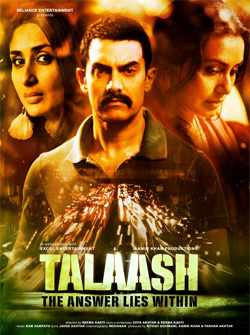
  • Reviewing the Reviews: Talaash

    Talaash

    Key Cast: Aamir Khan, Rani Mukherji, Kareena Kapoor

    Written By: Zoya Akhtar and Reema Kagti

    Directed By: Reema Kagti

    Produced By: Ritesh Sidhwani, Aamir Khan and Farhan Akhtar


    Some clever myth building and some delivery of promise has ensured that Aamir Khan is now a larger than life star who can never go wrong. That he agreed to star in and co-produce a film by Reema Kagti, relative newcomer was enough to build expectations sky high.


    Getting an average of three-star ratings, and as many raves as rants, the unanimous opinion was that the film built atmosphere well, but crashed in the second half. Almost everybody found the ending a cop-out. More disturbing, however, was the filmmaker’s, and by association Aamir Khan’s endorsement of what rationalists would call mumbo-jumbo.


    Shubhra Gupta of The Indian Express wrote, “In its better bits, Talaash lets us ignore its studiedness–the squalor of the red light area, the determined low-life lingo, the hard-worked cop-station back chat, the high-class homes of the rich and famous– and gives us a Hindi movie genuinely trying for a whodunit-cum-whydunnit. Talaash starts out as a smart, well-written noir-ish thriller, and then slips between the tracks. Pity about the second half.”


    Anupama Chopra of Hindustan Times felt cheated too. “To watch Talaash is to embark on a passionate love affair that ends in frustration because the object of your desire reveals itself to be shallow and depressingly ordinary. In short, a profound anti-climax.”


    Rajeev Masand of IBN Live wrote, “Director Reema Kagti employs a solid technical team to deliver a film that is rich in atmospherics and mood. KU Mohanan’s striking photography and Ram Sampat’s haunting score lend a distinct texture to this film, as do the real Mumbai locations the film is shot on. But Talaash doesn’t feel nearly as tense or urgent as it ought to, and its plot simply isn’t as deliciously complex as it could’ve been. As a result, it’s a very watchable film, but not an unforgettable one.”


    Karan Anshuman of Mumbai Mirror liked it but with some reservations. “The ‘suspense’ bits do have their shortcomings. The lack of multiple red herrings, little reward for long stretches and relatively slow pacing (the last two points are especially valid in the first half) might have you squirming. Over-explaining the big twist in the climax seems unnecessary too, especially when this is hardly what the film is about… So it doesn’t matter if you can guess what the end is going to be at interval point (like I did); if you’re going to watch Talaash solely to understand “what’s the suspense about” you’re going to be disappointed. Try and empathize, instead with the characters. Reward then, will look for and find you.”


    Saibal Chatterjee of NDTV was mostly appreciative. “By no means is Talaash the end of your search for the perfect whodunit. But there is so much going for this compelling, slow-burning, well-acted tale set in the dark, grimy underbelly of Mumbai that you can barely take your eye off the screen. As a suspense thriller with a paranormal edge, it certainly isn’t action-packed. Yet Talaash, which relies far more on the intricacies of psychological drama than on the disquieting impact of visceral shocks, is riveting all the way through to its surprising, if a tad dissonant, end.”


    Meena Iyer of The Times of India commented, “Talaash belongs to the genre of cinema noir of which there are few examples in recent times. This film is a good attempt at revisiting suspense flicks that were a huge craze in the 50-60s. To bring Gen-Now up to speed, back then movies like CID, Mera Saya, Woh Kaun Thi weaved magic on celluloid for patrons back then. But, make no mistake here. Though,Talaash has the mystique of the cinema Raj Khosla; it is modern in its approach and the setting is contemporary.”


    Raja Sen of rediff.com wrote that it was a Vikram Bhatt film better dressed. “It’s a somber, well-assembled film in contrast to the quick and flashy schlock that would have been doled out by the aforementioned merchants of middlebrow masala, and while the film’s craft — and the acting chops shared by its considerable cast — can’t at all be denied, it must also be said that perhaps the trashier approach may have worked better for this material. Or, at the very least, made for more fun.”


    Aniruddha Guha of DNA was cautious in his praise. “There are times when you feel Talaash might fall apart, but it thankfully comes together neatly in the last 30 minutes or so. As much as the story hinges on the final revelation – one that’s supposed to jolt you – the journey itself isn’t too bad either. It demands an investment of time and patience, surely, but the pay-off is rewarding. How much you like or dislike the film will largely depend on whether the final twist works for you. It did for me.”


    Baradwaj Rangan of the Hindu seemed a bit underwhelmed too, but not dismissive. “The talaash of the title, at first, suggests the search for answers. Why did the car end up in the water? Was it suicide? If not, who was behind the accident? In short, we seem to be in for a nail-biting police procedural based on a “high-profile case.” But gradually, that search takes a backseat to others – a father’s search for peace, a wife’s search for a husband who’s vanished into a void of self-flagellation, and a forgotten victim’s search for closure. Kagti brings this all together with a sure touch that her first film, the fitfully entertaining Honeymoon Travels Pvt. Ltd., never hinted at. Even if the resolution leaves you underwhelmed – and despite the artfully placed pointers to seediness, with ragpickers, porn DVDs displayed proudly in stores, derelicts and druggies, some may feel Talaash is just classily dressed up crap – the film is so beautifully made and so atmospheric that several scenes stick in mind.”


  • Ranjona Banerji: The journalist as the newsmaker

    By Ranjona Banerji


    To start with, we have the Caravan profile on Arnab Goswami, editor-in-chief of Times Now. This very long and detailed investigation by Rahul Bhatia into what inspires Goswami to save the nation every night on primetime television might answers many questions for Goswami’s legion of fans and his detractors as well.


    Some of the answers are known in journalistic circles: his ambition, his desire to get escape from under the shadows of Rajdeep Sardesai and Barkha Dutt and his strategy to create a different character for Times Now. But there are the little details here from the way the Times Now newsroom functions to Goswami’s childhood and background that delineate the saviour’s character.


    However, it might be said that you can be smothered by too much writing and too much detail. It’s interesting to learn that Times Now doesn’t bother with having too many journalists checking the news updates that come in before sending them out on screen. Actually, it’s evident given the factual and grammatical errors in the on-screen scrolls. Caravan does not put this down to journalistic error but to some complicated bureaucratic television procedures which perhaps amount to the same thing in old-fashioned terms.


    The Caravan article suffers from being far too long. People may watch Goswami with shock and awe or they may watch in appalled wonder. But whether he deserves a one million-word profile (yes, I’m exaggerating) is another matter. It may be years from now that Goswami will go down in history as the Walter Cronkite of Indian journalism. It could be that he will (not that one would wish that fate on anyone) become like the Peter Finch character on Network, whipping people into a patriotic frenzy to take their nation back from government. It is as yet too early to tell.


    But we are seeing an interesting trend here where journalists themselves become newsmakers. Watching people night after night on television has made them part of our lives and so we want to know more about them and how and why they tick. Television makes them feel closer but in pure print journalism terms, it is another country.


    For those who want to know all about Goswami:

    http://www.caravanmagazine.in/reportage/fast-and-furious?page=0,10


    **


    Also in the news in the Times of India is celebrated journalist Katherine Boo. She will be attending the Times Literary Carnival to be held in Mumbai over the weekend. Boo is author of Beyond the Beautiful Forevers, an investigation into poverty in India through a Mumbai slum.


    Boo is a rare journalist who decided to give up source journalism for the right to information process. At a meeting a few years ago, she explained to me why source journalism made a journalist dependent and challenged independence. She decided to use the US’s freedom of information act to get the details she needed into her investigations into poverty. The process is long and cumbersome, as one would expect. Her editors at the time did not appreciate her arguments and she had to do these poverty stories through right to information on her own time.


    This is an intriguing method of gathering facts, even if it is far truer as far as information goes. In an everyday newsroom situation, patience is usually in short supply. But there can be little doubt that using RTI provides very solid evidence which is useful and inarguable.


    Boo’s interview in the TOI makes some meaningful points about the importance of poverty journalism.


    **


    The two Zee editors are still being denied bail and are still getting more or less bog standard coverage from the media. Pointing fingers is perhaps too dangerous?


    Meanwhile, celebrities in the UK who have been the victims of phone-hacking and privacy infiltration are furious with the David Cameron government for rejecting the Leveson report’s recommendations for more stringent press regulation.


    Ranjona Banerji is a senior journalist and commentator. She is also Contributing Editor, MxMIndia. The views expressed here are her own


  • Ranjona Banerji: When News TV brought an issue to life

    By Ranjona Banerji


    The 20th anniversary of the demolition of the Babri Masjid, the deaths of a young man in Mumbai and a policeman in Amritsar for fighting on behalf of women being sexually harassed and the defeating of the vote against FDI in multi-brand retail in the Lok Sabha were the big stories of the day. The Times of India’s nation pages seemed to be against the idea of FDI in multi-brand retail and quite disappointed that the BJP and other opponents had lost. On the edit and business pages, it was quite another story. One gets the feeling that the stories on the nation pages slipped past a newspaper which long been in favour of economic reforms. Someone sleeping on the job in the Times of India newsroom?


    **


    Karan Thapar’s Last Word on CNN-IBN had an interesting discussion on the demolition and how India had changed in 20 years. However, there was no one representing the demolishers so the discussion was distinctly one-sided. Erudite, informed, intelligent and thoughtful perhaps but one-sided. We have got used, have we not, to super battles between anyone and everyone? Instead, we had Dileep Padgaonkar, Ashis Nandy, Mushir-ul-Hasan and Paul Beckett.


    **


    The big question for both Times Now and CNN-IBN on Thursday night was sexual harassment, the law, men and death. In Mumbai a year ago, two young men were killed by a mob for trying to protect the women with them from being harassed. This week, a man in the Dombivili suburb of Mumbai was killed by four men, three of them minors, for intervening while they were harassing a young woman. In Amritsar, a police officer was shot dead while trying to protect his own daughter from a group of men harassing her.


    Television has many failings but it wins every time it debates these issues. The more we talk about the way women are treated in India the more chance women have of improved surroundings. The cold distance of print cannot create the emotional immediacy of television and this is a plus in TV’s favour. It is annoyingly intrusive and terribly unprofessional at times but it can bring issue to life. On Arnab Goswami’s show, the politicians of Punjab were shown up as uncaring as they either tried to score points of each other or mouthed meaningless platitudes. Goswami in fact called one out for saying he was “sad”. “I don’t believe in expressions of sadness,” said an imperious Goswami.


    Rajdeep Sardesai had a more reasoned approach but he also had to stop Punjab’s politicians from their politicking and trying to milk the Amritsar situation to their advantage.


    **


    On Headlines Today in a debate between Arvind Kejriwal, Mani Shankar Aiyar and Ravi Shankar Prasad, moderated by Rahul Kanwal, Kejriwal looked extremely grumpy while Aiyar and Prasad behaved like consummate politicians.


    **


    And that’s the saddest news story of the week: Arvind Kejriwal has been forgotten and abandoned by the media which made him. He is just one more news story in a packed news cycle. He gets shifted from Page 1 to Page 15 and even more painful, he moves from being a 24-hour story to a scrolling line at the bottom of the TV screen.


    Sniff!


  • Reviewing the Reviews: Khiladi 786

    Khiladi 786

    Key Cast: Akshay Kumar, Asin

    Written By: Himesh Reshammiya

    Directed By: Ashish Mohan

    Produced By: Twinkle Khanna, Sunil Lulla, Himesh Reshammiya


    The common belief is that a certain kind of Bollywood commercial film is critic-proof, or a Housefull 2 or Rowdy Rathore would not have succeeded. But once in a while critics must feel vindicated, when a film like Khiladi 786 comes out, thumbs its nose at anything that spells sense, and is confident of its power over the masses.


    Critics pan it – with a couple of exceptions – and the ratings hover between 1 and 2. This film is not likely to hit the 100-crore mark, and it’s not because of the reviews; the audience got sick of having garbage thrown at it.


    Shubhra Gupta of The Indian Express rants, “There is, of course, no plot. The attempt is to piggyback on the Khiladi brand that belongs to Akshay, marrying it to the currency of Chulbul from Dabangg. But when Akshay turns to us at the start of the film, having finished with a fight sequence, and declares – ‘The Khiladi Is Back’, I didn’t hear any clapping, though I did hear a few obligatory titters at the most distasteful parts (Akshay doing blackface is one). Lower the denominator as much as you want, you will always get some laughs. In the end, I was left looking at a straw to clutch. Any little thing. I found, dear viewer, none. Not. A. One.”


    Anupama Chopra of The Hindustan Times was unimpressed too, “All through, the funny bits were rare and mostly unintentional. Akshay swaggers above this messy material, which includes African-American characters and dancers in blackface. If I wasn’t so exhausted, I would have been offended. Box office figures suggest that many people enjoy this school of cheerfully moronic cinema, but Khiladi 786 really isn’t my idea of a good time.”


    Rajeev Masand of IBNLive commented, “Directed by first-timer Ashish Mohan, an erstwhile assistant of Rohit Shetty, Khiladi 786 is funny, but only in spurts. For the most part, it’s as enjoyable as watching a kitten struggle to shake off the firecracker that some mean kid tied to its tail. If you laugh, they’re probably guilty laughs – how can you be amused by such cruelty? At the receiving end of writer Himesh Reshammiya and director Ashish Mohan’s tasteless sense of humor are dwarves, handicapped people, and particularly foreigners who’re reduced to embarrassing racial stereotypes.”


    Saibal Chatterjee of NDTV was left cold. “Khiladi 786 has nothing new to offer. It is cut from the same cloth that has yielded many of Akshay Kumar’s recent vehicles. These films have sought to cash in on his rough and rowdy screen persona. Khiladi 786 does more of the same. In short, it is another outright assault on the senses. The comedy is crass, the acting borders on the slapstick, and the general air that hangs over the film is one of utter lunacy. The loudness is accentuated manifold by a ear-splitting background score.”


    Shubir Rishi of rediff.com gave it a low half star and wrote, “Debutant director Ashish R Mohan does try, but everything becomes dim and dull because of a really weak script, with unacceptable dialogues which are constantly in bad taste, and a single-finger synthesizer which is utilized for filling in as background score. This is no Rowdy Rathore, folks, this is just a gimmick. True, they did infuse it with a lot of other delightful innuendos, and some reference to comic books, but at the same time, ruined with unclever lines and expectant looks. This is a wannabe funny movie, an assault on our collective intellect.”


    Nandini Ramnath on Livemint commented, “The anything-goes movie is packed with so many random characters and even more random jokes that moments of inspired humour emerge out of the hodgepodge. Bahattar Singh, his father (Raj Babbar) and uncle (Mukesh Rishi) pretend to be policemen to impress the other side, as do Indu’s brother TTT (Mithun Chakraborty) and his hoods. A police inspector who is locked away for threatening to spill the beans loudly protests his treatment, saying he will “complain to Kejriwal”. The rest of the time, much of Bunty Rathore’s dialogue depends on rhyming words for laughs (bayko, the Marathi word for wife, is matched with psycho; Sikh with seekh kebab). It’s hardly enough to sustain the running length of 2 hours and 20 minutes, but you might just find yourself occasionally sniggering without meaning to.”


    Shabana Ansari of DNA observed, “Khiladi 786 is the kind of movie that critics pan and audiences lap up. Bahattar (72) Singh (yes, that is really Akshay’s name in the film) beats villains black and blue and makes walls crumble with just a single punch! What he can’t do is find himself a bride because of his reputation. When an out-of-work matrimonial agent (Himesh) offers to get him hitched to Indu (Asin), the spoilt sister of an underworld don Tatya Tendulkar (Mithun), both families pretend to come from respectable backgrounds. What ensues is as unbelievable as Akshay lip-syncing to Himesh’s songs.”


    Did anyone find any merit in the film? TOI’s Madhureeta Mukherjee did. “Debutant director Ashish R Mohan’s masala potboiler style is unmistakably reminiscent of his guru, Rohit Shetty’s films. There are flying cars, flying bodies, flying fists and a flying Singh too. He shows flair for comedy, but for a film titled Khiladi, it lacks hard-core action, heat and the adrenalin rush that is synonymous with Akshay’s Khiladi series (maybe intentionally). With a feel of hip-hop, rap, rock and our good ‘ol Burmanda, Himesh’s music pumps life and energy into the story. For those looking for some logic-less laughtime, groovy tunes topped with some todh-phodh – this one could bring some action to your weekend.”


  • Ranjona Banerji: Our ‘News of the World’ moment?

    By Ranjona Banerji


    The Zee-Jindal case is certainly a watershed moment for the Indian media. Subhash Chandra, chairman of Zee, has apparently been questioned for between seven and nine hours by the Delhi police, surely not a common occurrence for high profile owners of media houses.


    The Zee group, apart from its packaging and entertainment interests, has the Zee news channels and newspaper DNA and rumoured to be in the market for Hindi daily Amar Ujala. During this questioning, Chandra was brought face to face with his jailed editors Sudhir Chaudhary and Samir Ahluwalia, both of whom have supposedly told the police that the management knew what they were up to. Chandra’s son Puneet Goenka however left after 20 minutes of questioning. Chandra walked out saying he was ready to sue Naveen Jindal.


    Most newspapers and news channels in India have not gone further than bland reporting of the case, except perhaps Tehelka, with managing editor Shoma Chaudhury writing an opinion piece calling this our “News of the World” moment: http://www.tehelka.com/story_main54.asp?filename=Op081212Editer_cut.asp


    Everyone in the media knows that something of the sort that Zee News has been alleged to be up to happens more frequently than the general public might imagine. Usually, however, in the English media at least, the deals are struck by marketing departments and not by editors themselves. The Hindi language media has been much maligned, not least in the documentary Brokering News. But it has to be clear that no one is really innocent.


    How the Indian media deals with the Zee case will be an indicator of how serious we are about ending the reign of practices like Medianet and paid news and whether journalists are happy just being management puppets. The temptations are many, no question about that but sooner or later, better sense has to prevail. The Indian media has been safe or maybe cocksure in the knowledge that India is a few decades aware from the challenges being faced by the counterparts in the West because of low literacy levels and low economic growth. But a complete loss of credibility will strip away that little security blanket. Do we want it to come to that pass?


    I cannot see that most media managements will be easy to convince. They have found a way to easy money and may use words like “credibility”, but one suspects that it’s just blah blah to most of them. Journalists will have to fight this one on their own.


    **


    It seems that something intriguing is happening in the coverage of the Gujarat elections. Suddenly, both commentators and reports from the ground no longer see a clean sweep for the incumbent Narendra Modi government. Stories about anger over electricity and water, particularly in the Kutch and Saurashtra areas, are now frequent. Well-known and respected commentator Urvish Kothari also questions in rediff.com whether Modi’s Gujarat-centric campaign will really help on the national stage – a transition he certainly aspires to. http://www.rediff.com/news/slide-show/slide-show-1-gujarat-election-m-for-modi-is-m-for-mr-moneybag/20121207.htm


    When it comes to Modi however it is clear that whether the electorate is divided or not, the media certainly is. There are some journalists on social media who work as Modi’s PR people and some who most certainly do not!


    **


    A trip to Delhi brings up this observation: Delhi newspapers seem to be paying a lot more attention to city issues these days than they did in the past. Shades of Mumbai journalism rubbing off on our superior worthies in the national capital?


    All right, I retract my claws… for now.


    Ranjona Banerji is a senior journalist and commentator. She is also Contributing Editor, MxMIndia. The views expressed here are her own


  • Ranjona Banerji: TV journos must get info first, blame later

    By Ranjona Banerji


    One more terrible school shooting in the US last Friday and the nation must have wanted answers but rather than hysterical screaming – on CNN at least – there was first only reporting on the incident. Somewhere TV journalists in India have to master the art of getting information first and apportioning blame later. Unfortunately, whether it’s a rape or a robbery, the first instinct in India is to jump to whodunit before even figuring out what was done. To be fair, when the Norway blast and killings happened, the venerable BBC made the same mistake. Soon after the incidents were first reported, the channel had experts on air telling us which Islamic terrorist group was responsible. Although it was smeared all over, the channel did not really admit that it had egg on its face when far right extremist Anders Breivik was caught.


    The difficulties for TV in reporting a live event are obvious. It was clear even from CNN’s reporting that it was making a conscious effort not to intrude on to people’s private grief – lessons learnt presumably after years of being frowned on by an angry audience. What was also evident is the important role played by local cable networks in providing initial reporting inputs. We still operate on a national scale in India although some language channels fulfill the local role.


    As far as the rest of the world was and is concerned, the America’s reluctance to submit itself to any gun control remains a topic of astonishment and debate in every forum.


    **


    In spite of all the predictions gone wrong as far as election opinion polls are concerned in India over the last decade, every TV channel and pollster jumped into the act as voting in the Gujarat assembly elections drew to a close. So depending on who you believe, incumbent chief minister Narendra Modi is going to win by a massive majority to a middling majority to a tiny majority. Talk about covering your bases.


    **


    The arrival and subsequent pronouncements of Pakistan’s interior minister Rehman Malik sent Indian television into a tizzy. Why is he here, what is he saying, why is he saying what he’s saying, does he mean what he’s saying, do we know why he’s saying what he’s saying, do we believe what he’s saying, do we want him here at all, what would we eat for breakfast if he wasn’t here and so on.


    It’s a little early for yearender awards, but the understatement of the year has to go to academic Radha Kumar on I forget which TV channel for informing us that India and Pakistan have had a turbulent relationship for years. What can one say but thank you for enlightening us?


    **


    Newspapers come late in Dehra Dun so am looking forward to reading the obituaries of Indian cricket after India lost its first series at home to England after 4000 years. Assuming the world doesn’t end on December 21, I predict that after the One Day series with Pakistan and England, we may be singing a song less like a funeral dirge.