Category: MxM JOURNALISM REVIEW

  • Reviewing the Reviews: Kai Po Che

    Kai Po Che

    Key Cast: Sushant Singh Rajput, Amit Sadh, Rajkumar Yadav, Amrita Puri

    Directed By: Abhishek Kapoor

    Screenplay By: Abhishek Kapoor, Pubali Chaudhari, Supratik Sen, Chetan Bhagat

    Produced By: Ronnie Screwvala , Siddharth Roy Kapur


    Abhishek Kapoor did the near-impossible, got Chetan Bhagat good reviews, if only for the adaptation of his novel – and how critics hate his books!


    Kai Po Che also did something more courageous – it is a well-promoted film without a single star. Maybe a whole lot of factors joined together to fetch it many four stars, and nothing less than three stars. Many felt it stopped short of being an exceptional film, but when the competition is with Brainless Bollywood, every little act of rebellion counts.


    Karan Anshuman of Mumbai Mirror raved over it, but also lamented, “Kai Po Che is interesting at many levels, deftly executed, and a film born out of conviction. It could’ve ended up as a modern classic, a fitting film for Dil Chahta Hai to pass the mantle over to. Unfortunately, it doesn’t quite deliver to potential and ends up merely ‘good’.”


    Anupama Chopra of The Hindustan Times found the film flawed but also deeply satisfying. “Abhishek Kapoor’s biggest accomplishment is that he and his writers have created three full-bodied characters – these boys, with their towering ambitions and aching vulnerability, are people you and I know. And then, most critically, he has also found three wonderful actors who inhabit the characters wholly. Sushant, Raj Kumar and Amit become Ishaan, Govind and Omi. Their lack of stardom works in their favour (though I’m fervently hoping that post release, each one becomes a sought-after star). We believe them. We partake in their joys and struggles. Kai Po Che! is beautifully shot by Anay Goswamy but it’s not glossy. You can almost feel the sweat and dust of the narrow lanes.”


    Rajeev Masand of IBNLive gushed, “At a crisp two hours, Kai Po Che is enriched by its sweeping score and by Kapoor’s deft handling of the film’s varied moods. For evidence of his considerable growth as a director one needn’t look much further than the palpable dread he infuses into scenes of an angry Hindutva mob storming a Muslim ghetto, and the light-handed touch he brings to the portions of the three friends goofing around. Kapoor tackles sensitive issues like the Gujarat riots with equanimity and empathy, and Anay Goswamy’s terrific camerawork complements the director’s vision intuitively.”


    Shubhra Gupta of The Indian Express was kind too, “Kapoor’s Rock On had its moments, and I liked it, but Kai Po Che is so much better, despite its tired saffron-and-trishul-infused scenes, as well as those that show the too-familiar bloody rampage through the terrified-Muslim-housing-colony. This film rises beautifully above its faults. It does not allow simplicity to descend into simple-mindedness, as it transmits real emotions, and gives space to a stand-out performer.”


    Vinayak Chakravorty of India Today commented, “We are looking at New Bollywood, evolving exactly as it should. Stirringly topical, solid in the comment it leaves, and yet never losing focus on the classic entertainment formula that has forever driven our commercial cinema. What’s more, it sets the stage for three new exciting talents in the bargain too. That in a nutshell defines Abhishek Kapoor’s new film. Kai Po Che adapts The 3 Mistakes Of My Life, bestseller author Chetan Bhagat’s pop ditty mixing cricket rage with a few quickfix notes on the politics of religion, confusion of youth and questions about coming of age.”


    Sanjukta Sharma of Live Mint is cautious in her praise. “It is a simplistic story, naive even, in trying to tackle some big questions. How does a Hindutva-espousing political party get young recruits, and then turn them into zealots? Can a college graduate be entirely oblivious to the implications of the social perceptions and political forces around him? Can cricket really be the cure to all our differences? The film skims over these questions. But it triumphs over the shallow story with well-executed cinematic detail.”


    Janhavi Samant of Mid-day wrote, “Abhishek Kapoor’s Kai Po Che! is mellow in its mood but loud in its message. It is simple, colourful and vibrant but it doesn’t shirk from portraying the grey, the black and the complex. But most of all, Kai Po Che! doesn’t sit on the fence; it neither shies away from blaming nor from forgiving. And for a Hindi film, that’s quite something.”


    Pratim D Gupta of The Telegraph raved, “Sometimes there comes a film so good you are scared to write about it. Scared that you might kill it by writing about it. Because original material so mediocre has been turned into a motion picture so moving that putting it back into words might undo the magic. Abhishek Kapoor has struck, again! And even though this too is about friends and fracas and reunions, Kai Po Che! is not cut from the same manja as Rock On!!. Adapting Chetan Bhagat’s The 3 Mistakes of My Life, Kapoor creates a world that’s innocent yet ominous, friendly yet foreboding. Far, far away from the world of flashy, affluent SoBo (South Bombay) boys strumming their guitars and wooing their girls, to three young hard-working men trying to set up a sports business in trouble-torn Gujarat at the turn of the millennium.”


    Sudhish Kamath of The Hindu raved even more, “This is us. The real middle class India. Real people, not stars. Real houses, not sets. Real clothes, not fancy pants. You’ll fall in love with everything about India. And Gujarat. Kai Po Che is everything that Rock On and 3 Idiots were, put together – dreams and aspirations, friendship standing test of time, the pursuit of excellence, a commentary of our education system and a coming-of-age film with not a single moment of dishonesty. We haven’t seen stronger characterisation, economy in words, visuals or time, in recent mainstream films.”

     

  • Ranjona Banerji: Rowdy in the headline and ‘fearer’ underarms

    By Ranjona Banerji


    I saw in The Times of India the other day a headline which said that “a rowdy” had been arrested in the Ghatkopar area of Mumbai. This is an interesting use of an adjective which is normally only seen in South Indian newspapers. In fact, I think some states even have a “Rowdy Act” and I remember a film called “Rangoon Rowdy”. This makes some interesting cross-cultural sharing which enriches the language. I suppose I should not be a whiny in this instance and if Americans can make verbs into nouns every other due, the rest of us have full licence to switch grammatical uses into any way we feel is appropriate. I tried to write that sentence breaking all the rules but I have clearly failed. I promise to try harder next time.


    **


    I made a commitment to watch TV news when I started writing this column for MxMIndia. But I have lately taken a break from that commitment, largely for my own piece of mind. The lack of depth in reporting, the insane repetition of every bit of information by reporter and anchor, the trivial editorialising and the nightly ritual melodrama have not added substantially to my life as a TV viewer except to increase my blood pressure. For instance, just yesterday I saw a young anchor frothing at the mouth that the Central Bureau of Investigation had said they could not work on media reports in the Agusta-Westland case. The TV journalist was horrified perhaps that journalistic effort was not picked up by the authorities and codified as gospel. Should a government agency be allowed to get so cheeky with journalistic effort? Shocking!


    My understanding of the media I have to say has much increased and there is little doubt in my mind that the print and television operate in two parallel universes. Since I’m nit-picking about grammar today, let’s look at the word “should”. How often do you see the word in headlines in print journals? Should the prime minister always wear a blue turban? Should Amitabh Bachchan be brand ambassador for Gujarat tourism? Should the earth revolve round the sun or do we deserve a better star? This endless judgemental self-righteous frenzy can work sometimes but it does get tiresome surely?


    **


    Just to be perverse, I have a “should” question: Shouldn’t the media do more for the three minor sisters kidnapped, gangraped and murdered in the Bhandara district of Maharashtra? Having done such a wonderful job after the gangrape in Delhi on December 16, 2012, the media might consider the other women who are brutalised everyday in India. The police have made no breakthrough in the case although the girls disappeared on February 14 and their bodies were found on February 16. The media attention on that particular case did make a difference and certainly turned a much-needed spotlight on crimes against women. Even sending a few reporters to the area would be enough…


    **


    A few more spoofy programmes about the news media would be a good idea. The Week That Wasn’t does a superb job spoofing the news, no doubt about it. But it has to be constrained by the fact that it appears on CNN-IBN and therefore famous TV journalists appear to be out of bounds (though did I see Cyrus Broacha almost do an Arnab Goswami the other night?). It cannot have the same freedom as The Daily Show with Jon Stewart for instance or even sketches on Saturday Night Live, which we get to see on Comedy Central. Fox News and CNN are common targets. In fact, the Comedy Central spoof of an angry journalist in the promos for its new show Anger Management is quite spot on… Arnab again, I reckon…


    **


    A short break to advertising: is it just me who is tired of seeing Anushka Sharma’s “fearer” underarms? And why does Cadbury Silk have to sell us its chocolate by smearing it all over the face of the model?


  • Reviewing the Reviews: The Attacks of 26/11

    The Attacks of 26/11

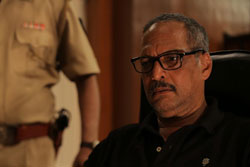
    Key Cast: Nana Patekar, Sanjeev Jaiswal

    Directed By: Ram Gopal Varma and Rommel Rodrigues

    Produced By: Parag Sanghvi


    Ram Gopal Varma did it again – aimed too high and crashed. He has his devotees who started the buzz that The Attacks of 26/11 would be his return to form, after hilarious misadvenures like Department. But RGV crashed and burned spectacularly again, with a film so insensitive and gruesome that it hurts to watch.


    Incidentally, only Karan Anshuman of the Mirror got it right – Nana Patekar plays Hassan Gafoor, not Rakesh Maria, and the commission for which he deposed was indeed the Pradhan Commission. Take a bow, Karan!


    Most critics stayed with 2 stars; even the usually generous Times of India could not manage a 3 on this one.


    Wrote Madhureeta Mukherjee, “It’s evidently researched; yet, we’re left as observers, watching the rampage rip the soul of the city. While the thought is poignant, the horror isn’t palpable throughout and the execution doesn’t cut as deep as the actual tragedy. No hard steel of emotion ripping into your gut stemming from cinematic brilliance.”


    Sanjukta Sharma of The Mint commented, “To take a surreal, unforgettably, mind-boggling event like the attacks on Mumbai on 26 November 2008, and turn it into a movie of dramatic power is, in one sense, pure exploitation and titillation. In another sense, it is a realization of the story’s limitless dramatic potential. Perhaps both these factors are at work in this film that begins as an act of remarkable ambition and ends as a wishy-washy and tacky work. Truth be told, it was impossible to not feel the surge of fellow feeling and soaring heart rates in the audience when Varma shows Kasab and his gang shooting down human beings with their AK-47s with impunity. Five years on, it is too soon, and Varma knows it. The immediate reaction on reliving it aside, the thin storyline lapses into banality.”


    Shubhra Gupta of the Indian Express correctly analyzed the voyeuristic tendency of the film. “Varma loses the advantage by slipping into familiar treads. People being killed, and limbs being turned into bloody colanders on screen need to be treated, in this kind of a film which demands respect because it claims veracity, with respect. Here the director sheds restraint, and becomes a voyeur, and turns us into voyeurs too. Adults being butchered are bad enough, but children, and babies? You do not show me multiple close-ups of tots about to be shot. No, no, no. And then we are treated to long treatises on religious edicts and what’s good and bad, which are just plain tedious. It had the potential to be both smart procedural, and spiffy action, but ’26/11′ sinks somewhere in the middle.


    Rajeev Masand of IBNLive was left cold too. “It’s not often that you go into a movie knowing exactly what to expect, but The Attacks of 26/11 is that rare exception. The plot and the end of this movie are no secret because the 2008 terrorist attacks on Mumbai, and the way the horror unfolded on the night of November 26, is still fresh in public memory. Unfortunately, in the hands of director Ramgopal Varma, these unprecedented events are portrayed in a one-dimensional, jingoistic, and almost hysterical tone. The Attacks of 26/11 often resembles a tacky B-movie. Even if there’s a voyeuristic fascination in observing how 10 men managed to lay siege to a city like Mumbai, this film is so lacking in genuine emotion and original perspective that despite the carnage, you’re hardly moved.”


    Karan Anshuman of Mumbai Mirror was scathing. “To begin with, the film is less about 26/11 and more a biopic on Ajmal Kasab’s life after he got onto the boat that brought him here. The screenplay completely skips two out of three days of the attack, which invalidates the idea that you’re watching a movie relevant to 26/11 and is relentlessly focused on Kasab. Instead of giving us valiant moments of the real champions of the hour, the NSG, revealing to us how they save the day and take out eight of ten terrorists one at a time, we’re limited to witnessing Kasab’s participation, capture, and conviction for his role in the massacre. A biopic would’ve been fine if that was RGV’s intention to begin with and if he visually delved into Kasab’s past and reasons. But that’s not what the film is about. In fact, so much more information has been unearthed since, but the writers ignore all of it.”


    Mumbai-based critics could, perhaps, not delink emotions from the film – they had experienced what the city and its people went through. How does a writer in another city see it? Sudhish Kamath of The Hindu writes, “The Attacks of 26/11 is probably the most definitive modern Ram Gopal Varma film. It’s the epitome of inconsistency. Of crassness. Of insensitivity. Of horror. Of atheism. Of audacity. Of voyeurism. And it also has momentary flashes of brilliance. And understatement. The good, the bad and the ugly – all at the same time…. You could argue that the filmmaker wants you to see this as a horror film (listen to the score for proof) because there is simply no other explanation for what happened – a bunch of men on a killing spree, staging one massacre after another in crowded landmarks of the city, leaving the police and public helpless. Only that this helplessness is shown with an almost sadistic glee and gratuitous detail that the terrorists may actually be pleased with this depiction.”


  • Ranjona Banerji: Budget blues with news channels & papers

    By Ranjona Banerji


    After careful consideration (which in news channel selection terms translates into a combination of channel surfing and experience) I watched Union finance minister P Chidambaram’s Budget speech on Doordarshan and then switched to Budget analysis on the stockmarket channels. I avoided any channel which had a politician on its expert panel. This is because I know very little about most of the stuff discussed and I’m willing to bet that Deepak Parekh knows much more than me and knows more than Subramaniam Swamy.


    Most industry bigwigs, analysts and other expert type people appeared to like the Budget or at least assume that that Chidambaram was on the right track. Quotes from politicians of other parties are full of scorn, which is perfectly understandable. But it is more sensible to read quotes from politicians in newspapers than watch them have apoplexy on TV.


    In fact, I have decided that since age determines that blood pressure problems are close on the road ahead, watching prime time news TV is bad for health, state of mind, mental peace and so on. It is far more sensible to check on TV news through the day and studiously avoid it between 8.30 to 10.30 pm.


    Meanwhile, back to the Budget. The Times of India headline says: ‘PC Nets Big Fish’ in a drawing that takes its inspiration from Life of Pi, the movie. Intriguingly, the front page box tells us that the drawing is inspired by a recent Hollywood movie that bagged four Oscars without naming the movie. Medianet or a desire by TOI editors to tax the minds of their hapless readers?


    The Hindustan Times goes with ‘PC Offers Growth Tablet’. The Indian Express seems closest to home with this one: ‘1997: Dream, 2013: Wake-up’. My only objection here is that as far as possible, hyphens should be avoided in headlines. No damage would have been done with ‘2013: Wake Up’ except for extra therapy for an anal retentive subeditor. The Economic Times plays it straightforward with ‘FM Doesn’t Declare Elections’. Unlike its predilection in the past for over-the-top graphics, it settles for sticking a blue turban a la Manmohan Singh on Chidambaram’s head. However to me as a result, he looked a bit like Swami Vivekananda!


    In spite of the market crashing the general consensus was that this was the sort of workman-like Budget expected and needed. To provide ample fodder for political commentators and prime time TV actors, Nitish Kumar chief minister of Bihar liked the Budget (and wrote a special piece for ET) and Narendra Modi, chief minister of Gujarat didn’t.


    The Times of India managed to find a loophole in the Budget’s tax provisions to give readers a row of women wearing bikinis on the top of one page – ostensibly to educate us on how much supermodels across the world earn. A more gratuitous form of sexual exploitation it would be hard to find. For reasons of gender equality and comparative commodification, a few pictures of buff, waxed male supermodels would have been appreciated. No?


    **


    Twitter was abuzz through the day, with jokes winning over analyses – well on my timeline at least. The tax for the super rich got the most scorn – especially the figure of 42,800 as the number of super-rich earning more than Rs one crore a year in India. You have to admit, it’s laughably low. The bank for women had many puzzled and then soon jokes began over the fate of deposits made by men which ran into risqué territory.


    **


    How am I to survive without watching Arnab Goswami every night? It is a question I am still grappling with…


  • Ranjona Banerji: Warring over Wharton

    By Ranjona Banerji


    The world of twitter was abuzz with the Wharton India Economic Forum and Narendra Modi. As the day progressed, Wharton withdrew the invitation to the Gujarat chief minister and the event’s main sponsor, the Adani group, also backed out. The war of words between Modi fans and Modi detractors on social media got some extra fillip and as usual soon deteriorated into insults and name-calling.


    I also learned from Twitter that Union finance minister P Chidambaram did a Google Hangout, taking questions on the budget. The choice of technology/forum was discussed on Twitter with most thinking that the Congress was late to the social media party and had chosen the wrong platform. The UPA has been neglectful and a bit North Korean about the internet and if it wants to earn brownie points from netizens, it can start by getting rid of section 66A of the Information Technology Act.


    **


    Modi continued to be the topic of conversation on television over both his speech at the BJP meeting – televised live on Sunday – and the Wharton drama. On Karan Thapar’s Last Word on CNN-IBN, N Ram, Kumar Ketkar, Swapan Dasgupta and Najeeb Jung discussed Modi’s speech and his prime ministerial prospects. Ram, Ketkar and Jung were unimpressed and Dasgupta tried to tailor his remarks to the argument. He did not for instance launch into an expected defence when both Ram and Ketkar discussed Modi’s intemperate language towards the prime minister, although Thapar felt that personal criticism was par for the course in politics and Ram pointed out that the Congress/UPA had to be taken to task for its misdemeanours. All three non-BJP commentators discussed the many contenders for the top job within the BJP and how Modi was not a sure shot, his speech notwithstanding. The BJP’s lack of geographical footprint was also discussed. Again, Dasgupta seemed a bit downcast.


    On Times Now – which I only watched for a few seconds – Dasgupta seemed to have regained some spirit and was arguing with far more vigour over Wharton’s behaviour. The day on television however was consumed with the resignation of Raja Bhaiya in UP over the murder of a police officer and his imminent arrest.


    **


    The media failed with the rapes and murders of three sisters in Bhandara, Maharashtra – although kudos must go to Mid-Day for correcting that, sending staff to the area and rigorously following up on the story.


    The other story which is not getting enough play is the ongoing unrest in Bangladesh. The country is in turmoil over war crimes trials for those who supported Pakistan in the 1971 war for independence. Like in Tahrir Square, young people gathered in Shahbagh in Dhaka demanded justice and the death penalty for Jamaat-e-Islami leaders who were against the freedom movement. The blogger Rajib Haider who spearheaded the movement on social media was murdered. The courts gave in to public pressure and handed out death penalties to Jamaat and other leaders. The Jamaat hit back but the Shahbagh protestors and civil society have not backed down.


    In all this, to mainly concentrate on president Pranab Mukherjee’s visit to his in-laws’ village is bad journalism. One understands that the current zeitgeist is to only get an India angle on every single story for readers who are so jingoistic that they cannot apparently digest news any other way. In which case, I might like to remind our media that India had a significant role to play in Bangladesh’s separation Pakistan.


    Although CNN-IBN did send a correspondent to Bangladesh the coverage was sparse. In newspapers, most of the coverage has been limited to the edit and opinion pages.


    **


    The Economic Times has an interesting story on how celebrity advertising is working in India – a subject which has interested me lately. Apparently, in spite of what the gossip pages say, Shah Rukh Khan is still on top. I was just happy that the ads which annoy me the most – Priyanka Chopra for Garnier, Anoushka Sharma for “fearer underarms for Nivea, Bipasha Basu for McVitie’s and Sakshi Talwar for Kellogg’s were not mentioned at the top of any lists! http://economictimes.indiatimes.com/articleshow/18804798.cms


  • Speaking of Which | Gender Defender

    By Vidya Heble


    The number of people who write or edit for a living and have not used the term “fair sex” is likely to be rather small. I’m pretty sure I’ve done it myself in my unenlightened days, though I can’t recall any precise instance. It’s one of those phrases which rolls lightly off the tips of our fingers and takes its place amidst the crowds of jostling words that vie for public attention every day. And we think no more of them, once written and saved.


    But it is important to pay attention to these and other phrases, which typify a kind of thinking that should have been swept out of the door long ago. Why call women the “fair sex”? Why look for some cutesy set of words to describe, plain and simple, women? Because we are uncomfortable using that word, and I kid you not. We’d rather say “ladies” or “sisters” or, yuckily, “females”. (You did know, didn’t you, that women “perspire” whereas ladies “glow”?)


    Secondly, why are we even implying that women are fair and men are not? It’s an ancient, faux-servile-complimentary mode of referring to the supposedly dainty breed called “ladies”, which really has no place in the world of women who drive trains, build skyscrapers and deliver their children in the fields in the middle of a day’s work. Instead of pretending, why don’t we just do it, and actually respect and protect women? The most infuriating thing is to hear drivel such as “fair sex” on the one hand and on the other, read about members of this dainty brigade gagged, bound, brutalized, killed or left to die on the street.


    Moreover, it is but a step from saying “fair sex” to saying “weaker sex” when you are next groping for a pretty phrase and don’t want to repeat yourself. This one only perpetuates the stereotype that women are less capable. Yes, they are for the most part physically less strong than men, but as countless men will tell you, they are made of steel otherwise! There is nothing weak about the women who make the wheels of the world go round, be it a CEO or your domestic helper.


  • Ranjona Banerji: Tokenism at its worst

    By Ranjona Banerji


    International Women’s Day is upon us once again and as ever females are meant to be fooled into thinking that this day – March 8 – is about us. We are so lucky – governments have come up with special schemes for us, newspapers and now television are full of inspiring stories about women who have done extraordinary things and so many advertisements telling us that today is the right day to buy diamonds. I suspect that tomorrow is also the right day to buy diamonds as far as the diamond seller is concerned but for the rest, tomorrow we can get back to business as usual and put the inspiring women stories which could not be used into the folder for next year.


    Do I sound nasty and bitter? The short answer: yes. This tokenism and these sweet little gestures around March 8 began to ring hollow quite a few years ago. I am grateful at least that this year no newspaper that I read has done the most token nod of all to women’s day: pulled a number of females out of features or wherever, patronisingly patted them on the head and made them editors for the day. On March 8 itself, they would have climbed down into their usual roles and write inspiring stories about how to suck a man’s toes in 16 different ways.


    The gangrape in New Delhi on December 16, 2012 revealed to us just how shockingly patriarchal and anti-women our society was. In those days, I must concede, the media did a splendid job in focusing on women, women’s rights and the underlying prejudices in India. This year’s Women’s Day had plenty of scope to take that narrative further. Instead, the only piece I found worth reading was Mrinal Pande in The Indian Express trying to kill the myth of feminists and bra-burning.


    **


    There are a couple of things the media could do within to redress gender discrimination – starting with their newsrooms. Stop restricting women to features and women’s sections. And remove that glass ceiling that exists in many – though not all – newsrooms. I myself have benefitted from gender equality in some though not all jobs but there’s a long way to go, baby. How many women editors-in-chief do we have in Indian newspapers? All right, next question! News channels, it must be admitted, have done better than newspapers in India.


    The other immediate task for the media should be to introduce workable and sensible sexual harassment laws in the work place and provide a suitable climate for people to complain, be heard and not be discriminated against later. While pointing fingers at everyone else’s shortcomings is an essential journalistic principle, a few penetrating glances at the media’s own misdemeanours would not come amiss.


    **


    Having said all that, here’s this. In just under 30 years of working in the media in India, the worst sexual discrimination I have experienced or seen was a World Association of Newspapers conference in Vienna in the 1990s. The theme was how editors and marketers could and could not work together. Raju Ramchandani was the publisher of Sunday Mid-day and I was editing Sunday Mid-Day at the time so we were sent as a marketer-editor team. Of the 150-odd delegates, over 95 per cent were white men from European newspapers. Raju and I were the only females in senior marketing and editorial positions. Most of the men initially treated us with great scepticism as if there is no way we could have achieved these posts through non-nefarious means. The only other women there were a senior PR person, a female reporter who had accompanied her male editor and a secretary.


    I could add that there were also about six people of “colour”, apart from us, two men from Hong Kong and two men from Africa. The media as far as WAN representatives were concerned was evidently the domain of the White Man. Have things changed? I would be interested to know.


    **


    Prasoon Joshi of McCann Erickson has clearly told us that advertising cannot do anything but reflect what’s in society so no change can be expected from them, regardless of how many poems he writes or how much he weeps about the plight of women on public platforms. At least Josy Paul of BBDO has taken the bit within his teeth and his agency has come up with the “Soldiers for Women” campaign for Gillette.


    **


    So buy your diamonds, give your mother a call (though you could do that on Mother’s Day if you like), get some pink life insurance and enjoy the pap movies that will be shown on TV.


  • Reviewing the Reviews: Saheb Biwi Aur Gangster Returns

    Saheb Biwi Aur Gangster Returns

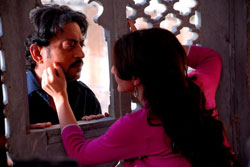
    Key Cast: Jimmy Sheirgill, Mahie Gill, Irrfan Khan, Soha Ali Khan

    Directed By: Tigmanshu Dhulia

    Written By: Tigmanshu Dhulia, Sanjay Chauhan

    Produced By: Tigmanshu Dhulia, Rahul Mittra, Nitin Tej Ahuja


    From wild 4-star enthusiasm to mild 3-star disappointment, reviews of Saheb Biwi Aur Gangster Returns seem to have been more on the positive side. Almost all critics found it losing steam mid-way, deplored the item number, but admired the dialogue and adored Irrfan.


    Tigmanshu Dhulia is an interesting, original filmaker, who came into his own mid-career with Paan Singh Tomar and the original Saheb Biwi Aur Gangster, which was a clever retake on the Guru Dutt-Abrar Alvi classic. Part two is all his own


    Anupama Chopra of Hindustan Times wrote, “But you can have too much of a good thing. Saheb Biwi aur Gangster Returns just becomes more and more overwrought and, eventually, unconvincing. The plot contortions stop feeling organic and start to feel forced, as though Tigmanshu were simply moving pawns on a chessboard. The film’s length starts to weigh on you; an unnecessary item song doesn’t help. By the end, I was no longer enthralled by the many twists. I was exhausted. Which is a shame, because there is much to be enjoyed here.”


    Rajeev Masand of IBNLive commented, “With Saheb Biwi Aur Gangster Returns, director Tigmanshu Dhulia delivers another earthy cocktail of power games, bedroom politics, and palace intrigue. Only the stakes are higher in this sequel; the love is tainted from the start, and there’s even vengeance thrown in for good measure. Indeed the film is gripping for the most part, if you’re willing to overlook some convoluted stretches.”


    Raja Sen of rediff.com gushed, “The new film is much sharper, more assured, and, unencumbered by a classic to stand beside, a far better film. Like the crooners aware of which guests to keep away from the tipple and the aides who wait till the master’s lips touch drink before letting their own, it is clear Tigmanshu Dhulia knows what he’s doing. It has, in fact, never been clearer. Which itself is worth drinking to. Besides, how could one resist a film where even drawers opening and closing sound like guns being cocked?”


    Karan Anshuman of The Mumbai Mirror was very impressed too: “Sequels. Always tricky. Rare is the second instalment that surpasses the original. And Bollywood has a particularly dismal record. So expectations were strictly under check for Tigmanshu Dhulia’s grammatically suspect Saheb Biwi aur Gangster Returns. But it’s the director who returns with aplomb. Keeping much of the original’s spirit intact, even surpassing it in many ways. It is not critical to recall or have seen the prequel. The story does continue, but the reward for a viewer who encounters these characters and the setting for the first time will perhaps be even greater.”


    Madhureeta Mukherjee of the Times of India commented, “Tigmanshu Dhulia has created an intriguing world with rajas fighting for their kingship; politicians watching porn, gangsters sleeping with the enemy, and women unapologetic about adultery in the ballroom and bedroom. The setting and story is vibrant, dramatic, dark and humourous at the same time. Once again, he scores with his characters – intelligently sketched, with dichotomous layers – dark, brooding, loving and lustful. The editing and the screenplay in the second half lose steam, and the item number (courtesy Mughda Godse) punctures the pace. The climax passively surrenders without the satiating feel of bittersweet revenge.”


    Saibal Chatterjee found much to commend it for. “Flush with vibrant colours and cinematic flourishes, Saheb Biwi Aur Gangster Returns is a riveting and buoyant film that, despite being nearly two and a half hours long, manages to keep the viewer interested in the strange, strange ways of men and women bent upon pressing the self-destruct button. The dramatic narrative core of the film is suffused with a delirious quality that is both delightful and disorienting. The film has many wonderfully written sequences followed by stray moments that aren’t that convincing. But the dialogues, penned by director and scriptwriter Tigmanshu Dhulia himself, are never less than sparkling.”


    Shubhra Gupta quite rightly pointed out, “The ‘return’ is a better film, but it stops short of being excellent. The smooth build-up in the first half leads to a confused, too-crowded second, which lets the film, and us, down. But while the going is good, it is all most gripping.”


  • Ranjona Banerji: Gang-rape accused Ram Singh’s “mysterious” death up-ends TV news

    By Ranjona Banerji


    The death of one of the accused in the Delhi December 16 gang-rape case sent news channels into a frenzy. Ram Singh was found hanging in his cell on Monday morning and it is not yet clear whether it is murder or suicide. The concern of news channels for Ram Singh’s well-being in jail is both heartening from a presumption of innocence point of view and confusing from any remotely logical or sensible point of view. After the gang-rape, viewers may remember, most news channels seemed quite willing to bypass a trial altogether and set up a gallows in their TV studios. On Monday it seemed as if TV channels were feeling the pain of Singh’s weeping parents – shown to us again and again – as they outraged over the “mysterious” death of Singh.


    Custodial deaths are indeed a shame and they happen all over India all the time. Often – as in the Khwaja Yunus case in Maharashtra – the police themselves are responsible. I suppose one must now feel grateful that TV journalists have discovered this shocking occurrence and perhaps all their self-appointed kangaroo courts will help make a difference to the criminal justice system in India. I have to agree with Hindustan Times journalist Madhavan Narayan here as he bemoaned this “public prosecutor” style of journalism on twitter.


    Most newspapers led with the story but also gave readers perspective. However the little box on the front page of The Times of India was intriguing to say the least – it told us how the international media also led with this story on Monday. I could not tell whether the paper was rejoicing at how the world was paying attention to us (yaaay!!!) or feeling ashamed that this sort of story was getting international attention (boo hoo…).


    **


    If indeed Times Now is responsible for getting rape convict Bitti Mohanty re-arrested after he jumped parole in 2006, well done to them. This is a story worthy of plenty of journalistic effort and seems like a movie script or an episode of a TV crime serial. Orissa (now Odisha) director general of police’s son convicted for raping a German friend is convicted by a Jaipur court and sentenced to seven years in prison. He gets permission to go home to meet his ailing mother and then vanishes. His family say they have no idea where he is. He turns up seven years later working in a bank in Kerala under an assumed name, after an anonymous phone call tipped off his employers and the authorities.


    When you consider the fact the Mohanty’s father was an influential and powerful man at the time, it is not hard to imagine just how family and friends managed to hide and protect “Bitti”. Just another day in India where the system is easily manipulated by those who have access and know-how? If the coverage of the case by Times Now indeed helped to nab Mohanty again, nothing like it!


    **


    Well done Mid-day for remembering that March 12 is the anniversary of the Mumbai bomb blasts of 1993. For those of us who were there, it seems like yesterday and just for the record, the blasts followed the riots.


    **


    The sacking of four Australian cricketers just before the third Test against India at Mohali was the subject of much hilarity in twitter. Here’s a compilation of all the tweets of the day by espncricinfo: http://www.espncricinfo.com/page2/content/story/624547.html


  • Ranjona Banerji: Of Cobrapost sting & rubbish BMM course

    By Ranjona Banerji


    The Uttar Pradesh government celebrated its first anniversary with front page jackets for all major newspapers. As far as Mumbai is concerned, was this a little dig at Raj Thackeray and his anti-North Indian campaign do you think? Okay, I’m kidding. But still this need of the Samajwadi Party to reach out to the English newspaper reading public in such a big way is intriguing. Poor iphone/ Apple had to play second fiddle to UP, as The Times of India made it the second jacket. Let us not discuss whether the reader benefits from wading through pages of ads for a newspaper which has no front page…


    **


    When you eventually reach the front page, our collective national pride is still upset by the insult handed out to us by the Italian government. The issue of the two marines on trial for murder who are not coming back still rankles. In that is tied up the breach of the Supreme Court’s good faith and the fact that Sonia Gandhi is of Italian origin. Of course, to any sane person there is no connection between those two apposite arguments but when has sanity played a role in our national discourse recently?


    **


    As a result, the “mysterious” death of rape and murder accused Ram Singh in Tihar jail no longer fuels or consumes television media’s incessant demand for more scandal and sensation. Confused by its own motivations, the fact that the death appeared to have been a suicide and that the man lacked some basic qualifications to be a national hero, the story has died with a whimper.


    **


    The big story though is the sting operation conducted on three large Indian banks by Cobrapost.com, run by irrepressible Aniriddha Bahal, he of the cricket and other stings which made Tehelka famous. Officers of HDFC, ICICI and Axis banks are on tape merrily telling the undercover reporter that they would happily convert his “politician boss’s” black money into white. They also explain how, which is a neat ready reckoner for anyone else so inclined.


    So far TV and print media have run with the story but it will be interesting to see how far they take it or whether it just becomes more grist to the nightly tamasha mill.


    There is something disquieting for the regular practice of journalism if the only basis for a story being important is how much drama you can milk out of it. At the risk of being a spoilsport, the drought in Maharashtra certainly needs more attention and kudos to CNN-IBN for focusing on it.


    **


    TV news in India has not really yet come to grips with the feature or the news feature – trend stories are almost non-existent and life style stories are limited to Bollywood. Since Bollywood is only forthcoming when it requires a PR exercise, we are still waiting for a coming of age.


    **


    Markandey Katju, chairman of the Press Council of India, has decided that there needs to be a minimum qualification to become a journalist. If indeed the venerable former judge had bothered to speak to any journalists, he might have got some very different feedback. A lot of the problems which bother people about journalists today originate precisely from the fact that most new recruits come from journalism schools, almost all of which are substandard. In the good old days (sigh, nostalgia) when journalism was a vocation and not a career (bad salaries, terrible working conditions and no public adulation) there were many more committed people around. The corporatision of the media has meant that brainless and clueless “Human Resources” departments have taken over recruitment and they do with that they think is the obvious route – rubbish “BMM” and other such courses. I have yet to meet a journalism undergrad who knew or understood anything at all. And because they have no real college education either, their knowledge base – essential for a journalist – is non-existent or stuck at school level.


    We have lost a lot by succumbing to those courses for our resource base. Some of the best older journalists around came from other professions and some did not even have college degrees but those who were successful had a burning passion for journalism. A nose for news and language skill is all that is required. Neither can be taught.


    Katju has since decided to apparently take on the journalism schools themselves. Now that makes sense.


  • Do journalists need to be qualified?


    By Ananya Saha and Meghna Sharma


    Press Council Chairman Justice Markandey Katju recently issued a press note that said, “Since the media has an important influence on the lives of the people, the time has now come when some qualification should be prescribed by law”. Justice Katju announced a committee mandated to “consider all aspects of the matter” and submit a report to him “suggesting the qualifications a person should have before he can be allowed to enter the profession of journalism”.


    The committee constituted by him, in addition to its mandate of recommending qualifications for journalists, will also recommend in what manner the Press Council can supervise and regulate the functioning of the institutions and departments of journalism in India so that high standards of imparting knowledge in journalism are maintained.


    MxMIndia spoke to senior journalists, academics and industry observers for their views on this (in alphabetical order of their last names).


    Prof Chandan Chatterjee, Director, Symbiosis Institute of Media & Communication

    The role of education in building a foundation for thinking as well as building an worldview is well-accepted. More so for professions that have an ability to shape the thinking and beliefs of a society


    Journalists are the scribes and opinion leaders of modern society and culture which can impact a nation’s destiny, or the adoption of a new way of doing things. Hence, journalists ought to have capabilities and skills of recording facts and events and also analyse and interpret their observations.


    The role of upgrading curriculum of post-graduate Journalism courses, to reflect the current trends and thinking becomes equally important. And, like most other professions, journalists too need to be re-skilled and upgraded in their specific areas, periodically.


    After all, every point of view has two sides. It takes a balanced and educated mind to get the breadth and depth of issues involved. Else, we will have to learn with just one point of view!


    Deepa Gahlot, Film Critic

    To be a journalist or a film critic one needs to have certain attributes – ability to write and passion for the medium. If one has aptitude for it then qualification only adds to it. Therefore, both training and education go hand-in-hand.


    Today, a lot of newspapers carry articles written by people who have nothing to do with journalism too. Having said that, I do believe that a degree will only help the person. Also, it depends on an organization, what are they looking for – someone with good skills but no degree or someone with a degree and good skills.


    I won’t say that Katju’s recommendations are harsh because even if one is passionate about law but he/she still can’t practice without a law degree, why not for journalism?


    Arati Jerath, Senior Journalist

    I think journalists need qualifications, which are not necessarily taught in journalism school. A good journalist should have the nose for news especially in a war or terrorist situation, extract right information, should be a sensitive human being when reporting on a rape case or terrorist attack. It cannot be taught in any institution. These are the values that they imbibe from their parents, schools, colleagues, mentors.


    Most media houses are very professional and hire talent based on their requirements. If the new hire does not perform, irrespective of their qualification, they are let go. A journalist needs to be a good reader, researcher but mostly, they learn on the job outside of the formalized structure.


    The Press Council’s role is of being an ombudsman and a watchdog in case media oversteps. Frankly, the council is trying to impose professional qualification on a person who wants to become a journalist.


    Chandramohan Puppala, Senior Journalist

    This is debatable. Yes, the basic qualification is necessary but not necessarily in journalism; it could be any basic qualification that would equip a person to make them capable of understanding situations or aspects. In my career, I have hired many new people as journalists who are far more knowledgeable and equipped than journalists who have spent years in journalism or have earned degrees in journalism. It is important, however, that a crime-beat reporter has orientation towards the subject. A reporter who covers economy will be more equipped if he has a degree in economics but it is not necessary that if they have a degree, they will turn out to be a good journalists!


    There are, in any case, very few specialized beats; journalists are all-rounders, and that happens over a period of time: during school, on field, the right sources, and is not dependent on a single qualification.


    Prof Dr Kiran Thakur, Journalist-turned media teacher
    Justice Markandey Katju’s plan to prescribe qualifications for journalists is absurd and Utopian. By his logic, politicians should be qualified in political science and NGO founders should be trained in social work. If he wants legal beat reporters to be law graduates, war correspondents will have to be trained in military science if not in warfare, health reporters in medicine, farm journalists in agriculture and so on.


    He will do well to realize that qualifications for reporters and sub-editors alone would not suffice. The owners of media houses, print and electronic, should also possess qualifications. The owners should be trained particularly in media ethics and their social responsibility. Justice Katju should recall the fate of the report of the Press Council committee on paid news. The representatives of owners in the Council opposed the committee and its recommendations.


    I do not understand why the PCI should be burdened with responsibilities to supervise and regulate media schools. There are bodies in the university system to look into these aspects. Let them discharge these responsibilities with efficiency. In the meantime, Justice Katju should find ways how the PCI can function effectively.


    Paranjoy Guha Thakurta, Independent Journalist and Educator

    The idea is ridiculous. It is like saying that if you want to become a politician, one must have a BA or a MA degree. The issue of lowering standards of journalism, values or journalism ethics becoming less important or declining quality is very separate. Mr Vinod Mehta himself said that he flunked his graduation exam, and look at him today. Pritish Nandy flunked his exams, and they were not even studying journalism, and look at them today. There is no dearth of examples of journalists who have succeeded without degrees much as journalists with degrees such as Dr Chandan Mitra. The ability to communicate, write or express articulately is nothing to do with a qualification in journalism.


    The Press Council should be concerned much more about its own role and duties than all of this.


  • Ranjona Banerji: Disquieting news for media

    By Ranjona Banerji


    An interview with lawyer Harish Salve on Karan Thapar’s Devil’s Advocate on Sunday night underlined once more why the media better serves its purpose by taking a balanced and objective view on issues. Salve was lawyer for the two Italian marines accused of shooting two Indian fishermen. They left for Italy to vote promising to come back; the Italian government now says they won’t.


    As usual, we have whipped ourselves into a patriotic frenzy with people almost going as far as boycotting their daily dose of peejo and pasta but I suspect it won’t quite come to that. Connections have been made between Sonia Gandhi, Mussolini, Finmeccanica, Quattrochi, leaving out so far Machiavelli, the Borgias, Leonardo da Vinci and Dante Alighieri.


    Salve however explained matters in a sober and non-hysterical manner which did not absolve the Italians of shooting the fishermen but pointed out how international law worked. There can be little doubt that television-induced madness has afflicted our nation. Strangely, anyone at any time could have looked at the matter coldly and dispassionately and explained it to the reader and viewer. But where’s the fun in that, eh?


    **


    The Pew Research Centre’s State of the Media report has some disquieting news for the American media but it applies to journalism and journalists everywhere. Cost-cutting in news rooms has affected the quality of journalism everywhere. Coverage of live events by premier news channels has dropped by 30 per cent since 2007 and interviews – which require fewer resources – have risen by a corresponding 31 per cent. Story lengths are down and subjects like sports, weather and traffic which are easier to cover have gone up.


    In the print media, algorithms have replaced journalists in some instances. The report says, “This adds up to a news industry that is more undermanned and unprepared to uncover stories, dig deep into emerging ones or to question information put into its hands.” The report was scathing about events like presidential elections, observing that campaign reporters act more like “megaphones than investigators”.


    As beats drop, organisations and companies are using social media to bypass the traditional media and speak to the general public. In a sense, then by cutting news-gathering and journalism costs, the news media has worked to remove itself from the market. This cannot be worthwhile in the long run.


    There is one additional fear which Pew has expressed – that as more companies use “native” advertising with embedded messaging, readers and viewers will be confused about “sponsored” content as opposed to news content.


    This of course is something that we are well aware of in India and yet have managed to do nothing about. Paid news, Medianet and its variations are rife. In fact, “medianet” has practically become a generic term for unethical journalism and is no longer even seen as a Times of India or Bennett Coleman brand – almost everyone does it one way or another.


    The news media in the West has fallen under threat since the economic downturn. The problem is that while the economy may improve at some point, the damage done to journalism by cutting standards will be irreparable. The inability to understand and effectively use the digital space has also hurt traditional journalists and news organisations. This means that skill sets have been lost and the primary goal of journalism – to inform and make aware – is under threat.


    The lessons for India are no less real. The increasing corporatisation of the media has meant that the profit structure has taken precedence over everything else. While the need to be financially viable is non-negotiable, when cost-cutting attacks your core competency you are indeed cutting off your nose to spite your face. The only thing that achieves is to open the door to unscrupulous cosmetic surgeons and charlatans. Welcome to the new media.


    http://mashable.com/2013/03/18/newsroom-cutbacks-hurting-journalism-pew-study/


    Ranjona Banerji’s Twitter handle is @ranjona