
Category: MxM JOURNALISM REVIEW

  • Ranjona Banerji: Claiming credit for the exposes

    By Ranjona Banerji


    Arnab Goswami was in fine form on Wednesday night and I’m being sincere here, not snarky. He took on two subjects and did not allow any waffling or humbug from his contestants, sorry, studio guests. The first subject was the planned martyrs memorial in the Golden Temple in Amritsar and the honours given to the families of killers of former army chief General AS Vaidya. The revival of the Khalistani movement in Punjab – or at least the apparently tacit support given to Khalistani terrorists by the current SAD-BJP government is back in focus especially after the attack on former Lt General KS Brar in London.


    Goswami went to the heart of the issue: was SAD reluctant to take on terrorist-sympathisers and did it find nothing reprehensible in honouring killers? Kiranjot Kaur, of the SGPC tried every trick the book to deflect the issue of sympathy for the Khalistani movement in spite of sufficient evidence to the contrary from hurt sentiments after Operation Blue Star to “you don’t understand the history” and presenting a garbled version of her own. Manjit Singh of the Akali Dal would not answer questions about how weapons landed up within the Golden Temple. The army representatives were furious about Vaidya’s killers being honoured and the proposed memorial for Khalistani terrorists – retired brigadier V Mahalingam was particularly scathing.


    This debate was not just vital because it gave space to the Khalistani problem but also because Goswami did not allow his guests to run away from the topic towards their own agendas. I would have liked however someone to take on Harsimrat Kaur Badal, daughter in law of Punjab chief minister Parkash Singh Badal and MP from Bathinda, for her comment that the Congress should concentrate on “their government and their country”. I personally find this a deeply offensive remark and think it needs further exploration; at the very least what Badal considers to be her country.


    This attitude continued in the next debate on the growing incidence of rape in Haryana, especially in the light of former chief minister Om Prakash Chauthala’s endorsement of the khap panchayat suggestion that girls get married early to prevent rapes. Goswami, who has always taken a strong feminist stance, did not allow any obfuscation of this issue either from the men on the panel and the politicians of Haryana. All credit.


    **


    Rahul Kanwal of Headlines Today claimed that the channel had done a long investigation into the Zakir Husain Trust run by Union law minister Salman Khurshid and his wife Louise Fernandes and found many discrepancies. However, Arvind Kejriwal also claimed credit for exposing the trust. Am confused.


    For instance, so far with the irrigation scam in Maharashtra, the Times of India, CNN-IBN, Anjali Damania, Kirit Somaiya and now Sreenivasan Jain of NDTV have all claimed that they exposed it. Whodunit?


    **


    Thursday morning’s newspapers were a great disappointment, after all the excitement on TV the night before. They were bland and boring and paid lip service to the big issues. The prime minister’s anodyne plan to fix corruption got the most play.


    The Times of India was most disappointing of all, as it played into the hands of an advertiser and not only restricted the size of its newspaper but also printed the entire paper except the opening double spread in single sheets. This was so it could have 16 pages with the notes from the musical scale on each page (Sa re ga ma and so on). Exactly what this had to do with a new Nissan car I have no clue. Perhaps the car does something really annoying like sing to you?
     

  • Ranjona Banerji: Don’t take readers for granted

    By Ranjona Banerji


    Amitabh Bachchan’s 70th birthday was brought in with great excitement but I really don’t know what happened to it after that. TV greats did interviews with the super-great or maybe he’s now meta-great? And there was a party, I was told, with breathless excitement. And this Friday morning, I see a photograph of the meta-great man touching Kokilaben Ambani’s feet in the Economic Times.


    Make of that what you will.


    Next to that telling photograph is a charming piece on the “Kejriwal” by Vikram Doctor. This egg-cheese-chillies-bread combo is a Bombay special breakfast treat or any time snack. Doctor tells us how it came about, who makes it best and why it isn’t related to the RTI activist turned politician.


    **


    I could not make head or tail of visit of the UK high commissioner to Gujarat. I lived in Gujarat for some years, with The Times of India, in the Modi era itself and met both the UK and US envoys, based in Delhi and Mumbai. This was after the riots. Modi also visited the UK in that time. The impression I got from reading the Times of India and Hindustan Times was that Modi was off to the UK again and the supposed ban on his entry and all had been forgiven for the riots. I read in the Indian Express that the UK government was keen to bolster business ties with India – which includes Gujarat of course – and also get justice for the three British nationals killed in the riots.


    When newspapers decided that everyone has watched television all day and therefore does not need to read the news but only the reaction to the news – as TOI and HT did with this story – they do the reader a great disservice. When I started out in journalism eight million years ago we were repeatedly told what we cannot take our readers for granted and therefore had to be lucid and informative. It was a good lesson especially for youthful exuberance which can be too clever by half.


    **


    This is a mere observation. But doesn’t it look like cricketer Virat Kohli is the latest victim of the media’s “amplify and then crucify” policy? He is being built up for greatness – which he may well be on his way to achieving – but a burden of expectation is also being dumped on him. The next slip – inevitable in all humans – and the nails will be sharpened and the cross will be hammered together. I am not sure that this is necessarily the best trend to ape from the west. How about objective appreciation and criticism? Naah, I’m clearly knocking on the doors of idealism.


    **


    The truth is that I haven’t watched even a tiny smidgeon of TV news all Thursday. It was an enlivening experience: My blood pressure is low and my tolerance quotient is high!


  • Ranjona Banerji: Drama when the world was snoozing

    By Ranjona Banerji


    The most dramatic recent television event took place on a Sunday afternoon at 3pm when most except the most avid news junkies were likely enjoying a well-deserved afternoon snooze. Union law minister Salman Khurshid held a press conference to defend himself, his wife Louise Khurshid and his family trust, the Dr Zakir Hussain Memorial Trust against allegations of misappropriation of government given funds to provide the handicapped with aids, prosthetics and equipment.


    The matter had blown into a scandal after a special investigation done by Aaj Tak and Headlines Today – both part of the TV Today group, the TV wing of Aroon Purie’s media empire – had shown discrepancies in camps there were supposed to be held in various districts of Uttar Pradesh and money received. The channels based their investigations on letters written by the UP government to the Central government.


    Former anti-corruption crusader and aspiring politician Arvind Kejriwal jumped into the fray with his own documents about wrongdoing by the law minister and demanded his resignation.


    Khurshid of course was very vociferous in his criticism of Kejriwal in the former income tax officer’s earlier avatar in the Anna Hazare-led anti-corruption movement. His press conference was a fiery affair: the minister was sarcastic and often visibly angry and the journalists from TV Today were very aggressive. However, the minister did provide proof – photographs, witnesses, letters, audited accounts – that some of the charges at least were incorrect.


    The TV Today journalists were quick to jump on to the other allegations – forged signatures, fake affidavits – which the minister deflected by saying a probe was on. There was a lot of confusion over dates, which the average viewer could not always fathom in the ongoing ruckus.


    **


    There can be some questions raised about the TV Today probe however. Without a doubt, the reporters at the press conference were very angry that their work was being mocked at and their proof being countered. But an investigation of this nature needs to work on more than passion and zeal. It needs some hard, cold evidence and some considered sifting of allegation from fact.


    What seems evident from the outside is that the story has been fed by another NGO which also works with the physically handicapped and had filed an RTI application about the Khurshid trust’s camps. Kejriwal who has distanced himself from the TV Today story is basing his own campaign against Khurshid against the RTI answers.


    There is no problem with accepting a story from vested interests. But it is worthwhile to check and corroborate a rival’s allegations – in order for a media group to maintain its objectivity. Even if the Khurshids refused to respond, it is possible to check the facts with others involved.


    As matters stand today, there are loopholes in the TV Today investigation as well as in the Khurshuds’ defence. There are too many backtracking on their claims and too many leads which don’t seem to have been followed through. Some problem seems to exist in the UP government, which remains uncovered. Nor is there sufficient evidence that the Khurshids personally benefited from the Rs 68 lakh or 72 lakh grant which was given to them by the Central government through apparently fraudulent means.


    **


    Arnab Goswami held a special edition of the News Hour on Sunday night, with interviews with Salman Khurshid and Arvind Kejriwal followed by a discussion between Louise Khurshid, Mahesh Jethamalani and an India Against Corruption member to try and shine some light on the issues for the nation.


    However, although Goswami was in fine form in his search for clarity and asked all the right questions, the bottom of the matter remained murky.


    Headlines Today, which held some discussions on the news conference early in the evening, by the night was showing other set programmes.


    **


    Meanwhile it is unclear just who called this story a sting operation. Salman Khurshid said this was a sourced story – his wife used to be a journalist – and the TV Today journalists said that they had only recorded people.


    A media sting requires some entrapment of people who do not know that they are being recorded by journalists.


  • Ranjona Banerji: Lack of depth on telly

    By Ranjona Banerji


    For the last three or four nights, television news has been discussion Arvind Kejriwal’s impact on politics, on politicians and on the high and mighty. The biggest impact however has been on the news and even that has been discussed. However, once again the divide between television and print has been magnified. TV news in India is still unable to bring its ideas to a conclusion or even to search for decisive answers to their questions. Nor are they able to rely on themselves. Watching the discussion of the second US presidential debates on CNN on Wednesday morning, senior TV journalists do not have to depend on newspaper columnists to give them direction or to validate them. They are able to create opinions for themselves. They also appear to have a clearer idea of politics than many of our senior TV anchors.


    This is a serious issue for the media. Senior print journalists however are almost never as unsure of themselves as TV journalists and cannot and will not sacrifice 18 pages of their 24 page newspaper to one subject, except under exceptional circumstances. If prime time TV discussions are akin to edit pages in a newspaper, then the sheer lack of depth and the small bucket from which topics are chosen is appalling.


    **


    In all the discussions about whether Kejriwal uses the media, TV has used the word media very loosely since it has referred only to itself and left out print journalism. Indeed, it is very odd – as Madhu Trehan of newslaundry.com pointed out to Sagorika Ghose on CNNIBN’s Face the Nation – that TV should ask this question of others. The only people qualified to answer why Kejriwal uses news channels so effectively are news channel’s editors. So, why not tell us, how does he do it?


    **


    The Times of India has launched a Bengali newspaper ‘Ei Samay’, the first language paper launched by the group in 50 years. The paper promises to be “be intelligent, enlightened and insightful without being inaccessible”. Does this mean the dumbing down of the Bengali readership, TOI style? We’ll have to wait and see. It is interesting to note that The Times of India experimented with dumping the edit page in its Calcutta edition. It did not work.


    **

    The marriage of Saif Ali Khan and Kareena Kapoor has not taken as much space as I feared it would. Have I jinxed it? Speaking too soon?


  • Ranjona Banerji: Damp squib disclosures

    By Ranjona Banerji


    I can’t speak for other newspaper readers but I for one find those bookmark type page protrusions used by advertisers vastly annoying. They make holding a newspaper uncomfortable and folding it even worse. LG I think is the latest offender and moves from one newspaper to another. I can understand the desire for “innovative” advertising but not for idiotically annoying advertising.


    While on advertising, I have agree with Malavika Sanghvi in today’s Mid-Day that there is something very endearing about the ICICI ad where a little girl runs to buy a sweetie from a grumpy old shopkeeper. No fake sentiment and very good acting by all.


    **


    And now, on to the damp squib of the day: Arvind Kejriwal’s stunning disclosure about BJP president Nitin Gadkari. As it turned out, it was the same disclosure that had been made earlier – that he got land acquired for an irrigation project as a favour from the Maharashtra government. All the sharks, sensationalists and strategists in the media and the political arena who had been sharpening their knives and their defences were sorely disappointed by 5.30 pm on Wednesday evening, but where was the bombshell?


    Arnab Goswami was on air from 4.30 pm onwards, waiting to see who was going to be excoriated and exiled. Political analysts were on hold. The nation was waiting. And we heard what we thought we already know. Yes, maybe Gadkari had been a bit of a naughty boy but hardly the devil incarnate. Most TV channels felt that these revelations were not damning enough.


    It was on Headlines Today, between Shiv Aroor, Rahul Shivshankar and Javed Ansari that one actually got a political overview that went through the various responses of the BJP and Kejriwal and friends to build a picture of the future.


    **


    By the night however, everyone in the media had regrouped and realised that something was better than nothing. Goswami was angry again and one had to feel sorry for Nirmala Seetharaman of the BJP as she tried to defend her party president, dissemble on the charges and attack the Congress.


    On CNNIBN, veteran journalist and BJP supporter Swapan Dasgupta looked quite sad (as did Ravi Shankar Prasad) when he said that the BJP had lost some moral ground in these allegations.


    **


    A couple of other news stories lost out in the Kejriwal allegation circus, damp squib or otherwise. US president Barack Obama appeared to have trumped his rival Mitt Romney in the second election debate. And Salman Khurshid’s outrageous remarks about fighting with ink and blood in what appeared to be a threat to Arvind Kejriwal. Certainly words unsuited to a Union law minister.


    **


    What was strange though was that neither last night’s TV news programmes nor today’s newspapers saw fit to get any reactions from Maharashtra’s ruling politicians or bureaucrats as to how Gadkari received all this official largesse.


  • Reviewing the Reviews: Student Of The Year

    Student Of The Year

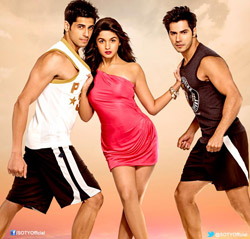
    Key Cast: Alia Bhatt, Sidharth Malhotra, Varun Dhawan

    Written By: Rensil D’Silva

    Directed By: Karan Johar

    Produced By: Hiroo Yash Johar and Gauri Khan


    By the time Student Of The Year released with its high-powered promotion, everybody knew a Karan Johar film was on the way.


    There is a way of viewing a typical and unabashedly escapist Bollywood film – you have to suspend all sense of reality. But, as so many critics have noted, even Bollywood aimed-for-NRI fantasies can get to be too much. The film got mostly condescending reviews with 2 or 3 stars.


    Anupama Chopra of Hindustan Times commented, “Karan Johar’s forte is excess. He creates fantastical worlds brimming with beautiful people and expensive things and yet anchors them in high emotion. His films work as both designer porn and soap opera. The pleasure you derive from his films is directly connected to your tolerance of candy floss. I’ve always been seduced. But the danger of candy floss is that it can quickly become vacuous and over-designed.”


    Rajeev Masand of ibnlive was sarcastic: “The hardest job on a Karan Johar film set must belong to the cleaners, who I imagine spend most of the day on their knees scrubbing floors, dusting furniture, and basically making sure everything is spotless. The director’s new film, Student of the Year, is set on an impossibly chic campus where good-looking teenagers are invariably breaking into song or breaking into fights. Yet you’ll never spot a carelessly strewn cola can or even a stray sheet of paper lying around in the corridors or in the canteen. Oh those poor cleaners!”


    Sukanya Verma of rediff.com wrote, “Treatment is Karan Johar’s forte and it is what makes his first film with rank newcomers, despite the absence of a logical plot, so fresh and zany. Unlike KKHH, which had the advantage of two superstars and one dazzling aspirant, neither of SOTY’s three key players are seasoned actors. Incisive as he is, the filmmaker is well aware of the strengths and limitations of his inexperienced cast, concealing their inadequacies to imply that strange allure of rawness while drawing on their eager energy to convey a refreshing charm.”


    Shubhra Gupta of Indian Express was left cold. “I have a bone to pick with Karan Johar, who invites us, once again, to witness a bunch of young students do their thing. Not because this is yet another impossibly swish ‘school’ which bears little resemblance to the posh-est educational institutions we have in the country: after the seismic shock of that first Riverdale-high-school-clone in ‘Kuch Kuch Hota Hai’, anything was possible. Not because we are asked to believe that these beautifully-toned, manicured, polished, perfectly-attired creatures are ‘students’ in their final year of school: a KJo film will faint at the thought of scruffiness, where even a muddy dab on a sweatshirt after a strenuous game of football appears artfully daubed. And so what if they don’t look as youthful as they ought, as long as they are good-looking, right?”


    In contrast, Madhureeta Mukherjee of TOI gushed, “It’s KJo-Wala Love! Served fresh and piping hot from the Dharma college canteen of romance. And it’s a high (class) school that you’d never want to miss a lecture of, ever. Except that it has its own set of Karan rules. Read the prospectus: 1. Leave your text-books at home but ensure you’re carrying your designer bags and heels. 2. Drive a Ferrari to school, or if you’re poorer, take a bike. 3. Dating, mating, separating and love lessons shall be part of the syllabus. 4. Girls, don your shortest minis, and guys, rip off the shirts. Welcome to St. Teresa’s. Rest assured, it’ll be a well-rounded entertainment experience.”


    Janhavi Samant of Mid-day hissed, “The students of the prestigious St Teresa school in Dehradun all exist in some strange North Indian bubble – male students show off their super-toned bodies and finely-honed muscles while swimming, running or dancing to wedding sangeet with their kurta buttons open. The heroine and her rival’s skirts are smaller than their bags and they continually hover around the said muscular heroes vying for their attention.”


    Karan Anshuman of Mumbai Mirror quipped, “Ah Bollywood. A genre so escapist, so unshackled to reality that it’d give JRR Tolkien a complex. And if the genre may be compared to The Lord of the Rings, then Karan Johar is its Gandalf. He waves a staff and sets the bar.  Make no mistake, I say this with utmost reverence because this is what the world (and I mean an audience that includes and goes beyond Indians and NRIs) expects and wants when they pay ticket money for a ‘Bollywood film’. And nobody does it better than Mr Johar. So here we go. Rich kids in designer labels? Check. Establishing characters through song and dance? Check. Superbly filmed wedding sequence? Check. Manipulative writing and background score designed to trigger your tear ducts? Check. A polished product in all technical departments? Check. Aim to make the film as unreal as possible? Check.”


  • Ranjona Banerji: Time to reinvent TV news

    By Ranjona Banerji


    Having spent four days away from frenetic TV news watching, I can safely declare that it’s nothing but an addiction. Contrary to current opinion, you do not need to know a minute-by-minute commentary on the latest thoughts and ideas of Arvind Kejriwal to get through your daily life. Nor indeed do you have to know how Arnab Goswami is saving the nation night after night in order to wake up the next morning.


    Many years ago (before TV and the internet were invented) I tried an experiment with myself. Living in Bombay, I subscribed to the Calcutta edition of The Statesman. I didn’t read any other newspaper. All went well for about six months. No one around me seemed to have twigged on to the fact that I was at least a day late with the news, give or take the vagaries of the Indian postal system. But a fall was inevitable. Pakistan president Zia-ul-Haq died in a plane crash and I had absolutely no idea. The embarrassment of being a journalist who was caught unawares quickly ended this attempt to buck the system.


    However, both then and now I learnt a very simple lesson: A viewer or reader’s love affair with the news is fickle and unstable. Taking it for granted is easy and disastrous. In today’s India, the fervour, zeal, naivete and hysteria of the TV media is sooner or later going to come crashing down and one suspects it will be sooner. A reinvention is required because for the younger person, primetime news watching is already a geriatric activity.


    The competition comes from the internet of course and except for a few old fogeys, it is apparent to everyone else that the transition from print journalist to internet journalist is relatively easy.


    Meanwhile, it is safe to say that I still don’t know what Kejriwal has been up to for ever second of every day except for what I’ve read on Twitter or in the newspapers.


    **


    The outpouring of love and affection for director Yash Chopra has been quite remarkable and indeed heart-warming. His vision of love and romance has thrilled and moved Indians over several generations and this was evident in the various articles, tweets, comments and TV coverage.


    One might hazard a guess that Chopra’s death affected people far more than Saif Ali Khan and Kareena Kapoor’s endless marriage ceremonies and celebrations.


    **


    CNN continued with its well-formulated and rounded coverage of the last presidential debate on Tuesday morning. My biggest relief is that Piers Morgan has not been part of it, as he had inveigled his way into the coverage of the Republican nomination race. His insights are trite and ill-informed. CNN would be smart to restrict them to his daily programme.


  • Ranjona Banerji: Efficacy of stings, ethics of channel put to question

    By Ranjona Banerji


    The media increasingly finds itself at the receiving end as anti-corruption anger rises in India. After the India Today group faces legal action from Union law minister Salman Khurshid, it’s now the turn of Zee News and Congress MP and industrialist Naveen Jindal. The media either plays an independent role or is seen as a handmaiden of anti-corruption activists.


    The Zee News-Jindal story is however extremely strange. About week ago, the Broadcast Editors’ Association removed Sudhir Chaudhary from both the post of treasurer as well as from primary membership of the organisation after complaints of extortion during a “sting operation” against Jindal. The sting was supposed to prove that Jindal had offered to bribe Zee News and Zee Business so that they wouldn’t carry news about Jindal’s involvement in the coal allocation scam. Jindal however claimed that Chaudhary (editor and business head of Zee News) and Samir Ahluwalia (editor of Zee Business) attempted to blackmail him, asking for Rs 100 crore in order to kill the story.


    Yesterday saw Zee going on an offensive in its own defence with the rest of the media playing up the story or ignoring it.
    Apart from the fact that this may or may not be the best publicity Zee was looking for as it celebrates its 20th anniversary, there are a couple of questions it has to answer. Chaudhary has the slightly unfortunate reputation of being CEO of Live India TV when it ran a fake sting against school teacher Uma Khurana. And, as The Hoot has pointed out, Chaudhary is both editor and business head of Zee News, never a happy or ethically stable job combination.


    Once again however the efficacy and use of stings are called into question. Many tactics involved in a sting go against both journalistic ethics and procedures as well legal provisions. They also are, unfortunately, great blackmail tools. The history of stings in India has not really been one of great successes. Tehelka in its earlier avatar tried out several and certainly its most effective was the Westland defence deals sting which led to BJP president Bangaru Laxman going to jail eventually but only after a lot of hardship suffered by Tehelka. Most other stings – including by Tehelka – have destroyed reputations and added to salacious discourse but achieved little else. And all of them have raised questions about the fairness of stings.


    Most news organisations steer away from stings for these very reasons. In the zeal to expose someone or something, very often it becomes like a witch hunt without giving the accused the opportunity for a defence. The news organisation has the option of turning its back on the story if it doesn’t pan out the way it was supposed to, leaving the accused at the mercy of India’s weak defamation laws.


    Any journalistic expose, sting or otherwise, has to be backed by enough hard work and material to make it as solid as a case in court as possible to make it both effective and fair. If the motives are either born of self-righteous zeal or are more nefarious, journalism has flown out of the window. Objectivity has to be the keystone.


    Unfortunately, many language news channels in India are known to use “stings” as a form of blackmail – whether for themselves or for their employers. It is difficult to decide from the evidence so far whether Jindal is indeed guilty of attempting to bribe or if the news channels are guilty of extortion.


    What is clear though is that one more extremely uncomfortable question has been raised for the media to deal with.


  • Ranjona Banerji: Not too late for TOI to correct practices

    By Ranjona Banerji


    Watching the fury of nature is an awe-inspiring and fascinating experience, thanks to non-stop coverage of Hurricane Sandy by CNN. The storm that has hit the eastern seaboard of the United States is not the first but the sheer scale of water and wind, the potential threat to life and property and the peculiar timing with the US presidential election makes it even more compelling.


    CNN is very good with weather and takes it very seriously. Plenty of information is provided to the viewer about the meteorological aspects of the weather systems with enough scientific mumbo-jumbo to make you feel like you’re on the sets of The Day After Tomorrow. While the coverage is going on however, CNN does not venture into the whys and the wherefores. It’s more about the what.


    This is because not all media are infected by the Indian disease of making everything into a discussion. The global warming argument – and it cannot be far away – can be dealt with later. Nor were there any touchy-feely interviews with those suffering the storm, where bemused people are hard-pressed to find the right answers. Undoubtedly all those will come later.
    A shout out to all the intrepid reporters, star anchors and citizen journalists on CNN. This is a cruel comparison but one cannot help but compare this coverage to an abiding Indian image in similar situations: NDTV’s star anchor and now very very senior editor Sreenivasan Jain standing under an umbrella at Mumbai’s Milan subway, talking about flooding in breathless tones. As any long-suffering Mumbaikar knows, Milan Subway is so much lower than road level that it will flood if you pour a bucket of water into it.


    **


    Battles within the media and with the media seem to be getting tougher and are heading to the courts. Salman Khurshid against Aroon Purie and the TV Today group, Naveen Jindal against Zee News and Zee Business, the Bennett Coleman group against Zee News and Zee Business, Zee hitting back as well… Bennett Coleman has objected to Zee editors being heard on tape telling Jindal that news pages in the Times of India and Economic Times were up for sale.N


    BCCL CEO Ravi Dhariwal’s defence of Medianet goes thus: “We will make no excuses for Medianet. It is an initiative with a different purpose. It is for our advertorial and promotional supplements. But as far as our newspapers go, there is nothing that is bought or sold. No respectable newspaper will do that.”


    This is a weak argument since Medianet is at the heart of the current debasement of the media and had been picked up by every other news organisation as a legitimisation of “paid” news. To now argue that some parts of the newspaper are sold to advertisers but masquerade as news for readers is mere semantics. It took Bennett Coleman a very long time to add the line “entertainment promotional feature” to its glamour supplements like Bombay Times and it is still not clear that all readers understand that this means that the news in these papers has been supplied by the so-called newsmakers for a fee and not collected by journalists.


    As a “responsible newspaper”, perhaps it is not too late for The Times of India to correct its earlier practices. In many ways, Times of India is India’s most complete newspaper and unfortunately, this includes being complete with the good as well as the bad.


    Ranjona Banerji is a senior journalist and commentator. She is also Contributing Editor, MxMIndia. The views expressed here are her own


  • Ranjona Banerji: Can’t rely on the cable or on media’s coverage of Reliance

    By Ranjona Banerji


    The cable blackout from the night of Halloween has affected me in a peculiar manner. Although I have had a set top box from the cablewallah for four years now, the shift to digitisation has led to the loss of some news and sports channels. Everything else is as it was.


    I am told that normal service will soon be resumed. Interestingly though the biggest play on the impending cable shutdown was in the newspapers and not on television. Evidently, English news channels in India are not really bothered about losing viewers who have not yet subscribed to direct to home services. Or, they are so caught up in the antics of Kejriwal and Subramaniam Swamy and any new entrant in the publicity circus that they forget their main constituents – viewers.
    Since the blackout, I have no idea what Times Now, CNNIBN and NDTV are up to. I do still have Headlines Today – which is how I know about Swamy – and I also have BBC World, CNN and Al Jazeera. The aftermath of Superstorm (according to CNN) Sandy and Hurricane (according to everyone else) Sandy is that non-stop coverage of the weather has receded and other matters like Syria, the Greek economy and the US presidential election are back on the top of the news list.


    **


    After Arvind Kejriwal’s somewhat lacklustre press conference (enlivened only by a shoe that missed its target) about crony capitalism, there was much speculation that the story would not be carried by the media since Kejriwal and cronies had made allegations against the Holy Grail of Indian Industry – Reliance. However, as it turned out, everyone discussed the story, even those who are partly owned by Reliance.


    In fact, nothing that Kejriwal said was that new and the fact that Reliance – along with other Indian companies – manipulates government policy is hardly a revelation.


    However, it is interesting to see how far the media will take this story. It is also true that criticism of the Reliance group – especially the part owned by Mukesh Ambani – is very low key, which his brother Anil has often commented on. After the Radia tapes were made public over two years ago, Ratan Tata got a lot of flak for using the services of a PR consultant to lobby for a suitable Cabinet minister but Mukesh Ambani managed to escape attention in spite of the long and much-publicised conversation between Niira Radia and columnist Vir Sanghvi about how Sanghvi should steer his column towards Mukesh on the KG basin gas issue.


    **


    In the days before Reliance became India’s most feared industrial group it was fair game for media scrutiny and The Indian Express carried out a series of investigations into the then Dhirubhai Ambani led company, at the behest apparently of Bombay Dyeing’s Nusli Wadia. There was even an assassination attempt on Wadia which made the news, amidst all kinds of speculation about who had prompted the unlikely candidate of wedding orchestra conductor Prince Babaria to take this step.
    Since then, the media became more circumspect about Reliance and now we mainly read about Nita Ambani’s cricket team and life coaches.


    **


    The other fallout of cable digitisation is that BBC Entertainment will stop broadcasting in India from the end of November. Delays in digitisation and unreasonable carriage fees are the reasons given by the company on its Facebook page.


    Ranjona Banerji is a senior journalist and commentator. She is also Contributing Editor, MxMIndia. The views expressed here are personal


  • Ranjona Banerji: Point-and-preen bandwagon…

    By Ranjona Banerji


    As Smita Prakash pointed out so succinctly in her column in Mid-Day on Monday, we’ve entered an almost ridiculous season of allegations and counter allegations (http://www.mid-day.com/columnists/2012/nov/051112-opinion-Smita-Prakash-The-Supreme-Court-of-press-conferences.htm).


    There is mud-slinging from all quarters and at the middle of the arena stands the media, especially television news. It seems that every publicity hound has crawled out of the woodwork to have his or her moment in the glare of TV lights. The champions of the hit-and-run game are members of India Against Corruption – Anna Hazare has been far less hysterical after he disassociated himself from the group. But politicians, whistle-blowers, activists have all jumped on to this point-and-preen bandwagon. And the media has allowed them to do it.


    The diligence required to check whether any of these accusations have substance in them has been abandoned in the merry-go-round of hourly revelations. It could be Nitin Gadkari or Robert Vadra or Naveen Patnaik, it’s like the night of the long knives: slash and burn.


    It is not good news for journalists when they allow activists to do all their work for them. It not only makes them lazy, it also surrenders vital ground. Many people who dig up dirt on others for a living have a vested interest. If journalists cannot dig up the dirt themselves, they must at least find out why x and not y is being targeted. Objectivity doesn’t just mean not taking sides; it also means being suspiciously mindful of every bit of information that comes to you. Nothing should be taken at face value and all facts given have to be re-checked and corroborated. It’s a sort of constructive cynicism if you like.


    Instead, we have journalists full of glee at allegations made by others and then a massive jump to the final result (innocent or guilty, action or no action) without an investigation being conducted. It is not just trial by media: it is an insane spectacle. TV is especially guilty of this bizarre innocence. A child falls into a well. What, a star anchor thunders, is the chief minister going to do about this? What indeed. What does the star anchor-editor do when gross errors of fact and language are made on his or her channel? How many heads roll? Who takes the blame? India, the nation wants to know.


    **


    The diatribe against writer VS Naipaul by theatre doyen Girish Karnad at the Literature Live festival in Mumbai got far more play in the media, especially TV, than such events normally do. As many pointed out on Twitter, it suddenly took the attention away from politics. Karnad used his theatre session to object instead to Naipaul being given an award by the festival pointing out that Naipaul’s views on India and Islam were objectionable.


    Naipaul, apart from being a brilliant writer of prose, is also known for his sometimes unsustainable opinions and his great disdain for everyone apart from himself. He is also rude and crotchety. His non-fiction cannot in that sense match his fiction because his ideas and knowledge can be ill-formed.


    Interestingly, Naipaul’s various staunch defenders seem to have been somewhat dumbstruck by Karnad’s assault and instead, the playwright, actor, director has been applauded by many more.


    **


    The headline of the day must go to the Hindustan Times for this one: ‘Gadkari talks up a storm, leaves party speechless’.


    The BJP president for reasons known only to him decided that Swami Vivekananda and gangster Dawood Ibrahim had similar IQs. He kindly went on to redeem the philosopher-monk of the Ramkrishna Mission by saying that he used his IQ for good.


  • Ranjona Banerji: Slick, peaceful Obama win coverage

    By Ranjona Banerji


    I’m going out on a limb here. The spectacle of watching the results of the US presidential elections unfold on television is akin to watching a slickly made Hollywood movie. Whereas coverage of Indian election on Indian news channels feels more like being in the midst of a chaotic and cacophonous Bollywood film.

    Stereotyping of the most superficial sort? Maybe.


    Still, Wednesday was a fascinating day for a news-tracker. You could switch from CNN to BBC to Al Jazeera (also on Headlines Today) to CBS on Times Now to ABC on NDTV. Fox unfortunately was not available on the English news channels in India although according to Wednesday’s newspapers, they had a little drama of their own when the channel called the election for incumbent president Barack Obama and their star panellist former George W Bush aide Karl Rove objected. (http://www.chicagotribune.com/news/politics/sns-rt-us-usa-campaign-rovebre8a7011-20121107,0,2643102.story.)


    For the rest, instead of the screaming matches filled with mudslinging and accusations that are characteristic of Indian TV panel discussions, we had interesting analysis and very polite dissensions. The best word I can use is professional, something Indian TV journalists are still a little short of. The first time I saw such coverage was as a political science student in Calcutta in 1980 when Ronald Reagan beat Jimmy Carter and the American Centre invited people to watch (as it still does presumably). As far as the media is concerned, election night is a well-oiled machine to which increments are added over the years but the core competency remains. This time around, thankfully, there were no holograms from CNN which are still better in the movies than they are in real life.


    **


    Of course, at some point, our star anchors had to jump into the fray and try and interpret the results for their loving, dedicated and presumably ultra dumb Indian fans. I watched only Rajdeep Sardesai on CNNIBN with the usual gaggle of Indian guests who can be called upon to comment on just about everything from nuclear disaster in Japan to attacks on women in Karnataka to well, the next US president and then of course Arnab Goswami on Times Now. Goswami surrounded himself with lots of American reporters who then repeated what we had heard all morning about the election. His piece de resistance was when he asked one reporter whether this result meant that Americans had become more patient. At this point my patience failed and I went away.


    **


    Indians can take solace from one thing though: the pundits and pollsters were as wrong about this election as they often are about Indian elections. Everyone apparently agreed that this would be a very close election with the winner – whoever it was – just squeaking ahead. As it turned out, Barack Obama took the crucial “swing” states quite early and once it was clear that he had taken Ohio, victory was certain. Apparently ABC called it first (since cable digitisation I don’t get NDTV any more!).
    And after that, his victory was pretty emphatic.


    **


    It is also clear that if Indians want to be experts on the US election system they need to study it a little more…