Category: MxM JOURNALISM REVIEW

  • Gangs of Wasseypur 2: Too long, too violent!

    Gangs of Wasseypur 2


    Directed by: Anurag Kashyap

    Produced by: Anurag Kashyap, Sunil Bohra

    Written by: Zeishan Quadri, Akhilesh, Sachin Ladia, Anurag Kashyap

    Starring: Richa Chadda, Nawazuddin Siddiqui, Jameel Khan, Syed Zeeshan Quadri, Aditya Kumar, Reemma Sen


    Anurag Kashyap’s films usually get the kind of reviews that praise his craft and pan his indulgence. So even though Gangs of Wasseypur 2 got the expected 3 and 4 star ratings, almost all critics seemed to agree that it was too long, too violent and not quite necessary.


    The ones who got the most out of the films are Nawazuddin Siddiqui and Richa Chadda, for whom it turned out to be a career launcher.


    Rajeev Masand of IBN wrote: “It’s hard to deny that Wasseypur II is lacking. In plot for one… Despite the cinematic flair, this film weighs down on you, seeming like an endless series of killings without a narrative to string it all together. Where is the method to this madness? Unlike the earlier film that took its time (too much time, to be fair) to set up the chapters, this sequel hits the ground running with relentless gun battles and daylight murders. Yet it feels curiously empty, as if the characters are just moving around in impressive set pieces.”


    Shubhra Gupta of the Indian Express, who had loved Part One is less effusive this time: “There shouldn’t have been a Part 2. This should have been the post-interval section of Gangs of Wasseypur, carrying over, instantly, the charge of the first half. Yes, one continuous flow would have made Gangs Inc. a very long film, closing at nearly six hours. It would have challenged our notions of how long we can fill seats, without squirming or fidgeting, or thinking of escape. But it would have given us the story’s arc from beginning to end, smoothly maintaining the integrity of the plot, action and thought. For me, GOW2 is a follow-through that is shot through with flashes of brilliance, and some wonderful comic verve, but that doesn’t have the enthralling power and spread of the first film.”


    Madhureeta Mukherjee of the Times of India gave it a cagey 4 stars, writing: “For those who like their celluloid hard and bloody and full of machismo, with an overdose of bodies, butchering and bloody-bravado, welcome to blood-fest – Round Two! This time it’s double the dollops of gore; two much. Booming guns and metal-shredded innards spilling gut onto the streets. More revenge and rage. More gangs and more bangs (some pistols firing from lungi covered groins) and more man-power. With every shade of red, black and grey – deeper and bolder.”


    Aniruddha Guha of DNA also toned down his rah-rahs for Part 2: “Unfortunately, Gangs of Wasseypur – 1 and 2 together – falls slightly short of a truly satisfying experience. There’s so much to take back – mood, flavour, character, attitude – yet it leaves you slightly vexed, and wanting more. Not more in terms of duration, but in content. Given the investment it demands – 2 hours and 40 minutes of your time, twice over, and loads of patience – the takeaway is just not as rewarding. It was so in the first one because it was incomplete, and it is so in the second because it stutters on its way to a stunning finale.”


    Raja Sen of rediff.com commented: “Kashyap’s visual flair has just grown with each film, and this one is not just cinematically self-assured but also highly nuanced: some of the touches – like Mohsina’s choice of paperback – border almost on a Dibakarian immaculateness. Perpendicular Khan, meanwhile, like the Bob Biswas we met in Kahaani a few months ago, deserves his own graphic novel, pronto. Like one of those unending strings of ladis, this is, then, a proper firecracker, even if far too long. Had Ramadhir Singh broken his coda and watched it, he’d have doubtless been gunned down mid-film, the length (and volume) allowing his foes more than enough celluloid cover to set up sniper-rifles, grenades and knifemen for the job. Sheer murder, surely. Yet, like the inevitably doomed characters in this Kashyapverse, he’d have gotten to grin a few times before biting the dust.”


    Kunal Guha of in.yahoo quipped: “Phuchchak! A stab in the eye. Krreeeech! A human head severed from the rest. Swish! Swoosh! Perpendicular and tangent blades inserted into flesh. And then, a semi-automatic is used to poke intestines swinging from a carcass that has been polka-dotted with gun fire. Now you know, when director Anurag Kashyap says dark, he means 99 per cent cocoa.”


    Janhavi Samant of Mid-day, perhaps the only 2.5 star rater is left cold: “OMG! This one’s such a long film it should have been made into a TV series. They could have easily pulled off an hourly 13-episode show. Definite and Perpendicular could have become household names and our children could have learnt some choice gaalis sitting right at home. Not that one has anything against gaalis, especially since one bit back a few ‘Whathefa…’s while watching the film. Really, towards the end of the film, protagonist Faisal Khan (Nawazuddin Siddiqui) cries defeatedly over the mire of revenge and crime he’s been sucked into. “It shouldn’t have gone this far,” he says. We agree.”
     

  • Mediaah! History will also record Zakaria as a plagiarist

    By Pradyuman Maheshwari


    As a term, Indian media loves to define copyright as the right to copy than a protection of the intellectual property of a body of work. Under the garb of inspiration, many of our films are ‘lifted’ from their international counterparts without permission. Television is a nicer place with channels paying fair monies for formats of popular shows like Kaun Banega Crorepati, Indian Idol, Bigg Boss, Jhalak Dikhla Jaa, etc. Radio has had its issue on copyright for payments for airing of songs, but not for filching ideas.


    Fareed Zakaria’s apology (and comments):
    http://globalpublicsquare.blogs.cnn.com /2012/08/  10/a-statement-from-fareed/

    The article with the plagiarised text:
    http://www.time.com/time/magazine/article/ 0,9171,2121660 2,00.html

    The original New Yorker article by Jill Lepore:
    http://www.newyorker.com/reporting/2012/04 /23/ 120423fa_fact_lepore?currentPage=all

    The Economic Times Code of Conduct
    http://articles.economictimes.indiatimes.com/2010-09-18/news/27597028_1_editors-confi dentiality -church-and-state

    The MxMIndia Code of Conduct
    http://www.mxmindia.com/code-of-ethics/

    The Slate controversy
    http://www.slate.com/articles/arts/culturebox /2010/10/great_writers_steal.html

    For many years, a majority of Indian print media editors have condoned plagiarism. In fact, many encourage it, some even indulging in them. News reports – in full or part – are often copied without permissions or attributions and no one really appears to worry about it much.


    When Mediaah! ran as a standalone blog in the early 2000s, it wrote about how a reporter with a business daily had plagiarised from a report on the website of a rival paper. My attention was drawn to the apology that appeared.


    At that point, my contention was while the reporter was to blame, her team leaders were equally responsible as they ought to have been more vigilant and tracked what immediate competition had written.


    The reporter went on to work at various workplaces later, and I haven’t really tracked whether she has repeated the act or not. At another former workplace, I was faced with a situation where a columnist confessed to plagiarising. The column was dropped with immediate effect.


    Many years back, a Hindustan Times editor also disgraced himself (and the paper) by plagiarising. His services were dispensed with after a furore over the issue.


    Plagiarism – in any form is a crime – and it’s critical that organizations adopt strict rules. At the Economic Times and ET Now, for instance, it’s a “firing offence” as per the code of conduct.  At MxMIndia too, we have a no tolerance policy towards plagiarism and it could mean an immediate termination of employment, regardless of the utility or seniority of the journalist. However, as we figure, not all organizations have stringent standards on plagiarism. Some just let it be.


    If it was easy to escape plagiarism a decade back, the wide use of the internet and social media in particular will ensure that those caught in the act will not be forgotten in a hurry.


    For instance, I am sure India Today group chairman and editor-in-chief Aroon Purie had no role to play in his signed editorial picking up generously from a Slate.com article two years back. Sadly, whenever there is a discussion on plagiarism, his name will surface in the list of well-known Indian editors indulging in the act. In fact, a Wikipedia entry on the media baron has a fairly visible mention of the Slate case.


    I guess the same would hold true for Fareed Zakaria. This is what Zakaria’s bio reads on the homepage of his website (fareedzakaria.com):

    Fareed Zakaria hosts CNN’s flagship foreign affairs show, is Editor-at-Large of TIME Magazine, a Washington Post columnist, and a New York Times bestselling author. Esquire Magazine called him “the most influential foreign policy adviser of his generation.”


    The Wikipedia entry on Zakaria already highlights the plagiarism case.


    Books on media history and ethics will now have one more way to describe Fareed Zakaria: great mind, writer, TV host, author and a plagiarist.


    Sad.


    Mediaah! is written by Pradyuman Maheshwari, senior journalist and Editor-in-Chief and CEO, MxMIndia. He can be reached at: pradyumanm[at]mxmindia.com, Gtalk pradyumanm@gmail.com, BBM 29FEA79C. Twitter @pmahesh and of course the mobile: 98338 76278. The views expressed here are his own.


  • Ranjona Banerji: The news that did not happen on TV

    By Ranjona Banerji


    All day on Monday all that happened in India was that yoga teacher Baba Ramdev and a few thousand followers continued their protest against corruption and black money in New Delhi. That is, if you watched television. As the day progressed, political leaders attended the protest and gave speeches. That was it. The rest of the news day was in Shavasana – the dead body pose.


    Not however, if you read the newspapers on Tuesday. Grains rotting in Gujarat, Haryana minister Gopal Kanda on the run after an employee’s suicide writes a letter saying that a suicide note is not admissible, the latest on the Mumbai violence, especially the provocative doctored videos on the attacks on Muslims in Myanmar, Sharad Pawar given the number 3 slot in the Cabinet behind AK Anthony, a woman researcher allegedly molested on the IIT Mumbai campus by a staff member and the end of the Olympics.


    This is just a smattering of the news that did not happen on TV. There is more, though undoubtedly a lot of it is city specific. However, it would have been interesting to know how Delhi reacted to the traffic snarls created by Ramdev’s protests, whether people suffered or not, how many were affected and so on. TV sadly did not oblige.


    ***


    Press Council of India chairman Markandey Katju has been mainly silent after his dramatic ascension to the throne. But now he’s popped up again. Strangely, it is not the media which is his focus. Rather it is West Bengal chief minister Mamata Banerjee, who he had once lauded for her honesty and determination. Now he is appalled at her authoritarian ways after a farmer was arrested after he questioned the CM at a rally. Banerjee accused the farmer of being a Maoist.


    Katju has also stated that Anna Hazare and Baba Ramdev’s anti-corruption movements are “empty gas”.


    He said: “Nothing is going to happen by Anna or Ramdev’s crusade against corruption”. The former judge said he was not justifying corruption but instead was pointing out that India was going through a “transitional period where there is no moral code”. His prophecy: corruption will continue for 15 years.


    Presumably, we will all become moral after that.


    * * *


    What does one make of anti-corruption activist Kiran Bedi’s statement that the media spends too much time on “small rapes” (she then said she meant rapes by “small” people) instead of corruption? In Bedi lies a lesson for the media. She was pumped up for being India’s first female IPL officers and qualities were attributed to her which she never had. Once she was made into a heroine in the people’s eyes, it became very difficult to dethrone her. As a result of all that hype, she is now in textbooks and has won numerous awards.


    Prolonged exposure to her during the Anna Hazare-led movement has however exposed her many short-comings. Now we know that amongst her other faults, she is also dismissive of rape. Some female role model.


  • Demystifying plagiarism, the legal way


    By Nandita Saikia


    Can one be jailed and fined if convicted?
     

    All you wanted to know about plagiarism but didn’t know who to ask. We posed a few questions to Nandita Saikia and requested her for a response sans the legalese

    1. Is plagiarism a crime? As in, does copying of substantial portion of a published work written by someone without attribution and without permission become a punishable offence? What exactly is the punishment?

    Plagiarism alone involves copying another person’s ideas without attributing them, and is not a crime by itself although it is considered unethical.


    If plagiarism involves copying not only ideas but also a substantial portion of a copyrighted work without attribution and without permission, it would amount to both copyright infringement and the violation of the ‘special right’ of the author to be credited.


    Copyright infringement and the violation of an author’s right to be credited are both civil wrongs and criminal offences. A civil suit may be instituted, and criminal charges may also be filed.


    In a civil suit, the remedies which may be obtained are: injunctions to restrain further infringement, damages, the rendition of accounts of profit, and the delivery up of both infringing copies of the work and the plates used to make them. If required, certain administrative orders may also be obtained to assess the extent of infringement.


    If criminal charges are filed, a convicted infringer is liable to be imprisoned for between six months and three years and to be fined between Rs 50,000 and Rs 2 lakh, for the first offence. This punishment is enhanced for subsequent convictions.


    2.Does attribution without permission for text or photographs or graphics (for instance: Photograph courtesy xyz) amount to an infringement of copyright? And if it is an offence, what is the punishment?

    Assuming the work is protected by copyright, in most cases:  It is infringement to publish a work without permission.  It is both infringement and a violation of moral rights to publish a work without permission and without attribution. It is a violation of moral rights to publish a work with permission and without attribution — (possibly) unless the author has agreed not to be attributed. The remedies available to those authors whose right to claim authorship has been violated are similar to those available in cases of copyright infringement as described in response to question 1.


    3.Assuming an article is written and has taken some vital research data or information from another article (and this information is not easily available or is not publicly accessible), but the information is presented in a different language and different from the one already published. Will this be considered plagiarism and is it infringement of intellectual property?

    It would amount to plagiarism if the ideas of another author were used without credit. It is also likely that it would amount to plagiarism if the research of another author was used without credit.


    However, if the language used in the later article was completely different from that used in the original article, it is unlikely that the subsequent article would infringe the copyright in the original article.


    Depending on the circumstances, the later article may violate the moral right of the author of the original article to be credited for his work.


    4.In a typical writer-publication relationship, who owns the copyright in the absence of any written contract on it… the publication or the writer/photographer/artist? What if the writer/photographer/artist are freelance? And what if he/she is an employee?

    The employer generally owns copyright in the employee’s work for the purpose of dissemination through the employer’s publication and similar publications. For all other purposes, the employee owns the copyright.


    However, a freelance journalist would ordinarily be the first owner of copyright in his work unless he signs an agreement to the contrary. Ownership may vary depending on whether or not the work is commissioned.


    The commissioner generally owns the copyright in a commissioned photograph.


    To a large extent, the ownership of copyright in a work is determined by contract. This area of the law contains a number of caveats and exceptions, and it is extremely difficult to make generalisations.


    5.What about ideas and concepts? And page designs and headlines?

    Ideas and concepts are not protected unless expressed and ‘fixed’. Original page designs may be protectable as artistic works if they are distinctive. Headlines are unlikely to be protectable, although it may be possible to argue that especially distinctive, original headlines are protectable.


    6. And lastly, what is the legal standpoint on plagiarised advertising… visuals and copy? Also, television and films?

    In broad strokes, the general principles relating to infringement apply across the board regardless of the nature of the work. If a work is protected by copyright, the permission of the copyright owner is usually required to do things like reproduce or adapt the work. Also, authors have the right to be claim authorship of their work.


    Nandita Saikia

    The terms ‘plagiarism’ and ‘infringement’ are often used interchangeably although they are different.  Plagiarism itself is primarily an ethical issue, which involves using the work of another author without crediting them. The right not to be plagiarised is not recognised by statute, except to the extent mentioned in Section 57 of the Copyright Act (which gives authors the right to claim authorship of their works, among other things).


    Plagiarism may occur independently of copyright infringement. This is because any use of a work without crediting its author would be plagiarism. However, copyright infringement can only occur if the earlier work copied from is protected by copyright. So, for example, copying from a very old work whose copyright has expired would be plagiarism but not infringement.


    Also, plagiarism may involve merely copying the ideas which another person has expressed in their work either without crediting them or using their words. If plagiarism occurs without copying or adapting the actual words of the author of the earlier work, it is unlikely that the plagiarism would also amount to copyright infringement.


    Further, it is worth bearing in mind that it works both ways. If the earlier work was protected by copyright, copying or adapting any substantial part of it without permission would infringe the copyright subsisting it even if its author was credited. In other words, the unauthorised, substantial reproduction or adaptation of a copyrighted work is copyright infringement even if its author is credited.


    As such, copyright infringement and plagiarism generally occur simultaneously only if the words of an earlier work are copied or adapted without permission and without attribution, and the earlier work is protected by copyright.


    Copyright itself subsists in certain works such as books, films and music. As a general rule, the initial owner of the copyright in a work is its author (although this is subject to several exceptions).


    Copyright owners have the exclusive right to do things like reproduce, adapt, translate and publish their works, or to allow others to do so. These exclusive rights are collectively called copyright, and vary in their specifics depending on the kind of work.


    In most cases, doing anything which is the exclusive right of the copyright owner without his or her permission amounts to copyright infringement, which is both a civil wrong and criminal offence. As such, a civil suit may be instituted (usually seeking to obtain damages and an injunction to restrain further infringement).


    In addition to this, Section 63 of the Copyright Act states that convicted infringers are liable to be imprisoned for between six months and three years and to be fined between fifty thousand and two lakh rupees, while Section 63A stipulates an enhanced penalty for second and subsequent convictions.


    Apart from copyright, the Copyright Act also recognises the right of an author to be credited for his work via Section 57 of the Copyright Act which, among other things, grants authors the ‘Special Right’ to claim authorship. If this right is violated, remedies similar to those obtainable for copyright infringement may be sought.


    Widely referred to as a moral right, the Section 57 right to claim authorship is perpetual, is independent of copyright, and remains unaffected by transfers of copyright ownership. Thus, it could be considered to be similar to the right not to be plagiarised, although it is not identical to it.


    Nandita Saikia is a media and technology lawyer practising in New Delhi


    Plagiarism: No good word, this
     

    While the reasons to plagiarise can be debated, and argued, what remains essential is editorial integrity to see it as a bad practice

    By Ananya Saha


    Fareed Zakaria has opened a Pandora box after being accused of plagiarism. Editorial sanctity is being now being questioned when it comes to using plagiarized content. With internet becoming a major source of stories filed by journalists, it has actually become difficult to keep a tab on plagiarized material. Indian media has been, time and again, put under scanner for plagiarism.


    The business daily, Mint has addressed the issue of ‘plagiarism and fabrication’ in its ‘MintCode’ clearly: ‘We don’t copy the work of others. And we don’t make things up. We do not plagiarize, meaning that we do not take the work of others and pass it off as our own.’ In fact, Mint does not transmit news releases in their original form. “A story that appears in our paper and has plagiarized work from a press release is a serious violation of our Code of Conduct.” If any of its own journalists’ or columnists’ work is plagiarized, Mint asks them to notify the editor, deputy editor, and immediate editor. According to the code, any Mint reporter and writer have to use original content, language and phrasing.


    While the ‘MintCode’ is clearly charted out on its website and The Economic Times too has a code of ethics on its website, not many newspapers have such a clear ‘code’ charted out.


    What is also important to understand is that such code of ethics is also bypassed by journalists who succumb to pressures of deadline.


    Deccan Chronicle uses software that alerts the desk when more than eight words are plagiarized. A T Jayanti, chief editor of Deccan Chronicle, said: “You do not need a policy on something so blatantly wrong! Our team is aware that they can be suspended, and can even lose their jobs.”


    Chandan Mitra, editor and managing director of The Pioneer, has come across few columnists who have plagiarized content while writing for his paper: “The columnists were found guilty, and we stopped their columns as soon as we got to know. We take a hard line against such practice. If there is a complaint, we prefer to run our checks and if found guilty, we do not have to think twice before stopping their columns.”


    Mr Mitra insisted that Fareed Zakaria’s case is an alarm bell, and the Indian newspaper industry needs to be more cautious, especially “when the laws of the land are not as stringent.” He also feels that because of the internet, it is easier to track down if the article or any written piece has been extracted as is from its original source.


    While the reasons to plagiarize can be debated, and argued, what remains essential is editorial integrity to see it as a bad practice.


    Vikas Mishra, Editor, Lokmat Samachar said: “Nobody in our newspaper is authorized to copy-paste from any article. Never in the history of Lokmat has anyone plagiarized. If there is an article worth mentioning, we always mention the source or attribute the quote in our write-ups.”


    When asked if plagiarism is more rampant in the regional and vernacular newspapers, Mr Hari Mohan Mishra, news editor, Dainik Bhaskar said that it is actually the English newspapers that see more of plagiarism and that he has not come across any of his team plagiarizing ever. Even Mr Mitra of The Pioneer agreed with his viewpoint.


    M. Kesava Menon, editor, Mathrubhumi – the Malayalam language newspaper – also believes in attributing the original author in articles, and sees plagiarism as serious offence. Even though the editors are quite sure the copying a work is an offence, it is actually not unknown that plagiarism sometimes goes unregistered.


    In a rapidly changing newsroom set-up, influenced vastly by ‘research’, it is important that writers and columnists create original work. And only strong and stringent measures can curb such a practice.


  • Ranjona Banerji: Indian Media’s cheapskate policies lead to shallow coverage

    By Ranjona Banerji


    The Indian media’s biggest weakness has been exposed by the violence in Assam – lack of both intellectual depth and old-style news-gathering. Driven either by the race for rating points or by marketing research drivel imposed by them by corporate offices, journalists have reduced themselves to page makers and anchors. As news rooms have got younger and younger – by design – institutional memory has been sacrificed for cheap and amenable goods.


    The result is that not a single mainstream news channel or newspaper has the ability to inform the reader about just what is happening in Assam.


    On top of that, we are seeing a return to the right-left Hindu-Muslim polarisation in the media which was last rampant in the 1990s. This means that no conversation can take place without barbs and sideswipes and a complete disregard for fact or indeed for clarity. Last night on Headlines Today, I dare anyone to have gleaned anything substantial from the squabble between Vinod Sharma of Hindustan Times and Tarun Vijay of the BJP over the exodus of people from the North East on fear of retaliatory attacks from Muslims.


    I can understand the need to sensationalise news. I also understand that when news moves at a fast pace, you have to move as seamlessly as possible from subject to subject. But our failure is in building up foundations of knowledge and information. We see stories in such lightweight terms that the idea of depth has been forgotten. It is one of our biggest ironies that as the media has become bigger and journalists are paid more, newsgathering has shrunk.


    I have yet to read – TV is a complete failure here – any sustained set of articles in any one publication on the Assam situation. The right wing has been screaming about illegal immigration of Bangladeshis into Assam for years but figures do not seem to bear that out. Is it too much to ask that someone shine some light on the issue? The best I have read has been in kafila.org and if newspapers are not careful, the internet is going to walk all over their domain. Given the standard of newspapers sometimes, I don’t even know if that’s a bad thing.

    http://kafila.org/2012/08/16/the-myth-of-the-bangladeshi-and-violence-in-assam-nilim-dutta/


    **


    Madhu Kishwar’s open letter to Arnab Goswami has created some waves in the social media. She has laid out all the problems which viewers (and as it happens, participants) have with prime time TV discussions. Many people have said what Kishwar has, but few have said it better.

    Open letter to Arnab Goswami by Madhu Kishwar


    In the light of that, it was amazing to watch Goswami and his guests on Times Now start frothing at the mouth a couple of weeks ago over the Sikh gurudwara killings in the US state of Wisconsin. I bring this up because I fail to see how hysteria between Goswami and Meenakshi Lekhi of the BJP over why the US called the killings an act of domestic terrorism and not a hate crime will make any substantial difference to the American legal process. Goswami I understand is on his peculiar jingoistic mission of catapulting India to the leader of the Universe status. But Lekhi is supposed to be a lawyer. From reading Kishwar’s piece you understand – the more you agree with the anchor, no matter how absurd his position – the better your chances of being called back as a guest.


    Last night on Times Now, Goswami wanted to know why the persons who spread the rumours about people from the North East being attacked and the person who made a provocative speech in Mumbai last week had not been arrested yet. He provided an example of China, that beacon of justice and fair play, to prove his point. This is about as absurd as it gets.


    For an illuminating, if unpleasant for the right wing, comment on Mumbai’s violence after some Muslim organisations protested the killings of Muslims in Assam and Myanmar, here’s Jyoti Punwani in the Hindu

    http://www.thehindu.com/opinion/op-ed/article3772309.ece?homepage=true


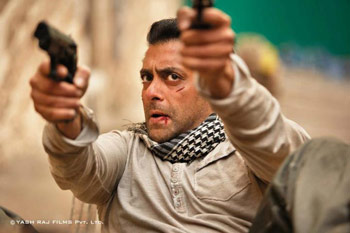
  • Reviewing the Reviews: Ek Tha Tiger

    Ek Tha Tiger

    Key Cast: Salman Khan, Katrina Kaif

    Directed By: Kabir Khan

    Written By: Kabir Khan, Neelesh Misra

    Produced By: Aditya Chopra


    Kabir Khan’s Ek Tha Tiger foxed critics because it wasn’t as brainless as Salman Khan’s other ‘100 Crore’ films. It sort of foxed the public for the same reason. You want to see Salman be silly, you want him to go some belt-jerking kind of Dhinka Chika dance, you want him to maaro quotable dialogue.


    Still, the film had the gloss Yash Raj Films’ money can buy, a Bond and Bourne kind of action in exotic places — Ek Tha Tiger delivered what Agent Vinod could not.


    The film got mosty 3 stars and up, with grudging praise.


    Wrote Indian Express’s Shubhra Gupta, “There is only so much Serious Salman you can handle without wanting to burst out into giggles, so don’t go looking for a grim spy story. Grimness is best dealt with by the Bournes. Salman is much more in packaged-by-Yashraj-Bond mode, bashing ’em up, and lovin’ her for ever, essentially Bhai doing his stuff, but restricted from being all over the place, which is not such a bad thing. I had fun while it lasted.”


    Anupama Chopra of Hindustan Times commented, “But the screenplay by Kabir and Neelesh Misra requires Salman to emote and play a character. Thankfully, he makes an effort. Of course, he is always in invincible hulk mode — yes, there is a brief shot of him taking his shirt off — but there is also sweetness and a touch of vulnerability, especially when he first meets Zoya. He seems almost perplexed as he falls in love. Katrina doesn’t have enough to work with but she works hard to give Zoya some weight. Their romance seems effortless. In places, Ek Tha Tiger becomes downright silly. So the modus operandi might be to think of it as a fairy tale with spies and guns. And enjoy the ride.”


    Sukanya Verma of rediff.com wrote, “With Wanted, Ready and Bodyguard, Salman Khan did cheesy with such marvellous flair that even though these films are nowhere near quality line, ‘stupidity sells’ became the new mantra at the box office. No, I am not a Bhaihater or a Bhaitard, colourful expressions recently invented to describe one’s derision or devotion to the actor, addressed so with alarming familiarity, whether in affection or sarcasm. (Please note how I’ve NOT mentioned Dabanng along with the afore-mentioned poppycock because it was genuinely entertaining. Heck, it was one of my favourite films of the year.) My point is that we’ve gotten so habituated to the commitments and ehsaans, the raggedy humour and the implausible heroics written specifically to reinforce the larger-than-life presence of the superstar that we have started to expect JUST that. So here’s the good news. Ek Tha Tiger demolishes this mindset with such unhurried relish it will take me one more viewing to believe it’s actually happening.”


    Aniruddha Guha of DNA went with 3.5, “Ek Tha Tiger (ETT) is probably Hindi cinema’s best action film yet. Conrad Palmisano, who’s been stunt co-ordinator on films like the Rush Hour series, the Robocop series, Batman Forever and Romeo Must Die, directs four brilliantly put together action set-pieces. They are all lavishly mounted, shot at breathtaking locales, and executed with skilled precision. In the midst of it all is Salman Khan, Hindi cinema’s poster boy for escapist entertainment. Thankfully, ETT is the rare Khan film that has a plot too, thin as it may be.”


    Taran Adarsh of Bollywoodhungama.com did his usual 4.5 rave, “On the whole, Ek Tha Tiger is a high-octane thriller that works big time. This one has style and substance, both, besides dazzling action, stunning international locales and stylish execution. Most importantly, it has Salman Khan, the trump card of this enterprise. There’s no denying that Salman’s charisma has resulted in a mind-blowing, astounding, never-seen-before start at the ticket window, but the film’s content will sustain it thereafter. The film has long legs to prolong its splendid run. This is, without doubt, Salman’s best. Sure shot Blockbuster!”


    Then the 2.5s Rajeev Masand of IBN and Karan Anshuman of Mumbai Mirror. The former wrote, “To be fair, Ek Tha Tiger is a very different beast from recent Salman Khan starrers, particularly his last two releases, Ready and Bodyguard. Now that could be construed either as good news or bad news depending on what you thought of those films. For those like me, who weren’t fans of those blockbusters, it’s refreshing to note that Ek Tha Tiger’isn’t an over-indulgent one-man showreel. Hallelujah, this film has a plot. Unfortunately, however, it’s a one-line, threadbare plot around which director Kabir Khan constructs the entire movie.”


    And the latter ranted, “Stylistically, Ek Tha Tiger attempts to marry the grittiness of, say, Hollywood’s Bourne series with the gloss of a Yash Raj film. The result is an inconsistent look and feel. For instance, the cinematography in the action sequences work with a healthy mix of handheld, tracking, and steadicam shots, all in realistic, incidental lighting. While on the other hand you have a night scene about a picnic date in a park with swans and a lake that actually reflects a meteor shower. The artificiality and overdone lighting (so that you can see every inch of the frame) is totally outdated and old-school.”


    Kunal Guha of yahoo.com quipped, “Ek Tha Jackie Shroff. And then he had a son. But this one belongs to the genre mastered by Jackie Chan and plastered with superhuman stunts by Salman Khan: action comedy mashed up with a spy thriller. If you thought Agent Vinod made a Ronald McDonald out of the genre, Ek Tha Tiger (ETT) takes a mousey tail and sticks it up his nose for Salman to swing from ear to ear. Regardless, if you’ve followed Salman’s recent films, you know that they’re in a genre of their own and cannot be graded for the story, screenplay, performances or any other metric used to evaluate other films. They can just be enjoyed or suffered, depending upon the elasticity of your tolerance.”


  • Ranjona Banerji: Enough of serial debaters & screamers on news channels

    By Ranjona Banerji


    They maybe very nice people when they’re at home but there are some people whom I never want to see on television again. Well, preferably never again but if that is not possible then at least after a very long time. Here are their names, in no particular order: Manish Tiwari, Chandan Mitra, Swapan Dasgupta, Meenakshi Lekhi, Kamal Farooqui, Mohammed Owaisi, Suhel Seth, Renuka Choudhary, Mukul Oza, Jainarayan Vyas, Ravi Shankar Prasad, Rajiv Pratap Rudy, Vinod Sharma, Vinod Mehta, Mohandas Pai, Shobhaa De… News channels need to find a whole new list of serial debaters and screamers to appear on their channels every night to give the viewing public a break from this lot. I have nothing against some of these people and personally find some of them unbearable but I am tired of watching all of them.


    Of course, there is possibly a severe shortage of argumentative Indians in India, in which case these TV channels can get together and organise a training school for political spokespersons who are stuck in a groove and for societal leaders (yes, I know the jargon!) who have become a little jaded with all this constant TV exposure. A special refresher is needed for journalists who cannot decide if they are indeed journalists or spokespersons for political parties.


    Also, news channels need to make their guests sign a full disclosure about how many other TV channels they plan to visit on the same day. It can be very disturbing for viewers to see the same guest saying different things wearing a different shirt on different channels at exactly the same time. This can lead to moments of sheer terror at the tricks your mind is playing on you. It usually happens to me when I quickly hit the remote to get away from a certain screamer only to find him or her on the next news channels.


    A running scroll at the bottom of the screen could warn us: “Viewers are informed that guest number so-and-so is also currently appearing on all our rival channels and therefore they do not need to rush and join Alcoholics Anonymous immediately.”


    I do suspect however that the longer you watch TV news in India on a regular basis, the greater the likelihood of Alcoholics Anonymous becoming a distinct possibility.
    I forgot to mention, the warning scroll at the bottom of the screen needs to have at least three grammatical errors for it to look like legitimate journalism or viewers may well confuse it with an ad.


    I have to admit that the one person I really miss is Abhishek Manu Singhvi. His sneering arrogance and amazing felicity with the language made him very watchable. Why his sex life ended his television time I have not yet understood.


    **


    TV news therefore continued in its own inevitable fashion last week. The bigger excitement was in the social media as the government of India, which has never really understood freedom of expression in 65 years, tried to block websites, twitter, Facebook and so on.


    That this is a self-defeating exercise has not yet been understood.


    **


    Meanwhile Barkha Dutt, once India’s star TV anchor but now I’m not so sure, started a twit-fight by suggesting that the problem with twitter is that it is boring and predictable and full of agenda-pushers, stalkers, loser, lurkers and other such characters. I peeked into her profile (no, I am not a follower) and found that while she had thousands of followers, she followed only 160 people. No wonder twitter is boring for her. My advice is simple: follow more people and get to know more points of view than those of the stalkers, losers and lurkers who follow you!


    Ranjona Banerji is a senior journalist and commentator based in Mumbai. She is also Contributing Editor, MxMIndia. The views expressed here are her own


  • Ranjona Banerji: Was TV news reckless in covering 26/11?

    By Ranjona Banerji


    On Wednesday evening, after the Supreme Court upheld the death sentence of Mohammed Ajmal Kasab, the lone terrorist caught in the November 2008 terror attacks on Mumbai, I received a tweet saying that no TV panel discussions would ever be held on the way the court indicted TV channels for their “reckless” coverage.


    Perhaps they will and perhaps they won’t. Certainly newspapers have reported on the apex court’s comments.


    “The shots and visuals that were shown live by TV channels could have been shown after all the terrorists were neutralised and all the security operations were over. But in that case, the TV programmes would not have had the same shrill, scintillating and chilling effect and would not have shot up the TRP ratings of the channels,” said the two-judge bench of Justices Aftab Alam and CK Prasad.


    There was much discussion during and after the attacks about the sensational coverage of the attacks by TV channels and whether or not security had been jeopardised. There now seems to be evidence – conversations between the terrorists and their handlers in Pakistan – that certainly the terrorists knew what was going on because of the TV coverage.


    There was also the anger against NDTV for revealing the hotel room of a witness on live TV during an excited conversation. This was more fuel to a latent anger against NDTV and its celebrity anchor Barkha Dutt which started during the Kargil War over the perhaps injudicious use of a satellite phone.


    However, as any journalist knows covering a live event is not easy. There are instant decisions to be made under very stressful circumstances. Some mistakes are inevitable. This is not an excuse: rather it is a way to explain why mistakes will happen. Times Now, for instance, has to be commended for the way in which it decided not to give away important positions or reveal the status of those still trapped inside the two hotels and Nariman House. It was the coverage of this event which catapulted Times Now to the status it now has. Editor Arnab Goswami resisted the temptation to jump into the fray himself — unlike Dutt of NDTV and Rajdeep Sardesai of CNN-IBN who turned themselves into field reporters – and instead behaved like an editor by staying in the newsroom and directed his people.


    But the phenomenon of editors wanting to grab plum reporting assignments is a critique for another time.


    It also has to be pointed out that the print media not only has a better system of checks, balances and filters than TV but also that print editors usually get their celebrity status by pontificating in opinion pieces rather than stealing the thunder from their reporters. Print also has the time to sort out how a breaking event has to be presented.
    Unfortunately for Indian TV news, the notion of how an “editor” functions has still not penetrated into its functioning. There is too much breathless excitement and immaturity in the way events are covered. And four years ago, a vicious, ruthless and audacious terrorist attack in India’s commercial capital was one such event. Rather than indict the medium of television news itself, it might be a better idea to punish those particular channels which compromised national security. But it is also time for Indian news channels to adopt some more practical journalistic systems so that this argument does not come up again and again.


    Even if a live event is being covered, there has to be time for considered judgment about what can be shown and what cannot: a little more editorial discretion and a little less immature hysteria. Was it necessary, for instance, for Headlines Today to show godman Asaram Bapu’s helicopter crashing on a continuous loop for five minutes?
    But after all the indictments and criticism, this has to be said. TV news gave India the chance to see what was happening and the extent of Pakistan’s assault on India. We also Kasab creeping past VT station and that image is one of the many which ensured his sentencing. For this, we have to thank the medium. It made compelling viewing and I for one watched it for almost three days running.


    Can TV news get better? Certainly. Does it have to be damned unequivocally? Certainly not.


  • Ranjona Banerji: Why focus on Asaram Bapu’s copter crash?

    By Ranjona Banerji


    On the one hand, TV did as good a job as it could in its reporting on the twin verdicts on Wednesday – confirmation of terrorists Ajmal Kasab’s death sentence and 32 people, including a former minister and prominent Bajrang Dal leader, found guilty in the Naroda Patiya massacre during the Gujarat riots.


    However, being TV, they are easily distracted. The continued focus on the CAG report and coal allocations is understandable as is the disruption of Parliament by the BJP. But was it necessary to focus quite so much on Asaram Bapu’s helicopter crash considering injuries were minor? For some reason, the acquittal by the Supreme Court of two suspects in the November 2008 terror case was overlooked by TV. Kasab’s guilt was self-evident – he was seen by millions on TV and captured on film by newspaper photographers. But the other two were caught later by the Mumbai police and have been acquitted by three courts for insufficient evidence. The first time they were acquitted, the inefficiency of the Mumbai police was pointed to by former IPS officer and now activist lawyer YP Singh to a young anchor on NDTV, she was quite upset. She asked shocked, “How can you say that? They work so hard?” It was Singh’s turn to be shocked as he was stunned into silence.


    **


    By Thursday, the news cycle for television had changed. Karan Thapar on The Last Word on CNN-IBN was worried about whether NAM was still relevant and Sagorika Ghose also on CNN-IBN was asking about education and sports after St Stephen’s College in Delhi did not allow India’s Under-19 cricket captain Unmukt Chand to sit for his exams.
    But the widest search for a subject to save India from itself came from Arnab Goswami of Times Now. He wanted to know why some MLAs from the Karnataka Assembly were travelling abroad on study tours when Karnataka was in a drought situation. The first rule of responsible journalism: first report extensively and comprehensively on the drought situation. After that, look for sensational subjects to shore up your viewership.


    **


    Newspapers remained more circumspect and traditional and they reported on the two judgments, analysed them and wrote editorials. Most slammed the Modi government in Gujarat, all accepted that the Kasab verdict was inevitable and there was comprehensive explanation over death row procedures. Some debate over capital punishment ensued as well. Nothing untoward or unusual in the papers.


    **


    However it was unusual that television did not go to town on Narendra Modi’s comments that Gujarat’s malnutrition figures are high because beauty-conscious girls don’t eat enough. Now that would have been an exciting debate to watch on Times Now. Really, India wants to know.


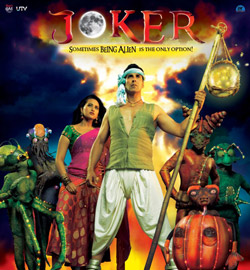
  • Reviewing the Reviews: Joker

    Joker

    Key Cast: Akshay Kumar, Sonakshi Sinha

    Written and Directed By: Shirish Kunder

    Produced By: Farah Khan, Akshay Kumar


    Joker jokes had started making the rounds on the net when the first promos came out. By then Shirish Kunder’s stock had already hit a low in Bollywood (for reasons other than his filmmaking) and it was as if people wanted to hate the film… and to make it easier, Kunder delivered a custom-made dud of epic proportions. No wonder everybody connected with the film deserted the sinking (space)ship. It’s an embarrassment the makers won’t be allowed to forget in a hurry.


    It got panned universally with one or 1.5 star ratings. Karan Anshuman of Mumbai Mirror was one of the few relatively kind ones with 2.5 stars. He wrote, with uncharacteristic generosity . “I’ll give credit to Kunder for attempting to execute new (strictly relative to a mass Indian audience) ideas in a commercial set up. I found his last directorial venture Jaan-e-Mann good fun as well for its experiment in the mainstream. Unfortunately it didn’t work at the BO, and now I wonder about Joker. Let’s be perfectly clear that Joker is not for you if you’re over 12. This is a kids’ film and must be considered, ie reviewed, as one. That it has not been promoted as a children’s movie is confounding because surely the producers did not mean for it to be seen and enjoyed by thinking adults. Once you accept this, at a breezy 105 minutes, some sense can be made of this Joker.”


    Anupama Chopra of Hindustan Times wrote, “Joker testifies to the power of the star in Bollywood. It is staggeringly inept. I can’t imagine that it was persuasive even as a concept. Yet it got made, in all likelihood because Akshay Kumar said yes. (Curiously, after making it, he disengaged from the project and didn’t do any promotion)….. The humour is so lame that it physically hurts and, by the second half, the film loses all semblance of coherence. The White House, the FBI, the Indian Army and aliens who look like vegetables with limbs make appearances.”


    Rajeev Masand of IBN Live commented, “It’s easy to write off Joker as a complete failure, but to give credit where it’s due, the film is less offensive than many Akshay Kumar films we’ve seen recently. Devoid of double-meaning dialogues and sexist jokes, there is stuff here that might have made for an engaging children’s film, had Kunder not fallen prey to that oldest mistake – of treating his audience like fools…. Joker unfolds briskly and predictably. Alas, just as you’re confronted with an unpredictable twist in the tale, the film comes to a screeching halt. Once again, an opportunity wasted. ”


    Shubhra Gupta of the Indian Express was left aghast. “At one point, a character in Joker says : sweet mother of god, what the hell is going on? In my humble opinion, he leaves it too late. I tried saying much the same as soon as the film opens, but I couldn’t get it passed my dropped jaw. Within a couple of minutes, the films establishes that it will connect the dots between a NASA scientist in search of aliens, and a village that fell off the map somewhere in the middle of India, and a bunch of ‘mad’ people. A NASA man in search of aliens? A village populated by ‘maniacs’ that fell off the map somewhere in the middle of India? Seriously? Could this be the film that would really be completely and entertainingly out of the box? I was all set to be regaled. But it was not to be, not once in its mercifully short run time of less than two hours.”


    Raja Sen of rediff.com scoffed, “So what happens if a film — one ostensibly in the guise of a comedy — doesn’t try too hard? The humour here isn’t grating, overdone, outrageous, offensive, excruciating, unwatchable. This, then, may just be an approach that could be called a step forward in an Akshay Kumar comedy if only the aforementioned humour wasn’t also nonexistent. There isn’t a single line in Kunder’s film that actually works, leaving us with a film that, while commendably brisk in a 100-minute package, refuses to get going at all.”


    Saibal Chatterjee of NDTV ranted, “Joker is a crude joke of a film that will leave you in tears unless you have a stomach strong enough to digest such unmitigated junk. Occasionally, trash does have its uses in the domain of entertainment. But when it decomposes and turns into putrid garbage, it stinks. Yes, Joker is a load of rubbish that belongs in the dump yard.


    The single star that the film gets is for the fact that Joker is probably the first mainstream comic fantasy made in Mumbai. That apart, it has nothing that remotely resembles a redeeming routine. Pity, even Chitrangada Singh’s Kaafirana dil can make no dent. What Joker delivers in the garbled guise of the genre plumbs such depths of vapidity that it stands no chance of ever coming up for air. The run time of the film is an hour and forty-five minutes. Thank God for small mercies. But even at that length, Joker is difficult to deal with.”


    Even Taran Adarsh of bollywoodhungama threw up his hands and called it a disaster. “Although the title may give an impression that it’s all about a funny guy trying to make people laugh, the fact is that this one’s about guys pretending to be aliens and how, eventually, they face an actual alien in the end. On the brighter side, the setting and structures look magical and to build an entire story around a desolate village must have been enchanting. But interesting concepts don’t necessarily translate into interesting films. Joker runs out of gas as soon as director Shirish Kunder establishes the plot, because neither does the comic quotient work, nor do the aliens [fake and actual] salvage the show. In fact, the film makes a mockery of everything you may have seen or heard of UFOs and aliens.”


    There’s always the TOI’s 2.5 to salvage egos. Srijana Mitra Das write, “Straight up - Joker arouses extreme passions. You’ll love it or hate it. It’s a totally off-the-wall entertainer powered by corny jokes, OTT filmi characters and tongue-in-cheek sequences. If you like that sort of thing, you’ll laugh out loud. If you don’t, it’s not for you.”


    The question then is: who is it for?


  • Ranjona Banerji: Slanging matches over coal continue

    By Ranjona Banerji


    The talking heads on TV went on with their slanging matches over coal. So far, the understanding of the general public about coal allocations has not been helped by television. Newspapers tell us that people are battling viruses but these have not affected the voice boxes of participants in panel discussions. Many senior journalists are worried about the bad manners of “trolls” on the internet. They should also be worried about the bad manners of VIP guests on TV debates. Noted columnist Swaminathan S Anklesaria Aiyar looked quite puzzled on Times Now last night as Renuka Chaudhury, Swapan Dasgupta and a handsome young BJD man and a not-so-handsome BJP man battled away. I have no idea what they were saying, mainly because I confess I was also watching Masterchef Australia and the US Open but I do know that the decibel levels were so high that you could not distinguish between the sense and the screams.


    I did catch Chaudhury getting irritated at Arnab Goswami’s signature “India wants to know” line and she acidly pointed out that those on the panel were Indians as well. I only saw Aiyar looking bemused.


    After that, even Goswami had enough of coal and switched to his pet subject: the fun-loving MLAs of Karnataka and their South American holiday. He even called the study tour “macabre” which is quite a stretch of imagination, even if there is drought in Karnataka.


    On CNN-IBN, Sagorika Ghose tried to battle with Raj Thackeray and his verbal attacks on Bihar. Novelist Kiran Nagakar said that the biggest threat to Maharashtrian culture came from Marathis and not outsiders and Rahul Navrekar of the Shiv Sena tied himself in knots trying to say that Maharashtrians included not just Marathis but also people who live in the state but it was about ethnic origins but it was not and so on.


    In Saamna meanwhile – the mouthpiece of the Shiv Sena – Bal Thackeray came out on the side of his estranged nephew over the Bihar issue. The final result was nothing at all, as usual.


    **


    Ghose meanwhile has written an impassioned piece in Outlook about the need for net etiquette rather than censorship because of the rude behaviour of “trolls”. It is true that the anonymity of the Net makes people behave quite wickedly and Ghose has quite candidly listed the terms used against women journalists by trolls: rape is a common threat, as are words like bitch, cunt, whore and so on. I am specifically not using asterisks and dollar signs to blank out the words – why hide the ugly truth?
    But I would recommend that senior journalists should take all this in their stride. Even before the internet was invented, there was a certain kind of person who wrote letters to the editor full of hate and sexual taunts and threats. The first time it was a shock, after that it was just crass and idiotic.) http://www.outlookindia.com/article.aspx?282107)


    **


    Mumbai’s massive rainfall on Wednesday caused the usual problems and TV gave it some coverage. It was left to the newspapers on Thursday morning to give us the complete picture, without the hysterics. This is the first time in many years that I did not see Sreenivasan Jain of NDTV stand at Milan Subway in Santa Cruz under an umbrella talking about Mumbai being flooded. As everyone in Mumbai knows, Milan Subway is below the road level and therefore, if someone pours a bucket of water into it, the water will collect. Maybe no one went there because Jain is no longer in that part of NDTV. What a relief.


    Most disappointingly, the morning TV shows did not come back to the rain although, happily, there was lots of US Open news. Even more, dare I say it, than cricket!


    **


    Since we have 800,000 news channels in India, I’m now hoping that someone starts a weather channel. Without the format of panel discussions. The idea of Chandan Mitra and Manish Tiwari fighting over low pressure weather systems fills me with horror!


  • Ranjona Banerji: Denyer’s unfair and ‘lovely’ act

    By Ranjona Banerji


    The right of the Washington Post and its journalist Simon Denyer to say what they want about Indian prime minister Manmohan Singh is undeniable. And equally undeniably, the government is wrong in trying to either demand an apology or even get publicly petulant about criticism.


    However, it now turns out that Denyer had used quotes by Ramachandra Guha and Sanjay Baru which had been given and appeared in Caravan magazine. Denyer was asked by firstpost.com about this lack of clarity over where the quotes came from. Denyer said he had an email exchange with Baru about his quotes in Caravan and later spoke to him: “Then I raised the Caravan quotes which I thought were lovely and asked him if he could freshen them up.


    He said I could use the quotes but gave me his mobile number in case I wanted to talk.


    From the Washington Post
    “Correction:

    An earlier version of this article failed to credit the Caravan, an Indian magazine, for two statements that it originally published in 2011. The assertion by Sanjaya Baru, a former media adviser, that Singh had become an object of ridicule and endured the worst period in his life first appeared in the Caravan, as did an assertion by Ramachandra Guha, a political historian, that Singh was handicapped by his “timidity, complacency and intellectual dishonesty.” While both men told The Post that the assertions could accurately be attributed to them, the article should have credited the Caravan when it used or paraphrased the remarks.”


    I called him up. We chatted about the PM’s record. He said the first half of the PM’s second term was a “disaster” and “completely wasted.” He also said PM “could have made use of the opportunity he got in 2009. He chose not to.”


    It is hard to understand why, having already “chatted” with Baru, Denyer needed to use the Caravan quotes at all. He could have asked Baru for fresh quotes, which he already seems to have. Even if he thought that the Caravan quotes were “lovely”, that’s to Caravan’s credit.


    All possible explanations do not do Denyer much credit. Caravan is a small Indian magazine – maybe he thought no one really reads it and certainly not in the US. Or that Baru and Guha were unwilling to provide similar “lovely” and juicy quotes to him – although it is hard to understand why. The Caravan interviews were in 2011. The UPA’s plight has significantly worsened in 2012.


    A simple act of courtesy would have been to credit Caravan for the quotes. A correction (at the end of this article) has since been appended to the story on the Washington Post website.


    It is interesting to compare this case with the Fareed Zakaria one. Zakaria was suspended for a month when it was revealed that he used data from an article in his blog, passing it off as his own or without crediting the writer. Zakaria picked up a few facts and did not change the language or order in which they appeared, which is what gave him away.


    His transgression was far less serious than Denyer’s and yet he had to face suspension from Time magazine and CNN. He made an immediate apology.


    The Government of India appears to be more than happy to try and curb and curtail the media in any way possible. Instances like this will only make their resolve stronger, even though the Washington Post’s transgressions are to do with media ethics and courtesy and do not take away from the media’s right to freedom of expression.


    There is a lesson here for all journalists, young and old, who like to take shortcuts in the way they do their stories or get their information.