Category: TV

  • ESPN STAR Sports’ Event Management Group on new high

    By A Correspondent


    ESPN STAR Sports’ (ESS) Event Management Group has announced the multi-year renewals of the sponsorship for two of its marquee events, Tiger Street Football and Achilles Formula Drift Asia. EMG was also awarded the Gold Award for Best Event Production and Silver Award for Best Sponsorship Activation, both for the Tiger Street Football 2012 event, at the recently held Marketing Events Awards, an annual industry event.


    Following two successful seasons, Asia Pacific Breweries has extended its partnership with ESS for Tiger Street Football event for the next two years till 2014. The event, which has garnered popularity in Asia, will now expand to new markets such as Australia, Cambodia and Mongolia.


    ESS’ Event Management Group has also extended another key partnership with PT Multistrada Arah Sarana Tbk, one of Indonesia’s leading tyre manufacturers. As a result of two very successful seasons of the Achilles Formula Drift in 2011 and 2012, ESPN STAR Sports has renewed a multi-year deal with PT Multistrada Arah Sarana Tbk as title sponsors till 2015 for the event in three markets – Malaysia, Indonesia and Australia, for the very first time.


    These wins bring to a close a packed calendar of events that includes Tiger Street Football, Achilles Formula Drift Asian Series, Guinness World Series of Pool and the KIA X Games, as well as new events such as adidas Extreme Power 5s and the upcoming iFly World Championships 2012 in December.


    The Tiger Street Football and Achilles Formula Drift Asia events have grown from strength to strength, and we are encouraged by the tremendous support and enthusiasm of Asia Pacific Breweries Limited and PT Multistrada Arah Sarana Tbk. This is a great affirmation of how Sports Marketing, through our event and platforms continue to bring brands alive and we look forward to taking these two exciting sports events to even greater heights with our new partnerships,” said Harvey Davis, ESPN STAR Sports Vice-President, Event Management.


    Edmond Neo, Director (Group Commercial), Asia Pacific Breweries Limited said, “Tiger Beer has always thrived on delivering the best ‘live’ football experience to our consumers and we are pleased to partner ESPN STAR Sports’ Event Management Group that shares the same synergies and belief as us. After two successful years of staging Tiger Street Football, we are committed to take Tiger Street Football to the next level with an aim to offer a different dimension to playing street football in Asia. We could not have asked for a better partner to collaborate with to extend this fast-paced, adrenalin-pumping game combined with a unique carnival-like atmosphere across the region, for another two years.”


    Pieter Tanuri, President Director, PT Multistrada Arah Sarana Tbk said, “We’re proud of the achievements with ESPN STAR Sports’ Event Management Group over the last two seasons and we’re pleased with how our brand has grown with the event. Our goal has always been to advance the world of drift racing and this partnership aims to elevate our Achilles brand as a premium tyre brand across the region, encourage a high-level of international competition, and feature our flagship products prominently through this exciting motorsport event, and we’re delighted to continue our partnership and take this event to new heights.”


  • Bhaskar Das takes charge of DNA as CEO KU Rao to moves to corporate role @ Zee

    By A Correspondent


    Bhaskar Das

    After serving as CEO of the six-edition Daily News and Analysis (DNA) for six years, K U Rao is moving to the Zee group in a senior corporate role. It is not known if and when his position will be replaced, but Dr Bhaskar Das, who joined Zee recently as Group CEO, will be in charge of the newspaper.


    Mr Rao, who joined DNA from Shell, helped consolidate the paper and weather slowdown storms, ensured a smooth transition from the paper’s management by the Dainik Bhaskar group to Zee in 2008. His move was disclosed internally last week.


    Zee is learnt to be launching an English news channel and recently appointed Dr Das from The Times of India group with a specific task of consolidating its news offerings. The Zee group is reportedly in advanced level discussions with Amar Ujala to pick up a significant stake. There could be other acquisitions in the offing.


    Although Zee News pioneered independent news bulletins on television and the company has had a reasonable financial statement, it has not fared too well in ratings in recent years.


  • RBNL and Star to usher in 2013 with 3rd ‘BIG Star Entertainment Awards’

    By A Correspondent


    It’s the season of awards and Reliance Broadcast Network Ltd in association with Star India have announces the third edition of the ‘BIG Star Entertainment Awards’.


    The Awards will feature 31 categories, winners for which will be selected through online and SMS votes sent in by 92.7 BIG FM listeners and Star Plus viewers. The awards night is scheduled for December 16, though the show, which clocked in 6.8 TVRs on Dec 31, 2011, is scheduled to be on air on December 31, 2012.


    Tarun Katial
    Nikhil Madhok

    Speaking on the announcement, Tarun Katial, CEO, Reliance Broadcast Network Limited said, “The unique format of BIG Star Entertainment Awards has clicked with audiences as an exceptional usher in to their New Year!”


    Said Nikhil Madhok, Senior VP Marketing, Star Plus, “New Year’s eve is a special night that all families like to spend together. Star Plus is back with the 3rd season of BIG Star Entertainment Awards which promises to be a great opportunity for families to bond and bring in the New Year.”


  • Jaldi 5 with Joydip Kapadia: As we approach a month of digitization, Mum, Del nearly 95%, Cal: 80%

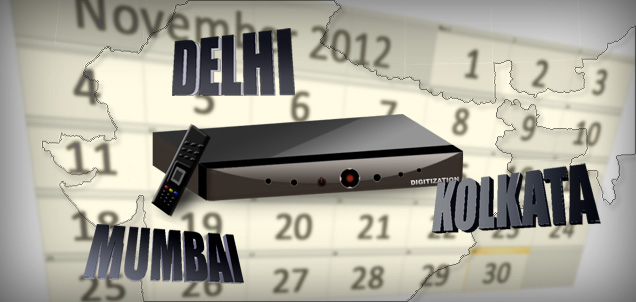
    It will be a month of mandatory digitization in the three metros of Mumbai, Delhi and Kolkata. MxMIndia spoke to Joydip Kapadia, Business Head, Television Street Maps on the progress made so far


    01. According to Television Street Maps estimates, how much digitization has actually been achieved in Mumbai, Delhi and Kolkata?

    We cannot comment on the exact numbers as there is too much of flux in these markets between DAS, DTH, Analogue. Hence, we would prefer to give a range estimate as follows: Mumbai and Delhi together are tending towards the 95% mark. Kolkata is trailing with less than 80%.


    02. Evidently, a lot of the process is work in progress… how many of the set-top boxes have been installed in the month of November alone?

    Yes. The pace of seeding has been pretty impressive with just under 35 lakh boxes seeded in November. Delhi leads the pack with more than 15 lakhs seedings. Followed by Kolkata with more than 12 lakh boxes. Mumbai was earlier seeded well and has added another 4.5 lakhs boxes in November.


    03. Do you see many switchovers from cable to DTH given the confusion?

    In the early part of 2012, we had seen a far greater enthusiasm with DTH expecting a large gain from cable. In a few cases, that expectation was as high as 30% of the total analog base within these metros would switch to DTH. However, the reality has been a little different. Cable has not lost as many homes as many on the DTH side had expected.


    04. How has the roll-out of Channel Packs been by the cable MSOs?

    While all major players have now introduced their packs, we have a few observations:-


    1. The packs have been rolled out – but not so much to end consumers. Cable Pack sales in the truest sense, in our estimate, is still 8-9 months away.

    2. There are fewer packs per cable operator vis-a-vis their DTH counterparts. This is bound to increase in days to come.

    3. The first approach seems to be National packs even for operators who are expected eventually to move to Regional/ Local packs.

    4. The systems at the MSO end are still not fully/ seamlessly integrated. Hence we are finding strange discrepancies of channels available on packs even when those are not being relayed by the MSO’s headend. We expect some of these teething issues to be ironed out in days to come.


    05. Any broad lessons as we embark on Phase 2 of digitization?

    a. The two back-to-back deadlines for Mumbai-Delhi-Kolkata could be avoided in the second phase. If individual MSOs/ Cable operators are known to expedite box seeding closer to the deadline, we need a more effective push for all key players to start seeding in time rather than at the 11th hour.

    b. DTH cannot assume that it will gain automatically due to the flux. They cannot assume that just heavy advertising and price promos will do the trick. Extensive ground efforts/ initiatives will be needed.

    c. The seduction and mating rituals between distributor companies and MSOs should start much in advance. Waiting for the last minute will only mean signal disruption to consumers.

    d. Distributor Companies would have to insist on getting subscriber visibility from the SMS of Regional Operators within the 38 cities as part of their deals. Succumbing to quick wins of minimum guarantee/ fixed deals would again put broadcasters in the same spot where their fortunes remain disconnected from number of subscribers.


  • Creating balance is important: Rahul Johri


    By Ananya Saha


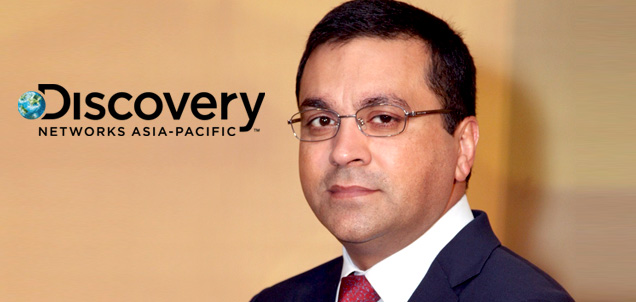
    Rahul Johri, Senior Vice President and General Manager,South Asia at Discovery Networks Asia-Pacific was recently named ‘Media Professional of the Year’ award at the Global Awards for Brand Excellence 2012. He has been associated with the Discovery network since 2001. Over the years, the Indian broadcast industry has seen lots of changes: from a two-channel to too many channels on the airwaves. “Hopefully, digitization will sort this. Well, at the same time, because the viewers are far more exposed, it is an opportunity to bring in a lot more channels, specialised channels and content,” articulates Mr Johri.


    He insists that robust distribution becomes the key in Indian broadcast space, adding: “A lot of channels understand the importance of affiliate revenue, which drives more mature content. If you look at our television landscape, we have channels that are very sensational in nature. Even if not many channels, a good number of channels are. The number of sensational channel exceeds the number of non-sensational ones. That is because if you are free-to-air channel, you are chasing only eyeballs and then you are bound to be sensational. If you are a pay channel, you expect viewer to actually pay for the content, more so in a digital environment where you will pay for what you wish to watch.” He is also hopeful that digitization will see a balance being achieved between the sensational and non-sensational channels, even though the later will not stop beaming completely.


    Mantra for success: Stay Contemporary

    Mr Johri says that staying contemporary and relevant to younger audience has helped channels like his to grow steadily. “Our viewership numbers have grown steadily over the years and it is clear testimony to the fact that this is a young country and 65% of audience is under 30 years of age who are interested in mature content. If you continue to give same fare to three generations, someone will walk out of the room,” he said.


    And contemporary is definitely the buzzword with the channel itself. The branding of Discovery was recently seen in the Yash Raj Film – Jab Tak Hai Jaan where the female lead Akira plays a documentary-maker from the channel. “The way I look it, it is the first from any broadcaster or any marketer that it is a perfect interplay between fact and fiction where Discovery Channel is fact and the movie is fictional. Discovery is seamlessly a part of the script. It is much more than a plain branding. The branding opportunities like this does not present itself everyday – it is like the perfect storm where everything comes together,” observed Mr Johri.


    The fact that in 2001, Discovery was seen mainly as educational channel pushed the broadcaster towards a lot of marketing and promotional activities. “Today, we are not a one-channel service, and hence, our job is more complex. For instance, we have programming from 10 channels in theUS, international channels, we have programming that we are producing. So all that progamming is being sorted here and then sent to various channels that we have here. There was a time when same streams were there but you had to put it only on one. So you choose whatever you thought was right. Today, the job is more complex to identify what goes in TLC or there is a gap here, or it needs to be edited. No doubt that the number of variables has increased manifolds,” says Mr Johri.


    The way forward

    Mr Johri is optimistic of the growth of the Indian media industry even though he thinks that we have a long way to go. He said, “Industry will continue to grow. We have a long way to go. Even though we might think we are a big industry, by global standards, we are not one of the biggest industry or market. There is tremendous opportunity in Indian marketplace. Broadcast companies need to grow over next few years.”


    He also believes that there is no reason that advertising revenues and subscription revenues for a broadcaster will not equal themselves in the time to come. “All over the world, subscription revenues are higher than advertising and I foresee the same trend here,” Mr Johri says


    He, however cautions, “Digitization playing out all over the country is going to be huge task. Once Digitization is completed, then the need for quality and diverse entertainment will grow. Five years from now, if you are in the perfect digital world with 1000 channels, these channels are going to be content guzzlers. While on one side, it will spell tremendous amount of opportunity to content creators and production houses etc, but at the same time how much quality will one be able to maintain? The critical balance between quality and quantity will be a challenge.” He thinks, however, industry bodies such as IBF will help channel the industry growth.


    For the record, Mr Johri is also a Board Member and Treasurer of Indian Broadcasting Foundation (IBF). He is also a member of the media and entertainment committee of Confederation of Indian Industries (CII) and member of the Media & Entertainment Division of Federation of Indian Chambers of Commerce and Industry (FICCI).


  • Saurabh Yagnik exits Star to enter Sony as Biz Head, Pix

    By A Correspondent


    Saurabh Yagnik

    PIX, the Hollywood movie channel from Multi Screen Media, has announced the appointment of Saurabh Yagnik as its new Business Head. He replaces Sunder Aaron who had resigned in August this year.


    Mr Yagnik brings with him a cumulative experience of over 17 years in varied fields. In his previous stint, he was Business Head, English channels at Star India.


    Mr Yagnik is a Chartered Accountant with qualifications in Cost Accounting and Company Secretaryship. He began his career as assistant manager at ITC in 1995. In 2000 he moved on to Hindustan Unilever as category finance manager. In 2007, Mr Yagnik joined Star India India as vice-president, Financial Planning & Treasury for the in India. He was appointed as SVP and business head, English channels cluster in 2010 and held the position for two years. He has also had long stints with brands like Hindustan Unilever Limited and ITC.


    “I am very excited to be a part of MSM and Pix in the current juncture of its journey. Pix is a youthful brand with unparalleled fan following. Over the years, it has created a definitive mark for itself and has become a leading English movie channel. I am looking forward to working with the team here and take the Channel to being No 1,” said Mr Yagnik.


    NP Singh

    N P Singh, Chief Operating Officer, Multi Screen Media said, “We are thrilled to have Saurabh joining us and we welcome him to the MSM family. The industry is at an important cusp and the English movie genre is seeing a lot of transformation. We have great confidence in Saurabh’s abilities and are privileged to have recruited someone of his caliber into the business. He comes in with tremendous knowledge and the channel is going to benefit multi-fold with him as Business Head. We are equally confident that Saurabh will lead PIX to newer highs.”


  • Star World to showcase Packed to the Rafters digitally ahead of TV launch next week

    By A Correspondent


    Star World is all set to air Packed to the Rafters for the first time in India. Packed to the Rafters’ is an Australian drama series which revolves around the story of the Rafter family, who are fighting different problems of life together.


    To make the show more relatable to the audience, Star World got Karan Johar as the face of its campaign. The channel launched a six week on-air campaign with him. And the channel has unleashed robust print, digital, DTH, cinema, radio and OOH campaign given the launch next week.


    In keeping with the growing importance of the digital platform, the channel will be hosting a Web Premiere across the Star World website (www.starworld.in/PTTR) and other social networking sites to give the viewers an experience of the show before it goes on air. Star World will be taking such initiatives up for key shows to create reach and buzz. The digital premiere will be held today (November 30) before its official launch on the channel on December 4.


    Subsequently, each of the episodes of the show will be available to be streamed and viewed on the Star World web and WAP platforms after it telecast on air. A tie-up with Vodafone will ensure viewers can catch up on the key moments of the show at their convenience.


    Commenting on the show, Rasika Tyagi, Senior VP, English Programming, Star India said, “From our Hindi and Regional GECs, one of the biggest learnings is that viewers seek life lessons from the daily soaps they watch. The issues faced by the Star World audience, the English speaking, urban Indian youth, is quite myriad and they don’t get to see shows which reflect their life on TV. Our audience will be able to resonate with the issues faced by the characters in Packed to the Rafters and emulate the way they resolve the conflicts.”


    Commenting on the digital catch-up service, Rasika Tyagi said, “When we go for consumer home visits, we get a reality check on how content is being viewed by the youth today. They want to watch a show at their convenience – anywhere, at any time. So, we as content providers have to gear up to share our content across platforms, on internet or on mobile.”


  • Stakeholder view of one month of digitization


    By Ananya Saha


    It has been a month of mandatory digitization in the three metros of Mumbai, Delhi and Kolkata. Even though government officials may make us believe that the metros are completely digitized, , the ground reality appears to be different. Analogue signals continue to be available, and not all stakeholders are happy with the way things are shaping up. Meanwhile, in Chennai, the digitzation hearing has been postponed by four weeks. It is likely to happen only by December 31, though given a cloud over whether the government will be allowed to run a cable service (in Arasu Cable),  will be allowed to be


    Man Jit singh

    Calling the Phase I a tremendous success for industry, Man Jit Singh, President of the Indian Broadcasting Federation (IBF) and CEO, Multi Screen Media said, “Digitization has been a huge success. The kinds of effort that was done to get digitized, no where in the world have we seen this kind of achievement has been done. Kolkata has not reached 100% digitization yet, but I think it will get there.” He also acknowledged that fact that there are few illegal signals in Delhi and Mumbai but assured that the IBF is working with other stakeholders to have these illegal signals completely switched off.


    Roop Sharma

    On the other hand, Roop Sharma, President, Cable Operators Federation of India (COFI) highlighted how none of the promises made on digitization by MIB have been achieved so far. She said, said, “During Parliament discussion on the Cable TV Act Amendment Bill last November, the then I&B Minister Ambika Soni said digitization will provide choice of channels to consumers-through a-la-carte selection, provide high quality service, controlled pricing of pay channels and thus lowered billing to consumers, and that consumer to pay only for what they wish to watch. Consumers were to get internet video-on-demand and value added services through set-top-boxes, and she had said that small cable operators will not be rendered unemployed, there will be transparency and correct accounting of channel viewership, govt will get tax on all connections as no under-declaration will exist, and that there will be no ambiguity in TRP ratings. Now, with one month of digitisation over, has this been achieved?” She is of the view that nothing that I&B Minister had promised the Parliament has been achieved yet and still, the Ministry has announced successful completion of phase I and started roll out of phase II.


    The figures

    Swapan Chowdhury

    Currently, according to various stakeholders, over 95% digitization has been achieved in Delhi and Mumbai even as Kolkata trails behind with quite a less percentage. Swapan Chowdhury, General Secretary, Cable & Broadband Operators’ Welfare Association, Kolkata, however, estimated, “Mumbai achieved 75% digitization and 70% in Delhi while digitization in Kolkata is only about 40-45%.”


    Mr Chowdhury also said that the actual activation of set-top boxes in November for Kolkata has been than a lakh. Arvind Prabhoo, Owner, Orbit Television Network, Mumbai said that the actual reason behind high numbers from Mumbai is because of stopping of analogue signals. “Most of the networks have reported 90-95% switchover in Mumbai. This figure has happened after the stoppage of analogue signals. We were hardly touching 60-65% before the analogue signals were not switched off. Even then, at least 35-40% people have not taken to digitisation voluntarily.” Though the piracy is still an issue in some pockets of Mumbai, over 8-9 lakh STBs were installed this month alone.


    Certainties and Uncertainties

    “There are certain distributors who have not made their pricing policy clear yet. There us a lot of confusion over revenue-sharing. One of the major issue is Entertainment Tax. If the govt charges Rs 45 per STB connection, does that mean every house that has two television sets, pays Rs 90 entertainment tax,” voiced Mr Prabhoo.


    Ms Sharma said that broadcasters are making lumpsum deals with MSOs for pay channels and not based on the number of consumers opting for those channels. “Hence, there are no accurate figures. Discrimination is rampant. Rates of pay channels are not based on market demand but whims of the large content aggregators, vertical monopoy business houses/ companies like MediaPro who enjoy monopoly in pay TV content distribution,” she remarked.
     

    Ashok Mansukhani

    Although, the DTH operators this writer reached were unavailable for comment, there have been mixed reports on its success rate. While one report says it has done well in the Capital where the availability of analogue signals has been low, MSO Alliance chief Ashok Mansukhani has another view. “DTH is surprised at its poor performance. They need to take a call on what they are upto: have they grown in the last six months,” he asked. “According to statistics, it’s 70:30 in favour of cable and that is not going to change soon. Where did cable have the capacity to retain 70% of cable base? For DTH, there is enormous churn which is as much as 33% of the total amount claimed. And how come the government doesn’t take the churn into account,” asks Mr Mansukhani.


    While Ms Sharma and Mr Prabhoo said that the issue of carriage fees has not been sorted out yet either, Mr Man Jit Singh sounded optimistic, “We expect there will be decrease in carriage fees as digitization rolls out for simple reason that the capacity constraint of analogue system will go away. However, carriage fees is not going away completely and it will take time. Both broadcasters and MSOs are working together to make a gradual transition to reach a stage economically in the short run so that it sorts itself out in the long run. We feel that carriage fees is moving in the right direction.”


    Phase II: Lessons from Phase I

    Phase I was not a smooth ride. And Phase II will be even tougher since it will be rolled out in 38 cities simultaneously. Apart from stronger communication aimed at the end consumer, the stakeholders need to tighten their belt for doing their bits too.


    Mr Mansukhani said that in the second phase, more attention should be given to the consumers and less to the broadcaster. “Awareness creation by all stakeholders is necessary since once people are aware, they are open to change. In the phase I, we were not communicated on the need of digitization and we still do not know why digitisation is happening,” said Mr Prabhoo.


    Ms Sharma said insisted that for the next phase transparency is required on each level: between broadcasters and channel aggregators; between channel aggregators and MSOs; between MSOs and LCOs and between LCOs and consumers. “Digital Cable System is new and is not tried and tested. Lots of teething problems, application hazards are poping up which needs to be addressed. Redressal of all such issues should be considered on practical ground and not on any task force or ministrial meeting. The first phase of digitization is practically incomplete. Supply of STB in the first phase is inadequate, the pressure of second phase will push the process into much more complication. Authority is not accepting the time for settling down for supply of STB and the technology,”said Mr Chowdhury.


    Mr Singh concluded, “The early seeding of boxes and getting the message out to consumers that they need to get their boxes early is one key message. IBF’s campaign to build public awareness was extremely effective and we should continue with that campaign for phase II. The ministry’s effort to coordinate with all stakeholders was in excellent trend that should continue. If anything, I think MIB  is going to take even more proactive stance of monitoring the actual implementation of the roll out of boxes city by city. So I think a lot of the learning from phase 1 will apply to Phase 2 and it is very positive.”

     

  • Colors to air Japanese ‘anime’ remake from Dec 23

    By A Correspondent


    By A Correspondent


     

    Close on the heels of announcing the mega-acquisition of the Indian rights for international show ’24’, Colors has announced animated teleseries ‘Suraj: The Rising Star’. The show will air on Sunday mornings at 10 am and is scheduled to kick on December 23.


    A remake of the Japanese baseball hit manga Kyojin no Hoshi (Star of the Giants), the show is a story of a 16-year-old boy, Suraj, who sets out on a journey to be trained as a young cricketer. It focuses on the hardships and challenges he faces towards attaining this goal, thereby highlighting all the elements of family, action, fantasy and emotions that will appeal to family audiences.


    Adapted for Indian audiences, Suraj: The Rising Star craftily integrates Indian culture and Japanese animation (anime) highlighting common characteristics like the importance of family ties, friends and a ‘never say die’ attitude.


    The show is an inspiring adaptation based on Japan’s classic masterpiece animation “Star of The Giants. Although animation is popular with children, Colors hopes it will be a hit with adults too.


    The opportunities with ‘Suraj’ seem many as the original has been rendered in various forms: in print, as television series, a Playstation 2 game,  and as many as five movies since 1969.


  • Agenda Aaj Tak to debate subjects of national relevance

    By A Correspondent


    Aaj Tak, the 12-year-old Hindi news channel from the TV Today Network, has announced its very first edition of Agenda Aaj Tak. Scheduled on December 6 and 7 in New Delhi, Agenda Aaj Tak aims at providing the greatest platform to debate the issues that matter to the nation in its own language – Hindi. It seeks to provide an avenue for leaders from all walks of life to address a large number of critical national issues. The underlying theme of Agenda Aaj Tak ‘India Maange More’ is set to compel the decision makers to ponder over some of the key issues pertaining to our nation and draw a clear road map for emerging India.

     

    The summit will bring more than 40 personalities from India and abroad on a single platform together. During each of the sessions, these thought leaders and newsmakers will share their insight and perspective and will try to lay the foundation for India’s Future.


    Leading political leaders, social activists, cricketers, celebrities, authors and bureaucrats such as: Sushil Kumar Shinde, Kapil Sibbal, Kamal Nath, Manish Tewari, Sachin Pilot, Rajiv Shukla, Digvijay Singh, Nitin Gadkari, Arun Jaitley, Sushma Swaraj, Shiela Dixit, Shivraj Singh Chauhan, Bhupinder Singh Hooda, Nitish Kumar,  Anna Hazare, Arvind Kejriwal, Kiran Bedi, Baba Ramdev, Aamir Khan, Kajol, Madhuri Dixit, Randeep Hooda, Sakshi Tanwar, Sameer Soni, Kapil Dev, Saurav Ganguly, Wasim Akram, Mohammad Azharuddin, Waqar Younis, Imraan Khan (Chairman Tehrik-e-insaaf and former cricketer), Subrata Roy Sahara, Chetan Bhagat, Anuja Chauhan,  Javed Akhtar, Ali Zafar and Kailash Kher will be participating in “Agenda Aaj Tak”.


    Commenting on the new initiative of Aaj Tak, Ashish Bagga, CEO, India Today Group said, “It is a matter of great pride for all of us to announce the first edition of Agenda Aaj Tak. It’s a big platform where leading personalities from the country and abroad will debate on national issues. Aaj Tak has been a pioneer and with Agenda Aaj Tak, it will be a step forward in engaging with topics that concern Indian masses the most.”


    The conclave will consist of discussions and Q&A sessions by prominent political leaders, cricketers, Bollywood celebrities, authors & bureaucrats on issues as diverse as politics, youth, social media, democracy, development, Bhasha, cross-border terrorism, regionalism, economic reforms, social issues, India-Pakistan relation and popular culture.


    To lend a voice to issues of the people, a team from Aaj Tak initiated interactions with people at the grassroots level to gather their views on various issues and to bring out the most prominent issues that concern the public. The people’s opinions on subjects of national relevance ranged from issues pertaining to India’s politics, corruption, Bollywood, social media, cricket, democracy, development, cross-border terrorism, regionalism, economic reforms, social issues, India-Pakistan relations among others.


  • Bigg Boss, Bol Bachchan top Whats-on-India trends

    By A Correspondent


    There are less than two weeks to go before the weekly ratings coming from the offices of TAM Media Research. Until then we need to look at alternative methods of judging the popularity of programming. Here’s how top content looks in Week 48 (November 25 to December 1).


    TV Trends has been built using specialist and proprietary algorithms that collate, analyze and compute millions of observations across multiple platform. It provides cues and powerful insights on the potential consumption and intention-to-view of content by Indian TV viewers.  The sources from where observations are aggregated include What’s On India platforms like:  Web, Mobile portal, Apps (Android, iPhone, iPad, Blackberry, Windows Mobile, Nokia Ovi), EPG-on-the-Cloud (MobileTV and IPTV).


    The report gives the Top 5 Programmess of the Week for the following genres:  English Movies, Hindi Movies, English TV Shows, Hindi TV Shows, Regional TV Shows, Regional Movies, Sports and Kids, Documentaries, Lifestyle & Food.


  • Airtel’s Sugato Banerji joins What’s-on-India as COO

    By A Correspondent


    Sugato Banerji

    What’s-on-India, TV Search & EPG (Electronic Program Guide) technology company, has announced the appointment of Sugato Banerji as its Chief Operating Officer. Mr Banerji has called it a day as CMO at Airtel DTH & Media to join Intel-Sequoia-Nexus funded TV start-up What’s-on-India.


    At What’s-on-India, Mr Banerji will lead the company’s growth strategy in the TV Search, EPG and Recommendations space and consolidate key partner and client relationships. Under him, What’s-On will also look at expanding into newer International markets just as the company set up, What’s-On-Arabia, in the Middle East in 2012.


    Sugato Banerji’s move from a large corporate set-up to the new, racy, disruptive world of start-ups comes in as What’s-On-India rapidly expands into International markets as well as launches new solutions in the Domestic TV sector, in the wake of the ongoing Government efforts to digitize cable.


    Atul Phadnis, CEO & founder, What’s-on-India, said, “What’s-On-India is at an exciting crossroads of TV Search and new TV devices in an increasingly digitalizing television sector. Sugato brings in tremendous experience in the TV and Media business that would be extremely valuable as What’s-On-India charts a new, growth and expansion agenda in the coming months.”


    “I am excited to join What’s-On-India at the cusp of a transformation of the TV industry into digital. Digital TV would mean more programs, more channels, increase in regional and local content, greater diversity of set-top-boxes, recorder devices, increased viewing of TV on wireless devices, leading to anexplosion in the demand for sophisticated TV Search, Recommendations and Personalization. What’s-On-India with its suite of new products is perfectly poised to ride this digital wave, from both ends- the broadcaster & distributor. I am looking forward to lead the market expansion operations in this direction”, said Mr Banerji.


    Recently, What’s-On-India received its first Series B funding round with Intel, Nexus VP and Sequoia Capital in September 2011, followed by the acquisition of TV Street Maps, a TV Channel Distribution Monitoring company, in December 2011.


    The company also launched a series of TV Search and Preview apps on Android, iPad, iPhones, Windows Mobile and other platforms. The most recent announcement was that of an expansion in the Middle East via an acquisition in Jordan.