Category: TV

  • Tot’s the way ahead for Nick Jr


    By A Correspondent


    Most parents are faced with a slightly amusing scenario almost every other day in their lives when their kid is stuck between choosing what programme to watch from an array of kids channels that are blasted across to them. From toddlers to tweens to even teens, children across different age categories have a tough time trying to watch an entertainment channel that amuses them the most. While some may blame this on the innumerable offerings that are available today, others may reason that the quality of content is so superior that it makes the task of staying loyal to one channel more demanding.


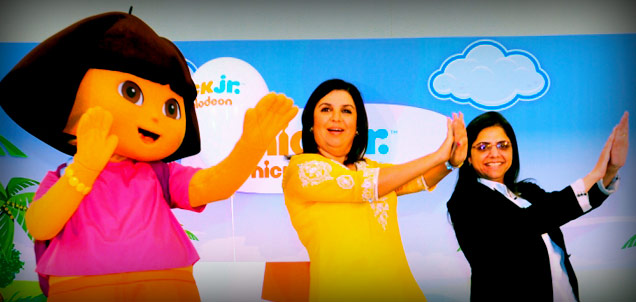
    While in any other space (under the realm of television), players would think twice before venturing with a new channel if the space is too cluttered, that is not the case with the kids genre that saw the launch of a new and challenging entrant in the form of Nick Jr. Said to be the third such launch from the Nickelodeon stable, Nick Jr. is being positioned as an eco-system for pre-school kids and their moms. With world-class content on-air, backed by a comprehensive consumer products range at retail, Nick Jr. aims to become the preferred destination for kids from the age group of 2-6 years and their moms.


    With history by its side, Nick Jr. is known to be successfully beamed around 125 countries and across 25 different languages with the tag of being a kid-friendly channel that airs safe and edutaining shows. The content is so devised keeping in mind curriculum goals and a child’s growing needs – be it motor, cognitive, creative or technical skills. In fact properties like Dora the Explorer, Go Diego Go, Team Umizoomi, Bubble-Guppies and Blues Clues, amongst many others, Nick-Jr shows are well-researched and proven to aid learning amongst pre-school kids.

     

    Nina Elavia Jaipuria

    Sharing her excitement with MxMIndia on the latest entrant and on the positioning being adopted, Nina Elavia Jaipuria, EVP & Business Head – Kids Cluster, Viacom18, said: “It just isn’t education per se as that would be very boring and that’s what children do anyways at school. The focus for us is edutainment – a combination of entertainment and education. The focus is a result of the multiple choices that are available for parents and children today.” Given her own example, Ms Jaipuria added, ” As a parent, I can tell you that there are some choices that a parent has to make for their children and as one moves forward one realises that there is a time for everything – both education as well as entertainment. Today, in most houses television has become inevitable and is on switch-on mode for most part of the day. At such times, kids become passive viewers to a lot of content that adults watch. So to bring back the focus on development for children through entertainment was what our objective is.”


    According to Ms Jaipuria, “There is too much pressure on kids today to perform well be it at school dance, sports etc. As a result of which they get stressed out easily. So the focus here is development of the child which is not rigorous in nature but which is helpful for the growth of kids.”


    Along with most experts who agree that the edutainment segment is still unexplored and in a nascent stage in India, Jaipuria too has a similar sentiment to share. Says Ms Jaipuria: “The whole concept of parents wanting their kids to be competitive has been there from the start but what has changed today is the offering. We didn’t have much choices or offerings when we were young but that aspect has changed today. So while edutainment offering is in a nascent stage in India the need was always there. Today there is content available that is bridging that gap.”


    Packing a punch

    To begin with, the channel would be airing content daily between 6am to 7pm in the evening and would be followed by Nick Teens. Elaborating on the channel’s approach to content, “The content would primarily be in English and no other language as yet. That’s because in India, English is an aspirational language. Most parents want their kids to learn English whether from SEC A, B, C or D it doesn’t matter. We will play our content only in English so that it helps create another language skill for children,” she explained.


    On whether the channel will be open to incorporating indigenous content, Mr Jaipuria said, “We don’t plan to launch Indianised shows as yet on Nick Jr. as the shows are very well researched and need a lot of pipeline time as well. Since we have Nickoledean as our mother brand we know that we have invested in three more shows as we go along – they take years to make and we are waiting for them to launch in the US and then bring them here. Having said that, we know that kids are universal in their appeal and therefore every content targeted towards them works today. You do not have to make desi content to cater to local needs; at least not for this genre.”

     

    Sandeep Dahiya

    Sharing his plans on the retail front, Sandeep Dahiya, SVP, Consumer Products – Viacom18, said, “Given the line-up of iconic characters on Nick Jr., we’re ready to give wings to kids’ imagination, through a product range that’s comprehensive as well as interactive. As part of our plan to create an eco-system around Nick Jr., we will not only further strengthen the Dora the Explorer franchise, but also bring to life some of our other internationally acclaimed properties like Go Diego Go, Bubble Guppies, Blues Clues and Team Umizoomi, in categories that are both, conventional as well as unconventional.”


    While the kids genre is increasingly being viewed as being cluttered, that may not necessarily be the case, feels Ms Jaipuria. In fact, according to her the kids genre contributes around 8 per cent to the overall television pie and is second only to GECs in India. The space has also being seeing good response from advertisers with the ad spends pegged at around Rs 250-300 crore. According to Jaipuria, what will further incentivize players to do well is the digitization wave that will bode well for all players. “With digitization having come in, there is a lot of segmentation that is now possible for us to do. Digitisation has enabled us to segment and provide offerings to viewers in a manner where business also makes sense for us. I guess it’s a wave of digitisation that we rode on with Nick Jr. particularly,” she said.


    As for launching the channel in a slowdown phase, Ms Jaipuria said, “Slowdown has had no effect on our channels so far. In the past six years that I have been here, we have launched three channels and each one of them has being throwing up good viewership numbers so far. In fact we’ll be launching more Indian content as we move along.”


    On solid ground

    With its plans around content firmly in place, the channel would be complementing the offline initiative with a little help from online too. Added Ms Jaipuria: “We will be focusing on digital around Nick Jr. And will especially be targeting the mothers. As we’ve said, mothers will be a very important subset while we promote this channel. Also, I am imagining that it will be the mother that will lead the channel on to the digital platform; and mothers today are present on the website – let’s get real about that fact. There are a lot of activities that the mother can do with the child on our digital platform.” According to Jaipuria, the idea is to stay ahead of the curve as kids today are becoming screenagers and they want to consume content across various screens. “We want to make sure that we are present across various screens and therefore the idea of engaging outside of television,” she affirmed.


    When asked about the viewership numbers expected from the newest entrant, Jaipuria expressed a feeling of caution as she said, “It is difficult to predict what viewership Nick Jr. will throw up because the slicing of TAM doesn’t even capture this segment; the whole rating system starts from the age group 4. So I do not know they will manage to capture our TG. Ideally Nick Jr. will be like any other niche channel that not necessarily depends on GRPs but has a whole lot of connect with the TG audience. We are trying to figure out if TAM can do anything about the slicing of the kids genre but till then we will live with what we have.”


    Presenting a robust outlook for the various channels under Nickelodeon, Ms Japuria sounded content as she said, “Sonic has a 3 per cent market share and is riding high on digital. If you know the kids category you will know that it is a very slow category as you have to build loyalty with children over a period of time. They are so in love with their favourite character that it takes time for them to like another. As for Nickoledean, it occupies anywhere between 18-22 per cent market share and competes for the top spot. With digitisation taking off, we expect our market share to only grow further.”


    —————–


    MxMIndia spoke to top media agency captains on the launch of Nick Jr 


    Mohit Joshi, MD, MPG India

    Yes, definitely there is scope for more kids channels in India. Kids consume a lot of television and are most loyal viewers of shows – ‘appointment viewing’ in the true sense happens in this TG. On a personal note, my daughter is very upset that ‘CBeebies’ is not available anymore. Point being made – this TG is hungry for more content and ‘good’ content.


    Also, we as parents and as media experts, would love to have an edutainment channel option in this country.

     

    Shashi SinhaShashi Sinha, CEO – Lodestar UM & IPG Mediabrands

    I have not seen the content on the new channel and would therefore not be in a position to comment much on it but the fact is that the kids genre is at an exciting phase in India. With edutainment as their core focus, the channel has made a good segmentation move that will ensure that kids come and watch their channel. Moreover, more than half of India’s population is young and anything that is catered to or centered around them will eventually do well in the long run.

     

  • Ten Sports is official broadcaster of Aircel Chennai Open 2013

    By A Correspondent


    Ten Sports has extended its support to the 18th edition of Aircel Chennai Open as the exclusive official broadcast partner. The channel has bagged exclusive rights of telecasting the tournament in India. Ten Sports will bring LIVE tennis action as the world’s best tennis players converge in Chennai to display their talent and win the coveted title. Ten Sports’ comprehensive coverage will be telecast from 31st December 2012 through to 6th January 2013.

     

    Announcing the tie-up, Atul Pande, CEO Ten Sports, said, “We have enjoyed a strong and fruitful association with the Aircel Chennai Open and are very excited to be strengthening it further. Once again, we have kept our promise to bring the finest international events to Indian audiences. Tennis has a huge fan following across the region and our association with the Aircel Chennai Open will give a fantastic opportunity to millions of tennis fans to experience thrilling tennis action from the comfort of their homes.”

     

    Speaking about the tournament’s association with Ten Sports, Ashu Jindal, COO, IMG Reliance said, “In taking tennis to millions of homes across the world and giving aficionados a brilliant opportunity to enjoy the action live, Ten Sports has played an important role in popularizing the tournament and the sport in different markets. We are pleased to continue our partnership with Ten Sports as official broadcaster of the 18th Edition of the Aircel Chennai Open.”


    M A Alagappan, President of Tamil Nadu Tennis Association said, “We are glad to welcome Ten Sports as the Official Broadcaster of the 18th edition of the Aircel Chennai Open. Ten Sports definitely enjoys wide reach in the region and we are sure their exclusive LIVE coverage of the event will help tennis fans to witness the game from start to finish”


  • ESPN Star Sports ends 2012 with a record haul of creative awards

    By A Correspondent


    ESPN Star Sports (ESS) continued its creative leadership, capping a successful calendar year with a total of 14 awards for its in-house on-air campaigns when it clinched two Gold and two Silver awards at the recent Promax Asia Awards that honours the industry’s best communications campaigns.


     

    The recent success comes at the heels of ESS’s most memorable performance at Promax International USA where it won two Gold & two Bronze awards, beating stiff competition in sports from across the globe. Likewise in the highly competitive Indian market in May this year, ESS scored another record haul of six awards at PromaxBDA Awards India where it not only swept off the entire sports category, but also won two more awards in other highly competitive categories.


    Said Peter Hutton, ESPN Star Sports’ Managing Director, “It’s excellent that our creative team have received further recognition for their consistently high level of original work.”


    Conceptualized in-house, the achievements for these projects highlight ESPN Star Sports’ Marketing & OAP team’s single-minded focus to engage the diverse audience through the most memorable, relevant and effective communication campaigns, while building and promoting key properties and events in line with its business objectives.


    Awards won in 2012:

    Promax International Asia – 4 (Spanish BBVA La Liga, Barclays Premier League, ESPN Player)

    Promax International USA – 4 (Barclays Premier League, Wimbledon, Champions League T20)

    PromaxBDA Awards India – 6 (Formula 1, Barclays Premier League, Wimbledon, Champions League T20)


  • How M&E CEOs are embracing digital growth


    After years of uncertainty and caution in the digital world, CEOs are now more optimistic than ever about the digital future, notes leading consulting firm Ernst & Young. “This was the primary theme that emerged from our 2012 CEO study, in which 34 CEOs from leading global media and entertainment companies shared their views on how the industry will benefit from the digital future.The CEOs we interviewed represent leading global companies with combined annual revenues exceeding US $300 billion.”


    Five industry captains from India were among the 34 interviewed. These being: Messrs Ravi Dhariwal, CEO-Publishing, Bennett Coleman & Co Ltd; Sudhir Agarwal, MD, DB Corp; Sanjay Gupta, CEO and Wholetime Director, Jagran;  Tony D’Silva,  Group CEO, Sun Network (now with the Hindujas) and Punit Goenka, MD and CEO, Zee.


    Excerpts from the report:


    Four key actions from CEOs
     

    1. Focus on the customer.

    “The world’s greatest company will have the customer at the center.” “Having a direct relationship with the consumer will translate into new revenue stability and growth.” “Companies understanding and concentrating on the consumer’s need will do better than those that concentrate inwards.”


    2. Create differentiated content.

    “First, second and third things will be the creative success of our brands and studios.” “Being able to navigate the waters with compelling, cost-efficient movies that people have to see.” “Strong content delivered in exciting ways.”


    3. Deliver a seamless experience to the customer across all devices, platforms and geographies.

    “We are looking to be with the customer all day with tablet, iPhone(R), online and IPTV.” “Providing seamless delivery of all content on a global basis.”


    4. Recruit and retain the right people. They will be the ones who will drive success.

    “Digital reduces the number of levels of hierarchy, allowing the CEO to interfere in debates that are not necessarily his.”

    “Our company needs to become more horizontal and less vertical.” “I want my people and teams to (1) be well-grounded, (2) be competitive with a desire to win, and (3) take responsibility and be decisive.”


    Courtesy: Ernst & Young Media and Entertainment practice (http://www.ey.com/IN/en/Industries/Media-Entertainment)


    The 34 media and entertainment CEOs interviewed for Ernst & Young’s 2012 CEO study are optimistic about the opportunities in today’s digital world. They see digital as key to their revenue and margin growth. It is their present and their future. This contrasts with E&Y’s 2008 study, which showed that CEOs were more tentative about digital’s potential.


    However, every path has its risks. In addition to sharing their insights into the opportunities digital offers, CEOs also admit they face challenges.


    Getting the consumer to pay fair value and developing their “digital muscles” across the front, middle and backoffice continue to be key focus areas for media and entertainment companies.


    And yet, CEOs are meeting these challenges head-on and are regaining control of the reins of their future long-term growth. In today’s rapidly changing digital marketplace, CEOs remain undeterred about the role digital will play in their companies’ future


    Summary of key points

    CEOs are optimistic about digital. They are no longer tentative about digital. They see opportunities for growth in both revenues and margins.


    Connected technologies drive growth and create transformative digital ecosystems. This growth is being driven by connected technologies that are, in turn, creating transformative ecosystems.


    CEOs are thoughtful about where to invest. CEOs currently see new distribution methods and new types of content as the most attractive investments. CEOs see these investments as central to setting them apart from their competition.


    Exploiting digital opportunities comes with challenges. CEOs are working to make sure customers pay a fair price for content, and they are building the competencies in their back, middle and front office to maximize their advantage in a digital world.


    Digital drives double-digit growth

    Today, CEOs see digital as a core part of their business, as well as a key driver of growth. As one respondent commented: “everything we do is digital.”


    Definitions of what constitutes digital can vary by subsector and even by companies within a sub-sector. With this caveat, CEOs were asked what impact digital would have on their own company’s revenues and margins over the next three years. Sixty-four percent of study participants expect digital to drive revenue growth of 10% or more. Forty-eight percent of CEOs also expect margins to increase by 10% or more in the same time frame.


    This compares to the 2008 study, where CEOs were more focused on protecting their traditional business than pursuing digital opportunities. One respondent worried that “digital media may not be as economically attractive as old media.” Another suggested that “media is trading analog dollars for digital dimes.” For many, digital media was still viewed as a new frontier – a place only for gamblers willing to take a chance on the unknown.


    Intuitively, there is a prevailing belief that digital margins should be higher because media and entertainment companies no longer have the cost of physical distribution. In the short-term, investments required in infrastructure to enable digital will tend to drive margins lower. However, that is only in the short-term. Once companies have the required digital infrastructure in place, we expect their margins will rise.


    Tablets and smartphones are driving growth

    So what is driving this double-digit growth in digital revenue and this foundational shift in consumption? When CEOs were asked which technologies they see having the greatest impact on their individual sectors, 79% suggest tablets, 62% say smartphones. The impact these devices have on the consumer experience is obvious to each of us in our daily lives.


    These devices are supported by the technology that respondents see as having the third biggest impact on the media and entertainment industry in the next three years: cloud hosting services and digital lockers.


    When CEOs were last surveyed in 2008, consumer tablets were not even on the market, cloud computing was a niche product and smartphones were focused on email and texting as opposed to video and apps. Today, more digital content across more platforms and available on more devices has created new and significant monetization opportunities for media and entertainment companies.


    Conclusion

    CEOs have a clear vision of a digital world

    When CEOs survey the future, they see the opportunities that digital media presents. Whether it is B2C or B2B, the direct relationship that applications, ecosystems and technologies enable is fundamental to their vision. It is about the ability to drive an outstanding consumer experience by offering differentiated content on an array of platforms and devices, anytime, anywhere.


    Their success will depend on how quickly they can optimize their back, middle and front offices to overcome challenges they face – getting consumers to pay fair value, managing content and optimizing their supply chains.


    It will also depend on their people. It will depend on having the right people with the right skills to win in a fast-paced, ever-evolving digital landscape.


    Once a gambler’s enterprise, CEOs today see digital as necessary for future long-term growth. Undeterred by their challenges, CEOs are optimistic and they have greater confidence their companies can take full advantage of the opportunities that exist in today’s digital world.


  • Satyamev Jayate Bags ‘Indian of The Year’ Special Achievement Award by CNN-IBN

    Left to right: Uday-Shankar-CEO-Star-India-Svati-Chakravarty-Bhatkal-and-Satyajit-Bhatkal-from-team-Satyamev-Jayate-Actor-Shabana-Azmi-at-the-CNN-IBN-Indian-of-the-Year-Award-Ceremony


    By A Correspondent


    Non-fiction television show Satyamev Jayate on Wednesday bagged the CNN-IBN Indian of The Year – Special Achievement Award 2012 for its path-breaking initiative.


    A release from Star India said that this accolade for Satyamev Jayate follows soon after recognition by the Government of India earlier this year. The show had been rewarded by the National Commission for Scheduled Castes in October for its efforts to create awareness against social discrimination.


    Satyamev Jayate won the CNN-IBN ‘Indian of The Year’ award under Special Achievement category along with Olympian Mary Kom and missile scientist Dr K C Thomas.


    Star India CEO Uday Shankar and the Satyamev Jayate team were honoured for their remarkable contribution in highlighting several social ills that continue to plague modern India and to help create awareness against such evils through the pioneering TV programme.


    “This award is extremely special to us at Star as responses from viewers were critical in deciding a winner. Satyamev Jayate was an initiative to offer a public platform to issues that concern all Indians and it’s quite humbling to see these efforts being recognized,” Mr Shankar said.


    Satyamev Jayate was also nominated in the most influential entertainer of the year category for its innovative use of television as a medium for social change.


    Satyamev Jayate was a landmark show in Indian television that set new benchmarks from the very first episode earlier this year. Star India was instrumental in helping conceive the show, which also demonstrated how TV can be an effective tool to influence social change and empower people.


    CNN-IBN Indian of the Year is one of the biggest and the most credible awards that are decided on the basis of votes from the general public as well as the eminent citizens of India. The award has been recognizing outstanding contributions by Indians to nation- building for the past seven years.


    The winners were selected through a four-tier process that began with selecting nominees in different categories by senior editors of Network18 which is ratified by a jury consisting of Padma awardees and concluded with polling by citizens from across the globe to choose their favourite Indians.


    Satyamev Jayate reached a third of India’s population, airing simultaneously in multiple languages. It was the most-talked about show during its 13-week run, questioning social mores, helping shape mindsets and leaving an imprint on the minds of people with compelling tales from everyday life.


  • MIB on ‘fastway’ to cleanse systems: Seeks TRAI view to avoid MSO/LCO monopolies

    By A Correspondent


    The Manish Tewari-led information and broadcasting ministry appears to be on a fast track to check on monopolistic practices in the cable business. And in the process, the heat is on Punjab’s Fastway Transmission which has a near-monopoly in the State and has strong linkages with the Deputy Chief Minister Sukhbir Singh Badal.


    After asking TRAI to offer its views on government-ownership in broadcast, the ministry has sought views of the TRAI on the measures to prevent monopolistic operations by MSOs and LCOs. It has requested TRAI to provide its recommendations under Section 11 (1) (a) on the following:


    “In order to ensure fair competition, improved quality of service, and equity, should any restriction be imposed on MSOs/LCOs to prevent monopolies/accumulation of interest? If yes, what restrictions should be imposed and what should be the form, nature and scope of such restrictions?


    Accordingly, amendments required in the Cable Television Networks (Regulation) 1995 Act and Rules framed there under may also be suggested.”


    Multi System Operators (MSOs) and Local Cable Operators (LCOs) are required to be registered with local Post Offices to be able to operate in the permitted areas of registration, adds a communique from the ministry. However as per recent amendments in the Cable Television Networks (Regulation) Amendment Rules 2012, it has become mandatory for MSOs to get registration from the Ministry of Information and Broadcasting to operate in those areas which are notified for analogue switch off.


    The communique further adds that it has been observed that the cable TV distribution is virtually monopolized in some States as operation of the entire cable TV network is dominated by a single entity in that State. At present, there are no restrictions on the issue of accumulation of interest in terms of market share in a City, District, State or country by individual MSOs and LCOs in the Cable Sector. MSOs and LCOs are free to operate in any area(s) of their choice after obtaining registration from the Ministry. It is felt that such monopolies may not be in the interest of consumers and may have serious implications in terms of competition, pricing and healthy growth of cable TV sector in that market.


    Earlier, the Ministry had made a reference to TRAI on May 16, 2012 to examine and recommend measures to address issues of cross-media restrictions and safeguards. With this reference, the issues of monopolies in the broadcasting sector in the most comprehensive sense is set to get addressed by TRAI.


  • Rajesh Jejurikar quits Zee, to return to M&M

    By A Correspondent


    Rajesh Jejurikar

    Zee Entertainment Enterprises Limited (ZEE) has announced that Rajesh Jejurikar, the company’s President has stepped down after a brief stint of 10 months, to explore new vistas. His role at ZEE, involved managing all the key verticals at Zee, except programming. Mr Jejurikar is reported to be returning to his former employer, Mahindra & Mahindra.


    Punit Goenka

    Punit Goenka, MD & CEO, Zee Entertainment Enterprises Limited said, “In a short stint at Zee, Rajesh has brought in newer business perspectives and has contributed to the process immensely, bringing in positive business impact to the organization. The entire Zee family wishes him all the success in his new endeavors.”


    Speaking on his tenure at Zee, Mr Jejurikar said, “The time spent at ZEE was extremely fruitful. I am thankful to ZEE and Punit for giving me an opportunity to explore and broaden my experience in the media & entertainment space. ZEE has all the fundamentals required to become a global media enterprise. As I part ways, and move back to the manufacturing sector, I wish ZEE all the success.”


    Mr Jejurikar’s last day with the company will be December 31. All verticals and department heads at Zee, will now report into the MD & CEO, Punit Goenka.


  • Star Gold launches on Virgin Media in UK

    By A Correspondent


    Yeshpal Sharma

    Adding another feather to the cap of the Star Network UK operations, Yeshpal Sharma, Sr Vice President Star UK & Europe, has announced the launch of Star Gold on Virgin Media as part of their ‘Asian Mela’ offering.


    Mr Sharma stated, “With the launch of Star Gold on Virgin Media, the UK’s largest cable platform, the Star Network has further strengthened its offering to its loyal and growing UK viewers.”


    Star Network channels available on Virgin Media’s ‘Asian Mela’ bundle now include Star Plus, Star Life Ok and Star Gold.


    Star Gold is the Star Network’s dedicated 24-hour premium Bollywood movie channel, 100% subtitled in English. It boasts one of the largest Bollywood movie libraries in the world. Star Plus and Star Life Ok are 24-hour premium Hindi General Entertainment channels, with English subtitles.


    Emma Jones, Director of Content Acquisition at Virgin Media said, “Star Gold is a fantastic addition to our Asian Mela bundle. This is great news for customers with access to even more Bollywood entertainment; Virgin Media is the TV destination to enjoy the best movies around.”


    Virgin Media’s Asian Mela bundle now provides access to 13 South Asian channels for just £12 a month. Star Gold is available on Virgin Media on EPG channel number 801.


  • Let the (ratings) games re-begin!


    By A Correspondent


    After a brief two-month hiatus, the broadcast industry will be waiting with bated breath to lay their hands on the viewership data that will be released by TAM tomorrow – that is, December 19 2012. The day will be of utmost importance in the broadcasting fraternity as it marks the release of data post the digitization drive that transpired across four major metros and also for the fact that the industry expects new trends to emerge, something that was amiss when the analog world was largely in operation until October 31, 2012.


    Just to recap, TAM had stopped issuing ratings to the industry citing deferment. In wake of the phase-wise DAS implementation that was scheduled to take place across the four metros, the custodians of TAM Media Research – Advertisers (ISA), Media Agencies (AAAI) and TV Broadcasters (IBF) – had arrived at a joint consensus on the need to temporarily defer TAM TV Viewing data release for the All India market for a period of 9 Weeks starting Week 41 (October 7, 2012, Sunday) and ending Week 49 (December 8, 2012). This deferred data will now be released on December 19, 2012 along with data for Week 50 (December 9-15, 2012).


    LV Krishnan

    At a press conference last week, LV Krishnan, CEO, TAM Media, highlighted the progress that had been made so far post the switch to digitization by the four metros and what were the immediate trends that were showing up in the new universe. What was heartening to note was that most analog homes in Mumbai and Delhi had made the imperative switch to digital with Mumbai recording a 93 per cent conversion rate compared to Delhi that recorded an impressive 97 per cent. On the other hand, Kolkata witnessed only 70 per cent conversion from C&S homes to digital while Chennai recorded more abysmal figure of just 26 per cent homes that had moved on to digital.


    Emphasising on the new rating mechanism, Krishnan said that as per the advice of the CIC committee, TAM will not report homes in the DAS area that are not digital. This will lead to the universe also shrinking correspondingly. Thus while analogue data from Mumbai, Delhi and Kolkata will not be released, an exception will be made for Chennai where it will continue to report analogue data given the low conversion rate observed there. Krishnan added here that the Urban Agglomeration or non-municipal corporation areas in Mumbai that consist of Navi Mumbai, Thane, Dombivli, Kalyan etc will continue to release analog data as they would be liable for conversion when the second phase kicks in. Thus, going forward, the data that would be released will be reported at breaks of C&S 4+, NCS (Terrestrial), C&S Digital 4+ and C&S Analogue 4+ (for non-DAS areas).


    Among the few trends that were observed as a result of the digitization drive, Krishnan pointed out the move had been a boon for niche genres like English and kids entertainment that witnessed a spike in viewership (time spent) during this phase. He noted that about 60 percent of channels with a pre-DAS share between 0 and 0.5% gain in share had witnessed a 4 percent net share gain post digitization. This was not the case for larger market share channels that witnessed a slight reduction in the net share gain.


    In order to facilitate the ever-expanding universe size, TAM has said that it would be increasing its sample size by about 400 peoplemeter boxes in the Mumbai and Delhi markets starting from the first quarter of 2013. It has also decided to add another 250 peoplemeter boxes to centres such as Chennai, Hyderabad, Bangalore and Kolkata.


    While all systems are set for the December 19, 2012 release Krishnan stated that with digitization having set in it was important to be cautious when analysing data in this phase like for example taking averages, looking at trends, not cutting data too fine such as a particular half hour on a particular day, ensuring that sample sizes are sufficient etc. Asserting his gameplan for the future, Krishnan said that for Phase 2, TAM seeks to carry-forward the learnings and continue working with the committee to make it conducive and resourceful for the broadcast environment.


    MxMIndia spoke to a few members from the broadcast fraternity to see if not having data for two months made any difference to their survival and what would be their expectations from the new ratings that get released from December 19, 2012.


    Ajay Bhalwankar, Head- Content – Hindi GECs, ZEE

    “There is a myth about every Wednesday morning being a scary one….You won’t find us running helter-skelter every Wednesday. Ratings tell you what has been liked and what has not been liked but not what has to be done! So they are just a reference point. We have an internal meter which we follow to check whether our shows are creating magic or not. Initiatives on digital and social media brought us closer to our audiences. This internal judgement is important. I started my career in the ’90s and we had no ratings then for nearly eight years. So, ratings do not bother me.”


    Anand Chakravarthy, Business Head, BIG CBS Networks

    “Our issue with TAM has always been that the English entertainment genre has never been well represented. The fact is that the English entertainment speaking audiences are never fairly represented in the sample, due to which the data released is not quite comprehensive. As a network, we have never depended on numbers to sell; we’ve always talked about the quality of content and the quality of our offering which has been our strength. In fact we have always maintained that TAM data is not a yardstick for niche channels like the English entertainment channels because the sample size of TAM does not represent this audience well.


    Even with digitization happening, the question, is how well will the new sample represent households that watch English entertainment channels? There could be some amount of movement of market shares between genres as we know that some parts of metros are still not disconnected completely. Therefore the universe size may reduce in some markets that will lead to change in ratings from the larger genres to possibly the smaller genres. But the fundamental issue, does the TAM ratings represent the English entertainment genre well enough and does it have the right sample size and profile of people, the answer to that is no. It will continue to be a problem unless it is addressed very clearly and head-on. That’s an issue that needs to be addressed very quickly. We are working with TAM to see how we can better evolve the system so that the English entertainment space is represented well enough.”


    Nina Elavia Jaipuria, EVP & Biz Head – Sonic & Nickelodeon India

    “What happened was for the good of the industry because it was required that everybody come to a consensus and see that the data is sanitised thanks to the changing environment and that it would give us a better understanding of phase 2. So while life was disrupted for about 8 weeks, it was all for a good cause. But having said that, I also believe that TAM is the only currency that exists in this industry and therefore we did miss its release to some extent. But it was a minor hurdle and nothing major so as to change our lives drastically.


    As for the release of data once again from tomorrow, we have to see what the new TAM has in store for the industry. They must be having their hands full as of now but then there is a committee which is looking to sanitize data that gets released. With the digitization numbers already pouring in, we are eager to see the kind of trends that the kids entertainment genre has managed to throw up. I see content and marketing playing important roles as they will drive viewership to the genre. So I would wait to see what TAM has to offer and take that lesson to phase 2 of digitization. I am sure that TAM will keep themselves abreast of the sample size and formation based on the manner in which digitization gains acceptance. So the universe will also move accordingly and I am sure that TAM would have taken into account that factor. Whether it is SEC fragmentation or it is the universe movement, TAM surely would have taken all these things into account. Also, digitization will only help the industry in terms of it becoming more transparent and more measurable and the fact that the niche genres will have a better chance to survive.


    Also, it will become an environment where the reliance on ad-sales will witness a drop. It will not vanish completely but we will see more reliance on subscription, which will be a good thing. All this won’t happen overnight as only 4 metros have been included in phase 1, which will move to 38 other cities in phase 2 that will take another 4-6 months. But in the end the country will be digitized for good.


    From a qualitative perspective, we would like to see different slicing of data especially from a demographic and psychographic perspective in the kids’ genre. Traditionally we have been doing 4-14 yrs which is sliced 4-9 and 10-14 yrs and the more we look at kids today and the fact that they are becoming more dynamic today, there is a need to relook at the slicing by TAM.


    Ajay Trigunayat, CEO, English Entertainment Channels, Times Television Network

    We are of the view that it’s difficult to capture rapid macro-transitional changes:


    1. Analog >> Digital migration

    2. Panel Updation

    3. Change in SEC definition


    We certainly understand it’s a challenge to condense this transitional period but we are hopeful TAM will accurately reflect these changes soon.


  • No TAM data release today as MIB ask withholding news channel numbers for 2-3 days

    By A Correspondent


    There will be no release of data from TAM Media research today, as the Minister Manish Tewari-led information and broadcasting ministry has urged TAM to withhold release of data of news channels by two or three days.

    Late last night, TAM issued the following statement: “At the request of the I&B Ministry, the Government of India, and in concurrence with IBF, AAAI & ISA, we are delaying the data release to Thursday/Friday.The reason for doing so is that  the Government of India has requested us to withhold release of News channels data by two or three days.  The industry is meeting with the ministry to take a decision. Thank you for your cooperation.”


  • Designers showcased on TLC’s Project Runway

    By A Correspondent


    Lifestyle channel TLC is showing new episodes of Project Runway All Stars at 8pm on Sundays, with designers Isaac Mizrahi and Georgina Chapman as judges and model Angela Lindvall as series host.

     

    The series showcases 13 of Project Runway’s expert designers competing with one another, for prizes that include an exclusive designer’s boutique in select Neiman Marcus stores, $100,000 cash from L’Oreal Paris and a feature spread in Marie Claire, besides others.


    Participants have to create the best clothes given restrictions on time, materials and theme. Their designs are judged, and one or more designers are eliminated each week.


  • Kolkata digitization: Tug-of-war between State and Centre

    By Ananya Saha


    The digitization conundrum in Kolkata is not likely to see a solution soon, it appears. While the Centre recently ordered the MSOs in the city to switch off analogue signals by December 27, the State wishes to take into account the ground realities and extend the deadline. The State government is also upset because of the pressure from the Centre.


    Swapan Chowdhury

    Swapan Chowdhury, General Secretary, Cable & Broadband Operators’ Welfare Association, Kolkata said, “Yesterday a meeting was called by the State Urban Development Minister Firhad Hakim with all the existing MSOs of Kolkata. He has categorically stated that no switchover will be done from December 27 onwards. When MSOs informed him that they have already written to MIB, he said that it was also a State issue.” The MSOs have been told to not follow the terms of the Central government.


    Mr Hakim also said that he was looking at a tripartite meeting between the Centre, State and local MSOs to sort the problem in a systematic manner.


    On the condition of anonymity, a local MSO said that situation is grim and 100 percent digitization might take more than a month in Kolkata. Sumit Bose, President, GTPL, said, “The State has their set of concerns and we respect those concerns. On the other hand, the law has to be respected.” He added, “As MSOs, we are keenly watching the situation. We would like to move on with the model.”


    “It is the matter of State issue also to look if the systems are followed or not. And MIB cannot pressure us if the realities do not match the goals. But because of the political tussle, the Centre is not ready to talk to the State govt. They are trying to do it forcibly, bypassing the State govt and the minister concerned,” said another cable operator, who did not wish to be named.


    “There is still a shortage of STBs in the city, and it will take some time to sort out. But non-availability of STBs is not the only problem; the State govt will not let MIB to build so much pressure. MSOs have obligation to local govt as well. The MSOs are currently ‘sandwiched’ between local and central govt,” Mr Chowdhury said. Mr Bose said, “There are various figures floating in the market about the digitization levels in Kolkata. It is not easy to estimate the exact numbers because of the Cable and Satellite homes. Even a 10% here and there can mean three lakh homes. But I would like to say that GTPL has fared well.”


    Kolkata was supposed to completely digital from December 28, according to the recent directive from MIB. According to Mr Chowdhury, the switch off of analogue signals was initiated from December 16, and was to switch to digital genre-wise.


    Needless to say, the stakeholders in this process are waiting for the stalemate to be sorted out. But when would the State and MIB, and the MSOs reach a common consensus is hard to say.