Category: DIGITIZATION

  • Digitization to facilitate transparency: Manish Tewari

    Manish Tewari

    By A Correspondent


    Minister for Information & Broadcasting Manish Tewari has said that the ongoing digitization process would help in building transparency in the system. As a mechanism it would also enable the growth of revenue models in the Broadcasting industry leading to the overall growth of the media and entertainment industry in the country. The process would also help broadcasters in identifying a balanced growth model through the increased share from the subscription revenues. 


    The minister stated this while delivering the keynote address at the Seema Nazareth Award function for excellence in print media.


    Elaborating further, the minister said that there was an urgent need for key stakeholders within the media to introspect in view of the trends that had emerged as a result of corrosive discourse on one side and responsible discourse on the other. Referring to the challenges that have emerged due to the social media, the minister said these tools had created an unprecedented potential to connect with target audience for the dissemination of news and information. The impact of this medium was so profound that it had also integrated with the print media in the dissemination mechanism. The changing paradigm in the media landscape had resulted in creating opportunities for the journalistic fraternity.


    Referring to the Seema Nazareth Award, Mr Tewari said that the institution of the award had provided an ideal platform to encourage and inspire young journalists in the print media. The minister conferred the award on Sushmi Dey and also gave two awards as a special mention to Shelly Walia and Debolina Sengupta. The Seema Nazareth Award has been instituted by Business Standard.


  • MIB to launch Centralised Monitoring System for encrypted signals

    By A Correspondent


    In a major initiative to monitor the progress of digitization and to ensure the mandatory adherence of transmitting digital encrypted signals by Multi System Operators (MSOs), the Ministry of Information and Broadcasting is in the process of installing a Centralised Monitoring System to keep a tab on the encryption of channels by MSOs. The Centralised Monitoring System will be able to detect those MSOs which do not carry the mandated encrypted signals. MSOs are required to carry encrypted signals of TV channels in areas where digitization has been implemented as mandated by Section 4A of Cable Television Networks (Regulation) Act, 1995. Transmission or re-transmission of unencrypted signals would amount to violation of the terms and conditions.


    For the above purpose, a web based pilot project for the DAS monitoring system installed at Bangalore is undergoing field trials. Once implemented, it will enable the ministry to keep a watch on the implementation of DAS by all the MSO licensees through this system. To start with, this system will help the users to centrally acquire, log, analyze and prepare reports on the status of DAS parameters like total number/name of channels, encryption status etc of cable TV signals of head end of each registered MSO across the country in real time. This system can be augmented in future for content monitoring of the cable TV channels at local levels. It is expected that the system will also evolve as an alternative indicator of television viewing by consumers.


  • Digitization reaches 67% in Phase II cities: MIB

    By A Correspondent


    Fresh data from the Ministry of Information and Broadcasting states that 67 percent of the digitization target has been achieved in the 38 cities which are set for digitization by March 31. According to DTH operators and MSOs, a total of 108 lakh Set Top Boxes (STBs) have already been installed in Phase-II cities against the target of 1.60 crore, registering overall achievement of over 67 percent digitization.


    Hyderabad, Amritsar, Chandigarh and Allahabad have achieved nearly 100 percent digitization, according to the MIB, and 75 percent digitization has been achieved in eight cities – Jodhpur, Thane, Aurangabad, Jaipur, Pune, Faridabad, Nashik, and Ghaziabad.


    Analysis of the data further reveals that out of 38 cities to be digitized in Phase II, 28 cities have achieved more than 50 percent digitization individually.


    The ministry has also stepped up the public awareness campaign to sensitize consumers on the benefits of digitization, through print and electronic media. Both All India Radio and private FM broadcasters are airing radio jingles, the ministry has brought out a print advertisement in all 38 cities in the respective regional languages, SMS campaign is under way, and television channels have been frequently running video spots, blackout advertisements and scrolls.


    Meanwhile, the Indian Broadcasting Foundation (IBF) has reiterated its commitment to television broadcasting digitization. As mandated by the Ministry of Information & Broadcasting under the Cable Television Network Amendment Ordinance 2011, for the 38 cities notified in the Phase II sequence of the digitization roll out, television broadcasters will comprehensively switch off all analogue signals from midnight Sunday, March 31.


    The IBF board has stressed that such a move is necessary to smoothen the transition from analogue to digital cable TV. IBF members have been running regular awareness campaigns to educate consumers on the various benefits of digitization. Some of these benefits include better picture and sound quality, enhanced services such as high definition, video on demand content and eventually, higher quality content. In addition, digitization will also enable viewers to choose and pay for only those channels they want, rather than pick from packages with fixed prices. Digitization will also bring about greater transparency between broadcasters, cable operators and consumers.


    Man Jit Singh

    IBF President Man Jit Singh said, “IBF and its members are committed to the successful implementation of digitization in India. Our awareness campaign has received very good response. We are confident that the successful implementation of DAS-II will tremendously improve the quality of television content and consequent viewership in the country.”


  • Digitization Phase 2: TRAI releases draft tariff orders

    By A Correspondent


    The Telecom Regulatory Authority of India (TRAI) has released draft tariff orders prescribing a standard tariff package (STP) for Set Top Boxes (STBs) for Digital Addressable Cable TV Systems (DAS) and Consumer Premises Equipments (CPEs) for Direct to Home (DTH) services, seeking comments of the stakeholders.


    In Digital Addressable Systems, customers need a STB/ CPE to be connected with the TV set for reception of TV programmes as signal transmission is in digital and encrypted form. Since different technologies co-exist, within as well as across different platforms of Digital Addressable Systems, the STBs/CPEs deployed by one operator may not be fully compatible with the network of another operator, hampering effective migration of the customer from one service provider to another.


    To protect the interests of the consumers the TRAI has decided to prescribe Standard Tariff Packages for STB/CPE on rental basis, which are to be mandatorily offered by the service providers, ie DTH and cable operators. Written comments on the draft tariff orders are invited from the stakeholders by April 26.


    In another notification, Ministry of I&B has said that 15 of the 38 cities have achieved nearly 100 percent digitization and 85 percent of the digitization target achieved during Phase II of DAS has been implemented.


    In three states, Karnataka, Andhra Pradesh and Gujarat, stay orders have been given by High Courts on the switch-off of the analogue signals, till further orders. The process of digitization, however, in other cities is in full swing. MSOs have reported that there is huge demand for STBs which is being met by increased supply of STBs by air lifting of STBs.


    Nodal Officers have reported to the Ministry that in 5 states, Maharashtra, Punjab, Rajasthan, West Bengal, Haryana and Union Territory of Chandigarh, analogue signals have been completely switched off.


    In the last one month alone about 40 lakh STBs have been installed in Phase II cities.


    Separately, TRAI has been convening meetings of broadcasters, MSO and cable operators to sort out issues pertaining to agreements and service conditions.


    The objective of the entire exercise is to implement the process in a seamless, sustained yet sensitive manner that causes the least amount of disruption to the consumer. Further, the Ministry has advised MSOs to exercise utmost caution so that least amount of inconvenience is caused to subscribers/consumers. Wherever necessary the process has been implemented in a circumspect way so as to ensure that consumers can get access to STBs, said a release from the TRAI.


  • Think aloud for a Broadcast Regulator: Manish Tewari

    By A Correspondent


    Manish Tewari

    Reiterating the government’s commitment for smooth cable TV digitization and protecting consumer interests, Minister of Information and Broadcasting Manish Tewari has asked the broadcast industry to ‘think aloud’ for a separate broadcast regulator.


    Speaking at the 4th CII CEOs’ roundtable on broadcast, the minister mooted the idea of a ‘techno-commercial’ regulator for the broadcast sector, which is witnessing rapid changes in the wake of cable TV digitization. He also made it clear that content will not be regulated by the government.


    Mr Tewari said that a viable measurement system for assessing audience tastes and preferences would enable the broadcasting industry to position sustainable revenue models. The broadcasting industry needed to initiate immediate steps for setting up the Broadcast Audience Research Council (BARC), he said, adding that the digitization process had created a model where the given database emerging from the process could be analyzed and expanded exponentially. The government was willing to provide this data to an industry-created body. This body in turn could utilize the data for use in the public space. The initiation of this industry-led process would ensure a two-way flow of information necessary for analyzing advertising trends and models.


    KVL Narayan Rao, Executive Vice Chairperson, NDTV Ltd outlined how for some broadcasters, carriage fees remains burdensome and subscription revenues are not forthcoming as yet. “Issues such as TRAI regulation on 12-minute ad cap are the issues that need to be deliberated upon,” he said.


    Elaborating further, the Mr Tewari said that there had to be a balance between the evolution of technology and the regulatory architecture. In view of the changes taking place in the broadcasting space, a discussion was necessary within the industry regarding the need of a regulator on techno-commercial grounds. Referring to the digitization mechanism, he said that all stakeholders had to ensure that they work together for creating an enabling environment. “This is critical in view of the consumer being the biggest stakeholder and end-beneficiary. The government is aware of the needs of the consumer and desires that the whole process of implementation ought to be done causing the least pain to the biggest beneficiary, ie the consumer. Digitization as a process has to be viewed as a game changer as far as the media landscape in this country is concerned, as benefits will accrue to all the stakeholders involved and each plays a vital role in the growth of the industry,” he said.


    In a major relief to broadcast channels, Mr Tewari maintained that a solution would be brought about to the TRAI’s recent regulation barring television channels from telecasting more than 12 minutes of advertisements every hour. He said the broadcast landscape is changing in the country with digitization, and this issue of fixing time slots for advertisements will be taken up at an appropriate time. He also expressed concern over the TAM TRP data and said that the BARC should be created at the earliest.


    Uday Kumar Varma, Secretary, Ministry of Information & Broadcasting, said that the entire exercise of digitization was to bring out a transparent mechanism, credible subscriber data and finally ensure that the dividends of digitization reach the end consumers. “We have discarded a system which was not transparent and are moving towards a system which has to be transparent,” he said.


    The government favoured domestic manufacturing and deployment of set-top box and may also consider fixing certain percentage (for domestic manufacturers) for reaching out to the next 50 million consumers in the subsequent phases of digitization, Mr Varma said, and requested domestic set-top box manufactures to match up with quality, price, and competitive standards as acceptable to MSOs.


    The ministry is also looking at the status of channel aggregators, in the wake of queries on their ‘legal status’ in the digitization process.


  • Big Magic inks distribution deal with Airtel DTH

    By A Correspondent


    Big Magic, the regional general entertainment channel for the core Hindi heartland of – UP, MP, Bihar and Jharkhand – from the Reliance Broadcast Network stable has signed a distribution deal with Airtel Digital TV, the DTH service arm of leading telecom operator Bharti Airtel.


    Big Magic will now be available on Airtel Digital TV on channel  631, making it the only DTH player apart from Reliance Digital TV to air the channel.


  • TRAI releases consultation paper on Cable monopolies

    By A Correspondent


    The Telecom Regulatory Authority of India (TRAI) has released a consultation paper on “Monopoly/ Market dominance in Cable TV services”. MIB has sought recommendations of TRAI on restriction to be imposed on Multi System Operators (MSOs)/ Local Cable Operators (LCOs) to prevent monopolies/accumulation of interest in order to ensure fair competition, improved quality of service, and equity.


    Notes a communique: “There are currently no restrictions on the area of operation and accumulation of interest in terms of market share in a city, district, State or country by individual MSOs and LCOs in the cable TV sector. It has been observed in some States that the majority of the cable TV network is controlled by a single entity virtually monopolizing the distribution of cable TV services in these States. Such monopolies/ market dominance may not in the best interest of consumers and may have serious implications in terms of competition, pricing, quality of service and healthy growth of cable TV sector.”


    The full text of the Consultation Paper is available on TRAI’s website www.trai.gov.in.


    Written comments on the consultation paper are invited from the stakeholders by June 24, 2013 and counter comments, if any, by July 1 2013. The comments and counter comments may be sent, preferably in electronic form to Rajkumar Upadhyay, Advisor (B&CS), Telecom Regulatory Authority of India, on the e-mail: rkupadhyay@trai.gov.in or traicable@yahoo.co.in.


  • Allegations hurt: L V Krishnan


    This isn’t the first time that a media measurement agency has been in the eye of a storm. We’ve seen many instances in the case of the print media in the past and ever since the stakes have raised, the same holds true for broadcast. In the business for around 15 years, Television Audience Measurement (TAM) Media Research was set up as jv by global research giants Nielsen and Kantar, the latter being a division of advertising conglomerate WPP. L V Krishnan has been at the helm of TAM and weathered many storms, including the one last year where NDTV took TAM and its principals to court. But this one appears to be more serious than ever before with three broadcast networks pulling the plug on the subscription. MxMIndia’s Pradyuman Maheshwari chatted with L V Krishnan on the broadcast measurement business, the various charges raised and what according to him is the way forward.


    With some networks opting out, another large one said to have put you on notice, the IBF issuing an advisory and a few others also mulling an exit, is it an end-game for TAM? How does TAM see the journey from here on?

    Globally, we know of many instances where the TV broadcast industry’s faith on its neutral and central audience measurement service has gone through fluctuations. Understandably so. As much as we want the clients to focus on audience insights and analytics, the story, starts and ends with the bi-product of report card/rankings. What comes to the rescue and resolve of such situations is when the central media audience measurement provider works very closely with the industry body.


    This current impasse has got created because of years of pending, constructive and participative dialogue between industry constituents and us. For years now, at almost every industry forum or during one on one client meetings, TAM has been appealing to the industry clients to create a central wish list or a common brief of aspects that it would like TAM to address. The idea was that, post their revert, we would submit a blue print of Television Audience Measurement. This would cover the required sampling, methodology, technology etc. Unfortunately, years have passed, not a single common brief has reached us. Having said that, this never discouraged or stopped us from re-attempting to get them together for this purpose.


    At the same time, we never stopped short of attempting to complete the dream of trying to measure the width and depth of this country. We are happy to say TAM today measures the whole of Urban in North and West and looking at the Rural frontier closely, a vision that TAM has and what has been indicated earlier by some of the industry constituents as well as the government committees.


    Also, as a market, we are yet to mature to a level where the audience measurement service provider will be revered and cherished. We will continue to be the bad messengers…for some more time to come. Here I must add that funnily enough, we have seen innumerable occasions in the past 15 years of our existence when broadcasters haven’t had an iota of an issue when their respective ratings and rankings looked good. The issue has always been when the same system showed low rating and ranking numbers.


    The current situation requires patience and we have plenty of it! Meanwhile, our parents – Nielsen and Kantar – have supported us all these years and they will continue to do so.


    There are allegations from the industry that TAM has been responsive to industry concerns Your comments.

    The case cannot be settled unless we are actually proven to be guilty! I would like to appeal and ask for documented evidence from the self-claimed aggrieved parties where TAM has not responded. Till then, allegations will continue to be baseless. We have a 50-member team set up only to address client queries and concerns. That is a part of any basic Customer Service one should expect, isn’t it? TAM has always responded to queries, and been transparent on its methodologies.


    In this specific case as well, yes, both Sony and Times Now did raise issues. As a normal practice, we did respond to them very clearly. So I don’t really see any reason for such a drastic and regressive move. In each of the meetings, we have explained issues and suggested means.


    Also, we have always maintained professional relationship with the clients. Which is why, we also made it a point that we communicate with them directly and not via media. Every query of theirs’ has been addressed professionally and promptly through one-on-one meetings. The question is that did they reciprocate in a similar fashion?


    With no money from broadcasters, will TAM be able to survive just from your promoters and monies from media agencies?

    As much as 80% of the revenue comes from broadcasters, but they also derive maximum value from the data… a lot more than what a media agency would. The data can be used for programming, distribution, sales, scheduling and migration of audience to competitive content, marketing or on-air promotions etc. (see box: 10 ways in which TAM has benefited broadcasters).


    Having said this, we’ll see how it goes, step by step. We aren’t averse to any subscriber wanting to use data, even for periods they have not subscribed to at a later stage.


    One of the oft-repeated charge is of sample size… how can a sample of 8000-odd be used to reflect viewing behaviour of a billion-plus population?


    The key question is that what is an ideal sample size? More than two years back, TAM worked closely with the FICCI Amit Mitra Committee report to arrive at the projected or required sample size of 30,000 and we are still waiting for the funding…


    While for the last 15 years, we have been the central and neutral TV audience measurement service, the key point here is that we were appointed by the stakeholders – advertisers, broadcasters and media agencies – with a promise of getting funded. While we specialize in research, conducting and operating it requires funds. My question is, why is TAM always blamed for small sample sizes? We have over these years, built the sample to 9500 Peoplemeters with whatever funding we could muster from our parent companies and subscribers. Today, we cover 225 towns in urban India, covering the entire urban landscape of north and west markets. Why is nobody speaking about what TAM has achieved for the industry even without any guaranteed funding? Good technology and large sample sizes require funds. Let industry open more funds, we will deliver their dreams.


    The other charge is transparency and methodology…


    What is their definition of transparency? If it means being transparent about methodology, well, we have always made sure that our methodologies are vetted by industry bodies and individual stakeholders before they are implemented. Take the latest case of DAS-1 roll out. TAM has been in constant touch and discussion with the Core Industry Committee (CIC) on methodology and its implementation. TAM took them through the detailed dynamics of data generation and reporting. It was only post that, the data was released for usage.


    In April, Phase 2 of DAS was put into effect. We know from Phase I experience, what kind of issues would crop up. We documented these issues and discussed the methodology. For Phase 2, we asked the industry for their views. We got no response. On March 19, we had a meeting with the IBF. The unfortunate thing is that no one is asking the broadcasters and IBF the question on why they didn’t respond to the methodology TAM had presented if they had any issues! The outcome, which is the result, is the scenario prevailing in the ground during the DAS Phase 2 period. Like in Phase I, it will take time for markets and consumers to settle down to the new devices to view TV, specifically among elderly women segments.


    So, if they really had a problem with us, why don’t they tell us where the problem in methodology is? No one person has come to us with a perspective on methodology in the last so many years. More so, during the last fifteen years, all documents pertaining to methodology have been shared with the industry constituents, attached to reports like Dr Mitra committee, TRAI reports and made available on the company website.


    There are also allegations that TAM has never met or has been in touch with the industry about their concerns and requirements. Your comments.

    Very surprising! The latest DAS exercise is a example of how TAM worked with the industry bodies and ensured the data roll out in time. Do I need to elaborate more? If there is a will, there is always a way!


    In sum, there appears to be crisis of faith in the ratings, it appears. In the methodology, in the number of boxes, in the leakages at the data collection stage.

    We first need to define what “faith” means! The set of industry captains – who created and re-created industry bodies – should ask a simple question as to why they requested the two global media research giants to set up a neutral TV Audience Measurement service for India fifteen years back?


    The data we deliver is sensitive to the environment it is gathering data from -changes in Content, Marketing, Distributional, Scheduling ….all affect viewing behaviour. We have over 1000+ case studies presented across the industry on how the data is reflecting the reality on the ground! Yet with so much knowledge, this lack of faith expression is too difficult to take…


    So whether it is sampling, methodology, attempts of illegal panel infiltration, all these and many more will get resolved only when Industry has an internal clarity on why it needs a audience measurement set up!


    The perils of our type of service - that of rankings and report cards - is that we cannot keep every one happy at the same time. Here is where, a cohesive industry and its vision is required to help and shield a service like TAM to withstand obstacles.


    Isn’t the setting up of the transparency panel and the security officer a case of too little too late, as one industryperson said?

    One needs to understand the ground dynamics well. Setting of Transparency Panel is a tall task. It requires years of planning, professional implementation and timing. We envisaged TTP a couple of years back. However, setting such heavyweight panels take time. It couldn’t have been done overnight.

    10 ways in which TAM has benefited broadcasters: LV Krishnan
     

    As a messenger and as a report card provider, TAM it has gone through a tough time with the broadcasters in its 15 year of service.


    While the industry remained fixated with “rankings”, in retrospect, very few realize, that the same Television Audience Measurement system, during this long journey, sprinkled us with some amazing understanding of the changing and evolving Indian TV audiences. For example, had it not been for TAM’s measurement, we wouldn’t have known the following:


    1. That news genre has grown and moved out of the 1% share mark…today it stands at around 6%.
    2. The grand success and growth of Big B from big to small screen.
    3. Without measurement, we would not have learnt that IPL has become such a success.
    4. 5 years ago, a Hindi General Entertainment Channel was launched. Without measurement, would we have known of it as one of the established and leading channels?
    5. It is only with measurement that the industry got to understand how digitization made an impact on consumer/audience behaviour.
    6. In the year 2000, the industry had less 100 TV channels getting reported. Today, the number touches is upwards of 600. Would the growth of these channels be possible without the presence of measurement?
    7. All these years, the industry has seen a healthy (sometimes even double digit) growth of TV advertising. Would this advertising investment have happened in the absence of measurement?
    8. Would the industry have known how the women audience lapped up the 2003 and 2011 Cricket World Cup? It is only through measurement.
    9. Without measurement, none of us would have realized the potential and growth of regional TV Channels
    10. Measurement helped the industry understand the dynamics and difference in viewership between small and big towns.


    Are you responding to the BARC RFP?

    Yes, we will. We also responded to the RFI.


    The TRAI has been very clear on the ownership structure of the measurement agency? How will you manage to clear that given that you are part-owned by WPP’s Kantar?

    There is absolutely no conflict. Kantar is not a broadcast company, it is a globally recognized research company. We have never hidden our ownership and we are proud to claim and stand by it.


    Is television viewership measurement a thankless exercise? Will it always be the case of broadcasters being unhappy and threatening a pull-out?

    I do understand that broadcasters have been facing a lot of pressure. Digitization, the 10+2 ad duration. Remember, it’s all eventually linked to revenues. So when broadcasters face pressure, they in turn exert pressure on TAM. TAM is the favourite punching bag.


    So if some channels want to unsubscribe until they get their act together, it’s fine. But to make allegations that our methodology is wrong and that we haven’t responded is wrong. It’s not right to say that TAM’s system is wrong or not transparent.


    As someone who has devoted his best years of his working career to TAM and identified with television measurement in India, how do you react to all these charges?

    For me, Life is TAM. And TAM is all about providing data truthfully and with integrity. As long as my team and myself have the honour of working at TAM, we will go about doing our work in the right and best manner we can. We will never, never compromise our integrity to all the pressures from the environment. That said, these allegations are definitely hurting. While industry talks of TAM’s transparency, my question is that, has the industry been transparent? Despite innumerable attempts and reminders, have they ever, shared with us a document on what their collective requirements are? Do we know what this industry’s vision and plan for the next five years is?


    Having said this, we are committed to continue with our best practices in a extremely complex market place. I leave the rest to the market forces!


    Is there a way forward?


    Till the time work of BARC kickstarts, why can’t the industry just constitute a small body to work with TAM and introspect the areas where they have a common concern. TAM has always been transparent and will always be so except for its town list and panel homes. It’s to facilitate something in this direction, TAM went on to attempt creating a separate panel of Transparency member team with global experts. The industry can very well take advantage of this committee to suggest ways in which TAM should improvise the exercises it conducts continuously.


    Meanwhile, we are happy to sit across the table and address all the queries and issues of broadcasters, including those who have opted out.




  • Dumping TAM is not the solution!


    Dumping a system does not solve the problem: CVL Srinivas
     

    While both AAAI and ISA have expressed their views on the controversy, we asked GroupM CEO South Asia CVL Srinivas, CEO South Asia, GroupM as head of the country’s largest media agency conglomerate for his views on the issue.

     

    As the country’s largest media agency conglomerate, what is Group M’s view on the current imbroglio – given that three broadcasters have stopped their subscriptions making charges?

    In our view it is an extremely ill-advised, ill-timed and regressive move. TAM is the rating system followed by the industry. Rating systems world over have evolved and keep evolving. To simply junk them altogether is not a solution. Issues if any need to be addressed jointly by all stakeholders as were done in the past. Both AAAI and ISA have already made their stand clear on this. As a responsible member of the industry we will work with our colleagues across industry bodies to help address the issue.


    You represent some of the biggest adspenders in India: are you happy with the data dished out by TAM week after week?

    In a dynamic market like ours which is seeing a lot of structural change (like digitization, increasing penetration of TV in smaller towns, more access to satellite channels etc) there is bound to be fluctuation every time the sample is refreshed or any other change is made. In addition, there are behavioural changes from a viewer perspective that keep happening. Nobody can deny the fact that consumption of content on digital platforms is growing at a rapid pace. TV ratings keep shifting and mirroring real life in a manner they best possibly can given the limitations of a sample survey.

    And your clients? Have they (especially big ones like Hindustan Unilever) raised issues about TAM’s and the data’s bonafides?

    Our clients continue to back TAM. They do not think that dumping a system solves the problem. Whatever questions keep coming up are always discussed openly with TAM and addressed.


    TV as a medium has shown robust growth despite a general slowdown. To a large extent this is because of the existing rating system. Given the magnitude of spends on TV, a rating system is a must. With no ratings a spot on one channel is the same as a spot on another channel. The lead channels in every genre will stand to lose the premium they command on rates.


    Does the fact that TAM is part-owned by your parent WPP put you under greater pressure from advertisers – since you obviously can’t be vociferously condemning TAM, if there was need for it?

    TAM is recognised as an industry system and has been in existence for many years. All clients, agencies and media owners have been using this data.


    Would you think that broadcasters have too much of ownership of the measurement exercise when actually it should be advertisers and media agencies since you’ll are the primary users of the data?

    While advertisers and agencies use the rating data to help plan and buy media, for broadcasters it is the currency that helps them sell their inventory. They are able to command a premium wherever ratings are high. They use ratings to market their programmes and channels.


    AGENCY+CLIENT VIEW
     

    Srinivasan K Swamy, CMD, RK Swamy BBDO and President, International Association of Advertisers (India Chapter)


    TV ratings have shown a downward trend after digitization of distribution. The decline is quite steep – as much of 20-25% in several instances. Such decline affects the revenue stream of broadcasters and hence it is natural for them to reject it. But it is like giving a dog (TAM) a bad name to hang it.


    Advertisers and agencies need ratings for advertising planning. It would be a retrograde step if the ratings had to be given a go-by, even for a short run. I am confident a solution will be found to continue the ratings even with Channels withdrawing their subscriptions.


    Lloyd Mathias, Lloyd Mathias, Director, Green Bean Ventures formerly with Tata Teleservices, Motorola and Pepsi and former Chairman, MRUC

    Basically media doesn’t like being measured by a third party. It happened in print with people raising objections to the NRS and later the IRS. In fact the Media Research Users Council (MRUC) which was set up by stakeholders faced a constant threat of boycott.


    The same lack of discomfort of being measured by a third party afflicts television too.


    However, in all fairness even advertisers have said that the number of Peoplemeters isn’t enough. I think the methodology has to be transparent, the Peoplemeter base has to increase and the system must factor in cross-consumption of media.

    ISA view: Advertiser cannot advertise without television ratings
     

    Statements issued by the Indian Society of Advertisers (ISA) and the Advertising Agencies Association of India (AAAI)

     

    The Indian Society of Advertisers (ISA) has read with concern recent reports that some broadcasters have decided to stop subscription to television measurement service. This is a matter of immense importance as the measurement system is integral to the health of the industry. The rating system needs to continue for the smooth functioning of the industry as it’s the very foundation of the commercial process, media planning and pricing. The ISA believes that any measurement system should appropriately reflect the viewership pattern and should not be judged on a short term basis.


    The best course of action is to engage in a constructive dialogue and pursue continuous improvement. While some broadcasters have stopped using the current rating system for measurement, as advertisers we support it and will continue using it till another credible measurement system is made available. Any action taken which is detrimental to the measurement system would be detrimental to the industry at large. “An industry-accepted rating system is the need of the hour and ISA is working with rest of the industry to ensure this is in place and any action to the contrary will have an adverse impact” – Hemant Bakshi, Chairman, Managing Committee, The ISA and Executive Director, Home and Personal Care – Hindustan Unilever Limited.


    AAAI view: TV could lose popularity with advertisers

    Advertising Agencies Association of India (AAAI) has expressed shock at the decision of some channels, supported by the Broadcasters’ Association, IBF to decide not to subscribe to the only TV Ratings service in the country – TAM. TV ratings provide the currency based on which thousands of crores worth of advertising time is bought by advertisers with confidence. Ratings also provide the basis on which media agencies do sophisticated analysis and arrive at sharply targeted plans for a brand’s target audience to minimize wasteful advertising and improve advertising effectiveness.


    An established rating system augurs well for the Advertising and Marketing Industry, because it enables advertisers to invest large sums of money in advertising with the confidence that they are reaching the right number of desirable audiences. It has been seen from experience in India and other markets that an established media research study on an ongoing basis leads to rapid increase in advertising spends in that medium. Those media which do not have such a system have not grown in India. Also, the current TV ratings system has thrown up real leaders in each of the genres based on the audiences they deliver and enables such leaders to command a premium price based on such ratings, rather than advertisers and agencies having to rely on perception. And very often perception is different from reality.


    AAAI will hold broadcasters responsible for deliveries as per signed agreements based on the TV Ratings System. Says Arvind Sharma, President AAAI, “The move by broadcasters to discontinue with ratings is ill-advised and not in the interest of advertisers, advertising agencies or broadcasters. It will lead to overpaying and underpaying of advertising time, both of which will lead to a collapse of TV as an advertising medium. The ratings from Broadcast Audience Research Council (BARC) are yet some time away and until they are released it is critical to continue with the current system. Most broadcasters all over the world have some issue with media measurement systems but that does not mean that the system must be abandoned. Instead it must be improved and identified gaps must be plugged”.


    Wtf! Why can’t all stakeholders sit together and clear the mess?
     

    By Pradyuman Maheshwari


    The media industry is captained by grown-ups, wise and mature men and women. We propound theories on ways the world should be run on our news channels and send social messages via our soaps and shows. But, wtf, why can’t broadcasters, advertisers, advertising agencies and measurement/ research firms sit together and clear the mess?


    With BARC having invited proposals by issuing a global RFP, a new system can be expected to be in place this time next year. However, since there is a year to go and much business to be sought, can we do the following:

    1. Get a third-party to study the problems and come up with a white paper superquick? A consulting firm like Ernst & Young could be asked to do it. Or KPMG. Or PwC. Or whoever can do it without getting influenced by any of the stakeholders. We could ask the folks at BARC to do it. Let the three stakeholders plus the government-owned Doordarshan commission this soon.


    2. Let each stakeholder appoint a representative to have a Measurement Steering Committee which will work in the interim. These could be from amongst people running BARC currently.


    3. Alter the method of funding research. Although no one was willing to come on record on this, there is a sentiment that the broadcasters have a dominating influence on BARC (and now TAM). This has got to change (the perception and if it is indeed a fact). Currently, since it’s advertising which drives the broadcast business, the ad agency and the advertisers are the primary users of the data.


    Hence, the stoppage of subscription revenues going to TAM (and later BARC) can derail the entire system. And have a significant impact on the TV trade. Perhaps the South African model of a small percentage of all advertising revenue going to fund research may work.


    These are three immediate measures that may work. There are various other minds at work… one hopes we will eventually see reason.


    Whatever be the way out of the mess, it’s clear that the industry can ill-afford a system without a measurement system. TAM, in this case. And it’s also important TAM understands the problems of broadcasters and corrects all the problem areas.


    That’s the only way to go.


  • Hathway to carry NatGeo other Fox Int Channels in HD

    By A Correspondent


    Leading MSO and cable broadband provider Hathway will not offer its customers high definition viewing of all Fox International Channels (FIC). Hathway’s consumers can now take a pick of their favorite channel in HD Quality from National Geographic Channel, Fox Traveller, Nat Geo Wild, Nat Geo Adventure, Nat Geo Music and Baby TV.


    Speaking about the partnership, Jagdish Kumar, CEO, Hathway said, “Hathway is known for being a trendsetter and we are extremely pleased to partner FIC.”


    Commenting on the partnership,  Keertan Adyanthaya, Managing Director, NGC Network India and Fox International Channels says, “We are delighted our channels will be available in enhanced picture quality across Hathway’s extensive network.”


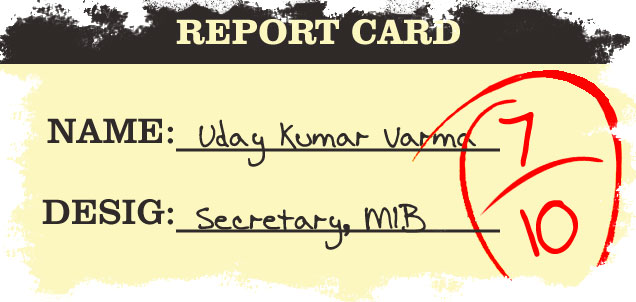
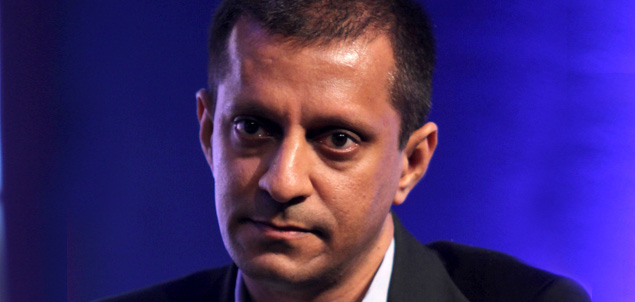
  • Mediaah! Report Card on Uday Kumar Varma’s tenure as I&B Secretary: 7/10


    By Pradyuman Maheshwari


    Uday Kumar Varma

    In October 2011, when Uday Kumar Varma had just been appointed Secretary in the Information and Broadcasting ministry there was much hope from the ace bureaucrat. He didn’t just have sound experience in the administration, but he also had spent a good time in the MIB.


    So he would be plug-and-play given the little time he would need to learn the nuances of the ministry.


    However, it’s one thing to be Special Secretary and another to be ‘the’ Secretary, especially when you know your stint is going to last two-odd years and you will be retiring after the tenure.


    MxMIndia had carried an article as a part of the Anchor with the headline: 5 Things the New I&B Secretary Uday Kumar Varma must do (see link: http://www.mxmindia.com/2011/10/the-anchor-5-things-new-ib-secretary-uday-kumar-varma-must-do/).


    There was a five-point tasklist. Here are the headlines:

    #1 Ensure new digitization announcement is implemented on time.

    #2 Must let self-regulators rule.

    #3 Should ensure paid contentwallahs are punished.

    #4 Push for news on FM Radio.

    #5 Empower government media – Doordarshan and All India Radio.


    I am not going to factor in #2, 3 and 5 here, because in a two-year stint there’s not much that you can expect any Secretary to achieve.


    Phase 3 of the FM radio regime has still not taken off and one can’t see independent news happening in a hurry on FM radio. It requires someone who believes in the medim to push these through with missionary zeal in what’s clearly a non-priority sector.


    Varmaji made the regular noise on self-regulation, measurement and paid content, the kind one expects from a Secretary.


    But it’s with digitization that the former Secretary has received the maximum bouquets and brickbats. At the outset, he deserves all the credit for digitization finally seeing the light of day. When the minister changed less than a week before first phase was scheduled to happen,  it was Shri Varma and his team’s conviction that ensured it takes place.


    But what happened before Phase 1 of digitization was effected was deplorable. The readiness numbers that the ministry declared were in sharp variance with the ground reality.


    It was Varma & Co’s resolve and understanding that the hiccups are inevitable is what led to the digitization been effected. Phase 2 was also pushed through, with its own share of problems, but by then the Secretary knew that it’s not switch-off-switch-on game. Every phase will have its own sub-phases.


    Had it been just the effecting of digitization, Varma would’ve got an 11 on 10, but the fact that the initial process had its share of big problems and that one had huge expectations from him given his knowledge of the functioning of the ministry, we give him a score of 7/10.


  • Shailesh Kapoor | Channel Brand: The Digitization Reality

    By Shailesh Kapoor


    D-Day has arrived. By the time you read this, analogue cable would have ceased to exist in three of the four metros, at least legally. The first phase of digitization is finally a reality amidst much speculation over the last few months and, now, chaos. It’s public knowledge now that large audience sections in the metros have still not moved to a digital cable or a DTH connection. If you ask me, there’s absolutely nothing surprising about this at all. After all, this is India. And we do things at the last minute all the time, don’t we? Then why should it be any different when it comes to changing one’s cable connection?


    If the government can enforce end of analogue television, the balance households will go digital in a jiffy. There is no such thing as ‘a life without television’, certainly not in urban India. So connectivity is not going to be a major challenge at an industry level. But digitization is sure to throw some new challenges into the arena.


    To begin with, the first challenge is right in the midst of all of us. It’s called ‘Nobody Knows Nothing’. There is uncertainty on multiple counts. There are no ratings available for the last three weeks. There are different reports and estimates floating around on the actual status of digitization. But in all this, the real question is getting muted: What will really change when the flux period is behind us and connectivity and ratings are not issues any more?


    The most substantive change will be a marketing change. With digitization, the consumer’s ability and acumen to choose channels he wants to pay for will progressively increase. With this change, the focus will shift from programme brands to channel brands.


    In nearly 25 years of satellite television in India, broadcaster campaigns have been primarily focused on building viewership towards specific properties, typically new fiction or non-fiction series, film premieres, events and specials. As a rough estimate, more than 85 percent of the marketing budgets of channels are spent on promoting programme brands, while channel brands get less than 15 percent of the spends.


    It’s popularly believed that GECs are watched for shows and not for the channel per se. But that’s not entirely true. In a recent large-sample segmentation research conducted by us, more than 35 percent viewership on GECs stemmed from channel loyalty, than programme loyalty. Importantly, this 35 percent makes the crucial difference in a closely fought battle. For example, Star Plus fiction launches typically tend to open at higher ratings than most other GEC fiction launches because the channel’s loyal base gives it the edge for every such launch.


    For non-GECs, like movie, news, music, youth and infotainment, upto 70-80 percent viewership is a result of brand loyalty. Live cricket is perhaps the only content type that is entirely driven by programme preference, with minimal brand interplay.


    Yet, we see channels spending millions in creating programme sampling. The oft-repeated argument is that to create brand loyalty, one needs to create programme viewership. To me, this has been the television marketer’s excuse for being lazy and not thinking like a true champion of his brand. And the excuse may have overstayed its welcome by a few years now.


    In the digitized environment, the arguments in favour of such lopsided programme brand focus will get even weaker. When the consumer has a realistic choice on deciding specific channels to pay for, a bigger brand story will have to be sold. Less than five channels can boast of a programme strong enough to become their brand story today. For others, the brand story will have to come from somewhere else.


    So, once the dust settles and the red herring of no ratings is out of our lives, the real digitization-related change should begin. A change that will make the marketing departments at channels more powerful than ever before. But also a lot more accountable than today!


    Shailesh Kapoor is founder and CEO of media & entertainment research and consulting firm Ormax Media. He spent nine years in the television industry before turning entrepreneur. He can be reached at his Twitter handle @shaileshkapoor