Category: DIGITIZATION

  • Big Magic spreads reach with DD Direct+

    By A Correspondent


    Big Magic, the general entertainment channel from the Reliance Broadcast Network stable, has inked a carriage deal with free DTH player DD Direct+. This comes close on the heels of a distribution alliance with Videocon d2h.


    Sunil Kumaran

    Speaking on the occasion, Sunil Kumaran, Business Head, Big Magic said: “We are happy to add DD Direct+ to our distribution bouquet.  Since DD Direct+ penetrates into the deeper pockets where even cable TV finds it difficult to reach, the alliances allows us to take this content to newer audiences, otherwise difficult to reach.”


  • Tata Sky gets Mohanlal for Onam

    By A Correspondent


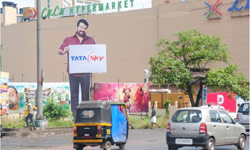
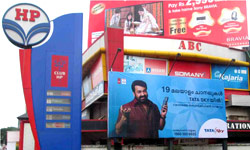
    Tata Sky roped in southern superstar Mohanlal as its brand ambassador for Kerala for the Onam festive season. Ads of posters of the DTH service were seen across the state. The Lulu Mall in Kochi had a 35 feet poster of the superstar. Ditto with petrol pumps and highways giving out the message of Tata Sky now offering 19 Malayalam channels along with a special offer for the festive season.


    Tata Sky and Mohanlal received adulations even on Social media by their followers on Twitter, Facebook and similar forum, reports a communique adding that the marketing campaign has been the biggest ever for Tata Sky in South India since its launch.


  • TRAI notifies amendments to DAS interconnection regulations

    By A Correspondent


    The Telecom Regulatory Authority of India (TRAI) has today notified amendments to the interconnection regulations applicable for digital addressable cable TV systems (DAS) and tariff order applicable for addressable systems.


    The amendments in the tariff order modify the ‘twin conditions’ that regulate the a la carte rate of channels vis-à-vis the bouquet rates at retail level, protecting the interests of the subscribers. It also clarifies the position that subscribers can either opt for channels on a-la-caret basis or bouquet or combination of both, as per their choice.


    Considering that adequate provisions/safeguards are already available in the Interconnection Regulations applicable for DAS, certain provisions have been omitted from these regulations. These pertain to prescription of a minimum channel carrying capacity of 500 channels for MSOs and prohibition regarding charging of placement fee by the MSOs. A proviso has been added to specifically bring in clarity that the MSOs cannot seek a channel from the broadcaster and seek carriage fee at the same time.


    The full text of the amendments is available on the TRAI website – www.trai.gov.in.


  • TRAI releases consultation paper on issue/extension of DTH licence

    By A Correspondent


    Following, the Ministry of Information and Broadcasting’s reference to the Telecom Regulatory Authority of India (TRAI) seeking recommendations on certain terms and conditions for extension of DTH licence on expiry of the 10 years licence period, the regulator has issued a consultation paper. The key issues discussed in this consultation paper pertain to the entry fee, bank guarantee and period of licence.


    As part of the consultative process, the consultation paper has been uploaded on the TRAI website, seeking comments/ views of the stakeholders. Stakeholders have been requested to offer their views/comments latest by October 15, 2013. The comments may be sent, preferably in electronic form to: Wasi Ahmad, Advisor (B&CS), Telecom Regulatory Authority of India, Mahanagar Doorsanchar Bhawan, Jawahar Lal Nehru Marg, New Delhi 110002; on the e-mail address advbcs@trai.gov.in/ traicable@yahoo.co.in. Comments received will be posted on the website of TRAI. Full text of the consultation paper is available on TRAI’s website: www.trai.gov.in.


  • TRAI seeks views on issue of new DTH licences

    By A Correspondent


    The Telecom Regulatory Authority of India (TRAI) has today released a supplementary consultation paper on Issues related to New DTH Licences.


    Earlier, in response to the Ministry of Information and Broadcasting (MIB) reference to the Authority, dated September 3, 2013, TRAI had issued a consultation paper on Issue/Extension of DTH Licences on October 1, 2013, seeking comments/ views of the stakeholders. The key issues discussed in the consultation paper pertained to the entry fee, bank guarantee and period of licence. Subsequently, during the consultation process, industry stakeholders requested the Authority that it would be in the interest of the sector that a comprehensive review of the existing DTH licence conditions be taken up. Accordingly, this supplementary consultation paper has been released wherein, amongst others, the issue of ‘control’, licence fee, migration fee and interoperability of DTH set-top-boxes have been discussed.


    As part of the consultative process, this supplementary consultation paper has been uploaded on the TRAI website (trai.gov.in), seeking comments/view of the stakeholders. Stakeholders have been requested to offer their views/comments latest by November 25, 2013.


  • Mediametrie… who, why, how?


    By A Correspondent


    If the question in our headline is what a lot of broadcast industry stakeholders have been asking this weekend, there’s reason. The US- and UK-exposed Indian media fraternity do not know much about Mediametrie, the French joint industry body for TV measurement that’s been chosen as the primary technology vendor by the Broadcast Audience Research Council (BARC).


    The BARC Board met on Saturday, November 30 and is reported to have given an in-principle clearance for awarding the measurement contract to the French measurement body. However, that’s as per the information leaked. Officially, the BARC communiqué issued doesn’t name any vendor.


    On Saturday, the BARC Board met to decide on the technology and the path ahead. “There was unanimity in deciding on a leap in technology to be used in television measurement. The Board approved the management and the technical and commercial committees to go ahead and finalize with a couple of international companies for this. The team will be completing the pilots and will start deployments soon. The Board also decided on the funding mechanism and is encouraged by the response received from banks for funding the project,” the release noted.


    As per reports earlier this year that were later denied by a BARC official, there were five vendors shortlisted for the key function of installation of set-top boxes and generate measurement viewership numbers. These included Kantar and Nielsen. Sources say Nielsen was in the final shortlist of three and was close to being selected, but the solution it offered was far more expensive than that of Mediametrie. TAM, a joint venture of Nielsen and WPP-owned Kantar, was not involved with the bid process at this stage.


    The vendor selected will not be involved with the analyzing of data, and that contract will be awarded separately by BARC. TAM is a likely contender for this, subject to the cross-ownership not being a stumbling block in its participation in the bidding process.


    So what is it that got Mediametrie to win the race? And who and what is Mediametrie?

    The reasons, in brief:

    First, the technology.

    Second, the low cost.

    Third: Mediametrie is not married to any set-top box provider

    And fourth, Mediametrie is structured like BARC and is not a solely-for-profit body


    The technology Mediametrie is likely to deploy is called ‘watermarking’ which entails inserting into programmes a ‘mark’ that is inaudible to the human ear. This ‘mark’ contains the identification of the channel which airs the content and the regular broadcast time markers. The audimeters installed in panellists’ homes can then recognise this information. According to sources, BARC officials have discussed the viability of inserting these markers with private channels as well as with Doordarshan. The technology allows for measurement of TV content on mobile phones as well as sedentary computers.


    The watermarking technology is being licensed from a Netherlands-headquartered vendor Civolution.


    The cost is indeed low for the technology and the set-top boxes and that’s the reason why BARC is bullish about achieving a 50,000 panel base in a year-and-a-half (See: http://www.mxmindia.com/2013/10/barc-eyes-50k-panel-in-1-5-years/) .


    A key irritant in the increase of the panel base of TAM was the cost of set-top boxes deployed. While TAM was willing to buy more, the costs were high and the taxes made them even more pricey. With the Mediametrie deal, the measurement technology is the key and not the set-top boxes. In fact, the boxes will need to be procured by BARC separately through one or more vendors. As per a source, Nielsen almost won contract due to this clause, as it was a tried-and-tested offering. However, buoyed by the confidence reposed by various stakeholders, the BARC technical committee is understood to have taken the decision to get into a separate contract with one or two hardware providers who can bring in the mandatory 20,000 set-top boxes required within six months of the government guidelines for TV measurement coming into force. Cisco was also rumoured to be in the running for this contract, but sources say that it may not among the chosen ones.


    As per info on its website (hence not verified by this correspondent), Médiamétrie was founded in 1985 in response to the changing demands in the French audiovisual sector. The government encouraged the creation of an independent company to ensure that audiences of the principal audiovisual media could be measured scientifically. This independence for Mediametrie is guaranteed by the presence of all professional parties, in all its decision-making processes and in its stakeholding, including the media, advertisers and agencies without any of them having a majority holding to take a decision alone. The ownership and structure of Mediametrie is hence quite like BARC and it isn’t a solely-for-profit set-up.


    Médiamétrie is now developing its range of services and extending its scope by working on new media, telephony, new multimedia practices, crossmedia, etc. It offers original products designed for specific users and launches offers on the international market that have become essential due to changes in consumers’ listening and viewing habits. Mediametrie has also created Eurodata TV Worldwide for analyzing and distributing info on over 5500 channels across over 100 countries.


    Civolution was  formed in October 2008 as a spin-off of Royal Philips Electronics.  In August 2008, Philips Content Identification, a business unit of Philips Electronics, assumed full ownership of its joint venture Teletrax. The combined entity was spun out of Philips in October giving birth to Civolution. In July 2009, Civolution took over the Software and Technology Solution from Thomson (Thomson STS), formerly NextAmp. Mediatmetrie’s technology is aided by that of Thomson (and hence Civolution).


    So, a source close to the developments, told MxMIndia that while Mediametrie is the primary tech vendor, Civolution and the set-top box vendor(s) will also play a key role in the implementation.


    When will the new BARC measurement come into force?

    BARC as we know is a Joint Industry Body (JIB) set up in 2012 with the specific purpose of designing, commissioning, supervising and owning India’s Television Audience Measurement System. IT is a joint venture bringing together the three key stakeholders – broadcasters, advertisers and advertising and media agencies. Their respective apex bodies, the Indian Broadcasting Foundation (IBF), the Indian Society of Advertisers (ISA) and the Advertising Agencies Association of India (AAAI), represent the three sectors.


    Although the public position for BARC may be that the new measurement regime will be up and about by the end of Q2 of 2014 (that’s by June 30, 2014), MxMIndia estimates as per discussions with various stakeholders in the industry, given the criticality of the data, subscribers will switch off the tap only after they are a hundred thousand percent convinced about the data.


    “Remember Q3 and Q4 are the all-important adspend seasons and we can’t afford to risk any mess-up due to the non-availability of data that has a buy-in of all parties. So even though we want the new BARC system to be a success, we need to be realistic,” said one industryperson. A broadcast sales head was more pragmatic. “Although it appears that the market will improve and we will be done with the elections, over the last few years there have been too many extraneous factors impacting broadcast sales. We can’t have one more variable in the system,” he said, indicating that the transition to the new measurement regime from TAM could well be done in a phased manner. So the new BARC data will start coming in from August 2014, as per scheduled, but subscribers may dispense with the current system only later.


    In the meantime, BARC needs to also contend with the government and a zealous Minister of Information and Broadcasting who is keen on effecting the new measurement regime in his tenure. “Minister Tewari’s intent is well-placed,” said a key BARC stakeholder, adding: “In reality, the system just can’t be executed in the UPA-2 tenure. Also, we do not a half-baked system to get operational.”


    The minister (and the ministry) is keenly keeping tabs on the progress being made on this front and it is learnt that key BARC officials are likely to meet them in Delhi this week.

     

  • Pharma giant GSK’s sign-on bonus demand leaves adland divided

    By Pritha Mitra Dasgupta


    UK pharma major GlaxoSmith-Kline’s demand for sign-on bonus from advertising firms to do business with it seems to have divided the Indian advertising and marketing fraternity into two camps on the social media.


    While GSK’s move is being condemned by international advertising agencies that have termed it ‘scandalous’, ‘lazy’ and ‘bullying’, some industry veterans in India support the rebate, saying it will put a leash on media agencies that, they allege, discreetly charge over 10% commission and show 2-3% on record.


    Following an Economic Times story on the matter on Monday, advertising veteran Preet Bedi, who has worked with Rediffusion Y&R and Lintas, wrote on his Facebook wall, “The concept of a sign-on bonus payable by agencies to clients is a masterstroke. As an agency man, I would obviously have opposed it but from the outside, I know it’s a great idea.”


    His reasons – “one, it forces agencies to pitch only for brands they really wish to be associated with and vice versa. Secondly, it forces agencies to make upfront investment in the new business; currently agencies spend peanuts on new client acquisition. Thirdly, it will force transparency in agency remuneration.”


    He also says that the move will lay bare a fraud, media agencies often perpetrate. “U (sic) will find media agencies agreeing to pay more than one or two year’s declared revenue as sign-on bonus. How? Because the actual margins are often double or even triple the declared margins. Quite brilliant; Martin has met his match,” Mr Bedi posted on Facebook.


    This sparked a virtual debate on Mr Bedi’s Facebook wall. Harit Nagpal, managing director and CEO, Tata Sky, supported GSK’s move saying, “Why are agencies complaining? If none of them is willing to pay, it won’t happen. And if even one of them is willing, and the client goes for it, disregarding the agency’s merit, he deserves it.”


    Kedar Anil Gadgil, principal consultant at Druid System, however, called the concept “an oligopoly of rich, established agencies creating a moat around their castle to protect it from the outsiders” and added that agencies should knock the door of competition lawyers to safeguard their interest.


    Mr Bedi, however, opined that nothing can stop sign-on bonus from getting implemented. “…don’t waste your money trying to fight it. If clients want it. (sic) It will happen,” he commented.


    He also wrote that while a client contributes an average of Rs 10 crore to an agency’s revenues, “the input on winning a brand is miniscule.”


    Vikas Mehta, head of Euro RSCG, Oman, countered it, “The average client does not give an average revenue of (Rs ) 10 crores. Even in the top 5 Delhi agencies, average client revenue will be less than (Rs ) 5 crores and average brand revenue still less. Not workable.”


    The fear of many advertising agencies is that if GSK is successful in implementing this, then other marketers may follow suit. In the UK, before GSK made its demand for sign-on bonus, Premier Foods that owns brands like Bisto and Hovis had parted ways with its media agency Starcom MediaVest over “investment payment”, head of an advertising agency said. “So it seems more and more marketers are warming up to it,” the person added, requesting not to be named.


    Industry bodies have come out against the sign-on bonus concept. While the Advertising Agencies Association of India has already said it should be “discouraged strongly”, International Advertising Association’s India chapter president Srinivasan K Swamy, said it is an “impractical concept.”


    “No marketer or a right thinking person would ask an agency to pay a sign-on bonus. A buyer has to pay for the goods and services he buys and it could not be the other way round,” said Mr Swamy who is also the chairman of RK Swamy BBDO. “If I have signed a contract with my client that says that if sales drop then I will have to pay a penalty then that could be worked out. Otherwise, why should an agency pay a penalty?” A mail sent to Indian Society of Advertisers chairman Hemant Bakshi, who is also the executive director, home & personal care at Hindustan Unilever, remained unanswered till late on Tuesday.


    R Ramesh Chandran, co-founder at Xtravision Media Associates, wrote on Mr Bedi’s Facebook wall that Reckitt Benckiser had tried something similar three years ago, with some tough demands such as fee to pitch for the business and penalty for not meeting CPRP targets.


    “…nobody pitched…it fell into ZOD’s lap due to international alignment… the situation at ZOD is quite a common knowledge now…Reckitt account is up for grabs again,” Mr Chandran wrote.


    Source:The Economic Times

    Copyright © 2013, Bennett, Coleman & Co. Ltd. All Rights Reserved

    Licensed to republish


  • Digitization will help broadcast economics: ZenithOptimedia forecast


    By A Correspondent


    This is the season for annual adspend forecasts and global media agency network ZenithOptimedia unveiled its Advertising Expenditure Forecasts predicting a year-on-year growth in ad spends in India of 11.5 per cent in 2014. The growth number for 2013 (over 2012) is 8 percent. The global ad expenditure growth from 3.6% in 2013 to 5.3% in 2014.


    Anupriya Acharya

    Said Anupriya Acharya, Group CEO, India, ZenithOptimedia group: “Our outlook for 2014 is cautious, though we expect the growth to happen mid-year onwards.” According to Ms Acharya, there appears to be an upswing in the mood since the Assembly election results on Sunday. Added Satyajit Sen, CEO, India, ZenithOptimedia: “All policy-making has been in a limbo, but we expect a spurt in the second half with digitization happening in full-swing.”


    According to the agency’s research team, 2013 has “overall been a turbulent year for the media industry”. “In March/April we saw changes to the TAM panel following the second stage of the digitization process (of which more underneath), followed by changes in the TAM data reporting period from a weekly to a monthly format and finally the flip-flopping over the new 10+2 advertising regulations (a cap on advertising minutage set at 10 minutes of advertising and 2 minutes of programme promotion per hour), which was supposed to take effect from Oct 2013 onwards. However, some channels have been slow to comply.”


    “Growth will be driven by inflation measures and pricing actions due to the 10+2 advertising regulations, as the restriction of supply will lead to rising prices,” it notes. “All of which means that advertisers are looking seriously at redistributing budgets to other media. On the whole, quality of content will improve on TV and we expect a consequent ratings boost thanks to 10+2 regulation. The change comes at a cost, however. There was a two-week stand-off between TAM, broadcasters and advertisers when data reporting formats were in flux. During this period, the top seven advertisers pulled their ad spots from all TV channels.”


    The ZenithOptimedia research notes that digitization will help the broadcast sector: “Following the second phase of digitization of distribution in Q1 2013 in 38 cities, the TV broadcast industry has achieved approximately 77% digitization and expects to reach 100% within the next two years.” The report adds that even though viewership ratings have been impacted, in the long term, digitization is expected to improve broadcast economics significantly.


    Internationally, the research has been bullish on adspends in the mobile sector. Mobile is going to take off big time and has already crossed television in terms of number of units, said Ms Acharya. “The internet consumption is going to increasing on the mobile and even though the smartphone number is not very high, it’s rising rapidly.”


    “The increase in mobile phone connections continues to drive growth of mobile internet penetration in India,” notes the study. “Cheaper mobile handsets and affordable mobile data packages are helping increase content downloads, and millions of users are engaged with wireless internet on a daily basis. FM Radio listenership is rising and it is a key feature used by mobile phone brands to sell handsets,” the report adds.


    On activation and BTL, the report says: “Along with changing lifestyles and the emergence of modern trade and malls in India, there has been an increase in consumption of outdoor advertising. Brands are keen to connect with consumers via experience zones and activations to ensure greater recall and amplification of brand values.


    Activation/Events are becoming more and more of a key offering in the radio and print channels. Live Music Events/Festivals have been successful in attracting widespread audience and engaging youth across key cities. Hand in hand with proliferation has come the challenge of fragmentation among audiences. Hence, advertisers are increasing the number of touchpoints to cater to addressable audiences and are selecting media beyond TV, print and radio.”


    Government advertising spend has begun ramping up as a precursor to the 2014 general elections, the report adds even as the final quarter of 2013 has “seen lower levels of investment than usual because of the soft economic environment”


  • Digital cable subscribers to get monthly bills

    By A Correspondent


    Digital Cable TV subscribers will now get monthly bills from their cable operators. The new facility, which has been introduced as per the Telecom Regulatory Authority of India (TRAI) regulations, will usher in greater transparency in billing, notes a communiqué from the MSO Alliance


    Beginning December 2013, subscribers will get a bill for their cable TV every month starting with that of November 2013.  Commenting on the introduction of monthly billing, S N Sharma, Secretary, MSO Alliance and CEO, DEN Networks said: “This move is important as it will ensure that there are no additional or random charges levied on the subscribers. Our viewers will thus pay only for what they watch and they must insist on a bill from their local cable operator or multiple system operator at the time of monthly payment.”


    The MSO Alliance has also launched an advertisement campaign through print media and cable television channels to spread awareness about the monthly billing system.


    As per the TRAI regulations, subscribers will get a time period of 15 days from the date of the bill to make their payment. In case the subscriber fails to make the payment after the expiry of the due date of payment, the MSO or the affiliate LCO (local cable operator) has the right to charge interest on the outstanding amount.


    The MSO Alliance comprises the major digital TV platforms of the country including DEN Networks, Hathway, SITI Digital Cable Television and Incablenet. Digital cable currently has over 19 million subscribers in the 41 cities covered under Phases 1 and 2 of digitization.


  • Now SOL with Tata Sky karaoke

    By a correspondent


    Having added another first to its name by launching a video-based karaoke service, DTH player Tata Sky has unveiled a series of ad campaigns explaining the concept of the newly launched service. Tata Sky’s karaoke service captures audience’s attention immediately with people singing out loudly off-beat songs. The service seeks to offer subscribers a world of options for singing and entertainment within their homes.


    While one of the ad films demonstrates a bunch of youngsters parting in their room, the other ad film demonstrates the whole family having some fun with karaoke singing. The ads showcase people from different age groups and different situations enjoying singing with Tata Sky karaoke. The message of ‘You don’t have to be a great singer to have fun, at least the lyrics will be right with Tata Sky Karaoke’ (Kum se kum lyrics toh sahi honge) is humorously scripted in both the ads. The ads capture the key features of Karaoke with identifiable situations of lives, bringing a smile to our face inevitably.


    Vikram Mehra

    Vikram Mehra, Chief Commercial Officer, Tata Sky said, “The love for singing and dancing is epitomized by Bollywood movies. Karaoke may be a new activity for a large part of India, but singing as an entertaining and collective activity was never an alien concept. Be it a family function or a night out with friends, singing our favorite Hindi songs in loud chorus adds tremendously to the fun factor of any evening. Capitalizing on this sentiment, the Karaoke ads capture the simplicity of tuning into the service any time of the day for non-stop entertainment.”


    Abhijit Avasthi

    Abhijit Avasthi, creative director, Ogilvy & Mather film stated, “Karaoke had to be pitched as a social activity in the realm of enjoyment. While the product was revolutionary we wanted people to see it as on obvious relevant product which seamlessly fits into, rather enhances an already existing moment in their life. Essentially, all we had to do was to let people know the key features of Karaoke that will make fun moments over singing, even more fun.”


  • I&B ministry asks DTH operators to pay Rs 2,000 crore

    By Vijaya Rathore


    The information and broadcasting ministry has asked six DTH operators, including market leaders Tata Sky and Dish TV, to pay over Rs 2,000 crore, which the ministry said they collectively owe to the government in lieu of the licence fee.


    The ministry sent demand notices on Friday to Tata Sky, Dish TV, Sun Direct, Airtel Digital TV, Reliance Digital TV and Videocon D2H, asking them to pay up the sum within 15 days. This followed a ministry-ordered independent audit of the accounts of the six operators.


    “The ministry has given 15 days to all the operators to make the payment,” a person familiar with the development said. The calculation has been made on the basis of the gross revenue of each operator.


    The time period for calculating the arrears is from the day the licences were issued to each of them. “The I&B ministry sought the opinion of the law ministry before sending out the notices,” this person said.


    The issue relating to licence fee payment has been going on between the ministry and the operators for a few years now. The Telecom Disputes Settlement and Appellate Tribunal (TDSAT) had in an 2010 order said that DTH operators should pay 10% of their adjusted gross revenue as licence fee.


    The ministry had taken the matter to the Supreme Court where the case is pending.


    Source:The Economic Times

    Copyright © 2014, Bennett, Coleman & Co. Ltd. All Rights Reserved

    Licensed to republish


  • Big Magic Bihar & Jharkhand inks DTH deal with Dish

    By A Correspondent


    As part of its distribution-strengthening strategy, Big Magic Bihar and Jharkhand, the regional entertainment channel from the Reliance Broadcast Network stable, has inked a distribution deal with Dish TV. Available on the base pack, this move adds 8 million million Dish TV subscribers to the channel’s reach as it reaches out to a larger diaspora across India.


    “We are a leading player in the regional market and have delivered excellent performance. We see a huge opportunity in catering to a larger diaspora and our endeavor is to reach our content mix to the discerning audiences spread across the length and breadth of India. Dish TV is a perfect partner to begin the exercise with, from here-on we will increase footprint through strengthened distribution across platforms,” the channel said in a statement.


    Big Magic Bihar and Jharkhand is currently available on Hathway, Incable, Manthan, Digicable, GTPL, Siti Cable, Maurya, DEN and other independent operators.