Category: DIGITIZATION

  • MxMIndia Comment: 101 days to digitization

    By Pradyuman Maheshwari


    Oh, yes. Just 101 more days to digitization. Day 100 is a holiday in the key market of Mumbai on account of Gudi Padwa, so we thought it was appropriate to kickstart MxMIndia’s countdown in digitization a day ahead.


    Not many have appreciated the true significance of digitization. To my mind (and that of various others in the country), it’s the next most important milestone after the advent of colour television and private satellite channels. In relevance, perhaps a shade lesser, but in terms of execution by far the biggest. Which is why there’s no overnight change as they have with petrol fares, and it’s being done in a phased manner with just the four metros of Chennai, Kolkata, Mumbai and New Delhi to start with. And that’s July 1. June 30 is the sunset date. The last day for analogue.


    So are we ready for digitization? Yes, we are getting there, most people will tell you. But the reality is that we are far from it. Loads need to be done in tough markets like Mumbai and Delhi. Awareness levels are low and there is no clear urgency.


    And to top it, last week’s Budget had no sops for set-top boxes, the all-important contraption you need to receive digital transmission. We’ve also had a joint I&B secretary announcing punishment for those who fail to comply.


    Starting today, MxMIndia will bring you updates and bytes from various stakeholders. We’ll tell you how channels are getting ready to retain viewers and cope with the transparency that the new mode of transmission will bring in. We’ll tell you more about how all of this will impact audience measurement and media buying.


    We’ll bring you the ringside view on the real issues. We may not be able to solve the problems, but we’ll do whatever it takes to highlight the problems and solutions.

    And, as always, we’ll tell you what’s good for you.

    Like we believe digitization is a boon for consumers and the industry.

    101 days to go.  Let’s go for it.


    Have a view on digitization? Write to us at editor@mxmindia.com.

    Buzz me if you have a story to tell. Confidentiality assured. There are various ways you can reach me: pradyumanm[at]mxmindia.com, BBM @ 23050B5D, Gtalk pradyumanm[at]gmail.com, @pmahesh, Whatsapp, 98338 76278.


  • Counting on digital to be M&E’s trailblazer


    @FF12: Day 1: Digital attracts ‘desirable’ status
    on Day1
    @FF12: Day 2: Seamless blending with traditional mediums – a big want!
    @FF12: Day 3: Industry expects thoughts to lead to pertinent actions
    @FF12: Takeaways: Digitization rules the roost @FICCI Frames 2012

    By A Correspondent


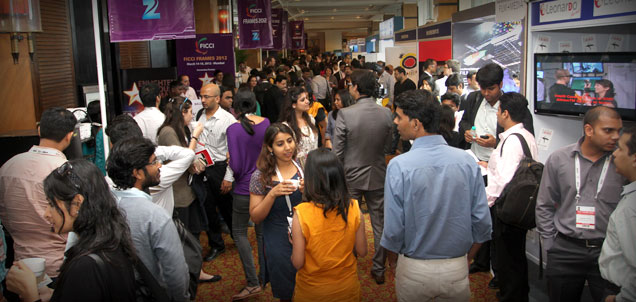
    Those familiar with the going-ons at FICCI Frames would testify how an infatuation gets displayed by delegates at the event each year so as to summarise the mood of the convention even before it broadly takes off across the three days that it is entitled to. But probably, the setting was a bit different this time around when the delegates – joined in unison by the media – were running ballroom to ballroom trying to ingest giveaways that were being thrown up abundantly across several sessions. May be, it was a year where each day had something new to offer to the delegates that kept them at tenterhooks throughout the 3-day event. And going by the loud decibels that were being emanated across every nook and corner of the venue, it was evidently clear that there was some motivating factor that was driving the gathering to go on an overdrive spree.


    The organisers of FICCI Frames 2012 have every right to take credit for coming up with a theme around a medium that attracted the attention of one and all. Having kept it on the sidelines till last year, digital was finally given its due at the convention as experts, authorities and enthusiastic youngsters came face to face to deliberate and come up with outcomes that would redefine the way the consumers consume the medium. From television to print to films and even radio, digitisation and the benefits and effects it would cast on these sectors were discussed in length at the venue. In fact Star India CEO Uday Shankar in his keynote address didn’t hesitate in thanking the FICCI committee for putting across a theme that would go on to redefine the way the industry functions in the future.


    What was apparently clear through the various sessions at the convention is that with the nearing of date for total digitisation across key metros by June 30 2012, and then across the country by 2014, broadcasters had to relook their distribution and content provision models so as to keep the consumer at the heart of every shift that will transpire in the future. Emphasising on the current digitisation scenario in the country, Mr Shankar said, “Most of the discussions that I have participated in are still around whether digitization will happen and if it indeed were to go through, how chaotic it would be. But all these are meaningless discussions triggered by a bunch of retrograde interests who are living in denial.” According to Mr Shankar, digitisation of distribution is a big reality and the 40-45 million homes that have bought DTH boxes at some point or the other are a conclusive evidence of that.


    Shooting back at critics who had doubted whether the makeover to digital would ever be a reality, Mr Shankar said, “To the critics and the cynics who are still wondering whether digitization would happen, my answer is: Look around, it is already happening and the rest of it is bound to happen because even in this country it would be difficult to undo such a momentous shift. To those who wonder how chaotic it would be, my response is that there would be some chaos, but chaos is not necessarily bad if the alternative is status quo or regression. When a transition at such a scale is happening that affects the illegitimate but strong vested interest in certain pockets, then there is an incentive to put up with chaos in the interest of the larger social objectives.”


    A broader outlook was provided by a few panellists who said that digitization will come in as a relief for broadcasters who will be benefitted from additional subscription revenue, relaxation on paying heavy carriage fees, and of course providing viewers with a superior content experience – MSOs and cable operators have to quickly respond to the digitization mandate by investing in set-top boxes – the cost that is only possible to recover after four years.


    Sounding off the challenges that digitisation would present for the broadcast sector, Tarun Katial, CEO of Reliance Broadcast Network Ltd said that, “For television, it will be a combination of content as well as marketing. The old model which was a combination of carriage and product, as it stands today, won’t work. The business plan which currently has a very high rate of carriage will obviously see the content taking precedence.” And as for content, it will be niche content that will call the shots for broadcasters as according to experts at the convention, niche isn’t niche any more as all niche channels put together command a share that is equivalent to the share of Hindi GECs and the mass channels, so to say.


    Perhaps the many advantages that digitisation will have on several mediums was rounded off by Vikram Sakhuja, CEO, South Asia, Group M who said, “The inherent power that digital brings along with it is interactivity and its ability to link multiple devices. Also the ability to enhance real-time consumption of content; linked to that is the entire thing about going mobile.” On the roadmap for the industry, Mr Sakhuja said, “I think integrated media is the best way forward. Today when people think of multimedia planning, they do a separate TV plan, print plan, radio plan, internet plan and so on. I believe that if you actually look at media agnostically and at common metrics of each cost per thousand impressions, these are the ways in which you can construct a media agnostic plan. What it does is, it suddenly gets more money into digital, and when more money can come into digital, that’s when focus is going to come in.”


    While digitisation was the mainstay of every discussion, the all-important issue of regulation too was taken up by panellists who chose to have the government respond to the many queries surrounding the topic. Uday K Varma, I&B Secretary, said that “if people at large seem to be happy with self regulation, I think the government would have no problem in legitimizing them. But I think the self regulation mechanism which has been set up by both the news broadcasters and the entertainment broadcasters, they’ll have to really prove it, not to the government but to the people at large.” He was joined in his cause by Prithviraj Chavan, Chief Minister ofMaharashtrawho said that the challenge would be to adopt the regulatory framework to new technology and ensure that over regulation doesn’t kill a good thing. The Chief Minister emphasised on the need for regulation and suggested that instead of the state regulating the media, the medium should look at regulating itself.


    The other important announcements that came up at the venue included the soon-to-be-passed Copyright Amendment Bill, the roll-out of the imminent phase 3 radio policy that would steer the growth of the medium and increased government aid for the film & entertainment sector.


    New ventures @ FICCI


    BARC takes wings

    In between the many promises and hopes that were being doled out at the sessions came the news of the Indian Broadcasting Foundation (IBF), the Indian Society of Advertisers (ISA) and Advertising Agencies Association of India (AAAI) announcing the official formation of a nationwide audience research joint body — Broadcast Audience Research Council (BARC).

    While IBF will have 60 per cent stake in BARC, ISA and AAAI will each hold 20 per cent stake. The Board of the council will have 10 members, six members from the IBF and two members each from the ISA and AAAI.


    Discovery Kids to flag off ops in April

    Another important announcement was made by President & CEO of Discovery Networks International, Mark Hollinger who announced the launch of its new network for children inIndia, ‘Discovery Kids’. Mr Hollinger said, “Launching in April, the network will initially be available in three languages – Hindi, English and Tamil. The channel will offer children a fun and entertaining way to satisfy their natural curiosity with stimulating and imaginative programming,” he said. The company plans to roll out the channel inPhilippinesandIndonesialater this year.


    Ten Golf tees off

    Taj Television India Pvt Ltd announced the launch of Ten Golf, a dedicated 24-hour golf channel. Ten Golf is the fifth channel from Taj Television India Pvt Ltd and began transmission on March 15, 2012. The dedicated golf channel will showcase a mix of live, non-live and feature programming. The channel will also broadcast live, high quality Golf action from around the world.

    Ten Golf has acquired rights for European Tour and Asian Tour till 2016, and has also entered into partnership with PGTI for three years to telecast the Indian Tour. Further, Ten Golf will be telecasting 400 hrs of golf programming in association with NBC.


  • MIB diktat: Digitize or get punished!


    By Shruti Pushkarna


    Reiterating the government’s stand on implementation of digitization in the Indian market yet again, Supriya Sahu, Joint Secretary (Broadband & Policy), Ministry of Information and Broadcasting made it clear that there was no alternative to digitization, that digitization has been made mandatory for all and those who don’t digitize will be subject to punishment under Section 11.


    Speaking at the CASBAA India Forum 2012 in New Delhi, Ms Sahu said, “It actually becomes punishable if you don’t give digital signal by the notified date. So after June 30 if somebody does not give digital signal and continues with analog signal, it becomes punishable as per Section 11.” Ms Sahu admitted that the biggest challenge for the Information & Broadcasting Ministry was to keep pace with the evolving technology as far as policy formulation is concerned. She said, “Policies are slower than evolving technology…By the time you have put in place a legal framework, you have another innovation come up. So the policy needs to keep pace with the technological advancement. We also need to speed up the policy making process.”


    Addressing the forum earlier in the day, Uday Kumar Varma, Secretary, Ministry of Information and Broadcasting also emphasized that digitization will run its course successfully. He said, “Digitization is a phenomenon which is sure to happen and now we need to look beyond the digital. Digitization is an idea whose time has come and the only question is that of timing and phasing, which the government has already looked into.” The Secretary also said that despite the mammoth challenge of digitization, it is set to address a plethora of issues for broadcasters, like measurement, carriage fees etc.


    With regard to the availability of set top boxes, Mr Varma said, “The country is in a fair position… as per industry estimates, we require about 10 million set top boxes in the four metros. Around 2.5 million set top boxes are in stock and another 7 million are being procured, about 1.8 million have already been installed.”


    Addressing the audience, Ms Sahu also said that Cable Television Network Regulation Act of 1995 has now been amended. It is under this act that digitization has been made mandatory. She also said that certain major changes have been brought in policy in the amendment act which will facilitate digitalization. Clearing the air on issues pertaining to licensing of MSOs and registration regime for the cable operators, Ms Sahu said, “The rules under the act have already been drafted, it is under consultation. We don’t have to bother much about the rules because we are not going to substantially change the licensing procedures for the MSOs and therefore it is not going to disturb the entire process of digitization…The licensing procedure for the MSOs and the cable operator is much simpler, it’s not going to be complicated at all because we know that we have to finish the first phase in time, before June 30.” In the new act, TRAI has been empowered in the act itself to make regulations on tariff and interconnection issues.


    Talking about the need to create more awareness among consumers about digitization, both the Secretary and Joint Secretary asserted that the government has already started taking steps in that direction. Ms Sahu said, “We have a committee which is working on the communication campaign. Our jingles are already on two of our radio stations and we just finalized our TV spots. Ministry has already gone ahead with a Facebook account, we are developing an exclusive website, our toll free numbers are already working. But I would like to appeal to the broadcasters and the broadcasting bodies like NBA to come out with their campaigns also.” The onus of bringing awareness she said, lies with both the government as well as the broadcasters.


    However, Roop Sharma, President, Cable Operators Federation of India feels that the government needs to do much more in terms of educating the consumers. She said, “Industry has done everything on its own, the government should play a better role in educating the consumer. Since government has mandated the change over from analog to digital, we want government to take a more proactive role in this. They should do many consumer workshops, many consumer awareness programmes and give some incentive to the consumer to transform from analog to digital.”


    In an earlier session titled, ‘The Big Picture’, Ashok Mansukhani, President, MSO Alliance, Management Consultant, M/s Hinduja Ventures highlighted three issues, which if addressed now, will make the deadline of June 30 possibly achievable. He said, “The first issue is to have a level playing field cable rules which align the cable rules of 2006 to the DAS act of 2012. Second is, we want a level playing field regulation for digital addressable because the August 2006 CAS regulations cannot work in DAS. And the third is, unless government says that this is a government mandate, everybody on July 1 must necessarily watch television in these 4 cities through a set top box exercising choice it will not take off.” Mr Mansukhani also said that the government needs to get its act together and get all the rules in place to avoid any chaos. He added that in his personal view the June 30 deadline was a mirage in a Siberian desert but the industry was nevertheless committed to make it happen.


    Narayan Rao, President, News Broadcasters Association and Executive Vice Chairperson, NDTV, said that digitization will provide a huge potential for the entire industry in forms of revenue. He also said that industry members need to get rid of the trust deficit and work together in order for digitization to happen by the notified date.


    Mr Mansukhani said, “Digitization should become an acceptable form of television viewing in India from now on and the industry should make consumers aware of it and take care of them.” Mr Sunil Lulla, VP, IBF and MD & CEO, Times TV Network echoed Ms Roop Sharma’s views when he said that the government needs to take more responsibility for communicating to the consumer the benefits of digitization.


    In a separate session titled, ‘The Regulatory Mandate’, speaking about the biggest regulatory challenge for the government, Anil Khera, CEO, Videocon d2h said, “The biggest challenge is to implement within the given time frame.” Mr Ravi Mansukhani, MD, IMCL said, “The biggest challenge is to create a level playing field in a world of convergence.”


    Answering a question on whether India is ready to go beyond digital, Mr Khera said, “The first 4 metros will set the pace for digitization. The success of these 4 metros will decide the pace of digitization for the rest of the country.”


    K Jayaraman, CEO & MD, Hathway Cable and Datacom as well as Mr Ravi Mansukhani expressed their disappointment with the budget which had no fiscal incentives mentioned. Although Mr Jayaraman said, “It is not a big show stopper for Phase I, I’m sure it’ll come by Phase II and III.” Mr Mansukhani said that the bigger MSOs are lucky to have an investor so money is not a problem for them but there is another smaller MSO who cannot come up with the money; it is this MSO which will be affected, and the government should set up a fund for these MSOs.


    The forum ended with a session with GroupM South Asia CEO Vikram Sakhuja talking about ‘The Advertising Revenue Advantage’. He spoke about how digital TV advertising revenue is adding value for platforms, broadcasters, advertisers and consumers across the Asia Pacific. He said that digitization has the opportunity to take measurement from sample to census. The three areas of impact for advertisers in the digitized era are targeting, measurement and interactivity. He said, “Great interactivity and involvement comes from digital TV… we are moving from lean back television to lean forward television and this will lead to increased levels of interaction.” He said we can increase the value of TV inventory by digitization. He concluded, “The new business model will be such where distribution will lead to advertising.”


  • @FF12: Adapt to the digital tide or be left out

    By A Correspondent


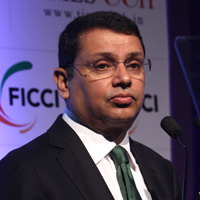
    In keeping with the theme, ‘Embracing the Digital World’, FICCI Frames 2012 got off to a wishful start at Hotel Renaissance, Mumbai on March 14 with a welcome address by the Co-Chair of FICCI Entertainment Committee, Karan Johar. After Mr Johar’s welcome address, Uday Shankar, CEO, Star India & Chairman, FICCI Broadcast Forum, proceeded to present his perspective on the Event and the broadcast industry in general. Making a dash for the core topic of digital, Mr Shankar began by stating, “Digitization is a big reality which will revolutionise the way content (creation and distribution) is offered.” Even though he said that digitisation will create a level playing field for the broadcasters and the cable operators, he had a word of caution to add when he said that his biggest concern was “the chaos which will be caused by the broadcast industry’s inaction”.


    Prithviraj Chavan, Chief Minister of Maharashtra was next and began by assuring how the current era was an “exciting time to be living in”. He said that the challenge would be to adopt the regulatory framework to new technology and ensure that over regulation doesn’t kill a good thing. He also said that the move towards digitization will create a huge employment opportunity but there is a need to explore how technology can empower the field of education. The Chief Minister also touched upon the need for regulation and suggested that instead of the state regulating the media, the medium should look at regulating itself.


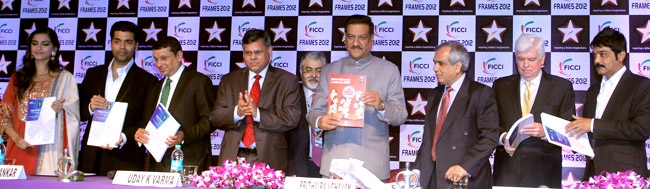
    Following the CM’s speech, the event witnessed the release of the FICCI-KPMG Indian Media and Entertainment Industry Report 2012; FICCI-Amarchand Lawbook and ‘Positivity: The impact of television on India’ by The Indian Broadcasting Foundation.


    Uday K Varma, Secretary, Ministry of I&B, opened his address next by stating that the concerns that the industry had over digitization and the Phase 3 of FM radio have been addressed by the move to allow 839 new FM stations and 500 community radio stations. He stressed that the government is committed to ensuring time bound digitization and said that come July 1, the four metros will switch over to the digital format and the plan is to ensure that the move to digitization is completed by December 31, 2014. He agreed that the challenge was mammoth – to convert 80 million analog connections to digital format, but added that it will ensure faster and deeper penetration. “This will address a plethora of issues facing the television industry, such as addressability, carriage fees, audience measurement and consumer preferences,” he said.


    Punit Goenka, CEO & MD, ZEEL too spoke about the pros and cons of digitization, how the ratings are inadequate and how self regulation was the need of the hour for the broadcast industry. Carolyn Everson, VP, Global Marketing Solutions, Facebook elaborated on how Facebook can benefit the media and entertainment industry and cited examples from music, gaming and films to drive home her point.


    Session highlights:

    Post the promises and pleasantries doled out by committee members and authorities, it was time for some serious discussion which began with a panel debate on ‘Addressable Digitization – The way forward’. Sanjay Gupta, COO – Star India, Sunil Lulla, CEO and MD Times Global Broadcasting, Sameer Manchanda, Founder – DEN Networks and Punit Goenka, MD and CEO, ZEEL comprised the panellists. The panellists agreed that digitization is the way forward and will soon be a reality. Uday K Varma, Secretary – I&B, put the ball in the industry’s court as he said that there were no political opposition to digitization and the parliament too passed the law in December 2011, therefore it is now incumbent upon the industry to make digitization a reality. Sunil Lulla pointed out that the there is greater good in digitization, but the industry has to do a lot of work over the next few years. Sameer Manchanda was of the view that digitization is a reality and that it will bring more number of channels. The session also discussed opportunities and challenges that digitization has to offer and how the industry was gearing for digitization – whether they are ready or not?


    A session on ‘Maximising the power of digital distribution’ saw industry leaders speak about the challenges that come along as the country is experiencing the much talked about shift – from analog to digital cable – the investments that goes into and many such challenges. Industry honchos such as K Jayraman of Hathway Cable and Datacom Ltd, SN Sharma of DEN, Anshuman Misra of Turner, Asia Pacific, Vikram Chandra of NDTV, Jagi Mangat Panda of Ortel, Prof Jonathan Askin, and Anita Wallgren, Government Attorney, US Department of Commerce made up for the panel.


    The panel agreed that while digitization comes in as a relief for broadcasters who will be benefitted from additional subscription revenue the relaxation on paying heavy carriage fees, and of course providing viewers with a superior content experience – MSOs and cable operators have to quickly respond to the digitization mandate by investing in set-top boxes – the cost that is only possible to recover after four years.


    Vikram Chandra talked about the difference digitization makes to the news industry. “Digitisation is important for news players. It is leading players in the news industry into areas they don’t want to be in. In the race of chasing TRPs, people are forgetting that digital has great potential that has to be tapped, a business model which needs to be looked at.” Mr Chandra also mentioned the role of tablets and high-end devices as new distribution platforms.


    Next was a session titled “Financing the Media and Entertainment Business” where the panellists comprised eminent personalities such as Prashant Jain of HDFC Mutual Fund, Mathew Cyriac of Blackstone, Soumo Ganguly of Moxie Entertainment Pvt Ltd and Daniel Dubiecki, Founder and Partner, The Allegiance Theatre, Hollywood.


    Mathew Cyriac started off the session by pointing out that majority of the investments within the media and entertainment industry were made in television and print as they represent a fairly large share  in terms of sheer numbers as against Internet and Radio. The Hindi GECs in TV is typically where a lot of money goes to, followed by regional GECs and sports channel. For print media, it was the regional publications that command a lot of attention as regional advertising is very robust and extracts a lot of profit.


    Prashant Jain pointed out that a lot of companies in India have managed to get good funding and that it is not reflective of the supposedly very, very sorry picture that was being talked about. “It’s not that all of India in the media entertainment space are not attracting funds. Companies like UTV and a few others have attracted investors.”


    In the session on ‘Protecting Copyrights, Infringements & New Trends i.e. Remake’, the panellists chose to rummage over the impediments surrounding copyright issues in the film and music industry in India. The panellists included Sai Krishna from Sai Krishna Associates, Deborah Benattar from the French Embassy, Jagdish Rajpurohit from RCL Motion Pictures, Bertrand Mouiller, former DG IFFPA and Amar Butala from UTV Motion Pictures.


    Sai Krishna provided a hopeful insight as he said, “The industry should take heart in knowing that the Copyright Amendment Bill is currently being debated in the parliament and is expected to be passed after the current Budget Session. There are provisions that can alter the way the entertainment industry functions in India.” But he cautioned that the Bill has its setbacks too, as there are no clear guidelines when it comes to copyright issues between the writer, music composer and the producer of a film.


    Mr Butala added, “We have made huge leaps in terms of legal paperwork with actors and performers where copyright issues are concerned. But it is just the start and the challenge will be to sort out legal issues and take the offenders to Court with the hope of finding a favourable outcome from the judiciary.” The panel proceeded to discuss the trend of moviemakers bagging rights for remaking movies and that there was a need for a law that would streamline procedures for the industry at large.


    Key takeaways:

    – Complete digitization makeover scheduled for December 31, 2014

    – Copyright Amendment Bill to be passed in Parliament soon

    – Digitization will encourage niche and differentiated content

    – Need for media to self-regulate self then wait for a nodal authority to do it

    – Digitization to create more employment opportunities


  • @FF12: Counting on digital to be M&E’s opportune trailblazer

    By A Correspondent


    Those familiar with the going-ons at FICCI Frames would testify how an infatuation gets displayed by delegates at the event each year so as to summarise the mood of the convention even before it broadly takes off across the three days that it is entitled to. But probably, the setting was a bit different this time around when the delegates – joined in unison by the media – were running ballroom to ballroom trying to ingest giveaways that were being thrown up abundantly across several sessions. May be, it was a year where each day had something new to offer to the delegates that kept them at tenterhooks throughout the 3-day event. And going by the loud decibels that were being emanated across every nook and corner of the venue, it was evidently clear that there was some motivating factor that was driving the gathering to go on an overdrive spree.


    The organisers of FICCI Frames 2012 have every right to take credit for coming up with a theme around a medium that attracted the attention of one and all. Having kept it on the sidelines till last year, digital was finally given its due at the convention as experts, authorities and enthusiastic youngsters came face to face to deliberate and come up with outcomes that would redefine the way the consumers consume the medium. From television to print to films and even radio, digitisation and the benefits and effects it would cast on these sectors were discussed in length at the venue. In fact Star India CEO Uday Shankar in his keynote address didn’t hesitate in thanking the FICCI committee for putting across a theme that would go on to redefine the way the industry functions in the future.


    What was apparently clear through the various sessions at the convention is that with the nearing of date for total digitisation across key metros by June 30 2012, and then across the country by 2014, broadcasters had to relook their distribution and content provision models so as to keep the consumer at the heart of every shift that will transpire in the future. Emphasising on the current digitisation scenario in the country, Mr Shankar said, “Most of the discussions that I have participated in are still around whether digitization will happen and if it indeed were to go through, how chaotic it would be. But all these are meaningless discussions triggered by a bunch of retrograde interests who are living in denial.” According to Mr Shankar, digitization of distribution is a big reality and the 40-45 million homes that have bought DTH boxes at some point or the other are a conclusive evidence of that.


    Shooting back at critics who had doubted whether the makeover to digital would ever be a reality, Mr Shankar said, “To the critics and the cynics who are still wondering whether digitization would happen, my answer is: Look around, it is already happening and the rest of it is bound to happen because even in this country it would be difficult to undo such a momentous shift. To those who wonder how chaotic it would be, my response is that there would be some chaos, but chaos is not necessarily bad if the alternative is status quo or regression. When a transition at such a scale is happening that affects the illegitimate but strong vested interest in certain pockets, then there is an incentive to put up with chaos in the interest of the larger social objectives.”


    A broader outlook was provided by a few panellists who said that digitization will come in as a relief for broadcasters who will be benefitted from additional subscription revenue, relaxation on paying heavy carriage fees, and of course providing viewers with a superior content experience – MSOs and cable operators have to quickly respond to the digitization mandate by investing in set-top boxes – the cost that is only possible to recover after four years.


    Sounding off the challenges that digitisation would present for the broadcast sector, Tarun Katial, CEO of Reliance Broadcast Network Ltd said that, “For television, it will be a combination of content as well as marketing. The old model which was a combination of carriage and product, as it stands today, won’t work. The business plan which currently has a very high rate of carriage will obviously see the content taking precedence.” And as for content, it will be niche content that will call the shots for broadcasters as according to experts at the convention, niche isn’t niche any more as all niche channels put together command a share that is equivalent to the share of Hindi GECs and the mass channels, so to say.


    Perhaps the many advantages that digitisation will have on several mediums was rounded off by Vikram Sakhuja, CEO, South Asia, Group M who said, “The inherent power that digital brings along with it is interactivity and its ability to link multiple devices. Also the ability to enhance real-time consumption of content; linked to that is the entire thing about going mobile.” On the roadmap for the industry, Sakhuja said, “I think integrated media is the best way forward. Today when people think of multimedia planning, they do a separate TV plan, print plan, radio plan, internet plan and so on. I believe that if you actually look at media agnostically and at common metrics of each cost per thousand impressions, these are the ways in which you can construct a media agnostic plan. What it does is, it suddenly gets more money into digital, and when more money can come into digital, that’s when focus is going to come in.”


    While digitisation was the mainstay of every discussion, the all-important issue of regulation too was taken up by panellists who chose to have the government respond to the many queries surrounding the topic. Uday K Varma, I&B Secretary, said that “if people at large seem to be happy with self regulation, I think the government would have no problem in legitimizing them. But I think the self regulation mechanism which has been set up by both the news broadcasters and the entertainment broadcasters, they’ll have to really prove it, not to the government but to the people at large.” He was joined in his cause by Prithviraj Chavan, Chief Minister of Maharashtra who said that the challenge would be to adopt the regulatory framework to new technology and ensure that over regulation doesn’t kill a good thing. The Chief Minister emphasised on the need for regulation and suggested that instead of the state regulating the media, the medium should look at regulating itself.


    The other important announcements that came up at the venue included the soon-to-be-passed Copyright Amendment Bill, the roll-out of the imminent phase 3 radio policy that would steer the growth of the medium and increased government aid for the film & entertainment sector.


    Session Byte

    “I think we have created some kind of history by encouraging self-regulation for the news and entertainment channels. We are keeping a close watch on the efficacy of this novel mechanism. A lot would depend on how effectively these self regulations become functional. If people at large seem to be happy with self-regulation, I think government would have no problem in legitimizing them, but I think the self-regulation mechanism which has been set up by both the news broadcasters and the entertainment broadcasters, they’ll have to really prove it, not to the government but to the people at large.”


    — Uday K Varma, I&B Secretary


    New ventures @ FICCI

    BARC takes wings

    In between the many promises and hopes that were being doled out at the sessions came the news of the Indian Broadcasting Foundation (IBF), the Indian Society of Advertisers (ISA) and Advertising Agencies Association of India (AAAI) announcing the official formation of a nationwide audience research joint body — Broadcast Audience Research Council (BARC).


    While IBF will have 60 per cent stake in BARC, ISA and AAAI will each hold 20 per cent stake. The Board of the council will have 10 members, six members from the IBF and two members each from the ISA and AAAI.


    Discovery Kids to flag off ops in April

    Another important announcement was made by President & CEO of Discovery Networks International, Mark Hollinger who announced the launch of its new network for children in India, ‘Discovery Kids’. Mr Hollinger said, “Launching in April, the network will initially be available in three languages – Hindi, English and Tamil. The channel will offer children a fun and entertaining way to satisfy their natural curiosity with stimulating and imaginative programming,” he said. The company plans to roll out the channel in Philippines and Indonesia later this year.


    Ten Golf tees off

    Taj Television India Pvt Ltd announced the launch of Ten Golf, a dedicated 24-hour golf channel. Ten Golf is the fifth channel from Taj Television India Pvt Ltd and began transmission on March 15, 2012. The dedicated golf channel will showcase a mix of live, non-live and feature programming. The channel will also broadcast live, high quality Golf action from around the world.


    Ten Golf has acquired rights for European Tour and Asian Tour till 2016, and has also entered into partnership with PGTI for three years to telecast the Indian Tour. Further, Ten Golf will be telecasting 400 hrs of golf programming in association with NBC.


  • Budget shows the finger to digitization


    By A Correspondent


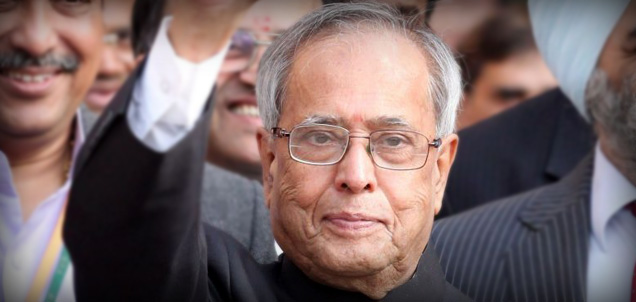
    In the end, one hopes that the angel is in the details. On Day 3 of the annual Frames jamboree put up by industry body FICCI, one hoped that Finance Minister Pranab Mukherjee will announce sops for digitization. The broad proposals didn’t. And for once, one hopes that rather than find the devil, there’s an angel hidden out there.


    Okay, there are some nice things in there. Like sops early stage funding from Venture Capital companies to media companies. But the IBF director-finance Naresh Chahal’s outrage was understandable. The government – and infobroad secretary Uday Varma re-iterated it – is firm on the June 30 deadline for the four metros. “If India has to grow, digitization will be a vital ingredient for its growth and thus it is important that we be technologically updated. Digitization is here to stay and we need to embrace this change.” While set-top boxes may not have found favour, LED and LCD television panels and parts of mobile phone memory cards have been looked at favourably by Mr Mukherjee.


    So while the FM hasn’t made life tough by adding taxes, the fact that he didn’t cut or even totally drop duties on set-top boxes was a huge dampner. Doubtless, the economically weaker sections in the four metros of Kolkata, Chennai, Mumbai and New Delhi will be forced to cough up monies if they want to catch non-terrestrial entertainment.


    Meanwhile, Mr Rakesh Jariwala, Partner & Tax Expert, Media and Entertainment at leading consulting firm Ernst & Young said:  “The key takeaway from the Union Budget 2012 for the Media and Entertainment Sector (‘M&E’) is the exemption to be provided from service tax on Copyrights in Cinematographic films with the introduction of the negative list concept under the service tax legislation.”


    The non-inclusion of advertising in television and print in the negative list for service tax is also a dampner given that the levy has been increase from 10 to 12 per cent. This means that there will be a tighter squeeze on adspend budgets. While advertising on big ticket shows will not suffer, the small monies spent on digital, outdoor, radio and other experimental/BTL activities may take a hit given the 2 per cent additional squeeze.


    And then there’s an increase in excise duty too which will increase the burden on M&E professionals and corporates and with the easing of Income Tax slabs not quite balancing the increase in expenses elsewhere.


    However, the film industry and entertainment event organisers may find some benefit with the recommendations.”The proposed negative list legislation seeks to specifically exclude admission to entertainment events and access to amusement facilities, thereby granting a much needed relief to the entertainment industry,” Mr Jariwalla added. “For film industry, it is proposed that service tax will not apply on transactions between producer to distributor, distributor to exhibitor (by exempting copyrights in cinematographic films) and between exhibitor to cinema goer (by including admission to entertainment events in negative list),” he said.


    For entrepreneurs just getting into media and entertainment who were cold-shouldered by venture cap companies given the restrictions, the easing up of restrictions on funding should be a welcome move.


    Please refer to Microsite on Budget 2012 for the following stories which were uploaded on Saturday, March 17:

    Budget 2012: Ernst & Young Analysis of Direct & Indirect Tax proposals in M&E

    Budget 2012: What it means for India Inc

    Budget 2012: Reactions from Stakeholders

    Budget 2012: Video reactions from trade

    Budget 2012: Entrepreneurs may find fund-raising easy with removal of restrictions for VCs

    Budget 2012: Ranjona Banerji on how TV Channels fared with their Budget specials

    Budget 2012 Anchor: 5 M&E ways in which the govt can make monies on the Budget


  • Budget 2012: Video reactions from trade

    [youtube width=”400″ height=”250″]http://www.youtube.com/watch?v=Cx39gg69K9o[/youtube]

    By Team MxMIndia


    At the sidelines of FICCI Frames 2012, where there was much talk about digitization from both the industry and the government, MxMIndia caught up with a few industry members to get their reactions on the Budget.


    Nachiket Pantvaidya, Executive Vice President & General Manager, Star Pravah

    To be very honest at this point in time we like to go by the market forces so we don’t expect subsidies from the government. What we do expect is some kind of support in nurturing local talent in providing a base for regional television to shoot and to propagate learning and education in the regional field. Honestly, I think this has to be done through market forces in sync with the government and not through a subsidy model.


    Naresh Chahal, Director-Finance, Indian Broadcasting Foundation

    There is no incentive or concession given to set top boxes for the broadcasting industry and the ministry has already issued a notification for digitization and the first sunset date is July 1. So we are not happy with the way the government has not given any concession. We were expecting 0 percent duty on set top boxes to get a set top box at a nominal cost.


    Raman Kalra, Director & Partner, Industry Leader- Media & Entertainment, IBM Global Business Services India

    Nothing much was expected from the Budget. There were some expectations though, like FDI will go up for digitization, maybe it will happen for cable, some tax relief, that hasn’t come through but industry has already accepted it. They don’t need these one or two things to go ahead on digitization. It’s moving very fast so it will happen.


    Ashok Mansukhani, Director, IndusInd Media & Communications Ltd

    The Budget doesn’t go into the cost to be borne by the government. The government calls digitization a public private partnership, in fact, the private sector will have to spend, the cable sector and the MSOs will have to spend. What we had asked for was that if we spend 40000 crore, we need to also be in a position to be able to get fiscal incentives, tax incentives, duty exemptions, unfortunately all has been denied.


    Ravi Mansukhani, Managing Director, IndusInd Media & Communications Ltd

    We are very disappointed, anywhere else if you look, government always helps towards digitalization. There is no infrastructure status, you are not getting any fiscal incentives, nor are you getting favourable interest rates from banks, so basically we are very disappointed because the entire burden of digitization has fallen on the MSO, on the cable sector and there’s going to be a lot of funding required and we are disappointed that there was nothing done on either duties or fiscal incentives.


    Amit Dev, Director CMAI & Head of Focus Group of Multimedia

    I strongly feel that government doesn’t take a step in a direction unless they see a significant addition of tax or money making to the exchequer through multiple secondary direct indirect ways. So if there is no mention this year that means it is not among the top ten priority issues of the government.


  • @FF12: Text of Star India CEO Uday Shankar’s keynote

    Good morning.


    Senator Dodd, Secretary Uday Verma, Chief Minister Chavan, Prosenjit, Jehil and my dear friend Karan Johar, the remarkable team of FICCI that has organized this fabulous event, friends from media, ladies and gentlemen.


    A couple of years ago when I was asked by FICCI to take over the chair of FICCI Broadcast Forum, none of us had an exact idea of the timeliness of that decision.  FICCI was seized off the maturity and the size of Broadcast media and felt that the time had come for it to sharpen focus on this aspect of media and not merely treat it as an adjunct of films.  However the momentous changes that have happened in the Broadcast media landscape in the last 2 years clearly justify the wisdom of FICCI.


    I find a powerful validation of the significance of television and broadcasting in “Positivity” – a report by the IBF on the impact of television. IBF has gone ahead and spoken to our viewers – the key findings of the research are gratifying and humbling for the industry. I don’t want to give too much away, but must highlight two interesting results – Over 90% of our respondents believe that television is a source of encouragement and motivation and a similar percentage of women respondents believe that Television has given them the confidence to believe in the capabilities and potential.


    Gratifying as it may be, it is just the beginning. We are at the cusp of what is set to completely transform broadcasting in India forever.  I am talking about the universal digitization of television distribution.  This is a subject that has dominated all discussions at all forums in the last year and I presume will continue to do so for a long time to come.  But let’s pause a minute and recall what the discussion is centered around.  Most of the discussions that I have participated in are still around whether digitization will happen and if it indeed were to go through, how chaotic it would be.  With all humility may I suggest that it is a meaningless discussion triggered by a bunch of retrograde interests who are living in denial.  Let’s get some basic facts -The Cable Television Networks Amendment Act is not the beginning of digitization.  Digitization of distribution is a big reality and the 40 – 45 million homes that have bought DTH boxes at some point or the other are a conclusive evidence of that.  In fact as we speak, India may just have overtaken the United States as the world’s largest DTH market.


    What Minister Ambika Soni, Secretary Uday Verma and his team are doing is to create a structured, institutional framework for shaping this big social reality.  More than 25 crore people who have stated their preference for DTH over analogue cable have clearly spoken out that this country is now ready for universal digitization and the current move is merely to create a level playing field.


    So, to the critics and the cynics who are still wondering whether digitization would happen, my answer is: Look around, it is already happening and the rest of it is bound to happen because even in this country it would be difficult to undo such a momentous shift. To those who wonder how chaotic it would be, my response is that there would be some chaos, but chaos is not necessarily bad if the alternative is status quo or regression.  When a transition at such a scale is happening that affects the illegitimate but strong vested interest in certain pockets, then there is an incentive to put up with chaos in the interest of the larger social objectives.


    Actually my biggest concern now is a chaos of another kind that we are all set to create by our inaction.  Whether we like it or not, in a few years time, the vast majority of this country will receive its content through digital media – digital cable, DTH, 4G, wireless and internet.  But are we preparing for that? The answer is a big NO.  I worry that while we debate a digital future day-in-and -day-out we are doing nothing to transform or find business models for a digital world. Let’s face it – universal digitization is going to force us to change the way we do business and we are so not ready for it.  We often blame the cable operators and MSOs that they are not ready but I am afraid that even the broadcasters and the content creators are not ready for a digital world.  Are we then setting ourselves up to become uncompetitive and irrelevant?


    In case you think I am a scaremonger, let me ask a question – we all know how many people DTH services and now a large number of them have evolved services like HD, DOLBY sound and digital video recorder and yet what are we doing differently to service this segment?  DTH has been around now for about 6 years and is there one thing that we as broadcasters or the content community have done that we could point out as an example of a strategy to exploit the new technology?  This is despite an intuitive and an experiential understanding that the behavior and the consumption patterns in DTH homes are significantly different from analogue homes. The data also show that the average time spent on content in digital homes is much more and yet we do not treat them differently.


    It is perhaps scary how we have force-fitted an analogue broadcasting model into the digital domain.  Is that what we are going to do even after cable goes digital?  I am afraid if the past behavior is anything to go by, we are not ready to offer anything significantly different and therein lies the biggest crisis and risk of a chaos.  We have often spoken about how digitization would enable a multiplicity of niche channels to emerge.  Digitization of TV and even film infrastructure for that matter can revolutionize the way media is consumed in India.  There is enough global experience to suggest that digitization leads to de-centralization, regionalization or localization of content creation and distribution.  Creatively, it is a huge catalyst for innovation and diversity.  Essentially what it means is that with universal digitization the business models of broadcasting which are built on centralized creation and distribution of content and even a centralized advertising revenue model may come under a huge pressure.  I am proud to lead one of the finest media companies in this country and the world and yet I must confess that all of us have built our businesses in an environment where access to distribution was complicated, expensive and even impossible.  That is all set to change. So the big incumbent advantage is set to slowly, if not rapidly disappear. Socially, it is all very desirable because the plurality of this country is very valuable and digitization is a big catalyst for that plurality.  But, are we ready to re-tool our strategies and our businesses?  The cable community is still busy lamenting the potential loss of carriage fees not realizing what an amazing opportunity it has to participate in the local economic boom that is sweeping most parts of this country.  The first phase of digitization that covers the 4 metros will be a huge unshackling of broadcasting and content opportunities.  These are the cities that have crumbled under the weight of analogue frequency limitations.  Just imagine the opportunities that these metros also our economic hotspots present when, from the first of July access to frequency will no longer be a constraint.  So to my mind the MSOs and the cable operators may potentially become a powerful content creator that the traditional broadcasters have to contend with. There may be new creative talent ready to ride this technological transition.  As the subsequent phases roll on, the decentralization of broadcasting is bound to gain enormous momentum.  However, I don’t see anyone trying to race ahead to take a pole position here.


    Now let’s look at the content and the creative community that I myself am a part of.  But I am struck by our obliviousness to the opportunities and changes awaiting us.  Let me explain this with a slightly different example.  It’s been for a few years now that HD TV sets have been available in this country.  While many people were buying them, their off-take was still low primarily because there was no HD content and nobody was willing to invest in HD content because there were not enough HD consumers.  It was the classic chicken and egg problem.  However early last year, when we at Star launched 5 HD channels with DOLBY 5.1 surround sounds even we were surprised by the rapidity with which HD gained acceptance. Today, in less than a year there are around 25 HD channels. But, I have to admit with a touch of disappointment that I am yet to see an adequate recognition of the potential of HD and a superior sound possibility by my fraternity.  It is a classic case of the old mindsets struggling with a new technology.


    Are we going to stay locked into this struggle or are we going to create a new generation of television which would be designed for the digital world?  It will require all of us to change.  The creative and broadcasting community has to change their approach to content and the distribution mindset needs to change equally. If you are a cable operator or an MSO -  carriage fees is not the reason why you came into this business and people do not take a connection so that you can earn carriage fees. We are all in the business of delivering best television experience for the consumers and they will be happy to pay for it.  There is enough evidence that people want to consume content and lots of it – but they love it when it is customized to their taste.  Today there is an opportunity to do that and let’s put our heads together to take advantage of that opportunity.  Let’s determine what we require from the Government and the regulator. I have been an admirer of the current information and broadcasting dispensation which I think has shown more vision than any other dispensation in my two decades of interaction with the broadcasting establishment.  However, let me point out that we still need a lot of official and legislative enablers to remove the bottlenecks on this expressway.  For instance, a clear policy to enable multiplicity of beams and splits would be a powerful trigger for proliferation of content and revenue opportunities.


    I could go on.  But I would like to end by just reminding you of the latest Oscar success from Hollywood – The Artist – which is an amazing portrayal of how a talented and accomplished artist from the silent era could become completely irrelevant because he refused to see that the times have changed. Let’s not try to thwart a revolution which people are crying for.  We will only hurt ourselves.  The question is whether we will lead the change or whether we will vacate the space for a new set of entrepreneurs and visionaries who will replace us.  It is up to us to use it or lose it. Thank you very much.


    Photograph: Fotocorp

  • @FF12: Digitization – ball in industry’s court, says I&B secy

    By A Correspondent


    In December 2011, Parliament had passed a bill making analog cable switch to digitization in phases, starting June 30, 2012. FICCI Frames 2012, on day one held a session on ‘Addressable Digitization – The Way Forward.’ This session had two keynote speakers, Dr JS Sarma, Chairman, TRAI (Telecom Regulatory Authority of India) and Uday K Varma, Secretary I&B (Information and Broadcasting), followed by a panel discussion. Almost everyone in the session agreed that digitization is now a reality and an important ingredient for India’s growth. Will digitization be a game changer? Is the industry is ready for digitization, what are the challenges and opportunities that digitization has to offer, and what’s in it for the consumers – these were some of the points raised during the session.


    The session was moderated by Vivek Couto, Executive Director, Media Partners Asia. The panelists were, Sanjay Gupta, COO Star India, Sunil Lulla, CEO and MD Times Global Broadcasting, Sameer Machanda, Founder DEN Networks and Punit Goenka, MD And CEO, Zee Entertainment Ltd.


    Mr Varma was of the view that since there has been no political opposition to the digitization of cable and the fact that the parliament too had passed the bill in December 2011 it is now upon the industry to make digitization a reality. Mr Varma was also quick to point out that as far as monitoring is concerned, the government has already set up mechanisms and task force as well as interest groups to address various concerns of the industry. “The progress of digitization must be a transparent process. There will be a mechanism that will be put in place to ensure transparency. We are certainly at the threshold of revolution. There are huge changes that will take place and these changes will certainly be beneficial changes especially on how we create contents.”


    Dr Sarma, who will be demitting office in two months time observed, “If India has to grow, digitization will be a vital ingredient for its growth and thus it is important that we be technologically updated. Digitization is here to stay and we need to embrace this change.”


    The panelists were of the view that not only the industry is ready for digitization but for some of them, it will be a game changer. While digitization will bring a lot of opportunities in terms of contents and niche channels, the industry will face some challenges too. According to Mr Machanda, digitization will be a game changer as it will bring transparency in the industry. “We are ready for digitization, we have the boxes, call centers are ready etc. I believe in the next few months we will see more momentum in the industry.”


    Taking issue with Mr Machanda, Mr Gupta was of the view that it was not digitization but providing democratization of content which would be the real game changer for the industry. “The big challenge however is to not carry our analog mindset in digitization. As a broadcaster we have not catered to different audiences, we must therefore unlock the value of creating differentiated contents” he said.


    Mr Goenka believed that digitization will not only encourage niche contents but, provide ample opportunities to provide good content and differentiated contents to consumers. Mr Lulla observed, “There is greater good in digitization. There is a lot of work the broadcasters have to do over the next few years as we will have to create pathways. What will however change is not the price of the business but, the view centric business wherein the consumers will decide what they want to watch and the price they want to pay for it.”


    The panelists also agreed that the industry is ready for change but it needs to educate and spread awareness about the benefits digitization has to offer consumers, such as more channels and differentiated content.


    Photograph: Fotocorp

  • Digital attracts ‘desirable’ status on Day 1


    By Team MxMIndia


    The West swears by it, developed countries from Asia Pacific have already made a generational leap in terms of technological innovations while globally, the medium has shown why it is the most sought-after given the dynamic growth numbers it throws up in the shortest possible timeframe. Well, it could be said here with certainty that digital has bought about a significant change in the way the world goes about running its business in the last decade compared to what other mediums have been trying to do for decades together. Little wonder that when the organisers of FICCI Frames were faced with the choice of shortlisting a theme that could alter the media and entertainment industry in India, they didn’t have to think twice before narrowcasting on the medium of preference – digital.


    In keeping with the theme, ‘Embracing the Digital World’, FICCI Frames 2012 got off to a wishful start at Hotel Renaissance, Mumbai on March 14. In keeping with its tradition, the morning session kicked off with a welcome address by the Co-Chair of FICCI Entertainment Committee, Karan Johar. After Mr Johar’s welcome address, Uday Shankar, CEO, Star India & Chairman, FICCI Broadcast Forum, took the stage to address the audience. Making a dash for the core topic of digital, Mr Shankar began by stating, “Digitization is a big reality which will revolutionise the way content (creation and distribution) is offered”. Even though he said that digitisation will create a level playing field for the broadcasters and the cable operators, he had a word of caution to add when he said that his biggest concern was “the chaos which will be caused by the broadcast industry’s inaction.”


    Though Mr Shankar admitted that there is a need for legislative enablers to remove the bottlenecks surrounding digital, he also said that the broadcast industry is still not ready to move to the digital format. To drive home his point he used the example of the film The Artist, where the star of the film loses out when he refuses to move with the times. Next it was the turn of Prithviraj Chavan, Chief Minister of Maharashtra who took the stage to talk about the “exciting times that all are living in”. He said that the challenge is to adopt the regulatory framework to the new technology and ensure that over regulation doesn’t kill a good thing. He also said that the move towards digitization will create a huge employment opportunity but there is a need to explore how technology can empower the field of education. The Chief Minister also touched upon the need for regulation and suggested that instead of the state regulating the media, the medium should look at regulating itself.


    Following his speech, the event witnessed the release of the FICCI-KPMG Indian Media and Entertainment Industry Report 2012; FICCI-Amarchand Lawbook and ‘Positivity: The impact of television on India’ by The Indian Broadcasting Foundation. Jehil Thakkar, Head, Media & Entertainment Practises, KPMG made a brief presentation about the key highlights of the FICCI-KPMG Indian Media and Entertainment Industry Report 2012.


    Uday K Varma, Secretary, Ministry of I&B, opened his address by stating that the concerns that the industry had over digitization and the Phase 3 of FM radio have been addressed by the move to allow 839 new FM stations and 500 community radio stations. He stressed that the government is committed to ensure time bound digitization and said that come July 1, the four metros will switch over to the digital format and the plan is to ensure that the move to digitization is completed by December 31, 2014. He agreed that the challenge was mammoth- to convert 80 million analog connections to digital format but added that it will ensure faster and deeper penetration. “This will address a plethora of issues facing the television industry, such as addressability, carriage fees, audience measurement and consumer preferences,” he said. Mr Varma added that in order to combat piracy, the government intended to carry out an all-encompassing multi-media campaign involving all stakeholders from the film and music industries, shortly.


    Punit Goenka, CEO & MD, ZEEL too spoke about the pros and cons of digitization, how the ratings are inadequate and how self regulation was the need of the hour for the broadcast industry. Carolyn Everson, VP, Global Marketing Solutions, Facebook elaborated on how Facebook can benefit the media and entertainment industry and cited examples from music, gaming and films to drive home her point.


    ————————————-


    BARC takes wings; Discovery Kids to flag off operations in April

    In between the many promises and hopes that were being doled out at the inaugural session came the news of the Indian Broadcasting Foundation (IBF), the Indian Society of Advertisers (ISA) and Advertising Agencies Association of India (AAAI) announcing the official formation of a nationwide audience research joint body — Broadcast Audience Research Council (BARC).


    The announcement was made at the inaugural day of FICCI Frames 2012 in Mumbai in presence of I&B Secretary Uday K Varma, TRAI Chairman Dr JS Sarma, Managing Director & CEO of ZEE Punit Goenka, Star India COO Sanjay Gupta, Times Television Network MD & CEO Sunil Lulla, Star CJ CEO Paritosh Joshi, Madison Group Chairman Sam Balsara and Landmarc Leisure Corporation MD Paulomi Dhawan.


    While IBF will have 60 per cent stake in BARC, ISA and AAAI will each hold 20 per cent stake. The Board of the council will have 10 members, six members from the IBF and two members each from the ISA and AAAI.


    Another important announcement was made by President & CEO of Discovery Networks International, Mark Hollinger who announced the launch of its new network for children in India, ‘Discovery Kids’. Mr Hollinger said, “Launching in April, the network will initially be available in three languages – Hindi, English and Tamil. The channel will offer children a fun and entertaining way to satisfy their natural curiosity with stimulating and imaginative programming,” he said. The company plans to roll out the channel in Philippines and Indonesia later this year.


    ——————————————–


    Post the promises and pleasantries doled out by committee members and authorities, it was time for some serious discussion which began with a panel discussion on ‘Addressable Digitization – The way forward’. Sanjay Gupta, COO – Star India, Sunil Lulla, CEO and MD Times Global Broadcasting, Sameer Manchanda, Founder – DEN Networks and Punit Goenka, MD And CEO, ZEEL comprised the panellists. The panellists agreed that digitization is the way forward and will soon be a reality. Uday K Varma, Secretary – I&B, put the ball in the industry’s court as he said that there were no political opposition to digitization and the parliament too passed the law in December 2011, therefore it is now incumbent upon the industry to make digitization a reality. Sunil Lulla pointed out that the there is greater good in digitization however, the industry has to do a lot of work over the next few years. Sameer Manchanda was of the view that digitization was a reality and that it will bring more number of channels. While Uday Varma said the government is determined and committed to ensure digitization happens the broadcasters on the other hand also displayed confidence that they are ready for the June 30, 2012 deadline i.e. when metros will switch from analog TV to digital. The session also discussed opportunities and challenges that digitization has to offer and how the industry was gearing for digitization – whether they are ready or not?


    A session on ‘Maximising the power of digital distribution’ saw industry leaders speak about the challenges that come along as the country is experiencing the much talked about shift – from analog to digital cable – the investments that goes into and many such challenges. Industry honchos such as K Jayraman – MD and CEO, Hathway Cable and Datacom Ltd; SN Sharma, CEO, DEN; Anshuman Misra – SVP and MD, Networks and Content Distribution, Turner, Asia Pacific; Vikram Chandra, Group CEO, NDTV; Jagi Mangat Panda, Co-Founder and Director, Ortel; Prof Jonathan Askin, Professor of Law, Brooklyn School of Law and Anita Wallgren, Government Attorney, US Department of Commerce, Former Program Director, US Government’s TV Converter Box Coupon Program. Vivek Couto, Executive Director, Media Partners Asia moderated the session.


    While digitization comes in as a relief for broadcasters who will be benefitted from additional subscription revenue the relaxation on paying heavy carriage fees, and of course providing viewers with a superior content experience – MSOs and cable operators have to quickly respond to the digitization mandate by investing in set-top boxes – the cost that is only possible to recover after four years. Jagi Mangat Panda pointed out that digitization will result in some sort of consolidation in the distribution space where bigger players will look to expand their presence in the Indian market.


    Vikram Chandra talked about the difference digitization makes to the news industry. “Digitisation is important for news players. It is leading players in the news industry into areas they don’t want to be in. In the race of chasing TRPs, people are forgetting that digital has a great potential that has to be tapped, a business model which needs to be looked at.” Chandra also mentioned the role of tablets and high-end devices as new distribution platforms.


    Anita Wallgren and Prof Jonathan Askin spoke about how the United States saw the transition of analog TV to digital – the learnings and challenges.


    It could be said that the media and entertainment industry of India has scripted a glorious growth story in the past ten years or so. And now, when the future looks more promising with digitisation and the advent of technology across media verticals such as broadcast, print and also films – one area which that has not seen enough progress is the lack of private equities and VC funds showing adequate interest. In a session titled “Financing the Media and Entertainment Business” eminent personalities such as Prashant Jain, Executive Director, HDFC Mutual Fund; Mathew Cyriac, Sr Managing Director, Private Equity, Blackstone; Soumo Ganguly, Managing Director, Moxie Entertainment Pvt Ltd; and Daniel Dubiecki, Founder and Partner, The Allegiance Theatre, Hollywood shared their views on the subject. Ashok Wadhwa, Group CEO, Ambit moderated the session.


    Mathew Cyriac started off the session by pointing out that majority of the investments within the media and entertainment industry were made in television and print as they represent a fairly large share  in terms of sheer numbers as against Internet and Radio. The Hindi GECs in TV is typically where a lot of money goes to followed by regional GECs and sports channel. For print media, it was the regional publications that command a lot of attention as regional advertising is very robust – one which extracts a lot of profit.


    Prashant Jain pointed out that a lot of companies in India have managed to get good funding and that it is not reflective of a very, very sorry picture as is being talked about. “It’s not that all of India in the media entertainment space are not attracting funds. Companies like UTV and a few others have attracted investors.”


    Ashok Wadhwa remarked that the film industry in India is not institutionalised enough to attract private equity. Daniel Dubiecki spoke about the need to be more global in concept, widen the scope of market and thereby making it more viable to attract investments in the films business.


    In the session on ‘Protecting Copyrights, Infringements & New Trends i.e. Remake’, the panellists chose to rummage over the impediments surrounding copyright issues in the film and music industry in India. The panellists included Sai Krishna from Sai Krishna Associates; Deborah Benattar, Head, TV & Cinema, French Embassy; Jagdish Rajpurohit, Head, RCL Motion Pictures & Producer; Bertrand Mouiller, former DG IFFPA and Amar Butala, creative director, UTV Motion Pictures. The session was moderated by Dina Dattani, Consultant & Lawyer. Sai Krishna provided a hopeful insight as he said, “The industry should take heart in knowing that the Copyright Amendment Bill is currently being debated in the parliament and is expected to be passed after the current Budget Session. There are provisions that can alter the way the entertainment industry functions in India.” But he cautioned by saying that the Bill has its setbacks too as there are no clear guidelines when it comes to copyright issues between the writer, music composer and the producer of a film. Mr Butala added here saying, “We have made huge leaps in terms of the legal paperwork with actors and performers where copyright issues are concerned. But it is just the start and the challenge would be to sort out legal issues and take the offenders to Court with the hope of finding a favourable outcome from the judiciary.” The panel proceeded to discuss the trend of moviemakers bagging rights for remaking movies and that there was a need for a law that would streamline procedures for the industry at large.

     Photograph: Fotocorp

  • @FF12: Opening session weighs pros & cons of digitization


    By A Correspondent


    FICCI Frames 2012, now in its 13th year, kicked off on March 14, Wednesday at Hotel Renaissance, Mumbai. The morning session started with a welcome address from Karan Johar, Co-chair, FICCI Entertainment Committee. After Mr Johar’s welcome address, Uday Shankar, CEO, Star India & Chairman, FICCI Broadcast Forum, took the stage to address the audience.


    In keeping with the theme, ‘Embracing the Digital World’, Mr Shankar said “digitisation is a big reality which will revolutionise the way content (creation and distribution) is offered”. Even though he said that digitisation will create a level playing field for the broadcasters and the cable operators, he had a word of caution to ad when he said that his biggest concern was “the chaos which will be caused by the broadcast industry’s inaction”.


    Mr Shankar was of the opinion that instead of lamenting the loss of carriage fees, the MSOs should appreciate the opportunity of “customisation and localisation of content” being presented by digitisation.


    Though Mr Shankar admitted that there is a need for legislative enablers to remove the bottlenecks, he also said that the broadcast industry is still not ready to move to the digital format. To drive home his point he used the example of the film The Artist, where the star of the silent era films loses out when he refuses to move with times. With this word of caution, Mr Shankar ended his keynote address.


    Prithviraj Chavan, Chief Minister,Maharashtra, next took the stage to talk about the “exciting times that we are living in”. He said that the challenge is to adopt the regulatory framework to the new technology and ensure that over regulation doesn’t kill a good thing. He also said that the move towards digitisation will create a huge employment opportunity. He stressed on the need to balance technology with creativity, adding that “growth should not be lopsided but all inclusive”.


    Shri Chavan also stated that the government is taking all possible steps to ensure that content piracy is curbed but accepted that the state has not delivered on its promises to curb piracy till now.


    He also touched upon the need for regulation and said that regulation is a major challenge. Shri Chavan suggested that instead of the state regulating the media; it should look at self regulation.


    Moving on, Shri Chavan welcomed the foreign delegates and announced that his government was creating new centres for film shooting in the state. He stated that the first such centre will come up atKolhapur, where entrepreneurs would be provided with lots of financial incentives. He said that the government will “protect any creative attempt within the framework and not allow any fascists elements to disrupt it”. He also assured the film industry that its concerns over policing on film locations would be looked into.


    The Chief Minister also released the FICCI-KPMG Indian Media and Entertainment Industry Report 2012; FICCI-Amarchand Lawbook and ‘Positivity: The impact of television on India’ by The Indian Broadcasting Foundation.


    Mr Jehil Thakkar, Head, Media & Entertainment Practises, KPMG made a brief presentation about the highlights of the FICCI-KPMG Indian Media and Entertainment Industry Report 2012.


    Senator Chris Dodd, Chairman, Motion Pictures Association of America, who took the stage next, underlined the need to look into stringent regulations against content theft.  “When content is stolen, 95 per cent of the people who contribute to the vitality and success of a film are adversely affected”, he said. Quoting an Ernst & Young report, he said, movie theft contributes to a loss of US$ 1 billion annually and threatens the jobs of half a million people. He stated thatIndiais among the top 10 nations as far as online copyright infringement is concerned. He said that technology (digitisation) and content need each other and one can’t be without the other.


    Mr Uday K Varma, Secretary, Ministry of I&B, opened his address by stating that the concerns that the industry had over digitisation and the Phase 3 of FM radio have been addressed by the move to allow 839 new FM stations and 500 community radio stations.


    He stressed that the government is committed to ensure time bound digitisation and said that come July 1, the four metros will switch over to the digital format and the plan is to ensure that the move to digitalisation is completed by December 31, 2014. He agreed that the challenge was mammoth- to convert 80 million analog connections to digital format but added that the move will ensure faster and deeper penetration. “This will address a plethora of issues facing the television industry, such as addressability, carriage fees, audience measurement and consumer choice,” he said.


    Mr Varma added that in order to combat piracy, they intend to carry out an all-encompassing multi-media campaign during the 12th five year plan period involving all stakeholders from the film and music industries.


    He also outlined the ministry’s plan to celebrate 100 years of cinema inIndia. Mr Varma said that the Government of India, in cooperation with the film industry, has a line of activities between May 3, 2012 and May 3, 2013. It also proposes to present a tableaux of ‘100 years of Indian Cinema’ at the Republic Day parade next year where the plan is that the stalwarts of the industry also take part.


    Mr Varma also announced that the government is setting up a National Film Heritage Mission to safeguard India’s celluloid history by undertaking picture and sound restoration of more than 2,500 films. In Addition, theMission, with a budget of over Rs500 crore, would also look at constructing preservation vaults for archiving restored material, and for conducting workshops and training.


    The session closed after a vote of thanks given by Dr. Rajiv Kumar, Secretary General, FICCI.


  • Digital, growth mantras to drive agenda


    By A Correspondent


    Asia’s largest convention in the business of entertainment, FICCI Frames 2012, will be held at The Renaissance, Powai in Mumbai from March 14 to 16. In its 13th year, Frames is a three-day global convention covering the entire gamut of media and entertainment ranging from films to broadcast, which includes television and radio, to digital entertainment, animation, gaming and visual effects.


    The Summitwill be inaugurated by Government of India’s Information & Broadcasting Secretary, Mr Uday Kumar Varma. Senator Chris Dodd, Chairman, Motion Picture Association of America will deliver the keynote address at the inaugural session. Japanis the partner country at FICCI Frames 2012 and will be present with a high-powered delegation comprising key stakeholders from the Japanese media and entertainment industry.


    Frames 2012 will present opportunities for business networking, lobbying, and creative and financial collaboration and partnerships. There will also be a series of workshops and master-classes that will be conducted by venerated global gurus who will be busy highlighting the way forward to the assembled delegates. Nearly 2,000 Indian and 800 foreign delegates are expected to attend the event.


    The Who’s Who of the Indian media and entertainment industry will join hands with the global industry leaders and experts to discuss and debate and to announce new initiatives at FICCI Frames 2012. Mark Hollinger, CEO, Discovery, Carolyn Everson, VP-Global Marketing Solutions, Facebook, Cameron Bailey, Co-Director Toronto International Film Festival, Bruce Beresford, Director of Oscar-winning movie Driving Miss Daisy, Silas Hickey, Regional Creative Director for Animation at Cartoon Network, Max Howard, Global Animation Consultant and Lecturer on Producing Independent Animated Feature Films for the International Markets, Oscar-winner Harvey Lowry, Hollywood’s Special Effects Guru, and John Bashford, Vice Principal, LAMDA (The London Academy of Music & Dramatic Arts) are some of the globally well-known names who will be delivering keynote addresses, conducting workshops and master classes, and joining the panel discussions in various sessions at Frames.


    Other eminent speakers from the world of television, radio and print that would be present include television czarina Ekta Kapoor, Barkha Dutt and Vikram Chandra of NDTV, Sunil Lulla of Times TV, and Puneet Goenka of ZEEL. Print will be represented by Shekhar Gupta, Editor-in-Chief of the Indian Express Group and T.N. Ninan, Editor of Business Standard.


    Bollywood too would be adequately represented through eminent faces such as Yash Chopra, Karan Johar, Vidya Balan, Kamal Haasan, Imtiaz Ali, Anurag Kashyap, Farah Khan and Zoya Akhtar.


    The theme of this year’s event is ‘Embracing the Digital World’. Dr J S Sarma, Chairman, Telecom Regulatory Authority of India (TRAI) and Mr Uday K Varma, Secretary, Ministry of Information & Broadcasting, will identify and address immediate areas for successful implementation of the digital switchover and also on what’s next in the regulatory and market framework to enable and sustain the transition.


    The move to embrace digitization in Cable and Satellite TV services has become imperative as such services have grown exponentially inIndiain the last 17 years. A separate session at FICCI Frames 2012 will deliberate on ways to maximize the power of digital distribution. Industry leaders will share their experiences with Frames delegates, their perspectives on how funding challenges have been overcome in other jurisdictions and the takeaways forIndia. The panelists include Vivek Couto, Founder, Media Partners Asia; Anshuman Mishra, MD, Turner International India; Vikram Chandra, CEO, NDTV; Jagi Mangat Panda, CEO, Ortel; Prof Jonathan Askin, Professor of Law, Brooklyn School of Law, Former Senior Legal Advisor, FCC; Anita Wallgren, US Department of Commerce.


    The FICCI-KPMG study on Indian Media & Entertainment for 2012 will also be released on the occasion. Strong growth in tier 2 cities, the continued march of regional media and the rapidly expanding new media business helped the media and entertainment industry log a 12 per cent increase in revenues to Rs729 billion in a troublesome 2011, according to the report. Overall, the industry is expected to grow at a compounded annual growth rate (CAGR) of 15 per cent to Rs.1,457 billion by 2015.


    Further details on the event will be available at: http://ficci-frames.com/