Category: DIGITIZATION

  • Stakeholder view of one month of digitization


    By Ananya Saha


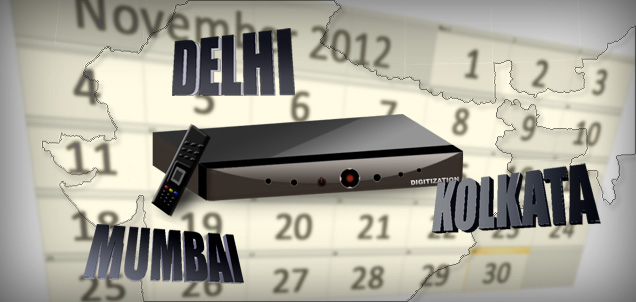
    It has been a month of mandatory digitization in the three metros of Mumbai, Delhi and Kolkata. Even though government officials may make us believe that the metros are completely digitized, , the ground reality appears to be different. Analogue signals continue to be available, and not all stakeholders are happy with the way things are shaping up. Meanwhile, in Chennai, the digitzation hearing has been postponed by four weeks. It is likely to happen only by December 31, though given a cloud over whether the government will be allowed to run a cable service (in Arasu Cable),  will be allowed to be


    Man Jit singh

    Calling the Phase I a tremendous success for industry, Man Jit Singh, President of the Indian Broadcasting Federation (IBF) and CEO, Multi Screen Media said, “Digitization has been a huge success. The kinds of effort that was done to get digitized, no where in the world have we seen this kind of achievement has been done. Kolkata has not reached 100% digitization yet, but I think it will get there.” He also acknowledged that fact that there are few illegal signals in Delhi and Mumbai but assured that the IBF is working with other stakeholders to have these illegal signals completely switched off.


    Roop Sharma

    On the other hand, Roop Sharma, President, Cable Operators Federation of India (COFI) highlighted how none of the promises made on digitization by MIB have been achieved so far. She said, said, “During Parliament discussion on the Cable TV Act Amendment Bill last November, the then I&B Minister Ambika Soni said digitization will provide choice of channels to consumers-through a-la-carte selection, provide high quality service, controlled pricing of pay channels and thus lowered billing to consumers, and that consumer to pay only for what they wish to watch. Consumers were to get internet video-on-demand and value added services through set-top-boxes, and she had said that small cable operators will not be rendered unemployed, there will be transparency and correct accounting of channel viewership, govt will get tax on all connections as no under-declaration will exist, and that there will be no ambiguity in TRP ratings. Now, with one month of digitisation over, has this been achieved?” She is of the view that nothing that I&B Minister had promised the Parliament has been achieved yet and still, the Ministry has announced successful completion of phase I and started roll out of phase II.


    The figures

    Swapan Chowdhury

    Currently, according to various stakeholders, over 95% digitization has been achieved in Delhi and Mumbai even as Kolkata trails behind with quite a less percentage. Swapan Chowdhury, General Secretary, Cable & Broadband Operators’ Welfare Association, Kolkata, however, estimated, “Mumbai achieved 75% digitization and 70% in Delhi while digitization in Kolkata is only about 40-45%.”


    Mr Chowdhury also said that the actual activation of set-top boxes in November for Kolkata has been than a lakh. Arvind Prabhoo, Owner, Orbit Television Network, Mumbai said that the actual reason behind high numbers from Mumbai is because of stopping of analogue signals. “Most of the networks have reported 90-95% switchover in Mumbai. This figure has happened after the stoppage of analogue signals. We were hardly touching 60-65% before the analogue signals were not switched off. Even then, at least 35-40% people have not taken to digitisation voluntarily.” Though the piracy is still an issue in some pockets of Mumbai, over 8-9 lakh STBs were installed this month alone.


    Certainties and Uncertainties

    “There are certain distributors who have not made their pricing policy clear yet. There us a lot of confusion over revenue-sharing. One of the major issue is Entertainment Tax. If the govt charges Rs 45 per STB connection, does that mean every house that has two television sets, pays Rs 90 entertainment tax,” voiced Mr Prabhoo.


    Ms Sharma said that broadcasters are making lumpsum deals with MSOs for pay channels and not based on the number of consumers opting for those channels. “Hence, there are no accurate figures. Discrimination is rampant. Rates of pay channels are not based on market demand but whims of the large content aggregators, vertical monopoy business houses/ companies like MediaPro who enjoy monopoly in pay TV content distribution,” she remarked.
     

    Ashok Mansukhani

    Although, the DTH operators this writer reached were unavailable for comment, there have been mixed reports on its success rate. While one report says it has done well in the Capital where the availability of analogue signals has been low, MSO Alliance chief Ashok Mansukhani has another view. “DTH is surprised at its poor performance. They need to take a call on what they are upto: have they grown in the last six months,” he asked. “According to statistics, it’s 70:30 in favour of cable and that is not going to change soon. Where did cable have the capacity to retain 70% of cable base? For DTH, there is enormous churn which is as much as 33% of the total amount claimed. And how come the government doesn’t take the churn into account,” asks Mr Mansukhani.


    While Ms Sharma and Mr Prabhoo said that the issue of carriage fees has not been sorted out yet either, Mr Man Jit Singh sounded optimistic, “We expect there will be decrease in carriage fees as digitization rolls out for simple reason that the capacity constraint of analogue system will go away. However, carriage fees is not going away completely and it will take time. Both broadcasters and MSOs are working together to make a gradual transition to reach a stage economically in the short run so that it sorts itself out in the long run. We feel that carriage fees is moving in the right direction.”


    Phase II: Lessons from Phase I

    Phase I was not a smooth ride. And Phase II will be even tougher since it will be rolled out in 38 cities simultaneously. Apart from stronger communication aimed at the end consumer, the stakeholders need to tighten their belt for doing their bits too.


    Mr Mansukhani said that in the second phase, more attention should be given to the consumers and less to the broadcaster. “Awareness creation by all stakeholders is necessary since once people are aware, they are open to change. In the phase I, we were not communicated on the need of digitization and we still do not know why digitisation is happening,” said Mr Prabhoo.


    Ms Sharma said insisted that for the next phase transparency is required on each level: between broadcasters and channel aggregators; between channel aggregators and MSOs; between MSOs and LCOs and between LCOs and consumers. “Digital Cable System is new and is not tried and tested. Lots of teething problems, application hazards are poping up which needs to be addressed. Redressal of all such issues should be considered on practical ground and not on any task force or ministrial meeting. The first phase of digitization is practically incomplete. Supply of STB in the first phase is inadequate, the pressure of second phase will push the process into much more complication. Authority is not accepting the time for settling down for supply of STB and the technology,”said Mr Chowdhury.


    Mr Singh concluded, “The early seeding of boxes and getting the message out to consumers that they need to get their boxes early is one key message. IBF’s campaign to build public awareness was extremely effective and we should continue with that campaign for phase II. The ministry’s effort to coordinate with all stakeholders was in excellent trend that should continue. If anything, I think MIB  is going to take even more proactive stance of monitoring the actual implementation of the roll out of boxes city by city. So I think a lot of the learning from phase 1 will apply to Phase 2 and it is very positive.”


     

  • MIB asks TRAI view on Central/State govt entry in cable

    By A Correspondent


    The Ministry of I&B has sought the recommendation of Telecom Regulatory Authority of India (TRAI) regarding the entry of central / state governments and their entities into the broadcasting sector.


    The ministry made this reference recently as the issue of granting permission to a state government or its organs to run cable TV networks has been drawing its attention from time to time with particular reference to the TRAI recommendations restricting such entities to enter into broadcasting and distribution activities. The ministry has received also requests from central government ministry and from several state governments in the past, a communique said.


    The ministry has sought the views of TRAI regarding the entry of the following entities in the broadcasting sector:


    (i) Central Government Ministries and Departments / Central Government owned companies / Central Government undertakings / Joint venture of the Central Government and the private sector / Central Government funded entities.


    (ii) State Government Departments/ State Government owned companies / State Government Undertakings / Joint venture of the State Government and the private sector / State Government funded entities.


    In its recommendations on “Issues relating to entry of certain entities into Broadcasting and Distribution activities” dated November 12, 2008, the TRAI was of the view that a state government and its organs may not be permitted to enter into broadcasting and distribution activities.


    As per extant policy guidelines for uplinking and downlinking of television channels, an applicant seeking permission to set up an uplinking Hub / Teleport or Uplink/downlink a TV Channel should be a company registered in India under the Companies Act,1956 irrespective of its management control. This assumes significance in view of significant growth in the broadcasting sector wherein the number of TV channels and cable connections in India have grown exponentially.


  • Kolkata digitization: Tug-of-war between State and Centre

    By Ananya Saha


    The digitization conundrum in Kolkata is not likely to see a solution soon, it appears. While the Centre recently ordered the MSOs in the city to switch off analogue signals by December 27, the State wishes to take into account the ground realities and extend the deadline. The State government is also upset because of the pressure from the Centre.


    Swapan Chowdhury

    Swapan Chowdhury, General Secretary, Cable & Broadband Operators’ Welfare Association, Kolkata said, “Yesterday a meeting was called by the State Urban Development Minister Firhad Hakim with all the existing MSOs of Kolkata. He has categorically stated that no switchover will be done from December 27 onwards. When MSOs informed him that they have already written to MIB, he said that it was also a State issue.” The MSOs have been told to not follow the terms of the Central government.


    Mr Hakim also said that he was looking at a tripartite meeting between the Centre, State and local MSOs to sort the problem in a systematic manner.


    On the condition of anonymity, a local MSO said that situation is grim and 100 percent digitization might take more than a month in Kolkata. Sumit Bose, President, GTPL, said, “The State has their set of concerns and we respect those concerns. On the other hand, the law has to be respected.” He added, “As MSOs, we are keenly watching the situation. We would like to move on with the model.”


    “It is the matter of State issue also to look if the systems are followed or not. And MIB cannot pressure us if the realities do not match the goals. But because of the political tussle, the Centre is not ready to talk to the State govt. They are trying to do it forcibly, bypassing the State govt and the minister concerned,” said another cable operator, who did not wish to be named.


    “There is still a shortage of STBs in the city, and it will take some time to sort out. But non-availability of STBs is not the only problem; the State govt will not let MIB to build so much pressure. MSOs have obligation to local govt as well. The MSOs are currently ‘sandwiched’ between local and central govt,” Mr Chowdhury said. Mr Bose said, “There are various figures floating in the market about the digitization levels in Kolkata. It is not easy to estimate the exact numbers because of the Cable and Satellite homes. Even a 10% here and there can mean three lakh homes. But I would like to say that GTPL has fared well.”


    Kolkata was supposed to completely digital from December 28, according to the recent directive from MIB. According to Mr Chowdhury, the switch off of analogue signals was initiated from December 16, and was to switch to digital genre-wise.


    Needless to say, the stakeholders in this process are waiting for the stalemate to be sorted out. But when would the State and MIB, and the MSOs reach a common consensus is hard to say.


  • Dish TV adds two Bengali channels to its ‘Free Offer’ package

    By A Correspondent


    Even as Kolkata struggles to reach 100 percent digitization, DTH operators are leaving no stone unturned to attract consumers. Dish TV is offering special digitization delight to its Bengali viewers in Kolkata by adding two more leading Bengali news and entertainment channels to its lifetime free offer, in addition to the game-changing initiative aimed at viewers in the four metros which fall under the digitization. Under this offer, the customers will be eligible to receive a basic channel tier comprising of 70+ channels free of cost for life. The channels that will be available along with 70+ Free Channels offered under Lifetime Free offer to only customers in Kolkata include Rupashi Bangla and Kolkata TV.


    Salil Kapoor

    Commenting on the development, Salil Kapoor, Chief Operating Officer, Dish TV said, “Dish TV has always stood up to its promise of providing maximum width and depth of content with an overall of 400+ channels & services. This is a unique facility for valued subscribers who will choose our services during digitization, and is a highly differentiated and extremely consumer-friendly move. And now by adding two exceedingly popular Bengali news and entertainment channels to the lifetime basic tier free offer, we’re extending ourselves as a more personalized option to Dish TV subscribers in Kolkata.”


    Viewers availing this offer have to remain active by subscribing to a regular package at least twice during a year. The offer is not available with any other DTH or digital cable, and Dish TV claims that it has encouraged thousands of people to shift to them. For the record, Lifetime Free offer spans five years.


  • MxM Mondays: Are stakeholders ready for Phase 2 of Digitization?


    By Ananya Saha


    Even as the first phase of digitization has been lauded as a success, two (Kolkata and Chennai) of of the four metros (Delhi, Mumbai, Kolkata and Chennai) are yet to achieve 100 percent digitization. As per the notification, 38 cities with a population of more than one million are to be digitized before March 31, 2013. Are the stakeholders prepared? Presenting a cross-section of views (in alphabetical order of their last names):


    Phase II: 38 Cities that need to
    be digitized by March 31, 2013
    1. Bangalore
    2. Hyderabad
    3. Ahmedabad
    4. Pune
    5. Surat
    6. Kanpur
    7. Jaipur
    8. Lucknow
    9. Nagpur
    10. Patna
    11. Indore
    12. Bhopal
    13. Thane
    14. Ludhiana
    15. Agra
    16. Pimpri Chinchwad
    17. Nashik
    18. Vadodara
    19. Faridabad
    20. Ghaziabad
    21. Rajkot
    22. Meerut
    23. Kalyan-Dombivli
    24. Varanasi
    25. Amritsar
    26. Navi Mumbai
    27. Aurangabad
    28. Solapur
    29. Allahabad
    30. Jabalpur
    31. Srinagar
    32. Vizag
    33. Ranchi
    34. Howrah
    35. Chandigarh
    36. Coimbatore
    37. Mysore
    38. Jodhpur


    Anand Chakravarthy, EVP- Marketing and Business Head – BIG CBS Networks

    Kolkata was slow but it is almost there now. Chennai has had its issues. Delhi and Mumbai, which are bigger markets and have far bigger number of households, have been able to get there. As a broadcaster, and as a third-party observer, enough time has been given to everybody in the distribution space to get their planning together. The date 31 March was proposed two-and-a-half-year back. I think that is enough time for distributor to get their act together, and to recognize opportunity not just for broadcaster and advertisers but as an opportunity for themselves. I think the big MSOs have seen the opportunity and they have done what was required in Mumbai and Delhi. In all the markets in Phase 2, you have real distribution players. Our sense of ground is that most of the distribution players are clearing by starting to export STBs three-to-four months back itself. I believe that in key markets like UP, MP, Gujarat, Punjab, digitization will happen as scheduled may be a couple of days up and down possibly. The ground realities are always going to change closer to the date. My assumption is that it will close between March 31 and April 30.


    Phase I of digitization has been a great enabler for our channel, especially the English channels in the four metros. Both Love and Prime have grown significantly. With the HSM markets getting digitized, we realize that numbers will grow given that there is a large number of audience out there. Digitization removes the distribution advantage that large bouquet channels have. In terms of reach, any advantage that your competitor has will get nullified due to digitization. And that will help in greater viewership and reach for few channels like ours. As we get to reach more markets, share will automatically improve.


    In accordance to DAS regulation, all broadcasters have made certain business plans keeping in mind that digitization will happen by a certain date. If by chance, there is fairly long delay in implementation, it will impact all broadcasters’ plans. All PnL’s made in accordance to this deadline will get completely changed. It is important that the time frame is adhered to and any delays are reduced as possible. Not only broadcasters, it will impact MSOs who will get higher revenues from LCOs since every subscriber will count. For advertiser, our channels do not only imply ‘reach in top eight metros’ since we will be available across country. Thus, advertisers get a larger footprint.


    If the deadline is adhered to, it will be a game-changer for everyone in the industry.


    Anuj Gandhi, Group CEO, IndiaCast

    As broadcasters, we are ready for Phase 2 of digitization. If you see, DAS Phase 1, it was in November that most of communication and other work got done. This time, getting the agreement between stakeholders, which was a challenge in Phase 1, is not there. Broadcaster- MSO deals have been set for Phase I, so the same has to be duplicated for Phase 2. Similarly, there has been precedence when it comes to announcing the packages. It is much easier, thus, play in that sense. The bulk of consumer awareness happens mostly in the last 60 days or so. As far as communication is concerned, IBF has written to all broadcasters. Some of the news channels are running the scrolls in these 38 cities. So, the awareness is already on.


    The challenges might be on the financial and hardware side for the MSO.


    Ashok Mansukhani, President, MSO Alliance

    Yes, the deadline is achievable. There is a great consumer demand, and there is a great desire to catch up with the metros. The only question is the availability of STBs, which has to be organized in terms of funding, infrastructure and customs permissions. Otherwise the target is definitely achievable. Most of the MSOs have already submitted their plans to the government and have taken the necessary funding from their promoters or shareholders.


    Roop Sharma, President, Cable Operators Federation of India

    The addressability issues of Phase I are yet to be solved. Phase I has been a failure, how do you expect Phase 2 to succeed? Digitization is not only about installing STBs, it is about digitizing the processes as well and it is has not happened. As we move towards, Phase 2 deadline, the LCOs are not being invited to the meetings. The government is protecting the interests of private players. Why is the government not revealing the taxes collected through digitization in the metros?


    Uday K Varma, Secretary, Ministry of Information and Broadcasting

    I think it is well on track. The beauty of digitization is that it is market-friendly. We have got the basic data. We are holding regular meetings with the stakeholders. We are reconstituting the taskforce, which will oversee the whole thing. We are quite sure that we will be able to meet the phase 2 deadline. I am satisfied with the progress. There are many cities and towns in phase 2 of which 70-80 percent is already digitized. This is quite a large number where digitization has taken place already. It is not a step that has to begin afresh.


  • Kamal Haasan puts off Vishwaroopam launch, will not pull out from DTH release

    By Sangeetha Kandavel


    Rumours floating online suggested on Tuesday that actor Kamal Haasan would drop his controversial move to release ‘Vishwaroopam’ on DTH as well as postpone its theatrical release. As of Wednesday, with Haasan addressing the media, at least one of those rumours seemed to have come true.

     

    The South Indian star said he was postponing the launch of his magnum opus, reportedly made at a cost of Rs 95 crore, while at the same time insisting he wasn’t going back on his DTH plans.


    “I will announce Viswaroopam’s release date. I will decide,” said Haasan, answering in the negative when asked if he was pressurized into this decision.


    Haasan’s plan to launch his movie on the DTH platform had raised a storm, with a section of theatre owners threatening a boycott of the film. They fear DTH will eat into their business as also give rise to piracy. Haasan has been saying he signed up a sizeable number of theatres already.


    This correspondent tried to speak with industry people, including theatre owners and DTH service providers, but they weren’t available for a comment immediately. “I will give them both (DTH and theatre) equal status and come on the same day,” Kamal Haasan said at a meeting at his office in Chennai. It wasn’t clear if he meant that DTH and theatrical release would happen at the same time. Because, according to the original plan, the DTH release was supposed to happen the night before the theatrical release.


    “I will not leave my DTH partners. Movie will come on DTH. Friends have requested that premiere should happen on same day. Will think and take a decision as this is my product,” he noted. DTH players, including Sun DTH, Dish TV, Airtel DTH, and Reliance DTH, have decided to stop taking bookings for the pay-per-view show that was to be telecast on January 10.


    He has also cautioned that he would be filing cases against people who have threatened to block the movie or show it in clubs and bars. Kamal Haasan said, “I am doing a honest and legitimate trade. No one has the right to stop me from going ahead. I will take legal action on those who threaten me and who try to prevent me from doing this. Do not take my kindness for confusion.”


    The DTH release was priced at Rs 1,000 in a pay per view model. When asked whether the same pricing would be followed, the actor said he would look into that and take advice of industry peers.


    Source:The Economic Times

    Copyright © 2013, Bennett, Coleman & Co. Ltd. All Rights Reserved


    Photograph: Fotocorp


  • Jaldi 5 with L V Krishnan: Core viewers of genres is up

    By Ananya Saha


    Digitization is having multiple ramifications for all stakeholders: MSOs, LCOs, broadcasters and advertisers. On the sidelines of the ‘Digitization Begins’ conference convened by afaqs.com, MxMIndia spoke to LV Krishnan, CEO, TAM India to get upclose to the real picture after mandatory digitization was implemented in the three metros.


    01. What can broadcasters learn post DAS, given that the two metros (Delhi and Mumbai) have shown differential changes towards genre preference?
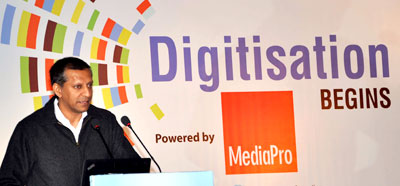


    There are two aspects to it. One, distribution is bringing order in the chaos post-DAS, where channels are getting in two metros. In a way, order that you now see will be much more systemised order and consist of core audience wanting to watch that genre than the trespass audience. This will go the long way in Phase II. The learning of Phase I is good enough to say what the next step should be. Step one is marketing: tell the consumers what the channel has and come and watch it. The second step would be much stronger content of engagement.


    02. So, do we have any surprises post-DAS?

    Overall, the core viewers of the genres have gone up. However, the overall reach of mass channels has gone down. Engagement levels have marginally increased with the genre and strong properties that are marketed are getting the audience. The core audience is still sticking to the preferred genre; it is the trespassing audience that are no longer accessing it. The broadcasters can create strong properties and communicate those properties to the audience so that the audience becomes loyal.


    03. How do you see the audience trend of Delhi and Mumbai replicating in other cities?

    Rollout of digitization will exhibit same phenomena in other markets as well. But the difference will be those markets already have strong penetration of digitization, eg MP and Gujarat. In metro markets, we see 50 percent penetration so such cities will see much smoother rollout of digitization than a Delhi or Mumbai.


    04. Many channels are claiming a spike in viewership. Have things shaken up much with digitization?

    These are the initial stages of digitization. The channels have worked hard to get their communication across to the audiences and have created better content and engagement.


    05. What is in it for the advertiser in the post-DAS scenario?

    They are getting targeted with audiences getting skewed to genres. Therefore, they can target their advertising more efficiently unlike the pre-DAS scenario. Secondly, geography is becoming clearer, especially for niche genre. Communication will be much easier in the digital era.


  • What next, now that digitization has begun?

    By Ananya Saha


    L V Krishnan

    The past two months, after the implementation Phase I of digitization, have been quite an incredible journey. From doubts about whether we would achieve 100 percent digitization at all to achieving it in Mumbai and Delhi. Of course the hiccups still remain. Probably Phase II will see less of these hiccups and more of successful implementation. This and many more issues about digitization were discussed at afaqs event in the capital titled ‘Digitization Begins’. The panellists not only discussed the ramifications of post-DAS scenario but also what the stakeholders should do to take advantage of digitization.


    Numbers game

    According to LV Krishnan, CEO, TAM India, the digitization onus is on marketing and programming. At the summit, ‘Digitization Begins’, culling facts from the data (based on eight weeks pre vs post DAS CS4+ in Delhi and Mumbai), Mr Krishnan said, “There has been 2.5 times growth in the availability of channels in the initial months but it does not match the viewing with 30 percent increase in incremental fragmentation.” He also noted how North and West markets in India are maturing faster than the Southern market when it comes to digitization. “Today channel-surfing behaviour is prolonged in digital homes, while direct landing is leading to increased reach for English entertainment, English movies, and the kids genre.” According to him, inter-genre surfing may also come down.


    Other findings that Mr Krishnan shared included: with sports channels becoming omnipresent, other sports will also get benchmarked; viewing is getting spread from primetime to other day parts, eg: youth music to the early morning band of 7-9am. However, he cautioned, “The biggest disadvantage is that DAS will hit single channels since the top seven channels garner almost 80 percent of audience in DAS-enabled Delhi and Mumbai.”


    Mr Krishnan, however, viewed digitization as a positive change and said, “The clear action step for the broadcaster to be present on distribution chain should choose between two cluster homes: home with kids, and home without kids. For the advertiser, they need to focus on cost of targeting, increase in co-creation of brands. Advertising will see a boost via paid media, and additional media budgets will get shifted from localized ground promotions to unique television content channels.”


    The next 6-8 months will also see a spike in free-to-air channels, according to Mr Krishnan, to cater to the bottom-end of the market.


    Chasing the momentum

    Roop Sharma

    Digitization was promised to bring in not only the set-top boxes (STBs) into the house of the consumer, but also digital services such as digital billing, services such as video-on-demand, broadband etc. Even though the seeding of STBs has been achieved, it is still a long way before we achieve digitization in the true sense.


    Vivek Takalkar, VP, Marketing and Business Development, MediaPro and Roop Sharma, President, Cable Operators Federation of India believe that post seeding of boxes, digitization has not achieved desired results while Ashok Mansukhani, Director, Hinduja Venture and President MSO Alliance asserted that the all the stakeholders of the digitization process should work together towards establish contact with the consumer.


    Sugato Banerji

    Sugato Banerji, COO, What’s-on-India, noted, “Content discovery will become important for operator to push channels. As digitization progresses, EPG in various languages will also be required.” While broadcasters and content creators might struggle with monetisation, the panelists were of the view that digitization will result in demand for more content.


    Giving the advertisers’ perspective, Anita Nayyar, CEO India and South Asia, Havas Media, initiated a discussion with Amit Tiwari, Country Head, Media and Digital, Philips India and Sunil Raina, Business Head, Lava International. Mr Raina emphasized content co-creation, while Mr Tiwari said, “Channels have to become brands. They have to think from a marketers’ perspective. Even though we have not changed our media plans, depending on digitization numbers, but I am sure that as digitization grows and sub-category of genres emerges, it will impact us directly. We will look at focused advertising.”


    Anita Nayyar

    Ms Nayyar noted, “When it comes to advertising, the brands prefer to go with what has been working in the past and their gut feeling. When the digitization process began close to Diwali, we did not have the numbers. But even then the brands advertised because it was the season and went with the gut feeling.”


    Even as marketers have not clearly changed their media strategy based on initial numbers, it is clear that as content becomes targeted, media preferences could change dramatically.


    Neeraj Sanan

    Neeraj Sanan, CMO and Head, Distribution, MCCS India said, “Good content will determine market share and role of distribution will reduce. Even as time spent on television has increased by 5 percent, the choice has also increased from 80 channels to 250 channels.”


    Even as business models will undergo huge changes, the panel believed that the future implications have not had any affect on their current strategies. And while DAS is believed to be a game-changer, the veterans think that more then the distribution equilibrium, it is the convergence that will have an effect on the consumption of content. As Mr Raina said, “It is important for us to integrate online and offline media to create impact. Plans are not going to change because of digitization but because of convergence. I would like to reach my consumer through the medium they prefer: it can be a television or a tablet. I have to be present where they are.”


    With competition rising, Mr Sanan noted, “There are going to be some wild implications of digitization including, local events can become content through MSOs; a good EPG search engine could take off; concept of broadcast UGC can happen; with triple play, MSOs can think of ad options with a clear-to-call action.” He also noted how MSOs will start competing with national channels for content rights.


    Though there is still a long way to go, digitization is throwing up interesting trends. How many of these will get converted, only time can tell.


  • Dish TV is best managed co in Asia: Euromoney survey

    By A Correspondent


    Direct-to-home company Dish TV, Asia’s largest today announced as best managed company in Asia in the Media sector by Leading international magazine Euromoney for the Euromoney’s ‘Best Managed and Governed Companies – Asia poll 2013’.


    This is the 14th year of the poll, which is conducted among a total of 144 leading equity analysts at the largest investment banks and research houses in the Asia Pacific region. Analysts were asked to name the companies they found most impressive across a number of factors including management accessibility, accounting transparency, profitability, growth potential and corporate governance procedures, among others.


    RC Venkateish, Chief Executive Officer, Dish TV India, stated, “We are very proud of the acknowledgement that Euromoney has given us. This success is the result of continuous efforts of the team, ensuring that investors and stakeholders confidence is maintained through transparency and good governance. We have always believed we have a strong investment case and will continue to push the barriers by gaining further access to a wider investor base. Such recognition of our efforts incites us to move forward with the same zeal and enthusiasm.”


  • TRAI directive: MSOs, LCOs to implement Subscriber Management Systems

    By A Correspondent


    TRAI has issued directions to multi system operators (MSOs) and their linked local cable operators (LCOs), providing cable TV services in the notified Digital Addressable Cable TV Systems (DAS) areas, covered under the first phase of implementation of DAS to implement the Subscriber Management Systems.


    As per the Quality of Service (QoS) Regulations of TRAI, applicable for DAS areas, MSOs are required to establish a Subscriber Management System wherein all the details of the subscribers alongwith their choice of services (i.e. channels, bouquets etc.) are required to be maintained. This would bring in addressability and consequently, complete transparency in the whole system. This system enables the subscribers to exercise their choice of services and budget their bills accordingly and also facilitates the MSOs to effectively manage their accounting and billing of the services rendered.


    DAS is being implemented across the country in a phased manner, with the first phase from Nov 1, 2012 and the fourth and final phase completing by Dec 31, 2014.


    TRAI was of the view that this feature has not been implemented effectively by many MSOs. Also in many of the cases LCOs have not provided the completed subscriber application forms to their linked MSOs. Thus, the real benefits of digitization are not reaching to the subscribers.


    TRAI has directed all the registered MSOs and their linked LCOs to ensure, in accordance with their mutually agreed roles, that the Subscriber Management System is made fully operational, as envisaged in the QoS regulations of TRAI.


  • Digitization Phase II: Deadline round the corner

    L to R: Christopher Slaughter, Supriya Sahu, Sameer Manchanda, Man Jit Singh, Chad Dunavant, Ravi Mansukhani, Anuj Gandhi


    By Ananya Saha


    With the deadline for Phase II of digitization approaching on March 31, the stakeholders are implementing the learning of Phase I for smoother and seamless adoption of technology. Supriya Sahu, Secretary, MIB announced at the CASBAA forum recently that the government would soon bring change in the digitization policy that would make it mandatory to switch off the channels in phased manner. “We did not make it mandatory in Phase I but it will be regulated in Phase II so the consumer understands that they need to switch to digital platform,” she elaborated.


    Ms Sahu seemed positive about the progress of Phase II. She said, “According to the data we have, which has been collated from industry feedback. We were not as comfortable so close to deadline in Phase I, as we are in Phase II now. There was a huge uptake of set-top-boxes (STBs), close to 2-3 lakhs, in 10 days before deadline and 15 days post deadline. We expect the same situation this time as well. We collect data every week and the taskforce meets every 15 days, and according to the data we are confident of meeting the deadline.” She also said that all stakeholders need to sit and sign an agreement so that it does not derail the deadline, as it happened in Phase I. “Our biggest challenge is how to convince different stakeholders to understand that their profit margins will decrease but only for a short while. It was difficult to get the different aggregators to sign the agreement last time, and it is happening this time as well. This was one of the reasons that deadline was extended.” She also pointed out that availability of STBs and the price points of STBs is also posing a challenge in the 38 cities where Phase II of digitization is nearing deadline.


    Ms Sahu also asserted that customer acquisition form has been made mandatory, and notices are being issued to operators who yet to comply with this policy.


    Man Jit Singh, President of the Indian Broadcasting Federation (IBF) and CEO, Multi Screen Media, echoed Ms Sahu’s views and said, “As broadcasters, we are aware that there will be a short-term reduction in our profitability. But there will be two streams of revenue going forward, and hopefully digitization will enable us to get 50:50 revenues from advertising and subscription.” Anuj Gandhi, Group CEO, IndiaCast pointed out the challenge of reaching the last-mile consumer. “Of course, each phase will be a bigger challenge because geographies differ,” he said.


    Ravi Mansukhani, MD, IMCL talked about the challenges that the recent budget has brought. “We do not understand why the cost of STBs had to be hiked. If you want to promote the local manufacturing, which is definitely a good move, the government should have given incentives to the local manufacturers. This has acted a dampener. We might have wanted to enter new geographies, but since we have to spend much more on existing geographies for STBs, we are not looking at new markets,” he said.


    Mr Mansukhani also emphasized that going forward, prepaid would gain more acceptance in Phase II. He also said that as digitization becomes a habit, ARPUs would go up drastically.


    Ms Sahu insisted that government is pushing digitization for the consumer, and not to get taxes. “It is not the entertainment revenue or central tax that we are pushing for digitization, which is not huge any way. The entertainment tax that Delhi govt gets is only Rs 78 lakh per month. With digitization, it will go up to Rs 5 crore. But even that is not a very huge amount. The profit margin of govt is very low,” she elaborated and asked the industry to keep the focus on consumer.


    Talking to MxM India about digitization in India, John Medeiros, CASBAA’s Chief Policy Officer said, “The stakeholders seem quite eager to implement digitization. There is of course a competitive dynamic between DTH and cable operators but given the stance of stakeholders now, and what it was three years ago, we see a more positive dynamic at work.”


    Easing India’s Capacity Crunch

    CASBAA’s report on assessment of demand and supply for television satellite transponders, developed with knowledge support from PwC India was released at the CASBAA India Forum 2013. Excerpts:


    TV channels need to be transmitted over satellites to distribution intermediaries (e.g. Multi-System Operators, DTH operator head-ends) and end-consumers (through the DTH platform). This needs adequate satellite capacities (in terms of spectrum / transponders).


    However, there has been a perception of shortages in satellite spectrum/transponders made available to Indian TV industry players. This is attributable to an overall shortage of spectrum that is available to India/ISRO. Although ISRO has been working hard to get additional spectrum, the process is long-drawn and the needs of TV industry players have grown manifold, raising the possibility of even the additional spectrum not meeting the needs.


    India had 821 licensed TV channels in 2012, double the number in 2008. By 2017, India is expected to have about 1,600 licensed channels of which ~1,300 channels are expected to be operational. Furthermore, the number of high-definition (HD) channels is also expected to increase in line with international trends and is expected to increase to ~130 by 2017. The high growth in the number of HD channels is expected to be fuelled by growth in digital platforms such as direct-to-home (DTH) and digital cable. The rising sales of high-end TV sets that support HD viewing experiences are also likely to contribute to the growth. A key indicator of the latent demand is the large number of pending requests for new TV channel licenses which stood at 348 in January 2012 as per the Ministry of Information & Broadcasting. In the C-band, only ~160 channels out of the estimated 660 operational channels were carried by transponders on Indian satellites8. This represents only ~25% of total operational channels. The rest of the channels (~500) are being transmitted through foreign satellites.


    In the Ku-band, out of the total ~73 transponders used by Indian DTH operators, only 18 transponders (~25% of total) belong to Indian satellites. The remaining ~55 transponders (~75% of total) are on foreign satellites.


    Future increased demand for satellite transponder capacities is unlikely to be met by Indian satellites (supplied by ISRO). For DTH operators, it is critical to have adequate backup or redundant satellite capacity such that in case of a failure in their primary satellite(s), transmission can be switched to another satellite to avoid black-out.


    In India, since there is already a shortage of Kuband transponders for regular transmission of TV channels on DTH, currently none of the DTH operators are able to make provision for such redundancy needs.


    Supply of satellite services is also threatened by proposals to utilize frequencies currently devoted to satellite services for terrestrial wireless systems. There are also challenges that place practical restrictions on leasing transponder capacities from foreign satellite operators by Indian players.


    Short contract durations between Antrix and foreign satellite operators bring in uncertainty for Indian players and raise the possibility of increased prices.


    Need of DTH operators to procure incremental capacity at specific orbital slots further emphasizes the need for long-term contracts with satellite operators.


    Shortage of satellite capacity can hamper growth of the Indian television ecosystem


    Shortage of satellite capacity can lead to many adverse effects such as the curtailment of consumer choice, slowdown in industry revenues, losses to the government exchequer and under-achievement on India’s stated aim to be a teleport hub. It is also likely to lead to a distortion of the competitive balance for DTH operators and broadcasters. These effects can be detrimental to the development of India as a knowledge society.


    Satellite capacity constraints can impede not just the growth momentum of the Indian TV sector but also have wider impact on the ecosystem of the industry.


    Shortage of transponder capacity in Ku-band can also lead to distortion of competitive balances:


    :: DTH players would be unable to match the channel counts of digital cable operators.

    :: Delays in satellite launches favour a few DTH operators who benefit from allocation of transponders while disadvantaging others that are behind in the capacity request queue.

    :: With DTH capacity constrained, many channels would not be carried by DTH operators, weakening their business cases.

    :: The demand-supply gap also acts against new broadcasters as existing large broadcasters may have greater bargaining power to push their channels on various bouquets.


    Suggestions for improvement

    To overcome the challenges stated above, the following suggestions are being made for improving the current demand-supply gap:


    :: Long-term contracts spanning 10-15 years should be encouraged instead of 3-year short-term contracts. This will provide price protection over longer terms for Indian DTH operators as well as broadcasters and eliminate uncertainty on price escalations at the time of contract expiry or renewal. In the case of DTH services, this will also help avoid disruptions of television services for Indian consumers and their associated costs since there will be no need to re-point satellite receiver dishes periodically, due to the longer term contracts.

    :: The process to allow DTH operators to enter into contracts with international satellite operators should be simplified.

    :: Industry players, including DTH operators, should be allowed to procure capacity on international satellites already coordinated and approved with the INSAT system without any additional approval from ISRO.

    :: Similarly, DTH operators should be allowed to add transponders on satellites where they are already present (and hence approved by ISRO) without seeking additional approvals.

    :: ISRO should be encouraged to share its plans for launching transponders meant for private broadcasters and DTH operators over the medium-to-longer term so that the industry players can make necessary business decisions.

    :: The Indian government should formulate and drive policies as well as processes to spur growth in satellite services which will thereby help in the growth of the Indian television sector. For instance, specific three-to-five year targets for launching satellites designed for use by private broadcasters and DTH operators can be set, with allocation of the necessary funding, apart from facilitating private satellite operators to provide necessary transponders to Indian broadcasters and DTH operators. Future decisions on spectrum allocation should take into full account the importance of satellite communications – especially in the C- and Ku-Bands – to a country as large as India. Spectrum currently available for satellite services should not be reduced or deteriorated by allowing interference from terrestrial wireless systems of any kind.

    :: Access to additional Ku-band frequencies currently allocated to satellite services should be allowed, such as the Fixed Satellite Service (FSS) and Broadcasting Satellite Service (BSS) Planned Band frequencies. Given the congestion in the conventional “unplanned” Ku-band, opening up access to the mostly unutilised Planned Band spectrum would further address the shortage of capacity, leveraging on existing in-orbit and planned future satellites carrying such spectrum.


    These initiatives will help the Indian TV sector to continue its forward momentum and achieve the scale for which it has the potential. This will also help take India to the next level in its drive towards becoming an information-based economy.


  • MxM Mondays: Stakeholders’ view on Phase II


    By Ananya Saha


    The data from DTH operators and MSOs indicates that more than 87.7 lakh Set Top Boxes (STBs) have been installed in Phase II cities against the target of 1.60 crore, registering an achievement of over 55 percent digitization. Out of 87.7 lakh, DTH connections accounted for 40.7 lakh, whereas cable STBs accounted for 47.0 lakh. A release from the Ministry of Information and Broadcasting said that it has been constantly monitoring preparedness for the implementation of digital addressable cable TV system in the 38 cities of Phase II. We speak to a cross-section of stakeholders for their views (in alphabetical order of their last names):


    Phase II: 38 Cities that need to be digitized by March 31, 2013
     

    1. Bangalore

    2. Hyderabad

    3. Ahmedabad

    4. Pune

    5. Surat

    6. Kanpur

    7. Jaipur

    8. Lucknow

    9. Nagpur

    10. Patna

    11. Indore

    12. Bhopal

    13. Thane

    14. Ludhiana

    15. Agra

    16. Pimpri Chinchwad

    17. Nashik

    18. Vadodara

    19. Faridabad

    20. Ghaziabad

    21. Rajkot

    22. Meerut

    23. Kalyan-Dombivli

    24. Varanasi

    25. Amritsar

    26. Navi Mumbai

    27. Aurangabad

    28. Solapur

    29. Allahabad

    30. Jabalpur

    31. Srinagar

    32. Vizag

    33. Ranchi

    34. Howrah

    35. Chandigarh

    36. Coimbatore

    37. Mysore

    38. Jodhpur


    Anuj Gandhi, CEO, IndiaCast

    All stakeholders are playing their role efficiently. We are playing our role and getting the deals done. We are using the learnings of Phase I when it comes to the issue of carriage fees. None of the MSOs are complaining this time. In Phase I, we did not have a refence point and now we have the signed deals of Phase I. This time it is a lot easier.


    Joydip Kapadia, Executive Vice President, What’s On India Media

    It will happen but in a phased manner. My logic is based on the fact that MSOs who are present in the metros are also present in these 38 towns. MIB has an upper hand now, and industry is prepared that Phase II has to happen unlike the Phase I where in the Delhi and Mumbai people thought that deadline would be extended. The towns like Ludhiana, Chandigarh, Pune etc are almost on track to become digitized while towns like Nagpur might take more time.


    Ashok Mansukhani, President, MSO Alliance

    Digitization has become a habit, and that is definitely good news. The consumers want the STB, doesn’t matter if it belongs to MSO or DTH operator. Of course, the markets in Phase II cities are more price sensitive than the Phase I cities. One also needs to understand that in the 42 cities that will be digitized by the end of Phase I and Phase II, a lot of people live in the slum areas. Hence, new packages will have to be announced on three price points: 100-150 Rs, 200-250 Rs and 300-350 Rs. The packages need to be tolerable to broadcaster, consumer and MSOs.


    My only request would be let us not bother too much about the date; we have achieved a big task. I am sure that out of 38 cities, 25 cities will meet the deadline but switch off pay channels in the cities that do not meet the deadline if you want faster progress. MIB has taken stricter stock of progress this time around.


    We MSOs have taken loan of about Rs 500 crore; no matter what we cannot afford to let digitization fail. I foresee that in the coming months, prepaid will gain more prominence as mode of payment.


    P Mohan, President, Karnataka Cable TV Chamber of Commerce

    I do not agree with the figures. The digitized homes are close to 35-40 percent in Bangalore. The national MSOs are focusing on meeting the supply for Phase I, only then would they concentrate on Phase II. We have been asking for boxes for more than four months, and even if they offer us STBs now, installation takes time. How are we supposed to install, offer packages, explain the packages to each customer is so less time when the deadline is approaching fast?


    We are not against digitization. It was in 2002 that we had proposed DAS. Today, MSOs, broadcasters and DTH operators have formed one group. And LCOs are not even asked or consulted.


    Bangalore has many additional TV homes. And the homes which installed digital boxes 4-5 years ago are today asking for replacements. The quality of STBs and the technology they support is also a concern.


    Mukund Babaji Pednekar, Distributor, Hathway cable at Thakurli, Dombivli & Kopar

    Digitization is happening at a smooth pace in our area, and we are positive of meeting the deadline. We have no problems or concerns regarding digitization. The consumer is aware and knows how they will benefit with digitization. Yes, the prices of STBs was Rs 600 when we ordered it two months ago and now it has increased to Rs 999. But thankfully, we do not need boxes as of now.


    Man Jit Singh, President, IBF

    The consumers are aware, the communication is reaching them. As broadcaster, we are aware that there will be a short-term reduction in profitability but we are positive that going forward, thanks to digitization, the ratio of our revenues from advertisements and subscription will be 50:50. The stakeholders have worked together, and are facilitating dialogue all across. With transparent systems in place, the industry will only progress. The numbers are impressive, and hopefully we will meet the deadline.


    Uday Kumar Varma, Secretary, Ministry of Information and Broadcasting

    We stand by our figures. The figures have been collated with industry feedback. We have not come across any negatives regarding meeting the deadline. Yes, some issues will obviously crop up but are sure to get resolved as well. Of course one issue leads to another: complete opaqueness, incomplete subscriber data etc will a little time to solve.


    My own understanding is that digital cable is a better platform than DTH as it can provide other services as well. In the long run, common sense suggests that digital cable will see a bigger comeback.


    Regarding the carrying capacity of STB, I am sure that domestic industry associations will step up to meet demands.