Category: PRINT MEDIA

  • Newspapers: Reinvent or Perish?


    By Tuhina Anand

    The newspaper industry is undergoing transformation and the only way ahead is to look within and reinvent. While it may be too much to say that for the print industry the only option is to reinvent, else they will perish, but it won’t be far from the truth to say that if they don’t adapt to the changing times they will be groping in the dark and will only pave the way for their downfall. Early adoption and partnership with technology are a few ways by which the industry can look at transforming itself to cater to the Gen Y.

    Expressing his view, Mr I Venkat, Director, Eenadu, said, “Yes, we have to reinvent. I think the time has come when we no longer can continue in the traditional way. While the future of newspapers in India is still strong and will be for at least for 10-15 years and what happens henceforth I can’t really say. But in that time period, one should have reinvented and come up with multiple platform and strengthen them so that they become established models to generate revenue.”

    He maintains that printed word will remain sacrosanct though the content would undergo change to meet with the various platforms. In fact, Mr Venkat points that even now the way news is being consumed is changing where they have witnessed a significant rise in people coming to digital platform to access news.

    Shahrukh Hasan, Group Managing Director, Jang Group, Pakistan is of the opinion that the newspaper industry would not perish even if they don’t reinvent because there is lot of inherent growth still left in the print business. He said, “That said, I think reinvent I would, even if there are no threats as it is imperative for our continued growth. As it happens the print media is under lot of strain and we have seen globally it has been losing readership but in our part of the world the fundamentals that drive the business is strong, like literacy rates going up, growing middle class, migration from rural to urban areas, a very young population and the erosion of the joint family system. These are factors which impact growth and circulation. In fact they are all working in our favour.”

    “The important thing is that we have to realize that the business we are in is evolving and we have to adapt for that reason. We have to abandon tradition and adapt to reengineer to remain relevant. We are not competing with new media or television but we have to adapt in terms of how we process the news and understand what kind of news we have to provide to our readers in these changing scenario where different platforms with different speed of delivering news exist.”

    While Mr Hasan points that reinvention is not necessary but he will still go with it to be future ready. There is also another opinion which stresses that the newspaper business doesn’t need to be reinvented but it’s the newsroom that need to reinvent. Sanjay Gupta, Director, CEO and Editor, Jagran Prakashan Ltd, said, “Newspapers will remain. It will never die and it’s seen that in the most advanced economies where digital has taken over newspaper still exist. But it’s their relevance to the marketers that is changing.” Newspapers may not be relevant to the marketer as a touch point because of more varied and systematic approach that digital offers and for media companies to make journalism sustainable, Mr Gupta points that there is need to go into different revenue streams and digital comes into play in that aspect.

    So the interesting point that comes in this discussion is the decreasing relevancy of newspaper to a marketer hence bringing the digital platform to up the revenues. Also many media company pointed of unbundling of packages to advertisers that comprised a 360 degree approach.

    Reinvention in terms of digital may be the mantra for many to follow but for KN Tilak Kumar, Joint Managing Director and Editor Deccan Herald, the potential in print in its existing avatar is immense.  He said, “There is a lot of scope for print media especially rising population, growing literacy and urbanization signify that there is a lot of potential for print media to grow. We have been trying to reinvent in terms of content, design and layout. Digital is the future but it’s not a concern In India as we see it now.”

    Content is the key and even for Prabhat Khabar’s MD, KK Goenka. He reaches to his consumers in Bihar, Jharkhand and West Bengal and the paper has reached the status of the 7th largest read Hindi daily and this has happened primarily by the physical newspaper. Digital he says doesn’t play a role in the growth of his paper but yes content is the key. He says, “It’s the credibility and trust of people that we have built over the years that is responsible e for our success. It’s the issue that we have taken that is no less than a movement that has helped in building what Prabhat Khabar is today.”

  • KBC winner guest edits Prabhat Khabar for a day

    By A Correspondent

    From being a face in the billion-plus fellow Indians, Kaun Banega Crorepati Season 5 winner is a star. With reason. Hailing from a humble background, the man achieved what several others — with more privileged upbringing – could not. The Rs 5 crore jackpot.

    So, Sushil Kumar ‘Motihari ka Moti’ (pearl of Motihari) was Guest Editor of the Muzzafarpur edition of Prabhat Kabhar on Monday. Mr Kumar was in the office as early as 6am and went on occupying the Guest Ed’s chair till 7pm. He carefully went through the day’s news reports and also got a feel of the newspaper’s operations.

    When Mr Kumar charmed the newspaper’s staff,  that he had turned into a star was evident from the dignitaries who visited the newsroom for an audience. Also, around 14,000 phone calls were made to the allocated numbers, Mr K K Goenka, Managing Director of Neutral Publishing House (publishers of the Ranchi-based Prabhat Khabar) told MxMIndia.


    Picture: Prabhat Khabar staff photographer

  • Business Standard celebrates use of Hindi in biz

    By Akash Raha


    Business Standard Hindi recently celebrated Hindi Diwas and activated the initiative which was aimed at promoting the use of Hindi language in business parlance. This initiative of Business Standard is going to commence at the end of this month. The tag line for this initiative is “Behtar Business woh, jo aapke bhaasha mein ho!”


    Speaking on necessity and efficacy of spreading the business language in Hindi, Mr Arun Natesh, Head-Marketing, Business Standard said, “This initiative was important as there are a lot of people in the country do their business in Hindi, because that is the language of the masses. But inspite of that, there are a lot of words and terminologies that people use that is not easily understandable as it lacks homogeneity. So the idea is to promote business terminology and language in Hindi. Since our newspaper gives them comprehensive information on business, our initiative empowers them in understanding the effective terminology of use.”


    For this initiative, they compiled a special pullout which looked at the usage of the Hindi language online, in mobile and the growing interest globally for the language by the likes of Microsoft and Google.


    As a part of this initiative Business Standard organized quizzes testing knowledge of business terminology. Enthusiastic participation was seen across Mumbai, Delhi, Lucknow, Patna, Bhopal, Raipur and Kolkata. Business Standard went to the premises of organizations like SBI, LIC, Allahabad Bank, NABARD, BHEL, Bhilai Steel Plant, Bank of Baroda, Union Bank etc.


    Business Standard, in Hindi, reaches out to small and medium entrepreneurs, traders, small investors etc. Keeping this focus, the paper itself is designed around meeting this need by adding locally relevant content. Business Standard also brings to the reader what its editorial team is famed for – incisive and in-depth analysis of events. In recent times, the paper has strengthened the coverage of local commodity information immensely benefiting the large trading community.

  • The future is rosy, says Ravi Dhariwal


    By Tuhina Anand


    Newspapers have a strong future ahead, says Ravi Dhariwal, President, INMA Worldwide and CEO, The Times of India. Sharing his views with the audience at INMA: 5th South Asia Annual Conference on the Global Newspapers and South Asian Opportunities, he said that the industry can unitedly face down the challenges confronting it, and continue on the growth path.


    Print players in developed markets when faced with pressure on profitability coupled with losing their revenues started focusing on the cost. The result was a cut in journalists, cut pages, and cut quality. They got seduced with the argument that the business was not well balanced, circulation not earning enough money and being too dependent on advertising to recover the cover price. On the other hand, the consumers have tons of option, multiple platforms while the truth of newspaper also exists that the brand has slimmed down from 48 pages to 24 and journalism was not of the same quality that they were used to. Consumers had to pay double the amount for a newspaper so the value equation particularly in the US got horribly wrong. This led to increased pressure of people but Dhariwal pointed that the situation is stabilizing now particularly on accounts of circulation, balance sheets and profitability pressure.


    He said, “I think the industry went through a phase of evaluation where they were came to a basic conclusion that digital is where the growth is and they must invest heavily there at the expense of print. That difference led them to doing things first for the digital and at the expense of print because they didn’t have monies to put both sides. They said all growth will be in digital so let’s invest there.”


    After making this point, Mr Dhariwal said that this assumption has a few problems, the first being that Digital at best in most advanced environment comprises only 10 per cent of the revenue, the rest being still from print. He said, “So if you put all your money in 10 percent and neglect the 90 percent there is a problem.” He also said that digital for a news media company is an inherent problem because very little of a person’s time on digital gets spent on news. As a result digital for a news company will always be the country cousin. Also the demographics in South Asia, with increasing urbanization, literacy, income and a young curious democracy, works as a great combination for newspapers to grow. He said, “The industry does grow in our country by 4-5 percent per annum. Readership doesn’t grow as fast, though it is not declining, but it doesn’t get reflected because of the way readership is measured in India currently.”


    Another reason why he remains bullish about the growth of newspapers is because the newspaper adds fantastic value to households. He said, “It’s a medium that allows an individual to spend 20 minutes of their quality time for less than Rs 3 and if you have a thrifty wife like mine you will get a rupee back at the end of the month by selling it in raddi. So for Rs 2 you get a newspaper at great pricing but what is even better is that it gets home delivered.”  Another reason for growth is because the editorial quality has improved. He said, “I think our editors are increasingly aware of what is happening to our readers and the newspaper reflects the interest of the readers – politics, local, community. Increasingly quality of newspaper is getting better and I am confident that the paper I read is getting better every day. Also in our country people in newspaper business are ambitious, they are not happy with just influencing people but want to see their business grow. They have brought multiple editions and geographic expansion; like it’s astounding that Dainik Jagran has 295 editions. Even at TOI, we have many editions but there lies tremendous opportunity in markets like Kerala, some big city in TN, AP. In expansion we not only give our readers great value but also great choice.”


    What one should worry about, he said, is how to manage cost and how to continuously innovate to give more to advertisers. He said, “As long as we invest behind innovation, quality of editorial product, keep price low, and the product is home delivered, then we don’t have to worry. We have a reason to celebrate.  The opportunity is that we have an editorially curated product which is now being able to be displayed and expressed in different platforms. We should go after that because the reader is going after that. I have always maintained that for us it’s not digital first or print first. It is not print dollars and digital dimes but Its Print and Digital.” Even media companies have realized this and have become multimedia companies, adapting to this change.

    The biggest of the challenges, he said, is that of managing cost, newspapers not being attractive to FMCGs who are the biggest advertisers and have turned to TV, environment where the government tries to create misunderstanding and rift among employees and lastly lurking fear of ‘what if’ digital expands dramatically and affects print. However, to a large extent he said that these challenges can be overcome by collaborating as an industry to find solutions and bring about a change.


  • INMA 2011: Membership targets in sight, says Tariq Ansari

    By Tuhina Anand

    At the concluding ceremony of INMA’s 5th South Asia Annual Conference, MXM India caught up with Tariq Ansari, INMA South Asia’s outgoing President and Managing Director, Mid-Day Multimedia Ltd. From Mr Ansari, Sanjay Gupta, Director, CEO and Editor, Jagran Prakashan Ltd takes over as President INMA South Asia.

    Mr Ansari has played a key role in bringing INMA to South Asia and has held the position of President for the last two years. Talking about his task at INMA, he said, “I have been responsible for running the INMA platform in South Asia, making conferences happen and ensuring we build a significant membership.  On all these, I think we have progressed significantly.  The idea is to be of use to the industry and give back to the industry. As past president I remain on the board and I am available when required.”

    Explaining why the INMA membership remained confined to just 13 organisations even though there are many players in this category, he said, “INMA had the target of going after large newspapers first. While we have only 13 newspaper organization members, there are around 500 people in this country who have access to INMA through these companies. As we come of age – and we haven’t been here for long as this is the 5th conference in South Asia – there will be conscious effort to build our membership and deliver its benefits to a larger audience.”

    Mr Ansari said he hopes that INMA delegates after attending the seminars would take away some questions on what is going to be the future of their enterprise and directions it can take both in terms of strengthening the business and where future opportunities might lie.

    Talking about what ails the print industry, he said, “Speaking from the perspective of an urban English newspaper, I think the readership is getting stagnant but on the other side the cost of inputs – the cost of journalism, newsprint, running the business – is driving the rate of advertising very high. So we have got a situation where readership is not growing but advertising rates are going up. That is the fundamental problem to the business to my mind.”

  • INMA 2011: New Oxygen, New Growth

    By Tuhina Anand

    Earl J Wilkinson, Executive Director and CEO, INMA spoke on New Oxygen, New Growth at the INMA-5th South Asia Annual Conference, titled ‘Roots and Wings – strengthening our core business and exploring new opportunities’. During his presentation, Wilkinson spoke about the transformation from being a newspaper to newsmedia which is where the opportunity for growth lies. The key is to identify the platform values of each medium be it newspaper, Smartphones  or tablets and use them accordingly.

    Wilkinson said, “The consumer view of newspaper is changing today as they are accessing news from webs or apps. With the changing view there is also need of new skill sets for the new media including next generation data analysis and deep understanding of consumer behavior among other factors.” He pointed that culture change is the foundation for growth story line.

    He listed three challenges that publishers are facing today- identify growth, how to remain relevant and manage complexity. He also listed the growth levers for news publishers which include operational efficiency, superior competitive strategy, best practices, sales excellence among others but what is relevant is that in this list culture change has moved up the ladder and become a key lever for growth.

    On Culture Change, he underlined the importance of listening to the market, focus relentlessly on differentiators and prioritize expenditure while putting away the rest. Wilkinson said, “Culture change is the only path to growth and in the new ecology to succeed one needs to prioritise platforms and diversify revenue streams.”

    He also talked about integration being the future and pointed how many print people are touching digital but not vice versa. He added, “While culture change is crucial to revenue, there is also a need to speak, understand and invest in readers and not indulge in one way conversation with them.”

    Opening the session and giving an overview, Tariq Ansari, INMA South Asia President and MD, Mid-Day Multimedia Ltd said that the sessions over the two days will look at imparting pointers on ways of strengthening existing business , understanding verticals where investments can be made and at the same time think on new horizons and take their business forward.

    I Venkat, Conference Moderator and Director, Eenadu talked about reinventing the print medium. He mentioned how print has undergone change with segmentation with introduction of city supplements and focusing on its target audience. He also highlighted the example of Filmfare and Femina which have enlarged their purview with awards and beauty competition. The newspapers are leaving no stone unturned to reach its TG by getting into festivals, awards, educations and job fairs too.

    He also talked about localized newspaper where Eenadu has gone beyond city, district, zone to constituency. He concluded by saying that for a newspaper every column is an opportunity. He added, “The print advantage is that while you can zap an ad on television, same is not possible in print.”

  • The Anchor: 5 reasons you shouldn’t miss INMA if you’re a print professional

    #1 The theme and agenda of the INMA conference has always been useful to the print industry. Unlike other conferences where there is lot of gyaan and conference is reduced to either networking or picnicking, INMA’s focus is the industry. I am not running down anyone but the interest of the newspaper industry is really met at INMA, and therefore every publisher should attend.
    #2 There are about 30 speakers who will share their views over a period of two days. These people are experts in their field and present different aspects of publishing. So it’s not restricted to just one aspect of advertising or revenue but circulation, readership and other aspects are also discussed. At some conferences, the agenda is only one-dimensional but that is not the case here.

    #3 Newspapers themselves have treated various functions within their organization as compartments and not departments. There is little communication happening across functions but the way ahead is to change this way of working. This conference can give that kind of perspective and help people in the industry to practice collaboration within their organization and take advantage.

    #4 At INMA, subjects are not just discussed but opportunity is given to clarify and understand what is being said. It’s fairly interactive.

    #5 The conference is a good opportunity to network and the food is excellent. So why miss it!?


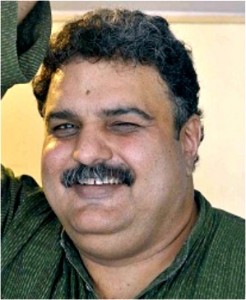
    Bharat Kapadia is the Chairman of Whatuwant Solutions.

  • 7 reasons why the IMPACT 7th anniversary issue is unputdownable!

    By Pradyuman Maheshwari

    Shocked and surprised that I am writing nice things about what is perceived as competition? The problem with the Indian media is that we are too full of ourselves and don’t like to say good or bad things about the tribe. Especially about our past employers 🙂

    However, I had good fun putting together the fifth and sixth anniv issues of the magazine and I was happy to see the seventh anniversary issue getting better than the previous years.

    #1 The anniv issue is a veritable ready reckoner of the industry, the people who make it and what’s happening in and around it.

    #2 It’s a must-read for any newcomer to the business.

    #3 The 7th anniv issue is bigger and thicker than the 6th. (aside: So will the 8th anniv issue have 400 pages?)

    #4 The issue: Nice, cool design. Interesting lot of writers… beyond the biggies and the usual suspects. Good cover and great idea to crowdsource the design.

    #5 Being the only standalone weekly magazine for the advertising, media and marketing business, IMPACT’s a must-read. Okay, I’ve not been reading the print edition in the recent past, and I access the PDFs online… but that’s good enough.

    #6 Preeti ‘VGC’ Vyas’s design is as refreshing as it was unveiled last December.

    #7 It’s the first test of a leader. Is your product as good as it was six months after you left it? I believe it is. And I am happy to see it’s in very good, safe and able hands of a publisher, editor, designer and a bright team. So when I update my LinkedIn profile, I can safely say that I was associated with the magazine for a bit. Wink, wink.

    Greetings to the IMPACT team and all those who helped put it together. Thanks for ensuring that the flag continues to fly high.


    MxMIndia editor-in-chief and CEO Pradyuman Maheshwari was until April 2011 group chief editor with the exchange4media group 

  • Mail Today celebrates 4th anniversary

    By Akash Raha


    Mail Today celebrates its fourth anniversary today in a year that has seen overwhelming change. The daily compact will celebrate the milestone by putting together a 56-page section dedicated to the ‘The Game Changers’. This section accompanied the main edition of 48 pages today.


    In the pages of the anniversary edition, the Mail Today team of reporters and editors across the country will profile a diverse lot of people. From Anna Hazare, who has reset the country’s political agenda, to Mamata Banerjee, whose gale force swept away the Left bastion in West Bengal, from the Supreme Court of Chief Justice S.H. Kapadia, which has turned the constitution into a force for change, to Subramaniam Swamy, the unraveller of the 2G spectrum scam, these change agents have given us reasons for hope even in the nation’s darkest moments.


    Speaking about the anniversary issue and the way ahead, Rahul Thappa, COO, Mail today said “Mail Today in its own inimitable way has been a harbinger of change in the newspaper industry over the last four years. Our fearless content and often irreverent voice has offered the new Indian an intelligent option to the content they otherwise had be contented with. We have grown from strength to strength over the last four years and in doing so have defied conventional thinking. We have made a significant dent in the Delhi/NCR market and shall continue to consolidate our strength in the High Net Worth homes of the region. Growth is the only imperative for us and we shall be a harbinger of change to in other parts of the country as well. In our fifth year we plan to continue to delight our readers and surprise our competition and in doing so cement our positioning as the voice of the new Indian.”

    Even though corruption may have dominated the news headlines, but these harbingers of change drivers, in their own ways, have redefined the rules of engagement in their chosen fields and made stellar (and sometime debatable) contributions to our lives and lifestyle. These men and women have changed the way we relate to politics, business, sports, films, fashion, cars, books, gadgets and gizmos, and the arts. The anniversary edition hereby celebrates the inevitable fact of contemporary India.

    The anniversary issue celebrates the achievements of many remarkable Indians too who have catalyzed change without getting the media attention they deserve. People such as Kumar Mangalam Birla, who has refused to pay ‘facilitation money’ despite losing out on project, or Suneet Singh Kohli, the creator of the world’s cheapest tablet, or the UP Lokayukta Justice (Retd) N.K. Mehrotra, who has got Mayawati to suspend four of her corrupt ministers, or Mahaveer Golechha, the AIIMS scientist who has invented a candidate drug for the cure of Alzheimer’s Disease, or even the farmers of Bhatta Parsaul, who at a tremendous personal loss took on the state government and a powerful lobby of builders to make land acquisition at just rates a national issue.

    The game changers in politics, government and business aren’t the only ones who have given us our moments of celebration. We’ve had Ekta Kapoor venture into territories where no film production company had gone before and Sameer Gaur pull off this year’s biggest international sporting spectacle — the F1; we’ve seen the hitherto unknown Abhinay Deo push the creative envelope with Delhi Belly and Kalki Koechlin become the unlikeliest of Bollywood success stories; we have celebrated Prabal Gurung’s designs being worn by Michelle Obama and the elevation of fashion designer Manish Arora as the creative director of the Franco-Spanish design house Paco Rabanne, making him the first Indian to head the creative side of a leading international high-street fashion label.

    Mail Today was launched on November 16, 2007 in Delhi by the India Today group, in collaboration with Associated Newspaper of the UK (publishers of Daily Mail). As per the IRS 2011 Q2 figures, Mail Today showed a growth in readership and is firmly placed in the number three position in Delhi market.

  • Chitralekha celebrates 61st anniversary

    By Akash Raha
    Chitralekha Group is all set to come out with Chitralekha’s 61st anniversary issue later this week. Themed on the topic “India 2020”, the issue has contributions by experts and stalwarts like Shashi Tharoor, Uday Kotak, Kalpana Morparia, Rashmi Bansal, Naveen Jindal, Chetan Bhagat, Farhan Akhtar, Gaurav Mashruwala, Nikhil Gandhi, Dr Tejas Patel, Dr Prakash Kothari amongst others who have shared their perspective on the country in 2020.


    Speaking on the 61st anniversary issue, Mr Mitrajit Bhattacharya, President and Publisher, Chitralekha Group, said, “We are very proud to bring out the 61st anniversary issue of Chitralekha. Last year, we were extremely pleased with the 60th anniversary issue of Chitralekha; even though the issue was priced at Rs 125, it sold out in four days. We realized that content is more important than price. This time too we have tried to give the same to our reader in terms of content. We have priced the issue at Rs 75, and I am sure this time it will be as big a success. Last year we asked eminent stalwarts to trace back India’s history over the past 6 decades. This time, we have asked them to look at the future in 2020. Apart from great content, this issue will also carry a special compilation of 61 gems by 9 musical legends as well as the first day cover on Chitralekha, which was released by the President of India in April 2011. I am sure a combination of all these will certainly appeal to our audiences.”


    The issue also houses the second edition of Chitralekha’s “Gujarati Power List” which comprises superstars from the fields of politics, business, corporate, music, fine arts, cinema, sports, media and social service, who have gone beyond their own areas of comfort and influenced the larger society.

    Moreover, the issue carries a special compilation by Saregama of 61 remarkable songs by nine musical legends namely, Asha Bhosle, Geeta Dutt, Hemant Kumar, Kishore Kumar, Lata Mangeshkar, Manna Dey, Mohammed Rafi, Mukesh and Talat Mehmood. Each copy of the magazine will also carry a First Day Cover (postage stamp) on Chitralekha released by the Department of Post, Ministry of Telecom & IT in April 2011.

    Chitralekha Group had humble beginnings when its flagship Gujarati magazine, Chitralekha, was launched in 1950 by Vaju Kotak, with a print run of 10,101 copies. Today, the much revered news weekly boasts of over 240,000 copies and is almost a fixture in any given Gujarati household.

  • MxMIndia-partnered ‘Paid News’ seminar today

    By A Correspondent


    MxMIndia has partnered the event ‘Paid News: Fooling People all the Time’ organised by Moneylife Foundation and Citizens Action Network with the support of industrialist Cyrus Guzder.


    To be held in Mumbai’s Madame Cama Hall (Opp Lion Gate, Kala Ghoda) on Friday, November 18, the evening will see the screening of the documentary ‘Brokering News’ followed by a panel discussion with senior journalists and the film-maker Umesh Aggarwal.


    About the film: The Delhi-based non-governmental, not-for-profit Public Service Broadcasting Trust (PSBT) recently released a documentary titled “Brokering News—the inside story of paid news”.


    The film by Umesh Aggarwal addresses a significant challenge facing Indian democracy today—which is the state of its media. The film looks at three aspects of paid news—how politicians are paying for positive coverage during elections, with the result that those who don’t pay are blanked out by the media; how the coverage and reviews of movies are orchestrated and paid for and of course, paid news about business and industry. It depicts in detail how journalists were forced to broker deals to offer editorial coverage to politicians.


    Details of the Event:

    Panelists: Umesh Aggarwal, Ayaz Memon, Paranjoy Guha Thakurta, Bhawana Somaaya, and Sucheta Dalal.

    Timings: 5.30-7.30pm (Registration and Tea starts at 5pm)

    Venue: Madame Cama Hall, KR Cama Hall Institute, Bombay Samachar Marg, Opp. Lion Gate, Kala Ghoda, Mumbai 400 023

    Admission: While admission is free, registration is required. Contact details: Call Judith/Seraphina on 022-24441058-60, or mail at mail@mlfoundation.in,or log on to www.mlfoundation.in

  • Yummy launch event for BBC Good Food

    By Akash Raha


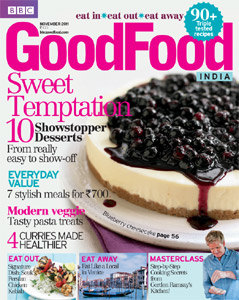
    BBC Good Food magazine from the Worldwide Media stable is all set to kick off its inauguration event on November 19 in Mumbai. The magazine was earlier launched on October 21, which was also the Good Food Day. MxM India got in touch with Mr Tarun Rai, CEO, Worldwide Media Group to know more about the launch event and how the magazine has being doing in the market thus far.


    Speaking about the response towards the magazine Mr Rai said, “The response has been quite overwhelming both from advertisers and readers. Our mailboxes are flooded with compliments from readers, many of who have actually tried out the recipes. Some others have gone and checked out restaurants that are recommended.”


    The launch event on Saturday is set to be a grand celebration of fine food with fine entertainment. The menu is a five-course meal specially put together for the occasion by chefs from India and abroad, and it is a sit-down dinner for a select group of people. It will be a room full of celebrated chefs, restaurant owners, food critics and writers, food retailers, senior corporate and the high-profile set of Mumbai including stars from Bollywood.


    Mr Rai went on to say, “We are the first international food magazine in the country and we expect to have the first mover advantage in the fast-evolving Indian food sector. I believe we spotted the opportunity well before the others and will reap the benefit. Besides just the business objectives we do expect BBC Good Food to contribute to the exciting new developments that are taking place with food in India. We want to help people experiment more in their kitchens and when they eat out. We want to showcase the young and dynamic Indian chefs who are making food so exciting. We want to introduce our readers to world cuisines… We believe India is ready for a specialist food magazine.”