Category: PRINT MEDIA

  • From Friday: Nic Dawes to join HT as chief content and editorial officer

    By A Correspondent


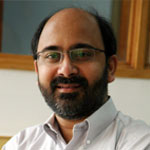
    Nicholas Dawes

    South African newsweekly Mail & Guardian’s editor-in-chief Nicholas Dawes is set to join Hindustan Times as chief content and editorial officer.


    Although an HT spokesperson did not confirm or deny the development, Mr Dawes has announced this to his team at M&G today. He will be leaving the paper in September.


    A report in the paper’s online version quotes him saying: “I have been offered a remarkable opportunity to help lead a process of change and growth at the Hindustan Times, one of the most important newspapers in a country going through momentous and fascinating changes. I look forward to putting what I have learned at the M&G to work in that new environment and on a very large scale.”


    Sanjoy Narayan is currently Editor-in-Chief, Hindustan Times. According to the information available with MxMIndia, Mr Dawes will report to Mr Narayan, and play the role of a ‘managing editor’ in the newsroom. Mr Narayan is likely to inform his team of the same today.


    Photograph taken from Nicholas Dawes’s Twitter profile
  • HT conducts 2nd edition of Printworks

    By A Correspondent


    The second edition of HT Printworks, the advertising expo organized by the HT Media Group in Mumbai last week, ended on a high note with the six-day event attracting more than a thousand people and registering a sale of close to 300 discounted advertising packages.


    The expo, held at the Sofitel Hotel in Bandra-Kurla Complex, aimed to offer small and medium enterprises (SMEs) the advantages of highly discounted advertising deals for various supplements of Hindustan Times. It was a one-stop shop for first-time advertisers and retail advertisers to take advantage of a year-round, discounted advertising along with tips on media planning and creative for the advertisements.


    Several clients from small and medium enterprises across the city, both first-timers and repeaters, attended the various 90-minute sessions held every day, where they interacted with executives on the best deals for advertising.


    For the organizers, the response was encouraging. “HT Printworks received a tremendous response and we were overwhelmed with the number of businesses that showed interest in our packages. We saw serious decision-makers who bought the packages on the spot,” said Nitin Chaudhry, business head (West and South), HT Media Group. “The biggest benefit of HT Printworks is the simplicity of this programme which helps advertisers plan their advertising across the audiences that we offer,” he said.


    The event was conducted in partnership with Australian media consultancy firm ‘Boost’.


  • Hindustan Times launches Gurgaon Special

    By A Correspondent


    The Hindustan Times (IRS 21.83 lakh till 2012, Q4) has renewed its Gurgaon focus with increased local coverage for residents of Gurgaon. The special product for Gurgaon, which greeted residents last Friday morning, started off with a massive survey of Gurgaon’s residents, asking them about their opinion on all the issues that count to them. The responses highlight the problems that beg to be addressed- safety, sewage, power, water, roads and traffic in their city. And that is where Hindustan Times’ Gurgaon special intends to contribute – by doing in-depth stories on the various issues that affect the lives of the citizens, and helping take them to their natural conclusion.


    The efforts go beyond the printed newspaper. A special dedicated website has also been launched with the new edition of Gurgaon’s HT – www.htgurgaon.com, which will not only have more stories and information but also be a platform where the residents can share their views, suggestions and comments about this ongoing project to make their city truly world class.


    “Hindustan Times has been the voice of Delhi for the last 89 years. With the city’s expansion into Gurgaon and Noida, we’ve gone ahead and expanded our presence in these newer areas to fully cover them and seek to give our readers a flavour of the entire national capital region. The renewed focus on Gurgaon is a step towards helping the city realize its potential,” said Sanjoy Narayan, editor-in-chief, Hindustan Times.


    Shantanu Bhanja

    Shantanu Bhanja, Business Head and Vice-President Marketing, HT Media Ltd, said, “Gurgaon, as we all know, is a city of the future. Its breathtaking growth in the past decade has been awe-inspiring. Hindustan Times’ increased Gurgaon focus bears testimony to the growth the city has witnessed. Our Gurgaon-focused approach, in which we will take up news stories and issues that matter to the residents of Gurgaon, will benefit both readers and advertisers.”


    The Gurgaon Special has been launched with a multi-media campaign that affirms HT’s positioning to Gurgaon residents through the tagline “Your Gurgaon, Your Voice”.


  • FPJ celebrates 30 years in Indore

    By A Correspondent


    English daily The Free Press Journal is completing 30 years of its existence in Indore and to celebrate the occasion, the newspaper has started a reader’s gratification programme in the city.


    As a part of the celebrations, it has started a campaign about safe driving and traffic rules in association with Indore traffic police. Apart from spreading driving safety messages through distribution of leaflets by its volunteers at two traffic intersections, the newspaper is giving instant gratification to the readers of the daily who carry a copy of The Free Press Journal at the traffic lights. This activity will be followed by several other activities in the coming months.


    Talking about the activity, Debu Mishra, consultant, sales and brand communication, The Free Press Journal, says, “People have appreciated our effort in the first two days. It’s a first of its kind initiative in the city. Every day around 600 to 700 gifts are being distributed. We are involving the entire city which will help us garner huge word of mouth publicity.”


    He adds that The Free Press Journal was the first English daily of Indore to have its own printing facility.


    The campaign started with a six-day teaser campaign in print, and is being followed by the revealers. Outdoor and radio media are also being tapped. The campaign will continue for 15 days. The daily has taken 10 hoardings across the strategic locations of the city and 25 spots every day, besides promotions on FM radio stations.


    “The idea is to cover all the important intersections of the city and creating awareness on safe driving and at the same time rewarding the commuters instantly with gifts,” adds Mr Mishra.


    Though the campaign is restricted to Indore at the moment, the newspaper intends to replicate it in Bhopal and Mumbai, in due course of time.


  • Tendulkar, Bindra launch ‘Sporting Times’

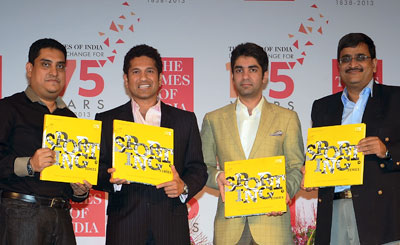
    Sporting Times launched by Sachin Tendulkar, Abhinav Bindra along with Boria Majumdar and Shrijeet Mishra- COO Times Group

    As part of The Times of India’s 175 years’ celebration, seven books highlighting the best from the last 175 years are being launched. The first of this titled ‘Sporting Times’ and compiled by Boria Majumdar was launched by Sachin Tendulkar, Abhinav Bindra and Shrijeet Mishra, COO, BCCL.


    The book is an attempt to document the Indian sporting story through the lens of The Times of India. It talks of 175 events that have made headlines in the history of Indian sport (and in the paper) in the 1838-2013 period.


    Both Tendulkar and Bindra congratulated the newspaper on its 175th anniversary and participated in a Q&A with the media. And, no, there was no question asked on the current controversy raging Indian cricket.


  • Mint Asia holds India Dialogues in Singapore

    By A Correspondent


    HT Media business daily Mint’s Singapore-based edition Mint Asia presented the first India Dialogues at the Marina Mandarin in Singapore recently, bringing together on one platform U K Sinha, Chairman of capital market regulator Securities Exchange Board of India, K V Kamath, Non-Executive Chairman of ICICI Bank and Diwakar Gupta, Managing Director of the State Bank of India. They discussed the future of the Indian economy with Tamal Bandyopadhyay, Mint’s Deputy Managing editor. In attendance were luminaries of the global investment community based in the island-nation.


    This session was preceded by a panel discussion on ‘Where is Media in Asia headed?’ Panelists Norman Pearlstine, Chief Content Officer, Bloomberg LP, and Marcus W. Brauchli, Vice President, The Washington Post Co, engaged in a free-wheeling exchange of ideas with moderator, Mint Asia Editor R Sukumar


    Said Mr Brauchli: “From the point of view of media companies, those who are agile and adapt (will succeed). HT (Media Ltd) has done a terrific job. What has happened with HT is Mint has produced a very specialised string of contents that happens to coincide with the mood and interest of the country at the time. The competition is going global.” Normal Pearlstine said, “It is dangerous to generalize about countries in Asia, but particularly given the differences in internet penetration, you will see areas where there will be continued growth in short and medium term in terms of print in India, in Indonesia and perhaps a couple of other places but for the most part in Japan and (South) Korea you will see real fall rather quickly in terms of print.”


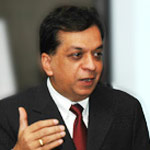
    Rajiv Verma

    Earlier, Rajiv Verma, CEO of HT Media (and publisher of Mint Asia), said in his keynote address that “Mint Asia will cater to the information needs of Singapore’s significant market of Indian influentials. It will provide insights and perspectives on the Indian economic and business environment.”


  • Upclose with the NaMo chronicler


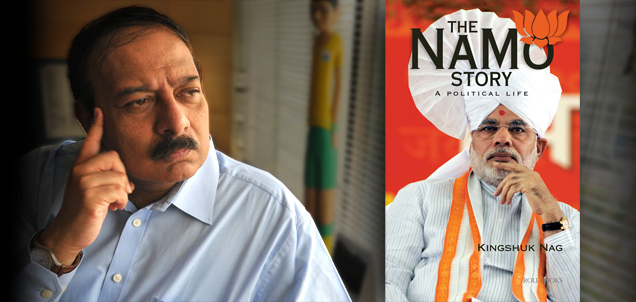
    This month Kingshuk Nag completes 20 years with The Times of India. Many of these have been rather eventful, albeit in a sad way. As Editor of the Hyderabad edition he’s seen the current Telangana crisis and the Satyam fraud unfold and earlier as Editor of the Gujarat editions having been based in Ahmedabad from 2000-05, he witnessed the earthquake and communal tensions after the Godhra carnage. His book ‘The NaMo Story – A Political Life’ has been receiving rave reviews for a balanced account on the the politics and persona of Narendra Modi.


    Mr Nag’s book – his third, the first two being on Satyam and Telengana – was launched in Mumbai at the NCPA on Monday along with a panel discussion hosted by publishers Lotus Roli, the NCPA and Literature Live.


    In this exchange with MxMIndia, Mr Nag is candid about why it took so long for him to write the book, his views on the Gujarat strongman and whether he thinks the CM can be PM


    It’s been a while since you moved on from Gujarat, and Narendra Modi has been in the news all these years. Of course now the stakes are higher given his being a Prime Minister-in-waiting. What took you so long to write the book?

    My first attempt to publish a book on Modi was in 2002 right after the riots. I met a publisher, a leading one, with a chapter that I had written.  The publisher, the lead man who was also the owner read the chapter and said it was great.  But he said he wanted a pro-Modi book written because Modi was being bashed too much. Disgusted I left. I had no experience in book writing so I did not persist.  Three years later I was introduced to the chief editor of one of the top publishing firms. We started talking. I gave him a concept note and chapterization. After a while the guy got back to me and said no this book will make a hero out of Modi. I don’t want it. It was in my third attempt in 2011 did I find a publisher. That’s the reason for the book taking so long.


    What reviewers say
    Definitive must-read book: Ranjona Banerji in Sunday Mid-DayShort and balanced account: Rohit Bansal in Gulf Today


    You’ve watched him up-close when you were in Ahmedabad, editing The Times of India. Do you see a difference in Mr Modi from then to now?

    The basic character of the man has not changed. But after having said that today he is a far more confident man than what he was ten years ago. His body language shows that. His lean mean frame has undergone a metamorphosis. He looks visibly more prosperous. He is today more authoritarian than before. However, it is a fact that he is less inviting of the press than he was a decade ago. That’s because of the riots and Modi is ill at ease answering questions about 2002. So he is apprehensive of media interviews especially meeting national mediapersons.


    So did you interview him again for the book?

    No, I did not interview Modi again.


    In an attempt to be neutral, have you gone a little soft on Mr Modi? Given that your personal views on the CM (especially when you were editing TOI in A’bad) were reportedly dramatically different.

    I don’t think I have gone soft on him. It’s that the context has changed. If I had written the book in 2002 it would have been on the riots.  Since it is written now in 2013 it focuses on the national politics and politics of Modi rather than the riots.  A lot of people are finding fault with me for not writing more on the riots. They are accusing me of diluting my stand but I don’t agree with them.


    Having watched NaMo from close quarters and now from a distance and ditto with the media, do you think the media has changed its stance towards Mr Modi.

    Over the years, the media has become less strident about Modi though the opposition remains. That is because with the passage of time, priorities change. Also, due to efforts of NGOs and the action of higher courts, justice has been done in many riot cases.  Many people are happy with the justice done though Modi may not have been instrumental, for this they are satisfied. Also, with stories of rampant corruption emanating from the centre, Modi is seen in a less negative light . Further, the stories of rapid development of Gujarat have gone a long way in enthralling that section of the media that represents the dream of aspiring India.


    After Gujarat you’ve also seen a leader like YSR in Andhra Pradesh (as Editor of TOI, Hyderabad). YSR’s reign was cut short, but how would you compare the two regional leaders?

    Modi’s strategy in Gujarat has been to create a vote bank or rather to coalesce the votes using Hindutva as the glue. The strategy of YSR was different. He created a vote bank by giving out doles and everything free to the poor and not so poor by classifying them as poor. He gave free power to farmers. Rice at Rs 2 a kg, free scholarship to poor students, free houses to the poor, free medical facilities to the poor… even for operations. 85 per cent of the population got the benefits because of the manipulation of government statistics.


    Your view on all the hype and PR around Mr Modi… Vibrant Gujarat, hiring of a public affairs firm like APCO? Has it helped change perceptions about him.

    Modi realised that the riots had dented his image started wooing industry by giving unparalleled incentives. An essential part of the strategy is to create a hype about investment prospects in Gujarat and the guy who leads the state. Sometimes the hype is so unreal as if Modi is some superman. The hype has changed public perception because a lot of people believe that Modi is a great administrator. Also, remember, that the people are fed up with corruption and are looking for change. Modi is offering himself as the change like Anna Hazare two years ago. Whether the country will accept him as the change is a moot point but right now many find him acceptable


    Have you had a launch event in Ahmedabad?

    No launch event in Ahmedabad.


    Why not? Mr Modi is said to have this army of damn-the-critics brigade. How have they been with you post the book?

    No particular reasons. Actually the book was never launched officially.  Only yesterday in Mumbai, although the book has been in the market for a month and a half.  Modi’s men have not been in touch with me. But I heard that the book was spotted on his table.


    Three rapid-fire questions:

    1. Narendra Modi v/s Rahul Gandhi. Your choice:

    a. Can’t say.


    2. In the run-up to the 2014 elections, your view on whether Narendra Modi will apologise for Godhra and its aftermath?

    No


    3. Do you see Modi as Prime Minister?

    As PM: No


    The Namo Story – A Political Life

    by Kingshuk Nag

    Publisher : Lotus Roli

    Paperback, 200 + 8 page insert pages

    Price: Rs 295

     

  • HT Media announces new business heads for Hindustan & Mint

    By A Correspondent


    Vivek Khanna

    Vivek Khanna, who successfully spearheaded the Mint and ‘Ad for Equity’ businesses for the past few years, will now take on the leadership role of Head, Hindi Business at Hindustan Times.


    K Venkataramani has joined as the new Business Head of Mint, moving from Bharti Walmart where he was Vice President Hardlines and Home Entertainment.


    Mr Khanna will be reporting to Benoy Roychowdhury, Executive Director, HT Media Ltd, and Mr Venkataramani will be reporting to Rajiv Verma, CEO, HT Media Ltd.


  • Publicitas Publishing launches luxury quarterly Eat Stay Love

    By A Correspondent


    Publicitas Publishing’s latest magazine, Eat Stay Love, a contemporary luxury quarterly, launches this month.


    Eat Stay Love has been written and designed for today’s sophisticated and well-to-do global consumer with a penchant for luxury. Every magazine edition will feature columns by renowned names from the world of luxury, food and travel writing – both Indian and International. The first issue has columns by Naomi Price, Fiona Caulfield, Shobha Narayan, Anil Dharker, Magandeep Singh, Michael Swamy and Bibhu Mohapatra.


    The magazine’s name symbolizes the numerous aspects of a luxurious travel experience which is reflected within the three sections of the magazine:

    Eat – Foodscapes, Restaurant recommendations, Celebrity Chef Interviews, food travelogues, Wine and spirits.

    Stay – Luxe hotel launches, recommendations, spas, exotic destinations, Indian and International city guides.

    Love – Personalities, art, design, music, culture, local and international shopping.

    “Eat Stay Love is the result of detailed research, our rich experience and solid investment. The sumptuousness of it makes you stay on every page longer and keep going back again and again,” said Marzban Patel, CEO Publicitas India & Asia.


    Indu Joshi, COO Publicitas Publishing India, said, “With years of valued experience in publishing top hotel magazines, it was only natural for us to launch our own product. We have got a fabulous response to Eat Stay Love and will soon launch a few more magazines of our own.”


    Eat Stay Love is at present available across select luxury five star hotels in Mumbai and Delhi. A digital version of the magazine is also available for subscription on Magzter.com.


    The current custom publishing portfolio of Publicitas Publishing includes Taj Hotels & Resorts, Singapore Airlines, SilkAir, SIA Engineering Company, Thai Airways, The Oberoi Group, DFASS Group, Frasers Hospitality, The Leela Palaces Hotels and Resorts, DLF Emporio, American Express Publishing and HomeTeamNS.


  • Exhibit launches new site thetechy.com

    By A Correspondent


    Tech and lifestyle magazine Exhibit has announced the launch of its newly designed tech website, thetechy.com. The site features the latest news, views, reviews, innovations and features in technology, social media, automobiles, e-commerce and lifestyle.


    “Nothing seems to evolve as fast as technology in today’s era, hence we at Exhibit Group decided to come up with a hardcore tech website, which will keep the readers informed and updated about everything related to tech as it happens”, said Ramesh Somani, Editor, Exhibit Magazine. “We have included features to make the site quicker, easier and more interactive for our users. Be it the best scoop on gadgets, gear, apps or even tech affecting your lifestyle – we’ve got the corners covered so that you don’t feel the need to jump to different websites just to be in the know. The website is our next step towards our vision of engagement and involvement of our readers,” he added.


    Thetechy.com content focuses on technology, gadgets, automobiles, ecommerce and lifestyle, and includes feature articles on buying guides, comparisons, futuristic tech, photography and analysis, as well as videos and social media integration. The website’s tagline is, “Where tech meets lifestyle”.


  • i next now available on vending machines

    By A Correspondent


    i next has adopted a parallel distribution channel by installing newspaper vending machines, to widen its circulation net and engage the readers at crucial tap points. The three-fold initiative includes utilizing sales promoters in customized jackets and customized bicycles for paper distribution, besides the vending machines. The specially designed jackets donned by the promoters can hold up to 50 copies.


    Newspaper vending machines are used worldwide, and they are often one of the main distribution methods for newspaper publishers abroad, In India, however, the trend is somewhat less positioned and this thus is likely to give the ‘first mover’s advantage’ to the publication to mark a reputed image among the readers since as of now very few publishers in the country use vending machines.


    The prime objectives of this initiative, besides readers’ engagement, are to give them alternate options of choice where multiple products of the company could be displayed, and also to provide convenient locations for the readers to pick newspaper from. The five-rack machine, installed in 10 i next cities across UP, Jharkhand, Bihar and Uttarakhand, also carries other newspapers and magazines from the Jagran group. It accepts 1, 2 and 5 rupee coins, and notes of 5, 10, 20 and 50 denominations. More details are available at www.inextlive.com.


  • Digital is new normal for newsrooms: Oriella study

    By A Correspondent


    The full digital tool-set is now in use in newsrooms and editorial offices around the world – with far-reaching implications for the public relations industry, the latest Oriella Digital Journalism Study has found. The journalism study was done by Oriella and its partners across the world including Candour Communications, which did the survey for India. A ‘digital first’ policy, breaking news online as it happens, is in place at over a third of the media titles surveyed with use of mobile apps, in-house produced video, and social media as a news source all on the rise.


    The Oriella Digital Journalism Study, based on a survey of almost 550 journalists from 15 countries including India and spanning Europe, Asia-Pacific and the Americas, tracks how digital technology is impacting how news is gathered and published around the world.


    This year’s study – the sixth – provides evidence of wholesale changes in how publications gather and communicate stories. This year’s study further found a quarter of the journalists surveyed often prepare multiple versions of the same story as it develops, while a fifth said that ‘citizen journalism’ now carries as much credibility in their organization, as mainstream reporting.


    Digital media is also shaping publications’ revenue models. The proportion of respondents saying their outlet has a mobile app has nearly doubled over the past two years to 40 percent. In addition, use of premium apps to monetise content has increased by a third since 2012.


    Robin Grainger, Director of the Oriella PR Network, said, “Our study suggests 2013 is a watershed year for the world’s media. The growing interest in ‘digital first’ reporting, video, real-time news, mobile content and citizen journalism all exemplify what we’re calling the ‘New Normal for News.’


    “If these trends accelerate, there are some potentially game-changing ramifications for media and communicators alike. First, touch-screen interfaces will open up new possibilities for story-telling. One example could be interactive graphics (or digi-graphics) which blend high design and big data to enable readers to navigate their own path through stories.”


    He added, “Second, we may see a polarisation of journalistic output. At one end, short, tweet-like news updates will provide near real-time coverage of events in print and on video, optimised for small screens. At the other end, we may see much longer-form feature and investigative pieces. ‘Shorter but quicker’ journalism could also afford media brands greater prominence – and consequently greater traffic – in search rankings, news readers and ‘social news aggregator’ apps such as Flipboard and Pulse News.”


    Sanjay Bose, Executive Director, Candour Communications, said, “The survey in India threw up interesting trends that have emerged in the Indian media. Digitization of news and the availability of social media platforms have drastically reduced dependence on conventional news gathering sources. With the increasing use of smart phones in India, access to real time news is only a click away.”


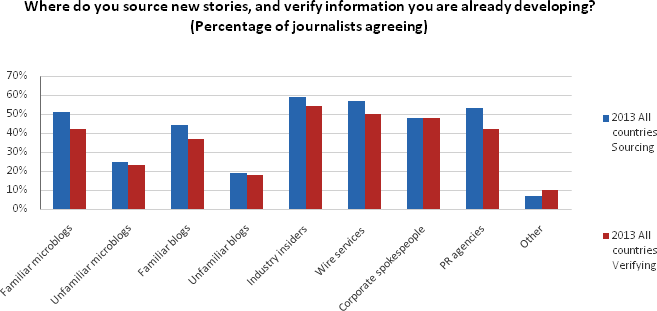
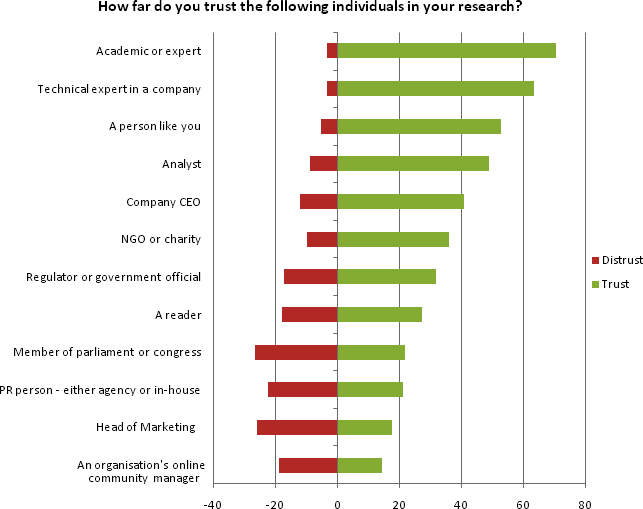
    The study finds that journalists are using social media for news gathering, but continue to place an emphasis on trusted sources and pre-existing relationships. For example, 51 percent of journalists said they source news stories from microblogs such as Twitter and Weibo, but only when the source behind them is already known to them. When the source is unknown, their use by journalists halved to 25 percent. By contrast, 59 percent of respondents said they sourced their news from ‘conversations with industry insiders.’


    The sources most trusted by journalists were academics and other experts, who were trusted by 70 percent of journalists; technical experts in companies (trusted by 63 percent) and analysts (trusted by 49 percent). Company CEOs were trusted by only 41 percent and actually distrusted by one journalist in eight. The least trusted individuals were politicians, PR officers, heads of marketing and community managers – all of whom were distrusted than trusted by journalists. (See chart)


    Despite all the changes occuring within newsrooms, the study found journalists remain upbeat about their jobs. Thirty four percent said they believed digital media had improved the quality of journalism over the past two years. However, the digital model is creating headaches for many of them – almost a third (32 percent) agreed that they are finding it harder to keep abreast of events on social media.