Category: PRINT MEDIA

  • Crime pays for GECs

    By Meghna Sharma


    What is it about the dark side that attracts us? A glance over any newspaper or news channel will tell us the increased attention being given to the gruesome incidents.


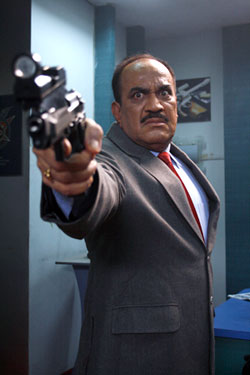
    The media, especially the television which is a reflection of the society, has reflected this growing interest with the increasing popularity in the number of the unglamorous, and sometimes, gory crime shows. From Karamchand in the 80s on DD to the latest Gumraah on Channel V, most crime shows have done well and have been able to garner an interest that other genres might not be able to. The longest running show on the Indian television, CID, is a crime show which was started in 1998 and recently turned tri-weekly.


    Speaking about the show’s success, Sneha Rajani, senior EVP and business head, Sony Television, said: “CID has been doing well for years now; it’s not a recent phenomenon. On an average, the show gets TVR of 3.3-3.5, and sometimes even goes up to 4.5. So, it’s no surprise that show has its share of viewers, as week after week people switch on their TV sets to get inspired by the bravery and the relentless passion of CID against crime.”


    Popular Crime Shows

    Karamchand – 1980 – DD

    CID – 1998 – Sony

    India’s Most Wanted – 1999 – Zee

    Aadalat – 2010 – Sony

    Gumrah – 2012 – Channel V


    According to industry experts, most GEC experiments with crime shows have been successful – some have garnered a little interest and others have gone on to become national hits like Adaalat and India’s Most Wanted.


    Such crime shows consist of an economically viable format – no huge sets, no major actors, no glamorous outfits or expensive judges are required – hence, the channels don’t mind investing in them.


    Janardhan Pandey

    Janardhan Pandey, associate vice president, DDB Mudra Max feels that apart from reality shows, only crime shows have the ability to create sensationalism and that’s the main reason people are attracted towards the format. “People want to know what’s happening around them. And these shows are able to portray facts through dramatization, without costing too much for the channel.”


    ‘Curiosity killed the cat’ is the apt reason why crime shows work on television according to Anand Chakravarthy, executive vice president, Marketing, RBNL and business head, Big Magic. “Crime, as a genre, has an extremely wide appeal, irrespective of the country. In a developing nation likeIndiawhere crime and corruption are a part of the societal fabric, the audience is most likely to appreciate televised content in the genre.”


    Anand Chakravarthy

    He added: “The fascination with the morbid and intrigue that the genre provides work across a cross section of audience, regardless of age and gender, making it acceptable to a larger and diverse audience base.”


    However, the question which still arises is – aren’t such shows the figment of the writers’ imagination? The writers of such shows may choose to disagree about the authenticity. “Though some might say they are a writer’s figment of imagination, but in reality, newspaper reports, sometimes even FIRs and investigations done by channels help us gather facts and details about various cases,” said a writer with a national GEC.


    According to Priti Murthy, national director – Insights, Maxus, crime shows attract not only the middle-aged, but a large number of youth too. “Crime cuts across genres and finds a large number of youngsters hooked on to the genre like action, thriller, and crime. One could say it gives them adrenaline rush.”


    Prem Kamath

    Channel V recently launched a teen crime show, Gumraah, which has became popular for its disruptive format and unique viewpoint of understanding the psyche of young criminals. “V’s Gumrah, in its second season now, details the ecosystem in which a teen crime is conceived and the extraordinary circumstances that lead to it. The show has had an immense impact on us, in terms of viewership as well as vindicating our research and understanding of the youth. We have seen a tremendous response in terms of feedback and appreciation on social media and other consumer responses. It has also further encouraged us to try bolder formats and continue on our chosen content strategy,” said Prem Kamath, Executive VP and GM, Channel V.


    Most crime shows do attract a large number of eyeballs, but most GECs also claim that it’s not about entertainment alone; they are helping the society as well. “As for adults, and specifically parents, this show is an eye-opener: if one neglects their child’s need for attention or dismiss it as juvenile behaviour, it can have serious repercussions and lead to moment of madness, eternally irreversible,” added Mr Kamath.


    “Shows such as Police Files (aired on Big Magic), while showcasing crimes from the region, also attempt to educate and empower the viewer. The depiction of the crimes help the viewers to understand and accept the need to be vigilant in safeguarding themselves and their loved ones. The information imparted by way of applicable laws of the Indian Penal Code, safety tips by experts and NGOs help empower the viewer,” said Mr Chakravarthy.


    So, if one has to go by what industry experts have to say: it’s entertainment with awareness that makes one switch on their television sets to watch crime shows.  Whatever be the reason, the channels can surely say that ‘crime pays’!


  • Business Line launches ‘Weekend Life’

    By A Correspondent


    Does Horlicks sell more than Coca Cola in India? Why is the Amul girl suddenly pushing milk, instead of butter? What made a music channel stop airing music? Ever wondered why European kitchen equipment stores are popping up everywhere? Find out all this and more about the business of brands, in one handy, 8-page packet, Weekend Life, being brought out by Business Line from July 6.


    One of the sections, Brandline, brings you the stories and the stories behind the stories from the world of advertising and marketing. Along with insight and analysis from some of the leading lights of the industry.


    Whether it is food and wine and gyan from leading chefs of India, or an insight into gender issues and how women, including rural women, are changing the face of India, it is all included in the supplement.


    Even the tech-savvy will be satisfied with eWorld’s updates on the latest trends, fads and analysis from the world of information technology.


  • Network18 consolidates publishing businesses

    By A Correspondent


    Infomedia18’s publishing business has de-merged and consolidated within Network18 framework under ‘Network18 Publishing’ following the de-merger approved by the Delhi High Court in 2011. The printing press business will continue to remain with Infomedia18.


    Speaking about the development, Sandeep Khosla, earlier the CEO-Publishing at Infomedia18, and now at the helm as CEO, Network18 Publishing, said: “As Network18 Publishing, our growth strategy will evolve in line with an increasingly multi-platform publishing environment. Considering the strong traction of our brands in key consumer and business communities, our focus will be on leveraging this across areas – including print, new media, on-ground activation and value-added services. We hope to build on this further by maximizing synergies with group platforms and in the process deepen engagement with our audiences and aid monetization of our brands.”


    Network18 Publishing will encompass three divisions of Infomedia18’s publishing business – Business to Consumer (B2C) magazines, Business to Business (B2B) magazines and Business Directories Division (BDD).


    The popular titles that will now come under the Network18 Publishing umbrella are as follows:


    • B2C: Overdrive, Overdrive Hindi, Entrepreneur, Better Photography, Better Photography Hindi, Better Interiors, CHIP, T3, AVMAX.
    • B2B: Search, Auto Monitor, Modern Machine Tools, Chemical World, Modern Plastics & Polymers, Modern Packaging & Design, Modern Medicare, Modern Pharmaceuticals, Modern Food Processing, Smart Logistics, Aftermarket.
    • Business Directories: Multi-city editions of Yellow Pages Business Directories, Machine Tool Guide, Indian Exporters Guide, Construction and Interior Design Guide, Industries State Guide and Motor Pumps & Valves directories.


    B Sai Kumar, group CEO, Network18 said: “We believe that the special interest and B2B spaces will be one of the key drivers for publishing in India, both in print and new media. With Network18 Publishing, we’ve aligned our assets to capitalize on this trend, both from a community building as well as a commercial perspective. Going forward, as publishing models develop, this alignment will significantly enhance our market proposition”


    In addition, Network18 Publishing will also manage production and circulation operations for titles from the Forbes India stable which currently includes Forbes India and Forbes Life India.


  • Ratan Tata launches Lokmat tome on Aurangabad icons

    By A Correspondent


    It was a proud moment for the business community of Aurangabad when Ratan Tata, Chairman of the Tata Group, lauded their role in the growth and progress of Aurangabad – captured in the coffee-table book Business Icons of Aurangabad, which he unveiled.


    Congratulating the business icons of Aurangabad for their proud achievements and prosperity, Mr Tata urged them to “spread this prosperity to the whole country”.


    “There are many many people in Aurangabad and in the country who are not as fortunate or lucky as we are. It will thus be a mandate for all us to play a role in spreading the prosperity we enjoy, to others, because a prosperous India will be one whose future will be assured,” Mr Tata said.


    Happy with the progress that Aurangabad has made over the years, Mr Tata said: “I remember, as a school student, I used to come to Aurangabad to visit the Ajanta-Ellora caves. There was nothing other than Ajanta-Ellora then in Aurangabad, but today, it is a bustling industrial and tourism city!”


    “I wish that in the years to come, Aurangabad would see even better growth, and when Lokmat publishes a new book, it would take many volumes to include the personalities,” Mr Tata added.


    Videocon Chairman Venugopal N Dhoot too congratulated the business icons of Aurangabad, saying that it is because of them that Aurangabad has become so prosperous.


    Mr Tata unveiled the book – compiled and published by Lokmat Media – in the presence of Guest of Honour Venugopal N Dhoot, Chairman, Videocon, Mr Vijay Darda, MP Rajya Sabha and Chairman Lokmat Media, Mr Rajendra Darda, State Minister for Education, Mr Deven Darda, Director Lokmat Media, and Mr Rishi Darda, Joint MD Lokmat Media.


    Also present on the occasion were the business icons honoured in the book, along with several eminent public figures of Aurangabad and Marathwada region.


    Mr. Vijay Darda, Rajya Sabha MP and Chairman – Lokmat Media Pvt Ltd, said: “Business Icons of Aurangabad is our salute to the business leaders who have built modern Aurangabad brick by brick. I am grateful to Shri Ratan Tata and Shri Venugopal Dhoot for inspiring these business leaders with their presence here today. It is because of icons like these that this historic city has experienced such phenomenal growth.”


    The Business Icons series, introduced by Lokmat to serve as a guide for the future generations of the country, started with the release of Business Icons of Pune, at the hands of Pranab Mukherjee, on November 7, 2011 in Pune.


    Rishi Darda, Joint Managing Director – Lokmat Media, revealed that the selection of the business leaders profiled in Business Icons of Aurangabad was made by a distinguished panel of that included social entrepreneurs, presidents of industrial associations, and the senior editorial board of Lokmat.


    “Lokmat Media will continue the process of chronicling outstanding economic growth. Nagpur is next on the agenda,” Mr. Darda said


    Recognized over the last five decades as a major industrial destination, Aurangabad has been included in the ambitious Delhi-Mumbai Industrial Corridor which is expected to attract major investments. Industrial houses that have created wealth in Aurangabad represent a wide gamut of industry and trade segments such as automobile, education, real estate, white goods, pharma, steel, textiles and agro-products and include such eminent names as Bajaj Auto, Wockhardt, Videocon, Garware, Siemens, Nirlep, SkodaAuto India, RL Steels and many others.


    The book, which profiles 64 industrialists who have made major contributions to the spectacular growth story of Aurangabad, is priced at Rs3,000 and will be an immense value-add to any student, researcher or institution of industrial growth in India.


  • Our battle is to out-think TOI: Meenal Baghel


    Meenal Baghel is the founder and Editor-in-Chief of Mirror, the nation’s most sprightly newspaper. Mumbai Mirror was launched seven years ago, and today the paper has editions in Pune, Bangalore and Ahmedabad. A part of the Times group, Mumbai Mirror boasts of a fantastic circulation of nearly 600,000 copies, and it’s become the city’s favourite compact paper.


    Meenal relives the journey with us, and speaks candidly about the many challenges she’s faced along the way. We also discuss her first book, ‘Death in Mumbai’, which received wide critical acclaim.


    I did a stint with Mumbai Mirror some years ago, and this gave me a chance to watch her in action. Meenal can be a demanding editor, she can be impatient, she can be tough. While these qualities don’t endear her to some, they have played a huge part in her success. I have to say she’s the most passionate editor I have worked with.


    By Anil Thakraney


    It’s been seven years editing Mirror. How’s the journey been? Tell me the highs and the lows.

    The high obviously has been to see the paper become an important part of Bombay. We have been successful in forging an emotional connect with the readers, which is very important. We get an enormous number of people calling in with stories. And we’ve routinely broken a lot of stories, so those are the big highs. The low is that the paper is still a bit inconsistent. You know, when we started the paper, it used to be called Mumbai Error. I wish we had a cleaner start in terms of the paper being more finished. But it’s been a sort of work in progress. We have learnt a number of journalistic lessons along the way because the market has changed, the reader has changed. For instance, when we were at Mid-Day, you could get away with a lot of things. But in this day and age, you can’t.


    Give me an example

    Like sometimes when, just to break the monotony, you put an entertainment story on the front page, there is a backlash. People now expect a more serious newspaper, it’s something different from what I had envisaged. But that’s also because there’s so much of entertainment everywhere that people don’t want more of it.


    One story you regret

    We ran the FIR of the TISS girl who was raped. That was a mistake. Because the details in the FIR were very graphic on what had transpired. And you realize that you may have ended up titillating. I regret that story, we got terrible feedback for it and we apologized for it.
     

    “I don’t think journalism offers enough challenges to the really bright people any longer.”

    I still see a number of typos in Mirror. Is this an un-lickable problem?

    I think there is a very real problem with journalism today, and it’s not only limited to Mirror. The problem is that the deskies is a disappearing breed. And it’s going to be a big challenge over the next few years. Also, there are very real problems we are facing, and these are going to change the profession drastically. It’s so rare to find people who want to come into journalism because they want to be journalists. For example, when you ask people, ‘Who edited this copy?’. Invariably the response will be: ‘I looked at it/I glanced at it/I skimmed through it.’ Another thing is I don’t think journalism offers enough challenges to the really bright people any longer. There is an attrition problem across aboard. People want to try out various things. When you and I were growing up, it was about sticking to a profession, a career path, and that no longer holds true. People now have the advantage of taking breaks, taking gap years, studying, etc. The journalism hours don’t allow too much of a personal life. And I think HR, owners, publishers, editors need to take all these things into account.


    Is the passion for journalism diminishing in young India?

    I think the important thing now is personal growth and personal life. That has taken precedence over wanting to change the country.


    What was Vineet Jain’s brief to you when you signed up for Mirror?

    His brief was very clear. He said it should be a smart paper and that it should be different from the Times of India. And because it’s a compact size, there are elements of a tabloid that you can incorporate. In fact, when we started the paper, there were a lot of conflicting opinions, so I was a little tentative in the beginning. And then one day he called me and asked why was I so tentative. He said, “I have given you this brief, just stick to it. And don’t be apologetic about it.” So that was wonderful.


    You think this country is ready for a Brit style tabloid?

    No. Though it’s very interesting because everybody is trying to incorporate the tabloid elements, but you can’t be openly unabashed about it. We are not ready for it. For instance, look at the responses Dr Vatsa’s column gets.


    Guess it’s a tightrope walk. You want to be tabloidy, and still have to be aware the nation isn’t ready

    Yes. Sometimes in the newsroom we think we can do a story, but when we see the backlash the next day, we start being more careful by censoring ourselves.


    And the problem is if you play safe and cut down on controversy, you get dangerously close to the TOI

    Yes. So what we try and do is this: I always say our competition is the Times of India. Because we go with the TOI. Now the TOI has massive width, they do like sixty stories at an average. So our battle is to out-think the TOI, in the sense that ‘this is what they will do, so let’s do something different’. We can get away with some naughty things that they can’t.


    Lots of court cases?

    Actually they’ve come down, ever since we’ve become safer. (Smiles.) But there’s also a lot of frivolous litigation, which is easily dealt with.


    More editions in the offing?

    At the moment, no.


    And for Mumbai Mirror, are you still as hands-on as ever?

    See, I am out for lunch with you! (Laughs) But yes, I like being hands-on. There are times when I can breathe down people’s necks. But I am trying to back off a little now that we have a very competent senior team. I also realize that people should be given more space, but it’s difficult. (Laughs.)

     

    “The TOI has lots of products that come with it, but everyone doesn’t necessarily read all of them, right?”

    Meenal, the perception is that Mirror benefits a lot from being the TOI’s free paper. Without that advantage, your circulation would be nowhere close.

    I am lucky and I won’t question my luck. We have a great readership, thanks to the TOI. But then you have to capitalize on that luck, you still have to deliver a good product. The TOI has lots of products that come with it, but everyone doesn’t necessarily read all of them, right?


    If you were a standalone paper, how much circulation do you think you’d lose?

    I guess we’d retain 60%. Because Mirror has become a genuine commuter’s paper. You have to travel in the train to see how many people carry it. It started off as a guilty pleasure, which people didn’t want to acknowledge they were reading, but they were all reading. But over time it has also become a lively paper. And that can’t be said about too many other papers in town. And people like that.


    Would you say Mid-Day was your training ground?

    Absolutely. I had always worked with broadsheets before that – Pioneer, Asian Age and The Indian Express. So when I joined Mid-Day, for a while it was like, where the hell have I landed? This is not how journalism is done. For the first six months I had no idea what I was doing. But I was in a senior job and I was getting paid an X amount, and I must tell you I HATE giving up. And then one day I went for a walk and said to myself the paper won’t change because of me, there was a reason why this paper was so beloved in Bombay. And that was the Eureka moment for me. I decided to try and understand it rather than look down upon it. And that changed things. I must say I learnt a lot from Aakar Patel (the then editor of Mid-Day). I learnt a lot from what the paper did on Page 1 and on headlining.


    One Indian print editor you most admire.

    I owe everything I learnt in journalism to MJ Akbar. About writing, about making pages, about what not to do, etc.


    It’s been seven years at Mirror. Don’t you feel the itch? Isn’t it tiring to do the same thing day in and day out?

    I keep wondering why nobody else offers me a job! I am joking, of course. Which is why doing the book was wonderful for me. It gave me a chance to step back and follow a story that had been fascinating me. And it was extended journalism. I have always felt when the number of days you feel bad about what you do exceeds the number of days you feel good, you should quit. I haven’t reached there. And there’s always something exciting happening.


    Being a hard-edged journalist, how do you reconcile with something like Medianet?

    That’s easy, because we don’t have Medianet in Mirror.


    But it’s there in your group.

    It doesn’t affect my life, so I don’t care about it.


    You aren’t asked to carry plugs?

    No. And it’s one of the things that has pleasantly surprised me. They have maintained the Chinese wall from the start.


    They have left you alone?

    Yes. And there’s another reason. Mirror is a small paper in the group, so it’s not necessarily the focus. We are a small cog in comparison.


    Have you ever been asked to drop a story?

    (Pauses) Not drop a story. I think what one learns over a period of time is that you have to pick your battles. I’ll give you an example: If there’s an entertainment story which is coming right ahead of the Filmfare awards, where somebody is going to be performing, and I have a damaging story on that person, would I delay it by a few days? Yes, I would.


    There used to be intense rivalry between the Independent and the TOI. Is it the same with you?

    Not rivalry, but there is great competition. When the TOI does something, and we’ve missed it, I give my reporters hell. And I am sure JoJo (Jaideep Bose) does the same when we get something.


    “Mid-Day killed itself. And I feel really bad. I feel bad that what was such a robust paper is no longer that.”

    You’ve pretty much killed Mid-Day. Feels good?

    The paper killed itself. And I feel really bad. I feel bad that what was such a robust paper is no longer that. We all worked very hard out there. We worked our asses off at Mid-Day and we used to take great pride in the paper being so robust, that it was second only to the TOI.


    What would you do if you were editing Mid-Day today?

    I’ll bring in more energy. What’s going for Mirror despite the inconsistency is that it’s never dull. And dullness in journalism is a cardinal error. Especially if you are a tabloid.


    Let’s shift to your book, ‘Death in Mumbai’. Does Meenal think Maria Susairaj got away lightly?

    I must tell you I ended up liking her quite a bit. I feel that she is a manipulative woman and that she may be a tease. But that’s not a crime, there are a lot of women like that out there. Did she kill or abet the killing? I don’t think so. She was in love with Emile Jerome, she really wanted to marry him. But he wasn’t committing to her. When he killed this guy, it was, in her mind, like his commitment to her.


    When you started writing, was there something you had decided you won’t do in the book?

    The only thing I told myself is to not be judgmental. Because someone else’s idea of morality could be different from mine. Like, I started out with a certain view of Maria but it became something else.


    In fact, that was the only criticism I read about the book. As a journalist, readers expected you give us your own view. Perhaps as the epilogue.

    There were genuine difficulties. Something happened in a room where there were only three people. One guy is dead and two are in jail. There is only so much information I had. And I genuinely did not want to play judge.


    You have always kept a very low profile. Marketing the book must have been tough.

    (Laughs.) It was! It was terrible. The only time you would see me on television was on things that were related to the book. Otherwise I wouldn’t be caught dead going on TV.


    Any more books coming up?

    I would like to write more books, but I love this job too much. Ideally I’d like to do both. But I haven’t thought of another subject so far. Might be interesting to write fiction.


    Would you like to edit the TOI?

    No. I think it would be fun to edit a broadsheet, but I don’t think I am ready to edit the Times. It’s the biggest paper in the country, it requires a greater understanding of business, politics… and I don’t think I am ready for it. Also, it requires certain people skills which I perhaps don’t have.


    Don’t rate yourself high on people skills?

    I think I am very good. But I need to be more patient. I can be impatient and that’s a serious shortcoming.


    You are 43. Don’t want to marry?

    It’s too late now (Laughs).


    Is it important to be single to edit a high pressure daily? Is it a price one pays?

    Sure. It’s a price a lot of women, more than men, have to pay for any high pressure job. It’s unfortunate, but it’s a fact. I may have been married, but it would have been very difficult with children.


    Photographs: Fotocorp
     

  • Divya Bhaskar launches City Bhaskar in Surat & Vadodara

    By A Correspondent


    City Bhaskar, the broadsheet magazine from Dainik Bhaskar Group addressing the youth segment with news and activities within city has now entered Suratand Vadodara. It addresses the need of positive content presenting the ‘Good Life of the City’ with special focus on city happenings and leisure reading. It provides for the positive outlook and in a way proves to be motivational and aspirational product.


    Till now City Bhaskar in Gujarat was available with Divya Bhaskar in Ahmedabad only. The need for such a product in Surat and Vadodara has been felt for some time.


    Speaking on the City Bhaskar launch in Surat and Vadodara, Saras Sethi, State Head Gujarat said: “Surat and Vadodara, with their own unique population mix, professional outlook and inclination were considered ripe for a product like City Bhaskar. It takes into account the city highlights, cultural and social milieu, the youth segment needs and is crafted specially for the city.”


    Divya Bhaskar, the Gujarati Newspaper of Dainik Bhaskar Group with 11.44 lakh readers (IRS Q1 2012) is the only Gujarati newspaper with more than a million readers in a city.


  • Divya Bhaskar launches Rajkaaj in Ahmedabad

    By A Correspondent


    Ahmedabad is the commercial and the political capital of Gujarat. As per internal research and readers feedback, it was evident to the Dainik Bhaskar Group that the readers in Ahmedabad are deeply interested in the political and bureaucratic activities of state. Power corridors of Ahmedabad and Gandhinagar were of prime interest to the readers.


    Keeping this interest in mind, Divya Bhaskar launched a special page – Rajkaaj -in its main issue in Ahmedabad to address this heightened reader need for political news.
    Mr Saras Sethi, State CEO Gujarat said: ‘Divya Bhaskar has always been a newspaper that has remained above the curve; and we use reader’s feedback and formal research for keeping a tab on the changing environment. RAJKAAJ aimed at providing focused political news is a perfect example of this philosophy. We understand that this will further strengthen the strong reader connect that Divya Bhaskar enjoys with its readers and will help then remaining updated on the political and bureaucratic scenario and the power struggle or equations.”


    Divya Bhaskar, the Gujarati newspaper from Dainik Bhaskar group with 11.44 lakh readers (IRS Q1 2012) is the only Gujarati newspaper with more than a million readers in a city.


  • Dainik Bhaskar Haryana gives ‘Pehle Se Bhi Zada’

    By A Correspondent


    Dainik Bhaskar Haryana celebrated its 12th Anniversary by making the news more reader-centric – reflecting the preferences of the new age readers.  The refreshing changes are encapsulated by ‘Pehle Se Bhi Zada’ which makes for enhanced reader delight.


    Based entirely on the pattern of news consumption by its base of 12.68 lakh readers in Haryana, Dainik Bhaskar has realigned its 12 page main issue to provide insightful focus on government and political issues. It has also added a weekly page talking about latest developments in agriculture practices along with opinion and interviews of experts for the agrarian state. The paper has gone even more hyper local in its approach providing depth of information and opportunities within the state with local news finding prominence in the special supplements on Hissar, Rohtak, Ambala and Sonipat.


    Along with the focussed localisation, investigative journalism finds its place with an aim to help empower the readers with information that is relevant. Speaking about ‘Pehle Se Bhi Jyada’, Ashu Pharkey, COO (CPH) Dainik Bhaskar Group said: “Over the last decade, the confidence of our readers is high as we remain relevant,  innovative and have continuously evolved with the changing reader ecosystem.”


    Commenting on the ‘refreshing’ strategy, Sanjeev Kotnala, VP Dainik Bhaskar Group said: “At Dainik Bhaskar Group, we always look at some way to contribute toward socio-economic development of our markets. There is a constant formalised research and informal feedback mechanism that allow us to track the changing needs of our readers and hence evolving with them.”


  • INMA 2012: Managing complexity in South Asia

    By Shruti Pushkarna


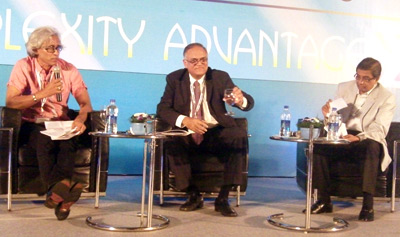
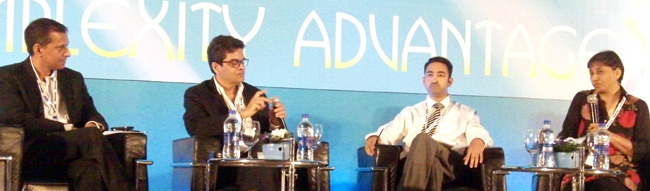
    Keeping in line with the theme of the 6th annual INMA South Asia conference, ‘Complexity Advantage’, one of the sessions focused on the complex media markets inSouth Asia.


    Titled, ‘Managing Complexity In South Asian Markets: A Sri Lanka, Pakistan and Bangladesh Experience’, the session was moderated by Mr Bhaskar Das, President & Principal Secretary to MD, The Times of India Group. Representing Bangladesh and Pakistan respectively, were panelists, Matiur Rahman, Editor & Publisher, The Daily Prothom Alo, Bangladesh and Mr Javed Jabbar, Chairman & Chief Executive, JJ Media (Pvt.) Ltd and former Federal Minister,Pakistan.


    Mr Rahman started the discussion by sharing the complexities and challenges facing media market in Bangladesh: “Media industry can best thrive in a democracy but democracy in Bangladesh in only 22 years old. The dominant political parties are poles apart and can’t even come to a consensus on major national issues. People in the media are threatened, tortured and even murdered. Political interference is a huge challenge and yet there are some resilient media houses playing an important role.”


    He added that another challenge is to keep the press free from its owners because many media houses are now being owned by corrupt business owners. Speaking of evolving technology, Mr Rahman said: “Earlier our competitors were only newspapers, but now all electronic media are competing with us. With mobile and digital growing at a fast pace, product offerings have to be modified to suit the needs of both consumers and advertisers.”


    Speaking of complexities and challenges facing the Pakistan market, Mr Jabbar said that both India and Pakistan, two nations who have the single most complex bilateral relations, suffer from a lack of awareness about each other. He said: “Countries are societies and nations before they are markets. News media have played a pivotal role in determining a lack of awareness among these two nations. All media are inherently subjective, selective and suppressive.” Furthermore, he said that the question in Pakistani people’s minds today is whether media content eventually makes a difference in governance or violence. Does media content really change things?


    As for advertisers, he said: “They are aggressive intruders voracious for media space. Editors and proprietors of newspapers are willing to debase to any level and they are even allowing advertisers to sponsor verses of the Holy Quran. In Pakistan, advertisers in collusion with news media have encroached on space that belongs purely to news content. But at the same time, advertisers are beginning to invest in research which was long overdue.”


    Talking of technology and the onset of digital, Mr Jabbar said: “New technology is ubiquitous and pervasive. Media landscape in Pakistan is thriving, especially in terms of IT connectivity and television channels. However changes that are taking place in India in terms of mobile and devices are not as rapid in Pakistan. Innovations are not taking place at a desirable pace.”


    Mr Jabbar concluded by stating a common challenge facing all three nations, India, Bangladesh and Pakistan, with respect to media ownership. He said, “Ownership of media should be redistributed through publicly listed companies on the stock exchange so that profit doesn’t become greed.”


  • INMA 2012: ‘Industry needs currency that measures across platforms’


    By Shruti Pushkarna


    Basant Rathore
    If you are having trouble in viewing this video, see link

    Like Day 1, Day 2 of the 6th INMA annual South Asia conference also witnessed some interesting panel discussions pertaining to issues facing the news industry today.


    The first half witnessed an engaging session on, ‘Increased Circulation, Dwindling Readership: Is It Time to Measure “Access”?’ The session was moderated by Lynn de Souza, Chairman & CEO, Lintas Media Group. The panelists included Paritosh Joshi, Independent Media Professional & Board Member of MRUC; LV Krishnan, CEO, TAM Media Research Pvt Ltd; and Basant Rathore, Vice President-Strategy, Brand and BD, Jagran Prakashan Ltd.


    The panel debated the need for new matrices of measurement which can complement the conventional audience measurement matrices, as today the audiences are increasingly becoming platform-agnostic.


    Ms de Souza said: “People seem to be very attached to these numbers. But while numbers are important, we need a currency that goes across platforms. We need to be able to measure new forms of readership. From circulation and readership, we need to change our metric to media access.”


    Lynn de Souza
    If you are having trouble in viewing this video, see link

    Mr Paritosh Joshi shared a similar view on the need to look beyond the primary level numbers which he felt are out of date. He said that there are two sorts of media consumption today, structured and unstructured. It is equally important to be able to measure and take into account unstructured media consumption. Just as there are enough screens available today and not just the traditional TV box, he said, the newspaper is not just in the traditional paper form, it is available in other forms across platforms.


    Mr L V Krishnan talked of two news aspects coming out in the digital world: “One is the increasing access which is changing things dramatically. The other is multiplicity of brands transiting between different mediums. For instance, a Bombay Times with Zoom or an ET Now with The Economic Times. The nature of one medium declining and the other growing will depend on what the creator of the brand wants to deliver via a particular medium.”


    While there was agreement on the importance of numbers and currency, the panelists also highlighted the need to move beyond the existing currency.


    Mr Basant Rathore of Jagran said: “Digitization has blurred not just geographical boundaries but also boundaries between mediums. Today we don’t have a clue of numbers in digital media, but they are definitely going to grow. If these can’t be measured, monetization becomes a problem. The advertisers know that the game is moving beyond the existing currency. The research we had till date was about currency but the advertisers are now talking about engagement.”


    Mr Joshi added: “The existing measurement systems are accused of fudging numbers. With the new IRS, even real time tracking of interviews is possible. It will be a like a core end satellite model and this will enable us to respond to changes that are happening in the environment. Earlier we looked at data in a cross-sectional slice but what’s of interest to an advertiser is what happens to a consumer through the day. With the new measurement matrices, we are thinking of capturing all digital research to get a horizontal longitudinal view of a consumer’s media movements.”


    The panel also agreed on the need for industry to be willing to adopt new matrices of measurement and to support measurement that looks beyond primary access numbers. Mr Rathore concluded: “Numbers will continue to be important because that’s the benchmark for trade to happen. But if you need to grow, it’s important to leverage the media brand across media platforms and so we need to know what’s happening across platforms. And that’s why we need to be open to the measurement of other metrics.”


  • INMA 2012: ‘News is not static but dynamic’

    By Shruti Pushkarna


    Sanjay Gupta
    [youtube width=”400″ height=”225″]http://www.youtube.com/watch?v=alB7H-4TpGU[/youtube]

    The International Newsmedia Marketing Association (INMA) hosted its 6th annual South Asia conference in New Delhi on August 7. With its theme of ‘Complexity Advantage’, Day 1 of the INMA conference witnessed some power packed sessions.


    One such session, ‘The Future of News’, was moderated by Jacob Mathew, Executive Editor, Malayala Manorama and President, WAN-Ifra. The session saw a lively discussion by the two eminent panelists, Mr MJ Akbar, Editorial Director, India Today & Headlines Today and Mr Sanjay Gupta, CEO, Jagran Prakashan Ltd.


    The technological innovations and its resultant empowerment of individuals have significantly changed the way people consume news today. Introducing the topic,’The Future of News’, Mr Mathew raised a few key questions: “Would the existing formats be relevant to the future? How will we ensure that news is available anywhere anytime in any format to be consumed by our readers?”


    He added that the growth of print has still not been affected as much in South Asia and that the countries in the region should learn from the mistakes made by colleagues in the rest of the world.


    MJ Akbar
    [youtube width=”400″ height=”225″]http://www.youtube.com/watch?v=Z5gZXE8988w[/youtube]

    Addressing the basic worry around the future of news, Mr Akbar said: “The reason why news will always be in demand is because man is not a hermit. Man lives in a community and in any community, ignorance is the basis of all conflict. Curiosity is elemental to human experience and as long as curiosity remains a vital part, news will thrive.”  He added that news needs a vehicle and that will be provided by news organizations in the future as well.


    Mr Akbar alleged that the real problem facing the society today is not the future of news but the future of a ‘journalist’. He pointed out two traps that journalists today increasingly fall into: “One trap is a fish trap where a journalist looks at the bait and swallows it. This trap is a dangerous challenge to credibility of news as this form of journalism is based essentially on what the journalist has ‘heard’. The other trap is delusion trap where the journalist thinks he/she is more important than news.”


    Mr Akbar also compared the newspaper to a ‘thali’ which has a variety of food ranging from healthy ‘dal and rice’ to not-so-healthy ‘achaar'(pickle). He said: “No thali is complete without achaar, but on the other hand, achaar cannot replace dal and rice.”


    Coming back to the basic point in question of how big a threat does technology pose for the print industry, Mr Akbar said: “No technology completely destroys another. They all continue to exist together. The only thing that will be destroyed in the future will be your business plans which will have to be reoriented.” He added that there is no essential competition between products (radio, TV, newspaper), every product has its own rationale and news organizations have to be ‘format-driven’.


    He concluded: “As long as the newsmaker and the news owner understand that news is not static but dynamic, there’s no reason to worry.”


    Mr Gupta echoed Mr Akbar’s views and maintained that there will be news as long as there’s society and as long as there are incidents taking place. He said that the new technology does help in uncovering the truth faster and in an easier way sometimes, but the basics of news is to uncover the truth. It is important, he said, that news media engages audience in a public debate over issues that matter.


    Mr Gupta added that good journalism is good business and he concluded by quoting Google’s head of news products, Richard Gingras: “The pace of technological change will not abate, and to think of our current time as a transition between two eras, rather than a continuum of change, is a mistake.”