Category: MEDIA

  • Discovery Channel and TLC ranked amongst the top 5 most trusted TV brands in India

    By A Correspondent


    Discovery Network Asia Pacific’s two flagship channels in India – Discovery Channel and TLC have been ranked amongst the top 5 most trusted television brands in India by The Brand Trust Report 2012.


    Discovery channel has been ranked third, ahead of all the Hindi general entertainment and sports channels. TLC has been ranked fifth, ahead of all lifestyle, English entertainment, English news and English movie channels.


    Rahul Johri, Senior Vice President and General Manager, Discovery Networks Asia-Pacific, South Asia said: “This recognition by the Brand Trust Report 2012 is a reflection of our strategy to entertain viewers across India with the highest quality and differentiated non-fiction programming like Curiosity, Man Woman Wild and Swamp Brothers. We would like to take this endorsement as a source of encouragement for our future endeavours in creating new genres, trends and programme formats that resonate with the Indian audience.”


    Discovery Channel, India’s leading non-fiction channel, entertains viewers in multiple languages with a range of programming across genres including natural history, survival, technology, engineering, wildlife and India. TLC, India’s favourite lifestyle channel, since its launch in 2004 presents refreshing entertainment on travel, food, fashion, luxury, wellness and many other exciting lifestyle trends.


    N Chandramouli, CEO, Trust Research Advisory, publishers of The Brand Trust Report, India Study, 2012 said: “It is prestigious that Discovery Channel and TLC have been ranked third and fifth, respectively, among television brands by influencers-consumers in the 15 cities of the study. The study reflects how deeply Discovery Channel and TLC are trusted as measured by a comprehensive Brand Trust study on TRA’s proprietary 61-components.”


    The Brand Trust Report (BTR), compiled and released annually is the result of an exhaustive survey undertaken by the Trust Research Advisory (TRA). The methodology includes BTR questionnaire which is designed to illuminate approximately 425 aspects of brand trust, of which 391 were directly brand-related. The study also questioned respondents about two other important brand trust influencers – brand recall and the trust-experience of brands, the latter of which they were requested to furnish reasons for.


    The Brand Trust Report, India Study, 2012 research was conducted among 2718 ‘influencer’ respondents across 15 cities. The study was the most intensive undertaken on Brand Trust across the globe, generating nearly 2 million data points and 17,000 brands. Indian Statistical Institute helped create a statistically robust Brand Trust Index which has been used to hierarchically rank India’s brands on the basis of trust.


    Discovery Communications is the world’s number 1 non-fiction media company reaching more than 1.5 billion cumulative subscribers in 210 countries and territories. Discovery empowers people to explore their world and satisfy their curiosity through 130-plus worldwide networks, led by Discovery Channel, TLC, Animal Planet, Discovery Science and Discovery HD, as well as leading consumer and educational products and services, and a diversified portfolio of digital media services including HowStuffWorks.com.


    Trust Research Advisory (TRA), a part of the Comniscient Group, is a company dedicated to understanding and simplifying concepts related to Trust. TRA was conceived in 2008 to decipher, analyze and measure Brand Trust, to make it universally understood and easily applied. The organization’s focus areas include Research, Publishing, Trust Training, and Licensing.


  • @ ad:tech: Go beyond clicks, marketers told


    Text and Video by Shruti Pushkarna


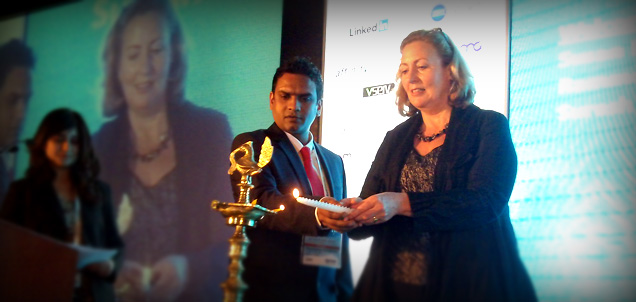
    ad:tech 2012 opened to a packed house today in the capital. The event boasted of digital experts not just from India but 15 other countries. Welcoming the delegates, Rammohan Sundaram, Event Chairman and Founder, CEO & Managing Director, Networkplay Media Pvt Ltd., said, “We promised to make this second edition of ad:tech in India bigger, better and bolder, and I’m excited to see such a huge turnout this year which is set to surpass our footfalls during the last ad:tech. This packed hall full of delegates, speakers and partners from so many different parts of the world, bringing in vast knowledge and experience, seems to have turned Delhi into the digital capital of the world!”


    Day 1 saw parallel panel sessions on brand strategy, performance marketing, retargeting and remarketing, branded content marketing, innovative technologies for improving brand engagement, advertising opportunities in online and social gaming, and video as a driver for user and advertiser engagement.


    Shiv Singh of Pepsico @ ad:tech 2012
    [youtube width=”400″ height=”250″]http://www.youtube.com/watch?v=xnh9V8wlMd8[/youtube]

    Real-time Marketing in a Hyper-connected Ecosystem

    Shiv Singh, Global Head of Digital, PepisoCo made the first keynote presentation of the day on real-time marketing. With 30 billion status updates published on Facebook every month and 250 million tweets published everyday, Mr Singh reiterated the scary times a marketer is living in today. With this crazy amount of penetration where none of these people care as much about brands, a marketer’s job only becomes tougher. So to fight this, Mr Singh believes, “…brands need to use their budgets not just for distribution but for creating content and then depending on their users for distribution of that content.”


    Mr Singh touched upon a few themes in his presentation, one of them being, real-time marketing. To explain real-time marketing, Mr Singh cited the example of Lady Gaga walking down Fifth Avenue in NY sipping a Pepsi. For real time marketing to happen, he would have to be there, smart enough to click a picture or make a video clip, send it to the Pepsi content studio, who would then rework and upload it for billions of fans in the next few minutes. That explains in a sense the power of real time marketing. Mr Singh admitted, “The entire marketing cycle from strategy and insight to execution takes months and months, and so how can one compete with a tweet or a Facebook status update which is published in seconds. That’s where real-time marketing comes in.” He added, “But for real time marketing to happen, six essentials are – real time insights, real time response, real time content studio, real time co-creation, real time distribution and real time engagement.”


    Mr Singh also stressed on the need to focus on connectedness in real-time marketing. Brands he believes need to go beyond the role of sponsorship and play the role of an observer, a curator and a creator. He said, “What happens in the digital is seeping and pervading into every other industry. TV ads become trailers for larger digital experience. There is a need to weave social media in everything you do.” He concluded by stating that the ultimate goal for every marketer or brand is to create ‘value’ and value comes from not just transactions but human connections.


    Brands are Now Publishers

    The session looked at the pressing issue of ‘what is the need for brands today to embrace content?’ The panel was moderated by Ravi Kiran, Co-Founder & Managing Partner, Friends of Ambition, and the panelists included- Wasim Basir, Director, Integrated Marketing Communications, Coca Cola India & South West Asia; Atit Mehta, Country Media Manager, Hindustan Unilever Limited; Nikhil Rungta, Country Marketing Head, Google India; Aditya Swamy, EVP & Business Head, MTV India.


    Ravi Kiran kicked off the debate with a fundamental question, “What is the compelling need for brands today to embrace content? What consumer behaviour change does one see that forces one to embrace content?” Mr Basir of Coca Cola had the answer ready when he said, “Consumers don’t need messages today. We have to tell them stories.” Mr Rungta echoed Mr Basir’s view when he admitted that consumers today are bombarded with so many messages that it is becoming increasingly important to tell a story to catch their attention. He said, “Marketing today needs to be inside the content. Users will go and find you if they have a need. The user today is saying to us, ‘don’t come knocking at my door’.”


    Atit Mehta also shared the worrying ad ignorance numbers that have gone up in the last two to three years. He said, “Advertisers today face a typical situation where they are spending more and reaching less.”


    The question to address seems, whether the consumer is ignoring the messages because of proliferation or whether the message is boring in itself. Mr Basir agreed that it is not like the earlier days when advertising was between content, rather today content is between advertising. So there is definitely a need to tell one’s message differently.


    The other point that was addressed in the session was if there is a need to create interactivity between consumers and brands. Mr Atit Mehta stated that interactivity is extremely critical today. He said, “I am spending on understanding and listening to the consumer. I want to know if the consumer understands what I am trying to tell him/her.” Mr Ravi Kiran asked the panelists of marketers are doing enough in India to embrace content. Mr Rungta replied, “Marketers are realising that this is important and if I don’t do this, I’ll not have a great feedback from my users. If your messaging is worthwhile, it will become content. Kolaveri video is a classic example in this sense, where an ad for a film turned into a viral on the internet.”


    Marketing Masters

    ‘Marketing Masters’ shared their learning, insights and best practices on the usage of digital for their brands, in this session. The session was moderated by Arun Tadanki, Managing Director, Yahoo India.


    Viral Oza, Marketing Director, Nokia shared his perspective on what’s the big deal about digital. Digital, he said, “…is a part of life and not a way of life. It’s neither offline nor online, but it’s both!” He also shared some data on the number of internet users in India. Out of the 100 million users, more than 75 percent of the internet usage is driven by youngsters. He reiterated the need for brands to ‘engage’ with consumers. Citing data, he said, “More than 30 percent consumers refer to internet for accessing information on brands and 40 percent of those consumers convert into referrals. 30 percent consumers recommend products to their peers based on their experience.” He added, “Marketers as we know it today are talking in a monologue- we don’t know if anyone is listening. Digital marketing means that we give the people the tools and a story and they will tell your story. The new communication mode is Dialogue.”


    Karthi Marshan, EVP & Head, Group Marketing, Kotak Mahindra Bank Ltd. chalked out the steps to transform digitally for a marketer. The underlying idea of his presentation was that a marketer need not be intimidated by technology, the real challenge is to convince the top leadership of the need for transformation.


    Virginia Sharma, Vice President, Marketing and Communications, India/South Asia, IBM India spoke about a corporate character that IBM enforces and stands for, and how digital will help shape a belief over the next 100 years. She said, “To keep a brand vibrant and growing, it needs to be relevant and relevance can be created if there’s something deeper in the brand.”


    Anurag Mehrotra, Vice President, Marketing, Ford India cited six trends in the market today in his presentation- i) increasing growth in reality television viewership ii) shift to ‘common man’ more pronounced than ever iii) growth in social media- 57 percent of people talk to people more online than they do in real life iv) growing influence of social media v) explosion In internet consumption vi) word of mouth is key.


    The trends indicate the need for integrated marketing campaigns. Mr Mehrotra said, “Ford has recognized the inherent power of reality voiced through the words, thoughts, feelings of consumers. Hence the Ford motto is- Real people, Real experiences.”


    Gian Fulgoni of comScore @ ad:tech 2012
    [youtube width=”400″ height=”250″]http://www.youtube.com/watch?v=OQkpiJxLufg[/youtube]

    All the presentations by the Marketing Masters seemed to underline one basic point, that of the need to integrate digital in everything you do, to build around platforms and not campaigns alone.


    State of the Global Internet with Lessons learned from Measurement of Online Advertising

    The last keynote of Day 1 was a presentation on the state of global internet by Gian Fulgoni, Executive Chairman and Co-Founder, comScore. In the session, Mr Fulgoni tried to provide a comprehensive understanding of how to best measure digital advertising effectiveness based on lessons learned from comScore’s extensive research.


    Some findings:


    i) Among various research points shared during the presentation, Mr Fulgoni stated that US was no longer the centre of the online universe. In 2011, US internet population versus the Rest of the World internet population was a 13 percent vs. 87 percent

    ii) Asia continues significant growth in the size of internet audience. Growth has slowed in North America and the European growth is mostly driven by Russia

    iii) Indian internet users are much younger than global average. 75 percent of audience is under 35 years compared to 52 percent of the world and 55 percent of the region

    iv) India’s internet usage is relatively low compared to similarly sized countries

    v) Young people drive internet consumption in India today, suggesting future overall usage will rise dramatically. India’s heaviest internet users are in the age group of 26 to 34 years


    Mr Fulgoni listed a few concluding points from the lessons learned from online advertising.


    i) The click is at best an incomplete and at worst a misleading metric

    ii) Display advertising is an efficient and effective way to build sales both online and offline

    iii) Accurate delivery of media plan is critical

    iv) Facebook is a very efficient way to amplify reach and persuasiveness


    Mr Fulgoni closed the session by stating, “Online advertising is effective both as a direct response and a branding strategy.” But he added that ad effectiveness needs to be measured beyond the ‘click’.


  • Salman Khan sets a Rs50cr record by selling satellite rights for Dabangg sequel

    By Nandini Raghavendra


    If you have been wondering whatever happened to Chulbul Pandey, news is that the Dabangg star – Salman Khan – will be back this Christmas in a sequel of the 2010 hit. And even before Khan begins shooting for Dabangg2 next week in Mumbai, the satellite rights for the movie have been snapped up by Star Network for a record Rs 48-50 crore for 11 years, according to a trade source closely associated with the deal. Also the music rights have been acquired by T-Series for over Rs 10 crore, said the same source.


    Though Hemal Jhaveri, senior vice-president at Star Gold confirmed the deal, he refused to share the details of the deal or the price. Jhaveri is responsible for acquiring the satellite rights for Star’s Hindi network, which includes Star Plus, Star Gold and Life OK.


    Just like his box office record, Khan’s satellite ratings have been trailblazing. Bodyguard, another of Khan’s blockbusters, registered a record television rating points (TRP) of 10.3 when it was aired on Star Gold in December 2011. The channel expects nothing less, if not more from Dabangg2, said Jhaveri.


    TRP, given in percentages, is a measure of what percentage of people in a defined time band and a defined profile watched a particular programme, a number which is keenly followed by the advertising industry and ads allocated accordingly to the one garnering the higher numbers.


    A film is considered a success on TV if it can manage to garner an average 2.5 TRP through the year, apart from the high number it garners on premieres. For example, the ICC Cricket World Cup final between India and Sri Lanka last year garnered a TRP of 21 (on three channels – Star Sports, Star Cricket and Doordarshan).


    Over the past few years, satellite prices have been playing a key role in bank-rolling films with at least a third of the movie’s cost of production coming from selling these rights prior to even beginning production.


    A Win-Win Situation for Channel

    It is also a win-win scenario for the channel, which generates both eyeballs and revenues by exclusively broadcasting a successful movie over a number of years. Competition among TV companies wanting to acquire the rights of hit movies has, as a result, led to an increase in the acquisition price of many recent big films.


    Hrithik Roshan’s Krissh3 and the Shah Rukh Khan-starrer Don2 was said to have been sold to Sony for Rs37 crore each, while Aamir Khan’s Talaash and Karan Johar’s Agneepath went for Rs40 crore.


    Channels usually spend an average of Rs 200-300 crore a year to acquire film titles for their library. “Increase in satellite prices for big-ticket films has a direct linkage to maximising gross rating points (GRPs), for the channels,” said Rakesh Jariwala, film segment leader, Ernst & Young.


    Movies contribute as high as 30 per cent to a channel’s GRPs. The channels also generate revenue from syndication and overseas subscriptions for the films they buy.


    Over the past two years, it’s been a close race between Star and Sony, with each raising the stakes with every new film. For Star, with films like Bol Bachchan, Son of Sardar, Ghayal Returns and Housefull 2 all snapped up, the slate for this year looks full while Sony has Aamir Khan’s Talaash and YRF’s Ek Tha Tiger among others.


    “We have built on the content game and we are confident of the returns as well as its ability to garner TRPs beyond the premiere,” added Mr Jhaveri. While Dabangg, produced by Arbaaz Khan Productions, was acquired by Ashtavinayak Cinevision, the sequel has so far not been sold to any corporate house, although almost every film corporate, including Hollywood studios in India, have been very eager to have it on their slate. Prices offered have ranged between Rs100 crore and Rs130 crore, though industry sources say in all likelihood the brothers will release the film themselves, after the success of Johar’s Agneepath.


    Star Network’s recent track record with Bodyguard, Singham and Ra.One, all notching up record TRPs, has also worked hugely in its favour. And with Star also holding a strong portfolio of Salman Khan’s films – Dabangg, Wanted, Ready, Bodyguard, Tere Naam, Pyar Kiya Toh Darna Kya- for 7-8 years, backing a Khan package may help garner more eyeballs.


    Source: The Economic Times

    Copyright © 2012, Bennett, Coleman & Co. Ltd. All Rights Reserved

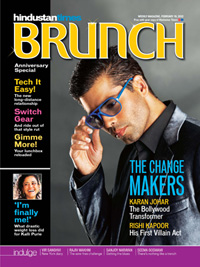
  • HT revamps Sunday supplement Brunch

    By A Correspondent


    HT Media Limited (HTML) unveiled the new avatar of Brunch Weekly on February 19. Brunch is the popular weekly lifestyle and entertainment magazine from Hindustan Times launched in 2003. It is currently circulated complimentary with HT and select editions of Mint on Sunday, and is the largest read English lifestyle magazine in India with a circulation of 13.1 lakh and growing.


    Poonam Saxena, Editor of Brunch Weekly, commented on the launch: “Brunch has an unmatched reach and a large bank of extremely loyal readers who have enjoyed the magazine over the last eight years. It was time to give our readers something new, something unexpected and something fresh. Readers will be delighted with what they find on their doorstep every Sunday morning. It is the same magazine we all fell in love with all those years ago, but with an exciting new look and feel, and more entertaining and interactive content. Brunch just made Sundays better!”


    The brand promises its readers “The Good Life” week after week with gripping content that covers various lifestyle and entertainment-related genres. The revamped Brunch includes several new features including weekly contests and feature series, celebrity columns, and stories with web codes that can be scanned for exclusive supplemental content. The lineup of Brunch columnists includes Vir Sanghvi, Rajiv Makhni, Seema Goswami, Shikha Sharma and Sanjoy Narayan.


    Rajan Bhalla, Head – Corporate Marketing & Magazines, added, “We decided to give Brunch a makeover for the benefit of our readers. More than three million people across the country read Brunch because we give them an exemplary reading experience. Brunch is a Sunday ritual for them; something they eagerly look forward to. We wanted to give our readers a clutter-free, sharp, witty, entertaining, and interactive start to their Sundays. All the favourites are still there, we have simply upped the ante on the design and content. The new, arresting masthead and crisp and clear pages give Brunch a contemporary edge. We are certain readers will love Brunch’s new style.”


  • The Economist circulation in India grows 26% y-o-y

    By A Correspondent


    The Economist inIndiaregistered an impressive 26 per cent growth (year-on-year) in its circulation as per the latest ABC period [ABC UK/US July-December 2011] to reach 34,953 copies.


    Suprio Guha Thakurta, managing director,India, said: “This is the eighth consecutive ABC increase, confirming our belief that curiosity about the world is growing rapidly inIndia. We have made considerable investments in developing the magazine’s circulation inIndiaand the results are heartening.”


    TheIndiaperformance is in line with the growth of The Economist globally. The world wide circulation of The Economist has passed the 1.5 million mark for the first time. It has achieved print circulation of 1,487,010 in the latest ABC period [ABC UK/US July-December 2011], combined with a digital-only paid circulation of more than 100,000 in December 2011.


    Andrew Rashbass, CEO of The Economist Group, said: “It took us 160 years to reach one million circulation, but only seven years to reach one and a half million. We now expect to reach two million within five years, fuelled by rapid growth in digital circulation. By then, we expect to have more digital than print readers.


    Although our print circulation continues to rise, at some point in the near future it will go down as more and more of our customers choose to read us on a tablet or e-reader. We’re relaxed about that because we are discovering great opportunities in digital having already reached a digital-only circulation of more than 100,000. Over 75 per cent of these readers are new to us and 12 per cent had previously given up their print subscription.”


    The following table is a breakdown of ABC UK/US released and certificated figures July-December 2011 for the print circulation of The Economist.


    Table: Combined growth figures for The Economist in print and digital:


    Print CirculationABC UK/USJuly-December 2011 Print YOY GrowthABC UK/USJuly-December 2011 Digital CirculationData sourced from The Economist
    Global 1,487,010 +0.9% 100,000 


    UK 210,384 +0.1%
    North America 844,766 +1.3%
    ContinentalEurope 241,726 +0.4%
    Middle East andAfrica[MEA] 29,129 +0.4%
    Asia Pacific 146,531 +2.2%
    Latin America 14,474 -14.4%
    Combined total circulation: 1,587,010


    With a global print and digital circulation of over 1.5million and a reputation for insightful analysis and perspective on every aspect of world events, The Economist is one of the most widely recognised and well-read current affairs publications. The paper covers politics, business, science and technology, and books and arts, concluding each week with the obituary. Its website (www.economist.com) offers articles from the past ten years, in addition to web-only content such as blogs, debates and audio/video programmes. The Economist is now available to download for reading on Android, iPhone, or iPad devices.


  • Mindshare’s YouTube record with ‘Boost Sachin Anthem’

    By A Correspondent


    Mindshare, India’s leading media services agency has recently created a unique milestone for itself on the back of a powerful digital media strategy. A record breaking 1 million hits were clocked for the ‘Boost Sachin Anthem’ in just under 2 days, making it the fastest video on Youtube to have reached a million views.


    Hosted on Youtube on the February 8, sung by the latest rage, Dhanush of the Kolaveri Di fame, the anthem video now boasts of a Gold Trending Medal from YouTube, with over 4 million views as on February 22.


    The challenge for Mindshare was to create buzz around the brand and noteworthy 23 year long association with Sachin Tendulkar as their brand ambassador. Therefore, there could not have been a better proposition than creating a dedicated anthem in the honour of the little master.


    The task was twofold – first, bringing the idea to life. This involved creating a powerful piece of content with carefully thought out celebrity recommendation, to scripting and final production, all of it mandated to the in-house content experts within Mindshare ESP.


    Two, tactfully seeding the content, where “people” would make it viral. To accelerate this, the Search and Social Media Experts at Mindshare went onto ingeniously seeding the content through contextual search and social media platforms of Twitter, Facebook and YouTube.


    Alok Sinha

    “The purpose of strategy at Mindshare is very simply to try and turn our brands into currencies of popular culture. Cultural currencies that fuel consumer conversations are far more valuable in today’s wired world than passive opportunities to see. The Sachin anthem is a great example of this belief. The team spotted an existing cultural meme in Dhanush and then went on to leverage it via executional excellence across content production, brand integration and social seeding. The Boost case also highlights the necessity of jugalbandis between strategy and the content & digital technology teams to create meaningful brand led cultural currencies,” said Alok Sinha, Leader Strategy – South Asia at Mindshare.


    Leading the mantle, the Mindshare strategy team required not just meticulous, but dynamic planning on a real time basis. By putting the brand’s content in the hands of the consumers it was a calculated risk and a bold strategic stance by the team. But today, Mindshare stands tall as GSK’s proud partners, while history is being written.


    Jayant K Singh

    “As a part of our marketing efforts on Boost, this time around, we wanted to celebrate Sachin’s long standing ‘Stamina’ association with the brand. A Sachin anthem, that people would resonate and rise with, was our instinctive choice. While we were certain that Dhanush’s popularity would help accelerate talk ability around Boost, our partner agency Mindshare’s contribution, through a well thought out strategy and execution in making it a “first” on many accounts for GSK, has successfully brought our intent to life,” said Jayant K Singh, Executive Vice President, Marketing, Glaxo Smithkline Consumer Health Care.


    Mindshare is a global media and marketing services network with billings in excess of $27.8 billion (source: RECMA). The network consists of 114 offices in 82 countries throughout the North America, Latin America, Europe, Middle East, and Asia Pacific, each dedicated to forging competitive marketing advantage for businesses and their brands.


  • ‘Social media is an explosion’

    By A Correspondent

    Companies in India have gauged the might of social networking and are currently spending over Rs 1,200 crore with 30 to 40 per cent of marketing budget on digital media according to the findings of a study titled ‘Explosion of Social Media: Transforming The Corporate Business Scenario,’ by The Associated Chambers of Commerce and Industry of India (Assocham).


    Releasing the highlights, Assocham secretary general DS Rawat said, “Goods and services worth about Rs 23,000 crore are traded currently on the social networks across the world and the figure is likely to swell to about Rs 1.35 lakh crore by 2015 with India’s share likely to cross Rs 10,000 crore mark during the course of next three to four years.”


    It was observed that majority of start-ups, leading national and international companies operating in India are embracing the social media to enhance their business and on an average spending anywhere between Rs 2 lakh to Rs 50 lakh a year on social marketing campaigns.


    A large number of national and multi-national corporations in India are using the services of social media management companies that help small, large brands to manage, heighten their social network presence and maximise their exposure in the newsgroups and newsfeeds of the people logged on the social networks.


    “The significance of social media in the current scenario can be gauged from the fact that the department of information technology (DIT) has recently advised all government departments to make the most of social media in their day-to-day work and communicate with citizens effectively,” said Mr Rawat.


    Assocham interacted with about 1,400 directors, chief executive officers, chief financial officers, chairmen, managing directors, executive directors et al from sectors as diverse as BFSI (banking, financial services and insurance), auto, FMCG, manufacturing, IT, telecom, biotech, education, infrastructure, consumer packaged goods and healthcare to ascertain the extent of their spending on online activities and about 75 per cent of them said that they have doubled their spending on social media this year.


    “Companies both large and small are turning to social media platforms as the percentage of internet users on social networking sites continues to climb,” said Mr Rawat while releasing the survey that was carried out in Ahmedabad, Bangalore, Chennai, Delhi, Kolkata, Mumbai and Pune between April and August. “Brands today cannot afford to ignore the significance of social media as a key medium to target their identified customers and connect with them,” said Mr Rawat.


    Companies are taking advantage of social media to advertise, launch new products, study consumer behaviour pattern and communicating, interacting directly with their customers and wooing new clientele. Assocham interacted with 200 representatives of various companies in Delhi and about 60 per cent of them said that they have a dedicated staff who work round-the-clock and are constantly plugged into the web to monitor online traffic on their web portals.


    As many as 110 respondents said that they have hired employees specially for their social and interactive media cell who perform the task of tracking conversations, blogs, discussions, chats on social networks to ascertain the consumer preferences and perceptions towards their products and services. Nearly 40 per cent of respondents in the city said that started their campaigns on social networking websites with a tiny budget and clocked revenue of about three to four times their budget in a span of about five to six months terming it a successful venture.


    Almost all the respondents said that their dependency on traditional print media for advertisements has reduced drastically and people logged on social networks are their core target group and social media allows them to directly interact with consumers Currently, there are over six crore mobile internet users and about eight crore users using internet across India.


    Facebook, Twitter, YouTube, Google+, Linkedin, Orkut, Hi5, Friendster and BigAdda are certain popular social networks used by companies in Delhi to carry out their social media campaigns. “Low cost coupled with higher visibility and wider reach on social media is the grave reason behind this surge in number of companies cashing in on inevitable social media platform to reach young customers as highest number of active social media audience in the country is in the age group of 15 to 25 years,” the Assocham study emphasizes.


  • 10 takeaways from ad:tech 2012

    By Shruti Pushkarna


    ad:tech 2012 concluded in New Delhi on Feb 24, with the two-day conference witnessing invigorating keynote sessions and insightful panel discussions. MxMIndia takes a look at some of the major takeaways from the biggest digital marketing, media and advertising event.


    The world has gotten a lot more challenging for marketers- With 30 billion status updates published on Facebook every month, 250 million tweets published every day and 5.3 billion views in a 24-hour period on YouTube, marketers have a lot to compete against. With this kind of crazy amount of penetration, it’s a horrible time for marketers. Shiv Singh, Global Head of Digital, PepisoCo said, “From a marketer’s standpoint, from strategy and insight to execution takes a whole bunch of research, figuring out a creative, writing a script, it’s all a several months’ task. It’s so hard to compete with a tweet or a Facebook status update that is published in five seconds.” If Facebook were a country, it would be the 3rd largest in the world. With consumption patterns changing, it is important for marketers to take cognizance of where their customers are.


    Everyone’s a storyteller- In the changing digital world, the source of information has ceased to matter. Everyone is becoming a storyteller, a relevant owner of content. Marketers need to realise that consumers are also content creators for brands. Arun Tadanki, Managing Director, Yahoo India said, “The purchase cycle is far more complex because consumers are not simply recipients of your brand messages, they are curators of your brand message.” Anurag Mehrotra, Vice President, Marketing, Ford India said, “People want to co-create, the control of messaging is shifting and consumers are increasingly critical of manufacturer-speak.” Viral Oza, Marketing Director, Nokia said, “Give the people the tools and a message and they will tell your story.”


    Brands are now publishers– In a world where consumers are bombarded with messages, brands need to find a way of telling their message differently, they need to embrace the art of storytelling to engage users. Marketing needs to be inside the content. Nikhil Rungta, Country Marketing Head, Google India said, “Users will go and find you if they have a need. The user today is saying don’t come knocking at my door- users are beginning to ignore your message.” To fight this situation, marketers need to learn a new and better way of telling their message differently. They need to be content creators rather than just being content distributors. If they can create content, in a digital social world, the consumer will act as a vehicle to carry that content across. Therefore it is important for brands to understand the compelling need of enveloping their message in pure content form. Brands have to go beyond sponsorship, and become curators and creators of content.


    Growing influence of social media- Study says that 57 percent of people talk to people more online than they do in real life. 78 percent of people trust consumer opinions posted online. Gian Fulgoni, Executive Chairman and Co-Founder, comScore said, “Social networking has exploded globally. Nearly 1 in 5 minutes online is spent on social networking sites.” Brands need to take notice of the value of social in fundamental areas like connecting with people, finding long lost friends, sharing experiences. Personal connection on social can help brands connect and engage better with consumers. Digital is increasingly becoming a part of life and so marketers need to weave social media into everything they do.


    Listen, engage, transform- The new mode of communication is Dialogue. Brands need to first listen to their consumers and then engage them in a dialogue to transform and inspire their purchase intent. Viral Oza, Marketing Director, Nokia shared data stating, more than 30 percent of consumers refer to internet for accessing information on brands. 40 percent of those convert into referrals. 30 percent recommend products to their peers based on their experience. Therefore a marketer’s dilemma is really to adapt or die. With millions tweeting, it becomes important for the brands to listen in rather than throw out more messages at the increasingly bored consumer. Narasimha Jayakumar, COO, E-commerce, Homeshop18 shared that in their model of business, social media served more for listening to consumers and helping solve their issues. He said, “We use Facebook mainly to address consumer issues, problems with products etc. Once your consumer knows you are listening it is easier to start a dialogue.” Pete Blackshaw, Global Head of Digital Marketing and Social Media, Nestle said, “Three operating pillars of our roadmap at Nestle are “listening, engaging and transforming.”


    Technology matters less- An interesting point emerged from debates and discussion that it is the basics in the business that matter the most and technology should be looked at as a vehicle for delivering a powerful message. Technology enhances the message and the experience but marketers should not start with the technologies. They matter less, marketers need to focus more on user behaviours and the data they generate. Karthi Marshan, EVP & Head, Group Marketing, Kotak Mahindra Bank Ltd quoted Douglas Adams, “It’s technology if it was born after you.” The idea is to believe in the power of storytelling, believe that a strong narrative still helps engage and not be intimidated by technology.


    Shrink, Simplify, Serve- Small is the new Big. Marketers need to rethink digital in a world of smaller and smarter screens. Pete Blackshaw, Global Head of Digital Marketing and Social Media, Nestle said, “We need to think harder about simplifying our messaging and serving the consumer. We need to shrink, simplify and serve. Our screens are shrinking and so we need to simplify to serve better.” The future of shopping is small screens and the world is increasingly becoming contextual. Richard Dunmall, Vice President, Global Accounts & Agencies, Microsoft Advertising said, “Every surface can become a digital source of content in the future.” Marketers need to focus more on creating simpler messages that can reach consumers in any form.


    Youth driving internet consumption in India- Gian Fulgoni, Executive Chairman and Co-Founder, comScore shared data that indicates that young people drive internet consumption in India today which in turn suggests that future overall usage will rise dramatically. com Score’s extensive research on the state of global internet also indicates that Indian internet users are much younger than the global average. 75 percent of audience is under 35 years compared to 52 percent of the world and 55 percent of the region. India’s heaviest internet usage comes from people in the age group of 26 to 34 years.


    Move beyond the click- Gian Fulgoni shared some lessons learnt from online advertising in his presentation on the state of global internet. Research indicates that click is at best an ‘incomplete’ and at worst a ‘misleading’ metric. Clickers represent a small and declining segment of internet users. Global click ratio on individual campaigns are pitifully low. So, ad effectiveness needs to be measured beyond the click. Marketers need to go beyond the click and explore other ways of measurement. Mr Fulgoni said, “There are two other ways. One is that you measure the change in behaviour, so what we do in the case of comScore, we take the comScore panel, take the people who are exposed to the campaign and a group of people who weren’t exposed to the campaign and then measure how their behaviour changed. And that behaviour change could be, did they go and visit the brand website, did they conduct a search using the brand name, did they get information or did they buy the product, did they buy it online or offline. Those are all behavioural metrics. You can also see if you changed the attitudes. Did the awareness of the brand go up, did recall go up, did favourability go up, did purchase intent go up? But those are all kind of intervening attitudinal metrics and not hard behavioural ones. But both sets can be used and I think they are far better predictors of the effect of a campaign than a click.”


    ad:tech is here to stay: ad:tech has emerged as ‘the’ premier destination for digital media, advertising and marketing and the organisers announced that the next year’s congregation would also happen in New Delhi on Feb 20-23.


  • Day 2 @ad:tech: Nothing’s too small in new digi world

    By Shruti Pushkarna


    [youtube width=”400″ height=”200″]http://www.youtube.com/watch?v=p2FRhKna0k8[/youtube]

    The final day of ad:tech witnessed engaging keynotes and panels on topics like social commerce and mobile marketing. Here’s a wrap up of the second day at the conference.


    Small is the new big: Rethinking digital in a world of smaller, smarter screens

    Day 2 of ad:tech 2012 opened with a keynote by Pete Blackshaw, Global Head of Digital Marketing and Social Media for Nestle. Mr Blackshaw opened his session, ‘Small is the new big: Rethinking digital in a world of smaller, smarter screens’ by introducing two broad themes. First, ‘the boring basics still really matter’ and the second, ‘small is the new big’. Elaborating on the first theme, Mr Blackshaw emphasized that the essentials of marketing are the very principles that a company should build its digital strategy upon. He said, “The essentials of marketing in the traditional sense that include: Searching out and identifying big ideas that are contact neutral and have a potential of sustainable communication; engaging with consumers when they are most ready to receive; and creating an attractive and rewarding brand, find unique life on the digital platform.”


    Talking about his role in both the areas of corporate communication and consumer communication, he said that a big convergence is happening between the two. “There is convergence between corporate and consumer communications; marketing and research – asking questions has been an integral part of consumer research and now involves a large part of digital too; product quality and sales and; supply chain and digital – as consumers can now look behind the brand,” explained Mr Blackshaw.


    He also talked about the three operating pillars of Nestle, listening, engaging and transforming. He said that these three are part of the many winning actions that Nestle has uniquely defined for each function. And one basic that still applies is the power of storytelling. Blackshaw cited the example of Nescafe Know Your Neighbour campaign in India to emphasize his point that good narratives work well with the consumers. One has to device a good narrative, tie it to a big idea to engage consumers.


    Speaking of the other theme, ‘small is the new big’, Mr Blackshaw said, “We need to think harder about simplifying our messaging and serving the consumer. We need to shrink, simplify and serve. Our screens are shrinking and so we need to simplify to serve better.”


    “This is a great time in marketing…organizations are in transformation, digital is creating lots of new opportunities to connect and bond and add value for consumers. The number of consumers going online, using social media is unbelievable, I think that creates both challenges and opportunities,” concluded Mr Blackshaw.


    The evolution of content, commerce and entertainment in the digital world

    Satyan Gajwani, Director-New Media, BCCL delivered the second keynote address on Day 2. His presentation was divided into three basic areas, content, commerce and entertainment.


    In entertainment, said Mr Gajwani, “…the focus has been on two or three major initiatives. One is gaana which is a digital music platform that’s really oriented around discovering new content. Second is the way we have looked at sports and IPL specifically, that’s going to be a big focus for us in a month from now when IPL launches in April. And last is a new project we are going to launch in a couple of weeks, called Box TV. Box TV is going to be a premium video destination for India where we’ll get full length movies and TV shows and eventually sports, a lot of high end content oriented around a different type of video experience.” Mr Gajwani also emphasized that it’s important to be ‘social by design’ in today’s digital world.


    Talking about commerce, Mr Gajwani said it is time to understand the supply chain better. He also said, “Eventually there has to be some sort of molding between content and commerce as a model where the user can engage with content that’s engaging and quickly use that as a means to transact as well.”


    Behind all content, entertainment and commerce, Mr Gajwani said, “…we are trying to build a KYC behind it all, which is Knowing Your Customer, both in terms of what is it that he likes and eventually developing some sort of profile of who he is. And behind that we want to launch a loyalty programme where we know what kind of a user you are and then encourage you to be a more active user by giving you badges that validate you for your activity.”


    Mr Gajwani concluded by saying that the hottest thing in 2011 was e-commerce and that 2012 will be all about consolidation and a deeper focus on supply chain management.


    Mobile Marketing

    This session designed to look at insights on how marketers are evaluating the power of mobile as a medium to drive their business objectives, was moderated by Rajesh Jain, Founder Chairman & Managing Director, Netcore Solutions. Other panelists included, Dippak Khurana, Co-Founder & CEO, Vserv Mobile; Dr Nickhil Jakatdar, CEO & Co-Founder, Vuclip; Abdul Khan, Senior Vice President & National Head of Business Marketing, Tata Teleservices and Kiran Gopinath, Founder & CEO, Ozone Media Solutions.

    Rajesh Jain opened the debate with a fundamental question to every panelist, ‘what are the barriers that are holding mobile marketing back?’

    Abdul Khan of Tata Teleservices said, “Mobile marketing has got a terrible press. Creativity is abysmal in this area. It is because of the pricing structure that it is viewed as a commodity.”

    Mr Gopinath said, “One of the key barriers holding it back is that a lot of our customers are slow in mobilizing their sites, the lack of mobile sites is holding it back. And secondly, it will take a lot more education of people in the agencies for mobile marketing to fully take off.”

    Mr Khan also added, “It is probably just a lazy mindset that is holding back mobile marketing, it cannot be money as people are frivolously allocating money tp programmes like IPL.”

    Mr Jakatdar echoed Mr Gopinath’s point of educating people, saying, “We need to communicate in the same language with brands, agencies and publishers.”

    Dippak Khurana made an interesting point that the ecosystem today is quite complex and for mobile marketing to kick off, dedicated resources have to be allocated. He said, “Currently organizations are busy with digital and social, leadership needs to take a call and put dedicated people for mobile.”

    Rajesh Jain concluded the session by drawing out the main points from all panelists. He said, “There is a need for dedicated people in organizations to look at mobile. The lack of mobile sites needs to be addressed and finally someone needs to look at the ability to convert clicks into cash. Clicks are not getting converted into cash because of lack of payment options on mobile.


    Social Commerce

    The session was moderated by Rajan Srinivasan, Senior VP Marketing, Web18 Software Services Ltd and the panelists included- Narasimha Jayakumar, COO, E-commerce, Homeshop18; Kirthiga Reddy, Director Online Operations, Facebook India; Ramesh Chembath, Asst Vice President, Head- Marketing and Modern Trade, Godrej and Ishita Swarup, CEO, 99labels.

    The session centred on how brands can make the most of social technologies to transform shopping experience.

    Ms Reddy making her initial comments on the subject said, “E-commerce sites need to rethink the whole e-commerce experience and think of how to put people at the centre.” She also added that online behaviour is nothing but a reflection of offline behaviour.

    Mr Jayakumar emphasized that before we get into engaging the consumers we need to get the basics of the e-commerce in place. He said, ‘First ee have to make sure that the consumer is happy with the experience and then we start engaging.”

    Answering a point on whether there is any difference in the digital social and the traditional social, Mr Chembath of Godrej said, “When it comes to appliances, it is really a social activity. Buying an appliance is when a whole family goes out to make the purchase. But there has beena huge shift in consumer buying behaviour off late. In traditional social, one would ask members of the family, neighbours or even friends before making the purchase. But now with nuclear families, people are willing to experiment with brands. Instead of asking their peers, they want to go online and check the reviews posted by users on products and brands. That’s the new digital social.”

    From the debate it also emerged that brands need to see the value of social in fundamental areas like connecting with people, sharing experiences etc. The power of social really comes from the personal connection brands can provide on the web with the help of social.


    Exploring the future of storytelling

    Richard Dunmall, Vice President, Global Accounts & Agencies, Microsoft Advertising made his keynote presentation on ‘Exploring the Future of Storytelling’. Mr Dunmall shared a glimpse of futuristic technologies being adopted by advertisers and publishers in connecting with their audiences and telling their brand stories. He started off by talking about how to master the new digital storytelling world. He said, “What consumers want, technology delivers through self-expression, enjoyment, connection and discovery.”

    The four trends according to Mr Dunmall that marketers are making big bets on, are


    i) Everyone’s a storyteller

    ii) The new face of fun – the ability for people to play, share experiences

    iii) Increasingly contextual world

    iv) More human experiences


    Mr Dunmall said, “Everyone is becoming a storyteller in the new digital world, becoming a relevant owner of content. Every brand has a story to tell and digital is enabling new ways of storytelling.”

    Talking about the new face of fun, Mr Dunmall said, “Technology allows human to play in a much more enhanced way, the ability to compete with each other and have fun is what leads to engagement.”

    Talking about the third trend of the world becoming increasingly contextual, Mr Dunmall said, “Every surface can become a digital source of content in the future.”

    And of all this leads to a more ‘you’ centric experience that allows brands to customize and build a brand narrative around it. Mr Dunmall concluded his presentation by reemphasizing, “Possibilities of technology are endless.”


    The DigiMarketing Imperative

    The last keynote of Day 2 was a presentation on ‘The DigiMarketing Imperative’ by Kent Wertime, Chief Operating Officer, Ogilvy & Mather, Asia Pacific. Mr Wertime started off his presentation with a question on how ready are marketers to make the shift to DigiMarketing and everything it entails.

    Mr Wertime said, “Market despite the enormous opportunity is dramatically under-spent around the world. Agencies need to be much quicker in moving and they need to add a lot more capability than they have. There is definitely a continued lag in digital and as an industry, marketers need to fill the gap increasingly.”

    Mr Wertime also said that the shift to DigiMarketing needs to be a tectonic shift. He said, “It’s really not about the fast movers but about the slow movers. If one looks at the shaping of the future, it has actually followed a very logical course. Similarly the shift to DigiMarketing needs to be a tectonic shift. Marketing money is going to go increasingly to the digital and within a global context, markets like India have enormous room to grow.”

    Mr Wertime also added that the number of people armed with digital devices is increasing and so as an industry we have to take opportunity of this shift in a way that will please customers.

    Talking about whether the shift to digital will be that of a replacement kind, Mr Wertime said, “The digital is an additive story and not replacement, it is a relational story with traditional media.”

    Concluding his presentation, Mr Wertime said “There has to be a shift from POE to PUC, that is, Paid Owned and Earned to Participation Utilty and Contribution.”


    ***


    Delhi will play 3rd time host to ad:tech in 2013. Rammohan Sundaram, Event Chairman and Founder, CEO & Managing Director, Networkplay Media Pvt Ltd announced that ad:tech will be back in New Delhi in 2013 between Feb 20 and 23. He also announced that the launch of ad:tech Bangalore will take place sometime towards the end of September.
     

  • OOH brand awareness for Om Logistics by JCDecaux

    By a Correspondent


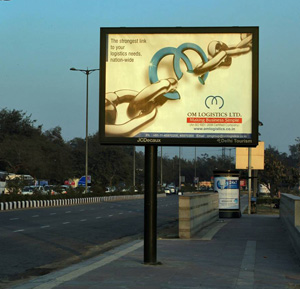
    The client brief to JCDecaux was to create awareness about brand Om Logistics and its services. Om Logistics is the flagship company of Om Group, an Indian multi-modal logistics company. The outdoor campaign has been executed by JCDecaux in the city of Delhi.


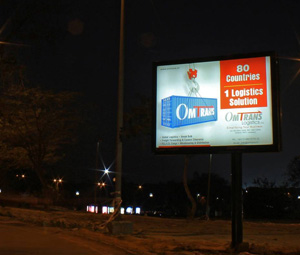
    The idea behind the campaign was to give Om Group a higher visibility and appeal. The duration of the campaign, from January 2012 to February 2012, was selected to coincide with the various exhibitions held at Pragati Maidan in these months. JCDecaux displayed the creatives of the different business verticals of Om Group. The creatives were displayed on seniors and pole-mounted MUPIs in some of the prime locations in Delhi to draw attention of the commuters. The area around Pragati Maidan was used for the campaign to gain mileage during the exhibition season.


    The TG for Om Logistics are individuals or companies involved in the logistics of supply chain management. The objective of the campaign was to create a lasting impact and to increase brand awareness through outdoor campaigns.
     

    Lalit Kumar, Assistant Manager, Marketing, Om Logistics said, “This campaign has created impact on the arterial routes and vantage locations with its large formats and creatives. The campaign gripped people’s attention and succeeded in attracting our TGs.”


    Alok Duggal, General Manager, Sales, JCDecaux India said, “We are glad that we have been able to build brand awareness for Om Logistics. We always look forward to partner with niche brands and support them in reaching their objectives.”


  • We’re a one-stop shop for broadcasters: Santosh Nair, UTV

    UTV Television, known to be a pioneer in the TV content business in India, was started by Ronnie Screwvala in the early nineties. Though the group has expanded its wings to being a broadcast major, its television business, which has now, in a way, been overshadowed by the international companies’ foray into India, is slowly but surely taking bigger strides in becoming a significant player in the business.


    as put by Chief Operating Officer Santosh Nair, the content house’s biggest USP is the fact that it offers fiction and non-fiction shows, plus the company’s wide experience in the regional space. In a freewheeling interview with MxM India’s Rishi Vora, Nair speaks about the content business in India, UTV’s role in that, company’s plans and much more. Excerpts:


    Q: So how was 2011 for UTV Television?

    The year 2011 was very good for us. Saubhagyavati Bhava, which was launched at the end of the year, is doing well. Dor, which aired on Star Plus, was launched early in 2011 too performed fairly well. The non-fiction shows, especially on UTV Bindass, such as Big Switch and Emotional atyachar too have delivered.


    Q: Is it tough competing with the likes of Endemol, Freemantle, Balaji and a host of other content houses?

    all businesses are tough in that sense. My sense is that there is space for everybody. Yes, there are international format companies, but we’ve been successful in doing home-grown formats. The first season of Dance India Dance was done by us. and that’s the first and the best example of a successful home-grown format. Ek Khiladi Ek Hasina -India’s first cricket format show too is a great example of a great home-grown format. and not to forget Emotional atyachar – that too is a home-grown reality show.


    Q: But not all home-grown formats have been successful.

    Most of them have done fairly well. Dance India Dance is doing well season after season. The show is now in its fourth season. These are tried and tested formulas. and that’s one reason I feel there is space for everyone in the industry.


    Q: While there are home-grown formats done by Zee and various other channels, international formats like KBC, KKK, Bigg Boss and others are more popular. Why is that so?

    International formats are formats which have worked internationally – they have worked well in many countries and hence are successful formats. There is a big market for international formats in India and that’s one of the main reasons why international production houses like Endemol, Freemantle and others have entered India.

    Look at KBC for example. That’s a show that has seen a lot of success. Some have worked, some have not. But broadcasters will always look to do international formats more as these are the shows that have seen some success in overseas markets.


    Q: are you also doing an international format show?

    Yes, there is one in the pipeline.


    Q: For a content house like yours, are non-fiction shows profitable?

    Non-fiction shows are seasonal and each season lasts for about 13 to 26 weeks. So often they turn out to be more profitable because fiction shows usually takes about 200-250 episodes to break even. It takes that much time to understand how your fiction is doing on the ratings front, whether it is a good call to continue or not.


    Q: UTV Bindass is a sister company, so if I may ask: How do reality shows like Emotional atyachar and Big Switch benefit you and the channel from a cost perspective?

    These shows target the youth. So from a cost perspective, it is working out well for the channel and for us, too. That’s the reason why we’re doing them every year. So I’m pretty certain that the channel makes a fair amount of profit on these shows.

    To be very clear about how we deal with Bindass: We treat the channel as any other broadcaster, the way we work with Star or Sony or Imagine, it’s the same way we work with Bindass. We pitch to them – and if in case they don’t like it – we take the project to someone else.


    Q: So Bindass also works with an Endemol for example?

    Yes, Bindass works with Endemol.


    Q: Which means UTV Television is not much inclined with Bindass.

    No-no, it’s not that way. What I’m saying is we are one of the content houses for Bindass.


    Q: There is a buzz that some of the non-scripted shows are not really non-scripted in the true sense.

    No-no. The kind of shows we have done, we have never done any doctoring, purely in terms of making a non-scripted show a scripted one. I can’t comment about other shows, but my fair sense is that nothing is scripted in non-scripted shows, apart from anchor lines.


    Q: What is it that makes UTV Television stand out in the clutter?

    Look at any content house right now in the Hindi space vis-a-vis UTV, which is the only content house that delivers both scripted and non-scripted content. That for us is our USP. We are doing some work in the southern market. We are doing shows languages such as Tamil, Kannada, Malayalam or Telugu. apart from being present in the Southern market, we’re also doing shows in Marathi. We recently did two fiction shows in Marathi, so the kind of programming we do – we are into six or seven languages.


    Q: So where do you focus more: fiction or non-fiction?

    We’re strong on both – fiction and non-fiction so we focus on both the formats. We’re a one-stop-shop for any broadcaster to look at fiction as well as non-fiction.


    Q: a lot of content is being produced in regional languages, so is it a beginning of a trend in the content space?

    apart from UTV, I don’t think many players have made a foray into the regional space. The reason why I’m saying this is because we have a decade old relationship with the network and we have been doing quite a bit of work down south. apart from the local players, I don’t see many of the Hindi players getting into the regional space.


    Q: What is your view on the issue of IPR, where the broadcaster owns it when it is the content house that is producing the show…?

    The broadcaster owns the IPR because he commissions the content house to produce the show. There is a budget which is rolled out, the content house keeps its margins and that price is fixed. That’s the model which is operational in the industry now minus Sun Network. With Sun Network, we spend the money on producing a show, we pay them slot fees and the IPR lies with us. So that’s a slot model.


    We are doing Shubh Vivaah on Sony, a remake of a Tamil show; Saubhagyavati Bhava too is a remake of a Telugu show…


    Q: So for all these shows, the IPRs lie with you?

    Yes. In fact, there are two other shows in the pipeline which are remakes of south shows (we are currently in talks with broadcasters) and we own the IPRs.


    Q: What is your view on broadcasters’ interference in terms of storylines or tweaks?

    It’s team work. Broadcasters respect our expertise in terms of creative formats that we bring to the table. While we respect them in terms of their understanding about the business, so it’s a mutual thing.


    Q: What are we going to see from UTV television this year?

    We’re doing Shubh Vivaah on Sony, an international format show with one of the GECs. Two more fiction shows are lined up with top broadcasters and we will be launching a few fiction shows in the south. So a lot happening this year.


  • Pulp Strategy wins Digital Media mandate for Lavazza

    By A Correspondent


    Pulp Strategy Communications has won the mandate for the Digital Media and Activation for Italian coffee major Lavazza after a multi-agency pitch.


    Barista Lavazza had called for a pitch a few weeks back and several agencies took part in the process. Pulp Strategy’sDelhioffice will handle the account. The agency’s mandate includes overseeing the brand’s digital and social media strategy, media buying, and planning across all digital and interactive channels. In addition to this, strategic planning for activation at retail is also a part of their area of responsibility (AOR).


    Barista Lavazza traces its roots back to the old coffee houses inItaly– the hotbeds of poetry, love, music, writing, revolution and of course, fine coffee. Offering alternative options and pleasures of coffee to millions, the chain is also revolutionizing the coffee drinking experience in most Indian cities.


    Barista Lavazza has managed to capture the loyalties of many, elevating the experience of coffee to a lifestyle. Its leadership position can be attributed to a remarkable expertise in specialty coffee coupled with a sound technical competence, an ever-evolving delightful retail experience.


    Ambika Sharma, Managing Director & CEO Pulp Strategy Communications said: “Being chosen as the Digital AOR by LavazzaIndiais a matter of honour and pride for us at Pulp Strategy. LavazzaIndiahas big plans towards quality and leadership position in the café business inIndiaand we are excited to partner them in fulfilling that goal. Our biggest strength is a talented team and a holistic integrated approach, which understands the sensibilities of the brand as well as the nuances of retail and social media”