Category: MEDIA

  • Real Steel boxes its way into Top 10 iTunes Chart

    By A Correspondent


    Jump Games, a company owned by Reliance Entertainment’s Digital Arm, has set new records on the Apple iTunes with Real Steel, the official mobile game for the movie, Real Steel.


    Real Steel has received a staggering response, it is the first game made by an Indian Studio to touch such impressive figures on the iTunes Chart. The figures say it all: Best Top Sports Paid Apps Rank - 1; Best Top Action Paid Apps Rank – 5; Real Steel climbs to No. 6 in Top Paid Apps (Courtesy iOS)


    Real Steel has been in the top 50 list on the App store in countries like theUS, Australia,Canada,Germany and many others.


    This Underworld fighting game, which is an actual replica of the Real Steel movie, is set in the near future where 2,000-pound robots fight each other with no rules or regulations.


    To keep the player engaged, Jump keeps coming up with constant timely updates for the game ,current one being addition of two new ruthless robots - Twincites and Blacjac.


    The game provides high adrenaline rush to the player and he/she can use a mix of standard boxing moves, jabs, crosses, hooks, uppercuts, and some specific Underworld moves, such as low blows, knees to stomach, and so on in the fight. The game is available at just 0.99 cents on Apps store.


    Jump Games is a leading International developer and publisher of mobile games, apps and content. It is an integral part of Reliance Entertainment (Digital Business). Jump’s foray and expertise lies into the media and entertainment space.


    Jump partners with leading content owners, publishers, mobile operators, handset manufacturers and technology providers. Jump’s experience and expertise in creating innovative and cutting-edge gaming  content reflects in its client roster, which lists some of the best brands from across the world - Codemasters, GLU, Playboy  Hands-on, Dreamworks, Cartoon Network, and Konami to name a few.


    Fueling concepts for these ground-breaking games is the domain expertise of Jump’s strong, multi-disciplinary, and cross-skilled team spanning across the US, UK and India.


    Distributed across theUS, Europe, South Africa, Australia, the Middle East, and Asia, Jump’s content can be accessed through 80 leading networks across 40 countries as well as global AppStores. The content is available on leading networks like Vodafone, BSNL, TATA Docomo, M1, MTNL, Dialog Telekom, Reliance Mobile World, Telstra, Tele2, TIM, O2, Virgin Mobile, KPN, Telia, 3,Telefonica, Optimus, and Telenor.


  • Saevus packs a bag for ecology

    By A Correspondent


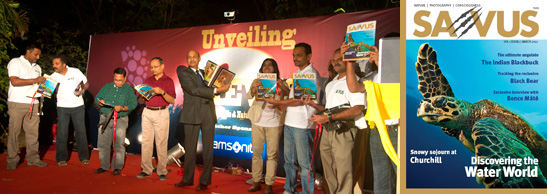
    Saevus Wildlife, along with their anchor sponsor, travel products brand Samsonite, has launched Saevus, a premium wildlife and natural history magazine.


    A two-day launch event at the Little Rann of Kutch saw sessions by eminent guests – Dr Satya Kumar –Professor, Wildlife Institute of India, Sandesh Kadur- Eminent Wildlife Photographer, and Subrata Dutta – Managing Director, Samsonite, South Asia. The focus on the sessions was wildlife photography tips, filming wildlife, mountaineering, wildlife conservation and the association of Samsonite with Saevus. Samsonite’s connection highlights corporate involvement in promoting wildlife and natural history along with a morning safari at the Little Rann of Kutch.


    The Little Rann of Kutch is rich in biodiversity and is an ecologically important area for wildlife. Many local and migratory water birds like cranes, ducks, pelicans, flamingoes and land birds like sand grouse, frankolins and the Indian bustard find home at this place.


    It has been nominated as a bio-sphere and World Heritage Site by UNESCO.

    Saevus magazine aims at popularizing the beauty and diversity of Indian nature and Wildlife through stunning visuals, and aims at uncompromising quality to capture the imagination of every Indian who loves nature, wildlife and the outdoors.The magazine will be available on stands and specialty bookstores from March 2012. The editorial team includes Sree Nandy-Editor-in-chief, Sandeep Mall-Managing Partner, Santanu Nandy-Publisher and Dhrotiman Mukherjee-Head of Photography.


    At the launch of the magazine, Mr Mall said, “Saevus aims at offering its readers a side of wildlife and nature they have never been exposed to.  We couldn’t have thought of a better place than the Little Rann of Kutch to unveil our magazine because here is where the idea of coming out with the magazine was born.”


    Subrata Dutta, Managing Director, Samsonite, South Asia said, ”At Samsonite we have believed in stepping out and travelling the world. When this proposal came to us we thought it to be a great platform to showcase ourselves as partners to not just travellers but the various medium that makes one travel. I am hopeful of the great response Saevus will receive and I wish the entire team great success on behalf of Samsonite.”


  • So will media spends grow at 12 or 8%?


    By Johnson Napier


    A lot could be said about how the year 2011 has shaped up for the media industry in India. From a growth perspective, it possibly has shaped up the way brand marketers and industry observers had predicted it to be – a mixed year with its usual set of highs and lows. But despite the rise and fall, the enthusiastic performance displayed by the industry year-on-year is giving players from the space, as also research bodies, enough scope to track down this domain exclusively and come up with studies that predict the trajectory and also crystal-gaze into its performance for the forthcoming year.


    In pace with its observations on the growth witnessed by the media industry in India, a couple of media (agency) firms have rolled out reports citing healthy growth numbers for 2011 and a cautious-yet-optimistic trend for next year. After Mindshare India released its annual report titled ‘This Year, Next Year: Indian Media Forecast’, it was the turn of Pitch-Madison to reveal its report last week. Joining the above two reports was another finding from research firm Media Partners Asia that unveiled its study tracking the performance of media in 2011-12. (Disclosure: MxMIndia partnered with Mindshare to publish the report digitally and in print form as ‘The Mindshare Indian Media Forecast 2012’)


    2011 (cr) 2012 (cr) YOY % growth
    Mindshare 33,388 37,397 12
    Pitch-Madison 25,594 28,013 9
    Media Partners Asia 31,400 34,100 8.7


    While most studies have predicted a healthy growth trend what is noteworthy is the optimism in numbers that have been expressed through the various reports which range from a modest 8 per cent to a high of 13 per cent. This translates into adspend monies ranging from Rs 25,594 crore to Rs 33,388 crore approximately. As part of the ‘Mindshare Indian Media Forecast 2012’ published by MxMIndia, Ravi Rao, Leader, South Asia, Mindshare had expressed how predicting adspends has become more complex now than ever was. “The economic outlook is something that one can never get the handle right, with most studies not agreeing on one number. But this is what makes it exciting to look and estimate the Adex growth in India. Group M does yeoman’s service of providing some startling numbers based on science rather than gut, even though India tends to buck the trend away from global predictions.”


    When analysed further, the Mindshare study predicts an AdEx growth of 12.8 per cent in 2011 with net revenue totalling INR 33,388 crore. This was driven largely by the medium of television that contributed 18 per cent to the growth followed by Print at 7 per cent and Digital at 30 per cent. In fact for 2012, Mindshare predicts an overall growth rate of 12 per cent that will be led by spends on television – 15 per cent, print – 8 per cent and digital – 30 per cent.


    As for the insights by MPA, ad revenues in India for 2012 are expected to clock a growth rate of 8.7 per cent. According to MPA, this growth will be primarily driven by MNCs investing in India and stronger MCG sector, and if there are revisions carried out in 2H 2012. As for the advertising growth across key categories, MPA expects robust growth from the FMCG sector, which is the largest advertising category, contributing 30-35 per cent to total ad spend. The study predicts that MNCs are expected to report robust numbers while a few large MNC accounts are looking to increase spends by 50-70 per cent for the coming year. The other sectors that will see heightened activity include Auto – while traditional companies such as Maruti and Hyundai have reduced spends, global car manufacturers investing in India are driving the overall growth for the sector, Telecom and Life Insurance.


    On its part, the Pitch-Madison study (published by Pitch magazine, conducted by Madison) predicts a sluggish growth rate of 8 per cent due to slowdown worries in the second half of 2011. It predicts a cautious trend for 2012 which is expected to pick momentum only in the second half. It predicts a growth a 9 per cent with revenues totalling Rs 28,013 crore.


    The industry, on its part, seems undeterred with the varying figures being thrown up and appear comfortable with the current state of affairs so far. Divya Gupta, CEO, Dentsu Media India said, “The estimated adspend growth according to us stands at approx 9 per cent. Also, the growth trajectory may have slowed down versus what was reported in the last few years, but it is still very healthy!”


    According to Shubha George, Chief Operating Officer, South Asia – MEC, “Our estimate of 2011 closing numbers is close to 13 per cent. When analysed further, the mediums of TV, Digital and Cinema have outperformed vis-a-vis the overall 13 per cent whereas Print and Radio have been below par. As for 2012, our estimates are a percent lower than 2011 at 12 per cent.”


    Admitting that the so-called slowdown may have cast its effect on the growth of the industry, Anita Nayyar, Chief Executive Officer – India and South Asia, Havas Media said that “the actual rate that was predicted was in the range of 11-12 per cent but given the slowdown scare and also the volatility that was witnessed in the markets, the rate was revised to be in the region of 9-10 per cent.” Going forward, Nayyar feels that marketers will tread with a cautious approach as they are yet to see signs of recovery – a phenomenon that will start taking place in the second half of 2012. “Large clients like P&G and other FMCG units have announced a slash in the adspend rates. This indicates a cautious approach that’s being taken by the marketers. Even category-wise, sectors like FMCG, finance etc that used to spend heavily have taken a backseat for the moment. But what is surprising is the marketing drive that has been taken out by sectors such as education, real estate and to certain extent even auto, which are continuing to hike their adspend budgets.”


    Presenting a rather comprehensive outlook, S Yesudas, Managing Director – Indian sub-continent, Vizeum India stated that while the industry will grow at 10 per cent, growth will come in largely from three areas. “At a broad level it will come from investments in newer markets with the definition of India changing for many categories and consequent expansions. Share of voice reduction by certain categories will be balanced with increase by certain others which will include new launches particularly in the financial, automobile, IT and healthcare segment. Growth will also come from increased investments in the digital as well as out-of-home space and will be further boosted by changes in the audience buying-selling structure of traditional TV medium,” he asserted.


    While some clients may have decided to plug the unwarranted spends in advertising there are others who are jumping into the bandwagon to explore opportunities not found before. But slowdown or no slowdown, the industry appears to be keeping pace with its growth story the way it has been since the past few years and would continue to focus on ensuring that clients get maximum ROI for the monies spent.
     

  • Sony bullish on being numero uno Hindi GEC

    By Rishi Vora


    Sony Entertainment channel, which is sitting pretty at No 2 position in the line-up of Hindi general entertainment channels (currently at 210 GRPs, week 7, Source: TAM Media Research), is quite positive on the chances of becoming the genre leader – something the channel has long awaited in the many years it has been in the business.


    For Sony, however, Colors is seen as a tough contender for now. And the challenge, as viewed by many experts, is to increase the gap from the No 3 player and slowly but surely, reach to a point from where it could become the No 1 player.


    “Though the idea is to be the No 1 channel, we are not focussing too much on that. “We’re not desperate to get there,” says Sony Business Head Sneha Rajani.


    CID is doing well for the channel. The show, which was launched by Sony in the year 1998 – the longest TV series in India, continues to deliver the goods even today. If previous week’s numbers are to be considered, the show features in the Top 10 shows in the Hindi GEC segment with a rating of 4.12 TVR along with Crime Patrol.


    As far as the programming strategy is concerned, the focus continues to be on fiction. In a bid to enhance its fiction offering and also open its early prime time slot of 7: 30 pm, the channel is all set to launch Shubh Vivaah, produced by UTV Television.


    Ms Rajani said at the launch of the show: “Having consolidated our fiction line-up between 8 pm – 11 pm slot; we wanted to extend our offering further. So with this we’ve extended our prime time offering, from 7: 30 pm to 11 pm.”


    On Feb 19, the channel aired 57th Filmfare awards. As informed by Marketing head Danish Khan, the channel is expecting a TVR of over 5.


  • Is more the merrier for Kannada news TV?


    By Tuhina Anand


    The Kannada news space has been abuzz with action all of last year especially with new launches and the momentum has continued with the launch of another new player, Public TV. With the new entrant, the number of players totals to six, including TV9, Suvarna 24X7, Samaya 24X7, Janasri, Kasthuri Newz 24, Udaya News.


    Besides the new launches the market which one can estimate to be around Rs 100 crore (only Kannada news) has been also on an overdrive on some of the existing players looking at potential buyers. TV9 has been in news as it has shown interest in diluting its stakes only to build its business further while there has been news on Janasri being keen to offload their share and on a lookout for potential buyers besides Samaya too keen on selling.


    With the new players coming in the truth is that there has been growth in this genre but there is also the view that some of the players have come into the business for propaganda, as the entertainment industry and politics go hand in hand in the South. So while Congress MLA Satish Jarkiholi started Samaya 24X7where news came of H D Kumaraswamy showing interest in the channel, Reddy brothers of Bellary own Jansari, Kasthuri Newz 24 is run by Anita Kumaraswamy who runs Kasthuri TV while Samaya 24X7 is Member of Parliament and Asianet boss Rajeev Chandrasekhar’s baby. Public TV is led by H R Ranganath who was earlier with Kannada Prabha and Suvarna News. In fact, the channel has been promoting itself by saying it’s the only channel run by a Kannadiga.


    Mahendra Mishra

    So the grouse as Mahendra Mishra, Director, TV9 Karnataka and News9 outlines is, “There has been a growth in Kannada news genre but I would put it as negative growth. If new players come into the fray it is obvious that it would lead to increase in the viewership pie but this growth has come at the cost of the news business. What one sees today on many of the Kannada news channels is not a pro-journalism but more on the lines of being pro-party. It is a sad story and we would really like professional players to get in the business and raise the bar.”


    Coming from the leader this statement is thought provoking considering that TV9 has almost 60-70 percent share in this market and its reach is more than Udaya TV which is the leader in GEC. It is also India’s biggest non-Hindi news channel in terms of viewership. The second position is of Suvarna News which stands at 60-70 GRPs while all the other players are fighting for the third spot and here too the gap between the second and the third is too huge. In this race, ironically Udaya News is nowhere close. In fact, another sad state that is expressed by an insider at Kasthuri TV is that many new players have been selling at extremely low rates thus spoiling the market altogether and making it difficult for genuine players to find its footing. He said, “For us, right now the focus is to beat Janasri and Suvarna and get a clear number three position in the market.”


    The state of affairs doesn’t seem too rosy for the players even if new entrants are there in the market. The revenue size has not grown despite new players. There seems to be stagnation in the market mainly because there is more focus on views and propaganda than on news and players entered with vested interest without a long term view. Essentially further growth will come when serious players get into news business. There is a need to build perception and credibility and go beyond TRPs.


    Suresh Selvaraj

    Suresh Selvaraj, ED and CEO, Asianet News Network however is bullish on this genre. He said, “We have seen jump in Kannada news viewing and have seen growth. Our channel is different from the rest as there is a difference between mass and class and we provide class to the mass.”


    Anil K Sathiraju, Associate VP and Head South, Mudra Max, observed, “Out of the six news channels which exist, viz., TV9, Suvarna News 24×7, Janashri, Samaya 24×7, Kasthuri Newz 24 and Udaya News channel, TV9’s relative share is the dominant with close to 60 percent channel share among 15+ CS (latest six weeks’ average). Between Suvarna, Janashri, Samaya & Kasthuri the balance shares are split. Udaya News comes as the last. TV9 has been in this genre for the maximum time and therefore has the first mover’s advantage. While one has to wait and watch how Public TV does, the feedback is quite positive in the market with lot of marketing efforts by the channel. They also claim to be a ‘balanced opinion’ated channel.”


    Karthik Lakshminarayan, COO, Crest (Madison Media), said, “Whenever there is a growth/spurt in the number of entrants in a category, growth is imminent and is good for all. It helps the consumers as they get options, it helps advertisers as they can segment audience better and target individually and specifically. Definitely a win-win. I don’t think that six players in this genre suggest overcrowding. It’s the natural way to grow and in most developed markets the number of news channels are equal to or more than this. The number of Hindi new channels or Tamil news channels are more than six and they don’t seem to be doing too badly (barring maybe a few) so why should this become a deterrent in this market?”


  • Will private FM soon be allowed to freely air news?

    By Robin Thomas


    While it is known that private FM radio broadcasters will be permitted to air news and current affairs restricted to AIR (All India Radio), MxMIndia has learnt that all this could soon change with the setting up of a Central Monitoring System by the government.


    Mr Uday Chawla, Secretary General, Association of Radio Operators for India (AROI) has confirmed the development to MxMIndia, “The Government will be setting up a Central Monitoring System for content, following which restriction of content including news will be removed.”


    In fact, in an earlier interaction (interview) with MxMIndia, Ms Anurradha Prasad, President, AROI was of the same opinion that once a central monitoring system is set up there will be no restrictions to air news on private FM radio. When asked why the government is reluctant to allowing complete independence to private FM radio on news and current affairs, Ms Prasad stated, “The issue is of setting up a monitoring system so that radio content can be monitored by the government. Once this is ready, we don’t think the government will have any reason to limit news on FM radio.”


    The monitoring system will allow the government to monitor content aired on radio and perhaps prevent any possible adverse effects of the content aired. It is however not known when the central monitoring system will be set up by the government. At present private FM stations are not allowed to air news and current affairs on air and only a year back in July 2011, the government had given its nod to the MIB proposal which allows private players to carry news bulletins of All India Radio.


  • IIM prof Dr Nagesh Rao is MICA Director

    By A Correspondent


    The Mudra Foundation is pleased to announce Dr. Nagesh Rao’s appointment as a Director of MICA (Mudra Institute of Communications, Ahmedabad). He comes to MICA from the Indian Institute of Management, Ahmedabad, (IIM-A). MICA,India’s premier communications management institute, was established in 1991. The institute’s foundation lies in being an innovative and creative school addressing the needs of an ever-changing marketing and communications environment.


    Dr. Rao has done his doctorate in communication fromMichiganStateUniversityin 1994. Over the past twenty years, he has taught in several US universities, including University of Maryland, Ohio University and University of New Mexico. In each of these universities, Dr. Rao was voted the Teacher of the Year at the university-level, and was voted “University Professor” in 2002. He has also been a visiting professor at Bangkok University, Zayed University (U.A.E) and Hong Kong Baptist University. He has been faculty, from 1996, in the prestigious Summer Institute of Intercultural Communication, teaching professionals from all over the world about different aspects of intercultural competence.


    Dr. Rao’s work has been published in internationally reputed communication and health journals, including Communication Monographs, International Journal of Intercultural Relations, and Studies in Family Planning. He has served as a consultant or a trainer for Siemens India, NextGen Health Care, Price Waterhouse Coopers, England, Johns Hopkins University Medical School, and North western University Medical School, US.


    He has worked on research projects funded by the National Institutes of Health(NIH), the National Science Foundation (NSF), the Agency for Health Care Policy and Research (AHCPR) and the National Institute for Alcohol Abuse and Alcoholism (NIAAA). “Dr. Rao has achieved outstanding success in his field of specialization. Given his varied international experience and prolific achievements, we look forward to his steering the Institute over the next several years and taking it from its pre-eminent position as a leading Communication Management school in India to a globally recognised school,” said Madhukar Kamath, Chairman, Mudra Foundation on the appointment.


    On joining MICA as the Director, Dr. Rao said: “It is with honour and pride, I accept the position of Director, MICA, a premier communications management institute in the country. With its outstanding Governing Council, faculty, staff and students, I look forward to taking MICA to greater heights – both nationally and internationally.” MICA (Mudra Institute of Communications, Ahmedabad) is India’s No. 1 communications management school nestled in a 20-acre campus in Ahmedabad. Since its inception more than a decade ago, MICA has produced over 900 advertising, communications & marketing professionals and was ranked the 3rd best private business school in the country by Outlook India magazine’s ‘Best B-School Survey 2009’.


  • 9XM to start Jalwa for older audiences

    By Rishi Vora


    On February 25, India’s music TV segment will see one more channel launch – 9x Jalwa – 9x Media’s second Bollywood music channel after 9xm.


    The differentiation, however, lies in the fact that the channel will cater to 25 + audiences and offer timeless Bollywood music from an era starting 1965 to 2000. The market which has few other players like Mastii, Channel V, MTV, Zoom, Bindass and Mix – most of these channels cater to relatively younger audiences.  Mastii is the genre leader with a relative market share of 12.4 per cent (Source: HSM, CS 15+, TAM Media Research), while 9xm is at 11.1 per cent share.


    While MTV and Channel V are skewed more towards being Youth Entertainment Channels, Mastii, 9xm and Sony Mix are pure play Bollywood music channels. And in that sense, 9x Jalwa comes as channel with a clear differentiation as far as its TG and content is concerned.


    For starters, the channel will be available across cable operators – analog and digital. As for DTH, the company will look to sign deals in phase 2 – once the channel gains some momentum.


    Punit Pandey

    Content-wise, 9x Jalwa will have a rich library of over 2000 songs that will be played on the channel, besides short format shows, humour and trivia led interstitials. As against half-hour or one hour shows that is seen on other music channels, 9x Jalwa will air back-to-back music, giving viewers a non-stop music experience.


    Sharing the thought process of launching a second Bollywood music channel after 9xm, Sr VP and Head – New Business Mr Punit Pandey said: “9xm caters to audiences in the age group of 15-24. It is primarily a youth channel, but with 9x Jalwa, we’re looking at covering all age groups. Also, we will be the first channel to cater to the 25 + audience.”


    He further added, “The market for 9x Jalwa is fairly big, and we think there is a lot of potential.”  From a group perspective, it is advantage 9x Media; for it is the only group in the domain to have two Bollywood channels catering to two different age-groups. As Pandey states, it will help them add value on two most important fronts: viewers and advertisers.


    Amar Tidke

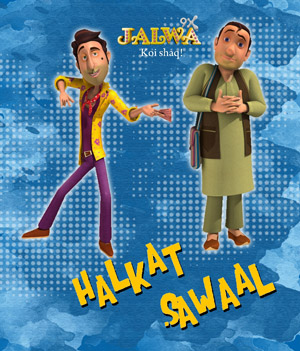
    On the programming front, Mr Amar Tidke, Head – Programming and Sr VP, 9x Media said; “With 9x Jalwa, viewers will get the best of Bollywood music, maximum nostalgia and humour.” Some of the shows on 9X Jalwa will include HalkatSawal, Kassette Kahaniyan and Bolly Brands. The company has signed on Brand Harvest as its creative agency. The packing aspect of the channel has been done by Point Break Media.


    The on-going marketing campaign comprises of on-air spots on group channels and a digital plan which includes social media initiatives.


    9x Jalwa is the group’s fourth offering after 9xm, Punjabi music channel 9xm Tashan and Marathi music channel 9x Jhakaas. It will be interesting to watch how the channel progresses and how the market responds.


  • Amagi announces operations in 35 cities

    By A Correspondent


    Amagi Media Labs, the pioneer and leader in smart advertising on television, has announced its recent entry into tier-1 and tier-2 cities across the country with more than 400 small and medium businesses using Amagi platform for local TV advertising.


    Since the launch of Amagi platform nationally last year, hundreds of retail and regional advertisers across categories – education, jewellry, apparel, real estate, FMCG, white goods and auto dealerships have flocked to the platform to advertise on premium national TV channels.


    Amagi’s co-founder KA Srinivasan said: “Though every business dreams of being on national television, very few could afford it earlier. Through Amagi’s Smart Advertising TV platform, small and medium businesses have now been able to advertise on premium national TV channels at ultra low rates – targeting specific cities or regions.”


    Amagi offers smart advertising on TV in over 35 cities, including metros, tier-1 and tier-2 cities. Amagi has partnerships with 15 satellite TV channels, including leading news, music, lifestyle, movie and regional entertainment channels as well as more than 50 cable MSOs acrossIndia. Amagi platform is ideally suited for regional brands that want to reach their target audience without paying for wasted coverage.


    Hundreds of advertisers acrossIndiahave reaped strong benefits by using Amagi platform. SS Bhamra, Chairman, JLPL said: “I have used Amagi Smart Advertising platform to build my brand in Punjab on national TV channels at a very low cost – my campaign using Amagi Media has delivered overwhelming response from our customers and has helped position JLPL as the developer of choice in Punjab”


    Saumil Pandya, Vice President, MAS Financial Services Ltd, Ahmedabad said: “Amagi’s Smart TV Advertising platform is a boon for regional brands. I can now get the best of both worlds – national TV and local rates. Coupled with Amagi’s creative services, this platform has helped me get both branding and response at a reasonable budget”


  • Tamil KBC begins on Feb 27

    By A Correspondent


    A game show that has been played across 116 countries in 83 languages in the past 13 years, the ‘Who Wants to be a Millionaire?’ format is being brought to Tamil audiences by Vijay TV and Big Synergy, in the form of ‘Sunfeast presents Neengalam Vellalam Oru Kodi powered by Cadbury Dairy Milk’ which hits the small screen on February 27, airing Monday-Thursday at 8 pm.


    The show “Neengalam Vellalam Oru Kodi” on Vijay TV will be hosted by actor Suriya, and promises a whopping amount of Rs 1 crore to be won; an amount that can change a common man’s life forever.


    Actor Suriya says, “From the moment I walked onto the sets of ‘Who wants to be a millionaire’ I knew that this was more than a mere game show.  In the short span that I have spent on this iconic brand, I can assure you that this show is not only about money but about people, their lives, the relevance of money and different perceptions of it across varied strata of our society.  I thank Vijay TV for having me host this and go through a whole new experience.  We have done our best and now we wait , like any other big movie release, hoping the audience loves the show as much as we joyfully lived every minute of it.”


  • Tamil KBC ropes in both national and local advertisers

    By A Correspondent


    Dubbed as the biggest property of the Tamil television industry, Neengalam Vellalam Oru Kodi, or Kaun Banega Crorepati in its Tamil avatar, has closed deal with both leading national and local players who will be featured on the show. Just like KBC 5 which saw several brands riding on its success, its Tamil counterpart too has been successful in roping in brands on the show. While the show is being presented by Sunfeast, it is powered by Cadbury Dairy Milk and associate sponsors include 7UP, Tata Docomo, Nano 2012, Muthoot Fincorp, UniverCell (retail), Nathella Jewellery (retail), Aachi Masala (retail) and Arun Excello (retail). In total 10 brands are already on the show and the few that are left on the inventory are expected to close by the time the show goes on air on February 27.


    K Sriram, General Manager, Vijay TV said, “There has been brilliant response to the show as advertisers see value in this property and have seen its success from other parts of the world. On KBC Tamil one can see a good mix of national advertisers along with local retail players. We have ensured exclusivity in terms of category for our advertisers, hence giving them maximum visibility without conflict. There is a tremendous buzz around the show which has been aptly created with a 360-degree marketing campaign with some unique use of media.”

    It is learnt that around 200 OOH options have been engaged for the show. R Balachandran, Senior VP, Vijay TV, shared details: “We have used a combination of media including bus shelters, bus backs, hoardings, mobile hoardings, shared auto, cinema posters among others. The innovative bit is our use of shared autos that have become quite popular in Chennai and this is probably the first time this medium is used, especially because these autos are used by the middle and lower middle class who form a huge part of our TG. Also we have used an entire local train with KBC branding.”

    Besides there is an attempt to create a larger than life image for KBC with false jacket, full page advertising and being present on digital platform including Facebook, YouTube and other prominent websites. The Hindu and Dinathanthi have been used in print. Also there are spots running on Vijay TV to engage viewers. Radio spots are used too. Not to forget that host Suriya has pulled all stops to give his full attention to the show and be more than just its host.

    In all the marketing budget for the show would be around Rs 8 crore, and with all the efforts, Vijay TV is confident that this will be a profitable venture right from the word go though Mr Sriram was unwilling to quantify how much this show would contribute in their growth. On the back of this show, three new fictions are planned which will be launched in March, April and May respectively.

    “Most importantly KBC Tamil has been a learning experience in how to create a sustainable campaign which was started in December and will continue till the show is on,” concluded Mr Sriram.

    The show will be aired Monday-Thursday at 8 pm.

    Also read:

    Star’s Vijay TV hopes to win big with Tamil KBC, nets superstar Suriya as host:

    http://www.mxmindia.com/2011/12/vijay-tv-banks-on-kbc-for-growth/

  • INMA in LA to host digital revenue models and transformation strategies

    By A Correspondent


    INMA World Congress will hold a two-day conference on May 6-8 in Los Angeles on digital revenue models and transformation strategies. Earl J Wilkinson, Executive Director and CEO INMA said, “We have a fantastic program coming together for the INMA World which will be pushing our industry to identify new growth paths and revenue models under the theme “New Oxygen, New Growth. This will be a conference of aspiration and strategy, and I encourage participation in a program that will transcend national borders and media boundaries.”


    Some of the speakers at the conference focusing on digital revenue models and transformation strategies include Digital Revenue Models of the Future by Michael Lamb, Principal, McKinsey & Company. As news publishers aim to price content and get consumers to pay for digital access, McKinsey & Company has developed a four-point look at what media companies should be prioritising in the next five years. They include consumer-paid content, next-generation premium display advertising, how to build lead-generation networks, and video. Learn about the best practices across media companies and the strategies behind these best practices.


    Christian Unger, CEO, Ringier AG will talk on Digitisation, Diversification, and Entertainment. Ringier has a 180-year-old history of innovation. Recent years were all about the transformation from a traditional (print) publishing company to a digital and diversified media and entertainment house. This presentation will outline the course Ringier decided to take and experiences made on this journey. Ringier is a Switzerland-based media company with newspapers, magazines, and more in eight European countries as well as China and Vietnam.


    The Anatomy of Transformation will be delivered by Clark Gilbert, President and CEO, Deseret News Publishing Company. The Internet is forcing choices. If made definitively, these focusing decisions can lead to new growth and successful transformation. Most newspapers are unwilling to make these tough choices: inching their way down in print costs, still trying to cover every type of story, and trying to do both print and digital in the same organisation. The Deseret News has had unprecedented growth in both print and online areas by focusing its editorial emphasis on stories that are distinct to its voice for faith and family. This has enabled the company to double print circulation, launch a national Sunday, and create a separate digital division – leading to double-digit audience growth and three straight years of 50%+ online revenue growth. This session will focus on the organisation, financial, and content implications of a digital-first strategy.


    The early registration deadline is Friday, March 9.