Category: MEDIA

  • Shaadi.com highlights personalized matchmaking offering through new TVC

    By A Correspondent


    Shaadi.com has launched a new TVC for Select Shaadi – the personalised matchmaking service. Based on the premise that in today’s world it is not easy to find one’s life partner, the TVC is directed by Vikas Bahl of ‘Queen’ movie fame. The creative agency is JWT and media agency is Havas Media India.


    The Select Shaadi TVC highlights the difference in perspective between two generations. The father is confused when his daughter says she ‘Likes’ the boy but does not ‘Like-Like’ him and says he must be a little like minded. The earlier week she explained that ‘Opposites Attract’. Dad is quite perplexed. And it’s not a smooth experience for either.


    Celebrating the success of over 10,000 matches, this TVC is built around the concept of personalised matchmaking and assistance from a dedicated advisor with the objective of changing the experience and understanding and helping young people find like-minded life partners.


    This service entails the member to have an expert Select Advisor who partners with them during their matchmaking journey. The Select Advisor amalgamates technology and experience to understand member requirements and help them with curated profiles periodically. Based on the members confirmation, the advisor connects with prospects and initiates introductions.


    Premanshu Singh, AVP & Head-Emerging Business, Shaadi.com said, “We are elated to launch Select Shaadi and look forward to helping each and every single person find his/her special someone. Technology combined with experience and a little human touch is the secret ingredient, which makes Select Shaadi the most successful personalised matchmaking service in India.”


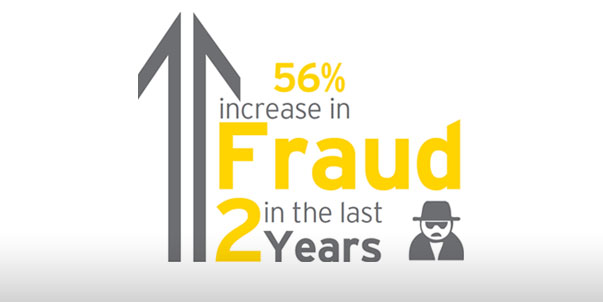
  • Fraud Bribery & Corruption in India’s M&E industry


    India’s Entertainment & Media industry is beset with several problems today. Furthermore, slowing down of its economy has significantly affected the trajectory of its revenue graph. Addressing the need for ethical business conduct and how organizations deal with fraudrelated lapses is of paramount importance.


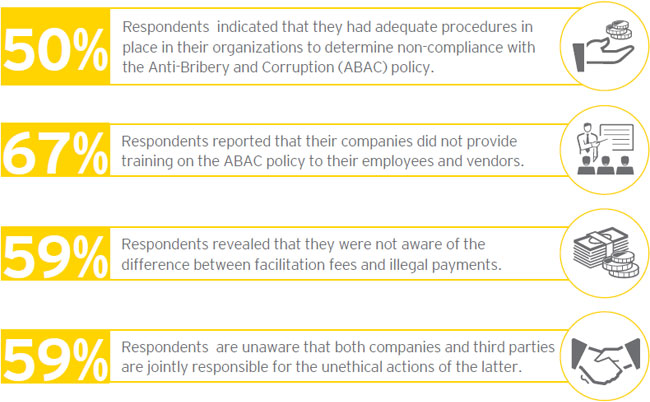
    EY conducted an online survey to provide relevant information on prevalent fraud, bribery and corruption trends in the country. It received pertinent feedback from more than 45 respondents from the M&E industry.


    Respondents represented a mix of Indian enterprises with domestic operations, as well as Indian and foreign multinationals. They were spread across different functional areas to enable us to gauge perspectives across the industry. Presenting the Executive Summary of the Report.


    Our survey provides a deep insight into the current corporate fraud and corruption scenario in India’s M&E industry. The feedback we received on current business risks is candid and revealing, particularly in today’s fastgrowing and dynamic environment.


    Despite the risk, companies are still not doing enough to prevent bribery and corruption.

    From responses to our survey, it seems that mixed messages are being communicated by management
    teams, with the overall tone often being diluted due to lack of widespread training.


    Knowing who you are dealing with: effective third-party due diligence and compliance audits

    There is a need for increased transparency in the dealings of enterprises by their including and implementing their audit-related rights over third parties.

    Furthermore, there is an urgent need for entities to implement background checks and due
    diligence procedures due to the increasing risk of payouts being made to non-existent vendors
    and service providers or employees with shady backgrounds.


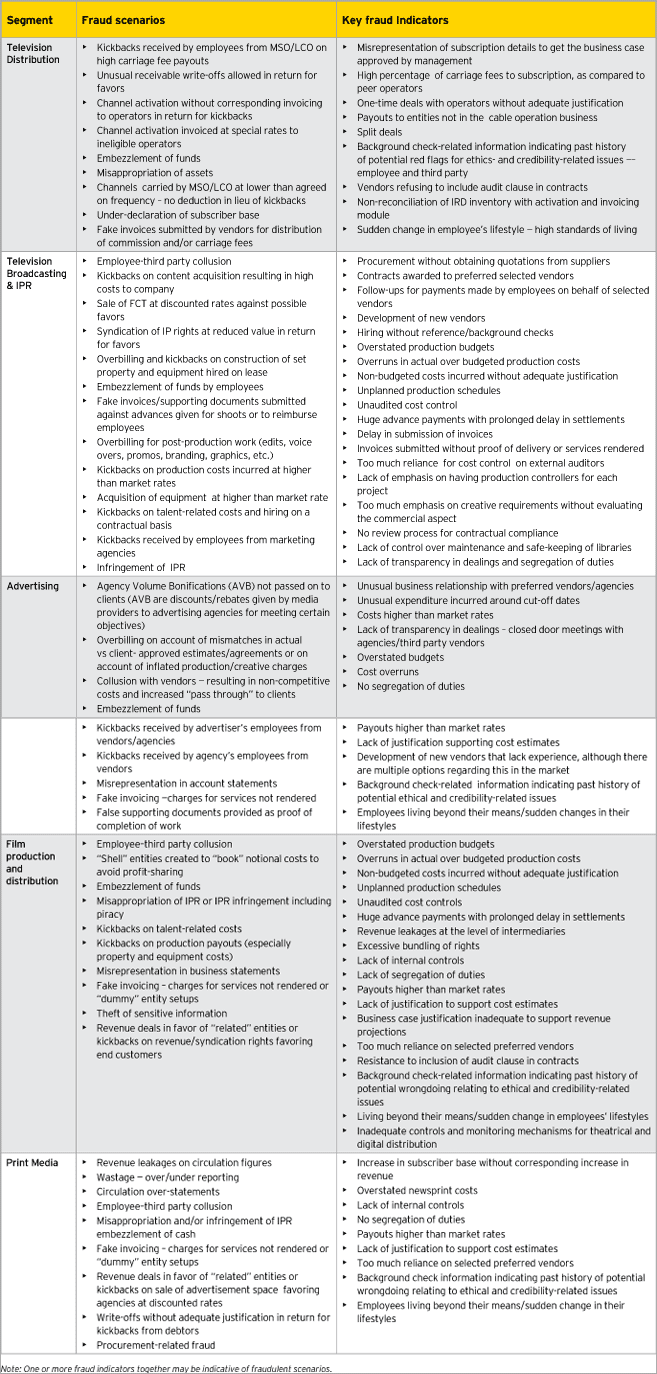
    Key fraud scenarios in M&E industry

  • What Ticks for Indian Consumers/ Children – Amin Lakhani and Sanjay Mehta

    Continuing with our extracts from the second edition of the MxMIndia Annual, we present contributions by Amin Lakhani and Sanjay Mehta


    Not a child’s play


    By Amin Lakhani


    While much advertising is aimed at a broad spectrum of children, it should be recognized that there are wide differences in cognitive and emotional development between younger and older children. Kids can be segmented into three distinct age-groups defined by the way they communicate with their parents and the world at large. Babies & Toddlers (0-2 years) use distinct crying patterns to indicate whether they are hungry, in pain or just need plain attention.


    Pre-schoolers (3-5 years) meanwhile begin talking and forming complex sentences, the magical words “No” & “Why” become firm part of their vocabulary and like to be involved in decision making. This gives them a sense of being a “Big Kid”. School Age kids (6-11 years) are purposeful, thinking in advance what they want and often have a plan on how to get it. At this stage they also start getting rebellious, often questioning or criticizing their parents. They do not like being treated in a manner they think is “babyish”.


    They also tailor their communication to their surroundings. In a country like India, with complex regional and socio-economic diversities; conversations that marketers want to have with these segments often become tricky. While children strongly influence brand choice for many high price family purchases, a one-target marketing strategy may no longer be enough. Consider one strategy that appeals to children, another that appeals to children and their parents, and a third that focuses just on adults.


    The truth about kids and social media


    By Sanjay Mehta


    Everyone seems to be getting on to social media – young men and women, middle-aged persons, senior citizens, teenagers…yes, just about everyone.


    But what about kids? Would one consider them to be active on social media? From a brand’s point of view, is the kids’ market still elusive, where social media is concerned? Or are there opportunities that exist for brands? Let’s try and understand this intersection of kids and social media! There are four defining factors at play here:


    1. The device: Social Media is no more accessed only from desktop computers. We are seeing enough statistics to show how there is increasing usage of social media, from mobile devices. While this phenomenon is strongly validated for on-the-move adults, how it impacts kids, is by way of the tablet device! The iPad, for example.


    It is a fact that kids take to the iPad very easily, and seem to figure out the controls and the mechanisms, including the swipes and the pinches and what not. And that marks the beginning for them to access for example, content on YouTube.


    Children pay more attention to adverts than adults, particularly when they include jingles, cartoons, humour, and elements borrowed from popular culture. This generation is internet-savvy, and can appreciate interactive campaigns. Kids hate to be sold to, but love to be respected. They want to be listened to, heard and understood. Spend time with them, listen to them talk, discover how they dream…


    This is critical given that a significant chunk of these children will be digital natives. While many classic marketing approaches will still apply, interactive communication means that future campaigns are likely to run in real time. Flexibility to change direction, media, tools and message will be key. Teams of marketers will need to operate 24/7, constantly monitoring their marketplace.


    So if it’s a Chhota Bheem video that appeals to the kid, parents are comfortable to set it up for the kid on the iPad, and let him be engaged on it. What happens next? There would be advertising placed within the video content there, and which also the kid sees, and gets attracted to. It would not be a surprise if the kid starts demanding the particular candy or the specific toy that might have been featured in that video!


    2. The content: We must understand that social media is not just about engaging on Facebook or tweeting or blogging. If those were the cases, then perhaps the kids are a certain distance away from participating here. A particular behavior demography on social media is also called being a ‘consumer’ - a consumer of content. And they too count, who consume such social media content, and are in turn, influenced by it.


    This is exactly where kids come in. There are many content producers that are delivering exciting content, both educational and entertaining, for kids, and by consuming such content, there is participation from the kids, in this space.


    3. The parent as a conduit to the kid: When it comes to products and services for kids, it is not necessarily the kids who are looking for it, finding it, interacting around it, engaging around it, etc. There are a lot of parents who lean on to this medium, in order to become well, ‘better parents’.


    And most certainly, via the parents, there is large- scale influence of the media, on to the kids. In terms of choices that are made, finally, for the kids! It is clear then, that kids are also getting increasingly ensnared into the world of social media, and brands would want to keep this in mind, as they plan their strategies.


    Tomorrow: Wednesday, September 17:  Family – Dr MG Parmeswaran and Anuj Poddar


  • Second edition of Zee Leadership Series announced

    By A Correspondent


    ZEE Entertainment Enterprises Limited has announced the second edition of its Intellectual Property - ‘ZEE Leadership Series’ which will be held on 19thSeptember, 2014 at Hotel Sahara Star in Mumbai. The event will witness attendance from over 400 CXOs heading India’s top companies.


    Roland Landers, Head – Corporate Brand, ZEE Entertainment Enterprises Limited (ZEEL) said, “ZEE Corporate Brand has not just formed a family of millions of loyal viewers, but has also enriched the lives of its internal and external stakeholders. ZEE considers each one of these stakeholders as family and aims at making the entire World a part of this family. Inspired with this thought, ZEE has incorporated its brand positioning of “Vasudhaiva Kutumbakam – The World is my Family”.”


    This year, the two renowned keynote speakers for the ZEE Leadership Series are Alan Krueger and Divya Narendra. Alan Krueger is one of the most-respected and thoughtful economists. He served as Chairman of President Obama’s Council of Economic Advisers (CEA) and a member of his Cabinet – roles that recruit from the upper echelon of the nation’s best and brightest. From 1994-1995, he also served as the Chief Economist at the Department of Labor in the US Government. In his session, Krueger will share his insights on world economy with relation to corporate India’s contribution, and will also touch upon the key areas of improvement.


    In the other session, Divya Narendra, an American businessman, will share his views on the innovation and creativity expected in the current digital era. Narendra is the CEO and co-founder of SumZero along with his Harvard classmate Aalap Mahadevia. He also co-founded HarvardConnection (later renamed ConnectU) with Harvard University classmates Cameron Winklevoss and Tyler Winklevoss.


    Since its inception in 1992, ZEE Corporate Brand has carved a special place in the hearts of over 730 million viewers, achieving presence in over 169 countries. ZEE’s pioneering vision has set its position, starkly different from the rest, with numerous industry firsts to its credit. ZEE’s expertise of offering relevant entertainment to its viewers, has led to consistent growth, making it a clear leader in the television industry space. The journey of over two decades has been replete with many prestigious awards, and a peak rank in the media & entertainment sector.


    ZEE Leadership Series 2014 is powered by Chintels. The other event partners are Zee Business – Telecast partner, LiveMedia and Cash ur Drive – OOH Partners, dna – Print Partner, Business World – Magazine Partner and Business Standard – Business Newspaper Partner.


  • Post rebranding, ACT Fibernet undertakes massive outdoor promotion activity

    By A Correspondent


    ACT Broadband, now ACT Fibernet, the fourth largest internet service provider in the country, undertook a high decibel, three-month OOH campaign to promote the company’s new brand identity. The campaign, executed in Bangalore, Chennai and Hyderabad, is designed to introduce the new brand name to consumers, and also to project the ‘fastest’ internet service that the company offers to users.


    The campaign has been deployed on various properties available in different cities that include hoardings, metro pillars and BMTC bus panels in Bangalore. The company maintains that the objective was to make each and every household in the target cities aware of the ACT Fibernet brand through one media or the other.


    Commenting on the OOH campaign, Bala Malladi, CEO, ACT Group, said, “OOH is part of a 360 degree campaign that we are executing to announce the launch of our new brand – ACT Fibernet. The campaign has been designed keeping in mind two key objectives – to announce the brand change from ACT Broadband to ACT Fibernet and to establish the positioning of the new brand, which is “incredibly fast” internet. Lending further credibility to the brand positioning and the messaging is our newly launched portfolio of incredibly high speed plans in the range of 20 to 80 Mbps.”


    With an aim to break the clutter, the activations have been rolled out in extremely novel and unique ways. The key touch-points covered as part of the activation engage college students, working professionals at corporate parks and shoppers at malls. Another unique feature of the activations was the digital integration which amplified the participation and overall effect of the campaign multi-fold.


  • What Ticks for Indian Consumers/ Family – Dr MG Parmeswaran and Anuj Poddar

    Continuing with our extracts from the second edition of the MxMIndia Annual, we present contributions by Dr MG Parmeswaran and Anuj Poddar


    Realisation among consumers would continue to grow


    By Dr. M G Parameswaran


    The definition of family in India is changing and it would continue to change. Single biggest change is that women now have a more forceful presence in the family and they are becoming increasingly articulate. If one looks at broad numbers, percentage of working women in urban India in SEC A, B might not have dramatically increased but the role that they play in the family has changed dramatically. From being housewives, they have now become home managers. They handle a lot of finances and many other things.


    It can, to a large extent be attributed to the fact that women are getting better educated. As a large percentage of women in SEC A, B, C become graduates, they tend to have a bigger voice in how the family is going to be run, what stream of education the child should follow and so on.


    As for nuclear families, we always had them. If we look at our cultural history, the eldest son tended to stay in the house, while the younger ones moved out. The trend is far more obvious now, to the extent that number of families with three generations staying together seems to be coming down. Interestingly, what one also notices is that while the son, his wife and children are moving into a new house, they tend to stay within a kilometre or so of the parents house.


    Regional has to be more contemporary


    By Anuj Poddar


    adly, regional entertainment is falling S into the trap of the same TRP battle we are seeing in the Hindi GEC space. There is too much of focus on GRPs for my liking. The focus needs to be more on innovating, on creativity, and while you do that – it’s about being relevant and connected to the regional audience. The biggest USP of regional is that it is able to connect with its audience far better than Hindi.


    Culturally and socially, it is so much closer to its audience than Hindi. I think Hindi is the lowest common denominator as far as content is concerned because it appeals to so many different people. It is more mass, it is national in a way that everybody watches it. But regional isn’t mass. It isn’t made for everybody. It is made for a certain audience, therefore, the focus is that much better.


    You know your audience so much better as against a mass audience that you cater to in Hindi entertainment. That allows regional to do things that national or Hindi television can never think of. We have seen a lot of regional content being picked by Hindi GECs. But, we haven’t seen that happening – from Hindi to regional. And I do not think it will happen as a big trend in the future.


    Rural vs. Urban

    In rural India, one needs to look at R1, R2 differently from R3, R4. R1, R2 which is the upper 20 per cent of the rural society is quite similar to urban society. Women are educated and they want to educate their children. They use modern gadgets like DVD players, mobile phones etc. But if you go to R3, R4, the lower part of the rural society, which is probably 70 per cent of rural India, the woman is still in a ghunghat and lives in a controlled and suppressed environment, which might take some more time to change.


    In rural India, there are still some attitudinal differences in terms of how a girl child should be treated vis-à-vis how a boy child should be treated, what is the right profession for a girl, what kind of education she should have etc.


    One thing that integrates all the segments of society whether in urban and rural India is intense belief in spirituality and religion.


    India as a collective or an individualistic society

    Hofstede had done a lot of work on individualism, collectivism and power distance. He had surmised that societies like the Indian and Chinese ones are a lot more collectivist in approach as compared to Europe, which is far more individualistic.


    In my view, in one or two generations we would not move from being a collective society to an individualistic society. In India, even today, when one goes for interviews, questions about where one hails from and father’s profession etc are quite common. While in the US, questions about one’s family are never asked in an interview. These things are deeply ingrained in our psyche and they would not change in a hurry.


    Purchase decisions

    Teenagers have always been more individualistic, and it is not only about purchase decisions. However, as far as big purchase decisions are concerned like which car or TV to buy, everyone in the family gets involved. In fact, when it comes to technology products, it is the younger individuals in the family that have a point of view. For instance, when buying a laptop for the home or upgrading a mobile phone, the teenager’s opinion is sought. A fair amount of collective decision making happens.


    Evolution of the Indian consumer

    The Indian consumer has swung from one end of the choice behaviour to the other. Twenty years ago, there was a very limited choice of products – probably one or two brand of cars, two-wheelers and television sets. Today the choice is dramatic, be it cars, two wheelers, music systems, mobile phones, readymade garments or any other product category. Therefore, in many categories consumers behave like a child in the candy store. They want to sample almost everything, and also get swayed by the options available.


    Today, there is a fair amount of realisation among consumers that if it is a foreign brand it does not necessarily mean it is better. This realisation would continue to grow. Also, the consumers are becoming far more balanced in their decision making and do not want to buy every new product in the market. Good thing is that they ask a number of questions before buying a product.


    The fastest changing consumer group

    Young women in the age group of 18-19 to 25, in my view, is the most dramatically changing demographic in this country. As they are continuously evolving, they are the most difficult to reach as well. To communicate with them, to establish a dialogue with them is quite a challenge. Unlike 25 to 45 year old women who can be largely reached through television, this particular target group is far more multimedia oriented. Whether it is digital, TV, print, radio – there is a huge gamut of media that they consume.


    Changing consumer expectations

    Indian consumers are becoming a lot more knowledgeable and demanding. They are willing to pay more as long as marketers are willing to offer better quality and service. If marketers just want to charge more and offer poor quality and service, they are in trouble. Indian consumers are very value conscious, so marketers need to balance value with service and quality. Some marketers and brands hit the sweet spot and attain dramatic results, while some others tend to fail.


    Are marketers future-ready?

    Consumers are changing at a faster pace than marketers overall. Marketers tend to underestimate consumer. They say the consumer will not pay five rupees for a biscuit, or two rupees for a candy, but maybe the consumer will. Marketers tend to underestimate the limits to which they can push the consumer to buy. At the same time, there is issue of realistically balancing what marketers can offer to the consumers.


    Social media is another front where marketers need to keep pace with consumers, and not everyone is doing so. Consumers, especially of premium product categories, post things on social media and create a lot of negative word of mouth. Every company should track social media buzz – it is free consumer feedback, free market research.


    Companies need to understand what consumers are saying about their brand, about their competitors. Consumer is evolving in many ways. While some marketers will be able to keep pace with the evolving consumer, some will not be able to do so. They will probably continue to see the consumer through yesterday’s eyes. 21 – (As told to Ritu Midha)


    That’s where I believe regional entertainment has an edge over Hindi. For me, if regional has to evolve in the next five years, it has to be more contemporary. Just because it is regional, doesn’t mean it cannot be contemporary or modern.


    So today, sufi music is not classical old sufi music, it has evolved to some extent and has started to appeal to a lot many audience that were not fans of sufi music. So the evolution has to happen in terms of the way it is presented – more contemporary and modern which cuts across genders and demographics. As regional broadcasters, we have to look at that rather than just concentrating on ratings every week.


    Yes, budgets in regional media are lesser than the budgets in Hindi entertainment, but I don’t think it’s a big constraint. We have seen the budgets in regional entertainment increase in the past two to three years. They are not as smaller or tighter as they were three years back. And people associated with regional entertainment understand that.


    The creative talent in regional understand that they have a far better chance to succeed in regional than in Hindi entertainment where there are more pressures and expectations. Because in Hindi, you are either super-hit or flop. The scope of experimentation is minimal as stakes are higher. On the other hand, regional allows you to settle down and experiment as the stakes are relatively lower.


    Tomorrow: Thursday, September 18:  Men – Ajay Kakar and Manish Kalra


  • Sony Six bags rights to broadcast National Football League

    By A Correspondent


    SONY SIX has acquired the broadcasting rights to National Football League (NFL). The announcement follows a multiyear television partnership between the National Football League (NFL) and Multi Screen Media (MSM), making SONY SIX the NFL’s broadcast partner across the Indian Subcontinent. The partnership includes television rights to live regular season games, playoff games and most significantly to the tournament’s paramount sporting event, the Super Bowl.


    Prasana Krishnan

    On acquisition of the sport, Prasana Krishnan, Business Head, SONY SIX said, “We are extremely thrilled and excited about this partnership, as we look to deliver on providing the audiences an opportunity to experience the best of American football. The raw nature of the sport promises audiences a combination of high speed action and thrill. This acquisition brings us a step closer in reiterating our efforts in providing quality sports content to our viewers that greatly adds value to our channel as well as to our existing comprehensive bouquet and line-up of sporting events”.


    The programming will be themed around educational vignettes, highlight shows and NFL’s trademark pre-season documentary series ‘Hard Knocks’. SONY SIX and the NFL will work collaboratively on unique initiatives that engage Indian audiences as a means to grow the fan base and increase knowledge and awareness of the NFL through media.


  • GroupM ESP executes key campaigns for SIIMA

    By A Correspondent


    GroupM ESP has executed key sponsorship deals for SIIMA 2014 including AskMe.com, Havells, RedBus.in and Chola MS. GroupM ESP has been a key enabler for clients and their brands to leverage the SIIMA sponsorship platform thereby providing end-to-end SIIMA related solutions.


    Last week, the city of Kuala Lumpur played host to the South Indian film fraternity a midst much fanfare. SIIMA (South Indian International Movie Awards), the biggest South Indian movie awards platform globally, saw the presence of prominent stars of the fraternity in full attendance.


    Vinit Karnik

    Commenting on the achievement, Vinit Karnik- National Director of Sports and Live practice, GroupM ESP says “SIIMA is one of the best awards covering all 4 states in South India delivering high impact and value to advertisers. SIIMA as a property offers compelling content in the native language for the audience to watch it on Television. We believe brands can leverage the celebrity and entertainment appeal of the property by seamlessly integrating in the content. Content integrations in SIIMA can help brands break the clutter this festive and effectively communicate their proposition.”


  • The Technology Imperative In Marketing


    Media investment conglomerate GroupM released the GroupM India Digital Playbook in an attempt to guide brand advertisers on the fast evolving digital media space in India.

    To help brands in this endeavour, GroupM has got some of the best digital minds in the country to come up with 7 actionable opportunities in the coming year – like mobility, real-time content and media, digital and experiential platforms. The playbook further details several milestones – including creating a matrix of outcomes and drafting a mobile first view- that brands should aspire to achieve this year to capitalize on these opportunities. The playbook recommends that brand advertisers adopt a holistic insights and data driven approach with integrated marketing technology framework as the key enabler.

    We publish here with permission one of the chapters from the book –  titled The Technology Imperative In Marketing (the book may be downloaded at http://indiadigitalplaybook.com/IndiaDigitalPlaybook2014.pdf) and bring you an interview Tushar Vyas, Managing Partner – GroupM Interaction South Asia


    Marketing was perhaps the last discipline to get impacted by technology. While business functions such as finance, accounting, manufacturing, and even human resources adopted technology, marketing remained as the ‘last man standing.’ Technology has now become a critical element in marketing, so much so that large organisations now have a designated role of ‘Chief Marketing Technologist.’


    Jaldi 5 Q&A with Tushar Vyas: More and more marketers will take a hard look at media investments from the lens of outcome and not output

     

    The Group M India Digital Playbook aims at providing a blueprint to help guide marketers through the twists and turns that await us, says Tushar Vyas, Managing Partner Interaction South Asia. An exclusive interview with MxMIndia.com on the release of the GroupM India Digital Playbook 2014-15


    01. Despite the mobile turning ubiquitous and a fairly number of people embracing digital in the way they conduct their professional and personal lives, the adspends on Digital is still in single digits. What would you attribute the reasons for this?

    Digital is the highest growth medium in media mix currently – almost 3x the AdEx growth. In many categories like BFSI and auto the number is significantly high. This is an indication that we are reaching a tipping point. The complexity of the digital ecosystem and still evolving KPIs/Benchmarks are current challenges. Through the Playbook we are trying to address these.


    02. While almost all media and creative agencies have embraced digital either organically or inorganically, marketer who otherwise spend loads internationally are still content with the TVCs on TV or even the traditional print advertising. Comments?

    Today, the discussion on digital has moved away from “Why digital ?”.  You rarely hear this question. However, in many cases digital is still on the side of the plate and treated as an add-on. Brands need to start looking at an integrated approach towards media and define the role of digital. Digital medium scores pretty well on efficiency as well as effectiveness parameters. We need to continue the education process and build empirical data as well, to support the claim for higher digital media mix.


    03. While the number of avenues of advertising is limited on TV and print or outdoor or radio, in digital there are many – the good ol’ banners, to search, to social, to  mobile? Do you think the multitude of opportunities could have taken away from the focus on hte  platform?

    Multiple mediums and formats are converging into Internet and that’s making the process complex.  Again, it’s important to start with the objective/ expected outcome clear in your mind. Too many marketers are caught in the output driven metrics (like GRPs,Clicks) while in reality they should just be milestones in the journey. What matters is the outcome- be it consideration, affinity, sales. This year, more and more marketers will take a hard look at media investments from the lens of outcome and not output.  This will certainly lead them to invest time and money in mediums like digital where customers are engaging heavily.


    04. Your report talks of the scope for videos in India. But the connectivity speeds is still a huge problem here, right?

    India is the third largest online video market globally in spite of the constraints . That’s a reflection of the potential that exists in this market. The growth will be multifold from here on as  penetration of smartphone/ devices, content ecosystem and connectivity improves. Even today we have a sizeable active base and online platforms like youtube are already part of top 10 television channel list for most target audiences.


    05. There is a statement in the study that’s interesting: Mobile Internet will undoubtedly become the superhighway that connects rural India to the world. But given literacy levels being low in rural India, don’t you see that as a challenge?

    The web is becoming more visual (Image and Multimedia) and that’s where literacy levels may not be important. Same is the case for audio on the Internet and voice based solutions. Today a significant part of the content getting consumed is on recommendation rather then self-discovery— in a way your peer/ social group will help identify and filter content which is relevant for you in terms of common interest or cultural context. Audience will naturally gravitate towards content that is suitable for them.


    Impact of technology in marketing is at two levels. First it is an enabler in ‘story-telling.’ Essentially, that is all the technology that can deliver consumer experiences while telling a story-whether it is interactive screens or your sneakers talking to your phone. This is fuelled by consumer adoption of technology, which is faster than business adopting technology. An interesting data from a survey says “72% of 18-24-year old know how to connect a device to Wi-Fi. Only 8% know how to poach eggs.”


    Second, the adoption of marketing technologies drives efficiencies and effectiveness in the marketing function. As of now there are over 1,000 known companies providing software for marketers across 43 categories and 6 classes. These categories are as wide ranging as e-mail marketing, display advertising, testing & optimization, asset & content management, e-commerce, search & social ads, business intelligence, CRM, and sales enablement, to name a few. A Gartner report that says in the next 2-3 years, CMOs will spend more on technology than CIOs, does not raise eyebrows anymore. While some marketers are already using some of these technologies, here are a few technologies you just cannot ignore in the coming year:



    1. Integrated Digital Marketing Platforms.

    This perhaps is the most important-adoption of unified technology platforms. As advertising becomes more technology driven, it is becoming more complex with endless choices of formats, new innovations, and rapid changes. In the process cycle of planning, activation, optimization, and reporting, the planners and campaign managers need to rely on disparate set of tools, data sources, and implementation techniques. For instance, there are up to 20 intermediaries, such as ad-servers, DSPs, exchanges, bid managers, data management platforms, and so on, between advertisers and publishers today. There are display reservation & biddable buys, exchanges, search, re-marketing, video ads, social ads, mobile, and more. There are multiple and dynamic creatives, landing pages, and different call to actions. And finally, there is the lack of a single view of campaign performance metrics. The need to adopt integrated platforms is a necessity to navigate the operational complexity as well as bring efficiency.


    Today, an integrated platform like DoubleClick by Google brings together an ad server streamlining workflow for planning, trafficking, and targeting; demand-side platform (DSP) accessing inventory with real-time bidding and creation of audience segments; creative production and workflow tool; data management platform; rule-based ad serving; and a robust reporting module. As digital marketing grows in volumes and complexity, adoption of integrated platforms is a must for marketers this year.


    2. Marketing Automation.

    Marketing automation software enables processes such as defining, scheduling, segmenting, and tracking of marketing campaigns. Customers can be scored based on multiple parameters, segmented, and addressed one-to-one with customized messaging.


    Early adopters were verticals with large customer database such as BFSI, retail, and telecom. Now with the staggering growth of data-transactional data, call centre data, social touch points, and the like, customer segmentation can be far richer. Other categories such as media, automobiles, and e-commerce are now embracing marketing automation. IBM (Unica), SAS and Oracle (Eloqua) are some of the players in this space.


    3. Content Marketing Tools.

    Content marketing has been a buzzword for some time now. Social media has accelerated the adoption of content marketing. As content marketing takes centre stage, technology is again becoming a key driver.


    Technology adoption is in the areas of content distribution platforms (tools such as Thismoment, HootSuite, and Uberflip) and content discovery (Outbrain).


    4. Consumer Intelligence.

    Consumer Intelligence is normally referred as a subset of CRM and is in relation to the existing customer base. But with the advent of social media, consumer’s collective voice is a source of consumer intelligence.


    Some marketers have started using technology for ‘social listening’ to get a better understanding of their consumers and respond with better products and services. Adoption of these tools (e.g. Radian6, Meltwater, and Explic8) will significantly rise in the coming years.


    Consumers, empowered like never before; marketers with new tricks of the trade; data, explosive and big; and questions on privacy and security-all these make marketing as interesting as ever and more challenging.


    And, technology remains the silent enabler.


    The GroupM India Digital Playbook may be accessed at http://indiadigitalplaybook.com/IndiaDigitalPlaybook2014.pdf
  • Luxe vendors reach new moneywallahs at cinemas, DTH etc

    By Vijaya Rathore


    It is unusual for a top jewellery brand, which sells super expensive items such as a Rs 50-crore necklace through auctions, to put out advertisements in cinema halls for the popcorn-munching audience. But designer Nirav Modi’s namesake jewellery label does exactly that recently.


    “Be it someone who earns Rs 5,000 or Rs 5 crore a month, everyone watches films in India. It is a great way to reach out to a larger set of potential buyers,” the designer reasons. “But what you show and where has to be chosen wisely.”


    Mr Modi is one of the numerous luxury players who have started using mass media including TV, cinema, DTH and mainstream newspapers to reach out to a larger set of audience and open new areas of growth, rather than limiting themselves to the glossy sheets of lifestyle magazines and airport billboards. A host of luxury brands across categories such as luxury clothing, jewellery, automobile, watches and cosmetics, including Jaguar, Bentley and Rado, have started advertising through cinema halls and televisions.


    The Collective, a multi-brand retail store chain that sells premium and luxury merchandise from a 100 brands in India, is contemplating tying up with DTH services providers to put out ads through the digital video recorders, while cosmetics brand Forest Essentials that markets itself as luxury ayurveda has launched television commercials.


    “It is just a thought at the moment, but would be an interesting way to target the consumer who is not aware about the brand,” said Amit Pandey, marketing head for The Collective. He is of the view that experimenting with mediums new to luxury brands was an investment for the future. “The view is that a lot of wastage happens on mass media, but with so much new money in India, there is a huge opportunity to tap the new consumers,” he said.


    CVL Srinivas

    The luxury market in India is still minuscule and so is adspend by luxury brands. Estimates suggest that in China, luxury brands contribute 10% to the media spending, while in India it is 0.5%. That seems to be changing. “Ad spends by luxury brands in India is minuscule compared to global markets,” said CVL Srinivas, South Asia CEO of media conglomerate GroupM.


    Source:The Economic Times

    Copyright © 2014, Bennett, Coleman & Co. Ltd. All Rights Reserved

    Licensed to republish


  • What Ticks for Indian Consumers/ Men – Rahul Kansal and Meenakshi Menon

    Continuing with our extracts from the second edition of the MxMIndia Annual, we present contributions by Rahul Kansal and Meenakshi Menon


    ‘Men have always been a critical segment for any newspaper’ 


    By Rahul Kansal


    The Times of India (TOI) is a newspaper that is read by all consumer segments – men, women, young adults, senior citizens and even kids/students for that matter. If I were to choose one consumer segment which has a higher affinity for the brand – that segment would be men.


    That, however, does not mean women, kids or young adults do not read the Times of India. If you look at kids as a segment, they’re always hungry for knowledge; they want to he heard, they have an opinion and their opinion is based on a lot of reading which they do at schools, colleges, even on the internet while they are home. Most kids also have access to smart-phones today, so that allows them to stay connected 24×7. So yes, kids are an important segment for a newspaper.


    Engaging men: A challenge for Indian media


    By Meenakshi Menon


    As any woman will tell you engaging men is easy. Keeping them engaged is tough. Keeping them engaged and involved is near impossible. What women know intuitively is what media has discovered much to its dismay.


    Sports and News have always been the two broad genres that delivered more males than females. But these two genres were not happy with missing out on the FMCG money! So what did they do? Look at IPL; it is less cricket and more entertainment. In a desire to get large numbers of the female audiences hooked onto cricket, content was modified. Mandira Bedi and her noodle straps became the main draw for female audiences.


    Talking about men, they’ve always been a critical segment for any newspaper. In most households, even today, men shoulder the responsibilities of the family – be it income generation, financial planning and security. We have seen a rise in the advertising (in the newspaper) coming from brands that cater to men and that is evident from the number of real estate and financial services ads in the newspaper. How do we engage with our readers on a day-to-day basis? One way of doing that is by making optimum use of media platforms. Print, yes. But also digital. I feel newspapers have a distinct advantage over television.


    That is it allows you to create the necessary buzz/impact for a product launch or a major announcement which a company intends to make to the public at large. This, we offer clients via clutter-breaking innovations. Once these innovations are out in the market, we take it online and really get the people talking about it on Twitter, Facebook, Whatsapp etc. We have done quite a lot of innovations in the past and in all the cases clients have got a terrific response.


    That’s what TOI delivers. Social media, I believe, does a far better job of building the brand’s prestige than any other medium. And as we all know, everybody is on social media today. At TOI, we try to strike a conversation with our readers across media platforms. In the next six years, I think there will be more brands that would go print plus digital as their core marketing strategy.


    If she can become a cricket commentator, I can jolly well join her was the mantra. What started out as a strategy to get the girls has in my opinion backfired because it started boring the boys! The very first IPL delivered a 25+ male audience of 23 million (average of all matches), with the 6th IPL this was 19.53 million. It could be that some men decided to stay away because sports is about guts and glory not waxed chest and manicured eyebrows! The attempt to widen the appeal of IPL and bring in female/family audiences has had some subtle but dramatic impact on male audiences.


    The kind of advertising you see on IPL has also changed dramatically. The FMCG brigade is not just present but is moving into a dominant position. You are as likely to see ads for sanitary towels as you are for condoms. Test cricket on the other hand is still a male bastion and the environment is not yet sullied with “Family/ Female” product advertising. Which is why male audiences are still engaged and involved in cricket while IPL is now family tamasha, and thus its ability to engage and involve male audiences is on the decline.


    F1 and Tennis on the other hand continue to be male dominated sporting events. These have been able to attract female audiences but in relatively smaller numbers. Globally sports has been a great way of delivering involved male audiences but in India our desperate need to be all things to all people has ended in moving the only sport that we view as a country into a family drama! If you think I am being cynical take a look at our news channels. From promoting movies to fashion houses, tete-a-tete’s with film stars and astrological forecast for the day – everything to bring in the women.


    Why is it that our media owners need to soap up every genre? When was the last time you saw a film starlet on a promo tour on BBC, CNN or Al Jazeera? Here again it has been a desire to tap into ad dollars. The appeasement policy of the media has resulted in a situation where genre/channel character is so diffused that very soon every man in this country would prefer to watch the soaps on the GEC channels. In fact the GECs with their new programming strategies are now going to grab the male audiences so women you would end up seeing a lot more men in your TV neighborhood!.


    Tomorrow: Friday, September 19:  Women – Raj Nayak and Sathyamurthy Namakkal


  • Spenta Multimedia unveils ‘The Wonder that was the Cylinder’

    By A Correspondent


    Leading custom publishing house Spenta Multimedia has launched a coffee-table book, The Wonder that was the Cylinder, a fascinating account of India’s contribution to early sound recording of 1900s. The book was launched by Shri. Prakash Javadekar, Minister of State for Information and Broadcasting (IC), Environment, Forest and Climate Change (IC) and Parliamentary Affairs, Government of India here last week. Much of the content in the book is being published for the first time in the history of India and will prove to be of inestimable value to researchers, collectors and lovers of music and Indian history around the world.


    “When the idea of The Wonder that was the Cylinder was proposed to us, our first and only thought was that this was a crucial part of our musico-cultural history, which not only requires to be preserved, but also deserves to be disseminated to all lovers of music. It is a tragedy that we do not value our tradition even when it is on the verge of disappearance and extinction. Permanent museums should be created to house these legacies. This book is our small contribution,” explained Maneck Davar, Publisher, Spenta Multimedia.


    The Wonder that was the Cylinder has been written by AN Sharma, drawing from his vast knowledge of the subject and from a very rare collection of more than 200 cylinders. He has been assisted by his daughter, talented writer and editor, Anukriti A. Sharma. Together they bring to light India’s remarkable legacy in music, theatre and film through perfectly preserved cylindrical recordings discovered through Sharma’s personal efforts over the past two decades. Currently, Sharma is an officer with the Indian Revenue Service and a serving Commissioner of Customs, Central Excise and Service Tax in Mumbai.


    It also includes a DVD of rare cylindrical recordings of legendary Indian artistes. The book is priced at INR 6000 ($100).