Category: MEDIA

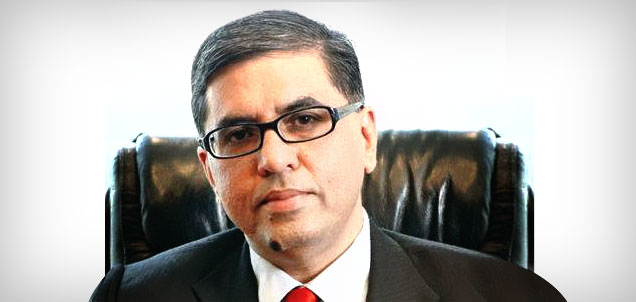
  • How Sanjiv Mehta wants HUL to Win in Many Indias


    By Kala Vijayraghavan


    A year into his tenure as CEO of Hindustan Unilever, Sanjiv Mehta has made his most significant move yet. Convinced new consumers can be found in heaps in the mosaic that is the Indian market, Mehta is giving his managers a new structure to go find it. In challenging HUL managers, he’s taking forward the process of embracing the market his predecessor Nitin Paranjpe began.


    When Sanjiv Mehta moved to Mumbai last October to take charge of Hindustan Unilever, India’s largest FMCG company, it had been 21 years since he last worked in the country. Yet, the son of an RBI accountant who grew up in Mumbai intuitively describes this melting pot of India as “home” and himself as a “Mumbaikar”. “When I reach the turn around the museum at Colaba, the years go by in a roll,” he says. “Mumbai has been my home for so many years. My mother lives in Colaba.”


    Still, for Mr Mehta, returning to India with some sense of permanence, and travelling across it, has been about renewing old attachments and finding new ones. That question of identity – just what is India, especially as a consumer – lies at the heart of the change Mr Mehta is trying to sell to his own managers, many of whom have built Hindustan Unilever into a Rs 29,233 crore company and who, at various points in time, have shrugged to say there’s little room for this giant to grow in the India they know. It’s a notion Mr Mehta is challenging.


    “None of the categories in which we operate are saturated. Not even soaps and detergents, which are highly penetrated categories,” says Mr Mehta. “If the per capita consumption in fabric conditioner was to increase to the same level as Vietnam, the market in India for fabric conditioners would be 40X larger.” Mr Mehta is laying down the marker in the inimitable way that has come to define the 55-year-old a leader: firm without being rude, purposeful rather than preachy, looking ahead and not back. The admittance that HUL could have done better on the growth front is implicit in his argument, but is subdued in its expression. The expression, instead, is all about structure.


    That structure is formally named ‘winning in many Indias’, or WIMI, and it was rolled out on September 21. In his one year at HUL, which he will complete this October 10, this is Mr Mehta’s most significant move.


    Previously, HUL made sales via a structure that broke up India into four regions. As part of WIMI, a fifth region has been added. More importantly, sales will now be flanked – and fed – by consumer insights from a parallel geographical structure that carves out India into 14 parts. The philosophy is to change HUL’s responsiveness from a place of being largely homogenous (seeing India as a few big markets) to a place that is a lot more heterogeneous (seeing India as a mosaic of markets). The idea is identify sales gaps and market-creation opportunities – of which, Mehta believes there are ample, even for a large company like HUL – and to infuse it with a growth mindset again.


    It’s the classic HUL leadership template, quips a former senior company official, and every new CEO does this. “Everyone has to justify changes,” he says, on the condition of anonymity. “Undeniably this focus will help… but HUL has been around for 70-80 years. What new findings are there that they haven’t yet discovered in India?” He believes that no what matter what HUL does, it will struggle to fend off the scatter of regional players.


    CK Ranganathan, founder-chairman of CavinKare, a South India-based competitor, is more circumspect in his assessment. “They seem to be focussing in small parts through smaller structures and sharper teams,” says Mr Ranganathan, whose company owns brands such as Nyle, Chik and Fairever. “That will help them win in various smaller markets. One of course needs to wait to see how effective that is.”


    The consolidation

    Mr Mehta could not wait. He began his homework on India between his appointment as the new HUL chief and his actual move from Dubai, where he was handling 20 emerging markets for parent Unilever as its chairman, North Africa and Middle East. “I had sent a note to my management-committee members, seeking detailed insights and information into their part of the business,” he recounts. “And when I moved here, I did the deep-dive sessions and met a large cross-section of people, from managers in my team in groups and individually to consumers for feedback about my business.”When he did move here, the Indian economy was facing economic headwinds. HUL had used price hikes and cost control to not only protect its operating margins, but even grow them. The issue was growth. For the year ended December 2013, its sales grew a lame 8%.


    Mr Mehta began incrementally: for example, renovating and innovating in several big brands, including Pond’s men range of personal care products, Tresemme hair care and Magnum ice-creams. Meanwhile, economic sentiment improved. At 13%, HUL’s revenue growth in the April to June quarter was the its highest in five quarters.


    At 21%, its operating profit growth was its highest in eight years. In the last three months, the HUL stock has gained 20%, against 9% posted by the BSE FMCG Index


    The strategy

    In the background of all this, a pilot was underway at HUL to gauge whether, and by how much, the company’s formidable sales and marketing machinery was missing. The pilot was in HUL’s South India sales branch, which was broken into two consumer clusters: TAP (Tamil Nadu and Andhra Pradesh) and KK (Karnataka and Kerala).


    From the pilot emerged instances where HUL had under-assessed market size and under-sold its products. One of those instance was of Wheel, HUL’s mass-market washing-powder brand, being absent in a small town in South India because its official did not see it as a market. The consumer insights team, however, discovered that a local player – with a product inferior to, and costlier than, Wheel – was building scale. HUL introduced Wheel, and it’s now overtaken that local brand and is number two in that market.


    It became apparent from the pilots to Mr Mehta that, as an organisation, HUL was not peeling the layers deep down in the market as well as it is capable of. Its officials were seeing India as a certain number of parts, but Mr Mehta wanted them to slice and dice it in many, many more ways – to pry open, what he describes as, “many small Indias”. That’s the big idea the 14 consumer clusters will try to service. The 14 new positions of cluster heads will be filled internally.


    “We are empowering our younger managers with challenging roles,” says Mr Mehta. The company declined to share the geographical boundaries of the clusters or the identities of the cluster heads. Mr Mehta is empowering these 14 consumer clusters to change the direction of operations. So, a cluster head can take an insight from her market – say, why Wheel should be launched there – to the sales, planning and category heads, make a case to roll it out, and reorganise planning and supply chain to that end.


    “This is very clearly the result of extreme aggression shown by smaller players across categories and across markets,” says an FMCG analyst at a foreign brokerage, not wanting to be named. “This is an initiative HUL should have taken a couple of years back as the country’s largest marketer.” There is a view that Mr Mehta, with his commercial background, is focussed on controlling costs. “That was an uninformed view,” he says. “My educational background is that of a chartered accountant, but I am running a marketing organisation. My focus, therefore, will be on brands and our people. Having said that, productivity and efficiency too are essential as they provide fuel for growth.”


    The orientation

    By essentially demanding a greater market orientation, Mr Mehta is looking to take forward the philosophical shifts in HUL his predecessor Nitin Paranjpe embarked on, with a fair degree of success. Mr Paranjpe pushed managers into the field and made them listen more to consumers. He wanted an HUL that was less complacent and more humble in the marketplace. One of his initiatives was ‘Mission Bush Fire, which required about 4,000 HUL managers to engage directly with customers. Another was ‘POPeye’, which called on HUL employees across departments to flag off product shortage in any store.


    In an internal email to employees, Mr Mehta is believed to have urged employees to continue with both. The way Mr Mehta has envisaged the consumer clusters, execution of the market plan can feed off a pet concept of Mr Paranjpe: micro-marketing, where the marketing team, once it identifies a smaller market for a brand, goes all out in activation and advertising promotion of a brand.


    Under Mehta, HUL is also doing a rethink on marketing, allocating more to non-TV spends and mobile. “About 25% of our spend will be on non-TV mediums like digital, mobile, print, outdoors and wall paintings,” he says. Amin Babwani, a former senior sales and marketing official at HUL and now an independent consultant, likes the concept of these consumer clusters.


    Asserting it is a continuity of the geographical emphasis HUL has consistently aimed for, he says: “With these clusters, focus is more accentuated and there is greater accountability since it is now enshrined in the structure.” Some observers feel a new structure is great, but the challenge posed by regional players goes deeper than that, and national players don’t understand that. “The issue is with their (HUL’s) portfolio,” says a leading brand expert on the condition of anonymity.


    “Some of their brands do not have a relevant proposition in the local markets and this is a typical MNC problem.” Vimal Pande, CEO of Vi-John Group, which owns the Vi-John brand of personal care and grooming products, says regional players are striking better partnerships in the marketplace.


    “Retailers and wholesalers are very happy with our proposition, which ensures they make reasonably good margins,” he says. “Ours is not a push-down (approach), and laying down of terms and conditions that larger players tend to do.” Mr Mehta points out that the bottom-of-the-pyramid has halved in size, drifting into HUL territory. “We want HUL to be futureready to tap into this opportunity,” says Mr Mehta. And the consumer clusters are being positioned to play a pivotal role in that architecture.


    (With inputs from Kiran Kabtta Somvanshi)


    Source:The Economic Times

    Copyright © 2014, Bennett, Coleman & Co. Ltd. All Rights Reserved

    Licensed to republish

     

  • CNBC and Burson-Marsteller reveal outcome of global survey

    By A Correspondent


    CNBC and Burson-Marsteller have unveiled the results of the CNBC/Burson-Marsteller Corporate Perception Indicator: A Global Survey from Main Street to the Executive Suite.  Exclusively for this sweeping report, research firm Penn Schoen Berland surveyed more than 25,000 individuals from the general public and more than 1,800 business executives in 25 global markets on their opinions about the roles and responsibilities of corporations in society and in contributing to the economy.


    The survey uncovered a sharp divide between the developed economies of North America and Western Europe, and emerging economies like China, Russia and Brazil, particularly in people’s disposition toward corporate influence over government, corporate stewardship of the environment, and perhaps most importantly, the role corporations play as engines of job creation and economic growth.


    According to the survey, the general public in developed economies has a much more cynical view of corporations compared to the general public in emerging economies. In developed economies, 52 per cent of the general public has a favorable view toward corporations versus 72 per cent of the general public in emerging economies. A deeper dive into those emerging economies finds that the general public and business executives are much more likely to see corporations as a source of hope, rather than fear, when compared to their developed country counterparts.


    When it comes to corporate taxation, however, the major markets are generally in agreement. Fifty-seven percent of the general population and 53 per cent of executives say corporations take advantage of tax loopholes to avoid paying their fair share rather than paying what they owe. Most of the global markets agree that it’s important for corporations to pay their “fair share” of taxes including 70 per cent of the general population and 67 per cent of business leaders in the United States saying it’s very important.


    “We discovered in our initial reporting that there is a serious dearth of data spotlighting the way corporations are perceived from all points of view,” said Nikhil Deogun, SVP & Editor in Chief, CNBC Business News. “These findings will ignite debates and discussions important to CNBC’s audience across all platforms.”


    “Six years after the economic crisis hit, this major survey makes clear that, while the reputations of corporations and business leaders are improving, there is still real work to do to dispel doubts about their impact,” said Donald A. Baer, Worldwide Chair and CEO of Burson-Marsteller. “The good news is this survey is a corporate compass that points in the direction of even deeper engagement between corporations and their leaders and the broader public about their essential roles in building the economy and improving society.”


    For more information including more in-depth results as well as exclusive videos, stories and graphics visit www.cnbc.com/corporate-survey.


  • Enormous Brands highlights USP of ShopClues through new campaign

    By A Correspondent


    ShopClues.com has launched its first-ever campaign that has been conceptualized and created by Enormous Brands. The TVC ably highlights the online retailer’s value proposition of being the ultimate destination for a wide variety of products available at wholesale rates.


    Having gained a firm foothold in the market in a short span of three years, ShopClues is counted among the top 5 marketplaces in India, and is now focusing on growth and differentiation in its offerings. The company recently unveiled its new logo to reflect its strong market position with 15 million monthly visitors, over 9 million products and more than 75,000 merchants on its platform. Its website and mobile app have been revamped to a savvier user interface and experience (UI/UX). ShopClues now aims to communicate its vision through a creative ad campaign.


    Radhika Ghai Aggarwal, Co-Founder, ShopClues.com, said, “We nurtured the brand by first establishing a formidable presence in India before unveiling our market position. In the current quarter, we are eyeing a significant milestone – the launch of our first-ever brand campaign which includes a revamp of our desktop and mobile sites, a rebranding exercise with a new logo and other assets, and a TVC supported by extensive ATL and digital initiatives. We hope to tap into new customer pools and diverse markets with our mass-media campaign, as well as further grow our merchant base.”


    The TVC has been created by Enormous Brands, led by ad-veteran Ashish Khazanchi. It shows a hawker on the street with an over-sized stack of goods on his head shouting, “Wholesale ka Rate….tu kya lega Seth”. A man from a balcony calls out to him, picks up a product from the stack and says, “Saara wholesale ka market… theek aapke ghar tak…ek cheez bhi lo toh wholesale rate pe.” As he says this, the ShopClues.com logo appears on the screen re-instating its positioning as the only e-retailer in India which delivers the widest range of offerings at wholesale rates regardless of whether a consumer orders one or many products.


    The TVC will be launched through a high-frequency build up media plan for about 4-6 weeks with a strong GEC presence, followed by music channels, Hindi news channels, movie channels and youth entertainment channels.


  • What Ticks for Indian Consumers/ Family – Apurva Purohit and Shalini Rawla

    Continuing with our extracts from the second edition of the MxMIndia Annual, we present contributions by Apurva Purohit and Shalini Rawla


    ‘FM gives voice to the aspirations of the youth’


    By Apurva Purohit


    FM radio when it first started in the country, took everyone by storm. For a generation used to the ponderous and archaic language used by AIR announcers, the songs that played without any logical flow, the sudden and abrupt changes in programming on air; FM with its peppy tone and manner, mood creating playlists and vibrancy of packaging was like a breath of fresh air.


    All of us took to it like a duck to water and hey presto, the long boring traffic jams had a pleasant companion joining us to make the journey that much less tedious! And no one accepted FM as much as the youth of India. For them, not only did it speak the lingo they were comfortable with, but more importantly it gave them a voice to air their opinions they were dying to tell the world, a place to let out all those bottled feelings and even to announce their love to that special person or share the breaking of their heart with the RJ who had become such an important part of their lives.


    It was solace for the lonely, an ‘adda’ for the gregarious and an undemanding companion for the busy housewife as she went about doing her chores. And as often a best friend does, radio became an integral part of every man and woman’s daily life, weaving itself so seamlessly into the day that today they often do not even remember that it is around! Thus to say that FM needs to attract more youth to compete with other media is incorrect.


    Oh Yes, Abhi! Really?


    By Shalini Rawla


    Millennial youth as a cohort is not such a mystery really. Born circa 1990 they have grown up in front of us. We can see how they behave. We know what makes them laugh and cry. Sometimes we lament about them as their employers. Sometimes we are happy for them as parents. But when it comes to marketing to them, we feel at sea even as experts. We kind of know they are the ‘here and now’ generation, restless and impatient for immediate results, but is that really who they are?


    The millennial’s back story

    We all know that kids these days grow older, younger. So what an adult of my generation learnt at, say, age ten, a five year old in the new generation would already be aware of. They take to computers and smart phones as naturally as fish to water. By this logic, when the millennials became first time voting adults and employees, they should have been behaving like they are already in their thirties. Herein lies the dichotomy.


    The millennial youth of today may be technologically ahead of its parental generation, but they are behind them by several decades in emotional maturity. It is as if this cohort has unanimously decided to push all other traditional milestones of ‘settling down’ or taking on newer responsibilities to a decade later. So they are choosing a career late, marrying late, starting a family even later and so on.


    It continues to have the second highest time spent with it after TV and this time is only going up with the increased usage of FM through the mobile phone. Yes, its reach needs to expand and that can only come when the policy -paralyzed current government (or a new one at the center) finally allows FM to enter the hundreds of towns which still await that long delayed nod to the Phase 3 policy! For the youth, FM is not only a platform that gives voice to their desires and aspirations, it is also a commentary on what they think and do.


    It picks up the nuances of what a city feels and the local problems that plague a locality or a suburb. It celebrates the cricket that is played in the gully’s of a mohalla, the aarti that has been happening for the last 50 years in the next street and the garba that gets played at the chaar-raasta. In that sense, it is a medium that belongs to the youth of India as much as a reflection of who they are. Beyond that nothing more is required.


    They are more comfortable with technology than their parents thanks to the liberalization of our economy – a time when the millennial generation and their parents both got exposed to technology almost at the same time. The younger, more curious and flexible minds adapted to technology faster than the oldies. In fact, the two generations discovered and experienced more things together as against the previous generations where the parents were looked upon as teachers – their guiding light – a part they played beautifully. There was very little that the previous generation’s kids knew more about or learnt much before their parents.


    Experience junkies

    Our ‘millennial’ economy and technology is responsible for democratizing knowledge and breaking the traditional patriarchal and hierarchical structures. When the parents were experiencing their maiden trip abroad, so were their millennial kids.


    The millennial generation was fed on scores of such new experiences. Parents felt dutybound to give to their child ‘the best of everything new’ – something they vicariously enjoyed when the kids shared those experiences with them. And somewhere around this time, Facebook happened. Discovering and sharing became the millennial generation’s DNA and their parents forever lost their venerated top position in the family totem pole.


    The millennial’s life goals

    They want to earn money – lots of it. And they want it now. They know the end but have not figured the means to that end yet. They are celebrity struck. They want to dress up like them and wear brands they wear. Their parents indulged them so far. Now that they are working, they want to live the same lifestyle without asking their parents for money. They jump jobs for money. In that sense they are more risk taking. They do not feel they must secure one job before quitting their current job. They do not feel that many jobs in a short span would show badly on their resumes. After all, all stints tot up to a variety of experiences. A job is a means to an end of gaining another experience. A job gives them their right to stay out of home for longer hours. It is a like a date. You have to experience all kinds before you settle on the one you really, really like.


    Width of experience is more important than depth in any one subject. To them knowledge and intelligence are inter-changeable terms. That is why they consider experience more important than education. Most of them believe that it is important to get some work experience after graduation before deciding which subject to major in for further education.


    Millennial’s social quotient

    Twitter is not a medium where they can show off or see others like them. They prefer to post visuals than 140 characters of text. They want to be famous in their contact list and change their profile pictures often. The number of likes and comments they get is a measure of their popularity and how much influence they have on others. They feel power begets money and fame and hence consider these ‘likes’ as symbols of power and influence. Yet, they know their virtual power is of no use without their friends. They value relationships over individuality. Egos have very little role in a team of millennials. They like to participate as a team member than be seen as the lone performer. Give them a relevant cause, and see them rally around it. Together they can make it happen. The solo angry young man wanting to change the system has given way to a collective power that wants to change the system by being in the system. Yes, most millennials want to participate in effective governance and joining politics is not something they are dead against. It is another route to influencing others by wielding their power. So don’t be surprised if most of them have already put in their efforts voluntarily in NGOs to help the oppressed. The share generation is willing to share their time, effort and money for the socially oppressed and the physically challenged.


    Oh no! Abhi nahi

    There is no urgency to divide life into key milestones like their parents did. Today, the journey is different, where the goal is the experience not necessarily the destination. Now is for the new. Later is for things that are passe – job, accomplishments, acquisitions, marriage and parenting. Think of the future only in the future. Commitment is not the ultimate goal, experience is. If that is construed as being confused, so be it. Use confusion as a badge – a leverage to explain your delayed maturity. You live only once. So enjoy each experience. Life is not a linear journey of responsibilities but a kaleidoscope of experiences. You have not lived a full life until you have experienced everything – the good, the bad, the ugly. No need to shut old doors and open new ones. Leave all doors open – you never know when you may need to pass through them again. Don’t burn bridges with anyone as success comes only with the help of others. Networking is the corner stone for a life full of meaningful experiences.


    The beta youth

    Millennials are fascinated when they get involved with “work in progress”, living in a beta world, they’re exhilarated by the challenge to participate and create collaboratively. They’re used to curating their own content– reusing, remixing, repurposing– and they’re empowered by discovering things on their own. They change quickly and don’t let attachments hold them back because for them, it’s about living in the present with no illusion with what the future will hold.


    – The complete version of this article by Ms Shalini Rawla can be accessed at: http://www.mxmindia.com/2014/ 03/from-themxm- annual-2014-oh-yes-abhi-really.


    Tomorrow: Thursday, September 25: Men – Pranesh Misra and Anisha Motwani


  • What Ticks for Indian Consumers/ Men – Pranesh Misra and Anisha Motwani

    Continuing with our extracts from the second edition of the MxMIndia Annual, we present contributions by Pranesh Misra and Anisha Motwani


    ‘Metrosexual male is here to stay’


    By Pranesh Misra


    Traditionally, men were “hunters” who would hunt to feed their families. With this physical acumen men became the natural “warriors” during the Middle Ages until the last millennium. The need for physicality still prevailed during the 20th century – the industrial age – when men occupied a dominant share of the blue collar jobs. With the emergence of Information Age, physicality was no longer a key requirement to “hunt” in the new urban jungle.


    Women, armed with quality education and knowledge, were happy to stake their claim in this space and succeeded. This led to a blurring of gender lines, with women thinking, feeling and behaving more like men. So, how is this affecting the male role-model? Men have to adapt more “feminine” traits to survive in the new world.


    The new world is not looking for warriors but feeling, caring, thinking leaders. So, men have to start thinking, feeling and behaving more like women. This change in men is already visible when we look at them as consumers. Twenty years back, men surreptitiously started to use look-good products like skin creams and perfumes from their wives’ closets.


    But then, with the launch of brands like Fair & Handsome, they came out of the closet. Most personal product brands began to spout special ranges “For Men”. Twenty years back, the Primary Grocery Shopper would mean the housewife. Not anymore. More men each year are becoming the primary grocery shoppers of their households.


    ‘Marketers are looking at men as the hot new potential segment


    By Anisha Motwani


    If you look at India with all its disparities and regional differences, it’s very difficult to make a sweeping generalization that men have evolved. Rape, dowry, honour killing and preference for a male child – we have enough and more evidence to suggest that men haven’t moved an inch as far in the past many decades. But when you look at urban cities in parts, both small towns and metros, you see a different picture.


    Evolution by definition means, a better way to survive and adapt to the changing environment. When this changing environment involves more women working, financially independent, aspiring for all kinds of careers, I’d say that certain men have adapted faster to this than others. And those who have, are better; the rest, just bitter. Today more and more fathers are as thrilled to have a daughter, as they would be, with a son.


    There is no difference in treatment, when it comes to giving the girl child the best education, securing her future or providing her all the material comforts. The fact that many companies have begun allowing men to take paternity leaves is a telling sign of men’s involvement in the household. While a stay-at-home dad is not a reality yet, men have evolved from being only an economic provider to also an emotional one.


    They have begun to be more sensitive to the needs of their spouses and families, more so in nuclear families. While every man hasn’t turned a proud cook yet, it is heartening to see rising male interest in cooking being promoted through shows like ‘MasterChef India’. Even with the latest ‘Junior MasterChef ’ season, to see young boys actively engaged and bragging about foods and kitchen tools, is a sign of an evolving society.


    If the trends in the West are any indication, this role transition will accelerate in the future. And this could have a phenomenal impact in the way we market grocery products in future. Should we be talking only to women anymore? Metrosexual male is here to stay. He will spend money on himself for looking good and feeling great.


    No wonder the lifestyle products are all gearing up to this opportunity, as is evident in the emergence of exclusive designs for men in garments and fashion accessories. Perhaps, if David Ogilvy was writing his piece today, he would start with the catchy headline: “The consumer is not a moron; he is your husband!”


    Today, if you were to visit any hypermarket/ supermarket on a weekend, you’d discover a lot of men accompanying their spouses, kids for household shopping. So for categories like personal care or packaged food, they obviously are worth looking at. On a different note, men have made notable strides on the personal grooming front. Marketers are looking at men as the hot new potential segment to go after. Emami, which claims to have a 58 per cent share of men’s fairness cream market, is gunning for a 30 per cent increase in sales of its Fair & Handsome brand.


    Most personal care brands targeting men are innovating and spicing up products with extra features like sweat control, sun prevention, oil control and dark spot reduction. Even five years ago, who would have thought that men cared for these features? One fitness brand alone, Talwalkars, is present in 70 cities, with over 1,32,000 members. Madura Fashion and Lifestyle depends primarily on men to keep its apparel brands going.


    Marketers are looking at men as the hot new potential segment to go after. Given that men are more on the move, are as social as women, and are digitally connected, there are enough opportunities to reach and engage them – that marketers are leveraging


    Tomorrow: Friday, September 26: Women – Anita Nayyar and Vikkas Nowal


  • Bharat Ranga quits Zee after 16-year stint

    By A Correspondent


    Bharat Ranga, the Chief Content and Creative Officer (CCCO) has stepped down after a 16-year stint with ZEEL.


     

    Punit Goenka, MD & CEO, Zee Entertainment Enterprises Limited said, “Since 1998, Bharat has been an invaluable member of the ZEE family. During his career span with us, Bharat has contributed to the overall growth of the organization by leveraging new revenue opportunities, bringing about path breaking content, starting new streams of content through new channel launches and transcending the business beyond geographies; to name a few. We wish to sincerely thank him for the valuable contribution he made to the organization.”


    Speaking on his tenure at ZEE, Bharat Ranga said, “I have turned 16 in the ZEE family this year and I am confident that all the values and experiences that ZEE has imparted will stand me in good stead. I am thankful to the Chairman, Vice-Chairman and Punit who have always backed us in our pursuits to achieve organisational goals and attain personal growth. And I sincerely wish ZEE all the success in the years ahead.”


    Ranga’s last day with the organization will be 7th October, 2014. All verticals and functions at ZEE who currently report to him, will now report into the MD & CEO, Punit Goenka.


  • Anupam Dixit takes on Industry Manager role at Twitter

    By A Correspondent


    Twitter India has announced the appointment of Anupam Dixit as Twitter’s first Industry Manager in India. As Twitter’s first Industry Manager in India, Anupam is responsible for providing support for Indian advertising campaigns leveraging the company’s platform for live, public conversations, while working with industry-leading marketers to increase engagement with their customers on Twitter.


    Anupam has eight years of digital marketing experience and has had a front row seat to the evolution of the medium in India. In his last role, he was Head, Digital Marketing & eCommerce at MTS, India’s leading CDMA telecom operator, where he worked on the MTS Internet Baby campaign - which is one of the most-viewed brand commercial on YouTube among other award winning digital innovations.


    Prior to MTS, he launched Blyk - a youth mobile messaging media platform - in India; besides starting his first digital venture EveryMedia – now India’s largest digital movie marketing company.


  • GroupM, Google join hands to launch online shopping fest for Diwali

    By Pritha Mitra Dasgupta


    They are now in talks to rope in a top e-commerce company to partner the event and provide logistics support, officials of the two firms said. While GroupM will bring in the brands that will sell their products on the website, Google will help with the technology for the shopping festival that will run for three weeks starting October 1.


    CVL Srinivas

    “Grand Diwali Mela is taking offline festive experiences online,” CVL Srinivas, chief executive officer at GroupM South Asia, said. “It will allow users to window shop, browse merchandise and, in some cases, sample products as well, just like your local mela,” he added. Rajan Anandan, country head at Google India, said people can join the festival through their mobile phones. “This will be first of its kind initiative to kick off the festive season in India. Our teams are very excited about this and we are sponsoring the effort that will be accessible across all kinds of devices, including mobile phones,” he said.


    The festival site will have all kinds of categories including real estate, automobiles, consumer durables, electronics, FMCG products, music and entertainment. A number of FMCG brands will sample their new food and beverage products through the website, officials said.


    The real estate segment will provide information on new properties including layout plans and facilitate site visits. Similarly, people interested in cars and bikes can get details of different models and schedule test drives on the site. GroupM and Google are in the process of signing on brands – including those that Group M does not handle – to participate in the event. “Through this initiative we are trying to help brands graduate to the virtual world,” GroupM’s Mr Srinivas said.


    GroupM has already ideated and created an advertising campaign to promote the Grand Diwali Mela across different media platforms including TV, radio, print, internet and social media. Officials said that if the Diwali festival proves a success, than they will host similar events around other major festivals and occasions.


    Source:The Economic Times

    Copyright © 2014, Bennett, Coleman & Co. Ltd. All Rights Reserved

    Licensed to republish

  • Deal sites make hay as e-comm rises


    By Payal Ganguly & Aditi Shrivastava


    The fierce rivalry among ecommerce sites to snag new customers through massive discounts has expectedly led to burgeoning sales at couponing sites that enable users get products and services online at a steal.


    With the rise of e-commerce, deal buying and couponing sites, such as Coupon Dunia, Groupon and several others, have seen revenue rise as much as 500%, most of it attributed to the bigger players – Flipkart, Amazon India and Snapdeal.


    In a couponing website, a customer can search for a particular discount voucher and use that code to get a discount or cashback on an etailer’s website. “I see couponing as a less exploited marketing tool as of now. Going ahead, as ecommerce grows, we will see more and more success for these sites,” said Arvind Singhal, chairman of retail advisory firm Technopak.


    A majority of transactions for these portals still come from the bigger ecommerce sites like Flipkart, Amazon India, Jabong, Fashionara and MakeMyTrip, among others.


    “A lot of online shoppers start their shopping journey from these (couponing) sites, and we do get a healthy share of business from them,” said Darpan Munjal, co-founder of Fashionara.


    The couponing sites get commissions that vary across merchants and categories. For electronics, it is 2-5%. For clothing it’s between 10% and 15% or even higher. Travel sites usually pay about Rs 100-300 per flight booking. Some ecommerce partners like RedBus pay fixed amounts per transaction regardless of cart size.


    “At Myntra, we are working with several affiliate networks for more than two years, directly or indirectly. Affiliates drive about 10-15% of our overall transactions,” said Deepak Srikumar, head of digital marketing at Myntra.


    “The coupons on ecommerce site are usually directed at customer acquisition and ensure that the customer revisits the site the next time to redeem the coupons,” said Rachna Nath, leader of retail and consumer at advisory firm PwC.


    In 2012, Amazon entered in India through price-comparison and lead generation site Junglee, which it bought years earlier. Mature markets like the United States, have seen some couponing websites including Coupons.com, RetailMeNot.com, even go public in the past couple of years. Japanese ecommerce giant recently bought couponing site Ebates to enter the US market.


    The opportunity in India is also huge. Indian ecommerce market is expected to reach Rs 50,000 crore by 2016, according to Crisil. Going ahead, these sites are betting on mobile to drive its revenue. “We expect our mobile app to be a game changer,” said 30-yearold Sameer Parwani, who started CouponDunia from Boston in the United States in 2010. The company, which has now been acquired by Times Internet, is expanding its offline restaurant coupon business and expects to earn a revenue of Rs 40 crore in fiscal 2016.


    “With a higher discount range in all the online stores, people are completely involved in shopping online, mainly due to the cash on delivery and return policy features,” said KR Murle, founder of Getextrabux, a cashback, deal hunting and price comparison portal. The company, which was set up with an investment of about Rs 45 lakh, pays around 60-90% of the commission it earns to the customers as cashback.


    The tech-based companies have consciously chosen to stay away from the local-deals model. “Working with local retailers could be tricky as sometimes the deals get oversubscribed and they run out of margin,” said Swati Bhargava, cofounder of Cashkaro. “For us, online was a better way since it’s a volume game we are targeting.”


    Cashkaro said its sales have gone up 500% in one year. “While I don’t mind paying to (these couponing sites) to get new customers, if I had to pay for a repeat customer, I wouldn’t be very happy,” said Praveen Sinha, managing director of Jabong.


    The mobile-first has worked well for Mydaala. com which is one of the few surviving deal sites for local businesses. “We were one of the first to tap into analytics which helped us user-specific deals every time they logged in but presently no one seems to be working with local merchants,” said Anisha Singh, founder and CEO of Mydaala. com, which introduced couponing for all major telcos last year.


    However, local-deals space remains niche with few players venturing into it. “When we entered the market in 2011, there was a lot of competition in India and none of these sites curated the merchants who were a part of it. As a result, once the customer has a bad experience, he would never come back to the coupon or deal site,” said Ankur Warikoo, CEO of Groupon India.


    He said that Groupon has evolved to accommodate a mix of transactions keeping in mind the growing ecommerce industry. While local deals contribute to 60% of Groupon’s business, 25% comes from manufacturers who list directly with the site to sell and the remaining 15% is driven by travel deals.


    Source:The Economic Times

    Copyright © 2014, Bennett, Coleman & Co. Ltd. All Rights Reserved

    Licensed to republish


  • Rajat Sharma is new NBA President

    By A Correspondent


    Rajat Sharma

    The NBA has announced its officebearers for the year 2014-15. These include Rajat Sharma - President (Chairman & Editor-in-Chief, India TV), Ashok Venkatramani - Vice President (CEO – ABP News, MCCS (I) Pvt. Ltd.), and Anurradha Prasad - Honorary Treasurer (CMD, News24 Broadcast India Ltd.)


    The other members on the NBA Board include K.V.L. Narayan Rao, Executive Vice Chairperson NDTV Group – New Delhi Television Ltd., Ashish Bagga, Director- TV Today Network Ltd., MK Anand, Managing Director & CEO – Times Global Broadcasting Company Ltd., Bhaskar Das, CEO – Zee Media Corporation Ltd., Jagi Mangat Panda, Director, Odisha Television Ltd., and MV Shreyams Kumar, Wholetime Director, Mathrubhumi Printing & Publishing Co. Ltd.


  • Ogilvy unveils campaign for season 3 of Satyamev Jayate

    By A Correspondent


    Post two successful seasons, Satyamev Jayate is releasing the main invite campaign for Season 3 captioned, “Satyamev Jayate wapas aa raha hai…Dekhna Zaroor – Mumkin Hai”.

     

    The campaign is a promotion for the show that will begin on Sunday, October 5, 2014. It will not just highlight stories and social issues affecting India but will also discuss the best possible solutions for social welfare and well-being in an individual capacity.


    In a lighter vein, the campaign communicates that change can happen in a society. It is not just another campaign for raising awareness about the malpractices happening around us, but also aimed to recreate brand appeal and invite viewers to the show.


    Abhijit Avasthi

    Abhijit Avasthi, National Creative Director, Ogilvy India said, “Satyamev Jayate has come to stand for the possibility of positive change and is symbolic of the collective efforts of all Indians in addressing the wrongs that plague our society. This campaign brings that alive in a light and optimistic way.”


  • Shailesh Kapoor:The State Of Our Sport: Asiad, ISL & more

    By Shailesh Kapoor


    In many ways, the 1982 Asian Games (also called Asiad) in New Delhi had a major role to play in India’s television history. They marked the advent of colour broadcasting in India, and also initiated a culture of viewing live sports broadcast, a pleasure unknown to most Indians till that point of time.


    The 17th Asiad is currently underway in Incheon, Korea. But you would be excused for not knowing much about them. The Asiad event, which India once gave great importance to, has progressively lost significance over the last two decades. There is little media coverage, and virtually no viewership.


    Even the Olympics, which have gained more prominence over the last few years thanks to India’s medal count moving from a zero for many years to a record five in 2012, record scant viewership.


    Even if we look at the comfort territory, i.e., cricket, viewership has moved away from Tests and even ODIs, to the IPL. Evidently, we are becoming a country of leagues. With a high-investment property in Indian Super League (ISL) lined up, this trend would further consolidate in the coming year.


    But the shift is not from nation-vs-nation sport to sporting leagues. It is fundamentally a shift from sports to sports entertainment. Consumer research in the sports category reveals the insight that watching sport, per se, is not always an entertainment experience. Purists, who follow sports to the last detail, are a handful in number, ranging from less than 15% of the total viewer base for cricket to less than 5% for most other sports.


    For everyone else, tuning into a sports channel is primarily an entertainment-seeking activity. You are hoping to be dazzled by some high-octane action, a twist in the tale, some humour and even some song-and-dance. And yes, while you are at it, you will also like a particular team to win.


    A purist (and I am one, when it comes to sports) may scoff at the state of affairs, but in what has been a one-sport nation so far, if this is what we need to build any kind of sports awareness, then so be it.


    Where that leaves our handful of sporting heroes, who win laurels for us at International meets, is questionable. Saina Nehwal is arguably India’s greatest sportsman in the 2010-14 period. Yet, her awareness and popularity remains abysmal in mass India. Badminton is not an entertaining sport to watch, and to make matters worse, it is considered by many viewers as a fairly easy sport to play (and hence, no big deal in winning top honors in it!).


    We are the crossroads of a sporting revolution of some kind. While a section of the sports fraternity is busy developing genuine talent in boxing, badminton, shooting and the likes, a large section of viewers are happy watching sports like popcorn fare.


    Only time will decide which of these two directions will we head in. Both of them, however, are a major improvement on being a cricket-crazy one-sport nation.