Category: MEDIA

  • CyberMedia becomes Google AdSense certified partner

    By A Correspondent


    CyberMedia (India) Ltd. has recently become Google AdSense Certified Partner in India. As a certified partner of the Google AdSense Partner program, CyberMedia (India) Ltd. will help online publishers earn through targeted advertisements and optimizing their online inventory. CyberMedia will also advise potential online establishments on how to make the most out of their traffic and achieve better eCPM rates.


    Explaining the significance of the tie-up, Dhaval Gupta, Business Head, Cyber Media mentioned, “CyberMedia continues its journey as the innovation leader in media and media services, by becoming a Google Certified Partner for Adsense in India. By leveraging Google products – Adsense, Analytics, AdWords, Webmaster, among other – CyberMedia Services offers the most comprehensive ecosystem that online publishers can leverage. We will utilize these tools and expertise to help publishers analyze, optimize and monetize their online footprint.”


    The Google AdSense program is recognized as a popular advertisement placement service in the world which helps publishers to monetise their inventory by placing contextually relevant ads on their content. By signing up with CyberMedia, publishers can hope to gain the technical expertise needed to better monetize their online properties using AdSense and benefit from a host of value added services on offer.


  • Shailesh Kapoor: Bollywood embraces the Sports Drama Genre. Will TV follow?

    By Shailesh Kapoor


    MC Mary Kom’s biopic releases today. After the success of Bhaag Milkha Bhaag last year, the film, succinctly titled Mary Kom, is hot property in Bollywood trade. After all, Bhaag Milkha Bhaag was the first 100cr film that did not feature a big star in the lead. It was also the most-appreciated Hindi film in terms of audience word-of-mouth since 3 Idiots.


    In a different and yet not-so-different world, Sachin Tendulkar will be releasing his autobiography, in November. Co-authored by Boria Majumdar, the book, titled Playing It My Way, is sure to make at least some young Indians read beyond Chetan Bhagat.


    Evidently, the impact of sport on other media has increased in the last year or two. Traditionally, “sports” meant restricted live telecasts and news coverage of the same. Everything else around it was strictly ancillary. The only other place where sportspeople featured was the gossip column, when they dated a film star (at times, starlet).


    While Bollywood has found sports in its attempt to find new stories, Indian television seems to have ignored this recent development. We are not a sporting country by any means, but that does not mean that we don’t have sporting heroes. Yet, no stories on television have covered them, their lives or the drama associated with sport in general. The last attempt of any sorts was back in 2009, when Sony aired a daily called Palampur Express. The show was based on a fictional character, not a real story, and had severe story-telling concerns, none of which were about “sports” as such. It went off-air within weeks.


    In my growing up years, I remember watching the Bodyline miniseries with awe. The idea of recreating real sporting action with such authenticity was fascinating. Hollywood has also captured sporting drama in dozens of films, including the behind-the-scenes action in films like Jerry Maguire and Moneyball.


    I understand that the economics of sports channels may not allow them to invest in fiction series around sports. But isn’t sports drama a part of the wider umbrella called “general entertainment”? We dish out talent shows by the day, but there haven’t been any that search for the next potential Indian cricket team member or the next potential Saina Nehwal or Sushil Kumar.


    Sports drama can be excellent viewing for weekend audiences. It ticks most weekend boxes – it is male-skewed, it is kids-inclusive, it has a rush of adrenaline, and certainly a big scoop of inspiration.


    A big network like Star, with equal interest in both sports and general entertainment, is best aligned today to bridge this need gap. A crackling sports drama or sports reality show can open up a new area of television programming in India. Otherwise, like it took a Richard Attenborough to tell Gandhi’s story, it would take another Brit or American to tell Dhyanchand’s story on TV or celluloid.


    Bollywood has taken the first step. It’s time for television to follow and embrace the world of sport outside of live action. Anyone listening?


  • What Ticks for Indian Consumers/ Women/Sunder Hemrajani and Nikhil Madhok

    Continuing with our extracts from the second edition of the MxMIndia Annual, we present contributions by Sunder Hemrajani and Nikhil Madhok


    Strategies to target women via OOH


    By Sunder Hemrajani


    Over the next five years, working women will drive an increase in earned income globally from $12.5 trillion to $18.5 trillion. In India itself, the income of the working women has more than doubled in the last decade. This has resulted in the greater role in decision-making both at work and home. 16 per cent of India’s Ultra HNIs are women. They are also driving the growth of the smartphone market, especially in developing economies. In terms of top searched categories by women on Google in India are apparel & accessories followed by food & drink, baby care, hair care & skin care.


    Why OOH?

    Women are spending more time outdoors

    As per Kinetic’s Moving World-India research, Indians in urban cities spend an average of 9-10 hrs active time outdoor. Approx 35 per cent of women are participating in labour force in urban India. Media habits of working women are more in line with working men. They spend 2-3 hrs a day on commuting, shopping & leisure. Thus, outdoor is a natural medium of choice.


    ‘Fiction shows will continue to be the core strategy to engage Indian women’


    By Nikhil Madhok


    Before we get into analyzing the audience profile for Hindi GECs and how they will evolve or rather how channels can adapt to the changing audience profile, let us look into the notable trends of the year 2013.


    In 2013, we saw content that not only entertained but also informed and educated viewers about issues affecting the country and the public at large. This wasn’t the case a few years ago. Yes, we did have shows that raised relevant issues, but did we see significant strides being taken in addressing issues? I don’t think so. Satyamev Jayate (launched in 2012), I would say, was a show that started proactively addressing issues in the country. And from thereon we began to see the trend becoming popular in 2013.


    How do I see the GEC space evolve six years down the line? Six years down the line I see channels doing more of shows that spread awareness about issues and also contributing in terms of providing solutions. Six years down the line, I see women becoming more financially independent, taking their own decisions and raising their voices against wrongdoings.


    OOH is refreshingly different & it is considered trustworthy

    While women are heavy consumers of media, advertising fatigue is more common in women than men. Research has indicated twothirds dislike TV commercials, half of the target group changes radio stations during commercial breaks and 35 per cent find internet banners annoying. Outdoor finds favour amongst women as it is considered reliable and trustworthy.


    OOH communicates values which are key drivers of purchase among Indian women

    In India, women rate quality, price and innovation as three key drivers of brand loyalty. This can be leveraged in OOH which supports innovation to a higher degree than other media formats.


    It pays

    The stereotype of Indian women making purchase decisions solely on family needs and wants is no longer valid. The urban Indian woman is moving beyond traditional FMCG, and spending more on personal indulgences across categories like automobiles, durables, financial services & fashion/lifestyle. Almost 40 per cent like visiting malls and organized formats.


    Brand advertisers need to target women consumers at or near point of sale to capture a larger share of their wallet, which can be achieved well through OOH media.


    How to target women using OOH advertising?

    > At airports:

    :: Proportion of women travelers is increasing year on year. One of the best platforms to reach large number of high profile SEC A/A+ women under one roof – In Delhi / Mumbai airports nearly 30-40 per cent of the travelers are women.


    :: No other one medium captures so many HNI women in one place!


    :: It offers experiential formats and high dwell time. 60 per cent women say experiential marketing is more likely to lead to actual purchase. High dwell time enables women to evaluate brands more in depth.


    >> Billboards/Street furniture: As more women hit the roads for work as well as leisure, targeted campaigns at outdoor large formats are ideal to captivate their attention on the move. According to Discovery’s Curiosity.com, while women absorb more information from the brand messages, they need to see the ad several times before being convinced to try the product or service! Hence high-frequency media like bus shelters are ideal to run women relevant brand campaigns. OOH presents a more cost-effective and targeted solution to clients, as opposed to TV or Print, as these have a wider reach but suffer from high spillover and high cost. In contrast, a high degree of localization that is possible in Outdoors, ensures that women are being reached at all important touch-points for them like retail/entertainment destinations or corporate complexes.


    >> At transit: Metros are witnessing increasing footfalls. Proportion of women is growing as women perceive it to be a convenient and safe medium of transport. Hence great platform for brands to connect with young urban TG. Dedicated women’s coaches allow for exclusive targeting, and are emerging mediums for generating brand trials and sampling.


    >> Digital OOH: Digital OOH is a medium which can fully capitalize on women’s innate ability to multi-task and engage. In India, outdoor spaces like the Delhi & Mumbai airports are heralding a digital revolution, which can become playgrounds for brands to reach women innovatively. For instance, use of facial recognition techniques to identify the gender and profile of viewers can help brands nicely target their core consumer groups.


    There will be a rise in the number of working women, especially in tier 2 towns. They will become more conscious and more focused on having a successful career. That does not mean they will stop looking after their families. I think moving forward, women in India will increasingly perform dual roles – of being good professionals and also managing dayto- day household activities. Keeping this in mind, general entertainment channels will have to tweak their content strategies.


    So that’s the trend I think will become prominent in the next six years. Fiction shows will continue to be the core strategy to engage Indian women, but channels must reflect the image of the contemporary modern women in their programming. That, to me, is critical in order to remain relevant to this TG.


    Real entertainment quotient will be provided by reality formats, which tend to attract a lot of male audience. Going forward, for Hindi GECs, I see the ratio of men to women viewership continue to be around 55:45 in favour of women. From a content consumption point of view, audiences will move from the bigger screen to the smaller screen far more conveniently and their experience of consuming content on the smaller screen will improve with technology enhancements.


    Next: Monday, September 8:  Teens/ Puneet Johar and Rahul Johri


  • Jagran unveils ‘The Cultural Legacy of Lucknow’

    By A Correspondent


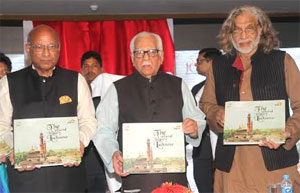
    Dainik Jagran released its Coffee Table Book titled ‘The Cultural Legacy of Lucknow’. The book was unveiled by honourable Governor of UP, Shri Ram Naik at a gala function in Lucknow last week. The launch function took place at the vintage Clark Awadh hotel of the capital and was replete with prominent bureaucrats and top Jagran Group brass, including the CMD Shri Mahendra Mohan Gupta.

     

    15th in the line of JCTBs, ‘The Cultural Legacy of Lucknow’ in the line of JCTB series, showcases exclusive pictorial details of the significant monuments, art & craft, tradition and music, which are the cultural heritage of the city. This coffee table book documents contemporary Lucknow, which is known for its cosmopolitan lifestyle, modern infrastructure, shopping and tourist destinations that embellish the city. Well researched narratives in the book illuminate the historical and contemporary perspectives that speak volumes about the understandable exclusivity of the city.


    Shri Mahendra Mohan Gupta said, “Jagran Prakashan Ltd. is publishing coffee table books for last six years. I am proud that time and again we come up with such illuminating books on different genres.”


    Editor and COO of i-Next & Project Head of Jagran Coffee Table Book – Alok Sanwal said, “Jagran Prakashan Ltd wishes to contribute to bringing alive the glory of the city of Nawabs to the world through this unique Coffee Table Book, which unfurls the unsung glory of this wonderful city. I thank Sharmishtha Sharma, author, and the entire research, editorial and marketing teams for their outstanding and extensive support throughout.”


    Priced at Rs. 1500, this 210-page book is available on Flipkart and Infibeam portal for sale.


  • Excellence in mobile marketing recognized at the Smarties APAC 2014 Awards

    By A Correspondent


    The Mobile Marketing Association unveiled the winners of the second annual Smarties APAC 2014 at a Gala in Singapore recently. A global contest that showcases the ‘best of the best’ in the industry, the Smarties Awards honour solid mobile strategies that address specific business challenges through the creative use of mobile technologies. Winners were declared in 21 categories, including two new creative categories: Best Brand Experience in Mobile Rich Media and Most Engaging Mobile Creative.


    “Today, mobile is not simply a nice-to-have or must-have. Mobile is a must-do-well for brands and their agencies. Our winners have demonstrated their ability communicate their brand’s story with mobile using creative concepts that lead to market performance,” said Rohit Dadwal, Managing Director, Mobile Marketing Association Asia Pacific.


    An analysis of the winning entries, presented at the event by research agency and Knowledge Partner, Millward Brown, found that successful brands and marketing strategies had well-defined clarity of purpose with 70 percent of winners identifying a specific objective of increasing sales. 80 percent of the winners also had a precise role for mobile using the channel’s unique strengths such as location, payments, and targeting. 86 percent of winners at the Smarties APAC 2014 Awards used multiple channels to boost the impact of their campaigns.


    Winners were selected following a rigorous process involving over 80 senior marketers and agency leaders. This year’s awards saw a 40 percent increase in the number of entries, and judges reviewed campaigns from 15 countries across Asia-Pacific before choosing winners.


    “I’d like to thank all my fellow jury members for their time and valuable insight. We selected the winners after eight hours of extensive debate, and were impressed by the results achieved by some of the campaigns,” said Jury President Ashutosh Srivastava, Chairman & CEO Asia-Pacific and Global Growth Markets, Mindshare. “We hope see a creative evolution in the industry in the years to come, as marketers become more fearless in their approach to mobile. Innovative creative work is the only way we can harness the full potential of the mobile medium.”


    The Smarties is the only global awards programme dedicated exclusively to mobile marketing. Country editions of the SmartiesAwards will also be held in India on September 11, 2014 and in Vietnam on October 30, 2014.


    The SMARTIES APAC 2014 Awards Winners:

    Award Category

    Gold

    Silver

    Bronze

    Brand Awareness Hindustan Unilever / PHD India KIA / MNET Coca-Cola Japan Company – Fanta / UM
    Unilever – Cornetto / PHD China
    Lead Generation / Direct Response / Conversion N/A Unilever – Rexona  / Mindshare Malaysia Unilever – Wall’s Ice Cream / Mindshare Malaysia
    Unilever – Zhonghua / PHD China
    Product / Service Launch Unilever – Citra / Mindshare Indonesia & InMobi Nivea / OMD Singapore & Airwave Unilever – Axe / Mindshare Indonesia & InMobi
    Promotion MondelÄ“z China / Isobar China Coca-Cola Japan Company – Fanta / UM Star India Pvt Ltd / Mindshare India
    Relationship Building/ CRM Red Cross / MRM//McCann Genki Sushi Hong Kong Limited / Cherrypicks Limited N/A
    Merries Baby Diaper / Dentsu Thailand
    Cross Media Integration KIA / MNET Unilever – Dove / Mindshare Vietnam MondelÄ“z China / Carat China
    Mobile Website N/A N/A McDonald’s Corporation / Mobext Philippines
    Messaging N/A Red Cross / MRM//McCann Adani Wilmar Limited / Neo Ogilvy India
    Location Based Coca-Cola / Japan – Georgia / Dentsu Inc. N/A Unilever – Wall’s Magnum / Mindshare Malaysia
    Innovation Hindustan Unilever / PHD India Coca-Cola Greater China / Isobar China Red Cross  / MRM//McCann
    Mobile App Coca-Cola / Japan – Georgia / Dentsu Inc. KIA / MNET Merries Baby Diaper / Dentsu Thailand
    In-App Advertising – Gaming or Other N/A N/A Procter &Gamble – Gillette / MediaCom
    Unilever – Wall’s Ice Cream / Mindshare Malaysia
    mCommerce N/A McDonald’s Corporation / Mobext Philippines PayPal / PHD & Airwave
    Best Brand Experience in Mobile Rich Media N/A Unilever – Citra / Mindshare Indonesia & InMobi Unilever – Vaseline Men / Mindshare Indonesia & Vdopia
    Most Engaging Mobile Creative Unilever – Zhonghua / PHD China Universal Sony Pictures Home Entertainment Australia / Mobile Embrace’s 4th Screen Advertising Australia Unilever – Citra / Mindshare Indonesia & InMobi
    Unilever – Vaseline Men / Mindshare Indonesia & Vdopia
    Enabling Technology Company of the Year in Mobile Mobilewalla
    Publisher/Media Company of the Year in Mobile Facebook
    Best in Show KIA “GAME ON”
    Agency of the Year in Mobile Mindshare Indonesia
    Agency Network of the Year in Mobile Mindshare Asia-Pacific
    Marketer of the Year in Mobile Unilever
  • What Ticks for Indian Consumers/ Teens – Puneet Johar and Rahul Johri

    Continuing with our extracts from the second edition of the MxMIndia Annual, we present contributions by Puneet Johar and Rahul Johri


    The Internet of everything, the genius of everyone


    By Puneet Johar


    It seems not too long back, maybe a decade I or so that we read articles prophesying that content and commerce consumption were poised to change. Connected devices and handhelds would be the future of content consumption. The world was divided into the believers, cynics and people in between.


    It did seem a bit far-fetched, especially when we were living in a world where digital content meant a SMS alert. There were people attempting to put content on handheld devices but it was clunky. We were looking towards giants like Nokia and Ericsson to change the way content is fundamentally consumed and make all the prophecies come true.


    What was not obvious was that the virtuous circle of disruption in the southern region of the San Francisco Bay Area in Northern California that was becoming bigger with each passing day would influence and change our lives forever in the way we consume content and make every prophecy come true. And, then, stretch it further to unimagined proportions.


    ‘The ability to innovate will be a crucial determinant for TV brands’


    By Rahul Johri


    Mobile phones, the world wide web, apps, live chats – the Indian youth lives in a world filled with myriad choices of entertainment. When it comes to television, the audience has also evolved in terms of information and tastes. The new breed of TV viewers seeks content dealing with information and experiences that have a direct bearing on their lives and lifestyle. Evidently, no single channel can hope to be a one-stop shop for entertainment anymore. Only those channels that have a distinct proposition will thrive in this new order, and emerge as the most-preferred destinations for viewers.


    Programming to viewers with diverse needs is a formidable task. Anticipating the trend of digitisation and demand of specialised content in the country, Discovery Networks expanded its footprint in India to eight specialised-content channels in five different languages. In addition, digitization brings in multiple benefits such as choice of multiple languages, interactive services – live pause and play, video gaming, tutorials etc offer viewers a choice to watch their favourite content at their own convenience.


    In the world of smartphones, tablets and social media, while we attribute the richly deserved transformation to legends led by Steve Jobs, we cannot forget that the momentum that has been building for the past two decades led by the Silicon Valley is much larger than the force or thoughts of any one individual. Every prophecy that is now being made including the internet of everything could become a reality because fundamentally the genius of everyone connected has been unleashed.


    If the prophecies today point to content being created and consumed everywhere where every object is a connected device then not believing it may just mean that we have lived the last two decades in denial. So I do believe it when people suggest that smartphones and tablets that we carry will be computing power that will connect and make every object a virtual or physical screen to interact with.


    I do believe when people say that today’s devices and how we consume content could seem as archaic as the mobile phones from a decade back seem today. The legendary character Morpheus in The Matrix says, ‘Have you ever had a dream, Neo, that you were so sure was real? What if you were unable to wake from that dream? How would you know the difference between the dream world and the real world?’ We are now in a world of nearly 7 billion dreams and all connected.


    All these channels have created new and distinct viewer groups. Discovery Channel pioneered factual programming in the country and continues to introduce new formats like survival, adventure, exploration and journeys into the unknown, which has helped the channel strengthen its bond with the young viewers. Aiming to reach curious minds across territories, the channel has diversified in multiple languages. The channel’s India productions like Revealed: National Defence Academy, Revealed: Rashtrapati Bhawan and Everest: Indian Army Women Expedition has offered viewers rare glimpses of their own country.


    Discovery Science is a cool and fun science channel for the enthusiasts. With ‘Question Everything’ to its core, the channel introduces novel ways of knowing and thinking about the natural and physical world we live in. Discovery Turbo is dedicated to young male audience who has passion for automobiles and mechanics.


    A pioneer in lifestyle programming, TLC is a window to the world for the consumer who is aspirational and is on a quest for finer things in life, from travel to cuisine to everything that encompasses hi-life. Catering to audiences who have a refined choice in what they watch, Discovery Networks continues to bring refreshing genres and captivating formats. In an ever-changing television environment, the ability to innovate will be a crucial determinant of value for television brands.


    Tomorrow: Tuesday, September 9:  Children – Nina Elavia Jaipuri and Deepak Jayaram


  • Havas Media wins media biz of World Kabaddi League

    By A Correspondent


    On the heels of retaining the prestigious MTS India media business, Havas Media India has been awarded the integrated media mandate for World Kabaddi League (WKL) – the first professional Kabaddi League of the world, in a multi-agency pitch. The account is estimated to be upwards of INR 30crores.





    Raman Raheja

    WKL is an initiative to uplift the level of Kabaddi by professionalizing the sport. It aims to give a chance to experienced players as well as upcoming talent from various countries to come on one platform and play to win.


    Talking on the appointment, Raman Raheja, CEO, World Kabaddi League said, “We are a young and dynamic organization looking to scale Kabaddi to new heights on a global platform. Havas Media understood this. They have scale, the thought leadership, experience, were transparent and displayed tremendous passion. We know they are the people to partner with to achieve our goals.”


    Anita Nayyar

    Commenting on the association, Anita Nayyar, CEO, Havas Media Group, India and South Asia said, “We are honoured that WKL has chosen us as their partners to further their business objectives. It has been a good year at Havas Media with strong integrated media new business wins. Our digital at core approach has paid off big dividents and impressed clients.”


    Havas Media recently won the integrated media mandate of MTS India, Yepme.com and the digital mandates for Businessworld magazine and XOLO mobile.


  • What Ticks for Indian Consumers/ Children – Nina Elavia Jaipuri and Deepak Jayaram

    Continuing with our extracts from the second edition of the MxMIndia Annual, we present contributions by Nina Elavia Jaipuri and Deepak Jayaram


    The changing face of kids entertainment


    By Nina Elavia Jaipuria


    Kids constitute nearly one-third of the total Indian population and thanks to this dynamic age group and their ever evolving entertainment needs, it is no surprise that kid focussed entertainment has multiplied and kids television is not only witnessing massive growth but also seeing new, innovative offerings.


    Kids are entering and exiting age groups at great speed and every age group comes with its own set of preferences. Hence microsegmentation of kids channels has become the order of the day. Customised and differentiated content offerings across various Target Groups (be it age, gender, geography, etc.) is what kids entertainers are catering to. For example, the Nickelodeon kids cluster consists of Nick that caters to kids seeking comedy, Sonic caters to the action and adventure loving boys, Nick Junior caters to pre-schoolers and young moms with edutainment focussed shows and Teen Nick talks to the whimsical tween/ teen girls with its cutting-edge international shows. Clearly, the one-size-fits-all formula does not work anymore!


    Creating relevant platforms will give marketers an early lead


    By Deepak Jayaram


    It is really interesting that I am writing about tweens, especially at a time when my elder daughter is moving out of this phase and the younger one is just stepping into it.


    We live in very interesting times and our tweens make them even more interesting with their energy levels, curiosity and willingness to try new things like sharing experiences, creating their own videos for the world to see and more. Tweens is really an interesting phase in life… too old for toys and too young for boys.


    On a serious note, they have immense confidence in themselves and state views in black and white as they discover them. Luckily, they are conformists and are constantly seeking information from their peers, parents, teachers, media, and are already digital nomads rapidly moving to becoming natives.


    With the wave of digitization sweeping across India, the choices that kids have at the press of a button are limitless. All the more reason for broadcasters to keep in mind that compelling story telling, endearing characters and great quality animation created along the way is what will tick with kids today. No matter how dynamic this age group is, animation still remains the favorite medium of entertainment that transports them to a parallel world of escape and fantasy.


    Few evergreen and larger than life characters such as Chhota Bheem, Ninja Hattori and Doraemon are bigger than the channels that carry them and dominate the kids category viewership. It is also very interesting to note that there is a growing preference for original Indian local content. Winning and endearing local shows like Chhota Bheem, Motu Patlu, Mighty Raju, Pakdam Pakdai and Keymon Ache are testimony to the fact that Indian animation is coming of age and so is the industry.


    Kids are early adopters of technology and to cater to the ‘Screenagers’, kids entertainers are ensuring that they are served their daily dose of entertainment at a time, place and screen convenient to them! This TG is a formidable one and with their short attention span, they will keep the marketers and broadcasters on their toes. We will need to continuously re-invent ourselves and innovate to stay relevant to this ever evolving and dynamic bunch of consumers! Jai Ho Kids!!!


    TV is a key part of life for them with the choice of programming being dominated by select channels like Disney, Nick and more of the same genre. Interestingly, viewing is more inclusive and has the family also watching these shows. The biggest change that I have been seeing is the effect of technology, its inclusion in our lives and the way we are living as nuclear families. Tablets have become a family entertainment device and the introduction to gaming to a lot of tweens. Farmville, Temple Run, Angry Birds…this list is an on-going process of discovery: attention and stickiness are however dependant on the next new fad!!!


    We know this audience takes to experimental marketing like fish to water if engaged right. Digital activation and gaming are the two opportunities that are likely to look much more interesting in coming times. In addition, some touch points are becoming interesting spaces to engage consumers. Supermarkets, malls, school contact programmes come to mind. Marketers, however, have to be clear about investing in this life stage and not sell through them.


    In nuclear families and especially ones where we have both parents working, parents are spending quality time with the tweens and making them a part of lot of decisions. The influence of tweens in purchase decisions has been increasing by the day. As a marketer, all of the above seem to offer enough opportunities.


    If a marketer chooses to engage with this phase in the consumer’s lifecycle, influences are bound to become a part of the coming stages. However, one has to be wary of not being typecast into this stage depending on the category under consideration. The marketers who create relevant platforms based on relevant insight and keep building on them will be the ones who will establish the early lead and create path-breaking case studies.


    Tomorrow: Wednesday, September 10:  Family – Tarun Katial and Anooj Kapoor


  • Goibibo completes five years

    By A Correspondent


    Goibibo.com has completed five years of its journey in India. The company is celebrating the 5th anniversary with the Goibibo management team meeting the first 50 bookers in person and honoring them with a certificate of appreciation for showing faith and confidence when Goibibo was just starting out along with a goCash gift voucher worth Rs. 10,000.


    Goibibo’s first booker is Sandeep Arya from Gurgaon who works with Gartner and the second is Richard Barraud from Delhi who is an Architect and teaches at School of Planning and Architecture.


    Besides this, on a daily basis five lucky online bookers will get Rs.1000 in goCash, five weekly bookers have a chance to win Rs.5000 in goCash on bookings made during the week and the five mega winners will win Rs.50,000 in goCash on bookings made in the 5-week period.


    As per a statement issued by the company, “Goibibo.com has had a very successful 5-year stint in the market. We have carefully nurtured the brand to help it reach its present status as the most popular travel website in India.  Our valued customers have played a very significant role in helping us reach this milestone. Through the 5-week mega celebration we want to demonstrate our gratitude and appreciation for their loyalty by rewarding them with these incredible deals and offers.”


  • Facebook rolls out more features for its video biz

    By A Correspondent


    The last few months have seen an unprecedented growth in video consumption for Facebook in India. More and more people are uploading, sharing and discovering videos on Facebook. Video views grew more than 50 per cent from May through July of this year, and since June there has been an average of more than 1 billion video views on Facebook each day.


    For marketers, digital video, particularly on mobile, is becoming more important as well. Combining sight, sound and motion, video creates experiences that are, at their best, memorable, moving and inspiring – the types of experiences that help brand marketers drive important metrics, including awareness, consideration and, ultimately, sales.


    Facebook has announced some new features to its video ads offering. After introducing videos that start playing automatically in News Feed earlier this year, FB found that people discover significantly more content with this feature. And when used in combination with the new video views objective, businesses are seeing a significant decrease in cost per view for their Facebook video ads. So in the coming weeks, FB will extend the availability of videos that play automatically to more content from more brands in the US.


    “Using videos we uploaded to Facebook during Fashion Week in February, we saw an 85X lift in view rates versus our previous Fashion Week campaign, which linked to videos from other players. This fall we will begin tapping into the new video views objective, and our ads are now eligible to automatically play in News Feed. Facebook is and will continue to be a key part of our video marketing strategy going forward,” shared Jen Daly, Senior Brand Building Manager, TRESemmé & Nexxus, Unilever


    People will also begin to see how many views a video on Facebook has received. Views will be shown on all public videos from people and Pages. This will help people discover popular videos, and help businesses quickly gather information about how their videos are performing.


  • Microsoft unveils first look of new MSN in India

    By A Correspondent


    Microsoft has unveiled a first look of the new MSN in India. Designed from the ground up for a mobile, cloud first world, the new MSN combines premium content from the world’s leading media outlets with personal productivity tools that help you do more. Built around the insight that the knowledge and information that enriches your life should be accessible regardless of where you are or what device you are using, the new experience is available on the web and will soon be available across all major device platforms, including Windows, iOS and Android.


    “We have re-written MSN from the ground up for a mobile-first, cloud first world. The new MSN brings together the world’s best media sources along with data and services to enable users to do more,” said Sanjay Trehan, Head of MSN India, Microsoft. “The new MSN focuses on the primary digital daily habits in people’s lives, helping them complete tasks on the web and across all of their devices, roaming data and personalized settings to keep users in the know wherever they are.”


    MSN is partnering with some of the world’s best and most authoritative sources, including The New York Times in the U.S., Yomiuri Shimbun and Asahi Shimbun in Japan, The Guardian and the Telegraph in the U.K., Le Figaro and Le Monde in France, and Lance and Estadão in Brazil, and many more.


    In India, Microsoft has partnered with top local content partners, including Hindustan Times, NDTV, India Today, Indian Express and Network 18.


    Spanning multiple sections including sports, news, health & fitness, money, travel and video, the new MSN provides a global perspective from thousands of publishers across the world. Information ranges from the latest stats on over 200 global sports leagues, reviews of over 1.5 million bottles of wine, to over 300,000 gorgeously photographed recipes and more. MSN’s expert editors are able to draw from the over 1,000 sources to hand-curate content for individual markets and cultures.


    “With an audience of nearly 425 million people coming to over 57 markets around the world available across the three major device platforms, the new MSN presents an enormous opportunity for publishers” said Adam Anger, General Manager for Asia Pacific, Microsoft Advertising “With over 50% of people accessing content on dedicated apps, this release is in lockstep with where usage is happening.”


    The new MSN brings actionable information and the opportunity to act directly at the point where people are actively engaging, from personal productivity tools like shopping lists, flight status and savings calculators, to integrated access to popular sites like Outlook.com, Facebook, Twitter, OneNote, OneDrive and Skype. At the top of the page, there is a personal stripe allowing you one click access to top services so you can stay on top of what’s happening in your life.


  • Online retailers Flipkart, Amazon etc to woo customers with eye-popping deals this Diwali

    By Radhika P Nair


    Online retailers, from biggies such as Flipkart and Amazon to niche players like FabFurnish and Bluestone, have lined up special catalogues, exclusive products, offers, contests and discounts to ensure a cracker of a Diwali season, with an eye on first-time shoppers.


    Fashion portal Myntra will offer more than 5,000 new products across top brands like FCUK, UCB, Elle, SuperDry, Biba, FabIndia and Antony Moratto for the first time online, while online marketplace Snapdeal.com is working with brands across categories like fashion, electronics and home products to put together a special Diwali catalogue that will be out in the next few days.


    Market leader Flipkart will put up exclusive products and offer heavy discounts while rival Amazon.in may introduce drone delivery in the country, as Diwali season is when most number of Indians try out online shopping for the first time. The four to five weeks until Diwali brings the largest sales spike for online sites.”For online retailers, you can say that the financial cycle is Diwali to Diwali,” said Saurabh Srivastava, director at advisory firm PricewaterhouseCoopers (PwC) India.


    “Every project cycle and launch that an etailer works on during the year is geared only towards Diwali.” MrSrivastava said sales jump during this season can be double the regular daily order size. Sandeep Komaravelly, senior vice president of marketing at Snapdeal, said that unlike offline, Diwali momentum does not taper off in online retail after the festival.


    “New customers who have tried online shopping for the first time during the festival season continue to do so even afterwards,” he said. No wonder then that portals big and small are going all out to woo new customers, backed by large marketing campaigns.


    “For large e-tailers the marketing budgets will be as high as 10% of overall costs,” said PwC’s Mr Srivastava. Even niche jewellery site Bluestone has set aside Rs 6 crore for advertisement and marketing for the festive season. It will launch a consultancy feature for Diwali that will suggest jewellery items based on the user’s face, hair style and likes.


    The typical Diwali shopping season starts from third week of September and goes on until Bhai Dooj, two days after Diwali. The online retail industry has grown rapidly in the past few years. While the overall industry was at $1 billion (Rs 6,000 crore) a couple of years ago, just the top three marketplaces in the country-Flipkart, Snapdeal and Amazon-are estimated to cross $4 billion (Rs 24,000 crore) in sales this fiscal.


    Ganesh Subramanian, chief operating officer at Bengaluru-based Myntra, which was acquired by Flipkart earlier this year, said it’s setting up a special Diwali store on its site. The company has started a new warehouse in Gurgaon in time for the peak shopping period.


    “We expect a lot of interest from tier-II and III cities and towns thanks to mobile. At least one out of two orders will be through mobile,” he said. Myntra is targeting sales of Rs 2,000 crore this fiscal.


    Flipkart plans a single-day big-bang sale a few days before Diwali with new and exclusive products at big discounts, said a person with direct knowledge of the site’s Diwali plans. It will also launch exclusive brand partnerships-around one a week-as part of its Diwali line up.


    “The company is expecting the largest sales in its seven years of existence,” said the person who did not wish to be identified. Flipkart declined to participate in this story. Samir Kumar, director of category management at Amazon India, said the portal will have exclusive launches and innovative gifting options. Amazon could also do drone deliveries in India during the period, as reported earlier. The company declined to speak on this.


    Source:The Economic Times

    Copyright © 2014, Bennett, Coleman & Co. Ltd. All Rights Reserved

    Licensed to republish