Category: MEDIA

  • Dish TV opts for MEC India as its media partner

    By A Correspondent


    Dish TV has announced a new partner for its media duties – MEC India.  The relationship will be managed by the agency’s Gurgaon office.


    With digitalization phase 3 & 4 on the anvil, the brand is planning for significant growth acquisition volumes as well as, retention initiatives. The brand portfolio is now armored with multiple products and offerings especially, for technology savvy users (like) recorders in SD/ HD, a strong HD content basket, dish-online for streaming on mobile devices and so on. The coming months will witness action and challenges both in terms of festivals and events and sporting actions.


    Dish TV has decided to consolidate its ATL and digital business for a more uniform and seamless experience for its consumers, across media. Owing to MEC India’s vast experience in the domain, both the ATL and Digital business have been handed over to them.


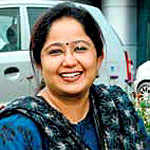
    Anjali Malhotra, Executive Vice President – Marketing said, “We pride ourselves in being Asia’s largest DTH company that understands the dynamics of the new age consumer and his needs. We have not only provided innovative product solutions and finest services to our consumers, but build smart go-to market strategies and communication plans. Agency change is a manifestation of this philosophy. We are excited to work with MEC India and believe that the group will help us communicate more strategically and efficiently in this rapidly evolving marketplace”.


    Speaking about the win, T. Gangadhar, Managing Director, MEC India said; “We are delighted with this win. We, look forward to (our partnership with) Dish TV on their quest for disproportionate share of the digitization opportunity. We are particularly excited about leveraging the power of data for smart, business-oriented solutions”.


  • Seven3Sports bags digital rights of Bundesliga

    By A Correspondent


    Seven3Sports has bagged the digital rights of the 52nd season of Bundesliga. Bundesliga is the best-attended league in football. After the success of the 2014 FIFA World Cup, that was broadcasted by Seven3Sports across five Indian sub-continental and South Asian countries, acquiring digital rights for Bundesliga came as a natural extension of the organisation’s services for the Indian Football fan base.


    “With inclusion of this undertaking to our portfolio, Seven3Sports is bringing a bouquet of diverse sports to its viewers. We are targeting to go beyond the conventional sports loved in India; introducing new experiences such as French Open in the past and now the Bundesliga. This will be an exciting new venture for us with the ultimate aim to provide live viewership to those who are always on the go,” said Jatin Ahluwalia, Founder and Chief Executive Officer of Seven3Sports.


    Seven3Sports has established itself as a leading Sports Rights Company and has been associated with most of the major sporting events across the globe including French Open, 2014 FIFA World Cup and IPL to name a few. Keeping up with this momentum, through Bundesliga, Seven3Sports aims to bring about a surge in the Football viewership within the country.


    Seven3Sports has put together a digital plan to bring ‘Bundesliga’ closer to over a billion Indians, live on their mobile phones and Internet screens. These digital rights cover Mobile, Internet, App, Video on Demand, Live streaming on digital platform, Highlight, Audio commentary on Mobile and Internet besides anything you would like to power on digital platforms.


  • Shailesh Kapoor: Same Day. Same Slot. Three Launches. It Happens Only In India!

    By Shailesh Kapoor


    It has been an action-packed week for Hindi GECs. Three shows launched in the same slot on the same day, earlier this week. Monday, August 18, 2014 saw the action unfolding at 8.30pm, with the simultaneous launch of KBC on Sony, Nisha Aur Uske Cousins on Star Plus and Udaan on Colors. Zee TV had launched a new show in the same slot (Jamai Raja) two weeks ago.


    We have had instances of a channel launching upto six new shows on the same day. But three big channels launching new properties on the same day in the same slot has to be a first in the nearly 25 years history of Hindi GECs. In a category where new launches have increasingly struggled to open well, this has to be counted as a very odd happening.


    The equivalent of this would be three big movies releasing on the same Friday. Or three cola brands launching a new campaign in the same week. Can you remember either of that happening ever? Probably not. Which brings me to the point of this piece: Are we an under-coordinated industry?


    Anyone who knows the way information flows in the Indian television industry would tell you that it needs no spy work to find out launch dates of new shows. The information is available everywhere, at the junior-most levels in channels and production houses. In any case, coming-soon promos for these shows have been running for weeks. That would be enough time to find things out.


    Yet, when I see channels taking each other head-on, it indicates a certain insular approach towards the business environment. As it is, getting sampling on new shows is a tough task. If three new launches happen at the same time the same night, all are bound to feel the pinch, though some more than others. Building from a low base of viewership is possible, but lower the base, the more challenging is the build-up task.


    There’s a lot of FPC planning that’s going on in GECs all the time. But it’s taking a more tactical form in recent years. Launching head-on against another well-promoted show is a strategic blunder, especially when an extra week would not make any discernable difference whatsoever.


    But one can imagine why it’s happening. To understand this, let’s look at the probable outcome next Thursday, when the ratings are out. At least two, if not all three, shows may open below expectations, because of the fragmentation of new viewers in a highly unpredictable slot. However, show openings are marketing and communication KRAs, I understand. And that’s a department that’s likely to have the least say in the decision to launch head-on. In the end, all you can do to resolve this anomaly is a corridor discussion that borders on pontification.


    52 weeks a year, six channels and at least eight daily fiction slots in a day gives us total of 2,496 possible launch day-slot options. The number of fiction launches in a year are only about 50. What are the chances even two, let alone three, fall on the same day-slot combination? It’s a version of the classical ‘Birthday Problem’ (visit the Wiki to know more). The answer would be very low, less than 1% for two shows and close to 0% for three shows.


    Yet, it happened. Only in India!


    TV Trails is a weekly column written by Shailesh Kapoor, founder and CEO of media insights firm Ormax Media. He spent nine years in the television industry before turning entrepreneur. The views expressed here are his own. He can be reached at his Twitter handle @shaileshkapoor


  • What Ticks for Indian Consumers/ Teens – Geetanjali Bhattacharji and Ritu Gupta

    Continuing with our extracts from the second edition of the MxMIndia Annual, we present contributions by Geetanjali Bhattacharji and Ritu Gupta


    ‘Marketers need to run ahead and redefine sustainability’


    By Geetanjali Bhattacharji


    Aristotle put it aptly – Youth is easily deceived, because it is quick to hope.


    And we know that where there is hope, there is opportunity. The jean-clad, hairspiked, smartphone foodie has opened a new window of opportunity for media, marketers, film-makers and even politicians.


    I spend, therefore I am

    More than 50 per cent of India’s 1.27 billion people are under the age of 25.


    Teens are considered the largest consumer demographic, or grouping of people that buy things; teens are thought to have disposable income, or money that can be spent on luxury items or things you don’t really need; teens greatly influence their peers and parents; establishing brand loyalty, or dedication to a certain brand. As a result –


    :: The biggest spike in smartphone users in urban India is in the youngest age group between 16 to 18 years, where numbers have gone from 5 per cent in 2012 to 22 per cent this year, a four-fold increase.

    :: 9 out of 10 food ads on TV are for sugary cereals, salty snacks, fatty fast-foods and other junk foods.

    :: Fairness creams and beauty products earlier targeted at girls of marriageable age are now targeting teenagers on the premise of sexual attraction.

    :: Mobile networks are selling friendship as zaroori to this growing telecom user.


    Need to enable customers with the power to do more


    By Ritu Gupta


    At Dell, we have 2 billion conversations with our customers daily on a global level and these conversations are what drive innovation. Social media forums and platforms like Facebook, Twitter and LinkedIn play a major role for us to reach out to our customers and connect with them.


    Our belief is to provide practical solutions to our customers that solve real problems which is achieved by the unwavering drive our teams exult by applying their knowledge, creativity and winning spirit to create innovative solutions. We want to be recognised as a company that gives its customers the “power to do more” with technology solutions that help people grow and thrive.


    At the core of Dell’s brand identity lies a customer-centric approach around which we focus all our campaigns and decisions to technology. Today, customers are looking for brands which are an extension of their own personality. At Dell, this means placing our customers, their dreams, passions and goals at the heart of all our marketing strategies and plans.


    The recent “I can do KuchBhi” campaign engaged with users on various online and social media platforms was a way to reach out to audiences to hear their stories of personal achievement using technology as an enabler. It was a two-fold exercise, one to celebrate the success stories of those who fearlessly went out and achieved their dreams and two, enlighten other users on how they can use technology to enable and achieve their dreams.


    We have made indulgence of free-market forces more of a priority than the health and self-esteem of our kids. And so, predictably, the state of our teens has gone where we sent it: to hell in our hand basket.


    Is Indian media targeting teenagers right?

    Take a look and decide for yourself… Broadcasters and marketers might defend with data that TV consumption by teenagers in India is on the decline. In Q2, 12-17 yr-olds watched a little more than 20-and-a-half hours of TV per week, the lowest amount in any age group.


    However digital, mobiles and films are dishing out pretty much the same fare to impressionable minds. The Indian teen spends about 86 per cent time on Facebook daily.


    Facebook is now allowing teenagers to share their posts on the social network with anyone on the Internet, raising the risk of minors leaving a digital trail that could lead to trouble. It is no wonder then that we read of teenagers abusing teachers, killing parents for money and a rising number of teenage parents seeking counseling for their kids’ behaviour.


    Where does this accountability end?

    At a recent Global CEO conference, Paul Polman, CEO, Unilever defined the role of marketers very clearly – “Businesses say that consumers do not want to contribute to sustainability. This is wrong. Talk to any youngster and you will understand. Marketers are losing the race. They need to run ahead and redefine sustainability.”


    As a parent of a 13-year-old and a crusader for media and marketing accountability, I do believe that as much as marketers need to create products and positioning that encourage teens to be positive and healthy, it is in the hands of media and parents to be responsible about the content these sponge-like minds are exposed to. Take a stand against content that disturbs growing minds.


    After all – the enemies you will make by taking a decided stand will generally have more respect for you than the friends you make by being on the fence.


    It also tied in well with our own marketing guidelines where we believe that our customers are our brand ambassadors. We look at ourselves as enablers. It ensures a continued relationship with our users. These stories and recognitions help play a strategic role in building an emotional connection between our customers and our technology.


    At the end of the day what makes a brand memorable is one that customers can easily identify with for its purpose and values and that is able to do the following effectively showcasing clarity of vision and purpose –

    – Clear differentiators and positioning
    – Understands its customer’s needs – combines emotional benefits with functional benefits
    – Communicates beyond price points
    – Offers a unique user/ customer experience
    – Has built a loyal base of customers –

    visible through customer stories, recognitions and references.


    On Monday (Aug 25): Children – Raghu Bhatt and Krishna Desai


  • Savvy Dilip joins ITV Network as Group CMO

    By A Correspondent


    Savvy Dilip

    ITV Network has announced the appointment of Savvy Dilip as the Group Chief Marketing Officer. As a part of her new mandate, Savvy will be responsible for marketing activities, including marketing strategy, creating flagship events, brand building and digital marketing for the ITV Network. She will be reporting to R K Arora- Group CEO, ITV Network.


    Prior to this, Savvy was Co-founder & COO of Vigovea Media, a consumer focused digital media company. Savvy was also the Vice President – Marketing at TV18 where she was responsible for the marketing operations of CNN-IBN & IBN7 the flagship national general news channels of Network18. Savvy comes with an exhaustive experience in the media space covering brand management & development, product development & management, strategic alliances, content development, events & experiential marketing, sales enablement & PR across various media.


    Kartikeya Sharma – Managing Director, ITV Network said, “Savvy is an outstanding addition to our leadership team and brings a unique blend of global experience and expertise to ITV Network. Her extensive background in the media industry, proven marketing expertise, and rich experience makes her the ideal person to continue to drive our brand’s growth and momentum.”


    Savvy has done her executive management program from IIM-Bangalore and has completed the Advanced Management Program from the Harvard Business School in Boston, USA.


  • Chennai@175: Madras to Chennai – Evolution of media in the last 150 years

    R V Rajan

    By R V Rajan


    The mass media as we understand today took roots with the establishment of print media in the  West during the 17th century., which offered opportunities to reach a large and dispersed audience simultaneously. It was the East India Company of the British Empire that brought this media to India and to Chennai.


    Evolution of Print Media

    Newspaper publishing started in Chennai with the launch of a weekly, The Madras Courier, in 1785. It was followed by the weeklies The Madras Gazzette and The Government Gazzette in 1795. The Spectator, founded in 1836, was the first English newspaper in Chennai to be owned by an Indian and became the city’s first daily newspaper in 1853.


    Early advertisements in Madras Courier were in the form of classifieds.


    In 1851 the Madras Almanac & Compendium of Intelligence carried public auctions, theft, theatre, birth and death announcements.


    In 1860 came the ‘Fort St. George Gazette and the Madras Times.  And it was in 1870 that the Madras Mail which occupied a pride of place on Mount Road was started.


    In the decades that followed several Tamil publications were launched: 1881 – Swadesamitran (Tamil weekly), 1888 – Jana Vridhi, 1894 – Gnana Banu (religious weekly), 1897- Pariyan (A Dalit weekly) – all of which carried relevant classified announcements. But the history of journalism  and advertising in Madras, is very much linked to the growth of the Maha Vishnu of Mount Road – The Hindu.


    Started in 1878 by G Subramania Aiyar as a weekly tabloid with M Veeraraghava Chariar as partner Hindu became a daily newspaper in 1889 which was bought over by Kasturi Iyengar in 1905.


    It is interesting to note that in the initial years, the first page of the paper was entirely devoted to advertising – mostly classifieds covering a range of topics from ballroom dancing to widow remarriage!


    Several other publications followed , significant among them being Ananda Bodhini (1920), Ananda Vikatan (1926) and Indian Express (1932) all of which were successful in getting advertising  support for their publications.


    Today, Chennai has six major print media groups that publish about eight major newspapers and magazines. The major English dailies are The Times of India, The Hindu, The New Indian Express and The Deccan Chronicle; evening dailies: The Trinity Mirror and The News Today. As of today, The Hindu is the city’s most read English newspaper, with a daily circulation of over 5.5 lakh copies. The major business dailies published from the city are The Economic Times, The Hindu Business Line, Business Standard, and The Financial Express. The major Tamil dailies include the Dina Thanthi, Dinakaran, Dina Mani, Dina Malar, Tamizh Ossai, Tamil Murasu,[theekkathir] Makkal Kural and Malai Malar.


    Hundreds of magazines are today published from Chennai. The popular ones areAnanda Vikatan, Kumudam, Kalki, Nakkheeran,  Kungumam, Swathi (Telugu magazine), Frontline and Sportstar Chennai was also a pioneer in starting free community newspapers. South Madras News by Speciality Publications owned by R.Desikan was the first community newspaper of India started  in 1974. Today, apart from the popular neighbourhood newspapers such as The Annanagar Times and The Adyar Times there are a whole host of neighborhood  papers catering  to particular localities all carrying local news and  advertisements targeted at specific target audiences.


    Newspaper representatives to advertising agents

    Contribution of the legendary S S Vasan (Gemini Film fame) and T Sadasivam in the growth of the advertising business during the 1930s is significant.  Vasan was into mail order and publishing business.  He started Vasan Advertising Centre canvassing advertisements for various newspapers and getting commission from them – one of the early  representatives of advertising agency business. He bought out Ananda Vikatan and also started  Merry Magazine in English.  Ananda Vikatan which was being edited by another legendary Tamil writer- Kalki Krishnamurthy had T Sadasivam as the advertisement representative charged with the responsibility of getting new advertisement business.  Sadasivam had a flair for writing very persuasive direct mailers appealing for advertisements.  It is said, thanks to Sadasivam’s efforts advertising income of Ananda Vikatan went up from Rs.6,000/- to Rs.72,000/- in six months.


    Sadasivam left Ananda Vikatan  and started  Kalki with Krishnamurthy as the Editor. The magazine became a big success thanks to the popular historical novels penned by `Kalki`and serialized in the magazine week after week.


    Paper advertisements in those days covered products like Keshavardhini Hair Oil, Asoka Beetlenut powder, Amrutanjan, Narasus Coffee, Binny & Co, Westend Watch Co., Himalaya snow, Horlicks Malted Milk, cars like Rover, Morris, Murphy radio, Macleans toothpaste,Andrews Liver etc. salt apart from advertisements for announcing new film releases.


    One of the earliest full fledged advertising agency was started by P S Mani Aiyer in 1939.  Mr Aiyar began  his advertising career by canvassing advertisements for Swadesamitran and the Hindu.  It is said that he got 25% commission from these  newspapers for the ads he got for them.  Simpson and Spencer & Co were two of his well-known clients.  He had innovative ideas.  He hired artists to create advertisements with interesting visuals. He is supposed to have persuaded Simpson & Co,  dealers of cars, to offer cars on hire purchase. A car costing Rs 3,500 was available on a monthly instalment of Rs.100.


    It was in the early 1930s that advertisements which were essentially classified ads started getting a  new look with the introduction of visuals to support the catchy copy matter. Line  drawings and half tone prints of human figures were used to make the advertisements more attractive.


    Radio

    Radio broadcasting in Madras  started from the radio station at the Rippon Buildings complex, founded in 1930 and was then shifted to All India Radio in 1938. The city has two AM and fifteen FM radio stations, operated by Anna University, All India Radio and many private broadcasters.


    Radio as an advertising medium is bound to grow as evident from the growing popularity of many of the FM channels in Chennai.


    Film / TV Advertising

    Other than Jayendra Panchpakesan, an ex-copywriter and film writer and P C Sriram the well-known cinematographer and director, another Madras-based advertising film producer who caught  the imagination of the Bombay advertising world was Rajiv Menon who is also well known as a cinematographer and director.  He produced some memorable ad films for Asian Paints and Titan watches.


    The Madras ad world can be proud that it nurtured some of today’s celebrities during their days of struggle. Today’s icon A R Rehman was popular as Dilip in his earlier avatar. He used to compose advertising jingles for many products in his spare time.  Balakrishnan (Balki) of Lowe Lintas is another contribution  from Chennai to the national advertising scene. Senthil from JWT Madras who was responsible for creating the  Cannes Award winning Naka Mooka commercial for Times of India is another Madras boy who is doing well on the national advertising scene.


    M G (Ambi) Parameshwaran and Ramanujam Sridhar are the other Madras boys  known for their intellectual contribution to the advertising field in the form of books on Branding and  Advertising based on their long association with the advertising business.


    Outdoor:

    Madras was well known for the huge, larger than life, hoardings on Mount Road promoting new and old feature films. The idea was first conceived by the legendary film director S.S. Vasan for the block buster movie Chandralekha in the early 50s.  The idea caught on and over the years not only films but also products and services of all types started featuring their messages  on hoardings occupying every vantage point on the roads of Madras, leading to mindless  growth of the media.  Many accidents later the State Government passed a law in 2008 barring hoardings in public places.


    For over four decades thousands of talented artists made a living out of manually painting the big hoardings using miniature drawings as reference.The banning of the medium completely in Chennai  has left many people dependent on this medium literally on the streets.


    Satellite and Cable TV

    It was in the mid-90s that the advertising through cable TV started penetrating homes in Madras.  The government`s decision to allow private channels to enter the TV space dominated till then by government owned DD,  has led to proliferation of TV channels. From just one TV channel in the early 80s, today nationally there are nearly 700 channels. covering almost every language of the country.


    In Tamil alone we have eight channels offering a wide variety of programmes catering to different tastes of audiences. Almost every political party has its own TV channel Like Jaya (AIADMK), Kalaignar (DMK), Makkal  (PMK) and Captain (DMDK) to mention a few, Leading them all  is Sun TV, one of the most successful and profitable channels operating  out of Chennai that has today become a big multimedia conglomerate. The Sun Network, a Rs. 5000 crore public firm, is the country’s second-largest broadcasting company, in terms of viewership share. Some of its TV shows have generated the highest television rating points in the country. In addition to owning 19 TV channels in all major South Indian languages, the group owns FM radio stations in over eleven cities and some Tamil magazines and newspapers. SCV is a major cable TV service provider of the group.


    Direct-to-home (DTH) is available in Chennai via DD Direct Plus, Dish TV, Tata Sky, Sun Direct DTH, BIG TV, Airtel Digital TV and Videocon d2h. Chennai is the first city in India to have implemented the Conditional Access System for cable television.


    Current Advertising Scene in Chennai

    The last decade has seen a steady decline of traditional advertising spend in Chennai  by FMCG companies (like Cavincare) and consumer durable companies (like Hyundai and Ford)  many of whom have moved their marketing departments to Mumbai or Delhi leading to a major setback for the Chennai  branches of the established multinational agencies. Though  there has been a tremendous growth in the advertising business from the Retail, Realty and Educational sectors, it has not helped professional agencies because many of the new generation advertisers representing these groups are not professional in their approach and go for media agencies who are able to offer them lowest rates. However for an adman who is willing to adapt to the changing scene in Chennai the profession still provides enough opportunities. As evident from the success of many local agencies.


    Once considered an overgrown village that went to sleep by 9 pm, Madras during the past decade has acquired a 24 x 7 reputation. The city has drawn people from all parts of India. Result: This metropolis can offer anything that anyone wants! Be it the choice of food, products, services or even entertainment!


    Old, tradition-rich conservative Madras is today a vibrant cosmopolitan Chennai. The young are willing to try out anything new! What better challenge than that for the advertising professional? I am sure that the Chennai advertising world will soon bounce back to its glorious past!


    RV Rajan is a veteran advertising person living in Chennai and widely regarded as the Father of Rural Advertising. He can be reached at rvrajan42@gmail.com
     

  • Chennai@375: The East and West Shall Meet in the South

    By Sridharan Narayan


    I have had the singular pleasure of working my way from the west coast to the east coast of India in pursuit of the ultimate creative piece in advertising: from Bombay to Bangalore to Chennai.


    Before I started my career, back then, there was only one reputable postgraduate school for advertising aspirants and, well, I went there – the Xavier Institute of Communications. That was also the time of giants in the advertising field. These were people who had proven themselves and were revered as demi-gods. One of them took me in and later, spat me out to write a book in the salubrious climes of a Portuguese settlement. This was Bombay, a city that never slept. Of people who never gave up until the deadline was met – come floods or heat waves. While there was some camaraderie, mostly there was professional rivalry that upped the ante from one campaign to the next. Madison Avenue was the sole inspiration; rural communication had not come to life. And if one was not in Bombay, one was not in advertising, or so one felt. The city supported this mean taskforce, with eateries that never shut, a robust transport system and an open mind to alien cultures. Even then, in the eighties, there was a nagging doubt that Bangalore would play catch-up.


    And so, when our baby was born, we decided to move to Bangalore where we felt there would be space for the kid to play. Here, the pace for was less than frenetic. The work, as with the traffic, moved then, as now, at a leisurely pace. But the hops fermented well in the cool clime. And many an elbow was bent raising the tipple with classic rock for company. Oh, yes, Bangalore was different. One realised that there is something called a life outside of the advertising office and one embraced it. Work-life balance was better than Bombay, although good talent was scarce -most people wished to traverse the Western Ghats in search of the advertising or modelling or acting pot of gold.


    Both the cities having ceased to exist (one gave way to Mumbai, the other to Bengaluru) I decided to move to Chennai, a city born out of a British Madras. This was different. Wider boulevards, traffic that moved through the heat haze, the waves crashing on the sands of the world’s second largest beach and a people with a culturally superior attitude – loved it. Of course, the city grows on you. At first embrace, it is a reluctant friend. It tests you, to ascertain that you are not an alien from the north of the Vindhyas and that you genuinely love the steaming hot idlis served with drumstick sambhar. Once the city accepts you, it adopts you. Every street hums with the strains of the violin or the beat of the mridangam. There is also a western subterranean groove that begs to be discovered.


    But what of advertising? Well, the pace is faster than the centre of the latitude, and the profession has claimed several brilliant product launches to its credit and spawned a whole directory of film makers. And then, mysteriously, it started pushing its clients off to the North of the country. Just as the automotive industry moved in, the big dig for the metro lines started, the executives recruited at the day-one campus selections realized they just could not communicate with the local populace – but to their credit, their lingua franca is accepted in most countries east of the Bay of Bengal – Singapore, Malaysia and Indonesia, to name a few.


    It is my opinion that this gracious city has a great future if it could get others to see it as a part of a larger whole, not a region-centric behemoth, obsessed with itself and its peoples. It is a large city with the feel of a small town. This is good if one wants to live here, not so good if one wishes to attract talent. I look forward to the day when Chennai will become the next migratory halt for advertising professionals.  Perhaps, a bit of the “Hum Hindi Jaanti” will help?


    Sridharan Narayan has spent 27 years in advertising and has seen it all. From film executive to copywriter, creative director to branch manager, he has now embraced digital marketing.


  • Business Standard celebrates 40 years

    By A Correspondent


    On the eve of completion of 40 years of existence in India, Business Standard has started ‘Thought Leadership’ – a series of initiatives that have been planned around the landmark year. Editorially, a series of articles have been commissioned, that chronicle the changes that the paper has witnessed, and has contributed to in the world of business and the economy at large.


    Born as a single-edition newspaper in Calcutta in the year 1975, Business Standard has had an invigorating journey since then. Currently published from 12 centers all over India, Business Standard has become the first choice of serious business news followers in these past 40 years. The Business Standard stable consisting of the English newspaper, the website business-standard.com and Business Standard Hindi (which was launched in 2008 and is published from eight centres), has not only seen an extended reader base in India alone, but also has global footprint with a large number of readers in financial centres like New York and London, Dubai and Singapore.


    Business Standard has also released a new brand campaign. Through a series of simple, yet effective TV commercials, it portrays the role played by Business Standard in helping readers achieve their aspirations. These ads will be telecast in a focussed manner to reach a relevant audience. The TVCs will also be up on Youtube. The campaign spans digital and print as well.


    Business Standard, by bringing together a galaxy of experts and commentators from around the world, has always been acclaimed for its opinions and incisive analysis. With some of the most well-known commentators who contribute to the pages of Business Standard going on to take up influential roles in Government -Ashok Lahiri and now possibly Arvind Subramanian as Chief Economic Advisor and Subir Gokarn and Urjit Patel as Deputy Governor, RBI, for instance – thought leadership is not an empty rhetoric. Shankar Acharya and Nitin Desai, two former Chief Economic Advisors to the Government continue to write in the paper reinforcing our thought leadership.


  • What Ticks for Indian Consumers/ Children – Raghu Bhatt and Krishna Desai

    Continuing with our extracts from the second edition of the MxMIndia Annual, we present contributions by Raghu Bhatt and Krishna Desai


    Be aware of responsibilities while marketing to kids

    By Raghu Bhatt


    Imagine a scenario where someone introduces a cigarette brand that exclusively targets kids. How comfortable would you be working on the brand? But if the same cigarette were targeting adults, it’s likely that you wouldn’t have a strong moral objection. This brings us to the first dimension of kid marketing. There is a very strong ethical question to consider, with kid products. Kids are the future and while marketing to them, we suddenly become aware of our immense responsibilities. Kids can do that to you.


    Kid marketing uses certain tools and techniques, many of them chiselled to perfection through years of practice. As a baby grows up, he or she continually refines her ability to make parents buy things for them. In some ways, they are like purchase managers who are sitting on a lot of cash – something every marketer of cereals, confectionary, clothes, retailers, movies and toys is constantly eyeing.


    Kids – fluent influencers of change

    By Krishna Desai


    Children are bestowed with many aspirations… world leaders, sports icons, entrepreneurs, etc. They display talent, knowledge and influence over most parameters of society and businesses. As consumers, they cannot be ignored.


    Gone are the days when children were only consulted when it came to purchasing candies and toys. A child today influences every decision from household electronics, to insurance, to cars and even wall paint! Some interesting facts and growth trends are below:


    :: Kids influence on parents has more than doubled since 2009 – with more than 60 per cent parents in 2012 saying that they may or definitely will consider their child’s opinion on purchase decisions.

    :: With the percentage of kids receiving pocket /gift money increasing from 36 per cent in 2008 to 56 per cent in 2012, the purchasing power of kids has definitely increased.

    (Source: Cartoon Network New Generations Study 2008 – 2012)


    Kids exhibit certain commonalities of behaviour that marketers leverage. For example, kids form a special bond with cartoon characters. For kids, these characters are not imaginary but real people. And when these characters start peddling stuff, they become hugely influential. These cartoon characters are also scientifically designed to elicit an emotional response from kids. For instance, the smooth round forms of the Cbeebies have been created after a lot of R&D to evoke a sense of reassurance amongst babies, in much the same way nature creates babies whose very appearance evokes the protective instincts of a mother.


    There is phenomenal growth seen in the kids’ adoption of new media. These ‘screenagers’ access technology at every touch point be it mobiles, computers, tablets, television, etc. For instance,:: In the last five years, the number of kids using the internet has more than doubled! (27 per cent use the internet in 2012 v/s 10 per cent in 2008).

    :: Although gaming has always dominated the top activity online, social networking has grown from 14 per cent in 2009 to 53 per cent in 2012. Ironically only half the parents of kids visiting social networking sites are aware of their children’s activities.

    :: Today, 95 per cent kids grow up in homes with mobile phones compared to 59 per cent kids in 2006. 10 per cent of these kids actually own their own mobile phone.

    (Source: Cartoon Network New Generations Study 2008-2012.)


    Kids have also transformed the broadcast industry influencing the way business is done for all stakeholders. With almost 100 per cent urban kids watching TV every day, brands, marketers, broadcasters and distributers seek this platform to reach this expanding and intelligible TG. As television consumers, kids are unique. They cannot be compared and virtually have no similarity to other geodemographics. Some core trends, challenges and opportunities are:


    1. Children outgrow things a lot faster than any other demographic. A kids’ network, including that of Turner’s – CN and Pogo, experiences a churn every 4-5 years with new kids coming in and older kids moving to other genres.


    2. Kids, on an average, spend two hours watching television. This hasn’t changed much over the years. But the number of channels available today has more than doubled compared to a few years ago. This represents a huge challenge for broadcasters, especially kids channels, to attract and sustain viewership. Comparatively, housewives spend up to four hours a day watching television.


    3. Another fact is that out of the total viewing, children spend only 20 per cent time watching kids’ channels mainly because of the dominance of housewives in single television households. Although this may seem as a hindrance, it is actually an opportunity in disguise. This 20 per cent has grown from 15 per cent in 2009.Also, with the growth of multiple TV households and new media to compliment TV, there is hope of growth and expansion of the genre.


    Tomorrow (Tuesday, Aug 26): Family – Punit Goenka and Pradeep Gupta


  • Chennai@375: How the metrop can Rise and Shine in advertising


    Srinivasan Swamy: Chennai deserves a loyal set of advertisers!


    Srinivasan Swamy

    By Srinivasan Swamy


    “Chennai is not a market for ‘creatives’. The action has moved to Bangalore, Mumbai and Delhi”

    “All big brands have moved out of Chennai”

    “Chennai is still an outgrown village”

    “Chennaiites are traditionalists”


    The dumbing down of the Chennai advertising market is discussed perhaps in all forums – in workshops, in seminars and in the media and internet. But is Chennai really a doggone market? Perhaps Chennai does not offer many opportunities for high adrenaline creative activity these days. But is it the advertiser’s fault or that of the agencies? I will blame it on the advertisers really!


    Let’s go back 60 years of the 375 years of the city. There was very little of the advertising industry that was present when J Walter Thompson set its shop in 1955. This was its first venture in the South. JWT then helped build competency by developing art directors, illustrators, scraperboardartists, block-makers as well as printers- the ecosystem that was essential to run the advertising agency business. TI Cycles, Amrutanjan, Madras Motor Insurance and Parry’s Confectionery were perhaps the only notable business then. And capital goods businesses like Ashok Leyland, Massey Ferguson, MRF and Simpson. Even the TVS-promoted manufacturing units came up only in the early 1960s, thanks to TT Krishnamachari, the then Union Minster who encouraged industrial development in the Madras State (which included Tamil Nadu, Coastal Andhra, Rayalseema, the Malabar region, South Canara and Udipi Districts etc.). Some PSUs like the Integral Coach Factory and Neyveli Lignite were in existence then, and many factories like BHEL, Madras Fertilizers and Madras Refineries came up in the ’60s.


    Chennai@375: The East and West Shall Meet in the South


    Chennai@175: Madras to Chennai – Evolution of media in the last 150 years


    With the spate of liberalization, from mid-1990s, Chennai evolved as the Automotive Capital of India with Hyundai, Ford, Renault, Nissan, BMW and Daimler setting up shops one after the other. Consumer products companies like Ponds India was set up in the 60s while Cavinkare came about in the early 1980s, followed by Henkel and Kaleesuwari (Gold winner) from the mid-1990s.


    Chennai is on the top of the charts as far as the retail industry and its advertising is concerned.  The groundwork of the concept of the mall and organized retail was laid down in Chennai in the eighties much before it became what it is today. Spencer Plaza and Alsa Mall were the first malls to arrive in the country. Today, any national marketer cannot ignore the business territory of T Nagar. Textile retail brands Nalli, Kumaran, Chennai Silks, Pothy’s, RMKV as do jewelers like GRT, Khazana, Vummidis, Prince et al have been in the vanguard of very clever and innovative marketing to tell the rest of the country how they have captured the imagination of the Chennai and its consumers. Saravana Stores is the first of its kind very successful discount retailer in the world.


    Simultaneous to this development, the film industry in Chennai produced more films than even Bollywood. And produced more hits that got re-shot as Hindi films. Many TV commercial producers like Jayendra, Rajiv Menon and Bharat Bala were not just making a mark in Chennai but across India for their high quality productions.


    Chennai was also the first regional market to storm the satellite channels. In fact Sun TV was the first private satellite channel to establish uplinking facilities from India, which even Zee and Sony had not done.


    Yes, so much was going in favour of Chennai. Advertising was also booming till about two decades ago and from thereon one major advertiser after the other started shifting its base for a variety of reasons. Initially it was not for lack of talent, but for being closer to the larger markets like in automobiles. But over time, Chennai lost its sheen to Bangalore in South and of course to Mumbai, which always was considered the mecca of Indian advertising. Not that Bangalore is doing any better today, but it does have perhaps a few companies like Titan, ITC and UB Group who spend handsomely compared to Chennai-based advertisers. Today many advertisers from Chennai have moved out – Ponds India merged with HUL, Hyundai and Ford went to Delhi/Gurgaon, Henkel got bought and moved to Bangalore and Cavincare shifted out to Mumbai.


    It is really the story of the ‘chicken or the egg first’ story. Talent follows work. When work moves out, can talent stay behind? Advertisers deserted Chennai for unsubstantiated reasons. Doesn’t Chennai deserve better!


    Srinivasan Swamy is Chairman, R K Swamy Hansa Group


  • FCB Ulka campaign for MakeMyTrip’s mobile app

    By A Correspondent


    Growing beyond just providing voice calls, text messages, games and music, mobile devices have now also become the preferred choice to do online bookings. Though the mobile phone is convenient in many ways yet sometimes it puts us in sticky situations. Bringing on this insight that phone can put you in trouble, FCB Ulka has come up with its new TVC for the MakeMyTrip mobile app.


    The commercial aims at empowering the consumers to make instant flights and hotel bookings from anywhere, anytime and redeem themselves when stuck in an awkward situation.


    Mohit Gupta, Chief Business & Marketing Officer, MakeMyTrip, said “Mobile is the perfect channel for a travel company to provide real value to the customer and create higher engagement by enabling an easy travel-booking experience. Mobile provides a smoother user experience, increased personalization and allows faster access to relevant information. The film exhibits how MakeMyTrip mobile app provides instant bookings and cancellations of flights and hotels from anywhere.”


    The latest TVC is about a husband who is getting ready for taking a trip to Bangkok. His wife asks if the family can join him but he is insistent that it’s an official trip he and cannot take them. In the midst of their conversation they get interrupted by his friend’s call. Since he is busy getting ready he asks his son to put the call on speaker. The friend goes on talking about how efficiently he managed to fool wife into believing that it is an official trip, while in reality they are going to Bangkok to have fun.


    The commercial closes with the thought that if a mobile can put you in trouble then it can save you from trouble as well. Panicking, the husband asks for the solution which is the MakeMyTrip mobile app and cancel his current booking and re-book a trip for his entire family instantly.


    Commenting on the TVC, Sanjay Tandon – Chief Operating Officer, FCB Ulka said, “Life is really really on the go nowadays. So are travel plans that seize us at a moment’s notice. That is a key role that we are sure makemytrip’s mobile app will fulfil. And we needed to present that in an unexpected burry way.”


  • What Ticks for Indian Consumers/ Family – Punit Goenka and Pradeep Gupta

    Continuing with our extracts from the second edition of the MxMIndia Annual, we present contributions by Punit Goenka and Pradeep Gupta


    Need to create multiple touch points for each audience segment


    By Punit Goenka


    The market size of the television industry in India, according to FICCI-KPMG report is estimated to reach 8 billion by 2017. So there is massive growth potential, no doubt. But there are a few challenges. One major challenge is that even today, 97 per cent of Indian households are still single TV households.


    Which means majority of TV viewing in India is happening in a manner where the entire family is watching it together.


    From a network standpoint, it is important to think the entire family rather than dividing into various segments such as women, men, teens and children. There is a perception that women consume a lot of GEC content. Well, Zee TV is our flagship channel and attracts equal viewership from both men and women. 


    Role of digital in augmenting growth for magazines in India


    By Pradeep Gupta


    I see three driving forces for the domain viz. digital, sharp community definition and regionalisation. Tablets, mobiles, apps are changing the way media will be consumed. The huge amount of content is creating an information overload. Sharply defined niche communities can help users navigate through the jungle. The growth of 2 and 3 tier cities is resulting in more vernacular and regional content.


    In developed countries, 50 per cent of the ad spend is on digital media. In India, we are still in the single digit. We need to have many more apps delivering rich content to focussed communities. We also need to use the mobile platform since a large percentage of India is now using the mobile phone as the most important device for receiving information.


    Yes, women do consume more of fiction, but that does not mean fiction shows do not attract men. Reality shows are more popular amongst men and younger audiences, there is data suggesting that even women consume reality shows such as Dance India Dance.


    If a kid is watching ZeeQ, our edutainment channel, invariably a parent is also watching the channel along with the kid. Similarly, in sports, if there is a cricket match and India’s playing, the whole family watches it.


    From a network standpoint, you cannot single out one consumer segment and say that’s the most important of all. All segments are important from both the advertisers and as well as broadcasters point of view. Each segment plays a role in purchase decisions, each have different media consumption habits, youngsters are more adept at technology, women have a liking for fashion while men love sports and action movies.


    From a marketing standpoint, one has to create multiple touch points for each of these segments and create meaningful conversations that’ll have a positive impact on their minds.


    Print will not die. Its form may change. From stone slabs to papyrus to paper, the delivery of content has changed. The A4 size form factor on a light weight device is the most engaging medium. Therefore, glass will be the new paper.


    Unfortunately, the internet penetration in India lags behind other developing countries in the world. We also have not been able to achieve any significant penetration in the broadband area. The statistics speak for themselves – 12 crore internet users and 1.50 crore broadband users. On the other hand, there are 87 crore mobile phones out of which 22 crore are smartphones. We have to deliver media over the device of choice – the mobile.


    New media is being used by the traditional medium to reach out to targeted audiences, conduct polls, take feedback and create a multiplier on the traditional channel.


    Tomorrow (Wednesday, Aug 27): Men – Partho Dasgupta and Ashish Golwankar