Category: MEDIA

  • Anil Thakraney: Cut the Anna crusade

    By Anil Thakraney


    It is fashionable to credit the social media for Team Anna’s stupendous run. They have managed to hilao the government big-time, and it is often said their oxygen is the support provided by tweeters and facebookers. I totally disagree.


    The real fuel for Anna’s campaign comes from the television media. It is they who, in their childlike enthusiasm, have converted the saint from Ralegaon Siddhi into a god-like cult figure. And quite frankly, I am not surprised. It’s our TV media’s belief that any story that generates ratings must be given liberal play, even if it demolishes every tenet of good journalism. From no angle can you justify the role played by the assorted news channels as crusaders and poster boys for Team Anna. When the social media does that, it becomes understandable. Because the virtual world consists of individuals fed up of corruption… dudes who don’t really comprehend the complexities of the Lokpal bill, and are basically venting steam. That’s fine. But for professional journalists to become recruitment agents for Anna is simply an appalling situation.


    Anyway, what’s done is done. Team Anna is threatening Hunger Strike Part 2, this time from the ‘salubrious’ Mumbai. At least this time around the news channels must respect the principles of journalism and desist from going over-the-top on the coverage. Because it’s very clear by now that, drunk on the TV media’s fan-like support, members of the team have become arrogant and Dubya-like in their attitude. The ‘my way or the highway’ deal. How healthy is that approach for democracy, we all know quite well.


    Bottom-line: Let Team Anna fight its own battles. Report the story, like any other story, and no more. There are other interesting ways to get good ratings. Try village horror stories. At least they don’t threaten Indian democracy.


    ***


    PS: Wieden + Kennedy’s London office has found a charming way to wish you this season. The agency has set up a window outside their office, from where passers-by can take part in the celebrations. Lovely idea.


    Link: http://achoirofyou.com/

  • Got an idea? Write to Times Internet to help kickstart it

    By A Correspondent


    TLabs, a mentorship-driven accelerator program developed by Times Internet Limited (TIL), is inviting bright business ideas in the field of technology, mobile and Internet to develop into world-class products. TLabs is looking for young energetic teams with a marketable idea, who have the passion and skill to execute that idea.


    Backed by Times Internet Limited (TIL), TLabs will provide funds, mentorship, and strategic and execution support to entrepreneurs in order to shape their plans into sustainable and scalable products.


    Applications are now open for the program, which commences February 2012. The 13-week programme seeks to mentor 10 start-ups. Besides an initial seed funding of up to Rs 10 lakh, it will feature interactions with experienced and eminent leaders and domain experts in India and abroad, once every week. Entrepreneurs will also benefit with rehearsal demos for the project before they ultimately present their ideas and come face to face with angel investors and venture capitalists. Entrepreneurs are free to engage with these investor communities, and execute the plan independently.


    “What sets the program apart is the access to TIL’s huge infrastructure and domain expertise. This gives entrepreneurs at TLabs the edge over other start-ups,” says Gautam Sinha, Director – e-Commerce & Technology, Times Internet Limited.


    Rishi Khiani, CEO, Times Internet Limited, said, “We want to make this a very high quality program, with very significant value addition to support entrepreneurs as well as the entire innovative ecosystem.”


    One of the companies that benefited from the TLabs program this year is DataWeave, a young start-up founded in 2011 by Karthik BR and Vikranth R from Bangalore.


    “Being chosen by TLabs strengthens our belief in our product offering. The experience of the Indiatimes network’s mentoring and the infrastructure support has already begun to show in the way we work and in the way we are perceived,” said Karthik Bettadapura, www.dataweave.in.


  • Movies Now: One year old, strikes gold

    By Rishi Vora


    Movies Now has completed a year. And the story of the channel’s progress since day one of launch is an exciting one, especially for the officials who’ve been running the show. Numbers of the past 51 weeks across eight metros indicate that Movies Now has garnered a market-share of 30 per cent and has increased the category viewership by 50 per cent (from 50 GRPs to 75).


    The reach too, increased from 46 million viewers to 56 million. And the average time spent has shot up from 42 minutes to 55 minutes. (Source: TAM, CS 15-34, AB, All 8 Metros, week 52’10 – week 50’11).


    The channel launched with a bang and shook up the otherwise dormant category, dominated primarily by Star Movies, and of course other players like HBO and Sony Pix, which had spent reasonable amount of time in the market.


    HBO has been in the market for more than a decade. Experts believe that with the right kind of content, marketing and distribution push, Movies Now wiped out every bit of complacency that had set in among existing channels. Now, as even other players would agree in the category, the market has become more competitive, and a lot of action can be expected in the genre.


    The strategy was to first set foot in the six metros and from there look at expanding their reach further. In fact, in its first month, the channel did not have a single DTH company on board. Currently present in eight metros, Movies Now will now look at getting to the 1 million+ market. With digitisation of TV, quite naturally the channel will look to move from analog to digital.


    Currently the channel reaches out to 100 million households and the plan is to get to the 140 million mark by end of next year.

    Ajay Trigunayat, Channel Head informed MxM India that the plan was pretty much to aim at the top. “We were clear right from the beginning that we wanted to bring a stellar brand to the viewers. We’ve challenged the status quo and reshaped the marketplace. 89 per cent of our viewership is library-led, and unlike other players, we cater to all eight metros. In the past one year, we have increased the category reach by 22 per cent and time-spent per viewer by 33 per cent.”


    He added, “In 2011, we are the most searched English Movie channel on Google India, we have about 5 lakh Facebook fans.”

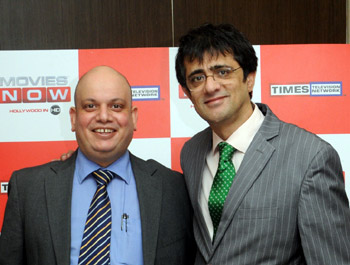
    For Sunil Lulla, Managing Director and Chief Executive Officer, Times Television Network, Movies Now is a super-smash-hit story of the year 2011.On what it means to the Times Broadcast Network, he said: “As a network we cater to the Urban Affluent audience. All our channels – Times Now, ET NOW, Zoom and Movies Now have been doing very well in their respective genres. These channels, put together, provide great value to advertisers; it generates a fantastic synergy.”


    On what he expects from Movies Now in the future, he said that the channel’s primary focus will be to achieve consistent growth and in the process widen the gap from its nearest competitor.

  • Sony as GEC #1? I don’t speculate, says biz head Sneha Rajani

    The phase three to four weeks from now could be an interesting period for the GEC industry. Mainly because Sony, having tasted success with KBC and a couple of fiction shows (Bade Achhe Lagte Hain and Kuch Toh Log Kahenge), is all geared to topple Star from its No 1 position.  Colors is not too far behind; in fact both Sony and Colors have locked horns at the second position, on 236 GRPs. Colors’ Bigg Boss opened with 4.3 TVR and the general sense is that the show hasn’t delivered as per expectations, especially after a high-octane marketing activity.


    For Sony, it’s an opportunity to get to the top. The channel is launching two new shows – Dekha Ek Khwaab and Parvarish – in prime time, replacing KBC. It is clear that the channel is betting big on fiction again. Several attempts have been made in the past but none has worked out well until the channel’s recent hit – Bade Achhe Lagte Hain.


    If the two new fiction shows (Dekha Ek Khwaab starting November 21) succeed in its plan to become household names, we might see a new genre leader. The channel has tasted success in the ’90s, but that was some time ago. The focus for now is on the present and the leadership team is hoping to make the most of this opportunity.

    MxM India’s Rishi Vora speaks to Senior VP and Business Head Sneha Rajani on expectations from the new movements.


    Q: What are your expectations from the new show ‘Dekha Ek Khwaab’ on the ratings front?

    I never speculate.


    Q: At least tell us what you’re expecting from it on the launch day, or the first few weeks so to say…

    Obviously, since we’re launching the show, we expect the numbers to be good.


    Q: Do you expect it to match the kind of viewership KBC has produced, to keep that momentum going?

    Absolutely not! That is not our expectation. And it would be foolish to think that immediately at launch, it’ll deliver the kind of numbers KBC has. That would be a very false expectation to set.


    Q: Why would you say so?

    KBC is a popular show, it has been around for a while and it has created a special interest among the viewers across India. For our new fiction show, to expect it’ll deliver or match up to the popularity of KBC, would be asking for too much, honestly.


    Typically fiction takes time to settle down as against reality formats which have the ability to spike up the ratings of the channel at launch at the start.


    Q: Which means the GRPs is likely to see a dip in the coming few weeks?

    Yes, there will be a drop in GRPs post KBC. At least for some time till the fiction shows settle down.  But, that’s as per plan.


    Q: When do you see Sony becoming the No 1 channel in the GEC line-up?

    Like I said, I don’t like speculating. I don’t think we are going ahead with the strategy fixated with the idea of being No 1. We are going ahead with the plan to focus on fiction. Bade Achhe Lagte Hain and Kuch Toh Log Kahenge have delivered the goods, and I’m sure Dekha Ek Khwaab and Parvarish – our two upcoming shows will also do well in primetime.


    Q: What is the split ratio you like to maintain between reality and fiction?

    Fiction 80. Reality 20.


    Q: You’re No 1 in the prime-time band. And all it takes to be No 1 overall is just one good show, because as far as your current standing goes, you’re just 30-35 GRPs behind Star.

    Yes, the gap is not very big. And it is our endeavour to get there.


    Q: Three months is a decent time to get there.

    I will not speculate on three months or six months. As long as we get there, I will be happy.

  • Times TV boost for Ajay Trigunayat, Avinash Kaul

    By A Correspondent


    Times Television Network has enhanced the responsibilities of two of its senior personnel: Avinash Kaul, who will now be Chief Executive Officer ET Now and Zoom, and Ajay Trigunayat, who will be Chief Executive Officer, English entertainment channels.


    Mr Kaul and Mr Trigunayat will continue to report to Sunil Lulla, Managing Director and Chief Executive Officer (MD & CEO), Times Television Network.


    Announcing the new organizational focus, Mr Lulla said, “2011 has been a significant year of growth for Times Television Network (TTN). As the channels consolidate positions, it offers opportunities for talent to develop. Mr Kaul and Mr Trigunayat will bring new ideas, energy and passion for the network’s ambitious growth agenda. We wish them great success.”


    During the course of 2011, TTN’s revenue has grown by over 50 per cent, its reach has spread to 26 countries besidesIndiaand its channels are in leadership positions.


    Speaking on his appointment, Mr Kaul said, “‘Bollywood’ and ‘Stocks’ are deep passions ofIndia. I’m delighted to have a blend of entertainment and information as part of my mandate. I look forward to ensuring that ET NOW continues to consolidate its position asIndia’s premier stock market channel.”


    Mr Kaul was previously the CEO of Zoom and prior to that has worked with Fulcrum (Group M), Discovery Communications, Star, NDTV Media and Sahara One in strategic and management roles.


    Mr Trigunayat, commenting on his new role, said, “Movies Now has just about completed one year of stellar performance and I am looking forward to consolidating and growing the franchise of Hollywood entertainment for Times Television Network”.


    Mr Trigunayat was earlier Channel Head of Movies Now. Prior to joining Times Television Network, he has been in theMiddle Eastin an entrepreneurial capacity. He has also held the position of Business Head of the Zee English Channels bouquet, built brands and strategies for Lintas, Contract and Rediffusion and was in Sales at Pepsi.

  • Life Ok will compete with Star Plus: Sanjay Gupta


    By Rishi Vora


    The new gleam in the sky from broadcast major Star India promises a unique viewing experience, differentiated content and a philosophy which it will thrive on. The idea is to have a challenger brand, one that’ll challenge even Star Plus – the No 1 channel in the GEC line-up today.


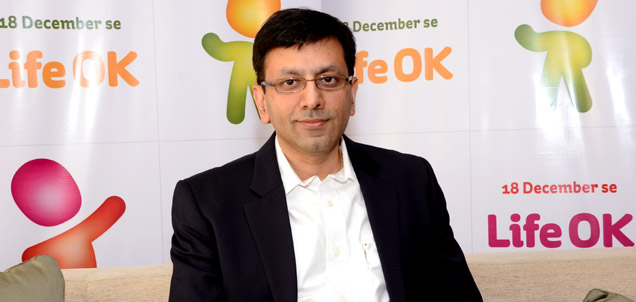
    Life Ok – the new avatar for Star One – was launched on December 18, 2011. The channel will target to first get to the 60-70 GRP mark, and from there its first big milestone – to be a significant player by winning the No 4 position and beating one of the four big players.


    How well it suits the Indian viewers is something to look out for. Meanwhile a quick glimpse of what the management is thinking. MxMIndia’s Rishi Vora speaks to Chief Operating Officer Sanjay Gupta on his expectations, and much more. Excerpts:


    Q: Why the decision to shut down Star One and launch Life Ok?

    Star One as a channel has been there for several years. But it delivered a very average sort of performance. It catered to a niche audience and never quite made an impact. In GRP terms, it clocked about 30-40 GRPs. So there was a need to ask tough questions. We thought there was an opportunity in the GEC landscape to come up with a channel that is unique and differentiated, going by the viewer and the way he consumes content. So we decided to rebrand Star One to Life Ok.


    Q: It is said that Star One was not given the required strategic push to compete with Star Plus and other GECs.

    Every business can reach its potential. The business idea, in the case of Star One, was to be a niche channel. So in thought terms, I don’t think we were very sharp. We did not have a content offering that was differentiated enough to create a long-lasting impact on consumers’ minds.


    Q: So was Star One treated like a second channel? Was it a conscious call that it should not compete with Star Plus?

    The question that we asked ourselves was: Should we continue to have a channel which is a second channel or should we really continue to have a channel which fights? Which may be second, third or fourth, but that’s not very important. We thought we should have a channel that’ll compete with every channel – be it Zee, Colors, Sony or even Star Plus. The whole idea of changing the name to Life Ok was to liberate the channel so that it could cater to consumers as a brand and as a content destination. So that it could be different and unique and in the process have a more meaningful presence than Star One.


    Q: So Life Ok is not going to be the second Hindi GEC channel of the Star Network?

    It is in the Hindi GEC, one more offering from Star India. Star Plus is our first offering. The reason why we have changed Star One to Life Ok is because this channel has come up basis our understanding of viewers and we believe there is a gap. The name carries a philosophy. Unlike Star Plus for example, where we connected Star and Plus-and it became Star Plus, Life Ok is a name with a purpose.


    Q: Was there any research done on the name? What was the thought process behind naming it Life Ok?

    The idea was to have a name which captures the philosophy of the channel. A lot of research and consumer work has gone into deciding the name.


    Q: Can you elaborate on the philosophy?

    Let me explain. We’re entering a very, very tough competitive market – the Hindi GEC market. So why will this work? In my view, this is likely to work is because this channel comes with a very unique promise which consumers and viewers will see every day. Stories and characters of this channel will come on every day – not for five days but for all seven days in a week. As a viewer you want to seek whatever you like – it can be music, films, radio, newspapers, and also in my mind the characters of the shows you watch on daily basis. So content will be offered to consumers seven days a week.


    Also, stories on other GECs are not pacy enough, in terms of the speed. So what we’re doing on this channel is, we will tell three stories in an hour unlike the norm which is two stories every hour. We will tell a story in 20 minutes, so when viewers come to our channel, they will find the stories very pacy.


    Q: What is the thought process behind the two-minute break?

    The two-minute break is again a viewer experience. I don’t want a big break. As a viewer that will put me off. A lot of people get distracted with a long break and end up not watching your show. So with three stories in an hour and the two-minute breaks, we’re telling the viewers that they don’t need to go anywhere. They know it’s coming back in two minutes, so they are more likely to be on your channel if the commercial breaks are not very long.


    Q: But that means there will be an impact on the bottomline.

    In the short run, yes. But in the long run, it brings you more eyeballs. Once we have a set of viewers, we can then make up…


    Q: What is the programming strategy for the weekends?

    Fiction shows, non-fiction shows, we will use Sach Ka Saamna every day including the weekends. We will also have movies on weekends, in the afternoons. Afternoon time is very important-the whole family gets together and watches TV. So yes, we will have a variety of content running on the weekends.


    Q: We’ve seen some failures in the broadcast industry – 9x and Real being prime examples. So what are the things that you need to be extra careful about?

    Doing a new channel is a very costly exercise. Therefore, there will be a huge amount of risk that you always run, whether you refresh a channel or you create a new channel. In either of the cases, it is important to have a differentiated offering. If the viewer is getting the same thing on many other channels, why is he going to watch yours? The idea for this channel, therefore, is to keep the viewer at the centre and offer him something unique. So if you’re able to stick to that – not only in the philosophy and the thinking, but also on the content you offer every day, then it gives you more chances of being successful.


    Q: True, but second GECs which have launched in the past haven’t done well. SAB, you may say, is an exception.

    Yes, Sony is a good example where it has two channels – Sony and SAB. And they’re working well, so if there is an appropriate positioning, relevant content, it would work. I think the learning which I mentioned earlier, if we have a unique proposition, keeping the consumer at the centre and differentiated content, it should work. And Sony and SAB is a good example in my mind to quote. Hopefully, Star One can learn from that and create a more meaningful positioning.


    Q: Are you going to roll out shows which cater specifically to the youth, the single largest segment of India? Something like Bigg Boss which does well in that department?

    We’re very focused on youth because we believe that is an important target audience. So if you look at the non-fiction we are beginning with – Sach Ka Saamna with Rajeev Khandelwal, where the big issue which we are tackling is corruption. Now, that is something which is at the top of every young person’s mind in the country. From the content, which you will see in the next few days, in terms of the message it delivers, it is not about saying let’s point fingers at others. It is about saying, ‘If somebody has to clean up the system, he or she has to start with us.’ That’s the message. And it is very much focused on the youth of India. Another show – Devon Ke Dev… Mahadev – we’re talking about one of the biggest gods of the country for whom most youngsters, especially women, fast for Mahadev in their early teens and before marriage. So that is a very unique thing we have on the channel and that’s the beginning of FPC every day. The rest of the content is dealing with absolutely the key issues which youth will emphasise on in a really big way.


    Q: But mythologies haven’t done very well for other channels. Colors and Imagine have tried it and haven’t produced fantastic results.

    I think Colors did fairly well on Jai Shri Krishna – the mythology serial they had. So if positioned well, it can work. We believe there is a market for mythology in a big way. It will have a different kind of emotion being catered to consumers.


    Q: Did you consider doing a big-ticket show like KBC, Bigg Boss, bringing a popular celebrity hosting the show?

    I think we have been very careful in the kind of emotions we want to deliver. And we wanted to be true to the philosophy of the channel that we’ve created. So we’ve stepped away from bringing a big celebrity. If somebody comes, he or she should be able to respect the values of the brand. And it is about cherishing what you have as a philosophy ‘Jo Apne Pass Hai Woh Khas Hai‘ and that’s why all the content pieces are on the lines of that philosophy. In fact everything we’re doing is true to that. And that’s the reason we’ve stayed away from having a big celebrity on the channel.


    Q: So going forward if there is a need to have a Amitabh Bachchan or a Shahrukh Khan, would you go for it?

    At this point in time I would say if it fits in nicely with the philosophy of the channel, then we will definitely consider it.


    Q: Why Madhuri Dixit as the Sutradhar?

    There is a lot of learning that’ll come out from the shows we’re putting up on the channel. What we wanted to do by bringing Madhuri was: as we show the content, everybody takes away their own understanding. What she does on the channel is, she poses questions, brings in her understanding and her life reality, and really puts a lens in front of viewers to evaluate and see the content well. And therefore, it really raises the question – are we really cherishing what we have or not? Or are we worrying only about possibly the dreams of future alone? And, in her life she’s done the same. She has been one of the big superstars and has taken a break – been a family person. So she has balanced her life very well. So the persona fits in well with the channel’s philosophy. And she hopefully will be able to raise the questions in everybody’s mind and help viewers view the content through a new lens.


    Q: But what is the fan following of Madhuri Dixit today? Do you think there are enough fans, because quite clearly, her days are gone.

    Firstly, all big stars have a really valuable equity in consumers’ minds. But the important thing is how this fits in with the channel’s philosophy. And in my mind, it fits in very, very well.


    Q: How has the response been from the trade?

    Mixed response, I would say. People are surprised that the brand name doesn’t carry Star in the name – that’s been one of the questions from a trade point of view. And they’re wondering why. And also the other trade response is that we have a good variety of content. So they feel that the content looks very powerful and hopefully, the next few months will tell us how the business goes.


    Q: What will be the channel’s reach on Day One?

    Star One today reaches out to around 40-45 per cent of people every week. Those are the people who come every week to view Star One. Hopefully those people would definitely come to see the channel and basis the marketing campaigns, other sets of viewers will get curious about the channel and they’d come and like to watch it. So anywhere between 40-45 per cent definitely should come and maybe some more would like to come and check out the channel. And finally the content strength will determine how many people will become regular watchers.


    Q: Do you expect to be the No 4 channel, beating Zee, say in a month’s time after launch?

    Star One is at around 40 GRPs right now. And if we grow significantly, that’s the first good number to look at, because this journey is a long journey. We are not starting it to really take a big leap in week 1or week 4. If you’re able to grow from where we are significantly, that’ll be the first milestone. And as I said earlier, it competes with every channel in the GEC space. If the content is powerful, it’ll grow – but the first initial aim would be to get to a 60 or 70 GRP mark. That will be an important milestone for us.


    Q: How long will the aggressive marketing campaign continue?

    We started this campaign around a week ago. We started it on December 12, it continues in full intensity now and it will continue for another few weeks. So it will be a four-week campaign which will run supporting the channel launch.

  • Rahul Thappa, Bharat Bhushan quit Mail Today

    By Akash Raha


    Rahul Thappa, COO of Mail Today has quit the group. Mr Thappa had joined Mail Today in May 2011, taking over from the then-COO Suresh Balakrishnan. Rahul Thappa is serving his last week at Mail Today after which he will move to his new organization, which he refused to name at the moment. When asked by MxM India, he confirmed that he has quit.


    He said “I’m thankful to the board of Mail Today Newspapers Pvt Ltd for having given me the opportunity to head the operations of the publication as its COO. It was a pleasure working with the entire MT team and the operational learning from having managed a daily newspaper has added immensely to my repertoire of skills. I am confident that the newspaper will grow into a force to reckon with in the years ahead. My new assignment is in conformance with my long-term career objectives. I shall be able to speak about my assignment in the weeks to follow.”


    Mr Thappa earlier worked as the Managing Director at Mindshare Malaysia. He also held a key position at the India Today Group, where he reported to Mr Ashish Bagga, CEO, India Today Group.


    Bharat Bhushan, Editor, Mail Today has also quit the organization. Mr Bhushan, too, confirmed this development, but refused to make any further comments. Mr Bhushan was a part of Mail Today’s launch team and was earlier the Editor of Telegraph – Delhi edition.


    Mail Today, the compact daily in Delhi, is a joint venture of India Today Group and Associated Newspapers (ANL), publisher of Daily Mail, UK.

  • NDTV 24×7 now available in UK on Virgin

    By Akash Raha


    NDTV Group’s premier English news channel NDTV 24×7 is now also available on Virgin Media in the UK. With this, NDTV 24×7 becomes Asia’s first and only news channel to be a part of Virgin’s base pack along with other leading international news channels. NDTV 24×7 will now be reaching out to an additional 3 million plus households.


    Speaking on the occasion, NDTV’s Head – Network Distribution and Affiliate Sales, Rahul Sood, said, “With this launch on Virgin, NDTV 24×7 is now available across a large majority of TV viewing homes across the UK. It helps us further penetrate the UK market and reach out to all those viewers who have a deeper commercial and cultural interest in the news and stories from the sub-continent.”


    NDTV 24×7 is available on channel # 621 on Virgin Media’s base. It is also available on Sky and is the only news channel fromIndia which is now being beamed into 75 countries across the world.


    Cindy Rose, Executive Director, Digital Entertainment, Virgin Media, said, “We have been working extremely hard this year to deliver a sterling line-up of channels, and adding NDTV 24×7 is one of those initiatives. We are very pleased to have them on board and 2012 promises to be an even more exciting year as we will be launching revolutionary new products and services, reinforcing Virgin Media as the most innovative and pioneering digital home entertainment provider in the market.”


    What they think


    Reacting to the development, Surbhi C Murthy, Associate Vice President, Allied Media, said, “I am sure this move is likely to get NDTV more viewership and also more Indian and international advertisers who want to be seen in UK market.UK has a lot of Indian population and reaching out to them certainly makes sense, both for Indian and international advertisers.”


    There is also the question whether the content will be specifically be curated for the UK market or will the same content being shown inIndia, be telecast in UK. And if it is, will the UK audience of Indian origin be interested?


    Dinesh Vyas, Business Head, MEC, said advertising would not be significantly bolstered with the move. “Certainly they will like to have viewers across the world. The US and UK has a substantial populations of NRI and immigrants. But as far as media planners and buyers are concerned, I don’t think this will make much difference. They will not be necessarily excited about this expansion. If they want reach in the UK market, I am sure they will look across the length and breadth of all the media vehicles that are available. That said, expansion in all forms is good and it’s going to pay off for the NDTV group in the long run.”


  • Anil Thakraney: Treating the fan like shit

    By Anil Thakraney


    Everyone’s talking about Rahul Dravid’s speech at the Bradman Oration. It is sharp and insightful. And it proves that the man is not just a great batsman, he’s got a thinking brain when it comes to the sport. Jammy makes many pertinent points about the dangers to cricket, but one that caught my attention was on disrespecting the fan. Quite coincidentally, I had alluded to this in an earlier post.


    Dravid warns that not thinking about the fan is one of the reasons for the fast-diminishing crowds at Indian stadia. And how this portends very badly for the future of the game. He is right, of course, and I believe it’s TV that is busy slaying the goose that lays the golden eggs. Because the BCCI earns almost all its revenues from television rights, they have paid scant attention to the stadia. The last time I made the mistake of going for a one-day match, it turned out to be such an awful experience, I swore never go back, even if someone paid me a whole lot of money to do so. Stinking, dirty toilets. Crowd mismanagement. Shortage of drinking water. Very uncomfortable seats. It was like the organizers were saying to me: “Who asked you to come here, you idiot? Go home and watch.”


    Dravid categorically states that it is no fun for the players either. That it is depressing playing in front of empty stadia. Really hope the BCCI is listening to him and takes urgent measures to sort this out. If they won’t take the rest of us seriously, surely they must pay close attention to what the experienced cricketer has to say. He can’t be wrong.


    [youtube width=”400″ height=”200″]http://www.youtube.com/watch?v=qr4bK63WxXY[/youtube]Here’s the link to Dravid’s speech if you haven’t watched it yet. In addition to his views, the suits must pay attention to his style. Dravid makes very serious points, but he doesn’t bore the audience. Something to learn from here for those who speak at seminars. Boring speakers who never fail to put us to sleep. (One of the main reasons I politely decline invitations to seminars.)


    ***


    PS: Completely wacko ad from BurgerKing,Russia. It’s over-the-top and bizarre, perhaps an indication of the desperation caused by their declining market share. But you have to say one thing: At least they’ve made the burger the hero!


  • Don 2 marketing on overdrive


    By Tuhina Anand


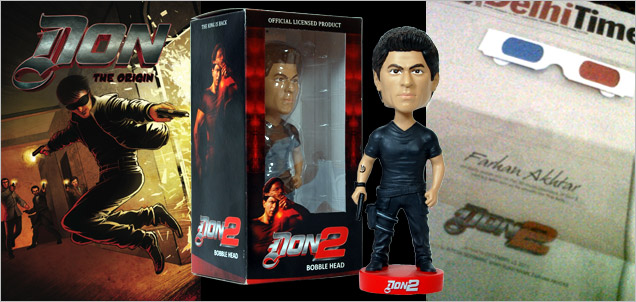
    It’s another SRK release on December 23 and the marketing team for Don 2 is on its feet to get the maximum audience thronging the cinemas to watch the magic of King Khan. The December 19 edition of Bombay, Delhi and Bangalore Times carried a front-page invitation from Farhan Akhtar for the 3D music premiere of the movie on Google +Hangout – with a pair of 3D glasses encouraging people to watch Don 2’s videos in 3D on YouTube. The strategy is to attract audiences as the movie is being released in 2D as well as 3D.


    Priti Shahani, Chief Strategy Officer, Reliance Entertainment, said, “The TOI innovation is a tactical move. For us the strategy for Don 2 has been to partner with marketers and media that reach out to large numbers. We have looked at all platforms that would give us visibility so while our partnership might not be as grand as RaOne, it should reach a large platform.” Don 2 has associated with platform partners and media partners including Sakal, Lokmat and Amar Ujala to reach beyond metros.


    The Don 2 marketing may not be ubiquitous as the blitzkrieg for RaOne, but as Vishal Ramchandani, the Marketing Manager of Excel Entertainment puts it, it has been consistent and concentrated, and peaking at the right time with the movie release slated for this week.


    The marketing effort has been 360-degree including even a comic launch published by Om Books. The comic is on the origin of Don and fills in details on the making of Don, thus acting as a prequel to the sequel. Mr Ramchandani also said that on December 23, two sets of games will be launched, made in collaboration with Gameshastra. These games are compatible on PS3, iPad and Android platforms and are basically shooter games where the player gets to be the Don. The social media presence is taken care of with the Facebook game.


    Mr Ramchandani said, “We have looked at various innovative and interactive ways to connect with the audience. While SRK is a big name, these marketing bursts ensure in keeping the excitement alive. When tickets today are priced around Rs 300-350 in the first week of the launch, there is a need to create urgency to get people to the theatre and these activities help in doing that.”


    Besides the comic and games, there is also a tie-up with Microsoft India where the contest promotes ‘Meet the Don in Berlin’ on various platforms. There is a spin to the Don on the city tours where the hunt is for a Don from each city. This is a positive take on the search for Don. Last week eight cities were toured and more city tours are slated.


    The makers are also relying on the highly popular Don ‘sayings’ and marketing it in a big way. ‘The Don says…’ have been popularized on the 360-degree platform.  These dialogues have also been showcased at cinemas halls and even washrooms, thus trying to catch more eyeballs.


    In terms of merchandise, one can see T-shirts, bobbleheads and Think Tank board games. There are also a few brands present in the movie, though Mr Ramchandani vouches that these associations are not just for the sake of it but is in sync with flow of the story or, as he puts it, “requirement of the script”. Though a number could not be put on the marketing spend, it is estimated to be running into single-digit crores.  Trade pundits suggest that any big ticket movie spends at least Rs 7-8 crore on advertising and marketing.


    Explaining the reason behind marketing even an SRK release, who is a big brand himself, and the need to be promoted aggressively, Ms Shahani said, “Today, the reality is that the shelf life of a movie at best is around 8 weeks and the audience window is even shorter and shrinking. To capture the mind, a brand like SRK helps where like in this movie he stepped out 10 days ago to promote and the impact has been instantaneous. Owning the minds of the audience is impossible today and that’s where marketing and SRK helps.”

  • The Anchor: 6 wishes for Santa Claus from the radio industry

    By Monica Nayyar Patnaik


    #1 No ambiguity in FM Phase III:

    There has to be absolute clarity on phase III, and it must happen soon because every time there has been a delay for some or the other reason. I also hope the number of bidders is high and that it is easy for everyone in the industry to pitch in.


    #2 Music and copyright issue resolved:

    There is still a question mark on music royalty and copyright issues. It must be sorted out soon, not just with one or two major players, but with other players as well, big and small.


    #3 Ad pie of radio should increase:

    Radio is a mass medium, we are reaching out to a lot many people and now with mobile phones the FM radio penetration has only grown further.


    #4 Better technology:

    We need to be very clear on the technical aspect in terms of frequencies; it would be helpful for the listeners in getting a variety of niche programming and so on.


    #5 Improved listenership survey:

    It is very important for the entire radio industry. RAM is present in only four metros today, it must be extended to other cities as well.


    #6 More talent:

    Better training, their awareness running on air, behind the scenes in production. We need to give more opportunities to the production and technical talent pool as there is a lot of scope with more channels and frequencies coming in.


    Monica Nayyar Patnaik is Joint Managing Director, Eastern Media Limited.

  • Curb online voices? No way, Mr Sibal

    By Akash Raha


    Telecom and Information Technology Minister Kapil Sibal stirred up a hornets’ nest when he recommended censorship of online content. Both freedom of expression and the new world of social media came into focus, with several organizations hosting forums on the issue, such as the Foundation for Media Professionals’ panel discussion on December 19 in New Delhi, titled ‘The new puppeteers: Curbing Social Media’.


    The media has come down heavily on Mr Sibal’s suggestion that pre-screening or pre-censorship should be carried out to keep a check on the content of social media platforms. Anuradha Raman, Associate Editor, Outlook said that the government is still following the age-old programme codes set for Doordarshan and All India Radio which were formulated in 1982, and which are constantly used to rattle today’s media. She said that if the government wants to wall up websites and dot.com, why not bring it under a code through legislative sanctions rather than arbitrary discrimination? She said that the current system of censorship of media lacks accountability and there is a need for parliamentary representation to spell out these codes properly.


    Lawrence Liang, a lawyer from Centre for Internet and Society, said it is important that the freedom of speech and expression has to be extended to the terrain of internet rights. The issue of National Security has been brought out repeatedly and it is fine to keep it in mind but not at the cost of free speech and freedom of expression. The government is hereby performing a quasi-judicial role. Moreover, there is lack of transparency in the internet censorship proposal, and today, the work of censorship is being outsourced. He pointed out that the only place where pre-censorship exists is in the case of cinema.


    Saikat Dutta, Delhi Bureau Chief, DNA, said, “In the name of national security the government is increasing its surveillance footprint.” This has led to the growth of what he called the business of surveillance, which is today a multi-billion-dollar industry. The more the government wants to spread its ambit on surveillance, the more companies selling surveillance services will benefit. He went on to say that these days the government is coming down upon several sites and blocking them and if a site is blocked, no one will ever know what happened. There is no information on why something is blocked.


    Narayan Madhavan, a senior columnist from Hindustan Times said, “The right of free speech is a constitutional right and not a government-given one. Freedom should be a rule and not an exception. The government is not the state, it is only an arm of the state temporarily given the right by the people.” He added that National Security has become a more fashionable word to use for censorship and that while it is essential, but it should not be used to curb freedom. In a tweet earlier he had written, “Twitter is the new parliament and Facebook is the new café.” He observed that social media is an interactive media and pre-censorship sounds like an act of desperation or lack of technological knowledge.


    Government has the right to monitor social media just as we can monitor the government by RTI, but there has to be accountability involved. He added that we are culturally an open society and the government cannot put a lid on this. The rights vested by the constitution should not be blocked by a few in the government. This attempted curb should not be seen as a curb only on social media but on media as a whole. It is important to understand when we talk about censorship on social media that the content owners are those who post. Facebook therefore acts as a printer and not as a publisher.


    Sheela Bhatt from Rediff.com noted that there are still a lot of taboos against the digital medium and the online world, which needs to change quickly. The cause is lack of knowledge about the online space. She started off by condemning the censorship which Mr Sibal talks about, and dwelt on the issue of social media, its powers and nuances. She gave the example of the India Against Corruption page on Facebook and how it became a powerful tool to stand against corruption. She said that the government does not appreciate the form of media which is the internet, and such a mindset is regressive and hampers growth.


    Nikhil Pahwa of Medianama said that the censorship that we are discussing is already prevalent. The problem is that we don’t know why a certain site is blocked. National Security is a “nice and easy” way to serve political agendas. He said, “For example, if my site is blocked, I don’t know why it is blocked, who blocked it or how to unblock it… all it says at times is, this site is being blocked on request from DoT… We don’t know who gives the order for blocking and unblocking and there is no transparency.” He said that IT and surveillance rules under the garb of National Security needs to be fought as it threatens democracy.


    Prabir Purkayastha from Delhi Science Forum observed that there are serious problems for any new technology and the same is the case with the internet and social media. “For example, the boundaries of private speech and broadcast are diminishing in the world of social media. What earlier used to be broadcast, now with the internet has become multi-cast. Private censorship is what the government wants right now and it’s not like the one China practices. For China they have a hammer and for them everything else is a nail. But the Indian government is being clever here. It’s like the government is providing safe harbour to those who accept everything that the government is saying and for everyone else, it’s a lost battle. And it’s not social media versus traditional media any more, as what is traditional media is already on social media. The power of surveillance is more pervasive than ever before. The issue is that the government is checking you 24 hours a day, where you are and what you are doing and snooping into your conversations in the name of national security. Today, the new and the old media have to understand that they are not different, and work together to protect themselves.”


    Mishi Choudhary, Executive Director, SFLC.in, observed, “Taking offence on other people’s behalf has never been as fashionable as it is today,” and censorship has become the new name to protect this. The positive aspects of social media are ignored when there was a tsunami and an earthquake. What really bothered the government is the Arab spring and the revolution in Iran and the Anna Hazare movement.”


    Shubham Vij of Kafila.org said that pre-censorship of information is not feasible and possible in the current scheme of things and it is only a matter of time before the government realizes this too.