Category: MEDIA

  • Accel Partners invests in digital media firm Trivone

    By Biswarup Gooptu


    Marquee venture capital firm Accel Partners, announced on Wednesday that it has invested an undisclosed amount in a round of Series A funding in Bangalore-based digital media and content firm Trivone Digital Services.


    The investment will be used to fund Trivone’s working capital requirements as well as pushing growth through the inorganic route in the months ahead, according to a press statement released by the VC firm.


    “Trivone, given the media and Content expertise of the team, is well set to build a best in class Digital Media Company”, Mahendran Balachandran, partner, Accel India, said.


    Trivone, which has been looking to grow through the acquisition route, had acquired the management rights for the three information technology portals – Techtree.com, ChannelTimes.com and CXOToday.com – from media conglomerate UTV in May earlier in the year.


    “We are delighted to have Accel Partners on board and look forward to working closely with them as we chart out a growth path for ourselves,” Subu Subramanyan, chief executive, Trivone, said.


    The Trivone investment is the second such investment for Accel Partners in December, following its $1 million (Rs 5 crore) investment in SaaS-based social customer support start-up Freshdesk.


    The VC firm, which has also backed global Internet majors such as Facebook and Groupon, announced in November that it had raised a $155 million fund focused on seed and early-stage investments in India  Its investments in India include, Kaatizone, Babyoye.com (Nest Childcare Services Private Limited), Exclusively.in, Flipkart, Probe Equity Research Pvt Ltd, LetsBuy.com, among others.


    Source:The Economic Times

    Copyright © 2011, Bennett, Coleman & Co. Ltd. All Rights Reserved

  • Mukesh Ambani in talks to buy Network 18: WSJ

    Mukesh Ambani, the chairman of Reliance Industries, India’s biggest conglomerate, is in talks to buy Network 18, the television and internet company, the Wall Street Journal said quoting people familiar with the situation.


    Ambani, the paper said, has been in talks with Network 18 founder and controlling shareholder Raghav Bahl on the issue.


    “The talks may yet lead to nothing. It also isn’t clear what the value of Ambani’s investment would be and whether he is operating on behalf of Reliance Industries or whether he would put his own cash into a deal. Network18 Media and Investments, the holding company for the conglomerate, has annual revenue of about $300 million but isn’t profitable,” said the paper.


    A spokesperson for Reliance Industries told ET that the report is not true. Speculation has been growing in recent weeks about possible takeovers and consolidation in the Indian television and media space as ad industry revenue shrinks due to the slowdown and costs remain stubbornly high.


    Mukesh Ambani and Reliance Industries have been linked to several transactions not just in media and entertainment but also in other industries after RIL surprised everybody by buying a small stake in EIH, the hotel company that runs the Oberoi group of hotels last year.


    RIL has more than Rs 60,000 crore in cash and cash equivalents on its balance sheet and it is widely expected to buy some assets in its core businesses and outside.


    Source:The Economic Times

    Copyright © 2011, Bennett, Coleman & Co. Ltd. All Rights Reserved

  • Anil Thakraney: Doesn’t SRK get it?

    By Anil Thakraney


    Oh no! Don 2 (it actually should be Don 3, because the earlier Don was a rip-off of the original Bachchan film) is all set to hit the cinemas and we will have to sit back and ‘enjoy’ Shahrukh Khan’s nautanki, as he shuttles from one TV studio to another, desperately hawking the flick. He just did ditto for Ra.One and pakaoed the hell out of everyone. The popular Twitter joke at the time was: The only thing left for SRK to do is to insert breaks during the film’s screening, so that he can plug it!


    Did the media hero’s 360-degree effort for Ra.One save the film? Despite all those tall claims on initial collections (which would have happened even if Khan didn’t do the studio rounds… his name anyway gets lots of folks interested), the film was dissed by all and sundry and reportedly lost some money. So what is the use of all this mad self marketing?


    Now, while I can understand the producers wanting to promote the film – even planting those cheap 3D glasses inside newspapers is okay to a point – Shahrukh must understand that his continuous presence in the media is going to hurt his charisma in the long run. How much of the star can we take? In fact, I gave Ra.One a quiet miss because the last thing I wanted after his full-on blast in the media was more Shahrukh Khan. Sure, the content-starved TV channels will welcome him with open arms. Because it gives them a chance to talk about all issues unconnected with the film, including SRK’s opinions on how to end communalism in this nation, and how to send a man to Uranus (okay, I made the last one up). But what good does all that fluff talk do for the film’s fortunes?


    Dear SRK and all the other stars: Guys, spend all this moolah and energy on creating sparkling content. Two, zealously protect the mystique around your own image. And three, leave the TV studios to the netas and to Mr Suhel Seth.


    ***


    PS: I sincerely hope Anna’s Jan Lokpal bill gets passed in toto by the government. Not because I believe it will end corruption, but because I don’t want Team Anna doing their number from Mumbai. The traffic is already a mess out here, and we just can’t handle another frenzied public spectacle.

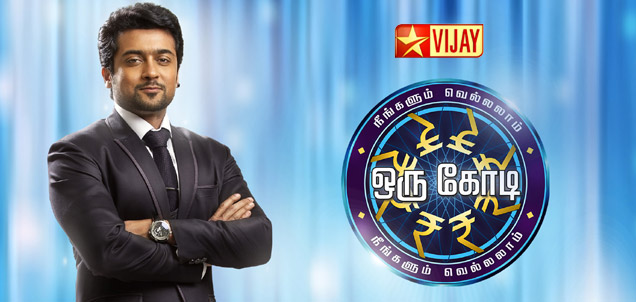
  • Star’s Vijay TV hopes to win big with Tamil KBC, nets superstar Suriya as host


    By Tuhina Anand


    Star India’s Vijay TV is looking at its next leap with its biggest property Neengalum Vellalam Oru Kodi or Kaun Banega Crorepati in Tamil, to be hosted by superstar Suriya. In fact, this is touted as the biggest property ever not just for Vijay TV but for the Tamil television industry too. The channel is pinning its hope on the show to weave its magic and catapult Vijay TV to garner good numbers. If one looks at the channel share, the scenario among Tamil entertainment channel is that Sun TV leads and relies mainly on its fiction whereas KTV, the movie channel from the Sun TV network is clearly at number two though at times on really rare occasion may be toppled by Vijay TV. Then there is Sun Music and Kalaignar TV which again was positioned as rival to Sun TV placed somewhere in between. However, in this entire number game one thing to keep in mind is that the gap between the leader and the second channel is huge and not easy to bridge.


    For Vijay TV to come up with KBC which is a popular game show and has been played across 116 countries in 83 languages in the past 13 years is definitely a big move. Six years ago, Sun TV had introduced a show with a format similar to KBC, with Sarath Kumar, which had not fared well and could not go beyond its first season. However, much has changed in the Tamil GEC since then and Vijay TV has been the one that has experimented with talent-based reality shows earlier and given audience a taste of non-fiction shows. Now this time with Suriya who makes his television debut and is much revered by the Tamil audience, they definitely have an ace. Also the show is being produced by Big Synergy, the producers of KBC in Hindi, thus ensuring the same high quality in production, sound and sets.


    Bridging the gap

    K Sriram, General Manager, Vijay TV said, “This by far is the biggest investment by any South Indian channel as we have bought the rights from the original to bring out KBC in Tamil. We are looking at bridging the gap with the leader with this property. The treatment of the show is fantastic and it’s a superior product offering to the Tamil audience. We have also tied up with ITC’s Sunfeast as the presenting sponsor.” This year KBC 5 saw all the big brands riding on it and Sriram says that even though the format has its limitations when it comes to getting brands on board, but they along with Synergy are working out ways to provide greater value to brands on the show.”


    The show will be launched in February 2012 and Vijay TV is leaving no stone unturned to capture the minds of its audience. It is breaking a high-decibel campaign starting today (December 21) inviting people to participate in the show which will then be followed by a highly visible 360-degree campaign that will continue till the show debuts on TV. The show will air Monday to Thursday from 8-9.30 pm. The tone of the show will be similar to what Sony has done this year to give voice to unsung heroes and bring out stories from people who have financial constraints but emerge winners on the show, thus the prize money of Rs 1 crore gives wings to their dreams. Sairam however adds that the participants will be a careful mix, thus providing equal opportunity to all.


    The launch of KBC will also see simultaneous launch of the two biggest fiction shows on Vijay TV to ensure audience stickiness post-KBC.


    Vijay TV’s tryst with reality

    Narendra Alambara, Vice President, Starcom Chennai is of the opinion that KBC being a knowledge based show will pull in Tamil audience initially but the real task for Vijay TV will be to sustain viewers once the novelty value of popular host, new show and winners fades. Giving his take on why Vijay TV is probably the best channel to showcase KBC, he said, “The channel has had winners in the past in its talent based reality shows so in that sense it’s in the DNA of Vijay TV as Sun is seen more tuned to fiction.” He added, “Within trade circles KBC has been received well. I think interest will pick up among viewers once the promotion starts. Vijay TV has invested in producing superior quality shows and the quality of KBC will determine the channel’s position as an option for quality programming.”


    John Britto, Business Manager, Mindshare, explained, “The buzz on KBC is positive and this should have a positive impact on Vijay TV. As it is the biggest property and will be marketed well, the brands will be keen to get on it.”


    Giving an insight on why KBC should work this time even though in its earlier avatar it didn’t in TN, he said, “The awareness level this time is much more and the anchor Suriya has a great following. Even earlier, Vijay TV has adapted Koffee with Karan, Laughter Challenge and Talent competition with success.”


    KBC in other regional languages

    It’s not just Vijay TV which is gearing up for KBC in Tamil but there is also Suvarna which is readying for launch of KBC in Kannada with superstar Puneet Rajkumar. KBC had made its debut in Bhojpuri on Mahuaa TV as Ke Bani Crorepati with Shatrughan Sinha as its host and in Bengali as Ke Hobey Banglar Kotipoti hosted by Sourav Ganguly on Mahuaa Bangla. While the Bangla KBC averaged TVR of 2.29 (period June 6 to August 12, 2011), the Bhojpuri version saw an average TVR of just 0.45 (period June 6 to August 12, 2011). (Data source TAM).

    With Suriya as host and Big Synergy ensuring that production and programming standards are standards, Sriram is hopeful of the Tamil KBC delivering rich dividends: not just for the programme, but for the channel too.

  • Naming No Names: We don’t need no ad breaks

    By Gouri Dange


    Is there a name for some of us viewers-listeners-readers who simply cannot be bludgeoned into buying products by the advertising industry? While we do go out and buy stuff, and in that sense are consumers, we have grown an internal lock-out mechanism which makes us utterly impervious to advertising of any sort- inyourface repetitive ads, subliminal ones, funny-clever ones, oh-so-Indian mange more kind of stuff, manipulative tear-jerking advertising… none of it seems to stick to us. It’s as if we are Teflon-coated, and all attempts to grab our eyeballs and sing into our ears and play our hearts and seduce our souls simply slide away unregistered in our psyches.


    It’s probably genetic, and then again it is probably a defence mechanism that we developed in response to the relentless persuasion that we have been subjected to over the last some years. Ads in newspapers and magazines that come to us with the cover page in the form of some fussy pull-out, fold-in, pop-up flappy strips and straps? They don’t stand a chance. We simply tear off that part, so that we can read without the hindrance of this piece of persuasion.


    As for ads on TV, some of us have channel-switching or snack-fixing or loo-going or quick phone-calling down to a fine art. This way, we don’t have to watch the ad world pretending to be oh-so-concerned for our skins, our hearts, our safety, our kids’ education, our old age security and yadayadayada while reaching out to pick our pockets.


    Of course, the crafty fellows now have synchronized ad breaks, so if you switch channels, you can avoid being told what oil to buy, but you will have to watch happy families choosing wall paints. And on a bad day, the same ad will be playing simultaneously on three channels, so the message is ominously clear – you can run, but you can’t hide. Well then we always have the option to sprint into the kitchen, fix ourselves a drinky, make bhurji (no, not 1.59 minute noodles) and be back in our seats just as the movie or programme is back on air. I love it.


    My least favourite ads are the ones in which children are recruited to sell stuff; for some of us, this borders on child-labour/porn in frilly clothing. And when those come on, I mute the TV and exit the room for that loo break and can abandon a programme or a movie if it all gets too much.


    Making ourselves ad-proof has become such a way of life, that sometimes I can be sitting right there, right through a serious attack of advertisements on my TV, and will not be able to recall what product an ad was for, 10 seconds later. Absolutely not a clue, if we’re asked. Zilch, nada, negative, illay, nahi. And if we’re asked what brand of soap-oil-rice-sauce-atta-insurance we use, a researcher would again draw a blank. Nothing. Yes we do eat that stuff, but we simply buy stuff in rotation, and are more likely to buy things that don’t shout ‘pick me, take me, buy me, use me’ or make seductive sounds from the store shelves. So giving us the come-hither doesn’t work too well for a product.


    And if we’re sold something that we liked for the first time, but was less than good the second time, we’ll dump it without a second thought or a backward glance. We don’t know the concept of fidelity, faith and loyalty when it comes to stuff that has to be bought and used. We buy what works for us, and will stop buying it when it doesn’t.


    Nostalgia doesn’t work on us either when it comes to advertising, so anything that tries to evoke some decade we’re supposed to be all gooey-eyed about, we will simply yawn and go to the loo.


    How do we make consumer choices when it comes to buying larger things like cars and computers and such-like? I call my friend Bonnie (everyone should have a Bonnie). Because he knows about these things. And he knows what works for me; he puts himself in my shoes, and gives me advice. He is himself ad-proof! He too only ever buys things that have shown that they work, rather than things that strut on television and preen in print. He ruthlessly throws out goods and services that don’t deliver on promises and rarely gives them a second chance.


    And no, this is not an advertisement for Bonnie. Go find your own Bonnie.


    Naming no Names is the mid-week column where novelist, columnist and counsellor Gouri Dange presents her tongue-in-cheek view of our world.

  • Online retailer Fetise nets $5mn live on ET Now show

    By Sudhir Syal


    In a deal that was sealed on television, early-stage investment firm SeedFund has committed to taking a minority stake in online men’s apparel retailer Fetise.com


    The fund has committed to invest $5 million in the Mumbai-based company after a pitch made on Super Angels, a television series on the ‘Starting Up’ show broadcast by ET Now. (ET Now is part of the Times Group, which also publishes The Economic Times).


    The show provides a platform for start-ups to make pitches to Angel Investors. And even before the show’s finale scheduled for March 2012, it has seen a start-up already raise capital on the show. Mahesh Murthy, one of the Super Angels on the show, is a co-founder of Seed Fund.


    Fetise.com was also one of the shortlisted start-ups at the Proto. in, an industry event for startups that took place at Chennai in July this year.


    The startup was founded in March 2011 by Chetan Bafna, Abhishek Shah, Somya Tambi and Subir Ghosh, college-mates who met at the ICFAI Business School in Gurgaon. In nine months, the start-up is clocking over 500 transactions per day at a revenue run-rate of Rs 2-2.5 crore per month.


    Mr Mahesh Murthy, Managing Partner of the Seed Fund, said: “What attracted us to Fetise was a clear focus on Men’s Apparel, very often we see start-ups in the e-commerce space who want to sell everything, but here they’ve picked a category and built a large product line.”


    Fetise.com’s product line includes men’s apparel, footwear and accessories, which has helped the company rack up average billing amount of Rs 1,500. Mr Anand Lunia, Executive Director of the Seed-Fund, who worked closely on the deal said, “Men’s fashion is a large category and the margins in this business also makes this vertical of e-commerce far more profitable than some of the others, we are looking closely at other private labels start-up within the space.”


    Fetise.com has two warehouses and is planning to open more over the next 6-12 months. Mr Chetan Bafna of Fetise.com said, “Our fundraising process started six months ago on Super Angels, and we’re overjoyed that the fundraising has closed on the TV platform too.”


    The next phase of Super Angels will be beginning in January 2012 with 10 start-ups making a bid to follow Fetise and raise funds successfully on the platform. Super Angels is a part of Starting Up which plays out every Tuesday at 11 pm, Saturday at 9 pm and Sunday at 10 am.


    Source:The Economic Times

    Copyright © 2011, Bennett, Coleman & Co. Ltd. All Rights Reserved

  • Video Report: Chaining the modem, gagging the router

    By Shruti Pushkarna


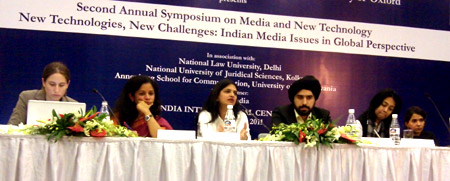
    The second annual symposium on ‘Media and New Technology – New Technologies, New Challenges: Indian Media Issues in Global Perspective’ hosted by Star India in New Delhi, on December 19th and 20th, set the ground for exploring international and comparative perspectives on the current media regulation debate and the role of information in the society in the times to come.


    The symposium, an initiative of Oxford University’s Programme in Comparative Media Law & Policy (PCMLP), in cooperation with its academic partners – the National Law University-Delhi, the National University of Juridical Sciences-Kolkata, and the Annenberg School for Communication at the University of Pennsylvania, brought together the diverse views of academics, bureaucrats, policymakers, industry leaders, civil society and legal experts to discuss such issues as law and responsibilities of self-regulation of media entities, regulation of the Internet, and emerging technologies in the context of freedom of information, privacy, and freedom of expression.


    Setting the tone of the two-day seminar, in his opening address, Uday Kumar Varma, Secretary, Ministry of Information & Broadcasting announced the government’s roadmap both for digitization and content regulation.


    Some of the other key speakers who addressed the participants at this symposium included Mark Stephens, Former Legal Advisor for Wikileaks; Osama Abu-Dehays, Head of Legal Affairs, Al Jazeera; Arvind Rajagopal, Professor of Media, Culture and Communication, NYU; Blair Levin, Communications & Society Fellow, Aspen Institute; Siddharth Varadarajan, Editor at The Hindu; Siddharth Narrain, Alternative Law Forum, Bangalore; Manoj Mitta, Senior Editor at The Times of India; Sevanti Ninan, Founder of TheHoot.com; and Monroe Price, Director, Center for Global Communication Studies, University of Pennsylvania.


    From trends in media regulation over the past year to the changing role of regulators, to the number of new challenges posed by evolving technology to media companies and the lawyers who represent them, a flurry of viewpoints were exchanged in the extensive debates.


    Deepak Jacob, EVP & General Counsel – Legal & Regulatory Affairs, Star India said, “I think this debate keeps the entire discussion and controversy around media regulation, it keeps it on the boil. You get different viewpoints, you get the contra viewpoint, you get the ‘for regulation’ viewpoint. So I think it’s healthy to keep this debate alive.”


    Panelists from different disciplines added to the flavour and scope of discussions. Nicole Stremlau, Coordinator, Programme in Comparative Media Law and Policy, University of Oxford said, “We tried to bring together the different research streams that are active here in India. So we brought together academics from universities, researchers from think tanks, as well as others working in the industry. So we very much tried to have a discussion across disciplines and across institutions. On the one hand, we had anthropologists, sociologists talking about the vast changes in the media policy and media regulation in India and on the other hand we also had a legal stream. So we had emerging lawyers discussing some of the pressing legal issues here and how they do research on these issues.”


    Is self-regulation possible?

    Following the recent controversy on content regulation sparked by Telecom Minister Kapil Sibal, interesting points on self-regulation of the media came up during the course of discussions. While Blair Levin, Communications & Society Fellow, Aspen Institute thought that it’s important to look at the particular issue to determine whether there is a need for the govt to step in or whether the industry can regulate itself, Deepak Jacob, EVP & General Counsel – Legal & Regulatory Affairs, Star India felt that the implementation of the self-regulatory mechanism is the biggest challenge. He said, “That’s always going to be a challenge, to educate, to make people aware of how self-regulation is the best way forward. I think that’s going to be the biggest challenge because people really intuitively don’t believe in self-regulation. They always believe that the govt has a huge role to play and should be censoring content.” Deepak Jacob also added that people are reading too much into Kapil Sibal’s move.


    [youtube width=”400″ height=”200″]http://www.youtube.com/watch?v=bOJ_EOHawOI[/youtube]

    Deepak Jacob of Star India on challenges of self-regulation


    ‘Informal censorship is happening’

    Another interesting point was made by Chinmayi Arun, Assistant Professor, National University of Jurisdical Sciences, Kolkata who feels that there is state-driven censorship taking place at an informal level. She said, “When we discuss censorship or interception of data, basically govt influence of information online, we tend to think of it in formal terms, that has the government officially asked for a certain amount of information, has the government officially asked certain sites to block a certain kind of information. But there’s actually a vast amount of blocking and interception that may possibly be done through informal mechanisms. And I think that perhaps this is one of those informal mechanisms surfacing.”


    [youtube width=”400″ height=”200″]http://www.youtube.com/watch?v=tmNH3tZgPJc[/youtube]

    Prof Chinmayi Arun on state-driven censorship


    Speed, affordability… and freedom?

    Talking of broadband access and the debate around filtering content, Blair Levin, Communications & Society Fellow, Aspen Institute agreed that the issue does get trickier with the nature of broadband but particularly in India, he said, “The debate is in a very early stage, in part because there is so little broadband, and in part frankly because the wireless technology, that’s going to be the necessary tool to bring broadband to most people in India, really is very early on in the game. It is only now that we have the kind of technology that can deliver real broadband speeds over wireless platforms. And really only now that the costs of the devices have come down to a level where a number of people can afford them.”


    Citing his personal experience with working on the National Broadband Plan in the US, Mr Levin stated that the situation and the challenges in India are very different from that in the US. He said, “In India, the great challenge is how do you get, first the underlying infrastructure in a number of places. Though I would say that infrastructure ought to be much more wireless than wired but then there is really the challenge of how do you make sure it’s a productive infrastructure? It’s a similar challenge in the US but the details are quite different.”


    [youtube width=”400″ height=”200″]http://www.youtube.com/watch?v=wdQDkQQaU2E[/youtube]

    The debate on whether the govt can filter or block content in both broadcast and broadband mediums, Mr Levin feels, will continue, as it has for the past so many decades, but he hopes that “the government here, as well as elsewhere, can get the balance right”.


    Dr Blair Levin on the debate in India on filtering content

  • Taproot India gives voice to the Mumbaikars

    By A Correspondent


    TaprootIndiahas come out with its campaign for Mumbai Mirror. The newspaper had first come out with a campaign in the year 2005 during its launch. This is the paper’s first campaign after that initial launch campaign.


    The focus of the campaign is to showcase the newspaper as the voice of the Mumbaikars and brings to its readers umpteen, untold stories.


    Talking about the campaign, Rahul Kansal, Chief Marketing Officer, Bennett Coleman & Company Ltd, said: “Mumbai Mirror is a strong newspaper that looks out for its readers. In a city where the ordinary guy can feel rather helpless as he is always at the receiving end of an insensitive system, the paper empowers the reader and gives him a voice.”


    The campaign which is out in print, television, cinema, digital and outdoor takes four real stories from Mumbai: burning of Rohinton Mistry’s book, the milk adulteration scam, the case of remand home for children and political posters and then creates fictionalized accounts of how these affected the Mumbaikars.


    The objective of the campaign is to underline the fact that every citizen, rich or poor, oppressed or cheated has a voice that reaches the city every morning.


    Mumbai Mirror has been bringing to the forefront its readers’ unheard voices through a relentless series of exposes.


    Talking about what it is with TOI that has made Agnello Dias and his team come up with the countless powerful campaigns, he said: “Its trust that TOI has in us and I am scared to let them down.”


    Commenting on the campaign, Mr Dias said: “Mumbai has many faces. Some that evoke, others provoke. But if we were to look every one of them in the eye, we will find that all of them are the face of Mumbai. Many stories make this city and some need to be told.”


    [youtube width=”400″ height=”200″]http://www.youtube.com/watch?v=rVb01vfbVEw[/youtube]

    Credits:

    Agency: TaprootIndia

    Client: Bennet & Coleman

    Brand Team: Rahul Kansal/Priya Gupta

    Creative Directors: Santosh Padhi/Agnello Dias

    Media Agency: Lodestar UM

    Copy: Agnello Dias

    Account Management: Mandar Sawant

    Production House: RDP

    Director: Abhinay Deo

    Music: Ram Sampath

    Executive Producer: Apurba Sengupta


    Mumbai Mirror – I am Mumbai

  • Performance incentives? Try a trip down under for the cricket-crazy

    By Meenakshi Verma Ambwani


    Incentives are hard to come by in difficult times such as these. So when computer accessories firm Logitech announced to a set of top performers and about 100 channel partners that they had been chosen for a holiday trip Down Under to watch the Indian-Australia cricket matches, it came as a pleasant surprise.


    For one, nobody was expecting a year-end incentive such as this. Two, no one had in their wildest imagination thought a cricket match could be on a holiday package. “Incentive tours are part of our regular corporate interactions. The challenge, however, is to find an exciting destination every year. This time, we got to know about travel packages that included the India-Australia cricket tour, and we decided to go ahead,” says Mr Subratah Biswas, country manager for India and South-west Asia at Logitech.


    As the Indian team pads up for another battle with archrivals Australia in their own backyard, a few companies are using this opportunity to reward high performing employees, clients and distribution partners. Sports tourism is starting to find its feet with Indians, both at the corporate and the individual levels.


    A Jaipur-based tour operator Ashoka Holidays has designed a unique package for aspiring cricketers and their coaches or parents for a trip to South Africa. They are offering a stay and training to aspiring cricketers. The tour would cover places like Cape Town, Mossel Bay, Port Elizabeth and Oudshroom and passes or participation in five cricket matches against local teams.


    Even big travel firms like Kuoni are now offering packages for cricket, badminton, F1, etc. Tourism Australia says it is expecting a lot of Indians during the upcoming Australian Open tennis in Melbourne. This year, an estimated 30-35% of Indian footfalls are expected in the first three months of 2012 primarily due to the two sporting events. In 2011, an estimated 1,50,000 Indians visited Australia, says Tourism Australia’s country manager Mr Nishant Kashikar.


    Travel firms have been quick to gauge the mood. Executives say sports-related travel packages have been in vogue since the Indian Premier League in South Africa in 2009. Today, companies like SOTC Sports, Cutting Edge Events, Makemytrip and Cox & Kings are offering a range of itineraries and packages from just about 2 night-3 days to 6 nights-7 days for Australia.


    Packages start at about Rs 1-1.3 lakh per person and go up to over Rs 2 lakh per person, which includes airfares, hotel stays, match tickets and visits to stadiums, museums, etc. Industry players estimate that of the 11-12 million travelers who travel abroad every year, nearly 2-2.5% are travelers who design their incentive travel around sports. This segment, though niche, is growing at nearly 15-20% year-on-year depending on the sports calendar in the year.


    “Besides cricket, there is a growing demand for incentive tours around sports like soccer, F1, tennis and golf,” says Mr Mayank Khandwala, co-founder of Cutting Edge Events, which specialises in sports tourism. The company expects companies to plan their outbound incentive tours around UEFA Euro Cup, besides tennis championships like Wimbledon and French Open. In fact, Wimbledon has become a major platform for Indian businessmen to network with bankers and companies.


    Delhi-based electrical and power distribution equipment manufacturer, Havells is taking a bunch of employees and dealers to Australia for the cricket matches. Mr Vijay Narayanan, vice-president (marketing) at Havells India, says, “Last year we had organised an incentive tour for our employees and channel partners to Bangkok. This time we might head to Australia during the long cricket tour.”


    “We are receiving a lot of enquiries for the Indian cricket team’s tour of Australia, especially for the one-day and T20 matches and are in talks with 16-17 companies who are planning incentive tours,” says Mr SD Nandakumar, head, sports incentive tours (outbound division) at Kuoni India. He says there is less demand for the first two test matches as the timing coincides with Christmas and New Year.


    Source:The Economic Times

    Copyright © 2011, Bennett, Coleman & Co. Ltd. All Rights Reserved

  • ATN launches Aapka Colors in Canada

    By A Correspondent


    Viacom 18 Media Pvt. Ltd, an equal joint venture between Viacom Inc (NASDAQ: VIA, VIAB) and Network18, one of India’s leading entertainment conglomerates, on Wednesday announced the launch of its flagship channel, Aapka Colors in Canada.


    The channel will be distributed through Asian Television Network International Limited (ATN) (TSX-SAT), Canada’s largest South Asian Broadcaster on Rogers Cable in Ontario and on recently launched Bell Fibe TV in Toronto & Montreal.


    Starting immediately, ATN subscribers can tune in to Aapka Colors (Channel 690 on Rogers and Channel 790 on Bell Vibe TV), which is among the top two Hindi general entertainment channels in India. Viewers can look forward to captivating drama series, blockbuster Bollywood films, star-studded variety programs and nail-biting reality shows on one of the most-watched channels from India.


    Moreover, subscribers will now be able to enjoy popular shows such as Balika Vadhu, Sasural

    Simar Ka, Phulwa, Uttaran and Fear Factor – Khatron Ke Khiladi at the same time as the viewers in India.


    Dr Shan Chandrasekar, president and CEO, ATN said: “We are delighted to have Viacom18 Media Pvt. Ltd as a programming partner and to share AAPKA COLORS, with its compelling content, across

    Canada.”


    Gaurav Gandhi, Head-Distribution & International Business-Viacom18 & COO Sun18, said: “We are delighted with the launch of Aapka Colors in Canada on the 2 leading platforms – Rogers and Bell Fibe, and fulfilling the demands of the South Asian diaspora with our very distinct and popular content offering.”


    With this launch in Canada, Colors is now available in close to 50 countries globally.


  • IRS 2011 Q3: TOI still the No1 newspaper, India Today lead the magazines pack

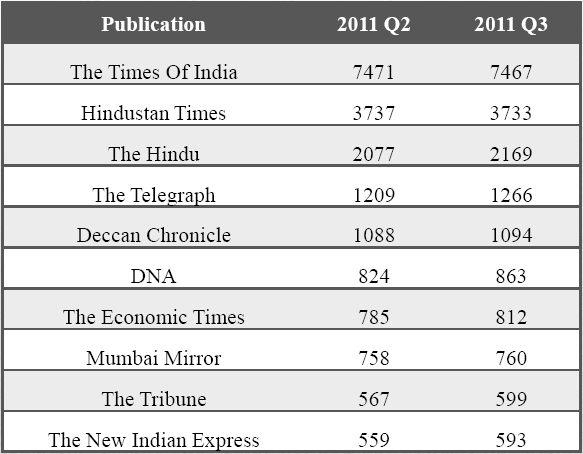
    Top 10 English Dailies:


    Besides Times of India and Hindustan Times, all the other English Dailies in the top 10 have witnessed growth in their AIR (Average Issue Readership) figures. The decline in Times of India and Hindustan Times AIR is however marginal.


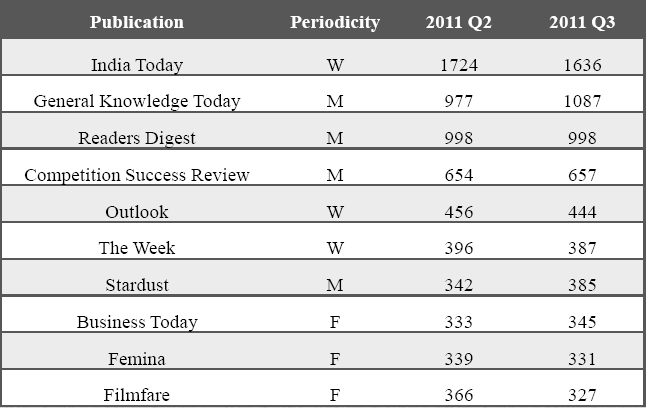
    Top 10 English Magazines:


    Five out of the top 10 magazines, namely General Knowledge Today, Readers Digest, Competition Success Review, Star Dust and Business Today saw growth in their AIR. General Knowledge Today climbed up to number two with a growth of 11.26 per cent whereas Readers Digest slipped to number three and remained stagnant in their readership.


    All figures are in Average Issue Readership. Like media buyers, MxMIndia only endorses Average Issue Readership as the currency for readership measurement. Please note that these are only topline figures which have officially been supplied to the media. Sensible buying and planning happens when more data is available.

  • IRS 2011 Q3: Top three Hindi dailies witness growth in AIR

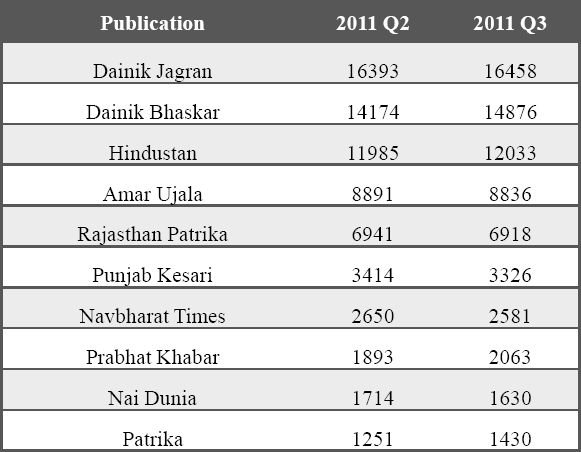
    Top 10 Hindi Dailies:


    There is no change in the pecking order here. Dainik Jagran rules, Bhaskar is second and Hindustan is third, and all three have shown marginal growth in IRS 2011 Q3 as compared to IRS 2011 Q2. Amar Ujala, Rajasthan Patrika, Punjab Kesari occupy the fourth, fifth and sixth slot respectively. Amar Ujala, Rajasthan Patrika, Punjab Kesari, Navbharat Times and Nai Dunia are the only publications in the top 10 Hindi Dailies to have shown negative growth in their Average Issue Readership (AIR). Patrika, a new entrant at the tenth spot, emerged as the fastest growing Hindi Daily with a  14.31 per cent growth.


    Top 10 Hindi Magazines:


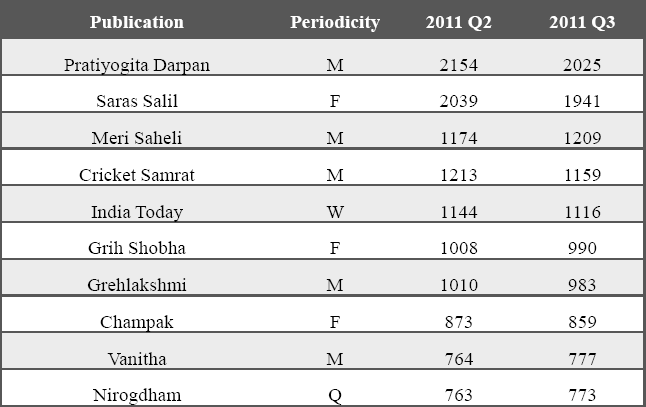
    Most of the top 10 Hindi Magazines showed decline in their AIR figures. Pratiyogita Darpan and Saras Salil were the top two magazines, but their AIR declined marginally in IRS Q3 2011. Ranked third Meri Saheli, is the only Hindi Magazine in the top five to have witnessed growth. The other Hindi Magazines to have witnessed some growth in their AIR are Vanitha and Nirogdham.


    India Today, ranked five, is the only Hindi weekly to have established itself among the top 10 Hindi Magazines. With an AIR of 11,16,000 in IRS 2011 Q3 as compared to an AIR of 11,44,000 in IRS 2011 Q2, it saw a decline of 2.45 per cent.


    All figures are in Average Issue Readership. Like media buyers, MxMIndia only endorses Average Issue Readership as the currency for readership measurement. Please note that these are only topline figures which have officially been supplied to the media. Sensible buying and planning happens when more data is available.