Category: MEDIA

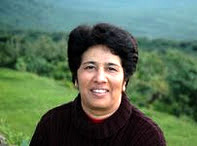
  • Divya Radhakrishnan launches Helios to serve non-content needs of broadcasters, ropes in Bala Iyengar

    Divya Radhakrishnan

    By A Correspondent


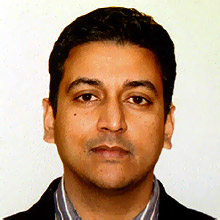
    It’s now public. Divya Radhakrishnan, former TME president, has formed Helios Media Private Limited, an integrated ancillary service company for broadcasters. Helios, which was launched by Ms Radhakrishnan on November 1, has roped in Bala Iyengar as Business Director.


    The vision of this company has been crafted on the premise that the growing number of TV channels, and a large list waiting to come into the country, are facing a key business challenge. While content is the primary scope of these channels, a lot of effort has to be invested in creating a robust ecosystem to run the business. This puts a lot of stress on the channel business head, resulting in dilution of focus from the key delivery, which is content. Also, proliferation will lead to further slicing of the revenue pie making the all-encompassing business model non-viable.


    Helios Media has set up sales, marketing, research and traffic management verticals, offering services as a composite piece or as a stand-alone, based on the requirements of the broadcasters. It has offices covering the geographies of Mumbai, Delhi, Bangalore and Chennai.
     

    Bala Iyengar

    The need for such a platform is amplified with the fact that Helios has already signed up three channels/ groups at the outset. M Tunes is India’s First Bollywood Music Channel in HD. Music Express, the second music channel from the same stable, will have a combination of music, trailors, short filmy programming on current affairs and retro music.


    Meanwhile, Helios Media is also the Asian arm of World Media Connect which markets Indian channels to the ethnic population based in US and UK. The channels under this portfolio are 6 channels of the Sun Network (Sun TV, KTV, Gemini TV, Udaya TV, Gemini Movies, Surya TV) and Punjjabi TV. Helios will be aligning with some more channels shortly.


    With the above contracts already in place, Helios is in advanced stages of negotiations with four speciality channels coming into India.


    Ms Radhakrishnan, who has been in the business of media management for the last 24 years, is the Managing Director of Helios Media. She has worked with leading advertising agencies like Publicis and Rediffusion Young & Rubicam. In her last assignment, Divya headed the Contact Practice at Rediffusion Y&R.


    Mr Iyengar, who has 14 years of experience, leads the Sales and Content syndication function at Helios Media. He has held senior positions at The Times of India, Sony Entertainment Television, Star Network and MTV. In his last assignment, Bala was the Business Head of Zoom.
  • Anchor: 5 reasons why Digital is the next big thing in OOH

    By Anirban Ghosh


    #1 Reach (The Last Mile Syndrome):

    There is no doubt that digital media is growing fast in India and also getting accepted among the clients. According to me, the only challenge right now is to position it aptly in the minds of the consumer through proper placement of the media. The last mile positioning of these media at the point of sale would be one of the key factors to get response and hence would be easy to measure also. This would definitely excite the clients to experiment with this medium to get a quick response within a short span of time.


    #2 Interactivity:

    This is probably one of the media which can interact with the consumer directly and effectively, and one of the major influential factors in buying any particular product. There are various ways to interact with the consumer, which can be controlled and impactful at different touch points to create the brand recall, perception and even to clear doubts at the points of sale.


    #3 Customization:

    Another uniqueness of this medium is that it can be used either in static or dynamic mode. It’s got the flexibility to customize the content exactly as per the need of the target group of any particular product, which would make the medium more interesting, exciting and engage the consumer to get better results.


    #4 Experimental:

    Out of the box innovative ideas experimented through this medium can be a lifetime experience for any consumer and the brand will be remembered for a long time. Touch screen technology can be used very effectively, so that consumers can converse with the brand and hence make the consumer compulsive about using this medium every time.


    #5 Measurability:

    If this medium is used effectively with strategy and at specific locations, then of course it can be measurable. I am sure it makes all the difference as to how do we perceive and position and compel the consumption of this medium at various situations. Although there is no industry currency in place, surely it can be done through some bold steps taken in future for the betterment of Digital OOH, which according to me will be one of the strongest media to reach out to consumers.


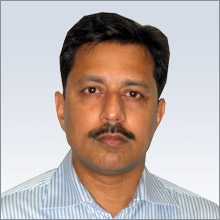
    Anirban Ghosh is the Senior Vice President, Adz Edge.

  • Dish TV makes it to Fortune India 500, 4 biggies exit list

    By A Correspondent


    Dish TV, the direct-to-home arm of Zee Entertainment features at #5 in the list of media companies in the Fortune India 500 roster of India’s largest corporations.


    Dish is at #437 in the overall ranking. Other media companies in the ‘500’ are:


    Zee Entertainment (#1 media, #256 overall), Sun Network (#2, #347), HT Media (#3, #383) and Network 18 (#4, #413).


    Those who don’t feature in this year’s list are Bennett, Coleman & Co, DB Corp, New Delhi Television and Deccan Chronicle Holdings.


    Last year, there were eight media companies in the list and their rankings were as follows:


    Bennett, Coleman (#1 in media, #162 overall), Zee Ent (#2, #263), Sun (#3, #367), HT Media (#4, $375), Network 18 (#5, #379), DB Corp (#6, #487), New Delhi Television (#7, #490) and Deccan Chronicle (#8, #493).

    Companies are ranked by their latest annual audited total income for the financial ending on or before June 30, 2011. Audited results declared before October 31, 2011 have been used.


    Clearly, Bennett, Coleman (or The Times of India group) would still be the numero uno media group, but since it is not a listed company and it reportedly had not declared its financial results by Fortune India’s cut-off date, it couldn’t be included in the rankings.


    The Fortune India 500 listing is part of the magazine’s December 2011 edition which is due to hit the market on Wednesday.

  • Mudra Max does OOH campaign for HT summit

    By A Correspondent


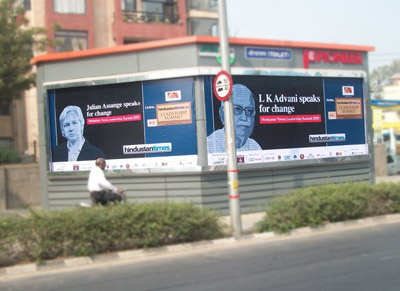
    Beginning November 18, 2011, Mudra Max – OOH executed an out-of-home campaign for the ninth edition of the Hindustan Times Leadership Summit held early in December in New Delhi. The campaign ‘When Leaders speak for change, change happens’ was carried out at all key junctions and arterial roads across Delhi/NCR. The Out-of-Home campaign was a mix of billboards, utility, gantry, drapes, bus shelters, office media and metro trains which were put to use with an aim to create the desired impact and communicate the message effectively.
     

    Hindustan Times is said to have wanted to bring a fresh perspective on critical issues facing the society today – impacting the future of governance, economic growth, education, cinema, and more. The challenge for Mudra Max-OOH was therefore to showcase Hindustan Times as a brand that creates awareness among its readers, that it is a newspaper that listens and avidly takes up public issues, and undertakes global-scaled initiatives such as the Leadership Summit encouraging debate and bringing about change by capturing issues and solutions that we face every day.


    Subhashish Sarkar
    Sanjoy Narayan

    Mandeep Malhotra, President, Mudra Max-OOH said, “We are proud to be associated with Hindustan Times for leading a powerful forum which is a unique congregation of leaders and opinion makers of global stature, raising the bar of discussion on critical world issues. By this mega act, HT has indeed shown its intent to make a difference in a changing world.”


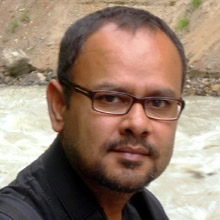
    Subhashish Sarkar, Senior Vice President,Mudra Max-OOH, said, “The objective of the OOH campaign for the ninth Hindustan Times Leadership Summit, was to highlight and remind readers and informed citizens alike of this year’s event and high-profile participants. At the same time, the challenge was to maintain the exclusivity of the forum and not have the brand-image ‘diluted’ through casually selected media. The executed campaign bears this out in plenty.”


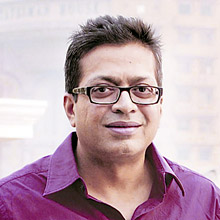
    Sanjoy Narayan, Editor in Chief of Hindustan Times said, “In modern India, change is constant. In the last two decades, it is said, India has changed a lot. So has the world around us. The changes that India faces are, thus, on several fronts – some domestic, others global. And all of these changes throw up for India, the challenge of keeping pace with them.”

  • Star gets set for Life OK…


    By Rishi Vora


    The channel was rumoured to be called Star Desh. A predictable name to ward off those on the hunt for info on the channel that was set to replace the beleaguered Star One.
     

    But the identity has now been revealed on billboards and social networks. It’s called Life Ok. The descriptor on the channel’s YouTube page says: “Life OK, a new television channel from 18th Dec, through its unforgettable and powerful stories brings to life its unique philosophy of ‘cherishing what you have’. Life OK reminds and invites everyone to value the things that well and truly matter in life like family ties, relationships, valuing traditions and peace of mind, while in the eternal quest for more.”


    Since Star India and its public relations agency are tightlipped on the details, we don’t know whether Star One will shut on December 17 or be phased out gradually.


    Life OK, it is learnt, will cater to a wide audience targeting Tier 1 and Tier II cities of the country. Special attention is being paid on packaging and presentation. The leadership team has former MSM Sony business head Mr Ajit Thakur at the helm. That, indeed, is testimony of Star India’s plans to launch a serious challenger brand.


    A high decibel marketing push is planned for the launch.

    But, is there a scope for yeta another general entertainment channel? Top of mind, of course is Colors’ success in the not too distant past. Madison Media CEO Punitha Arumugam explains, “Yes there is room for more channels in the GEC space. A case in point being the launch of Colors when one thought that the GEC market was saturated, Colors launched and expanded the GEC channel share. Also, given the high demand situation for GEC inventory today, there does seem to be room for another channel.”


    Colors was backed by differentiated content and big-ticket shows; aggressive marketing and distribution, which helped the channel to grab the No 3 position weeks after its launch. That, however, was introduced as Viacom 18’s flagship GEC channel. Will Life OK be a successful second GEC channel?


    There are instances where the second channel hasn’t delivered results as per expectations. Zee Next and Star One are a few examples. Historically, second channels have received motherly treatment from networks, as the strategy has always been towards prioritising investments towards flagship channels. There have been cases where successful shows on the second channel shifted to flagship channels… but, from what is seen of the new channel from Star, special efforts are being made to ensure differentiated programming.


    Dentsu Media CEO Divya Gupta believes that a new channel needs to create and carve a niche for itself. “Is there a need? Perhaps not from the consumer perspective, but definitely from the marketers’ perspective! Star would do well to have a successful flanker brand.To be successful, however, it needs a distinct and independent raison de etre, which is a big challenge. The plan to feature ‘Sach Ka Saamna’ may draw initial eyeballs, but longevity and distinctiveness remain a challenge.”


    Janardhan Pandey, AVP, Mudra Max had a different view. “It is hard to predict if the new channel from Star will succeed or not. The market keeps changing, so one has to constantly evolve as a channel. In the GEC space, success is rare for a new channel, but not obsolete.”


    On the programming front, several shows are set to go on air on the new channel. Sach Ka Saamna… Bhrashtachaar Ke Khilaaf, which was to initially feature on Star Plus, has been shifted to Life OK as a strategy to give that extra push to the channel. Others include Tum Dena Saath Mera, Meri Maa, Dil se di dua…Saubhagyavati Bhava and Devon ke Dev…Mahadev.


    The channel will launch at 12 noon on Sunday, December 18 with an eight-hour live ‘online concert’ featuring leading leading rock bands and artists like Shankar Ehsaan Loy, Euphoria, Agni, Shaa’ir and Funk, Indus Creed, Salim Sulaiman and Kailash Kher amongst others. Interestingly, the live event will happen only for audiences on the internet, signifying an attempt to woo young, digitally-inclined viewers.

     

    Ms Arumugam remarked, “The success of the GEC channel depends totally on the content and engagement they provide the viewer – so it does not matter whether it is the second channel or the umpteenth channel from the same network”


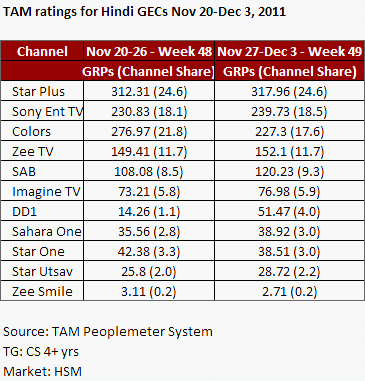
    While all eyes will be on the new channel from Star, there is no doubt these are interesting times in the GEC space, where there is healthy competition between No 2 and No 3 (see table alongside for GRPs and channel shares from November 20-December 3, 2011). If Life OK does have a successful launch, battles will intensify and healthy competition will help increase the genre further.


    With bureau reports

  • Anil Thakraney: The TV gas chamber

    By Anil Thakraney


    It’s been a long time since I watched a TV debate. Because I found, much after a lot of torturous viewing, that it’s a huge waste of time. Might as well watch Bigg Boss 5. It’s far more interesting, at least the participants are fresh faces and they look glam too.


    Here are some reasons why TV debates suck big time on our news channels.


    1. The same dull and sleepy faces. The same spokespersons of various political parties hop from studio to studio each night. Each a big bore, and each clueless about his/her leader’s real agenda. And compelled to support any idiotic dictate from their bosses. If you are glued to your idiot box when people like Abhishek Singhvi, Chandan Mitra and that lady from BJP pontificate each evening, you badly need a life.


    2. Because news channel editors and their assistants are too lazy to make an effort to discover new voices, we are stuck with the same ‘experts’ each evening. Suhel Seth, Shobhaa De, Prahlad Kakkar, etc, are now telling us how to decode every news item. From terrorism to FDI in retail to the Kingfisher mess to harassment of women. In such a vast nation, is it so difficult to find new voices? And more importantly, voices of people we can trust and respect?


    3. The entire concept is fraudulent. Because the anchors deliberately pick people with extremely polarised views, the debate becomes an exchange of gas. Like a school boys’ discussion. No one ever concedes that the other guy may be making a valid point, even if he/she feels so. That admission will appear to be a sign of ‘surrender’ on a TV debate. So the participants keep yelping at one another rather than talking to one other. I particularly avoid watching debates on theBhopalgas tragedy. Because gassing levels shoot through the chimney on those days.


    4. The anchors, who are supposed to be neutral, almost always throw in their two bits, thus adulterating the show by injecting their own agendas and biases into the discussion. This murders the concept of a debate, reducing it to a charade. I have often noticed that the much celebrated, award winning anchors lose their patience with guest speakers whose views they don’t approve of. You call this a debate? I call it nautanki.


    Like I said, better spend the time watching a reality show. A porn star any day for me over a narcissistic, gassy TV anchor.


    ***


    PS: Everyone is appreciating Mr and Mrs Aamir Khan for going public with their surrogate baby. There is even talk of making the couple spokespersons for surrogate parenthood. Well, methinks we are giving the couple too much importance out here.

    Aamirbhai had NO option but to reveal the truth in the media. How else could he have explained the presence of a bachcha in the house, with missus having shown no signs of pregnancy? Trust some people to jump at making virtue out of necessity.


    Anil Thakraney is a Mumbai-based columnist and commentator and is a former adman and editor. He is Editor-at-Large, MxMIndia. The views expressed here are his own.


  • Hindu on expansion (and consolidation) mode

    By Tuhina Anand


    The Hindu Group seems to be in the midst of activity with plans of new launches, expanding footprint and getting new people on board. There has also been talks of  The Hindu shutting its printing press in Delhi to rationalise its operational costs. K Balaji, Managing Director, Kasturi and Sons Limited talks to MxMIndia exclusively and shares details on company’s growth plan.


    Talking about The Hindu beyond the Tamil Nadu market, Mr Balaji said, “We have traditionally been strong in Kerala and Andhra Pradesh with the possible exception of Hyderabad. We are the No.1 English Daily in these markets. In Kerala we have editions out of Trivandrum and Kochi. We are strengthening our presence by adding Kozhikode early next year. Although Kerala is dominated by Malayalam dailies, we are seeing a trend in English language aspiration. People want to learn the language for personal and professional reasons. This we feel will grow the English readership in that state. We are well poised to nurture that market.”


    He added, “Andhra Pradesh in general is turning out to be an English readership aspirational market, and we feel with our core strengths we are growing at a good rate. We do have plans to supplement these markets with growth in Bangalore and Hyderabad, which will further consolidate our position as the largest read English newspaper inSouth India.”


    It is learnt that The Hindu in all probability is looking at its Kozhikode launch on January 14, 2012. It is also learnt that Smart Buy (The Hindu BusinessLine supplement) with focus on metro is expanding its footprint. Talking about Smart Buy, Mr Balaji said, “This product was launched three years back and the response for it has been encouraging and we plan to take it to the next set of cities in the south such as Coimbatore.” It is learnt that the Coimbatore entry for Smart Buy is slated for December 14, 2011.


    It is also leant that The Hindu is roping in a Vice President for its circulation, a post which has been vacant for a while. Though details on the new appointment could not be obtained, Mr Balaji, responded, “This is part of the strategy to strengthen the senior management team to take the organization to the next level of growth.”


    On the rumours to shut the production facility in Delhi, he said, “We are not shutting down our Delhi Edition. Our production facility at Delhi has been catering to the entire Northern India. A growing circulation and capacity constraint meant that the paper was reaching late in several markets. Earlier this year, we entered into a strategic alliance with Hindustan Times and as part of the tie up we are utilizing their printing facilities in the north to the service to our readers. We have already started our printing from Mohali, Allahabad and Noida, and expect to add Lucknow to the list.”


    “Yes, we have charted a growth plan to consolidate existing markets as well as tap into new markets for both The Hindu and Businessline. It is too early to comment on our plans for growth,” concluded Mr Balaji.

  • Gouri Dange: Surprise! The non-Simipering talk show

    By Gouri Dange


    I quite like Love to Hate You (Star World 7pm). There, I’ve said it – I actually like something on Indian television. And no, it’s not only about the eye-candy host chap. His cuteness helps, but there’s more to it than just that. I find him a relaxed non-badgery host, almost old-world if I can use that expression, in the way he totally avoids the two syndromes that afflict most Indian TV hosts – which are: a) insufferable peacock preening, b) equally insufferable toadying-to-the- guest.


    In Love to Hate You (what’s with the ugly title lettering, though?), the host brings on a celebrity guest and an ordinary guest who dislikes the celebrity. The ordinary one gets a chance to speak his/her mind about why they don’t like the person’s work; and what really works about this is that they come up with pretty incisive, convincing and articulate stuff about the celeb that they don’t like. The other nice thing is that the celeb takes all this on board, and defends him/herself pretty ably. And yet, the makers of this show avoid the temptation of letting it all descend into a slanging match (a la TV debates) where the two participants circle each other with low growls, fangs exposed and hackles rising.


    The two people, and their host (the dishy one) actually talk, no one shouts, and the camera doesn’t subtly go into those ‘kill, kill, kill’ kind of angles used to cover wrestling matches. For the first time, I see people not interrupting each other, and actually looking interested in the other’s viewpoint, absorbing it, and then replying instead of rubbishing the point.


    The host plays mediator at times, completely at ease with himself and his guests, and never harangues. Mercifully, there is no Simipering, I mean simpering, and no Daah-ling-ing of anyone. If he knows the celeb guest well, the host makes that clear in a fairly matter-of-fact way, rather than using that as a chance to create an instant club of ‘us’ness. I like it!


    The format allows the ‘hater’ to first mouth-off at the ‘hatee’, without actually facing the hatee. And with very specific reasons (not just ‘your books suck’ or ‘your singing is awful’, but with examples of the suckiness or tunelessness.) The two are then put together, and the hatee manfully (personfully) sits through some of the criticism. Obviously the hatee too is either chosen for his/her maturity, and does not pout and say provocative or defensive stuff back. The hater is sometimes drawn into trying his/her hand at what the hatee does, and sportingly admits that it is hard work! And yet the whole thing doesn’t seem overly rigged in any direction.


    There should be a new genre-label coined for shows in which the celeb is put in the dock… it’s not just a talk show, it’s a ‘talk your way out of this’ kind of show, right?


    What is astounding about Love to Hate You, so far, is that one actually sees both guests backing down and shifting positions gracefully at times. The host is not invested in making anyone feel horrible, and has not developed cutting-off and putting-down or cosying-up into a fine art.


    (Contrast this with the ‘debates’ in which it’s usually Delhi Harpies versus Mumbai Sharpies, all conducted by Ms Hector or Mr Harangue, and you’ll know why I am so taken with this new show.)


    And Tears In The Kitchen

    On another note, did I say earlier that I find the combo of food and tears and runny noses on MasterChef (Indian and Oz) unpleasant? Well, that was tame stuff, apparently, now that MasterChef USA is here, with bleeped out words from judges, clanging of garbage pails in which not-good preparations are hurled, and many of the contestants probably back to bedwetting at nights. So now tears, snot and bladder malfunction too, in the kitchen… Please, spare me the drama and let me go next door and have a masala dosa.


    There is a new amusing sign that MasterChef is creating a whole new downstream market of buy-buy-buying Indian consumers: People who can’t cook or usually have someone cooking their meals, are suddenly re-doing their kitchens into replicas of the MasterChef sets. There’s wall-to-wall buff steel everywhere, six- and eight-burner stove tops, industrial-sized ovens, knives and choppers with which you can fell a buffalo. Words like claypot, tureen, coulis, hop, are being bandied about with eager-sophistication.


    I recently visited one such home, and sat watching a hapless chicken going round and round on a giant rotisserie, stubbornly refusing to get cooked. The host-cook, a man who can’t fry an egg, watched grimly on, while his wife wistfully fingered the take-away menu of the kabab-korner down the road. On my way home, I stopped at the bhurji cartwallah and had the best, made in minutes on a dented tava atop an old biscuit tin.


    Naming no Names is the mid-week column where novelist, columnist and counsellor Gouri Dange presents her tongue-in-cheek view of our world. The views expressed here are her own.

  • It’s pitch time for Unilever media spends in India (and elsewhere in the world)

    By A Correspondent


    Life’s a pitch. Ah, well, for the new bossman at Mindshare India Ravi Rao, it’s going to be a hyperactive January as he takes charge after a week’s break later this month.


    For, Unilever has reportedly announced a global review of its media account. This is barely two years after it did one.


    MxMIndia does not have any official word from Hindustan Unilever, but media reports suggest that the review will include media buying and planning and will start next month.


    Unilever has apparently asked all incumbents to pitch. But there are a few more, and that’s the catch. According to Advertising Age figures, Unilever spent USD 6.62 billion on worldwide measured media in 2010.


    The pitch is said to include a review of the way spends will be conducted in India too. Please see the following reports which also carry Unilever statements:

    Ad Age report: http://adage.com/article/agency-news/unilever-puts-global-media-account-play/231536/

    Campaign Asia report: http://www.campaignasia.com/Article/284405,unilever-calls-us465-billion-global-media-review.aspx

  • INMA 2011: Readership, Rate Cards & a small newspaper’s success

    By Tuhina Anand


    On Day 1 of INMA-5th South Asia Annual Conference, there was a CEO Roundtable which saw discussion on the topic: ‘Have we reached an end to readership growth?’ The session was moderated by Bhaskar Das, President, The Times of India Group and on the panel were Sanjay Gupta, Director, CEO and Editor, Jagran Prakashan Ltd, KN Tilak Kumar, Joint Managing Directorand Editor, Deccan Herald, Shahrukh Hasan, Group Managing Director, Jang Group Pakistan and Tariq Ansari, MD, Mid-Day Multimedia Ltd.


    Mr Das started the session by saying that it’s a known fact that the newspaper business is undergoing challenging times and one of them is about finding a balance between a content that caters to a diverse age group at many Indian homes and remaining relevant. He also remarked that if one is bothered about physical readership when a consumer is accessing media through various touch points, shouldn’t virtual readership also be considered? He also questioned the merit of measurement vis -a-vis frequency and periodicity.


    Mr Ansari said, “The truth is that the readership of urban English newspaper has reached a plateau and the growth in terms of numbers in SEC C and D but the question is if that category is also the one which advertisers would be interested in and then the answer becomes doubtful.”


    The session also looked at growing readership in a new market with an old product as well as raised question on the need to show yoy growth of readership where in actuality it should be yoy growth of advertiser?


    In all this grim scenario, Titak Kumar of DH brought the example of Karnataka language daily which has been seeing growth since both income and literacy levels have gone up.


    Another staggering point that gives players to think about is the pricing of a newspaper. While in India, the you can get a newspaper even at Rs 1.50, Shahrukh Hasan from Jang Group pointed that in Pakistan the paper would cost anywhere between Rs 15-23 and yet not cover its production cost.


    The idea that emerged was to innovate and seize the opportunity in the industry today. Also if multiple touch points is the new reality how does one update, upgrade and monetize from these various platforms.


    In another session, the panel discussed, ‘The Advertising Challenge: Space Selling in the Age of Multiple Platforms and Vanishing Rate Card’. On the panel were, Ambika Srivastava, Chairperson, ZenithOptimedia and Vivaki Exchange, Bijou Kurien, President and Chief Executive, Lifestyle, Reliance Retail, Jayen Mehta, GM, Marketing, Gujarat, Co-Operative Milk Marketing Federation, Rohit Gupta, President, Sony Entertainment Television, Bhaskar Das, President, The Times of India Group and Aritra Sarkar, VP, Strategy, ABP Pvt Ltd.


    The panel discussed if the rates cards have a value and Ms Srivastava endorsed this view along with Bhaskar Das though he differed that the rate card can be in different format and packaged differently to create a value proposition. Mr Gupta however giving the TV industry side of the story was of the opinion that in his industry rate cards doesn’t apply as the window of opportunity is less in television and rates vary from deal to deal and client to client.


    There was another session on ‘Good Editorial Content and Credibility are Good Business Also’  where Harisvansh, Chief Editor, Prabhat Khabar took the audience on the journey of success of the newspaper which is through doing hard hitting, pro people stories that have brought transformation in the lives of a common man. For them its trust and credibility that has paid off and just like Indian Captain MSD who is also from Ranchi like Prabhat Khabar both have emerged victorious by being dependable.

  • M ties up with Park Avenue for supplement

    By Akash Raha


    M, the lifestyle magazine for men has tied up with Raymond’s Park Avenue to bring out an exclusive supplement on men’s styles. The supplement is a six-supplement tie-up to come out every second month, starting from December. The supplement comes in the same packaging as the magazine but not inside the magazine.


    The first supplement was unveiled at a swish event in Mumbai by Gautam Singhania, MD and CEO, Raymond and Amitabh Taneja, Editor in Chief, Images Group.


    Speaking about the supplement and the tie up with Park Avenue Ashish Pratap Singh, Editor-in-charge, M, said, “The supplement marks a new standard in richness and opulence. The target audience for Park Avenue and M is very similar. They are fashionable, young, smart and want to be informed about style.”


    The supplement covers the latest trends for men on the global platform, and Park Avenue’s latest offerings for both men and women. The supplement also talks about the latest and best cars to drive and the best of the best resorts from around the world to stay in. Each bi-monthly supplement will also feature a renowned CEO’s interview on comfort and style. For the first supplement, M magazine features Vikram Chandra, CEO, NDTV, talking about his first love, TV journalism, his style quotient and everything else.

  • MxMIndia Print is coming to town… soon

    Happy to announce the completion of 3 months of MxMIndia. We launched on Onam. September 9, 2011.


    Happy to announce that we are now a 20-member team. Full-timers, near full-timers and active associates.


    Happy to announce that while our focus is on Marketing and the Business of Media, we are strong on content issues ignored by most others: creativity, journalism. Soon: more


    Happy to announce that above all things, our primary allegiance is to our readers. We are governed by a Code of Ethics and each MxMer is a signatory of that


    Happy to announce that we write about those who do not advertise and not necessarily write about those who do


    Happy to announce that we don’t have just text. Our You Tube channel has 75 videos


    Happy to announce that the refreshing feel of MxMIndia.com will soon be seen in print

    2012.Q1


    Want to be part of the great new journey?

    Editorial: Johnson Napier (johnsonn@mxmindia.com); Sales: Alok Kapuria (alokk@mxmindia.com)

    Subscription: Insiyah Rangwala (subscribe@mxmindia.com)