Category: MEDIA

  • The Pix plan for genre leadership

    By Rishi Vora


    Sony Pix, the English movie channel from the Multi Screen Media Pvt Ltd (MSM) bouquet is, with aggressive content acquisition and marketing strategy, looking to push its channel share up in a bid to get to the top league. Where competition is quite intense between Star Movies and Movies Now. This year, the channel shifted its focus from its positioning – ‘We Tell Stories’, to ‘Hollywood is Here’. The strategic tie-up with Sony Pictures Entertainment has given enough strength to the channel as far as content is concerned. The deal was finalised in 2010, which means starting 2011, Pix has done enough on the programming bit to enter the much-desired Hollywood mainstream space.


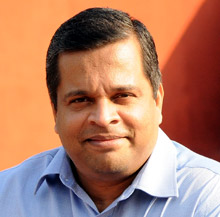
    Commenting on the progress of Sony Pix, Executive Vice President and Business Head, Mr Sunder Aaron said, “The channel has delivered great results over the last couple of years. Today, we’re a consistent major player in the category. We have been fortunate to achieve our goals in terms of ratings, reach and distribution. The channel’s new library from Sony Pictures Entertainment, which includes some of the finest titles and  block busters have delivered great numbers.” Elaborating on the channel’s content efforts, Programming Head, Mr Amogh Dusad, said, “This year, we premiered six to seven movies every month, all blockbuster films. And that helped us improve our overall ranking in the category.”


    The channel saw yet another big change in 2011 – on the packaging and presentation aspects. Himmat Butalia, Marketing Head, Pix, said, “We consciously tried to look at the younger audience and see how we could engage them in various ways. As for promoting our titles, every movie has a different kind of a marketing angle to it.”


    “The Movie Club, one of our major properties, has done well. We’re at 15,000 members now from 4000 a few months back. The reason it’s such a fantastic property is that it allows viewers to watch movies absolutely free of cost. The channel’s marketing efforts include a mix of offline and online (Facebook brand page and YouTube, Webisodes etc) campaigns.


    With a host of programming and marketing initiatives, Mr Aaron referred to how Sony Pix beat HBO in the ratings game, in 36 out of 47 weeks.”Ratings of the past quarter shows that Pix has upped its market share to 19 per cent as compared to HBO which stands at 14 per cent (source: TAM, CS 15 +, 6 metros, SEC AB, Week 27-39).”


    For the next quarter, we want to take Pix into the leadership position. While we have been No1 in the category, and have been No 1 in every market from time to time, we want to be in that position on a more consistent basis. The performance of the channel over the past 18 months has shown that this is achievable. The growing response from our fans has overwhelmed us. The future also holds a lot more big titles premiering on the channel. We will do our best as a channel and as a brand to continue innovating, surprising and delighting our audience.”


    The Movies Now- Star Movies tussle; Opportunity Sony Pix
    The launch of Movies Now shook up the line-up a bit. One week after launch, the channel managed to grab the No 2 position. This, as experts view, happened at the back of a huge distribution push, investment on content – acquiring a few big-ticket movies, and then the strategy to repeat those titles on a regular basis. What Movies Now success did, is broad-based the category, so from 60 GRPs, the category of English movies has increased to about 75 GRPs. However, the channel did begin to see a dip with Star Movies catching up. Mr Dusad remarked, “Movies Now being beaten by Star Movies is an indication that sustaining leadership is a challenge if you’re not investing in content on a regular basis, acquiring new titles, doing premiers etc.” In the last six months, Mr Dusad pointed out that Pix beat HBO in 23 weeks, and that they’re looking at taking on the top two players with a host of new initiatives in 2012 (TAM CS 15 +, SEC AB, 6 metros). The idea is to first get to channel share of 20 per cent.


    The challenges for Pix are on two grounds: one is to be No 1 in the category emphatically and convincingly, beating both Star Movies and Movies Now, and then to ensure profitability and growth quarter after quarter, year after year.


    Another challenge as Mr Aaron pointed out will be to increase the number of advertisers on the channel, and help generate higher revenues, thus leading to higher budgets in acquiring bigger and better titles. On how well has the channel done in the past one year revenue wise, Mr Dusad said, “I can’t share the numbers, all I can say is that we’ve been growing at a decent rate. Clients are happy to spend more with us. Every year, our range of advertisers is increasing and the money spent by them on the channel is also increasing. And we’re seeing a lot more stability in our growth.”


    Digitisation will bring in subscription revenues – a big opportunity, now that the ordinance is passed by the government. The category growth, which is about 30 per cent, the channel will do well to achieve similar growth. There’s a lot to be done for Pix to be No 1. Who knows what’s in the offing. Zee Studio is behind Pix, though with a much lesser share. Coming from the Zee stable, one cannot write the channel off.

  • Vizeum wins media duties for Educomp Schools

    By A Correspondent


    Educomp Schools, as part of its growth strategy, has appointed Aegis Media’s Vizeum India as its media AOR. Media agency Vizeum India, which operates in 55 countries, will now handle Educomp Schools’ media mandate in India to identify the appropriate communication programmes and deliver the same most cost optimally.


    Founded in 1994, Educomp Solutions is a globally diversified education solutions provider. With an employee base of more than 10,000 professionals, Educomp serves 26,000 schools and 15 million learners and educators in India as well as the US, Canada, Singapore and Sri Lanka. The company works closely with schools to implement innovative models to create and deliver content to enhance student learning.


    Educomp Schools provides educational content / IP and educational infrastructure to a range of differentiated preschool and secondary school brands in its quest to be the school service and Infrastructure provider of choice for all demographic and psychographic segments of society across India. Between the three brands, Universal Academy, Takshila Schools and The Millennium School with their different learning systems, the infrastructure and fee structures, its schools provide distinctly different schooling experiences to students and parents.


    Partho Dasgupta, President, Educomp Schools, said, “We are happy to confirm the appointment of Vizeum as our strategic media partners. Their overall result-oriented approach is quite unique and interesting. They are mandated to help us overcome some of our business challenges. We look forward to working with Vizeum and wish them all the very best.”


    Commenting on the win, S Yesudas, Managing Director – Indian Subcontinent, Vizeum, said, “We have pleasure in welcoming Educomp into the Vizeum family. It is a challenging assignment and we are fully geared up with the right delivery solutions. We look forward to addressing the business issues of the client as their extended brand team. We are thankful to the Educomp management for considering us worthy to partner them. This business will be handled out of our Delhi office.”

  • AIM slams penalty against Times Now

    By A Correspondent


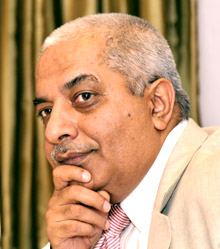
    Tarun Rai, President, Association of Indian Magazines (AIM), has reacted strongly to the penalty against the Times Now channel in the defamation case brought against it by Justice P B Sawant.


    “The quantum of penalty levied on Times Now is unheard of. It is not only unreasonable but can set a precedent that would threaten the independent functioning of news media in the country. Media in India is very vibrant and has helped uphold the strong democratic traditions of our country. It should be allowed to function and grow. At AIM (Association of Indian Magazines) we are extremely concerned about this development and hope for a fair outcome that will encourage media in India to continue to operate independently and fearlessly,” said Mr Rai in a statement to the media.


    The Indian Broadcasting Foundation (IBF) and the News Broadcasters Association (NBA) earlier had also reacted strongly to the impact of the Supreme Court’s dismissal of the Special Leave Petition filed by Times Now. The channel had asked for relief against the Bombay High Court order directing Times Now to deposit Rs 20 crore and furnish a bank guarantee for Rs 80 crore to hear an appeal in a defamation case.


    The directive occurred following a district court in Pune asking the channel to pay Rs 100 crore as damages in favour of Justice (Retd) PB Sawant for alleged defamation. The defamation case was registered after the channel published a photograph of Justice Sawant in place of another judge with a similar name, in connection with the Ghaziabad Provident Fund scam.


    Times Now had appealed to the Bombay High Court.

  • Just below the surface: Filmmaker Umesh Aggarwal

    By Johnson Napier


    Dignitaries and members of the fourth estate may have found it a pill too bitter to swallow at Mumbai’s Madame Cama Hall, Kala Ghoda on Saturday when they were given the lowdown on the murky deals that transpire in the worlds of print and broadcast journalism. The affair was a documentary screening by Umesh Aggarwal, director of News & Entertainment Television on ‘Brokering News-the inside story of paid news.’


    Umesh Aggarwal talked to MXM India on the motivation and challenges encountered behind the making of the film, and what stance th industry needs to take to curb the menace. Excerpts:


    Q: What was the motivating factor for attempting to unveil hideous information prevailing in the news broadcast and print sector?

    For the last few years the manner in which news reports were presented in Newspapers and on News channels had become a topic of joke. It was not merely restricted to my group of friends but many people had started taking news reports with a pinch of salt.


    A copy that was sensational, almost making most news items “entertaining” had become a norm of the day. There were various examples where a serious follower of news could catch contradicting reports in the same newspaper/channel. The question was whether news organisations owed any answer to their readers/viewers.


    During 2009 elections, News media blatantly partnered with politicians and political parties. The entire journalist community was aware of what was going on but no one raised a voice. Perhaps, the Press Council & others had no teeth or intentions to rock the boat.


    As far as I can remember The Hindu was the only paper that allowed space for a debate on Paid News. Articles written by Late Shri Prabhash Joshi, &  P Sainath raised valid questions. Yet “market leaders” refused to touch the story. In early 2010, Outlook published a cover story “Paid News of India”. While reading that story I could visualise a film.


    I started following the story carefully. Just by scratching the surface a dark side of media was right in front of me.

    Every aspect of news be it political, business, sports or entertainment had a price tag.

    Even panel discussions on an important national issue were ‘fixed”. Guests were invited to give the discussion a particular slant. Selection of guests wasn’t dictated by the editorial policy of the group but there were other considerations.

    I thought that it was only English press that indulged in paid news. I was wrong. The problem was and is worse at the vernacular media. I was aghast to know that one of the most respected newspapers in north India actually auctioned its bureau. The highest bidder was made to pay to the group, he was also expected to run the bureau and pay salaries. In lieu of all this… all his stories straight went to the press.

    I had the notion that business journos were corrupt. It turned out that all industrialists cultivate political journos as well because they are the ones close to the powerful politicians – and they are the ones who broker deals.

    During the last 5 years most of the vernacular news channels were launched while elections were round the corner. It wasn’t merely to catch eyeballs but it was discussed openly during editorial meets that how political parties could be tapped (or trapped) for resources. These horror stories are not a products of my imagination, they came from the horse’s mouth. Many journalists shared their experiences, yet they couldn’t come on record.

    Political parties, corporate houses & event managers have devised newer ways to “buy” positive reports. At press conferences journalists are expected to drop their visiting cards. According to their position/ status a gift will be delivered to them. Not only that this gift can be exchanged for hard cash at designated outlets. Can you imagine journalists indulging in such practices?

    The final straw was when the two-member subcommittee of PCI submitted its report on Paid News, and it was scuttled. I somehow managed a get hold of the original report. I knew I had to make a film. Why should media be allowed to remain absolutely unaccountable for its actions?


    Q: What were the imminent challenges you faced in producing the documentary?

    The first challenge was to decide “who is this film for?” Journalists already knew what was happening… others though cared for news but “would they be interested / do they bother how ownership patterns, management dictating editorial staff/ business deals etc. impact news?”

    The next challenge was how to make it a visual narrative. Interviewing 5–6 people & converting it into a roundtable discussion was a format that didn’t appeal to me. And visuals narrative required great amount of research, & sourcing of news clippings.

    And there were people who agreed to come on camera but when we reached there to shoot they developed cold feet & we returned.

    And of course there always was this inner conflict of being a whistleblower to your own community…my connections with television news runs deep. Lots of my dear friends work with newspapers & channels but, finally, the urge to make this film went beyond all such personal conflicts.


    Q: Were you, at any point in time, influenced by people who were being spoken of in the documentary?

    No. No one ever tried to influence us. In fact most of the journalists were forthcoming in sharing their experiences but only OFF CAMERA.


    Q: Did you make any attempt to contact or gather information from those individuals or organisations who were being named/accused in the documentary?

    We contacted them. Either they were “travelling” or refused politely while wishing us Good Luck.


    Q: Cannot this documentary act as solid proof and be submitted to the concerned authorities to solicit action on the wrongdoers?

    That’s not for me to decide. The film is in public domain. Besides, this is not a film about individual wrongdoers – this is more about an evolving system of corruption that needs to be countered urgently if news media has to retain its credibility. Personally, I would be happier if the documentary has a preventive impact rather than a corrective one.


    Q: While a good start has been made, according to you what does the industry need to do to stem such a malpractice?

    I feel, there are enough reasons for us to be proud of Indian media. Yet its credibility is being questioned and there are valid reasons for that. Today it is run like any other business, yet it is not accountable to any one like other businesses are. A mere question about its conduct is treated as a threat to free press or freedom of expression. Those who advocate self regulation must ask themselves whether self regulation is working! If it is not what steps are to be taken? Media has to allow itself to be questioned.


    Q: What is your message to the youth who want to pursue a career in the field of broadcast and journalism?

    Choose your icons carefully. Primarily it should be journalism that should attract them… money and glamour should be the accessory and not the uniform, it should be a part of the package & not the package itself.


    Q: A word on the next project that you seek to undertake?

    India becoming a hub of clinical trials… legally & illegally…

  • Primetime debates an excuse for doing TV cheap: Mark Tully


    By Shruti Pushkarna


    [youtube width=”350″ height=”200″]http://www.youtube.com/watch?v=2RilcOb3GrQ[/youtube]
    [youtube width=”350″ height=”200″]http://www.youtube.com/watch?v=PdgXFlJ8g1g[/youtube]

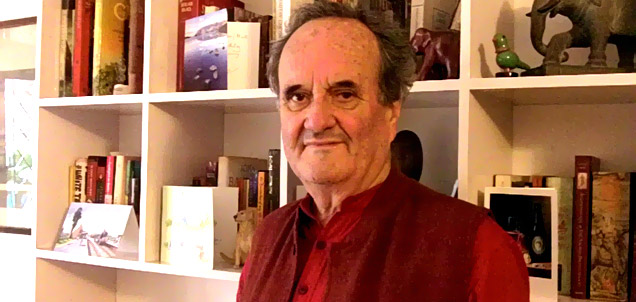
    He likes to refer to himself as ‘British who is much influenced by India’. Often called an ‘expert on India’, Sir Mark Tully is famous for his extensive reportage of the changing social, political and economic trends in India as the BBC India Correspondent and as BBC Bureau Chief later. He quit the BBC in 1994 after an argument with the then BBC Director General, John Birt, where Mr Tully accused him of running the corporation by fear. But his deep-rooted familiarity with India and its culture made him stay on here even after his term ended with the BBC.


    Sir Mark Tully has co-authored and authored quite a few books on India, his latest being Non Stop India which he released in the capital last week.

    He is currently the regular presenter of the weekly programme, ‘Something Understood’ on BBC Radio 4.

    In this interview with MxM India at his Nizammuddin residence, the veteran journalist shared his views on what he thinks of the Indian media today. Mr Tully also shared some instances from his BBC days to point out the changes that the media has seen over the years. While he seemed extremely hopeful of the print media, he felt there is a need to hold back the expansion in Indian television to see what’s going on really. “Technology,” he says, “is being badly used to overload journalists, particularly in multimedia organizations, to make journalists into radio, television and online journalists at the same time, with the net result that they have absolutely no time to find out what’s going on.”


    And although he believes that India has a great future, he urges India to stop following the western model and to create its own way forward.


    Q: Much has changed from the time you wrote No Full Stops in India. If you were to write that book now, what would change?

    I think the big thing that would change would be that India is in a very different position economically than it was before, and India is in a very different position in what I call ‘morale terms’ as well. At the end of the ’90s, things were looking very bleak in India, we’d had twenty years or more of Neta-Babu Raj and the economy was stagnant basically because of that neta-babu raj and all the bureaucratic controls that existed, particularly controls on investment and on doing business. So that would be very different. But one thing I would say which would not be different would be the emphasis on that India must find its own way ahead and not simply ape and follow American or the western model.


    Q: The Indian media has gone through an explosion in the last five to 10 years. As someone who dominated the airwaves just before that, what’s your take on the current explosion?

    Well I don’t think I ever dominated the airwaves but what has happened basically is that television has taken over in a big way and sadly radio, the media which I love best and which I think is a very very important media, has not been allowed to develop properly because the government has restrained control over news and current affairs. Television has expanded and I believe that what is now needed with television is to sort of in a way call a hold to the expansion and look at what is going on on television and see whether improvements cannot now be made in that.


    Q: We have had a Press Council Chairman Justice M Katju virtually damning the media and media persons. There are many who agree with him but say he’s got no right to say it. As an outsider now, do you agree with Justice Katju’s views?

    I think that maybe he overstated the case, probably he did. But I don’t think we should react hysterically as journalists. I think that we should examine ourselves and see what is going wrong and there are things which are going wrong. And the first thing I would say is our failure to stand together to resist the onslaught of commercial pressures which have turned television and newspapers, and even radio into commercial rather than news organizations. Secondly, I think that we journalists, very much need to examine the way we exercise the editorial function. There isn’t, particularly in television, enough editing going on. I’ll give you one example, the Bombay attacks, if the editor in the studio had exercised tight control over reporters in the field then we wouldn’t have gotten into the mess that we did over the Bombay attacks. That’s just one example. Time and again, you see examples of shows which drift on, breaking news which drifts on without any apparent editorial control. And thirdly, what I find whenever I ask anyone in television, whether there are reviews of what has gone on the day before or a week before so that people can learn from their mistakes, so that you can criticize and benefit from that criticism, I’m always told that reviews don’t take place. When I worked in BBC World Service Radio, we used to have two meetings regularly every day; part of that meeting was looking forward to the news we would be covering that day or expected to have to cover and part of it was very much a review, and a critical review of what we’d done the day before.


    Q: Your views on the long-drawn-out debates with the usual suspects as panelists on Indian television prime time news?

    Well, as someone who is sometimes on these panels, frankly I am amazed that there are so many of them. There is a stage army of people really who come on to these panels and they always get politicians, and the political parties send the same people every time. And I think this is largely an excuse for doing television on the cheap. I personally believe that we should have other ways of presenting the news, discussing the news than endless panel discussions, and of course one way which you would have seen nearly often enough is through news and current affairs documentaries.


    Q: And while Indian media has gone through this explosion, how would you think the British media has seen the last decade?

    Well I think that the British media has changed a great deal in the last decade because of course of the media which you are in, the internet and the electronic media, that has had a very considerable effect on newspapers. Newspapers have been the main victims really and you’ve got a situation in London for instance, where a historic paper like the ‘Evening Standard’ is now given away free because it couldn’t get enough circulation to attract advertising. I think the commercial impact has been there in Britain as well. And the other thing I think change has come to over very much, which I think is a pity, is that there is far more of correspondence giving you the news in conversations with presenters rather than properly crafted news stories; and very often television just turns into bad radio. The other day I saw a comedian do a wonderful imitation of these dreadful interviews where clearly the presenter has warned the correspondent of what the question is going to be. So the presenter very earnestly asks him a question like, ‘Is the rupee going to fall further?’ And the correspondent says, ‘Yes, yes you are quite right, that is the big question.’ That sort of thing rather than the properly crafted news stories. And also like in India, because it is so much easier to broadcast from the site, there is too much broadcasting from the site now and too much repetition. I was watching the night that Gaddafi was killed, and you saw the same pictures going round and round and round.


    Q: Since the time you were active and on the field in India, what do you think has been the changes that the political class has had towards the media?

    I think the political classes have become more organized, they have these spokesmen now and all that. I think some of them rather like coming on the Tele, they weren’t so interested in coming on the radio. When I was with the BBC, it was a strange fluke of history really because the transistor radio had come and so radio listening was very widespread but all the listeners had was to listen to the All India Radio. So lots of them turned to the BBC as an alternative source of news and we became in effect, a domestic news broadcaster. So that meant that the politicians were much more concerned about the BBC than I think they are now, their attention is much more on the local media now.


    Q: And vice versa? Journalists towards the politicians? After all they are all in the hunt for the exclusive?

    I’m not sure that there has been any big change about that except one thing, I wouldn’t say they are in the business of exclusives, they are in the business of much less worthwhile, which is ‘bites’. Time and again, when I go to a book launch or something like that, quite often a young journalist would come up to me and say, ‘can you give me a bite?’ That didn’t use to happen nearly as much. And we used to have many more set-piece interviews. I must in my time have done five or six interviews with the Prime Minister, with Indira Gandhi, I interviewed Rajiv several times, I interviewed Morarji, I made a whole film about Morarji. Now you don’t see those set-piece interviews and the big leaders don’t seem to have as many set-piece press conferences as they used to have.


    Q: What’s your view on the Indian print media? With the breaking news constituency now clearly dominated by news television, has Indian print been able to adapt itself to the new times?

    I think that the Indian newspapers do seem to have adapted quite well, circulation figures as far as I know are doing very well. What there has been I think which is very important and very good thing really, is there has been a realization of the power and influence of the media in languages other than English. Even twenty years ago, general assumption of advertisers was why bother to advertise in a Hindi or Punjabi or Bengali media because people who read those papers, they don’t have much money, they can’t buy what we advertise. So all the stress was on the English media. Now if you look at the top ten newspapers, you will find there is only one English newspaper in that, and that was the Times of India. So I think this is a good and healthy development which has taken place.


    Q: Do you think a News of the World-like scandal could ever happen in India?

    Yes it could happen anywhere. I’m not saying that I have evidence that people are tapping phones here but there’s obviously a risk that journalists will fall into that. If you take the whole question of sting operations which comes fairly near that, there have been cases In India where sting operations have been mounted against the wrong person or not for proper reasons and that has caused problems and we do know perfectly well that in the local press, in remote areas, sting operations are sometimes used as a way of blackmailing people. In my view, sting operations should only be used when there is a story of very considerable importance and there is no other way of getting at it.


    Q: Rupert Murdoch isn’t a bad name here in India… our values are different.

    Perhaps he’s not a bad name in India because he isn’t a name here really. Yes he is involved marginally in television here but you don’t have Murdoch newspapers here and you don’t have a channel like Fox News either. And you haven’t had a phone-tapping scandal like the News of the World one. So maybe he is comparatively unknown here, although maybe he wouldn’t like to hear that.


    Q: And what about our corporate sector? You have written a whole chapter celebrating the Tatas. Did the Radia tape controversy impact your views on the group? Especially Mr Ratan Tata?

    Well that’s all very muddy and I mentioned in my chapter about Ratan Tata and I mentioned that his voice was heard but I didn’t come to any conclusion about it. The reason why I’ve written about Tatas in my book was something which some people haven’t quite understood. It wasn’t really to investigate them and say that are they good or are they bad, what is good about them, what is bad about them. The thing was really to bring to the attention of people, the remarkable achievements of the Tata group once they were freed from the restraints of the Neta-Babu raj and of the license permit raj. So that was the intention, to demonstrate the enormous ability that there is in India if only we can get governance right. And also to get into the book some criticism of the government and bad governance by business because I always contend that if only business will raise its voice against bad governance then we may get something done about bad governance; because if business doesn’t flourish, then the economy doesn’t grow and all the politicians seem to be interested in is the economy growing. But I would just add one thing there, I don’t believe that business should be able to dictate the policies of the government; I do believe that business needs to play a role in a balanced economy in which all sorts of other elements are also playing a balanced role.


    Q: The fact is that the news media is dictated by technology these days. Is that a good thing or bad?

    Well, you know, I didn’t think things in life to be wholly good or wholly bad. There are advantages in technology and disadvantages. The great disadvantage I think of technology now is that it is the ability to transmit news on the spot is being badly misused. It’s being badly misused by the endless badly edited breaking news syndrome. It’s being badly misused by this overuse of this syndrome of a presenter talking to a journalist on the spot. And it’s being badly used to overload journalists, particularly in multimedia organizations, to make journalists into radio, television and online journalists at the same time, with the net result that they have absolutely no time to find out what’s going on. So the ability to communicate in any way is of course valuable but we always forget that there can be over-communication. I think many people spend far too much time in front of screens rather than meeting people face to face. Recently I did a radio programme about the difference between talking to people on the net and talking to people face to face.


    Q: India doesn’t have any news on private radio (except of course the government saying that private FM saying you can take All India Radio feeds). Do you think that once in, there could be yet another dramatic change in the way we will see news?

    Yes, I think there would be a dramatic change, I think it will make a difference to FM radio. It would give FM radio many more listeners. If you take the example of Britain, the No. 1 political show of the day is not on television, it’s on radio; the one which sets the agenda is the Today programme on BBC Radio 4. If you go to Britain and you talk to a lot of people, for many people it’s almost become fashionable to say ‘I don’t watch television but I do listen to radio’. Radio is a hugely powerful medium and of course news can be prepared to broadcast on FM radio, it will make a big difference to radio and I think there will be many people who’ll turn to FM radio for their news.


    Q: And one final question: Telling a story on radio versus telling a story on television?

    Well I think telling a story on radio is much harder than telling a story on television. But, and I firmly believe this, the pictures on radio are better than the pictures on television. And the pictures you tell/show on radio, you describe on radio, the stories you tell on radio are much more likely to stick in people’s heads than television shows are. The art of radio broadcasting, in many forms of radio broadcasting, is to make each listener think that you’re speaking to them individually and I think you can do that in a much deeper and more meaningful way on radio than you can do on television.
  • Power-packed sessions at HT Leadership Summit

    By A Correspondent


    Leaders from around the world will congregate in the country’s capital, as the ninth edition of the Hindustan Times Leadership Summit takes place on December 2-3, 2011 in New Delhi. The theme of the summit this year is ‘Keeping Pace with a Changing World’.


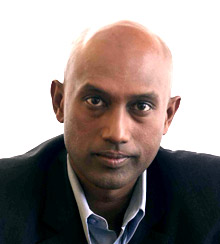
    On the occasion, Sanjoy Narayan, Editor in Chief, Hindustan Times, said, “In modern India, change is constant. In the last two decades, it is said, India has changed a lot. So has the world around us… The changes that India faces are, thus, on several fronts – some domestic, others global. And all of these changes throw up for India the challenge of keeping pace with them. It is with this in mind that the 9th edition of the annual Hindustan Times’ Leadership Summit this year offers a platform for debating these issues, to which there are, of course, no easy answers.”


    The annual summit has become a powerful forum bringing together leaders from all walks of life and encouraging interaction and debate on the burning issues of the moment. The inaugural session at the summit will be that of Pranab Mukherjee who will share his thoughts on the opportunities and challenges facing India.


    It will be followed by an innovative session on education trends from around the world – ‘The Education Prism: Global Perspectives’. Montek Singh Ahluwalia, Deputy Chairman, Planning Commission of India, Dr John A Quelche CBE, Distinguished Professor of International Management, Vice President and Dean, CEIBS and Gregory W Cappelli, Co-CEO, Apollo Group and Chairman, Apollo Global, will be speaking at this session. The Keynote Address of the day will be given by Tun Dr Mahathir Bin Mohamad, former Prime Minister of Malaysia, and he will be speaking about ‘The Challenges of Change in the 21st Century’.


    The other speakers on day one will be Kaushik Basu and Norman Pearlstine, Chief Content Officer, Bloomberg LP, who will be discussing the global economic crisis; husband-wife team Carol and Ken Adelman, who make up Movers & Shakespeares, will be sharing management lessons from Shakespeare’s plays in a repeat of their hugely successful session from the World Economic Forum at Davos earlier this year.


    The highly anticipated penultimate session of the day will see economics maverick Dr Steven Levitt, author of the popular Freakonomics books and professor at the University of Chicago, share his unique perspective in a session entitled ‘Unconventional Thinking for an Unpredictable World’.


    The closing session on the first day will look at the hot-button topic of the Arab Summer and will see Dr Paul Salem, Director, Carnegie Middle East Center and Emile Hokayem, Senior Fellow for Regional Security, The Internal Institute for Strategic Studies, discussing its causes and consequences.


    The second day of the summit will start with the keynote address by LK Advani, who will share his views on ‘India’s Yatra into the Future’. Mr Advani’s session will be followed by a special session led by the former Prime Ministers of Australia and Spain – John Howard and Jose Maria Aznar – on the recent social and economic upheavals around the globe.


    Actor-director Farhan Akthar and actor Vidya Balan will chat with Vir Sanghvi in the popular Hindi Film Industry session.


    Other speakers on day two are Mehbooba Mufti, President, Jammu and Kashmir Prople’s Democratic Party, Asfandyar Wali Khan, President, Awami National Party, Pakistan and Dr Farooq Abdullah, Minister of New and Renewable Energy, in a session titled ‘Settling Disputes for a Common Cause’.


    Julian Assange, Founder and Editor-in-Chief, Wikileaks, will be addressing the delegates via video on the second day.


    The final session of the summit will be addressed by Chief Ministers Sheila Dixit (Delhi), Prithviraj Chavan (Maharashtra) and Dr Raman Singh (Chattisgarh), who will speak about the connection between Personality Power and Good Governance.


    The sessions will be chaired by eminent leaders of the media world such as Rajdeep Sardesai, Sagarika Ghose, Suhasini Haidar, Karan Thapar, Vir Sanghvi and Sanjoy Narayan.


    The Hindustan Times Leadership Summit 2011 is guaranteed to bring a fresh new perspective on the critical issues and problems we find ourselves facing today. By leveraging the power of debate and discussion, this ninth edition of the Summit will tackle the challenges of change with insight and clarity.

  • Sai Kumar to replace Haresh Chawla as Network 18’s Group CEO

    By A Correspondent


    The transition is in place. After the surprise exit of Group CEO Haresh Chawla, trusted aide and Group COO B Sai Kumar, 37, has been appointed successor at Network 18.


    This was conveyed to the Network 18 team in an internal circular by outgoing CEO Haresh Chawla. While Mr Sai Kumar will be Group CEO of Network 18, he will also be on the boards of Homeshop 18 and Viacom 18. The respective CEOs of both companies will report to the Board, the memo said, adding that given his (Mr Chawla’s) sharing of time with Viacom 18 in recent times, Mr Saikumar has had rich experience running the Network 18 businesses.


    In his assignment as Group COO, Mr Sai Kumar, led management teams across group companies and works closely with business heads to optimize business value and revenue generation.


    He has been a core member of the group’s business strategy team and through his decade-long stint has been responsible for providing operational leadership and enabling stellar organic growth across the group’s market leading brands. Mr Sai Kumar has also played an integral role in the various inorganic forays of the group across business verticals.


    Prior to joining the Network18 Group, he was with The Times of India Group, where he worked with Times Music, Times Retail and Times FM. He holds an MBA in Marketing and an undergraduate degree in Statistics.


    Adds a communique from Network 18:

    In his new role, Sai kumar will be responsible for the strategic and operational management of the Network18 Group. He would have direct responsibility of the Group’s News, Web, Publishing, Factual Entertainment and allied businesses which would include the IBN General News Network, CNBC TV18/ Awaaz Business News Network, Web18, Yellow Pages, Forbes India, AETN18 and the niche magazine stable among others.


    Sai kumar will also shortly be joining the Boards of Viacom18 and HomeShop18. The current CEOs and Management Teams of Viacom18 and HomeShop18 will continue to report to their respective Boards. Raghav Bahl, Founder and Editor of Network18 is expected to step up engagement with the Management Teams of Viacom18 and HomeShop18 and Sai kumar will be working closely with him on both of these businesses.


    Earlier, as Group COO, Sai kumar was responsible for leading management teams across Group companies apart from being a core member of Network18’s Business Strategy Team. Through his decade long stint, he has been responsible for providing operational leadership and enabling stellar organic growth across the Group’s market leading brands. He has also played an integral role in the various inorganic forays of the Group across businesses.


    On this announcement, current Group CEO, Haresh Chawla, said -“I am absolutely delighted to handover the mantle to Sai, who has worked very closely with me for over a decade, as we built the Network18 franchise. He has seen the Network grow from its very early days across various businesses, which has given him a width of experience that is tough to find in the media business. He is an accomplished leader and a true people’s person and I have no doubt that he’ll take the legacy forward to even greater heights. I will always be available to him as a friend and mentor and wish him success. ”


    Sai kumar added “It’s an honour to lead this world-beating team at Network18. The next phase of growth promises to be exciting and I look forward to it. Building upon the inspiring legacy left behind by Haresh, we have some very ambitious dreams for the future and we intend to see each one of them fulfilled.”


    Sai kumar will be reporting into Founder and Editor, Raghav Bahl in this new capacity.

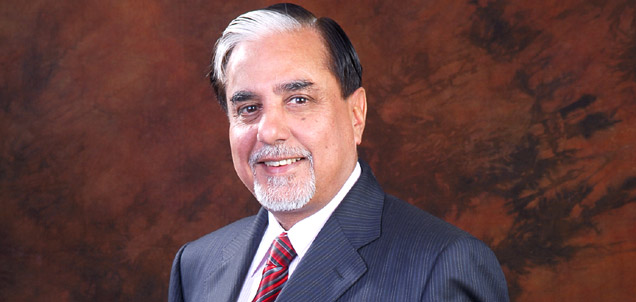
  • Happy Birthday, Mr Subhash Chandra!


    By Punit Goenka


    Although I was too young in 1992 when Zee TV started, our family was confident of him achieving success in the media and entertainment space.


    * I have been fortunate to work with him. His perseverance, never-give-up attitude, and complete commitment to his work have helped him achieve the status that he has today. It was his visionary abilities that enabled him to foresee opportunities much before others and launch pioneering ventures like India’s first Hindi satellite channel – Zee TV, India’s first Hindi News Channel – Zee News, India’s first direct-to-home company – Dish TV and many more.


    * Zee, under his leadership, has always remained grounded through its journey spanning two decades. Our ability to implement cost-control initiatives has helped us overcome the economic slowdown and achieve further operational efficiencies, which is why Zee has been able to deliver a shareholder value CAGR of over 30 percent since inception. Apart from this, the connect with our viewers and ability to innovate and create successful indigenous home grown formats have helped us sustain our leadership.


    * He has done a lot for all of us. We want to consolidate on the strong foundation he has created for Zee. We are working towards making Zee Entertainment Enterprises Limited one of the leading Media and Entertainment Company from the emerging markets.


    * By becoming the first Indian to be conferred with the prestigious Emmy Directorate Award 2011 recently, he has done the entire Indian M&E Industry proud.


    * His vision when he started was to take entertainment to the home of every Indian. In fact he was able to envision and understand the value chain of the entire TV broadcast business from content creation to content delivery – right upto the last mile. Now he wants to take Indian entertainment to the global audiences.


    Punit Goenka is Managing Director and CEO, Zee Entertainment Enterprises Limited


    As told to Johnson Napier

  • The Anchor: 5 publications you (nearly) forgot but are (often) unputdownable!

    By A N Chorrea


    #1 Caravan
    Published by Delhi Press, would be wrong to call it India’s answer to New Yorker, but a good read nevertheless. Was resurrected by the younger generation of the Naths and with a gora editor in tow.


    #2 Reader’s Digest
    Oh, yes, it’s still around. The format may not have changed much, but it’s the Digest content and attention to detail and fact-checking makes it a great buy.


    #3 Economic & Political Weekly
    You may not get it at all the railway stalls, but get hold of a copy and we’re sure you’ll enjoy it for the quality of content.


    #4 Current
    Resurrected by the late owner-editor Ayub Syed’s son Asif, Current is a super read with some incisive political analyses, often by heavyweights in the biz. Check content on the website, currentnews.in.


    #5 Screen
    Critics may say it exists more for the awards than to serve as the voice of the Indian film trade as it once did, but the bold new tabloid avatar is interesting and easy-to-navigate.One does miss those big broadsheet ads, but this is the age where smallness rules.

  • Would ‘Kolaveri Di’ have been a rage if it was only aired on FM?

    By Robin Thomas


    Already a huge hit online, with more than 94 lakh views on YouTube, and more than 46,000 ‘Likes’ on Facebook, ‘Why this Kolaveri Di’, a Tamil-English song promoting the Tamil film ‘3’, has become a national rage. The song became so popular online that it was instantly picked up by FM stations across the country irrespective of their language. The Chennai station of Big FM and Radio Mirchi however claim to have aired the song first on radio and that the song was heavily promoted on radio even before it became a craze online.


    According to a Big FM spokesperson, “The song is a rage – both nationally and internationally. Big FM premiered the song at our Chennai station with the musicians, following which it went on YouTube. It was the power of the product – lyrics and music that made it a hit! Radio today, has a key role to play in marketing and creating viral music, and in this case too, it worked! We played the song, across our stations in its Tamil-English version.”


    So, would the song would have created a similar sensation had it been aired only on FM radio? While there are those in the industry who believe that radio has the power and the reach to create a huge sensation, there is a section in the FM radio sector that are of the view that a ‘Kolaveri Di’ kind of national rage was only possible through Facebook and YouTube, as radio is more city/ town or even state-oriented.


    Vehrnon Ibrahim, National Programming Head, Oye! FM

    Vehrnon Ibrahim, National Programming Head, Oye! FM said, “I doubt the song would have been a huge sensation on air (radio) as compared to the craze online. We started playing this song only after it became a huge sensation on the social networking sites. It’s quite an entertaining song, a very filmy story, and we cover all that is filmy or entertaining. We are therefore following the story and not the song.”


    Kartik Kalla, National Programming Director, Radio City said, “Yes of course radio would have created such a rage. After all it’s the same person who tunes in to FM and online so whether radio airs it first or after two days is immaterial.”


    “We have a very robust policy where songs are tested with the listeners before being put on air. But honestly with Koleveri Di that was not required because it has broken all kinds of records online and you certainly can’t ignore that!” he added.


    Ravindran Nair, Director Programmes, Radio Mango

    Ravindran Nair, Director Programmes, Radio Mango, also believes that the song would have been a huge sensation had it been aired first on radio. “Definitely it would have been a hit. Radio has done similar things very successfully. In our case, a song from an album “Coffee on MG road” called “Palavattam” by actor/director/singer Vineeth Srinivasan became huge with radio airplay. Social media has become a part of marketing mix for most products and films and music will be no exception” he explained.


    On a different note, Shaan Menon, Manager Content CLUB FM stated, “I don’t think the song would have been such a rage had it been aired on radio first, it is all because of YouTube or Facebook. Just like Kolaveri, any radio link or radio creative such as a promo or an interview bite can also become viral. It’s unpredictable, but will happen for sure. These days, the internet is the first testing platform for any creative product. So, a product getting well sold on the internet is undoubtedly the choice of the masses! Social Network helps us to extend the reach of our product to more number of people.”


    He further said, “Radio is confined to a city or a state or to a nation, the possibilities for a Channel to fly high taking the flight of a social networking site is a huge positive sign. Radio is a medium which plays the right taste of the people. It’s just like his favourite restaurant where the listener gets his favourite food.”


    Some of the FM stations playing the ‘Kolaveri Di’ song are Radio Mirchi, Red FM, Big FM, Radio City, Oye! FM; Club FM, Radio Mango, Radio Hello and Radio Choklate.


    Of course the frequency of the song is pretty high among the south-based FM stations, particularly those in Chennai. The frequency of the song played on the Big FM Chennai station is also said to be very high as compared to its stations in other parts of the country. According to Radio Hello’s website, ‘Kolaveri Di’ has already become the top most popular song in its ‘Top 10 songs for this week’ list. Club FM, a Mathrubhumi initiative, used to play this song for 16 hours a day with a special promo along with it; Radio Mango, another FM station in Kerala, a Malayala Manorama initiative, used to play this song twice per hour, with heavy rotation. Radio City plays this song three to four times a day across their 20 stations whereas Oye! FM plays it for 172 hours.


    Interestingly, ‘Kolaveri Di’ is not the first song to have crossed language barriers among FM stations. Even earlier songs like, ‘Aika Dajiba’, a popular Marathi song; Tamil Song, ‘Apdi pode’ were played in various FM stations in the country irrespective of their language.

  • Viacom18’s ‘Sonic’ plan to dominate TV-land

    By Rishi Vora


    After announcing the launch of Comedy Central, Viacom 18 has now unveiled yet another offering in its bouquet: Sonic, a sci-fi entertainment channel catering to young adults, falling in the age bracket of 10-17. The channel will bank on Action, Adventure and Animation – the three main areas around which the programming strategy will revolve.


    What Sonic’s launch does to the market is extend its scope a bit. With other channels in the kids’ genre typically falling in the age group, largely between 4- 14, Sonic extends that to slightly older kids, up to 17 years – a segment which constitutes 30-40 percent of the 4+ market, and the one which is underserved in India. For Viacom 18, it is a significant development, for now as a group it caters to every segment in the Indian entertainment industry. Colors – the Hindi GEC, MTV in the youth category, Nick catering to kids aged between 10-14, and Comedy Central – a comedy channel for 14 + audiences.


    But it is too early to tell, whether Sonic will make an impact. A senior member from one of the kids’ channels, who did not wished to be named, said, “While we welcome one more channel in the genre, these are early days to comment on what it does to the segment – will it succeed, will it not? So it is only fair to wait and watch. Coming from the Viacom stable, all I can say is it’ll be interesting to see how the channel progresses.”


    Nikhil Rangnekar, Joint CEO, Spatial Access said, “It’s going to be challenging for the new player to establish itself, with its new positioning of catering to young adults. It will be interesting to see what differentiation they bring to the genre, as animation and adventure is a game that existing players are already playing.”


    Viacom 18 execs, however, are confident of putting up a good show. Mr Haresh Chawla, Group CEO, Viacom 18, said in the official communique, “Sonic further expands Viacom 18’s presence in a demographic bracket that has remained un-tapped, but is probably the biggest influencer on family purchase decisions. Like our other businesses, we are confident of Sonic establishing a dominating presence within the first year of its operations.”


    He further added, “The next 12 months will see Viacom 18 in an expansion mode and Sonic is the first step in that direction.” Mr Bob Bakish, President and CEO, Viacom International Media Networks said, “The launch of Sonic is significant in many ways. Not only does it further expand the Viacom 18 Network in India but it also opens up an interesting category for both viewers and advertisers. The Viacom 18 Network can now take pride in being the only entertainment network that has specific brands to entertain viewers across every possible age segment.”


    Mr Chawla’s comment on reaching a dominating position is a clear indication that the channel will pump in distribution monies, and of course investments on content acquisition. The plan is to reach 40 million households in India. So distribution and content acquisition are two key areas of investments the channel is looking into, in its bid to be a significant player.


    Executive Vice President and General Manager, Ms Nina Elavia Jaipuria said that the channel’s efforts will be to have a large set of loyal viewers and keep them engaged through never-seen-before digital initiatives. Elaborating on the TG, she said, “It is going to be a challenge to hold the attention of our TG – the young adults – ones who are on the cusp of adulthood. They’re rebellious, impatient, tech-savvy, hyperactive, confident and competitive. They’re early adapters, experimental, extremely opinionated and big influencers on matters such as purchase decisions.”


    Revenue-wise, it will be both advertising and subscription. Though digitization will help, the channel’s foremost challenge is to bring a wide variety of advertisers, from different categories on the channel.


    The tagline for Sonic is ‘Thrills. Guts. Glory.’ For presentation and packaging aspects, UK-based company – Red Bee has been hired. Scarecrow is the creative agency and Vizeum will handle media duties.


    December 2011 is when Sonic will go on air. The marketing will roll out soon, it’s going to be a 360-degree campaign to start with and digital initiatives as an on-going strategy to engage and interact with tech -savvy young adults.


    As history suggests, in other categories of course, many channels have launched with a bang. On being asked what her expectation were at launch, Ms Elavia Jaipuria chuckled, “Wish I could get 30 percent share and even surpass Nick. On a serious note, it will be only be right to review the channel’s performance post four to five weeks of launch.”

  • The Anchor: 5 reasons radio will flourish, forever

    By Sunil Kumar


    #1 It is Local:

    People are more curious about or interested in the happenings in their city or town. Interest in local culture is developing and radio caters to that local culture which other media just cannot. Radio is absolutely local.


    #2 It is Participative and Interactive:

    Radio is the only medium where people can air their voice… leave a request… and it provides numerous other ways for active listener participation. Increased density of mobile phones is encouraging this interactivity further. Even social media has its own set of limitations…


    #3 It has an Abundance of Content:

    Today different kind of music is played on radio. It is not limited to Bollywood. Since it is a local medium, the music played too is in local language and in accordance to local taste. Today large number of music is produced in India, especially local music. ‘Kolaveri Di’ is one example. Bhajans, Sufi music, or hymns are some other music one can hear in different parts of the Country. In addition to these, the availability of sports commentary and multiple frequencies will offer listeners with more even more differentiation of content.


    #4 Car Listenership is Rising:

    Nearly all cars today have FM stereo attached, and as the number of cars continues to increase, it will further increase car listenership. More cars on the road also means frequent traffic jams. There are also those who travel long distances, and as a result time spent in listening to radio is also likely to increase.


    #5 It’s Free:

    Unlike any other, radio happens to be the only medium which is actually free.


    Sunil Kumar is MD, Big River Radio and a veteran mediaperson