Category: MEDIA

  • Zee pumps in $250mn for wellness content

    By A Correspondent


    Subhash Chandra, Chairman of Zee group, today announced the creation of a $250 million content development, production, co-production and acquisition fund in the United States that will benefit Veria Living, a network devoted to showcasing wellness programming and related content across multiple media platforms.


    The New York-headquartered Veria Living television network is available throughout the US to the Dish Network, Verizon FiOS and Frontier Communications subscribers. Veria Living offers the world’s largest line-up of first-run, original programming – connecting viewers in a contemporary and accessible manner to the benefits and joys of living a healthy lifestyle.


    The establishment of the $250 million fund is yet another step in Zee’s five-year plan to further expand Veria Living’s presence in the US and beyond as the go-to-source for all things health and wellness. Said Mr Chandra, “We are firmly committed to growing the Veria brand across the television, internet, mobile and OTT platforms. By focusing on original content development and production we’re not only looking to build a broad US audience for Veria Living, but also setting the table for the expansion of the brand globally over the next couple of years.”

  • MxMIndia-partnered ‘Paid News’ seminar today

    By A Correspondent


    MxMIndia has partnered the event ‘Paid News: Fooling People all the Time’ organised by Moneylife Foundation and Citizens Action Network with the support of industrialist Cyrus Guzder.


    To be held in Mumbai’s Madame Cama Hall (Opp Lion Gate, Kala Ghoda) on Friday, November 18, the evening will see the screening of the documentary ‘Brokering News’ followed by a panel discussion with senior journalists and the film-maker Umesh Aggarwal.


    About the film: The Delhi-based non-governmental, not-for-profit Public Service Broadcasting Trust (PSBT) recently released a documentary titled “Brokering News—the inside story of paid news”.


    The film by Umesh Aggarwal addresses a significant challenge facing Indian democracy today—which is the state of its media. The film looks at three aspects of paid news—how politicians are paying for positive coverage during elections, with the result that those who don’t pay are blanked out by the media; how the coverage and reviews of movies are orchestrated and paid for and of course, paid news about business and industry. It depicts in detail how journalists were forced to broker deals to offer editorial coverage to politicians.


    Details of the Event:

    Panelists: Umesh Aggarwal, Ayaz Memon, Paranjoy Guha Thakurta, Bhawana Somaaya, and Sucheta Dalal.

    Timings: 5.30-7.30pm (Registration and Tea starts at 5pm)

    Venue: Madame Cama Hall, KR Cama Hall Institute, Bombay Samachar Marg, Opp. Lion Gate, Kala Ghoda, Mumbai 400 023

    Admission: While admission is free, registration is required. Contact details: Call Judith/Seraphina on 022-24441058-60, or mail at mail@mlfoundation.in,or log on to www.mlfoundation.in

  • Firstpost.com gets its readers to play chess with the Grandmaster

    By A Correspondent


    Network18’s Firstpost.com, India’s first exclusive online news and views website has launched an online chess championship for its readers. This fortnightly event will see Vishwanathan Anand share some of his real-life chessboard experiences with online participants as a part of ‘Firstpost Battleboard.’

    In line with Firstpost.com’s inclusive agenda, Firstpost Battleboard (www.firstpost.com/battleboard) calls for audience participation. With a welcome video by Vishwanathan Anand readers are given an introduction to the game and are challenged to face actual challenges that the Grandmaster has faced in his career. Interactivity becomes the prime attraction of Firstpost Battleboard as the users figure out the best possible alternative to get ahead in the game and the Grandmaster elucidates the rationale behind every move by decoding the effectiveness of all the possible alternatives. Quintessentially a cerebral online offering, this game attempts to bring together chess enthusiasts from across the world.Firstpost Battleboard is sponsored by telecom major Idea Cellular.

    Commenting on his association with Firstpost Battleboard, Grandmaster Vishwanathan Anand said, “When Firstpost approached me for an online,interactive platform to take chess to a wider audience I was quite excited to do it. The aim is to take the reader through the emotion and calculation in each game. Some decisions on the board are made by intuition and some by cold calculation. It is the human element of a game that a player mostly remembers. I hope the readers enjoy the series and we look forward to a lot of interaction.”

    Speaking on the launch of Firstpost Battleboard, Durga Raghunath, VP-Products, Web18 said, “Battleboard with Vishwanathan Anand is a content innovation we are very proud of. As Firstpost continues to educate and entertain and interact, Vishwananthan Anand is a perfect partner. We hope to reach out to new audiences through efforts like these.”

  • TV-wallahs eager for digital wave


    By Rishi Vora


    The television distribution scene in India has for many years seen the dominance of cable wallahs. Digitization only started in a big way when DTH players pumped in huge sums (there was no ordinance then) and succeeded in building a critical base of subscribers in the country. As a result cable operators were seen as laggards. Sample this: there are about 40-45 million DTH homes out of the total viewing population of more than 225 million households, so DTH has grown despite competition from cable and is likely to increase the subscriber base substantially with the recently passed ordinance by the government.


    As for the cable operators and MSOs, they are left with no option but to invest in infrastructure. Den Networks is investing Rs 1,000 crore and expects to get 2.5 million subscribers in the phase one. Hathway will invest Rs 500 crore and they are also bullish about increasing the subscriber base. Analysts feel that now is the perfect time for MSOs to increase their share in the business.


    So, while it seems all good for the industry, the fact is that digitization is something that was always talked about, and is now a work in progress as far as complete digitization is concerned. The government has, in a recent development, pushed the sunset day for four metros from March 2012 to June 2012. The date for cities with a population more than 1 million is March 31, 2013.


    For broadcasters, this is a big relief from the carriage fees, which in the past have resulted in loss of revenues. The four metros is a big market with 20 million households; and digital homes eating into cable and analogue… But, digitization, for broadcasters, also means that the consumer will now have a choice of what channel to pay and watch. That in experts’ minds is a challenge many broadcasters will have to face – to keep their viewers’ interest levels high and for the long run.


    Subhash Chandra, Chairman, Zee opines, “Digitization will only help the television industry further grow. The government’s decision on clearing the ordinance is a very positive move. It will give a boost to the cable and satellite industry and help create a more sustainable business model for the television industry.”


    On the growth of DTH players in the county, he said, “DTH is leading the adoption of digital technology. There are about 39 million gross DTH subscribers in the country. Now they have a great opportunity to consolidate their businesses.”


    However Dinyar Contractor, Editor-in-Chief of Satellite and Cable TV Magazine, has a contrary view to the whole scene. He feels that there is still some time for digitization to happen pan-India (2014) as the ordinance states. And that broadcaster are wary of going digital, or are wanting to delay the process of digitization of TV in India, as the profits are not much, plus there is the risk of losing eyeballs, as there will always be viewers who are not open to the idea of paying and viewing, as against the concept of free-to-air channels.


    Tarun Katial, CEO, Reliance Broadcast Network Limited, feels, “Digitization will bring-in fair reporting of subscriber base, which will lead to standard pricing and subsequently eradication of local monopoly. It will help companies increase subscription revenues and reduce down carriage fees for broadcasters in a phased manner.


    Ajay Chacko, President, A + E Networks | TV 18 JV, says that the move will bring in more accountability in the business. And apart from additional subscription revenues, he believes that digitization offers a whole new benchmark for broadcasters, and a platform which is more measurable than cable and analog.


    Neo Sports COO Prasana Krishnan welcomes the ordinance. “This is the much needed change in the industry. What it will do to the industry? I think it will revolutionize the broadcast landscape in India.”


    If the ordinance were not passed, Mr Katial is of the opinion that the current capacity constraints in analog cable would have stifled the growth of new channels and introduction of technologically advanced content. “The carriage costs paid by broadcasters which currently remain high in view of the limited bandwidth of analog cable would decrease post digitization. This would allow broadcasters to make higher investments in programming and marketing, thus improving the customer experience,” he explains.


    Another advantage the industry will see over the years in the fast adoption of HD television and 3D, which will open new revenue streams. As far as television distribution industry is concerned, the ordinance will lead to more transparency and greater accountability. It means opportunity for all stakeholders – broadcasters, distribution platforms including cable companies, MSOs and DTH.

    Photograph: Airtel Digital TV HD Recorder from airtel.in

  • Yummy launch event for BBC Good Food

    By Akash Raha


    BBC Good Food magazine from the Worldwide Media stable is all set to kick off its inauguration event on November 19 in Mumbai. The magazine was earlier launched on October 21, which was also the Good Food Day. MxM India got in touch with Mr Tarun Rai, CEO, Worldwide Media Group to know more about the launch event and how the magazine has being doing in the market thus far.


    Speaking about the response towards the magazine Mr Rai said, “The response has been quite overwhelming both from advertisers and readers. Our mailboxes are flooded with compliments from readers, many of who have actually tried out the recipes. Some others have gone and checked out restaurants that are recommended.”


    The launch event on Saturday is set to be a grand celebration of fine food with fine entertainment. The menu is a five-course meal specially put together for the occasion by chefs from India and abroad, and it is a sit-down dinner for a select group of people. It will be a room full of celebrated chefs, restaurant owners, food critics and writers, food retailers, senior corporate and the high-profile set of Mumbai including stars from Bollywood.


    Mr Rai went on to say, “We are the first international food magazine in the country and we expect to have the first mover advantage in the fast-evolving Indian food sector. I believe we spotted the opportunity well before the others and will reap the benefit. Besides just the business objectives we do expect BBC Good Food to contribute to the exciting new developments that are taking place with food in India. We want to help people experiment more in their kitchens and when they eat out. We want to showcase the young and dynamic Indian chefs who are making food so exciting. We want to introduce our readers to world cuisines… We believe India is ready for a specialist food magazine.”

  • Upclose with Paid News


    By Johnson Napier


    Imagine being told by a news channel or a newspaper that the minister you voted for was as right a choice as could be or that the zonal officer from your local municipal ward has done an inimitable task or that the food that you consume from a particular brand has the ingredients to unleash the hidden potential out of you or even better, that if you carry out an assignment on an auspicious day as predicted by the pundits your fortunes would change forever…? You’d fall for the bait, right? If not all, a majority of the consumers would be taken in by the promises being unleashed as the source that it is coming from couldn’t be doubted in the least. But that is the irony. From being the messengers of truth and entrusted with the task of upholding the morals of society, the fourth estate of India’s democracy is increasingly being looked upon with uncertainity. And there is every reason for readers’ and viewers’ apprehensions, as docu-filmmaker Umesh Aggarwal would want us to believe.


    Presenting his take on the sorry state of affairs prevailing in the print and news broadcast sector, Aggarwal presented a one-hour documentary titled ‘Brokering News—the inside story of paid news.’ The film is the initiative of the Delhi-based non-governmental, not-for-profit Public Service Broadcasting Trust (PSBT). The event was held at Mumbai’s Madame Cama Hall and was organised by Moneylife Foundation and Citizens Action Network with the support of industrialist Cyrus Guzder. MxMIndia was the media partner for the event.


    Being the first of its kind initiative on the sector, the documentary provides a harsh outlook on the filthy mannerisms being employed by most prominent newspapers and news broadcast houses where consumption of news is concerned. Spanning the streams of politics, business, sports and entertainment the film addresses a significant challenge facing Indian democracy today—which is the state of its media. The film looks at three aspects of paid news—how politicians are paying for positive coverage during elections, with the result that those who don’t pay are blanked out by the media; how the coverage and reviews of movies are orchestrated and paid for and of course, paid news about business and industry. It depicts in detail how journalists were forced to broker deals to offer editorial coverage to politicians.


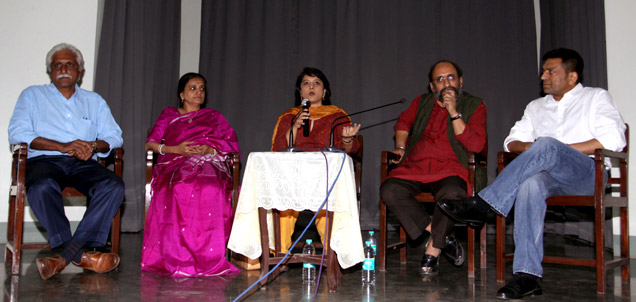
    Following the screening, the event headed for a lively panel discussion and comprised of the following notable panellists: Umesh Aggarwal, director of News & Entertainment Television, Ayaz Memon, veteran journalist and currently consulting editor at IMN News, Paranjoy Guha Thakurta, educator & commentator, Bhawana Somaaya, noted film critic and columnist and Sucheta Dalal, Trustee of Moneylife Foundation and Managing Editor of Moneylife Magazine.


    When left to express their initial comments on the screening, Paranjoy Guha Thakurta began by highlighting the last action that was shown in the documentary – the disqualification of a local MLA from one of the constituencies in the North by the Election Commission of India because of the malpractice the individual resorted to with the help of the media. “It was the first ever such judgement that was carried out by the ECI and we hope to follow that when a judgement is pronounced on the former chief minister of Maharashtra Ashok Chavan.” According to Mr Guha Thakurta, while SEBI has made it mandatory for news and print houses to disclose their relationships and dealings with corporate hoses and influential individuals, there is still no transparency on such a ruling as nobody has even challenged the visibility or the outcome of this ruling as yet. “We hope to do a lot more and see a lot of action going forward.”


    Sucheta Dalal began by questioning the level of dishonesty that existed in business journalism. “Having worked as business journalist myself for many years, I can say that most of the stories that appear in newspapers are advertising-driven. And the sorry part is that it is a trend that is gaining ground with nobody doing a thing about it. I haven’t even heard of reports of anybody approaching the RTI for finding information of such corporate dealings with the business news organisations.”


    Probably, the most straightforward answer was unleashed from Ms Somaaya who vouched that in her entire career spanning over 30 years, she has never resorted to the concept of being entertained at the gesture of the entertaining parties. “I am an idealist. I can proudly state that I am not the same as the others in the space. Even today, there is a place for ethics and integrity in journalism,” she quipped.


    Presenting his rationale on the tale, Ayaz Memon asserted that there was a turmoil being currently witnessed in the media sector what with the explosion of several mediums in the space. “As a result there are not enough checks and balances leading to dangers lurking in every nook and corner of the business.” Citing the example of cricket, Mr Memon went on to describe the state of affairs of players who played in the earlier days and how they were paid minimal dues to the players of today who aspire to be paid huge sums. “This has led to match-fixing and spot-fixing being introduced to the sport today. While it is still not as widespread as is made out to be, the danger of such things going unchecked is huge.”


    When questioned by a member from the audience on which is the bigger worry – watching damaging news versus news that is paid for and how to distinguish between the two, Ms Somaaya reverted by stating the practice that she follows when reviewing films. “I’ve always refused offers for special screenings as after they lavish you with undue attention they expect that you judge the film in their favour. Reviewing films has become a big business today and one cannot predict the veracity of the reviews that get published.”

    Mr Guha Thakurta added here that it was largely the media that has played a huge role in giving damaging news or news that is paid for. “The need of the hour is to amend the Act and make paid news a cognisable offence.”


    Mr Aggarwal added here by saying that “we have our priorities misplaced. We need to figure out what kind of news gets featured and whether it is a pertinent one.” He cited the classic example of the small kid Prince that was covered live on almost all television channels for three days but another important news of 57 miners being trapped underground the same day was totally missed by everybody.


    Proceeding to the immediate solutions that were required to be taken by the industry, Mr Guha Thakurta called for an underlying need to have a regulation in place. “The thing about self-regulation is that in most cases it is not an effective thing to do. Recently there were two channels who were questioned for showing obscene content but what about the judgement? The problem is that we do not have an independent regulatory body which could govern and control the media; a body that acts as a statutory ombudsman for the electronic media.” Continuing further, Mr Guha Thakurta said that the issue was also how we strengthen the defamation laws in the country. “We need to go beyond individuals and focus on the systems. That should be the immediate priority.”


    Ms Dalal stated here that it was essential that media houses portray the right picture and not otherwise.”Most media houses are going in losses amounting to several crores of rupees but they are putting up are brave front and are getting help from the media to hide their plight. The owners need to question themselves as to what is it that we are doing to broadcast the right news?” Summing up, Mr Memon added that “we don’t live in a perfect society. It’s a time-bound initiative and will require the industry to come together and fight the menace.”

  • INS, IBF express shock on SC order in Times Now defamation case

    By A Correspondent


    The industry bodies have joined hands in expressing grief over the Supreme Court order in the Times Now defamation case.

    Close on the heels of the IBF, the Indian Newspaper Society has put forth its stand. Mr. Ashish Bagga, President,  the Indian Newspaper Society (INS) has said in a communiqué that the order has sent shock waves through media circles across the country. The quantum of damages awarded by a lower court and the direction of the higher courts to deposit the entire amount to allow an appeal to be heard for an unintentional technical error will potentially threaten the survival and existence of media in India, he said. While recognizing that the law of defamation is an important qualification of the fundamental right to freedom of expression, he said that the law of defamation should be construed in such a manner that it does not constrain the normal functioning of the media, indeed the very existence of media.

    The Indian Newspaper Society and its members hold the judiciary in the highest esteem, the communiqué added, and believe it has played a critical role in safeguarding the rights of citizens. There is need in the Times Now matter for a display of judicial sagacity, and INS hopes that the judiciary will find occasion to review its decision.

    Earlier, the Indian Broadcasting Foundation (IBF) expressed great surprise and concern over the impact of the recent decision of the Supreme Court that dismissed the Special Leave Petition filed by Times Now, a member channel, which sought relief against a high court decree that stipulated the channel to deposit Rs 20 crore and furnish Bank Guarantee for Rs 80 crore, to hear an appeal in a defamation case.


    The IBF agrees with the recent views that have appeared in the media on this case, that such decisions should be reviewed and reconsidered. Because if media is compelled to pay up damages of such quantum despite the issuance of a public apology for an inadvertent error, it would effectively cripple the functioning of the media and an economic burden of such nature would completely jeopardise media business as it directly impacts media freedom, independence and survival, the very essentials of a democratic set up in any country”


  • Corruption a symptom of governance: Mark Tully (Video Report)

    By Shruti Pushkarna


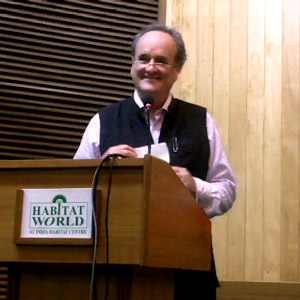
    Almost twenty years after he wrote ‘No Full Stops in India’, veteran journalist Mark Tully unveiled his latest addition to the India series, ‘Non Stop India’, in the capital on Saturday, November 19. Addressing a packed hall of avid readers, Mr Tully confessed that he was most nervous about talking to the Delhi audience. Citing an Indian cricketer’s concern, he said, “It’s hardest to play against a home crowd, and Delhi is very much my home and all of you all will be my severest critics.”


    Mr Tully also confessed that he didn’t want this book launch to be another one of the mutual admiration sessions that these things are often brought out to be. He admitted, “We journalists are actually very good at having self-congratulatory sessions.” He said he was delighted that his old friend, Karan Thapar, agreed to join him, “…as Karan would be the last person to give me an easy ride.”


    Acknowledging that much has changed in terms of how India looks at itself as well as how it is looked at in the international arena, since he wrote ‘No Full Stops in India’, Mr Tully said, “I think the danger in the Indian story, and this in a way is the point of this book, is that it can lead to ‘jugaad’, the concept that we are going to get there anyhow, so why do we worry about the problem which we have. It’s like the gentleman who I once met, who I asked, what does he think about India and he said, ‘Main bhagwan main bharosa karta hoon.’”


    [youtube width=”400″ height=”250″]http://www.youtube.com/watch?v=iUgdUEPanZA[/youtube]

    Known for his love and admiration for this country, Mr Tully also confessed to his audience that he didn’t find himself very settled in Britain so he thought that maybe his ‘karma’ has landed him here.


    Defending his work against one criticism made by Outlook reporter Pavan K Varma where the latter said that he would have liked Tully Saheb to leave the safer shelter of an observer and give his own views far more robustly, of what is wrong or right with India, Mr Tully said that it’s not entirely a negative book and it does warn about problems which lie ahead. He also added that for one to be able to criticize, one has to be extremely understanding and sympathetic of the issues at hand.


    Quoting a journalist who once said, ‘these are my conclusions on which I base my facts’, Mr Tully hoped that this book produces some facts which contradict some commonly held conclusions. A few of those that he has written about in this book include, the problem of Naxalites, the Dalit situation in the country today, the issue of privatization and the problem with ministers pouring money into troubled areas, like Kashmir. He said, “Overall the story is really about governance, something that you all hear about now. And I hope the story makes the point that this corruption that we are so concerned about, is, I think and many of the stories suggest this, more like a boil…boils are created by blood poisoning, they are not the blood poisoning themselves, they are a symptom rather than what is going wrong, And corruption in my view is basically a symptom of governance which needs reform.” Adding on, he said, “…And that’s why I fear that this whole Lokpal campaign. Yes maybe Lokpal will be a help but it would be more of a problem if everyone then sits back and says we’ve solved the problem, everything’s all right.”


    When asked how much of a problem was the Prime Minister himself, Mr Tully unswervingly admitted, “I think the PM has a major problem because we all know where the power lies very often and it’s not necessarily the PMO and we also all know that Manmohan Singh for all his many qualities, is not basically a politician who has grassroots experience. And in my view one of the problems with the Congress party is, at the Centre most of the people are not really grassroots politicians.”


    Probing him further on the issue of governance, Karan Thapar asked him whether the problem actually lies with Sonia Gandhi. To which Mr Tully candidly replied, “I think the difficulty and the problem with Sonia Gandhi’s position is that too much influence lies there when in fact it should lie in the PMO.”


    While Mark Tully spoke at length on the first two chapters of the book that concern the problem of Naxalites and Dalits in the country, he also remarked on the recent criticism of Indian media made by the Chairman of Press Council of India, Justice Markandey Katju. Mr Tully said, “I think that one thing that we should look at is, we are culpable as journalists because we don’t stand together, we don’t fight for our right to do our job, we are meant to be the professionals who know what goes on television screens, who should know what goes into newspapers and yet all the time we allow ourselves to be dictated to, by managements who basically have interests other than putting out the news in a readable and a fair and balanced way. And this is the problem everywhere. This is the problem which gives rise to this continuous obsession with breaking news and rolling news on Indian TV.”

  • The Anchor: 5 changes the publication industry is seeing

    By Adarsh Mishra


    #1 Nowadays circulation operates on an FMCG model. As most of the companies are subscription driven, they are able to track readers and their profiles. The conventional method of circulation has undergone revolutionary changes due to subscription module and publication aspirations to achieve higher numbers in terms of ABC and IRS.


    #2 Circulation, which is considered a cost centre in every organization, is playing a very important role in the present media scenario as media planners are giving more importance to numbers in comparison with class.


    #3 In the present scenario most publications are resorting to invitation pricing which helps them to get a larger base in a shorter time. The classic example can be Delhi where publications slashed their prices in order to get higher numbers.


    #4 In coming days it will be vernacular publications which make more money as against English publications. The reason being people’s inclination towards their own languages and lower operating costs.


    #5 The government should increase the scope of FDI as it will help the publication  industry in India to grow at a faster rate and also it will help small or regional players to compete in the national arena.


    Adarsh Mishra is Vice President, DNA.

  • Movies Now: Riding high on popular titles

    By Tuhina Anand


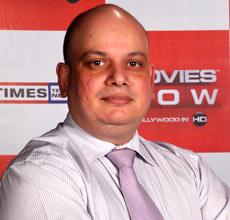
    It’s going to be a year since Movies Now from the stable of Times Television Network launched in December last year. Ever since its launch, the channel has managed to upstage its competition, some of which have been in the business for much more than a decade like Star Movies and HBO and the newer players including PIX. What has worked in favour of the channel is its promise of an enhanced viewing experience because of being available on the High Definition (HD) platform, relying on popular titles, getting its distribution correct besides the backing of the Times conglomerate that definitely has helped in marketing the channel.


    Amongst the English channel category, it is the English movie channels that comprise 30 percent of the market share. This is the highest reach in this category.  The English Movie category also has a reach of around 29 percent of the total television viewers. These numbers definitely moves the genre which was earlier seen as niche to be highly influential hence even catching advertisers eye especially those marketing premium products because this is the category where the potential customers are on.


    With launch of Movies Now last year the category underwent a change especially because of the performance of the channel thus putting competition on their toes. The launch of the channel had catapulted the growth of the category from 50 GRPs to 72 GRPs and witnessed growth of 43 per cent. The category reach increased by 20 percent and now reaches out to 5.5mn individuals every week. Besides, Movies Now enjoys the highest viewer time-spent in the category, which is nearly double of other English Movie Channels.


    Talking about the success, Ajay Trigunayat, Channel Head, Movies Now, under whose  leadership, the channel has been charting success shares that his firm directive towards the channel’s Audience Management Plan included Content, Brand & Marketing and that has helped Movies Now break-through the clutter and carve a distinct identity in the mind of its consumers and a firm place in their daily lives, culture and ethos.


    He said, “Movies Now India is witnessing an ever increasing English speaking audience. Also, the target audience is no longer residing only in the metros and is now moving into the Tier 2 and Tier 3 cities. Thereby, we have a category which growing rapidly and demanding far more English content paving way for the new players in the market.”


    The talking point of channels success has been its limited but popular library. Kunal Jamuar, Head of West India and Executive Director, Mumbai at MPG India explains how he sees the channels growth. He said, “It has a limited library but good titles that has ensured first appointment viewing and later stickiness. I think they have consciously kept a limited library thus giving viewers the much more opportunity for stickiness so in that sense they have changed the paradigm for English movies category.”


    “However, I think going ahead they need to address larger demographics which I think is getting ignored like paying attention to various time bands and playing movies accordingly.”


    Rajneesh Chaturvedi of MEC Global, said, “Movies channel is primarily driven by its title where Movies Now has scored well. They have managed their distribution well so in a year’s time they have done well for themselves and the category. Going ahead, they have to keep on adding popular titles which they have been doing currently to get viewers to stick to the channel.”


    INTERVIEW


    ‘Providing the best to the viewer’: Ajay Trigunayat, Channel Head, Movies Now

    Ajay Trigunayat has been instrumental in conceiving & nurturing the launch of Movies Now – Hollywood in HD, the English Movie Channel from the Times Television Network. Prior to Movies Now, he has worked with Media Agency Middle East, Dubai as CEO (2006-07) handling Sales, Event Management & Broadcast, Brand & Marketing for the Arab Youth Football Championship. He has spent 4 years at Zee Telefilms Ltd. and was the driving force behind the re-branding of Zee English, Zee MGM to Zee Café and Zee Studio in 2004 – at the same time re-vamping the content through key strategic partnerships with Disney, Warner, Sony, Fox and Universal.

    Mr Trigunayat has spent a decade in Advertising agencies honing his Brand and marketing skills across Rediffusion Y&R , Lintas and Contract. Here, Mr Trigunayat in conversation with MxM India offers a peek into the working and success of Movies Now.


    Q: How do you see Movies Now poised amongst competition in this category?

    Movies Now has achieved category leadership from the very launch day itself; and is the leader across all channels, across weekdays, across weekends, across day parts and despite 2 key cricket events (World Cup and IPL) the category viewership has grown by a whopping 80%. Our reach has nearly doubled for the category from 36 mn viewers per week to 60 mn + viewers today and Time Spent per viewer has grown from 35 minutes per week to 55 minutes per week!

    We have excellent feedback from our viewers on the our HD picture quality, 5.1 surround sound, selection of titles and our overall look and feel.


    Q: What is the advantage that Movies Now has as compared to the other players in this category?

    Better Movies, Better Picture, Better Sound! Movies Now – Hollywood in HD is a

    complete sensorial treat. It is an exponentially better English Movie watching experience

    in India.


    Q: In terms of future growth for the channel, where do you see it coming from?

    Growth will come due to significantly better viewing pleasure, furnished through significantly better digital distribution; with government mandating CAS across all metros.


    Q: What has been the biggest challenge for the channel since its launch?

    Keeping up the good work and increasing the gap with competition!


    Q: How do you view the current trend of subtitling. Does it help in garnering greater viewership?

    No. Sub-titling does not lead to increase in viewership; but it does provide better comprehension to a large section of viewers who are not familiar with foreign accents.


    Q: In terms of acquiring new titles, what have been your top two priorities?

    Only one priority: provide the best to the viewer!


    Q: There are lot of repeats of a movie, what policy does Movies Now follow on this?

    We let the repeat pattern be decided by the viewer. Thus some movies have few repeats and some movies have many repeats.


    Q: To go beyond metros, what are the few pointers that the channel is following?

    Currently the significant chunk of viewership is delivered from Metros even though we are present across the 1 mn+ universe. We will extend distribution as the viewers across the country take preference to our category


    Q: What should we expect from the channel in times to come?

    Loaded Viewer Engagement with Hollywood in HD.

  • INMA conference starts, packed house!


    By Akash Raha


    The International Newsmedia Marketing Association, better known as INMA,  kicked off its annual South Asia conference in Bengaluru today to a full house. The two-day event is taking place at ITC Gardenia under the theme ‘Roots and Wings: Strengthening Our Core Business and Exploring New Opportunities.’ MxM India spoke to Earl J Wilkinson, Executive Director and CEO, INMA to know about his expectations from the conference. Around 220 delegates from India, Pakistan, Bangladesh and Uganda amongst others are in attendance.


    Mr Wilkinson said, “What I’m looking for from the Bengaluru INMA South Asia Conference is, where are the new pockets of growth in the region? Have newspapers hit a peak with readership? What are the value drivers in advertising for newspapers as competition intensifies? Where does the creativity reside among South Asian newspapers? To what degree are global trends in digital media being adopted by South Asian newspapers? Where does the Indian newspaper story fit in the broader global context of transformation and culture change?”


    This INMA conference will also focus on the unique opportunities ahead for South Asian newspapers in which they seek profitability and would also like to adapt and create more revenue streams in the digital domain. The INMA conference will host top newspapers publishers and marketers in India, Pakistan, Bangladesh and Sri Lanka, and give them the opportunity to share learnings with each other. The sessions are expected to take delegates through a world of ideas and innovations which will give them insights into ways to grow newspaper advertising, circulation and brand across titles and across consumer platforms.


    Mr Wilkinson further added “It’s a very high-level, relevant programme for South Asian newspaper executives. I don’t just want to hear from the speakers. I want to hear from the delegates. Are they curious and pushing for answers and ideas?”


    Mr Tariq Ansari, INMA South Asia president and Managing Director, Mid-Day Multimedia welcomed the delegates and Mr I Venkat, Director, Eenadu, who is also the conference moderator, gave his opening remarks, charting the changes that have been seen in the newspaper publishing scene.


    Image courtesy INMA.org

  • Viacom18 leads in accolades at PromaxBDA Asia

    It was the Big, Big Night for the folks into on-air promotion, branding and advertising for the promo-wallahs (and of course many others). Vying for the much-sought-after Promax Muse and BDA Isis were satellite, cable, broadcast television, radio station and associated new media, their agencies and production houses. The holder of the awards are instantly recongised as the best in Asia.


    Indian companies generally fare well at Promax. And at the 2011 awards held on Tuesday (Nov 22) in Singapore, they dominated. Nearly half the honours in the 48 categories went to Indian entries.


    Viacom18 companies led the tally followed by (in no specific order): Star, MSM, Zee, UTV, Turner, MCCS and the BBC.


    Here’s the tally, sorted by company name.