Category: MEDIA

  • Subhash Chandra gets Emmy Directorate Award

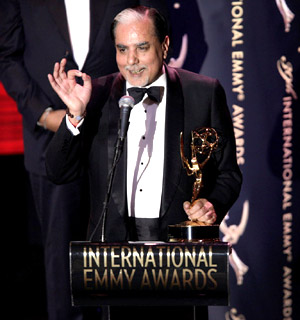
    Zee Group Chairman Subhash Chandra giving his acceptance speech at 39th International Emmy® Awards, held at the New York Hilton in New York City (CREDIT: Chip East / PSG)

    By A Correspondent


    Subhash Chandra, founder of Zee Group, has received the 2011 International Emmy Directorate Award. Mr Chandra made history by becoming the first ever Directorate Award recipient from India. The award was presented at the 39th International Emmy Awards, which took place on Monday, November 21 at the Hilton New York in New York City.


    “Subhash Chandra is a one of a kind visionary – a self-made entrepreneur who made his mark on the Indian television industry by launching the first privately-owned channel in India,” said Bruce Paisner, President & CEO of The International Academy of Television Arts & Sciences. “We happy to present him with our 2011 International Emmy Directorate Award as Zee Entertainment Enterprises prepares to celebrate its 20th anniversary, in 2012.”


    Remarked Mr Chandra, “India is the cynosure of the world today and it’s a great privilege to be the first Indian recipient of this award. It really means a lot to me, Zee Group and the Indian media and entertainment Industry.” He added, “While there have been many representations from India in the areas of technology and retail, this puts India’s media industry on the map and raises the profile of India with regards to its media and content.”


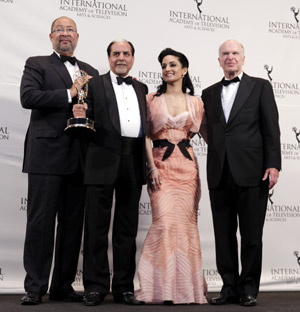
    Zee Group Chairman Subhash Chandra with Richard Parsons, Citigroup chairman and former chairman and CEO of Time Warner (far left), and Emmy Award-winning actress Archie Panjabi (The Good Wife), who both presented him with the 2011 International Emmy® Directorate Award, as well as Bruce Paisner, President & CEO of The International Academy of Television Arts & Sciences (far right) at the 39thInternational Emmy® Awards, held at the New York Hilton in New York City. Marks the first time in history that an Indian received this honor. (CREDIT: Allison Joyce / PSG)

    Richard Parsons, Citigroup chairman and former chairman and CEO of Time Warner, along with Emmy Award-winning actress Archie Panjabi (CBS Network’s critically acclaimed hit drama “The Good Wife”) presented the International Emmy Directorate Award to Mr Chandra during The International Emmy Awards Gala.


    The 39th International Emmy Awards were hosted by Jason Priestley, who was joined on stage by a cast of international celebrity presenters. Actor, director and producer, Mr Priestley was hosting for the second consecutive year. He was joined on stage by a starry cast of presenters including Brazilian actor Vladimir Brichta, Jeff Hephner (Starz’ Boss), Edward Herrmann (Gilmore Girls), Rick Hoffmann (USA Network’s Suits); John Larroquette, Danny Pino (NBC’s Law & Order: Special Victims Unit), Ally Sheedy, Blanca Soto (Univision’s Eva Luna and El Talismán), Jessica Szohr (Gossip Girl); Wendy Williams (host of syndicated talk show The Wendy Williams Show) and Goku and Luffy (characters from Toei Animation’s animated hit Dragon Ball Z and One Piece).


    The International Emmy Awards recognize excellence in television programming produced outside the United States. The awards gala is attended by 1,000 international entertainment decision-makers every year. For a list of nominees, visit http://iemmys.tv/news_item.aspx?id=136.

  • Sabeer ‘Hotmail’ Bhatia’s launches JaxtrSMS. Offers free SMS, NEware

    By A Correspondent

    The man who gave users a free medium to download and access e-mail may soon be causing another such explosion, albeit in the world of mobile phones. Hotmail’s original founder Sabeer Bhatia and Yogesh Patel have announced the launch of JaxtrSMS, a cross-platform, open texting application that would enable users to send SMS to anyone in the world for free.

    What is unique about this new venture is that a mobile user can send a text SMS to any mobile phone in the world without requiring the receiver to have the JaxtrSMS application installed on her phone. This open facet of JaxtrSMS distinguishes it from other free mobile messaging applications where messages can only be sent within a closed network to people who also have the same app installed. JaxtrSMS retains the number of the user and no new number is required while signing up for the JaxtrSMS service.

    Unveiling details at an event in Mumbai, Sabeer Bhatia, CEO & Co-Founder, Jaxtr Inc. and Co-Founder of Hotmail, said, “15 years ago, we gave you Hotmail.com, the world’s first webmail service that freed up e-mail from the confines of the desktop and aided the creation of a global communications network which was completely open and free for users. Today, we present JaxtrSMS which does to SMS what Hotmail did for e-mail. Now, mobile users can leverage our free and open application to send messages to their contacts anywhere across the world without having to pay anything. The fact that our application has been downloaded by users across 197 countries in just a few weeks since our soft launch amply reflects our belief that JaxtrSMS will prove to immensely useful to mobile users across the world.”

    JaxtrSMS can be easily downloaded from www.jaxtrsms.com or from the app store on the handset for free and is compatible with all mobile operating systems including the iPhone, Blackberry, Android and J2ME.

  • Industry veterans to train @ Stratagem Media’s Media Rhythm 4

    By A Correspondent


    Stratagem Media, an independent media services company led by Mr Sundeep Nagpal, has been fairly active in the field of media training – an area which Mr Nagpal has, for many years, specialised in. The latest in the company’s list of training programmes is the Media RHYTHM series, which he started a couple of years back. The idea was to provide hands-on training to media professionals in the area of sales and help them overcome severe impediments in today’s media selling environment.

    RHYTHM is an acronym for Realising Higher Yields through Talent Harvesting in Media. The company has so far done three rounds of Media RHYTHM; and the previous ones have had Chairman of Madison World Mr Sam Balsara and former Zee CEO Mr Pradeep Guha flagging off the events.

    The fourth round is all set to take place on December 2-3, 2011 in Mumbai, and MxMIndia is the web partner for the event which has five modules – Print, TV, Radio, Digital and Outdoor.

    The list of speakers includes media veterans such as Mr Bharat Kapadia, Mr Suresh Balakrishnan, Mr Madan Sanglikar, Mr Jairaj Padmanabhan and Mr Nagpal himself. Topics that will be covered are: ‘Adding relevance to Value’ by Mr Kapadia, ‘Customising business solutions to meet business objectives’ by Mr Balakrishnan, Does Digital really work’ by Mr Sanglikar, and Strategising before, during and after every move in a media sale by Mr Padmanabhan. Mr Nagpal will talk on ‘When, how and how much to use the science behind media decision making’.

    Mr Nagpal is optimistic of putting up a good show. Talking to MxM India he said, “Stratagem Media has always believed in giving hands-on training to media professionals. There is so much that youngsters can learn, on how they can develop their skills and also how to start thinking and implementing effective selling strategies. ”

    Mr Nagpal further said that the workshop will give participants insights on things like how to close deals in the least possible time and how to understand the thought process of a media planner better. He feels such interactive workshops provide an opportunity for media companies to harvest talent of a select few ad sales personnel which they think are the future.

    Mr Kapadia said “Media RHYTHM is not like the regular seminars. It is more like the closed-room sessions, where participants get a chance to interact more and participate, unlike large forums and industry gatherings. The hands-on approach towards training is what makes the whole experience better.”

  • Gouri Dange: The Media Menu Card

    Talking of paid news, it’s interesting to see how it all works. Meaning the modus operandi. Not just the big-ticket paid news where political parties and heavyweights slip big bucks to large newspaper and tv corporations.


     

    I’m talking about the mere-mortals path to godhood via the media. Well if not godhood actually, at least the pay-your-way route to your five-minutes-of-fame. Everything’s on sale, going by Media Menu Cards that doctors, lawyers, academics, business people, sportsmen, performers et al have been getting via email over the last couple of years. They are sent by big papers and small, national as well as local and some tv channels too.


    Here’s a sample menu card, with the cunningly worded introduction.

    Dear So-and-so

    Your contribution to society is a matter of pride for us. It would be our pleasure to feature you and your achievements in our paper. Your valuable opinions are also solicited on matters of importance in our city. Please contact Ms X or Ms Y (note, they are interchangeable, the first is a journo and the second is an adgirl from the publication) after going through the contents below.


    Page 3 package

    Rs 4,000/- + taxes for parties

    Our Deliverables : Your presence at any Page 3 event, and/or your and your spouse photograph.

    Rs 8000 + taxes (photos to be provided by you) for family wedding

    Our Deliverables: Event will be reported, pictures of you and any important guests will be featured.


    Opinion-maker package

    Rs 8,000 + taxes
    Our Deliverables : Your views solicited and quoted in stories relating to your field of operations.


    Conference reporting package

    Rs 5000+ taxes (local); Rs 8,000 + taxes national; Rs 10,000 + taxes international. (with photo to be provided by you)

    Our Deliverables : When you attend a conference as a speaker/delegate, it will be our pleasure to report your contribution to the proceedings.


    Hospitalization

    Rs 5000/- taxes

    Our Deliverables: Successful emerging from surgery or illness will be reported, along with pictures (our photographer will be sent).


    …and so on and so forth, you get the point! There are these packages offered foreign trips, awards, donations that you make, stuff that you publish, charitable visits that you undertake to cancer-struck kids and slums…all of it can go up there as news, if you tick the right choices in the Media Menu Card.


    That last one is my favourite – I mean I had never thought of coming out of hospital as news, unless you were a loved leader, or a jailed corporate type pretending to be ill, or had climbed Mt Everest and were in hospital for exhaustion. And one would imagine that the ordinary person wouldn’t particularly like to be shown wheeled out of somewhere. But it looks like there is some valuable brand-enhancement to yourself by being hospitalized. Go figure! Perhaps the hospitals involved are also being contacted as we speak, for their frontage to appear in the papers, at a price. But hell, everything is on sale, so why not!


    While I haven’t been offered this Media Menu Card myself (what, I’m not a potential news-client? My money’s not good enough for these people?), I and other book writer friends have been offered similar menus, by bookstores. Not the ordinary corner bookstores that invite you to actually talk about book; and not the ones where I have launched all my books without paying a penny. But a few other new entrants, that go by lofty names. Their ‘bill of fare’ goes something like this. On an ascending scale starting from Rs 8000 right up to Rs 25,ooo (this was last year, perhaps the rates have gone up in a year), you are offered packages like:


    > venue

    > seating

    > sound

    > f&b (tea and cookies for 40 people)

    > art work for invitation card

    > invitation to our databse


    Write out a larger cheque and you can get
     

    > media presence

    > venue

    > seating

    > sound

    > f&b (tea and cookies for 40 people)

    > art work for inviation card

    > e invitation to our databse


    Then come options where you pay for the book to be stacked on the cash counter. Perhaps they haven’t thought of it yet, but they could easily offer you a package in which a stack of your books accidentally falls on people’s heads.


    And then come the more expensive add ons that maketh or breaketh your book, they say:


    > Your book banner up for 4 weeks in our store


    And the crowning glory that is within easy reach if you’re ready to fork out more mullah:


    > All of the above facilities for your book, PLUS it is placed on our bestseller list for eight weeks running.


    Somebody pass me the antacid, this menu’s a little too rich for me.

  • Ketchum Sampark goes Digital

    By A Correspondent


    Ketchum Sampark, the Indian Affiliate of global communications network Ketchum Inc, has announced the launch of its digital media business Ketchum Sampark Digital. Aimed at garnering substantial market share in the emerging digital media business, Ketchum Sampark Digital will offer full-service interactive strategy, web design, video production and multimedia development to help companies tell their stories and build engagement with their audiences on digital media (internet and mobile).


    Commenting on the launch of Ketchum Sampark Digital, N S Rajan, Managing Director, Ketchum Sampark said, “The launch of Ketchum Sampark Digital reflects the emerging significance of engaging with consumers through prolific use of digital domains. There has been a distinct shift in usage patterns wherein consumers look beyond email and casual surfing to complete engagement and internet as the media of choice for information. We are initially launching our Digital business with a team of young social media experts and progressively build a bandwidth of skills and digital capabilities including a team of interactive strategists, digital designers and producers.”


    According to Jonathan Kopp, Partner & Global Director, Ketchum Digital, “Globally, Ketchum Digital has created innovative digital media solutions for clients including FedEx, Kodak, ConAgra, Absolut amongst many other industry-leading companies. With the launch of Ketchum Sampark Digital India joins other Ketchum Offices and digital experts around the globe in the Ketchum Global Digital Network bringing digital social media solutions from around the world for our clients everywhere.”


    As part of its foray into the digital media business, Ketchum Sampark is concluding a detailed study of 200 Indian corporates and nearly 150 brands in the Indian marketplace to track their digital footprint as well as user engagements. The study covers Corporates from across 20 different industries including Aviation, BFSI, Consulting, Diversified Large Indian Corporates, Healthcare & Pharmaceutical, Oil & energy, Software Services and FMCG. The Brands covered in the survey are from across 14 categories including Apparel, Automobile, Media & Entertainment, Personal Care and Retail.


    “Our study has tracked engagement of these corporations & brands with their target audiences using social media channels like Facebook, YouTube, Twitter and LinkedIn,” said Ajay Sharma, Managing Partner, Ketchum Sampark.


    Key Findings of Ketchum Sampark Digital’s Indian Social Media Engagement Study 2011


    > Initial findings indicate that while most Indian companies (82 %) have registered a presence on at least one of the four social media channels that were surveyed, the activity is largely focused around consumer communication for their products and services.

    > LinkedIn seems to be the most preferred channel on social media with 72 % of the companies surveyed having a dedicated page on LinkedIn.
    Though Facebook is the largest social media platform in India with over 38 million followers, it lags behind LinkedIn with only 55% of Indian corporates registering a presence on it.

    > Using video and multimedia to create engagement with consumers, investors, potential employees and other audiences is still not an avenue explored by Indian corporates with barely 6% being Very Active on YouTube.

    > More than 50% of corporates despite opening up a channel or registering a page on social media are Inactive. Some Inactive corporates also tend to use the presence on a channel opportunistically during launches and other significant company initiatives.

    > We feel that with the explosion in social media users this will change in 2012.

    > Out of the 150 brands surveyed, 23% did not have any presence on social media platforms while 30% had a presence on only one channel. Only 22% of brands were present on all three social media platforms.

    > Unlike corporates, Facebook is the clear favourite for brands with 75% of these brands registering a presence on it. YouTube and Twitter followed with 42% and 28% respectively.


    79% of brands with a presence on Twitter were Very Active / Active on the platform as compared to 69% on YouTube and 63% on Facebook.

  • Phase III countdown: ‘Overbidding will kill stations’

    By Robin Thomas

    FM radio listenership has more or less remained stagnant for a while since the completion of FM phase II. The soon to be launched FM phase III may have therefore brought some respite to FM stations across India. For some phase III is an opportunity to expand their listenership reach to newer cities and towns, yet for others it becomes an opportunity to further consolidate their position within a particular state/region. If Multiple Frequencies are allowed, it will introduce different genres of FM radio within the same city, thus encouraging new listeners to tune in.

    The drawback however would be the marginal FDI increase in radio to 26 percent from the earlier 20 percent. This marginal increase in FDI will probably discourage investors from taking the full plunge into the phase III bidding process. News is not available in the best of forms too, as FM stations are allowed to source news only from All India Radio.


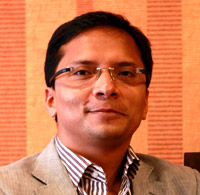
    Mr Prashant Panday
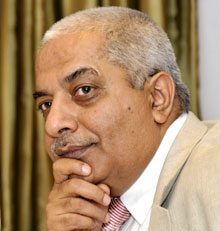
    Mr. Harshad Jain
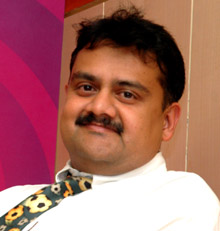
    Mr Harrish M. Bhatia
    Mr Rana Barua

    Despite all these developments, FM stations face a whole lot of other challenges which may have a direct or indirect effect on their phase III plans. The Music Royalty issue still remains unresolved, as a result of which FM stations, particularly in small towns, have to pay higher royalty. With expansion there would also be an increase in operation costs, and employee or talent management could be another challenge. MxMIndia spoke to few FM players to find out their views on the challenges for FM stations in phase III.


    Mr Prashant Panday, CEO, Radio Mirchi explained, “If people overbid in Phase III, they are finished. Radio is not like TV. One has to be extremely cost-conscious. One has to keep his head down while doing the business of radio. Phase III has e-auctions. There is a very good chance of bids going haywire. This is what each bidding broadcaster has to keep in mind.”


    Mr Harshad Jain, Business Head, Fever FM observed, “Phase III will bring with it a set of inevitable challenges like rising costs to set up new stations, and getting new audiences while the radio industry on the whole is still grappling with current costs and investments.”


    Mr Harrish M Bhatia, CEO, MY FM said, “The most important is the Royalty Issue; till the time it is completely resolved, it is quite difficult for the radio industry to grow efficiently. The absence of an acceptable radio measurement tool is another challenge. Content restriction is a big restraint for the industry as we are not allowed to provide self-generated news content. The challenges faced by the radio industry in the cities and towns other than the six metros are more or less the same as above.  To overcome these, the industry as a whole needs to work in tandem.”


    One of the possible challenges that FM stations can no longer remain immune from is the global economic climate. The uncertainty hit the world economy just before the FM phase III rollout, which may have some impact in the bidding process. “India as an economy is still expected to show healthy growth rates despite global sluggishness and we believe Radio will see greater volumes in a downturn too. The key issue is the ability to take up prices that will be difficult to manage in a downturn,” explained Mr Jain of Fever FM.


    According to Mr Bhatia, “The global showdown is more of metro phenomenon, hence it has not impacted the tier 2 and tier 3 cities. In fact, the radio business growth, even for existing players, is expected from non-metro cities.”


    In an earlier interaction with MxMIndia, Mr Rana Barua, COO Red FM had said, “I believe we should be taking complete cognizance of the fact that there is definitely a slowdown. The clients, advertisers, everybody are extremely, extremely careful about the money they are investing in any form of media. Taking things for granted and creating business plans for next two or three years seems passé now.”


    Three schools of thought emerged from this interaction, one which believes that the economic slowdown is a metro phenomenon. The second line of thinking is that the despite the global slowdown, the radio industry will continue to grow. And the other believes that the industry must admit the fact that there is a slowdown and hence the industry must take a cautious approach especially during the phase III bidding process.

  • The lesson so far for FM players

    By Robin Thomas


    FM Phase-I Policy was approved by the Government in July, 1999. Under Phase I policy, a total number of 21 FM radio channels are operational in 12 cities. FM Phase II on the other hand has a total of 336 channels in 90 cities across the Country whereas the much awaited FM Phase-III policy seeks to extend FM radio services to about 227 new cities. Phase-III will cover all cities with a population of one lakh and above, simultaneously, there will be a total of 839 new FM radio channels in 294 cities. In addition to this Foreign Direct Investment (FDI) in radio has been raised from 20 per cent to 26 per cent, if allowed, multiple frequencies will bring new genres in radio leading to content innovations, and the overall advertising pie is also expected to rise from the estimated 5 per cent.


    While the FM phase II may have been well received by the industry, all FM stations have reported break-even. Smaller FM stations are more likely to face huge challenges ahead especially since the music royalty issue is yet to be resolved. Overbidding in phase I and II could be just one of the issues, MxMIndia asks some of the industry players what lessons the FM radio industry can learn in Phase III from the earlier Phase I and II.


    Mr Prashant Panday
    Mr Rana Barua
    Mr Harrish M. Bhatia
    Mr. Harshad Jain
    Mr. Ashish Pherwani

    Mr Prashant Panday, CEO, Radio Mirchi observed, “One main lesson from Phase I and II – Do not bid so aggressively that you can never recover your investments. Those who bid sensibly in Phase-II (very few) are making PAT profits this year. Those who did not are at best making EBITDA break-even. Some are still making EBITDA losses. These people sometimes feel overjoyed that they have turned EBITDA positive; but fail to realise that the returns on investments only start after you turn PAT positive. There are barely 4-5 years left for the licenses to get over. If a company is not PAT positive yet, it has no hopes of generating any decent ROI. This is the main learning from the first two phases.”


    “The 2nd learning is about being able to bring brands. But to build brands, companies need profits. So again, if you have bid wrongly, you don’t have enough resources to build brands. That’s what our research shows every quarter. That except for Mirchi and maybe one-two other brands in some specific cities, no other radio station has been able to build a brand. They may have listenership, but they still don’t have a brand. There are no attributes that people assign to these brands. No values that the brands stand for. Without a solid brand, listenership suffers. Pricing suffers. And long term profitability suffers” he added.


    In an earlier interaction with MxMIndia, Mr Rana Barua, COO Red FM said, “One of the critical learning that a lot of us had in phase I and II is not to overestimate the potential of the market. The biggest challenge that lies for all of us is knowing that uncertainty has become such a huge thing today, therefore I think a cautious approach is going to be extremely critical.”


    According to Mr Harrish M. Bhatia, CEO, MY FM, “What was witnessed in Phase 1 and Phase 2 is totally different than Phase III. The Phase-3 rollout will increase radio penetration, making it a pan-India medium, reaching tier II & III towns. The most important thing that the radio players need to keep in mind is to bid realistically.”


    Mr. Harshad Jain, Business Head, Fever FM had a different viewpoint, he said, “The regulatory amendments in phase III are ultimately expected to facilitate industry growth.  FDI has been increased and might drive some additional investment in the industry. I do believe that FDI should have been raised further to actually fuel growth and overall industry development. Another key change is to allow multiple frequencies in the same city but we will have to wait and watch how this rolls out in practice. Another key shift in policy is the e-auctioning route as this will take the license fee to new highs, especially for frequencies in metros like Delhi and Mumbai.”


    Mr. Ashish Pherwani, Associate Director, Advisory Services, Ernst & Young, has seven point suggestions to the FM players, some of them are  the key aspects that all radio companies need to address vis a vis phase III are: –


    1. “Which licenses to bid for-  How well the new stations complement the existing bouquet of stations in terms of tactical sales, the future revenue potential from these stations both from the point of view of generating local revenues and adding on to the revenue generating ability of other stations, etc.”

    2. “Bid values- The bid value should logically be based on the revenue generating ability of the station over its license period, and expected costs.

    3. “Alliances.  Some radio companies need to consider which stations to bid for on the assumption that they will form alliances with other networks that together will provide advertisers with national, regional or state-wide reach.  In addition, radio companies with existing ad sales.” In addition to these, “Trade licenses that add value to other networks, Using FDI effectively, Build better MIS and control mechanisms to prevent operational chaos and Focus on People” are some of his suggestions to the FM players.


    As one of the industry player said FM Phase-III is not the same as Phase I and II, true, but it is bound to have challenges of its own perhaps even more bigger and tougher. MxMIndia will focus next on the challenges for FM radio in Phase-III.

  • The Anchor: 8 key aspects of Phase III that radio companies need to address

    By Ashish Pherwani


    #1 Which licenses to bid for:

    The answer is quite complex, as it needs to consider the ability to sell the new stations both singly and as a bouquet, how well the new stations complement the existing bouquet of stations in terms of tactical sales, the future revenue potential from these stations both from the point of view of generating local revenues and adding on to the revenue generating ability of other stations, etc.


    #2 Bid values: 

    The bid value should logically be based on the revenue generating ability of the station over its license period, and expected costs.  But when you factor in that the revenue generating ability depends on the listenership position the station achieves, the rest of radio company’s station network, the efficiency of the sales team, expected competition in the market, etc, and the cost depends on variables like the license period (10 or 15 years), the rate of music royalties, the ability to share infrastructure and content, etc, it’s a complex decision to make!


    #3 Alliances:

    Some radio companies need to consider which stations to bid for on the assumption that they will form alliances with other networks that together will provide advertisers with national, regional or state-wide reach.  In addition, radio companies with existing ad sales alliances may need to reconsider these in the light of the licenses they propose to bid for.


    #4 Trade licenses that add value to other networks:  

    Radio networks are entering the phase where they will be able to begin trading their licenses.  Some radio companies may want to exit, and valuations aside, may find buyers in those wishing to enter the segment, as well as those which need to increase their presence through a more assured mechanism.  Particularly if multiple frequencies are permitted.


    #5 Using FDI effectively:

    Given the increase in foreign investment that is expected to be permitted, radio companies are already looking to identify partners / investors.  The long term strategic fit and the degree of control that is required to be diluted are key areas that need to be considered.  Particularly since there will also be a Phase 4 one day.


    #6 Go for multiple frequencies:

    If they do come into being, the key questions will pertain to the programming mix – what genre should the new station be? – and ad sales – how not to discount the existing station’s rates when selling space to advertisers.


    #7 Build better MIS and control mechanisms to prevent operational chaos:

    Given the growth in the number of stations, the need to refine processes, automate, and ensure an adequate level of controls in the new, and existing, stations, will be key.  As the span of controls increases, controls always get less effective.  Processes which were performed manually across 20 or 30 stations won’t continue to operate across a 100 stations.  Key persons from existing stations will be used across new station launches, and that could cause the controls environment in existing stations to get lax.  Integrating station infrastructure and content, centralising capex and support function, implementing standard operating procedures and accounting checklists could benefit radio companies.


    #8 Focus on people:

    When 300 stations become 900, the number of people is expected to grow by 175 percent as well.  Recruitment, training, and then monitoring the new set of radio operations will be a challenge by itself.  Not to mention managing the inevitable poaching!


    Ashish Pherwani is Associate Director, Advisory Services, Ernst & Young Private Limited.

  • FM stations go for out-of-the-box content

    By Robin Thomas


    Often criticized for airing uniform content across channels, FM radio stations have already begun exploring content that goes beyond just regular Bollywood music. Unlike print, television or the internet, radio in India continues to be a highly regulated medium. Contents across various radio channels are restricted to music, though multiple frequencies if allowed by the government is likely to change this. News on FM radio has already been given a nod by the government of India, but not everyone in the industry is chuffed about this development as it restricts news to be sourced only via AIR (All India Radio).


    Nisha Narayanan

    Meanwhile, even as the ups and downs over restrictions continue, FM stations are leaving no stone unturned to offer their listeners out-of-the-box content, each station wanting to sound different from the other. Fever FM for instance, has a mythological show, ‘Ramayan’ with huge fanfare and ‘From Russia with Love’, an infotainment programme. Radio Mirchi airs ‘Sunday Suspense’ in Kolkata, wherein the RJ (Radio Jockey) narrates stories written by authors like Satyajit Ray, Saradindu Bandhopadhyay among many others. Red FM on the other hand initiated shows like ‘Red Arrest’ and ‘The Mental Show’ in Delhi and Mumbai respectively.


    Ms Nisha Narayanan, Senior VP Projects & Programming, Red FM said, “Red is known for innovative programming. In the present, the two most innovative program initiatives are ‘Red Arrest’ in Delhi and ‘The Mental Show’ in Mumbai with Suresh and Hoezay. The treatment of both is edgy, humorous, shocking, tongue-in-cheek, and the response has been phenomenal. They both have been the talking point of Delhi and Mumbai Stations respectively and have gained tremendous traction. The mails , calls , responses have been consistently pouring in – and it’s not a surprise!”


    Mr Sriram Kilambi, Marketing Head, Radio Mirchi stated, “Sunday Suspense is an amazing show in Kolkata. It is produced in-house by our Mirchi Team in Kolkata. The show has many firsts to its credit – being the first in its genre – and has been supremely well received. The show is targeted at the general Kolkata public who is afraid that the current generation will start to lose touch with Bengali literature. This show has been one of our biggest successes thus far.


    Sunil Kumar

    “Sunday Music Company on the other hand is a show in Mumbai that basically talks to those behind the music of the latest release. So, while you get a lot of movie reviews, this is a one-of-a-kind music review that tells you about the music, its makers etc. Sundays have been very strong for Radio Mirchi, largely thanks to innovative shows like the SMC.” he added.


    According to Mr Sunil Kumar, MD, Big River Radio, “FM stations have experimented a lot with music content, and they are doing a good job by offering differentiated content within music itself. Today listeners are able to identify their favourite FM stations and very soon there will be further differentiation in content, with or without regulations.”


    Ashish Pherwani

    Mr Ashish Pherwani, Associate Director, Media & Entertainment, Ernst & Young observed, “Content innovation in FM radio still has a long way to go, as currently every other FM station is plays popular music with little bits of innovation here and there. I believe content innovations will actually happen once multiple frequencies are allowed which is likely to happen in phase III.”

  • The Anchor: Devraj Sanyal on the 10 songs you’re sure to hear on FM radio

    #1Satyameva Jayate: From the most awaited album SuperHeav’… It’s the track which brings the nation together… has that anthemic feel.
    #2 Lady Gaga, The Edge of Glory: A must-have artist in your playlist, the biggest pop icon the world is gaga over.

    #3 Enrique Iglesias, Dirty Dancer: The most loved artiste in India, one of the highest selling in the country.

    #4 JLO, On the Floor: The biggest club hit in recent times… gets JLo back on the music scene.

    #5 Raab Rakha, Love Breakups Zindagi: Very young and vibrant song, a direct connect to today’s youth.

    #6 Jessie J, Price Tag: Purely for its lyrics… It’s not about money money money.

    #7 Watch The Throne, I love you so: A must-have for hiphop fans – two hiphop idols in one album!

    #8 Pal Pal Dil Ke Paas, Blackmail: Played on all the radio stations on their classic shows… Kishore Kumar is definitely hamaare dil ke paas.

    #9 Yeh Dosti, Sholay: An evergreen friendship track.

    #10 Senorita, Zindagi Na Milegi Dobara: Very cool, very young, from a new-age young film.


    Devraj Sanyal is the Managing Director of Universal Music India

  • The Anchor: 6 reasons a listener can never fall out of love with radio

    By Ashit Kukian

    #1 Radio gives listeners different genres of music and a fresh playlist all through the day. And that is further packaged with warm and friendly RJs, topical banter, guest appearances and lots of surprise elements to keep listeners wowed every minute of every day.

    #2 Radio is credited with being the ‘Theatre of the Mind’ since it engages one’s imagination more actively than a visual medium does.

    #3 The level of engagement and interaction that Radio enjoys with its listeners is incomparable to any other medium.  From conversing with listeners on a daily basis, to celebrating their joyous occasions of life, Radio touches the lives of all its listeners.

    #4 Radio provides listeners with Infotainment – relevant and topical information presented in as entertaining a way as possible. Radio then serves as a mood-enhancer by catalyzing one’s mood and uplifting the spirit of the listener who tunes in.

    #5 Listeners can relate to the medium in a very personal and intimate way. It can be a loyal friend to some and a confidant to others. So much so that you’ll often find listeners confiding in RJs about their deepest fears and problems.

    #6 Being a local medium, Radio fits seamlessly into the fabric and framework of the city. It serves as a lens through which listeners can get a glimpse of the pulse of the city.


    Ashit Kukian is COO, Radio City 91.1 FM.

  • Prashant Panday: ‘Coz radio is sexy!

    By Prashant Panday

    It’s indeed great to be in the radio business! Provided you are the leader and have managed your costs well! Provided you are a listenership leader and your listenership helps you command a good enough pricing in the market! Provided your work culture is so much fun that you are able to retain the top talent and top management both! Provided you have managed your business so well that you are well prepared to take on future challenges and opportunities! In short, provided you are a Radio Mirchi!


    For the rest, radio has been an uphill challenge right from the time the auctions for Phase-2 ended in Jan-Feb 2006. Right from then, losses have only mounted for most broadcasters. When things started to get a little better, they got a lot worse when the economic slowdown hit in 2008-9. When things got a little better again last year, and many of the larger broadcasters achieved EBITDA breakeven, almost half the license period had ended. In the radio business, if you hit EBITDA breakeven at the mid-point of your license period, you have no hopes of delivering returns to your shareholders. That indeed is the story of most radio broadcasters.


    However, the future does look brighter than the past has been. Provided again, if broadcaster handle their businesses sensibly in the future; provided they bid reasonably and sensibly in Phase-3 auctions. Those who chase network size at any cost will continue to be in trouble for the next 15 or even 25 years. Those who bid smartly – even losing a few important stations in the process – will be able to make the radio business profitable.

    One has to remember this – radio is not TV – here costs are paramount. This realization is more important than anything else. In radio, one has to keep one’s head down; focus on brand building; not get too flashy or ambitious; and keep plodding away at the key drivers of the business. That and that alone matters in the radio business!

    For such broadcasters who bid sensibly, the road ahead is indeed exciting. The radio industry has scaled only the 5 percent peak – 5 percent as a share of the total advertising industry. The 8 and percent peaks are set to be scaled in the next few years.

    As the number of cities increases, the importance of radio is bound to increase. First there is Phase-3 to provide the impetus – taking the penetration of radio to more than 300 towns. Then there is bound to be the next phase – Phase IV – in which the government is sure to add more frequencies in the major metros. That should give radio another big impetus. In fact, the government can launch both phases 3 and 4 simultaneously.

    The radio industry has given an easy formula for the government to offer more spectrums to radio broadcasters, thus more than doubling the number of channels in the major metros. Simply reduce the gap or separation between two adjoining FM channels from 800 Khz to 400 Khz and the number of frequencies will double! Everyone will gain – most so the government which can rake in much higher license fees. Equally so…..the listeners at large…..who will get much more programming variety to choose from. This will help broadcasters also who will get to operate different formats – after all, in which other media segment is there such a shortage of formats? There are more than 750 TV channels, thousands of newspaper titles and tens of thousands of outdoor sites and websites. Why then are there so few radio stations?

    To end, radio has always been a sexy medium. It’s the medium in which advertisers can truly dive and get the best out – at a regional and local level. Advertisers who predominantly use TV can use radio to give a local flavour to their campaigns. Advertisers who primarily use newspapers can use radio to give a “smart personality” to their brands. Radio is poised at that interesting cusp – when people who work in good radio companies can grow their careers much faster than they can in comparison to TV and print companies. Radio is truly a sexy medium!

    Prashant Panday is CEO, Radio Mirchi