Category: MEDIA

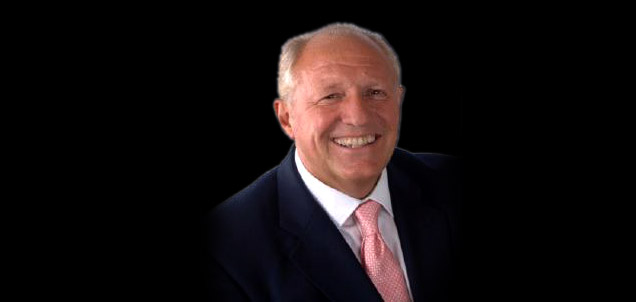
  • Haresh Chawla quits Network18 to pursue ‘other’ interests

    By A Correspondent

    Mr Haresh Chawla, who has led Network18 for well over a decade, is currently overseeing a seamless leadership succession plan at the half-a-billion-dollar (in current year’s revenues) media conglomerate spanning news and entertainment broadcasting, web portals, publications, filmed entertainment and ecommerce operations and Viacom18.

    Commenting on Mr Chawla’s decision to eventually pursue other interests, Mr Raghav Bahl, Founder & Editor of Network18, said: “Haresh is the kind a of colleague one can only dream about, so utterly honest, committed and focussed he is on delivering excellence. However, I fully understand his desire to explore other interests, being a person with such boundless enthusiasm and passion for success. Perhaps Haresh’s greatest achievement is the strong cadre of next-generation leadership that he has nurtured at several of our Group operations. Over the next few months, Haresh will work closely with me and this young crop of leaders to ensure a seamless transition of leadership. Finally, on a personal note, I wish to say that you never can quite say good-bye to an extra-ordinary friend and colleague like Haresh. He will always be around, as a friend, philosopher, guide and advisor to Network18, and me, personally. His can-do spirit is irretrievably woven into Network18’s DNA.”

    Adding to the sentiment, Mr Chawla said: “It’s very rare for a professional to play a part in setting up so many businesses in a lifetime, and to lead such a talented team as we have at Network18. I am forever grateful to Raghav for the opportunity and the faith that he had in me. And I am deeply grateful to all my colleagues who worked with me to build this Network. Together, we built an enviable culture of excellence and speed at Network18, and I will work towards ensuring this legacy is carried on with the new leaders in the Group. Personally, it’s been a most fulfilling phase of my life and I now look forward to taking on newer challenges”


  • Sanjay Reddy rejoins Zee to head South Cluster

    Zee Entertainment Enterprises Limited has announced the appointment of Mr Sanjay Reddy as EVP–South Cluster. This will be his second stint with Zee after a gap of two years. In his new role, Mr Reddy will be heading Zee Telugu, Zee Kannada and Zee Tamil. He will report to Mr Nittin Keni.


    Speaking on the appointment, ZEE MD & CEO, Punit Goenka said, “We are delighted to have Sanjay back in our team. South has always been one of Zee’s key market and we are confident of consolidating our position, with a robust team headed by Nittin and Sanjay.”


    Said Mr Nittin Keni, Zee Creative Head: “In line with our strategy to strengthen our position in southern market, Sanjay will contribute tremendously to growing and expanding the Zee brand further. I am looking forward to working with Sanjay to steer the growth in southern market.”


    Said Mr Sanjay Reddy, “I am extremely pleased to join the group at such an exciting time in the history of the Zee brand. With such a vibrant team, my challenge now is to drive the change, in line with our Company objectives and strengthen the brand further in the southern market.”


    Mr Reddy has over two decades of experience in media and entertainment. Prior to ZEE, Sanjay has been associated with other media firms in India, which include Walt Disney, MSM Network, ESPN Star Sports, Bennett and Coleman and Co. Limited. His last assignment was with Sun TV Network as Business Head (Telugu Cluster).


  • Hathway HD to be launched

    By A Correspondent


    Hathway has confirmed that its new HD service is set to launch to subscribers in select are of Hathway Digital networks in Mumbai, Delhi, Hyderabad and Bangalore.

    The new Hathway Hi Definitions (HD) service will be enabled by Media Highway set-top box software, the service will be navigated through a state of the art user interface with an electronic programme guide (EPG) and enhanced features thereby providing a complete enhanced viewing experience to the viewers.

    Mr K Jayaraman, Managing Director, CEO Hathway Cable & Datacom Limited said, “Being the pioneers in the Digital Cable Service industry we are committed to offering premium services to our subscribers.”

    Hathway HD services is available at Stand Alone and Bundled Offering and the packages are called –. HD Lite,and HD Max and Max + ,with around eight HD channels currently being offered and 20 channels in the near future.

    Hathway Standalone Offering

    HD Lite Rs 6666/-(including tax)

    HD channels for 1 yr

    SD Channels for 1 yr (160 + channels)

    Service Tax for 1 yr

    HD Box Activation charges

    HD Box is free to use


    Note : This offering is only for Hathway CATV primary customers

    Hathway Bundled Offering

    HD Max Rs. 8888 (Excluding tax )

    HD channels for 1 yr

    SD Channels for 1 yr (160+ channels)

    HD Box Activation charges

    Broadband for 1 Yr – 2Mbps speed, 40 GB

    Download ( worth Rs. 4300/- )

    HD Box & Cable Modem is FTU

  • Taj TV extends partnership with Zimbabwe cricket

    By A Correspondent

    Taj Television Limited has extended the partnership with Zimbabwe Cricket for worldwide television rights till 2019. The agreements with Taj Television Limited cover the Zimbabwe Cricket Seasons in excess of an eight-year period from 2012 through to 2019. Over a period of these eight years, Taj Television will be telecasting 220 LIVE days of cricket including 15 days of LIVE India cricket.

    With the acquisition of these cricket rights, Taj Television Limited cements its position as the leader in cricket broadcasting. Taj Television has broadcast rights of five Cricket Boards – South Africa, Pakistan, West Indies, Sri Lanka and Zimbabwe.

    Zimbabwe has returned to Test after a self imposed exile of six years, with an inspiring win against Bangladesh. Over the next two years, Zimbabwe will be playing Test Cricket with New Zealand, Bangladesh, Pakistan and Sri Lanka providing Zimbabwe a benchmark to measure their progress in every area of cricket. Under the current administration, talented Zimbabwean cricketers will grow in confidence with an aim towards improving their performance on the world stage.

    Zimbabwe Cricket Managing Director, Ozias Bvute said, “We are happy to extend our existing contract with Taj Television Limited as this plays a pivotal role in ensuring that Zimbabwean cricket is seen by those who love the game as well as introduced to new audiences. With its superior telecast standards, world class television production capabilities and strength to telecast the Zimbabwe Cricket worldwide, Taj Television Limited will add a lot of value to game of cricket.”

    Taj Television India Pvt. Ltd. CEO, Atul Pande said, “We’re extremely pleased to extend our partnership with Zimbabwe Cricket. This is a testament to our commitment to the game of cricket and fans as we cement our relationship with Zimbabwe Cricket.”

    He further added, “Through our television channels–TEN Cricket & TEN Sports, our website www.tencricket.com and our various wireless platform initiatives, we are confident of taking the rights of Zimbabwe Cricket to new heights by working along with various partners and are committed to set new benchmarks in broadcasting and distribution.”

  • Much ado over 3D?

    By Akash Raha

    Even as High Definition (HD) television channels are entering the Indian market, blogs and social networks are already abuzz with talk of 3D channels coming soon, and how that will revolutionize the entire TV-viewing experience. MxMIndia took a closer look at these claims, to find out whether such a time is actually anywhere close at hand.

    According to Ms Anamika Mehta, COO, Lodestar UM, “India is already an underleveraged and fragmented market and such innovations will definitely add to the monetary burden.  Indian consumers are yet to fully embrace HD, and 3D in that context is still years away. While some manufacturers have launched 3D products, we still do not have ample content. 3D content would mean significant investment in content cost and advertisers and viewers alike are unlikely to pay in the short run for the experience. Secondly, perhaps barring live sports there isn’t any genre that could see demand for 3D broadcasting. The other genre could be movies in theatres for an experience… Lastly, you need high quality content which lends to 3D viewing and strapped for budgets, very few production houses will bite.”

    But all said and done, the success of Mr James Cameron’s film Avatar in Indian theatres is enough proof that when you offer visually appealing content in 3D, people will flock to see it. Even so, such a number still remains way short of expectations for a market such as India to actually implement a 3D plan. If media analysts are to be believed, making 3D content for television is a very difficult job and the cost is too high to bear. Even today, many media houses use age-old technology for programming and non-35 mm cameras.

    Interestingly, in the US a $14-billion, eight-year deal by ESPN with the National Football League (NFL) includes international rights and distribution of 3D content. This is despite the earlier reports that they might give up on 3D technology altogether. Several other broadcasting plans, internationally, for 3D broadcast of live baseball and basketball games are also on the anvil. MxMIndia’s efforts to reach ESPN-Star in India for their take on the issue failed to elicit any response.

    Mr Dinesh Vyas, Business Head, MEC said that any talks of 3D technology coming into India in the current scheme of things is certainly a gimmick. He said, “HD and 3D televisions are already available in the market, but people are still apprehensive about it, especially, 3D. People get headaches when they see 3D content for extended periods. Such a technology is not going to take off any time soon in India. The Indian market is not very receptive to technology and it takes a long time to appropriate it… Cost of technology too is very high – and currently no advertiser will be interested in it, which implies that even media owners will have to drop any major 3D plan. However, there will always be small news here and there about 3D which might get everyone excited.”

    So is it a good idea for affluent Indians and the upcoming middle class to splash out on 3D television – which is touted as the technology of tomorrow? The answer is a plain simple – no. Or at least, not yet… After all, what use is a large sprawling 3D television in your living room without any 3D content to support it with? That is excluding a handful of 3D movie DVDs and Blu-Ray discs.

    However, not all media planners are pessimistic towards the technology and some still see hope, however dim, for it. Mr Premjeet Sodhi, President, The Collaborative, Lintas Media Group, said, “High value, premium or luxury goods and services are not new to the India market and like any other such goods and services the 3D TV sector is also amenable to adoption and success. However, I don’t think I am qualified to comment on which consumer technology will be successfully adopted. Whether 3D TV will be adopted and when and whether it will be a viable business is something for the custodians of these businesses to dwell upon and work towards. But, as and when the penetration of the technology reaches a critical mass, I am sure the media and advertising services will equip themselves to support the technology.”

    There may well be a time in future when 3D channels and television will be in vogue, but apparently that time is not near. If analysts are to be believed, it will be a long while before demand meets technological advancements. However, India still remains an unpredictable market. It is the same country which discarded pager technology and yet usurped the mobile. To write off 3D technology’s viability in India could be presumptuous.

  • Can media audits improve efficiencies?


    By Rishi Vora

    India is in the midst of a media blitzkrieg, where advertisers are hounded by a plethora of media options. What this fragmentation has done is for advertisers and clients, is the need to be more accountable. The need to improve efficiencies. The need to be measured.

    Last week, a London-based global media auditing firm – EMM International announced its launch in India. The company will offer its services of measuring media effectiveness for national as well as international brands, operating out of India via a joint venture initiative with Indraksh Media and Management Services. Global CEO Stephen White will serve as the chairman while Yuvraj Agarwal of Indraksh Media will lead the India operations as CEO.

    Though media audit is not a completely new phenomenon in India, it’ll be apt to say that the market is at a very nascent stage. There is only one national player in Spatial Access that is playing a significant role in the market. Media reports suggest that Spatial Access audits more than 40 percent of TV spends in India and that the plans are on to expand business operations to countries within the APAC region. Broadly speaking of the Indian industry, it is only roughly about 5-10 percent of the total media spends that are audited vis-à-vis, a 30-35 percent in the UK and 60 percent in the US.

    However, the market for media audits in India is at a stage, from where it could grow rapidly in the next few years to come. Speaking to MxM India, Mr White said categorically, “India needs more than one player, surely. It needs a company that can take a different approach to challenges, bring in fresh perspectives and of course, the experience of a global company – the knowledge, the skillsets and the reputation it brings to the market.” Mr White further added, “Next three to four years is going to be a very interesting period. India will see growth in media auditing by a significant number. From currently where it stands at 5-10 percent, I see that increasing to at least 25 percent.”

    The preliminary research that was conducted by the company before official launch stated that more than 90 percent of the respondents in India feel the need of an international audit company with a local partner. The thought process that EMM is adopting is “constant improvements” and for media agencies – the need to be more open to individual assessment. The London-based company will use market insights and data to evaluate performances.

    A senior member from the media agency fraternity said that media audits do bring in value to the business, and only time will tell if EMM India is able to live up to its international reputation, whether it is successful in providing solutions that are more meaningful.

    On whether or not media audits are useful for clients, Ajay Kakar, CMO – Financial Services, Aditya Birla Group opined, “Like all audits which help to optimize, increase efficiencies and provide an external perspective; I feel that media audits are also gradually becoming more acceptable to marketers as they provide an objective assessment of the marketing investments. This is more relevant from a process and compliance point of view especially when we include marketing initiatives like BTL programmes/events/production etc and make it a 360 solutions audit rather than only a traditional media audit.” Kakar feels that the space is relatively unchartered in India with a very few players, but is likely to grow as the market is seeing more value in measuring efficacy of media spends.

    While it is clear that there is growth and opportunity for both existing players and a few more to come in the years to come. There might be a possibility where we could see big one of the MNCs enter India acquiring one of the existing businesses, if the industry sees unprecedented growth. It will be interesting to see how EMM shapes up, and of course, how the current market leader responds. It’s going to be interesting watching this small but rapidly growing niche.

  • Of 25-year-old TV journos and their half-baked ideas

    Ranjona Banerji


    This week was a roller coaster as far as news was concerned. It started with the continuing aftermath of the Anna Hazare-led anti-corruption movement, with members of what has so trendily been named Team Anna felt they were being targeted by the government  for saying nasty things about MPs, for being exposed in a sting operation and for not paying their income tax.

    But soon Amar Singh, discredited and beleaguered, had his moment in the sun as he was hoisted off to join his political friends in Tihar jail for his role in the cash-for-votes scam where BJP MPs walked into Parliament waving bundles of money, claiming they had been bribed by the UPA. But one more horrific bomb blast on Wednesday morning, this time outside the Delhi High Court, meant that TV attention moved away from Singh. TV attention is a bit like the eye of Sauron in Lord of the Rings. While it is on you, you burn under its gaze but when it goes away, you can scurry into Mordor and do what you want. It may be advisable for Indian TV news channels to get eyes like a housefly instead which looks everywhere.

    Since the Delhi police and India’s one zillion other investigating agencies had no clue about who was behind the blasts, TV reporters have to be commended for coming up with their own theories within 10 minutes. Why waste time reporting on the events when you can hold forth like an expert, pretending that you know what you are talking about? After all, no one in your studio is going to stop you, question you or, shock, horror, cut you off.

    I realize that youth must be worshipped in India today but there is something disconcerting about inexperienced 25-year-olds running around with mikes and cameras, bombarding us with their half-baked ideas. (My advice for young journalists: spend the first five years with your mouth shut, learning! Radical, eh?)

    It would perhaps be more sensible if TV news channels in India tried to first report and then speculate. It seems incredible that that they go back to the same experts over and again in spite of no one having any clue about who has actually done what. One would have thought that the embarrassment of every expert blaming some Islamic group of the other for the Norway attacks would have been lesson enough, but clearly, no. The evening shows with the star anchors were full of former police commissioners and general celebrity experts holding forth. The amount of hot air released in TV studios could be used as a form of renewable energy once fossil fuels disappear.

    Most language news channels switched from their normal combination of astrology and Bollywood to cover the blasts but some like Sahara Mumbai were happy with their comedy corner. The ticker at the bottom kept us informed of events. Guess you have to keep laughing, no matter what.

    Business news channels are rarely if ever distracted from the stock markets and sometimes even major global monetary policy changes in which politics is involved, pass them by.

    International channels airing in India like Al Jazeera, BBC World and CNN are all gearing up to the 10th anniversary of the September 9 attacks on the USA. The rest of the while they keep us informed about what’s happening in Syria, Sudan and such like places that are too far away for Indian news channels to acknowledge.

    **

    The newspapers had it easier. Early in the week, they focused of course on Amar Singh’s arrest and his fall from grace. The Telegraph, Calcutta (it does not use Kolkata) also talked about him being a Calcutta boy. The prime minister’s trip to Bangladesh also got space, with fans and detractors of West Bengal chief minister Mamata Banerjee and her refusal to agree to the water-sharing agreements with Bangladesh having their say. The boxing bout between Mayawati and Julian Assange also front-paged, including with the Hindu which of course printed the Wikileaks revelations in India.

    The Reserve Bank of India asking banks to allow borrowers to pay back floating home loans without penalty got second billing in Mumbai, perhaps understandably. The Hindustan Times called the BJP to task over protection to the Reddy brothers in Karnataka in a hard-hitting editorial.

    The Times of India did an analysis of three versions of the Lokpal bill on its edit page and seemed to agree the most with Aruna Roy and the NCPRI’s version. This is a break surely from Times Now’s vociferous championing of Anna Hazare’s version and no other.

    Mid-Day launched its new look on Tuesday, with bolder lines, less clutter and better use of pictures. It also reintroduced its edit page.

    By Thursday, the bomb blasts were everywhere with legitimate rage over the fact that the authorities neither had improved intelligence nor security measures in place. It is easier to read these arguments than to decipher what several guests shouting at the same time are trying to say.

    By Friday, Praful Patel’s defence of a CAC report slamming the merger of Air India and Indian Airlines and the acquisition of several aircraft took the headlines. The probe into the Delhi blasts is veering between Harkat-e-Jihad-al Islami and Indian Mujahideen, both of whom have claimed they did it.

    The Times of India chose not to front-page LK Advani’s announcement of an anti-corruption yatra and his impassioned speech in Parliament, while Hindustan Times made it the second lead, focusing on the fact that Advani took his own party by surprise. The gist of the newspaper angle seems to be one more political drama, while TV milked what they could from it before moving on.

    The brewing revolt in the tennis world between the top players and the International Tennis Federation over rain problems at the US Open also got play.

    International media is mainly looking at the tenth anniversary of 9/11, stories of victims and heroes and some new chilling tapes of voices from one of the planes which crashed into the World Trade Centre. Irfan Husain in The Dawn has an excellent piece debunking all the 9/11 conspiracy theories. A threat to New York on the anniversary is being taken seriously, making ample effort not to spread panic.

    It seems likely that 9/11 will dominate over the weekend although it will be interesting to see if the BJP is taken seriously in this new effort to regain political centrestage.
  • The spirit of Mediaah! lives on

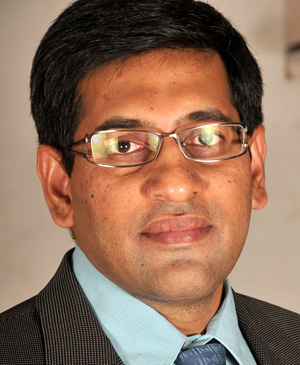
    Hoshiyaar, Khabardaar! Mediaah! cyberspace mein waapis aa gaya hai!The blog is rechristened Mediaah! s3. s3 being short for Season 3, thisbeing the third coming for Mediaah!


    After six years of self-imposed exile, Mediaah! returns. In line with the current media order, it’s going to be called Mediaah! s3. s3 being short for Season 3… this being the third coming for the blog. Trittiya, as Amitabh Bachchan would call it.

    And, yes, Mediaah! has a new home @ the all-new homebase for mediapersons and marketers: MxMIndia.com

    Wish me luck. Its my third attempt at being brutal and honest. But like I read Sunil Gavaskar say somewhere that his words may have softened with time, I guess I too may have mellowed in these last few years.

    Plus this time around, Mediaah! is going to be part of a website that I run along with a committed team and friends.


    Fastforwarded Flashback


    But first some flashback to what really got me off cyberspace and what I’ve been doing all these years. One fine morning, in the middle of the night, on a fine, warm day in the year 2005, I was subject to legal missives from the most powerful newspaper group in the land. My sources in the group’s office told me that the orders were to nail me. There were several friends from India and elsewhere in the world who were willing to fight my case. I tried reviving Mediaah!, but the top legal eagles in the country advised me to be careful. So I depressed the Pause button, and continued with my full-time employment.

    Cut to 2008, where I chucked my job with a leading mainstream media player. I wanted to start an MxM-like site, but I switched to consulting with a college buddy turned journalist and entrepreneur who would run Indiantelevision.com. I was there for just a few months and hopped on to exchange4media.com. Upset with the switch, the buddy even sent my new employers a legal notice.

    I had a fun stint with e4m.com and impact. It’s run by an enthusiastic trio, and a team that’s pretty committed. Little wonder that it’s doing so well. But there were issues which got me to move on.

    It wasn’t easy quitting a cushy job. I felt awful that my family was paying for my principles. But then it’s a great feeling to be able to be able to sleep easy with a clear conscience.


    My concerns for Mediaah! s3

    I am not sure if it’s going to be smooth sailing for Season 3 of Mediaah! In fact, I am worried whether I would be able to be as no-holds-barred as I would in the previous seasons. This is because the very people I write about are the folks who will advertise on MxM India. It’ll be a tightrope walk, and I hope to be able to maintain the balance.


    The masala

    Okay, okay, I know what you want to know from Mediaah!. What do we feel about G Krishnan’s exit from TV Today. And where’s he going? Are the rumours of his joining ABP or Fox true? What’s the buzz at Bloomberg UTV? Is a former newspaper CEO taking the top job there? What’s our view on the new-look Mid-Day? Can the new look help the paper regain old glory?

    Read all this and more in Mediaah! as we go along. We’ll be back next week. Tab tak ke liye, alvidaah!


    Buzz me if you have a story to tell. Confidentiality assured. There are various ways you can reach me:

    pradyumanm[at]mxmindia.com, 23050B5D, pradyumanm@gmail.com, @pmahesh, 98338 76278.


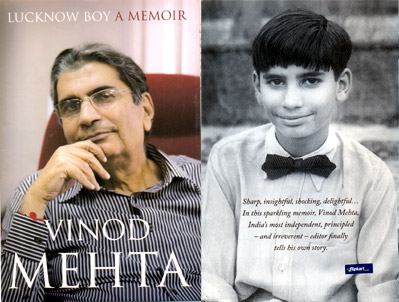
  • Book Review: Lucknow Boy is a fluent, easy & juicy read

    By Ranjona Banerji


    If you want a fluent, easy and juicy read there’s nothing quite like hunkering down over a weekend with Vinod Mehta’s Lucknow Boy – especially of course for a media person. Yet, thanks to the letters page on Outlook, where so many readers seem to know him so well, one suspects that anyone interested in the news or the way the media runs will want to pick this one up.

    The story starts at the beginning with a solidly middle class upbringing in quieter, gentler times in charming and civilised Lucknow, which Mehta describes movingly but not in a maudlin manner. All those Outlook readers who fume at Mehta’s secularism can blame his childhood and this rather inclusive town in which he lived – as he himself does. Not quite sure what he was going to do with his life – apart from being a table tennis champion – a young Mehta landed up in England looking for opportunities and it must be said, girls. The swinging sixties provided the latter in plentiful apparently and also a variety of odd jobs. Mehta returned to India still with little clue about what he wanted to do and then headed for Bombay and advertising.

    From here it was a few skips and jumps to becoming the editor of Debonair which some might remember as India’s first “girlie” magazine. Mehta is one of a small but significant breed which started a career in journalism as an editor, without doing the slog. Those who are old enough (waaaaah!) will remember that in spite of the uncomfortable semi-nudes, Debonair had some good reading matter, using the Playboy model.

    The next episode in Mehta’s life led to his becoming a legend – starting and editing two classy newspapers from scratch (Sunday Observer and Independent) and recasting one (Indian Post) and resurrecting another (Pioneer). All four were well-planned, classy, stylish and paid attention to good writing. There are and must be a variety of views on them and not all of them positive but there is no doubt that they shook the establishment and frightened the fuddy-duddies.

    Not all were successes and Mehta himself suffered for decisions taken or managements changing tack. It is here that he is at his most acerbic about his fellow journalists and editors. The debacle at Indian Post where owner Vijaypat Singhania could not withstand political pressure was followed by another at The Independent. Mehta quit this paper a month after it launched when a huge scandal broke out over a story which said that YB Chavan was an American mole.

    Mehta describes all these quite candidly. The animosity he mentions shown by Times of India staffers to The Independent was quite amusing for those of us who were outside both: where the nose-in-the-air ‘we are Times journos and no one can touch us’ battled against the ‘we are the intellectually and stylishly superior’ Independent brigade. To be honest, both sides were a bit full of themselves!

    Mehta doesn’t hold his punches when it comes to Dileep Padgaonkar, who was editor of Times at the time and later with Lalit Mohan Thapar, owner of Pioneer. The end of his one month at the Independent also led to his shifting to Delhi and then to The Pioneer. The creation of Outlook follows a low period in his life and from here on, the way is up which is where the story pretty much ends.

    Lucknow Boy is a good nostalgia trip for those who are familiar with the place and time and will remember names and incidents. It is also a good lesson for those starting in the profession.

    Mehta also adds his views on people he has known and who have influenced him (yes, Sonia Gandhi is in one section and Editor the dog in the other) as well as tips to budding journalists. Expectedly, there is both humour and insight here.

    I have to thank Mehta for the huge space he has given to my old friend, the late designer MG Moinuddin whom he met at Debonair. Moin was indeed a massive talent and we were colleagues for many of the years that he moonlighted for Mehta’s various papers.

    In this very compelling read, there are some negatives, primarily when we reach the Outlook story. It gets a bit tedious and self-congratulatory – perhaps acceptable but still mildly annoying: all publications after all can come up with lists of some good story or the other it has done. However the sections on the letters to the editor, full of communal rants, as well as the fights between Ramchandra Guha and William Dalrymple are amusing.

    Although Mehta writes about the Radia tapes, where Outlook played a sterling role, I would have expected also some more stringent comment on the fallout as far as journalism is concerned. Mehta discusses Vir Sanghvi’s decision to step back from journalism but lets Barkha Dutt off the hook.

    There is one error which I have to point out because I take it personally. Mehta mentions that Bombay magazine wrote an item after the launch of Outlook. As one of the last employees of that wonderful magazine I can very confidently state that since it closed down in early 1991, there was no possibility of it having commented on Outlook’s launch in 1995!

    Also I must admit that I do not know Mr Mehta – I have met him fleetingly a couple of times so it is unlikely that he will remember. But this was undoubtedly one of the most enjoyable books I have read in recent times. Personal anecdotes and revelations are sparse but they are illuminating and even endearing. Every autobiography is entitled to its one-sided-ness and its quirks and that of course is why we read them


    Lucknow Boy by Vinod Mehta, Penguin Viking, hard cover, 325 pages, printed price Rs 499.

    Flipkart price: Rs 349.

  • Mail Today celebrates 4th anniversary

    By Akash Raha


    Mail Today celebrates its fourth anniversary today in a year that has seen overwhelming change. The daily compact will celebrate the milestone by putting together a 56-page section dedicated to the ‘The Game Changers’. This section accompanied the main edition of 48 pages today.


    In the pages of the anniversary edition, the Mail Today team of reporters and editors across the country will profile a diverse lot of people. From Anna Hazare, who has reset the country’s political agenda, to Mamata Banerjee, whose gale force swept away the Left bastion in West Bengal, from the Supreme Court of Chief Justice S.H. Kapadia, which has turned the constitution into a force for change, to Subramaniam Swamy, the unraveller of the 2G spectrum scam, these change agents have given us reasons for hope even in the nation’s darkest moments.


    Speaking about the anniversary issue and the way ahead, Rahul Thappa, COO, Mail today said “Mail Today in its own inimitable way has been a harbinger of change in the newspaper industry over the last four years. Our fearless content and often irreverent voice has offered the new Indian an intelligent option to the content they otherwise had be contented with. We have grown from strength to strength over the last four years and in doing so have defied conventional thinking. We have made a significant dent in the Delhi/NCR market and shall continue to consolidate our strength in the High Net Worth homes of the region. Growth is the only imperative for us and we shall be a harbinger of change to in other parts of the country as well. In our fifth year we plan to continue to delight our readers and surprise our competition and in doing so cement our positioning as the voice of the new Indian.”

    Even though corruption may have dominated the news headlines, but these harbingers of change drivers, in their own ways, have redefined the rules of engagement in their chosen fields and made stellar (and sometime debatable) contributions to our lives and lifestyle. These men and women have changed the way we relate to politics, business, sports, films, fashion, cars, books, gadgets and gizmos, and the arts. The anniversary edition hereby celebrates the inevitable fact of contemporary India.

    The anniversary issue celebrates the achievements of many remarkable Indians too who have catalyzed change without getting the media attention they deserve. People such as Kumar Mangalam Birla, who has refused to pay ‘facilitation money’ despite losing out on project, or Suneet Singh Kohli, the creator of the world’s cheapest tablet, or the UP Lokayukta Justice (Retd) N.K. Mehrotra, who has got Mayawati to suspend four of her corrupt ministers, or Mahaveer Golechha, the AIIMS scientist who has invented a candidate drug for the cure of Alzheimer’s Disease, or even the farmers of Bhatta Parsaul, who at a tremendous personal loss took on the state government and a powerful lobby of builders to make land acquisition at just rates a national issue.

    The game changers in politics, government and business aren’t the only ones who have given us our moments of celebration. We’ve had Ekta Kapoor venture into territories where no film production company had gone before and Sameer Gaur pull off this year’s biggest international sporting spectacle — the F1; we’ve seen the hitherto unknown Abhinay Deo push the creative envelope with Delhi Belly and Kalki Koechlin become the unlikeliest of Bollywood success stories; we have celebrated Prabal Gurung’s designs being worn by Michelle Obama and the elevation of fashion designer Manish Arora as the creative director of the Franco-Spanish design house Paco Rabanne, making him the first Indian to head the creative side of a leading international high-street fashion label.

    Mail Today was launched on November 16, 2007 in Delhi by the India Today group, in collaboration with Associated Newspaper of the UK (publishers of Daily Mail). As per the IRS 2011 Q2 figures, Mail Today showed a growth in readership and is firmly placed in the number three position in Delhi market.

  • Prashaant Bhatt to head Fiction at Colors

    By Rishi Vora


    In a recent development at Colors, Mr Prashaant Bhatt has been appointed as the head of fiction programming. He will be responsible for driving the fiction properties on the channel Colors and will take key decisions on new shows and concepts. Mr Bhatt will start his new role on December 1, 2011, reporting to the CEO Mr Raj Nayak.

    Announcing the appointment, Mr Nayak said, “Given Prashaant’s extensive experience in delivering compelling content for multiple successful fiction properties over the years, we are confident that he will take the Colors’ Fiction shows to a new peak. I am proud to have him on the team, and look forward to co-creating new frontiers in fiction programming on the channel.”

    On his new assignment, Mr Bhatt said, “I have tremendous appreciation for Colors’ constant attempts towards providing new and innovative content to viewers. I am looking forward to working with this incredibly talented group of people and to applying my knowledge and experience to fiction programming”.

    Mr Bhatt joins Colors from Balaji Telefilms, where he was the Creative Head for various successful shows. He has over 16 years of experience as a writer and creative director of various successful fiction properties. In the last few years, he has also been involved in conceptualising shows and creatively heading them for various production houses which include not only Balaji Telefilms, but also Rajshri Productions, Cinevistas, Creative Eye, AK Films, UTV and Shreya Creations among others.

  • Chitralekha celebrates 61st anniversary

    By Akash Raha
    Chitralekha Group is all set to come out with Chitralekha’s 61st anniversary issue later this week. Themed on the topic “India 2020”, the issue has contributions by experts and stalwarts like Shashi Tharoor, Uday Kotak, Kalpana Morparia, Rashmi Bansal, Naveen Jindal, Chetan Bhagat, Farhan Akhtar, Gaurav Mashruwala, Nikhil Gandhi, Dr Tejas Patel, Dr Prakash Kothari amongst others who have shared their perspective on the country in 2020.


    Speaking on the 61st anniversary issue, Mr Mitrajit Bhattacharya, President and Publisher, Chitralekha Group, said, “We are very proud to bring out the 61st anniversary issue of Chitralekha. Last year, we were extremely pleased with the 60th anniversary issue of Chitralekha; even though the issue was priced at Rs 125, it sold out in four days. We realized that content is more important than price. This time too we have tried to give the same to our reader in terms of content. We have priced the issue at Rs 75, and I am sure this time it will be as big a success. Last year we asked eminent stalwarts to trace back India’s history over the past 6 decades. This time, we have asked them to look at the future in 2020. Apart from great content, this issue will also carry a special compilation of 61 gems by 9 musical legends as well as the first day cover on Chitralekha, which was released by the President of India in April 2011. I am sure a combination of all these will certainly appeal to our audiences.”


    The issue also houses the second edition of Chitralekha’s “Gujarati Power List” which comprises superstars from the fields of politics, business, corporate, music, fine arts, cinema, sports, media and social service, who have gone beyond their own areas of comfort and influenced the larger society.

    Moreover, the issue carries a special compilation by Saregama of 61 remarkable songs by nine musical legends namely, Asha Bhosle, Geeta Dutt, Hemant Kumar, Kishore Kumar, Lata Mangeshkar, Manna Dey, Mohammed Rafi, Mukesh and Talat Mehmood. Each copy of the magazine will also carry a First Day Cover (postage stamp) on Chitralekha released by the Department of Post, Ministry of Telecom & IT in April 2011.

    Chitralekha Group had humble beginnings when its flagship Gujarati magazine, Chitralekha, was launched in 1950 by Vaju Kotak, with a print run of 10,101 copies. Today, the much revered news weekly boasts of over 240,000 copies and is almost a fixture in any given Gujarati household.