Category: MEDIA

  • Gouri Dange: Dealing with journos hungry for quotes

    Do you really want to be that rent-a-quote person?

    They’re polite, of course. And young. And completely unaware of how tiresome they can be. The phone call goes something like this: “Hello, I’m writing a story on thisthatandtheother, and I was hoping to talk about it to you.”

    At first, in the early years, you feel quite pleased to be called up in this way. You drop what you are doing, and whisper urgently to anyone who is sitting around you, “It’s The Press, they want My Opinion”.  People around you immediately go dead silent in deference to this Moment – it’s almost as important as if you were invited to address the nation from the ramparts of the Red Fort on Republic Day. [The woman who works in my house says that Republic Day is when there is good circus to watch on TV (the parade) and Independence Day is when all phaltus go on doing bud-bud on TV, and Budget Day is when some ‘chassmister’ (erudite looking person in glasses) gives you the bad news about fuel and vegetable prices so that your idle boozard husband can tell you that you need to pick up a few more dirty-dishes-doing jobs to stay ahead of prices.] But I digress.

    So, in the early years of being contacted by journos to give them ‘expert quotes’, you are inordinately happy to oblige. You proceed to hold forth on your subject, while the journo at the other end furiously scribbles or keys in as you speak. The rude shock comes a few days later when you ring up 60 friends and tell them that you are being Quoted, and not to miss reading the relevant article that day. You have made these calls before you have opened the paper and actually read your quote. Three things can now happen. A) The journo who you waxed eloquent to for 20 minutes has simply not used your quote – either she didn’t understand a word of what you spoke or there was no space for your quote. B) Worse, she may have misquoted you comprehensively, where you end up sounding like an envious whiney loser who hates everyone else in your field; as a bonus, she has got your name wrong. C) All your pearls of wisdom have been used, in fact what you spoke constitutes the whole article, but you have been given no credit. Your name is not mentioned at all. It is as if this article was born via immaculate conception.

    A few such incidents, and you get older and wiser pretty quickly. You’re at the next level of the rent-a-quote market. Someone calls, and you first get a good sense of what this journo is going to be saying in his/her article first. Then you carefully choose your words, keeping it all very very simple, and hope for the best. You are also now smart enough to request:  can you please call and read out or email me what you’re quoting from this conversation? This way you can clarify, I said ‘intuition’ not ‘tuition’ and other such things. But there’s nothing much you can do about being described by the journo as a music listener who “bubbles over with names, when asked about her favourite musicians”. Or being described randomly as ‘unputdownable’ or ‘peripatetic’ or ‘intrepid’ – all favourite journo adjectives. Makes you sound like some wandering pest.

    Some journos send you a list of questions to reply to by email. This may sound better than having to gabble on the phone and then get thoroughly misquoted. However, the level of detail required from you in replying to these questions would surely be the equivalent of writing the entire story yourself, and also perhaps could be that PhD proposal that you’ve been postponing writing.  Too much hard work.

    Some of them will pop up on Gchat and say the following: Hiiii….I need quotes from celebs, psychologists and young people on ‘Long distance marriages: Is it workable or a recipe for disaster?’ …need the quotes along with high res images in 3 hours. Can u help pllleeez??”  Your only option is to quietly log out.

    Here’s another double-edged thing about being quoted in newspapers and magazines, though. Whatever garbled version of your quote appears, the lay reader immediately takes you very seriously and your stock rises dizzily in your field. However, colleagues tend to go nudge-nudge and deduce that you are rather idle and/or have friends in the Press and are a bit of a Quote Bank. So it’s a bit of a toss-up – to be quoted or not to be quoted?

    If you choose not to be, then here are some ways to duck out. Tell the journo to call you four hours later. They’re usually plugging in quotes at the last minute, and it is likely that they don’t have four hours, plus you sound busy and important. So you’re safe. Or come up with something exotic. Huff and puff on the phone and say you’re climbing Kilimanjaro. The poor dears will hurriedly get off the phone so as not to cost you roaming charges.
  • The future is rosy, says Ravi Dhariwal


    By Tuhina Anand


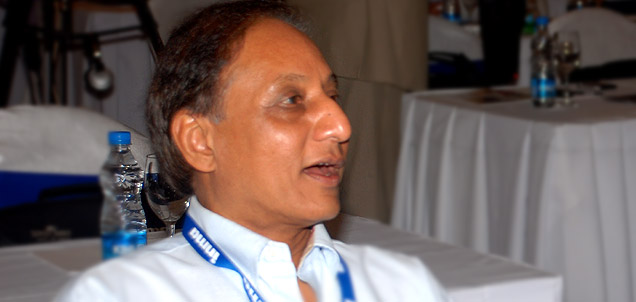
    Newspapers have a strong future ahead, says Ravi Dhariwal, President, INMA Worldwide and CEO, The Times of India. Sharing his views with the audience at INMA: 5th South Asia Annual Conference on the Global Newspapers and South Asian Opportunities, he said that the industry can unitedly face down the challenges confronting it, and continue on the growth path.


    Print players in developed markets when faced with pressure on profitability coupled with losing their revenues started focusing on the cost. The result was a cut in journalists, cut pages, and cut quality. They got seduced with the argument that the business was not well balanced, circulation not earning enough money and being too dependent on advertising to recover the cover price. On the other hand, the consumers have tons of option, multiple platforms while the truth of newspaper also exists that the brand has slimmed down from 48 pages to 24 and journalism was not of the same quality that they were used to. Consumers had to pay double the amount for a newspaper so the value equation particularly in the US got horribly wrong. This led to increased pressure of people but Dhariwal pointed that the situation is stabilizing now particularly on accounts of circulation, balance sheets and profitability pressure.


    He said, “I think the industry went through a phase of evaluation where they were came to a basic conclusion that digital is where the growth is and they must invest heavily there at the expense of print. That difference led them to doing things first for the digital and at the expense of print because they didn’t have monies to put both sides. They said all growth will be in digital so let’s invest there.”


    After making this point, Mr Dhariwal said that this assumption has a few problems, the first being that Digital at best in most advanced environment comprises only 10 per cent of the revenue, the rest being still from print. He said, “So if you put all your money in 10 percent and neglect the 90 percent there is a problem.” He also said that digital for a news media company is an inherent problem because very little of a person’s time on digital gets spent on news. As a result digital for a news company will always be the country cousin. Also the demographics in South Asia, with increasing urbanization, literacy, income and a young curious democracy, works as a great combination for newspapers to grow. He said, “The industry does grow in our country by 4-5 percent per annum. Readership doesn’t grow as fast, though it is not declining, but it doesn’t get reflected because of the way readership is measured in India currently.”


    Another reason why he remains bullish about the growth of newspapers is because the newspaper adds fantastic value to households. He said, “It’s a medium that allows an individual to spend 20 minutes of their quality time for less than Rs 3 and if you have a thrifty wife like mine you will get a rupee back at the end of the month by selling it in raddi. So for Rs 2 you get a newspaper at great pricing but what is even better is that it gets home delivered.”  Another reason for growth is because the editorial quality has improved. He said, “I think our editors are increasingly aware of what is happening to our readers and the newspaper reflects the interest of the readers – politics, local, community. Increasingly quality of newspaper is getting better and I am confident that the paper I read is getting better every day. Also in our country people in newspaper business are ambitious, they are not happy with just influencing people but want to see their business grow. They have brought multiple editions and geographic expansion; like it’s astounding that Dainik Jagran has 295 editions. Even at TOI, we have many editions but there lies tremendous opportunity in markets like Kerala, some big city in TN, AP. In expansion we not only give our readers great value but also great choice.”


    What one should worry about, he said, is how to manage cost and how to continuously innovate to give more to advertisers. He said, “As long as we invest behind innovation, quality of editorial product, keep price low, and the product is home delivered, then we don’t have to worry. We have a reason to celebrate.  The opportunity is that we have an editorially curated product which is now being able to be displayed and expressed in different platforms. We should go after that because the reader is going after that. I have always maintained that for us it’s not digital first or print first. It is not print dollars and digital dimes but Its Print and Digital.” Even media companies have realized this and have become multimedia companies, adapting to this change.

    The biggest of the challenges, he said, is that of managing cost, newspapers not being attractive to FMCGs who are the biggest advertisers and have turned to TV, environment where the government tries to create misunderstanding and rift among employees and lastly lurking fear of ‘what if’ digital expands dramatically and affects print. However, to a large extent he said that these challenges can be overcome by collaborating as an industry to find solutions and bring about a change.


  • INMA 2011: Membership targets in sight, says Tariq Ansari

    By Tuhina Anand

    At the concluding ceremony of INMA’s 5th South Asia Annual Conference, MXM India caught up with Tariq Ansari, INMA South Asia’s outgoing President and Managing Director, Mid-Day Multimedia Ltd. From Mr Ansari, Sanjay Gupta, Director, CEO and Editor, Jagran Prakashan Ltd takes over as President INMA South Asia.

    Mr Ansari has played a key role in bringing INMA to South Asia and has held the position of President for the last two years. Talking about his task at INMA, he said, “I have been responsible for running the INMA platform in South Asia, making conferences happen and ensuring we build a significant membership.  On all these, I think we have progressed significantly.  The idea is to be of use to the industry and give back to the industry. As past president I remain on the board and I am available when required.”

    Explaining why the INMA membership remained confined to just 13 organisations even though there are many players in this category, he said, “INMA had the target of going after large newspapers first. While we have only 13 newspaper organization members, there are around 500 people in this country who have access to INMA through these companies. As we come of age – and we haven’t been here for long as this is the 5th conference in South Asia – there will be conscious effort to build our membership and deliver its benefits to a larger audience.”

    Mr Ansari said he hopes that INMA delegates after attending the seminars would take away some questions on what is going to be the future of their enterprise and directions it can take both in terms of strengthening the business and where future opportunities might lie.

    Talking about what ails the print industry, he said, “Speaking from the perspective of an urban English newspaper, I think the readership is getting stagnant but on the other side the cost of inputs – the cost of journalism, newsprint, running the business – is driving the rate of advertising very high. So we have got a situation where readership is not growing but advertising rates are going up. That is the fundamental problem to the business to my mind.”

  • INMA 2011: New Oxygen, New Growth

    By Tuhina Anand

    Earl J Wilkinson, Executive Director and CEO, INMA spoke on New Oxygen, New Growth at the INMA-5th South Asia Annual Conference, titled ‘Roots and Wings – strengthening our core business and exploring new opportunities’. During his presentation, Wilkinson spoke about the transformation from being a newspaper to newsmedia which is where the opportunity for growth lies. The key is to identify the platform values of each medium be it newspaper, Smartphones  or tablets and use them accordingly.

    Wilkinson said, “The consumer view of newspaper is changing today as they are accessing news from webs or apps. With the changing view there is also need of new skill sets for the new media including next generation data analysis and deep understanding of consumer behavior among other factors.” He pointed that culture change is the foundation for growth story line.

    He listed three challenges that publishers are facing today- identify growth, how to remain relevant and manage complexity. He also listed the growth levers for news publishers which include operational efficiency, superior competitive strategy, best practices, sales excellence among others but what is relevant is that in this list culture change has moved up the ladder and become a key lever for growth.

    On Culture Change, he underlined the importance of listening to the market, focus relentlessly on differentiators and prioritize expenditure while putting away the rest. Wilkinson said, “Culture change is the only path to growth and in the new ecology to succeed one needs to prioritise platforms and diversify revenue streams.”

    He also talked about integration being the future and pointed how many print people are touching digital but not vice versa. He added, “While culture change is crucial to revenue, there is also a need to speak, understand and invest in readers and not indulge in one way conversation with them.”

    Opening the session and giving an overview, Tariq Ansari, INMA South Asia President and MD, Mid-Day Multimedia Ltd said that the sessions over the two days will look at imparting pointers on ways of strengthening existing business , understanding verticals where investments can be made and at the same time think on new horizons and take their business forward.

    I Venkat, Conference Moderator and Director, Eenadu talked about reinventing the print medium. He mentioned how print has undergone change with segmentation with introduction of city supplements and focusing on its target audience. He also highlighted the example of Filmfare and Femina which have enlarged their purview with awards and beauty competition. The newspapers are leaving no stone unturned to reach its TG by getting into festivals, awards, educations and job fairs too.

    He also talked about localized newspaper where Eenadu has gone beyond city, district, zone to constituency. He concluded by saying that for a newspaper every column is an opportunity. He added, “The print advantage is that while you can zap an ad on television, same is not possible in print.”

  • The Anchor: 5 reasons you shouldn’t miss INMA if you’re a print professional

    #1 The theme and agenda of the INMA conference has always been useful to the print industry. Unlike other conferences where there is lot of gyaan and conference is reduced to either networking or picnicking, INMA’s focus is the industry. I am not running down anyone but the interest of the newspaper industry is really met at INMA, and therefore every publisher should attend.
    #2 There are about 30 speakers who will share their views over a period of two days. These people are experts in their field and present different aspects of publishing. So it’s not restricted to just one aspect of advertising or revenue but circulation, readership and other aspects are also discussed. At some conferences, the agenda is only one-dimensional but that is not the case here.

    #3 Newspapers themselves have treated various functions within their organization as compartments and not departments. There is little communication happening across functions but the way ahead is to change this way of working. This conference can give that kind of perspective and help people in the industry to practice collaboration within their organization and take advantage.

    #4 At INMA, subjects are not just discussed but opportunity is given to clarify and understand what is being said. It’s fairly interactive.

    #5 The conference is a good opportunity to network and the food is excellent. So why miss it!?


    Bharat Kapadia is the Chairman of Whatuwant Solutions.

  • Uday Shankar re-elected IBF president

    By A Correspondent

    Star India CEO Mr Uday Shankar was re-elected president of the Indian Broadcasting Foundation at its annual general meeting in New Delhi yesterday.

    Until recently treasurer, Mr Sunil Lulla, CEO and MD of Times Television Network will be vice-president. Zee Entertainment Enterprises Ltd CEO Punit Goenka will be the new treasurer.


    Detailed report on MxMIndia tomorrow

  • Rajesh Jejurikar joins Zee as prez

    By A Correspondent
    Zee Entertainment Enterprises Limited (Zee) has announced the appointment of Mr Rajesh Jejurikar as President, Zee Entertainment Enterprises Limited (ZEE). Mr Jejurikar has resigned has Chief Executive-Automotive Division at Mahindra & Mahindra. He will report to Mr. Punit Goenka, MD & CEO, ZEE for his role. In a career spanning 24 years, Mr Jejurikar, has worked in the packaged goods industry and advertising before he joined Mahindra & Mahindra in 2000.

    Speaking on the appointment, ZEE MD & CEO, Punit Goenka said, “We welcome Rajesh to the Zee family and are confident that his joining will further add to our capability of being a fiercely competitive Organisation. His vast experience in marketing and brand building will add immense value to the Organisation.”

    Commenting on his new role, Rajesh Jejurikar, the newly appointed President at Zee said, “After having spent a fulfilling decade at Mahindra, where I have grown and learned so much, both personally and professionally, I am happy to now be a part of India’s pioneering television broadcasting company. The dynamics of the media and entertainment sector excites me and I look forward to working with the Zee team.”

    Mr Jejurikar is a 1986 batch MBA from S. P. Jain Institute of Management and is likely to join Zee in February 2012.


  • It’s a fact! Factual ent grows with History

    By Rishi Vora


    Factual Entertainment as a genre in India has been a niche segment for many years, dominated primarily by Discovery and National Geographic. The recent entry of History from the JV of TV 18 and US based A + E Networks, however, promises a lot of action. With only a month since its launch, the channel has already made an impact.

    According to TAM Media Research, it is now placed at No 2 in the line-up of factual entertainment channels with a market share of 28 per cent in the metros; and it garners the highest time spent per viewer in the genre (35 minutes against Discovery’s 23 and National Geographic’s 16 minutes). And by all means, the channel has expanded the genre by 30 per cent, all India, reaching out to 45 million viewers, in the CS 4+ market.


    What’s the success mantra?
    There is no denying that the Network 18 clout and the reputation of the US major A + E Networks, helped in the successful launch of the channel. But, as the company officials state, the success story has a lot to do with good programming, distribution and marketing.


    The channel embarked on a 360-degree campaign with Salman Khan, urging viewers to switch to a different kind of programming within the factual entertainment arena. Sangeetha Aiyer, General Manager – Marketing, shared her thoughts on the campaign. “All the research we’d done showed that there is a huge market in India for the type of content we had and that there is a lot of inherent weariness for existing content. This is the reason for our positioning as watching something fresh and new. Also, all our efforts during the launch campaign were primarily to broad-base the genre, whether it is the 360-degree marketing thrust, the 5 language feeds, huge distribution thrust, or using Salman as brand ambassador.”


    On why Salman as the brand ambassador, she explained, “Salman has a phenomenal appeal across demographics, psychographics, regions; he is inherently ‘cool’ and brings with him an element of unexpectedness. A combination which is impossible to resist. There was never anyone else we even considered. Also he’s not just our brand ambassador; we’ve also cleverly integrated him in our programming and packaging and have more plans with him in the pipeline.

    Cell 18, a division of Network 18 has worked extensively on the look and feel of the channel, the on-air promotions and packaging.   Zubin Driver, Group Creative Director, Network 18 and CEO, Cell 18 added to Aiyers point on having Khan on the channel as the brand ambassador. “The idea to go with Salman Khan was completely out-of-the-box, primarily because one doesn’t expect Salman to be the brand ambassador of a factual entertainment channel. And what he does on History and what the viewers are accustomed to see him as, is very different.  So that’s very clutter breaking and interesting.”

    Driver further added that the challenge was to match up to the international standards of A + E channels, as far as the packaging and the creative look and feel of the channel was concerned. Elaborating on the kind of work that has happened on the channel, Driver said, “There is a great amount of detailing which has gone into the campaign. Show specific designs, using mnemonics and graphics and to integrate that with Salman, was a huge challenge. And I’m glad at the end of it we’ve done a pretty good job.”

    Sudheer KG, VP and Programming Head shared the early apprehensions that the team share prior to launch. “We were very cautious right from the beginning, because History as the name suggest—immediately what first comes to mind is the boring sort of a channel with an old look and style, with no fun element in it. So our immediate task was to see how we could make one, the genre more interesting and second, to make our channel more entertaining. The idea of dubbed content helped us maintain the Indian flavour in every show.”


    The programming strategy the channel has adopted is pretty simple. To look at the huge library of shows that History channel in the US has, and pick up shows from there that could suit the Indian viewers. And of course, the customisation which follows to make shows more relevant and meaningful for Indian audiences. In the times to come, the channel will look at different formats and if need be, acquire international content as well.


    Passage Through India with Caroline Quentin, currently on air, is one of the popular shows, where the host travels all over India and introduce many aspects of Indian culture. Another show that is likely to be launched in the near future is Freddy Versus the World, featuring Cricketer Andrew Flintoff in trying some of the most extreme sports and challenges on offer.


    As it seems from here, the challenge is to keep the momentum going. And that could be achieved by doing innovative yet relevant content. Being a niche segment, factual entertainment as an industry was observed to be stagnant for a while. Now that History has announced its arrival, there will be a lot to watch out for in this small yet growing industry.

  • Sony touches new ratings high with Rs 5 crore KBC episode

    By Rishi Vora


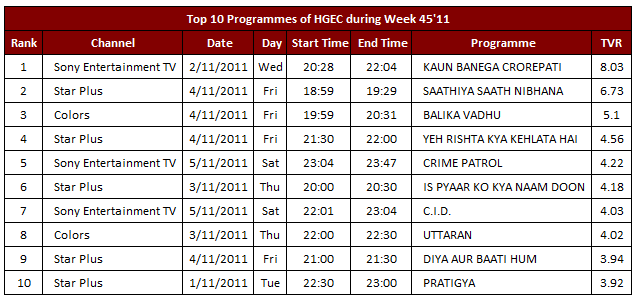
    Every Indian does seem to harbour the dream of becoming a millionaire. Last week’s ratings of Top 10 television shows reveal that Kaun Banega Crorepati (KBC) has, in its fifth season, registered a new high, becoming the highest TRP grosser among all weekday shows after Colors’ Uttaran did in 2009.


    The episode aired on November 1 registered 7.2 TVR while the episode on November 2 touched 8.03 TVR. The KBC episodes on these days were much-publicised and aired the winning of Rs 5 crore by a resident of Bihar. The channel has also upped its GRPs to 287 from last week’s 236, with KBC being the No 1 show in the week with an average TVR of 6.4. However, industry watchers feel Sony will see a dip in GRPs post KBC.


    Sneha Rajani, Senior EVP and Business Head, Sony Entertainment Television said, “The success of Sushil Kumar in KBC is an emphatic endorsement of the fact that KBC is not just a game show, but a melting pot of knowledge and aspirations of the aam aadmi, and the numbers show that KBC this season has broken all barriers of demography and geography and transformed lives of people all across the country.”


    In absolute numbers, the show has managed to reach out to 25 million people on November 1, and 27 million people on November 2, with 18 percent reach and 43 minutes of average time spent.


    Other channels too gained in week 45. Star Plus jumped to 335 GRPs from last week’s 273. Colors rose to 240 from 236 the previous week, while Zee TV rose from 131 to 143.

  • Technology changes offer hope for broadcasters at Casbaa

    By Nibha

    The 2011 edition of the Casbaa Convention closed last week with high optimism at a time of rapidly altering business models and quick time technological change for TV services across the Asia Pacific.


    “The new models provide huge opportunity,” said Mr Simon Twiston Davies, CEO, Casbaa, “while more than 420 million non-terrestrial TV connections are being logged across the region. Meanwhile, there are already more homes with multichannel TV inAsiathan the rest of the world combined.”


    On hand to give expert opinions during a variety of insightful panel sessions staged during CASBAA 2011 were a roster of high-powered international executives including Jana Bennett, President, Worldwide Networks & Global iPlayer, BBC Worldwide; Andy Lack, CEO, Bloomberg Media Group; Olivier Barberot, Chairman & CEO, GlobeCast Worldwide; Shuichi Mori, President & CEO, Jupiter Telecommunications; Blair Westlake, Corporate VP, Media & Entertainment Group, Microsoft; Jeff Shell, President, NBCUniversal International; Shigeki Nishiyama, Representative Director, Chairman, SKY Perfect JSAT Corporation; and, Nobuya Wazaki, President, WOWOW.


    Mr Tetsuo Yamakawa, Japan’s Vice Minister at the Ministry of Internal Affairs – and some of the most influential international players in Japan – detailed opportunities for deepening pay TV penetration in a market hungry for global content and collaboration with international partners and investors.


    India, too, continues to be an important market in the region and the hugely complicated and expensive task of digitizing the Indian market was the subject of one of the Convention panels. Mr Ravi Mansukhani, MD of IMCL, said digitisation would lead to a huge amount of localization of content and value-added services being introduced into the market. It was clear that setting a deadline for the switching off of analogue services was just the beginning of the process.


    Mr Liang Xiao Tao, President, CITVC described how TV audiences are evolving in China, shifting to online viewing and social media, and how more open policies on broadcasting are likely to see a shift away from the dominance of the big players.


    According to a lively team of panelists discussing the future ofMalaysia’s multichannel market there’s plenty of room for new entrants to the market. “Nearly 50% of the population have never had pay TV and they’re the ones who aren’t having their needs met,” pointed out Ms Kathleen Syron, Chief Content Officer, YTL Communications.


    With technology evolving so fast, this is an exciting time to be in the broadcasting business. The role of social media in the TV viewing experience came under the spotlight where the multiplier effect of channel and programme fans recommending TV content to their friends was immense.


    As well, as consumers increasingly demand content everywhere and anytime, the industry is combining technologies to get the best solutions for all the devices people are now using to watch video. An example was given by Mr John Couling, VP Marketing, Products and Platforms, Dolby, who mentioned that the next frontier will be bringing top-quality sound to mobile and tablet devices, so that there’s greater continuity of content quality across platforms.


    While opportunities abound, the challenge is in revising pay TV business models that would be just as valid in a world of multiple devices as it is to when the industry was literally just a box in the living room.


    As the era of digital delivery continues to grow, however, the threat of online piracy looms large and there is an imperative need to effectively address this problem.

    Held in conjunction with the Convention, Casbaa’s Annual General Meeting of its 130 Member companies drawn from 17 Asian markets saw the re-election of Mr Marcel Fenez of PwC as Chairman of the Association and the election of Mr Mark Patterson, CEO, Asia Pacific, GroupM to its Board of Directors. As part of a global media investment management group, Mr Patterson will bring a strategic commitment to advertising to the Association board.


    Stepping down from the Board of Directors, Mr Tom Keaveny of Discovery Networks Asia Pacific was recognized with Casbaa’s prestigious Chairman’s Award for his contributions to the development of Pay-TV in the region and his tireless work explaining the overall value of Pay TV to advertisers.


    Finally, in recognition of the importance of being able to give back to the communities that we operate in, Casbaa raised nearly US$50,000 during the annual Charity Ball presented by Turner for Plan International’s Early Childhood Care and Development Project to benefit underprivileged children in the Philippines.

  • More bite for toothless PCI?


    By Akash Raha

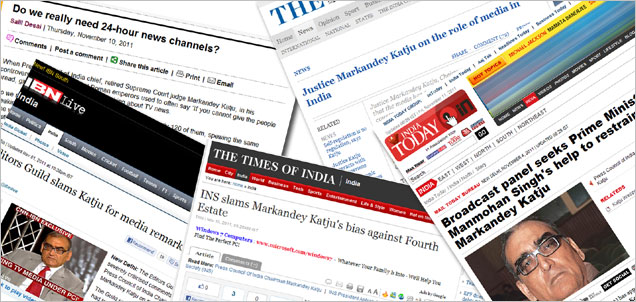
    Recently Chairperson of Press Council of India (PCI), Justice Markandey Katju triggered a volley of criticism and discussion after he lambasted the broadcast media, saying most of them suffer from “very poor intellectual level”. He went on to suggest that broadcast media should come under the purview of the PCI. MxM India asked some well-known media faces what they think.

    Arnab Goswami, Editor in Chief, Times Now and Vice President, Broadcast Editors’ Association (BEA) told MxMIndia: “I don’t know why Justice Katju is making these comments. There is absolutely no need to try and demolish the principle of self-regulation in TV news which ensures that electronic media is free and out of control of vested interests. Justice Katju should not make these sweeping generalizations.”

    Upset over Justice Katju’s comments on the media, former Chief Justice of India J S Verma too is reported to have recently called the PCI an “ineffective” body and said it should wrap up if it does not meet its mandate. Verma chairs the News Broadcasting Standard Authority (NBSA), which is set up by the News Broadcasters Association (NBA). In a recent statement Verma said that he is “deeply anguished” with the kind of language that Justice Katju uses which “sounds authoritarian”. NBA has requested the Prime Minister to stop the PCI from meddling with the dealings of broadcast media.

    On whether broadcast media should come under the ambit of the PCI, Rajdeep Sardesai, Editor in Chief, IBN18 Network said “I believe that the self-regulation mechanism which has been put in place by major news broadcasters must be allowed to strengthen itself. The Press Council has been unable to curb pernicious practices in the print media such as ‘paid news’, so I don’t see how mandating it to now to oversee the electronic media will serve any purpose.”

    Talking about whether he thinks electronic media should be brought under the purview of  PCI Paranjoy Guha Thakurta, an independent journalist and critic, said, “The electronic media needs to be regulated independently – this is because self-regulation is inadequate and ineffective under certain extreme circumstances. The regulator should be independent of both media interests – including the interests of the big corporate media – as well as the government. Even if the regulator is funded by the government, it can be truly autonomous and/or independent if it is Constitutionally mandated thus – such examples include the Supreme Court of India, the Election Commission of India and the Comptroller & Auditor General of India. Ideally the electronic media should have a separate regulator. Even if the ambit of the Press Council of India is widened to include the electronic medium, it has to be made truly independent and autonomous and, most importantly, empowered. The Press Council in its current form has no punitive powers and is hence akin to a toothless tiger.”

    To put things in perspective, PCI was established as a statutory print watchdog by an Act of Parliament in 1978. In recent times, PCI has come under question following chairperson Justice Markandey Katju’s recent remarks on the state of the media in India and its inability to keep a check on paid news.

    When asked if Justice Katju was trying to police the media, Mr Guha Thakurta played down the suggestion, saying, “The Press Council of India is a quasi-judicial body set up an act of Parliament. The way it is supposed to function has been clearly laid down. There is no question of Justice Katju (or for that matter, any Chairman of the Press Council) acting as either a good cop or a bad cop.”

    The question remains, should news broadcast come under the ambit of PCI? One of the reasons for opposing such a suggestion remains that since PCI has been unable to check the menace of paid news in print, there is no reason why it should make any positive change in the broadcast industry. Another argument says that the only reason why PCI has been unable to make a change is because it is still a toothless quasi-judiciary body and the government needs to empower it and give it some tooth. Either way, in this chatter and amidst much confusion is set Justice Katju and his criticism of media professionals as he sees them as naïve and stupid. Criticism which has obviously riled the veterans of the broadcast industry.

    In the wake of this controversy, several discussion forums are being organized on the PCI, the question of paid news, etc. The Foundation for Media Professionals (FMP) is organizing a panel discussion in collaboration with the Press Club of India on the topic ‘Media and Public Interest: Freedom vs Accountability’ on November 12 at Press Club of India, New Delhi. The panelists at this discussion will be Markandey Katju, Rajdeep Sardesai, Neelabh Mishra, Zoya Hasan, Pankaj Pachauri, Abheek Barman, Madabhushi Sridhar and Paranjoy Guha Thakurta with T R Ramachandran as moderator.

    Later, on November 18, MxMIndia has partnered the event ‘Paid News: Fooling People all the Time’ organised by Moneylife Foundation and Citizens Action Network with the support of industrialist Cyrus Guzder to be held in Mumbai’s Madame Cama Hall. The evening will see the screening of the documentary ‘Brokering News’ followed by a panel discussion with senior journalists and the film-maker Umesh Aggarwal. The panelists at this discussion are Umesh Aggarwal, Ayaz Memon, Paranjoy Guha Thakurta, Bhawana Somaaya, and Sucheta Dalal. This panel plans to discuss the issue of paid news, which has been a bugbear even for regulatory bodies such as the PCI.

    For more: http://www.mxmindia.com/2011/11/mxmindia-partners-%E2%80%98paid-news%E2%80%99-event/

  • 7 reasons why the IMPACT 7th anniversary issue is unputdownable!

    By Pradyuman Maheshwari

    Shocked and surprised that I am writing nice things about what is perceived as competition? The problem with the Indian media is that we are too full of ourselves and don’t like to say good or bad things about the tribe. Especially about our past employers 🙂

    However, I had good fun putting together the fifth and sixth anniv issues of the magazine and I was happy to see the seventh anniversary issue getting better than the previous years.

    #1 The anniv issue is a veritable ready reckoner of the industry, the people who make it and what’s happening in and around it.

    #2 It’s a must-read for any newcomer to the business.

    #3 The 7th anniv issue is bigger and thicker than the 6th. (aside: So will the 8th anniv issue have 400 pages?)

    #4 The issue: Nice, cool design. Interesting lot of writers… beyond the biggies and the usual suspects. Good cover and great idea to crowdsource the design.

    #5 Being the only standalone weekly magazine for the advertising, media and marketing business, IMPACT’s a must-read. Okay, I’ve not been reading the print edition in the recent past, and I access the PDFs online… but that’s good enough.

    #6 Preeti ‘VGC’ Vyas’s design is as refreshing as it was unveiled last December.

    #7 It’s the first test of a leader. Is your product as good as it was six months after you left it? I believe it is. And I am happy to see it’s in very good, safe and able hands of a publisher, editor, designer and a bright team. So when I update my LinkedIn profile, I can safely say that I was associated with the magazine for a bit. Wink, wink.

    Greetings to the IMPACT team and all those who helped put it together. Thanks for ensuring that the flag continues to fly high.


    MxMIndia editor-in-chief and CEO Pradyuman Maheshwari was until April 2011 group chief editor with the exchange4media groupÂ