Category: MEDIA

  • Prabhat Khabar launches Panchayatnama in Bihar

    By A Correspondent


    Prabhat Khabar successfully launched fortnightly tabloid Panchayatnama, targeted towards the rural areas of Jharkhand and its Panchayat related issues, in Jharkhand. Now taking it a step further, Prabhat Khabar has now launched Panchayatnama in Bihar on July 11. This launch took place with an inaugural function in Patna, presided by Mr. Nitish Kumar, chief minister of Bihar.


    Panchayatnama will have 40 pages tabloid and will come with a price tag of Rs10. It will be circulated in all 38 districts (8842 panchayat) of Bihar with approximately 25,000 copies on day one.


    Panchayatnama is a way to allow the growing media industry to connect with the vast rural population ofBiharand let the rural population get an opportunity to voice their problems and developmental aspirations.


  • Vuclip wows women with video…on the go


    Text and Video by Shruti Pushkarna


    Mobile video portal Vuclip unveiled India’s first mobile video portal for women in New Delhi on July 11. The video portal for women, Mira!, is designed to appeal to the independent women of our times. Mira! draws content from around 30 content providers in India, as well as globally, to offer videos across a host of categories that interest women. The mobile portal will feature content relating to health, beauty, fashion, lifestyle, parenting, cookery, entertainment, astrology and much more.


    Launching the portal at the Press Club of India in New Delhi, Chief Guest Prof Kiran Walia, Delhi NCT’s women development minister, said: “Mobile phones are emerging as an economical tool for accelerating mass-scale development of women. Studies show that the mobile phone has helped women feel safer, more independent and connected, and has opened new professional avenues and income sources for women. As India’s first mobile video channel for women, I hope that this initiative will help boost mobile adoption among women, and will encourage the creation of more women-oriented mobile content.”


    Prof Kiran Walia, Delhi NCT’s women development minister, with a part of the the VuClip leadership team

    Vuclip also unveiled the findings of its global survey in which almost 40,000 women users participated from 176 countries, including nearly 13,000 women from India. The survey found that besides voice and text, 60 per cent of Indian women respondents use their handsets as a primary source of entertainment. As many as 80 per cent of the respondents reported steady increase in time spent on mobile-viewing. Besides movies and music, Indian women also loved watching TV soaps, funny videos, sports, news and celeb gossip on their mobile. Women between 18 to 35 years comprised 65 per cent of the Indian respondents, while 24 per cent were under 18 years and another 11 per cent were over 36 years.


    Commenting on the survey findings, Meera Chopra, Vice President-Advertising, Vuclip India, said: “Even as the adoption of mobile among women grows in India, it is encouraging to note that mobile is already becoming a woman’s preferred source for content. While 37 per cent women from India reported that they spend more than one hour daily on TV, print or radio media, a close 32 to per cent women reported that they spend over an hour to access mobile content every day.”


    Vuclip’s Global Vice President-Marketing, Judith Coley, said: “In contrast to the developed countries, internet in the developing world is arriving on phones before traditional computers. About 59 per cent of internet users in India get online via mobile phones. We hope that Mira! will help spark a revolution in the way women’s mobile content is perceived – by content providers, brands, and women themselves. Cisco predicts that mobile video will increase 25-fold to account for over 70 per cent of total mobile data traffic between 2011 and 2016.”


    [youtube width=”400″ height=”225″]http://www.youtube.com/watch?v=biLDcqZ-TkY[/youtube]

    Speaking about the choice of the name for the portal, Ms Coley said, “Mira!’ in Latin is the root word for ‘wonderful’, while in Spanish, ‘Mira!’ means ‘look’. Mira! is also the name of a bright star. The Mira! Woman is busy, engaged, radiant and full of life. She wants to make the most of every moment, and when she takes a break, she turns to her mobile phone for entertainment, news and tips.”


    MxMIndia also spoke to Salman Hussain, Vice President- BD & MD (India & Middle East), Vuclip. In his conversation with MxMIndia, Mr Hussain talks about the genesis of Mira!, Vuclip’s content partnerships, the road ahead and more.


    Excerpts from the interview:


    How did Vuclip decide to come up with a women mobile channel? And why ‘Mira!’?

    Vuclip launched in India in 2008 and it’s a mobile video portal. We were trying to get people to watch the videos they wanted on their mobile phones and it’s primarily search-driven. What we saw happening over the past couple of years that we’ve been around was that there were a lot of topics that were being looked at which were women-oriented and that was the genesis for us to create a verticalized portal with women-oriented content on it. The precursor to that was a global survey we conducted, where about 40,000 women responded, out of which 13,000 were in India. We asked these women that if we set up something with the kind of content they are looking at, would that be of interest for you. So that was the genesis for it. And Mira, the name was an amalgamation of the different things it means in various languages.


    Have you partnered with a content provider for all the content on the mobile video portal?

    Absolutely. Vuclip in India works with almost 80 content partners. We work with the large movie production houses, someone like a UTV. Then we work with television channels like a NDTV. We also work with a lot of regional players, like MAA TV down in AP, we also work with quite a few local news channels as well.


    So what about the content on Mira…

    Mira sort of becomes a subset of what’s happening on Vuclip. If you look at the Mira portal, you will see there are various kinds of content available, like the traditional entertainment genre, there’s also news so somebody like an AP (Associated Press) becomes a partner for that.


    If you could also share some mobile viewing trends in India indicated in the survey conducted by Vuclip.

    Vuclip is doing more than 4 million video views a day in India. We have an audience of more than 10 million unique users that are coming on to Vuclip each month. To talk about the kind of categories that people are viewing, they range from the typical movie related content, astrology, cricket and so on. But that’s not the only thing people watch. For example, you’ll be surprised that one of the big things that people look at is animation and nursery rhymes.


    Are you looking to launch any other channels apart from this women’s channel?

    Yes, there is a huge roadmap we have in terms of content that’s coming up. It will cover all genres. So there’s sports, music, devotional, cricket, health. It’s always going to be an ongoing process.


    Is this going to be an Instagram for video?

    Not really, because Instagram looks more at user generated content. In this case, we are more search-oriented, where we are saying that there is some curated content that’s available. But I think we’ll sort of move towards that phase eventually because while it’s easier to do that for images, it’s a lot tougher to do the same for video. Right now there is a huge demand for watching video content. I think as the space evolves, since video is still very nascent in Indian market, we will see folks starting to generate more video content. And that’s when we will see a video for Instagram sort of thing happen.


    Is Vuclip only for airing proprietary content? Or is it also into social video sharing?

    You know social is a very large aspect of why Vuclip grew in the first place. So if I watched a video which I liked, the biggest advantage that Vuclip brought to the table was that I could just forward that very quickly via Facebook, or tweet it or sms it to my friend. So that virality is what helped us grow in India. An interesting stat I want to share, when Vuclip started, 65 per cent of views came from search. But in the last four years, more than 65 per cent views come from people sharing. And that’s been the trigger for our growth.


    What are the infrastructural obstacles that something like Vuclip faced in being able to deliver bandwith-heavy content quickly? And what are the ways in which you worked around them?

    That is our USP, that’s really what we brought to the table in the Indian context. We have our own proprietary technology, whereby we can take a video and in real time make it match the handset which is requesting for it. Today we support more than 5,000 different kinds of devices and that has been our biggest strength in India. We have grown with the growth of mobile internet in India. With the advent of 3G and 4G, I think it’s only going to help us grow in a much faster manner.


    Will Vuclip be open to partnering with niche content producers to create subject or domain-specific content channels like this women’s channel?

    Absolutely. We are seeing content providers in three categories right now. Someone like a UTV is a much more tech-savvy partner who knows internet and mobile, and already has curated content. So it’s easier for us to work with them. But if you look at more regional content players, that’s been our focus for the last one year. And as we talk to them, they have great aspiration in terms of going mobile but they don’t know how to. So we are working with them, educating them and trying to get them to edit and tag their clips. From our perspective, we are a great distribution partner for them.


    Do you have to partner with each carrier?

    Not for Vuclip itself because if you are able to go on to a rediff or a yahoo on your phone, you will be able to go to Vuclip, it’s an off-deck site. And it’s free to the consumers, so there’s no billing integration required. But we are aligned with all the major carriers in India and that’s because we believe that the more we get to know about the consumer, the better product we can offer. Similarly, it’s a two-way path for the carriers as well; we provide a lot of insight in terms of what the consumers are watching. We are also able to tailor the experience for individual carrier depending on the kind of networks they have and depending on the kind of regions their audience is in.


    And how is it in terms of revenues?

    We are looking at two revenue models. We are looking at advertising increasingly becoming a larger play for us. I think it’s still in the nascent stage. What we have also been able to establish in parallel is like a ‘freemium’ model, where we take a subset of the audience that comes to us and up sell them on some premium video content for which they explicitly pay, and we proactively push out that content to them on a daily basis.


  • Free Press Journal celebrates 84th anniv

    By A Correspondent


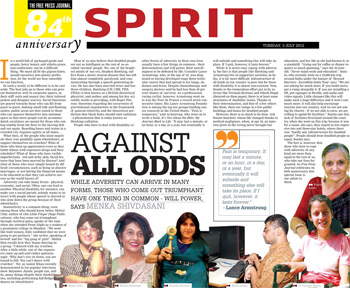
    The Free Press Journal, one of the oldest dailies published from Mumbai, recently celebrated its 84th anniversary by publishing a special eight page pull-out called Spirit.


    To celebrate this intangible, yet very relevant, human trait called ‘spirit’, The Free Press Journal decided to profile Mumbaikars – men and women of courage – who did not give up. The issue was an attempt by The Free Press Journal to inspire Mumbaikars and present them with living examples of persons who surmounted obstacles by summoning the indomitable spirit.


    Each page of the supplement had profiles of persons who summoned their inner strength, to deal with life challenges. The pull out had people like Raageshwari Loomba spoke on how Bells Palsy did not stop her from fighting back and opening up a new world; activist and lawyer Flavia Agnes spoke about the struggle of fighting domestic violence and how she battled years of abusive marriage.


    The anniversary issue was received very well across the market thanks to the theme and the array of articles.


  • Sanjay Sharma joins Bhaskar for sales

    By A Correspondent


    Sanjay Kumar Sharma has joined Dainik Bhaskar group as Regional Head (West). He will be responsible for sales revenue across all products in Dainik Bhaskar Group’s portfolio.

     

    Mr Sharma has a rich experience of 22 years in Sales, Marketing, Customer Service and Business Development. He has an extensive experience in spearheading businesses across Telecom and Consumer Durable companies.


    Mr Sharma is an MBA (Marketing) from Pune University and have worked in companies like Unitech Wireless (Uninor), Bharti Airtel, Reliance Communications Ltd., ZIP Telecom, Samsung India Ltd. and Philips India Ltd. His last assignment before joining Dainik Bhaskar group was with Unitech Wireless.


    At a personal level, Mr Sharma likes to read, is an ardent fan of cricket and likes to travel and explore new locations.


    On his appointment Mr Sharma said: “Media is a new challenge for me and I am happy to be part of Dainik Bhaskar, the leaders in Print Media business.”


  • Former FIPP chief Donald Kummerfeld no more

    By A Correspondent


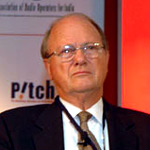
    Donald Kummerfeld

    Donald Kummerfeld, famous for being the Deputy Mayor of New York city and also a name that the Indian magazine industry wouldn’t forget, passed away at the age of 78. Mr Kummerfeld, who was affectionately referred to as Don by colleagues and friends, was the former CEO of Magazines Publishers of America.


    Mr. Kummerfeld was president of MPA for around 12 years – making him the longest serving president – during which time, he travelled the world to spread awareness and increase popularity of the magazines. He was also president and CEO of The International Federation of Periodical Publishers (FIPP), and was widely credited for increasing the membership from 161 to 269 member companies and national associations across 68 countries.


    Reminiscing his experiences with the man he finds hard to forget, Maheshwar Peri, Founder & Publisher, Pathfinder and former publisher, Outlook Group and president, Outlook Publishing said: “Don was an evangelist who encouraged us in forming the Association of Indian Magazines (AIM). Those days you had people like Aroon Purie, Paresh Nath, myself and a few others who got together with the intent of wanting to do something for the Indian magazine industry. But it was Donald Kummerfeld who kept pushing and motivating us to launch AIM in India. So much so that, the day we were launching AIM in India, he flew all the way from Europe just to be present on the occasion.”


    Sharing another attribute of Mr Kummerfeld, Mr Peri said: “The other thing about Donald Kummerfeld is that he has been very instrumental in getting international magazines to explore base in India. Whenever he sniffed an opportunity of a magazine wanting to launch in India, he would immediately bring it to our attention. So, he was instrumental in international magazines evolving, developing and having a far bigger presence in countries other than their origin.”


    He further shared: “The biggest thing about Don that struck me the most was that he was always there whenever you needed him. Whenever he was in India, he made it a point to call up and meet different magazine owners / editors, even if it wasn’t work-related. In fact, I would say that he has hand-held me several times and helped me in strategising plans whenever I had to launch a new magazine/venture. It’s actually come as a shock that he has passed away, especially since he was still working actively a couple of years ago.”


    Though his last years were dedicated to social and political causes, Mr Kummerfeld’s tryst with media began when he joined Rupert Murdoch’s News America Publishing as president and COO. He was also the publisher of the National Journal.


    Photograph source: Association of Indian Magazines (aim.org.in)


  • Domino’s Pizza increases its focus on digital

    By Tuhina Anand


    Harneet Singh Rajpal

    Domino’s Pizza has increased its spends on the digital medium and this year, it will be spending 6-7 per cent on digital, out of its total marketing budget as opposed to last year where the spend was 3.5-4 percent.


    Domino’s Pizza online ordering launched last year has been a runaway success, while it has launched mobile application just month and a half back, which though early days, has seen a traction of 1.5 lakh visits in a short span of time.


    Harneet Singh Rajpal, Vice President-Marketing, Domino’s Pizza India, talking about their digital foray said: “It’s more to do with closing the loop by being on the digital medium. Quite often the decision to order a pizza is instantaneous. Hence we wanted to facilitate the ordering which could be done by clicking on the ad and placing an order in few simple steps. In fact, digital has become an effective channel for us in driving our business and getting consumers instantly, thus able to measure our return on investments too.”


    While digital medium is being used by Domino’s, which Mr Rajpal points works well on weekdays, like catching people ordering at work, the television works well for them during the weekends.


    Television has also helped them in building their brand in Tier II and Tier III cities which is equally important for the company as the metros for growth. In fact, Domino’s has presence in 105 cities and has 465 stores which, as Mr Rajpal puts, makes them the largest Quick Service Restaurant (QSR) player in India which has footprints beyond the metros.


    In fact, he points that, inIndia, in the QSR there is a huge potential to grow even in metros, despite competition as metros still have a huge degree of under-penetration.


    Like is the trend now with the QSR players namely, its competition – including McDonalds, KFC, Pizza Hut – Domino’s too has been focusing on introducing new products to woo customers.


    It has recently launched the stuffed garlic bread and the product is even being supported by a TVC. In April this year, it re-launched its Pizza Mania and one has seen a constant effort to rev up its menu. It has also been focusing on side dishes and that, as Mr Rajpal said, is to offer to its customers a complete meal experience.


    Mr Rajpal explained: “In the QSR category, the food fatigue is very high and people get bored easily with the offering, especially in India, the demand from consumers for new taste is much higher than around the world. The thinking behind the constant launch of new products is to give consumers new reasons to come to us and taste new products. This has been our growth strategy, which not only helps us to get new customers but also hold on to the existing ones. Our R&D team is constantly working to come out with unique and tasty offerings for our consumers.”


    Domino’s has seen a growth of 30 per cent in the last fiscal and has seen 20 per cent plus CAGR in last five years at the store level.


  • ASCI’s upholds complaints against 9 ads

    By A Correspondent


    During the month of May 2012, the Consumer Complaints Council (CCC) upheld complaints against 9 out of 14 advertisements. At the same time, the CCC found that complaints against five TV advertisements were not substantiated.


    According to the complainant, the advertisement for Brooke Bond Red Label Natural Care Tea claimed that the product “has a scientifically proven combination of five ayurvedic ingredients like tulsi, ashwagandha, mulethi, ginger and cardamom to strengthen your body’s defence” and that “It helps to protect you and your family from cold, cough and flu”. The ad also said: “It is clinically shown that drinking three cups of Brooke Bond Red Label Natural Care daily helps enhance one’s immunity”. The CCC concluded that the claims that Brooke Bond Red Label Natural Care “helps to protect you and your family from cold, cough and flu”, and “drinking three cups daily helps enhance one’s immunity”, were not substantiated adequately.  The advertisement contravened Chapter I.1 of the Code.  The complaint was Upheld.


    IMS – Score more at BBA / BBS advertisement that appeared on IMS website claimed that “143 IMS students got selected into SSCBS in 2011”. The  advertisement showed a “bar chart showing selection of IMS students into SSCBS over the years 2008 to 2011”.The CCC concluded that, in the absence of validation by an independent agency, the claims mentioned in the  advertisement and cited in the complaint, were not substantiated.  The advertisement contravened Chapter I.1 of the Code. The complaint was Upheld.


    A complaint was filed against Tata Sky’s print advertisement which appeared in The Hindu, Chennai edition dated March 30. As per the complaint, the advertisement states that “Cable is just a Dabba” meaning non standard or poor quality box, which is not the fact.  The CCC concluded that “by referring the Cable Set up Boxes as dabba”, the advertisement unfairly denigrated other products.  The advertisement contravened Chapter IV.1 (e) of the Code.  The complaint was Upheld.


    The ad which declared Lokmat – No. 1 Newspaper claimed that “Lokmat has added 65,000 readers in SEC A segment in Pune”. The ad did not mention the period over which this growth has been attained, which in itself is misleading. As per IRS 2011 Q4, in the last quarter Lokmat has added only 5,000 SEC A readers in Pune city. The CCC concluded that the claim, “Lokmat has added 65,000 readers in SEC A segment in Pune”, was misleading, as the advertisement did not mention the reference period pertaining to the source data. The advertisement contravened Chapter I.4. of the ASCI Code.  The complaint was Upheld.


    A complaint was filed against Glenmorangie’s print advertisement which appeared in Conde Nast India in the February issue. The advertisement states: “Why is it so important that we only use our casks twice?  Taste Glenmorangie and the question becomes rhetorical”.  The visual depiction of the brand name is suggestive of a well-known brand of liquor – Glenmorangie. In the absence of specific information, the advertisement appears to be a surrogate advertisement for Glenmorangie. The CCC concluded that the advertisement was a surrogate advertisement for a brand of alcohol – Glenmorangie.  The advertisement contravened Chapter III.6 of the Code.  The complaint was Upheld.


    Alchemist’s claim of “India’s most successful MBA prep” was pulled up too. It has not been backed up and substantiated and there is no validation by any independent agency that confirms this claim. In the absence of any proof, supporting information, from the Advertiser, the CCC concluded that the claim, “India’s Most Successful MBA Prep” was not substantiated.  The advertisement contravened Chapter I.1 of the Code.  The complaint was Upheld.


    Shree Maruti Herbal’s print advertisement on “Maruti Stay -On Capsules & Oil” claimed that it “helps improve vitality, stamina and energy”.  The website also claimed “Stay-On guarantees – “Sexual performance of adults in all age groups”,  “Rectifying temporary / partial / occasional or permanent  erectile dysfunction”,  “Increasing the extent of orgasm”,  “Augmenting libido”,  “Increasing the length & size of penis”,  “Mending premature (early & sudden) ejaculation”,  “Enhancing vitality, vigor and stamina”,  “Stay-On is 100% natural with no side effects.  It is a totally secure tested product”. The claims in the print advertisement and on the website were not substantiated. The advertisement and the website do not provide any scientific data related to the safety and efficacy of the product. The CCC concluded that the claim, “helps improve vitality, stamina and energy” was not substantiated.  The advertisement contravened The Drugs & Magic Remedies Act.  Also, the advertisement tends to create, by implication, a perceived inadequacy of physical attributes, in this case the impotence and infertility, which could be objectionable to both men and women.  The advertisement contravened Chapters I.1, III.4 and I.5 (d) of the ASCI Code. The complaint was Upheld.


    Jake’s Beauty-Spa-Salon & Academy received a complaint related to its design and copy. It is similar to the Complainant’s advertisement of “Schnell Hans Salon Spa & Academy”. The CCC noted the contents of the Complainant’s and the Advertiser’s advertisements and concluded that the headline, “Your Passport to Success”, was similar to the Complainant’s advertisement and thus suggested plagiarism.  The advertisement contravened Chapter IV.3 of the Code.  The complaint was Upheld.


    According to the complainant, the TV commercial for Nikon camera required permission from the Animal Welfare Board of India (AWBI) for the use of birds in advertisement or films.  In the application by Nikon, permission was asked for four sparrows to be shown in their natural habitat with a girl playing and passing through. In reality, the birds turned out to be cockatiels which are being used as toys by the girl. The CCC concluded that as the requisite permission was not received from the AWBI to shoot cockatiels in the TVC, it was in violation of The Performing Animals Registration Rules 2001.  The advertisement contravened Chapter III.4 of the Code.  The complaint was Upheld.


    During the month of May, the CCC also received complaints against five television commercials. The complaints were received against the advertisement of Midas Care’s Clean & Dry cream, Sprite Cold drink, Emami’s Fair & Handsome for Men, Gillette Mach 3 and Extra Strong Axe. However, as these advertisements did not contravene ASCI’s codes or guidelines, the complaints were Not Upheld.


  • Hanuman leaves a vacuum in Indian TV…

    By Meghna Sharma


    Remember those Sunday mornings when the whole nation was glued to their television sets? No, we aren’t talking about Satyamev Jayate, but about a show for which the country stood still – Ramayan.
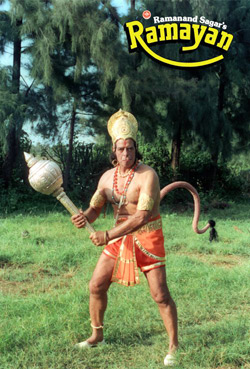


     

    The characters were larger than life and people prayed in front of their TV sets to please the gods. Apart from Ram and Sita, one character which is still fresh in people’s memories is Hanuman, played by none other than the wrestler-turned-actor Dara Singh.


    The 6.2 feet tall, strong-built man known as a ‘gentleman’ departed from this world yesterday morning, leaving a gap which will never be filled by any one else.


    As the nation bid goodbye to Dara Singh, who died in his home following a brief illness, his fans – from ministers to common man – were talking about their beloved ‘Hanuman’. Many took to social networking sites to pay tribute to their hero. The late actor was among the top five trends on microblogging site Twitter.


    Dara Singh as Hanuman in Ramanand Sagar’s Ramayan (Pic source and courtesy: www.sagartv.com)

    Here what a cross-section from the industry tweeted about the loss:

    Ashok Lalla: Dara Singh. The 70mm pehelwan and one-man @WWE industry long before it was invented.


    Sneha Rajani: Met him just once, that too in the early 80s…but etched in my memory forever. Such was his impact. RIP Dara Singh ji


    Cricketwallah: Dara Singh earned more money & became more famous thru films but it was in the ring that he was the undoubted star. Remember aeroplane spin?

    Tanuj Garg: RIP Dara Singh, the real He-man.


    Rajdeep Sardesai: Maybe we need Dara Singh back in the parliament. Might ensure our MPs don’t jump in well of the house!


    Satbir Singh: Dara Singh’s endorsement of Verka Ghee remains till date the only believable celebrity endorsement


    Main Photograph: Fotocorp


  • I’m not chasing ratings here: Tim Sebastian

    By Shruti Pushkarna


    Tim Sebastian

    Award-winning British television journalist known for his ‘hard talk’, Tim Sebastian will soon by seen on Indian television screens. Business news channel, BloombergUTV has joined hands with Sobo Films to produce a debate series called ‘The Outsider’, which will go on air in August. The show will be hosted by Mr Sebastian, the  founder and host of the world-famous ‘The Doha Debates’ and the first host of BBC’s flagship international interview programme, Hardtalk.


    Mr Sebastian is hopeful of bringing quality television to Indian TV screens, just as he has done in the past with the Doha Debates and Hardtalk in other parts of the world. He said that a similar rigorous routine will be followed in the making of this show in terms of research as he followed on Hardtalk. Mr Sebastian said: “These are very well-researched programmes. I’m known to do my homework. A very similar research team to the one I had on Hardtalk, providing me with a lot of details, will be working on this show.”


    [youtube width=”400″ height=”225″]http://www.youtube.com/watch?v=Vm5FHz1WD6k[/youtube]

    When asked about the choice of India for a debate show at this point of time, Mr Sebastian said: “I’ll be putting India on a global stage. I’ve always visited countries when they are in crisis. Countries don’t incite interest when they are doing well. This is a perfect time to come to India. Why now because the view in the outside world is that India is at a crossing point. Maybe it’s no longer shining in the way it was five or ten years ago. Maybe the national mood has sunk a little bit in India . People are obsessed with their problems; they feel a promise has not yet been fulfilled. My aim is to have a fair debate, a debate that should shed light on a particular issue of concern to India. My job is to make sure these debates contain both the heat of your passion and the light to illuminate extraordinary things to a curious world. India matters more than ever. There’s no escaping that.”


    A 13-part series, The Outsider will feature debates on some of the major social, political and economic issues faced by India, including subjects like education,Kashmir, relationship between business and corruption, dynastic politics and more.


    Each debate will have speakers arguing for and against the motion. Speakers will include politicians, business people and activists. The debate will be conducted in the presence of a live audience of around 200 people. The audience will vote for or against the motion at the beginning and at the end of the discussion and the votes will be compared at the end of the show. The motion will then be thrown open in the viral world for people from across the globe to post their vote to determine the majority sentiment for the motion.


    Sriram Kilambi

    Announcing the launch of The Outsider in New Delhi on July 12, Sriram Kilambi, President, BloombergUTV said: “To understand the business in India, you have to understand the business of India. Business is larger than just the stock market and we want to broad base what our channel can be. We want to be about business and we want to stay in business, but we believe a couple of shows like this help us broad base, so that our shows on policy and on judiciary can actually get people to see them.”


    Mr Kilambi said that BloombergUTV was excited about Tim Sebastian hosting the series. “The Outsider is the first ever television show about India to be showcased on a global platform and we are proud to be the channel to carry it. We expect the entire nation, and Indians living across the globe, to sit up, watch and participate in the series, which will send a strong signal to the bureaucracy and corporate India about issues that need to be tackled to ensure that the country stays on-course with its growth map,” he added.


    A lot of Indian television programming, as we know, is governed by how well the show scores on TRPs. When asked whether he will be tailoring the content of his show to generate enough ratings, Mr Sebastian said: “No, I am not chasing ratings here. I am chasing interesting television, whether it’s mass market or niche television, it doesn’t really matter to me. I am chasing what I think is good quality television, discussing issues that matter to people. I’ve worked for 30 years in public broadcasting system, and we never chased ratings. We did it because we thought it was useful TV to do. I am applying the same standards this time.”


    The Outsider will be broadcast by Bloomberg UTV in India and by Bloomberg TV across Europe, Asia Pacific, Africa and Middle East, thereby reaching out to over 300 million viewers globally, making it the first and only show about India to be produced in India and telecast across the globe.


    Mr Vikas Gulati, Director, Sobo Films (SBF), speaking about the series, said: “With a combination of Tim Sebastian, one of the leaders in his field, great topics, a young audience and international viewers, we are looking forward to the start of this series. We are proud to be able to give the youth of this country an opportunity to share their views with a global audience. This programme will allow an international audience to hear what the future leaders of this country have to say.”


    Tim Sebastian, previously a BBC foreign correspondent, based in Warsaw,Moscow and Washington has over 30 years of reporting from more than 25 countries. He is globally recognized as a sharp, incisive and unbiased cross-examiner and enjoys a track record for fearless and forensic questioning of some of the most powerful people on the planet.


  • Hungama launches digital talent hunt MOBIsur

    By A Correspondent


    The mobile medium in the last many years have grown significantly, especially with 3G and now 4G coming in, there is great expectations from this medium. As wireless subscriptions continue to grow, billions of apps continue to be downloaded worldwide andIndiasaid to have the second largest mobile subscribers in the world.


    Taking into account the growing popularity of the digital medium, ITC’s Vivel FaceWash, along with Hungama Digital Media Entertainment Pvt. Ltd. and musician Shankar Mahadevan has launched ‘India’s first digital talent hunt’ – MOBisur.


    Mr Neeraj Roy, MD and CEO, Hungama Digital Media Entertainment Pvt. Ltd. said: “The reach of Internet andMobiletechnology has grown tremendously in the past few years. The aim of MOBisur is to create a talent-scouting engine in spaces that haven’t been explored in the past, via an entry ticket that is their everyday communication device.”


    This unique mobile- and internet-based talent hunt promises to give every Indian an opportunity to prove their singing talent. The property was launched by Shankar Mahadevan, Nilanjan Mukherjee, Head of Marketing, Personal Care Products Business, ITC Ltd; Bhushan Kumar, MD, T-Series and Neeraj Roy, MD and CEO Hungama Digital Media Entertainment in Mumbai on July 13. T-Series is the official music partner for the property, which elevates the talent hunt to an even higher platform.


    Mr Bhushan Kumar, MD, T-Series, said: “It gives us immense pleasure to be able to bring new talent in to the industry. As a music label, we are always looking for fresh talent and with a truly digital talent hunt; we have access to talent across the country. We are looking forward to releasing an album composed by Shankar Mahadevan for the winner of the hunt”.


    The entries for the digital talent hunt, MOBIsur is said to continue for the next 45 days and the duration of the property will be for three months. The marketing budget is pegged at Rs3-4 crore.


    Mr Nilanjan Mukherjee, Head of Marketing, Personal Care Products Business, ITC, said: “Vivel FaceWashis delighted to present Mobisur, an exciting and innovative platform to discover hidden musical talent. Vivel Face Wash MOBisur, in line with this brand philosophy provides a unique opportunity to aspirants to live their musical dreams.”


    5,000 talented female participants selected from entries submitted on the Vivel Facebook page www.facebook.com/itcvivel will make it to the second round.


    The contestants who clear the first stage of the auditions will be given specific tasks by Shankar Mahadevan, who said: “When I conceptualised this property with Hungama, the thought was to give every Indian an opportunity to participate in a unique contest to try and reach the pinnacle of musical genius. Music is a powerful medium that can come from the most unexpected places.”


    Based on their performance in the tasks and the votes secured for each task, they will be chosen for the next round. There are three tasks in all and after clearing all three tasks the contestants make it to the final round, which is the On-Stage Performance. Ten finalists will be chosen to perform in front of Shankar Mahadevan and two other prominent personalities, where the final two winners will be announced.


  • Crime pays for GECs

    By Meghna Sharma


    What is it about the dark side that attracts us? A glance over any newspaper or news channel will tell us the increased attention being given to the gruesome incidents.


    The media, especially the television which is a reflection of the society, has reflected this growing interest with the increasing popularity in the number of the unglamorous, and sometimes, gory crime shows. From Karamchand in the 80s on DD to the latest Gumraah on Channel V, most crime shows have done well and have been able to garner an interest that other genres might not be able to. The longest running show on the Indian television, CID, is a crime show which was started in 1998 and recently turned tri-weekly.


    Speaking about the show’s success, Sneha Rajani, senior EVP and business head, Sony Television, said: “CID has been doing well for years now; it’s not a recent phenomenon. On an average, the show gets TVR of 3.3-3.5, and sometimes even goes up to 4.5. So, it’s no surprise that show has its share of viewers, as week after week people switch on their TV sets to get inspired by the bravery and the relentless passion of CID against crime.”


    Popular Crime Shows

    Karamchand – 1980 – DD

    CID – 1998 – Sony

    India’s Most Wanted – 1999 – Zee

    Aadalat – 2010 – Sony

    Gumrah – 2012 – Channel V


    According to industry experts, most GEC experiments with crime shows have been successful – some have garnered a little interest and others have gone on to become national hits like Adaalat and India’s Most Wanted.


    Such crime shows consist of an economically viable format – no huge sets, no major actors, no glamorous outfits or expensive judges are required – hence, the channels don’t mind investing in them.


    Janardhan Pandey

    Janardhan Pandey, associate vice president, DDB Mudra Max feels that apart from reality shows, only crime shows have the ability to create sensationalism and that’s the main reason people are attracted towards the format. “People want to know what’s happening around them. And these shows are able to portray facts through dramatization, without costing too much for the channel.”


    ‘Curiosity killed the cat’ is the apt reason why crime shows work on television according to Anand Chakravarthy, executive vice president, Marketing, RBNL and business head, Big Magic. “Crime, as a genre, has an extremely wide appeal, irrespective of the country. In a developing nation likeIndiawhere crime and corruption are a part of the societal fabric, the audience is most likely to appreciate televised content in the genre.”


    Anand Chakravarthy

    He added: “The fascination with the morbid and intrigue that the genre provides work across a cross section of audience, regardless of age and gender, making it acceptable to a larger and diverse audience base.”


    However, the question which still arises is – aren’t such shows the figment of the writers’ imagination? The writers of such shows may choose to disagree about the authenticity. “Though some might say they are a writer’s figment of imagination, but in reality, newspaper reports, sometimes even FIRs and investigations done by channels help us gather facts and details about various cases,” said a writer with a national GEC.


    According to Priti Murthy, national director – Insights, Maxus, crime shows attract not only the middle-aged, but a large number of youth too. “Crime cuts across genres and finds a large number of youngsters hooked on to the genre like action, thriller, and crime. One could say it gives them adrenaline rush.”


    Prem Kamath

    Channel V recently launched a teen crime show, Gumraah, which has became popular for its disruptive format and unique viewpoint of understanding the psyche of young criminals. “V’s Gumrah, in its second season now, details the ecosystem in which a teen crime is conceived and the extraordinary circumstances that lead to it. The show has had an immense impact on us, in terms of viewership as well as vindicating our research and understanding of the youth. We have seen a tremendous response in terms of feedback and appreciation on social media and other consumer responses. It has also further encouraged us to try bolder formats and continue on our chosen content strategy,” said Prem Kamath, Executive VP and GM, Channel V.


    Most crime shows do attract a large number of eyeballs, but most GECs also claim that it’s not about entertainment alone; they are helping the society as well. “As for adults, and specifically parents, this show is an eye-opener: if one neglects their child’s need for attention or dismiss it as juvenile behaviour, it can have serious repercussions and lead to moment of madness, eternally irreversible,” added Mr Kamath.


    “Shows such as Police Files (aired on Big Magic), while showcasing crimes from the region, also attempt to educate and empower the viewer. The depiction of the crimes help the viewers to understand and accept the need to be vigilant in safeguarding themselves and their loved ones. The information imparted by way of applicable laws of the Indian Penal Code, safety tips by experts and NGOs help empower the viewer,” said Mr Chakravarthy.


    So, if one has to go by what industry experts have to say: it’s entertainment with awareness that makes one switch on their television sets to watch crime shows.  Whatever be the reason, the channels can surely say that ‘crime pays’!


  • Mobile on voice is where middle India really is: Neeraj Roy

    Hungama Digital Media, along with singer and music composer Shankar Mahadevan, recently launched MOBisur – touted as India’s first digital talent hunt property. Taking time from the launch, Neeraj Roy, MD and CEO, Hungama Digital Media Entertainment Pvt. Ltd. spoke at length with MxMIndia about this new brand property, the efforts put into it, and also about Hungama Digital Services post JWT acquiring a majority stake, his focus for the company in the next two years and much more.


    You say that it has taken nearly a year to conceptualize the entire brand property – MOBIsur. Can you share with us the efforts that went into building this property, how it all started, and the kind of research you may have undertaken and so on?

    This idea was conceptualized nearly three years ago by my colleague Anuj Bajpai who heads our voice business. As we moved into it, we realized the complexities, but at Hungama, we have a very deep rooted understanding about both consumers (because we have a lot of large consumer properties, which are all digital), and at the same time, we understand digital content. However, we still felt that something was missing and that’s where Shankar Mahadevan and his team came in because it was important that we run past them what we are thinking.


    Do you have a dedicated team working on this initiative…?

    Yes! It is driven by a voice team, but we have leveraged the entire group’s assets because there is a web interface aspect to it, there is a social media aspect because for any new service we launch, there is always a core product team. Once the product is approved and has a go-to market strategy at that stage, it moves from the product team to the operations team, which will then run this and ensure that it has momentum.


    Hungama launches digital talent hunt MOBIsur
     

    The mobile medium in the last many years have grown significantly, especially with 3G and now 4G coming in, there is great expectations from this medium. As wireless subscriptions continue to grow, billions of apps continue to be downloaded worldwide and India said to have the second largest mobile subscribers in the world.


    Taking into account the growing popularity of the digital medium, ITC’s Vivel FaceWash, along with Hungama Digital Media Entertainment Pvt. Ltd. and musician Shankar Mahadevan has launched ‘India’s first digital talent hunt’ – MOBisur.


    Mr Neeraj Roy, MD and CEO, Hungama Digital Media Entertainment Pvt. Ltd. said: “The reach of Internet and Mobiletechnology has grown tremendously in the past few years. The aim of MOBisur is to create a talent-scouting engine in spaces that haven’t been explored in the past, via an entry ticket that is their everyday communication device.”


    This unique mobile- and internet-based talent hunt promises to give every Indian an opportunity to prove their singing talent. The property was launched by Shankar Mahadevan, Nilanjan Mukherjee, Head of Marketing, Personal Care Products Business, ITC Ltd; Bhushan Kumar, MD, T-Series and Neeraj Roy, MD and CEO Hungama Digital Media Entertainment in Mumbai on July 13. T-Series is the official music partner for the property, which elevates the talent hunt to an even higher platform.


    Mr Bhushan Kumar, MD, T-Series, said: “It gives us immense pleasure to be able to bring new talent in to the industry. As a music label, we are always looking for fresh talent and with a truly digital talent hunt; we have access to talent across the country. We are looking forward to releasing an album composed by Shankar Mahadevan for the winner of the hunt”.


    The entries for the digital talent hunt, MOBIsur is said to continue for the next 45 days and the duration of the property will be for three months. The marketing budget is pegged at Rs3-4 crore.


    Mr Nilanjan Mukherjee, Head of Marketing, Personal Care Products Business, ITC, said: “Vivel FaceWashis delighted to present Mobisur, an exciting and innovative platform to discover hidden musical talent. Vivel Face Wash MOBisur, in line with this brand philosophy provides a unique opportunity to aspirants to live their musical dreams.”


    5,000 talented female participants selected from entries submitted on the Vivel Facebook page www.facebook.com/itcvivel will make it to the second round.


    The contestants who clear the first stage of the auditions will be given specific tasks by Shankar Mahadevan, who said: “When I conceptualised this property with Hungama, the thought was to give every Indian an opportunity to participate in a unique contest to try and reach the pinnacle of musical genius. Music is a powerful medium that can come from the most unexpected places.”


    Based on their performance in the tasks and the votes secured for each task, they will be chosen for the next round. There are three tasks in all and after clearing all three tasks the contestants make it to the final round, which is the On-Stage Performance. Ten finalists will be chosen to perform in front of Shankar Mahadevan and two other prominent personalities, where the final two winners will be announced.

    How different will the user experience be for mobile and internet users?

    In internet, there have been initiatives of this nature – they have been done in the past. Over the years, even the mainstream entities that do reality shows have created web interfaces for people to upload and so on. We are, in fact, going to be unveiling a lot of newer applications which will have stronger internet experience to it. So we have innovated on that front, knowing fully well that as a process it has been done. On the other hand, this was never done on mobile. In fact, mobile on voice is where middle India is, in reality. We needed to build this property and we had our limitations in terms of what we can do and not get cumbersome. At the same time, I needed to capture certain amount of information data to be ethically appropriate in the whole process. Overall, we have balanced it well and we are happy with the product.


    What about the duration of MOBIsur and its timeline and so on?

    There will be three different phases. The entries will go on for the next 45 days, wherein it is all about reaching out and getting as many people to participate. Then it goes through zonal rounds, which will then culminate into final round. The entire property is on, however, for three months. We didn’t think that we ought to have a real world angle to it in terms of going on-air and so on, but the way it is panning out, we might even consider that as the response has been very positive.


    Tell us about your marketing activities planned around MOBIsur?

    There is a fivefold approach to marketing. First, it starts with announcing the initiative through media and we then backed it up with a television campaign. Hungama has about 20 million consumers on the internet which are accessing our media properties, and we will obviously actively promote it there. We have also have 3.5 million social media community and we will promote it there as well. The most vibrant community is going to be the telco-ecosystem – one of the most unique thing we have done – because it is a universal number. We want every one of the telcos to take ownership of this as their own activity event/ product and that will be the one that will give us the maximum reach.


    Television promotion will be across channels, a lot of them music channels. Overall, my sense is that we should be putting in about Rs3 to 4 crore across mediums, in terms of the entire activations programmes, but a lot of that focus will be in areas where there is direct call to action. So don’t expect that skew to be driven completely by television, we will in fact do a lot more on digital and mobile mediums.


    Now, post JWT acquiring majority stake in Hungama Digital Services, what changes have taken place, especially on internal developments?

    JWT now has a 51 per cent stake in our business. There has been absolutely no change operationally, as it is the same team that runs the business, we are operating out of the same premises, we are handling the same clients. Clearly, over a period of time, we hope to be able to tap into and grow, leveraging their network onto other areas as well but, as of now it is business as usual.


    What about expansion plans into newer cities, any new verticals in the Digital Services business?

    Expansion is an ongoing process for us, the big focus is going to be to try and do as much of digital and physical promotional activations. The second area we are looking a little bit closely are trade-based marketing activations, which is the new area of growth for us.


    What are your views on India’s drawing a blank in digital at the Cannes? Does digital creativity lack steam in India?

    In fact, it is just the beginning in India, I think in the each passing quarter, you will find more focus on digital from both mainstream agencies as well as from brands. There are times when you have a good year or not so good ones, it’s alright.


    What are your plans for Hungama Digital Services in the next one or two year time?

    Our first objective is to make the new entity fully integrated; to align ourselves in certain manner and ensure that appropriate synergies are brought about. Our objective is to ensure that our existing clients benefit from a wider, more global network that exists for them. The third objective is that the team, about 120 people who’ve moved there, feel a renewed sense of enthusiasm and energy towards creativity. All of this has to happen in the current fiscal, then we gauge how do we scale this and go forward.