Category: MEDIA

  • Discovery APAC wins Indo-Am Corp Excellence award

    By A Correspondent


    Discovery Networks Asia-Pacific (South Asia) has been awarded as the best US company operating inIndiaunder the Media & Entertainment category at the 8th Indo-American Corporate Excellence Award 2012 held in Mumbai on July 4.


    Discovery Networks Asia-Pacific (South Asia) was selected on the basis of its overall contribution to the Indo-US business and other parameters like human capital management and corporate social responsibility were also considered. The award commended Discovery’s programming and production excellence and its stellar performance in the country.


    The company broadcasts eight unique content channels inIndia– Discovery Channel, Animal Planet, TLC, Discovery Turbo, Discovery Science, Discovery HD World, Discovery Channel Tamil and Discovery Kids.


    Rahul Johri, senior vice president and general manager –South Asia, Discovery Networks Asia-Pacific, said: “This award is recognition of Discovery Networks Asia-Pacific’s commitment to engage and entertain Indian viewers with unique and credible programming. It exemplifies and values the positive contribution that the network brings inIndiathrough its innovative content.”


    Indo-American Chamber of Commerce (IACC) is the only bi-lateral Chamber of Commerce committed to promotion of Indo-US Trade & Economic Relations by facilitating joint venture, strategic alliances, trade, technology transfer and investments. IACC has over 2,600 members who together represent a wide spectrum of business and economic segments: manufacturing, exports, services et al.

  • Phew! Over a billion online in APAC

    By A Correspondent


    The Asia Digital Marketing Association (ADMA), in co-operation with leading digital marketing companies and research houses, has published the sixth annual Asia Pacific Digital Marketing Yearbook. Among the thousands of facts and data points, readers will learn that 46 per cent of the world’s online population – 1.016 billion people – is now in Asia Pacific, of whom 623 million access the web via mobile.


    Although this enormous and growing addressable market seems to hold boundless business potential for marketers, the reality is more complicated – and more interesting.


    The Yearbook is compiled for marketers, advertisers, and their agencies, to help them understand and maximise the digital potential of their business in the region. The 2012 Yearbook has more information than ever before on online demographics, user behaviour, online advertising, mobile, e-commerce and social media.


    “The billion people online in Asia Pacific are spread across more than 14 countries, with a wide range of languages, cultures and online habits. More than half of them (513 million) are in China, which has its own media properties and consumer dynamics. In fact, seven of the top eleven sites in the region are in China,” said David Ketchum, ADMA Chairman.


    “Across the rest of Asia Pacific there is remarkable diversity; the way people use the web and interact with content and with one another differs significantly from Australia, to Korea, to Indonesia, to India. The Yearbook helps marketers make sense of what works where in Asia’s increasingly social, local and mobile web environments,” he added.


    The one billion user number is made up of hundreds of thousands of communities of users, spread across a wide variety of devices and platforms, languages and cultures, and who use the web in a profusion of different ways.


    The data in the ADMA Yearbook send a clear message: it’s time for marketers to get local and get personal.  The implications and opportunities are far-reaching:

    • Social media continues to gain in importance, but brands have to proceed with caution. Although 60 per cent of social networkers say that social networks are a good place to learn about brands, 50 per cent also say they don’t want to be bothered by brands.
    • As in past years, people still put the most trust in recommendations from friends and family over all other media channels (with 52 per cent of users in Asia Pacific trusting friends and family completely as compared with newspaper and magazine ads at 14 per cent).
    • Social commerce is on the rise, and marketers can deploy sophisticated, personalised approaches, depending on where they are in the sales funnel, to build brand awareness and understanding, create brand preference, make sales, and do CRM.
    • Search remains vital to helping customers find your brand and for you to find your audience. With crowd-sourced curation of content, natural search rises in importance and complexity, and paid search is still effective for driving “last click” results.  Search/navigation properties in the region have 84.7 per cent reach.
    • Despite the rise of social media and user-generated content, paid, owned and earned media all continue to play important roles in achieving marketing goals.
    • Although in this fragmented environment marketers must work harder to understand and find their target customers, analytics, behavioural targeting and big data are providing more and more powerful tools for marketers to reach and engage with internet users in personalised ways.


    The Yearbook, compiled by editor Rachel Oliver from government, industry, company and research data, is the single most comprehensive source available for the Asia Pacific region.


  • Magazines high on engagement but efficacy is key (+Video)

    By Our Correspondents


    The best compliment that befits the domain of print is its ability to appease the readership preferences of its readers while continuing to be a favourite with the advertisers as well. This is especially true in the case of magazines that continue to demand loyalty from consumers while at the same time enabling brands to come up with campaigns that can be as intimate and personal thereby ensuring maximum bang for their buck. But despite all the hype and hopes surrounding the medium, there is also talk of magazines not being able to do enough to prep up advertisers to loosen their purse strings, a fact that is compounded by the lack of (creative) ad innovations that continue to deprive the sector of its fast growth.


    As a way to measure the acceptability of magazines amongst its readers and find out its favourability with brands, Association of Indian Magazines (AIM) engaged the services of two research agencies IMRB and Quantum to carry out an Engagement Survey in the Indian marketplace. With a sample size of 3600 and spread across 10 cities, the survey had pretty interesting facets to throw up. Facets that could help revive the glory that magazines once commanded and even emerge an absolute favourite with the advertisers.


    Tarun Rai
    [youtube width=”400″ height=”225″]http://www.youtube.com/watch?v=cZuu2VvNty4[/youtube]

    Unveiling to the gathering some of the findings from the survey, Tarun Rai, CEO of WWM and President of AIM began by bringing to light how the media marketplace in India has seen an immense transformation. Be it television that has seen the number of channels exceed 745 in the last three decades or even newspapers and magazines that keep sprouting intermittently, the medium has never seen such a head rush ever before. In effect, media has become an ‘Always On’ medium in India today. But too many options have also led to the consumer becoming more distracted and confused leading to him/her losing trust on the medium. According to Mr Rai, the question that needs to be asked is whether everyone is communicating messages or just communicating noise and better still, whether there was a need for owners to move from more messages to better connections with the consumers? Mr Rai didn’t hesitate here when he said that “magazines make better connections than any other medium.”


    Proceeding to present more findings, Mr Rai said that magazines stood out as it was able to connect with the readers at a far deeper level and that they rated higher on engagement and trust scores. Other stats include: 68 per cent readers read magazines when they’re alone while 66 per cent turn to magazines when they want to relax; 87 per cent readers do nothing else while reading a magazine compared to television that recorded 40 per cent; only 12 per cent ad avoidance was recorded for magazines – the lowest by far for any medium and most importantly, 84 per cent of the readers believed that ads are part of the magazine experience and that they are not interruptions as was previously thought.


    Adding further, Mr Rai said, “The high points are the facts that this research very conclusively prove that magazines engage the readers and audiences the best across all media. Whether it is on trust, whether it is on propensity to purchase or whether it is time spent on magazine, there is no other medium which engages as best as the magazines do.”


    Shashi Sinha
    [youtube width=”400″ height=”225″]http://www.youtube.com/watch?v=UAGJWPzAEeM[/youtube]

    To verify the several advantages that magazines had to offer and whether the power of the medium was being harnessed to its fullest, the evening proceeded to a panel discussion that included the likes of KV Sridhar, National Creative Director, Leo Burnett; Mrinmoy Mukherjee, Director – Marketing & Business Development, Raymond; Nathalie Gerschtein, General Manager, Garnier India; Shashi Sinha, CEO, Lodestar Universal and Shubhranshu Singh, Director – Marketing, India & South Asia, Visa. The session was moderated by Annurag Batra, Chairman & Editor-in-Chief, exchange4media group.


    According to Ms Gerschtein, while magazines were a key medium for FMCG companies like Garnier, it was essential for them to be relevant and contextual to the needs of brands. She went on to cite one such example which demonstrated the power of magazines in enhancing the visibility and personality of a brand. The brand was L’Oreal Paris that was celebrating 40 years and the magazine with which it partnered was Femina, that had attributes which were similar to what was required.


    Mr Sridhar was at his explosive best as he began by expressing his love for the medium of print. “I have grown up on print advertising and I can say that if you are a book lover you will never go to the movies. That’s because the written word has more power; in fact it will never go out of power.” Adding further, Sridhar said that all mediums today are efficiency driven but it was important for them to have an emotional connect with their consumers – something that television has being doing so well. “It is important for every medium to reinvent itself because ultimately branding is about finding a purpose in people’s lives. According to a recent survey it was found that people were inspired more by brands (13 out of 20) than by celebrities, which is noteworthy. It is therefore essential for brands to build an emotional connect as it does in providing efficiency.”


    Mrinmoy Mukherjee
    [youtube width=”400″ height=”225″]http://www.youtube.com/watch?v=BCGbwMf89Wg[/youtube]

    According to Mr Singh, it is important to know that engagement is a two-way thing. Consumers are leading their lives in continuum today and mediums have to be able to accommodate to his needs faster than ever. “When I talk to a brand, I expect it to talk back to me and keep evolving. That is where the challenge lay for brands and magazine owners.”


    Said Mr Mukherjee, “There were several high points from the survey but what is important is that this survey brings out several areas which ensure that you get the information about how the consumer connects with magazines and that is overall a high point. It is also an enabler for decision making for brand owners.” Speaking on the importance of such surveys for the magazine industry, he said, “the survey is a first of its kind and it is important because it tells media planners and brand owners what they should be putting their monies on. Therefore it is like creating a currency basis which they get to decide.”


    Providing his insights on the survey, Mr Sinha said that the Engagement Survey is a very powerful idea. “There is a lot of data, but the data must be presented in the right manner to the media planner because media planners look at the numbers from IRS (Indian Readership Survey). The best thing would be to go agency by agency and present this data to media planners at the universal level, which is when this survey will be very powerful.” According to him, “Such surveys are important to open up people’s eyes and minds but, finally if you make it part of the mainstream survey like for instance a substitute for IRS or part of IRS on continuous basis, then that is where it is important otherwise it will be the way it is.”


    Advocating the future that lay ahead for the magazine industry, Mr Sinha said, “I believe that the year 2013 and 2014 will be a very big year not only because of what the magazines are doing but also what is going to happen to television. So depending on what the government decides to do both from digitization point of view and the restriction of advertising point of view, there will be an increase in cost for television. So a lot of advertisers who cannot afford television will look at alternate medium and magazines will be very viable for SEC A audiences. So I think it will become a lot more mass effective medium then.”


    When asked whether magazines have been looking to overpower other prominent media vehicles in the future, Mr Rai said, “We are not here to replace any media. All we are saying is that magazines do certain things that no other media can do. Magazines engage with consumers at a much deeper level and at a much more consistent level than any other media. A lot of people think magazines only build brands and that they don’t need to actually purchase but, our research shows that the propensity to purchase the call to action after seeing an advertisement in a magazine is highest amongst all media. So we are trying to now talk about the fact that magazines are not just good for brand building but, we also give you the best return on investment (ROI) where purchase and call to action are concerned. So we just want to start a new conversation which is beyond numbers, beyond eyeballs and talks about the quality of engagement and the quality of messaging.”


  • And now a mobile video portal for women, Mira!

    From the MxM Infodesk


    Leading independent mobile video destination Vuclip will be launching India’s first mobile video portal, Mira!, this week. Set to be available on over 5500 different types of basic feature phones to advanced smart phones, Mira! will feature global and Indian mobile video content catering to a woman’s needs such as health, beauty, parenting, cookery, career and entertainment anywhere, anytime.


    Prof. Kiran Walia, Women Development Minister of Delhi will be chief guest and Vuclip global and India leadership will be in attendance. In India, Vuclip already has over 1.1 crore active monthly users, out of which about 15 lakh are women.


    Last month, Vuclip had announced the launch of Vuclip TV (available at http://tvshows.vuclip.com), which enable users to watch popular TV shows on their mobile phone. Initially, Vuclip TV is serving over 4000 video clips from various popular TV shows in Hindi, Telugu, English and other languages and new videos are being added regularly. Late last year, Vuclip had also launched India’s first independent mobile movie portal, Starlight Cinema (available at http://movies.vuclip.com), featuring over 9000 Bollywood and regional movie clips from over 350 popular movie titles including popular titles such as Rajneeti, Guzaarish, Once Upon a time in Mumbaai, 7 Khoon Maaf, I Hate Luv Storys, Sarkar, Family, Tees Maar Khan, Thank You, Barfee, and many more, along with clips of Hollywood movies like The Adventures of Tintin, The Awakening, Hugo and Tresspass. In its first 100 days itself, Vuclip Starlight Cinema had generated over 11 million video views from as many as 2 million movie-lovers.


    Vuclip also has a channel exclusively featuring South Indian movie clips including top-grosser blockbuster action comedy Dookudu, action film Oosaravelli, romantic action flick Dhada, romcom Mr Perfect, romantic drama Ye Maya Chesave, Panjaa, Sri Rama Rajyam; Sci-Fi 7 Aum Arivu, Poraali, Osthe and Mayakkam Enna amongst others.


  • Mogae to launch talking comics

    By A Correspondent


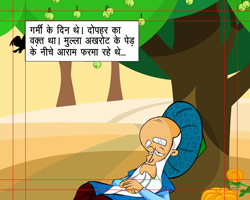
    Mullah Nassrudin
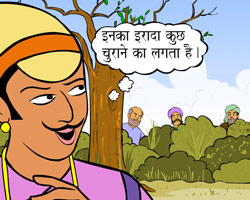
    Akbar-Birbal
    Vikram-Betaal
    Krishna
    Raavan

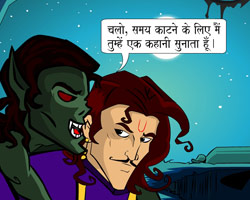
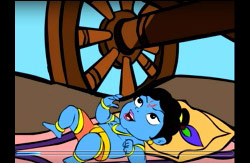
    Mogae Digital has announced that its pioneering product, Talking Comics, will go live on Tata Sky later in July. The video stories will be carried on Actve Wizkids and will be promoted on the default channel.


    “Talking Comics gives a video experience that does not take away from the pleasure of ‘reading’ a comic. Mogae has invested the last 4 years into creating original world-class IP in the comics’ space, specifically for mobile devices. Today we have over 50 titles and over 2,000 stories created entirely at Mogae Studios. But with newer opportunities opening up on DTH, we have spent over 18 months creating this new genre of Talking Comics,” said Tanya Goyal, Executive Director of the Mogae Group.


    Talking Comics were actually created to give a video experience to comics on mobile. “The file sizes are kept light. There is a nice voice-over, good music, some animation, plus all the text as in a normal comic … all of which gives a more wholesome ‘reading’ experience,” she added.


    Stories from Tenali Rama, Mullah Nassrudin, Akbar-Birbal, Bheema, Krishna, Vikram-Betaal and Krishna series will go live in the inaugural round. Yudhishtra, Duryodhan, Arjun, Karan, Bheeshma, Raavan, Guru Nanak, Sai Baba and  Gautam Buddha will be unveiled in September. Stories from the Bible and a series of Ghost Stories will be launched early next year.


    “Our illustration quality and the detail that has gone into each frame is unparalleled inIndia. We were the first to ‘create’ comics for mobile on Indian mythology, history and folklore. Earlier comic creators like Amar Chitra Katha created comics for paper. When taken on to mobile, these comics were heavy and difficult to download. In our case, each story has 12-14 frames … no more … so that the comic is easy to download, and easy to scroll. What’s more, we port each frame to 48 different sizes so that 95 per cent of all mobile devices receive the comic in exactly the screen size of the device,” explained Ms Goyal.


    The mobile versions of all comics are in UAT at most mobile operators and will go live this quarter. Mogae is in talks with other DTH operators too for the Talking Comics.


    A branded new humour series, created in partnership with a leading TV channel, is being currently worked upon as a Talking Comics product and the launch is slated for September.


    Later this year, Mogae will be launching a mobile-greetings product and over 2,000 animation based cards have been created.


    Mogae Digital is part of the Mogae Group, co-owned by Sandeep & Tanya Goyal, erstwhile JV partners of ad agency Dentsu India.


  • Bhaskar’s Brain Hunt gets 80k qualifying entries

    By A Correspondent


    Brain Hunt 2012, an initiative of Dainik Bhaskar Group, was a national level creative contest based on ‘out of the box thinking’ for young Indians. It set a benchmark with a response of 80,000 entries that qualified for the contest.


    This follows earlier initiatives like Junior Editor 2011 which was recognized for ‘Largest Writing Competition’, with 67,130 entries by Guinness World Records, Limca World Record and India Book of Records.


    To participate in Brain Hunt 2012, the contestants had to complete 16 activities featured in the workbook specifically created for kids between 6 to 16 years of age. Questions like ‘What if ‘Bapu’ was alive today?’, ‘After a series of inventions like iPhone, iPad and iTunes, what’s next and why?’, ‘What 10 things would you like to take with you on your journey to moon?’ are example of the questions the kids had to answer.


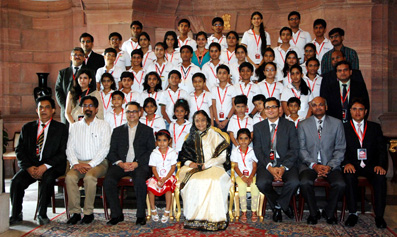
    The 80,000 qualifying entries included a letter written to the President which shared the kids’ ideas on ‘How can we makeIndia even a better country’. The winning letters were handed over to the President at Rashtrapati Bhavan during the award ceremony.


    Vinay Maheshwari, Vice President- Sales and Market Development, Dainik Bhaskar Group said: “The journey which started with a mere idea turned into some beautiful masterpieces of the imagination of 6 to 16-years-old kids, giving a new dimension to every challenge on which they were tested.”


    He added: “The reader engagements are carried out with a sole objective of engaging and involve our readers to strengthen the relationship. The group has successfully raised the bar with constant innovations and simultaneously reaching out to almost all household with its smart engagement proposition. Our upcoming smart reader engagements will now put higher emphasis on participation and contribution of both children and parents through such initiatives provided by Dainik Bhaskar to nurture their hidden talents.”


    The award function at Rashtrapati Bhavan, presided by the President of India, Hon Pratibha Patil was also attended by Dr Bharat Agrawal, Executive Director, Dainik Bhaskar Group.


  • AKQA buy takes WPP to the top in digital: RECMA

    By A Correspondent


    Following the AKQA (a creative agency specializing in interactive marketing) acquisition by WPP, RECMA is pleased to announce the update of its latest USA report: the Top 112 digital agencies (published in July 2012).


    This report provides advertisers, agencies and major players of the digital industry detailed Profile Cards and various rankings of the Top 112 largest US digital agencies (based on staff figures 2012). These detailed Profile Cards and hierarchies are increasingly required by international advertisers seeking to consolidate their digital account regionally or globally. RECMA is read and used by 85 global advertisers, which appreciate our objective, homogenous and accurate information


    By investing $540 million, WPP bought one of the last independent digital jewel and has taken the lead in the industry. The RECMA report reveals the AKQA profile and the reasons why WPP offered such a package to Ajaz Ahmed and Tom Bedecarre.


    Now the question is which are now the last independent digital leaders in the USA left on the shelves to be acquired and which group holds an overly limited share of the industry and needs to reach the necessary competitive size?


    The table below shows the new WPP leadership in the USdue to the addition of the 600 US AKQA staffers. Previously WPP share was of 20.2, slightly behind Publicis 20.5.


    USA- Digital market shares July 2012
    Rank
    2012
    DIGITAL
    STAFF
    7 Group  owners and 61 agencies Digital shares
    1 8 328 WPP USA (8 agencies) 21.7%
    2 7 864 Publicis Groupe USA (7 agencies) 20.5%
    3 6 672 Interpublic  USA (12 agencies) 17.4%
    4 4 698 Omnicom Group USA (7 agencies) 12.3%
    5 1 370 Aegis Media USA (3 agencies) 3.6%
    6 1 099 Havas USA (1 agency) 2.9%
    7 825 DentsuAmerica (1 agency) 2.2%
    7 436 Independents USA  (23 agencies) 19.4%
    38 292 Top 112USAdigital agencies 100%


  • Jaya TV stirs up rights market for Tamil films

    By Sangeetha Kandavel


    Jaya TV and a few other rivals of Tamil television leader Sun TV are making a hitherto-unseen charge toward bagging the TV rights for big-ticket Tamil movies, for long the preserve of the Kalanithi Maran-owned Sun TV. This has not only opened up the market but also pushed up rates.


    Jaya TV, the mouthpiece of the ruling AIADMK party and a distant rival to Sun TV, has virtually stirred up the market in the past few days by bagging two top titles. Last week, it acquired the rights for the upcoming Rajnikanth-starrer ‘Kochadaiyaan.’ On Monday, it bought another big-ticket  movie – the upcoming Suriya-starrer ‘Maatraan.’


    The previous Rajnikanth movie, ‘Endhiran,’ was produced by Sun TV, which had then called it the costliest Indian movie ever made. Jaya TV was never known to indulge in the buying of TV rights, something that’s a key part of Sun TV’s content strategy. But KP Sunil, vice president of Jaya TV, said that after a lull of six years the channel has started looking at Tamil movies aggressively. “We are looking are acquiring more such movies and it will be a mixture of big and small ones,” he added.


    The onslaught by Jaya TV and others comes after what has been a challenging year for Sun TV. Once she came to power last May, chief minister J Jayalalithaa floated a government-run cable service called Arasu to counter the ground distribution support that Sun TV enjoyed through another Maran-owned company. Cases were also filed against the then Sun TV COO Hansraj Saxena on charges of defrauding producers while purchasing movies for television.


    Maran and his brother, former Textiles Minister Dayanidhi Maran, have been under the lens of the Central Bureau of Investigation on allegations that Aircel’s former owner C Sivasankaran was arm-twisted to sell his company to Maxis founder T Anandakrishnan, who in turn invested in Kalanithi Maran’s Sun DTH.


    For those reasons, a challenge in the market for TV rights of movies has been expected for more than a year now. It’s only now that Jaya TV is in “full swing,” as a top official of a rival Tamil channel, wishing anonymity, put it. Executives at Sun TV and Star Vijay could not be reached for comment.


    The challenge isn’t confined to Jaya TV. Star Vijay has since last year has picked and chosen key titles it wants to buy. It has ended up with movies such as ‘Avan Ivan’ (directed by National Award winner Bala) and even ‘Nanban’ (the remake of ‘3 Idiots’), for which it is said to have paid record sums.


    Even Zee Tamil, a relatively late entrant in the Tamil entertainment market, has got onto the movie buying bandwagon. It has acquired the rights for the Simbu-starrer ‘Vettai Mannan.’ A Ficci-Deloitte report pegged the South Indian media and entertainment market in 2011 at Rs18,740 crore, 70 per cent of it coming from the Tamil and Telugu markets. TV accounted for Rs10,630 crore and films Rs2,110 crore.


    Political commentator Gnani Sankaran puts the trend down to clout. “Whichever party has political clout, they tend to bag satellite rights. When the DMK were in power, Sun Pictures was doing it,” he said. It isn’t as if Sun TV is struggling to buy anything. Being the TV network with the deepest pockets, it is still lapping up movies, being by far the biggest acquirer of movie rights. It recently got the rights for ‘Naan Ee’ as also the much-awaited Ajith-starrer ‘Billa 2.’ Sun TV has announced it will spend Rs200 crore on its movie library this year (this includes all languages in which it has a presence). This is a steep in crease from Rs80 crore last year. One reason for the significantly higher allocation, two industry executives said, could be because it anticipated competition to push up prices.


    Source: The Economic Times

    Copyright © 2012, Bennett, Coleman & Co. Ltd. All Rights Reserved


  • Slow and not-yet-steady…


    By Robin Thomas


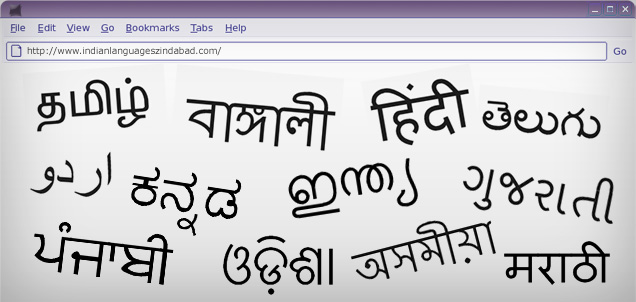
    India is a country where majority of the people don’t speak English and its media – print, television and radio, specifically – have a larger share of local language content. But the same cannot be said about the internet, at least now. The internet in India is still, by and large, dominated by the English language content. According to the ‘Internet World Stats’ 2010 report, after English, Chinese is the second widely used language on the internet followed by Spanish, Japanese, Portuguese and German. These results, perhaps, assure India that there is immense scope for Indian language content to not only flourish, but also increase user interactivity.


    Take for instance, i-Cube report 2011 by IAMAI-IMRB which states by December 2011, there were 121 million claimed Internet users. There are 90 million (70 mn in urban cities and 20 mn in rural villages) users that use Internet at least once a month (active Internet users). Of the active Internet users in urban cities, 26.3 million access Internet through their mobile phones. This has been the most recent change in the access behaviour and it is expected that this trend will continue to grow in the immediate future.

     

    BG Mahesh

    Mr BG Mahesh, Founder and MD, Oneindia.in observed: “Whatever is happening in print and TV will happen on the Internet. The language pie is far bigger than English in print and TV. English will also grow, but the language pie will be very large.”


    Even as the internet consumption rapidly grows, the Indian language content has also been evolving over the years. According to industry estimates, the search volume in Indian languages is less than 2 per cent of the total search that takes place online. The online growth of Indian language consumption is mainly said to be because of video consumptions.


    Hemant Jain

    Mr Hemant Jain, Senior Vice President, Hungama Mobile pointed out the need for relevant language content and the need for increasing access of language content to the consumers. “I believe that not only there is a need of content in local languages, but more importantly the content should have local context for it to be more relevant for the consumer. The challenge in increasing access to content in Indian language includes the standardization of fonts and internationalized domain names, an issue the Indian government is already working on. The two biggest challenges I foresee are bandwidth infrastructure to deliver ease of access and local language to drive mass adoption.”


    With online video touted as the next big thing for content consumption in Indian languages, there has been an increase in the Indian language video content found online, which may be due to the fact that video has more takers than written content.


    Some steps are said to be taken to increase local language content for instance, Raftaar, a Hindi language search engine developed by Delhi-based research firm Indicus Analytics, debuted earlier this year. Local language newspapers have gone online: webduniya.com offers content in Hindi, Tamil, Telugu and Malayalam. Malayala Manorama is another local language paper offering news online in Malayalam language.


    “There was a time when we saw 85 per cent of our traffic was from NRIs. Post 2007, we saw the page views increasing from India, now we get over 60 per cent of our traffic from India. The broadband penetration, mainly due to BSNL, has helped the growth of internet in non-urban India. Also, most schools have internet in their curriculum. So children lead the usage of internet at homes and other members have felt they might as well use the internet” added Mr Mahesh of Oneindia.


    As far as search in Indian languages is concerned, there have been efforts to localize the content. Google, for instance, in search has ‘transliteration’ which allows users to type Indian languages using Latin text. Google also has search options in the Indian languages and is said to be working proactively with the government as well as content companies in India to come out with a solution that would increase Indian language consumption on larger scale.


    Lalitesh Katragadda

    Mr Lalitesh Katragadda, Head of Products, India-Google, pointed out the need to solve the language consumption problem in order to increase the number of internet users. “We are going to rapidly run out of users if we don’t solve the language problem, which is making the internet work for Indic users. The challenge is that the Internet for the next 3 billion users will not be built by websites alone, or by monetary interests, which has driven the Internet for the first billion and a half. The Internet for the next 3 billion users will, by force, have to be built by the users themselves. For example, AdSense allowed a way for people to monetize their content, which got the content ecosystem to flourish and so on.”


    Mr Arpan Chatterjee, experienced online media professional and consultant with webdunia.com stated: “Lotof work is happening on this front, with Indian language search engines and Google having Search in major Indian languages. Major social networking sites are also now getting into Indian languages. But the availability of quality Indian language online content is still limited, except for some news portal of large Hindi or regional newspapers.”


    Arpan Chatterjee

    Also monetization of language content is a challenge today as there is not enough language content, and as a result, there is little or no language consumption online. There is a need to drive up language content in the online space. According to Mr Mahesh, not only is the government support crucial for this development, but the publishers too must take steps to help increase language consumption. “One needs a lot of patience and sustaining power to do well in the Indian language space. There are many opportunities in this space – ecommerce will be a reality in the language space in the coming years. With mobile internet becoming big one can think of providing various language services for the massive mobile user base in India,” he added.


    Nevertheless the growth of consumption of Indian language content may take some time as the broadband penetration in India is still very low. Another avenue, as pointed out by Mr Mahesh is, to look at is the mobile, as it is believed that the next phase of the internet explosion will come from mobile. Mobile, which is one of the highest penetrated devices in the country today, is expected to not only expand the internet usage, but also bring in more user participation which may result in the development of more Indian language content.


    Mr Chatterjee is of the view: “With more than 70 per cent penetration in mobile phone connections in India , and internet on mobile touching close to 100 million users, with more than 40 per cent being only mobile web users – only accessing the web through mobile. Mobile is the medium which can drive Indian language usage to a new level. Even in countries like Bangladesh, mobile payment solutions have helped get into interiors of the country.”


    With multiple devices now opening up opportunities – smart phones, tablets, and so on which are likely to spur language consumption online and mobile, government support is again is equally crucial, believe industry players. Access to mobile internet must be made at affordable rates especially with the arrival of 3G. “Mobile internet browsing is pathetically slow in India. 3G has arrived, but it is not affordable for majority of the users. Affordable, fast mobile internet plans and font support will change the mobile internet scene in India” said Mr Jain.


    Although the Indian language content in the online space has evolved over the years, it is said to be witnessing a slow adoption of its content especially from publishers mainly because of monetizing challenges. Digital players believe that like print, television and radio, Indian language consumption in the online space will also grow faster and soon have bigger share than the English language. One of the main reasons for this to happen is estimated to be because of the expansion of literacy rates and the increasing broadband and mobile penetration. ” India, with a much larger youth population, needs to put more focus on language online content and use mass channels like education portals, government services websites into multi lingual formats to drive language usage,” concluded Mr Chatterjee.
     

  • Singaporeans prefer accessing Net from mobiles over stationary PCs: Mindshare

    From the MxM Infodesk


    Consumers in Singapore have a clear preference for accessing the Internet from a mobile device over a PC or other stationary computer. This is the prominent finding from a study that Mindshare has released of the latest round of the GroupM 3D Survey, which surveyed almost 2,200 consumers. 3D is the only scale agency survey that looks at brands, media touch points and consumer attitudes in a single study.


    3D is GroupM’s proprietary research study. It is the most comprehensive single source study in Singapore, covering brand relationships, social dynamics (based on attitude statements) and media consumption in the context of total brand communications. These three dimensions are the essence of 3D.


    The survey in Singapore covers 2,189 respondents aged 15 to 54 years, and also includes an additional 300 affluent respondents (with personal income above 6,000 Singapore dollars).


  • Viewers can name upcoming A&M show on Awaaz

    By A Correspondent


    Hindi business channel, CNBC Awaaz, plans to launch first-ever show on advertising and marketing. This is the first time a channel will be looking at the world of marketing and advertisement from the consumer’s perspective. The channel will attempt to engage and connect consumers with experts from advertising, marketing and media planning sector through the show.


    Aimed at decoding the world of advertising for the consumers, each episode will consist of various segments. The first segment will focus on the campaign of the week and the various teams behind its success – creative, marketing and media planning.


    The second session will be a ‘Marketing Classroom’, where some of the best case studies will be analysed to guide SMEs in building their brand. This would be followed by the news of the week with the latest reports from the M&A world and issues related to the ASCI and consumer courts.


    Keeping in mind the focal point of the show and its primary stakeholders, the channel has launched a unique contest Kya Hoga Iss Show Ka Naam. From July 9, consumers as well as experts from the A&M sector can suggest a suitable name for this upcoming show.


  • BIG FM hosts Twenty20 World Cup trophy display

    By A Correspondent


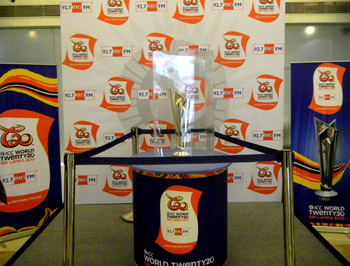
    Reliance Broadcast Network Ltd’s radio vertical 92.7 BIG FM announced its set up as the official FM Radio Partner for the fourth edition of the ICC World Twenty 20, Sri Lanka 2012 in Delhi. The announcement was made as they hosted an exclusive display of the prestigious trophy at an exclusive closed door preview at Maples Emerald, New Delhi.


    The elegant, glittering, 7.5 kg trophy was unveiled for key partners from advertising agencies and top clients across FMCG, retail, banking, pharma, manufacturing and other sectors.


    As the official FM Radio Partner for the ICC World Twenty 20, 92.7 BIG FM will get to display the trophy in Mumbai as well, which is scheduled to happen next week. It will also mean exclusive access for the station to players from India and abroad during the course of the tournament.


    Exclusive interviews and bytes from players and other match officials will be aired first only on 92.7 BIG FM. In order to promote the tournament on-ground, 92.7 BIG FM will conduct a number of T20 matches for listeners across cities, who will fight for the BIG T20 CUP, the winning team here will also get the rare opportunity to witness a match involving India in Sri Lanka.


    According to the latest RAM ratings, 92.7 BIG FM with a listenership of 1076 (age group 24yrs -34 yrs) in the 7am-11am time slot is the No. 1 FM radio station in New Delhi.