Category: MEDIA

  • Can Brand Mumbai be revamped?


    By Rahul Sachitanand

     

    Rahul da Cunha

    The raid by the social service branch of the Mumbai police dominated dinner chatter at Cafe Zoe, a hip restaurant in Lower Parel a few days ago. Affluent diners whispered about the people who were stuck in the restaurant on the day of the raid, how rudely the police behaved and even made bad jokes about what to do if they should turn up again mid-meal.


    All this was a bit much for Rahul Da Cunha, ad man and theatre person who was having dinner at the joint recently. “Mumbai’s brand has taken a bad beating,” he complained.


    “The spirit and hustle that defined the city is ebbing away.” Over-reaching law enforcement tangling repeatedly with the city’s commercial capital is hardly the sole factor battering its brand. Living in a city of 15 million people – give or take a couple of million hapless immigrants – has become increasingly impossible.


    Narinder Nayar, chairman, of NGO Bombay First, has worked with four chief ministers and five chief secretaries, and a raft of other politicians and bureaucrats to try to rejuvenate India’s commercial capital, but has rarely seen his forum’s ideas get beyond the stage of conceptualisation. “Everyone is receptive to ideas and suggestions,” said Mr Nayar in his office in the commercial district of Nariman Point. “There are lots of ideas but the thought behind them is poor and their execution tardy.”


    He points to the Bandra-Worli Sea Link, initially planned as a Rs400 crore proposal to connect the suburb of Bandra to Haji Ali towards the southern tip of the city. While the sea link up to Worli in central Mumbai helps decongest some of this north-south traffic, commuters will have to slog through jams for some time more, since the second leg of this sea link has been scrapped.


    “Mumbai has 15 different agencies responsible for its upkeep …some are based in the city and some like the railways in Delhi and they rarely talk to each other,” said Mr Nayar. The city’s infrastructure as a result has struggled to keep pace – no new railway lines have been added to the existing network in over four decades and monorail and metro plans are behind schedule.


    Mumbai’s perception only takes a further beating when you look at other factors that influence a city’s brand image. For example, it has few open spaces and gardens for its inhabitants to relax in, antiquated laws, exorbitant rentals for matchbox housing and once a year during the monsoons they prepare for the worst as clogged insufficient drains usually bring India’s capital of commerce to a standstill.


    “We are a city living with 19th century infrastructure and 21st century population,” said Mr Nayar. While the administrators of Mumbai may seek to position it as a global business nerve centre, the likes of Shanghai, Dubai, Hong Kong and Singapore have stolen a giant march on it.


    Sanjay Nayar, who returned to India a decade ago – after stints in the US and Europe – to run Citibank’s India unit and then moved to private equity giant KKR, is incensed at the state of affairs.


    “As a city to live in, Mumbai’s reputation has crumbled,” he said. “There is little governance and the city is in total neglect.” Hobbled by two different parties controlling Mumbai and the state administration, few sweeping civic reforms have been possible and the patience of corporates is beginning to wear thin. “There is a lack of direction and conviction with the people running this city and that’s adversely affecting its perception,” he added.


    Some corporates have even begun to work out of Singapore and Hong Kong, even though they live in India, he claims. It is these over-the-top solutions that are hurting Mumbai’s reputation and its brand on the global stage the most.


    Luis Miranda, a veteran investor who lived in south Mumbai before moving to the tony suburb of Bandra, said overall the city’s no longer the same.


    “There is a sense of lawlessness in this city and a breakdown in civic sense everywhere,” he said. The result is that characteristics that defined Mumbai – like lifestyle and diversity have vanished. For instance, the city was always one that welcomed outsiders and despite the odds, gave them a fair opportunity to start from scratch.


    “This is no longer the can-do city where you can get your job done and then relax without being worried that you’ll be thrown in jail,” said Rahul Akerkar, managing director and director, cuisine of de-Gustibus, a hospitality business which runs the popular Indigo chain of fine-dining restaurants.


    Jacques Challes spent four years in India as managing director of cosmetics and personal care giant L’Oreal’s country operations and has seen the city evolve in that time. While he lived a cushy life in south Mumbai, he began to increasingly look forward to heading out on an Enfield motorbike to take in the Indian countryside.


    “I was happy as an expat, although I could understand the desperation of my Indian friends with a city that is evolving so slowly and maybe in the wrong direction,” said Mr Challes who returned to France in May this year to take up a bigger role at L’Oreal. For a multinational, the opportunity for growth in India may outweigh valid concerns pertaining to quality of life. “As long as there is growth and potential in India, people will live with these conditions,” Mr Challes admitted.

     

    Agnello Dias

    Agnello Dias, co-founder of Taproot, says the city may be paying a price for its commercial success. “Mumbai’s economic rise has resulted in its spirit being taken away,” said the long-time resident who has seen the character of the city transform over the past decade or so to a point where people have little ownership of it and therefore, take little interest in its upkeep.


    “Mumbai has become a cash cow for the country,” he added. “Bombay has been broken up into many Mumbais.” Mumbai is doubtless a struggling brand, and ad folk have a few suggestions on how to renew its jaded brand.

     

    Josy Paul

    According to Josy Paul, chairman & chief creative officer of BBDO, Mumbai should focus on its people, arts, culture and heritage. “Mumbai is a melting pot of talent,” he said. “People can make cities great.”


    Mr Paul also says that as part of a re-branding exercise, the city’s administrators can use existing natural resources to brighten brand Mumbai. At the end of the day, Mr Paul says, Mumbai is like the world’s largest piece of blotting paper, willing to absorb an astonishing amount of people. “The key to fixing Mumbai’s brand is building a sense of belonging among everyone who call the city home.”


    Source: The Economic Times

    Copyright © 2012, Bennett, Coleman & Co. Ltd. All Rights Reserved

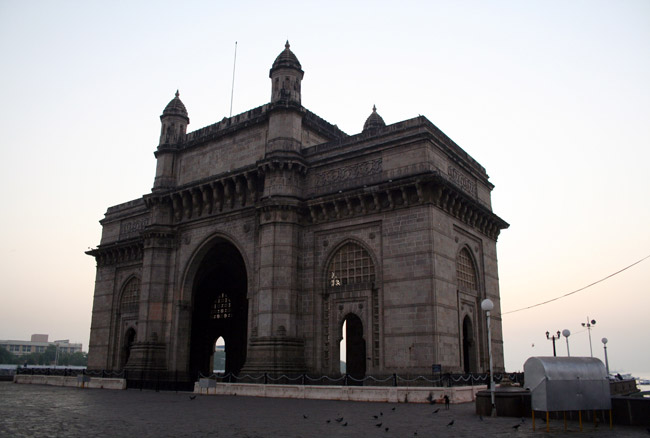
    Photograph of Gate way of India: Fotocorp
     

  • Colors strikes deal with Eros to acquire 9 films @ Rs95 cr

    By Nandini Raghavendra


    Raj Nayak

    Colors, Viacom18’s entertainment channel, has struck an exclusive seven-to-nine year deal with Eros International to acquire a slate of nine yet-to-be-released films for around Rs95 crore, marking a return to the movie space.


    This is the first big external acquisition this year for Colors, after the channel sold a large chunk of 500 films from its library to Star Network earlier in January this year, as it deferred the launch of its own movie channel.


    Earlier this year, the channel had picked up an entire slate of 17 movies from Viacom 18 Motion Pictures, a Viacom group company.


    Confirming the deal, Colors chief executive officer Raj Nayak said: “The way movie prices are going we decided to take a pause. It is not viable for one channel to pick up films at those prices as we cannot amortize it across our channels. At the same time, being a leading general entertainment channel, we cannot not offer movies.”


    The deal is exclusive to Colors, which retains the right to syndicate the films. As for building their library again with more movies, while talks with a few independent producers to acquire more films is on Mr Nayak says price will be the deciding factor.


    It must above all make business sense. Which is why as a strategy, Colors has made a big shift into non-fiction programming and experimented with shows like ‘Ring Ka King,’ and the recently acquired the dance reality show, ‘Jhalak Dikhla Jaa’.


    While the satellite market has seen many ups and downs, it remains a huge source of income for producers and makes for as much as 20-35 per cent of a film’s recovery costs, especially the big ones. For Eros, it also reduces risk prior to release. Broadcasters who are in a race for ratings have been paying huge sums for big films.


    Industry insiders say, on condition of anonymity, that it is difficult to recover anything beyond Rs20 crore per movie. But the pressure to improve viewership is unrelenting. “The reality on a movie premiere is that it cannot recover more than 30 per cent of its cost; and the rest is across the years,” said Mr Nayak.


    Source: The Economic Times

    Copyright © 2012, Bennett, Coleman & Co. Ltd. All Rights Reserved

    Photograph: Fotocorp


  • Ann Chu joins CNN advertising sales team in Asia

    By A Correspondent


    CNN announced that it has appointed Ann Chu as Director – Partner Solutions Group, CNN Advertising Sales Asia Pacific. Based inHong Kongand reporting to William Hsu, Vice President, CNN Advertising Sales Asia Pacific, Ms Chu will be responsible for generating and managing sponsorship opportunities and projects across the region.
     

    “Ann’s experience in both the newsgathering and content sales functions position her extremely well to provide our clients with first-in-class sponsorship solutions,” said William Hsu. “As the CNN ad sales team in Asia continues its solid sales performance this year, we look forward to Ann’s continued commitment to the network and our clients.”


    Ms Chu began her career at CNN in the newsroom more than a decade ago, writing and producing for award winning programs including CNN Today and BizAsia. She was most recently the Executive Director of CNN Broadcast Sales and Affiliate Relations, responsible for managing sales and support of the network’s broadcast services to networks across the region. Ms Chu was instrumental in driving the expansion of the network’s affiliate training and support services across both traditional and new media platforms, including the development of a web-based content delivery system for the network’s broadcast affiliates.


    Prior to joining CNN, Ms Chu worked at MTV Asia and Dreamworks in Los Angeles. She has a BA in Communications and Business from the University of Southern California, and a Masters in Journalism from the University of Hong Kong.


  • Hathway scales up to meet demand for digitization

    By A Correspondent


    Hathway Cable and Datacom Ltd is set to scale up the availability of set top boxes (STBs) over the next four months. In addition to the previously planned deployment of 20 lakh STBs, Hathway has decided to procure another 10 lakh STBs to meet the growing demand.


    Hathway’s move is in line with the Ministry of Information & Broadcasting’s latest order on implementation of DAS (Digital Addressable System) from November 1 in the four metros-Delhi, Mumbai, Chennai and Kolkata. By infusing additional STBs in the market, Hathway believes it is poised to meet the fresh deadline, as well as ensure a smoother transition from analogue to digital for consumers across the four metros.


    Commenting on the development, Mr K Jayaraman, MD & CEO, Hathway Cable and Datacom Ltd said: “Hathway has always been committed to providing consumers with the best digital cable experience and we have been preparing to bring consumers a seamless move from analogue to digital cable TV. The modified deadline presents us with a unique opportunity to reach out to and impact a greater segment of the market. Hathway plans to procure the additional 10 lakh STBs to gear up and leverage this opportunity. Therefore, in total, we plan to deploy 30 lakh digital set top boxes across the Mumbai and Delhi. The rush for digital services will peak around the last fortnight of October and we do not want to disappoint the consumers and drive them towards the costlier option of DTH services.”


    In the first phase of digitization of cable television, all four metros- Delhi, Mumbai, Kolkata and Chennai – will switch from analog to digital transmission from November 1. The rest of the country will move to digital cable by 2014 as per the regulations laid down by the Telecom Regulatory Authority of India (TRAI) in consultation with the MIB. Due to lack of preparedness of the industry, the Ministry had recently postponed the sunset date for Phase I from June 30 to October 31.


  • RadioCity celebrates eleventh anniversary

    By A Correspondent


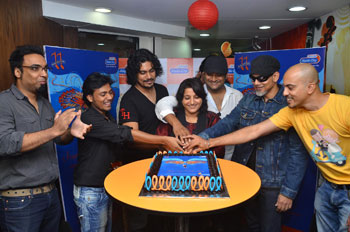
    RadioCity started its operations in July 2001 in Bangalore. On July 3, the FM radio brand, promoted by Music Broadcast Private Limited (MBPL) celebrated its eleventh anniversary.


    At the same time RadioCity announced the launch of its new web radio station, ‘Freedom Radio’ on Planet RadioCity. Freedom Radio is said to be India’s first dedicated web radio for Indie music on Planet RadioCity.com.


    ‘Freedom Radio’ will showcase independent artists from across genres like dub-step, electronica, folk, rock, sufi who will express themselves in diverse languages like Assamese, Malayalam, Bengali , Punjabi apart from Hindi and English. It also attempts to be a platform that supports talent across the country.


    After the launch of IndiPop Radio and now Freedom Radio, Planet RadioCity aims to launch three or four more web radio stations this year. A devotional station will be one of the web radio stations in the pipeline.


    In addition to these developments, the Planet RadioCity.com website is also expected to undergo a revamp by next month or so. Speaking to MxMIndia, Ms Rachna Kanwar, SVP & Business Head- Digital Media and New Business said: “The revamp should happen by next month or so. The site will not only be more interactive but, will also have more web 2.0 features, for instance social media will be more integral to the website, more interesting apps will also be added and so on. There is a shift on how music is consumed today. We recognize this shift and are therefore making our online offering as robust as possible. There is a growing trend of people listening to music online in India as well and sooner than later it will become a primary source of listening.”


    Ms Apurva Purohit, CEO, Radio City said: “As thought leaders we had to give something really refreshing and new to the audience who have supported us for 11 years. India is blessed with diverse and rich repertoire of original music and sound. Lot of these brilliant musicians does not get the platform they deserve and therefore the music never reaches the connoisseurs. On the occasion of our 11th anniversary, we at RadioCity give these Indie artists a dedicated platform by launching ‘Freedom Radio’ on planet RadioCity .com. This web radio stream is a dedicated channel that offers original Indie music to Indians across the globe. We hope the young audiences who are on the lookout for fresh sound find our offering satiating their need.”


    ‘Freedom Radio’ was ushered in by celebrating the ‘Freedom Hour’ on July 3, 2012. Between 10am and 11am, RadioCity brought in ‘5 bands across 5 towns’ to perform simultaneously for the first time on Indian Radio to announce the launch of ‘Freedom Radio’.


    ‘Freedom hour’ had live performances by bands as diverse as Aks, Highway 61, Tatva Kundalini, Pratigya, Dedh Inch Upar and singers such as Kavita Seth, Akashdeep Gogoi, Sanjeev Thomas & Harsha Iyer. ‘Freedom Radio’ theme song ‘Hum Sab Hai Yahaan’, a collaborative composition of independent artists and bands set the perfect mood for the launch.


  • The Best of Print Ads – 2011


    By A Correspondent


    You may have seen only a few of them and probably even forgotten the underlying message that the campaigns had to tell. But now you could make a dash to have a hard copy of MOSAIC, a compilation of the Best in Print (campaigns) to have hit India n shores in 2011. The compilation has been put together by 23 creative agencies who have submitted their best pieces of work for the category in 2011. Conceptualised by Sanjeev Kotnala and team from the Dainik Bhaskar Group, the initiative has been made special through the “insights” and “personal favourite” sections that have been provided by Media agency bosses. These include Lynn de Souza of Lintas Media Group, Mallikarjun CR, CEO, Starcom MediaVest Group, PM Balakrishna, Chief Operating Ofiicer, Allied Media and Punitha Arumugam, Director – Agency Business, Google India.


    Lynn de Souza, Chairman and CEO, Lintas Media Group, Chairman, Aaren Initiative and Director, Karishma Initiative

    “An excellent idea to recreate interest and remind all about the power and impact of the print medium. My only reservation is that there were too many submissions of ‘pretty pictures-pithy headlines’ work that may or may not have been published and did not appear to fully grasp how the medium must be used effectively.”


    TOP 5 Choices:


    Click on the picture for larger view

    1) DNA – ISKCON (Scarecrow India)

    Reasons for choosing: The intelligent use of the cigarette-turned-food visual immediately targets the smoker and invites him/her to contribute in a very simple way to a cause that benefits both beneficiary and the giver – something not easy to achieve. I like the simple, clean look of the ad and the directness of the headline and copy.


    Click on the picture for larger view

    2) Flying machine “What an Ass” (Lowe)

    Reasons for choosing: This is my idea of perfect ad! One that has used all the elements of the print medium – headline, visual, copy to present a bold, modern attitude through a perfectly harmonised contribution of all three. It’s an unmissable ad whether you are a guy or a gal.


    Click on the picture for larger view

    3) Parker – Ramnath Goenka Excellence in Journalism Awards (Lowe)

    Reasons for choosing: A stark headline supported by the simple bottle of ink that says it all. An attention grabbing reminder of the power of the pen to influence the world. Perfect synergy for the subject – Journalism awards and the ‘always memorable’ image of a gold Parker fountain pen.


    Click on the picture for larger view

    4) The Times of India – A day in the Life of India (Taproot India)

    Reasons for choosing: Fantastic art direction – great visual appeal that hooks you into reading the whole ad. The contemporary feel, using India n kitsch, with attention to detail, is riveting. (Check out the dog lifting his leg to pee on the bed of nails!) Bright, colourful, crowded yet not messy. I could read it again and again!


    Click on the picture for larger view

    5) Vaseline ‘Dear Mr. Vaughan’ (BBH India)

    Reasons for choosing: The kind of ad that every Creative Director who woke up to it that morning would have said: “I wish I had written this”. There are some things you can do impactfully in a topical yet ‘permanent’ medium like print that you can’t do anywhere else, and this ad fits the bill. Nose-thumbingly outstanding!


    Mallikarjun CR, CEO, Starcom MediaVest Group

    “This is a fantastic initiative. As media agency professionals, our lenses to view the world are different. However, what comes across is that great creative work is universal. Really enjoyed it.”


    TOP 5 Choices:


    Click on the picture for larger view

    1) Audi – World Cup (Creativeland Asia)

    Reasons for choosing: Great connect with the Champion’s Trophy ’85 win. Most of the target audience that can buy an Audi will connect immediately with that moment. For a lot of us India ns, that was the first moment of connect with Audi.


    Click on the picture for larger view

    2) DNA ISKCON Food Relief Foundation (Scarecrow)

    Reasons for choosing: A nice calculus linking smoking to food relief. Very innovative, eye catching visuals.


    Click on the picture for larger view

    3) Indigo Campaign (Weiden+Kennedy)

    Reasons for choosing: Stark, consistent visuals. The colours, space everything reflects the qualities of the airlines. Nice word play that grabs your attention and makes you read the copy. The reference to price is as value and not cheap.


    Click on the picture for larger view

    4) Nissan Micra (TBWA\ India)

    Reasons for choosing: Simple stark visuals. Driving home the relevance of a small car without talking price, affordability etc. Great, understated use of a celebrity.


    Click on the picture for larger view

    Reasons for choosing: Great expedient use of Michael Vaughan’s comment. Superb cut through and great visuals.


    PM Balakrishna, Chief Operating Ofiicer, Allied Media

    “I think this is a wonderful initiative and exposes the fantastic creativity. It is a very different platform as it is more an appreciation of great work rather than a competition as I believe each creative is great on its own.”


    TOP 5 Choices:


    Click on the picture for larger view

    1) Bajaj Fans (Leo Burnett)

    Reasons for choosing: The best part of this creative is the way it has integrated everyday common issues and weaved them into the core communication of the product. The creative is also very well crafted visually using the very cause of the product making it very effective.


    Click on the picture for larger view

    2) Birla Cellulose (Salt Brand Solutions)

    Reasons for choosing: The sheer aesthetic treatment to the communication draws you and I like the beautiful and colourful way the creative has used nature and the human body (woman). It brings out the environmental friendly nature of the product in a very soft and appealing manner.


    Click on the picture for larger view

    3)Fuji(Grey)

    Reasons for choosing: Colour and background are intrinsic material for any great creative and nothing better than drawing inspiration from Mother Nature and wildlife. The beautiful use of the animals brings the message home effectively and creatively and connects with any photographer or photo enthusiast.


    Click on the picture for larger view

    4)NipponPaints (JWT)

    Reasons for choosing: They say a great picture is worth a thousand words and the effect is breathtaking when it is beautifully woven into the message making the communication very compelling and effective. In this case the product USP, a central factor in the category has been brought home very beautifully for correct impact.


    Click on the picture for larger view

    5) Zee 24 Taas (Draftfcb Ulka)

    Reasons for choosing: Ganpati Bappa has a significant connect with the India n diaspora and especially with Maharashtrians who revere the elephant God. I like the way the creative has beautifully engaged the viewers in an innovative and personal manner and makes it unique and different.


    Punitha Arumugam, Director – Agency Business, Google India


    “This initiative continues the long tradition of Dainik Bhaskar – breaking boundaries and setting new trends in the industry.”


    TOP 5 Choices:


    Click on the picture for larger view

    1) DNA Mumbai Marathon (Scarecrow)

    Reasons for choosing: The power of long copy. It brings back memories of the old era, which was marked by a great headline and the power of long copy. It inspires and bonds with its audience.


    Click on the picture for larger view

    2) Murphy Richards epilators (Contract)

    Reasons for choosing: The power of a picture. The visual intrigues, makes you pause, demonstrates the benefit and brings a smile – all this without a single word.


    Click on the picture for larger view

    3) MTR Spicy Pickle (Ogilvy)

    Reasons for choosing: The power of insight. A true South India n like me will see this ad and can only say “How true!” Equating spicy with ‘tears’, the way the ad captures the cultural nuances – awesome!


    Click on the picture for larger view

    4) Parker – Ramnath Goenka Excellence in Journalism Awards (Lowe)

    Reasons for choosing: The power of words. While most entries used the power of the picture, this ad stands out because it uses print for what it does best – leverage the power of words and intriguing headlines.


    Click on the picture for larger view

    5) Saffola Healthy Heart (McCann)

    Reasons for choosing: The power of an innovation. A great collaboration between the creative agency, the brand team, the media agency and the publication to convey the brand message interestingly and inclusively so as to trigger an action from the reader.

    Best of Print in Dainik Bhaskar Group’s MOSAIC
     

    Some may see India’s performance of bagging just four Press Lions at Cannes out of the 30 that were shortlisted as a drab effort, but then there are some who would like to think of it as being otherwise. After all, Press Lions as a category managed to get India its largest tally of four metals versus any other category at the awards – a valiant effort considering that India finished 2012 with just 14 metals in its kitty.


    While the category may have received its fair share of fame at the pinnacle of creative awards, many would agree that Indian adland has failed to laud the finesse that stems out from Print creatives over the years. While such is not the case in some large international markets where creative works across categories gets noticed and rewarded that gesture seems to be missing when it comes to India. Luckily for the creative frat in India, an opportunity to showcase their best works – besides the awards shows – were given a fillip by the Dainik Bhaskar Group that released the first of its kind creative compilation of the finest works produced in Print in the form of MOSAIC 2011.


    Elaborating on the initiative, Sanjeev Kotnala, VP & National Head, Dainik Bhaskar Group said, “This has been a first year for MOSAIC, which is a rich collection of 150 creative units part of 77 campaigns that have been submitted by 23 agencies.” The creative showcase has been made special through some individual comments and insights that have been posted by creative leaders of individual agencies.


    Elaborating on the thought process behind the compilation, Mr Kotnala said: “As a group, we believe that the Indian creative across mediums and media is of international standards, in its thinking, relevance and in its execution. Unfortunately there has been no single reference point for the same. MOSAIC bridges this gap and we would want it to be referred by the creative, clients, media and trade.”


    As for the method that was adopted in getting the agencies to submit their campaigns, Mr Kotnala said that it began with Dainik Bhaskar requesting the creative heads at the agency to send their best Print work. “They know better than us – as by placing it in MOSAIC affirms it to be their best work. Though we did have constraints on the number of campaigns we could place in Mosaic from a single agency. This has all been a by-invitation. On the other side, there were few agencies that sent lesser number of creative units as they felt others were not up to the standard to feature in such a compilation. So it was created and evaluated by the creative teams themselves.”


    On how print has evolved over the years as a medium, Mr Kotnala said: “Today print ads are working on all fronts of communication. They are not just for the purpose of awareness building or as a source of providing tactical information; they engage and involve the readers and are very result-oriented in their approach. We always held that the idea is more important than the medium. And it will automatically find its right medium for better efficiencies and effectively delivery of the message.”


    In fact, the compilation has been made special with the involvement of four media agency heads who’ve provided their assessment of the campaigns. They include Lynn De Souza, Chairman and CEO, Lintas Media Group, Chairman, Aaaren Inititative and Director, Karshma Initiative; Mallikarjun CR, CEO, Starcom Mediavest Group; PM Balkrishna, Chief Operating Officer, Allied Media and Punitha Arumugam, Director- Agency Business, Google India.


    With the first edition already finding appreciation within the industry, the Dainik Bhaskar group have their task cut out for the next year too. On his plans for a sequel, Mr Kotnala said, “We would want to see more regional and language work in the collection – and they still should meet the standards set. We would and could try getting clients and media owners also picking their favourites and definitely may wish to incorporate a section on media innovations. Though we have taken the task and brought out the book, in our mind it is an industry level initiative and we would want to keep it that way.”


    Mosaic 2011 can be accessed and downloaded at http://i10.dainikbhaskar.com /dainikbhaskar2010/books/ Final_Book.PDF


  • Taste of India backs Hope of India


    By Meghna Sharma


    Think of Olympics, and the one word that comes to mind is ‘glory’. With only a few weeks left for the mega event to begin, all eyes (and hearts) will be on the Indian contingent, which is the biggest by far that is being sent to the Games. While that increases India’s chances of bagging more medals, what it has also done is turn the attention of brands towards the aspirants with the obvious intention of improving awareness and possibly, even sales of products.


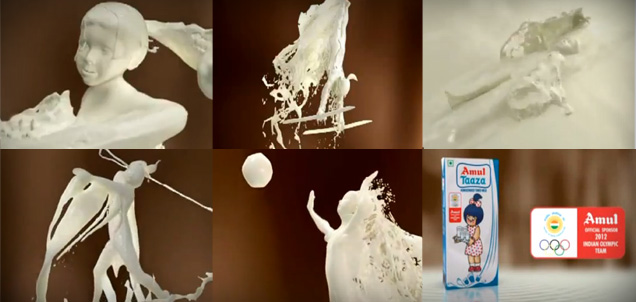
    One brand that is taking the lead in associating with the mega event is Amul. The Anand-based Gujarat Cooperative Milk Marketing Federation’s (GCMMF) Amul has signed a memorandum of understanding with the Indian Olympic Association (IOA) for sponsorship of the Indian contingent.


    With this, Amul has become the official sponsor of the Indian team. For Amul, this association would work in two ways: first, allowing it to push its multiple products that have been positioned for the purpose of building stamina and strength and, second, enabling it to encourage aspirants to go out and deliver their best performance at the event.


    RS Sodhi

    Speaking on the association, RS Sodhi, managing director, Amul, “Amul is committed to strengthening the Olympic movement in India and encourage young generation from all corners of the country to take up sports in a big way.”


    With milk being Amul’s core ingredient, the brand believes that milk is nature’s original energy drink and plays a pivotal role in building the physical and mental strength of the athletes.


    “India is the largest producer of milk in the world and Amul is not only India’s, but Asia’s, largest milk brand. This association, and activities around it, will help in engaging the youth so that they can enjoy a healthy life,” he added.


    In fact, this is not the first time that the milk major has stepped up to push for the cause of promoting sports. In 2011, Amul sponsored the Nether lands cricket team in the ICC Cricket World Cup and Switzerland-headquartered Sauber F1 team at the inaugural Indian Grand Prix. “We use the opportunities available on local and global scale to associate,” explained Mr Sodhi, on the brand’s recent decisions to associate itself with sporting events. “It is a good and positive association to connect with the youth.”


    Helping the brand in its mission is media agency Lodestar UM, which is the media agency on record for the company and has helped the brand associate with sporting events at a global level in the recent past.


    [youtube width=”400″ height=”225″]http://www.youtube.com/watch?v=0Qafz4YDG1A[/youtube]

    According to Lodestar UM, such associations will help the brand as India is a young nation with over 60 per cent of the population being below the age of 35 years and sports is a high interest area for them. “Amul has always been involved in raising the bar. The Olympics association has helped place Amul on the global map of international sporting events. We saw a great fit…Amul’s dairy products stand for high energy and complete nourishment and Olympics stand for values like strength, determination, vigour and winning which every person aspires to, and wishes to imbibe and practice in his daily life. We also saw this as an excellent platform for Amul Milk to assert the positioning of ‘World’s original energy drink’,” said Dhruv Jha, business head, Lodestar UM Content & Experiences.


    Although the brand has come up with a special campaign on the event for the medium of television, it doesn’t plan to come up with any more. “We are continuing our advertising, but no special Olympics focus has been planned during the Games,” said Mr Jha.


    Another motivator, that has always done its bit in raising the awareness levels of Amul with its consumers, will be at it around Olympics too. The eye-catching hoardings that figure the polka-dotted Amul Girl will continue disseminating messages as they always do.


    Rahul da Cunha

    According to Rahul daCunha, MD and creative head of daCunha Comminucations which created the Amul Girl, one should keep a catch-out for interesting and tongue-in-cheek hoardings during the period. “We have already started the build-up and there is a scope for many more as the Games have so many aspects and characters to it.”


    Mr DaCunha is proud to be associated with the brand and now its association with the world-class games. He added: “What can be more Indian than to support the Indian contingent in the Olympics. It’s a very ‘cool’ and prestigious moment for the brand. In the last year and a half, the brand has been getting allied with activities and events which will help it globally too.”


    And the attempt doesn’t end with Olympics. Amul plans to keep associating itself with such major events in the future too. “We will like to associate with any good event/series. Our focus is on the domestic market. But yes, Olympics will help in better brand recognition around the world,” said Mr Sodhi.


    Mahesh Ranka

    Mahesh Ranka, founder & CEO, Indus Sports and Sponsorship, feels that since it’s a home-grown brand, such association will help it create a buzz. “During and after the Olympics, when people will read or see about the games, hopefully, Amul as the brand will be on people’s minds. It’s a very good move by the brand and hopefully other corporates will also learn from it.”


    Not just the brand recognition, Amul hopes that the Indian contingent will get the country recognized in the world with a good medal tally as well. “Olympic Games have come to be regarded as the world’s foremost sports competition where more than 200 nations participate. Participation in Olympics is the aspiration of every athlete and with the kind of investments made by our country in this arena to select, nurture and train the best athletes, we are confident that Indian contingent will deliver the best ever performance in the London games and make our country proud.”


    So, let’s hope the players take India to new heights at the games while the brand would manage to do its bit and bask in the success as well.


  • Blogging site IndiBlogger helps brands talk to customers

    By Preethi Chamikutty


    For most of us a blog is a destination to put up a view, an experience, a rant, videos and photos – some vivid, others vicarious – and then get back to a mundane life. But five hardcore bloggers from Chennai decided to be an exception when they founded IndiBlogger.in, a congregation of Indian bloggers who totalled some 27,000 at last count.


    With a tagline ‘Indians by birth, bloggers by choice,’ the IndiBlogger team fields more than 70 requests daily from wannabe Indibloggers. Vineet Rajan, 27, one of the directors who set up the site said: “We started off trying to just create a directory that allowed bloggers to submit their blogs.”


    Over the years, more features have been added based on what the community demanded on its discussion forums. For instance, the site now has IndiVine, a chat application, and Indi-Rank, a ranking algorithm for bloggers in India.


    In many ways, in its current avatar IndiBlogger is a social network for Indian bloggers.


    “It’s like LinkedIn for bloggers with an exclusive dashboard, and activity feeds that let them track other bloggers’ posts, and more,” Mr Rajan pointed out.


    It’s a unique concept and community, but at the end of the day it needs to make money. IndiBlogger’s revenue stream is, what Rajan calls, “earned media”, which he says is what brands are clamouring for. “With its blogs IndiBlogger can help brands build more trust and credibility than any other online media can,” he claimed.


    Mr Rajan cites Neilsen Global Trust in Advertising survey, 2011 that shows less than a third of netizens trust ads; in comparison 92 per cent who have faith in peer and word-of-mouth recommendations.


    IndiBlogger’s first brand engagement was with Microsoft through a blogger meet in 2007. Since then IndiBlogger has organized 50 such congregations; these have been coupled with over 50 contests with brands across sectors like consumer goods, travel & aviation and retailing among others. Samsung, Pepsi, Hindustan Unilever Ltd (HUL), Castrol, Cleartrip and Tata Docomo are some brands that have engaged with consumers through IndiBlogger.


    Last November, HUL’s Surf Excel used IndiBlogger to engage with women bloggers on the site via a blogger contest called ‘Surf Excel Matic #GetSmart.’


    Targeted at urban women in the 25+ age group, Surf managed to reach a little over 25 lakh netizens using IndiBlogger and its tools like IndiRank and IndiVine, says an HUL spokesperson. Maximum readers were from the cities of Bengaluru, Mumbai, New Delhi and Pune.


    “Bloggers are publishers and the popular ones have a good readership .They know the art of expressing their views and thoughts on a certain topic in an interesting way which also wins them dedicated following over time. The popular bloggers also have good networking skills which they use to publicise the content on their blogs on various social platforms,” said the HUL spokesperson.


    When popular bloggers write about a brand and its core message, it reaches their followers and readers of the blog. This also results in a lot of user-generated content for the brand, essentially making these bloggers the brand’s ambassadors, added the HUL spokesperson.


    In the Surf Excel Matic contest, although only 41per cent of the participants were women, they garnered more than 55per cent of the entire readership of the campaign, thereby, helping the campaign achieve its objective.


    For Castrol, which wanted to engage with passionate bikers, IndiBlogger was an extension of the lubricant brand’s presence in digital and social media. In the ‘Castrol Power1 Biker code of India’ contest, bloggers were encouraged to share what biking meant to them. The contest got 170 entries and the blogs attracted an audience of roughly 1 million viewers within the first 30 days of the campaign.


    “Besides creating a powerful platform to engage with bikers, the contest enabled us to gather rich insights about our target group, which is the passionate biker,” said Saugata Basuray, deputy head of marketing at Castrol India.


    Besides being an aggregator, IndiBlogger also provides assistance to people who approach the site with technical queries about how to make a blog, how to get a domain name and so on.


    A 14-member team spread across Mumbai, Bengaluru, Chennai and Delhi are responsible for maintaining the site, providing assistance and monitoring for offensive content. The blogger meets are mostly outsourced to event management companies who liaison with core members of the IndiBlogger team.


    Started with an investment of Rs10,000, the site turned profitable in June

    2010 and, according to Mr Rajan, their blogger database grew 37 per cent in 2011-12 over the previous fiscal year. He is wary talking about the company financials but says the website is on track to achieve $2 million revenues by 2015.


    Blogs are today gaining currency as a medium for engagement and Kanika Mathur, president, Digitas India, a digital marketing agency, says the influence that blogs can have on a brand is hard to dismiss. “People who go online today are looking for a point of view, so either they get this point of view from the brand or from a third person. Bloggers are a set of experienced people whose opinion has great credibility as they are not from the brand side,” she said.


    Source: The Economic Times

    Copyright © 2012, Bennett, Coleman & Co. Ltd. All Rights Reserved


  • Ormax Media to forecast TV viewership using True Value

    By A Correspondent


    Ormax Media announced the launch of the new version of its television content testing tool – True Value. Since its launch in 2009, True Value has been the television industry’s certified tool for content pre-testing. The tool has been used to test 146 programs across 19 channels.


    The new, enhanced version of True Value now allows broadcasters to forecast the viewership of new launches. The tool is available in three versions – for GEC fiction (Hindi & Regional), for all types of non-fiction (GECs & niche channels) and for kids channel animation content.


    True Value has two statistical tests built into its design – Go Or No Go (GONG) Test and Success Test. The GONG Test can be used to decide whether a program should be put on-air at all, while the Success Test can be used to predict if the program will fit the definition of ‘success’, as defined in the context of the genre and the channel.


    Shailesh Kapoor, CEO – Ormax Media said: “The previous version of True Value was more directional in nature, while the revamped version is more action-oriented. Its ability to forecast the steady-state viewership of a program makes it extremely useful for taking business decisions in the area of content selection. The television industry has been very supportive of the product, and the new version has been designed to meet their needs even better.”


  • IAMAI- IMRB report: MVAS grows at 28 per cent; surge in modern MVAS in India

    By A Correspondent


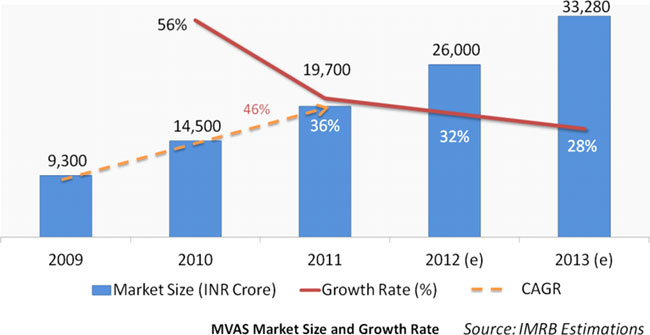
    The Indian mobile value-added services (MVAS) market is expected to become a Rs26,000 crore market by the end of 2012, growing at the rate of 32 per cent. MVAS is estimated to further grow to a whopping Rs33,280 crore market by 2013, a growth of 28 per cent. While the conventional MVAS services are still dominant, emerging MVAS services are also rapidly gaining popularity with mobile users. These are some of the findings from the latest IAMAI – IMRB report on Mobile VAS in India.


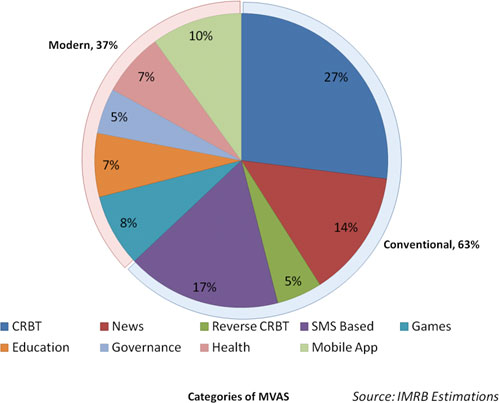
    According to the IAMAI-IMRB report, MVAS can be divided into two categories – conventional MVAS which has a market share of 63 per cent and the emerging or modern MVAS which contributes a market share of 37 per cent. While the conventional MVAS services consist mainly of CRBT and SMS-based applications, the emerging or modern MVAS mainly consist of mobile apps and games.


    Speaking to MxMIndia on the factors that would drive the MVAS revenues in the long run, Rajiv Hiranandani, Co-founder and Executive Director, Altruist- Mobile2win said: “I am a firm believer that the true growth of mobile VAS is going to come from the rural India. You will see more of services that will help the rural or the small town Indian utilizing the services. In that respect, I believe Interactive voice response (IVR) based services and SMS-based services are going to be big drivers of Mobile VAS. These services could range from basic things like finding the price of vegetables or some information over SMS or finding friends over IVR or IVR-based social networking. These are services that will catch on and will drive revenues in India over the years to come. So for VAS revenues to explode in the country, you need to appeal to the lowest common denominator which primarily resides in the rural India.”


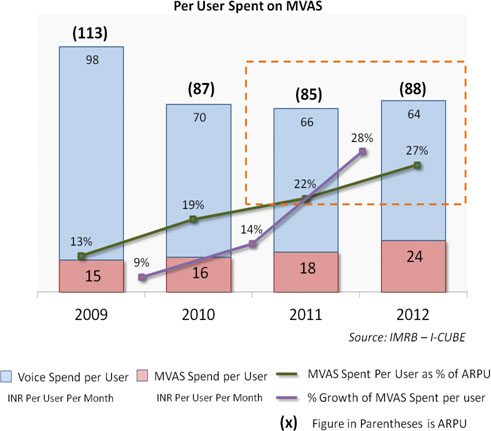
    In the last three years, the average MVAS spent per month has risen by Rs9 to stand at Rs24 per month in 2012. The percentage share of per user spend on MVAS in Average revenue per user (ARPU) has been increasing gradually. Even though the ARPU has declined over the years, per user spend on MVAS has gone up by 28 per cent in the last one year. It is now 27 per cent of the ARPU pie. The dependency on voice services is reducing and to increase the ARPU, the emphasis must be put on data services such as MVAS.


  • Indo-Pak music show to be simulcast on Colors & Sahara One

    By A Correspondent


    The broadcast media is going in for interesting alliances. Last year, Star and Zee tied up to forge a distribution alliance. Prior to that Viacom 18 and Sun had got together. Earlier this year, the Star Plus mega-show Satyamev Jayate tied up with Doordarshan for a simulcast. And now Sahara One’s India-Pakistan music show, Sur-Kshetra, will be aired simultaneously on younger but bigger GEC Colors.

    Colors  has announced a first-of-its-kind strategic tie-up with the Hindi general entertainment channel (GEC) Sahara One to simulcast the relatively new singing based reality show – Sur-Kshetra.


    Produced by Sahara One, in association with Gajendra ‘Antakshari’ Singh’s Saaibaba Telefilms, Sur-Kshetra will be a cross-border musical battle between the Indian Team, captained by Himesh Reshammiya and the Pakistani Team, captained by Atif Aslam. Evaluating the teams and judging the musical talent will be Asha Bhosle (India), Abida Parveen (Pakistan), and Runa Laila (Bangladesh).


    The show will be anchored by actor Ayesha Takia and the  episodes will also have musical stalwarts  like Ghulam Ali, Hadiqa Kiani and Sajjad Ali from Pakistan, and Suresh Wadkar, Ismail Darbar, Alka Yagnik and Sapna Mukherjee from India.


    Speaking about the strategic tie-up, Raj Nayak, CEO – Colors, said: “Music has the unique ability to unite people and today, it has brought two channels together. Sur-Kshetra will mark Colors’ foray into the singing non-fiction content segment and we are extremely excited about this new venture. By adding the show to our bouquet of offerings, we are working towards fulfilling our commitment to cohesive viewing, while providing our audiences with unique content keeping them engaged.”


    Adding to this, Suresh Mishra, Asst Director, Sahara One said: “With this legendary Indo-Pak musical grandeur, viewers from both the nations and across the globe will witness a new generation of gifted singers. We are very excited about this strategic tie-up with Colors, giving Sur-Kshetra a combination of two large platforms that does justice to the stature of the show”

  • Stratagem’s 1-day training for media sellers


    By A Correspondent


    Stratagem Media Pvt. Ltd, led by Mr. Sundeep Nagpal, began as a media planning hub for medium-sized ad agencies in the early 90s and somewhere along the middle of the last decade, it morphed into a media services company.


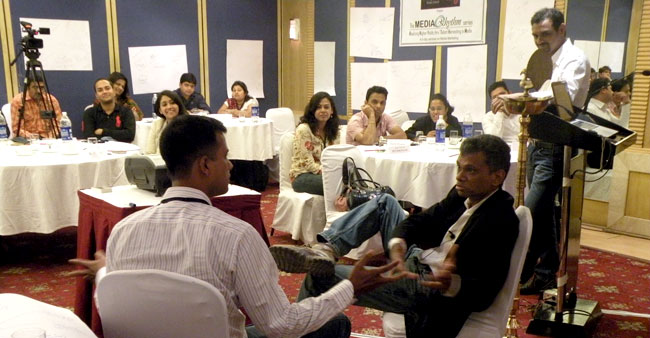
    The ‘Media RHYTHM’ series is a recent initiative by the company to enable participants channelize the thought processes that govern modern day practices in media selling.


    The initiative engages experts from the industry who jointly conceive and design such programs over hours of discussion to make them as relevant as possible. RHYTHM is an acronym for Realizing Higher Yields thru’ Talent Harvesting in Media. At another level, the programme also serves to orient the thought process in a particular direction and thereby condition the mind.


    Mr. Nagpal believes that such open programs are useful for companies which wish to develop talent and knowledge base of select personnel in their sales departments.


    The forthcoming program, to be held on July 21, has been conceived as a single-day workshop titled “ReveNEW Concepts and Ideas”. The modules will focus on concepts that are integral to the media business – media evaluation & utilitarian concepts, as well as the subjective aspects that can be used effectively by sellers.


    Facilitators like Madan Sanglikar will administer a module on the applicability of new media for new brand and how media houses can build on it. Bharat Kapadia will stimulate participating sellers to think creatively by involving them with certain exercises.


    Suresh Balakrishna will engage participating sellers on how to translate the basic tenets of a brand communication into a media-led solution.