Category: Digital

  • LinkedIn reveals most influential brands for 2015

    By A Correspondent


    LinkedIn has revealed the most influential brands among its 364 million members worldwide, as well as the most influential among LinkedIn India’s 30+ million members.


    The rankings are based on LinkedIn’s Content Marketing Score, which is calculated by measuring a brand’s unique engagement and dividing it by a brand’s audience. LinkedIn has used this data to identify the behaviors and activity that boost content engagement. The most effective brands use a mix of reach, frequency and engagement to boost engagement on LinkedIn.


    Globally, technology companies emerged as winners this year with the number one slot going to Microsoft. Other technology companies included IBM,Hewlett-Packard, Google and Salesforce – all brands which have adopted an always-on strategy that is rooted in the quality of content. This is true in India too. The rankings show that technology companies are succeeding at content marketing efforts on social media with TCS, Wipro and HCL leading the way.


    The top ten most influential brands among LinkedIn members in India for 2015 are:

    1. TCS
    2. Wipro
    3. HCL
    4. Infosys
    5. Tech Mahindra
    6. Housing.com
    7. ICICI Bank
    8. Tata Communications
    9. Axis Bank
    10. Biocon


    Commenting on the rankings, Ashutosh Gupta, Director, Marketing Solutions, LinkedIn India said, “Content along with the right context is the essential way to engage, educate and inspire an evolved consumer base. With consumers becoming more discerning about the quality of content and lives getting busier, content must be educational, yet original. In India, technology brands seem to be getting this right by focussing on subjects that people are eager to hear about.”


  • Payment startup Oxigen to sponsor SA’s T20 team

    By Harsimran Julka


    Delhi-based Payment wallet Oxigen has sponsored the South African Cricket Team for the upcoming T20 cricket tournament this month.


    With the sponsorship, Oxigen joins a spate of Indian start-ups such as Snapdeal, Paytm, YepMe  and CarTrade who have either advertised in international cricket matches or sponsored global teams. Delhi based YepMe had sponsored West Indies team for the ICC Cricket World Cup for about Rs 30 crore, earlier this year.


    The Proteas T20 squad will walk onto the field against Bangladesh the match on July 5, 2015, with Oxigen brand as the sponsor backing the team.   Oxigen was originally started in a partnership with two South African investor/entrepreneurs and Delhi based former Motorola India President Pramod Saxena in 2004.


    Johannesberg-based Blue Labels Telecom continues to hold a stake in Oxigen India. The Oxigen Proteas will feature in twelve T20 matches against Bangladesh, New Zealand, India, England and Australia before next year’s ICC World Twenty 20 Championships in India.


    “Technically, this is not a new sponsorship, but rather an exciting initiative by Blue Label Telecoms to create added value to their diverse organisation,” said Cricket South Africa’s Chief Executive, Haroon Lorgat. “The Proteas are a globally recognised brand with huge support in India. This exciting initiative by Blue Label Telecoms is both unique and a first for Cricket South Africa, as having an international based company as the team sponsor is a pioneering step.”


    “Oxigen is a brand born and bred in India, and we expect that Oxigen’s sponsorship of the Proteas T20 team will resonate closely with the Indian community,” added Mark Levy, joint CEO of Blue Label Telecoms.


    Source:The Economic Times

    Copyright © 2015, Bennett, Coleman & Co. Ltd. All Rights Reserved

    Licensed to republish


  • Discussion on emergence of Twitter in storytelling

    By Dyanne Coelho


    Popular microblogging platform Twitter hosted an interactive and informative conference entitled #RiseWithTwitter highlighting the future of mobile storytelling in India and the emerging uses of the platform. Held in Mumbai on Tuesday (June 30), the event saw a cross-section of mediapersons and well-known personalities talking on the rise of the platform.


    For instance, Meghna Pant, Indian literary fiction writer and financial journalist shared an inspiring tale of how she tweeted the Mahabharata in just 100 tweets.


    Times Now Editor-in-Chief, Arnab Goswami  joined Rishi Jaitley, Market Director, India and South East Asia in an engaging session to discuss the applications of Twitter in the world of journalism. The Lalitgate hashtag (#Lalitgate) coined by Times Now after the recent expose, has earned 43.2 million tweets in a six-day period, Twitter revealed. “Television gets me an audience five times bigger than digital,” Goswami said but added that both mediums are now working in a complementary fashion. “We’re six years away from a digital explosion,” he said of research and he advised that if you are working in the field of digital, hang in there, things are going to explode with change.


    Balu Nair, the creator of the Twitter handle @BloodDonorsIn explained how Twitter as a medium is being used for a cause. If any patient is in dire need of a blood transfusion, the family or friends can tweet at the handle with the requirement. Nair explained that kind souls have even travelled cross city to donate blood to those in need thanks to the handle.


    MN Reddi, Commissioner of Police, Bengaluru in the session ‘The Mobile Microphone’ moderated by Mid-Day Editor Sachin Kalbag pointed out the advantages of Twitter for himself as a person of authority and responsibility. People feel safer because they feel connected to the Commissioner and they get immediate responses to their queries and/or complaints, however rumours are still a huge issue in the world of social media, he said. Henry Jenkins, American media scholar and professor of communication and journalism at USC, brought to note that many scandals would not have hit as hard as they did if it depended only on the media. It is the people who have created the buzz on social media and brought issues to light he said. He cited the example of the hashtag #CNNFail a few years back that trended on Twitter, and which was created by the public to express their disappointment of CNN’s coverage of the aftermath of the Iranian election coverage. Sunil Chhetri of the Bengaluru FC football team highlighted the negativity a platform like Twitter brings to him as a player and to sportspersons in general. “When we lose a match, I dread looking at my phone, because the fans tweets are further depressing. So I check them only a day after once I have calmed down,” he explained.


    While people like sportspersons or celebrities can afford to wait a day to respond to tweets, brands don’t have that luxury, Deepali Naair, CMO, Mahindra Holidays said. For brands what is important to engage in conversations that matter to people, she said.Abu Mathen George of the Ministry of External Affairs discussed how his team handles multiple Twitter handles to cater to various needs of Indian citizens. Twitter was used extensively to carry out the evacuations of Indians from Yemen, he explained. People could tweet at the handle about their whereabouts and the Ministry would respond with nearest ports or planes for them to get to. A similar strategy was used during the Nepal earthquake. The importance of engaging the audience on a mobile global platform is key, the panelists Manan Mehta, VP, Yash Raj Films, Abu Mathen George of the Ministry of External Affairs and business journalist Shaili Chopra discussed in a session moderated by Anant Goenka, Director of the Indian Express group.


    Nitish Tipnis, Director Sales and Marketing, Hover Automotive India, Deepali Naair, and Shivnath Thukral, Group president, Corporate Branding and Strategic Initiatives at Essar engaged in audience  in an interesting discussion on humanising brands on social media. Whether you are a relatively formal brand like Essar, or a fun brand like Mahindra Holidays, it’s all about keeping the conversation casual on a social media platform, yet getting your word across to the right target audience.


    “India is one of the leading markets in terms of user base,” Taranjeet Singh, Country Business Head, Twitter India, said. “Growth in India has been phenomenal. We work with over 600 brands and we have recently launched TV targeting as well because we realised that many people tweet about the content they are watching. Twitter India is way ahead of the business plan in terms of revenue,” Singh revealed.


  • HolidayIQ.com launches mobile-only holidays marketplace

    By A Correspondent


    HolidayIQ has launched the mobile-only vacations marketplace ‘Holidays’, dedicated to activity based leisure travel. The marketplace , incorporated within the HolidayIQ android mobile app, showcases 1000 plus activity based packages and allows travellers to customize their holiday using various filters including: budget, duration, vacation type and activity. The app also provides comprehensive itinerary details within each listed holiday package. The feature has various options ranging from day-activities of just 1 hour to offbeat, all-inclusive holiday packages of up to 15 days, with prices from Rs. 100 to Rs. 1.6 lakhs.


    Hari Nair, Founder & CEO, HolidayIQ, said, “There are two major shifts in the way Indians plan holidays today. Over 70 per cent of holidays planned on HolidayIQ are through mobile devices. Secondly, we are moving from destination-led holidays to experience-led ones.  And so, we have aggregated the first ever mobile-only activity-led vacations marketplace. We have associated with some of the best players in the industry including Giftxoxo, Tushky, Exploita & Padharo to provide a vast range of experiential holidays for Indian travellers. People can also review all these holidays individually on the app helping other travellers plan better.”


    These vacations include over 1000 activities ranging from cycling to hiking, zorbing to river rafting, Bollywood inspired walks to culinary trails. They can suit varied budgets starting with holidays such as ‘6-hour Vineyard trail at Grover Zampa Vineyards in Nasik for Rs. 400’ to a ‘9-day holiday in the Andamans including swimming with elephants at Rs.1.6 lakh.’


  • Indiamart strengthens leadership team

    By A Correspondent


    Mudit Khosla

    IndiaMART has announced the appointment of Mudit Khosla as Senior Vice President, Brand Solutions Group. As an integral part of the company’s leadership team, Mudit will be a visionary for devising innovative strategies and managing effective implementation of the same for smooth functioning of the Big Brands associated with IndiaMART.


    With over 16 years of rich experience in building e-commerce companies from scratch and scaling them up rapidly, Mudit has played a key role in setting up of Indiatimes Shopping. He was also a part of the core founding team of Yatra.com and has served as CEO at reputed organizations like Seventymm.com and Tradus.com (ibibo Group).


    Speaking on the new appointment, Dinesh Agarwal, Founder & CEO, IndiaMART said, “I am extremely pleased to announce the appointment of Mudit Khosla to our leadership team. Mudit would play a pivotal role in driving the company’s strategy to cater to the sourcing and selling requirements of the big organizations. He brings with him rich, varied and elaborate knowledge in the domain of Business Development and Brand Building which will be instrumental in taking IndiaMART to the next pedestal. His wealth of experience in transforming online marketplaces will prove to be an asset for IndiaMART.”


    Commenting on his roles and responsibilities at the organization, Mudit said, “I am excited to be a part of the country’s leading online marketplace which is poised to ride upon a stellar growth gradient by catering to the specific requirements of buyers and suppliers, encompassing individuals, SMBs as well as larger enterprises. I am looking forward to being a part of the inspiring journey that lies ahead for IndiaMART and add value at each stage.”


    Over the years, IndiaMART has been a boon to the burgeoning MSME sector of India, providing them a platform to promote the growth of their businesses.


  • Tata Trust & Google team up to launch ‘Internet Saathi’

    By Dyanne Coelho


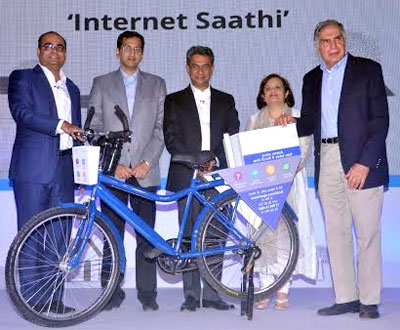
    Sandeep Menon, Country Marketing Director, Google, R Venkataramanan, Executive Trustee, Tata Trusts, Rajan Anandan, VP and Managing Director, Google South East Asia, Debjani Ghosh, Vice President SMG, Managing Director – South Asia, Intel & Ratan Tata, Chairman, Tata Trusts

    There was a time when one had to wait at least seven years to get a phone. Ratan Tata, Chairman of Tata Trusts, certainly remembers that time, and also acknowledges how far we’ve come today with the use of technology. Tata brought this up at the launch of ‘Internet Saathi’, an initiative put together by Tata Trusts and Google, and aimed at empowering rural women and their communities to use the internet to enable development. In fact, the initiative aims to bridge the rather large gender divide as well, when it comes to the use of technology.


    Studies show that only 12 per cent of internet users in rural India are women, according to Sandeep Menon, Country Marketing Director, Google.  said. He highlighted a study carried out in rural India to understand what it is that stops women from using the internet. The key findings were trouble knowing how to use it, the question of what’s in it for them, and lack of a point of access. “While women in the urban areas are making rapid progress using the internet, women in rural areas are getting left behind,” Rajan Anandan, VP and Managing Director, Google South East Asia pointed out.


    With enough statistics in hand to understand the urgent need of women empowerment in the rural areas, vis-à-vis technology, the team has designed a cart, built on the back of a cycle – akin to India’s traditional distribution system which is used to carry everything, from ice-cream to industrial supplies. The cart is fitted with internet-enabled Android One devices, tables and portable chargers, keeping in mind power cuts in many villages. Women will be trained to use these devices, but Menon highlighted that that is the most important thing as the women are curious to know more. “We’ve realised that all we need to do is spark curiosity, and then the women automatically take an initiative to learn the rest themselves and to teach others in the village as well,” he added.


    Debjani Ghosh, Vice President SMG, Managing Director – South Asia, Intel, quoted a UN report which said that across the world, about 25 per cent fewer women than men are using the internet, and the biggest reason for this is that women believe that it is not meant for them. Incidentally, Intel has been a long-term partner of Google India’s Helping Women Get Online (HWGO) initiative.


    Internet Saathi is set to kick off from Gujarat, Rajasthan and Jharkhand, and will eventually be rolled out across the country. It plans to reach 4, 500-odd villages and five lakh women and rural communities over the next 18 months. The internet cart will be available in the village for a minimum of two days every week for over a period of four to six months. It is aimed at creating awareness and will provide adequate training for using the devices. Once the cart has completed the training in a cluster of three villages, it will be moved to the adjoining cluster to complete a similar cycle. The initiative has roped in local self-help group federations and NGO members to help with the training programme.


    While many women in the rural areas still cannot read the language they speak, they use the internet to watch cooking videos or other such material that they find interesting, Ghosh explained, talking about previous initiatives undertaken in the rural areas.


    Asha Devi and Vimla Devi belong to a village called Varkheda in Rajasthan, and were present at the event. Clearly excited about the initiative, they said: “We will be able to get information that earlier we had to go to the city to get.” Added Vimla: “Even after they leave, we teach the other women [how to navigate the internet] and we try to spread the word.”


    “We have a commitment to educate [people] and create prosperity in the villages of India, and we will address it through education and expanding the knowledge base,” Ratan Tata said. “Philanthropy has changed in India over the years. Today, India is a different nation and people demand self-respect and want to be capable of enabling their own livelihood. There is a keen desire to be a part of the world that is today, not the world of yesterday. Digitisation is not only about opening up [a new] India to people, but it’s about connecting them to the rest of the world.” What better way than with the Worldwide Web.


  • Hungama Digital elevates Kamal Amesur and Manesh Swamy

    By A Correspondent


    Kamal Amesur

    Hungama Digital Services announced the elevation of Kamal Amesur and Manesh Swamy as Executive Creative Director and Creative Director respectively.


    “I congratulate Kamal and Manesh on this well- deserved elevation. With Kamal being the ECD and Manesh the Creative Director of HDS we have strengthened the platform of innovative thinking. They will set the bar for the next phase of solutions in the digital domain”, said Carlton D’Silva, CEO & CCO of HDS.


    Kamal, previously a Creative Director has been with HDS since 2000. He has been actively involved in creating campaigns for HDS that have won at both national and international award shows. Besides bring in new business for HDS, Kamal works with clients such as ACC Cement, Godrej, HUL, Mahindra, Wipro and Intel.


    Manesh Swamy

    Manesh Swamy is a digital native who has over 15 years of experience in the digital space and has created multiple campaigns across multiple mediums including Digital, Activation & Mobile.


    Manesh, who has been with HDS since 2004, has worked on various innovative campaigns for many global companies such as Mahindra, Intel, Pepsi, Airtel and Microsoft to name a few.


  • ‘Coz Kiranas Can…


    By Arka Bhattacharya


    Aarif Aigwan started working at the Raja Oil Centre, a kirana store in the Parel area of Mumbai, when he was 10 years old. That was forty years ago. Till today , he goes through the same daily grind -selling everyday items for a small profit. He is coping with a new threat of late. The emergence of e-tailers such as BigBasket, LocalBanya and MeraGrocer means that Aarif and other owners of local stores may potentially lose customers who prefer to order their month’s supplies online.


    Kiranas are keen to reinvent. They are stepping up faster home deliveries, improving face-to-face customer engagement and buying retail technology where they can afford it. The key to kiranas’ sustainability might lie in the finer aspects of their day-to-day operations.


    “Improving the customer experience could prove to be vital for the kiranas in their battle for survival,” says Arvind Singhal, chairman of Technopak Advisors, a management consulting firm. “Small, but significant, changes could see an increase in the influx of customers. These days, more and more kirana stores have started improving their home delivery stores in order to keep up with the completion,” he adds. Singhal believes technology could make a difference.”Small and mid-level kiranas don’t have much of an idea about their customer base due to an absence of data analytics,” he says.


    Atul Karani, a shop owner, says, “As a shopkeeper, I must engage in a face-to-face interaction with my customer. Someone who comes into my store wishing to buy a single item might peek into my shop and remember that they have to buy something else.”


    For the mid and high-level kiranas, technology has already started playing an important role. Digital balances for accurate weight measurement, computers with inventory management software and billing systems, and CCTV’s for monitoring purposes are just few of the ways in which kiranas have changed over the past 10 years.


    Chandrakant Gala, secretary, Bandra-Dahisar Grain Merchants Association, believes that kiranas will survive. “We survived the growth of supermarket and the other modern retail chains. Kiranas have already upgraded to a point where a customer ordering a solitary packet of bread over the phone has it delivered to his doorstep.” orstep.”


    Predictions of doom and gloom are farfetched as a few of the online retailers such as BigBasket, have teamed up with kiranas in order to fa cilitate smoother distribution.”Our partner (kirana) stores receive new business from us through express orders as well as the fee they earn for acting as order collection points,” says BigBasket co-founder Abhinay Choudhari. “Stores also get access to our wide range and benefit from buying from a single source as they become our B2B customers and thereby they save time and resources in sourcing from multiple vendors,” he adds.


    While BigBasket seems to have found an advantage in tying up with these kiranas, others such as LocalBanya CEO Karan Mehrotra are apprehensive. “We don’t envision an improvement in the delivery system; in fact we see inherent challenges of working with kirana stores as hyper-local hubs for delivery.”


    Source:The Economic Times

    Copyright © 2015, Bennett, Coleman & Co. Ltd. All Rights Reserved

    Licensed to republish


  • TAM fortifies its mobile App with Version 2.0

    By A Correspondent


    Highlights of TAM Mobile App Version 2.0 are:


    • GRP Numbers: The new version will have TV Viewership GRP data sets for all markets and all genres along with existing data points (GVT, Reach & Relative Shares)
    • TVR Data: Along with TVTs for the Programs, TAM India Mobile App 2.0 will provide TVR for Top Unique Programmes
    • Addition of Markets: As compared to the earlier version, TAM India Mobile App 2.0 will have data sets for Assam & Orissa along with existing 7 Markets (Maharashtra, Andhra Pradesh, Karnataka, Kerala, Tamil Nadu, West Bengal, PHCHP)
    • Modified TG: Every Genre and market will have a TG as per the requirements of each section
    • Modified Graphical Representation: TAM India Mobile App 2.0 will have Graphs representing weekly data instead of the earlier format of 4 weeks average.
    • New Pay Version: TAM India Mobile App 2.0 will be accessible even to the non-TAM subscribers at a minimal subscription cost.

    After a successful launch of its TV viewership mobile app last year, TAM Media Research has released an upgraded Version 2.0 of the same application. This new version is fortified with added data sets and customized user friendly features that will make the mobile consumption of TAM’s TV viewership data even more easier and enjoyable, notes a communiqué. It is available for Android and Apple devices.


    Some of the features this version boasts of are: TV Viewership data in GRPs, TVRs for unique TV programmes and data for new two markets – Assam & Orissa.


    Talking about the upgraded app, LV Krishnan, CEO, TAM Media Research, said, “We set a trend last year when we provided this mobile App facility to Industry users. We have received tremendous response during the last one year. Version 2.0 is a fortified version that will allow not only existing but even new users to enjoy the benefits. The purpose behind this Mobile App, very simply, is to enable users to access viewership information anytime, anywhere on the go so that they can take informed business decisions at the spur of the moment.”


  • Quikr unveils new brand identity

    By A Correspondent


    Quikr has announced the launch of a new company logo that symbolises its successful rise in the Indian classifieds industry and its transition into a platform that has deep, verticalized offerings in large categories. The evolution of the company’s brand is also in sync with the evolution of Quikr’s users who have high aspirations, and have increasingly started using Quikr across a variety of categories such as cars, real estate, goods, services and jobs to fulfil these aspirations.
     

    Quikr’s new slogan “Aasan hai badalna” reflects the sentiment of today’s India and instantly connects with young, aspiring Indians who seek to change their lives for the better. Quikr, with an easy to use platform, enables consumers to buy, sell and find things that inspire change in their lives. The company believes that change is essential and even the smallest of change has a multiplier effect that can bring big positive changes in one’s life.


    Commenting on the rebranding initiative, Pranay Chulet, Founder & CEO of Quikr said, “At its very core, our purpose as a company is to help our users achieve their aspirations and hence enhance their lives. Our platform symbolizes the fact that good things in life are easy to get. Whether people come to us to buy something good or to sell something because they are buying something else, our users always experience positive change when they come to us. Our new logo and brand identity represents this change and the world of new possibilities that comes with it.”


    The company’s new logo and brand identity has been crafted by Alok Nanda & Company. Commenting on the launch of the new logo, Alok Nanda, CEO of Alok Nanda & Company said, “We created the brand identity and architecture system after engaging in an in-depth, strategic brand repositioning exercise with Quikr. From a design perspective, the ‘Q’ in Quikr is a designer’s dream and has been fashioned to suggest positive change in its users’ lives. The logo retains the blue and green colours for which the company is recognised and the new font is contemporary, yet sleek with a sense of speed which is integral to the name Quikr.”


  • India.com forms multi-year partnership with Outbrain

    By A Correspondent


    India.com, India’s third largest online publisher and Outbrain, the world’s largest content discovery platform, announced the details of a multi-year strategic partnership. The deal will empower the media company and its properties – including Zeenews.com, dnaindia.com, Bollywoodlife.com, Cricketcountry.com, OnCars.in, Prepsure.com, BGR.in, Careerfundas.com, TheHealthSite.com, Travel.india.com and Video.india.com – to fully leverage the Outbrain guided personalisation platform.


    The platform will empower India.com to manage their own content recommendations maximizing the monetisation of their audience to other content publishers, driving increased audience engagement, and providing key insights and analytics about their core digital users.


    Sandeep Amar, Chief Operating Officer at India.com said: “We are really happy to partner with Outbrain, and use their technology and products to makes sure our users and advertisers get benefits from it. We are confident they will deliver the highest quality recommendations and best monetisation options for India.com. We look forward to bringing the Outbrain solutions to our advertising partners in India.”


    Gulshan Verma, General Manager SEA & India at Outbrain, commented on the announcement: “Over the last few months, we’ve increasingly observed publishers integrating their services into their sales platforms, allowing for more native placements. Previously, most of the Outbrain content was contained in a widget at the bottom of the page but, by working with the publisher’s direct sales teams, we have now started serving content in premium locations like the right rails, homepages, mobile pages, thus providing better customer experience for the reader and monetisation opportunities for publishers in India.”


  • Policybazaar ropes in Kapil Sharma to promote brand message

    By A Correspondent


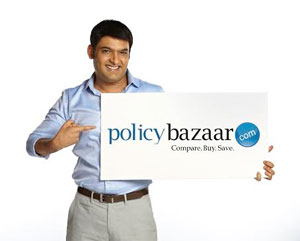
    PolicyBazaar.com has roped in actor comedian Kapil Sharma to launch its biggest brand campaign. The new campaign would see mass icon, Kapil Sharma urging consumers to compare before buying insurance, so that they don’t become an “Ullu”(a fool) and in turn get “Babaji ka Thullu” (a raw deal).

     

    The new campaign backs PolicyBazaar’s aggressive plans to spend nearly Rs.80-100 crore on its marketing initiatives this year across offline and digital mediums, highlighting the core offering that makes PolicyBazaar special, “Compare. Buy. Save”


    The campaign, conceptualized by the creative team of Lowe Lintas, takes the “ullu” idea forward from the brand’s previous advertising and marries it with India’s favorite actor comedian, Kapil Sharma and his all famous colloquial term “Babaji ka Thullu.”


    The campaign will kick off with teasers on TV followed by the release of 35-second TVC. The adverts would feature Kapil Sharma in different avatars, placing emphasis on “Ab India Nahi Banega Ullu”. The company will be launching three TVCs focusing on motor insurance, term insurance and PaisaBazaar.


    The PolicyBazaar launch campaign would be followed by PaisaBazaar.com, the non-insurance online platform of PolicyBazaar, unveiling its own brand initiative with Kapil Sharma as the lead later this month.


    Naveen Kukreja

    Speaking on the new campaign, Naveen Kukreja, Group CMO, PolicyBazaar & MD, PaisaBazaar.com, said, “Our key objective this year has been to increase ‘reach’ while keeping our core communication same – instilling the habit of comparing insurance before buying in the mind of consumer. When Lowe Lintas came with this idea of marrying ‘ullu’ and ‘thullu’, the only name we could think of was of Kapil Sharma. Being a mass icon, he has a deep emotional connect with the consumer which we wanted to make best use of through a witty yet thought provoking advert.”


    Shriram Iyer, Executive Director of Lowe Lintas said, “Policy bazaar had already created a fair bit of conversation with their advertising idea ‘Ullu mat bano’. With the introduction of Kapil Sharma in the ‎communication, we were looking to take ‘Ullu mat bano’ forward in a manner that would allow us to seamlessly integrate Kapil’s brand of humour.”