Category: Digital

  • NXT Digital gains impressive foothold in just 3 weeks

    By A Correspondent


    Three weeks back, in mid-July, the Hinduja Group had announced the launch of Headend In The Sky (HITS) service, called NXL Digital, which has been built as per cable fraternity needs, to help the cable distribution fraternity make a smooth transition from analog to digital as Digital Addressable Services (DAS) roll out in Phase 3 and 4 markets. In the brief period since, NXL Digital has already signed up a large number of subscribers.


    Tony D’Silva, MD – Grant Investrade Limited, announced, “In just over three weeks since NXL Digital was announced, it has already been signed up to reach 1  million analog TV households in Phase 3 markets through LMOs and MSOs who have opted for its services. In the past 21 days, we have reached out to the cable fraternity across several cities, and I am delighted to share that they are extremely excited about NXL Digital.”


    Adding further, he said, “The LMOs and MSOs see it as a partner that will not only help them make the mandated transition from analog to digital, but remain independent and owners of the networks they have built with sheer dint of hard work over the years.”


    The roll-out of Digital Addressable Systems in Phase 3 and 4 markets across 110 million TV households is being seen as the biggest and the most significant step for the Media and Entertainment industry in India, and in the scenario, NXL Digital, from Grant Investrade Limited, a subsidiary of Hinduja Ventures Limited, will empower the cable distribution fraternity  working with an estimated 110 million* analogue TV households in the market to help them make the transition to digital by end-2016.


    The Hinduja Group has made significant investments in the NXL Digital platform: a state-of-the-art broadcast facility in Noida has been designed and purpose-built to provide top quality service, which will roll out in end-August this year. While the satellite-based service will have a national footprint, in view of the deadline for DAS rollout, Grant Investrade Limited is concentrating on the Phase 3 and Phase 4 markets for its marketing and subscription drive to enable the cable fraternity provide digital services there.


    D’Silva said, “NXL Digital will empower and enable the distribution fraternity including Last Mile Owners (LMOs) and MSOs to offer a world of exciting Digital services to their end-subscribers in all the analog households across markets. Crucially, NXL Digital will not only help the LMOs and MSOs go digital as per government mandated standards and within the set deadlines, but, throughout the process, help them be independent and retain the ownership of their network.”


    This has been made possible because when work first began on finalizing the NXL Digital offerings, the company undertook in-depth research to find out the requirements of the distribution fraternity. It reached out to over 2000 LMOs, MSOs and their representatives across 120 cities in Phase 3 and 4 markets, and asked each, separately and in person, what they wished they could be able to do with their businesses when it was time to offer television broadcasting – along with other value-added services — through encrypted digitally addressable systems.


    “The research threw up six major requirements of the LMOs and MSOs,” D’Silva said, counting them out. “They wanted to retain ownership of their network; drive broadcaster deals; package and price their offerings according to the needs of their market; they wanted the facility to acquire Set Top Boxes (STBs) according to their convenience; the ability to insert local channels for their end-subscribers, and a sophisticated digital service that could help them compete with other digital platforms like DTH to ensure their digital offerings were future-ready so that their subscriber-bases would only grow.


    By signing up for a NXL Digital service, a network owner in a Phase 3 market can be saved the burden of having to make huge investments in the technology and highly skilled manpower required to convert his analog households to digital.


    A NXL Digital headend will help them provide 500+ MPEG-4 encrypted services including HD channels with the ability to insert local channels as per requirement, robust SD and HD STBs with PVR functionality, world-class conditional access and subscriber management systems, a 24×7 call centre in multiple languages for customer support, a user-friendly operator terminal and the ability to provide VAS, OTT and other add-on digital services as and when rolled out.


    The NXL Digital service will provide Television channels to cable operators through a satellite instead of the traditional cable television headend where multitudes of satellite dishes and antennas are used to grab cable stations from dozens of communication satellites. The low comparative capital investment is expected to be the biggest draw for the network owner, apart from the additional revenue opportunity through VAS services – something which is not possible with DTH. Hence the network owner will no longer have to worry about high investment costs to provide Digitized cable TV services.


     

  • Have an idea? Paytm karo!


    By Anandita Singh Mankotia


    Alibaba-backed online e-tailer Paytm has readied a war chest of half-a-billion dollars as it scouts for acquisitions across the ‘local commerce space’, in line with its Chinese investor’s vision that the offline-to-online business category would be the biggest segment in the ecommerce space.


    “We have about $200 million in cash and the remaining $300 million could be through equity,” Paytm’s founder and Chairman & Managing Director Vijay Shekhar Sharma said. “We have also kept aside $50 million for investing in logistics and warehousing.”


    The $300-million equity could translate into a less than 10% stake in Paytm, based on the valuation of the latest investment by Alibaba Group Holding.


    Paytm, which has applied for a payment banking permit, is expanding into the ecommerce space as it tries to focus on the offline-to-online (O2O) businesses, in part via acquisitions. “We want to get into local commerce, which we feel will become the biggest segment in the ecommerce space,” Sharma said.


    O2O is a fast-growing business segment which combines the benefits of online retail with brick-and-mortar transactions. For example, food-ordering or grocery-ordering apps are expected to be large segments in ecommerce, Sharma said.


    The plan is in line with the global vision of Alibaba, Paytm’s biggest investor, of going big on the O2O segment.


    O2O helped Alibaba grow in India

    Offline-to-online (O2O) services have allowed Alibaba to tap shoppers even at brick-and-mortar stores. Customers can check their apps for discounts and promotions and pay with their mobile wallets to order goods from local stores.


    “O2O is a huge opportunity in India. It is a much bigger opportunity than ecommerce itself. The model allows a digital shopper to be driven offline. For instance, buy online and pick instore. Or buy online and return instore,” said Ashish Jhalani, founder of retail consultancy Etailing India.


    India’s Internet market is expected to become the fastest-growing in the world and reach a size of $137 billion (Rs 8.7 lakh crore) by 2020, according to Morgan Stanley. Consulting firm AT Kearney said earlier this month that it expects the Indian retail market to grow to $1.3 trillion by 2020. Paytm, the consumer brand of mobile Internet company One97 Communications, had raised $200 million from Ant Financial Services, an affiliate of Alibaba, for a roughly 25% stake earlier this year.


    As reported, the Alibaba group could invest some $600 million more in Paytm for another 20% stake, which would subsume an outstanding tranche of the previous transaction under which Ant Financial was to have pumped in another $375 million.


    The new infusion of funds could see Paytm valued at close to $3.7 billion (Rs 23,600 crore), compared with the $1-billion valuation of the previous funding round.


    The latest investment in the company, once complete, will result in investors diluting their equity by about 20%, bringing the stake of founder Sharma to under 23% from 28%.


    Source:The Economic Times

    Copyright © 2015, Bennett, Coleman & Co. Ltd. All Rights Reserved

    Licensed to republish


  • Interface creates new TVC for QuikrCars

    By A Correspondent


    Quikr announced that it has gone live with QuikrCars, its vertical with a sharp focus on all kinds of automobiles, i.e. cars, bikes and commercial vehicles. The first of Quikr’s verticals being launched, QuikrCars is a unique one stop destination for India’s car buyers and sellers, combining Quikr’s large transaction flow in the category with everything related to vehicles, including automobile news, reviews, information, tips and tricks.


    In this regard, two separate sets of TVCs highlighting the central role cars play in people’s lives have been created. They feature Quikr’s new brand ambassadors; leading Bollywood actor and youth icon Ranveer Singh and critically acclaimed Southern star Suriya.


    The theme TVC tackles the fact that cars mean different things to different people and emphasizes the comprehensive services offered by QuikrCars. The two subsequent TVCs individually introduce QuikrCars exclusive features, i.e. Maximum Selling Price (MSP) and Verified Inspection Reports.


    The TVCs will be aired across GECs and regional channels and will be supported by print, radio, OOH and digital media.


    Pranay Chulet

    Commenting on the association, Pranay Chulet, founder and CEO of Quikr, says, “Ranveer is an innovative, self-made star who stands out from the crowd. These qualities resonate with us and our journey towards market leadership. With his enormous talent and massive popularity, Ranveer’s association with Quikr will give our platform more visibility with a wider audience.”


    “As the leaders in the online classifieds space, our task is to expand the market, and as a well-established actor, Suriya has built enormous credibility and trust over his illustrious career. We believe that his association with Quikr will further increase people’s confidence in online buying and selling in India,” adds Chulet.


    Joemon Thaliath

    Joemon Thaliath, Chief Operating Officer at Interface Communications, says “People think of cars as more than just vehicles, forming special bonds with them. The fact that cars do mean vastly different things to people is a strong insight that we leveraged strategically in the commercials for QuikrCars. Thus, the TVCs amplify the features and advantages of the platform in an interesting and delightful manner.”


  • OOH in the times of Digital


    We may skip the occasional YouTube ad and attend to some chores while the television commercial is on, but Out-Of-Home advertising is one form of promotional activity we cannot avoid. It is right there whether we are on our way to work, out for a party or even when we are driving away for a holiday. In this interview at the Outdoor Advertising Convention 2015 last month, Amit Sarkar, Chief Operating Officer, Kinetic India talks about the growth of OOH in India and what lies ahead.


    Can you give us a broad idea of how OOH has been growing over the years in India especially at a time when there’s so much buzz about digital.

    Anything that is new will always have a buzz. So digital has been growing at a larger pace because it is a new evolution of media format. And a large part of digital is growing because you look at the age groups which are digitised, they are our larger consumers today. If you look at the larger shifts from consumer-centric age groups, young people are more prone to digital. OOH has been growing at a logical pace, 5 percent, 4.5 percent, except for last year towards the end of the second quarter when elections happened and we saw a lot of money in OOH. I think that’s an interim situation which actually took the pie to about 10-12 percent growth last year. But, if you have to keep that out of the event of normal spending pattern, I think we grew about 4.5-5 percent.


    So would you say that this digital buzz has stolen the thunder of OOH and other mediums as well?

    I really don’t buy that story, because when digital was not there, OOH still grew at the same pace. Which means OOH has its own independent challenges of growth and decline. Digital is something that is new, so obviously there is a perception that that is pulling out more monies. I can tell you with assurance that digital has pulled money out from television and they would be having the same sort of concern which OOH may have. I think OOH’s problem is independent of whether digital or mobile advertising is going out or not. And these are very uniquely positioned over the last one decade that we have been seen in OOH as a business. It’s very independent. I mean OOH doesn’t grow because of larger logical reasons like we have become pretty format-driven, we have regulation problems, different cities and different municipal corporations and revenues from OOH is different. While there is tremendous opportunity, but a slow pace of growth is largely to be blamed in the way media has been consumed, and also position perception. If you look at it, it’s more of positioning.


    What is the difference in the growth of OOH in a metro like Mumbai versus a Tier 2 or a Tier 3 city?

    If you look at it, about 75-80 percent of consumption today is all in the urban cities. While Tier2, Tier3 is extremely growing and that’s because of any other reasons of all businesses.
    If you see telecom as a category, these are pockets that are growing too. If you look at FMCG as a category, these are pockets that are growing too. New acquisitions have been drying up in our own cities. So OOH thereis more an evolved format, better environment, but if we look at core OOH in terms of visibility perspective, Tier2, Tier3 and Tier4 towns are the ones which provide us business. Because more as we progress, when you look at rural India where there is a lot of purchasing ability for people who are just farmers in the context of it. Gradually when their behavioural pattern changes in the way they consume something from a media format perspective, OOH in those markets will evolve, but need wise, there is tremendous potential. I have seen double digit growth inside that 5 percent, coming only from Tier 2 and Tier 3 towns.


    Does that have anything to do with the fact that internet penetration is also slightly lower in a Tier 2, Tier 3 city compared with a metro?

    I think they are two independent points, but all independent points from a consumer’s perspective have a correlation, which means more internet penetration, more exposure, therefor more knowledge clearly, more aptitude towards media. So similarly, just take an example I would say, if you would have looked at a city like Mysore about 10 years back, till the time Infosys actually made a game-changer there and all of us know that Mysore is great for Mysore palace. Today if you look at a lot of people who have migrated to Mysore, from Bangalore and other large cities, your consumption pattern of that particular city has changed. Your real estate prices have gone up. Almost everything around it is a newer ecosystem. That proves ability and OOH would actually work with it.


    Measurement in OOH, unlike digital and other mediums, it still a weak point. In your opinion what is the best way to tackle this?

    Every media format has its own challenges. Not to say digital for clicks could be measureable, because clicking and getting absolute time to consume an advertisement are two different things. Just because of clicks, it doesn’t mean that your attention towards an advertisement in digital is great. OOH has challenges of currency and ROI. But the reason for it is also that it is more difficult to measure OOH because of the nature of the business, the geographical spread, the immense amount of unorganized formats across different markets. If you look at television, you would actually take a smaller sample size to determine what will be your viewership pattern. In OOH every market works differently, vendors are different, formats are different, cultures, languages are different. Just to give you an example, in Karnataka if you ever do OOH, you have to actually put a sign of the creative in the local language. Without that you will not be able to display. The same thing is not really applicable in Delhi. So it has perennial challenges, however to build a currency, it has to have industry initiative and investments have to come in. So that’s the larger challenge. There’s no trial. There has been trial for the last 10 years that I know of, but everytime you progressed. So I’m hopeful it will happen sometime tomorrow, and it has to happen, otherwise the trade matrix will die. I mean our margins are shrinking, investments are not coming in, regulations are a challenge. You have to have a modelling of ROI which will move you fast. In closed environments like the airports and malls, it’s still addressable, because you can assure walk ins, profile a TG, it’s a closed environment you know how things are. It becomes very difficult on roadsides, on larger platforms.


    In this perspective do you think it’s good to have competition between mediums, or do you think that all need to work in synchronisation to ensure sales for the brand?

    OOH all of us realise has become more environment-driven. So whether it is an experience to be combined with digital, social, or anything to do with word-of-mouth as well, which amplifies it to a larger extent is OOH. So, just because digital and OOH can combine together to give a larger proliferation, it may not be a right story, all forms of media, together form an OOH ecosystem today. And that’s where the importance and the opportunity lies.


    From the perspective of your clients, what are the spends on OOH versus other mediums?

    On an average 5-6 percent. Some categories actually would be more spendthrift. So telecom is high spendthrift in OOH, FMCG to an extent yes, but largely on an average it is about 5-6 percent.


    So according to you is that fine, or should clients allocate a larger portion of the budget to OOH?

    OOH is the most seen medium according to TGI consistently for years together. But if you look at commitments of budgets, it’s still very vague, because at the end of the day everyone needs to understand what is an ROI. I’m not debating the fact that every media ROI is absolutely correct, but it is the time we have a matrix and if we keep on selling OOH in the way it is positioned today, there are challenges. So from the way I look at it, OOH has to shift from its current positioning. So that proposition becomes robust and therefore currency will still matter, but what will matter more is experience with consumers. And that will actually drive it.


  • Twitter eliminates the 140-character limit for Direct Messages

    By A Correspondent


    Users can now chat onin a single Direct Message, and likely still have some characters left over. This change is another big step towards making the private side of Twitter even more powerful and fun.


    Twitter has eliminated the 140-character limit for DM, and users can now exchange messages privately of up to 10,000 characters – with the idea being that Direct Messages should seem limitless! Twitter aims to improve users’ messaging experience to give them the real estate to express themselves more freely and getting rid of the 140 character limit is just another step in that direction.


    Private messaging is definitely a core part of the Twitter experience, and earlier in 2015, Twitter launched Group Direct Messages, where multiple users could chat at once and any user could message another user privately irrespective of the fact that they might not be following each other. The aim of these changes is to help users connect more easily and directly on Twitter with other users, causes and businesses they care about most.


    Twitter aims to improve the messaging experience of users to enable them to express themselves freely with limitless boundaries. There is incredible content on Twitter every day, from breaking news to live events and the aim is to create an experience that allows users to discuss powerful moments in an environment they’re comfortable with. The aim is to make the private side of Twitter just as fulfilling as the public side.


  • Debt is OK for Millennial Rich Kids


    By A Correspondent


    Online professional network LinkedIn and leading media agency MEC have released ‘The Affluent Millennial Opportunity’ study in partnership with research firm Ipsos. The study reveals how the behaviour and attitudes of Affluent Millennials could reshape the future of the financial services industry.


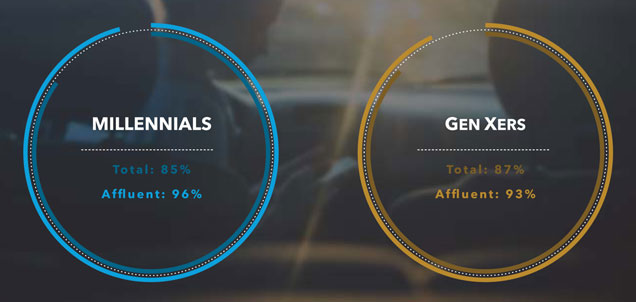
    The study revealed that Affluent Millennials are more likely to facilitate their entrepreneurial and life goals by opting for debt related financial products. According to the survey, 68% of this group owns at least one credit card and 52% have a personal loan. Given their entrepreneurial spirit, it is not a surprise that 27% have a business loan.


    The dynamic, self-empowered and technologically advanced generation is a key driver of India’s economic growth. To help financial institutions nurture and deepen their relationships with the Affluent Millennials, here are some interesting insights from the study:

    Independent and hungry for information

    • 54% of Affluent Millennials said that they conduct their own research before making an investment, but consult with an advisor to validate before they take a decision
    • 68% Affluent Millennials expect to be successful and advance quickly in their career through their own hard work – not through their country’s prosperity
    • The study revealed that 86% of the Affluent Millennials use social media for obtaining financial information. They look for financial institution which offers a great degree of privacy and has a positive buzz online
    • Peer opinion (93%), thought leadership (92%) and informational resources (90%) is the content Affluent Millennials want from accompany on social networks


    Low dependence on salaries

    • The source of affluence for this group is changing.Salaries are losing prominence as the primary source of wealth ascompared to the GenX Affluents**. Affluent Millennialsare 1.8 times more likely to have gained their wealth from royalties, 1.6 times from self-employment and 1.4 times by way of grants and scholarships.


    High on loyalty

    • They are highly loyal and trust the financial institution they work with and more than three quarters of Affluent Millennials with multiple checking accounts hold all of them at the same financial institution.This is much higher compared to GenX (31%)
    • More than half of Affluent Millennials (51%) are more likely to say they are VERY loyal and plan to do more business with financial institutions they work with.


    “Millennials are an incredibly crucial audience for marketers and that makes this a very important study. For the very first time, we have deep insights about how this generation views financial matters”, says T. Gangadhar, MD, MEC India


    “Majority of the millennials consider themselves global citizens who are digitally savvy and constantly looking for information. Our study revealed that, 60% of this group consider social networks as a must have for making a financial decision. For financial services providers this translates into two key takeaways,building stronger relations with the Affluent Millennials and generating relevant content online,” said Ashutosh Gupta, Director of Marketing Solutions, LinkedIn India.


    Given the unique and dynamic behavior patterns of the Affluent Millennials, there are a number of opportunities available to financial services companies to alter their marketing strategies. They need to personalise and socialise their approach, provide expert advice in order to establish trust and enable independence and build a loyal customer base at an early stage.


  • Mobile marketing is top driver of sales: MMA study


    By Labonita Ghosh


    Corporates, if you haven’t been paying much attention to your mobile marketing spends, here’s a compelling reason to do so. The Mobile Marketing Association (MMA), a global non-profit with more than 800 member-companies from 50 countries, conducted a recent study for the Coca-Cola in China, which is something of an eye-opener.


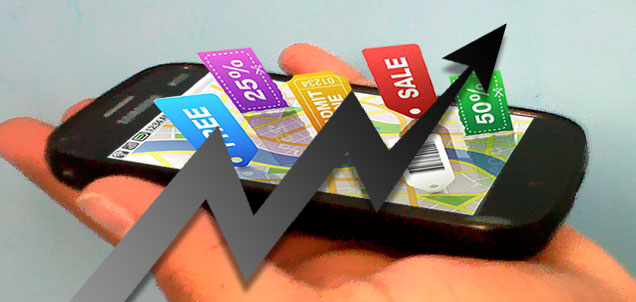
    The study — on Smart Mobile Cross Marketing Effectiveness (SMoX) – shows, among other things, that mobile marketing offered nearly double the RoI than TV, and was also twice as efficient in driving sales, compared to the campaign on an average. And also that if you spend about eight per cent of your total budget on mobile spends, you are likely to see that drive seven per cent of profits. Correspondingly, a 15 per cent spend would drive 16 per cent of profits.


    In short, the findings, released in Shanghai last week, confirm that marketers would significantly improve their overall campaign performance without increasing budget, by simply raising mobile spend. According to the study, the optimal spend for mobile (based on total campaign spend, and not just digital) currently hovers at 8-15 per cent. Mobile marketing is broadly defined as including advertising, apps, messaging, mCommerce and CRM on all mobile devices, including smart phones and tablets.


    The study also showed that mobile video emerged as significantly more effective compared to both TV and digital video (by around 3x). This was a greater increase than even the strong trends seen for mobile video in comparable research in the US. Moreover, mobile display drives purchase intent, while mobile social initiatives drive both purchase intent and engagement. According to SMoX, therefore, optimised mobile spend level is 15 per cent, impacting sales even further and producing a double-digit profit increase.


    “With empirical data, the SMoX study with Coca-Cola in China, demonstrates the impact of mobile on a business and its competitive opportunity in this region, similar to what we have observed in the United States—but with even better results,” said Rohit Dadwal, Managing Director of the MMA in Asia Pacific. “It is a great data set for marketers to reassess and optimise their spending with the most impactful allocations in their marketing mix, while leveraging mobile with double-digit spends. As an industry, it is time we learned the effectiveness of the channel to aid marketers with their ambitions, and kept pace with consumers to understand the power of the mobile.”


    Greg Stuart, CEO of the MMA, said: “The market has acknowledged that there is a deep chasm between consumer behavior and what brands are currently spending on mobile. But now there is real, indisputable proof on the value of mobile to a brand’s business goals.” Tom Daly, Group Director, Global Connections, at The Coca-Cola Company, added: “Based on the results for China, as well as the study we conducted in the US, we have begun to see a number of truths about mobile that provide a clear path forward, especially around marketing effectiveness. We now have the facts we needed.”


    Conducted in combination with Marketing Evolution and InsightExpress, SMoX assesses the economic value of mobile compared to traditional marketing channels and provides brand marketers empirical evidence on the impact of mobile in the marketing mix. The results from China reinforce the findings of the other US SMoX studies: That mobile is a key driver of business results across the entire purchasing funnel. Additionally, the study highlights that mobile, when executed with best practices, impacts performance even further. SMoX applies Marketing Evolution’s unique cross-media attribution modelling approach, leveraging new techniques to provide a granular read on mobile and other media.


    The results from this study were seen to be consistent with results from other, recently released studies in the US, with AT&T, Coca-Cola, MasterCard and Walmart. Additional studies are being conducted in U.S., China, UK, Turkey and Brazil.


    This first appeared in dna of brands dated August 17, 2015


  • Twitter Commemorates India’s 69th Independence Day with India Flag

    By A Correspondent


    Twitter launched an Indian flag emoji, its first-ever feature for India’s Independence Day celebrations. The feature was active until the midnight of the 16th of August.


    By using hashtag #India when composing a Tweet, the Indian tricolour appeared after those hashtags in the sent Tweet. The feature gave Twitter users a fun way to Tweet, share and celebrate the historic day with Indians and supporters of India worldwide.


    PM Nadrendra Modi (@NarendraModi) officially launched the nation’s first-ever Twitter emojis by wishing his fellow citizens on the eve.


    “Twitter has always been the go-to platform for people to engage in live, public conversations about their passions, cultural moments and events taking place in the real world. These emojis are a fun, colourful way to unite Indians during the Independence Day celebrations, which is also the perfect time to launch the first-ever Twitter emojis for India,” said Raheel Khursheed, Head-News, Government, Politics, Twitter India.


  • OLX’s #TimlessStories connects fans from either side of the border

    By A Correspondent


    In 1947, a border created Pakistan and millions of people were forced to leave their lives behind to start a life on the other side of the border.


    The partition was an event that separated their memories and things they loved most.


    On eve of Independence Day, OLX launched an initiative that collects stories of memories people cherish the most. As part of the initiative, a documentary was launched which is a representation of a memory fulfilled for the Khullar family.


    The initiative was launched on the OLX Facebook page in India on the 8th of August, and the OLX Facebook page in Pakistan on the 12th of August with the help of static content depicting the timeless association between people and goods that they have been separated with and one’s thirst to be reunited with such items. It reaches out to its users to post stories of objects they wished to be reunited with on the OLX Facebook pages in India and Pakistan with #TimlessStories. Simultaneously, the brand also called out to owners of articles from the era to post listings on the OLX websites in both countries with a special hashtag #Daastaan.


    This initiative is part of OLX’s larger vision to unlock the hidden values of things, through discovering the stories inherent in used objects. All of this is to take the conversation beyond the product and into the larger territory of “timelessness” of used goods.


  • Godrej HIT & LinTeractive unveil ‘Track the Bite’ App on occasion of World Mosquito Day

    By A Correspondent


    Over the years, Godrej HIT has been at the forefront in building awareness against pest borne diseases through its ‘Kill Pests Kill Diseases’ campaign. Driving the initiative in a big way for Godrej HIT is its variant – Kala HIT that has executed many successful education campaigns through media and on-ground activations to fight diseases like dengue and malaria.



     

    It is a well-established fact that diseases like dengue and malaria claim thousands of lives globally every year. In fact several institutions and brands have been constantly sensitizing people on the measures that need to be taken by spreading the message through mass media vehicles. But despite such investments, Godrej HIT realized that intense media clutter and noise in traditional media channels has made people indifferent (it often becomes a blind spot) even to such critical messages. However, if such messages are designed to address a specific need, people are far more receptive. Godrej HIT decided to draw people’s attention by causing a disruption in the communication by using a tech intervention that solves a specific need.


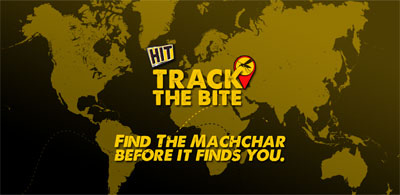
    An idea of developing a mobile app called ‘HIT – Track the Bite’ was thus born. Developed by LinTeractive, the digital arm of Mullen Lowe Lintas Group, the mobile app is designed to deliver real-time information on dengue and malaria based on the user’s location at vulnerable places. Timely and personalized messages provided on the app leads to higher engagement and persuades people to take effective action against dengue & malaria. Rapid awareness also builds up if information is available and sharable in one click. HIT – Track the Bite mobile app is the perfect solution. With app features like easy share, users can push information with their family and friends at the click of a button, which is a must for boosting organic reach.


    Godrej HIT would be running a special drive that would kick off on August 20th – World Mosquito Day to create heightened awareness around the need to download the app. The app is available for download on Google Play store for Android users (http://bit.ly/TrackTheBite). It will be launched on the iOS platform soon. The brand would be running an app download campaign on the day on Twitter where it will trend under the hashtag #HarKoneMeinDanger. This would help in driving more app downloads and also create buzz about the impending risks arising due to dengue and malaria.


    Sunil Kataria

    Sharing his thoughts on the new initiative undertaken by Godrej HIT, Sunil Kataria, Business Head India and SAARC, Godrej Consumer Products said, “As a category leader Kala HIT has always led the fight from the front against dengue and malaria by educating people about this threat. This has been achieved through innovative campaigns under “Kill pests Kill diseases” like sand art activity on beaches of Chennai and Puri last year. This year on the occasion of World Mosquito Day, we are unveiling HIT – Track the Bite App, a latest initiative on our mission to provide real time information to people. We are hoping that this information will empower people to fight the threat of dengue and malaria.”


    Adding further he said, “Taking our fight against mosquitoes a step further, HIT intends to reach out to every citizen in the country sensitizing them about the threat of dengue or malaria through a technological disruption. HIT-Track the Bite is one-of-a-kind mobile app that intuitively provides real-time information on the threat levels to users basis their location. The app also provides precautionary measures required to remain safe. Spreading this information is critical and thus the app has a built-in feature that allows users also to alert their family and friends at the click of a button.”


    According to Kataria, Kala HIT would be embarking on a 4000 plus kilometers drive starting from the national capital – Delhi with the objective of educating people about dengue. On its way to Bangalore, the HIT van will cover more than 20 cities and demonstrate how HIT – Track the Bite app can help them be informed and be safe from dengue and malaria.


    Some of the highlights of the app include:

    • It provides real time updates to users on dengue & malaria news in their locality
    • The app tracks internet sources for any published news in India on dengue and malaria
    • Users can check the threat levels in any part of the country by entering a particular location
    • It provides a list of potential risk areas for malaria and dengue in the country
    • Easy share features enable users to inform family and friends in any part of the country
    • Gives power to the user to report mosquito infestation in a particular locality
    • Lists important safety tips to take necessary precautions


    Sumanta Ganguly

    Sumanta Ganguly, Senior VP – Lin Teractive said, “HIT — Track the Bite app is an offering that is unique in its approach. It’s the first of its kind that takes safety and precaution to the next level on the digital platform.”


    Gauri Joshi

    Sharing her views on developing the app, Gauri Joshi, Unit Creative Director, LinTeractive said, “Our vision to create a unique app that protects users from the ever-present risk of dengue and malaria has finally been realized. Given the increase in smartphone penetration, we are confident that the users will download and discover the many benefits that the app offers. With the app, users can stay informed and keep their near and dear ones safe from these diseases.”


  • Hike strengthens its Leadership Team

    By A Correspondent


    Hike Messenger announced the appointment of Vidur Vyas as VP of Marketing and Sumit Mehra as Studio Head. Vidur will be spearheading Hike’s marketing initiatives, brand positioning and strategic alliances; while Sumit will be responsible for driving game strategy, development and production. Both Vidur and Sumit will be reporting to Kavin Mittal, CEO & Founder Hike.

     

    The company is looking at beefing up its presence in the high-growth IM space at the back of its recently announced integration with Hoppr and Tiny Mogul.  Towards attaining its mission to bring billions online, the company is envisioning and expanding the IM landscape by offering its users much more than simple messaging. And to accomplish the mission the company is all set to strengthen its leadership team, earlier this year Hike announced the appointment of its new HR Head as well.


    Speaking on the appointment, Kavin Mittal, Founder and CEO, hike, said, “I’m excited to add Vidur and Sumit to our leadership team. It’s great to see such strong leaders in the industry share our vision to bring India online. I look forward to working with them and leveraging their experience to build hike into a world class product and a brand that is loved by millions in India.”


    With a career spanning over 18 years, Vidur was a Senior Director of Marketing at Pepsico India. He brings extensive experience in brand building and was responsible for driving nutrition and beverage portfolio for Pepsico India.


    Sumit started working as a game developer in 1999, and later went on to work with companies like Microsoft Games Studio, EA Games, Jump Games and Zynga. Before joining Hike, he was GM of the New IP division at Zynga and was responsible for the successful launch of Zynga India’s maiden New IP Game – Hidden Shadows.


  • Twitter India strengthens leadership with new appointment

    By A Correspondent


    Viral Jani

    Twitter India has appointed Viral Jani as Head of TV Partnerships, who will be based at the company’s office in Mumbai. As part of his new role, Viral will work closely with the complete TV ecosystem of broadcasters, production houses and audience measurement systems to make Twitter the second screen to TV in India.


    Viral’s main responsibility will be to forge strategic partnerships with broadcasters to help channels amplify their message, drive more viewers, and generate more user engagement with their content on Twitter. He aims to lead  this social TV movement in India in two ways: by bringing the best content from TV channels to Twitter’s platform for live, public conversations, while enabling Twitter as an incredible video and visual-driven storytelling platform to drive tune-in and audience engagement for the TV channels.


    Moving forward, Viral is keen to position Twitter as the largest virtual couch for viewing TV content in India, and facilitate broadcasters to use the full suite of Twitter’s products such as Twitter native video, Twitter Amplify, Vine, Periscope, SnappyTV and TV analytics. The real magic takes place, Viral believes, when brands follow a thorough content-driven strategy to optimise on the Twitter+TV experience. Each of the Twitter TV products boosts viewer engagement and helps provide unique Twitter content surrounding a TV show – Tweets, photos, videos, live chats with on-air talent, Twitter polls, and behind-the-scenes Periscope videos. Twitter is complementary to the full experience of a TV channel today, and each Tweet is an opportunity to strengthen relationships with the TV audience.


    Rishi Jaitly, Vice President, Media, Asia Pacific and Middle East, Twitter said, “Twitter is the ultimate companion to television and we have invested considerable time and effort in partnerships with TV broadcasters worldwide to ensure they are able to amplify the live, public conversations about their shows on our platform. In his new role, Viral will expand Twitter’s leadership and footprint in the social TV market in India, prioritising TV partners that drive audience engagement and growth.”


    With more than 12 years of experience in the media industry, Viral has previously worked at broadcasting group Times Television Network, where he was instrumental in building a strong social media presence for their channels – Times Now, Zoom & ET NOW, in addition to managing the portfolio of content strategy and audience insights for their TV Business. Under his leadership both entertainment and news verticals of Times Network achieved the best in class engagement on Twitter and other social platforms.