Category: Digital

  • Twitter co-founder Biz Stone invests in Lookup

    By A Correspondent


    Lookup, a free and secure messaging app that connects shoppers with local businesses has raised Series A funding from Twitter co-founder Biz Stone. Biz has joined the team as an investor and advisor. Lookup will be employing the funds towards investment in expanding its merchant base in order to enhance convenience for its users and to branch out in newer geographies.


    Lookup raised a total of $382,000 in its seed round, from multiple investors including Infosys’ Kris Gopalakrishnan, Teru Sato, DeNA and MKS Group (Switzerland). It was started by Innoz’s Deepak Ravindran and within about 5 months of launch, Lookup has already registered over 2, 00,000 downloads and has answered over 3 million queries.


    Speaking on his investment, Biz Stone said, “I’m honored to be a part of Deepak’s next big project and I am truly impressed by what he has already accomplished in his life. I’m very excited about working with such an inspiring entrepreneur, whom I share common ideologies with.”


    Deepak Ravindran, Founder and CEO of Lookup said, “I am extremely thrilled that Biz Stone is personally investing in our Series A round. It is almost surreal. His beliefs and ideals are very fascinating and I am glad that someone so altruistic and with such a genuine moral compass is a mentor and advisor to me and my company.”


    On his future plans, he added, “Receiving this funding is like getting another opportunity to blazon the world with innovation; to fill more e-pages in the world of businesses and startups. We plan to integrate all the offline businesses into the online world and connect them to their customers. The final goal is to make Lookup a global phenomenon and hope to ease the busy lives of the people.”


    Besides co-founding Twitter, Biz Stone also helped create and launch Xanga, Odeo, The Obvious Corporation and Medium. In 2012, Stone co-founded a start-up called Jelly Industries where he serves as CEO. The release of the Jelly app, a Q&A platform that relies on images, was officially announced in January 2014.


  • HT Media and North Base Media launch Mediahack.in

    By A Correspondent


    HT Media Ltd. and North Base Media, an international investment firm, announced the creation of Mediahack.in, an innovative accelerator program aimed at fostering a new generation of digital media companies.


    Mediahack.in will identify and support entrepreneurs who want to build leading-edge, original content and advertising-related technology businesses in India. Both HT and NBM’s leaders have decades of global and Indian media experience that they will bring, along with extensive connections to pioneering technology and media companies around the world.


    Mediahack.in will invite entrepreneurs to apply to participate in the accelerator starting this summer. Successful applicants will spend several months on the program, interacting with each other and leading media and technology thinkers from around the world. They also will receive an initial investment of up to US$ 100,000 to convert their great ideas into fast growing and world changing businesses.


    Talking about the potential of the Indian media market, Marcus Brauchli, co-founder and managing partner North Base media and former editor of The Washington Post and The Wall Street Journal, said: “Mobile and social platforms are transforming the way billions of people consume news around the world. Nowhere is that more evident than in India, where more than 500 million people will have access to the Internet, many for the first time, in the next few years. We want to help the next generation of entrepreneurs create the platforms, products and technologies that will bring news and information to those new audiences. We are fortunate to have as a partner HT Media, with its deep commitment to news and innovation and its leadership’s strong interest in innovation. We hope to provide Media Entrepreneurs in India our expertise so that they can scale up to be global businesses.”


    Speaking about the launch of mediahack.in, Rajiv Verma, CEO, HT Media Ltd., said, “Media is one of the most exciting sectors in India today. I am therefore delighted that we at HT in partnership with NBM; are going to provide a platform which will encourage media entrepreneurship in India.  NBM with its global expertise will add immensely to this endeavor and provide great learning opportunities for upcoming media entrepreneurs.”


  • Mindshare on a roll, nets new biz of over Rs 700cr

    By A Correspondent


    You read about this in The Economic Times already, now read it here. Mindshare India has bagged accounts aggregating over Rs 700 crore in new business for the agency in the last four months. The new accounts include the digital mandate for Snapdeal, media mandate for PayU, Saavn, Practo, Housing.com, NewsHunt, Novi Digital Entertainment, TTK Skore to name a few.


    Speaking on the new account wins, Prasanth Kumar, CEO, Mindshare South Asia said in a statement, “We begin 2015 on a very promising note as Mindshare consolidates its leadership position in the market by adding several blue-chip clients especially in the ecommerce and digital industry. We are channelising our services and talent towards frameworks and tools that include adaptive and real- time marketing, giving our clients the edge in an ever evolving media market- The Loop at Mindshare is one such example. Mindshare also includes a full-service digital and social media agency to ensure seamless planning across all media for brand campaigns.” Mr Kumar took charge as CEO of Mindshare South Asia on March 1 from Ravi Rao who was designated Leader, South Asia.


  • Turtle Ltd. unveils unique #SAVELITTLESHELLY initiative

    By A Correspondent


    Turtle Limited launched #SAVELITTLESHELLY campaign to support its on-going efforts to conserve the endangered species of Turtles. This year, Turtle Limited has taken the campaign to a new height by not just celebrating the day, but the entire month announcing World Turtle Month Initiative and introducing little Shelly, the animated character through their newly launched #SAVELITTLESHELLY campaign.


    #SAVELITTLESHELLY is launched as a hashtag in social media as the story of Shelly, a baby turtle with a cute shell, making her journey from the nest to the sea, braving all dangers that come in the way. A unique animated social initiative, it is a 2 minute YouTube film broken down into four stages. At the end of each stage, viewers are asked to help Shelly complete the next leg of her journey by likes. Every new stage of the film was released only after a certain number of likes at the end of the previous stage. Curious viewers, eager to see Shelly’s journey, and gradually four stages of the film made it to the YouTube. Finally, on World Turtle Day, people were able to see the entire film and take pride in helping Shelly find her way and live on.


    Speaking on this campaign, Arjun Mukherjee, Creative Art Director, JWT, said “The entire idea was to raise awareness of the plight of the Turtles who are facing extinction in an interesting an engaging manner. So we wanted to give the people at large a hands on opportunity to save a turtle. The month long initiative saw the creation of a cute virtual turtle who can move a step forward towards survival only when one donates. While the actual donations went towards the conservation of Turtles and their environment, thousands of people logged in everyday to watch the journey of Shelly the Turtle and helped spread the word”.


    World Turtle Day, which was on 23rd of May is dedicated to the salvation of these marvellous creatures who have inhabited this planet for the last 200 million years. As they play a very crucial role in maintaining the ecological balance, we need to nurture them since the time the eggs are hatched till the turtles find their way to the sea.


    To build buzz around #SAVELITTLESHELLY campaign, the social media was flooded with interesting posts, ads and every Turtle shop in the country was speckled with posters that talked about the drive and the cause. Store merchandise were designed around Shelly and distributed to customers, who spread the word and drove the initiative both on social media platform and the personal front.


    Commenting on this initiative, Shitanshu Jhunjhunwala, Director, Turtle Limited said, “Turtles have been around for 200 million years, yet they are rapidly disappearing as a result of smuggling, the exotic food industry, habitat destruction, global warming and the cruel pet trade. Keeping in mind this sad state of turtle globally, we thought of launching a month long campaign instead of celebrating a single day to raise awareness to save turtles.”


  • Your phone is a surveillance device, your ISP a surveillance provider…: Pranesh Prakash

    By Dyanne Coelho


    “In India there is no special privilege for journalists over ordinary citizens,” Pranesh Prakash, Policy Director at the Centre for Internet and Society began at the workshop entitled ‘Digital Security for Journalists’ organised by the Mumbai Press Club and the Centre for Internet and Society.


    “Even if you don’t care about your own security/privacy, think about you sources. Your sources want privacy,” Prakash said as he began the workshop on how to assess security threats, how to protect sources and how to prevent your ISP from leaking out information. With the growth of the internet since the 1980s, we know we can’t trust everyone; police stations, governments, all engage in surveillance of some sort, he pointed out. Prakash went on to explain the ‘Threat Model’, wherein journalists ought to ask questions like what are you protecting, who are you protecting yourself against, what do you hope to achieve and to what lengths are you willing to go?All of the measures you are going to take to protect your source are going to be inconvenient. Security is always at the cost of convenience he reiterated.


    Data threat can be intercepted at two levels, Prakash explained; data in transit and data at rest. The important question to ask is which you wish to secure, because the means to secure both are very different.Emails being sent to someone can be intercepted by an outside source in transit. It is easier to secure you own data on your computer, but an email is so much more difficult to secure because there are multiple points where the information is stored. Targeted surveillance is much more difficult to protect yourself against than mass surveillance.


    For WiFi, password protected networks form an encryption, one more barrier to protect you. However, a WEP encrypted network is easy to break through. You need at least a WPAII to be secure enough. Airport networks usually ask for a password after connecting to the WiFi. That too is easy to see through. Avoid using these networks for sensitive work.


    One must keep in mind who they want to secure the data from; whether from a casual threat or an Intelligence Agency like the National Security Agency (NSA), National Technical Research Organisation (NTRO) or Intelligence Bureau (IB).Mass surveillance or non-targeted surveillance is not legal in India. However. the NTRO engages in mass surveillance, for which it was criticised in a Mint article, following which they shifted only to the national borders for surveillance. It is also possible for the NSA to tamper with your laptop before delivery.The NSA’s ANT catalogue has been working on a technology that has a device that can fit within the connector that connects to your keyboards and it can last there years and years without detection. Hence Prakash suggests that if a journalist is working on a sensitive story that if leaked could cause a ruckus, he/she would be safer buying a new computer and paying for it in hard cash.


    The more important a source is, the less you must use your phone, Prakash pointed out. Phones leak information time and again, information of time and location. The NSA uses it, the police use it. If you are meeting with someone and you both have your phone, then information that you have met is transmitted. Even without GPS it can track your location, when you receive/send a call/message, as your mobile network needs to access the cell tower you are around in order to reach you.


    Encrypted emails still leak identities. If the police look into an encrypted email, they will still know who you are communicating with. Background information you are doing on a story can also give away a lot you don’t want to be given away. Even with an encrypted email, they have access to your location, IP address, the sender and the receiver of the email, time stamp, Mac id and IMEI.


    End-to-end encryption is the way out here.This means that no one in the middle, including the company can read the emails you send from your company server. End-to-end encryption is the most inconvenient. End-to-end encryption means that you and the party concerned need to come up with a code that the other party needs to be able to decrypt. The software both parties use also needs to be compatible.


    “I recommend using WhatsApp over Viber and Line, Skype over other alternatives and Twitter is also safe, but never use Facebook for sensitive conversations that you don’t want to get out,” Prakash said. WhatsApp is safer than normal text messaging he points out. Prakash recommended an app called Conversations to use for messaging on your phone. It is safer than both normal SMSing and WhatsApp. An SMS leaks metadata, he explains, that’s why it is preferable to use data or apps that use the internet.


    In the 2G network space, only Airtel and Docomo use at least a weak encryption.All the rest use no encryption. Anyone can snoop in on your conversations. Instead one must use data-enabled apps for calling like RedPhone, he suggested. This is a great way to protect your source.


    Most people are known to repeat passwords for various accounts. Never repeat a password, Prakash advised. Maintain different passwords for all your accounts. It is the safest. And if you are unable to remember them all, then use password managementsoftware like LastPass or KeyPass. These enable you to key in and store all your passwords in one place and you only have to remember the password to your LastPass/KeyPass account. But if you forget your master password, then there is no way to recover all your other passwords.


    The session concluded with Prakash working hands-on with the journalists, helping them to download the required software on their laptops and mobile phones. This knowledge is vital for all journalists in order to protect themselves and their sources when doing a high profile, sensitive story, Prakash said.


  • ‘We want India Today TV to be #1 in Viewers’ Faith’


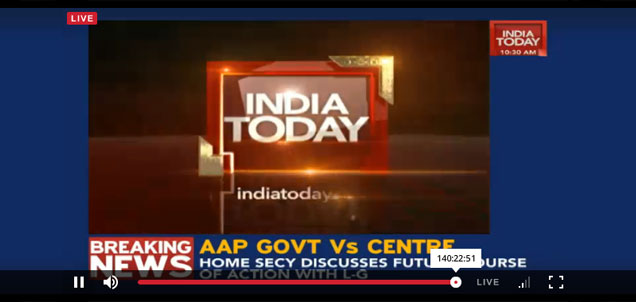
    The India Today group has in the recent past been working hard on having all its media brands work in sync with each other. Last Saturday, at 6pm on May 23 to be precise, Headlines Today, the group’s English-language news channel, was rechristened India Today Television, named after the flagship news magazine. In this interview with MxMIndia, Ashish Bagga, Group CEO, India Today talks about the rebranding and how more than ratings, the objective is to make the channel numero uno in viewers’ faith.


    Over the last few months, ever since Karan Thapar and Rajdeep Sardesai have come on board, Headlines Today has seen a steady rise in popularity (though I am sure your marketing team will say that rise started even before they came on board). So why change the name?

    The brand equity of a 40 year legacy is incomparable to any product of today. The attributes the new channel will stand for, like Zero bias, Credibility, Neutrality, Depth are best communicated in two words ‘India Today’ – the brand that has defined the national agenda  – A brand that is in itself an institution of purest form of journalism. At a time when this viewer is yearning for meaningful journalism, what better way to deliver it than with a name that’s stood for it and stands for it. Ushering and nurturing top editorial talent was part of the strategy for the launch of INDIA TODAY TELEVISION.


    The Hindi edition of India Today magazine (the printed avatar) has the same name as the English one. Will you consider changing the name of Aaj Tak (the TV Channel) to India Today? Why?

    Aaj Tak has been an undisputed leader for 14 years since inception and has lately achieved a continuous 100 week nonstop leadership streak. It is a symbol of unshakeable trust and the nation turns to only one news channel when it really matters…. Trust is built with a lot of hard work and sincerity over many many years… A question to rename, therefore definitely does not arise.. India Today and Aaj Tak are both mega brands and playing their roles very very well in respective spaces.


    We see the aggressiveness in English news channels really hard to beat – quite like it took a long, long time to get over the ‘angry young man’ image of Amitabh Bachchan era of the 1970s and early 80s. In the Hindi genre too, we have seen that the dumbing down has played rich dividends? Do you think a serious news channel will ever work in terms of ratings?

    News consumption habits have evolved considerably with people consuming news content across media and platforms. TV news is still linear and gives only one story at a time leading to lot of missed news and viewer disconnect. What this space awaits is revolutionising the delivery and integrating with digital. An involvement level of the consumer needs to be built in. If you’ve got these elements right, there is definitely not just space but a very strong opportunity for a serious news channel. On Hindi, I disagree with dumbing down. Talking the people’s language and dumbing down are two very different things. I think all the channels in leading position are taking their news and content very seriously.


    Running an English channel obviously requires huge investments of monies. Is it really worthwhile making such huge investments at a time when the environment is uncertain and the ‘achche din’ haven’t really arrived?

    We’ve had an increasing rate of return on the investments made on the English channel. If the product is drawing quality audience, revenue will follow. Yes, costs are high, but they also bring along disproportionate returns if the strategy is right and the brand is strong. More so in the English news space than any other.


    Given the current scenario in English news television, do you think the one-upmanship which typically exists in the space can also mar the image of India Today, which has a 40-year-old legacy, brand dominance and is much trusted?

    The purpose of India Today Television’s entry is to try and move the genre away from one-upmanship. The only person who should be one up, should be the new news consumer. A consumer who has options, a consumer who sees through the claims, a consumer who prefers depth over breaking news, a consumer who doesn’t want forced opinions. If we keep our consumer ahead, we believe we keep ourselves ahead


    As per information that we’ve got from the market, the ad rates of Headlines Today were much, much lesser than those of a Times Now. Will all of that change?

    The feedback has been very positive. While we wouldn’t like to disclose our commercial rates or to enter a comparison, we are surely seeing an upward tick even before the launch


    The India Today group also has some other English products in the general news space – Mail Today and Daily O. Will see a rechristening there too?

    No plans


    Any targets of by when do you hope to see yourself as the #1 All-India?

    The space in TRP terms is very small and rankings change week by week. Therefore, our attempt is to first become No.1 in the viewer’s faith – his/her reliability on our news. To become the destination channel when it matters to him/her. To stand out as a news channel that makes sense. The rankings will follow… is a matter of time. What is more important is to become the viewer’s knowledge source and not an entertainment hangout.


  • Flipkart refreshes brand identity; unveils new logo

    By A Correspondent


    After eight years of innovating and transforming the shopping landscape in India, Flipkart has now undergone a brand identity refresh. Starting with a new logo, the brand has now been refreshed across all the elements that have made it endearing to millions across India.


    Conceptualized and designed by Flipkart design team and an external agency called Umbrella Design – the new brand identity represents Flipkart’s vision of commerce in India by reinstating its focus on the mobile platform. The 3D design and contrasting color palettes in the new logo helps break the clutter and stands out on the mobile platform. The added zest and flavors in the logo make the brand more appealing and inclusive to all its audiences.


    The refreshed personality will reflect in all forms of the company’s messaging and engagement with customers. It will help customers experience ‘One Flipkart’ every time and at all touch points. Every stakeholder, be it customers, sellers, media, brand partners, vendors or employees, will experience a more witty, youthful and sincere Flipkart.


    Speaking on this ocassion, Shoumyan Biswas – Senior Director, Marketing, Flipkart said, “The refreshed brand identity, including the new logo, is a reflection of our promise to our stakeholders – youthful, innovative, fast and reliable. We have always been ahead of the curve in a rapidly evolving industry and the new brand identity honours the legacy that we have built over the last eight years and at the same time looks into the future.”


    Shoumyan further added, “While developing the New Logo, we focussed on three key elements – one, the new identity had to create a positive perception about our Brand; two, the logo needed to be more inclusive in its appeal to all our customers and three, given our focus on the mobile platform it had to stand out on the app interface. With our new Brand Logo, I believe that we have achieved all of these.”


    This activity dovetails with Flipkart’s business focus where in the coming year, the brand wishes to reach everyone who has a pin code and a smart phone and fulfil their desires for great products at surprisingly delightful prices.


  • Olx rolls out nationwide campaign featuring celebrities

    By A Correspondent


    Olx.in has launched four ads in Hindi, Tamil, Telugu, and Kannada, each featuring a celebrity superstar. All TVCs are weaved around a common theme – ‘Let the Old Make Way for the New’ or ‘Purana Jayega Toh Naya Ayega’. The ads that hit the TV screens on May 30, 2015, comprise of four different films featuring leading stand-up comedian Kapil Sharma, Tamil movie sensation Dhanush, Kannada hit-maker Sudeep, and Telugu star Allu Arjun. Another TVC featuring Bengali celebrity Mir Afsar Ali will be launched shortly.


    Said Amarjit Singh Batra, CEO, Olx.in, “The central thought behind ‘let the old make way for the new’ is that change leads to progress. Only when you let go of the old, you create opportunity for new things to happen in life. People have been selling everything from household items to cars on Olx in just a few hours! Olx is the easiest, and the fastest way in which people are upgrading these days, and bringing about a change in their lives. We hope that ‘Purana Jayega Toh Naya Ayega’ becomes both an incentive for people to let go and upgrade through Olx, as well as a mantra to live by.”


    “We are not just a local brand, we are a hyper-local brand, built by Indians and for Indians. This reflects in our marketing. We were the first internet company to make regional campaigns in local languages with regional celebrities using colloquial sensibilities and references. We have always been the first-movers in online classifieds, and that’s the reason that our brand today stands for the category itself commanding 85% market share of the C2C trade in the country” added Batra.


    Conceived by Lowe Lintas, the TVC featuring Kapil Sharma depicts a man literally stuck to his used car. Kapil, portraying the role of a security-guard, explains that he has been long stuck to it, refusing to let go. The man explains that it was his first car, and he doesn’t know what to do with it. Urging him to move on, Kapil takes the man’s phone out, clicks a photo of the car, and uploads it on Olx. Buyers start calling right away, and the car gets sold. The man is seen getting unstuck to his car, and upgrading to a bigger one. In his quintessential tongue-in-cheek style Kapil Sharma concludes – “No chipkoing, kyunki Purana Jayega Toh Naya Ayega”.


    Shayondeep Pal, Executive Creative Director, Lowe Lintas said. “Purana Jayega Toh Naya Ayega is based on our habit of stacking stuff at home which we might not be using. It is only by letting go of the old that you make way for the new. Kapil is the face of the masses. His sensibilities and style are something people relate to. We have used his style in this campaign to put across this message with satire. OLX is a great platform to help us meet people who might be waiting for the exact stuff we are selling.”


  • Nazara nets Manish Agarwal as CEO, eyes being largest smartphone publisher

    By A Correspondent


    Leading mobile game developer and publisher Nazara Technologies has announced the appointment of Manish Agarwal as Chief Executive Officer. Nitish Mittersain, who founded Nazara Technologies, will assume the role of the Managing Director.


    Formerly CEO of Reliance Games, Agarwal brings with over 16 years of rich experience in digital, consumer marketing and mobile gamingHe was instrumental for development of successful, multi-million download games including Real Steel franchise, Pacific Rim and Hunger Games Panem Run among others. He has held senior leadership positons at Unilever, Microsoft, Rediff, Infosys and UTV.


    Said Mittersain: “As an industry as well as a company, we are at an inflection point today. While on the demand-side, the adoption of smartphones and enhanced connectivity is helping the segment grow at an unprecedented pace, on the supply-side there is tremendous interest in the Indian market from global players, new entrants, content developers and investors. To remain competitive in this market, we need to scale up our operations and increase the management bandwidth, and this is where Manish will play a role. We are certain that his experience of running a large mobile gaming business, expertise of developing world-class games and passion for the mobile game developer ecosystem will help in taking Nazara to new heights.”


    Speaking about his appointment, Agarwal, said, “Nazara has been a pioneer in the Indian mobile gaming space. With an in-depth understanding of the gaming ecosystem and a highly talented team, the company is well poised to shift gears and enter a phase of faster growth. I am glad to be a part of Nazara, and together with Nitish will help steer the company and set it on course to becoming a world class mobile gaming company. ”


  • Millennials set the rules on Monies


    By Dyanne Coelho


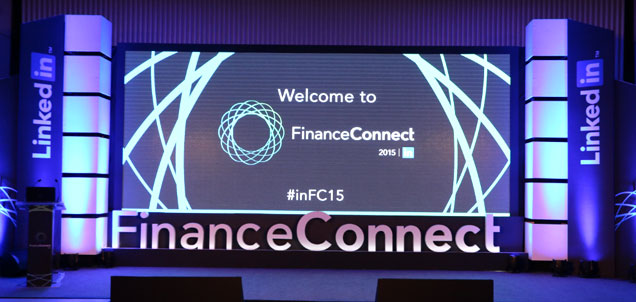
    Millennials are setting the rules of the game. That’s what Jennifer Grazel, Global Marketing Director, Financial Services Vertical for LinkedIn, believes. At the second edition of the LinkedIn Finance Connect, held last week, Grazel elaborated on how today, disruption equals innovation, and in the post digital age – defined largely by millennials and the way they operate — there has been a disruption in the way things work.


    The three key elements to building a successful brand image in an age of digital revolution are trust, having relevant content and focusing on the customer-decision journey, Grazel said, adding, that since “the customer journey is becoming the brand”, one needs to be authentic, relevant and constantly engaged in dialogue. Appropriate advice in a meet where the topic of discussion was ‘Building and Nurturing Relationships in a Networked World’.


    Insights from the study:

    Exceptionally high optimism:

    According to the study,96% of affluent Indian millennials believe and are optimistic that every citizen has an equal opportunity to achieve success and prosperity through hard work, determination and initiative. This sentiment was highest amongst other countries surveyed.The opportunities that lie ahead is what makes them feel most confident about the current period.


    Marketers may therefore need to customize their products and relook at the traditional ways of marketing them to the new age affluent millennial force which is tech-savvy, more dynamic and relies immensely on what’s most relevant ‘now’.


    Global and social mobility equals personal success

    The millennials (18-34 year old) measure personal success through social and global mobility. This generation gives immense importance to personal vision. Success to 15% of the affluent means being financially able to travel and see the world. Moreover, 15% see success as doing better, financially, than their parents did.


    With success being so closely tied to lifestyle changes and personal engagement, brands need to alter their strategies to foster and engage with the millennials to match up to their fast-paced lives.


    Social networks drive personal financial strategies

    Being the first generation to have grown up in a digital world, millennials are technologically savvy and socially driven. The study reveals that 86% of the affluent millennials use social media for obtaining financial information. This choice of sourcing information further impacts their personal financial strategies and their methods of interacting with financial services brands.Interestingly, 71% of affluent millennials surveyed said that they are willing to try financial services offered by non-financial service brands.


    Hence, in order for brands to attract millennials, they need to be present where this audience spends most of its time. In this case, visibility on social networks is the key to engagement.


    Financially aware

    The research showed that 57% affluent millennials rate themselves as having advanced financial knowledge and this is higher than the global average.  With more than half of the affluent millennials in India being confident about their personal financial strategies, marketers need to generate targeted content which can position their brand as trustworthy, transparent and in alignment with this generation’s financial needs.


    According to Krishna Zulkarnain, Head of Marketing, APAC at LinkedIn, there’s a new wave taking over the business world, and it’s called ‘social selling’. About 75 per cent of buyers today use social media to make purchase decisions. “Our buyers are no longer passive consumers, but active solution seekers,” he said. Indeed, some 95 per cent of decision makers expect new or different insights from sales professionals. The era of cold calling is dead; only warm gestures work today, Zulkarnain informed. “It’s not always about finding people to talk to in the BFSI industry, rather it’s about finding the right people,” he said. Because the financial industry involves money, the challenge here is building trust, and building it in the fastest amount of time. “The tables have turned. The consumer is now the one in control,” Zulkarnain added.


    The Chief Marketing Officers’ roundtable saw participation by Sagnik Ghosh, Head of Marketing, Axis Bank, Manish Jain, Group Marketing head, Bajaj Finserv and Balaji Viswanath, Director Digital Marketing, American Express. The session was moderated by Edward Bray, Group Marketing Manager, LinkedIn. The discussion centred on disruptions caused to the financial services industry in the age of digital revolution. “Social media is now the key to target your stakeholders. We need to reinvent ourselves, because there is a new platform in the game,” said Jain, adding that this platform could either disrupt or engage the BFSI sector, depending on how it was used. While everyone agreed that social media is the main factor for the disruption, they also agreed that it is a tool bringing rapid transformation. “Everyone wants to see the mobile version of anything, first, today,” said Viswanath. Payment systems are evolving, and consumers are making financial decisions based on what they read online, Ghosh added. “We ought to move from tapping mere customers, to tapping the entire ecosystem,” Jain said.


    In their session, entitled ‘Content is Currency: Content Marketing for Financial Companies’, Grazel and Jennifer Cronin, Director of Social Content, BlackRock, delved deep into BlackRock’s digital strategies. Cronin stressed the fact that content marketing requires a great deal of both time and resources commitment. Everyone loves to tell a story, but what that story is, is the question, Cronin said. “Great content is the first part; you cannot sell something without it. People are smart, they know what you’re doing,” she added.


    A study conducted by Ipsos on millennials shows that 77 per cent picked a company that has a mobile app with full features. An insightful discussion on understanding Indian millennials had a panel including Tushar Vyas, Chief Strategy Officer, South Asia, Group M; Amit Adarkar, Managing Director, India, Ipsos; Peter Hubert, Head of Insights, APAC, LinkedIn and Grazel. Millennials now want a continuous sense of engagement, and on their terms. “Millennials are more interested in a better lifestyle than wealth,” said Hubert. In fact, this is the time to be optimistic as 60 per cent of affluent millennials are confident about the country’s economic future, the study showed. “Financial products that can engage millennials, is the way forward,” Vyas concluded.


    The ‘trending’ topic for the evening was the disruption caused to the financial services industry in the digital era. Olivier Legrand, Head of Marketing Solutions, APAC and Japan, LinkedIn, highlighted that the Indian market is now paying heed to the digital revolution. India is the second-largest country, after the US, in terms of LinkedIn users, Legrand said. Even though the internet is yet to penetrate many parts of the country, the Indian presence on LinkedIn is growing on a large scale every day.
     

  • Tweet hashtag #BARCTweet to get TV toplines

    By A Correspondent


    BARC India has partnered Twitter to offer weekly television viewership data on the go. This service is available free of charge even to non-subscribers.


    If one is looking for some particular data, all you have to do is tweet with the hashtag #BARCTweet followed by your request and you will receive a reply from @BARCIndia with the data.


    The aim is to create an aura of transparency and to engage with television viewers, stakeholders, broadcasters, advertisers and media agencies across the industry in India. Speaking about the service, Partho Dasgupta, CEO, BARC India says: “In keeping with our focus on technology, BARC India is geared to connect with all who are keen on knowing more about the television audience measurement service in India and are therefore proud to present a World First with the launch of hashtag #BARCTweet with the Twitter India team.”


    This effort by BARC in association with Frrole; a Social Data Intelligence Setup manning the backend software, will also help reach out directly to customers on a digital platform.


  • 99acres.com TVC on ‘Maximum Rental Properties’

    By A Correspondent


    99acres.com has launched its new TV commercial highlighting rental options on the platform. The TVC that has been created by JWT is designed with the objective to establish the concept of searching rental properties hassle free using its mobile platform. The ad narrates that 99acres.com can provide best rental options in your town whenever required.


    Conceptualised by JWT, the story is about two friends living together in an apartment. While they are watching television in their living room, a girl walks in with her luggage. She greets both these guys and they reciprocate.


    While this is happening, one of the guy turns towards his friend sitting beside him and he finds that he is not there. We realise that the guy is actually standing next to the girl. Both of them are a couple. This guy then says to his friend that both of them are moving together in their apartment. Knowing this the other guy is thrilled but realization sets in the very next moment. With a funny expression on his face, he realizes that he will have to move out and he has no choice. Cut to next scene, we see him sitting in the middle of a busy street with his luggage and searching for a rental property on 99acres.com mobile app. With 2 lakh+ rental properties on the site, you can virtually get a place on rent anytime, is what the promise is from 99acres.com.


    Commenting on the campaign, Sumeet Singh, Senior Vice President- Marketing and Corporate Communications, Info Edge said, “The TVC has been executed in a manner that appeals to young working professionals. An entertaining plot has been used to subtly inform our users about 99acres.com being a one stop solution for all their property related needs. Using the mobile platform as the chosen medium, our TVC showcases that 99acres.com can help you find the best rental options in town anytime”.


    Commenting on the campaign, Sundeep Sehgal, Associate Vice President, JWT Delhi said, “The film is a comical take on life’s unpredictable twists and turns. You never really know when the roof over your head might be wrested away. But if you have the 99acres.com mobile app, you needn’t worry because it gives you instant access to a plethora of properties.”