Category: Digital

  • Lean, Bigger iPhone + the Watch


    By Sneha Johari
    with MxMIndia Bureau


    If bandwidth speeds went down across the country on Tuesday evening, blame it on Apple. For, around 10.30pm on September 9, the appointed hour had arrived. Apple unveiled its new toys at the Flint Center, the very place where Steve Jobs had first introduced the Macintosh.


    Apple has been using the “iAppleProduct” tag on its devices ever since Steve Jobs introduced the very first iMac computer in 1998. Sure enough, the iPhone, the iMac, the iPod and the iPad all have “i”s in them. But what does the “i” signify? “iMac comes from the marriage of the excitement of the Internet with the simplicity of Macintosh. Even though this is a full-blooded Macintosh, we are targeting this for the #1 use that consumers tell us they want a computer for, which is to get on the Internet – simply, and fast. And that is what this product is targeted for,” said Steve Jobs. He used these terms to describe what the “i” in Apple products stood for: Internet. Individual. Instruct. Inform. Inspire. You can watch the address here: https://www.youtube.com/watch?v=0BHPtoTctDY


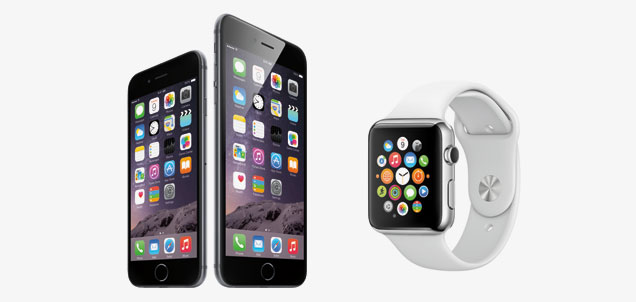
    Finally, after months of apprehension and a million rumour mills later, we have what is called the 4.7″ Apple iPhone 6 and the phablet 5.5″ Apple iPhone Plus. The change from the previous iPhone models is quite obvious with a design similarity to the Apple iPad Air with thinner and curved edges. The iPhone Plus has a better resolution of 1920×1080 with a 401 pixel density. This is also going to be known as the Retina Display (Macbookpro users will be familiar with this term for high resolution display). The iPhone 6 Plus will be 7.1 mm thin.


    Apple says that the iPhone 6 is the thinnest phone they have ever made at 6.9mm thinness. Both the iPhone 6 and the iPhone 6 Plus have better battery life and improved cameras. While most of these features have been guessed correctly by experts, Apple has also introduced Apple Pay through an NFC chip and Apple does not store your information on these devices. There is also what is called the one-handed mode with which you can navigate a website forward and backward by swiping it. Double tapping the home button will result in popping down of the image on the screen to use the phone easily with one hand.


    Talking about performance, the iPhone 6 Plus comes with a 64-bit A8 processor and runs iOS 8 with virtually no change in design. Apple Health will be useful in tracking your vitals by collectively keeping your data in one place.


    With some major changes to the camera, iOS 8 features autostraightening, cropping, automatic color correction and 2 sliders for lightness and color. It also has a brand new camera sensor.  Both the iPhone 6 as well as the iPhone 6 Plus have an 8mp camera with a True Tone flash and 43mp panoramas! The 6 has digital stabilization whereas the 6 Plus has optical image stabilization.

    As for video, you can capture full HD at 1080p at either 30 or 60fps due to the new M8 motion coprocessor.


    The iOS 8 App Store will let developers create short video app previews with a better control on app-buying by kids called Family Sharing. The battery for the iPhone 6 will last up to 10 hours in 3G and LTE mode and 11 hours on WiFi and video. The WiFi802 support will let you access the internet at a blitzkrieg speed of up to 150mbps downlink.


    The pre-orders for the iPhone 6 and 6 Plus will begin on 12 September and will be available in the UK, US, Australia, Germany, Japan, Puerto Rico, Canada, France, Hong Kong and Singapore. The 16 GB version will cost $199 on contract in the US and for another $100, you can buy the 128GB version for $399. The iPhone 6 Plus will be available in gold, space and silver colors. It will cost $299 on contract for the 32GB device and $399 on contract for the 128 GB (See Table for prices in the US, Singapore and HongKong in Indian Rupees).


    Apple also launched the Apple Watch with the specially designed and engineered Digital Crown with which you can scroll, zoom and navigate easily. You can send and receive messages, answer calls to your iPhone along with sending sensitive data such as your heartbeat. The Apple Watch will be available for $349 in the US starting early next year and will run the latest version of iOS 8.


    Will the Apple Watch herald an all-new era in gizmo-land just as the Mac, iPod, iPhone and iPad have in the past?


    Given that it does from Apple it sure will create quite a stir. Let’s wait and watch.


    Handset US US Rs Singapore Sing Rs Hong Kong HK Rs
    6 plus 749 45689 1288 63112 6388 51104
    6 649 39589 988 48412 5588 44704
    5s 549 33489 848 41552 4688 37504

    Unlocked phones. All conversions have been rounded off on the higher side
    Assuming following conversion rates: USD: Rs 61, SD: Rs 49, HKD: Rs 8


    The Press Releases from Apple:

    1. The iPhone 6 and 6 Plus: http://www.apple.com/pr/library/2014/09/09Apple-Announces-iPhone-6-iPhone-6-Plus-The-Biggest-Advancements-in-iPhone-History.html


    2. The Apple Watch: http://www.apple.com/pr/library/2014/09/09Apple-Unveils-Apple-Watch-Apples-Most-Personal-Device-Ever.html


    3. Apple Pay: http://www.apple.com/pr/library/2014/09/09Apple-Announces-Apple-Pay.html


    4. On iOS8 http://www.apple.com/pr/library/2014/09/09Apple-Announces-iOS-8-Available-September-17.html


  • Audience Marketing Platform – arQ unveiled by Digital Quotient

    By A Correspondent


    Digital Quotient, a leading data-driven social and mobile marketing firm has announced the launch of arQ, a path-breaking audience-marketing platform that analyzes integrated data from various sources and creates real-time actionable audience marketing intelligence. In the current digital ecosystem, a user connected 24×7 on the go receives around 10,000 marketing messages in a day and on an average the attention span is merely 5 seconds. Custom-content is the only way to break the clutter and connect with audiences. arQ’s audience marketing intelligence helps marketers to create customized digital user experiences. The marketing intelligence derived from arQ can be integrated across multiple mediums – social, mobile, web and video, ensuring maximum impact and ROI.


    The key differentiator for arQ is its holistic analysis and transformation of gathered data into real-time unique audience buckets. These buckets enable marketers to segregate the target audience and reach out to them with the right message at the right time. This approach eliminates all the guesswork and media spillover of the traditional digital marketing approach based on inventory.


    Vinish Kathuria, COO, Digital Quotient (DQ) shared, “In a world where consumers are using multiple devices and are flooded with endless choices, it is not surprising to note increasing spends on digital advertising by brands. There is a paradigm shift occurring in the digital marketing world which now demands customized marketing experiences not functioning in silos but integrated across multiple platforms. At Digital Quotient, we are committed to improve the user-experience across multiple mediums by focusing on the audience rather than inventory. arQ promises to translate online user behaviour into actionable intelligence for marketers. Thus, helping marketers to make the most effective business decisions and strategies by incurring the minimum cost.”


    With the launch of arQ, Digital Quotient focuses on an audience-first approach in all marketing strategies. arQ aims at reducing the time and effort required by marketers to deliver impactful, functional and engaging user experience which converts a user into consumer. In a complex and crowded Digital ecosystem this turns out to be a rather pressing need for most CMOs and marketers. arQ not only provides to run cross channel campaigns,  but also enables real-time bidding and audience buckets from which a marketer can find its most relevant target audience and reach out to them bang on time.


  • Kyoorius Designyatra kicks off with a focus on digital

    By Abhijeet Amonkar


    The three-day Kyoorius Designyatra fest kicked off with much enthusiasm with a 1520-strong creative fraternity in attendance. Day One was dedicated to the second edition of IAA Kyoorius Digiyatra, with six sessions dedicated to creative expression in an increasingly digital world.


    The theme of the ninth edition of Designyatra is ‘What If’ and the sessions are being moderated by Patrick Burgoyne, Editor of the UK-based Creative Review magazine.


    The day started with Gaston Legorburu, Executive Director and Worldwide Chief Creative Officer, SapientNitro on storytelling and how companies need to create worlds instead of creating ads. “Customers don’t want to be told a story, they want to be a part of the story,” Legorburu said.


    Next, Christian Etter, Founder of Etter Studio, explored new avenues of being social online, with his collaborative game ‘Drei’ where players are encouraged to build basic structures, working together. “I’m a big fan of limitation, since it allows you to find new, creative ways around the problem,” he said.


    The session that received a standing ovation was conducted by the MIT Media Lab’s Dhairya Dand and Deepak Jagdish. They vowed the audience with their research and explorations in digital technology. “Life ends up like an omelette,” said Dand, matter-of-factly with Jagdish adding: “We live in an ocean of data, and it’s time we tap into it.”


    Following lunch was content strategist Elizabeth McGuane who develops ways to structure a company’s story and make digital more human. “Bad content is just a symptom that something else is wrong,” she said.


    A common thread throughout the day was storytelling and how brands need to find ways to create meaningful connections with their audiences online. Tim Malbon, Founding Partner of Made by Many, asked several relevant ‘What If” questions while at the same time giving an overview of the current state of digital and what to look forward to in the future.


    The concluding session of the day was conducted by Maria Eriksson of Hyper Island who highlighting the four fundamental pillars of digital - people, companies, learning and change. “Every agency in India is struggling to define what a digital agency is. What if I told you that digital has nothing to do with digital,” she asked.


    Commenting on the day’s proceedings, Rajesh Kejriwal, Founder and CEO of Kyoorius, said: “IAA Kyoorius Digiyatra has been a great success once again. There were a lot of interesting insights and discussions throughout the day about how to humanize digital, and thinking beyond social media,” he said.  Added Srinivasan K Swamy, President IAA India Chapter & Vice President, Development Asia Pacific region of the International Advertising Association, “Digital is gaining much in importance and at IAA we are committed to the digital media,” he said.


  • Ybrant renames brand name to Lycos

    By A Correspondent


    Digital media company Ybrant Digital Limited has announced its intent to change the name to “Lycos Internet Limited” subject to shareholder & ROC approval. This will see the consolidation of all media properties to simplify the identity of the group to an easy name Lycos.


    The new Lycos is a 500-employee strong, larger version with local offices in 24 countries spread across Asia, Australia, Europe, Latin America and the US. Post the name change, the original Lycos branding will be retained and communicated with a renewed front-end team. At the same time, the network business of Ybrant will continue to perform under the same name, Ybrant Digital.


    Lycos has been one of the pioneers in providing solutions during the static web pages days, creating an incredible text based search engine to simplify the user experience in seeking information across a barrage of websites created in the late 90s.


    “Sticking to the original philosophy of helping the users navigate the Internet, Lycos will stand for “Simplify Your Digital Life” then and now. This new Lycos will effectively leverage the company’s expertise in digital media and advertising globally. And the company will derive strategic benefits out of the well-known name in generating more business and entering new areas,” said Suresh Reddy, Chairman and CEO of Lycos.


    Innovations in the areas of IOT (Internet of Things), Cloud computing, Data (Big and Smart), Crypto currencies, OpenSource, Security and Privacy (Ephemerality or otherwise) set the stage up for an all-enveloping simple framework to operate from. Lycos will spearhead this effort to bring these disparate, disconnected entities (Web sites, apps and IOT devices) to work in a cohesive manner.


  • Jabong.com directs new campaign ‘Be You’ towards the youth

    By A Correspondent


    Jabong.com has unveiled a new campaign themed ‘Be You’ that inspires and encourages the youth of India to be comfortable in their own skin. The campaign features a 360-degree multimedia integration of television, print, outdoor and digital platforms.


    The TVC which will be aired across channels, has been innovatively shot across many cities in India, capturing the personal styles of youngsters, and emotions derived from the sense of empowerment and confidence from fashion, the commercial showcases the latest styles and trends across clothes, shoes and accessories.


    On the launch of the new brand campaign, Praveen Sinha, Founder and Managing Director, Jabong.com, said, “Jabong.com is constantly innovating to churn out something new for its customers and this time we are not merely promoting clothes but a concept which never goes out of fashion. ‘Be You’, allows the youth to realize where their true identity lies rather than chasing the latest fad, we are encouraging the youth to fall back on what they already had since the very beginning. Our TVC is very simple in terms of the message it plans to send out, be true to yourself not only in terms of attitude but also in terms of fashion you carry around.”


    Created by Bang in the Middle, Prathap Suthan and Naresh Gupta’s creative agency, the campaign aims to celebrate the trust Jabong has garnered in the past few years with the fashionistas. The advertisement is embedded upon the same ground rules Jabong established over the years and is religiously following, delivering smiles at doorsteps.


    Prathap Suthan

    Prathap Suthan, CCO, Bang in the Middle said, “The thought of being oneself isn’t a radial deviation. It’s something all of us have said, and all of us will keep saying. It’s also something a lot of world personalities have said and sung. Be You is Jabong’s affirmation of its vision to inspire and encourage the youth of India to be themselves as they can be no one else.  It’s a simple, and yet a profound statement. In a world that drives and compels youth to imitate, follow and stand for shallow values, this is a more rooted and the almost counterpoint to typical fashion advertising. We believe there is a universal truth in this thought, and it’s value that will ring truer with youngsters. It’s a call to unlock one’s true potential. Being you will never go out fashion. It cannot. Who else will you be?”


    The core idea of the campaign message is of appreciating oneself and going on one’s own individual journey, and be true to themselves. Feel good about oneself and confidently express themselves. The peppy and upbeat 130 second music score of the commercial is a youthful blend of melody, beat and meaningful lyrics. The visualization of the song exudes a sense of freedom, individual journey and optimism that the brand has created through its offerings in the past few years.  The song will be launched on various platforms like Song Apps, Radio and Digital media.


  • Shaadi.com highlights personalized matchmaking offering through new TVC

    By A Correspondent


    Shaadi.com has launched a new TVC for Select Shaadi – the personalised matchmaking service. Based on the premise that in today’s world it is not easy to find one’s life partner, the TVC is directed by Vikas Bahl of ‘Queen’ movie fame. The creative agency is JWT and media agency is Havas Media India.


    The Select Shaadi TVC highlights the difference in perspective between two generations. The father is confused when his daughter says she ‘Likes’ the boy but does not ‘Like-Like’ him and says he must be a little like minded. The earlier week she explained that ‘Opposites Attract’. Dad is quite perplexed. And it’s not a smooth experience for either.


    Celebrating the success of over 10,000 matches, this TVC is built around the concept of personalised matchmaking and assistance from a dedicated advisor with the objective of changing the experience and understanding and helping young people find like-minded life partners.


    This service entails the member to have an expert Select Advisor who partners with them during their matchmaking journey. The Select Advisor amalgamates technology and experience to understand member requirements and help them with curated profiles periodically. Based on the members confirmation, the advisor connects with prospects and initiates introductions.


    Premanshu Singh, AVP & Head-Emerging Business, Shaadi.com said, “We are elated to launch Select Shaadi and look forward to helping each and every single person find his/her special someone. Technology combined with experience and a little human touch is the secret ingredient, which makes Select Shaadi the most successful personalised matchmaking service in India.”


  • The Technology Imperative In Marketing


    Media investment conglomerate GroupM released the GroupM India Digital Playbook in an attempt to guide brand advertisers on the fast evolving digital media space in India.

    To help brands in this endeavour, GroupM has got some of the best digital minds in the country to come up with 7 actionable opportunities in the coming year – like mobility, real-time content and media, digital and experiential platforms. The playbook further details several milestones – including creating a matrix of outcomes and drafting a mobile first view- that brands should aspire to achieve this year to capitalize on these opportunities. The playbook recommends that brand advertisers adopt a holistic insights and data driven approach with integrated marketing technology framework as the key enabler.

    We publish here with permission one of the chapters from the book –  titled The Technology Imperative In Marketing (the book may be downloaded at http://indiadigitalplaybook.com/IndiaDigitalPlaybook2014.pdf) and bring you an interview Tushar Vyas, Managing Partner – GroupM Interaction South Asia


    Marketing was perhaps the last discipline to get impacted by technology. While business functions such as finance, accounting, manufacturing, and even human resources adopted technology, marketing remained as the ‘last man standing.’ Technology has now become a critical element in marketing, so much so that large organisations now have a designated role of ‘Chief Marketing Technologist.’


    Jaldi 5 Q&A with Tushar Vyas: More and more marketers will take a hard look at media investments from the lens of outcome and not output


    The Group M India Digital Playbook aims at providing a blueprint to help guide marketers through the twists and turns that await us, says Tushar Vyas, Managing Partner Interaction South Asia. An exclusive interview with MxMIndia.com on the release of the GroupM India Digital Playbook 2014-15


     

    01. Despite the mobile turning ubiquitous and a fairly number of people embracing digital in the way they conduct their professional and personal lives, the adspends on Digital is still in single digits. What would you attribute the reasons for this?

    Digital is the highest growth medium in media mix currently – almost 3x the AdEx growth. In many categories like BFSI and auto the number is significantly high. This is an indication that we are reaching a tipping point. The complexity of the digital ecosystem and still evolving KPIs/Benchmarks are current challenges. Through the Playbook we are trying to address these.


    02. While almost all media and creative agencies have embraced digital either organically or inorganically, marketer who otherwise spend loads internationally are still content with the TVCs on TV or even the traditional print advertising. Comments?

    Today, the discussion on digital has moved away from “Why digital ?”.  You rarely hear this question. However, in many cases digital is still on the side of the plate and treated as an add-on. Brands need to start looking at an integrated approach towards media and define the role of digital. Digital medium scores pretty well on efficiency as well as effectiveness parameters. We need to continue the education process and build empirical data as well, to support the claim for higher digital media mix.


    03. While the number of avenues of advertising is limited on TV and print or outdoor or radio, in digital there are many – the good ol’ banners, to search, to social, to  mobile? Do you think the multitude of opportunities could have taken away from the focus on hte  platform?

    Multiple mediums and formats are converging into Internet and that’s making the process complex.  Again, it’s important to start with the objective/ expected outcome clear in your mind. Too many marketers are caught in the output driven metrics (like GRPs,Clicks) while in reality they should just be milestones in the journey. What matters is the outcome- be it consideration, affinity, sales. This year, more and more marketers will take a hard look at media investments from the lens of outcome and not output.  This will certainly lead them to invest time and money in mediums like digital where customers are engaging heavily.


    04. Your report talks of the scope for videos in India. But the connectivity speeds is still a huge problem here, right?

    India is the third largest online video market globally in spite of the constraints . That’s a reflection of the potential that exists in this market. The growth will be multifold from here on as  penetration of smartphone/ devices, content ecosystem and connectivity improves. Even today we have a sizeable active base and online platforms like youtube are already part of top 10 television channel list for most target audiences.


    05. There is a statement in the study that’s interesting: Mobile Internet will undoubtedly become the superhighway that connects rural India to the world. But given literacy levels being low in rural India, don’t you see that as a challenge?

    The web is becoming more visual (Image and Multimedia) and that’s where literacy levels may not be important. Same is the case for audio on the Internet and voice based solutions. Today a significant part of the content getting consumed is on recommendation rather then self-discovery— in a way your peer/ social group will help identify and filter content which is relevant for you in terms of common interest or cultural context. Audience will naturally gravitate towards content that is suitable for them.


    Impact of technology in marketing is at two levels. First it is an enabler in ‘story-telling.’ Essentially, that is all the technology that can deliver consumer experiences while telling a story-whether it is interactive screens or your sneakers talking to your phone. This is fuelled by consumer adoption of technology, which is faster than business adopting technology. An interesting data from a survey says “72% of 18-24-year old know how to connect a device to Wi-Fi. Only 8% know how to poach eggs.”


    Second, the adoption of marketing technologies drives efficiencies and effectiveness in the marketing function. As of now there are over 1,000 known companies providing software for marketers across 43 categories and 6 classes. These categories are as wide ranging as e-mail marketing, display advertising, testing & optimization, asset & content management, e-commerce, search & social ads, business intelligence, CRM, and sales enablement, to name a few. A Gartner report that says in the next 2-3 years, CMOs will spend more on technology than CIOs, does not raise eyebrows anymore. While some marketers are already using some of these technologies, here are a few technologies you just cannot ignore in the coming year:


    1. Integrated Digital Marketing Platforms.

    This perhaps is the most important-adoption of unified technology platforms. As advertising becomes more technology driven, it is becoming more complex with endless choices of formats, new innovations, and rapid changes. In the process cycle of planning, activation, optimization, and reporting, the planners and campaign managers need to rely on disparate set of tools, data sources, and implementation techniques. For instance, there are up to 20 intermediaries, such as ad-servers, DSPs, exchanges, bid managers, data management platforms, and so on, between advertisers and publishers today. There are display reservation & biddable buys, exchanges, search, re-marketing, video ads, social ads, mobile, and more. There are multiple and dynamic creatives, landing pages, and different call to actions. And finally, there is the lack of a single view of campaign performance metrics. The need to adopt integrated platforms is a necessity to navigate the operational complexity as well as bring efficiency.


    Today, an integrated platform like DoubleClick by Google brings together an ad server streamlining workflow for planning, trafficking, and targeting; demand-side platform (DSP) accessing inventory with real-time bidding and creation of audience segments; creative production and workflow tool; data management platform; rule-based ad serving; and a robust reporting module. As digital marketing grows in volumes and complexity, adoption of integrated platforms is a must for marketers this year.


    2. Marketing Automation.

    Marketing automation software enables processes such as defining, scheduling, segmenting, and tracking of marketing campaigns. Customers can be scored based on multiple parameters, segmented, and addressed one-to-one with customized messaging.


    Early adopters were verticals with large customer database such as BFSI, retail, and telecom. Now with the staggering growth of data-transactional data, call centre data, social touch points, and the like, customer segmentation can be far richer. Other categories such as media, automobiles, and e-commerce are now embracing marketing automation. IBM (Unica), SAS and Oracle (Eloqua) are some of the players in this space.


    3. Content Marketing Tools.

    Content marketing has been a buzzword for some time now. Social media has accelerated the adoption of content marketing. As content marketing takes centre stage, technology is again becoming a key driver.


    Technology adoption is in the areas of content distribution platforms (tools such as Thismoment, HootSuite, and Uberflip) and content discovery (Outbrain).


    4. Consumer Intelligence.

    Consumer Intelligence is normally referred as a subset of CRM and is in relation to the existing customer base. But with the advent of social media, consumer’s collective voice is a source of consumer intelligence.


    Some marketers have started using technology for ‘social listening’ to get a better understanding of their consumers and respond with better products and services. Adoption of these tools (e.g. Radian6, Meltwater, and Explic8) will significantly rise in the coming years.


    Consumers, empowered like never before; marketers with new tricks of the trade; data, explosive and big; and questions on privacy and security-all these make marketing as interesting as ever and more challenging.


    And, technology remains the silent enabler.


    The GroupM India Digital Playbook may be accessed at http://indiadigitalplaybook.com/IndiaDigitalPlaybook2014.pdf

  • O&M unveils campaign for Android One

    By A Correspondent


    As part of a larger initiative to bring high-quality smartphones to as many people as possible, Google launched the first family of Android One phones in India on September 15, 2014 in New Delhi. The Android One phones offer a high-quality experience, running the latest version of Android (4.4 KitKat). They will be some of the first phones to get the new Android L release – an update that will offer Google’s new material design, improved battery life, enhanced security features, and smarter notifications. The Android One devices will launch across the world with the initiative starting in India with Micromax, Spice and Karbonn phones.


    Sandeep Menon – Director, Marketing, Google India said, “We are very happy to partner with Ogilvy for this initiative. The anthem film for Android One is an integral part of our campaign as it showcases our key message for this initiative. Through this anthem we want to highlight that the Android One is meant for Indians from all walks of life. The team at Ogilvy has developed a great concept and we are very excited to see how people react to the anthem film.”


    Android One phones will have access to over one million apps that allow people to message friends, make video calls, socialize, check news and weather, and play games. Google apps such as Gmail, Google Maps, YouTube, Google Search, and Google Translate will come pre-loaded on the phones. The Android One platform will empower people to access information and get to a high quality smartphone with an affordable price.


    Abhijit Avasthi

    Abhijit Avasthi – National Creative Director, Ogilvy India said, “While working on the campaign our endeavour was to translate this powerful platform philosophy into a message that everyone could connect with. The campaign drives the message that everyone now has equal opportunity and access to experience the best in the world.”


  • The Impact of Social Media on Luxury Goods


    Presenting excerpts from Deloitte Touche Tohmatsu Limited (DTTL)’s  1st annual report on ‘Global Powers of Luxury Goods’


    Controlling all aspects of business has been the hallmark of luxury brands. From product design to sourcing of raw materials, to distribution and marketing, luxury brands have kept tight control, thus guaranteeing brand-appropriate quality and service levels. While companies serving the mass channel took to outsourcing manufacturing and sourcing of materials to support more rapid growth, purveyors of luxury goods continued to do it the old-fashioned way, satisfied with their healthy profit margins, although perhaps with muted revenue growth.


    The internet has changed all that, forcing executives to rethink the tight control typical of luxury brands. The internet leveled the playing field, putting more power in the hands of the consumer with a platform that enables them to shop on their terms, when and where they want, while providing price transparency. Consumer expectations regarding price, value, and brands have all been elevated by increased information and access, and this ubiquitous access undermines one of luxury’s core tenets-exclusivity. The lack of intimacy in the virtual world can diminish brand loyalty, and the ease of comparison shopping and the fluidity of pricing further exacerbate the control issue. What follows is a closer look at the challenges and opportunities that this digital revolution presents to luxury brands.


    The Indian luxury goods market appears to be on a lower growth trajectory as pointed out in the Deloitte Touche Tohmatsu Limited (DTTL) 1st annual report on ‘Global Powers of Luxury Goods’. In 2012, India once had the fastest growing luxury markets in the Asia pacific region. India grew much faster than China but lost steam due a lack of sustenance of the growth which once made the country an attractive market.


    “The entire luxury goods market in India has seen a significant dip in the growth rate and is likely to see a couple of more turbulent years. However, the long term outlook remains positive and India’s luxury market is expected to rise with a strong performance. To supplement this long term growth trajectory, holistic implementation of new reforms and initiatives by stakeholders and regulators would only facilitate the vision,” said Gaurav Gupta, Senior Director, Deloitte in India.


    ‘Global Powers of Luxury Goods’ highlight the fact that along with Indian markets, many emerging markets like China, Brazil and Russia have seen deceleration of growth in the past year. This follows a period of rapid growth that was driven by several factors. Going forward, the emerging world is likely to have a year or two of disappointing growth while imbalances are unwound.


    In the last five years, the expanding global middle class in the emerging markets has supported growth in the luxury sector and is continuing to grow through 2018. According to Euromonitor the emerging markets like Asia Pacific, Latin America, Middle East and Africa combined together accounted to 9 per cent of the luxury market in 2008 these figures spiked to 19 per cent in 2013 and is expected to leap up to 25 per cent in 2025.


    The developed economies like U.S. and Europe benefits from the emerging markets. Over the 2012 to 2017 Euromonitor projects China to lead the tourist expenditure growth followed by India and the other emerging Asian countries. The appetite for American and European brands in the underpenetrated markets is strong and growing many luxury companies to expand its international presence hence creating opportunities in emerging markets like India.


    Ubiquity versus exclusivity

    E-commerce is the fastest growing retail channel, accounting for up to 20 percent of a retailer’s or brand’s total volume. According to WWD (December 16, 2013), industry sources estimate Amazon’s fashion business at $95 billion in global revenues in 2013; it is considered one of Amazon’s fastest growing businesses, with an expanding portfolio of aspirational brands. Luxury brands, however, were late to e-commerce, with many assuming that the aesthetics of their selling experience in the designer’s atelier or the flagship ‘maison’ would be difficult, if not impossible, to replicate on the internet.


    The potential loss of exclusivity and the prestige associated with luxury brands’ bricks and mortar locations are hurdles that can be difficult for luxury brands to overcome, but they are surmountable, and some brands have clearly embraced the technology-one can shop Louis Vuitton’s website for selected handbags, accessories, and shoes and its social media tab connects the user with Louis Vuitton on Facebook, YouTube, Google+, Twitter, Instagram, Pinterest, and Foursquare.


    Ultimately, luxury brands, like most consumer-facing brands, need to deliver an interactive, exciting and efficient shopping experience to all their customers regardless of channel, from flagship to mobile and everything in between. Many luxury brands reluctant to sell online have begun to use their websites to house brand stories, fashion shows, celebrity product sightings, and the like.


    Social media

    With the advent of social media, consumers had a new voice, increasing their individual and collective power, and communities of both brand advocates and critics sprang up. While this erodes message control for luxury brands, the internet, along with mobility and e-commerce, is one of the most effective means to introduce new products globally and provide instant gratification to shoppers in any part of the world. Moreover, social media can be used effectively as a vibrant storytelling medium for luxury brands, communicating brand heritage and iconography to a new audience of potential clients.


    The visual nature of Instagram, the social photo and video sharing app purchased by Facebook in 2012, makes it a natural platform for luxury and fashion brands. Users have been known to spend hours tracking their favorite brands, looking for a particular fashion silhouette, or posting pictures. With 150 million monthly users, Instagram is a powerful new social media platform: according to Pew Research, most of its users are between the ages of 18 and 29, and about 17 percent have incomes of $75,0001 and above.


    Michael Kors ran the first company sponsored advertisement on Instagram on November 1, 2013 and, according to Nitrogram, which ranks the most popular brands on Instagram, the brand’s increase in followers was 16 times more than it would have been following a non-sponsored post. Nike, Gucci, and Louis Vuitton all have official Instagram presences and each company has millions of followers on the platform.


    Omnichannel

    As retailers and mass brands have adopted omnichannel or channel agnostic distribution strategies to keep pace with consumer expectations, luxury brands would be wise to acknowledge that the internet has radically altered the path to purchase with shoppers nimbly navigating from cyberspace to store visits in pursuit of their desires. The virtual world is vital in the discovery and path to purchase. According to a recent Deloitte U.S. study, during the 2013 holiday season, omnichannel shoppers- defined as consumers who shopped online, on their smartphones, and in-store-spent 76 percent more than store-only shoppers in total2.


    Consumers are spending increasingly greater portions of their day online and are connected with smart phones and tablets. As uncomfortable as this change may be, for luxury players, it is participate or perish. While an entire brand’s assortment needn’t be available for sale on the internet, a luxury brand can offer, for example, a select group of accessories that help promote its brand story and keep the customer happy.


    To remain relevant, luxury brands have to go where their consumer and new consuming audiences are-social communities. Consumers have extremely high expectations for luxury brand sites, from design layout, functionality and ease of navigation, to brand iconography, and strength of overall brand presence. A brand strategy that encompasses the internet holistically can be successful generating interest, brand affiliation, and, ultimately, evangelism, where a customer feels compelled to share ‘brand good news’ with others through social media or word of mouth. Aspirational or premium brands such as Coach, Kate Spade, Michael Kors, and Tory Burch have been quick to adapt to the internet, as well as to social media and omnichannel strategies, and increasingly we see the most exclusive luxury brands joining the ranks.


    **


    The internet has created new distribution channels for luxury fashion brands to keep up with consumer demand for the latest fashion at a value price. In addition to ebay.com, where individuals and businesses bid on used and never-worn fashion items, flash sites such as Gilt.com provide discounts up to 60 percent off original prices, while Rent the Runway allows for temporary ownership of designer apparel and accessories, and TheRealReal.com is an online consignment shop of designer and luxury products.


    Custom and bespoke initiatives

    Luxury brands can retain exclusivity while still broadening their client base with the expanding market for luxury goods with custom made products, limited editions, and exclusive assortments for the internet, wholesale and flagship locations. These efforts create demand, drive store/site traffic, and elevate exclusivity while sustaining the distance between a luxury brand and a mass fashion brand. Moreover, client involvement in product design, from Van’s and Nike’s $100 sneakers to a Louis Vuitton bag for $60,000, creates an emotional attachment with the brand, driving loyalty and brand advocacy.


    From communication to conversion

    According to Elizabeth Canon, founder and president of Fashion’s Collective, luxury brands have spent the last few years exploring the risks and opportunities that existed for them on social media and e-commerce: “should a luxury brand have a Facebook page? How should they collaborate with bloggers? How should brands translate their offline store experience to an immersive web store?” It is likely that going forward such brands will increase their focus on how big data can increase conversion and on tracking global consumers, with return on investment and data metrics supporting branding and marketing decisions.


  • Ogilvy Bangalore launches CarWale campaign

    By A Correspondent


    CarWale has launched its first ever mass media campaign, spearheaded by a television commercial that makes a strong point with a tinge of humour.


    The strategy, as articulated by Ogilvy Bangalore, was to inextricably link CarWale to the car-buying process. This came to fore through consumer research which showed that there is a low awareness for the portal, and CarWale is still not the first point for them to gather information in their car buying process. In this digital age, consumers instead visit multiple car showrooms and seek opinions from people around them.


    Steven Hough, Executive Creative Director, Ogilvy Bangalore said, “It is a common insight that car buyers, especially in India, take everybody’s opinion before deciding on a car. We decided to capitalize on this and highlight the dilemma of the Indian car buyer in a series of amusing vignettes.


    Mohit Dubey, Co-founder and CEO, CarWale added: “We are extremely excited about our first foray into building brand CarWale with mass media advertising. We have timed this campaign keeping in mind buyer sentiment at this time of year, when pre-Diwali car research is at its peak, and the response we have received from both buyers and the industry is humbling.”


  • Quikr appoints Vineet Sehgal as Chief Marketing Officer

    By A Correspondent


    One online classifieds major Quikr has announced the appointment of Vineet Sehgal as the company’s Chief Marketing Officer. Vineet will be responsible for marketing strategy and plans across all areas including brand building, performance marketing, partnership and alliances at Quikr.


    Vineet brings to the company more than 18 years of experience in marketing and business strategy across diverse industries such as telecommunication, FMCG, banking and management consulting. He has helped scale several operations from start up to maturity in some of the world’s leading organisations such as Nokia, Nestle, Accenture, Cadburys and HSBC.


    Commenting on his appointment, Pranay Chulet, Founder & CEO of Quikr said, “We are delighted to welcome Vineet to Quikr. Quikr is made in India and for India, and Vineet has built his career scaling consumer businesses in the country so there was natural chemistry here. Vineet knows the Indian consumer and he knows the Indian consumer on mobile. His arrival was particularly well timed with our own plans, as the fun is just beginning.”


    Prior to joining Quikr, Vineet headed Nokia’s programs and planning portfolio. He led large scale launches of some of the most used mobile devices in India. He also founded the Nokia Money start up team and drove its growth from conception to market roll out. He began his career in consumer marketing with Nestle.


  • Enormous Brands highlights USP of ShopClues through new campaign

    By A Correspondent


    ShopClues.com has launched its first-ever campaign that has been conceptualized and created by Enormous Brands. The TVC ably highlights the online retailer’s value proposition of being the ultimate destination for a wide variety of products available at wholesale rates.


    Having gained a firm foothold in the market in a short span of three years, ShopClues is counted among the top 5 marketplaces in India, and is now focusing on growth and differentiation in its offerings. The company recently unveiled its new logo to reflect its strong market position with 15 million monthly visitors, over 9 million products and more than 75,000 merchants on its platform. Its website and mobile app have been revamped to a savvier user interface and experience (UI/UX). ShopClues now aims to communicate its vision through a creative ad campaign.


    Radhika Ghai Aggarwal, Co-Founder, ShopClues.com, said, “We nurtured the brand by first establishing a formidable presence in India before unveiling our market position. In the current quarter, we are eyeing a significant milestone – the launch of our first-ever brand campaign which includes a revamp of our desktop and mobile sites, a rebranding exercise with a new logo and other assets, and a TVC supported by extensive ATL and digital initiatives. We hope to tap into new customer pools and diverse markets with our mass-media campaign, as well as further grow our merchant base.”


    The TVC has been created by Enormous Brands, led by ad-veteran Ashish Khazanchi. It shows a hawker on the street with an over-sized stack of goods on his head shouting, “Wholesale ka Rate….tu kya lega Seth”. A man from a balcony calls out to him, picks up a product from the stack and says, “Saara wholesale ka market… theek aapke ghar tak…ek cheez bhi lo toh wholesale rate pe.” As he says this, the ShopClues.com logo appears on the screen re-instating its positioning as the only e-retailer in India which delivers the widest range of offerings at wholesale rates regardless of whether a consumer orders one or many products.


    The TVC will be launched through a high-frequency build up media plan for about 4-6 weeks with a strong GEC presence, followed by music channels, Hindi news channels, movie channels and youth entertainment channels.