Category: Digital

  • Voylla unveils first-ever television campaign

    By A Correspondent


    Jewellery e-seller brand Voylla.com has launched its first-ever TVC. The TVC was strategically launched in the West Bengal region last week and has been well received by the consumers. The TVC has now gone viral on multiple social platforms.


    In less than a week of the launch of the TVC, the ads have crossed over 22,000 views on Youtube and Voylla has become one of the top most searched and on its partnering  channels like Amazon, Flipkart, Snapdeal.


    The campaign is targeted at women in the age group of 25-44 years, residing across urban India. The idea has been drawn from the impulsive insight of a modern contemporary woman who loves to indulge in self-pamper. The attractive price points and ease of navigation through Voyllla’s mobile website, have always been the fundamental objective of the brand, which will now reach the masses through the TVC campaign. If a woman likes something, she should be able to buy it. That is the brand promise in a nutshell.


    Keeping upbeat with the Hashtag trend, the company has launched two Ads, #windowshopping and #ridofromeos, while the campaign is led by #AlwaysBeautiful theme.


    The campaign will see two Ads being aired directed towards the young Indian Woman who wants to look #AlwaysBeautiful.


    The ad #windowshopping breaks with a young woman crossing a jewelry store’s window while shopping, which has on display a beautiful necklace. While she stops in excitement and tries to adjust the necklace around her neck in the mirror reflection, she catches the eye of the salesman inside the showroom. The woman unaware of the leering, loves the necklace around her neck and the next moment is seen surfing through the Voylla website for a similar necklace, clicks buy and walks away.


    The second Ad, #RidofRomeos, opens with a young girl at cash counter, standing next to a dude wearing reflector shades. While the guy coughs to draw her attention, she girl looks back at the guy intently making the guy think that he has got her attention. The young woman suddenly whips out an earring from her bag and is seen checking herself out in the reflection of the guy’s sunglasses. She next whips out her phone, browses through Voylla’s website for a similar piece, clicks buy and walks away leaving the guy perplexed.


    Vishwas Shringi, Founder and CEO, Voylla, comments, “The imitation/fashion jewelry operates in what can be called the most fragmented market. Two years of sustained efforts in understanding customer behaviour, setting up a robust back end supported by the technology edge and a fine detailed curating, Voylla is focussed towards redefining and organising the industry. We hope the Ad campaign is received well by our audience.”


  • Chini-Chini Buy-Buy


    By Mukta Lad


    Years ago, Monty Python wrote a song that went on to become one of their greatest hits. Irreverent, tongue-in-cheek and heavy on political incorrectness, it was called I Like Chinese.


    If you choose not to let the racist bits affect you (They only come up to your knees?!), the rest of the song glorifies China’s contribution to the world – “There’s Maoism, Taoism, I Ching and chess…” they listed. But then, if Monty Python had written this song today, they would’ve definitely added more to that list, like China-made smartphones, for instance.


    If you told Indian buyers five years ago that high-end ‘Made in China’ phones would vie for a significant share in the Indian smartphone market, they would thank you for the good laugh. For long, phones from across the border meant just one thing – cheap rip-offs of Apple and Samsung, with low build quality and poor design. Not too many people aspiring to own the real iPhone would be seen with ‘China maal’!


    The Indian smartphone market: Highlights

    – 84 per cent year-on-year growth in Q2 (Source: IDC)

    – 71 per cent usage of feature phones, possibility of migration to smartphones provides immense potential (Source: IDC)

    – Market shares in India:- Samsung: 29 per cent; Micromax: 18 per cent; Chinese phones: >5 per cent (Source: IDC and CyberMedia Research)


    Then, homegrown companies like Micromax and Karbonn saw an opportunity, importing phones from China and marketing them under their brand in India, a strategy that worked wonders for them.


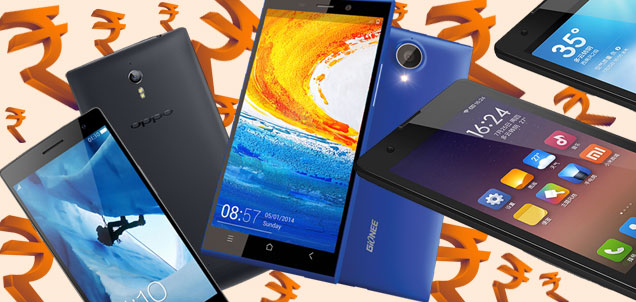
    Cut to 2014, to a time when China’s No 1 smartphone brand, Xiaomi, holds weekly sales for the Redmi 1s (while flash sales for the Mi3 are said to be back this festive season). Try not to blink, though;  it takes anything between 2.4 seconds to 5 seconds for Xiaomi’s phones to get sold out. Meanwhile, another Chinese brand, Gionee, has released a high-decibel campaign claiming a user upgrades to a Gionee every seven seconds.


    Not too far behind comes China-born OPPO Mobile, with 10 models ranging from the affordable to high-end. It even has Hrithik Roshan and Sonam Kapoor as brand ambassadors. As of August, these phones are estimated to have a market share of 5 per cent in the Indian smartphone segment.


    Not much compared to Samsung’s 29 per cent, but then again, six years ago, homegrown brand Micromax was just at 1 per cent, and is now perched at No 2 with a market share of 18 per cent in smartphones. With these numbers, it would seem naïve to write off China’s entry.


    So what is it about these phones that is helping Indians overcome their prejudices? Suman Srivastava, founder and innovation artist, Marketing Unplugged explains “Futurebrand, in its 2014 report, found that China ranks No 9 in the global list of the Best Country of Origin. Brands like Lenovo, Alibaba and maybe Xiaomi, are helping China improve,” he says.


    “Till about five years ago, Chinese companies sold cheap, poor quality phones in India. Despite being the manufacturing capital of the world, the bias against China-made phones obviously grew after one saw these products,” says Manu Kumar Jain, India head, Xiaomi. Arvind R Vohra, Gionee’s India head, adds, “It wasn’t long before Chinese brands realised they could enter the Indian market themselves, considering they had the manufacturing capability,” he says.


    But whether it’s Xiaomi, Gionee or OPPO, they all agree about three things – the power of a great product, innovation and competitive pricing. Forces strong enough to overcome any anti-Chinese sentiment. “The products themselves are the key to success,” says Tom Lu, CEO, OPPO Mobiles India. “Any user looking for a great device and an incredible experience will choose a product based on its features, specifications, looks and ROI.”


    Jain attributes Xiaomi’s success to the build quality, the chipset, the camera and the works. A phone is worth nothing if it doesn’t come with great hardware and software, he says. Affordability is and always has been the Indian buyers’ weakness. Here is where these brands believe they score over established names. “We are an aspirational brand, because of the way we price ourselves,” Vohra elaborates.


    “Our phones cost 10 per cent more than Indian-make phones in the same segment, but 40 per cent lesser than Samsung.” Jain believes that the Xiaomi Mi3, for instance, packs a punch at Rs 13,999. “We are selling a phone easily worth over Rs 40000 at such a low price. Buyers tend to forget their biases when they get value for money.”


    But how has the journey been for the Chinese-origin Lenovo, who forayed into smartphones recently? A brand known for PCs, laptops and tablets, it certainly didn’t have to introduce itself. But then, it couldn’t have been easy to get consumers to associate the name with smartphones, either.


    “We are a company with Chinese origins, but consider ourselves a global brand,” explains Lenovo’s Shailendra Katyal, director – home and small business (India & South Asia). “We have the advantage of a portfolio over price. It also helps that we aren’t an unknown, entry-level brand in the smartphone ecosystem.”


    Mr Katyal believes that consumers aren’t ignorant – they know that the origins of almost everything they purchase can be traced back to China. “Consumers now look for products that are of value to them.” Srivastava believes that cheap products never undermine strong brands, but only create a different market.


    For instance, Nokia did not lose out because of cheaper phones, but because of better technology from Samsung and Apple. Hence, Samsung won’t suffer as long as it keeps investing in both technology and brand. Established brands have another advantage – a nationwide distribution network.


    Brands like Xiaomi, for instance, retail exclusively on Flipkart, while OPPO Mobile is looking to build its offline retail network. But at the moment, the brand relies heavily on e-commerce portals. Most new companies cannot kick things off with a fully developed distribution system; it takes time, effort and huge spending power.


    For these companies, e-commerce portals are a boon. Customers today are open to buying electronics online, what with a cash-on-delivery option and portals like Flipkart and Amazon. Mr Jain has another good reason to embrace online retailing. “Tying up with distributors and retailers means having to hike the price of the product. We would rather save on that margin and pass it on to consumers.” That is also a reason Xiaomi chooses to have zero ad spends, depending only on word-of-mouth and organic social media for promotion.


    Mr Vohra surprisingly has a different point of view. “Online consumers add up to only 6 per cent of the consumer base. How does a brand reach the other 94 per cent without retailing offline? To me, exclusive online tie-ups are a lazy strategy.” He claims that there is close to zero brand recall in the interim period between sales. Srivastava sums this up neatly. “It is hardly surprising that e-commerce brands are willing to pay for valuable mobile desktop space. However, its value will fall as the space gets more crowded. Another method will then be needed to catch the eye of the consumer,” he says.


    Especially relevant considering Indians change their phones once every 1 to 1.5 years. Lu sees the potential in the consistent growth in the smartphone market, driven by enhanced consumer preference for smart devices and narrowing price differences.


    Meanwhile, Mr Vohra is eyeing the 70 per cent market that is yet to migrate from feature phones, as is everyone else, surely. Even if ‘may you live in interesting times’, is not as many believe an ancient Chinese curse or proverb, these are definitely interesting times for these brands to be living through. A chance to rewrite history and a level playing field where just about anyone can be king of the ring.


    How the giants are taking it

    Are the brands from across the border causing a dent in Samsung’s confidence and possibly in its market share? “Not at all,” says Rajiv Mishra, VP – media and spokesperson, Samsung India. “We are No 1 in India for a reason.” He owes the brand’s position at the top to the company’s India-specific focus on R&D, product development and a large consumer touchpoint network.” He admits to competition being great for the consumer, and provides Samsung an impetus to keep innovating.


    Nokia, too, seems unfazed by competition, with India being one of its top four markets for the Lumia series. Raghuvesh Sarup, director – marketing, Nokia India believes that Microsoft has the edge because of its consumer-centric approach with the Lumia.


    “We encourage people to do more and get more out of their devices. People spend on phones only because they want the experience of doing everything they need to in a single place.” End-to-end experiences are a Microsoft differentiator, Sarup believes, something that isn’t easy for the competition to accomplish with ease.


    Source:The Economic Times

    Copyright © 2014, Bennett, Coleman & Co. Ltd. All Rights Reserved

    Licensed to republish


  • Stars not on Facebook, Twitter could lose on endorsements

    By Ratna Bhushan


    Last month, a Bollywood A-lister actress lost out a Rs 3-crore-a-year endorsement deal for a multinational beauty brand to a relatively new actor. Reason: the latter was much more active on Twitter and Facebook and the brand wanted to reach out to social media audiences.


    And despite Hrithik Roshan’s new release Bang Bang proving a super hit, consumer goods firm Emami, which signed Roshan for HE men’s deodorants this summer, is looking for a new face for social media. “Hrithik has a huge mass connect on traditional media. But with different audience logging on to social media, we may rope in a new face only for social media,” Emami director Harsh Agarwal said.


    With social media emerging as one of the most popular hangouts for Indians, brand endorsement deals in the country are getting hugely influenced by how active celebrities are on Twitter, Facebook, Instagram and blogs. “Celebrities who engage actively on the social media space are getting paid at least 25-30% higher than those who don’t, even if the latter have huge mass connect,” said Vinita Bangard, promoter of talent management firm Krossover Entertainment, which represents Priyanka Chopra and Shah Rukh Khan.


    “The socially active ones have a clear edge not only in terms of higher fees but also in getting more endorsement deals.” Chopra, with over 7 million followers on Twitter, is a hot favourite, along with stars like Amitabh Bachchan, Shah Rukh Khan, Aamir Khan and Salman Khan who all have more than 8 million followers. Some firms, including Coca-Cola India, have begun inserting a clause in their endorsement contracts that celebrities will popularise the brand on their social media assets, for an additional fee.


    So, Farhan Akhtar, who endorses Coca-Cola, and Salman Khan, who is the face of Thums Up, not only feature on the brands’ advertisements but also are regularly tweeting and posting photos of themselves with the brands they promote. Many brands now go for exclusive social media endorsement deals at just about 10%-20% fees of a television endorsement deal.


    For example, a reigning A-grade actress who charges Rs 1.5-1.7 crore for a television endorsement deal, charged only Rs 30 lakh to tweet for two months about an upcoming consumer brand, a talent firm head said. Endorsement deals exclusive to social media are being inked at Rs 20-50 lakh a year, while top celebrities’ fees for TV commercials range from Rs 2-6 crore annually. “It (social media) completely optimises spends and has become an extremely effective medium,” said Atul Kasbekar, promoter of celebrity management firm Bling Entertainment.


    Chocolate brand Cadbury Dairy Milk has had a series of upcoming faces including Bollywood starlet Hazel Keech and model Karishma Kotak tweeting about their experience of eating Dairy Milk Silk Caramello chocolate. The tweets created the necessary buzz for the brand at about one-fourth the cost that Cadbury would have to otherwise shell out to rope in a well-known star for television.


    Likewise, PepsiCo used hugely popular actor Ranbir Kapoor only on social media earlier this year for its biggest ad platform — the IPL T20 cricket tournament, though cricketers MS Dhoni and Virat Kohli were shown extensively on television ads. “We leverage our brand ambassadors through campaigns and activation via different mediums,” PepsiCo senior director, marketing (social beverages), Ruchira Jaitly said. With social media ad spends rising faster than traditional media, the online celebrity endorsement business is now growing 25%-30% faster than the traditional space. “Digital isn’t an option anymore.


    It’s something we have to do to make ourselves future ready,” said KK Chutani, executive director for marketing at Dabur, which recently dropped Bipasha Basu as the face of Dabur Honey and roped in celebrity chef Vikas Khanna to endorse the brand on social media because he is active on Twitter and Facebook. Chutani said close to half of ad spends of Dabur’s juice brand Real is now directed at the digital space.


    Source:The Economic Times

    Copyright © 2014, Bennett, Coleman & Co. Ltd. All Rights Reserved

    Licensed to republish


  • Apple ranks #1 and Google #2 in Interbrands Best Global Brands


    By A Correspondent


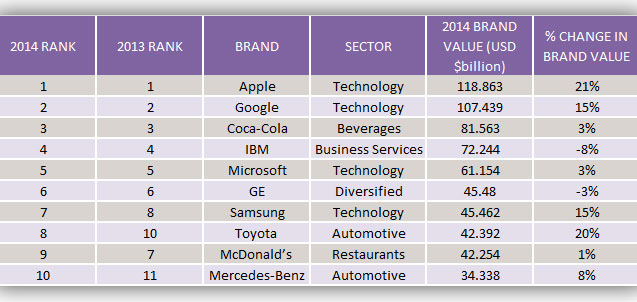
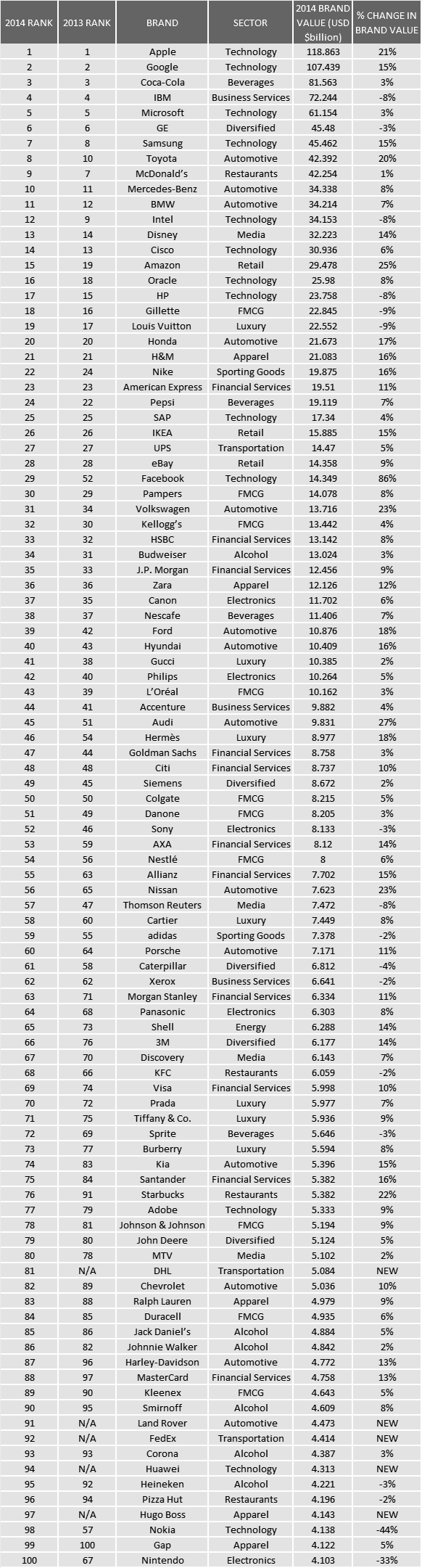
    For the second year in a row, Apple and Google claim the top positions on Interbrand’s Best Global Brands ranking. Valued at USD $118.9 billion, Apple (#1) increased its brand value by 21 percent. Google (#2), valued at $107.43 billion, increased its brand value by 15 percent. For the first time in the history of Best Global Brands, two global brands – not just one – have each earned a brand value that exceeds USD $100 billion.


    Huawei (#94), the Chinese telecommunications and network equipment provider, also makes Best Global Brands history as the first Chinese company to appear on Interbrand’s ranking. With 65 percent of its revenue coming from outside of China and with its earnings continuing to climb both domestically and across Europe, the Middle East, and Africa, Huawei is quickly becoming one of the largest telecommunications equipment makers in the world. The company is currently the third largest smartphone manufacturer in the world-just behind Samsung and Apple. The Chinese brand is one of five new entrants to enter the Best Global Brands ranking this year-the others being DHL (#81), Land Rover (#91), FedEx (#92), and Hugo Boss (#97).


    “Apple and Google’s meteoric rise to more than USD $100 billion is truly a testament to the power of brand building,” said Jez Frampton, Interbrand’s Global Chief Executive Officer. These leading brands have reached new pinnacles-in terms of both their growth and in the history of Best Global Brands-by creating experiences that are seamless, contextually relevant, and increasingly based around an overarching ecosystem of integrated products and services, both physical and digital.”


    Interbrand’s Best Global Brands methodology analyzes the many ways a brand benefits an organization-from delivering on customer expectations to driving economic value.


    When determining the top 100 most valuable brands each year, Interbrand examines three key aspects that contribute to a brand’s value:

    >> The financial performance of the branded product and service
    >> The role the brand plays in influencing customer choice
    >>The strength the brand has to command a premium price or secure earnings for the company


    2014 Overview: Brands Entering the “Age of You”

    In addition to identifying the top 100 most valuable brands, this year’s Best Global Brands report also examines three pivotal ages in brand history that have reshaped business for the better: the Age of Identity, the Age of Value, and the Age of Experience. Interbrand contends that a new, emerging era is upon the global business world: the Age of You.


    “As consumers and devices become more connected and integrated, the data being generated is creating value for consumers, for brands, and for the world at large,” said Mr Frampton. “As a result, brands from all categories and sectors will get smarter-with products and devices working in concert with one another, across supply chains, and in tandem with our own individual data sets. Brands that seek to lead in the forthcoming Age of You will have to create truly personalized and curated experiences, or what we call ‘Mecosystems,’ around each and every one of us. Such brands will have to rehumanize the data, uncover genuine insights, and deliver against individual wants, needs, and desires.”


    Said Ashish Mishra, Managing Director, Interbrand India, “The Age of You era that is upon us will enable micro-segmentation, absolute customisation and personalisation – notions hitherto considered impossible. In the flat world of now, the elements of the future ecosystems are all ready. However disjointed developments around Big data, technology platforms, content, software, devices and apps together have created a complex information over class. The need of the hour is to integrate them around the customer needs and desires. And to do so, we will need to employ both intelligence as well as imagination, thus creating inspiring precedence for the world to follow”


    Key Report Highlights


    2014 TOP RISERS: Facebook (#29, +86%), Audi (#45, +27%), Amazon (#15, +25%), Volkswagen (#31, +23%), and Nissan (#56, +23%)


    Facebook (#29, +86%): The world’s largest social network, Facebook continues to exceed expectations. Reported on its Q2 earnings call, income from its operations was a staggering USD $1.4 billion. One year prior it was USD $562 million. Facebook’s ad business on mobile phones has been particularly strong. For the first time in its history, the company reported that revenue from advertising on mobile phones exceeded half (53 percent) of all its advertising for the quarter. Facebook’s acquisitions of messaging service WhatsApp for USD $19 billion and Oculus VR for USD $2 billion signal a new strategy unfolding. The company is building a vast product portfolio, brimming with competing services and apps.


    Audi (#45, +27%): Audi is the top-rising automotive brand in this year’s Best Global Brands report. It was a record-breaking year for the brand, having sold the greatest amount of cars in its history, and having achieved an operating profit of more than USD $6 billion. The company also awed audiences at the 2014 International Consumer Electronics Show (CES) in Las Vegas, Nevada with its A7 self-driving car. Audi also plans to introduce 17 new or revamped models this year and will move forward with the production of an electric version of the R8 sports car in a push to gain momentum on rival BMW (#11). The company also plans to invest more than USD $30 billion through 2018 in new products, technology, and production sites. Earlier this year, it also announced a partnership with Google, which will allow Audi drivers and passengers to use an Android-powered entertainment and information system that will run on the car’s hardware.


    Amazon (#15, +25%): It was another banner year for Amazon, “Earth’s most customer-centric company.” Amazon’s commitment to responsiveness has become part of the brand’s mythos. It continues to grow its core business through services such as Amazon Prime, which, at one point, garnered more than a million subscribers in a single week. Expansions on previously popular product lines-the new Kindle Paperwhite and Fire Phone-brought more customers into the Amazon ecosystem, while a content licensing agreement with HBO helped it to make a bigger push into the entertainment sector.


    Volkswagen (#31, +23%): Volkswagen, Europe’s leading automaker and one of this year’s top-rising Best Global Brands, is striving to become the world’s leading automaker by 2018. Its latest model, the XL Sport, recently debuted at the Paris Motor Show and served as yet another symbol of the innovative power, passion, and technical competence of the Volkswagen brand. Beyond its manufacturing and design capabilities, Volkswagen’s “Think Blue” concept continues to prove that ecological sustainability remains a top corporate objective.


    Nissan (#56, +23%): Nissan continues to drive up the Best Global Brands ranking with improved financial and brand performance. Nissan’s leadership consistently pushes brand building as a major priority across the organization, clearly identifying the link between a strong brand and market share. Nissan’s recent car launches-Qashqai, Murano, and Rogue-have demonstrated how its “Innovation and Excitement for EVERYONE” brand positioning is shaping its product lineup.


    2014 NEW ENTRANTS: DHL (#81), Land Rover (#91), FedEx (#92), Huawei (#94), and Hugo Boss (#97)


    DHL (#81): The burgeoning e-commerce market has opened a sea of opportunity for delivery and logistics companies. As international online shopping continues to grow-and is poised to grow 200 percent in the next five years-brands like DHL and FedEx have made strides in bolstering their e-commerce capabilities. The most valuable brand of the new entrants to this year’s Best Global Brands ranking, DHL announced recently announced a five-year strategy plan aimed at tapping emerging markets to grow its global market share. As part of its plan, its MAIL division will be renamed Post – eCommerce – Parcel to better reflect its character under the new strategy.


    FedEx (#92): FedEx is also realigning its business to make the most of the booming e-commerce sector. Earlier this year, the company launched a new service designed to make it easier for customers to control when and where packages are delivered. The service is called FedEx Delivery Manager and is available through multiple digital platforms, including a free mobile app. Customers can request alerts via email, SMS text, or phone. FedEx has also developed a host of Web-based services to help brick-and-mortar retailers boost their online sales. Retailers can easily integrate FedEx’s Web Services platform into their own Web systems-allowing them to track shipment information. With FedEx’s Web Integration Wizard, its customers can track the shipments directly via the retailer’s home site.


    Land Rover (#91): British carmaker Land Rover continues to refine its product lineup with fresh styling, high-tech platforms, and downsized engines. Since being acquired by Indian automobile company Tata Motors in 2008, Land Rover has witnessed double-digit growth each consecutive year. This past year, Land Rover’s unit sales rose 15 percent year-over-year to nearly 350,000.


    Huawei (#94): As mentioned previously, Huawei is both a new entrant and the first Chinese brand to ever appear on the Best Global Brands ranking. In 2013, the Chinese telecommunications and network equipment provider reported a net profit increase of 34.4 percent to CNY ¥21 billion (USD $3.38 billion) up from CNY ¥15.6 billion in 2012. As companies, as well as entire industries, continue to shift from legacy storage and equipment to more agile products (cloud services, 3G routing, security solutions, etc.), Huawei is poised to dominate key areas of the IT market-from mobile phones to carrier-grade networks.


    “Huawei’s rapid growth and long-term investments in its brand helped it earn a place among the world’s most valuable brands,” said Frampton. Despite its low brand awareness in the U.S., Huawei has gradually expanded its reach around the world. It continues to demonstrate its technological prowess in both its consumer products as well as in its enterprise solutions-and it remains well positioned to meet the needs of customers in both emerging and developed markets.”


    Hugo Boss (#97): Hugo Boss, the German fashion house, was one of the strongest-performing apparel brands globally in the past year. The company saw revenue grow 10 percent in Europe, where it makes more than half its sales, while the Americas grew 7 percent, and Asia grew just 2 percent, largely due to China’s slowing economy. On the whole, Hugo Boss is moving away from selling through partners and starting to run its own stores, allowing it to have greater control over price points and the way the clothes are presented. This year, Hugo Boss celebrated its 20th anniversary with an exhibit at the Saatchi Gallery in London, a microsite, and a multichannel campaign. The microsite offered a look into the Saatchi Gallery exhibit by illustrating 20 iconic Hugo Boss items and 20 internationally acclaimed artists. Clicking on a product brought consumers directly to the e-commerce site where they could either purchase the product or find it in a store.


    Key Sector Highlights


    Leading automotive brands continue to rethink the future of mobility. A combined focus on energy-efficient products and integrated technology is helping leading auto brands drive brand loyalty and value.

    This year, the collective brand value of the automotive brands appearing on the Best Global Brands ranking increased 14.6 percent. All 14 automotive brands collectively make up a combined brand value of USD $211.9 billion. With three out of the five Top Risers hailing from the automotive sector, the past year proved to be a record-breaking one. This year’s top 14 automotive brands include: Toyota (#8, +20%), Mercedes-Benz (#10, +8%), BMW (#11, +7%), Honda (#20, +17%), Volkswagen (#31, +23%), Ford (#39, +18%), Hyundai (#40, +16%), Audi (#45, +27%), Nissan (#56, +23%), Porsche (#60, +11%), Kia (#74, +15%), Chevrolet (#82, +10%), Harley-Davidson (#87, +13%), and Land Rover (#91, NEW). Toyota, which has been the most valuable automotive brand on the Best Global Brands ranking since 2004, continues to be a leader in green technology development. Since the launch of its first-generation Prius 17 years ago, Toyota has sold a total 3.2 million units of the vehicle globally. Toyota has also expanded its hybrid range to a total of 25 vehicles, including the Prius Plug-in Hybrid. Toyota plans to spend USD $7 billion on environmental technology in the fiscal year ending March 2014, an increase of 11 percent compared to the previous fiscal year. ­With the era of the connected car rapidly approaching, the sector’s Top Risers-Audi, Volkswagen, and Nissan-are working to redefine the essence of the driving experience and build stronger emotional ties with their customers.


    The technology sector leads as the most valuable category overall. Legacy and one-time leading brands struggle to evolve at the pace of change.

    Out of this year’s top 100 brands, 13 hail from the tech sector. The category as a whole grew 11.3 percent year-over-year, and collectively is worth USD $493.2 billion in brand value. While Facebook (#29, +86%), Apple (#1, +21%), and Google (#2, +15%) represent this year’s fastest growing brands, a number of one-time leading brands experienced the steepest decline in brand value. Finnish communications and information technology provider Nokia (#98, -44%) experienced the largest decline in value among the top 100 brands, dropping from its #57 position in 2013 to #98 this year. Once a dominant player in the cell phone industry, it has seen its market share decline steadily since 2010, struggling to compete against rivals Apple and Samsung. Microsoft (#5, +3%) acquired the Finnish brand’s consumer products in April this year, and despite changes in leadership and operational structure, it remains unclear how Microsoft will use the brand and how it will evolve in the future. Japanese consumer electronics company Nintendo (#100, -33%), had another difficult year. The brand fell 33 places this year to take the #100 position, with a brand value of USD $4.1 billion. The company has acknowledged its woes in the hardware space, and CEO Satoru Iwata also publicly stated that the company must evaluate other opportunities, including those in the mobile market. Earlier this year, he announced that the company has plans to start a new health-related business by March 2016.


    Against the backdrop of global economic recovery, financial services brands experience growth in brand value.

    The value of financial services brands has experienced steady growth in recent years. All 11 financial services brands appearing on this year’s Best Global Brands ranking increased in brand value: American Express (#23, +11%), HSBC (#33, +8%), J.P. Morgan (#35, +9%), Goldman Sachs (#47, +3%), Citi (#48, +10%), AXA (#53, +14%), Allianz (#55, +15%), Morgan Stanley (#63, +11%), Visa (#69, +10%), Santander (#75, +16%), and MasterCard (#88, +13%). On the whole, companies within the financial services industry are continuing to build brand value by engaging with their customers and providing more seamless, convenient, and fully integrated experiences. Many financial services organizations have increased investments in mobile marketing, social media, online video, and more-and such efforts, as evidenced by this year’s Best Global Brands ranking, are paying off.


    Leading luxury brands continue to embrace digital platforms. A new era of exclusivity is paving the way for personalization and curated brand experiences.

    While luxury brands have been slower to embrace online channels, the rise of digital sales, online browsing, and brand consideration is forcing them to reimagine their respective customer experiences. As reported by Luxury Interactive and ShopIgniter, 65 percent of luxury marketers expect digital marketing to be the most important form of marketing for their brand.


    Detailed brand profiles, thought leadership articles, interactive charts, and interviews with brand leaders from around the world are available at bestglobalbrands.com.
     

  • LinTeractive to manage Woodland’s digital mandate

    By A Correspondent


    LinTeractive, the digital division from Lowe Lintas + Partners has been awarded Woodland’s online business. The partnership comes on the back of Woodland’s close association with Karishma Lintas, a creative agency of Lowe Lintas + Partners that has been handling the brand’s creative mandate for over two decades.


    Woodland is a leading Indian lifestyle brand operating successfully in the footwear, apparels and accessories domain. With the digital expertise that would be offered by the agency, Woodland aims to create innovative digital and social marketing engagements that will further enrich the brand experience.


    Sharing his views on the new appointment, Harkirat Singh, Managing Director, Woodland said, “We’re glad to have LinTeractive as our digital partner. We’re confident of charting out a bullish growth trajectory across our verticals on the back of the expertise and solutions that would be offered to us by the digital agency.”


    As part of the association, LinTeractive would be handling online community management, web development, content development, and media duties for Woodland.


    Sharing his views on the role that would be essayed by the agency for brand Woodland, Vikas Mehta, Chief Marketing Officer, Lowe Lintas + Partners and Executive Director – LinTeractive said, “Woodland is one of the few Indian brands that have successfully built a strong lifestyle stature for itself, especially among youth. You can’t build a youth brand today without innovating on digital platforms and our agency is very excited to enter Woodland’s timeline. We believe the enormous experience of Karishma Lintas, coupled with LinTeractive’s domain expertise should create some compelling brand stories, on and offline.”


    As part of the growth graph, Woodland currently has 300+ company owned exclusive Woodland stores across various cities in India that are growing at a healthy rate of 25 to 30 per cent. The brand also has a presence in more than 3,000 plus multi‐brand outlets in a number of countries. With the new partner-agency, the focus would be to get consumers to experience the brand on a more profound level.


  • Myntra stocks Mandira & KJO lines, Jabong gets Alia Bhatt

    By Tasmayee Laha Roy


    Online fashion retailers such as Jabong and Myntra are increasingly tying up with Bollywood celebrities to launch exclusive lines in a bid to attract more young consumers to shop for their garments on the internet.


    While Alia Bhatt has tied up with Jabong for her line ‘Alia Bhatt for Jabong’, Myntra — which launched Hrithik Roshan’s label HRX last year — now stocks Mandira Bedi’s sari collections as well as the Vero Moda Marquee, a limited edition collection designed by director Karan Johar in a tie-up with the European high-street fashion brand for women. Snapdeal has Shilpa Shetty Kundra’s jewellery line Satyug Gold.


    “Bollywood celebrities have always been considered as style icons and served as a muse for the high priests of fashion and most of these celebrities have a huge fan-following online. The same people who fall in the age group of 15-35 are also the ones who shop online. Thus to marry Bollywood and fashion online ensures success of the idea,” said Praveen Sinha, founder and MD at Jabong.


    Jabong officials said the site’s user base has shot up by 50,000 within a week of the launch of Alia Bhatt for Jabong this month. With ripped jeans, leather jackets and floral patterns, the collection makes a direct connect with Bhatt’s wardrobe in her popular films such as ‘Student of the Year’ and ‘2 States’. “Online shopping is the new rage…so this, according to me, was the best platform to launch my designs,” Bhatt said.


    Myntra has launched Farhan Akhtar’s Mard collection and Salman Khan’s Being Human, besides HRX. Roshan’s HRX has this month launched a range of active and women’s wear. “People love to dress up like their favourite stars and these initiatives have taken fans a step closer to their stars.


    Hrithik, for example, has been involved in every step of designing the outfits under his label,” said Ganesh Subramanian, COO at Myntra. He said Myntra plans to launch own labels of 4-5 leading Bollywood celebrities early next year. Karan Johar’s limited edition ‘Vero Moda Marquee’ collection, launched at the Myntra fashion week early this month, has proved a big hit.


    Source:The Economic Times

    Copyright © 2014, Bennett, Coleman & Co. Ltd. All Rights Reserved

    Licensed to republish


  • Alliance time for Amazon & Future Group


    By Sagar Malviya


    The world’s largest online store Amazon and India’s largest listed retailer Future Group have signed a deal to jointly sell goods over the Internet amid growing friction between online and offline retailers over heavy discounting.


    Future Group will sell more than 45 own labels of apparel initially, followed by in-house brands in the home, electronics and food categories, while the US-headquartered company will handle order fulfillment and customer service for the merchandise on its portal. Both firms will also develop a new line of products across categories to be exclusively sold at Amazon and Future Group’s retail stores. As was reported, that Amazon founder Jeff Bezos and Future Group’s Kishore Biyani met in New Delhi to discuss an alliance.


    “The deal is deeper than just transactional involvement with Amazon. We are exploring several synergies in data sharing, co-branding, cross-promotion and distribution network sharing through the partnership,” confirmed Mr Biyani, who has been quite vocal on whether ecommerce firms’ deep discounting strategy makes business sense, suggesting that offering cheaper prices wouldn’t help in the long run. “We are targeting gross merchandise sales of Rs 6,000 crore in next 3 years through the alliance,” he added. The deal comes soon after Flipkart’s Billion Day Sale on October 6 led to protests by traditional retailers that they were being hurt by the alleged predatory pricing.


    The complaints by traditional retailers led to the government saying it would examine the policy on ecommerce. Following this, Amazon’s October 10-16 Diwali Dhamaka Week has been a subdued affair with sharp discounts restricted to stock clearances and products only being sold on the site. Under the deal, Amazon and Future will also jointly develop discounting strategy and price tags on their products won’t be very different from rates at stores so that both channels don’t end up cannibalising each other.


    In its home market, Amazon had similar alliances with retailers such as Target Corp and Toys R Us in the past decade though both soured over time once the online seller gained scale and attracted other large brands.


    Following the India deal, Future Group’s four dozen own brands such as Lee Cooper, John Miller and Indigo Nation will be taken off from other online marketplaces where they are currently being sold.


    Amazon’s agreement in India also indicates its aggressive intent to spread itself across many product areas quickly in India – especially foods – a relatively niche category for online retail, which it has only recently entered. In July, the US company announced it would invest $2 billion in India operations that exceeded gross merchandise sales of more than $1 billion within a year of its launch. It completed a year in June this year.


    Meanwhile, it was reported recently that Amazon plans to open its first brick-and-mortar store in New York.


    The company’s main rivals in India are Bangalore-based Flipkart and Snapdeal, the latter a Delhi-based company that counts eBay, Azim Premji and Ratan Tata as investors.


    Together, they have sold goods worth more than $4 billion, with Flipkart alone estimated to have crossed $2 billion. The battle is set to intensify. According to a report by consulting firm Technopak, the $2.3-billion e-tailing market is expected to swell to $32 billion by 2020 and account for 3% of the total Indian retail sector.


    In the offline retail market, just three companies – Aditya Birla’s Madura Garments, Arvind Brands and Future Group – either own or sell more than two dozen brands each, thus becoming the preferred options for any online player looking to partner retailers.


    The move holds benefits for both sides, but there are pitfalls as well.


    “The upside is Amazon getting instant product diversity and capability while Future Group can explore a new channel for sales,” said Devangshu Dutta, chief executive at retail consultancy Third Eyesight. “However, if the business is not aligned in terms of orientation and customer service, then it could create issues going forward, especially when one of the biggest barriers for online sale is inconsistency of products.” Future Group has more than 75 own brands that earn it at least 15% higher margins on average compared with national brands, which is why Biyani is bullish on private labels across categories. The tie-up means Future Group’s brands that now have a presence in 98 cities and towns will be marketed to 19,000 PIN codes serviced by Amazon across India.


    Industry insiders also said the Indian retailer’s move reflects a bid to expand into new distribution channels such as ecommerce in the search for growth. Last month, Snapdeal agreed to create Croma’s Flagship Store on its ecommerce portal to sell electronics items including mobiles, tablets and laptops.


    The $3-billion Future Group, on its part, has opted for SAP’s Hybris OmniCommerce solutions and plans to invest nearly Rs 100 crore to beef up its ecommerce venture. It is targeting about 20% of revenue from online sales over the next 18 months. By 2020, the aim is even higher – at 40% of its sales through ecommerce or virtual platforms.


    Source:The Economic Times

    Copyright © 2014, Bennett, Coleman & Co. Ltd. All Rights Reserved

    Licensed to republish


  • Sale of Tablets to remain below 10 percent in 2014, notes Gartner study

    By A Correspondent


    Tablet sales growth is slowing in 2014 as new hardware buyers turn to alternative devices and existing users extend the lifetime of their tablets. Gartner, Inc. estimates that tablet sales worldwide will reach 229 million units in 2014, an 11 percent increase from 2013, representing 9.5 percent of total worldwide sales of devices in 2014. In 2013, tablet sales grew 55 percent.


    Worldwide combined shipments of devices (PCs, tablets, ultramobiles and mobile phones) for 2014 are estimated to reach 2.4 billion units in 2014, a 3.2 percent increase from 2013. “The device market continues to evolve, with the relationship between traditional PCs, different form factor ultramobiles (clamshells, hybrids and tablets) and mobile phones becoming increasingly complex,” said Ranjit Atwal, research director at Gartner.


    In the tablets segment, the downward trend stems from the slowdown in basic ultramobiles – new sales of iPads and Android tablets – and the lifetime extension of current tablets to three years by 2018. Gartner projects over 90 million fewer new tablet purchasers and 155 million fewer tablet replacements through 2018.


    “Some tablet users are not replacing a tablet with a tablet, they are favoring hybrid or two-in-one devices, increasing its share of the ultramobile premium market to 22 percent in 2014, and 32 percent by 2018,” said Atwal.


    Worldwide device shipments by segment (Thousands of Units)

    Device Type 2013 2014 2015
    Traditional PCs (Desk-Based and Notebook) 296,131 276,457 261,005
    Ultramobile Premium 21,517 37,608 64,373
    PC Market Total 317,648 314,065 325,378
    Tablets 207,082 229,085 272,904
    Mobile Phones 1,806,964 1,859,946 1,928,169
    Other Hybrids/Clamshells 2,706 6,462 8,609
    Total 2,334,400 2,409,558 2,535,060

    Source: Gartner (October 2014)


    The mobile phone segment will continue to grow in 2014 due to strong sales of lower-end smartphones. Sales of basic smartphones (including midrange Android devices) are projected to grow 52 percent in 2014, while utility smartphone units (including low-end Chinese white box devices) will double.


    “The market is clearly favoring those vendors offering value in lower-priced smartphones. This trend has become more apparent, especially in the second quarter of 2014 when most of the top Chinese smartphone vendors grew volume and market share,” said Roberta Cozza, research director at Gartner. “As smartphones reach lower prices, Gartner expects nine out of 10 phones to be smartphones by 2018.”


    The expansion of affordable mobile phones that are attracting replacements in many emerging countries has contributed to the increase in the global market share of smartphones, which is set to reach 71 percent in 2014, up 17 percentage points from 2013. Android and iOS have further entrenched their market positions in the global phone market, making it difficult for alternative ecosystems to become more than niche players.


  • ‘Ehsaan Mat Lo, Discount Lo’, says Yatra.com in new TVC

    By A Correspondent


    Yatra.com has launched their new campaign that aims to create awareness amongst customers about the wide array of choices for hotel bookings. Titled, “Ehsaan Mat Lo, Discount Lo”, the underlying message in the commercial promises travellers the best stay at the best price wherever they go Yatra has the largest inventory of hotels in India and abroad and this commercial aims to apprise customers on the bouquet of offerings from yatra’s basket. The new campaign comprises two TVCs which have been on air across leading channels.


    Crafted by McCann Erickson India Ltd. under the creative direction of Kapil Batra, the new advertisements showcase how favours can be called upon, in any way possible. Where one ad opens with the protagonist unpacking at the acquaintances’ house, he overhears a conversation of the owners of the house and their plan to ask him to marry their daughter. Which in turn causes him to start packing right away, with the tagline being displayed – “Ehsaan mat lo, discount lo”.


    The second advertisement builds on the same premise that nothing in the world is free. The advertisement begins with the protagonist showing up at the doorstep of his relatives in the hope of a free stay; overhearing their conversation of being asked to donate a kidney for a relative in return for the hospitality provided, causes him to flee. The voice-over in the brand ambassador, Salman Khan’s voice says “Ehsaan mat lo, discount lo!”.


    Commenting on the launch of the new ad campaign, Sharat Dhall, President, Yatra.com said, “Yatra.com has always been at the helm of change; we are constantly reinventing and adapting ourselves to suit the sensibilities of our customers. The latest TVC’s by Yatra.com focuses on hotel and highlights the range of   offers/discounts that Yatra.com has on its assorted inventory of hotels. Based on our internal findings that 36% of our customers stay at their friends or relatives place instead of booking a hotel , the message ‘Ehsaan mat lo, discount lo’ aims to drive greater adoption of online hotel bookings with travellers.”


  • SRK appointed brand ambassador by Yepme

    By A Correspondent


    Online fashion brand Yepme has roped in superstar Shah Rukh Khan as its brand ambassador. This makes Yepme the first ever online fashion brand in the country being endorsed by Shah Rukh Khan. Yepme will introduce the actor through an extensive television campaign for its upcoming Autumn-Winter collection’14.


    Speaking on the announcement, Sandeep Sharma, Co-founder and COO, Yepme.com, said, “We are thrilled to have Shah Rukh on board. This association will definitely help build a strong connect between the brand and his fans across the country.  Shah Rukh commands a huge fan following across all age groups in India and abroad and his presence will drastically increase the aspirational value of Yepme. He is the King of hearts, extremely hardworking and well read and carries himself with a sense of style that is a class apart. His style is effortless and casual and that is what we, at Yepme are all about.”

    The company has built its business around the Fast Fashion Model on the lines of leading global peers. The talented team of in house designers hand-picked from the top design institutes operates on high agility to create fresh and new designs on an everyday basis. The team drives its inspiration by real-time research and analytics on latest fashion trends running in the global fashion markets. This model operates by keeping the online store exciting with Fresh Fashion merchandise showcased daily.


    The brand will widely promote the association with SRK through a TV Commercial across leading TV Channels and will associate with top performing TV Shows, along with print media campaigns with leading newspapers and magazines. The brand will widely run social media campaigns on Facebook, Twitter and Google Plus and the digital launch will include a YouTube campaign.


  • Reliance Games appoints LinOpinion|GH as its PR partner


    LinOpinion|GH announced that it has won the Reliance Games business in India, in a hotly contested multi-agency pitch. The consultancy’s mandate will be to conceptualize and implement the best strategic communication routes to maximize visibility for Reliance Games and its offerings in the mobile gaming space in India.


    Reliance Games, the mobile gaming division of Reliance Entertainment Digital with its presence in over 70 countries is India’s leading mobile game developer.  Some of its block buster hit games include Real Steel, Real Steel World Robot Boxing, Hunger Games, Pacific Rim, Total Recall among others with over 200mn downloads world over. Globally distributed, Reliance Games’ content can be accessed through iTunes, Google Play, Amazon and Windows as well as 80 leading networks across 100 countries worldwide.


    Speaking on the association, Roopak Nair, Head of Marketing, Reliance Entertainment Digital said, “LinOpinion|GH brings an eclectic mix of creativity and passion for gaming and we are excited about embarking on this new journey. Mobile gaming is growing at an astounding rate and we would like to partake in the excitement with exciting games that enthrall millions of consumers and foster growth of the gaming ecosystem in India.”


    Kavita Lakhani, President, LinOpinion|GH, commenting on the new win said, “We are honored to partner with Reliance Games, India’s leading mobile game development company.  India has a booming mobile gaming industry and majority of its population is below 25 years.  Reliance Games’ key objective is to discover the best young Indian talent from metros and mini metros, to provide them a global platform to showcase their game creativity and development prowess. The PR campaign will focus on helping build brand salience and connect with young Indian game developers and consumers through unconventional and innovative PR ideas.”


  • Internet can cause distraction at work, notes survey

    By A Correspondent


    A survey by Webtrate.com on a sample size of 4000 people in India states that about 59 per cent of the populace have been distracted from completing work by checking emails, browsing the web, and engaging with social media. Also 46 per cent admitted that the reduction in productivity caused them dissatisfaction and unhappiness. The survey was released by Webtrate.com on the day it launched its internet blocking and productivity application in India.


    Out of all the groups of people questions, writers and homeworkers were more likely to be affected, with 70 per cent of India writers saying they had been distracted by the internet. About 61 per cent said they lost their chain of thought because they checked and responded to an email or social media alert while they were working on a report or longer piece of written work.


    Further about 38 per cent of the populace said that checking emails and social media cost them more than an hour a day in productivity while 14 per cent claimed they lost more than an hour a day.


    About 54 per cent said they spent more time checking social media, emails and browsing the web while working from home, although they also said working in the office also didn’t stop them from being distracted by the internet.


    Will Little, who designed and created Webtrate, shared: “The internet plays into our worst habits. Despite its many benefits, it is helping to fuel procrastination and lower levels of productivity by giving us access to an immediate menu of instant distractions.”


    Adding further he said, “The survey suggests our impulse control is getting weaker in a world of instant gratification. Yet the pressure of work should mitigate against our desire to access the internet. Unfortunately the draw of the internet is so strong that our ability to concentrate is losing the battle. It is now directly impacting on productivity levels and many people just can’t seem to help themselves. In many cases, they don’t even realise how much productivity they are losing to internet.”