Category: Digital

  • Dell’s Inspiron ‘can do Kuchh Bhi’

    By A Correspondent


    At Dell, the sole purpose is to create great user experiences, where customers’ passion inspires the technology, which gives them the ‘Power to do More’. This was the thought that forms the basis or foundation of the ‘Achievement Campaign’. The integrated marketing campaign focuses on real customer experiences, highlighting how Dell enables customers to ‘achieve’ their personal and professional passion. The 360-degree brand and marketing campaign features themes of ‘Personal Achievement’ and ‘Business Achievement’ to connect with consumers & enterprise customers respectively. The campaign is an extension of our strategy to strengthen brand leadership in both the consumer and enterprise space.


    The Dell TVC has been conceptualised and developed by the Dell India team and Grey Worldwide, directed by Koushik Sarkar and Carlos Catalan (DOP). Amitabh Bhattacharya’s lyrics and Mikey McCleary’s music power the TVC. The TVC talks about how the youth of today have dreams bigger than a canvas can hold; they know no boundaries; have no fears and dream big. The TVC captures this spirit of conquering the world and making the world their stage.


    Ritu Gupta, Director, Marketing, Dell India said, “Inspiring customers by providing them with technology that gives them “the power to do more” has always been one of Dell’s biggest goals. Building an emotional connection between our customers and technology is integral to Dell’s branding strategy. It’s our customers’ passions that inspire our technology and their stories of success through our technology are our own achievement stories. Our new ‘Personal Achievement’ campaign emphasizes our belief that technology can help anyone realize their dreams and the new TV commercial is a reflection of this belief.”


    With the theme “I can do kuchh bhi”, the campaign sets out to celebrate triumphant journeys of the creative, motivated, free spirited youth, who are confident of achieving anything with the guiding hand of technology. From youngsters transforming a neighbourhood using their paint brush, to a girl honing her boxing skills, to a rock band nervously preparing for their first gig, the commercial depicts how people from varied backgrounds and interests are using the Dell Inspiron Notebooks as their partner in pursuit of their passion.


    Hari Krishnan, Vice President – South, Grey said, “This new campaign is based on stories of ‘Personal Achievement’. However, ‘Achievement’ in this context is not a measurable benchmark in that sense but a passionate pursuit of a personal goal. The youth are driven by various passions from social activism to music other mainstream or offbeat pursuits. Dell Inspiron is an enabler in all these stories of achievement, partnering them in their pursuit.”


    The commercial will be released on April 26th on all leading entertainment channels. The TVC will also debuted on Dell India Facebook and Twitter pages on April 25. It has been supported by a Twitter contest @Dell_IN. While the ‘AchievewithDell’ micro-site is for users to share stories on how they have used technology to achieve their dreams, the Twitter contest will invite users to share tweets which tell the story of their inspirations (be it people or things) who embody the spirit of #icanDOkuchbhi and their achievements. The winner will receive a Dell Inspiron laptop.


    The campaign is also supported by print. The print campaign was launched last month and it showcases stories of achievement by profiling youth and their passions. For the Print ads and on the digital front, stories of Priya’s passion for ‘Yoga’ and Aditya’s ‘Bike restoration’ journey were featured. Web videos were created and seeded on the platform of ‘Personal Achievement’ showcasing multiple stories of achievement on a special interactive microsite that was created to enable followers to share their stories of passion. In addition to this, through contextual targeting the brand is reaching out to forums, bloggers and influencer groups amongst youth across social media.


    Ram Jayaraman, Group Creative Director, Grey said, “Today, passion is power. The youth believe they’re invincible, but there’s a charming innocence in the way they wear this belief. Hopefully our film – with its lovely track – speaks not only of them, but for them too.”


    Credits:

    Agency: Grey

    Vice President  & Business Head: Hari Krishnan

    Creative: Ram Jayraman, Sham Ramachandran, George Sebastian

    Account Management: Amarendra Singh; Kevin Thomas

    Account Planning: Dheeraj Sinha; Neha Bansal

    Production House: Apostrophe Films

    Director: Kaushik Sarkar

    Producer: Hamesh

    Music: Mikey McCleary


  • 1 Minute View: S4 > i5?

    Some of you may have seen the glitzy Diana Hayden emcee the launch of the Galaxy Samsung S4 in Gurgaon’s Kingdom of Dreams live at the venue or online. The attempt was to showcase the device and its various features. And how!

     

    Indeed many of these are very cool, and would get people to switch to the S4. But, of course, if you have paid upwards of 30k just a year back for the S3, it remains to be seen how many people upgrade.


    In a price sensitive Indian market, we believe the S4 buyer will be users of sub S3 or other handsets. Samsung India officials have clearly stated there is no exchange offer coming up.


    What may work in the S4’s favour is the MRP of Rs 41,500. Note this is MRP so we will have retailers offering a lower rate. Plus there are offers coming up from Vodafone.


    The big question: is the S4 better than the iPhone 5? Well, it’s got some cool features which don’t exist on the flagship Apple handset. But the experience of the iPhone, like that of any Apple machine, is amazing. And it’s not going to be easy to get a diehard i5 user or even that of an i4 or i4s to make the switch.


    So why’s a media, ad and marketing destination like MxMIndia writing about the Samsung Galaxy S4, one may ask. Over the last few years, Samsung has become a significant player in the mobile devices space. Other than the fact that each of these devices has a fantastic adspend budget, they are media vehicles and the newer features that each of them offer can play a huge influence on applications (or apps) that will be developed in future.


  • Magnon\TBWA announces post-acquisition senior hirings

    By A Correspondent


    Magnon\TBWA has announced significant strengthening of its digital capabilities with three senior level appointments in web/mobile technology, social media as well as client development functions. This is the agency’s first round of strategic talent recruitment, after its acquisition by TBWA\ in December 2012. These hirings have been carried out for both Magnon\TBWA as well as Magnon E-GRAPHICS, the agency’s international digital delivery arm.


    The three appointments include KN Ajit Narayan as Group Director, Social Media Marketing, Paurush Pandit as Group Director, Web/Mobile Technology and Alok Garg, Associate Vice President, Client Development for Magnon\TBWA.


    Mr Narayan has moved to Magnon from Interactive Avenues, where he was managing social media offerings for a range of clients. Mr Pandit is a technology evangelist with over 10 years of experience in both start-ups as well as large organisations. In the past he has worked in key technology positions with Makemytrip.com and Yatra.com. Mr Garg comes with over 16 years of strong experience in client acquisition and managing key customer relationships.


    Speaking about the new appointments, Vineet Bajpai, Founder & Group CEO, Magnon\TBWA and Magnon E-Graphics said, “At Magnon\TBWA, people have always been central to strategy. As digital media evolves, agencies and marketers will need to find new innovative approaches to connect brands and consumers. The team expansion at Magnon is in sync with the current and potential opportunities and challenges. Magnon\TBWA stands committed to offering best-in-class interactive media solutions to our clients.”


  • Delhi Duty Free assigns digital mandate to Ignitee Digital

    By A Correspondent


    Delhi Duty Free has appointed digital marketing agency Ignitee Digital to manage their social media campaigns and digital communication. Delhi Duty Free had increased its engagement on Facebook and Twitter since last year, and aims to cement its online presence to inform, educate and influence consumers’ buying behaviour.


    Delhi Duty Freehopes to increase its interface and engagement with current and potential international travellers and offer updated data about the various activities and promotions about the brand. Through the association with Ignitee, Delhi Duty Free will seek to leverage the digital platform and build a unique brand image. Ignitee will manage not only its consumer engagement across all social networking sites but also the digital media planning and buying for the brand across digital platforms.


    Atul Hegde

    Atul Hegde, CEO, Ignitee Digital Services commented, “We are extremely excited to create a 360-degree digital experience for Delhi Duty Free, leverage this opportunity and create many innovations and help create a distinct image of the brand in the minds of consumers and also bring many ‘firsts’ in this space for our category.”


    Abhijit Das, Head of Marketing, Delhi Duty Free, said, “Being the single largest duty free retail operator in India, Delhi Duty Free looks at introducing its one-of-a-kind products to the audience and give them a chance to interact and engage with the brand on the digital and social media platforms. We want to bring our target audience closer to the brand through our digital activities and for this we have brought Ignitee Digital on board. Ignitee has been one of the key players in the digital marketing arena and their expertise and ingenious thinking will surely help the brand grow.”


  • Louis Philippe launches e-mag, The Label

    By A Correspondent


    Men’s fashion brand Louis Philippe has announced the launch of its first fashion e-magazine, called ‘The Label’, which aims to educate its consumer with the latest in fashion through the digital platform.


    “We, at Louis Philippe, have a vision of educating our consumers about the fine things of life and keeping them abreast of what is happening in their interest spaces. In order to do this, we felt the right medium would be the Internet, which is an ubiquitous part our consumer’s daily life. This was also corroborated by the increasing incidence of e-books and e-magazines amongst our target group. It was this learning that pushed Louis Philippe to launch TheLabel.in, a content vehicle for the brand to reach out and educate its audience. It is also in line with the brand’s vision of creating an interesting digital ecosystem to bring alive the brand in this space” said Jacob John, Brand Head, Louis Philippe.


    The Label is available on www.thelabel.in.


  • Moneycontrol.com holds Master Your Money, an online investor event

    By A Correspondent


    Moneycontrol.com has launched an online investor camp starting April 30. The day-long event will include a host of investment experts who will answer queries from investors all over India.


    Master Your Money brings an opportunity to investors in India to go online and connect with leading experts, and get answers to their investment queries online. It provides a resource to millions of investors currently confronted by falling stock markets, high rates of inflation, skyrocketing real estate prices and the exploding value of gold.


    Master Your Money is open to all kinds of investors, from buyers of fixed deposits, government bonds and insurance, HNI stock and mutual fund investors, individual traders and corporate finance professionals. The online event covers stocks, bonds, insurance, gold and real estate.


    “As a national portal dedicated to serving investors in India, we conceptualized Master Your Money to provide financial knowledge to the entire community of Indian investors,” said Joyson Thomas, CEO, moneycontrol.com.


    More details are available at http://www.moneycontrol.com/master_your_money/.


  • Decoding Digital with Rajan Anandan


    It’s not always that industry folk get an opportunity to be upclose digital luminarie and get them to answer all their queries and address all their doubts. Well, almost. The only limiting factor is the time.


    The platform provided by the International Association of Advertisers (India Chapter) facilitates that with the ‘World Goes Digital’ webinar series.


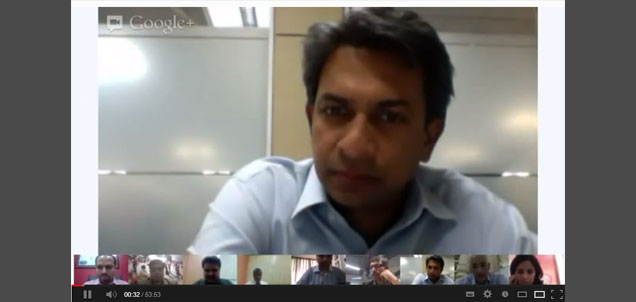
    The inaugural webinar got off to a stimulating start last week (April 26). The platform chosen was Google Hangout which allows for simulatenous ‘meeting’ of 10 people in a ‘virtual’ room. With Rajan Anandan, Managing Director, Google India, as the first guest, the series struck a discerning chord as a cross-section of the fraternity congregated online and many more watching him live on the Youtube. They heard Mr Anandan share his version and vision of the growth of online space and also posed a few questions on the scope and challenges facing the medium in India.


    Srinivasan K Swamy, President, IAA India Chapter, began with an introductory note on the role of IAA in steering such initiatives and promised more such debates in time to come. Abhishek Karnani, co-chair and Director, Free Press Journal group also spoke on the webinar initiative.


    Other than Messrs Swamy and Karnani, other panelists included: Manish Advani, head – marketing and public relations, Mahindra Special Services Group (also co-chair of the the IAA webinar series), Vishaka Singh, Executive Director, Aurora Comms, Nishad Ramachandran, Vice President, Hansa Cequity, Mudit Singhal, Founder and Business Head, Storycentre, Gaurav Mendiratta, CEO, SocioSquare and Jay Sampat, M&E practice at Accenture. Mr Advani proposed the vote of thanks and the panel was moderated by Pradyuman Maheshwari, Editor-in-Chief, MxMIndia.


    Execerpts from the conversation:

    Q: Several companies in India are reluctant to start their own digital enterprise as they feel that if something nasty is posted about them, their business will get affected. What is your advice to these companies?

    Rajan Anandan: I’d like to say that there are 150 million users on the internet and about 95 per cent of the SEC A, B 15-44 yr-olds are on the internet and are spending more time on the internet than any other medium. If you happen to sell products or services that cater to these audience group then if you are not on the internet you won’t be able to reach them. More importantly, if you do not engage with them and other companies engage with them who turn out to be competitors then the users may migrate to those other brands.  We have seen this happen in other countries as well and what’s interesting about India is that despite being at 12 per cent penetration, it already has a 150 million users. For many of us, the industries where we mainly focus on SEC A, B 15-44 this has become a must-have medium. The important thing to realize about the medium is that in the digital arena consumers are the ones that propagate brands. It used to be brands talk to consumers in a one-way dialogue but that has completely changed with the advent of the internet.


    I see two kinds of companies from the umpteen that are present on the medium.  One that says that now I can get instantaneous feedback when something is not going well or when there are opportunities for improvement and those companies are able to leverage this medium in incredibly powerful ways not just for building awareness or driving transaction but also for getting feedback from consumers. Then there is another group of consumers who say that if something goes wrong then consumers will talk about it and the whole world will find out about it. But the reality today is that with the advent of the internet, social networks and online video users are able to stay connected. There are 2.4 billion consumers on the internet today and by 2020 that number will become 6 billion. So everyone will be connected to internet by that year and unless you are selling to people outside of planet earth, it’s important to be on the internet and leverage the medium well.


    Q: A large number of SEC A, B audiences are online and in the Indian context what matters is the language.  Is all of that coming online now for brands to engage more deeply with the consumers?

    Rajan Anandan: The simplistic way to look at this is there are 150 million users in the country who speak, read and write English today. So every new user who comes to the internet today is outside of that bastion. Local language content is important today.  Some of the fastest growing websites on the internet are local-language driven. If you look at videos, especially YouTube which has 50 million unique users per month, more than 80 per cent of the views are actually non-English. We are seeing a large amount of user-generated content in local languages that are being uploaded. Also there are many web-only content creators that are emerging… but the point is that it is still very early days but the content ecosystem  will develop very rapidly. There will be three things that will be witnessed: the first is the underlined infrastructure that will enable local language content at scale. One of the important things is standardized open source fonts. Today, there are not so many open source fonts in our country but that problem will get solved over within the next one year. There are several industries that are working together…the other thing is that there is a lot of content that exists in Indian languages which is not on the web. That content we are seeing it come on to the web.  We think the news print industry has led that wave and we are seeing a lot of publishers etc come online. The third thing that will be a breakthrough in 5-10 years is web-only content creators. Today we have about 40,000 Indian content partners on YouTube and almost all of them are non-English. We are now seeing an interesting trend where content creators are focusing on creating content only for the web. As the ad ecosystem grows such models will get more interesting. Over the next 3-4 years we will see a tsunami of non-English content come to the web.


    Q: How can content creators and creative people use the online video medium effectively in terms of ROI? Also, can you reveal details on the captivity of audiences watching non-English videos on YouTube?

    Rajan Anandan: Let me share with you some statistics on that front with respect to YouTube. We have about 11,000 full-length movies, we have about 90 per cent of Bollywood music catalogue, about 80 per cent of all the regional music catalogue, TV shows of the Top 6 TV networks and live sports as well. Clearly, all this wouldn’t be there on YouTube if there wasn’t a way to monetize it. Now the monetization rates on online today are significantly lower than on TV. If you look at the TV rates, they are in the north of 3 billion dollars while digital advertising is about Rs 2500 crores till last year. So we are 1/6th the size of the ad industry in digital excluding classifieds compared to TV. But the only thing is that digital is growing at 50 per cent while television is at about 12-14 per cent I guess. So there is a way to monetize. The second part to it is that if you want to become a digital-only content creator can you make that viable and how does that compare with say being a content creator in the television space. The simple way to think about the internet is that if you are going to have the same cost structure that you do in the TV industry to make content in the internet industry your toast, because effectively the monetization rates are actually quite low and what we are seeing is that the successful content creators who are already building multi-million dollar business literally starting from scratch. They have a very different cost structure and therefore they are effectively able to make good returns. It’s very important to understand the economics of the medium and therefore build a content business that aligns with the economics of the business. The good news is that there are thousands of digital-only content creators today, which is an encouraging sign. But at the same time if you want to make say an 80-crore movie and say that you are not distribute anywhere else but only on the internet – can I breakeven on that, probably not yet. That’s going to take some time as the CPMs have to catch up and so on and so forth.


    In terms of the users and quality of broadband, the thing is that there are 50 million users including mobile. There are about 10 million unique visitors who access YouTube on mobile while about 40 million view us directly on the web. The TG is 15-44 SEC A, B and this is an interesting audience set. For example, it’s been about two weeks for IPL so the time spent on YouTube on IPL has doubled year-on-year. But my view is that with not so great connectivity India is already at the state of connectivity that there is. As broadband begins to scale out the consumption of viewer-based online content will go through the roof. If there is one thing that is preventing the internet from realizing its potential, it is broadband.


    Q: Google has been doing a lot of activities to bring new businesses online. Will you be able to share data on the kind of agencies that are coming and sticking on with the medium? If they are not hanging around then what are the reasons for the same?

    Rajan Anandan:  To give you an insight, there are about 12 million businesses in India that have more than 5 employees. That is the third largest in the world next to China and the US. Despite that huge number only 1,50,000 businesses advertise in any media. So in print at least 1,50,000 people advertise at least once in a given year; about 10,000 businesses advertise on television and about 7000 businesses advertise on radio. If you look at digital advertising, it is orders of magnitude bigger than television but less than print in India. To grow the digital and mobile advertising market the first step is for businesses to have a mobile or online presence. Over two years ago, when we launched the ‘India get your businesses online’ initiative there were only about 400,000 businesses that were online but when we looked at the quality of those website only 100,000 of them were decent. When we did a little more research behind this, we found that what works in India is generally a free model.  So we built about half a million websites for businesses for free. This was supposed to be a three-year initiative and I am excited to state that we have crossed 300,000 websites which is a three-fold growth and we are confident of achieving half a million quality websites by 2014.


    Also, businesses that are able to generate leads from the internet like travel agencies or doctors or lawyers, etc…if you see today there are half a million doctors in India but less than 50,000 of them have decent quality websites. But the ones that have a website are seeing a significant shift in the way their practice is being run. Basically, consumer-focused businesses that can be used to get leads will be the best way to move forward.  By 2015, there will be more advertisers that will advertise on digital than and by any other medium.


    Q: You have been talking about internet penetration and I have been desperately waiting to hear some bit on mobile internet penetration. Today, mobile internet penetration has crossed pc internet. There are some wonderful examples of mobile projects like M-pesa in South Africa. We hardly hear any story on mobile internet in India. What initiatives should we be taking to drive consumption through mobile internet as compared to PC.?

    Let me start by presenting some facts. There are 150 million users of which 50 million are desktop/notebook users, 50 million users access the internet through a mobile device and the other 50 million access the internet through both a desktop and a mobile device. If you look at the last 6-7 months most of the new users who are coming to the internet are mobile-first and mobile-only. We are essentially starting to see a mobile-only option taking off in India. As I said earlier, all the new users who will be added this year will be from mobile-only. They are doing pretty much the same thing as what one would do on desktops or notebooks. The only thing difficult as of now is video on mobile due to bandwidth issues but outside of that there is an explosive growth that is being witnessed in the mobile space. To quote an example, there are about 25 million smartphone users but the average user is spending about 120 minutes per day on the internet.


    For businesses there are certain implications that come along. For example, today e-commerce is at an inflection point; most e-commerce sites in India are getting between 3-10 per cent of transactions from a mobile device. However the traffic to such sites has now crossed 25 per cent. That is a huge number. Going forward we expect to see a phenomenal jump coming from a mobile device to such websites. It means that if you are a mobile company you will need to have a mobile optimized site. I am surprised to see some companies that do not have this facility. The second thing is that it is important to have native apps. Also, mobile is a very important medium top leverage branding and the good thing today is that one can have very exciting mobile ads. Our view s that the time for mobile has arrived and there is no going back now.


    The webinar can be accessed at https://www.youtube.com/iaaindiachapter


  • Rediff.com goes in for new, mobile-friendly look

    By A Correspondent


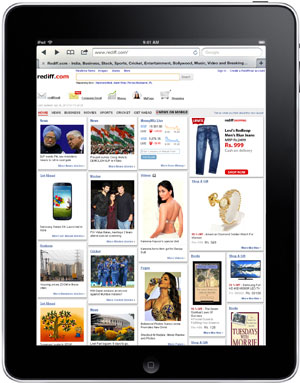
    Rediff.com India Limited has released its latest version of its website Rediff.com, featuring a new and enhanced homepage sporting a tiled interface. The design, developed inhouse, is based on user feedback. The Rediff homepage in its new avatar brings alive an assortment of content and services using the contemporary grid layout. Each unit of the grid features information photographs and videos, giving it a more interactive, image-friendly feel.


     

    “Current change is to respond to the consumer shift from PCs to high-graphic quality tablets and smartphones and better bandwidth in India and international markets,” Ajit Balakrishnan, Chairman and CEO, Rediff.com told MxMIndia. According to him, mobile access of Rediff.com in India currently stands at 20 percent and is rising fast. “In markets like the US it is much higher,” he said.


    Mr Balakrishnan further stated, “We have also redesigned the site in terms of providing users with the content and imagery they desire on our home page, while adding more e-commerce options, which have been in higher demand from this growing population. The Indian internet user base is quickly moving to consuming our services on various types of mobile devices, whether at home or on the go. As a result, this transition required us to take a fresh and innovative view of how our users are likely to interact with our portal. Our new tiled interface is a step towards making it easy for a rapidly growing segment of users who access our website from tablet like touch screen devices.”


    Apart from the grid layout, Rediff’s e-commerce platform, a fast-growing segment for Rediff, also gets a boost with a large footprint on the homepage to capitalize on the growing usage of e-commerce platforms throughout India.


    While e-commerce websites in India are gung-ho about their promotional and marketing activities, Rediff plans to keep it low. “We used to use TV up until 2008; since then the intersection between TV and Web has decreased. Active web users do not seem to be watching much TV. Word of mouth will carry this initiative forward,” Mr Balakrishnan asserted.


  • Times Internet partners AIR for live IPL commentary

    By A Correspondent


    Times Internet Limited (TIL) and AIR will broadcast live commentary of 33 select Pepsi IPL 2013 matches over AIR’s National Channel and FM Gold. Updates for all matches will be broadcast on AIR FM Rainbow Channel.


    The running commentary of the matches of Pepsi IPL 2013, including the Playoffs/Final, being played in India, will be broadcast alternately in Hindi and English on National Channel and FM Gold Network. The coverage area of National Channel includes Andhra Pradesh, Bihar, Chhattisgarh, Delhi, Goa, Haryana, Jharkhand, Karnataka, Madhya Pradesh, Manipur, Meghalaya, Orissa, Pondicherry, Tripura, Uttar Pradesh, Uttaranchal and parts of Assam, Maharashtra, Rajasthan and Tamil Nadu. The live commentary of all 33 identified matches will be broadcast over National Channel of AIR which is available all over India.


    Satyan Gajwani

    Speaking on the association, Satyan Gajwani, CEO, Times Internet, said, “We’re delighted to renew our association with AIR on Pepsi IPL. By partnering with All India Radio, Pepsi IPL 2013 will tap into a new set of cricket fan audiences across India, particularly beyond the metros.”


    “All India Radio, which has always been in the forefront of popularizing sports in India including cricket, is happy to bring live and exciting action from IPL to its listeners”, said LD Mandloi, Director General, All India Radio.


  • Chat live while watching TV

    By A Correspondent


    iCouch, an exclusive Live TV chat platform has been developed for the ardent TV viewers and show fans. It is a free mobile application by iDubba. Launching in partnership with Zee Cafe’s ‘Grey’s Anatomy’ Season 7 from May 1, iCouch lets the viewer chat while the program is running and captures the favourite scenes.


    iCouch enables the viewer to read and ‘like’ popular chat and get heard by thousands of other fans watching the program. One can find out interesting facts and trivia about a show, invite friends and send them alerts, play contests and win big prizes while making TV viewing experience extremely entertaining and fulfilling.


    Rabi Gupta, Co-Founder – iDubba, said, “iCouch is definitely not another news or gossip outlet where we reports things or events, in-fact here the news and gossip makers and breakers are the ardent fans of the TV show. It is a chat forum that has no bar, you are the one building and developing the discussion of your favourite show.


  • Intel, doing something wonderful


    By Ananya Saha


    Intel, which has been getting quite aggressive in the Indian terrain, has been developing many consumer products in computing device and mobile segment. To name a few, Xolo X900 smartphone in association with Lava and Fonebook in association with Asus. Apart from the consumer products, Intel has also initiated its National Digital Literacy Mission that entailed the ‘Go Do Something Wonderful’, ‘My Discoveries’, Digital Literacy Week’ and ‘Follow the Fiber’ campaigns in urban, semi-urban and rural areas.


    The ‘Go do something Wonderful’ campaign that has been playing up on the ATL level claims to have had more than 65 crore impressions online and is spanned across seven languages to drive technology adaptation in rural, semi-urban and urban areas.


    On the BTL level, Intel launched ‘My Discoveries’ campaign targeting college youth, IT Hubs, Corporate parks to demonstrate the interaction between multiple technology experiences in a connected world. The My Discoveries campaign boasts of being ab experiential marketing at a BTL level, the touch and feel factor is showcased in a way where the students not only get the feel of the product and the technology but also enhance the skill-set using the product. More than 30 lakh youth have been engaged though this campaign


    While in conversation with MxMIndia, Sandeep Aurora, Director of Marketing and Market Development, Intel South Asia, prefers not to divulge financial details, but he does reveal the plans for Indian market.


    Sandeep Aurora

    How is the Indian market growing for Intel?

    InIndia, personal computing device penetration is a mere 10% which means there is huge growth potential that the country offers. Intel is committed to driving the growth forward by showcasing the magic of a personal computing device and driving greater relevance. In today’s multi-device connected world, Intel enables consumers to explore their creativity, enhance their productivity and indulge in a world of digitally powered entertainment. The aim is enhancing affinity and excitement for the personal computing device as an enabler of amazing possibilities in their everyday lives.


    Intel recently launched My Discoveries campaign. What was the thought behind it?

    Indiais a growing market; consumers are adapting to new products and fast moving towards brands which enable them to better their lifestyle, connectivity and productivity. It is important that our consumers experience the possibilities that the brand brings alive for them and how this impacts their future in a real time scenario focusing on making people realize what they are capable of doing.


    The My Discoveries program spanned across two quarters was hugely successful reaching over three million youth across India with the message of personal computing device relevancy and usage in a highly contextual, relevant, personal and engaging manner The approach of a personalized experience for the consumer has worked well, it’s amazing to be able to actually create an original sound track, a photo or video montage and carry it back with you.


    My Discoveries extended beyond BTL.

    On ground activations under the ‘Go do something wonderful’ campaign, which we call ‘My discoveries’, targets people in campuses, i-cafes, malls and other places. The campaign reached out to the audience at multiple touch points including campuses, corporates, BPO’s, Internet cafes, malls and retail with its unique experience. The engagement extended itself to digital and social enabling audiences to experience the My Discoveries on a virtual platform while sharing their wonderful experiences online. Pulp Strategy was the agency responsible for the execution of the campaign.


    Does the campaign mark Intel’s marketing shift?

    In the recent past, Intel made a critical & fundamental shift in communication. A leap from “what we make” to “what we make possible”. The objective of this campaign was to build a deeper, enduring emotional bond between Intel & the end-user while creating an increased preference for the Intel Powered PC in the minds of our target audiences. The premise of our campaign was that even though devices like cameras, smartphones, and MP3 players are handy and generate excitement, their potential is limited without a personal computing device. The personal computing device is the central hub to a connected device world.


    The campaign plays on the sentiment that “Tabs, phones, cameras are an expression of me, but my personal computing device is me and it’s where I do wonderful things”. Intel enables consumers to explore their creativity, enhance their productivity and indulge in a world of digitally powered entertainment. We wanted to showcase these possibilities by creating inspiring and compelling experiences which drew out the relevance of owning a PC in a connected world. The focus was also on offerings hands on experience of the power of a processor, while making the experience delightfully personal “what an Intel Powered PC can “do for me”.


    What was the brief that was given to Pulp Strategy for this campaign?

    We briefed several vendors during the RFP process about this concept but Pulp Strategy, the agency chosen for this campaign came back with the best response to our brief and through extensive mutual collaboration we fine-tuned the brief and the deliverables in a way that would deliver the best impact for consumers to explain the relevance of a personal computing device by offering a delightful, engaging and personal hands-on experience.


    Has Intel’s strategy in the Indian market changed over the years? Does this change reflect in your marketing and advertising in this market?

    In the process of brand evolution, marketing plays an important role. For a 40-year-old company, whose first marketing campaign was focused at projecting how things have changed and advanced; Intel has evolved in its marketing strategy with the various products that it has launched over time, learning at each step. We have moved on from what Intel is and what it can do to make people realize what they are capable of doing. Campaigns like My Discoveries, and Go Do something Wonderful is a step in the direction of making consumers realize the possibilities that owning and using a PC opens up for them.


    India remains a complex market. What will be your strategy for the Indian market, going forward?

    Our research has revealed that one of the main reasons for consumers to not buy a personal computing device immediately is the lack of relevance for it in their minds. But we believe that as the awareness about technology coupled with digital literacy increase in the country, more and more of the hitherto untapped individuals would realize the importance of owning a PC and the sales would pick up. Keeping this in mind, Intel will continue to focus on India’s personal computing device market which is growing at a rapid pace. Also growth of the personal computing market inIndiais inevitable given the low rate of domestic technology adoption in the country.


  • Growing to No1, ethically: Maheshwer Peri


    By Ananya Saha


    After spending 18 years as the publisher of the Outlook group, Maheshwer Peri launched Pathfinder in 2009 with the aim of making it India’s largest and most credible career counsellor in five years’ time. While still a mentor with Outlook, he has been associated full-time with Pathfinder since April 2012. Mr Peri rewrote the plans for the magazine, closed a publication, injected positive energy and weaned out negative energy.


    With an aim to reach students on a platform-agonistic way, Pathfinder’s magazine Careers 360 offerings are available in print, web and mobile. And it is succeeding. The webpage of the magazine has recently overtaken the more established portals, becoming India’s largest education and career portal.


     In a freewheeling conversation with MxMIndia, Maheshwer Peri, Chairman and Founder, Pathfinder Publishing, talks about the publication and the high digital notes it has been striking. And whether his ethical standards have come in the way of advertising.


    How has the journey of Careers 360 shaped up?

    It has been fantastic for one simple reason: there was no one who was competition. There was no one who approached the genre at all in terms of journalism, content and student. Everything you had in the market till that point in time was marketing or advertorial features that were coming up because there was an advertiser waiting. There was no one who made a model which is to say that student will buy this product, which is suited for the student and not for the institute. From that perspective, it was a complete paradigm shift.

    Even today, the content that you see is created because there is an advertiser around. They are advertising and marketing features. This is a first product that has been created with student in our mind. That is why the journey has been good, since there was no one as competition.


    Does the magazine attract a different set of advertiser then?

    The advertiser had multiple options. In any business, or publishing business, you need to create something that attracts readers. Once the reader is there, the advertiser follows. In any niche, if you are to create content because of which a set of loyal readers follows you, the advertiser follows. They cannot avoid us – that is the stage at which we are.


    Has the print run of the magazine increased as well?

    The initial print run was very high earlier, of the English and Hindi magazines of Careers 360. It was about 1,80,000 but today we print about 1,30,000-1,40,000 copies. We sell about 1,20,000-1,25,000 copies of which 30,000-40,000 are school and college libraries.


    Have you broken even yet?

    No. It’s an investment phase. The reason why I think it is a case study… there has never been a case in India that a single stream of content has been monetised over multiple platforms. The articles that we do are backed by data. And that data has to be complete. So we decide how much of that should be put into the magazine, and the balance we put on the web. There are journalists who create content, which is suitable for the magazine, for our almanacs and guidebooks and for the website, and going from there to the physical career workshops that we do.

    The challenge is if I were to say if the magazine would break even, it would not. Because I am still going though the phase of seeing how many more platforms I can grow to and keep investing in those platforms also. It is definitely going as per my plans and projections.

    On the digital space, we are the No 1 website in the country. One or one-and-a-half-year ago, when I started this journey, I had 4,000 students on the site each day. Today we have guaranteed 100,000+ each single day.

    Now the challenge for me is; since I have become the largest website in the country, the largest website has 10 crore of ad revenues and sitting on 5 crore of data. And I do that, yes, I will make money. That is the next step for me. Now that I have got the audience, I will monetise that.


    What are the factors responsible for the growth of the web presence of the magazine?

    I realized that the content we are creating for the magazine is not being leveraged. It is just limited to the magazine, so for me the challenge is how I invest myself in a way that the content I create can reach out to plenty more audience.

    Today 2-2.5 million students come to my portal every month. That is 30 percent of the audience of that category. Today if 1.4 million students have opted for engineering, and one million students have come to my portal, it captures 70-80 percent of the students. For each of the verticals, I need to say that I reach out to more than 30-40 percent students. And that is with the guidebooks, almanacs, counselling workshops, magazine, and digital portal.

    If you look at the content creators in the country, we are the largest content creators. There is no one who comes close to even 10 percent of what we do in the marketplace. The reason why student come to us, they have more and enough value to add to their decision-making.


    Has the strategy for magazine changes over the year?

    Strategy has changed to the extent that the moment we talked about digital. The typical thing that journalist does is goes and collects information, edits it, and puts out a 1,000-word story. This is not exactly career-driven journalism thing here. It is actually lot of data also. We are not just advisors; we are counsellors to the students. And counselling means two-fold integrity for us: financial integrity where no one is able to influence the way I right. The other big part of integrity is that we have covered everything so that student makes an informed decision, which means I have not omitted anything because of lack of research. It is important that the student does not suffer because you did not inform him of a very good option, which he otherwise should have known.


    Are you considering any brand extensions in the near future?

    Online we have lots of products. There is student space. There is mock counselling on our Engineering page. Each student pays Rs1,499 to take our advice. It is based on the data and information that we have collected in the magazine for our website. If a student comes and asks, ‘I have got a JEE rank of 11,000, what should I do?’ I give him seven options because I have cut off of all colleges in the country, which no one has. All that information that we research, collate is sitting with us. In my opinion, we are the best position advice student what to do. if the student’s choice if for five, I will make it eight. We optimize students’ choices, include one or two that he doesn’t know or remove what I think are bad for him. It is for him to decide where he wants to join, because I am not an agent.


    And is the counselling handled in-house?

    We have counsellors. We appointed a BPO company in Bangalore, which created all data for us. So the data is for more than 6,000 colleges and it cost a lot of money to create the data. I cannot do the data myself. We have journalists, a set of digital content creators, and data people, which is a BPO, working from Bangalore. Increment in further content creation would take 1x cost to become 1.5-or-1.8x cost. But the 1y of revenue can become 3y. That is the whole objective here: how do you add 10-20 percent investment in cost to add another stream of revenue that gives you one more ‘x’.


    You also closed down Competition 360. Why?

    When I moved from Outlook, I actually had three publications: Careers 360 English and Hindi and Competition 360. Competition 360 was dealing with competitive exam in the market like Competition Success Review or Pratiyogita Darpan. What I realised was there were many who were doing far better job than me, whereas in career-side, there was no one who was doing it. It is important for me to focus on something that I see as my path. So today my path is that I want to be India’s largest career counsellor; I want to be hand-holder for this country’s biggest student community. The moment that is decided, I am not getting into the job space and competition space. I am not going there because there are people who are already doing wonderful job out there and they will continue to do that. It doesn’t need me.


    You’ve been asked this earlier, but in the light of the strides you’ve taken: Outlook was going great guns under your leadership so what prompted you to start Careers 360?

    At some level, there are many people who will do Outlook. Aspirationally, Outlook is there. In India, and it has nothing to do with me or Outlook, you will see a lot of people getting into mainstream media or celebrity media. You would not see anyone coming into a morbid area, which is education. It’s standardized and regulated. But if you look at the demographic dividend that India has, the biggest demographic dividend would be when you handhold the students to nurture them otherwise it will become a nightmare. Someone has to handhold them otherwise we are sitting on a time bomb.


    What exactly is your role at Outlook now, and has it changed in the past one year?

    I am still the Mentor and Publisher. In fact, in March it was to get over but it got extended I am continuing for one more year. Me and my promoters have a fantastic equation. I will not influence that they remove my name. As long as they want, I will be around. Whenever they call me, I will be there. Period.


    Who handles the sales and marketing for Careers 360, now? Is it being handled by Outlook still?

    There are 4-5 people in my team, two of them were in Outlook. One, I always had arrangement with Outlook that I will never poach a single person from there. And I have stuck to it, and will even going forward. But these were people who were handling Careers 360 in Outlook. And they have moved with me.


    What is your next target for Careers 360?

    Within the next two years, Careers 360 would be India’s largest career counsellor. I would want to say that about 20 percent of students in India take a decision because Careers 360 influenced them. The day I start influencing the decision, and already we are doing it and handhold the students and also tell the institutes what students think about it: I have done my job. In India, regulators want to control without giving freedom to the private guys and institutions do not want any control. The balance is between them: the regulators need to give bit of freedom while institutes need to understand that their freedom is going to be limited by what regulation would want.

    We are aiming to achieve this balance.

    In a larger sense, this country has to start invest in its youth. And I hope more mainstream publications understand. Health, religion and education and jobs are the biggest things for people in India. In every mainstream media, these are supplemented by marketing activities. People like us come in because mainstream media has somewhere ignored it.

    Apart from the great things that Careers 360 is doing, you are also becoming very ‘activistey’.

    As Outlook, whatever I say was Outlook. It was a news media. There is no identity as Maheshwar Peri; it was only an Outlook publication. My view need not be Outlook’s view. In certain positions, you don’t have your own voice. It is the position that carries the voice. And I did not want any confusion between Outlook’s voice and my voice, so I was never active then. I was very conscious of the fact that whatever I speak is going to be taken as voice of Outlook. And now that the burden of Outlook is not with me, I have my own voice, which is what is coming out.


    Given your ethical stands on many things, has your advertising suffered?

    Yes, but that is again a conscious call. Whenever you take a stand, there are bound to be a set of people who will not stand with you. The current market situation is: I will give you an ad what will you give me in return. Not that is much more prominent in education sector. All these institutions are colleges are looking for ratings and rankings and some kind of coverage. And there are people who do that in the market. But again I say that once you create the content, which makes the reader stick to you, the best of the advertisers cannot avoid you; and then the other follow because the best advertisers are with you. There is a change that you need to crack. It takes a lot of time, perseverance and stamina. That is something I always had. When I launched it, I said I will create a DNA where nobody can change the credibility of the magazine or question the credibility of the magazine.

    So initially, when people were saying “Why don’t we have those guys and these guys”, I said, “Let’s create a DNA first, come what may”. It means lot of cost, money, time. But all those things are fine. Once we create the DNA, even when we go out unless we go to a new advertiser, the old advertisers know that they cannot bend us.


    Very recently, I went to an advertiser in the northern part of India. He looked at the magazine, and said, “Obviously, we cannot buy you.” So I was very intrigued and asked him what made him say so. He said, “Typically when we give an ad, our ranks are very high. In your magazine, we have given our ads in your magazine, but our ranks are very low.” That is the image that has reached the advertiser, for each time and every time, and I think we have managed to do that.