Category: Digital

  • Truecaller launches brand campaign

    By Our Staff


    With a promise of safeguarding its users from spam, scam and keep offering hassle free communication, Truecaller, the global platform for verifying contacts and blocking unwanted communication, has launched a brand campaign today called “Desh ka Truecaller”. The film has been curated by Mind Fluid, an agency partner of Truecaller.


    Commenting on the launch, Manan Shah, Director of Marketing, Truecaller India said: India is our home market and our community has always been like our North Star, guiding us and helping us grow rapidly by spreading a positive word of mouth for us. It gives us great pride that more than 20 crore Indians trust us, which is nearly half of the number of cell phone users in India. The message of this campaign is that of trust and to reassure people using Truecaller that we will continue to keep their communications safe and efficient.”


    Added Harita Rao, Creative Director at Mind Fluid: “There are many Indias in India – full of stories, full of insights. And Truecaller as a brand has been built around these stories and insights. And that is what Desh ka Truecaller is all about – little anecdotes from life. Our hearts swell with warmth and there was a constant smile on our faces while creating Desh ka Truecaller.”


  • Parents prefer Youtube over OTT platforms for kids : Akatsuki survey

    By Our Staff


    Akatsuki Inc.,  a Japan-based entertainment and technology company looking to expand its kid’s animation footprint in India, recently conducted a survey on ‘What Indian Parents Want From Animated Content For Kids’.


    The survey revealed 69% of Indian parents feel that the Covid-19 wave has increased their child’s content consumption habits leading to a 4-6 hours screen time on an  average. The Top 5 voted content IPs according to the survey are: Cocomelon, Peppa Pig, Shinchan, Doraemon, and Tom &Jerry.


    Said Yuki Kawamura, Head of Business Development and Partnerships, Akatsuki Inc: “We at Akatsuki are committed to bringing joyful and meaningful animation IPs for the growing and underserved kids animation space in India. We want to thoughtfully co-create our content roadmap with on-ground insights and need gaps. This survey is the first step in that direction and findings have strengthened our conviction in the potential of the untapped demand of kids animation in India and synergies with our IPs.”


  • The Puzzled Zombie Awakens


    By Shashidhar Nanjundaiah


    Shashidhar Nanjundaiah“So, you’re finally looking at my LinkedIn posts!” said an email subject line today. As unusual as it was, its linkage to the world’s biggest incident of the day was clear: After every Facebook-owned platform faced an outage for more than six hours, it felt like the world had come to a standstill. But when I run out of cookies in the kitchen at stealthy midnights, I invade the humble peanut jar. LinkedIn must have basked in surprise surge today as Facebook, Messenger, WhatsApp, Instagram, and Oculus fell victim to a massive outage after-as The Verge explains-Facebook’s border gateway protocol routes, which help networks pick the best path to deliver internet traffic, were suddenly “withdrawn from the internet”. The outage happened around 12 pm New York time, which is 9:30 pm IST, so the impact was understandably somewhat muffled, except for the usual night owls.


    It was “seize the day” time for many marketers who depend on social media platforms. Many parallel platforms promised better service. Some derived metaphors and allegories in their advice: “You should diversify your social media apps to stay connected. Similarly when it comes to investment you should diversify between equity, bonds, gold, international equity etc.”


    “My tip for you now is to take these 5 minutes and think about what you were going to post or what you were going to send and ask yourself, ‘what is the purpose?’”


    Some advice was the more familiar variety: “I am writing this while looking out of the window and the rain is torrential. So, I suggest we all look for a rainbow.”


    Some betrayed their schadenfreude, penning ungrammatical delight at what was surely Mark Zuckerberg’s downfall, right?


    And while on social media about social media, can conspiracy theories be far behind—and worse, how do we know they are conspiracy theories—about internal sabotage due to the whistleblower on CBS “60 Minutes”?


    It would be fallacious to assume that people were merely capitalizing on the outage by using alternative platforms, or wallowing in ennui while missing their favourite meme from their politically charged group leaders, or doing a primal scream because they didn’t know what their fave Insta influencer was doing, or feeling helpless because their timed marketing campaigns didn’t take off. Marketing campaigns can mostly wait, but our dependence on seamless communication can’t. In India, these days, many businesses communicate with their customers officially on WhatsApp. (If you don’t have a smart phone, well, you shouldn’t seize the privilege of doing business that depends on your smart phone, right?)


    Constant communication has become an integral part of conducting business because it is a world of mutual surveillance between us and them, thanks to the media. Indeed, a researcher says, today’s media survives on mutual surveillance. Only a few hours before this social media apocalypse, a friend told me, he had met a senior editor who was working through their meeting—on WhatsApp.  In India, we see that phenomenon all the time. Social media has made work so portable that we carry our work on our smartphones even to casual meetings. Our social media dependency—a theory that claims that we learn about our world from the social media—runs far deeper than its self-conferred role of connection and communication, or, as its marketers hope, constancy of engagement.


    Media scholars over the past decade have been busy writing about mediatization: One of my favourite books from the past decade is Media Life by Mark Deuze, who argues that we’re all like zombies, neither alive nor dead. We are inseparable from the media—we no longer merely “use” the media, and the media no longer “influences” us because we have integrated ourselves so much, both “immediatising” and immortalising our lived experience, while media itself becomes ever-evolving at our hands.


    That part is true about social media. It is constantly evolving because we’re constantly morphing it. And social media is right at the centre between the mainstream and the media prosumer—it is the amphibious media crucible where the prosumer constantly adds new stuff, constantly stirring the pot to make facts and misinformation indistinguishable. Little did scholars like Deuze know our lives would be so much more mediatized today, thanks to the pandemic—a mediated pandemic, I call it, so much are we dependent on our media to inform us about the pandemic. Over the past eighteen months or so, we have grown uncomfortably accustomed to staying virtually connected while staying physically disconnected.


    When that constancy breaks, it’s time for the zombie to wake up.


    Shashidhar Nanjundaiah has been a senior journalist and headed schools of journalism and media in India. Currently, as a research scholar based in the United States, he feels the need for better news literacy especially among younger audiences. 


  • Gaming to reach $3.9bn by 2025


    By Our Staff


    A report prepared by IAMAI in collaboration with OnePlus and RedSeer has estimated that the Indian gaming market is poised to reach USD 3.9 bn in value by 2025. The report also highlighted that 40% of the hardcore gamers pay for their games with an average spend of INR 230 per month. The Covid-19 pandemic has accelerated the organic growth of digital games as mobile app downloads grew by 50% and user engagement went up by 20%, the study says. The increased gaming time has spurred the growth of hardcore gamers in India, even as casual games remain the most popular genre in India.


    While launching the report titled ‘Building up the e-gaming ecosystem of India and the influence of smartphones’, by OnePlus, the global technology brand in partnership with IAMAI and RedSeer, Rajen Vagadia, Vice President and President, Qualcomm said: “We are at the cusp of a gaming revolution and the gaming ecosystem is working towards user-friendly smartphones and leveraging 5G technologies.”


    Saurabh Gaur, Joint Secretary Ministry of Electronics and Information Technology added that: “The [global] gaming industry can be matched with electronics, and consoles could be manufactured in India.”


    Speaking at the session, Navnit Nakra, Vice President, Chief Strategy Officer and Head of India Sales, OnePlus India, said, “Over the past few years, the e-gaming industry in India has grown tremendously, driven by the rising avenues for digitization promoted by the flagship initiative of the government, the Digital India program and improved accessibility centered around innovation and affordability by OEMs. At OnePlus, our community has always been at the heart of everything we do and therefore, we have been leading the charge in introducing the most advanced features and have built partnerships with industry leaders to provide a seamless gaming experience on OnePlus smartphones. We are happy to have partnered with IAMAI and Redseer as the report has served as a unique avenue for the industry to gain actionable insights and come together to drive meaningful discourse and innovative ideas”.


  • Lowe Lintas to partner with Onmo gaming platform

    By Our Staff


    OnMobile Global Ltd, the mobile entertainment specialist, has appointed Lowe Lintas Bangalore as the creative agency for Onmo – its mobile cloud-gaming platform. Onmo aims to bring together e-sports, social features and AI-powered analytics.


    Pallavi Nayak
    Pallavi Nayak

    Commenting on the appointment, Pallavi Nayak, Director Marketing and Communications, OnMobile Global; Global Head of Marketing, Onmo said: “As we embarked on the journey to launch ONMO, our D2C mobile cloud-gaming platform, we were looking to partner with a global, forward-thinking, and consumer-first agency who identified with our passion & understood our vision. Lowe Lintas stood true for that and more, and we’re absolutely delighted to partner with them! Looking forward to doing some groundbreaking work together.”


    Sonali Khanna
    Sonali Khanna

    Added Sonali Khanna, Executive Director and Branch Head – South, Lowe Lintas: “The gaming industry has seen a steady growth since the mid-80s, but the rise of internet and mobile in the 21st century has really pushed it into top gear. Companies like ONMO, that offer totally fresh and immersive gaming experiences, are going to be at the vanguard of this incredible growth story. At Lowe Lintas, we believe bleeding-edge products deserve future-focused strategies, combined with consumer-centric storytelling. To put it in gaming terms, we’ve got itchy trigger fingers as we team up with ONMO to storm the Leaderboards!”


  • Omnicom Media launches OMG Digital Bootcamp

    By Our Staff


    Omnicom Media Group (OMG) has announced the launch of its first-ever OMG Digital Bootcamp, a four-week, full-time intensive learning programme designed to provide a launchpad to aspiring digital marketers looking to kick start their career in digital marketing.


    Speaking of this new initiative, Kartik Sharma, Group CEO, Omnicom Media Group, India, said: “Progress and purpose are always at the heart of everything we do, and we believe that wherever learning thrives, so do people. One of the ways we have decided to support this is by nurturing budding talent in-house. In an industry where we are often faced with the challenge of onboarding entry-level aspirants in the digital ecosystem, we paused to take a hard look at how we could empower talent in-house and set them up for success within our agencies, thereby empowering business growth in the long run. This Bootcamp is one of the ways in which we have decided to support present and future talent, in-house, by enhancing their digital proficiency.”


    Added Anand Chakravarthy, Co-Founder, Results & Outcomes: “With 2.5 million digital jobs set to be created over the next 5 years, the need for ‘ready for business’ talent is critical for organizations. With rapid digitalization, it is imperative to rethink learning and how upskilling should be delivered. Results & Outcomes is pleased to collaborate with OMG India to curate and deliver an application-oriented and hands-on, progressive digital learning program delivered by domain experts – experienced professionals who themselves have run digital campaigns for years.”


  • Boom in Long & Short Videos


    By Our Staff


    India’s online video market has seen explosive growth both in terms of users and usage. The video user base has scaled to more than 350 million people growing over 24% over 2018-20, twice as fast as markets such as China and Indonesia. Despite this rapid boom, there exists massive headroom for growth – online video user penetration in India is nearly 60% of Internet users, compared with more than 90% in China, notes a report from Bain & Co. The report covers both the Short Form Video as well as the Long Form Video (including OTT / Streaming) market, and provides in-depth insight into the users, platforms and creators of online videos.


    Online video consumption has exploded over the last few years, with a surge in both users and usage bolstered by prolonged stay-at-home periods, especially during the pandemic. India’s online video user base has scaled to more than 350 million people, growing 24% over 2018 to 2020, nearly twice as fast as markets such as China and Indonesia.


    Usage per active user has also grown dramatically-the daily time spent per active user on online videos has simultaneously grown by 60% to 70% over 2018-20. Majority of time spent on smartphones is on entertainment, primarily watching videos. These are among the findings of a report titled “Online Videos in India- The Long and Short of It”, released by Bain & Company.


    Said Arpan Sheth, partner and global leader of Bain & Company’s Vector Solutions Group: “India has a large digital community, with about 640 million Internet users and 550 million smartphone users which is rapidly growing and spending more time online. Smartphone users spend about 4.8 hours on their devices daily, of which a staggering one hour on average is spent consuming videos. Despite this rapid boom, there exists massive headroom for growth—online video user penetration in India is nearly 60% of Internet users, compared with more than 90% in China.”


    Digital video entertainment consists of short-form videos (SFV) which are between 15 seconds and two minutes, and long-form videos (LFV), which are more than 2 minutes long. Within SFV and LFV segments, content can be further segregated based on who is creating it (user generated vs. professional) and how it is delivered (pre-recorded vs. livestreaming). The lines across these segments are increasingly blurring, as platforms expand their offerings to capture a greater share of consumer time in catering to broader consumer needs and occasions to enhance stickiness. For example, Instagram now has Reels, IGTV, and IG Live.


    YouTube has recently introduced YouTube Shorts in India. In India, the SFV market has taken off over the past two years, growing 3.5 times in user base and 12 times in total time spent by all users on SFV platforms. More than 200 million Indians watched SFVs at least once in 2020, with daily active users spending up to 45 minutes a day on these platforms. However, India’s short video user base has historically been largely men from Tier 2 and smaller towns, but this is evolving quickly, with the medium gaining traction in metros and amongst women. China paved the path for the SFV-market globally, over the past decade. India lags China by three to four years in terms of user penetration as well as usage.


    However, rapidly growing access with cheap and ubiquitous data, easy-to-use platforms, and a high proportion of vernacular content will aid short video scale-up in India. By 2025, three in four Internet users, or 600 million to 650 million Indians, will consume short-form videos, with active users spending upto 55 to 60 minutes per day.


    Added Shyam Unnikrishnan, partner and a leader in Bain & Company’s Consumer Products, Retail, Strategy and Digital practices in India: “The SFV ecosystem which essentially comprises of users, creators and advertisers are key to driving economics for the platform. Brands are increasingly using short video platforms to reach their target customers. New monetisation models, such as video commerce, livestreaming, and in-app purchases, will become increasingly commonplace in the coming years. Players need to invest in developing an advanced, tech-enabled platform to link users, creators, and advertisers and deliver a seamless experience to all.”


    TikTok became the first scale SFV platform in India, with more than 200 million users and 20 million content creators posting at least one video a month. This robust base of creators is key to attracting users. India has more than 50 million users who have created and posted at least one short video. Content creators are active on multiple platforms and are increasingly monetising their follower base through brand collaborations and commerce. All this is giving rise to a robust creator economy—an enabling ecosystem of players helping creators with content creation, monetisation, financing, and business management.


    The Indian SFV market is now occupied by a mix of specialist SFV apps (e.g., Moj, Josh, MX TakaTak, Roposo, Zili) and global social media/video giants (e.g., Instagram Reels, Facebook Reels, YouTube Shorts). Amongst the specialist short video platforms, five platforms-the previously mentioned Moj, MX TakaTak, Josh, Roposo, and Zili-have more than a 100 million downloads each.


    The market, while at scale, is still nascent. Major players are only a little more than a year old. The market could evolve to follow one of the divergent paths of the two mature SFV markets: China and the US. The China short video market is led by specialist platforms, while in the US, social-media-led platforms (led by Instagram Reels) and specialist short video platforms (led by TikTok) co-exist.


    Said Sriwatsan Krishnan, partner and a leader in Bain & Company’s Private Equity and Alternative Investor practice in India: “Market leaders will have to focus on three areas to develop a large, engaged community of users and creators. First and foremost, they will have to make substantial investments in technology to deliver a hyper-personalised experience to users, optimise user interface (through faster app and video load time, etc.), and expand access via vernacular interfaces. Winners will simultaneously focus on creator enablement and lock-in on one side, and creation of scalable monetisation engines on the other. Successful players will need access to large amounts of capital to achieve these goals and deliver on their potential.”


    India’s short-form video (SFV) market offers tremendous potential. Successful players will focus on three areas including tech-enabled hyperpersonalisation, creator enablement and lock-in, and monetisation as they onboard the next wave of users and drive engagement which will require access to large amounts of capital.


    According to Bain & Company, the five major trends that will shape the future of the SFV market in India are;


    Content curation and social-led engagement: Leading players will invest in a robust recommendation algorithm and a superior user interface and user experience to deliver a winning experience.


    Monetisation: Digital advertising will be the first frontier, but platforms will increasingly experiment with alternate commerce and micro-transactions. – Innovations to onboard the next wave of users: SFV platforms are already available in more than 15 languages in India, but a continued explosion of vernacular options is evident.


    Emergence of a robust creator ecosystem: A robust creator economy will emerge. This enabling ecosystem will help creators with content creation tools, training, brand affiliations, financing, and business management.


    – Niche platforms within larger SFV ecosystems: Platform players will emerge, housing a suite of apps which cater to distinct user and content niches. Long-form videos(LFVs) on the other hand, have substantial scale—viewed by 350 million to 400 million users, almost twice as penetrated as SFV. The format has seen substantial growth, with users and usage increasing nearly 1.5 times from 2018 to 2020. Active users today spend more than 2.5 hours per day on long-form content. Covid-19 lockdowns and stay-at-home advisories during the pandemic further propelled these numbers. LFV is poised to grow to 600 million to 650 million users in India by 2025. This growth will be driven by a steady increase in the Internet user base; access to cheaper, faster data; the introduction of more affordable plans, including the advent of freemium models; and a proliferation of content. A strong push on regional and vernacular content will accelerate this even further-85% of content viewed is non-English, and 30% is in languages other than English or Hindi. The LFV market is significantly more mature and crowded than the SFV market. More than 50 LFV platforms (also referred to as ‘over-the-top’ [OTT] platforms) exist in India.


    This crowded landscape includes four broad archetypes of players vying for consumer time including global giants (YouTube, Netflix, Amazon Prime Video, Disney+ Hotstar), platforms by television broadcasters (SonyLIV, ZEE5), specialist Indian platforms (MX Player, Eros Now), and aggregators (JioTV). Content drives differentiation, and it is possible for multiple platforms to co-exist in steady state, as seen in developed markets. Players have opted for different monetisation models that reflect the platform’s core consumer in the income pyramid such as subscription video on demand (SVOD), freemium, ads video on demand (AVOD), and transactional video on demand (TVOD).


    Six trends will shape the LFV space going forward:-


    • Content explosion: Platforms will look to build deeper libraries with increasing original and regional content.

    • Value chain integration: Backward integration by over-the-top (OTT) platforms into content production and forward integration by production houses may become more commonplace

    • Hyper-personalisation: Content curation will become even more sophisticated. Approximately 70% of YouTube watch time globally is already driven by recommendations.

    • Increased monetisation: Platforms will amplify focus on monetisation as the industry matures.

    • Gamification/social engagement: Players will explore social-led engagement to keep users hooked.

    • Content moderation: Platforms will look to invest in content protection tools to prevent piracy and moderate content to comply with regulations.




  • Kantar brings AI-based creative testing to digital video adverts

    By Our Staff


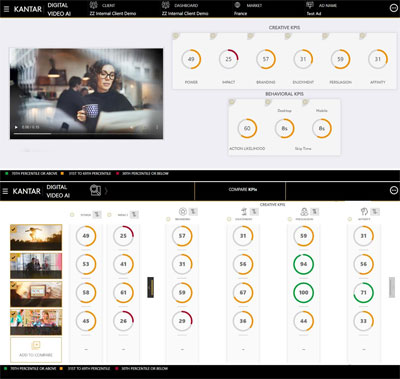
    Kantar, the data-driven analytics and brand solution company, has announced the global launch of Digital Video AI, a fully AI-powered tool that predicts the performance of digital video advertising. Building on the launch of Link AI for TV advertising in 2020, Digital Video AI is a creative measurement tool designed to evaluate online video ads against the behavioural and creative metrics that drive sales and build long-term brand equity.


    Unilever partnered with Kantar through the development of Digital Video AI and has tested hundreds of ads on the platform to improve their performance against their effectiveness and ROI goals.


    Said Neha Sharma, Global Brand Engagement Lead, Unilever:  “At Unilever we consider ourselves to be pioneers in pre-testing in the creative development process. Digital Video AI enabled us make quick decisions, pick from our best creatives, test video edits and even measure competitor campaigns with speed and at scale.”


    Added Dinesh Gopinath, Global Head of Product for Kantar’s Analytics practice. “Our research* shows that 49% of advertisers plan to increase the use of AI solutions to evaluate creative. Our goal is to transform the creative process, leveraging AI and other advanced technologies to maximise effectiveness.  We appreciate Unilever’s longstanding strategic partnership and participation in this innovation journey. Worth almost half a trillion dollars this year, digital ads will account for more than 60% of total ad spend**. Digital Video AI is a great new way to make smarter and faster decisions to optimise digital video’s contribution to marketing and business goals.”


  • DDB Mudra partners with Meesho for festival sale

    By Our Staff


    Meesho, the internet commerce platform, has launched its latest campaign ahead of its flagship festive sale event – the Maha Indian Shopping League. The campaign has been conceptualized in collaboration with DDB Mudra with the aim to go deeper into Tier 2+ markets.


    Speaking on the launch of the campaign Megha Agarwal, Vice President & General Manager Growth at Meesho said: “Sale or no sale, providing the lowest prices to our value-conscious users is always table-stakes at Meesho. This is cemented by our industry-first initiatives such as 0% seller commissions to ensure sellers can retain competitive pricing without compromising on profitability. Our latest brand campaign, therefore, upends traditional discount-based messaging with the promise of not just the lowest prices but also the biggest prizes this festive season.”


  • Deltin gaming brand launches new campaign

    By Our Staff


    Luxury gaming and entertainment brand Deltin has launched its new campaign “Relive the Deltin life” with its state-of-the-art ‘BestAssured’ safety protocol. The marketing campaign features Rajeev Khandelwal.


    Said Arindam Basu, GM-Marketing: “I am excited to see how this new Deltin life works out for our patrons and I believe that we will add a new set of onlookers who search not only for a thrilling lifestyle but also for a glamourous, luxe and safe ambience. We are looking forward to welcome our guests to the new Deltin Life with our premium quality services coupled with best-in-class safety & hygiene protocol – ‘BestAssured’. Now it is time for patrons to cruise their way into a winning streak and celebrate the new Deltin life graciously.”


  • DDB Mudra partners Instagram on brand campaign

    By Our Staff


    Instagram has announced a new consumer marketing campaign aimed at encouraging young people to express and explore their personal stories, on the platform. The campaign, ‘We Are In the Making’, is Instagram’s first brand campaign in India, and will air on TV during the IPL and the upcoming T20 cricket World Cup, in addition to other broadcasters. the campaign has been visualised in partnership with DDB Mudra.


    Said Avinash Pant, Director – Marketing, Facebook India: “With Reels, we’ve seen the rise of a new cohort of short form video creators who’ve discovered their interests and found their voice, and attained national popularity in the process. The new campaign from Instagram brings these local insights together, with our global platform, and celebrates the multi-dimensional generation. While the young continue to shape their identity, we wanted to highlight the power of self-discovery for them through relatable and inspirational stories. We hope the campaign encourages young Indians to express and shape themselves on Instagram.”


    Added Pallavi Chakravarti, Creative Head – DDB Mudra West: “Experimentation is the name of the game. Or at least it was, an hour ago. That’s how quickly the world is changing in the Instaverse. A platform where a storm of creation is constantly brewing, self-expression is being permanently redefined and identities are being shaped and reshaped with every passing day. Nothing is set in stone here, it is culture-in-progress. To bring this reality to life through a campaign, we decided to keep it real. Hence the articulation: We Are In The Making.”


  • Facebook releases Festive Marketing Guide

    By Our Staff


    Facebook India has released its Festive Marketing Guide for 2021 which called out social video, influencers, immersive experiences, and conversational marketing as the key trends that will drive the discovery of brands and festive shopping this year.


    The key insight from the Guide is that social media is a leading channel to drive brand discovery and purchase during the festive season. A Facebook-commissioned online survey by GFK showed that 96% of the surveyed people said that they discover brands and products online. Of the people who use Facebook platforms weekly, 83% who discover new brands and products online typically discover on Facebook platform. The same study showed that of the online shoppers who use Facebook platforms weekly, 96% ultimately purchased  fashion, beauty, furniture or consumer electronic products they discovered on the platform.


    Said Arun Srinivas, Director, Global Business Group, Facebook India: “The intent to spend on festive is higher this year and several businesses on our platforms have already seen strong results from their festive campaigns as early as August. Digital has emerged as the largest influencer of festive purchase decisions and with more than 400 million Indians on Facebook, we play a pivotal role in discovery and delivering truly incremental business outcomes. The opportunity for businesses, small and large, is to leverage digital to enable personalised discovery through video content, creators, immersive experiences, and conversational marketing.”