Category: Digital

  • ShareChat report highlights key UGC trends

    By A Correspondent


    ShareChat has announced its year-end ‘2019 UGC Trendz’ report for India. The report talks about the key UGC trends and topics that are driving online conversations amongst its 60 million monthly active users spread across 15 languages currently.


    Entertainment has topped the trend with over 23 per cent users creating/ posting content on the genre this year. Conversation on romance is also high with over 14 per cent content coming from the genre and is trending at the second spot.


    The sense of nationalism has come out very strong with top moments being seized as Elections 2019, Pulwama Attack and tribute to martyrs and Wing Commander Abhinandan Varthaman.


    In 2019, ShareChat witnessed the growth in the number of first time internet users with millions of new users joining the platform this year. The growth is attributed to the availability of the social media platform in their regional languages, contributing to user generated content in native languages by over 21 million creators.


    Commenting on the ShareChat Trendz report 2019, Sunil Kamath, Chief Business Officer, ShareChat said: “ShareChat demonstrates the demography of India with diversity in mindsets, interests and preferences in terms of art, culture, food and more importantly, its dialects. The same is also reflected in the UGC behaviour of Indians coming on the platform. These synergies make ShareChat a preferred platform for native language users. The last five years have been a great learning experience and we have grown from zero to 60 million monthly active users, mostly organic way as we truly understand the heart and pulse of every native language user and connect well through our platform.”


  • Mother Sparsh unveils digital campaign

    By A Correspondent


    Mother Sparsh, an organic baby care products brand, is running an online campaign on Instagram and Facebook called #UnscentedHappiness. Launched in November 2019, the campaign is an extension of Mother Sparsh’s focus on using eco-friendly products for children.


    Said Rishu Gandhi, Founder, and Head Brand Strategist, Mother Sparsh: “Mother Sparsh is primarily known for its eco-friendly water-based baby wipes and other environment-friendly products. The ongoing campaign #UnscentedHappiness is all about the bond and happiness of mothers with their kids. As per our internal study, many people find it difficult to come across the right products for their kids and we hope more mothers who want nothing less than the best for their children will join us in the mission via this campaign.”


  • Hotstar unveils India Watch Report 2019

    By A Correspondent


    OTT platform Hotstar released the third edition of its India Watch Report 2019 on Tuesday. Based on Hotstar’s consumer base, the third edition of the report presents revelatory insights on how evolving content preferences, progressive gender shifts, and increasing accessibility continue to shape the modern Indian digital consumer.


    Speaking about the report, Varun Narang, EVP & Chief Product Officer, Hotstar, said: “The accelerated growth of the Indian video entertainment ecosystem has had an unprecedented impact on the consumer. Today, the Indian consumer enjoys a plethora of content to choose from, has moved beyond metro cities, and isn’t limited by gender or language. More importantly, this growing accessibility has opened doors to new thoughts and ideas that are shaping a stereotype-defying consumer. Hotstar, with its tremendous scale and reach across the country, is well-positioned to better understand this evolving consumer, and this third edition of India Watch Report does just that. With a comprehensive look at how video streaming is evolving and the fascinating behavioral and entertainment consumption insights behind it, we’re sure the India Watch Report 2019 will make for a very interesting read.”


    Hotstar, with 400 Mn+ downloads, is one of the most downloaded apps in India, registering 2X installs and 3X growth in consumption this year as compared to 2018. This growth catalyses from Hotstar’s endeavors in taking digital video consumption to new frontiers, where non-metros are outstripping metros in terms of video consumption and regional content has grown to account for 40% of overall content consumption.


    Combining data with some interesting information, India Watch Report 2019 details the trends shaping the Indian video streaming world.


    Some key highlights from the report:

    • Hotstar crossed 400 Mn downloads, becoming one of the most downloaded apps in India.
    • Hotstar registered 2X installs in 2019 vs 2018 with 555 installs per minute in 2019
    • 3X growth in consumption in 2019 vs 2018
    • Sports streaming has reached unparalleled heights
    • 300 Mn+ platform reach during the VIVO IPL 2019
    • 3 Mn Live Concurrent Viewers during the India vs New Zealand ICC Cricket World Cup 2019 semi-final
    • 100 Mn reach crossed in a single day; Multiple times throughout ICC CWC 2019
    • Users don’t conform to stereotypes
    • 63% of the total online entertainment consumption came from non-metros. Lucknow, Pune and Patna surpassed Hyderabad, Bengaluru and Kolkata in video consumption
    • Men have as high affinity to family drama as women; More than 40% viewers of Family drama are men.
    • 45% of total entertainment consumption came from women (3.2X growth in video consumption by women compared to last year)
    • 41% of Game of Thrones viewers also watched Hindi family dramas
    • Regional languages travel the distance
      • More than 40% video consumption came from regional content
      • Tamil, Telugu and Bengali are the top regional languages. In fact, Bigg Boss Tamil is the highest watched entertainment show having beaten all the Hindi TV Shows
    • Breaking new grounds on old fields
      • 4X growth in viewers for connected TV compared to last year
      • 7X growth in consumption for connected TV compared to last year
    • Hotstar’s immersive and interactive game, Watch ‘N Play, recorded greater participation
    • During VIVO IPL 2019, 64 Mn viewers (2X that of VIVO IPL 2018) participated in Watch ‘N Play
    • 5X time spent by viewers who participated in Watch’N Play compared to those who didn’t, during VIVO IPL 2019
    • Approximately 6 billion emojis were used during VIVO IPL 2019
    • Bringing friends closer, 44 Mn comments were shared live during VIVO IPL 2019


  • Warc Marketer’s Toolkit 2020 report sheds focus on impact of digital

    By A Correspondent


    Digital platforms are growing ever-more influential and marketers are increasingly tasked with building their brands within ecosystems over which they have little or no control. Building brands in the ‘walled gardens’ is the main theme highlighted in the Industry chapter of Warc’s Marketer’s Toolkit 2020 an annual report that assesses the influences on marketing strategies for the year ahead.


    Said David Tiltman, VP Content, Warc: “For the Industry chapter, we’ve taken a close look at the drivers dictating the competitive environment.

    Customer experience (CX) will remain a priority for marketers’ time and investment and will continue to drive the digital transformation agenda, and in-housing of adtech will continue as brands take charge of their data. However, we see the major story for next year being the growing reliance of advertisers on ‘walled gardens’, the digital platforms that combine paid advertising and payment tech or e-commerce fulfilment.”

    Walled gardens combine advertising with payment

    The report predicts that Amazon is chipping away at Google’s supremacy of the search advertising market and is projected to earn $13.9bn from advertising in 2019. Advertising accounts for a fifth of Tencent’s global revenues, worth over $8bn, while Alibaba and JD.com dominate the retail landscape in Asia, with combined annual revenues of nearly $450bn.


    These walled gardens increasingly combine paid advertising with payment and e-commerce fulfilment, with the promise to marketers of much more visible links between marketing investment and sales performance. However, as those platforms grow ever-more influential, marketers are increasingly tasked with building their brands within ecosystems over which they have little or no control.


    Said Xian Wang, Global Content Director, Edge by Ascential: “Digital ecosystems become the primary place to engage with consumers… The reach of digital marketplaces offers convenient comparisons for shoppers meaning suppliers will have an increasingly difficult time differentiating from the high volume of other vendors.”

    Facebook moves into payment as retailers move into media

    The report also notes that ease of payment is a key pillar to platforms’ success. The mass adoption of apps such as Alibaba’s Alipay and Tencent’s WeChat Pay in China has inspired Facebook’s attempts to launch a cryptocurrency, the Libra Association, and accompanying digital wallet, Calibra.


    Said Sanjib Kalita, Editor-in-Chief, Money 20/20: “Digital platforms have redefined convenience. By eliminating the time between item selection and payment, digital platforms have maximised the opportunity for impulse purchases.”


    While digital companies possess rich user data, including all-important signals of intent from previous search behaviour, physical retailers have an additional advantage in the form of in-store purchase insights and are now copying platform business models.


    Added Jill Baskin, Chief Marketing Officer, The Hershey Company: “The bigger ecosystem coming online is that retailers [like Walmart and Target] are starting to sell media. They’ll have closed ecosystems, so we should be able to see immediately who’s buying, what they’re buying and whether it’s working. That could be huge if it works.”

    Amazon is focused on winning brand advertising dollars in 2020

    Most spend on Amazon is currently linked to performance outcomes. But, as Amazon sets its sights on the brand dollars still being spent on TV media, the platform must decide the extent of compromising user experience to allow brands to engage consumers in more immersive and potentially less efficient ways.


  • Netflix to partner Viacom18 Studios for three originals

    By A Correspondent


    Netflix has announced three new original series in partnership with Tipping Point, the digital content arm of Viacom18 Studios.


    The series are helmed by some of India’s finest storytellers, notes a communique.


    Said Monika Shergill, Director, International Originals, Netflix: “We believe that great stories can come from anywhere and be loved everywhere. It’s exciting to partner with Viacom18 Studios and take these gripping stories to our members across India and the world. We can’t wait for fans to discover these beautifully crafted, well-produced series made by passionate and incredibly talented teams.”


    Commenting on the partnership Ajit Andhare, COO – Viacom18 Studios, added: “I am delighted to partner with Netflix to debut Tipping Point’s series to the world. Each series is motivated by a film-scale mindset, honed over many years at Viacom18 Studios. We look forward to these distinctive series, with our trademark narratives, entertaining audiences in India and around the world.”


  • It’s Sidharth Rao. The MxMIndia Mediaperson of the Year 2019


    By Pradyuman Maheshwari


    Greetings! It’s D-Day all over again. December 20, 2010. The day when we said we would announce the MxMIndia Mediaperson of the Year 2019. Unlike various other awards and presentations, this is done via MxMIndia, not through an event. So we aren’t dictated by the demands (and exigencies) of sponsors and the constraints that venues and budgets put us under. We like to compare it with the Time magazine’s Person of the Year. Just an online announcement. We are sure you will join us in the celebration of who our 2019 Mediaperson of the Year is.


    First a quick look at how we are different from various other awards/title presentations:


    First, it’s not based on a survey. It’s not based on any industry poll. It is based on a study conducted by us through the year. This makes the decision-making tougher, as we can’t pass the blame on to research. Or the collective view of the industry. Or of a jury.


    Second, it’s an A&M industry study. Agreed CEOs of big clients are important, but we are looking at CMOs and not CEOs of well-marketed organisations.


    Third, we look at performance through the year, and do not base it on the highs of the last two quarters of a year which tend to influence any voting-based process at the yearend.


    Fourth, it’s about performance in the year. The highs and highs achieved in this calendar year.


    Fifth, we give you a clear reason why we have chosen the winner


    Sixth, we are as sincere and honest about the awards as one can get. A few years back there were suggestions that we should make it an on-ground event. But then that comes with its own set of issues (and compulsions). We even had one large media group expressing its interest four years back. But we think it could’ve influenced our decision-making.


    So: the MxMIndia Mediaperson of the Year 2019 is an online presentation. It’s an accolade that’s for the truly well-deserving. And for the True Achiever of 2019 in the Indian Media, Advertising & Marketing arena.


    With the backgrounders done, here’s  how we went about our task.


    We maintain an online notebook that records important developments of the year. It’s also a drill that ensures one can do recaps etc with ease.


    For the Mediaperson of the Year, one reviews names, quarter-wise. This ensures the choice of the winner doesn’t suffer from the recency factor.


    We looked at various names. We couldn’t miss the achievements of the various media biggies as they went on consolidating operations.


    We had also asked our readers for their nominations, and we added these to the come to a shortlist of five.


    Ladies and Gentlemen, We have great pride in announcing that the 2019 MxMIndia Mediaperson of the Year Award is:


    Sidharth Rao

    CEO and Co-Founder, Dentsu Webchutney

    Sidharth Rao

    He was all of 19 when he started a digital agency called Webchutney. He was its co-founder and CEO. Six years back (in 2013), the agency was acquired by the Dentsu Aegis Network and hasn’t looked back ever since.

    Dentsu Webchutney was the most-awarded Indian agency at the Cannes Lions International Festival of Creativity in 2019. And has won numerous awards – at the Goafest Abby, at the Kyoorius Awards and almost everywhere else. The year also saw the release of Rao’s book ‘How I Almost Blew It’


    Rao is also an angel investor, was the co-founder of Network Play, which became one of the largest brand ad network in less than three years and was later acquired by European media conglomerate Bertelsmann AG.


    So how did we arrive at our decision: 


    The year 2019 has been pretty horrible for the media, advertising and marketing ecosystem. Achche Din didn’t happen. In fact the line that’s used is: Burre din kab jaayenge.


    This state of the economy has had a huge impact on the business of media. Profits are down, work has reduced and the bottomlines have been severely impacted.


    So we looked at all the small, medium-sized and large companies that did very well in the year. While there has been a fair amount of great work done despite all the odds, we didn’t find an individual’s achievement striking enough for being a ‘Person of the Year’. There is of course the argument that the very ability to navigate and profit in a tough year is by itself an achievement.


    We couldn’t agree more. So to the media and advertising industry and all the professionals who are part of it: kudos. You are all super-achievers.


    But in all of this, we found Sidharth Rao’s achievements stand out. Digital has been growing over the years, but one of the reasons why it hasn’t grown enough so far is because it’s always been compartmentalised and hence never considered as mainstream advertising.


    Rao’s achievements of the year have changed that. And will do that forever. He’s not your pinstriped suitwallah adperson. He’s not a turtle neck T-shirt wallah techie. He belongs to the breed of industryfolk who have done things quietly and have done it over the years.


    A truly deserving winner of the 2019 MxMIndia Mediaperson of the Year title.


  • Milestone Year for Mobile


    By Indrani Sen


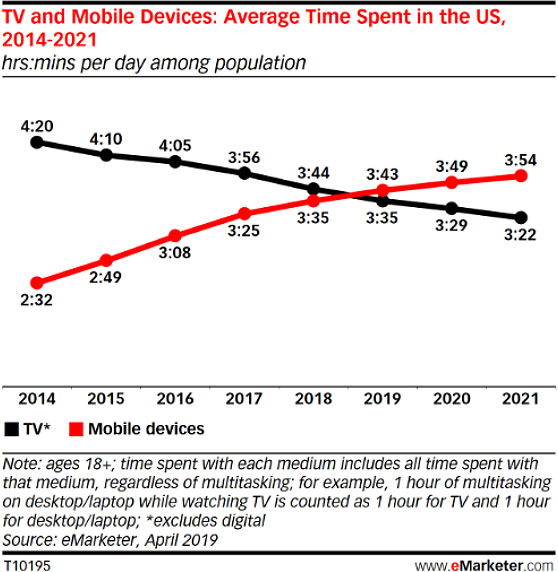
    The current year will go down as a milestone year in the history of Mobile when 5G networks, the next generation of mobile internet connectivity was launched and in US TV was dethroned for the first time by Mobile as the media channel where Adults in US spend the most time.


    In April, 2019 Verizon surprised most of the world by launching first its 5G network in Chicago and few other locations. UK was not far behind as EE launch its 5G network, switching it on in six cities in UK in May 30 2019,  followed by Vodafone launching 5G  in seven cities in July 3, 2019. Australia soon followed suit. China and Korea have also been planning 5G network for a long time and launched the services around mid- 2019. China has officially announced that they will have 150 million 5G mobile subscribers by 2020. By end of 2019, 5 million Koreans are expected to have 5G phones.


    On December 19, 2019 www.emarketer.com  announced in a report that the average US adult spent 3 hours, 43 minutes (3:43) on their mobile devices in 2019, compared with the average 3:35 spent watching TV (https://www.emarketer.com/content/mobile-year-in-review-the-launch-of-5g-is-the-biggest-story-in-a-busy-year-for-mobile?ecid=NL1001). Only three years back, in 2016 the same US adults watched nearly an hour more of TV than they spent on their smartphones and tablets (4:05 vs. 3:08). The forecast made by www.emarketer.com shows that the trend is going to continue with the share of time spent on mobile climbing higher year on year.


    In India, we are seeing the trend of increasing time spent on digital media driven mainly by mobile, but we have still years to go before an average adult Indian starts spending more time on mobile than on TV. But the trend has set in among select target audience groups including millennials at the upper and lower end of the economic ladder. A survey is conducted among college going students who including their travel and class hours spend a lot of time outside their home about time spend on TV and on mobile, may find that they are already spending more time on mobile than on TV, helped by the choices available on OTT platforms. The student community is a mix of young people coming from lower middle class to upper class homes, but almost everyone today owns a mobile which has become a necessity rather than a luxury.


    Reliance Telecom Services celebrated three years of Jio in 2019. Jio has revolutionised the use of mobile among certain working class people like auto rickshaw drivers, household maids who often indulge in seeking entertainment through their mobiles during short breaks in their work schedule. Such people usually have long working hours and as a result may have started spending more time on their mobiles than on watching TV at home. Again a survey conducted among such target audience groups may reflect the truth, but as these people have poor purchasing power, a survey among them will serve only academic interest.


    Current research conducted by different agencies are showing that time spent on digital media including mobile is growing at a faster rate than all other media in India. A recent report by McKinsey showed that with data becoming more accessible, monthly mobile data consumption per user is growing at 152 per cent annually in India — more than twice the rates in the United States and China and internet users will rise by about 40 per cent and number of smartphones will be double by 2023.
    (https://economictimes.indiatimes.com/tech/internet/internet-users-in-india-to-rise-by-40-smartphones-to-double-by-2023-mckinsey/articleshow/69040395.cms?from=mdr ) Time spent on mobile internet has gone up from 9.4 minutes daily in 2013 to 54 minutes in 2019 and is expected to reach 79 minutes by 2021.


    Global Web Index’s Social Media Trends 2019 Report showed that Indian users spent 2.4 hours on social media, in line with the global average (https://www.globalwebindex.com/reports/social) This finding is confusing as if the average time spent on mobile internet is 54 minutes then how can Indian users spent 2.4 hours on social media which is mostly consumed through mobile internet? The sample size of the social media survey covered 15000 Indians among 2.78 lakh respondents across 45 countries, but the details of the sampling frame work is not available, so it is difficult to figure out if the survey was limited to mobile users only which will explain the discrepancy.


    The writings on the walls are very clear, like the rest of the world the average adult Indian will also be gradually moving to spending more time on mobile than on TV. The global milestone year 2019 should be an inspiration for our telecom industry to accelerate their growth plans and move in that direction.


  • The Most Successful OTT Brands of the Decade


    This is the third in a series of six decade-ender lists in this column by Shailesh Kapoor. The previous lists:

    The most-defining Hindi TV shows of the decade

    The most-defining Hindi films of the decade


    By Shailesh Kapoor


    The OTT category in India saw a major boost in the latter half of the decade, especially 2017 onwards. From a handful of originals and OTT platforms that you could count in single digits, the category took off with the arrival of Netflix and Amazon Prime Video in India. In 2019, more than 100 original OTT shows launched in Hindi language alone. Add regional content, sports, movies, animation etc. to it, and you know that the end of the decade belonged to OTT.

    Ranking “successful” brands in an emerging category can be tricky. This list is based on impact created in the Indian market, both from a content and a marketing perspective. Social media brands have not been considered, and special mentions are due to regional players like Hoichoi, and niche players like FilmCompanion and Ullu, for managing to find a strong need gap and catering to it.


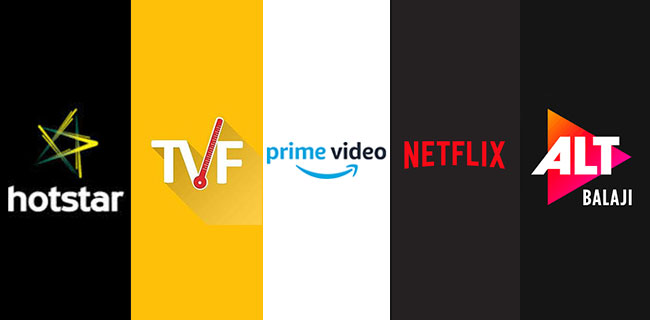
    5. ALT Balaji

    Balaji’s entry into OTT category in 2017 made it one of the earlier entrants. It took ALT Balaji some time to get going, and it can be argued that the launch of the more premium services like Netflix actually helped ALT Balaji position itself as “mass” and more mainstream, especially for the non-metro markets in India. The platform has relied on quantity, launching shows every other week, and Gandii Baat, which explores the erotic genre from the small-town/ rural lens, is arguably its most successful show till date. When compared to other platforms that didn’t make it to this Top 5 list, like Zee5, Voot and Sony LIV, ALT Balaji’s run is impressive, particularly because it did not have much GEC catch-up content to provide an early cushion.


    4. Netflix

    It’s difficult to split Amazon Prime Video and Netflix on rank. Netflix is clearly the more niche of the two, operating as a standalone content service at a much higher price-point than Amazon. When Netflix launched, its price-point was seen as prohibitive by many. It took some time for Netflix to customise, and the launch of the Rs 199 mobile-only service in 2019 was a sign that they are willing to adapt to the unique rules that the Indian market can demand from global players. Netflix’s content strategy has been to focus on less but high-quality content, though some of their 2019 India shows, such as Sacred Games 2 and Bard Of Blood, fall short of that high standard. The platform’s imagery, however, remains strongly associated with high-quality international content, and that’s a sub-genre in which it’s a clear leader.


    3. Amazon Prime Video

    Amazon Prime Video’s launch in India was in line with its global strategy to create content to fuel the retail business through content engagement. Compared to its competitor Netflix, Amazon’s OTT strategy in India relies on higher number of big-ticket launches and more aggressive film acquisitions. Through Mirzapur last year and The Family Man this year, the platform has managed to create top-end Indian content, which puts it in a very credible space as we enter a new decade.


    2. TVF

    TVF (The Viral Fever) is the only content creator in this list of OTT platforms. Being the early innovators (remember Permanent Roommates and Pitchers), TVF had its OTT moments much before the big players came. Some argued that TVF would fizzle out as big budgets come into play, but the platform continues to be amazingly consistent with its quality, and this year’s Kota Factory is the latest testimony to that. Having addressed a definitive segment of the urban Indian youth, especially men, TVF is in a rock-solid position to be the most-sought-after content creator in the new decade.


    1. Hotstar

    Hotstar came before everyone else, in early 2015. And with each passing year, the Star-owned platform has managed to stay ahead of the OTT evolution curve, especially in the area of marketing. Taking IPL digital rights, even before Star had the broadcasting rights, was a clear indication that Star meant business with Hotstar, and this year has seen a lot more action to support that line of thought, with the launch of the VIP service and Hotstar Originals. In the new decade, Hotstar will have to do a bit more to more away from its image of being primarily a catch-up TV and digital sports platform. But that work has already started, it seems.


  • VMate collaborates with Sunny Leone for its New Year campaign

    By A Correspondent


    VMate has collaborated with Sunny Leone for its New Year campaign #SunnyKaNewYearCall. The reward for the top winner would-be one-time ticket to fame and an opportunity to go on a dinner date with Sunny Leone.


    Said Nisha Pokhriyal, Associate Director, VMate: “VMate’s constant endeavour is to bring exciting campaigns for its users and make their special occasions more special. We are happy to collaborate with Sunny Leone for our New Year campaign. She has a large fan base in India and VMate is giving her fans an opportunity of a lifetime to talk to her as her close friend and also stand a chance to win a dinner date with her. The video sticker introduced for this campaign is a highly customized one with vividness beyond one’s imagination.”


  • BookMyShow unveils latest brand campaign

    By A Correspondent


    BookMyShow has unveiled its latest brand campaign ‘Entertainment Ki Nayi Bhasha’, highlighting the company’s array of out-of-home entertainment offerings. The campaign has been launched via a short film that captures the emotions of people when they consume live entertainment experience, across genres. The film has been shot in multiple languages including English, Hindi, Tamil and Telugu.


    Said Marzdi Kalianiwala, Head – Marketing and Business Intelligence, BookMyShow: “Over the last two decades, BookMyshow has been at the forefront of delivering unparalleled entertainment experiences, first as India’s largest online ticketing platform and over the years, as facilitator and curator of global and home-grown live entertainment experiences. We have been committed to ensuring the best in class out-of-home entertainment, by bringing marquee experiences including movies, live music concerts, theatricals, stand-up comedy, sporting extravaganzas and much more, for Indian audiences. BookMyShow’s new campaign Entertainment Ki Nayi Bhasha, is a further step towards introducing all audiences to each of these entertainment categories and our role right from offering the ease of a transaction to completing the entire consumer experience of the entertainment they choose on our platform. It cements BookMyShow’s position as India’s go-to entertainment destination, where for entertainment-lovers, It All Starts here.”


  • Habitual Analysis: How We Study the Media Industry


    By Brian Wieser


    Key takeaways: Analyzing the media industry – or any industry – well depends on efforts to understand where and how relevant information is produced, testing ideas, and building models (conceptual ones, if not spreadsheet-based ones) in order to focus on the data and the associated insights that matter.  We review some of our best practices in this week’s note.

    January is always full of announcements, whether at CES, other trade shows, or with public companies revealing key initiatives ahead of or during earnings. This means it’s also a particularly important time to analyse the news well rather than take every piece of information in at face value. I was recently asked how we go about doing this work, and in response, I identified several habitual actions that help with our analyses. Some of these approaches may be useful to others who also need to form views on a given topic. We can loosely organise them into three groups:

    a) Understand where and how relevant information is produced.
    b) Test ideas and observations and refine analyses with other people.
    c) Build models and gather requisite data to firm up your ideas and concentrate on the data and the associated insights that matter.


    Understand how information Is produced and how it makes its way into news or content that may inform analysis. Much of what we think we know about our own industry comes from reporting in the trade press and through general business news, while other information comes from academics or from thinktanks. Often, reporting may have started with a press release, through public / government records, or through work originally produced by other news organisations. In some instances, news may have originated because a company has provided a publication with information either uniquely or broadly, and in other instances, reporters may have performed their own research, outreach and interviews. Different participants in the news-generating process may have different motives for participating (or not participating) with varying degrees of forthrightness, and different publications have different thresholds for assessing and including or omitting pieces of information, which can get repeated in all subsequent reports. As an example, in 2011 a prominent consulting firm prophesised that by 2017 CMOs (Chief Marketing Officers) would spend more on information technology than CIOs (Chief Information Officer or Chief Information-Technology Officer). While the direction of the report wasn’t wrong, few bothered to note that the underlying survey was focused on high-tech organisations, not companies across the different sectors, and the interpretation of the report was applied more broadly than was likely intended.


    • Be conscious of basic statistical measures and data gathering processes. When we hear of surveys that indicate a preference one way or another for a given population, what we often need to know is what the distribution curve looks like.  And even when the questions asked have binary yes/no answers, we need to know how, if at all, the sample might be skewed or non-representative, and what the sampling error is. More fundamentally, be mindful of biases in different processes for gathering information and then try to understand how information was gathered. For example, surveys performed using mobile phones will have a different skew than surveys performed using land-lines; passive media measurement panels will always be more accurate than self-reported media measurement. Further, different countries will have different cultural biases in different kinds of responses that may make cross-country analyses difficult.


    • Question what you know (or think you know). Far too often, conventional wisdoms persist and sometimes dominate. This can be because those wisdoms may have reflected the best ideas of the past, given limited availability of better data, or because ideas which sounded plausible were never tested. Or, perhaps they were truths under some circumstances but not under all. Of course, sometimes those conventional wisdoms are actually true even if they were never formally tested. Great examples often live on in the form of clichés.


    Test ideas and observations and refine analyses with other people. Ask “dumb” questions; try to prove your ideas wrong. Sometimes the questions that an individual has when studying a topic for the first time are the questions that no-one else has dared to ask, perhaps because of a perception that everyone knows the answer. Those questions are often the best ones to ask because they may relate to topics which have gone unchallenged. Relatedly, if you think you have an interpretation of a fact that is not widely held, ask practitioners with opposing views to poke holes in that interpretation. The relative success or failure of that effort will help to reinforce or counter your view. And, even if the conventional views turn out to be well-founded at the present time, they won’t necessarily hold for all times.


    • Interact with practitioners at all levels within the industry. When trying to prove ideas wrong or more generally looking for broader points of view on a given topic, consider that sometimes the most knowledgeable people will work in parts of the industry which are less credentialed (because of formal education levels, corporate affiliation, titles, etc.). Such individuals can serve as go-to experts, in part because they are less exposed to the group-think that can dominate other parts of the industry or because they are on the frontlines.


    • Explore similar ideas from other industries. To the extent possible, it can be helpful to talk to experts in other industries about similar concepts that might exist in unrelated industries, as lessons learned in those other industries might help to better understand our own.  This will be especially true when trying to study issues which are opaque and understood in-depth by relatively few people.


    Build models or think in terms of models you would use to describe what you are observing or expecting. While spreadsheet models aren’t necessarily the goal of every given analytical exercise, it is very useful to think in terms of models because of the numerical discipline imposed by them. Toward those ends, it is worth remembering that a model is meant to be an abstraction of reality, and all analytical work can help capture inputs which help to build that abstraction. Often, numbers around a given topic are available, but if they are not the true drivers of the model, they should ignored. Research should focus on finding ways to estimate the numbers that actually drive the behaviours we are trying to model. As a general rule, when an actual model is needed for making decisions, it is beneficial to build one’s own models, but if it is not possible and someone else is responsible for model building, it’s still important to understand the model in depth — and spot-check the math (perfect models are an ideal, but rare in reality).


    • Relative-size things as you go, when you can. Whenever a claim is made around a dollar figure, for example, compare it to a broader industry or the overall economy. For example, billions of minutes of time with a given service among a group of people over a given number of days or months could be compared to all activities or all consumption of a medium such as television. All spending on a given product could be compared to the size of the broader industry that product is part of, or possibly the overall economy in the countries that product is available in.  As well, be conscious of inappropriate comparisons: for example, comparing the value of a company or asset to the GDP of a nation is essentially never analogous, as one is a figure determined at a fixed period in time based upon an accumulation over all periods of time, while the other is a metric based upon a flow of money over a limited period of time.


    New information is often provided by companies looking to put their best foot forward when they communicate information; journalists almost uniformly try to produce what reporter Carl Bernstein described as “the best obtainable version of truth.” Such truths commonly inform perceptions of reality, although there can still be gaps between some press reports, what the industry believes and reality. While the actual truth may be elusive to everyone in some instances, efforts to find it are helpful for participants within an industry. Doing so helps everyone better understand the environment, make better decisions as competitors, customers and suppliers — and ultimately help make the industry both more efficient and more resilient.


    Brian Wieser is Global President, Business Intelligence GroupM. This article was first published at https://www.groupm.com/news/habitual-analysis-how-we-study-media-industry

  • 7 Social Groups. 7 Social Brands


    By Avik Chattopadhyay


    “Social brands” are a very interesting phenomenon.


    What starts off merely as a means to identify or classify a group of people finally ends up as a means to differentiate, distinguish, label and finally act upon. Stereotypes are cast over a period of time eventually ending up in the “brands” being subjected to a certain preconceived notion.


    It might work in certain rare cases in the positive, but in most cases the exercise of creating social brands is with a deep-down devious motive, to divide, deprive and eventually destroy.


    Contexts also work hugely in granting a certain social brand its legitimacy or sheer lack of it. Hence, a “commie” is a good thing to be called in the erstwhile Soviet Union but terrible to be branded as in the US. In the former you might have got a star, but in the latter, you would have Hoover’s goons tapping your phone even if you were Arthur Miller!


    We have also had our share of social brands for as a collective people we thrive on races, castes, creeds, colours and any type of differentiation that has been thought up on this planet. We create social brands out of caste, profession, region, colour, political leaning, religion and even disabilities! So, “Brahmanical intelligence” was always lauded while “Babus” are typically looked at with scorn and satire. In primary school I was introduced to “Bangalis” and “Madrasis”. In high school my world expanded to “Harrys” and “Chinkys”. And my world was never the same, adding a group here and a group there to my lexicon. The corporate world took me across borders and cultures and colours. Never been a dull moment.


    Just when things were getting a bit boring, the 2014 general elections happened in our lives. And the proceedings of creating new social groups and classifying people under them gathered furious momentum. So, here are 7 new social brands that have been created in India over the last five years.


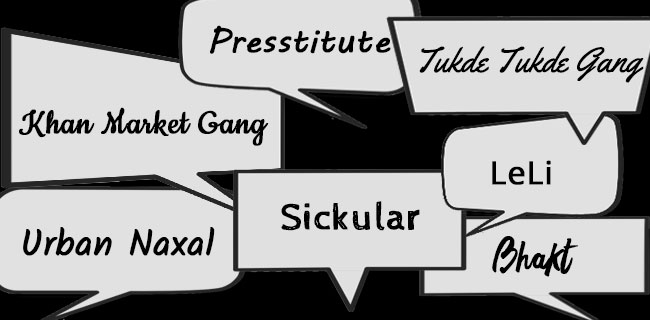
    1. Sickular– interesting name…initially I thought it was about the communists…sickle and all, but then got hammered that it was all about those amongst us who propound this concept called “secularism”. This was the shroud around appeasement of minorities and fringe groups by those who have sacrificed the entitlements of the majority.


    2. Bhakt– this is quite an old one but has got a fresh lease of life now, and how! This brand could make you a patriot, a nationalist, a preserver of moral values and one who serves the true interest of an entity called Bharat. On the contrary, all that could backfire on you when seen through another pair of glasses where you are this mentally delinquent flag-waving sword-swinging lout on the street. Pretty compelling on both sides. A janus brand!


    3. Urban Naxal– this brand was created around 10 years back but keeps getting pulled out of the hat as the situation demands. Here, you are basically a gone case as you espouse a lost cause! You are a threat to national security, even if you actually work with tribals in the back-of-beyond trying to save their land from being gobbled up into a bauxite mine. This brand is the real serious stuff as you are always on the radar of the central government and all intelligence agencies. If one is branded so, that person has truly evolved and arrived.


    4. Presstitute– I was actually impressed with the Indian who had coined this word to brand the media that is up for sale. Then I realised that the brand has been imported from the US. Some futurist had created this term in total disgust at the quality of reporting there. Here, all camps use this term liberally to brand all members of the media, as media will always have a point of view that may not pander to each camp.


    5. LeLi– this is another interesting one, aimed at the “left liberals”. Let me tell you that most leftists are not liberal and the true liberal shuns the typical leftism practised in our country. It’s a bit of a paradoxical brand with fundamentally conflicting brand purposes. Therefore, can understand why those who are branded so seem peeved no end! Total identity crisis.


    6. Tukde Tukde Gang– this brand has synonyms in the form of “JNU Gang”, “AMU Gang” and “Deshdrohi Gang”. Pretty powerful and damning stuff actually. This is the primary enemy of the Bhakt brand. They cannot tolerate each other. This brand is intent on breaking up all the good that the Bhakt does. This brand typically feeds in to the Urban Naxal brand. They are alleged to have a symbiotic relationship.


    7. Khan Market Gang– this brand is a result of collateral damage, caught between the Urban Naxals, the Bhakts, the Presstitutes and the LeLis. The members of this brand were otherwise party-loving, mall-hopping, gin-sipping innocents who just happen to be found in a tony shopping area of Delhi. Just because they smiled at the LeLis and Sickulars as it seemed fashionable, they have now got branded and are subjected to television debates and lectures on ancient moral values.


    Life in India could never be more exciting.


    Never mind the farmer suicides, unemployed youth and duped depositors, it is such fun to sit at a restaurant and slot people around you in one of these social brands. Terrific timepass. Ah, that guy with a tilak on his head… he is a Bhakt! That lady reading Milan Kundera must be a LeLi. Those ‘jholawalas’ have to be Urban Naxals. Happy days are here again…