Category: PRODUCTS

  • Godrej Eon is title sponsor of Tour De India

    By A Correspondent


    Godrej Eon has associated with the India leg of the iconic Tour De France and thereby hopes to heighten youth interest in cycling and popularize the sport on a pan-India level. ‘Godrej Eon Tour de India (TDI) 2013’ is organized by ID Sports, Cycling Federation of India and International Cycling Union (UCI).


    Through this association Godrej Eon aims to reach out to the youth and spread the message of Going Green across the country. The ‘One Watt Project’ by Godrej Eon is an initiative to spread the message of energy conservation and encourage participation by the public, notes a communiqué.


  • Vintage cars, Harley Davidson bikes, pricey jewellery find takers online

    By Shelley Singh


    Solitaire earrings for Rs 3.5 crore. A special edition Volkswagen Passat signed by IPL team captains for Rs 30 lakh. A 1936 Austin Ruby vintage car for Rs 7 lakh. A Harley Davidson Night Rod motorcycle for Rs 15 lakh… These are all rare and expensive purchases. What makes them rarer is that they have all been made virtually, on Indian e-commerce websites, and it says a lot about how the mindset and habits of the Indian consumer shopping online is evolving.


    We asked 10 leading e-tailers for the most expensive sold by them till date. It’s a fascinating list that contains items of new technology (LED TV) and old vintage (car), spans a price range of Rs 26,000 (bar counter) to Rs 3.5 crore (earrings), includes the predictable (smartphone) and the eclectic (drum kit), and has buyers from not just the metros but also from Belgaum and Bulandshahar. “It’s trust and selection,” says Kunal Bahl, co-founder & CEO of Snapdeal.


    Several patterns are evident: the bar for transaction size is being raised, even non-metro shoppers have the appetite to buy big, the market for rare items is growing, the basket of goods is expanding and more physical barriers are being broken.


    Aditya Vij, a Delhi-based business collector of vintage cars, bought an Austin Ruby 1936 vintage for Rs 7 lakh on olx. “There’s no market place for vintage cars in India,” says Mr Vij. “The traditional way was checking out with scrap dealers in old Delhi. The Austin was posted on olx by a seller in Meerut. You get to see the images, and the claims made by sellers online are more trustworthy than offline.”


    Images and specs of solitaire earrings worth Rs 3.5 crore on jewellery site Carat-Lane were the first point of contact for a person in a metro who would go on to buy them. This person, whom the website declined to name for reasons of confidentiality, then contacted a customer representative in CaratLane and asked to see the earrings.


    The company took them to the buyer’s house, and a deal was sealed. Payments for such expensive items are often made partly by credit card and partly by cheque, says Calvin John, vice president, marketing, CaratLane. This transaction invoked paperwork – an e-copy of PAN card and address proof – and rules that kick in for high-value transactions.


    “For gold purchases above Rs 2 lakh, a PAN card is needed; for other kinds of jewellery, above Rs 5 lakh,” says Mr John. CaratLane also gives a buyer the option to pay in cash, but charges a 1% fee to meet the government tax on cash transactions. What it does throw in along with such high-value items are gifts like wine, champagne, chocolates and customised stationery, the idea being to build relationships.


    Astronomical as the Rs 3.5 crore purchase is, it is puny by developed world standards. The most expensive item sold online is in the US – a Gulfstream II jet for $4.9 million, in 2001 on eBay. The US has also seen a lunch with Warren Buffet, the iconic value investor, be auctioned online for $2.6 million and a round of golf with Tiger Woods for $425,000.


    According to Forrester Research, 18 of the top 20 global luxury retailers had an e-commerce site, including Gucci, Prada and Tiffany. Also, it adds, 49% of American buyers of luxury goods used their mobile phones to make purchases.


    In India, the transaction size is becoming bigger. According to Mr John, CaratLane sold another pair of solitaire earrings for Rs 34 lakh last month. On eBay, about 1,200 television sets are sold every month. The most expensive product sold on Snapdeal is a Sony Bravia TV for Rs 3.75 lakh. “We have seen a 25% rise in average billing per order between January and October this year,” says Mr Bahl of Snapdeal.


    Mr Bahl says six out of 10 orders on his site are placed by buyers from outside the big cities. “Many buyers of items like expensive watches (Rado, Rolex, Corum) and solitaires come from small towns, with no local stores to buy from,” says Abhay Gupta, founder-CEO, Luxury Connect, a luxury consultancy. “Traditionally, they went to large cities or overseas to shop for luxury items. Now, they can buy online and the trend is picking up among younger buyers (below 40 years of age) rather than older buyers.”


    According to Nilesh Kulkarni, partner and head of luxury & lifestyle practices at AT Kearney, a consultancy, the inherent advantages of the online medium kick in for high-value purchases. “In most cases, buying expensive items online is a planned purchase – buyers know what they want,” he says. “Or in case of certified goods like solitaires (diamonds), buying online is transparent and gives access to a wider selection.”


    Companies are also tailoring their services accordingly. For example, Carat-Lane uses its own trained staff, and not regular couriers, to transport goods. “Solitaires are planned purchases and selling jewellery is about relationship building,” says Mr John. “Our sales boys are at least graduates and have complete product information (like the diamond cut, colour, clarity, weight).” And they are doing their bit to raise the bar for transaction size and expand the universe of what’s acceptable in e-tailing.


    Source:The Economic Times

    Copyright © 2013, Bennett, Coleman & Co. Ltd. All Rights Reserved

    Licensed to republish
     

  • Return of the global desis

    By Kala Vijayaraghavan & Ratna Bhushan


    Sanjiv Mehta, who took charge as MD and CEO of HUL early last month, has never worked in India before. But he has headed two countries and a region (north Africa and Middle-East) in his 21-year career in Unilever. Sources within Unilever say he specifically asked for an India posting.


    Like Mr Mehta, over half-a-dozen top-level executives from P&G, PepsiCo, Mondelez, Coke and Reckitt Benkiser have given up global roles to move back to India in the past six months.


    “India provides a unique leadership experience,” says Samik Basu, chief people officer, PepsiCo India. “It is a highly competitive and complex market and provides an opportunity to combine global learning with local resourcefulness.”


    Gautham Mukkavilli, CEO-beverages, and Chetan Mathur-controller, Pepsico India, both moved back to India from Dubai in mid-2012.


    At Coke, Venkatesh Kini spent three years at the beverage firm’s head office Atlanta as global vice-president for juices, before moving back to Gurgaon as deputy president, India and South West Asia.


    P&G’s Sonali Dhawan moved here as the India marketing leader after leadership roles in Singapore on hair care and more recently as the pet care marketing leader for Asia & Australia-New Zealand.


    So has Vivek Sunder, who has spent a decade outside India in various roles across Thailand, the UK and Singapore, before coming back here in a leadership role in the India sales & distribution team. At least three senior managers from Mondelez International – Arjun Bhowmik, Sid Mukherjee and Venkat Venepally – have also done the same.


    “The most exciting reason for me to come back was that the India business of Mondelez International has been growing at a rapid pace and is one of the key priority markets for the company,” says Arjun Bhowmik, director, expansion, Mondelez. “Also, I wanted to be closer to family and was keen that my daughter should complete her secondary education in India.”


    He worked in the Philippines, Thailand and Indonesia for over seven years. Industry watchers say even with a 6-7 % growth, India fares better than other developed markets.


    “Several managers who had moved straight into global roles are now keen to work in India,” says Rajesh Ramanathan, HR director of Mondelez India. “Those with developed markets exposure now want developing markets and India experience on their CVs.”


    In advertising, Leo Burnett’s Saurabh Varma and Lowe Lintas’ Vikas Mehta both moved back from Singapore.


    “India postings have become hot property since it is an exciting growth market and offers diversity of experience,” says Suchet Narain, MD, DRH International, a global executive search firm.


    “Global organisations are also happy to send their managers to markets such as India to ensure implementation of global best practises such as corporate governance, safety or environment issues.” Most managers have children studying abroad, so they move in with their spouse but may not necessarily stay here long term. India’s infrastructure still compares very badly with other cities globally. “But having India on their CV gives them that depth of experience,” he says.


    Several top managers such as Atul Singh of Coke and V Chandramouli of Cadbury who have been offered global postings are opting to remain in India. Gopal Vittal, former director of HUL’s home and personal care business, once seen as a top candidate for the CEO job, chose to opt out of a plum global posting and quit early last year. Vittal, officials close to the development say, was unwilling to move out of India. He now heads Bharti Airtel in India.


    Says Sameer Wadhawan, VP, HR, Coca-Cola India and South West Asia: “India is emerging as one of the nodal points of the world economy and one-fourth of the world’s population is centred in Asia. India can be an operational hub for global CEOs.” But not all executives want to come back home. “Many young executives in their late 30s or early 40s are still open to take diverse challenges in different countries,” says Sangeeta Pal, partner at search firm Transearch.


    Source:The Economic Times

    Copyright © 2013, Bennett, Coleman & Co. Ltd. All Rights Reserved

    Licensed to republish
     

  • Asha Gupta to head Tupperware APAC

    Asha Gupta

    By A Correspondent


    One more Indian CEO makes it big in the international arena. Asha Gupta, presently Managing Director, Tupperware India and Area Vice President, Tupperware Brands – Asia Pacific has been appointed as Group President, Asia Pacific with effect from January 1, 2014.  She will now be responsible for driving the growth and expansion of the entire of Asia Pacific region.


    Ms  Gupta took over the reins of Tupperware India in late 2004 moving from Europe where she was the Marketing Director for Tupperware Nordics. Under her leadership, the Indian business has posted stellar growth and the brand Tupperware is now virtually a household name in India.


    Following her move, Puneet Narula has been appointed as the Managing Director for Tupperware India. He has been associated with Tupperware seven years and has been working closely with Ms  Gupta in the capacities of CFO and more recently as Deputy Managing Director. In 2011, he led entry of Tupperware in Bangladesh which is considered among the new emerging markets for Tupperware.


    Prior to Tupperware, Mr Narula worked in GlaxoSmithKline India for 10 years in various capacities in Finance and Business Development.


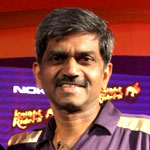
  • Ex-Nokia MD D Shivakumar is Pepsi’s India region CEO

    By A Correspondent


    D Shivakumar

    US food and beverage maker PepsiCo on Monday named former Nokia executive D Shivakumar as its chairman and CEO for India region, a position lying vacant since Manu Anand quit in June.


    Mr Shivakumar – who was managing director at Nokia India before taking over as the handset maker’s senior vice-president for India, Middle East and Africa in 2011 – is PepsiCo India’s first outsider CEO since Rajeev Bakshi, who led the firm from 2001 to 2006.


    “Shiv has a proven ability to take billion-dollar businesses to the next level by maximising innovation, execution and collaboration,” Ms Indra Nooyi, chairman and CEO at PepsiCo, said in a statement. He takes charge with immediate effect. ET NOW business channel broke the news before the official announcement.


    PepsiCo on Monday also announced promotion of Gautham Mukkavilli, currently general manager of its beverages business in India, as senior vice-president, business transformation, for the Asia-Middle East-Africa (AMEA) region. He will oversee strategic initiatives in foods and beverages across the region with effect from March 1, 2014.


    Both Messrs Shivakumar and Mukkavilli will report to Sanjeev Chadha, CEO of PepsiCo AMEA. “Shiv and Gautham will be playing key roles in driving PepsiCo’s business forward in the region,” Mr Chadha said.


    PepsiCo India has been operating without a country head since Manu Anand quit dramatically in June to join foods company Cadbury Kraft. Since then, Mukkavilli and foods division head Praveen Someshwar have been reporting to Mr Chadha.


    An engineer from IIT Chennai and an MBA from IIM Calcutta, Mr Shivakumar’s appointment has come as a surprise to many as his immediate predecessors Manu Anand (India head from 2010 to 2013) and Mr Chadha (2006 to 2010) were chosen from PepsiCo’s internal talent pool.


    Mr Bakshi was the last outsider CEO of PepsiCo India, brought in from Cadbury. Mr Shivakumar’s immediate mandate at the firm will be to accelerate consumption of colas and snacks in an environment when growth has slowed down significantly.


    Growth of soft drinks has slowed down to single digits as early rains cut short last summer on top of weakening consumer sentiment. PepsiCo’s snacks business is facing increasing competition from national rivals, such as ITC and Parle, as well as local players.


    “PepsiCo is in a challenging phase and will test Shiv’s abilities to the hilt,” said Vibhav Dhawan, managing partner at search firm Positive Moves Consulting, said.


    Mr Dhawan, who knows Mr Shivakumar well and has tracked his career, said he is a good choice to lead PepsiCo in India. “Shiv is a rare marketer who has worked both in traditional consumer and new generation mobile consumer sectors. His marketing prowess makes him a great choice for a brand like PepsiCo which targets the youth,” he said.


    Mr Shivakumar, who spent eight years at Nokia, quit the firm in June this year. Before joining Nokia, he worked with consumer electronics maker Philips and top consumer goods firm Hindustan Unilever.


    During his tenure, Nokia’s user base jumped from 80 million to about 900 million but its market share declined from over 70% to about 25% as Chinese manufacturers and some homegrown brands like Micromax and Karbonn eroded its market share in the entry level segment, while Samsung and Apple ate into its share in the smartphone segment.


    Nokia’s biggest failure under Mr Shivakumar was missing out the dual-SIM revolution, which accounted for as much as 50% of handset sales in India between 2009 and 2010.


    Source:The Economic Times

    Copyright © 2013, Bennett, Coleman & Co. Ltd. All Rights Reserved

    Licensed to republish
     

  • Aegis Media launches rural marketing cell

    By Ravi Balakrishnan


    Aegis Media has launched Carat Fresh Rural, a rural marketing specialist for the Indian market. The agency will operate as a separate division within Carat Fresh, Aegis’s activation wing. After a soft launch, Carat Fresh Rural counts Bayer Crop Science, Godrej Consumer Products, Pidilite, Mahindra & Mahindra and Sony Max among its clients. It is headed by Keshav Chandorkar, whose previous experience includes stints with Linterland (the rural division of Lintas) and Dun & Bradstreet. The current team strength is 30 people across seven offices. Carat Fresh Rural will also be working with 1,500 operators who are in charge of implementing rural marketing programmes.


    Significantly, Aegis is starting a pure play rural agency at a time when many in the business are opting out of the segment or merging it with urban activation. Rural marketing is expensive and operations oriented, demanding remarkable levels of financial commitment. Besides many marketers with extensive distribution have started using their own networks and local vendors to reach rural segments.


    Ashish Bhasin

    Ashish Bhasin, chairman – Aegis, India, remains bullish: “Many categories are near saturation in urban areas. Rural markets make sense given good monsoons, and government schemes that provide greater disposable income.” He believes this market has been very poorly serviced by the advertising industry but has potential. “The organised part of rural can be half or more than half the mainstream market, valued at between Rs 25 and Rs 30 crore. It is full of challenges but the pot of gold at the end is humungous.”


    Having a team full of veterans, Mr Bhasin intends avoiding many of the pitfalls of rural marketing. One of the largest misconceptions is assuming rural consumers can be served by a dumbed down version of urban communication. The other is underestimating the importance of implementation. Carat intends solving some of these problems via technology.


    Source:The Economic Times

    Copyright © 2013, Bennett, Coleman & Co. Ltd. All Rights Reserved

    Licensed to republish

     

  • Fogg clouds Axe effect, is new numero uno deo

    By Namrata Singh & Udit Prasanna Mukherji


    Where tales of giant killers like Nirma and Ghadi in the detergents space are part of the marketing folklore, a new David vs Goliath story is playing out in the FMCG market. This time it’s in the deodorant space. Fogg, a relatively new brand in the deodorant space from the homegrown Vini Cosmetics’ stable, has toppled Axe, a well-established global brand of Unilever, to become the market leader.


    Fogg has garnered an all-India (Nielsen) value share of about 13% as of October this year. The market share of Axe, which was the leader so far, is just about 8% now. A year ago, Axe commanded a higher share of about 18-19 % of this now highly fragmented market. It’s a case study in itself on how in certain fast-growing emerging categories the sweepstakes are so different that a younger brand bears the ability to overtake the market leader in a short span of time. Fogg is owned and marketed by Darshan Patel, the entrepreneur who, prior to setting up Vini Cosmetics, was the former promoter of Paras Pharma which was later acquired by Reckitt Benckiser.


    As part of the Paras team, Mr Patel successfully launched brands like Krack cream, Itchguard , Moov, Livon and Dermicool , which created a dissonance in the marketplace. Mr Patel appears to be following a similar strategy with Vini Cosmetics as well. Industry experts said Fogg’s unique proposition more sprays in a bottle – has helped the brand break through the clutter, considering that all brands are priced quite competitively.


    While Axe is among the first few brands which created the deodorant category in the country in 1999, Fogg was launched only two years back. Axe could not retain its leadership position in the category despite roping in celebrity Ranbir Kapoor in June this year. When contacted, an HUL spokesperson said: “As a policy we do not comment on market shares.”


    Darshan Patel, on the other hand, said Vini Cosmetics wants to increase its distribution reach which should augur well for Fogg and the other brands in its stable such as White Tone face powder, Glam-Up instant glow cream and Jinjola prickly heat powder. It was only recently that Vini Cosmetics raised Rs 110 crore from Sequoia Capital, a venture capital fund, to drive expansion.


    Interestingly, ITC’s Engage deodorant brand, which launched a range for both men and women in April this year is one of the youngest brands in the category. It too has managed to grab a chunky piece of the market pie. Engage has garnered a share of about 5-6 % in the Rs 2,100 crore deodorant market as of October this year. “ITC personal care’s entry into the deodorants market with Engage has received an extremely encouraging response ,” said Sandeep Kaul, divisional chief executive of ITC’s personal care products division.


    Source:The Economic Times

    Copyright © 2013, Bennett, Coleman & Co. Ltd. All Rights Reserved

    Licensed to republish


  • Flipkart gets Elephant Design to create identity for ‘flippd’

    By A Correspondent


    Flipkart India got strategic design company Elephant to design flippd, its recently launched lifestyle label.


    The designs aims to be vibrant and bold with a youthful attitude that is sure to appeal to the young, trendy online shopper.


    “Our lifestyle category, though fairly new, has been doing extremely well. We felt the time was right to extend our range of offerings in this space. The flippd brand is all about vivid colours and witty expressions on a wide choice of casual clothes and accessories. It’s aimed at the  young fashion conscious generation that thrives on trends.” said Ankit Nagori, VP – Retail, Flipkart India Pvt Ltd.


    Speaking about the visual identity, Ashwini Deshpande, Founder-Director Elephant said, “flippd visual identity is created with a doodle-happy hand to showcase a casual yet self-expressive language. Black is the basic colour of this visual language as it can stand out on any colour or surface. A young colour palette supports the identity with flexibility of applications. ”


  • Santa Shoppers: Some retailers post higher sales than Diwali!

    By Writankar Mukherjee & Sagar Malviya


    Guess what Santa got retailers this Christmas? Double-digit sales growth and plenty of middle-class consumers in stores, making it the best-ever revenue season for several of them this calendar year. Sales are up from the Diwali period and even the year earlier, reflecting a newfound confidence among consumers.


    Retailers attributed this sudden surge in sales to several reasons – the return of middle-class consumers less worried about spending with vegetable prices cooling down, an improvement in consumer sentiment after assembly election results, a drop in temperatures in the north and east triggering sales of winter wear, and year-end festive spirits. Plus, banks have reduced interest rates on housing, consumer durables and personal loans in the last two months, adding to the seasonal bonhomie.


    This is reflected in footfalls at chains such as Spencer’s Retail, Woodland and The Mobile Store, which say sales in the past week have surpassed even the Diwali period in absolute revenue. Shoes and apparel maker Woodland said revenue in the week to Christmas was 30% up from what it was in Diwali, while it’s been 16% more at Spencer’s.


    Kishore Biyani

    “Consumer demand in most segments was crazy and shot up drastically in the last three days compared to subdued sales numbers during the last two months,” said Kishore Biyani, CEO of India’s largest retailer Future Group. “This year’s Christmas sales were high compared to last year, which were low due to the Nirbhaya impact. Yet, demand remains inconsistent.”


    Spencer’s Retail president and CEO Mohit Kampani said consumers are splurging on both fresh and processed food, staples, wine and beverages like never before.


    The high sales growth comes after a subdued festive season in October-November when most consumers shied away from heavy spending as rising food inflation and interest rates took a bite out of disposable income. Economic growth may be in the process of picking up, having risen 4.8% in the three months ended September compared with 4.4% in the quarter to June. Finance minister P Chidambaram last month pegged FY14 growth at 5% to 5.5%, which means a stronger second half may be under way. Growth last year hit a decade-low 5%.


    To be sure, it’s not clear if the year-end sales surge will translate into a sustained uptrend. “Sales fell into the negative territory post Diwali, but the last few days have been exceptional. The election results, too, seem to have boosted consumer sentiment,” said Mr Kampani. He said same-store sales at Spencer’s had jumped 20% nationally in the last 10 days compared to 7% to 8% during Diwali.


    At Future Group’s Food Bazaar chain, sales rose 30-40% in most categories on Christmas Day over last year. Sales of categories such as chocolates and biscuits grew 50% while soft drinks went up by 30%, more than double the usual growth. Devendra Chawla, chief executive at Food Bazaar, said while most retailers run offers and promotions only around Diwali and other festivals, it ran a special ‘best of the year’ offer during Christmas, which led to many consumers upsizing or upgrading, which, in turn, increased the ticket size.


    Middle-class consumers are back in the market, said Himanshu Chakrawarti, CEO of The Mobile Store, India’s largest cellphone retail chain. That has pushed up demand for mid-segment handsets in the Rs 6,000-15,000 range. “Be it Micromax or Samsung’s mid-range Galaxy series, the mid-segment handsets have triggered revenue, which is up by almost 30% over the same period last year. Without accounting for Dhanteras sales, revenue has been much higher now over the Diwali sales,” Mr Chakrawarti said.


    The colder weather in parts of India has also led to higher numbers. While seasonal demand kicked in a bit late this time, the last few days have seen strong growth for winter wear, said Shoppers Stop managing director Govind Shrikhande. Woodland MD Harkirat Singh said jacket sales usually pick up around Diwali, but this year, they didn’t due to the festival of lights coming early and the late onset of winter. “Hence, the full impact of winter wear sales is felt now and has pushed up average billing sizes over Diwali since jackets have higher ticket prices,” Mr Singh said.


    Even consumer durable and television sales have risen in the last few days. Sales have been buoyant in certain territories such as the south and the metros, which have boosted revenue in a year that the market was relatively weak, said Sanjeev Agarwal, sales head at India’s largest electronics company LG Electronics. “It’s like an unexpected, last-minute flip in sales for the industry,” he said.


    Source:The Economic Times

    Copyright © 2013, Bennett, Coleman & Co. Ltd. All Rights Reserved

    Licensed to republish


  • Reliance Retail to turn hypermarkets into wholesale stores, to court kirana shops

    By Rasul Bailay


    Mukesh Ambani’s Reliance Retail is converting some of its big hypermarkets into wholesale cash-and-carry stores, in an apparent sign of modern retail’s inability to effectively take on neighbourhood stores in India.


    The Reliance Mart hypermarket in Bhopal’s Aashima Mall is currently under renovation and getting refitted to be reopened in February in a new avatar, as a cash-and-carry store.


    This 44,000-sq-ft hypermarket is among Reliance’s big-box stores, including one in Ludhiana and another in Aurangabad, that are being converted into cash-and-carry formats.


    The company has realised that in some locations, low-frills wholesale stores have better prospects of making money sooner than consumer-centric hypermarkets, which have wide margins but also are more expensive to operate, two people with knowledge of the development said on condition of anonymity


    So, in order to convert the adversaries – the mom-and-pop stores in this case – into allies, Reliance is adopting a simple strategy: It is courting them.


    In the cash-and-carry format, companies sell to bulk buyers, such as neighbourhood or kirana stores, who are their members. Reliance is setting up its wholesale stores in places where the concentration of kiranas is high as it is easier to make them customers than competing with them. The business also offers huge potential.


    Industry experts estimate cash and carry in India to become a $22-billion (about Rs 1.4-lakh crore) annual opportunity by 2017, and the market leader in the segment is expected to corner $4 billion to $5 billion of this. The main rival for modern cash-andcarry stores in India is “wholesale retailers” – thousands of small retailers crowded into large markets, such as the Sadar Bazar in Delhi.


    “Reliance Retail continues to evaluate its offerings and realign them in specific locations in order to establish sustainable relevance of the business with the consumer ecosystem,” a Reliance Retail spokesman said in an e-mailed reply to queries on the company’s plans on its cashand-carry business. In the traditional retail segment, the going hasn’t been smooth for organised players.


    Over the past five years, Reliance Retail, Aditya Birla Retail, Spencer’s Retail and others shuttered hundreds of smaller convenience stores to focus on expanding big boxes as the smaller stores faced direct competition from kirana stores.


    But hypermarkets, generally spread over 40,000 sqft to 60,000 sqft, come with their own set of challenges, such as high cost structure associated with a large number of staff, look and feel of the store as well as logistical cost that ultimately eat into overall profitability On the other hand, cash-and-carry business generates much higher volumes – as customers buy in bulk, albeit at low margins – with smaller operational cost. Cash-and-carry stores can be low-frills in terms of look and feel and ambience, and they save on logistical costs as companies and distributors would supply merchandizes directly to these stores.


    Generally, Reliance Markets, as Reliance’s wholesale stores are called, allows only bulk buyers through memberships.


    But the store at Bhopal’s Aashima Mall is also likely to sell to consumers apart from traditional kirana stores even after it is turned into a Reliance Market, according to Ashish Jain, marketing manager of the company that owns and runs the mall. “Since it is in a mall with a heavy consumer footfall, it will also cater to consumers,” he said.


    Reliance, in fact, is undertaking an aggressive plan to expand its cashand-carry chain. It entered this business with a store in Ahmedabad in 2011 and the pilot was tested for the next one-and-a-half years before opening another one in Bangalore. In the past nine months, however, Reliance has opened about a dozen cashand-carry stores. Plans are also afoot to make an upcoming store at Mohali in Punjab, which was originally planned to be a Reliance Mart, into a wholesale store as well, one of the persons cited earlier said. In comparison, Germany-based Metro AG, a pure cash-and-carry player that has so far opened 17 stores in India since its entry into the country a decade ago.


    An industry analyst said converting a hypermarket into the cash-and-carry format may not work in some cases. Hypermarkets and cash-and-carry stores are two entirely different formats with different demands and economies, Amitabh Mall, partner at Boston Consulting Group, said.


    “Converting any hypermarkets into cash-and-carry has to negate the disadvantages of lower margin at the cash-and-carry with the high rentals (of the existing hypermarkets),” Mr Mall said. “That is the equation someone needs to solve. It could work in some cases and may not in others. So it’s a mixed answer.”
    One of the anonymous persons cited above said Reliance has plans to convert many more hypermarkets into cash-and-carry in the coming months. However, Reliance denied this and said the conversion is limited and selective.


    Further, as a conscious approach, locations and stores are identified as opportunities for the entire retail business and the precise format or offering is finalised after due consideration of the consumer demography,” the company spokesman said.


    Source:The Economic Times

    Copyright © 2013, Bennett, Coleman & Co. Ltd. All Rights Reserved

    Licensed to republish


  • No Coke at IPL stadia as Pepsi likely to be beverages partner of Mumbai Indians

    By Ravi Teja Sharma & Ratna Bhushan


    PepsiCo is close to signing a deal to become the beverages partner of Indian Premier League team Mumbai Indians, potentially shutting out rival Coca-Cola’s products from stadiums hosting the country’s most popular sporting event.


    The US beverages and snacks maker is expected to shell out close to Rs 11 crore for a three-year pouring rights deal with Mumbai Indians, an official closely involved with the developments said. It gives the firm exclusive rights to serve its beverages at teams’ home matches.


    PepsiCo already has pouring rights of seven of the eight teams in the IPL, besides title-sponsorship rights for the cash-rich league. Coca-Cola, which had been holding the pouring rights for Mumbai Indians for three years till last season, has also been in talks to renew its contract with the team.


    “But Coca-Cola is unwilling to pay a premium for the rights and since PepsiCo is already associated strongly with the IPL as title sponsor and with the rest of the teams, PepsiCo has been more keen on the rights,” the official quoted earlier said. A spokesman for Mumbai Indians declined to comment on the potential deal with PepsiCo.


    Spokespersons for PepsiCo and Coca-Cola too declined comment. Cricketer Sachin Tendulkar, who retired last year, represents Mumbai Indians and is also associated with Coca-Cola’s social campaigns. But his contract with the firm is up for renewal this year.


    The firm did not comment on whether it would continue its association with him. Coca-Cola had paid about Rs 5 crore for its three-year deal with the Mumbai franchise.


    Source:The Economic Times

    Copyright © 2014, Bennett, Coleman & Co. Ltd. All Rights Reserved

    Licensed to republish


  • Jockey opens new page with Law & Kenneth

    By A Correspondent


    Page Industries Ltd, the brand custodians of Jockey in India, have appointed Law & Kenneth Communications as their brand communications partner after an extensive multi-agency pitch process.


    Confirming the news,   M C Cariappa, Senior General Manager -Sales and Marketing, Jockey India said,  “Law & Kenneth give us the confidence with their understanding, insights, effective go to market strategy and clear vision for the brand. We look forward to an exciting and  fruitful association and are confident that the brand will move to greater heights”.


    Commenting on the win, Anil S Nair, Chief Executive Officer and Managing Partner, Law & Kenneth Communications India, said “Winning Jockey business is the best possible start we could wish for in the new year. We are extremely excited about getting Jockey’s mandate. It’s a dream brand for us to have in our portfolio and we look forward to doing some exciting work for the brand.”


    L&K’s Mumbai office will handle the account.