Category: PRODUCTS

  • For Adults Only… now in India!


    By Ullekh NP


    A Delhi-based photographer, Manasa Madishetty, 28, remembers paying a visit to Palika Bazaar, the crowded underground market in the heart of the national capital, along with a reporter a few years ago to survey sex toys for a magazine story. “Disgusting,” she describes the response of the shopkeepers.


    We are helping society evolve: Samir Saraiya
     

    By Johnson Napier


    It’s unusual to see Indians satisfy their sensual curiosity in a manner that could be termed appropriate. The reality today is such that if one senses the urge to experiment with one’s sensuality, the only way that’s possible is to do it in an inappropriate way and rather sheepishly. Part of the problem could be that the society hasn’t been liberal in its dealing with the issue and other such observations but the fact remains that there are a few from the lot that don’t mind indulging in experiences of sensual variety.


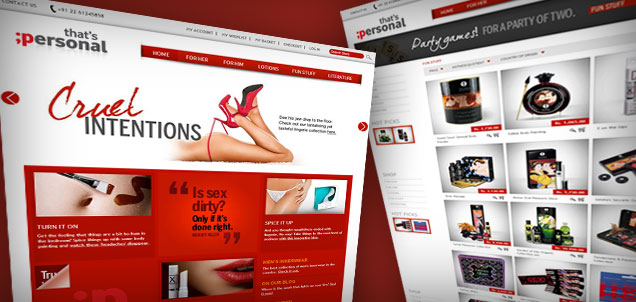
    In its quest to let this populace go ahead and indulge in some pleasurable moments, Samir Saraiya, CEO of Digital E-Life has announced the rollout of a unique venture titled thatspersonal.com. In a conversation with MxmIndia, Mr Saraiya discloses that the e-commerce venture will look at offering users products they wished to experiment within their bedroom but were afraid of doing so. And if you thought that this was not permissible under the Indian law, you’d be surprised to know that needn’t necessarily be the case if all the details are looked finely into. Read on to explore more…


    What led you to venture into a realm that is out of the ordinary especially given your professional stints across notable organisations in the past?

    Well I was with Microsoft for 5 years of which I spent three years in Singapore and two in India. Prior to that, I was with Yahoo. When in Singapore, a trend that me and my friends spotted in the Indian landscape was that in 2010-11 there were a lot of entrepreneurs who were getting into the e-commerce space. There was a lot of temptation by friends and family to also do something of my own in that space. But the question that arose was what do I get into? Each and every sector you can dream of had multiple players who were offering that service. After a bit of researching, what I realised that most players were playing e-commerce on three pillars: convenience, choice and pricing. So I decided to innovate and play on a completely new pillar – buy from me and nobody knows. Based on my interaction with friends and people at large, I realised that many people were not comfortable when it came to discussing or buying sensual products. Part of it was because of the upbringing that they were brought up with and also societal inhibitions that stopped them from trying these products out. During the course of this experimentation, what I realised is that sexual wellness is a very good category to begin with.


    So sexual wellness is how you would want to categorise your offering under? What was the next phase of the game plan?

    So when still in Singapore, the first thing I did was call my lawyer to check on the legal ramifications of operating in this space. After gathering sufficient knowledge on the subject, there was a level of comfort that I attained which made me look at this space even more prominently. Also, such a concept was doing fantastic business in Singapore where there was a lot of money being made by the players offering this service. When I sat to evaluate on what are the sexual wellness products available in India I found there was almost nothing compared to what you get internationally. My next step was to speak to international brands and get them interested to make a foray into India. Today I have close to 10-15 international brands and about a decade or so Indian brands on board. There are two guidelines when it comes to selling of such products in India. We follow two well-defined guidelines: products that are made in India for sale in India and secondly, products which can be imported under the Indian Customs Act under the open general license scheme prescribed by the Government of India where one can pay full duty and whatever surcharge amount that is to be paid. Once that procedure is followed, you can then go ahead and sell products that are sellable in India. So we would be selling products like lingerie, lotions, creams etc.’


    Indian families are seen to be conservative in their opinion on sex, especially females. Or is that perception changing? What is the female:male ratio of visitors you expect from your website?

    The thing is that we’ve just launched at the beginning of the year so we won’t be able to share such slicing of data. But from the initial feedback, we have getting a good response from the female audiences. That’s a good sign as normally e-commerce is mostly male-oriented but we are receiving good response from females as well. We believe that by maintaining the secrecy of customer information is something that females will appreciate more in this country. We also believe that we are the first store where a woman can shop in confidence for her personal products.


    How do you ensure secrecy options to your customers? Any novel delivery mechanisms being followed…?

    Yes, as far as delivery of goods go if anybody wants to get the product at their residence we will do so through a tamper-proof box which is unmarked so the entire delivery chain has no idea what is inside. So customers who want to shop our products can provide us their pin-code and based on where their home or office is they can select their delivery point and can either pick it up themselves or even authorise anybody else to do so on their behalf. So the customer gets to control the last mile. So from the time the product leaves our delivery room to the time the customer opens it nobody in the chain knows what is there in the box.


    Could you brief us on what the average TG looks like who shop from your website?

    If you are asking me who my TG is, the answer is I do not know who they are and I want to learn more about that aspect. Based on reactions with the outside world, half the people tell me that the 20-30 age group will buy my products while the others tell me that 30-45 age group will buy them more. The fact is that the youth in their 20s, 30s are pretty much experimental and more exposed to global trends.


    The other interesting feedback I keep getting is that half my customers will be people who have travelled abroad and are used to buying these products abroad and will therefore now buy these products in India as well. But there are also some who tell me that the smaller towns is where the action is – will get a lot more business from here compared to the metros. What we want to do is really learn the market and try and force our products based on the kind of price point that the Indian consumer wants. As we go forward, we would want to cater to the needs of the mass market as well.


    This space does have its share of players although they may not be operating in as organised a way as you do…

    There are other players but they may be insignificant or small. I do not think there is anyone who is doing it the way we are doing it which is an all-clean website…we are there in the media, have a clear shipping and return policy, well-represented international brands so one can be assured that the products will be safe and premium of sound quality.


    What are the promotional activities being undertaken to promote your venture?

    Social media is huge today and cannot be ignored. Our business model is a lot to do with PR, social media, etc and has a lot to do with educating the audiences about these products, the hygiene aspects, how they can be beneficial etc. As pioneers we want to set high standards in whatever we do.


    What are the challenges that a business such as your may encounter going forward?

    There are business challenges and there are learning challenges. The learning challenges are more important where we are pioneering this offering in the market and we are sure of what the Indian market wants in terms of products, pricing and other options. We are also learning facts from the Indian market like the fact that Indians do like products in sachets unlike the western markets where they prefer buying them in the open. So these are some of the things that we are picking up and will keep doing so as we go forward.


    Do you fear facing opposition from society and anti-social elements?

    We do not think we are doing anything wrong and feel that we are on the right side of the law. We feel we are helping the society evolve. So we do not expect a backlash as we do not think we are harming anybody.


    On a light note, did you face any resistance from your family when they learnt of your entrepreneurial plans?

    Not really. I was quite surprised that my family was far more open to what I was doing than I was. As I’d said earlier, we would be offering personal products to customers. We are looking at adding other personal products in the category of nutrition/dietary, beauty bath etc. Our feeling is that the privacy aspect of people is very under-served in this country. That is a need we are seeking to fulfil. But while we plan to broaden our base, we do not want to be seen as an adult shop; it’ll more of fulfilling one’s privacy needs.


    What is the way forward for your venture?

    We are looking at significant hyper growth in this business. We have laid out a strong strategy for the next 48 months and are excited to have started our journey in this space.

    “It was a highly embarrassing experience even for me,” says Sunil, a techie who didn’t wish to disclose this surname – he had gone to the same market a few months ago to check out an “arousal cream” his wife had demanded to celebrate their wedding anniversary. “The whole atmosphere was hostile. I got the cream, but wasn’t sure of the quality and ended up not using it at all,” he adds.


    Some others we spoke to said “it is always a depressing hunt”. A Mumbai-based 25-year-old entrepreneur says he organised a BDSM (bondage, discipline, sadism and masochism) party at home – inspired by EL James’s bestseller Fifty Shades of Grey – with products bought while on a tour of London. “Forget dildos and vibrators, even buying a few sensual creams can get embarrassing,” he says, requesting anonymity. BDSM is an umbrella term for a consenting adult relationship that involves domination and submission.


    A 42-year-old Mumbai-based techie says she’s ready to go through the embarrassment of being chuckled at by peddlers, like those “crazy” ones she met some time ago in Mumbai’s Manish Market, if only she is sure of the quality of the product. She wants to buy lipsticks that tingle and body oils. “Almost everyone I know has either bought it overseas or wants to use it,” she says, asking not to be named.


    Opportunity Strikes

    Samir Saraiya, who quit as lead, business development, Microsoft Singapore, last year to pursue personal interests, saw a business opportunity in the statement that “everyone wants to use it” – most of his friends also said the same thing. A brief enquiry in the local markets of Mumbai and a survey of the Indian adult products market convinced him to take the plunge: to launch an online shop to sell products that don’t invite punishment for obscenity.


    He got in touch with global brands such as American lingerie brand Shirley of Hollywood and other companies that sell sex products like Pjur (Germany), Wet (US), Shunga (Canada), Elegant Moments (US), Male Basics (US), Premium Bodywear (Germany) and so on to negotiate an exclusive agreement to sell their products in India through his website, thatspersonal.com (reported in ET on January 12). By then, Mr Saraiya, who is also the CEO of Digital E-Life which runs the site, had in place a team of co-founders and investors – all senior corporate executives impressed with the idea.


    Mr Saraiya’s research pegs the adult products industry in the country to be in the range of Rs 1,200-1,500 crore. He expects the industry to grow to Rs 2,450 crore in 2016 and Rs 8,700 crore in 2020, spurred by a rise in the number of people who want to spice up their sex lives. Other co-founders and investors in the new venture are Neville Taraporewalla, senior director, emerging markets, Microsoft India; Jaspreet Bindra, formerly regional director, retail, entertainment and devices, Microsoft India; Vikram Varma, head of internet solutions firm Digital Driftwood; Abhay Bhalerao of Amrut Software Ltd; and internet lawyer Lekhesh Dholakia.


    Last-Mile Connect

    Mr Taraporewalla, who was earlier director and country general manager at Yahoo! India and Mr Saraiya’s one-time mentor, says he is impressed by the team – it includes people with domain expertise in online marketing and an internet lawyer who could factor in the legal hurdles (see Legal Issues) while choosing products for sale.


    After sealing pacts with well-known international brands to exclusively sell their brands in the local market for three years, Mr Saraiya wants to offer a USP that online shops of sex toys overseas- like imbesharam, which has been endorsed by Canadian porn star Sunny Leone who has made a foray into Bollywood – might not be able to match.


    So he has tied up with logistics services firm Aramex International to ensure that customers can collect the products at locations of their choice. Which means a couple residing with their parents can collect the “tamper-proof, unmarked package” either from an Aramex office or from a location that they have specified in the application. “We innovated on the e-com delivery model to give our customers the ability to control the last-mile logistics,” says Mr Saraiya.


    The 41-year-old CEO says he has made his employees sign bonds to keep the names of the customers secret to prevent any misuse. “The case could be more sensitive if some of the customers are celebs such as Bollywood stars,” he says. Currently the payments are to be made online through a credit card, debit card, or net banking. Mr Saraiya says he plans to introduce cash-on-delivery services.


    Legal Clarity, Culture

    Like many others we spoke to, Mr Saraiya and his team regret that the laws in the country have not kept pace with the changing needs and preferences of people. Says Mr Dholakia: “This is not the case in developed western countries where they have recognised that with changing preferences the laws also need to change, which rationalises the legal effect on such altered patterns of behaviour in society.”


    Dr Sudhakar Krishnamurti, andrologist and sexual medicine consultant, argues that while most Indians are not yet ready for experimentation in matters related to sex, over the years such practices have become prevalent among some consenting adults. “I view this trend [of people using adult products] as inevitable… all these trends [such as BDSM parties] you observe now have been merely waiting to burst out of the closet and come into the open. The main trigger for all this is time, and the moment,” he says. “That time has come,” he adds. Maybe it has.


    Source:The Economic Times

    Copyright © 2013, Bennett, Coleman & Co. Ltd. All Rights Reserved


    The Legal Issue


    UNCLEAR: Laws in India are silent on sale of sex toys and erotic apparels. According to internet lawyer Lekhesh Dholakia, the concern arises more from the manner in which these sex toys/ apparel and related products are displayed and exhibited for sale. Since in most cases these items carry graphic, pictorial descriptions, which could be perceived as being obscene, they could attract the provisions of the Indian Penal Code, 1860, and the Information Technology Act, 2000 (for internet sales).


    OBSCENITY: Although neither the IPC nor the IT Act defines what obscenity is, Section 292 of the IPC and Section 67 of the IT Act (which corresponds to Section 292 of the IPC) explain “obscenity” to mean anything that is lascivious – or if its effect is to “deprave” and “corrupt” people.


    PENALTY: According to Section 292, whoever sells, allows to hire, distributes, publicly exhibits, makes, or has in his possession any obscene book, pamphlet, paper, drawing, painting, or figure or any other obscene object whatsoever, or advertises, or makes known by any means whatsoever that any such obscene object can be procured from or through any person, is punishable with imprisonment and fine.


    PRECAUTION: Therefore, obscenity is an offence if it falls within the purview of Section 292. Certain sex toys/articles that “carry the impression” of being “obscene”, may risk punishment. The ones thatspersonal.com sells can’t be classified as obscene, says Mr Dholakia.


    Source:The Economic Times

    Copyright © 2013, Bennett, Coleman & Co. Ltd. All Rights Reserved


  • H&M, Topshop get set for India

    By Samidha Sharma & Boby Kurian


    Swedish fast-fashion giant Hennes & Mauritz (H&M) has asked leading mall developers to block space for its initial stores in India, as the world’s second largest fashion retailer hopes to open a local office in the next three months. British billionaire Philip Green-owned Topshop is another foreign retailer finalizing plans to enter the country through a local joint venture, as global biggies revive interest in India on the back of recovering consumer sentiments and the recent reform push.


    India allowed 100 per cent foreign direct investment (FDI) in single brand retail, a route which H&M would take to enter this market just like its Swedish peer furniture retailer Ikea. H&M’s international expansion head Frederik Olsson has frequented the local market in the recent past, asking leading mall developers like DLF and Phoenix Market City to block potential store locations, said people directly familiar with the matter.


    “H&M is likely to open an India office within three months after they move the Foreign Investment Promotion Board,” said a source who did not wish to be named. H&M’s chief executive Karl-Johan Persson while announcing the company’s quarterly earnings recently said the retailer would enter India on its own, and was ready to meet 30 per cent local sourcing norms.


    UK’s Topshop, which came close to partnering the Tatas five years ago, has revived India plans and is close to firming up a local joint venture partner. “We are actively speaking with a number of parties about the market, but as yet nothing is confirmed,” said a spokesperson for Topshop. An H&M spokesperson declined to comment on future plans.


    These developments come even as Japan’s Uniqlo is moving towards striking a joint venture with Arvind, while American retailer Gap Inc has made moves to identify its best possible market access. H&M and Uniqlo could open maiden stores in the first half of 2014. Another iconic US retailer Abercrombie & Fitch has started work to enter the country, possibly through the 100 per cent FDI route.


    The New York-listed A&F’s Hong Kong office has begun work with leading real estate consulting firms to explore an entry strategy, said sources cited earlier. An emailed query to Abercrombie & Fitch remained unanswered.


    Notwithstanding the reviving euphoria, India still represents a complex market for most retailers, with real estate costs among the most expensive in the world. Zara, part of the biggest global fashion conglomerate Spain’s Inditex group, opened nine stores in an aggressive three year expansion.


    But Zara’s 18,000-sq-ft stores, which pay a fixed 6 per cent fee on sales to mall owners, have not gone down well with many developers in a market with huge shortage of quality retailing locations.


    The mall owners who in the past chased Zara, even offering to take up store fit-ins, have cooled off, with some preferring to wait out for the newer global entrants like H&M, Uniqlo and Forever 21 while deciding on space allocations for the next 24 months.


    Source:The Economic Times

    Copyright © 2013, Bennett, Coleman & Co. Ltd. All Rights Reserved


  • HUL sells Lifebuoy by stamping rotis at Kumbh Mela

    By Sagar Malviya


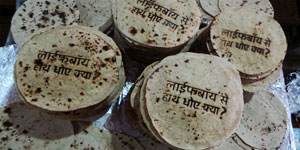
    At Kumbh Mela, the largest congregation on earth where all big marketers are vying to sell their wares and boost their brands, one promotion that stands out is Hindustan Unilever’s ‘Roti Reminder’ for its Lifebuoy soap brand.
     

    The country’s largest consumer products firm, along with creative agency Ogilvy, has partnered more than 100 dhabas and hotels at the mela site to serve rotis that are stamped with “Lifebuoy se haath dhoye kya?” (Have you washed your hand with Lifebuoy?) “The ‘Roti Reminder’ gets a consumer’s attention at the exact time when hand washing is critical,” Sudhir Sitapati, general manager, skin cleansing, at HUL, says. That is, right when she sits down to eat roti with her hand.


    The company has made special heat stamps to make an impression of its message on rotis and hired 100 promoters to stand in 100 kitchens across the mela. The campaign started on February 1 and will run for 30 days. The company hopes to put the hand wash reminder on 2.5 million rotis.


    “The Maha Kumbh provides a unique opportunity to communicate this message to a large, predominantly small-town and rural population,” Sitapati says. “In effect, this simple, clutter-breaking idea will help us reach out to a massive audience, at a fraction of the cost.”


    Source:The Economic Times

    Copyright © 2013, Bennett, Coleman & Co. Ltd. All Rights Reserved


  • Biscuit biggie Parle-G is India’s first homegrown Rs 5k cr FMCG brand

    By A Correspondent


    When Parle Products launched Parle-G in 1939 during the British rule, the firm considered it a responsibility to sell affordable biscuits to Indians.


    Today, the same value plank has helped the glucose biscuit brand become the first Indian FMCG brand to cross the Rs 5,000-crore mark in retail sales in a year.


    In 2012, Parle Products sold Rs 5,010 crore worth of its flagship glucose biscuit brand at retail price, besting the entire domestic sales of Dabur or Godrej products and selling three times more than Maggi noodles.


    This meant sales of more than Rs 100 crore packets across sizes every month, or Rs 14,600 crore biscuits in the entire year, that is, 121 biscuits each for the 1.2 billion Indians.


    Mayank Shah, group product manager at Parle Products, said the companys realisation was around 60-65 per cent of the retail sale. While Parle-G, with less than $1 billion in annual sales, is nowhere near the worlds top-selling brands such as Coca-Cola and Gillette, it has a healthy lead over its closest Indian rivals such as Hindustan Unilevers Wheel and Rohit Surfactants Ghari Detergent.


    VALUE PLANK PAYS OFF

    Started by Mohanlal Dayal Chauhan way back in 1929 at Vile-Parle, a Mumbai suburb, Parle Products first launched an orange candy and then other confectionaries before entering the biscuits segment 10 years later.


    “Launching Parle-G in 1939 was not just a business decision but also a responsibility to sell affordable biscuits to Indians (during British rule) at a time the market was flooded with costly imports,” said Ajay Chauhan, executive director at the Rs 8,000-crore Parle Products and a member of the founders fourth generation clan.


    “Even after 70 years, we havent digressed from that philosophy and the pricing has helped the brand become a staple today,” Mr Chauhan added.


    This affordability proposition is exactly what has been paying off for Parle-G despite rivals such as ITC and Britannia entering the space. There was a time when Parle-Gs dominance was threatened by rival brands, especially Britannias Tiger, which targeted kids. But when Parle-G sponsored childrens television show Shaktimaan on Doordarshan, it literally rescued the brand.


    The company also managed to keep prices unchanged for over a decade – between 1996 and 2006 – even as the prices of raw materials such as wheat, sugar and milk escalated up to 150 per cent.


    Net result: Parle-G increased its share from 67 per cent in 2002 to 79 per cent in 2012 while the share of Britannias Tiger fell to 9 per cent from 26 per cent during the same period. ITCs Sunfeast brand too had over 9 per cent share in the glucose segment last year.


    Analysts said that Parles relentless focus on top line has driven its rivals to shift strategy from glucose to other sub-segments such as cream and cookies.


    “Historical analysis of the biscuits category reinforces that even a single margin disruptive player can impact the margin profile of the entire category,” Anand Mour of ICICI Securities said in a recent note.


    Between FY06 and FY11, Parle Biscuits EBITDA margin declined by 720 bps to 2.9 per cent in FY11 and Britannias EBITDA margin declined by 550 bps to 5.5 per cent. “This is despite Parle seeing the highest revenue CAGR of 32 per cent during the period, the highest among FMCG companies,” Mr Mour said.


    Even rivals agree that its tough to match Parle-G in pricing.


    “Parle-G has sheer economies of scale which we cant match without impacting our margins,” a senior official at ITC Foods said. “At that price point, it is difficult to compete in the category and we would rather focus and invest on our strength and earn profit on products such as cream biscuits,” added the official, who didnt wish to be identified.


    Parle Products said the value-for-money plank has been crucial in growing Parle-G at over 15 per cent compounded annual growth rate in the past five years.


    Parles 10 own manufacturing units and around 75 contract manufacturing plants across the country helped it beat rivals in distribution efficiency and cost. While rivals have signed on celebrities, Parle-G has managed to grow its sales with just a simple white-and-yellow striped wrapper with a picture of a baby on it.


    KAL KE GENIUS, REALLY?

    Yet, there are question marks over Parle-Gs potential to keep its growth rate and to become the countrys first Rs 10,000-crore FMCG brand mainly because of the increasing popularity of cookies and cream biscuits, which are available at similar price points as glucose biscuits. Another concern is the ability of the 73-year-old Parle-G brand to stay relevant to the next generation of customers. But the company is confident about the brands future.


    “We saw consumers upgrade to the cookie and cream segment as companies, including Parle, introduced lower-priced products in the past three years, which impacted the glucose category initially. However, Parle-G grew 10 per cent last year despite such a high base,” Parles Mr Shah said.


    Experts agree. Alpana Parida, president at brand firm DY Works, said that Parle-G is to India what Coca-Cola is to America, “Many of us have grown up with Parle-G and tea at various points of time in our lives. It has an emotional connect to Indians.”


    She said that Parle-G might not grow as fast as the overall biscuit market as cross-category competition increases. “However, it will still be the default biscuit in every house and if the company leverages the brand into other options such as hi-fibre biscuits or other value-added segments, the penetration of the brand will go up,” Ms Parida added.


    Share of Parle-G in the firms overall sales has declined to about 50 per cent now from more than 70 per cent a decade ago.


    To stay connected to the new generation, Parle-G last month launched a new advertisement campaign after 10 years. Titled Kal Ke Genius, the campaign created by Ogilvy was received well and made waves in the social media platform.


    Parle also last year launched Parle-G Gold, a premium glucose biscuit that is heavier and has a richer formulation than Parle-G. The biscuit market in India is estimated at Rs 21,000 crore with the glucose segment accounting for 30 per cent of it.


    Source:The Economic Times

    Copyright © 2013, Bennett, Coleman & Co. Ltd. All Rights Reserved


  • Hero exits cricket, game poorer by approx 1.2k cr a year

    By K Shriniwas Rao


    Cricket seems to have lost its Hero. The leading two-wheeler manufacturer, led by the Munjal family, has consciously decided to move out of all cricket sponsorships. After exiting as global sponsors of the International Cricket Council (ICC), and also from the Indian Premier League’s (IPL’s) central pool of sponsors, Hero Moto Corp, last week, called it quits with IPL’s Mukesh Ambani-owned franchise Mumbai Indians too.


    But the $4.5-billion automobile giant will stay associated with other sports. Earlier this year, Hero had signed a multi-year title sponsorship deal with the recently floated Hockey India League. Recently, Hero also entered into a new four-year sponsorship agreement with the International Hockey Federation (FIH) to sponsor all their events scheduled to be held in India, including the 2013 men’s junior world cup, the 2013 men’s World League Final, 2013 Champions Trophy and the 2015 Hockey World League Final. Hero has been associated with the FIH for three years now.


    Hero is also associated with two of golf’s premier events in India – the professional women’s tour and the Indian open – as title sponsors. However, where cricket is concerned, the New Delhi-based company has decided to stay away.


    Their exit leaves Indian and world cricket poorer by a collective approximate sponsorship of Rs 1,200 crore. Along with LG, Vodafone and Pepsi, Hero had renewed its contract with the ICC as one of its global sponsors – learnt to be for $25-30 million a year for three years – and were associated with cricket’s world governing body until last year.


    Hero was also part of the IPL’s central pool of sponsors until last year. In 2007, it had signed up with the BCCI-run Twenty20 league as associate sponsors for $22.5 million a year for a five-year period that ended in 2012. Hero was also associated with Mumbai Indians (MI) for the last two years as lead sponsors, coughing up approximately Rs 65 crore a year. MI confirmed Hero’s exit but refused to divulge details of a new sponsor. “Many national and international brands are interested but it’s not right for us to divulge details now because we’re still in talks,” an MI spokesperson said. The ICC, it is learnt, is already looking for a replacement for Hero.


    When contacted, a statement from Hero Moto Corp said: “We have been associated with cricket for over two decades and it is not correct to say we are moving away from cricket. Our decision to not renew IPL contracts does not dilute our commitment to cricket. We will continue to remain engaged with cricket along with other sports.”


    Source:The Economic Times

    Copyright © 2013, Bennett, Coleman & Co. Ltd. All Rights Reserved


  • Reckitt Benckiser’s Dettol Kitchen ad takes on HUL’s Vim

    By Ratna Bhushan and Sagar Malviya


    In a first for Reckitt Benckiser, the launching commercial for its Dettol Kitchen dishwashing and kitchen cleaning gel shows rival Hindustan Unilever’s Vim dishwash liquid clearly, in a move that may trigger a new advertising war between the two European multinationals.


    The commercial, first aired on Friday, marks the first time the Indian arm of the British consumer good major has directly attacked HUL in its advertising.


    Skirmishes between the two firms have been veiled in the past, although both have repeatedly taken each other to court and advertising watchdog Advertising Standards Council of India (ASCI).


    Officials of Reckitt Benckiser were not available for comment on the campaign. An HUL spokesperson too did not offer any comment on the subject. An official close to the developments said it was only a matter of days before HUL takes action against the disparaging ad.


    Experts say that even if HUL files a complaint to ASCI on Monday, the Dettol Kitchen ads released on Friday would have created maximum impact over the weekend.


    “Such ads gives a very strong message psychologically that it’s not just another product and they can compete with the market leader. While HUL almost has a monopoly in the segment, there could be more action now in an otherwise dull segment,” Nitin Mathur, consumer research analyst at Espirito Santo Securities, said.


    ASCI chairman Arvind Sharma, who is also the chairman & CEO of Leo Burnett in Indian subcontinent, said that featuring a rival brand in a campaign alone does not break advertising codes.


    “In general, the consumer complaints council code allows ads to show a rival brand as long as the claims made in the ad are fact-based,” said Mr Sharma who is also the president of Advertising Agencies Association of India.


    The consumer complaints council checks violations in advertising and initiates action as and when necessary.


    With this move, Reckitt Benckiser seems to have given HUL a taste of its own medicine.


    Two years ago, HUL’s ads for Rin detergent took a dig at rival Procter & Gamble’s Tide, clearly showing pictures of Tide in the Rin ad. P&G had moved the court within a day of the ad going on air, and the ad was stopped within days.


    As reported by The Economic Times last week, Reckitt Benckiser, which also makes Cherry Blossom shoe polish and Airwick air-fresheners, has taken its battle over germ-protection with HUL to the kitchen with the launch of Dettol Kitchen. India is only the second country after Korea to roll out Dettol Kitchen, a global innovation led by India.


    Reckitt Benckiser has positioned Dettol Kitchen as a ‘complete kitchen cleaner’, for use as a dish-washing gel and cleaning other kitchen surfaces like sinks and slabs.


    HUL’s Lifebuoy and Dettol have been rivals for close to three decades.


    The 80-year-old Dettol brand, launched first as an antiseptic liquid in 1933, has subsequently been launched across different categories including soap, plaster, handwash, shaving cream, hand sanitiser, and now kitchen cleaner.


    Vim, also an HUL power brand, has been dominating the dishwashing space for close to 100 years. The liquid dishwash segment is estimated at close to 300 crore, which is about 15% of the 2,000-crore overall dishwashing market that includes bars, powders and liquids. Growing at a rapid 40%, the liquid segment is the fastest growing among dishwashing formats.


    Apart from Vim, Dettol Kitchen will compete with Henkel-Jyothy’s Pril and Exo. Dettol has some 53% of the 300-crore handwash category, followed by Lifebuoy at a share of about 30%. But in soap, Lifebuoy has close to14% share, against Dettol’s 8.2% market share.


    The UK, Slough-based firm over a year ago named India as the headquarters for its South East Asia region, and placed India chairman and MD CM Sethi at the helm of 12 countries including Singapore, Malaysia and Thailand.


    The Dettol Kitchen commercial may trigger an aggressive ad war between British firm Reckitt Benckiser and Anglo-Dutch firm Unilever in India ahead of UK Prime Minister David Cameron’s visit to India from today (Feb 18).


    Source:The Economic Times

    Copyright © 2013, Bennett, Coleman & Co. Ltd. All Rights Reserved


  • Elephant refreshes Lacto Calamine

    By A Correspondent


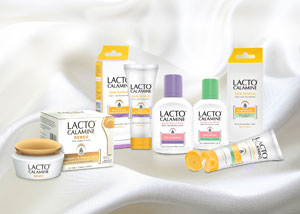
    Piramal Healthcare’s popular range of Lacto Calamine skincare products has seen a refresh by Pune-based Elephant Strategy + Design.
     

    Speaking about the exercise, Supratik Sengupta, GM Marketing Innovations – Piramal Healthcare Consumer Products said “Elephant has brilliantly amalgamated three key elements; the brand legacy, the present brand core & the future roadmap, while creating the design identity of the entire Lacto Calamine range architecture. It is always very comforting to work with such creative partner who can imbibe the strategic aspect in the creative rendition”


    “Our insight was that a self-assured woman likes to buy products that transparently tell her who they are, what they do & how they do it for her. We took the minimalist, no-frills approach to the packaging communication and design,” said Ashwini Deshpande, Co-founder Director, Elephant.


    Lacto Calamine, by Piramal Healthcare, has a 25-year history and equity as a trusted skincare solution. With rebranding exercise done in 2009 (also by Elephant), it had expanded into two skincare categories with solutions for different skin types from being just one moisturizer product brand.


    The challenge: While Lacto Calamine had established credence with the woman who equated beauty with simplicity, it was time to ladder up to a larger and aspirational space. It was time to connect with a “self-assured” woman who makes informed decisions. This was seen possible as Piramal team was ready with unique mix of skincare solutions with compelling propositions.


    The brand needed alignment with the new positioning without losing its core of simplicity that had enjoyed unparalleled trust. From being present in basic categories like moisturizing & face wash, the trade-up was also about introducing newer products in sun protection and skin renewal space that came with definitive promises and differentiations. The challenge was to create packaging that carried simplicity from the past and also looked believable as an advanced skincare solutions expert with a growing portfolio.


    With the latest launch of Lacto Calamine Reneu, the range is out there and being well-received, notes a communique.


  • Parle signs BachchanSr to endorse Gold Star cookies

    By A Correspondent


    Parle Products, biscuit, confectionery and snacks manufacturer has roped in Amitabh Bachchan as the brand ambassador for its new Gold Star Cookies. It has roped in the legendary superstar Amitabh Bachchan to be the face of its new range of Gold Star Cookies – latest offering in the premium cookie category.


    The company will be carrying out an extensive 360-degree marketing campaign to support the launch.


    Commenting on the launch of the new product, Shalin Desai, Group Product Manager, Parle Products said, “The premium cookie segment in India has witnessed a steady growth over the years; however it’s largely dominated by the presence of a single player. There is a lot of untapped potential leading to an opportunity for new entrants in this category. Today’s consumer is well informed and aware, making him a lot more quality conscious and always on the lookout for a variety of options.”


    Speaking on the association with Amitabh Bachchan, Mr. Desai further added, “Mr. Bachchan has a magnificent personality and a strong connect among Indians across age groups. He embodies an exemplary blend of both style and performance, making him the ideal choice to endorse our products. The goodwill and reputation he has built over the last three decades compliments our own, built over the last 80 years’. His remarkable appeal which spreads across all sections of people in the country, compliments our brand communication.”


    Commenting on the association Amitabh Bachchan said, “It gives me an immense pleasure to be associated with the most iconic biscuit company of India, Parle Products. From last 70 years we all have grown up eating Parle’s biscuits and it has always been the most loved brand in the country amongst all age groups. There is hardly any other biscuit brand in India which is as popular as Parle. I am thrilled to begin a new journey with Parle’s Gold Star cookies and take the brand legacy ahead.”


    Gold Star is currently available at price points of Rs 10, Rs 15, Rs 20 and Rs 30 in pack sizes ranging from 75gms to 200gms across all kirana stores and modern trade formats in India. The company currently has Hide n Seek, Hide and Seek Fab and Milano in its premium cookies. With the introduction of Gold Star, the company is addressing the need of a product that offers good quality and taste in the premium cookie segment. The cookies are available in four variants, Butter, Cashew Butter, Chocolate Chip and Chocolate & Nut.


  • Nutrela Soya Food launches new campaign

    By A Correspondent


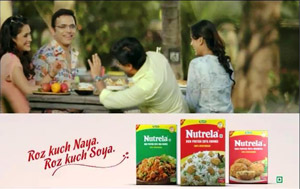
    Nutrela Soya Food, from the house of Ruchi Soya Industries, has announced the launch of its new marketing campaign by launching a TVC. The objective of the TVC, conceptualized by Soho Square Mumbai, is to highlight the versatility of Nutrela Soya Food. The product is being promoted through a catchy tagline which is completely in sync with the brands positioning- ‘Roz Kuch Naya, Roz kuch Soya’.

     

    The TVC has produced by Apocalypso. The new 30-second TVC is set to go on-air during this IPL season. Madison Media is the media agency.


    The story is depicted from the backdrop of a leisure trip where a couple enjoying their meal and is joined by one of their couple friends. The TVC thereby acknowledges the creativity and versatility of the home-maker, super moms, by acknowledging her as food designer. The concept of new Nutrela Soya Food TVC is giving credit and gratification for house wives. Hence, the company decided to acknowledge the creativity of the home maker by providing her a product (Nutrela Soya Food) that can be integrated well with every dish and thus enables her to try ‘Roz Kuch Naya’.


    The campaign will be spread across eight weeks with the TVC breaking first during the ongoing IPL season, in order to create top of the mind recall amongst consumers and then on other channels that include Hindi GEC, Regional GEC, Lifestyle channels etc. The company has also scheduled for a product sampling across Women’s magazine along with recipe ads/booklet to explain the usefulness of soya.


    Commenting on the marketing objective, Sandipan Ghosh, AVP – Marketing – Consumer Brands Division – RSIL said, “Home makers or Super Moms constantly aspire to bring in variety in food which is healthy and tasty and cuts across different consumption occasion for their kids, spouse and family in everyday life. We wanted to bring Nutrela Soya to the party as it is an extremely versatile ingredient. Thus, the effort is on increasing consumption by creating awareness on everything that can be done with soya.”


    Commenting on the TVC, Anuraag Khandelwal and Satish deSa, ECD and Creative Heads, Soho Square Mumbai said, “We set out to get soya out of the blind spot, and into the limelight. To get the world to acknowledge it for what it really is – versatile and creative. We went about doing this by first acknowledging the house-bound wife for what she really is – versatile and creative. ‘Food designer’ status, we believe, is one of the acknowledgments she truly deserves.”


    In order to substantiate the product features and thereby to communicate the versatility of the Nutrela Soya Food brand, company has planned for an aggressive marketing campaign.


  • Colgate launches offensive to take on P&G’s Oral B toothpaste

    By Kala VijayaRaghavan & Sagar Malviya


    Last week, when Procter & Gamble launched Oral B, its first toothpaste in India, perhaps no one else was watching it more closely than Prabha Parameswaran, the MD of rival Colgate, also the market leader in the Rs 5,000-crore oral care market.


    Ms Parameswaran’s swift and no-holds-barred retort to the P&G threat has by all accounts left the latter overwhelmed in the market.


    A heap of 250-odd Colgate toothpaste packs greets customers at a leading supermarket in the suburbs of Mumbai. Almost each of the neatly stacked packs forming a mini-pyramid has either BOGO (buy one get one) printed on it or carries reduced price tags. Here and across 4.5 million retail outlets, Colgate is being a shameless bully, elbowing P&G out of any shelf space. It is throwing toothbrushes, pastes, and brand events and promotions with trade partners, and discounts, all to deny or delay giving P&G even a toehold. Such promotional intensity wasn’t there even two weeks ago.


    “Several large retailers haven’t even stocked P&G’s new toothpaste as the margins offered were lower than Colgate and GSK,” said two officials at leading supermarkets.


    This is already turning out to be a costly battle – Colgate has hiked its advertising and promotion spends by 31% during the first half of this calendar year.


    Devendra Chawla

    “There has been a new-found aggression in Colgate during the past year,” says Devendra Chawla, president-Food Bazaar at the Future Group.


    P&G India is hardly a wimp when it comes to a scrap for market share. The Cincinnati-headquartered company has had dozens of such brawls with arch rival Unilever in segments such as detergents, shampoo and skin creams. But this is the first time P&G is wrestling with Colgate.


    “Though it is still very early, our launch of Oral B toothpaste and initial plans are very much on track,” a P&G spokesperson said, responding to an email about the battle with Colgate. “We are very pleased with the response and support we are receiving from both our customers as well as the professional community.” Ms Parameswaran, 51, too is quite familiar with the exertions of such battles. Before she was elevated to the top job in India, she had fought P&G for over a decade at their home turf – the US – and more recently Mexico, where she was the marketing head until 2012. Colgate controls more than half the market and Ms Parameswaran is fiercely guarding every inch. In the months preceding P&G’s first toothpaste launch, she was hitting the roads, meeting dealers, distributors and trade partners, say sources in direct know of things. A media-shy Colgate declined comment. “Ms Parameswaran has fired up the organisation,” says a highly placed official privy to recent happenings within Colgate.


    Since she took charge in February 2012, Colgate’s market share has increased from 53.1% to 55%, its highest since 1998, and a rare instance of a market leader gaining new ground. In the same period, its stock has risen 41%, even as the BSE Sensex has gone up just 14%. “Colgate is like a well-oiled machine. What a very good leader can do with such a welloiled machine is what is happening now at Colgate,” says Abneesh Roy, associate director at Edelweiss Securities. “Usually, the market leader tends to protect share rather than drive further growth. Colgate has managed growth under Ms Parameswaran,” he adds. Roy, who had met Ms Parameswaran recently, says she comes across as an extremely savvy marketer with a curiosity to know what is happening in other categories.


    “Colgate has usually tended to do well under attack, earlier from Pepsodent and later from low-cost brands such as Anchor,” says Vikram Kaushik, ex-MD of Tata Sky. He was executive vice-president (marketing) at Colgate-Palmolive (India) in 2004. Ms Parameswaran has worked with Colgate for two decades. She started off with experiences across verticals including initiatives to revitalise its personal care business that included the launch of Palmolive Naturals soap, Palmolive Optims and the male toiletries and skin care equities. She moved to New York as associate director (global business development), oral care, in 1997, and was later the vice-president (marketing) for Colgate India between 2007 and 2009.


    Ms Parameswaran worked with Lintas India (now Lowe Lintas) before joining Colgate and had handled HUL campaigns, including ‘Zara sa Rin!’, ‘Dur ho ja meri nazron se!’ (for Wheel) and ‘Dhoondte reh jaoge!’ (for Surf Ultra). “I remember her then for her team leadership skills as well as witty sense of humour. She was extremely insightful,” says Pranesh Misra, chairman & MD, Brandscapes Worldwide. He had worked along with Ms Parameswaran in Lowe Lintas on HUL brands. “After years at Colgate in different geographies and roles, she has further sharpened her skills in marketing and business leadership,” he adds.


    (With inputs from Amit Bapna)


    Source:The Economic Times

    Copyright © 2013, Bennett, Coleman & Co. Ltd. All Rights Reserved

    Licensed to republish


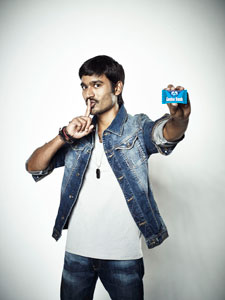
  • Dhanush is the new face of Center Fresh

    By A Correspondent


    Perfetti Van Melle India (PVMI) has signed on singer and actor Dhanush as the new face for its flagship chewing gum brand Center Fresh. Dhanush will feature in the new television commercial of the brand and on all mobile and internet communication. This is Dhanush’s first brand endorsement in the confectionary category.


    The Center Fresh brand with its tagline “Zubaan Pe Rakhe Lagaam” has had a series of popular ad campaigns. To further strengthen this equity, Dhanush, has been named as its brand ambassador.


    Commenting on the ‘acquisition’, Mandar Keskar, Category Head-Gums, Perfetti Van Melle India, said, “While Dhanush is taking his first steps in Bollywood, in our key markets he is very popular especially among the youth. We are really looking to leverage Dhanush’s equity to help take Center Fresh to the next level.”


    Commenting on his endorsement, Dhanush said “It feels great to be associated with Center Fresh which is one of India’s most loved brands. Looking forward to work on some exciting campaigns for the brand”


    Abhijit Avasthi, National Creative Director, Ogilvy & Mather - the creative agency that handles Perfetti Van Melle India account, commented: “We are quite excited to work with Dhanush. After Kolaveri Di and now Raanjhana, all eyes are definitely on him. His value addition to the brand will be immense.”


    A new TVC for the brand is currently under development and would be released during the later part of the year.


  • Apollo Tyres inks 3-yr pact with ManU

    By  A Correspondent


    Leading tyre-maker and distributor Apollo Tyres  has announced a three-year regional partnership with Manchester United Football Club which will see Apollo Tyres become the Club’s official Tyre Partner in the UK and India.


    While Apollo is a leading brand in India with annual revenues of over US$ 2.34 billion, it will leverage the high profile partnership with Manchester United to raise awareness of its brand among potential customers, business partners and consumer audiences around the world.


    Commenting on the announcement, Onkar S Kanwar, Chairman, Apollo Tyres Ltd said, “This is a very important partnership for us as a company and clearly demonstrates our global ambitions for our business, and the brand. Very few sports platforms deliver a global profile and awareness and we believe the impact of this relationship will be significant in helping to make Apollo a globally recognisable brand.”


    A key element of the partnership will be a joint community commitment to encourage young people to ‘go the distance’ and seek a higher level of excellence in building sporting skills and developing healthy lifestyles. Drawing on its philosophy, Apollo will build football pitches made from recycled rubber in local communities across the UK and India.


    The first ‘go the distance’ pitch will be built within the grounds of Old Trafford before similar pitches are rolled out across the UK and India. This initiative will include some specific skills challenges, encouraging users of the Apollo football play zones to achieve excellence in control, agility, speed and precision.


    Manchester United Group Managing Director, Richard Arnold commented, “Apollo Tyres is a leading player in the tyre industry and its rate of growth and development into new territories made it an attractive partner for the Club. With a combined fan base close to 46 million followers in both the UK and India, we are confident in providing Apollo with a captive audience. This partnership will allow Apollo not only to promote its brand, but also to engage and communicate with our fans, like we observed today with the skills demonstration.


    The announcement was made at a launch event at the Club’s Aon Training Complex, which was attended Mr Kanwar and Mr Arnold.