Category: PRODUCTS

  • Do looooong ads work for brands?


    By Priyanka Nair & Mukta Lad


    3.33. 3.53. 4.40. 7.16. Before you shut this paper and run a mile, we will have you know that this isn’t a complicated math problem coming your way, but the durations of some of the ads you’ve been seeing of late. With our daily dose of listicles masquerading as news for our seriously short attention spans, one would think quick and easy fixes are the way to go.


    The world of advertising begs to differ, though, offering a paradox. A spate of really long ads are the not-so-new kids on the block, where brands are taking the liberty to take as long as seven minutes to narrate their mostly heartwarming stories, The year is seeing a lot of the films that take their time to tell the tale, both internationally and back home.


    Pepsi’s ‘Ghar wali Diwali’
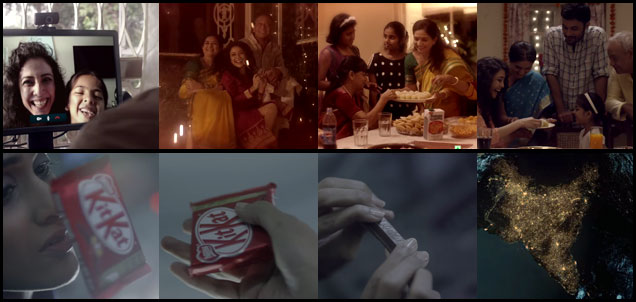
    KitKat’s Diwali
    Kissan’s ‘Joy of Togetherness’
    Fortune Oil’s ‘Ghar ka Khaana’
    Google’s ‘Reunion’
    Tata Sky’s ‘PrisonBreak’

    Most recently, KitKat and Pepsi jumped on the Diwali bandwagon, and two much talked about long-format films were born. They are usually released online, making it an inexpensive medium to tell powerful stories. But with such ads clearly becoming a regular trend, we have to ask; are brands really justifying the length of their communication with stories that are compelling enough? And do they work?


    Piyush Pandey executive chairman and creative director, Ogilvy & Mather India and South Asia, the man behind Fortune Oil’s emotive four-minute ‘Ghar ka khaana’ ad, believes, “With long-format, your single responsibility is to the viewer. It’s like people who make movies. A viewer of a long-format ad has made the effort to click on your film. It’s not like he was sitting around watching something else and the ad came on. It’s your responsibility to make sure he feels rewarded after the time spent and says ‘I must share this with my friends.’ I am assuming as professionals we know that we have a responsibility to the brand.”


    For T Gangadhar, MD, MEC India, it was the advertising during FIFA that has lingered on in his mind, especially the riveting spots by Nike and Adidas. “The episodic treatment, the fleshing out of the idea, the execution was such that there would have been no other way to create them except through the medium of long-format,” he says, admitting that he really didn’t notice the amount of time he was investing in watching them.


    Globally, too, brands have asked their agencies to deep dive into this particular style of creative build up for some time now. From Johnnie Walker to Dove and many in between, several brands have tried and tested using this narrative style for some years now.


    Apart from Fortune Oil, KitKat, Pepsi, Google’s ‘Reunion’ and #PledgeToVote, Tata Sky+’s ‘Prison Break’ and Kissan’s ‘Joy of Togetherness’ are some of the Indian ads that went much beyond the proverbial 30 seconds.


    Narayan Devanathan, EVP and national planning director, Dentsu India Group thinks of this trend as a fad, though. “To me, this seems like the work of diva creative directors who want to cash in on lack of extra mediabuying costs, the freedom the internet offers as a medium and the fact that they might be able to wiggle out a few favours from the directors in the same budget,” he says bluntly.


    Perhaps brand managers are looking at creating these epics as a feather in their cap. But Devanathan and Gangadhar would rather brands didn’t make long-format ads a fashion statement, please. It is best if the idea defines how much time it needs to unfold, instead of the other way around. But is there a formula as to who should or shouldn’t leverage this medium? “Boring brands have gone ahead to create some interesting long format ads, while some interesting brands have put out some boring ones,” says Gautam Kiyawat, CEO, Madison Media, implying that anyone with a good story should go ahead. But what makes marketers give a green signal to agencies?


    Mayur Bhargav, general manager (Chocolate and Confectionery), Nestlé India mentions that his digital centre noticed that India’s successful Mars mission was generating a lot of positive discussions on social media. They went ahead to create the KitKat Diwali film, knowing that its topical nature rated it high on the shareable scale.


    Gangadhar, however, wasn’t too convinced by the film. “If the video is going to be longer than 30 seconds, then it needs to become more content and less ‘advertising’, especially for the internet, where brands aim at making content people would want to share. The KitKat Diwali film, to me, was quite ‘addy’ in that sense.”


    Senthil Kumar, JWT India’s NCD and Suresh Eriyat, director, Eeksaurus, the men who made the KitKat film, believe that there making these spots can be a challenge. “It’s easier to hide the imperfections in 30 seconds, but the long format tests almost every limit that creative guys know of,” Kumar reveals. Eriyat elaborates, “Unlike short format ads, the biggest challenge in a long format ad is losing objectivity.


    Another danger is that it can end up becoming boring and monotonous. I am of the opinion that if one sees the KitKat campaign out of the context of Diwali, it may seem irrelevant.” At the end of the day, what do consumers feel about these ads, really? Devanathan, donning his planner’s hat, mentions, “The Pepsi ‘Ghar wali Diwali’ film, to me, lacked Pepsi’s youthfulness and Kurkure’s wackiness.”


    But advertising and planning be damned, he says, considering consumers didn’t really care about the ad’s length or whether it had the brand’s values at the core. They were touched by the emotion and shared the ad nevertheless, making it a viral success.


    The long and short of storytelling on digital is that the canvas is yet to reach its creative tipping point, as brands are taking their own sweet time exploring the medium.


    Source:The Economic Times

    Copyright © 2014, Bennett, Coleman & Co. Ltd. All Rights Reserved

    Licensed to republish
     

  • Lenovo uses SnapChat to warm up fans about new phone features

    By A Correspondent


    Experience Commerce (EC), the digital agency of Lenovo India, has made use of Pop Art to start consumer conversation, just three days ahead of one of the most exciting product launches this year.


    “Everything about this campaign is a departure from convention,” said Sandip Maiti, Chief Creative Officer at the agency. “We invited artists from across India to join our team at the agency and have fun working together.”


    “As the campaign makes progress, we intend to showcase everything in real-time – thus SnapChat Stories. All you have to do is search for “viveupmylife” on Snapchat and add as friend to follow the artists at work over next three days,” added Sandip.


    Experience Commerce is a new breed of marketing agency helping brands connect with digital-first consumers. Over 100+people in size with offices across India, EC serves over 20 leading brands from the top 100 enterprises in India.


  • O&M executes new campaign for Center Fruit Xplode

    By A Correspondent


    Center Fruit from Perfetti Van Melle has announced the launch of a new innovation – Xplode.


    Center Fruit is known for presenting a great variety of fruit flavoured gums. In fact, it’s always brought unique and out of the box products like Mingle (India’s first dual-colored and dual-flavored gum) and Color Your Tongue (a gum that colors your tongue after chewing). The new product is equally innovative where the gum is large and is shaped like a citrus fruit, with dimples on the surface, making it look real. The product is available in Lemon & Orange flavours.


    Mandar Keskar, Category Head, Gums at Perfetti Van Melle says, “Center Fruit has a loyal and rapidly growing consumer franchise. Our products under the brand have all so far been marketed at the price of Re 1 per piece. This new innovation, Xplode, offers an exciting value addition of fun, taste, texture and shape – at the price of Rs 2 per piece. This is very much in line with our strategy of price segmentation through relevant innovation. The products have tested very well, and we are really excited about them.”


    The campaign has been created by Ogilvy and has gone on air across leading kids channels from 31st October.


    “The brief for Xplode was simple – to bring out the deliciousness and novel shape of the gum in a kids-friendly and engaging way,” shared Anurag Agnihotri, Executive Creative Director at Ogilvy. “Center Fruit advertising (Kaisi jeebh laplapayee!) has always been wacky and tremendous fun, and the new copy to promote Xplode continues this tradition. The format is new (3D animation) and presents the product in a vibrant and fun manner. The Xplode lemon and orange products have been depicted as mischievous characters who really bring the products to life.”


  • Al Jazeera unveils ‘Hear the Human Story’ global brand campaign

    By A Correspondent


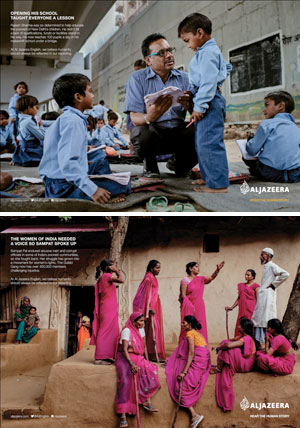
    Al Jazeera English has made virtue of putting real people on its billboards and television commercials rather than its own star presenters and correspondents. The channel’s new brand campaign is its largest marketing push to-date, and the slogan “Hear the Human Story” was unveiled at its global launch in South Africa recently. The brand film featured at the special event was about the Gulabi Gang, also known as “vigilantes in pink”, who tackle issues such as violence against women and corruption in northern India.



     

    Al Anstey, Managing Director of Al Jazeera English, said that the channel covered all the big themes and issues facing the world today, but did so from the perspective of real people: “We believe everyone has a story worth hearing. There are seven billion people to listen to on the planet right now. Al Jazeera exists to cover the people often ignored. People whose voices must be heard – but who are so often neglected by mainstream media.”


    “Our editorial mission is to cover the world without a perspective. What that means is not seeing the globe through a geographical or cultural prism, by not weighting our coverage towards West, the rich nations, or anywhere else. We cover the developing world as much as the developed. So person in Bangui is given as much humanity as a person in Boston or Birmingham.”


    Commenting on the choice of Johannesburg as the location for the launch, rather than the traditional financial centres favoured by other channels, Al Jazeera’s Executive Director for Marketing & Distribution Abdulla Alnajjar said: “In a world where the truth is everywhere under attack, Al Jazeera puts the human being at the centre of its news agenda, giving a voice to the voiceless. This campaign is about human stories and we’re proud that the global launch for the campaign is here from South Africa, a region rich with history and human stories.”


    “Our coverage is not about only about portraying difficult situations – its about the triumph of the human spirit and the ability for people in the most difficult of situations to make change. It’s on that foundation that we built this campaign honouring their lives and struggles. This campaign showcases incredible human stories and the humanity that unites us all.”


    Some of the others featured in the campaign include: Kiki Katese who started a group of female drummers in the aftermath of the Rwandan genocide; and Illac Diaz who brought lighting to slums in the Philippines using plastic bottles.


  • SRK, Ranbir only celebs in $100 mn Club


    By Ratna Bhushan


    Bollywood A-listers Shah Rukh Khan and Ranbir Kapoor emerged the only two celebrities in the country with more than $100-million valuation in perhaps the first ever celebrity brand valuation study in India.


    Cricketers MS Dhoni and Virat Kohli took the next two positions, though well below Khan and Kapoor, according to valuation done by US consultancy firm American Appraisal. The total value of the Top 15 celebrity brands in India is over $820 million, or about Rs 5,025 crore, said the study that calculated celebrities’ brand valuation based on the individual’s reputation, credibility and ability to generate income from endorsements, as well as the adjusted average annual endorsement revenue they earned after deducting relevant costs including taxes. The top 15 celebrities in 2013-14 generated over Rs 1,100 crore in endorsement fees, which accounted for close to 50% of their annual income, the report said.


    “We found that brand value changed dramatically based on performance and delivery in the celebrity’s area of core competence. A string of failures impacts celebrity value very rapidly,” American Appraisal India managing director Varun Gupta said. This means that Dhoni’s lean patch on the cricket field may have taken a toll on his brand valuation.


    The Indian cricket captain’s brand valuation at $72 million, or Rs 441 crore, is less than half of table topper Shah Rukh Khan’s. Riding on more than 10 top-notch endorsements including Hyundai, Nerolac Paints and Royal Stag, SRK has a brand valuation of $165 million, or a little over Rs 1,000 crore.


    Founded back in 1896 in Milwaukee, Wisconsin, American Appraisal specialises in valuation. The company entered India six years ago and did a brand valuation of the Indian Premier League, or IPL, this year.


    Only three women – actresses Deepika Padukone, Katrina Kaif and Kareena Kapoor – figure in the top 10 list of the American Appraisal report, which said the average endorsement fee for a oneyear contract for female A-listers at about Rs 5.5 crore is almost half of their male counterparts’ Rs 10.5-crore average annual fee. Top cricketers on an average get approximately Rs 8 crore as endorsementfee.


    “This remains a very male-driven industry and actors get paid significantly more,” said Anirban Das Blah, founder of talent management firm Kwan, which represents Ranbir Kapoor. “This is something we are not comfortable with. Hopefully things will change,” he added.


    Times Celebex, a monthly rating index of Bollywood stars based on box-office performance, endorsements and popularity on social media, among other parameters, ranked Salman Khan at the top for the month of September, followed by Hrithik Roshan, Priyanka Chopra and Deepika Padukone in that order.


    Salman Khan anchors popular reality television showBigg Boss and endorses seven highly advertised brands. In American Appraisal’s report, cricketer Virat Kohli has bettered superstars such as Salman Khan, Aamir Khan and even Amitabh Bachchan.


    But only three sportsmen – all cricketers-made it to the Top 15 league, while globally big sports stars like David Beckham, Lionel Messi and Roger Federer rule the endorsements space ahead of big Hollywood stars.“Movie stars are probably a more stable source of celebrity value, with higher longevity,” Gupta said.


    Analysts said Indian celebrities have yet to catch up with their western counterparts.  “Most global celebrities have ownership of scalable brands – whether it’s Beckham or Messi or Angelina Jolie. Here, we are still evolving and hopefully will get there soon,” said Afsar Zaidi, chief executive officer at talent management firm Carving Dreams, which represents actor Hrithik Roshan.


    Mr Zaidi said at least two brands created by celebrities – HRX apparel by Hrithik Roshan and Salman Khan’s Being Human-had global scale potential.


    Source:The Economic Times

    Copyright © 2014, Bennett, Coleman & Co. Ltd. All Rights Reserved

    Licensed to republish


  • Vdopia unveils Chocolate, a scalable mobile video programmatic marketplace

    By A Correspondent


    Vdopia has announced the Asia-Pacific launch of programmatic buying and selling platform exclusively for mobile video advertising. The new marketplace product, called ‘Chocolate’, is built from the ground up solely for mobile video advertising. It is designed for brand marketers and demand partners who want a highly functional marketplace platform that offers top quality mobile video inventory at significant scale with complete transparency. Chocolate is being launched with a potential audience reach of more than 200 million unique users globally.


    “Vdopia has constantly delivered excellent video ad campaigns for top brands in APAC. With more than 10,000+ mobile sites and apps globally, we are excited to support brands and publishers to deliver amazing ad experience in a more efficient manner,” shared Saurabh Bhatia, CEO, Vdopia. “With Chocolate, we’re providing an automated, scalable solution for advertisers to further take control of their campaigns; advertise on mobile with a high ROI; and generate more loyal customers. Chocolate is positioned to capitalize on macro trends including moves into programmatic and the emergence of mobile native advertising.”


    The Chocolate platform is device-agnostic and is compatible with all major operating systems. All ads served through Chocolate are VAST compliant. The platform is integrated with leading demand partners, analytics providers such as Metamarkets and measurement partners including Nielsen (mobile OCR) and comScore vCE to provide a highly transparent, scalable and measurable advertising experience for brands and their agencies.


    “The new marketplace unifies a fragmented mobile video market space and addresses growing mobile industry complexities including lack of standards, brand safety and a dearth of quality mobile video inventory” said Preetesh Chouhan, SVP – APAC, Vdopia. “Chocolate is the only marketplace that offers end to end functionality for scaling video ads on mobile and best monetization opportunities for publishers.”


  • Ruchi Soya unveils new TVC for Mahakosh

    By A Correspondent


    Ruchi Soya Industries Limited has rolled out a new campaign for Mahakosh. The new campaign features Mahakosh’s recently appointed brand ambassador Madhuri Dixit. The objective of the TVC is to highlight the necessity and importance of being fit and healthy. The product is being promoted through an interesting tagline which is in sync with the brand’s positioning – “Fit hai toh Future hai.”


    The basic premise of the TVC is that current day mothers have multiple concerns about the health of their children due to lack of exercise, frequent consumption of junk food, pressure of studies, etc. and while it is tough to control the environment, mothers can cook tasty and healthy home foods with vitamin fortified Mahakosh soyabean oil.


    Alok Mahajan – Head of Marketing, Popular Division of Ruchi Soya Industries Limited shared, “Madhuri Dixit seamlessly fits into our new brand campaign for Mahakosh. She epitomizes the modern cosmopolitan women who effortlessly delivers on her many roles – she is a celebrity role model who is a working woman, a caring wife, a loving mother and trendsetter with an incredible blend of style and substance as well as tradition & modernity. Our communication for Mahakosh – features her as a concerned mother and clearly communicates the brand’s superior quality attributes and the multiple benefits it provides for cooking tasty and healthy foods important for the child’s development and fitness.”


    The campaign will be on air consistently with the launch of the TVC during the festive season. The campaign will be further supported by on-ground activation, cinema, print ads and radio commercials. The TVC campaign is going to span on Hindi GEC, lifestyle, health, news, kids & music channels. Radio / print / cinema campaigns for amplification will be focused in all the regions where Mahakosh holds prominent positions.


    The TVC has been conceptualized by Orchard Advertising Private Limited and produced by Ignition Films. It has been directed by Rensil D’Silva. Maxus is the media AOR.


  • Now & then: Here’s how contemporary consumers behaved a decade ago


    By Devendra Chawla


    Consumers of today have evolved into a hyper active multi-taskers, constantly squeezing the 25th hour out of a regular day. Here are some of the most radical changes between contemporary consumers and how they behaved as recently as a decade ago.


    In this article, Devendra Chawla, CEO, Food Bazaar, chronicles the many shifts in consumer behaviour and attitude over the last decade.


    The star of a movie called ‘me.’

    Indian consumers are a liberated lot. It’s not hard to spot a 40-plus man in a colourful ensemble; green or red trousers, if you please. Women no more need male or peer endorsement as approval of what they wear or how they look. They expresses beauty in their own way – via choice of apparel and personal grooming.


    There’s friction building between conformity on one side and self identity on the other, as consumers see themselves as stars of their own movie. They want to play multiple roles and make many appearances.


    Hair streaking, frowned upon once, is now a style statement. So are male grooming products. Consumers can now choose facial structure, shape of nose, and skin type thanks to contact lenses, plastic surgery, botox jabs, etc.


    Yes, people do look up to trendsetters, but instead of aping them, prefer to create their own sense of style. Brands can no longer feed on the fear, insecurity, or preaching. This generation of consumers will make allies of brands that allow self-expression.


    They are a product of abundance unlike yesterday’s consumer, who was born in scarcity. And yes, today’s consumer may reject brands that claim to help one find a groom or a job based on the colour of skin.


    Zero to best in 2 seconds

    Upgrading sequentially from good to better and better to best stands disrupted. Now consumers parachute into the best of one category while at same time making a trade off in other categories for value deals. This approach sees many youth opting for a top of the line smartphone at the start of their careers, while eating at budget restaurants.


    Unlike the past, where category upgrades coincided with a change in income, now they make a trade off, choosing most premium in the category where they want the best and settling for good or better than average in others.


    What else can your product do?

    From a mere mode of communication, the mobile phone is a life supporting system including a music player, a portable gaming console, weight loss monitor, camera and most recently a shopping basket given the mania for e-tailing.


    An unlikely category like food is starting to take a few cues. While consumers sweat it out in gyms and perform yoga, food brands have been stretching from the role of satiating hunger to manage and support functions like weight management, stress and hypertension management, brain, muscle and bone development, height gain, etc via ingredients like Omega-3, vitamin and mineral premixes, co-enzyme Q10, etc.


    Products that provide convenience and perform with speed are much in demand. A case in point is the emergence of multigrain, multivitamin, multimineral food across the spectrum. Expect food to multitask more and provide more benefits.


    Back of the pack

    In a world where “you are what you eat”, consumers want to know what are they eating. The attention has shifted from the front to the back of the pack, an uncommon phenomenon 10 years ago. They are checking for ingredients, potential allergic reactions, gluten as well as carb, protein and energy values. Expect back of pack to become more engaging than just being statutory information.


    Even home food gets ‘outsourced’

    Banks have outsourced many functions, opting for a tight focus on the core. And so, even if a consumer calls a BPO, they are still dealing with the bank brand. The same applies for telecom operators and many other industries. As more women step out to realise their ambitions, they’ve kept the flag flying for home cooked meals.


    What has been outsourced here is preparatory functions like cutting vegetables; either left to the maid or the supermarkets which stock precut veggies. This has also given rise to fruit platters, ready batters, pastes, mixes, powders, etc.


    The last mile is where the lady of the house has her hands and eyes, converting all these first stage conveniences to home cooked food, thus serving as the gateway for customised meals. The kitchen is a food factory with multiple gadgets and ingredients allowing even the time pressed lady to convert the dining table into a “food court at home on demand.”


    Again an uncommon phenomenon 10 years ago. Here each family member can have different cuisine sitting next to each other, yet with the final touch of it all being home cooked food.


    Cooking is the new golf

    From provider to a nurturer – the role of the man is undergoing a radical change. The kitchen is his new golf course, even if occasionally, these activities compete with each other. As more women step out, men find themselves taking care of the house, children and the kitchen.


    Punishments works better than complaints

    Reactions to brands have never been so quick, personal and unique. The old cliché about a happy customer telling three people and an unhappy one telling ten has been unimaginably amplified in a world powered by social media where consumers routinely pour out their emotions to hundreds or maybe even thousands of friends and followers. The power of an organisation or brand is all but equal to one consumer’s tweet or Facebook or YouTube post.


    Remember, “United breaks guitars”, by Canadian country band Sons of Maxwell? A complaint song about a broken guitar on a United Airlines flight has grossed 14,299,132 views on YouTube at last count.


    Brands must prepare to listen to consumers 24/7 specially when it comes to grievances. As consumers do things they never imagined they could and experimentation is order of the day, they are moving from transactions to experiences. While consumers have been upgrading, its time for marketers to upgrade more often.


    Source:The Economic Times

    Copyright © 2014, Bennett, Coleman & Co. Ltd. All Rights Reserved

    Licensed to republish


  • VAT 69 gaming portal unveils ‘Be One in a 100’ campaign

    By A Correspondent


    Diageo India’s renowned brand Vat69 has announced the launch of its new campaign ‘Be One in a 100’ for its gaming portal Vat69.in. The campaign brings alive Vat69’s brand philosophy “Exhorting men to succeed by doing things differently” in an innovative manner.


    Taking a unique stance, the Vat69 gaming portal TVC salutes those distinctive people who found their ‘Eureka’ moment from an unnoticed or a missed opportunity. It represents that genius who is proficient enough to innovate rather than invent!


    The campaign will begin with two TVCs that will be launched in succession this week. The first pays respect to the one great mind that discovers the use of an elastic band for a bowtie while other men get tied up in knots. The second TVC is a tribute to that one man who invented a pointy stone for fishing while other men kept failing with flat stones. His wit helped him resolve the issue of fishing by simply thinking differently.


    Commenting on the launch of this innovative campaign, Bhavesh Somaya, Marketing & Innovation Director, Diageo India mentioned, “The new brand campaign- ‘Be one in a hundred’, for the gaming portal Vat69.in is an ode to those unsung heroes who shaped the world as we know it. In true Vat69 style, the set of humorous yet witty commercials depict that competitive spirit combined with simplicity and intelligence provide the best solutions. Through our narratives we have reimagined historic events that lead to moments of ingenuity. The TVC’s promise to be captivating and witty taking the audience back in time.”


    Russell Barrett, Chief Creative Officer mentioned, “With this campaign, we decided to celebrate the greatest uncommon men of history. We chose men who decided to stand out, to rise above the rest and who broke away from the herd. Vat 69.in the gaming portal will be the champion of these quiet heroes and pay homage to these men in an ironic and witty way. Our ideas will continuously celebrate that one man in a 100 who was brave and brilliant.”


  • VIP Industries unveils mega campaigns for ‘Caprese’ and ‘Carlton’

    By A Correspondent


    Luggage leader VIP Industries Ltd. has announced the launch of two mega campaigns for their brands ‘Caprese’ and ‘Carlton’. Power packed with glamour, new product launches, strategic market positioning, exploring new target segments, robust marketing strategies and alliances, the two brands captivate their respective audience with style and charisma.

     

    Established in 2012 by VIP Industries, Caprese offers ladies handbags which are a symbol of the international fashion inspired by the isle of Capri. Since its launch the brand has been positioned on Hi Fashion. But this time around the campaign objective was to go beyond the target of a niche fashionable audience to a wider segment without losing its essence of international fashion. Communication needed to retain its genes of elite style, while adding lifestyle cues to enhance the aspiration and desirability quotient among the masses.


    Thus, resulting in the concept of ‘The Caprese Girl’ – a desirable style icon that a young woman will look up to; a brand icon that defines Caprese over the coming decades. In order to connect with the masses, fashionable Bollywood star Alia Bhatt, was roped in as the first ever Caprese girl.


    KB Vinod, Managing Partner, Company says, “The Caprese girl is an ambassador of good taste, elegance and good life. She’ll hopefully define fashion for the girl next door. We would like to see the Caprese girl enjoying good things in life, with a gorgeous Caprese on her arm, for many decades to come.”


    Acquiring ‘Carlton’ in 2004, one of the leading global luggage brand designed and developed in London, since 1976 is an assurance of the very best of British design and innovation. The objective of the brand new campaign was to cater to the new order of business which is different from the old order. Jeans, garage offices, cloud computing have replaced pin striped suits and corner offices. The new generation of business leaders is young and not averse to taking risk. The way business is done today has changed and Carlton is the luggage for this ‘New Face of Business’ that accompanies this new business maverick in his journey to success.


    Created and conceptualized by Ravi Deshpande, Founder, Whyness the campaign is filmed in London keeping in mind its British legacy. It pays tribute to a new kind of business leader who is young, passionate and is relentless visionary in the pursuit of the next big idea and the next business revolution. The film shows the modus operandi of this new generation contrasting it with the old order. It shows enthusiastic and driven youth who are ready to make a dent in the business world with their unyielding resolve through different situations having the same underlying philosophy.


    Detailing his experience, Ravi Deshpande, Founder, Whyness shared, “Carlton is a premium luggage brand with a heritage of the UK legacy wanting to reach out to ‘The New Face of Business’. We hope that the campaign communicates with the young aspiring face of business who will associate with Carlton on their next business travel.”


    Speaking on the two campaigns, Radhika Piramal, Managing Director, VIP Industries stated, “Today’s travelers are evolving, demanding and always on the go. Their luggage needs to represent who they are. All our brands like VIP, Caprese, Skybags, Carlton, Alfa and Aristocrat cater to different market segments and with these two campaigns, we aim to strengthen the two segments that they target. We are extremely happy to have Alia Bhatt on board as the brand ambassador for Caprese, as she represents the modern young Indian woman with no compromise on fashion or style. With Carlton, the campaign communicates to a niche segment which is constantly developing. We hope that both the campaigns are successful in establishing a connect with its target audience.”


    The Caprese campaign will go on air starting 15th November 2014 followed by the Carlton campaign on 22nd November 2014. Both the campaigns will witness a 360° marketing approach across all the mediums of print, radio, television and social media.


  • Smirnoff urges consumers to party with ‘unfakeit’

    By A Correspondent


    Smirnoff Experience is set to redefine rules of partying with its brand new philosophy of ‘unfakeit’.  In its first edition last year, Smirnoff Experience created Indian music history by becoming the first festival with a visceral multi-sensory experience for the audience and is now taking the next step with ‘unfakeit’ philosophy. This campaign is being kick-started with an exciting TVC, based on the insight that “life is best, when stripped of rules and trying too hard”.


    The new TVC follows four out-to-be-noticed young men and women who end up at a real party where they discover that real fun can be far more enjoyable when it is sans any pretence and without the pressures of people judging. The film seeks to defy the recent norms of superficiality and encourages them to get rid of the pretence and be real to have a good time.


    Talking about the new campaign, Bhavesh Somaya, Director of Marketing and innovation, Diageo India, said, ” With unfakeit, we want to challenge the current norms of partying that constantly focus on looking a certain way and doing what everyone else is doing. Smirnoff exists to ignite effortless fun times and the campaign is a strong call for being real to have effortless fun at every party. We hope to become a catalyst for a cultural shift through our philosophy of unfakeit that will come alive in our new TVC and all our communication going forward.”


    As the creators of the campaign, McCann team shared: “In a world of selfies, likes and pokes one really wonders how social is a social network. We live in a world where broadcasting your life seems to take precedence over living a life. The film is an attempt to capture the spirit of real fun, real parties and enjoying life by dropping the mask.”


  • Allen Solly & Talenthouse announce roll-out of innovative contest

    By A Correspondent


    Talenthouse India, SEA’s largest creative crowdsourcing platform, in association with apparel brand Allen Solly has announced a unique filmmaking initiative to launch the brand’s new lightweight and stress-free shirt aptly titled Allen Solly Air. This contest invites aspiring filmmakers to create an impactful and innovative digital ad film for the launch this new offering in the market.


    Entries can be sent in by November 21, 2014 and one stands a chance to be associated with one of the most innovative apparel brands in the country. The ad film needs to highlight the products USP’s and be in sync with Allen Solly’s brand identity and promise. Winners will not only get a chance to showcase their talent and ensuring association with a leading brand like this but also stand an opportunity to win up-to INR 1,50,000. The first four runners-up and top voted will receive INR.10, 000 each.


    Announcing this collaboration with Talenthouse India, Monica Bansal, Digital Marketing Manager, Allen Solly said ‘’Allen Solly as a brand has been synonymous with innovative corporate dressing. We wanted to understand the insights that the young artists have of the brand and what better way than to partner with Talenthouse who has a large base of filmmakers on their platform. We are looking forward to receiving innovative concepts that would widen our imagination and creativity.’’


    Niloufer Dundh

    Commenting on the launch of the contest, Niloufer Dundh, Sales Head, Talenthouse India said, “We at Talenthouse continuously strive to partner with brands that add great value to our artists community. We are sure that our aspiring talent pool will lap up the chance of being associated with a renowned brand like this and showcase their talent to the world. We are optimistic of receiving some very interesting films that the brand would be able to adopt.”