Category: PRODUCTS

  • Fickle is fun, says Lavie

    By A Correspondent


    Accessories brand Lavie has unveiled its second advertising campaign ‘Fickle is Fun’. Conceptualized and executed by Cheil India, the campaign will use TV, print, cinema and digital mediums to promote the brand.


    Fickle is fun captures the indecisiveness of the evolved, fashion forward women in a witty and light hearted manner. It had a perfect match with the new line of offerings from Lavie, the sheer number of choices a woman would have to make and unmake to come to a decision. With this, the endeavor is to create a happy, carefree and proud world of Lavie women. The campaign was shot in Cape Town, South Africa with international models using the products and propagating Fickleness as an attitude and way of life.


    Commenting on the campaign, Sandeep Goenka, CEO, Bagzone Lifetsyle said,Fickle is the word used to lightly describe the relationship between girls and their love of the trendy arm candy and footwear. Their love for bags and shoes is inevitable and eternal as eventually these accessories dominate & enhance the entire look; the concept by Cheil India was bang on and we are assertive that it will intensely connect with our target audience.”


    Atishi Pradhan, Chief Strategy Officer (Cheil India) said, “The brand was in a slot of easy or popular fashion, and the brief was to make it more aspirational and stylish, to appeal to a more evolved woman. The best fashion brands have a point-of-view, an attitude – and that is what we wanted to add for Lavie, to set it apart from other brands.”


  • Pepperfry greets consumers with ‘Happy furniture to you’ insight

    By A Correspondent


    Online furniture and home marketplace Pepperfry has launched an integrated brand campaign. It features a series of high impact television commercials supported by a 360-degree media mix consisting of print, digital, outdoor, radio, social and on-ground activation. Through this campaign Pepperfry plans to enter homes this festive season with “Happy Furniture to You” as its unique brand proposition.


    Basis extensive consumer insights gained over the last two and a half years, Pepperfry understands that furniture shopping for consumers can be a tedious process. It is often beset with quality and service related apprehensions. Discerning new-age Indian couples are therefore, looking for an alternative that helps them to buy the best for their homes without any of the hassles involved.


    The campaign has been conceptualized by Saatchi & Saatchi and consists of a theme film and two supporting films that highlight Pepperfry’s value propositions of “Free Delivery and Assembly” and “100% Satisfaction or Money Back Assurance” for consumers.


    Talking about the new campaign, Debarjyo Nandi, Vice-President Saatchi & Saatchi said, “Creating differentiation in the online shopping space is a huge challenge today, but what helped us was to understand Pepperfry’s approach to furniture and consumers – ‘we get it done just like you would get it done yourself.’ He further adds, “This in essence is beyond business, it becomes personal and this assurance coupled with features like free delivery and assembly is what will help consumers overcome any mental barriers towards buying high-value items like furniture online. We attempted to bring this spirit and the benefits alive in the communication.”


    The marketing mix also features a sustained radio campaign, on-ground activation and key outdoor promotions across top cities. The campaign will also come alive on digital and social platforms like Google, YouTube and Facebook.


    Kashyap Vadapalli

    Commenting on the campaign Kashyap Vadapalli, Chief Marketing Officer, Pepperfry says, “We want to make the experience of buying furniture online a delightful and easy process”. He further elaborates, “The campaign will multiply our brand reach and build confidence in the minds of our prospective customers. We are already the market leaders in online furniture segment and this campaign will help us further strengthen our leadership in the furniture industry.”


  • Cheil unveils new campaign for Samsung’s new microwave series

    By A Correspondent


    Cheil Worldwide SW Asia has unveiled a new campaign that highlights oil free cooking Samsung Slim fry microwave oven. The TVC went on air on 25th September, 2014.


    The communication had to establish the unique benefit of cooking with the new technology and it has been effectively captured in the television commercial that expresses a mother’s unconditional love when feeding her child. The TVC takes one through snapshots of mothers of all age groups from different parts of India, where they are shown frying food in the traditional way and feeding their child. It then introduces the “Samsung Mother” who is seen giving her child his favourite French fries, which she cooks in the Samsung Slim fry microwave oven, with up to 80 per cent less oil. The TVC further establishes the idea in the jingle “a mother’s love will never reduce but the oil in the food can definitely be reduced with Samsung’s new technology.”


    Nima DT Namchu

    “Healthy is increasingly becoming something mums are looking to put on their kids’ plates. However, more often than not, either taste or health gets compromised. When we were presented with a product that promised the same great taste, only with a lot less oil, getting to the idea of ‘the same indulgence but a lot less oil’ was only logical,” said Nima DT Namchu, Chief Creative Officer, Cheil Worldwide SW Asia.


  • Nickelodeon takes the licensing route for Motu Patlu

    By A Correspondent


    Viacom18 Consumer Products has signed up with Prataap Snacks Pvt. Ltd., makers of Yellow Diamond Rings to launch three new flavors of corn rings – Masala, Chilli Cheese and Tomato with exclusive Motu Patlu toys such as spinners, charms, sling-shooters, snakes and ladders and much more. Strategically choosing to take up the promotional licensing route for growth, Viacom18’s Consumer Products Business is leveraging the popular Nick toons by taking them beyond television and bringing them closer to their target audience.


    Speaking about this association with the snacks brand, Saugato Bhowmik, Head – Consumer Products, Viacom18 Media Pvt. Ltd., said, “Nickelodeon’s rich and diverse portfolio of characters provides us with great opportunities to connect with the consumer in new and exciting ways. Motu Patlu have topped the charts and also conquered the hearts of children across the nation with their fun antics and make for the perfect character for this kind of promotional licensing. We are happy to partner with Prataap Snacks to help our young audiences to play with their favourite characters while enjoying their snack time- the perfect combination.”


    Expressing delight at the association, Anoop Kumar Shreevaastava, Vice President Branding of Prataap Snacks Pvt. Ltd. said, “Yellow Diamond has continuously brought innovative and high quality products to the kids segment and we are excited to partner with Nickelodeon – a powerhouse of innovation in kids media. Motu Patlu are great characters that complement Yellow Diamond Rings perfectly and add an element of joyful surprise for our young consumers fond of our corn rings.”


    Nickelodeon’s association with Yellow Diamond Rings will be promoted extensively through television, digital, print and in-store branding.


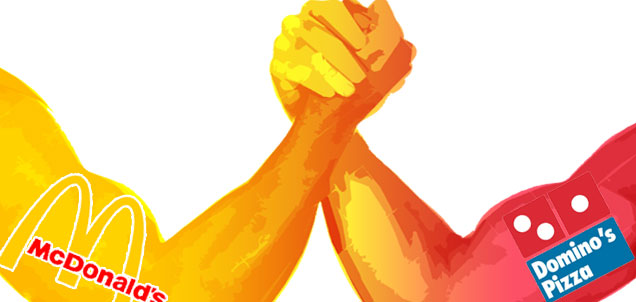
  • It’s Domino’s v/s McDonald’s in Dal-Roti-Chawal country


    By Rajiv Singh


    When Domino’s entered India in 1996, it identified three main rivals, all Indian. McDonald’s and KFC were not on the list. “Around that time, people only had a taste for dal, roti and chawal,” recalls Ajay Kaul, CEO of Jubilant FoodWorks, the master franchise holder of Domino’s and Dunkin’ Donuts.


    “Pizza was alien to them.” Things have changed after 18 years. Domino’s is the largest pizza brand in India with a 72 per cent market share. The country is set to become the biggest market for the American pizza maker outside the US. But Domino’s claims some things remain unchanged.


    “Our biggest rivals are still dal, roti and chawal,” reiterates Mr Kaul, underplaying the fact that Domino’s has overtaken Mc-Donald’s to become India’s largest QSR (quick service restaurant) brand in terms of revenue. “India is a chappati nation,” says Harish Bijoor, founder of an eponymous brand consultancy. And yet pizzas have made inroads and are now perceived to be more wholesome than burgers.


    “We never set a target to become No 1 in India,” says 50-year-old Mr Kaul, expressing admiration for McDonald’s. “It’s (McDonald’s) double our size in almost every country. So, it does give us some sort of kick and joy. Khushiyon ki home delivery ho gayi hai,” he says in an excited tone, riffing on Domino’s latest thematic campaign.


    However, while respect has its place, Domino’s is not relinquishing its No 1 slot. “That’s very clear,” says Mr Kaul. Where Domino’s posted revenue of Rs 16,222 million in 2013, Mc-Donald’s logged in Rs 14,259 million, according to the latest report by Euromonitor.


    In terms of store count, Domino’s is more than double the size of Big Mac-772 versus 350! And in market share, McDonald’s’ 14.2 per cent is less than Domino’s’ 16.2 per cent. Though Domino’s was always bigger in store count, it took the pizza brand more than a decade and a half to overtake its American rival in revenue. McDonald’s is of course not giving up without a fight.


    In fact, it believes the change in stacking is an aberration. Says Amit Jatia, vice chairman, Hardcastle Restaurants, the master franchise of McDonald’s in western and southern India, “It’s not about being No 1 or No 2. We serve over 320 million Indians annually, and this is what matters. When you wake up in the morning, do you think of ordering pizza? You don’t.” But you can hit McDonald’s for coffee along with breakfast. “Comparing pizzas and burgers is like comparing Chinese food with South Indian food,” he contends.


    McDonald’s for the longest time made the most of its start in India. While Domino’s revenue was Rs 303 million in 2001, McDonald’s was way ahead at Rs 946 million. In terms of number of outlets, there was not much difference between the two players in 2001 – McDonald’s 105 to Domino’s 128. However, over the subsequent years, the gap kept widening at an astonishing pace.


    By 2011, when McDonald’s was comfortably pacing its expansion and touched the 250 mark, Domino’s was galloping at 437. So, why did McDonald’s fail to capitalise on its initial success? Mr Jatia points out that McDonald’s spent the first 10 to 15 years growing the eating-out market, specifically creating products and habits which did not exist in the country. It forged partnerships and attracted consumers.


    All of this is available on a platter to new entrants which helps them ramp up their presence at a faster pace, he observes. However a trick that McDonald’s appears to have missed is one that’s as old as the Domino’s franchise. Back in 1959, Domino’s founder Tom Monaghan and his associates used his Volkswagen Beetle to deliver pizzas to customers who lived at a distance of 30 minutes or less.


    Home delivery continues to be the lynchpin of Domino’s strategy and has evidently served it well. It marks a shift in consumer perception of the QSR category from being aspirational to convenience driven. One would not drive down five km to hunt for a restaurant but look for closer options. This is where Domino’s scores a point. “It is at arm’s length of a consumer’s desire,” says Ashita Aggarwal Sharma, head marketing, SP Jain Institute of Management & Research.


    After making the brand synonymous with home delivery and the popular ‘Hungry Kya?’ campaign driving pizza as both a food and snacking option, Domino’s tweaked the other parts of the mix. In 2008, it brought down the price of pizza to Rs 35 from Rs 60. This increased acceptability, induced consumption and pushed home delivery.


    “The pizza came home first, and stayed an in-home consumption item. The burger remained for long an item consumed at a QSR outlet. This made a big difference,” says Mr Bijoor. “Mc-Donald’s failed to crack the home delivery code.”


    Another important factor that helped Domino’s was its positioning as a meal replacement as compared to McDonald’s. A family restaurant must have a meal for the family, says Mr Sharma of SP Jain Institute. Though young people still go to Mc-Donald’s, even for them it is not a substitute for a meal.


    However, McDonald’s Mr Jatia believes that being an all-day restaurant gives the brand an edge in terms of product offering. But he is quick to acknowledge the era of single-player dominance is over. There will be two or three players who will dominate the QSR space, he feels. “And McDonald’s definitely will be one of them.”


    Indeed, the space is huge, but the lines are getting increasingly blurred among the top players. The chains are already beginning to cannibalise on each other’s core offering with Domino’s serving up chicken wings a la KFC; McDonald’s pushing wraps and KFC dabbling with burgers. Mr Kaul of Domino’s, however believes in sticking to what his firm knows best. “70 per cent-80 per cent of our revenues come from pizza,” he says. The side dishes merely give consumers ample snacking options.


    Experts too agree that in spite of similar meal offerings, the focus should remain on core products. “All players want to stay relevant throughout the day,” says Saloni Nangia, president of Technopak, a management consulting firm. “All are trying to maximise revenues and that’s why identical offerings.”


    Domino’s might have taken the top slot for now, but the pizza versus burger fight has just started. As an increasingly health conscious west avoids fast food, the battlegrounds have clearly shifted to the wallets and waistlines of Indian consumers.


    Source:The Economic Times

    Copyright © 2014, Bennett, Coleman & Co. Ltd. All Rights Reserved

    Licensed to republish

     

  • Contract rolls out new campaign for Cadbury Celebrations

    By A Correspondent


    Contract Advertising’s latest campaign for Cadbury Celebrations urges people to bring the festivities with them this Diwali season. This year the brand has taken it upon itself to take a closer look at festivals, and what they mean to us today.


    “Gifting is an intrinsic part of Diwali celebrations. But these days, the act of gifting has become more of a chore and its role in adding to the celebratory nature of the festival has been diminished. We wanted to rekindle this true joy of Diwali gifting. There is a tradition of people going back to their parents during Diwali. Our story is one, where parents decide to surprise their son at his workplace on Diwali,” says Ashish Chakravarty, National Creative Director, Contract Advertising.


    Cadbury Celebrations recognized that festivals that were meant to be fun and filled with festivity had become mundane and ritualistic. Therefore the need of the hour was to bring back some enthusiasm and set the tone of change. The campaign thought came about, when one realised it is important to change a festival into a celebration where joy and energy flow unlimited, where we are truly in the moment, connected and fuelling the festivity. And what better way to do this than to make all the good things we know come together to spring the festival back to life.


    Contract has partnered Mondelez to bring this powerful thought to life through a launch TVC, as well as help create 360 impact.


    Cadbury Celebrations, the chocolate gifting brand in the Mondelez portfolio, operates across the premium and mass premium segments with the Rich Dry Fruit Collection (RDFC), being the growth driver catering to the premium end.


  • Soho Square unveils new campaign for PC Jewellers

    By A Correspondent


    The campaign for PC Jeweller (PCJ) introduces PCJ’s new brand positioning of Naye Zamaane Ke Heere, a positioning that speaks both of the kind of jewellery and of the kind of woman who chooses to wear PCJ.


    The TV campaign comprises of three different spots, each talking about the choices a woman of today makes and the stereotypes she breaks within her everyday existence. The films aren’t just limited to women looking beautiful and wearing stunning jewellery. The core thought behind ‘Naye Zamaane Ke Heere’ is to highlight the spirit and substance of a woman while showing her in very real, present-day scenarios. The intent is to tell stories that women will relate to and characters that women would aspire to be.


    While one film is the story of a woman who is completely confident in her dark skin, another is that of a woman who has chosen to put food on the table even as her husband is pursuing other interests. The third in the series talks about how it’s the sons in the family that need to make an attitude shift.


    In an environment that is very sensitive to issues related to gender discrimination, the campaign brings to light how in her own way a woman can make an important point every time she faces bias. It is in moments like these that a woman’s true worth and confidence shines through.


    Ajay Gahlaut – Executive Creative Director, said, “In my favourite Classic Hindi Film, Sahib Bibi Aur Ghulam, Rehmaan dismissively says about women: “gehane banao genhane tudwao kaudian khelo”. It wasn’t true then and it isn’t true now. Yes jewellery adds to the beauty of a woman, but a woman too lends her own grace to an ornament. With PCJ we have taken a brave new stand by talking about the woman rather than the ornaments.”


    PCJ’s brand thought Naye Zamaane Ke Heere will also be carried forward in print which will break after the film campaign.


  • Not Like That designs ‘selfie’ campaign for kids

    By A Correspondent


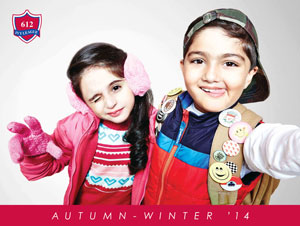
    Not Like That, a Mumbai based communications agency recently won the creative mandate for Indian Clothing League Pvt Ltd, a Chandigarh-based kids wear manufacturer with retail presence in 120 cities across India. The agency crafted an exclusive ‘selfie’ campaign for the Autumn-Winter ’14 collection of one of India’s first clothing brand for pre-teens, 612 Ivy League.


    The campaign pre-dominantly revolves around little children being their natural selves, capturing their candid moments via selfies.


    Anuj Gosalia, Director & CEO, Not Like That, commented, “Technology, if used judiciously, empowers children today. From learning on iPads to capturing memories and life-journeys on smartphones, the modern tweenager happily co-exists with multiple devices in this new world. Through our campaign, we wanted to acknowledge this comfort with technology and at the same time, capture their sense of wonder and discovery.”


    Mohita Indrayan, Co-Founder & CCO, 612 Ivy League, commented, “Most kids today have a smartphone and clicking selfies is not just a popular concept with adults but also with children. We want 612 Ivy League to be future-ready when it comes to adopting technology and promoting active clothing. Therefore, when Not Like That came up to us with this striking idea, we were so thrilled that we decided to adapt the idea for our infant wear brand, Baby League, as well.”


  • Gionee unveils ‘Hello India’ festive brand campaign

    By A Correspondent


    Following the ‘7 seconds’ campaign, Gionee Smartphones has launched the second leg of their festive brand campaign ‘Hello India’. The campaign will run across India in over 80 channels and in 8 languages that includes English, Hindi, Tamil, Kannad, Telegu, Malayalam, Marathi, and Bengali. Gionee has had a wonderful start in the Indian market and in the last 18 months has been successful into becoming one of the major brands. Having sold 3 million phones till date, Gionee is welcoming users from all walks of life with the launch of its Festive Campaign – ‘Hello India’.


    The festive campaign is a greeting from the brand to all the real as well as aspiring users of Gionee. These are people with a new mindset for whom phones play a huge role in their lives. They are immersed in their phones spending most of their time with it, making the phones their primary companion. Considering the attachment with phones today, users are even willing to pay a premium and want the best of everything – design, speed, camera etc.


    Speaking of the launch of the brand campaign, Arvind vohra, India Head, Gionee smartphones said, “Gionee has had a great start in India and the brand has been received well by the Indian audience. With the new brand campaign we are looking at welcoming more users to be a part of the Gionee family. Phones have today become an extension of the personality and the campaign tries to capture these emotions and make a connect with the crowd thereby building a resonance with brand Gionee.”


  • FCB Ulka conceptualises new campaign for Hero ISL

    By A Correspondent


    Hero has unveiled a new campaign for ISL. With this new campaign, conceptualised by FCB Ulka, Hero aims to strike a chord with football fans and harp on the unbiased unity which the sport brings to the table.


    The idea was to break the notion that football is a boy’s game and to get girls to live the spirit of football. In order to set the idea in motion and establish connect with the youth, Hero Maestro and Hero Pleasure have been specifically highlighted. The quintessential boyish charm associated with Maestro and the norm-breaking, free-bird attitude of Pleasure have been brought to life to convey the message that football belongs to all. Ranbir Kapoor and Alia Bhatt will be depicting the two opposite attitudes.


    Set to a fast paced, peppy track, the commercial opens with Ranbir Kapoor and his gang of boys playing around with a football along with their Maestro scooters. The momentum of the game leads them to a place where they are confronted by Alia and her gang of girls with their Pleasure scooters. Here, the commercial breaks the notion that football is not just a boy’s game through a challenge – “let’s play”, thrown by Alia to Ranbir’s gang and they complement the challenge with some freestyle football tricks of their own. The boys state that football is “a boy thing” while Alia’s challenge delves into the saying “Why should boys have all the fun?” – thus resulting in making football bigger as a game than it’s actually perceived to be. The unblemished rivalry between the two sexes blends seamlessly with the football fever in this commercial.


    As the title sponsor of ISL, Hero aims to use the commercial to voice its involvement with the game and use this occasion to bring youth together to cheer for the game and break the notions of a stronger and weaker sex.


    Sanjay Sharma, Group Creative Director, FCB-Ulka Delhi, said, “We wanted to use football as an enabler of youth unification with a very lighthearted and playful approach, using brand Hero as a driver for this unification.”


  • Experience Commerce bags digital duties of Lenovo

    By A Correspondent


    Experience Commerce (EC) announced their recent win of digital & social marketing duties at Lenovo. Lenovo has mandated EC with the digital marketing campaign for the entire Lenovo portfolio of products including the latest social media campaign for the launch.


    Jump starting the relationship with an innovative launch of the new Yoga Tablet 2 on digital, #YoGa2bFree, the agency roped in four Twitter influencers, including actor Ashwin Mushran, gadget guru Ankit Vengurlekar, film reviewer Mihir Fadnavis and food blogger Kalyan Karmakar and trapped them in a box.


    “Gadgets such as tablets are designed to help us lead a more connected, productive and fun life; but take them out of the box and you often see yourself enslaved and tethered to these devices. This campaign is designed to raise awareness about how you can free your life from restrictive technology – discover a brand that promises to adapt to you,” said Sandip Maiti, CEO & Chief Creative Officer, Experience Commerce.


    This campaign uses large-scale interactive video-based story-telling on yoga2bfree.com where the four trapped Twitterati provide clues to the audience who attempt to free them up.


    “We have been active on Social Media since 2010, and were in the market for a new kind of agency who understands the digital born consumer and can help us craft an unique social voice for brand Lenovo. We look forward to a creative partnership with EC to tell the story of Lenovo for this millennial generation and build a strong community of advocates around its smartphones, tablets and laptop categories”, said Bhaskar Choudhuri, Director of Marketing, Lenovo India.


  • ‘Ehsaan Mat Lo, Discount Lo’, says Yatra.com in new TVC

    By A Correspondent


    Yatra.com has launched their new campaign that aims to create awareness amongst customers about the wide array of choices for hotel bookings. Titled, “Ehsaan Mat Lo, Discount Lo”, the underlying message in the commercial promises travellers the best stay at the best price wherever they go Yatra has the largest inventory of hotels in India and abroad and this commercial aims to apprise customers on the bouquet of offerings from yatra’s basket. The new campaign comprises two TVCs which have been on air across leading channels.


    Crafted by McCann Erickson India Ltd. under the creative direction of Kapil Batra, the new advertisements showcase how favours can be called upon, in any way possible. Where one ad opens with the protagonist unpacking at the acquaintances’ house, he overhears a conversation of the owners of the house and their plan to ask him to marry their daughter. Which in turn causes him to start packing right away, with the tagline being displayed – “Ehsaan mat lo, discount lo”.


    The second advertisement builds on the same premise that nothing in the world is free. The advertisement begins with the protagonist showing up at the doorstep of his relatives in the hope of a free stay; overhearing their conversation of being asked to donate a kidney for a relative in return for the hospitality provided, causes him to flee. The voice-over in the brand ambassador, Salman Khan’s voice says “Ehsaan mat lo, discount lo!”.


    Commenting on the launch of the new ad campaign, Sharat Dhall, President, Yatra.com said, “Yatra.com has always been at the helm of change; we are constantly reinventing and adapting ourselves to suit the sensibilities of our customers. The latest TVC’s by Yatra.com focuses on hotel and highlights the range of   offers/discounts that Yatra.com has on its assorted inventory of hotels. Based on our internal findings that 36% of our customers stay at their friends or relatives place instead of booking a hotel , the message ‘Ehsaan mat lo, discount lo’ aims to drive greater adoption of online hotel bookings with travellers.”