Category: PEOPLE & PRODUCTS

PEOPLE & PRODUCTS

  • Rahul Saighal is new Samsung CMO

    By Mahima Puri


    Samsung India has appointed Rahul Saighal as its new chief marketing officer. He will replace Elkana Ezekiel, who is said to be joining Ahmedabad-based Zydus Wellness as managing director.


    Prior to this, Mr Saighal held the same position at the telecom company Aircel, which he joined in October 2007. Prior to that, he worked with Unilever for almost two-and-a-half years, starting August 2005, as regional brand director in Thailand.


    An economics graduate from St Stephen’s College, Delhi, Mr Saighal pursued his MBA in marketing from IIM Calcutta. His experience in the telecom industry could prove useful for Samsung, which is establishing itself as a key player in the smart phones and tablets category in the Indian market.


    Mr Ezekiel had joined the Korean consumer & electronics major in January 2011, prior to which, he was with Johnson & Johnson as regional franchise director for Asia Pacific. He held this position for about five years from April 2007, before which he spent 13 years in the organsation in various marketing roles.


    A Samsung spokesperson confirmed the development, while Zydus Wellness refused comment.


    Source:The Economic Times

    Copyright © 2012, Bennett, Coleman & Co. Ltd. All Rights Reserved


  • KKR announces new marketing campaign

    By A Correspondent


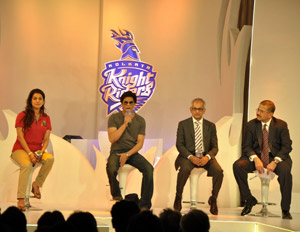
    The Kolkata Knight Riders [KKR] on Monday announced the launch of their new marketing campaign, “New Dawn, New Knights.” At the centre of the campaign is the unveiling of a new and refreshed logo. The new design stays with the traditional team colours of purple and gold, but incorporates a striking new logo unit. Created by leading global branding agency, Lambie-Nairn, the new identity is modern, vibrant and unique.


    Team owner Shahrukh Khan said: “The new team we put together last year made us proud with its refreshing approach, winning attitude and professionalism they brought to KKR. Add to that our new coach and players this year, I am excited about the upcoming season and our new campaign, New Dawn, New Knights.”


    The KKR CEO, Venky Mysore said: “We have been fortunate that the KKR brand has become the leading brand in the IPL. We are working very hard to add value to our sponsors, grow our fan base and build a profitable business. I am confident that our new logo and our new campaign will help us achieve our objectives.”


    “The KKR identity had a lot of equity but it was not designed for use across the wide range of platforms that are used today. We wanted to retain the existing heraldic imagery and purple and gold colours, as these features differentiate the team from the competitors and ensure they are instantly recognizable. However, we needed to refine the logo and ensure that it would work across every touch point, from the screen to merchandising” added Sophie Lutman, Creative Director at Lambie ­Nairn.


    The new look has been polled out across a wide range of applications, including the team kit, online, social media applications and merchandising.


    The Knight Riders represent the city of Kolkata in the Indian Premier League. KKR is one of the most trusted Sports brands in the country. The team is owned by Shahrukh Khan, Juhi Chawla and Jay Mehta and headed by CEO and managing Director, Venky Mysore.


    The Knight Riders are led by Gautam Gambhir and the squad includes some of the finest players in international cricket like Jacques Kallis, Brett Lee, Yusuf Pathan and Manoj Tiwary.


    For the last thirty years, Lambie-Nairn has been pioneers in the world of branding and identity. They have launched some of the biggest brands in the world, winning awards and redefining genres along the way.


  • Nokia, Tata star in India’s most trusted brands report

    By A Correspondent

    Trust Research Advisory, the authority on the measurement of Trust among brands, is out with the Brand Trust Report 2012, the much anticipated results of India’s Most Trusted Brands.


    The Brand Trust Report, India Study, 2012 (BTR 2012), lists India’s 1,000 Most Trusted Brands even though it studied over 17,000. The report is the result of a comprehensive primary research conducted on 61 components of trust – a proprietary tool of Trust Research Advisory. The research was conducted with 2,718 ‘influencer’ respondents from 15 cities, generating more than 2 million data-points from 12,000 hours of research.


    The research was done on salaried SEC A population as they have more engagement with people and brands. Other detailed parameter of the audience chosen for the survey also exists. According to Mr. N Chandramouli, CEO of Trust Research Advisory, rigorous back checks were done to eliminate any anomalies that might appear in the survey and the parameters were set very high for the research.


    He said, that according to an AC Nielsen report, $1 trillion was spent on communication last year… Considering the huge amount of money, it is of paramount importance that the money is used correctly. Mr. Chandramauli said that even though the top positions have not drastically changed over the last year, yet the trust index pattern has changed. In 2011 report, the top two brands had the trust index equivalent to the next 65 brands. However, this figure has dropped down to the next 6 brands in 2012 report. This means that the gap between the top players is decreasing and in the upcoming years one can see a drastic turn around.


    Talking about research methodology Mr Chandramauli said “If you want to focus on trust, we can’t focus on trust but the ingredients of trust… The survey studies such 100 trust metrics in extraordinary details.” The three components of trust are the tactile, the vicarious and the imagined concepts of trust.


    Nokia and Tata retained their first and second positions as India’s top two Trusted Brands this year. Sony, the Japanese electronics leader, slipped to fifth position, outranked by the two aggressive Korean chaebols, LG at 3rd position and Samsung at 4th position. Maruti Suzuki improved its position by one notch and is India’s 6th Most Trusted Brand this year. Bajaj, ranked 7th, is a new entrant this year in the Top 10 (last year it was ranked 12th); LIC and Airtel’s positions are unchanged from last year at 8th and 9th rank respectively. Reliance slipped to 10th Most Trusted Brand this year (from sixth last year).


    Among 22 personalities listed among in BTR 2012, Anna Hazare has gained the nation’s trust ahead of Sachin Tendulkar, Salman Khan, Amitabh Bachchan and Aamir Khan, featured in that order. Most Trusted leaders in some other categories are Armani in Branded Fashion, DLF in Construction, NIIT in Education, ONGC in Energy, PVR in Entertainment, Pepsi in F&B, Dabur in Healthcare, Taj Hotels in Hospitality, Google in Internet, ACC in Manufacturing, Thomas Cook in Services, Being Human in Social Sector, Hewlett Packard in Technology, and Air India in Airlines.


    Mr Chandramouli, said: “In life, without trust, there is nothing. Each time a human engages with anything, the basis for all decisions is trust. Be it brands, other humans, or just ideas, one will react to them on the basis of the trust it generates. Last year was tumultuous for several brands, but those which focused on trust, have gained market-share, revenues and profits. On the other hand, the brands which have focused only on the latter, have invariably lost both. Focus on building trust and all else will follow automatically.”


    Anand Mahindra, Vice-Chairman and Managing Director of Mahindra & Mahindra, has elaborated on Trust is Everything concept for the Mahindra brand in the report: “No great secret lies behind the highly-trusted Mahindra brand. Consistent delivery against every promise is the single biggest driver of trust for our brand. Apart from this, factors like high quality products and services, adherence to highest standards of corporate governance, the very high integrity of the leaders who run the company and adherence to a set of values in conducting business have helped the Mahindra brand earn the trust of all its stakeholders.”


    The report, priced at Rs10,000, is available exclusively at TRA offices.


  • Michael Wolfe on getting more from your marketing $$$s

    By A Correspondent


    In today’s time there is an added pressure on justifying each and every paisa spent on marketing, thus making the return on investment (ROI) all the more critical. That’s where Rainman Consulting steps in. Their core expertise lies in making ‘profit from marketing effectiveness’.


    Rainman recently hosted Michael Wolfe, CEO, Bottom-Line Analytics LLC who gave insight into marketing effectiveness and talked about Marketing Optimization Modeling, focusing on retail marketing applications.


    Wolfe gave a peek into what they do, which includes measuring the impact of the marketing investments of each program and campaign at a time, besides giving the big picture. They also determine the ROI from the marketing spends and, most importantly, providing a plan that ensures a marketer get the most out of his or her marketing budget.


    Wolfe explained how they do this: “The plan helps in determining what works and what doesn’t and thus showing one how to move budget from less to more productive activities. This exercise usually nets a plan which will get you 4 to 8 per cent more sales revenue, all without spending an additional dime on marketing.”


    “We do this with a mathematical modelling, sometimes called econometrics. We call this Marketing Optimization Modelling,” added Wolfe, who later went on to show how they achieve this.


    As he explained, this is basically the application of advanced econometrics towards measuring marketing effectiveness and ROI and is done through collection of media, marketing plans and POS sales data. “We assemble and validate a predictive model which casually links each of your marketing activities to retail sales. From this exercise we are able to specifically quantify the impact of media and marketing on the retail sales and provide you with direct guidance on what is working well and what is not.”


    The session then explained in detail the models for marketing optimization and a case study where application of this model helped in turning around the business. The simulation exercise actually helps in moving funds from less to more productive activities leading even to achieve 5-10 per cent greater revenue with the existing marketing spends. This also helps in more effective deployments by media, message, promotional event and by market.


    Wolfe emphasized on modelling and marketing measurement that must break out and go beyond the silos. During the discussion, he also touched upon the topic of social media ROI and steps to navigate through it.


    The session concluded with few keys to success that included doing what no others can do, focusing on being strategic, understanding the client’s business, never ceasing to innovate, customizing, having passion and evangelise and most importantly loving what you are doing.


  • Is Brand SRK losing sheen due to controversies?

    By Samidha Sharma


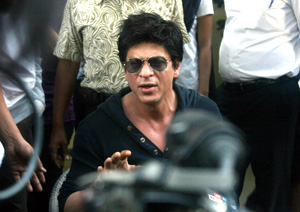
    He was, arguably, the biggest Bollywood superstar not long ago but with a few unsuccessful releases, a night club brawl and now a scuffle with officials at a Mumbai cricket stadium to his credit, Shah Rukh Khan’s brand is losing sheen.


    In the last couple of years the actor has not signed any big brand endorsement deals, although his portfolio still boasts of more than a dozen brands. People in the endorsement industry say that SRK’s image has suffered in the last couple of years not only due to the controversies that have surrounded him but also because he is an ageing celebrity.


    “Controversy does not make for good brand endorsers and any marketer will keep away from a celebrity like that. Besides the controversies that have courted him recently, what is a bigger concern is that he is ageing and that does not bode well for multiple brands in India that want a youth connect,” said Manish Porwal, MD, Alchemist, a talent management agency.


    Cola major PepsiCo, for which SRK was a brand ambassador for a long period, dropped him in 2009. In a move that was veering towards the youth, the cola major got on board Ranbir Kapoor. Later, telecom major Airtel did not renew its contract with SRK, although, they have not officially announced their disassociation with him.


    LOST IN TRANSITION?

    Endorsements: Tag Heuer, Hyundai, Belmonte, V-jon, Navratna, Dabur sona chandi, Lux Cozi, Linc pens


    SRK’s endorsement rates haven’t come down though as he charges around Rs 1.5 crore per day. But it’s 50 per cent less than what Aamir Khan commands.

    Today, his roster of more than a dozen of brand endorsements include Belmonte, V-jon, Navratna, Dabur sona chandi, Lux Cozi, Linc pens, besides a few marquee names such as Tag Heuer and Hyundai. SRK’s endorsement rates haven’t come down though as he charges around Rs1.5 crore per day.


    However, it’s 50 per cent less than what his contemporary Aamir Khan commands, but the latter has largely been off the endorsement market of late, say industry people.


    “What you are seeing is something that a lot of stars have gone through. It’s a transitional phase which all celebrities go through; while some bow out gracefully, some do not. It is an inevitable shift of power and it has not been a smooth ride for him,” said Santosh Desai, CEO at Future Brands.


    However, some of the brands that he endorses are sticking with him. DTH player Dish TV, which has him as a brand ambassador for over five years, says these incidents have had no rub-off as far as his brand appeal among masses goes. “There is no dent that has been made on Brand SRK, we will continue to have our association with him,” said Salil Kapoor, COO, Dish TV.


    Source:The Economic Times

    Copyright © 2012, Bennett, Coleman & Co. Ltd. All Rights Reserved


  • HUL, Dabur & Colgate Q1 sales up 20%, next few Qs challenging

    By A Correspondent


    Consumer goods companies Hindustan Unilever, Colgate-Palmolive and Dabur said the next few quarters could be challenging if the monsoon is weak and the rupee continues to fall after reporting about 20 per cent jump in their first quarter sales.


    Hindustan Unilever, the country’s largest consumer goods company, whose presence in a range of daily consumption items such as soaps, shampoos and food makes its performance a good proxy for consumer sentiment, said it has not seen any evidence yet of customers trading down for cheaper products but delayed monsoon, weak rupee and volatile raw-material prices remain a concern.


    “When we look into the medium term, we believe that the growth drivers for FMCG are really positive,” said R Sridhar, chief financial officer at Hindustan Unilever. “But when we look at the next 2-3 quarters, clearly there are few challenges-the final shape of how monsoon distribution happens, rupee has depreciated quite significantly and inflation continues to be at a very high level,” he said.


    Dabur CEO Sunil Duggal too said: “As of now, we have not witnessed any slowdown in rural consumption, but there could be some amount of demand contraction this (July-September) quarter.”


    HUL’s total income rose 20 per cent to Rs6,378.7 crore in the April-June quarter from Rs5,323.6 crore in the year-ago period, outperforming the broader FMCG industry that grew 16 per cent during the quarter. Profit after tax before exceptional items at the Indian unit of Anglo-Dutch Unilever rose 48 per cent to Rs855 crore in the three months to June. Exceptional items included sale of properties worth Rs607 crore.


    The company said it was able to increase its operating profit margins by 180 basis points. Its cost of goods sold during the period was 200 basis points lower than in the year-ago period.


    During the quarter, HUL’s sales of soaps and detergents-its largest business segment-rose 24 per cent to Rs3,163.05 crore, helped mainly by price increases. Double-digit volume growth drove up sales of personal care products by 17per cent  to Rs1,847.08 crore, while beverages sales were 7per cent  higher at Rs654.07 crore. New launches in brands such as Kwality Walls helped its packaged foods business grow 17 per cent to Rs436.98 crore.


    What pleased analysts the most about the results was the companies’ sustainable volume growth. HUL, Dabur and Colgate-Palmolive grew their volumes between 9-12 per cent as the makers of daily household products sold more goods despite increasing prices. “Across companies, margins have expanded and ad spends increased too. With sales of premium products growing, there isn’t even first signs of slowdown yet,” said Anand Mour of Ambit Capital. Colgate-Palmolive reported a 17 per cent jump in first quarter profit at Rs117 crore, while its sales grew 20 per cent at Rs736 crore. “In an inflationary environment, the company’s continuing efforts and focussed programs to enhance efficiencies and reduce costs continue to yield strong, positive results, helping to maintain margin and fund investments in building and strengthening brand equity and the business,” Colgate said in a statement. The company said prudent price increases and cost management helped it maintain its strong gross margin.


    Dabur reported 21 per cent jump in April-June sales at Rs1,461.9 crore, while net profit increased 17 per cent year-on-year to Rs149.4 crore, riding on categories like health supplements, shampoos and food. Faster network expansion in rural markets too helped the firm drive sales. Dabur CEO Duggal said the company was forecasting double-digit growth over the next two quarters although there could be some slowdown in demand.


    Source: The Economic Times

    Copyright © 2012, Bennett, Coleman & Co. Ltd. All Rights Reserved


  • Why CMOs needn’t feel guilty about going for Cannes Lions

    By Delshad Irani


    What does a chief marketing officer of a very large global company do when he wants to be proficient in Twitter? He asks the CEO of Twitter, Dick Costolo to provide the best resource they possess for an intensive reverse mentoring session. According to Antonio Lucio, global chief marketing, strategy and development officer, Visa, it is critically important for him as the head of a global marketing organisation to be an expert on social media and be able to build the Visa brand on platforms like Twitter and Facebook.


    Interestingly, he has been a marketer for over 30 years and it is his first time at Cannes Lions International Festival of Creativity and the first time Visa has attended the festival as a company. The question then is why now? For starters, digital media has changed the rules of engagement. However, the cases of truly successful integration and application of digital media are few and generally set on loop. “The fact is that when people talk about social they keep using the same concepts and best cases, for instance, the Old Spice campaign. This means that there really isn’t a clearly articulated model,” said Mr Lucio.


    So clients like him attend festivals like the Cannes Lions to spot inspiring ideas, particularly in the digital, social and mobile and media worlds. Reasonable grounds for marketers to attend with teams of 5 to 15 senior management level employees.


    But, it wasn’t too long ago when if you were a client and you said you want to go to Cannes for the ad festival you might not have got permission from management to do so. However, it is due to the efforts of a few that has led to the institutionalisation of the client’s side of Cannes. Marketers like Mr Lucio can come with midsize teams and it’s no longer considered an indulgence. P&G, Unilever, Coca-Cola, Pepsi, Heineken, Kraft, GM, McDonald’s and Mars, among others are just a few of the big global marketers who were present at the 2012 Cannes Lions.


    Some have been attending longer than others. Like Joseph Tripodi, executive vice president and chief marketing and commercial officer, The Coca-Cola Company, who is particularly impressed with the attention the festival is receiving from media owners like Time Warner, in addition to growing participation numbers from clients as well as delegates from agencies. Keith Weed of Unilever, who has come to Cannes three years in a row and has been CMO for as many years said: “We have 15 people here this year and we do a combination of workshops, meeting our agency partners and recognising and acknowledging that creativity is great. In a cluttered media world, we need creativity to cut through.”


    So apart from networking and opportunities to meet all their concerned parties, old and some new, in the same place, at the same time, these marketers are on the look out for inspiring work from across the world. And set creative benchmarks wherever possible. According to Cyril Charzat, senior global brand director, Heineken: “It’s very much about stimulating our marketing people to be stronger when they evaluate work from creative agencies; to define what is progressive and inventive. Our key message is to stimulate inventiveness and that’s what we try to do.” And Cannes is a part of that story.


    On the Indian front, however, it is not yet a vital chapter. And Cannes remains the exclusive domain of adwallahs, with a light sprinkling of some regular clients like Mr Kakar of Aditya Birla Group, who has been attending the festival for over half a decade. Then there are first-timers like Mahindra & Mahindra. The company wanted to test French waters and therefore Vivek Nayer the company’s VP-marketing for the auto division attended the festival. But he left a tad disappointed and overwhelmed by the creative clutter. Other Indian marketers in attendance were Parle Agro (with Nadia Chauhan also a jury member), Dabur and Flipkart. Clearly, Indian marketers are grappling with the big question – to attend or not to attend? Meanwhile, clients from markets on our left and right, up and down, are strategising on ways to find the best creative result during the seven days spent in the Cote d’Azur.


    However, the challenge for most is to put all that inspiring work to actual use. And here’s how some intend to do it. “We are not going to come in like the advertising people who get inspiration and go back home to figure it out. We will have a very structured approach with sessions of inspiration followed by sessions of perspiration, daily.


    It’s my responsibility during the week to ensure that Cannes becomes a truly business building program for us,” said Mr Lucio of Visa. In other words, for marketers to take Cannes Lions International Festival of Creativity seriously there must be “enough perspiration to pay for the inspiration.”


    Fair enough.


    Source: The Economic Times

    Copyright © 2012, Bennett, Coleman & Co. Ltd. All Rights Reserved

  • Big Boys go to B-school for betterment

    By Anumeha Chaturvedi


    Liane Cabral Ghosh was working as a senior manager and strategist at Dell’s research and development centre in Bangalore, when she decided to enroll for an INSEAD leadership programme for senior Indian executives last August.


    “I was growing well in technical functions, but did not have management skillsets. I wanted a programme that could provide a career jump for senior leadership positions,” said Ms Ghosh. The programme concluded last month, and it seems that Ms Ghosh has been taught well. She will now join Canadian IT company Innovatia this month as country manager.


    Senior-level professionals across functions, profiles and industries are going back to school for short-term and long-term executive education programmes in order to reskill themselves. Ms Ghosh’s batchmates at INSEAD included Rajshree Naik, the marketing head of Forevermark, De Beers; and Manesh Nair, former director of business relationship consulting, India and Thailand, at American Express, and after the course, global director for partnership development posted at American Express, New York.


    “We are witnessing a growth of 25 per cent when it comes to participation in ‘open enrollment’ executive education programmes every year,” said Deepak Chandra, deputy dean at the Indian School of Business (ISB).


    Open enrollment programmes are meant for professionals from all fields looking at a specialisation in functions like marketing, finance or sales strategies. ISB will host 5,000 such students this year. It currently offers 45-50 such programmes, up from 5-6 a decade ago. The courses at ISB last anywhere from a week to a month.


    “Reskilling assumes greater importance in challenging times,” said Chaitanya

    Kalipatnapu, co-founder and director of Eruditus, a firm promoted by the alumni of INSEAD and Harvard Business School (HBS) to deliver executive education programmes. “Business schools witness a spike in activity during a slowdown, as candidates consider it safe to turn to education and feel the slowdown would be over and done with by the time they pass out.”


    Among the IIMs, Kozhikode is the only one to offer a two-year executive post-graduate programme in management for professionals. The batch size for this programme accredited by the London-based Association of MBAs (AMBA) has increased from 220 in 2010-12 to 333 for 2012-14. “We have increased the batch size owing to a significant demand for this course among professionals,” said C Raju, professor, quantitative methods and operations management, at IIM Kozhikode. The institute will also have two new one-year executive education programmes on human resource management and IT this year.


    “The number of requests and applications for customised and open enrolment programmes have more than doubled this year,” said Mr Kalipatnapu. It offers executive education programmes from INSEAD (one-year), Wharton (both short-term and long-term), and Tuck School of Business in India. While Wharton has introduced open enrollment executive education programmes in the country this year, Tuck School of Business entered into a first-of-its-kind by-invitation consortium with a few companies like TCS, Mahindra & Mahindra and HSBC this year, wherein the companies nominated their senior managers for a programme on innovation and leadership. The Tuck programme is spread over nine months.


    Individuals often opt for these programmes on their own, but companies too nominate and shortlist candidates and even work with universities on customised case studies to address their business needs. “Companies are realising that education is a good motivating tool to attract and retain talent,” added Mr Chandra.


    “Companies realise that the economic challenges demand a more targeted approach to talent management,” said Mr Kalipatnapu. Firms like Bharat Petroleum, Accenture and IBM work with these top schools for programmes tailor-made to suit their needs.


    Harvard Business School India Research Center, which handles executive education programmes in India, has diversified its portfolio of executive education programmes this year. “We had three executive education programmes last year, and we plan to have around 10 this year,” said Amrita Chowdhury, associate director, education, at HBS India Research Center. It has introduced new programmes on leadership and corporate accountability and innovation. “As senior professionals move up the leader, they realise they need specialised skills in general management and leadership,” said Ms Chowdhury.


    She said that while the majority of candidates in a programme would comprise large private companies and PSUs, 30-40 per cent of the candidates are senior management professionals or owners of SMEs. “These are companies with a turnover of around Rs 100 crore, have gained a lot of scale, and are now looking at skilling their top management for the next phase of growth.”


    Companies like Genpact and Aon Hewitt also have tie-ups with the HBS Research Center for shortlisting candidates for their programmes. “Our managers run large teams across the world and they learn about leadership and understand how cultures operate through these programmes,” said Amit Aggarwal, senior vice-president, global leadership development and training, at Genpact.


    While Genpact sends around 3-5 professionals for such programmes every year, Aon Hewitt shortlists its partners and even sent one of the directors for the programme this year. “The programme touched upon all elements of leading businesses and people, and was insightful, as managing people is one of the most crucial aspects of our business,” said Ryan Lowe, director at Aon Hewitt, who attended the HBS programme on managing professional services firms in January this year.


  • Watch out! The shopper next to you could be fake

    By Shramana Ganguly


    Vidya Nayak could be shopping alongside you during the pre-Diwali rush. This 36-year-old Bengaluru housewife looks no different from the hundreds of others you rub shoulders with this season, but she’s on a mission that’s not just a sale.


    The onset of this festive season and some product launches have brought to the retail floor the mystery shopper – a person paid to shop in a bid to screen brand performances, gauge trends and consumer sentiment.


    “I have been checking if the promotions and pricing are presented in a correct manner to the consumer in this festive season,” says Ms Nayak, who takes time out for this assignment for Sony and LG.


    Fears of a bleak Diwali have pushed brands across FMCG, apparel, consumer electronics and automotives to send in the reserve forces to fight poor sales. “Diwali will get waves of mystery shoppers,” notes Saurabh Mishra, senior manager (marketing) at Channelplay Ltd. The retail marketing company assists brands in retail intelligence, visual merchandising, loyalty programmes, et al. Mr Mishra has 400 mystery shoppers working doubly hard this season.


    Ms Nayak, for instance, browses and bargains like an authentic shopper. She may or may not spend, according to her client briefing, but would check on brand performance. A luxury automotive brand could hire 40-year-old mystery shoppers, preferably a couple, while an apparel brand could have a 20-year-old do the job.


    Assocham says the festive shopping spirit is lowest across Delhi, Ahmedabad, Chennai, Mumbai and Hyderabad on “expected lines, as economic recovery is rather slow and consumer confidence low”.


    “Consumers are not bullish this season. Every brand will try to ensure maximum conversions against walk-ins, although less compared to last season,” notes Sanjeev Shenoy of HS Brands International. HS offers mystery shopping services, loss preventional solutions and data collection tools to retailers and brands globally.


    For instance, mystery shoppers at AlphaOne saw developers Alpha G:Corp install an ‘automatic piano’ on the second floor to attract customers, triggering a 200% jump in footfall. The retail destination in Ahmedabad houses KFC, Swarovski, Tommy Hilfiger, Levis, FCUK, Timberland, Sony, HP, Samsung and Pizza Hut, among others.


    “Stores on the second floor are now looking forward to converting this momentum into sales with exclusive offers and value deals,” said Alpha G:Corp executive director (marketing, corporate affairs & retail) Prodipta Sen.


    With staggering sales at stake, the mystery shopper ensures that each consumer is handled in the best possible way to ensure she spends.


    Source:The Economic Times

    Copyright © 2013, Bennett, Coleman & Co. Ltd. All Rights Reserved

    Licensed to republish
     

  • Dhanda wasn’t really manda this Diwali


    By Sushma U N & Rajesh Chandramouli


    The Indian consumer did not disappoint. Early trends indicate they shopped with full vigour this Diwali. Everyone from hawkers on the streets to luxury brands on the high streets had pinned their hopes on the festive season this year, and from what retailers say, they are all heaving a sigh of relief.


    While mobile phones flew off the shelves, car sales remained brisk. However, refrigerators and washing machines sales were down.


    Chocolates, smartphones strike gold this season
    By Writankar MukherjeeThis Diwali, consumer goods brands across categories are striking gold. Brands like Apple, Samsung, Nestle and Ferrero are hitting new highs in sales, with products coloured various shades of gold, which marketers say Indian consumers associate with being premium.


    Check this out: Apple’s iPhone 5s in the gold version sold out within minutes of its launch, and received the maximum number of advance bookings. If that’s not enough, the model is now being resold by smaller neighbourhood retailers who have hoarded stock, and on websites like eBay, at Rs 10,000- Rs 15,000 premium.


    Last week, Apple’s rival Samsung too joined the ‘gold’ rush by launching its costliest smartphone ever in India, the golden-colour Samsung Galaxy Golden which, the company says, has sold beyond its expectations.


    Among chocolates, Nestle’s Alpino and Ferrero Rocher have sizzled retail shelves during the festive season gifting, both drawing the consumer’s eye with their gilded packaging.


    “Gold has huge appeal amongst Indian consumers since it’s a fantastic premium stand-out colour,” says Samsung India country head (mobile and digital imaging) Vineet Taneja. “This also means the product needs to be niche or super-premium,” he says.


    It is probably the same understanding which led Apple to launch just 200-odd units of the gold colour iPhone 5s as part of the launch phase last weekend.


    Cellphone retail chains like The MobileStore, UniverCell and PlanetM Retail said consumers are ready to pay in advance for the gold device. And of course, some customers who managed to score a gold iPhone5S at Apple’s launch events are re-selling the device on marketplaces like eBay, where a 16GB model is priced at around Rs 63,000 to Rs 67,000, compared with the device’s official retail price of Rs 53,500.


    UnivelCell Telecom CEO D Satish Babu said several neighbourhood retailers are selling the iPhone 5s model at a significant premium to the market price. The phone was available in the grey market even before its official India launch – dealers at outlets in Delhi’s Gaffar Market and Mumbai’s Heera Panna were quoting as much as 1 lakh for it.


    No wonder, Samsung is selling its gold-colour offering Galaxy Golden smartphone at Rs 50,000, compared with as compared to its flagship Galaxy Note 3 selling at around Rs 47,000. Samsung’s Mr Taneja says despite the premium pricing, demand for the model has been much more than the company’s expectation during Diwali sales.


    In chocolates, retail chains like Spencer’s Retail and Future Group say while Ferrero Rocher has been the king of Diwali gifting due to its similarity with the Indian ladoo in shape and golden colour wrapper, Nestle’s first premium chocolate brand Alpino has started off well with a similar packaging giving competition to Cadbury and imported brands.


    Spencer’s Retail president & CEO Mohit Kampani says while Ferrero’s share increased from 25% to 32% in Diwali FMCG gifting this year, Alpino has notched up a decent 2% share within a couple of months of its launch.


    Source:The Economic Times

    Copyright © 2013, Bennett, Coleman & Co. Ltd. All Rights Reserved

    Licensed to republish


    “Diwali sales were as good as last year. The theory that people prefer discount models in a downturn economy got validated. The beginning to the season was sluggish and we were nervous.


    However, last Friday (November 1) sales were way above expectations,” Raghunath Narayanan, MD of Europa Group, a clothing discount chains, said. “While exact sales numbers are still being collated, we have witnessed single-digit growth in Diwali sales. Per bill value of each customer was slightly lower than last year, but more shoppers compensated for that drop and ensured growth. In this market , not to have de-grown itself is an achievement,” he said.


    Several automakers who expected muted sales this season were in for a surprise . “Early numbers show that sales grew 10% during Diwali. Our daily shipments , which were 9,800 vehicles a day last Diwali, rose to 15,800 this year,” said Mayank Pareek COO, marketing & sales, Maruti Suzuki.


    “What we saw this year was a result of pent-up demand. Customers, who postponed purchases, chose Diwali to complete the purchase. However , for the past five or six years, Diwali sales were sluggish. We need to wait and see if this momentum in sales will sustain,” he said.


    Mobile phone sales appear top draw this year. Sales at India’s largest mobile phone retailer Univercell grew 30% this year. “Sales have been very good this year, with a 30% increase in sales by value compared with last Diwali. This was driven by the Rs 5,000-10 ,000 and the Rs 10,000-Rs 20,000 price bands, which saw highest growth,” Soumya Menon , V-P of marketing and brand strategy, UniverCell Telecommunications.


    Charath Narasimhan, CEO of Indian Terrain, a mens’ clothing brand echoes this view. “Overall sales have been reasonably good with 30% same-store growth in sales. This has been in line with our expectations. Trousers saw highest growth with khakhi coming back in fashion and sales spiking during the weekend,” Mr Narasimhan said.


    The consumer durables sector saw mixed response with sales of TVs growing, while sale of refrigerators and washing machines fell this year, said B A Srinivasa, CEO and joint MD, Viveks, a multibrand consumer durables retailer. Over the last few weeks, there was doubt over sales of durables as RBI had banned sales of products at 0% interest on credit cards but this has not impacted sales, Mr Srinivasa said.


    The monsoon/end-of-season sale in July was good, Diwali turned out better, and going forward too, for the new year sale, retailers expect the buoyant mood to carry on through what is left of the year. “The wedding season in the north is just a week away. Weathermen have said the winter is going to be strong, and this bodes well because retail will stay longer due to the winter,” said Mr Narasimhan of Indian Terrain.


    MAKING MERRY

    Europa Group, a clothing chain, has seen single-digit growth in sales. Per bill value was lower but more shoppers were seen.


    Maruti Suzuki’s daily shipments for Diwali this year were 15,800 cars compared to 9,800 vehicles last year. Sales grew 10% Mobile phone retailer Univercell saw 30% sales growth this year with 5k- 10k, 10k- 20K segments growing most Multibrand consumer durables retailer Viveks witnessed good sales in TVs while refrigerators and washing machines fell.


    Source:The Economic Times

    Copyright © 2013, Bennett, Coleman & Co. Ltd. All Rights Reserved

    Licensed to republish


  • Emami appoints Milkha Singh as brand ambassador

    By Writankar Mukherjee


    Emami has roped in renowned athlete Milkha Singh to endorse its premium health supplement, Zandu Kesari Jivan.  This is the first ever brand endorsement of Singh, popularly known as ‘flying sikh’.


    Emami director Harsha V Agarwal said the brand Zandu Kesari Jivan which promotes good health, youthful vigour & energy found a perfect fit in Milkha Singh, who even at the age of 84, is a symbol of youthfulness and vigour. The brand is also endorsed by Birju Maharaj.


    Chyawanprash is a growing health supplement category in India worth at Rs 400 crore. A new television commercial of Zandu Kesari Jivan featuring Milkha Singh is scheduled to go on air this month. The TVC is created by Scarecrow Communications.


    Source:The Economic Times

    Copyright © 2013, Bennett, Coleman & Co. Ltd. All Rights Reserved

    Licensed to republish


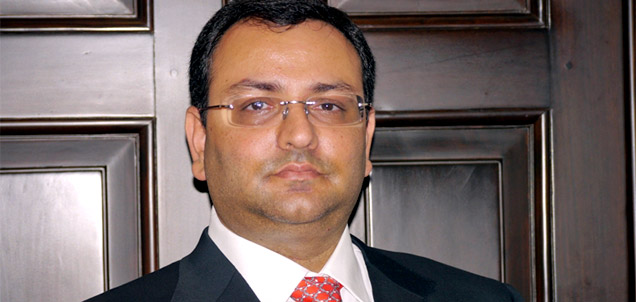
  • Cyrus Mistry: Slow and Steady in Year #1


    By Suman Layak


    Signals from Cyrus

    Ok guys, it’s time for business: Mistry needs a few of those glamorous multi-billion acquisitions to deliver. Takes the call to abort Indian Hotels’ much-attempted bid for Orient Express.

    Wings for aviation: It was Ratan Tata’s dream, but it was Mistry who was at the forefront of the joint ventures with AirAsia and Singapore Airlines (with Tata’s support).

    Find some friends: Mistry has some 25 years ahead of him as chairman and needs people to grow old with him in the office. Much of the first year was spent in building his A team.

    Manage retirements: Tata Steel managing director HM Nerurkar retired in October. Choosing a successor in TV Narendran was one of Mistry’s key decisions this year.

    Get more women on board: Tata Sons is still a gentlemen’s club. But Mistry is signalling a change in attitude by inducting women on the Tata boards.

    Playing Mr Fix-it: Has identified the problem companies – Tata Motors, Tata Steel Europe, Tata Power – and their problem areas.

    Not yet ready for banking: Took the strategic call to withdraw Tata Sons’ application for a banking licence – for now.


    The Aviator’s Busy Flight Path

    For Ratan Tata, retirement may not necessarily have translated into less work and for sure has resulted in more than usual travel. A person familiar with his schedule indicates that Tata has been travelling a lot more since he retired. For starters, Tata serves on the Prime Minister’s Council on Trade and Industry, which means he continues to advise the top political leadership of the country.


    That apart he is also the president of the Court of the Indian Institute of Science and chairman of the Council of Management of the Tata Institute of Fundamental Research. He also serves on the board of trustees of Cornell University and the University of Southern California. Tata had graduated as a trained architect from Cornell. However, retiring from Tata Group companies - he is now chairman emeritus — is not the end of the corporate innings. For example, even now he continues to serve on the board of American aluminium major Alcoa. He is also on the international advisory boards of Mitsubishi Corporation, JP Morgan Chase, Rolls-Royce, Temasek Holdings and the Monetary Authority of Singapore.


    In September Tata also joined the board of trustees of Carnegie Endowment for International Peace. This trust is considered a premier American think tank. However, at the same time Tata has kept himself available to the Tata Group and in the beginning he had committed himself to fortnightly lunch meetings with Cyrus Mistry. Apart from that he is closely involved with the aviation joint ventures of the Tata Group, one with AirAsia and the other with Singapore Airlines. Tata himself had piloted a flight with the AirAsia team on board to Delhi.


    It is likely that some of the Tata companies may still consult him for his expertise, in specific areas like automobiles and aviation. He also heads the Tata Trusts which control a two-thirds majority of shareholding at Tata Sons and this must be taking up a lot of his time. He had also registered his own company RNT Associates with RK Krishna Kumar. But not much else is known about its activities. Not yet.


    Back in the ’70s, the families of construction magnate Pallonji Mistry and well-known legal luminary Iqbal Chagla were neighbours in Cuffe Parade. A happy consequence was that in 1992 Pallonji’s younger son Cyrus married Chagla’s daughter Rohiqa. On the wedding day, the father of the bride, Chagla raised a toast, starting with these words: “I was determined to dislike anyone who decided to marry my daughter.”


    Then he added a truism: “However, once you meet Cyrus, it is impossible to dislike him.” It still holds two decades later; everybody seems to like the 45-year-old Cyrus Mistry. Mr Mistry took over as chairman of Tata Sons on December 28, 2012. Since then, he has made all the right moves. “He has not taken any giant leaps, neither has he shaken the foundations of the group,” says Harsh Goenka, industrialist and chairman of RPG Enterprises.


    As Mr Mistry begins his 12th month as chairman of India’s largest conglomerate, in which his family led by father Pallonji Mistry owns an 18.5% stake, it’s time for him and his core team to prepare a rough and ready blueprint for the second year. That plan may call for a few larger leaps, and may indeed shake some parts of the foundation.


    Making the multibillion acquisition of Corus (now Tata Steel Europe) viable, for instance is one of them. Downsizing the business by mothballing some of its capacities, reckon analysts, may be the way to go. Back home Tata Motors – excluding the money-spinning Jaguar Land Rover ( JLR) – needs a refreshed portfolio to find its way back amongst India’s top 5 automakers. And the power, telecom and hospitality businesses too are in need of an overhaul.


    It’s a daunting task; more so for a man who’s still coming to grips with a 92-company group across 28 diverse sectors, even as it strategizes to enter newer businesses, like aviation. Ashok Basu, former bureaucrat and an independent director on the board of Tata Power, says: “I think he has the most formidable job in the country. But this mantle sits very lightly on his shoulders.”


    “Luckily, his health has held up. He has taken on a punishing schedule, whirlwind travel across the world, day trips to the Gulf countries and stuff like that,” says a person who knows Mr Mistry well. And Mr Goenka adds: “He doesn’t look stressed. But I asked him about his work-life balance and he admitted that’s gone for a six.”


    First, a Team

    One of Mr Mistry’s immediate priorities after taking over at the helm was to build a team of people who will, like him, be around for some time. Although Mr Mistry was appointed as executive deputychairman of the group in 2011 for five years, and was elevated in 2012, it is likely that Mr Mistry will have this job for more than a quarter of a century.


    Before retiring, predecessor Ratan Tata – who had the job for 21 years – had left a clean slate for Mr Mistry, even lowering the retiring age for non-executive directors, to ensure that the old guard goes away in two to three years. Tata’s first few years at the helm were spent consolidating his own position as the undisputed leader of the group and pushing out the veterans. He did not want such distractions for Mr Mistry (after all, Mr Tata had plenty of them when he took over and had to spend at least six of his initial years taking on – successfully – the group’s satraps).


    In Madhusudan Kannan, 39, Mr Mistry found his head of business development. Mr Kannan was the first member of team Mistry and joined the group in May 2012, seven months before Mr Mistry finally took over the reins. Mr Kannan is considered closest to Mr Mistry today. Mukund Rajan, 45 – younger brother of Reserve Bank governor Raghuram Rajan – was moved in from Tata Capital as custodian of brands and chief spokesperson as well as chief ethics officer. Mistry also brought in academic Nirmalya Kumar from the London School of Business to help with strategizing and NS Rajan from Ernst & Young as head of human resources. “In many ways it is like Rahul Gandhi’s team” says one uncharitable onlooker from corporate India.


    “It has more theoreticians than business managers,” he says. That may be unfair to both Mr Mistry and Mr Gandhi, but one cannot deny that Tata’s own lieutenants were either seasoned veterans from within the group (Syamal Gupta, NA Soonawala, Ishaat Hussain, to name three) or from other large companies (like R Gopalakrishnan from Unilever’s Indian subsidiary). Mistry has chosen his own horses, for surely he has to run on a different course.


    The Tata group did not participate in this feature. Also setting himself apart from the Ratan Tata-era is how Mr Mistry has sought to induct more women on the boards of Tata Sons. Vishakha Mulye, managing director of ICICI Venture, was the first woman inducted by Mr Mistry in February. She joined the board of Tata Power.


    He followed this up by bringing in Falguni Nayar on Tata Motors’ board and Ireena Vittal, a former McKinsey partner, on the boards of Indian Hotels and Tata Global Beverages (see Diversity Drive). With Vittal, Tata Global now has three women on its board (the other two being Mallika Srinivasan and Ranjana Kumar).</p>


    Ms Nayar, who now runs her own e-commerce venture Nykaa.com and a former managing director at Kotak Investment Banking is married to private equity fund KKR’s India chief Sanjay. Mr Mistry  asked Falguni to drop by for an interview and spent considerable time discussing her current venture before requesting her to join the Tata Motors board and bring her I-banking experience to the table.


    In May 2012, before he became Tata Sons chairman, Mr Mistry had joined the board of Tata Steel along with another lady, Mallika Srinivasan, chairman and CEO of tractormaker TAFE.


    However, these moves are only a beginning in creating gender-diversity at the house of Tatas, whose boards have traditionally been male bastions; for instance, the jewel in the Tata’s crown, TCS, has an all-male board; and even the Mr Mistry-created four-member general executive council is all male.


    There was one more quick response by Mr Mistry that pleasantly surprised many people. When a former executive of Tata Steel committed suicide and there were allegations of harassment by former colleagues, a committee was immediately set up with executive and non-executive directors of group companies to probe the allegations


    Plumbing the Numbers

    The Tata group today is virtually basking in the glory of a single outperformer – TCS, which accounts for roughly 60% of market value of all listed Tata entities and 80% of profits. To that extent, TCS managing director N Chandrasekaran, 50, stands tall – some observers say nearly as tall as Mr Mistry -in the top tier of leadership in Bombay House, the headquarters of the Tata group.


    Tata Sons owns almost 74% of TCS; and since Mr Mistry took over in end-2012, TCS’s market capitalisation has gone up by 58% adding Rs 1.4 lakh crore to the group’s market combined capitalization. The other clear outperformer is JLR, the $2.3-billion acquisition that more than makes up for Tata Motors’ dismal show domestically.


    JLR’s revenues in 2012-13 were 2.5 times that of the local operations, profits stood at Rs 10,406 crore as against Tata Motors’ domestic profit of Rs 302 crore, and, for good measure, the UK operation headed by Ralf Speth paid Tata Motors Rs 1,420 crore in dividend in June. Together Tata Motors and TCS account for roughly 80% of the group’s combined market value. The rest of the 26 listed group companies taken together have actually shrunk in combined market capitalization.


    The Indian operations of Tata Motors and European operations of Tata Steel may be the larger problems, but Mistry has more fires to douse. Mr Basu, for example, feels the biggest problem is at Tata Power. The company has posted a loss of Rs 39 crore for the first half of 2013-14 after a loss of Rs 85 crore for 2012-13.


    “Tata Power is probably his greatest headache – a problem created for no fault of the company. Take Mundra ultra mega power plant, for instance, which is suffering because the price of Indonesian coal has suddenly shot up and the state government cannot buy power at this price.”


    Then there is Indian Hotels, which was in the red to the tune of Rs 452 crore for the first half of 2013-14 on revenues of Rs 1,804 crore. The loss in this half year has exceeded the loss of Rs 430.24 crore of the entire previous year. The Tata Group is not a six-course meal but more like a tasting menu and there’s a lot more on Mr Mistry’s plate. The telecom business needs some decisions – especially as Tata Sons may need to buy back the 26% stake of Japanese partner DoCoMo in March 2014.


    Vatican Redux

    Clearly, taking charge of an illustrious company incorporated back in 1917 is not easy. In many ways Tata Sons reminds one of the Vatican. If you go through its archives and treasures, you come up with surprises. Like for instance, at Tata Sons, the equity capital with voting rights adds up to only Rs 40.41 crore.


    However, there are preference shares without voting rights that account for 100 times the amount at Rs 4,148 crore. These attract dividends at a fixed rate of 7.5% and the subscribers to the preference shares are mostly directors of the company and former directors and sometimes even unrelated professionals. In May 2013, Cyrus Mistry subscribed to preference shares worth Rs 1 crore (10,000 shares). R Gopalakrishnan, non-executive director invested Rs 6 crore in preference shares of Tata Sons in June 2013.


    In July Ratan Tata acquired Rs 8 crore worth of preference shares while NA Soonawala (also a former director) picked up Rs 1.5 crore worth of preference shares in July. Let us take the analogy of the Vatican of this day a little forward. The Catholic Christian church has a new Pope today, but the old Pope is not dead – and in fact is living in the vicinity. Mr Mistry heads Tata Sons, but Mr Tata is not very far away. He is available – as he was in the run-up to the aviation joint ventures with AirAsia and Singapore Airlines.


    Also, don’t forget that Mr Tata, now chairman emeritus, heads the Tata trusts that control around 65% of the equity shares of Tata Sons and by virtue of that holding controls the group while remaining in the background. Mr Mistry may well be the proverbial chip off the old block. Mr Basu says that while he brings in “youthful energy” to meetings he is very much similar to Tata in his manner, listening carefully and giving his opinion in the end. He has, for instance, suggested strong belt-tightening measures for the group and has also suggested that Tata Power seek a global footprint for itself.


    Nayar adds: “It seems right now he is listening and absorbing. I find Mistry to be very open and inclusive. He is also a very good listener and carefully evaluates everything before taking decisions. He also has a vision which he explains.” That is what Tata was known to do. And Mulye points to other similarities with Tata: “He has a unique capability in combining breadth of vision at one end and granularity of detail at the other. The other big quality he has is his sense of humility.” It would then appear that Mr Mistry has moulded himself in the cast of Tata, what with both of them evidently also sharing an aviation dream.


    A former senior executive at one of the Tata companies who did not want to be quoted says that the Tata influence on the group is still very strong – along with the influence of RK Krishna Kumar who retired in July 2013. Many of the CEOs of today are former executive assistants of the two senior pros, both of whom are trustees on the Tata Trusts (Mukund Rajan in the GEC and N Srinath, MD, Tata Teleservices aided Ratan Tata, while Avani Saglani Davda, CEO, Tata Starbucks and Govind Sankarnarayanan, CFO, Tata Capital were EAs to RK Krishna Kumar).


    But herein may lie the rub, point out analysts. The tough decisions that await Mr Mistry may be construed as going against Mr Tata’s legacy. For instance, what’s the future for the ultra low-cost car, the Nano, which was Mr Tata’s dream (although a few days ago he did clarify that his ambition was not to build a ‘cheap’ car but one that would be a logical step up for the country’s millions of twowheeler riders)? Similarly, the options for Tata Steel Europe – an acquisition that a section of analysts believe was overpriced but which Tata believes had to be made – are grim, with some analysts advocating sales of substantial parts of the business, if not all of it.


    Mr Mistry and Mr Tata have been on the same page – even before the former took charge as chairman. For instance, Mr Mistry bought a Nano as soon as it was launched, and apparently said: “It is a damn good car.” The question, of course, is for how long can Mr Mistry be on that same page. At some point he will have to differentiate himself in style and substance from Tata in key strategic decision-making. Mr Mistry has shown he is capable of those tough decisions.


    The $1.6-billion write-down of  Corus’ goodwill on Tata Steel books earlier this year – that contributed in a big way to the losses – the recent withdrawal from the race for a banking licence and the recent call to abort Indian Hotels’ bid for Orient Express are three instances. Expect a few more in the second year which, for Cyrus Mistry, will be more important than his first.


    Source:The Economic Times

    Copyright © 2013, Bennett, Coleman & Co. Ltd. All Rights Reserved

    Licensed to republish