Category: PEOPLE & PRODUCTS

PEOPLE & PRODUCTS

  • Big brands hire rival captains to forge ahead

    By Rahul Sachitanand & Gauri Kamath


    In late August, when Aventis Pharma, the Indian subsidiary of Europe’s largest drugmaker Sanofi, announced the acquisition of Indian firm Universal Medicare’s branded nutraceuticals business, Mr Ranga Iyer joined the celebration.


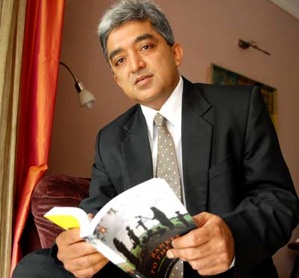
    Mr Iyer, a former MD of US drugmaker Wyeth in India, was the man Aventis had turned to 18 months ago to help bulk up its presence in the Indian healthcare market. He had then just stepped down from Wyeth after its global merger with world number one Pfizer. Eschewing other job offers, Mr Iyer turned advisor to CEOs of pharmaceutical companies on strategy, business development, mergers and acquisitions. Helping Aventis scout around for potential acquisitions was one of those mandates.


    Mr Iyer is not the only head honcho-turned-consultant advising companies that were once rivals. Across India Inc, companies are turning to former business heads of competing organisations for advice and handholding in product launches, entry strategies, acquisitions and new projects. Mr Sunil Alagh, Mr Shripad Nadkarni, Mr Narendra Ambwani and Mr Nabankar ‘Nobby’ Gupta are some of yesteryear’s hotshots who have now become backroom strategists.


    When GlaxoSmithKline Consumer Healthcare (GSKCH) decided to extend the Horlicks brand into the fragmented 10,000-crore biscuits market two years ago, it sought help from one of the most accomplished names in the industry.


    It leaned on the expertise of Mr Sunil Alagh, a former managing director of Britannia Industries, who had built the Bangalore-based biscuit-maker’s brand during his 29-year stint, launching products such as Tiger and foraying into allied areas such as dairy products. GSKCH wanted Mr Alagh to help recreate some of that magic with its own fledgling brand. The strategy appears to have worked. In the near three years Mr Alagh has worked with the company, Horlicks has grown into an over Rs 100-crore brand and launched at least a dozen variants to expand its market share in this competitive market.


    Mr Alagh’s inputs were critical for GSKCH to gain a foothold in a market in which multinationals such as Cadbury Kraft are gaining ground and established players such as Britannia and Parle are fighting to retain their shares. After his bitter parting with Britannia in 2003, this may be a sweet comeback for Mr Alagh, but for executives at GSKCH, it’s also a short-cut to the success of its biscuits business. GSKCH declined to comment.


    Mr Shripad Nadkarni is a former marketing whiz of Coca Cola, who was responsible for the thanda matlab Coca Cola ad slogan. He’s also credited with growing Thums Up’s lead in the cola segment and was given responsibility of leading the advertising for the beverage-maker’s core brands across rural China, Nepal, Bangladesh and Sri Lanka, besides India.


    Now, Mr Nadkarni is using his marketing skills at his boutique consulting firm, Market Gate, that has Coke’s archrival PepsiCo and other beverages firms like Tata Global Beverages listed as clients. He calls his services “consumer informed business strategy” and says his expertise is centred on business turnarounds and expanding footprints.


    Those looking for expert insights on consumer medical products are likely to reach out to Mr Narendra Ambwani, a former India MD at Johnson & Johnson (J&J), the maker of Band Aid and Johnson’s Baby Powder. “I have frequently been contacted by other companies in this field since I retired,” says Mr Ambwani. “They want my expertise in branding and marketing their products and also want to leverage my expertise in operations across South and South-East Asia.” Mr Ambwani has used his consumer goods marketing and distribution skills with the likes of Modi Naturals and Godrej Consumer Products.


    Mr Nobby Gupta is best known for his skills acquired as the marketing head for consumer durables marketers such as Philips and Videocon. Now, he is leveraging those skills to consult other companies in the white goods space. He is currently advising, among others, one of the world’s largest electronic retailers on their India entry. “Confidentiality is paramount,” says Mr Gupta, whose last corporate role was as president of apparel-maker Raymond’s. “For me, the biggest growth potential exists among mid-market companies, which are open to ideas and have strong growth ambitions.”


    Source:The Economic Times

    Copyright © 2011, Bennett, Coleman & Co. Ltd. All Rights Reserved
  • New packs benefit Dettol Handwash

    By A Correspondent 

    Dettol, one of the most trusted brands from the portfolio of Reckitt Benckiser, has launched Dettol Liquid Handwash in a new packaging avatar bundled with new benefits.  The Dettol Liquid Handwash range that gives effective protection against a wide range of unseen germs daily is now available in a contemporary, easy-to-hold shape, and new fragrances and packaging.

    Dettol Liquid Handwash has four variants including Dettol Skincare, Dettol Fresh, Dettol Sensitive and Dettol Original, which comes with new formulations and better lather. All the four variants are available in pump packs of 250ml and / or 135ml. The new handwash bottles come with a wider pump for easier use and a wider mouth for easier refill. The refill packs are also available in 185ml and 900ml.

    Mr Chander Mohan Sethi, Chairman and Managing Director Reckitt Benckiser India Ltd, said, “We at Reckitt Benckiser constantly aim at providing new and better solutions to our customers. Our new Dettol Liquid Handwash bottles with wider pumps are in line with Dettol’s primary focus of providing germ protection. Dettol, our flagship brand, is considered the gold standard for protection against germs and infections.”


  • Marico son Rishabh takes the soapy way

    By Kala Vijayraghavan


    His start-up is dubbed Soap Opera N More – an apt name not just for the nature of the business but perhaps also for the succession drama that’s playing out at the Mariwala family-owned consumer company Marico. Mr Rishabh Mariwala, the 29-year-old son of Marico founder Mr Harsh Mariwala, has moved out of the family’s flagship operations to unleash his entrepreneurial skills.


    Rishabh, who spent three years developing business at Marico’s beauty salon services arm, Kaya Skin Clinic, will now sell premium handmade soaps. Two years ago, Rajvi, 30, Mr Mariwala’s elder daughter had also opted out of Marico, where she was a part of the brand-building team, to focus on sociological research.


    So what’s playing on the founder’s mind? Does he want to give the Gen Y members a shot at garnering experience in the world before cementing their positions in Marico; or is he clear that professionals will run the organisation, with family having no role to play in operations? As things stand, Mr Mariwala is the only family member with an executive presence on Marico’s board although the family owns around 63% of the company.


    There are no clear answers to those questions. But even if Mr Mariwala is entertaining the thought of passing on the baton to his son, he isn’t going to present it on a platter. “This is not a ‘lala’ company,” he declares. “Family members are not automatically entitled to succession. They have to prove their mettle by building a business.” Company watchers add that Mariwala is keen that Rishabh step out of his comfort zone and go through the tribulations of starting and then running a business.


    Rishabh’s path is a unique one. Here is a case of a potential successor who got into the business, then got out of it, with the distinct possibility of getting back again. The alumnus of Frank G Zarb School of Business, Hofstra University, New York, will start up Soap Opera N More with family funds, report to his father and sell the handmade soaps that are the brainchild of his mother, Ms Archana Mariwala.


    “There are no compulsions of any kind on us as far as our career paths are concerned. And this (start-up) is a great learning experience for me,” says the lad who comes from a family that has a lineage of trading (“Mariwala” translates into pepper trader). Harsh broke out by founding his own consumer-oriented venture.


    His son may well be keen to emulate him. “I am an entrepreneur and want Rishabh to have a similar experience in setting up an organisation from scratch. There are no pressures on family members to be part of Marico; eventually it will be their decision.


    Marico has always been a professionally-run organisation” says the chairman. A nomination and governance committee in Marico has put in place a drop-dead succession plan as part of a risk-mitigation strategy. As a board member puts it on condition of anonymity: “Blood has nothing to do with the way Marico is run; there is a strong culture of professionalism and it operates independent of who is the largest shareholder.”


    Perhaps the Marico founder wants to be sure of the fire in his son’s belly before he hands him a larger responsibility. Elsewhere in India Inc, second-generation scions have chosen routes to the family business. Rishad, son of Wipro chairman Mr Azim Premji, worked with GE Capital and consulting firm Bain & Co before joining the IT services major in 2006. Shravin, the 23-year-old son of Bharti’s Mr Sunil Mittal, worked as analyst with Wall Street banks in London and New York before joining up at one of Bharti’s subsidiaries.


    Says Ms Padmaja Alaganandan executive director, PricewaterhouseCoopers: “A very high proportion of geNext in family businesses have professional qualifications and experience of working with good organisations outside their own; this gives them a broader canvas of experience and a good anchor to position and drive change within their organisations.”


    In contrast, Mr Adi Godrej’s children Nisaba and Tanya, like Mr Rajiv Bajaj of Bajaj Auto, joined the business at the junior rungs and worked their way up while Mr Sasha Mirchandani, son of Mr Gulu Mirchandani of Onida, is treading a totally different path: he has opted to work with start-ups by founding Mumbai Angels, India’s first angel investment group.


    Source:The Economic Times

    Copyright © 2011, Bennett, Coleman & Co. Ltd. All Rights Reserved


  • Nivea celebrates a century of caring for skin

    By A Correspondent


    Nivea in collaboration with Times Red Cell has conceptualized Nivea My Skin Lounge, a unique on-ground experiential programme celebrating Nivea’s 100 years of Skincare for Life in Mumbai, Delhi and Bangalore. Nivea My Skin Lounge is a dedicated space where women can enjoy, celebrate their skin and experience the expert care of Nivea for three days.

    Nivea My Skin Lounge will provide comprehensive skin analysis, identify skin personality, and customers can also participate in the Nivea My Skin Moments contest and join Rihanna  The Voice of Nivea’s 100 years campaign in her concert in Germany. The celebration will be hosted at prominent malls in Delhi, Mumbai and Bangalore.

    This initiative will be unveiled in Delhi between September 16 and 18 at Ambience Mall, Gurgaon. The Nivea My Skin Lounge will then be displayed at Inorbit Mall at Mumbai from September 30 to October 2, and will culminate in Bangalore from October 14 to 16 at Garuda Mall.

    Nivea is also holding its My Skin Moments Contest for women who visit the Nivea My Skin Lounge. Guests can share their special skin moment along with a photograph in the Nivea My Skin Moments Contest. The three best stories win two tickets each to watch Rihanna, the voice of Nivea’s 100th year celebrations perform live in Hamburg, Germany. (Terms and conditions apply.)

    More details are available at www.facebook.com/nivea100years.


  • Fair and Lovely: HUL ropes in ombudsmen

    By Sagar Malviya & Maulik Vyas


    Hindustan Unilever has roped in four retired high court judges as independent ombudsmen in different regions to resolve cases filed against the company by its suppliers, distributors, stockists and retailers.


    An ombudsman looks into complaints against an organisation and its officials and helps resolve them by mediating fair settlements out of court.


    “The idea is to have an alternate dispute resolution mechanism with the whole philosophy of customer centricity and the main reason is resolution of matters,” Hindustan Unilever Executive Director – Legal Dev Bajpai said. The country’s largest consumer products firm is faced with more than 100 complaints from business partners across the country, which can be referred to the ombudsman.


    Legal experts applauded the initiative, saying it’s unheard of in the country and would benefit the company in the long run.


    “The advantage for HUL is that it can figure out in advance whether its case is good and avoid an expensive and protracted legal process,” said Advaya Legal Partner Ramesh K Vaidyanathan. “The choice of an ombudsman of impeccable integrity and reputation for impartiality is critical for any counterpart to agree to this proposal,” he added.


    The maker of Dove soap and Rin detergent may have achieved it by appointing retired judges of different high courts-V Panshiker in Mumbai, SK Mahajan in Delhi, K Govindrajan in Chennai and Alok Chakraborty in Kolkata-to look into all disputes in the West, North, South and East, respectively.


    They will take up only those commercial disputes that have no legal breaches, company officials said. Typical cases would include distributors who have parted ways with the company and suppliers who made goods that fell short of quality standards.


    There is a rider, however. The decision arrived at dispute resolution meetings will be binding on the company, but not on its business partners who will have the option to continue with litigation. In 2008, Hindustan Unilever had roped in an ombudsman to deal with consumer complaints that could spill over into the courts, in a first of its kind initiative by an Indian company. It was restricted to end consumers of HUL products.


    Source:The Economic Times

    Copyright  2011, Bennett, Coleman & Co. Ltd. All Rights Reserved


  • United Breweries launches Heineken beer

    After much speculation on its launch, United Breweries has finally launched locally brewed and bottled Heineken beer from their brewery in Taloja, near Mumbai. The locally brewed Heineken is positioned as a super-premium lager beer that will target the discerning beer drinker in India. Kingfisher from UB’s stable is the most popular among beer brands in India and the company leads the Indian beer market in terms of volume sales followed by SabMiller India Ltd.

    Commenting on the launch, Mr Kalyan Ganguly, President & Managing Director, United Breweries Limited said, Heineken, the world’s favourite super premium beer brand will appeal to affluent, sophisticated and discerning consumers in India. We will leverage our deep understanding of the Indian beer market, and complement that with robust marketing programmes and the strength of our nationwide distribution network, to bring to Indian consumers this truly iconic global beer brand. This is a significant and exciting consumer experience that United Breweries has brought to India.

    Heineken is looking at gaining a market share of 5 percent in its category; considering that the market for beer has been growing by 15-20 percent in India, the figure set by Heineken seems achievable.

    Mr Samar Singh Sheikhawat, Senior Vice-President (Marketing), United Breweries Limited, added, The taste and quality of Heineken brewed and bottled out of India is true to the original time-honoured recipe handed down the generations. The brand has been well received in Mumbai and Pune and we now invite the rest of India to Open Your World to Heineken!

    Heineken has been launched in world-class packaging, with imported green embossed bottles and clear plastic labels, a first for any beer brand in India. The bottles feature a unique curved embossment on the neck and back, with a distinctive embossed logo mark which acts as a stamp of quality and authenticity. The visual identity includes the iconic brand elements like the racetrack label, the Heineken typeface with the smiling es and the red star. Available in pack sizes of 650 ml and 330 ml sizes, Heineken is priced at Rs 150 and Rs 80 respectively, in Delhi.

    Across the world, Heineken connects with consumers through marketing activation campaigns based on its global sport, music and film platforms. These include the UEFA Champions League Football and the Rugby World Cup. Heineken also partners some of the world’s most premium and high profile music festivals, such as Coachella and Ultra in the USA, Rock in Rio in Brazil, Oxegen in Ireland and the Open’er Festival in Poland. The brand has also been James Bond’s preferred beer for some time now.

    In India, Heineken will initially focus on activating the brand at premium pubs, bars, lounges, restaurants and retail outlets to drive awareness and trial, and will leverage the brand’s global proposition, Open Your World across all marketing executions. Digital Activation and Social Media in particular, will be used extensively to ignite conversations and connect with its consumers. Wieden + Kennedy (W+K), the agency handling creative duties for Heineken globally also handles the mandate in India and Mindshare does the media duties.


  • Coming clean with the tooth, Listerine’s challenge

    Mouthwash is a global hot seller, but not so in India where the traditional toothpaste is the preferred mode of oral hygiene. On the occasion of World Oral Health Month in September, Listerine launched its 21-Day Challenge, encouraging consumers to include mouthwash in their daily preventive oral care routine.

    Indians do have an issue with dental and oral hygiene in the last one year itself 25 percent of Indians have complained of bad breath and 13 percent have suffered from cavities, show findings from a recent survey by Listerine. However, oral health experts estimate the actual numbers to be higher because a lot of people do not realize that they are suffering from oral health problems. According to the survey findings, 50 percent of Indians feel their oral care routine is incomplete with just brushing, and are looking for more advanced products like mouthwash.

    In light of this changing consumer trend in oral care products Listerine has launched its challenge to encourage consumers to experience the benefits of the product for themselves, or get their money back. After using Listerine for 21 days, says the company, 90 percent of people felt their mouth was healthier and 86 percent said they cannot get the same feeling from brushing alone. Apart from the fresh feeling that lasts through the day consumers also used mouthwash to kill germs and prevent yellow teeth.

    The company’s statement said that according to Dr Gopalakrishnan, a periodontology professor and Secretary General of the International Clinical Dental Research Organization,In India people are waking up to the importance of preventive oral care to protect the mouth and teeth from germs. While brushing was considered enough till a few years back, we are now seeing a growing need for products like mouthwash. For a complete oral care routine and to reduce the incidence of oral problems it is essential to use mouthwash along with brushing.

    Mr Ajay Rangaraj, General Marketing Manager, Oral Care, Johnson & Johnson Ltd, India, said, Through this challenge we want to encourage people to include mouthwash in their daily preventive oral care routine in order to achieve higher standards of oral health and prevent problems like tooth decay, gum problems and bad breath. We are confident that after using Listerine for just 21 days consumers will experience healthier gums and teeth.


  • The anchor: Harish Bijoor on 6 lessons today’s marketers can learn from Salman Khan

    # 1 Hold your sense of humour and your panache even when the chips are down. It’s the reverse of what we have all grown up with: What goes down has to come up some day or the other! Oops!

    One needs to learn from every downside the star has gone through. The Chinkara, Aishwarya Rai, Vivek Oberoi, Amercian Express Cleaners not withstanding. Listen to the way he cheekily (pun unintended) describes his latest health downside as a flaming affair between his nerves and his veins, giving him an electric shock in his brain.


    #2 Think young, as the market is young

    Never mind that you are on the wrong side of 40. Think 25. That’s the median age of the country 56 percent of the population of India is below the age of 25. You might be an old marketer, but think the age of the nation. Don’t try to get the young nation of consumers think your age. Get contemporary in your marketing.


    #3 Stay fit

    The market is young. Youngsters themselves may not be fit, but everyone loves to live vicariously fit lives through the lives of their brands and stars. Keep your brand looking contemporary, young, with-it and trendy. Invest in those small little changes forever. Keep your brand looking different all the time. Don’t get cast into a stereotype. Gone are the days when a brand needed t look just the same. Today, visually, brands need to evolve. Evolve as fast as the consumer is evolving. The marketing problem today is that marketers are changing far too slowy as compared to consumers.


    #4 Poke the other brand in the eye and make him blink

    Brands that maintain the status quo with the competition are boring. Poke the competition in the eye. Wake it up. Make it react and make it make all those mistakes as well. Be seen as the market-mover. Be seen as the one who is the gold standard on everything around. Be the hero brand. The hero is forever on the prowl.


    # 5 Stay naughty

    Every consumer has a child in him and her. Most are pushed to suppress this side altogether. Life and the rat-race at large makes one suppress it all. Wake up this naughty side of your consumer through your own naughty brand stances. Do it all the while. Make your consumer live his life vicariously through the brand he uses. Stay naughty in your brand stances and push the gauntlet one step at a time.


    #6 Be Human. Be faulty

    This is not a pun on Salman’s Being Human! It is all about he fact that Salman is the first to accept all his faults. No point in hiding the fact that you love your drink. Be real. Be open. Be transparent. Be human. Consumers love the fact that the brands they franchise are alive as well. Good to think that everyone is faulty at large. Brands with foibles will be the new trend. Brands that falter just as you the consumer falters, will be the new trend of the future. Marketers can learn much from this. Brands that are level with the consumer and speak form the same level as the consumer will be loved. Gone are the days when brands spoke top-down language with the brand on top and consumer below. Today is the day and age of level peer-to-peer communication. Brand Peer to Consumer Peer communication, if you will!

    Harish Bijoor is a brand expert and CEO of Harish Bijoor Consults Inc. You can follow him on Twitter @harishbijoor

  • Facebook at a touch with Vodafone Blue handset

    Accessing Facebook on the go is the latest craze, no matter the amount of indignation over users in public places oblivious to traffic and pedestrians. It’s a need that Vodafone Essar has taken to the next level with the launch of the Vodafone Blue. Designed to put the Facebook experience into the heart of the handset, Vodafone Blue allows users to easily share and connect with their friends, as Facebook starts as soon as the phone does.

    The Vodafone Blue, developed in collaboration with Facebook, brings the qualities of a classic Smartphone together with popular social networking functions – from status updates to sharing a photo at an equally attractive price of Rs 4,950, inclusive of taxes.

    Vodafone Blue is launched in India with unlimited access to Facebook for a year from the date of its purchase. The phone has a designated F button that lets the user upload pictures, visit profiles and update status at a single click. It also provides other updates such as counters and notifications, and displays Facebook posts regularly in the background.

    Speaking at the launch, Mr Kumar Ramanathan, Chief Marketing Officer, Vodafone Essar said, The mobile internet plays a central role in the daily lives of millions of Vodafone customers, many of whom are avid Facebook users. Vodafone Blue is the answer to mobile social networking needs.

    Commenting on the launch of the phone, Mr Henri Moissinac, Head of Mobile Business, Facebook said, Facebook wants to make every phone social. We are really happy that Vodafone has brought the phone to India and enabling people to experience Facebook free of charge from the mobile device for a year.

    Photos taken using the phone’s 2-megapixel camera can be shared at a single click. The phone has 2.4 landscape display, QWERTY keypad, Opera Mini 5 Web browser, Bluetooth 2.1, GPRS/EDGE, email client with POP3 and IMAP support, microSD card slot, 32 GB expandable memory, 40MB internal memory, microUSB port, 3.5mm headphone jack and a 1000 mAh battery.


  • Eco awareness spurs green choices among consumers

    By A Correspondent

    Consumers are increasingly choosing to buy green, and insights from the 2011 Green Brands Global Survey indicate how green brands can connect with their customers

    As more countries gather speed on greener policies and organisations increasingly adopt the organic growth path, is the consumer’s support for going green translating into action at the supermarket and the department store?

    The answer seems to be a heartening Yes, as the annual ImagePower Green Brands survey among consumers in India, China and Brazil shows.

    The 2011 survey, capturing the perspective of over 9,000 consumers across eight countries, reveals that an increasing number of people desire to go green and are willing to pay relatively more to buy a green product.

    However, with transparency and choice being the key decision influencer for consumers, a lot more is expected from the policy-makers and organisations in pushing green products ahead in the supply chain. Some of the key findings from the study:

    Indian consumers want more

    Indian consumers do care, and the green brands survey, which is amongst the largest surveys on consumer perceptions of green brands and corporate environmental responsibility, shows that 64 percent of Indian consumers plan to spend more on green products in the next year. More importantly, nearly 48 percent of Indian consumers and 55 percent of Chinese consumers said they were willing to spend over 10 percent more on a product simply because it is green. The survey showed that 28 percent of Indian consumers in the survey expressed the intent to purchase green automobiles in the next year, as against the 16 percent who purchased green automobiles in the previous year.

    Package it right

    While consumers show a clear inclination towards green products, the challenge for companies is not just in creating greener products but following a marketing strategy that showcases their green side. The green brands survey shows that packaging and publicity both figure high on the consumer mind as important parameters for choosing green products.

    Absence of proper labelling was seen as one of the critical reasons for people not choosing green products. Nearly 56 percent of consumers in China and 33 percent in India felt the green labelling or product information was confusing, which impacted their decision. Along with going green with their products, companies need to improve packaging and labeling by including information such as ingredients and origin, food testing and safety as well as environmental impact. Expanding the distribution to increase the accessibility of green products in shopping venues is another important step.

    Cost considerations

    Price is yet another important consideration for consumers wanting to buy green products. Their lower accessibility and higher prices make consumers see green as a luxury purchase rather than a sensible and sustainable one. This is further accentuated by the inability of consumers to gauge the actual value of the product due to the absence of proper labelling that informs them about its eco-friendly qualities and benefits.

    Advertise green power

    The survey shows that as far as Indian consumers go, nearly 57% would be influenced by TV advertisements to buy green. The green survey shows that consumers in emerging countries are more trusting of advertising compared to their counterparts in developed countries. Clearly, companies must leverage this opportunity to establish their green credentials through awareness and education.

    Regulate responsibility

    Showing a similarity to the global trend, the green survey had 95 percent of Indian consumers wanting the government to support green innovation and regulation. With regard to household goods, consumers want the government to mandate producer responsibility and greater label clarity. Currently, India does not have a consistent standard on packaging and labeling, which leaves unable to make informed decisions. The Indian consumers made a clear indication that they wanted the government to play the role of regulator and ensure the private sector provides consumers with clear and consistent information on their products.

    It’s time for Indian companies to get their green credentials right.


  • High-end car brands cash in on innovation

    First it was the talking newspaper, now its the shiny happy newspaper The Volkswagen glossy experiment in the newspaper has certainly created a buzz. In the past two days we have seen two high-end automobile brands come up with visible print advertising, first was the launch of all-new Volkswagen Jetta which has garnered enough reaction and opinion from the fraternity and then the full front page ad on the all-new BMW X3. It is said that the Jetta innovation would have cost anything around Rs5-7 crore though what is debatable is whether spending that amount will reap results in proportion.


    The automobile advertising especially in the premium segment has gone all out to capture its customers and the method especially in the case of Volkswagen has been innovative advertising be it the roadblock marking its entry into India or the talking newspaper for the launch of Volkswagen Vento, these innovations have been happening at regular interval and has definitely managed to pique the curiosity on the brand.


    Print is the preferred medium to showcase the high-end launches as its gives a decent exposure of the brand and manages to capture eyeballs.


    Anilkumar Sathiraju, Associate VP and Head South, Mudra Max, said, These types of innovations help in staying on TOM (Top Of  Mind). Today’s consumer is very smart, educated, well-aware and informed, especially in this category. They would do their complete homework, talk to people, take test drives before making any choice so its important to give the image of `I am a big player. VW as a brand always believes in being the first to innovate and truly believes in innovation as ideally doing something that has never been done before.


    I strongly feel that the advertising has definitely not got out of the readers’ mind. Ask people, and they would remember the innovation done by VW. Even the industry to that extent has recognized it and in some categories, innovation and especially in print works, added Mr Sathiraju.


    Naresh Gupta, Chief Strategy Officer at iYogi Technologies, is of the opinion that the timing of the advertising is because the car brands are beating the Shradh deadline by creating the connections early. He said, All brands want to catch the Diwali season, and cars involve long drawn-out decision-making. Both brands are pitching early to be on the shopping list.


    Mr Gupta explained, These big noise advertising initiatives helps to create bigger desire and also to grab eyeballs. Car brands have to be desired by new buyers and they need a pat on their back from their peers and friends. High-end cars can get tuned out of the mindset due to the perceived premium, and sometimes this needs to be broken. VW does not spend more than anybody else, but spends in one burst and this has helped to grab eyeballs. I would dub this as very smart strategy.


    With India seeing more new entrants like Peugeot and old players launching their new variants, the sector is likely to see lot of visibility in terms of advertising. There have been players like Honda who have in the past relied on the digital to showcase their launch but VW has been consistent in its innovation in print which then leads consumers to digital. In Jetta’s case it has meant getting people on Twitter with the #anything4jetta contest. Definitely, a sector which needs close monitoring especially with the festive season coming soon.

  • Sanofi turns to Facebook for flu prevention

    Sanofi Pasteur, the vaccines division of Sanofi, has chosen the social media route to create awareness on protection of children against influenza.


    The pharma major created a page on Facebook, Mothers Against Flu, very recently. As of yesterday[check if needed to update] evening it had 710 fans on the page.Film star Raveena Tandon has been roped in to give the campaign an extra edge.


    The objective of the exercise is to unite mothers from different parts of India with the single aim of protecting their children from the flu virus. The campaign seeks to do it by creating awareness about the steps they can take to protect against and prevent flu.


    The company states that as social media is rapidly growing in India and young mothers often connect with their friends on social media websites,Sanofi Pasteur India has launched this engaging and exciting flu awareness campaign for mothers.


    Sanofi Pasteur India Executive Director Joselito Sta Ana said:For the first time, we are initiating a public awareness campaign in India through a social media platform, which would not only give information about flu, but is also a platform for mothers to exchange views on childcare in general.


    The company believes that this is the right time to launch this campaign, as influenza tends to peak during monsoon and winter.